Home Blog Page 157

Chasing the Gold: Reactions to 2022 Oscars – Episode 48

On Episode 48 of Chasing the Gold, Ryan is joined by Charlie Bright and Zach Laws to break down the 2022 Academy Awards Ceremony.

The 2022 season has come to an end and boy did it end on a crazy, wild note. Alongside Charlie and Zach, Ryan breaks down how we got to CODA winning Best Picture, the insane show we were presented, and the slap seen around the world that will be one of the many highlights of the 2022 Oscars. It’s a very emotional, fun episode.

On that note, have fun with this week’s episode, and let us know what you think in the comment section below. Thanks for listening!

– Music
The Return of the Eagle – Atli Örvarsson

We try to make this the best movie podcast we possibly can and we hope you enjoy them. Subscribe today on iTunes, Spotify, or Stitcher, and please leave us a review on iTunes. You can also find us on Soundcloud, PlayerFM, and TuneIn Radio as well. We really appreciate all your support of the InSession Film Podcast.

Subscribe to our Podcasts RSS
Subscribe to our Podcasts on iTunes
Listen on Spotify
Listen on Stitcher
Chasing the Gold: Reactions to 2022 Oscars – Episode 48

[divider]

Mobile App

To hear this Extra Film episode and everything else we do, download our apps on the Amazon Market for Android and the Podcast Box app on IOS devices. The mobile app covers all of our main shows, bonus podcast’s and everything else relating to the InSession Film Podcast. Thanks for your wonderful support and listening to our show. It means the world to us!

[divider]

Help Support The InSession Film Podcast

If you want to help support us, we would greatly appreciate it! For more info, CLICK HERE.

Chasing the Gold: Final Predictions for 2022 Oscars – Episode 47

On Episode 47 of Chasing the Gold, Ryan is joined by Erik Anderson of AwardsWatch, Kevin Jacobson of And the Runner-Up Is podcast, Charlie Bright of Gold Derby, and Sophia and Nick from the Oscar Wild Podcast to talk about their final 2022 Oscar predictions.

Pencils down everyone, the 2022 Oscars are here and this is the final episode before the big show. Ryan has assembled an all-star panel of past guests to break down every angle of the race before the Oscars. These predictions are final and led to a fantastic discussion.

On that note, have fun with this week’s episode, and let us know what you think in the comment section below. Thanks for listening!

– Music
The Return of the Eagle – Atli Örvarsson

We try to make this the best movie podcast we possibly can and we hope you enjoy them. Subscribe today on iTunes, Spotify, or Stitcher, and please leave us a review on iTunes. You can also find us on Soundcloud, PlayerFM, and TuneIn Radio as well. We really appreciate all your support of the InSession Film Podcast.

Subscribe to our Podcasts RSS
Subscribe to our Podcasts on iTunes
Listen on Spotify
Listen on Stitcher
Chasing the Gold: Final Predictions for 2022 Oscars – Episode 46

[divider]

Mobile App

To hear this Extra Film episode and everything else we do, download our apps on the Amazon Market for Android and the Podcast Box app on IOS devices. The mobile app covers all of our main shows, bonus podcast’s and everything else relating to the InSession Film Podcast. Thanks for your wonderful support and listening to our show. It means the world to us!

[divider]

Help Support The InSession Film Podcast

If you want to help support us, we would greatly appreciate it! For more info, CLICK HERE.

Podcast: His Girl Friday / The Lost City – Extra Film

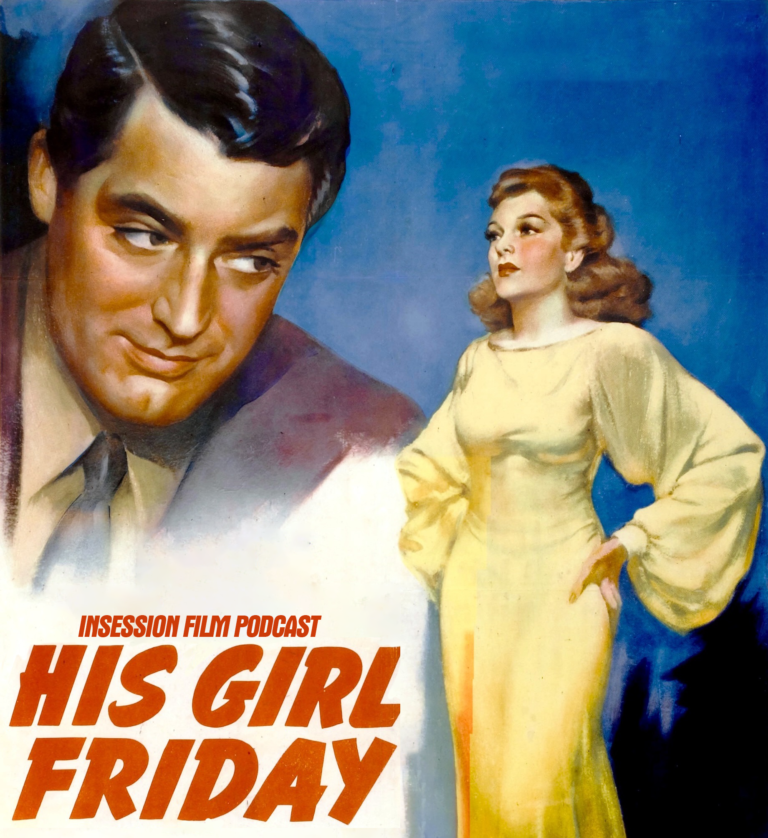
This week on Extra Film, Ryan and Jay continue their Howard Hawks Movie Series with the iconic 1940 film His Girl Friday and they also review the Sandra Bullock/Channing Tatum comedy The Lost City!

You have to love a good comedy, and this week’s episode is a great combination of comedy’s from different eras. The Lost City will hopefully end up as one people enjoy and there are certainly many things to like about it. His Girl Friday, on the otherhand, is considered to be one of the best comedy’s of all-time. Does it live up to that reputation? Well, we certainly discuss it.

On that note, check out this week’s show and let us know what you think in the comment section. Thanks for listening and for supporting the InSession Film Podcast!

– Movie Review: His Girl Friday (6:36)
Director: Howard Hawks
Screenplay: Charles Lederer
Stars: Cary Grant, Rosalind Russell

– Movie Review: The Lost City (40:36)
Director: Adam Nee, Aaron Nee
Screenplay: Oren Uziel, Dana Fox, Adam Nee, Aaron Nee
Stars: Sandra Bullock, Channing Tatum, Daniel Radcliffe, Da’Vine Joy Randolph, Brad Pitt

– Music
His Girl Friday – Sidney Cutnerr
Lagrimas Sin Fin – Pinar Toprak
The Return of the Eagle – Atli Örvarsson

We try to make this the best movie podcast we possibly can and we hope you enjoy them. Subscribe today on iTunes, Spotify, or Stitcher, and please leave us a review on iTunes. You can also find us on Soundcloud, PlayerFM, and TuneIn Radio as well. We really appreciate all your support of the InSession Film Podcast.

Subscribe to our Podcasts RSS
Subscribe to our Podcasts on iTunes
Listen on Spotify
Listen on Stitcher
His Girl Friday / The Lost City – Extra Film

[divider]

To hear this Extra Film episode and everything else we do, download our apps on the Amazon Market for Android and the Podcast Source app on IOS devices. The mobile app covers all of our main shows, bonus podcasts and everything else relating to the InSession Film Podcast. Thanks for your wonderful support and for listening to our show. It means the world to us.

Criterion Releases: April 2022

Miracle In Milan (1951)

After receiving major acclaim with Bicycle Thieves, director Vittorio De Sica followed up on the backend of the neorealist era with a fantasy-comedy about a group of poor people who find oil and have to protect their discovery from greedy men who try to buy it and kick them out. With the help of some magic, the squatters on this suddenly-rich piece of land, a symbol of the economic boom in Italy following the war, have to hope to receive the riches they never had and hope to receive their fair slice from life. 

The Girl Can’t Help It (1956)

Jayne Mansfield made herself a major name in films starring in this musical comedy that indulges on the rock n’ roll craze featuring music (and cameos) by Little Richard, Eddie Cochran, Fats Domino, and more. Mansfield plays the floozy girlfriend of a mobster (Edmund O’Brien) who hires a washed up talent agent to give her a start in singing, except for the fact that she’s terrible. Although it’s a satire on musical showbiz movies with various gags, the film made a big impact on two teenage boys in Liverpool – John Lennon and Paul McCartney – who converted their musical interest to rock and evolved in a folk band that later became The Beatles.

‘Round Midnight (1986)

French director Bernard Tavernier made a love message to jazz music and the influential group of African-American musicians that became popular in France. Real-life saxophonist Dexter Gordon plays a newcomer to Paris making a fresh start in his career who starts an unlikely friendship with a single father who loves jazz. Gordon received an Oscar nomination for his performance and Herbie Hancock won an Oscar for his sensational score that captured the mood of that era; musicians from that period who played in France even made cameos in the film that gives it stronger authenticity.

Walker (1987)

Writer/director Alex Cox has his controversial film getting a new life with a second Criterion release. Here, he turns in a semi-biopic Western full of anachronisms that made a strong political statement of the time. Ed Harris plays an American in 1850s Nicaragua who suddenly takes over the country as dictator in support of America’s Manifest Destiny, becoming drunk on power. It is a mirror that attacked American foreign policy on Nicaragua, which funded anti-communist insurgents against the socialist government, as well as American influence in Latin America which was widely known. It received brutally negative reviews and ended Cox’s career with Hollywood studios, but Walker has since gotten the last laugh with a retrospective that shows Cox’s daring challenge to the establishment with incendiary results.

For All Mankind (1989)

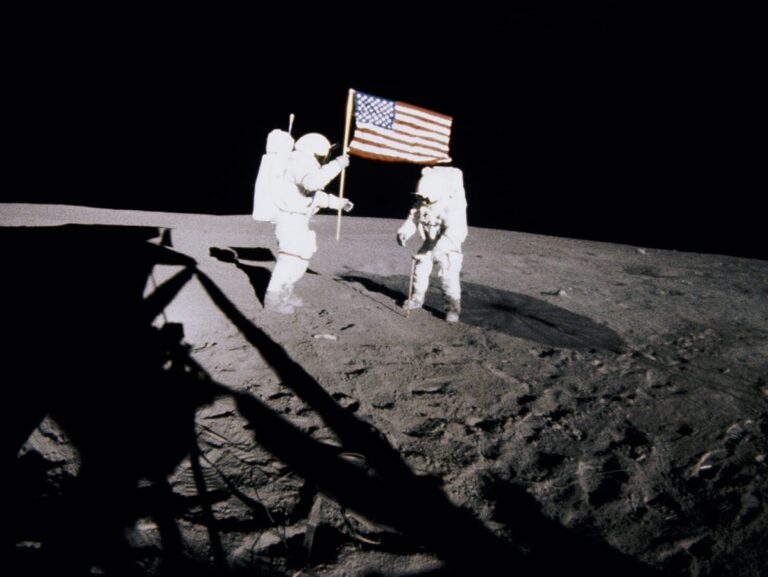
It’s the second film of the bunch that is a re-release by Criterion. It’s the story of Apollo 7 to 17, the race to the moon, using the voices of those who took part in the Apollo program. Director Al Reinert constructs an 80-minute spectacle with NASA’s own footage, much that had never been seen before, and puts up an account that feels like one single voyage from all of the missions that shows those snapshots of our planet.

Eyimofe (This Is My Desire) (2020)

From Nigeria, twin brothers Arie and Chuko Esiri made a striking debut with their two chapter-story of two people who share the same house and have their own plans to seek a better life in Europe. However, before they can even leave, the harsh realities of daily Lagos life threatens to keep them there. It is a statement to the world on the difficulties that Africans in any country face just wanting to seek something better, as well as how good Nollywood can be when one of their own films can have crossover appeal as the Esiri brothers pushed out their own distinct voices to others.


Follow me on Twitter: @brian_cine (Cine-A-Man)

‘In a Lonely Place’ is steeped in Modern Examinations

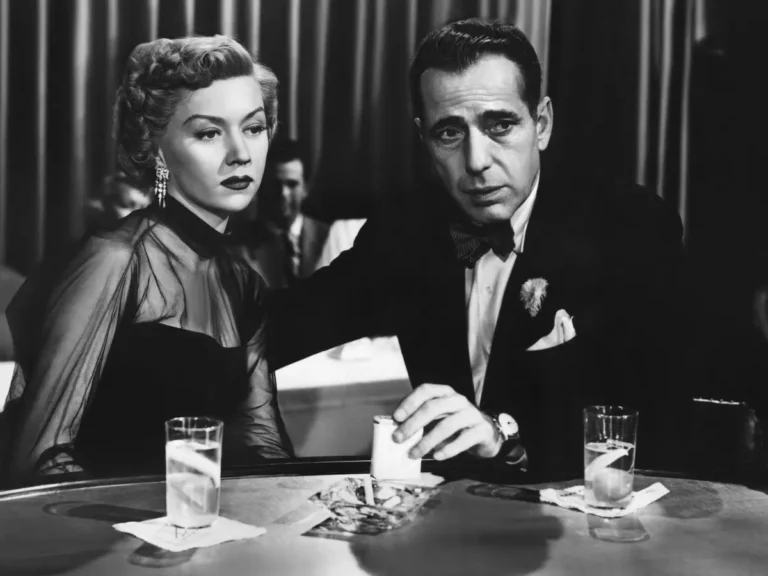
Humphrey Bogart’s washed up screenwriter Dixon Steele is suspected of murder and it seriously strains his newfound relationship with girl next door Gloria Grahame (It’s a Wonderful Life) in director Nicholas Ray’s (Rebel without a Cause), In a Lonely Place. Andrew P. Solt (Joan of Arc) and Edmund H. North’s (Patton) 1950 adaptation of the Dorothy P. Hughes novel is a bitter life imitating art tale opening with traffic confrontations and testy business talk at the bar. Everyone knows Dix, but his introduction is point blank: he can’t be choosy about working on a picture he doesn’t like because he hasn’t had a hit since before the war. His most recent picture stunk, so he must learn to push the popcorn they want and hob knob at the exclusive restaurant. Rather than read the book he’s supposed to adapt, however, Dix invites the young hat check girl home for a ginger ale to tell him what she read. Unfortunately, the storytelling foreshadowing, money for a cab, and a former war buddy turned detective knocking on the door leads to violence, suspicion, and death.

Although viewers expecting a spectacle may find In a Lonely Place slow to start, there isn’t a lot of colloquial coppers and dames talk amid the surprisingly modern dialogue. The interview with the police captain is casual with coffee and blasé attitudes, despite the murder. The crime scene photos aren’t graphic or splashed all over the desk for dramatic effect, but it’s surprising to see them as the camera looks over the shoulder of the person so unmoved. Dix’s pretty neighbor provides an alibi, and all the men do react to her – standing and buttoning their jackets while accepting her words on her pretty face alone. Everyone has connections to make something happen or disappear, but agents don’t want any scandal. In a Lonely Place intercuts Dix’s story versus the police, creating an onscreen interrogation as the cops look over his lengthy rough housing history and he answers with smooth angles and deflections. Lawyers and broken noses pepper the police stern and he is flippant while forcing the doubting audience to pay attention. The slow burn builds with flirtatious characterizations as the conflicting facts are told rather than seen. Our screenwriter laughs that all his whodunits are solved in under two hours before role playing an elaborate “if I did it” crime of passion. Foolish women ignore the red flags as romance leads to inspiration and writing renewed with too good to be true charm and cranky cleaning ladies wishing they would get married already. The police are still trying to solve this case and don’t like defiant attitudes, and the idyllic changes quickly with seaside arguments, dangerous highways, horns honking, and high speed curves. Lighting up two his and hers cigarettes is not the solution to side swipes and fist fights. Claims to have been in hundreds of fights and always being right because the other guy always deserved it excellently reflects the hot and cold violence before the remorseful promises to make up for what will never happen again. He brings home gifts and she’s ashamed to have doubted him in an all too realistic mix of love and marry me but fear and prove your innocence. People with such worrisome looks on their faces say not to worry, cops push buttons behind the scenes, and we fear for the woman who might be next. Despite her taking pills and more relationship turbulence, the proposal is yes or no – no buts. There’s money to be made off our writer and success will cure her hanging in there for taking the bad with the good, right? Drunken humor tries to deflect the justification of violence as scenes are happy one minute, then on eggshells the next. The producers are delighted by his script yet there are one too many public confrontations. An angry man bangs on the door to be let in and won’t let a woman out of his sight as the police evidence and escape plans escalate right to the final minute. Even if he didn’t do it, how far can you push a violent man until he breaks? Professions of love and marriage come despite his grip on her throat, and In a Lonely Place is shockingly modern in what it shows even as the viewer is left contemplating what happens next.

Cynical Dixon Steele claims his temperament as a creative artist permits him from violence but he’s set in his ways and never watches the movies he writes. He flirts and supports drunkard old thespians but is easily enraged at any lack of respect. He’d rather flop then churn out schlock but comes to blows with anyone knocking before eleven in the morning. Dix thinks most writers like to think they are mind readers one step ahead of others, and he nonchalantly puts his feet up on the sofa at the police station as they wonder why he doesn’t go to pieces over the murder. He describes the victim being strangled without batting an eye, yet sends flowers to her funeral anonymously. It’s all over the news but Dix thinks nothing is wrong, and previous reports of breaking someone’s jaw on set and a woman recanting worse have led to no charges being filed and released with a warning slap on the wrist. An educated lady can see the troublesome pattern, but old pals think this is what makes Dix such an exciting guy. He enjoys outsmarting such friends, gleefully discussing a well put together crime. Dix is oblivious to how others look at him in fear as he dissects the killer process, but his listeners are also so relieved when he blows it all off as him just being a screenwriter. He admits he needs a push to commit even if he’s obviously in love and waxes on romantic script ideas, but Dix’s ego couldn’t take the defeat if she were to ever leave him. The old fashioned cigarettes, gin and tonic glasses, and phone mannerisms accentuate the ahead of its time flawed masculine performance. We never see Bogart acting, but the change on his face as Dix turns violent is exceptional. At once he’s the Bogie we love but then his furrowed brow makes us recoil. Screening his fiancee’s phone calls, slapping his agent, beating a man for calling him a squirrel – who’s going to go against Dix when he hears exactly the wrong news?

Gloria Grahame’s Laurel Gray enters the courtyard with an air of mystery. She wears pants and dark clothing, covered in high neck fashions yet perky, provocative, and confident – remaining outspoken about when a man interests her and how she’s avoiding a big name real estate fiance she ditched. Laurel’s been in a few small pictures, and Dix likes a girl who knows what she wants. Their banter is refreshingly mature; a dance in dialogue with vintage chemistry compared to the word salad these days, and strong, multilayered female characters like this can also be tough to find today. Laurel’s clothes also have lots of buttons, as if her buttoned up good girl strength is good for Dix. In a few weeks, she becomes so steadfast for him, patient while he’s up all night writing and minding his pages to the point that we almost suspect her heart of gold. Laurel types Dix’s script for love not salary and grows terse with the police captain when he questions her again. Her masseuse warns her to look after herself instead of supporting Dix in a great over the shoulder conversation that’s both devil and angel. It’s good advice to return to the security of her former beau, but scaring Laurel with Dix’s past plays like an abusive scene itself as Laurel is exposed and vulnerable, wrapped only in a sheet and touched everywhere. Laurel wears white after the scary actions, an angel apologizing to their friends for his behavior while they too apologize no it was their fault. She defends and excuses his being an erratic writer because they are so in love. Why should his killer imagination bother her if she knows he didn’t do it? Unfortunately, Laurel agrees with the suggestions that she should leave and wants to say it out loud to dismiss her doubt. Nonetheless her fears remain, and if Dix truly is like dynamite as the men say, he will explode.

Classic convertibles, city lights, morose highways, and sweeping, moody music set In a Lonely Place‘s tone alongside fedoras, stoles, pearls, smoking jackets, and classy style. The black and white lighting schemes are excellent. We can see the dark streets as well as the crisp cigarette smoke, and any up close, noticeable soft glows on the ladies can be forgiven. Slide across bucket seats, cocktails, and twenty dollars for a cab steep us in the post-war era. Swanky musical interludes come with just a singer and a piano in a nightclub draped in earlier Art Deco interwar innocence as our couple scandalously shares the same cigarette and whisperin each other’s ears. There’s no need for set numbers and montages – only a camera starting with the whole club before ending up close with those sweet nothings. In a Lonely Place has intimacy without showing anything, a sophisticated of the time naivete belying the much darker contemporary subject matter as Spanish style courtyards, gothic wrought iron gates, and multi level apartments invoke culture and refinement as well as through the windows voyeurism. Sunken living rooms, up the stairs bedrooms, and window across the way staging provides multiple in-scene moments of allure. Erratic point of view driving and high speed action create immediacy before traditional rear projection allows time for the fearful aftermath. In a Lonely Place reflects the initial devotion with women tilting their heads up into the camera frame to look longingly at their man for a kiss. However, there’s precious little editing in the potentially violent scenes. The man remains over the shoulder in the background while the woman now sits small in the foreground with her back to him. Zooms on a perilous Dear John letter and phones ringing at exactly the wrong time add tension, yet no embellishment is needed as the camera remains on Bogart’s face.

Despite requiring multiple viewings to pick up all the silver screen winks and wartime broken messages between the lines, In a Lonely Place feels under-seen in the Bogart pantheon because it’s not an easy or enjoyable film to watch. There’s a crime and an investigation but In a Lonely Place isn’t a procedural. It’s not a typical romance either, as the seeds of doubt result in the titular isolation. What should be a straightforward melodrama is much more ambiguous in a frighteningly contemporary analysis about domestic violence carried by the superb twofer performances. 


Poll: What is the best animated film by a traditionally live-action director?

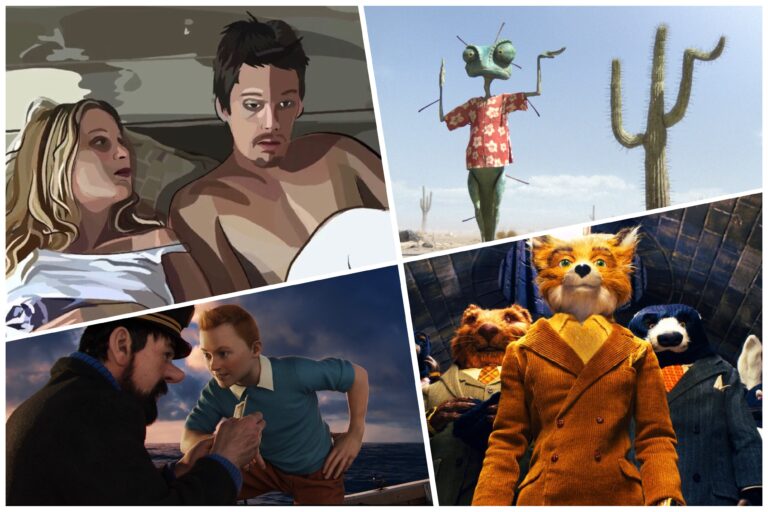
Filmmakers like Brad Bird, Andrew Stanton, Travis Knight, and Phil Lord & Christopher Miller have made the bold jump from animation to live-action, but what about the other way around? It is surprisingly less common to think of directors primarily known for live-action who then take a stab at animation (animation must be really hard to do), but those who have have created some incredibly original works. Richard Linklater’s Apollo 10½: A Space Age Childhood (out this weekend) is just the latest, and is his third outing using animation and rotoscoping. It prompted us to look at the best directorial efforts in the world of animation where animation is not that director’s forte.

That said, what is the best animated film by a traditionally live-action director?


Movie Review: ‘You Are Not My Mother’ is A Fascinating Irish Folklore Horror


Director: Kate Dolan

Writer: Kate Dolan

Stars: Hazel Doupe, Carolyn Bracken, Paul Reid

Synopsis: In a North Dublin housing estate Char’s mother goes missing. When she returns Char is determined to uncover the truth of her disappearance and unearth the dark secrets of her family.


Horror movies are typically difficult to review. There is an argument that to fully appreciate the genre itself, it is best to go in completely blind. To critique a movie like Kate Dolan’s You Are Not My Mother requires dissecting some of its more nuanced elements, which may then unravel the thread of the story for a viewer who may have benefited more from the story’s crackling slowburn aura. With that in mind, all readers may want to know is that Dolan achieves a tense, atmospheric take on an Irish folktale which doesn’t always hit its mark story-wise, but successfully maintains a level of quiet, creeping dread which is enough to unsettle any horror fan.

A part of the sub-genre of elevated horror, You Are Not My Mother is as much invested in psychological drama and mental health observation as it is with the more pulpy aspects the movie is occasionally ground down by. Its take very much follows suit from the likes of Ari Aster’s Hereditary, with a pinch of Robert Eggers’ work – specifically The Witch. The draw here is the slow build up of tense confusion as more questions than answers are pulled into the light, and eventually the (sometimes) satisfying results when everything starts to break down.

Char (Hazel Doupe) is a teenage girl from Dublin whose mother Angela (Carolyn Bracken) suffers from a severe form of depression. Angela often can’t leave her bed, preferring to lie silently in the dark and let her own mother Rita (Ingrid Craigie) look after Char. Perhaps unsurprisingly, this leads to many difficulties for Char, who is subsequently bullied in school for having a strange family. Everything changes when Angela disappears after taking Char to school one day, announcing that she “can’t do this anymore”. 

Char is panicked and confused, and this confusion only worsens when her mother returns home in good spirits, dancing around the kitchen and cooking dinner for the family. Naturally, Char has questions. However, Rita is reluctant to supply any, and instead gives her granddaughter a haphazardly crafted ball of twigs for her protection. But what does Char need protection from? What secrets are her family hiding from her? And why does her mother seem so different?

For the majority of its runtime, we are as much in the dark about Angela’s circumstances as Char is. A scene where the police are called in the wake of Angela’s disappearance is notable for Char being dismissed from the room before Rita and Angela’s brother Aaron (Paul Reid) will explain more about Angela’s character. We are led upstairs with Char who sullenly begins rooting out pictures of her mother to hand around. The obvious questions swirl in the ether: is Angela dead? Was she abused? Did Rita neglect her? An opening scene features a baby being taken into a forest by a younger Rita and subsequently burned. Was this Angela? 

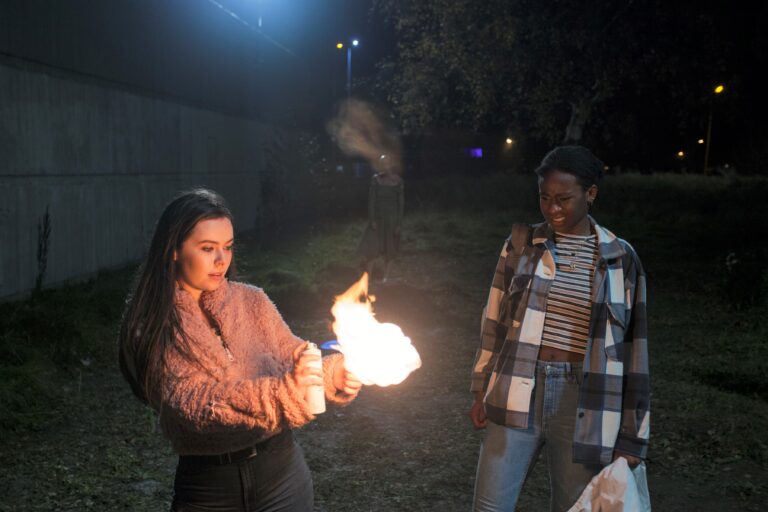
Anyone who knows Irish folklore will quickly understand the situation and the significance of the film’s title. Perhaps that in itself is too much of a giveaway. But what is more important is the cement-thick fog of atmosphere layered throughout You Are Not My Mother. Cinematographer Narayan van Maele conjures a deeply unsettling force within the dusty house, located in a drab housing estate in north Dublin. Darkness hides in every corner of the house, suggesting a milieu of shadows dancing within – out on the streets the grey open sky hints at a purgatory Char cannot escape from. Later, the street kids will run around lighting bonfires for Samhain, or Halloween as it’s commonly known, crackling small lights into the inky black air. 

Inside her house and out, Char is trapped: bullies accost her, threatening to burn her face, and worried parents instruct their children not to go near her or her family. Inside, Angela’s increasingly strange and erratic behavior creates an ever more caustic environment for Char, Rita, and Aaron. 

Similarly, composer Die Hexen’s captivating score strikes through each moment with a string or two underscoring the real moments of danger, and discordant flashes of horns throughout the calmer moments, reminding us that no scene is safe for the audience to drop its guard in. John Cutler’s editing does exactly the same thing in a different way – jaggedly cutting from a scene before it reaches its natural apex, leaving the audience reeling as we try to adjust to the jarring tonal changes. It all adds to a satisfying unsettling feeling.

Doupe is good as the often-simple Char, a girl who lacks any real agency in the story until the final third. There is not much asked of Doupe apart from some confused facial expressions and a slight twinge of worry, mixed with anger and fear. She carries these off well, but ultimately Char doesn’t have much in the way of character development for a viewer to get invested in. It is Bracken who has the biggest role here: Angela walks a gossamer thin line between crippling mental illness and a suggestively sinister monster with a sweet veneer. There are moments where she must oscillate between Char’s wayward yet improving mother, and some ethereal, otherworldly phantom whose intentions are unknown; and she does so in a subtle, quietly dreadful way. It’s Bracken’s performance which catches the eye, and drives the majority of the tension throughout. 

The central tenet of You Are Not My Mother is whether Angela’s mental illness is the banal reality of modern life, or something much more terrifying and unexplainable. It’s this line which the audience walks with Char, and only when the third act happens and the plot begins to unravel does You Are Not My Mother begin to falter. Once the veneer of mystery has been burned away, we are left with a run-of-the-mill horror which relies too heavily on genre tropes to have any lasting resonance. It feels anti-climactic to have built all that tension and dread, only to squander it on a typically cliché finale. The rich mythology promised throughout is then discarded as a more traditional jump-scare precedent is established and the heart-pumping tension, ironically, leavens to a mild arrhythmia. 

Ultimately, You Are Not My Mother is a fascinating watch with an excellent production value. It is let down only by its lackluster third act, which does a disservice to the exemplary set up and worldbuilding done in the first hour. As genre fare goes, it’s admirable for having tried something different, something which, to its credit, it often achieves.


Grade – C+


*YOU ARE NOT MY MOTHER debuts in UK Cinemas and Digital on April 8th!

Chasing the Gold: The 94th Academy Awards

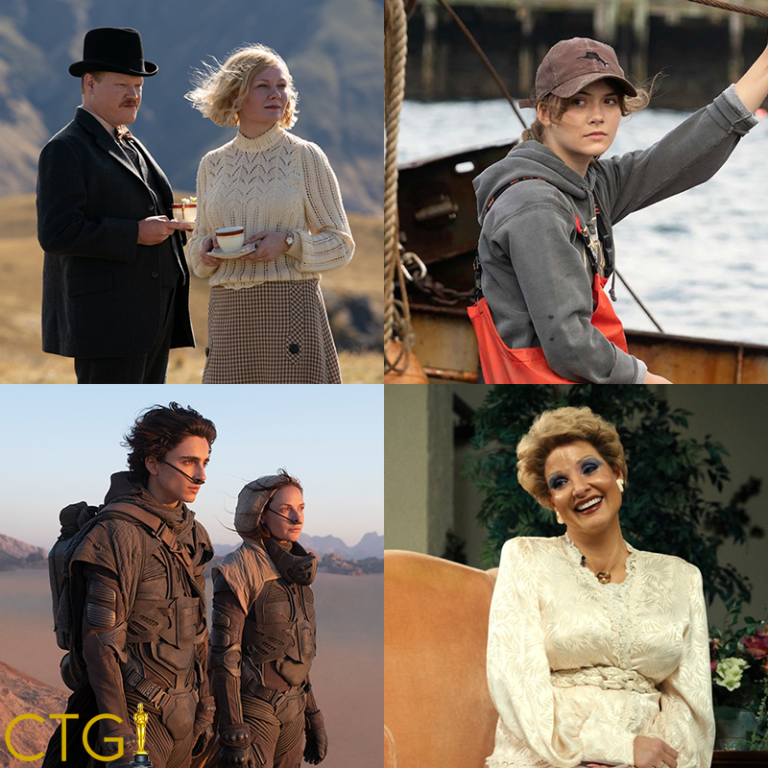
The 94th Academy Awards happened two nights ago and what an event it turned out to be. The ceremony certainly did not pan out the way that ABC and the Academy hoped that it would, and yet the winners were exactly what most pundits were expecting. Now that a few days have passed, it is time to reflect on how the night went. From the ceremony to the winners, this is a recap of the 2022 Oscars.

A quick note before I begin. It is hard not to address the situation that occurred between Chris Rock and Will Smith during the presentation for Best Documentary Feature. However, as the situation has not been fully resolved as of yet, I will not be sharing my opinions or making it a focus point of this analysis. This piece is to talk about the decisions that ABC and the Academy made, as well as to celebrate the winners and give them the spotlight as they have earned.


THE CEREMONY

At the beginning of the ceremony, there was hope that this would be a good show. Choosing to open the show with a recorded performance of Beyonce singing her Oscar-nominated song ‘Be Alive’ kicked off the show with high energy. In fact, all four of the nominated songs performed at the ceremony were well done, with Billie Eilish and Finneas stealing the show with their performance of ‘No Time to Die’. While not everyone likes the songs being included in the main show, they ended up providing the most entertainment in this year’s ceremony.

There were two moments in particular that warmed my heart in this year’s show, and both of them came from the award presenters. To finally see Anthony Hopkins get the respect that he was due for winning Best Actor last year was wonderful, and he rightfully earned the standing ovation he received simply for walking on the stage. However, it was the presentation of the Best Picture prize that emotionally impacted me. After a long ceremony, to see Lady Gaga and Liza Minnelli announce the big award and for Lady Gaga, in particular, to do it with such grace made me shed a tear. The respect that Lady Gaga has shown legendary performers from Minnelli to Tony Bennett over the past few years is so touching, and this has made me want to see her get the hosting gig for the Oscars next year.

Outside of those few moments, I unfortunately found myself completely disappointed with the telecast of the Academy Awards this year. The first glaring issue became clear an hour before the telecast when winners were being announced on Twitter. It feels completely wrong to honor these wins through text on a screen, especially when some of these wins included a documentary short honoring a sporting legend who recently passed away, as well as Riz Ahmed’s first Oscar.

What hurts even more is that the telecast treated the presentations of these awards poorly. Not only were the nomination clips for these awards shortened and the order of presentation strange, but some of the speeches were clearly cut down for the telecast. In particular, Ahmed’s speech was cut by half and his co-director, Aneil Karia, had his speech fully cut. I also struggle to see how this decision would help boost viewership, as the biggest blockbuster hit of the Best Picture nominees in Dune won four out of the five feature categories not presented live. The disrespect done to these categories was apparent during the show and having host Amy Schumer say during one of the gags that “each job is equally important” increased my anger at the situation.

It was not only their categories that were treated with a lack of respect during the telecast. There were two moments in particular that frustrated me, and they both have to do with the Feature categories. Ryusake Hamaguchi knew he was going to win International Film for Drive My Car, and, as such, prepared a speech in English so that the translator would not be needed and time would be saved. Instead, any time he took a small break to compose himself during the speech, they tried to play him off. The second time the music came on during his speech, one of the presenters rushed him off the stage. This felt incredibly rude to Hamaguchi, especially when other winners got to give much longer speeches throughout the night.

The other moment that left a negative impression on me was with the Animated Feature category, in which Lily James, Naomi Scott ,and Halle Bailey went on stage to present. This sequence then went on about the Disney princesses, and how animation particularly impacts children. While I get the purpose of this speech and it was cute, this message rubbed me the wrong way. Firstly, this is another case of ABC pushing Disney Animation front and center of the ceremony and ignoring other incredible animated films such as The Mitchells vs. the Machines. Not only that, but to imply that animation is only for children when Flee was nominated is insulting to the team who worked on that and the stories that can be told through animation for any age.

At first, I was on board with the three hosts for this year’s ceremony. I found that the opening with Amy Schumer, Wanda Sykes, and Regina Hall worked well, as their chemistry was bouncing off each other. I also personally enjoyed Hall’s gag involving guests who needed to take another COVID test backstage with the reveal of Bradley Cooper and Timothee Chalamet being included. It was a gag that could have gone wrong or been insensitive, but Hall played it off well. Unfortunately, the gags slowly got worse and worse, with jokes insulting the poor box office of films such as The Last Duel and the Kirsten Dunst seat-filler gag being the worst of the bunch. A lot of these moments left for awkward gaps and not a lot of laughs.

Despite the Academy’s attempts to cut down the runtime by editing in some of the acceptance speeches, the show ran over by nearly 40 minutes. This is longer than the ceremony last year, which presented all 23 awards live. There are several things that contributed to this such as the nominated songs being performed live and the re-introduction of clips, but it was the extra stuff added that truly impacted the runtime this year and not in a good way. The anniversary celebrations were poorly edited, the performance of ‘We Don’t Talk About Bruno’ including a guest appearance from Megan Thee Stallion made no logical sense, and the Fan Favorite and Cheer Moment top five went as badly as we all predicted. On top of that, the In Memoriam for a second year in a row felt weird tonally and left with little impact. While I hate to be this negative about something so close to my heart as the Oscars, this year was an incredibly tough watch, regardless of the Chris Rock and Will Smith situation, and I hope ABC and the Academy seriously consider a rehaul of the ceremony for next year.
THE WINNERS


As negative as I was on the presentation of the show, I am much more optimistic about the winners themselves. At the end of the night, I got 19/23 correct which is usually a strong score to get. However, this year the line-up of winners was for the most part predictable and no major surprises were thrown into the mix. When the winners are this good though, I cannot be too mad at the lack of a major surprise to shake up the end of the season.

Dune ended up taking home the most awards of the night as most people predicted, winning six Oscars. This is the most awards a film has taken home in one ceremony since La La Land, which also garnered six awards. With Dune being my favorite film of 2021 (you can read my full review here), it is no surprise that I am happy with this result. I may have had other preferences in categories such as Production Design or Cinematography, but any chance to see Dune succeed gives me hope that the franchise will continue its success when Part Two releases in 2023.

The two winners for Adapted Screenplay and Original Screenplay certainly would not have been my personal first choices – that honor belongs to Drive My Car and The Worst Person in the World. However, I am also not upset that CODA and Belfast ended up taking these prizes home. CODA’s screenplay brings awareness to the D/deaf community within a beautiful story and is something that more people should be paying attention to. Belfast remains one of my top ten films of the year and I am just glad that Kenneth Branagh did not leave empty-handed considering the season it has turned out to be for that film. While this is not the strongest Screenplay duo we have seen recently, it is one that I am personally happy with.

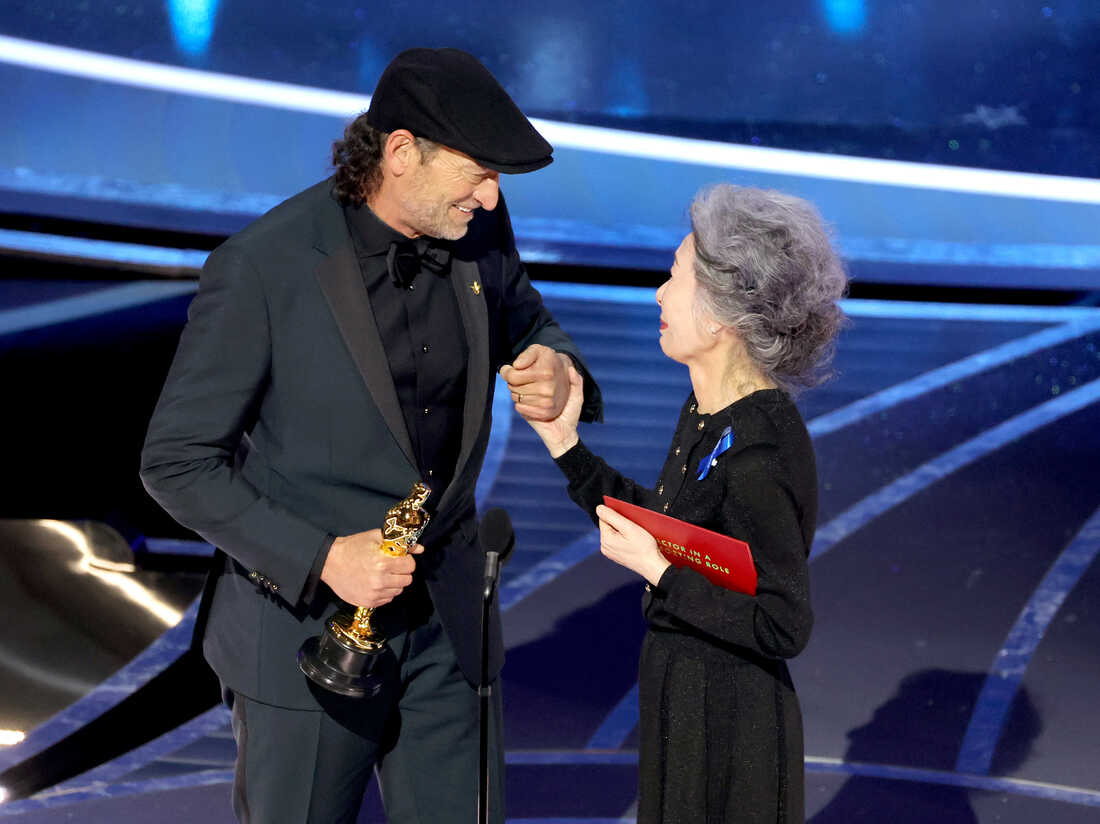
The four acting winners were the four that have been leading most of the season, and I am glad for each and every one of them here. These wins also led to some of the strongest acceptance speeches of the night, with both Ariana DeBose and Jessica Chastain using their speech to talk about LGBTQ+ rights and representation on the big screen. Troy Kotsur has given such wonderful speeches all season long, and still somehow managed to save his best one until the end here. It has been a season-long coronation for some of these performances, and yet it feels so rewarding when the performances are as good as these ones.

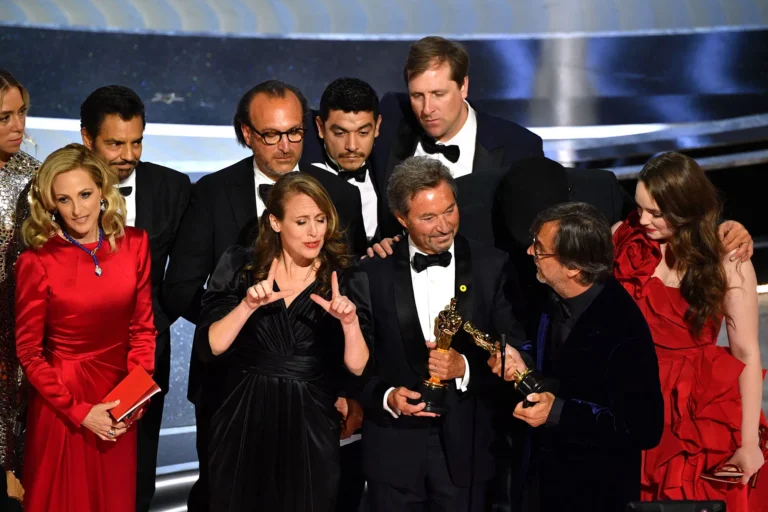
Of course, we cannot have an Oscars wrap-up piece without delving into the big winner of the night: CODA walking away with Best Picture. This was the one prediction I knew I messed up in, sticking with the statistics and going with The Power of the Dog. This win for CODA is historic in many ways, and yet it is heartbreaking to see the backlash already happening on social media due to this win. I think we can all agree that CODA is not as technically strong as a film such as The Power of the Dog, but it also doesn’t have to be. CODA is an independent film first showcased at the 2021 Sundance Film Festival, acquired by Apple TV and placed on the platform in August. It skipped the festival run, failed to get major nominations at the beginning of the season and only started gaining momentum after winning the Ensemble award at the SAG Awards. After that, film fans and those in the industry warmed up to this touching story and found the narrative hard to resist when it came to the Best Picture race. The win at the PGA, the only other major voting body to use a preferential ballot, ended up being enough to defy the odds and make CODA a sweeper at the Oscars. As someone that spent a majority of this award season researching the lack of accessibility for the D/deaf community and spreading awareness for these stories, I am hoping this win will tell Hollywood to listen to this community. 

Podcast: Everything Everywhere All At Once / Always – Episode 475

This week’s episode is brought to you by Warby Parker. Sign up today and get a 5 day Home Try-On, complete with 5 pairs of glasses to choose!

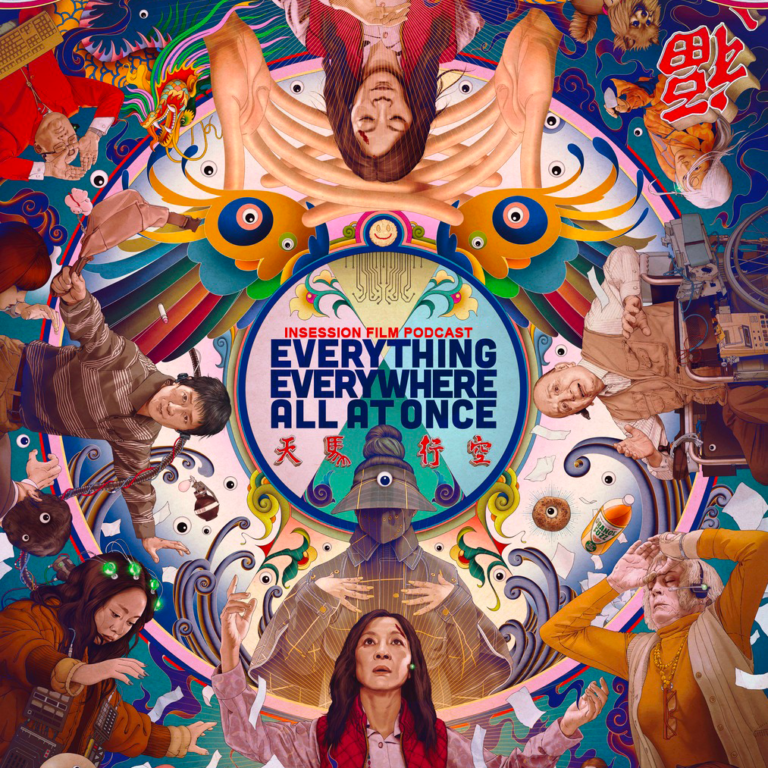
This week on the InSession Film Podcast, we review the Daniels’ new film Everything Everywhere All At Once and continue our Steven Spielberg Movie Series with his 1989 film Always! Plus, our predictions for the 2022 Oscars (we recorded this show before the ceremony on March 27th).

As we’ve mentioned on the show many times over, Everything Everywhere All At Once was on JD’s Top 10 Most Anticipated list of…2019! We’ve been looking forward to this movie for quite some time and it’s finally. here. Sadly Brendan couldn’t be there for it, but a big thanks to Ryan McQuade for stepping in and joining JD for the long-awaited discussion. Always fun when we get to talk Spielberg too (see what I did there).

On that note, check out this week’s show and let us know what you think in the comment section. Thanks for listening and for supporting the InSession Film Podcast!

– Movie Review: Everything Everywhere All At Once (6:02)
Director: Dan Kwan, Daniel Scheinert
Writers: Dan Kwan, Daniel Scheinert
Stars: Michelle Yeoh, Ke Huy Quan, Stephanie Hsu, James Hong, Jamie Lee Curtis

– Notes / Oscars Predictions (1:02:19)

This week for our break segment, we give our predictions for the 2022 Oscars! As mentioned above, we recorded this show before the ceremony on March 27th, so this will be a fun little exercise where you can compare and contrast our predictions to the actual winners as you listen. It’s hard to foresee some of the wild chaos that happened at this year’s Oscars, but we did get some of the categories right.

[divider]

RELATED: Listen to Episode 443 of the InSession Film Podcast where we discussed CODA!

[divider]

– Steven Spielberg Movie Series: Empire of the Sun (1:53:26)
Director: Steven Spielberg
Writers: Jerry Belson
Stars: Richard Dreyfuss, Holly Hunter, John Goodman

Show Sponsor: First Time Watchers Podcast

– Music

Fence – Son Lux, Moses Sumney
Always – John Williams
The Return of the Eagle – Atli Örvarsson

Subscribe to our Podcasts RSS
Subscribe to our Podcasts on iTunes
Listen on Spotify
Listen on Stitcher
InSession Film Podcast – Episode 475

[divider]

Next week on the show:

Review: Apollo 10½: A Space Age Childhood
Steven Spielberg Movie Series: Hook

[divider]

Help Support The InSession Film Podcast

If you want to help support us, there are several ways you can help us and we’d absolutely appreciate it. Every penny goes directly back into supporting the show and we are truly honored and grateful. Thanks for your support and for listening to the InSession Film Podcast!

VISIT OUR DONATE PAGE HERE


JD DuranInSession FilmHost / Editor-in-Chief

Home

Chasing the Gold: Amy Smith’s 2022 Oscar Predictions

Tonight, we will finally know who has won at the 94th Academy Awards. This has been a long and tiring race, and one that has only started to become interesting in the final few weeks with the introduction of a major competitor to The Power of the Dog. There are four categories that I want to quickly give my thought process on before I share my full final predictions.

Best Picture: If you want to be smart, predict CODA to win Best Picture. It has SAG and PGA, it has major support from BAFTA and has been gaining momentum at an incredible pace. I just personally struggle to see how a film that had such widespread love from the Academy in the nomination list to get in for the likes of Sound and Production Design does not have more general support, and I am personally sticking with The Power of the Dog to take home Best Picture at the end of the night.

Best Actress: Yes, there is clear momentum building from the anonymous ballots almonst unanimously voting for Penélope Cruz in Parallel Mothers. However, that would be predicting a Marcia Gay Harden situation where Cruz failed to be nominated for the Golden Globes, SAG, BAFTA and Critics Choice and still coming out on top at the end. In contrast, Chastain has the transformation performance – which will be tied with a Makeup and Hairstyling win for The Eyes of Tammy Faye – as well as a compelling narrative to earn her first win. With SAG and Critics Choice backing her, I don’t see a reason as to why this wouldn’t be her year.

Best Original Screenplay: This is the category that I am taking my major ‘No Guts No Glory’ pick in because the category is so fluid. Belfast missed the British voting group with BAFTA, Licorice Pizza missed a potentially easy WGA win and yet the film that did win it, Don’t Look Up, may not get support from enough members of the Academy to push it over to the edge. Therefore, I am deciding to take a risk and predict the film that is not only my favourite of the year, but that I could see real passion for if enough members of the Academy go for it – The Worst Person in the World.

Best Adapted Screenplay: I am using this category to cover my basis in the case that CODA does end up winning Best Picture. Considering the film only got three nominations, I truly believe that CODA needs to win Best Adapted Screenplay to win Best Picture. On the other hand, I think Best Director is already potentially strong enough of a win that The Power of the Dog does not require this win as much. With CODA winning the BAFTA and WGA here, I feel more confident about this win than the potential Best Picture winner.

With those summaries out of the way, I am now happy to share my full predictions for the 94th Academy Awards.

Best Picture: The Power of the Dog
Best Director: Jane Campion, The Power of the Dog
Best Actor: Will Smith, King Richard
Best Actress: Jessica Chastain, The Eyes of Tammy Faye
Best Supporting Actor: Troy Kotsur, CODA
Best Supporting Actress: Ariana DeBose, West Side Story
Best Original Screenplay: The Worst Person in the World
Best Adapted Screenplay: CODA
Best Animated Feature Film: Encanto
Best International Feature Film: Drive My Car (Japan)
Best Documentary Feature: Summer of Soul
Best Cinematography: Dune
Best Costume Design: Cruella
Best Film Editing: King Richard
Best Makeup and Hairstyling: The Eyes of Tammy Faye
Best Original Score: Dune
Best Original Song: No Time to Die from No Time to Die
Best Production Design: Dune
Best Sound: Dune
Best Visual Effects: Dune
Best Animated Short Film: Robin Robin
Best Documentary Short Subject: The Queen of Basketball
Best Live Action Short Film: The Long Goodbye

Podcast: Only Angels Have Wings / Deep Water – Extra Film

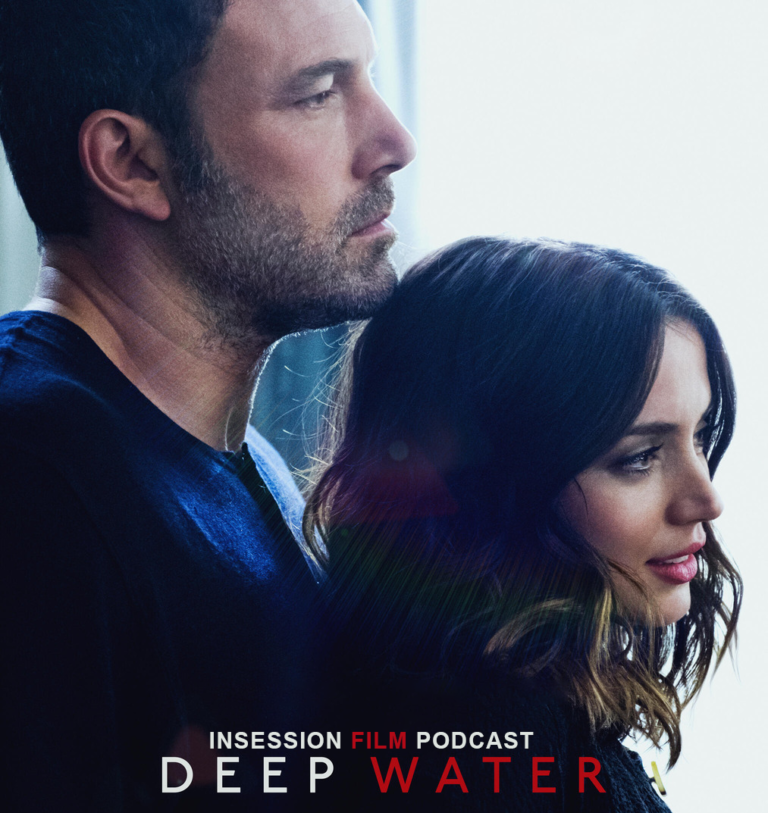
This week on Extra Film, Ryan and Jay continue their Howard Hawks Movie Series with Only Angels Have Wings and they also review the Adrian Lyne erotic thriller Deep Water!

This week’s episode is a fun one because Only Angels Have Wings was not one of the films originally lined up to be a part of the series. However, after seeing the film, Ryan and Jay felt it was absolutely necessary to add it to the lineup, so you can imagine how passionate the conversation was for it. Deep Water, on the other hand, is a film that’s being buried by Hulu, and the guys get into all of the reasons why.

On that note, check out this week’s show and let us know what you think in the comment section. Thanks for listening and for supporting the InSession Film Podcast!

– Movie Review: Only Angels Have Wings (6:32)
Director: Howard Hawks
Screenplay: Jules Furthman
Stars: Cary Grant, Jean Arthur, Thomas Mitchell

– Movie Review: Deep Water (54:34)
Director: Adrian Lyne
Screenplay: Zach Helm, Sam Levinson
Stars: Ben Affleck, Ana de Armas

– Music
Some Of These Days – Sophie Tucker
Before I Ever Met You – BANKS
The Return of the Eagle – Atli Örvarsson

We try to make this the best movie podcast we possibly can and we hope you enjoy them. Subscribe today on iTunes, Spotify, or Stitcher, and please leave us a review on iTunes. You can also find us on Soundcloud, PlayerFM, and TuneIn Radio as well. We really appreciate all your support of the InSession Film Podcast.

Subscribe to our Podcasts RSS
Subscribe to our Podcasts on iTunes
Listen on Spotify
Listen on Stitcher
Only Angels Have Wings / Deep Water – Extra Film

[divider]

To hear this Extra Film episode and everything else we do, download our apps on the Amazon Market for Android and the Podcast Source app on IOS devices. The mobile app covers all of our main shows, bonus podcasts and everything else relating to the InSession Film Podcast. Thanks for your wonderful support and for listening to our show. It means the world to us.

Chasing the Gold: InSession Film’s Oscar Ballot

The writers of InSession Film have individually submitted their ballot for what they would vote for in this year’s Academy Awards, and the results are in. These are not our predictions, simply what we as a group would like to see win on Sunday night. We have left off the Shorts category, and are simply voting for the 20 other categories. The Best Picture category was decided through a preferential ballot, while the other categories were decided by the top vote. Scroll down to see the full results.

BEST PICTURE
Belfast
CODA
Don’t Look Up
Drive My Car – WINNER
Dune
King Richard
Licorice Pizza
Nightmare Alley
The Power of the Dog – RUNNER UP
West Side Story

BEST DIRECTOR
Kenneth Branagh, Belfast
Ryusake Hamaguchi, Drive My Car – RUNNER UP
Paul Thomas Anderson, Licorice Pizza
Jane Campion, The Power of the Dog – WINNER
Steven Spielberg, West Side Story

BEST ACTOR
Javier Bardem, Being the Ricardos
Benedict Cumberbatch ,The Power of the Dog – WINNER
Andrew Garfield, Tick, Tick… Boom! – RUNNER UP
Will Smith, King Richard
Denzel Washington, The Tragedy of Macbeth

BEST ACTRESS
Jessica Chastain, The Eyes of Tammy Faye
Olivia Colman, The Lost Daughter
Penélope Cruz, Parallel Mothers – RUNNER UP
Nicole Kidman, Being the Ricardos
Kristen Stewart, Spencer – WINNER

BEST SUPPORTING ACTOR
Ciarán Hinds, Belfast
Troy Kotsur, CODA – WINNER
Jesse Plemons, The Power of the Dog
J.K. Simmons, Being the Ricardos
Kodi Smit-McPhee, The Power of the Dog – RUNNER UP

BEST SUPPORTING ACTRESS
Jessie Buckley, The Lost Daughter
Ariana DeBose, West Side Story – WINNER
Judi Dench, Belfast
Kirsten Dunst, The Power of the Dog – RUNNER UP
Aunjanue Ellis, King Richard

BEST ORIGINAL SCREENPLAY
Belfast
Don’t Look Up
King Richard
Licorice Pizza – RUNNER UP
The Worst Person in the World – WINNER

BEST ADAPTED SCREENPLAY
CODA
Drive My Car – RUNNER UP TIE
Dune – RUNNER UP TIE
The Lost Daughter
The Power of the Dog – WINNER

BEST ANIMATED FEATURE FILM
Encanto – RUNNER UP TIE
Flee – WINNER
Luca
The Mitchells vs the Machines – RUNNER UP TIE
Raya and the Last Dragon

BEST INTERNATIONAL FEATURE FILM
Drive My Car – WINNER
Flee – RUNNER UP
The Hand of God
Lunana: A Yak in the Classroom
The Worst Person in the World

BEST DOCUMENTARY FEATURE
Ascension
Attica
Flee – WINNER
Summer of Soul – RUNNER UP
Writing with Fire

BEST ORIGINAL SCORE
Don’t Look Up
Dune – WINNER
Encanto
Parallel Mothers
The Power of the Dog – RUNNER UP

BEST ORIGINAL SONG
Be Alive, King Richard
Dos Origuitas, Encanto – RUNNER UP
Down to Joy, Belfast
No Time to Die, No Time to Die – WINNER
Somehow You Do, Four Good Days

BEST SOUND
Belfast
Dune – WINNER
No Time to Die – RUNNER UP
The Power of the Dog
West Side Story

BEST PRODUCTION DESIGN
Dune – RUNNER UP
Nightmare Alley
The Power of the Dog
The Tragedy of Macbeth – WINNER
West Side Story

BEST CINEMATOGRAPHY
Dune
Nightmare Alley
The Power of the Dog – RUNNER UP
The Tragedy of Macbeth – WINNER
West Side Story

BEST MAKE UP AND HAIRSTYLING
Coming 2 America
Cruella
Dune – WINNER
The Eyes of Tammy Faye – RUNNER UP
House of Gucci

BEST COSTUME DESIGN
Cruella – WINNER
Cyrano
Dune – RUNNER UP TIE
Nightmare Alley – RUNNER UP TIE
West Side Story – RUNNER UP TIE

BEST FILM EDITING
Don’t Look Up
Dune – RUNNER UP TIE
King Richard
The Power of the Dog – WINNER
Tick, Tick… Boom! – RUNNER UP TIE

BEST VISUAL EFFECTS
Dune – WINNER
Free Guy
No Time to Die – RUNNER UP
Shang-Chi and the Legend of the Ten Rings
Spider-Man: No Way Home

Criterion Crunch Time: ‘Matador’

Well, we all have our favorites. The Criterion Channel (and this column is no different). In terms of the actual Collection, directors like Akira Kurosawa, Agnes Varda, Francois Truffaut, and Federico Fellini dominate in terms of numbers. This should be no surprise given our (as cinephiles) obsession with the auteur theory. Why wouldn’t you want to see the growth, decline, ebbs, and flows of a particular artist and their vision? Of course, film is an art form that requires collaboration, but that is a longer conversation than we have time for. Another director who Criterion loves (and has been covered in this particular column) is Pedro Almodóvar. With this in mind, we will take a look at 1986’s Matador.

Some of the best movies are romantic but disturbing. The film that most comes to mind when watching Matador is Phantom Thread. Now, this could be because I am always wanting to think about the movie. But also, at its core, Phantom Thread is about two wildly damaged people finding love with one another. At the end, you are almost glad they are together, if simply for the fact that they are no longer inflicting their particular brand of damage on anyone else. Despite the beginnings of Matador being focused on Almodóvar’s young star (Antonio Banderas), it is really the story of Diego Montes (Nacho Martínez), a retired bullfighter, eventually connecting with a lawyer, María Cardenal (Assumpta Serna). It should be noted that, oddly, there is a subplot involving Diego’s student, Angel (Banderas) having true visions, that is only used as pure plot device. This is strange, but Matador is good, trashy fun, so it’s somehow easy to accept.

But the core of Matador goes beyond romance. This is Freudian. Eros and Thanatos. Sex and death, pure obsession. The first half hour takes some time to unfold, making us think this might be a police procedural, given that Angel rapes his neighbor Eva (Eva Cabo), who is also dating Diego. But this is all a ruse, to introduce Cardenal, as his lawyer, and link her quickly to Diego. But back to the sex and death. The film literally opens with a woman murdering a man, during penetration, with a hairpin to the base of the neck. As a note, this is also how young bullfighters are taught to dispatch a bull. Later, when Diego is shown having sex with Eva, it is disturbing and unexpected. In an act that has clearly been practiced, she lies prone, unmoving, as if dead. This is never played from Eva’s perspective as upsetting, though neither is the attempted rape from Angel, so the sexual politics are certainly to be questioned.

Obviously, most of the perversion and focus on sexualized death is focused on Cardenal and Diego. It becomes clear that, before they officially met, she was witness to an important moment in his life. In the ring, he was gored by a bull. He not only relives this by watching the video but is shown masturbating to slasher films, which are eerily similar in type of injury. This moment is not only important to him, however. As he reviews the tape and recognizes her, there is a look on her face that is difficult to describe. She is filled with both horror and arousal, a look we recognize because earlier in Matador she has been involved in sexual and sexualized situations. In nearly all ways, Cardenal holds complete control. As a matter of fact, it is revealed that she has orchestrated much of the plot in order to find him and be close to him. She flat out tells him that she has been near orgasm since she came into contact with him, but wants to extend this feeling. It becomes clear that, despite the sex and romance inherent, they will not survive the moment, they cannot. Not when desire and death and power have become this intertwined. 

As the story literally races to its conclusion, with the help of Angel’s telepathic powers (it feels silly even writing that), we are not so much rooting for the devious pair to be caught, or even for them to run off together. There can only be one ending for Diego and María. Despite the frank discussions of orgasm, there will be no little death for this duo. In a scene that only Almodóvar could film, María rides Diego to completion, all with the barrel of a gun in her mouth, a not so subtle symbol of masculinity, power, sexuality, and death. The final shot, with their two bodies artfully entwined in death, does not leave us feeling strong negative emotions, such as sadness or anger. Instead, like most of Almodóvar’s choices, it feels exactly right.

Matador is just one more example of a filmmaker throwing caution to the wind and telling the exact story they wish to. Almodóvar has never been one to pull punches, but there is some shock value here, even for him. I honestly cannot imagine seeing Matador without knowing who Almodóvar is, what a stark, terrifying experience that must have been. This, and many other films, make the Criterion Channel a delight for film fans. There are so many options out there, and having so many films entering and leaving a service provide an amazing opportunity to experience something wholly new, even more than 25 years later.

Featured: The Best Sports Movies and Shows in 2022

0

Sports have always been perfect for film. The competition around them makes the perfect set-piece for conflict. Films like King Richard, which provides a fictionalized take on the father behind tennis superstars Serena and Venus Williams, are there to provide these dramatic stories, but many fans are eager to get the real story behind the sports personalities they follow so closely. Fortunately, there are plenty of documentaries about to hit our screens that celebrate these larger-than-life figures in sports.

For many sports stars, the truth really is stranger than fiction, so many filmmakers are turning to documentary-style films to bring their stories to audiences. Movies like Senna, which told the story of the Brazilian Formula One driver who died in the 1994 San Marino Grand Prix at the age of 34, give us all the passion and the drama of the competition while letting the athletes tell the story themselves.

Audiences love these authentic takes on the sometimes mythical figures within sports, which explains why there are so many great documentaries lined up for release later this year. So, here are our picks for the best sports documentaries to catch in 2022.

Neymar: The Perfect Chaos

Neymar is widely regarded as one of the best soccer players in the world, so it is no surprise that a documentary is coming out that will chronicle his rise up the ranks to become the highest-paid athlete in the sport. But the Brazilian-born soccer star’s story has often been larger-than-life. From his appearance as himself in the 2017 action film XXX: Return of Xander Cage to allegations of both receiving and making racist comments on the pitch, Neymar’s story is one that is nearly as compelling as his soccer career. The documentary, which was released in January 2022, captures all this and includes footage of stars like David Beckham and Lionel Messi to give context to how Neymar has dominated the soccer world for the past several years.

Winning Time: The Rise of the Lakers Dynasty

While this might not be a traditional documentary-style series, there is a lot of great historical research done for Winning Time. Everything, from the dramatic rivalry between Magic Johnson’s Lakers and Larry Bird’s Celtics to the conflict that occurred in the LA locker room at the time, is captured from accounts of people that were there. The show chronicles the rise of the 80s era Lakers, who rose to become one of the most dominant teams of the era thanks to Johnson and Kareem Abdul-Jabbar Hall of Fame careers. And it comes out at an opportune time for the current team; the Lakers are well behind their rivals in the latest Coral sports odds for both the NBA title and the Western Conference, so perhaps the current team could do with reminding what a dynasty looks like. The 80s were certainly not short on big characters for the Lakers, with some of the most memorable athletes of all time filling out their roster and making Winning Time’s first season an absolute must-watch for fans of both the classic team and the current roster.

Super Greed: The Fight for Football

If you’re a soccer fan, one of the biggest stories of 2021 was the brief creation of a proposed European Super League. This collection of some of the biggest and most profitable soccer clubs in Europe proposed to break away from the established leagues. The notion was short-lived, however, as allegations of corruption and greed collapsed the project within 48 hours of its announcement. Super Greed tells the story behind this new league, from the backroom deals and secret talks that launched it to the scrutiny and backlash that eventually brought it to a grinding halt. This is an absolute must-watch for fans who want the inside scoop of one of the most dramatic sports stories of last year.

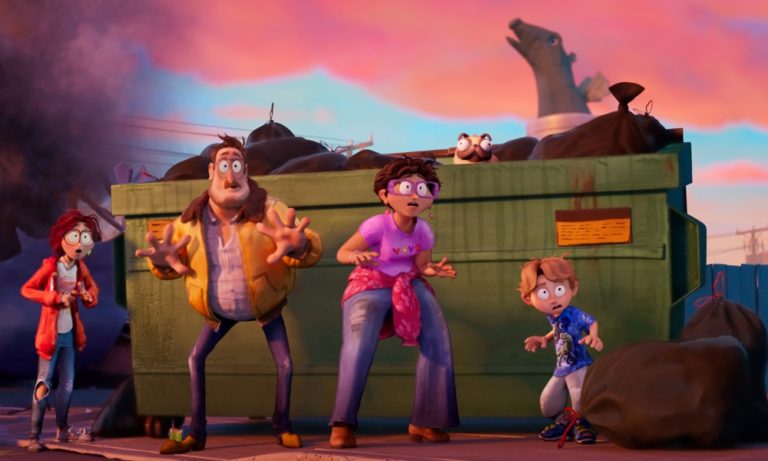
Chasing the Gold: Why ‘The Mitchells vs. the Machines’ Should Win Best Animated Feature

2021 had a lot of very good films. Villeneuve’s follow-up to the stunning Blade Runner 2049, Dune is a galactic film heading a new adventure I can’t wait to see the ending of. The Green Knight was an Arthurian tale of honor filled to the brim with dazzling images and a haunting score. CODA was impressively small, being authentic, personal, and universal all at the same time, and I have been championing it since I saw it in November (you can read why it deserves Best Picture here). And while I loved all these films, there was one film that stood head and shoulders above them all, and it hasn’t gotten the attention it deserves. That film was Netflix’s The Mitchells vs. The Machines. While Raya and the Last Dragon was the talk of the town during its release in late May and early June, The Mitchells vs. the Machines seemed to be another Netflix release that would be forgotten in a week with the newest drop of content. It came and went, and barely anyone noticed, like most February movies. To me, that is a major travesty because The Mitchells vs. The Machines isn’t just the best-animated film to come from last year. It’s the best film of 2021.

The Mitchells vs. The Machines centers on the worst thing in the world: a family road trip and a robot revolution. As Katie begins to form her own identity, her relationship with her family, specifically her dad, Rick, begins to slip. And when this dysfunctional family is all that is left to stop the robot revolution, the Mitchells will have to work through their differences to save the world.

It should come as no surprise that a film like The Mitchells vs. The Machines would set my heart aflame. It’s a coming-of-age drama about someone who loves movies and longs for approval from their family, which rings exceptionally close to home for me. But it’s not only in the broad strokes that I find The Mitchells vs. The Machines worthy of a Best Animated Picture prize. Because that same story is seen in the other major animated juggernaut of 2021, Encanto. here Encanto came to life through the music of one Lin Manuel Miranda, The Mitchells vs. The Machines comes to life through persistent character and creativity. Looking through the art book and behind the scenes of Mitchells is a feast for the eyes and heart, as the heart of the film is put front and center in every way. Take the character of Katie: not only is she a major film nerd, but someone questioning their identity and trying to find where they fit in with society. That story has been told a million times before, but here, the team of animators took it a step further by making Katie a queer individual. It’s something that on a plot level, is incredibly small. But on a personal level, it defines who Katie is, and is LGBTQ+ representation in a film genre that often gets none. That representation goes out of the way to make Katie’s queerness a real part of her character and not just a token aspect. By embracing “Katie Vision”, and her own quirky and energetic nature, it always feels like a part of her, regardless of her relationship with Jade.

And that focus on character goes for every part of the Mitchell family. Rick may be an outdoorsman, but his joy comes from his family, and it’s seen in the smallest exchanges (like when teaching Katie how to drive stick). Or take Aaron, Katies younger brother who absolutely loves dinosaurs. The Raptor Bash is so unique to these characters that it immediately makes their more emotional moments together land.

This is the persistence of creativity that oozes out of this Lord and Miller production. It’s found in every element of the film, from its characters to the comedic bits to the entire art style. And individually, it’s a lot of small elements, like having a cat filter gag that comes up throughout the film. While they don’t immediately pay off, the cumulative effect is felt throughout the production. When cross-cutting is utilized to frame the mirrored journeys of Rick and Katie (who are both reading cue boards from Linda and Aaron respectively), it’s a classic gag from a Lord and Miller film. But it also reinforces these characters as the leads of the film; this isn’t just Katie’s journey, and that is foregrounded from the first moment. I love Encanto (here is my review praising it for being one of the best Disney films of late), but the decision to resolve Mirabel and Abuela’s conflict in the final 10 minutes of the film by introducing us to Abuela’s story at that moment is odd. It introduces a key thematic idea far too late into the film. That’s why I really adore the effort put into every level of The Mitchells vs. The Machines. Because it allows for the family to be messy and strange and finds its power there throughout the entire 114-minute runtime.

But it’s not just the story that keeps me invested, because just like Spiderman: Into the Spider-Verse, a whole new animation style was created for The Mitchells vs. the Machines. Where Spider-Verse was a comic book come to life, The Mitchells is much more akin to fully realized paintings. The hard edges of objects and balance of shallow and deep shadows make every frame pop out. Add in the blend of 2D and 3D animation, and you have a film that made its visual identity a priority. And when Katie Vision kicks into high gear, the 2D effect adds layers of personality and comedy to the film. Every single object feels hand-designed to be a part of this family and this film. USB sticks are given eyes and hands, robots learn how to cry, and the older robots can split apart into smaller triangles. PAL, the smartphone, has a Doctor Evil chair spin reveal. The entire Dog-Pig-Loaf of Bread gag is brought to life by terrific voice performances and hilarious animation.

Director Michael Rianda and producers Lord and Miller have produced the best example of why “the medium is the message”. Every movie tells its story through its visual design, and that is so apparent in this little film about a robot apocalypse, made for families. It tackles family dynamics in a fun and energetic way without losing the heart at the core. It’s an LGBTQ-inclusive piece of media that more animated projects should be. And it’s extremely funny, even if I buried that lead. The Mitchells vs. The Machines is the most inventive film of 2021, and it would be a shame if it did not win Best Animated Film in the 94th Academy Awards.

Movie Review: ‘The Lost City’: A Comedic Gem Hidden In The Labyrinth


Director: Aaron Nee and Adam Nee 

Writers: Dana Fox, Adam Nee, and Orne Uziel

Stars: Sandra Bullock, Channing Tatum, and Daniel Radcliffe

Synopsis: A reclusive romance novelist on a book tour with her cover model gets swept up in a kidnapping attempt that lands them both in a cutthroat jungle adventure.


It doesn’t take much to convince me to see a comedy. Comedies truly are my comfort movie genre when I’m looking for a little rest and relaxation to either kick-off or end my weekend. Comedies are the type of movies that can be viewed as going to a fast food restaurant. The food is easy to digest, they are loved by the people, and there is always something new on the menu to try. Let’s just say I took a trip to my favorite theater and ordered The Lost City special and I can’t get enough. 

They say laughter is good for the soul and I wholeheartedly agree. I went in blind when I went to see this movie and I’m glad that I did. I loosely knew the concept of the movie prior, but at the time it didn’t look interesting to me. I thought this was one of your standard, generic comedies that somehow got approved by Hollywood. I didn’t give this movie a second thought after viewing the trailer, but I decided to give it a chance anyway. I’m not sure if it was the plot or the fact that this movie was filled with talented actors such as Daniel Radcliffe, Sandra Bullock, and Channing Tatum, but something drew me to this film and I’m glad it did. 

The plot of this film is very straightforward and tells you exactly what the story of the movie will be. Loretta (Bullock) gets tangled up with her cover model Alan (Tatum) on a quest to find the lost treasure of an ancient city led by the antagonist of the film Abigail Fairfax (Radcliffe). When it comes to comedies, I feel as though a lot of the plot can get lost in translation and bogged down by too many jokes but with The Lost City, I found that it was easy to follow along and the line delivery was hitting on every level. It felt as if this movie was tailor-made for me. Every joke landed so well and I found myself falling in love with dialogue. The script was snappy, witty, and quippy and made me chuckle more than a few times.

I was thoroughly surprised by a few of the performances of The Lost City. It has been some time since I’ve seen Daniel Radcliffe on screen, but I think that the comedy scene is right up his alley. I know it’s hard to associate him with anything else outside of Harry Potter. However, I think this type of role could work for him in future projects. Channing Tatum’s character was pegged as the “attractive dumb one” but he always brought a smile to my face. I believe that this is one of my favorite performances by him in ages. As much as I enjoyed him in the Jumpstreet films, this is probably his best performance by far. And I have to give a special shoutout to Jack Trainer (Brad Pitt). Although he’s only in the movie for a short while, he leaves a lingering presence that will keep you thinking long after the movie is over.

I realize that there are numerous positives that come with talking about this film but there is a negative that I cannot overlook. When it comes to comedies, I expect the story to have tight pacing and not overstay its welcome. With that said, the run time could have been shaved down by about 25 minutes. There are some scenes in which they stayed in one location longer than I would have liked, but I understand why they took this route. The front half of this film is a comedy through and through, but the second half steered into the romance side which is something I did not foresee, but it was a welcomed surprise. 

The Lost City is the perfect palate cleanser for those who are looking for a fresh twist on the comedy genre. The writing is clever and will keep you laughing long after you’ve left the theater and Channing Tatum’s performance steals the show. If this movie was a fast food item it would be the Big Mac with a side of large fries and an ice-cold beverage. This is one of the biggest surprises of the year and if this film has taught me anything, it’s that we could all use a good laugh now and again.


Grade: B+


Chasing the Gold: Why ‘Licorice Pizza’ Should Win Best Picture

I wanna start this off by saying I have never been a “huge” fan of Paul Thomas Anderson’s work. I think Magnolia is great, Inherent Vice is good, and Boogie Nights is fine, and outside of that I don’t really enjoy his work. So when I went to the press screening of Licorice Pizza this past December, I was expecting another “meh” styled film from him and nothing else. Instead, I found my all time favorite PTA film, his absolute masterpiece, and my favorite film of 2021, and here’s why I think it should win Best Picture at the 2022 Academy Awards.

I love that the 70s is more than that mid-00s TV show. To me, it’s legitimately a feeling I have of the pop culture at that time. It’s my all time favorite decade of American film, it has some of the most wildly entertaining fashions, and important movements, such as women’s rights, civil rights, and gay rights, are in full swing. Despite being born 22 years from the beginning of the decade, I have an all time appreciation of it. So, set a movie in the 70s and you’ve got me hooked right off the bat. Give me such a detailed and really well thought out coming-of-age story about when childhood ends and when we’re just supposed to start being an adult and I am sold, and that is why I love this movie. From the first frame, PTA is unfolding a moment in time. The film is relatable both to PTA due to the time frame of the movie, as well as someone like myself born in 1992. The viewer is able to understand the type of story he is trying to portray here because we’ve all gone through it, the moment in our adult life where we are faced with the ultimate question of “when am I supposed to grow up”?

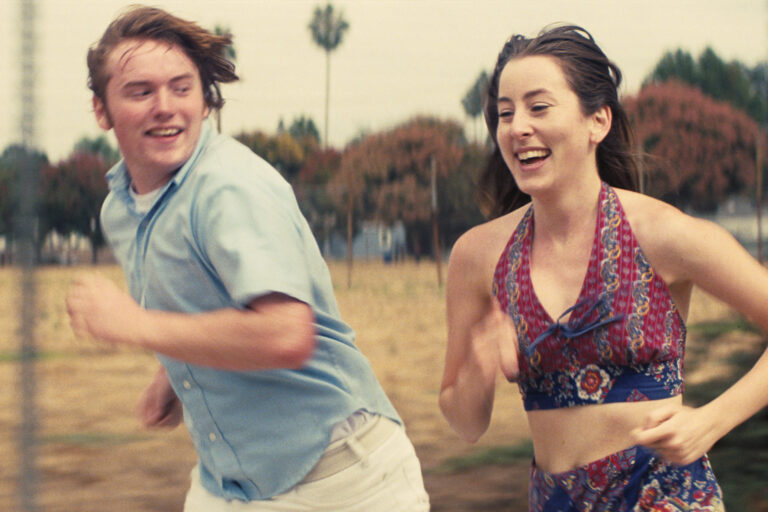
That is the question asked by Alana, our main character played by Alana Haim (a Golden Globe and BAFTA recognized performance for Lead Actress who really should be the frontrunner for the Oscar had she been nominated). Alana is faced with the question early on when she meets 15-year-old Gary( Cooper Hoffman), who is still in high school and falls for Alana as his first major crush. Alana is then left hanging out with Gary and his friends while constantly asking herself and others if hanging out with high school kids is lame, all while dodging Gary’s advances to turn their relationship from friends into more. Alana and Gary are constantly together to the point where Alana rebels from the friendship to seek another age range of older men to be around, onlyto find out that she doesn’t like adulthood either and is much more comfortable allowing herself to just enjoy the current state of life she’s in. It’s an absolutely relatable tale of finding one’s worth and self in a confusing time between growing up for real and growing up too much.

Now, this movie has brought up some controversy, with several issues being brought up such as the age of the protagonists and with some off color jokes aimed at Asian people. The situation was heavily discussed on Twitter since the film expanded in cinemas. In a world where many films find scrutiny under a PC lens this was a film that felt the same while opening up valid discussions for those who felt offended as well as those who interpreted the material differently. While I believe that people’s feelings are valid about these concerns, given the setting and time of the film I do not personally believe that PTA is being racist here . The language and actions of John Michael Higgins’ character are repellant, but I think that is the point. It is supposed to be an uncomfortable moment for you as a viewer because of the disturbing language of the time. I do not think that PTA using the language of the time here makes him racist. I compare it to Norman Lear using the language of the time regarding the LGBTQ+ community on All in the Family, and I do not think that makes him homophobic, either. The sensitive issue of the age gap in Licorice Pizza never really connected with me. Not once in the film does Alana ever make the move toward Gary, in fact, she turns him down numerous times. When she does flash her breasts to him, it’s because he’s constantly badgering her and she slaps him when he goes further. The ending where she “falls in love” with him to me personally represents her refusal to let go of being young. It’s a metaphor of what I mentioned above, what the whole point of the story is – choosing when to grow up.

With all of that out of the way, this is the piece de resistance of Paul Thomas Anderson that should absolutely win Best Picture, a win that I would champion from here until the end of time.


Movie Review: ‘Escape from Mogadishu’: The South Korean Argo


Director: Seung-wan Ryoo

Writer: Ki-cheol Lee, Seung-wan Ryoo

Stars: Kim Yoon-seok, In-sung Jo

Synopsis: In 1991 war-torn Somalia the personnel and the families of both the South Korean and the North Korean embassies have the same goal: to escape from Mogadishu.


Two years ago, South Korea made a statement of intent towards silver screen domination with Bong Joon-Ho’s Parasite. Rightly heralded as a masterpiece, Parasite walked away with a plethora of awards and even became the first foreign language film to win Best Picture at the Academy Awards.

The Oscar entry for South Korea this year is no Parasite, to be sure, but what Escape From Mogadishu proves is that the South Korean movie industry is vast and fully capable of competing with the best Hollywood has to offer.

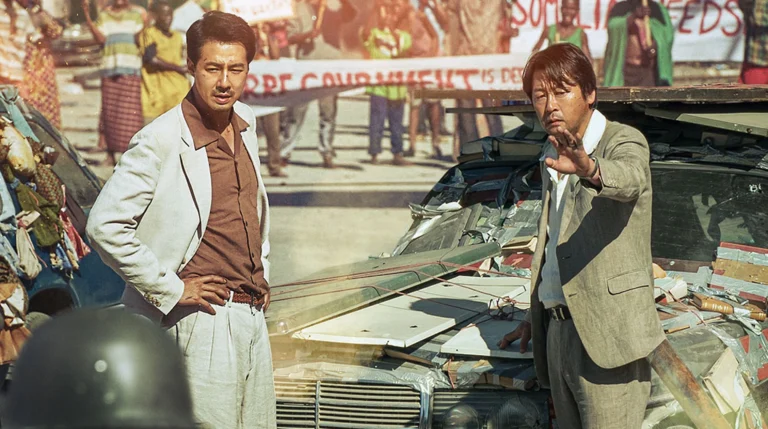
Based on the incredible true story of a daring Argo-esque escape back in 1991, Escape From Mogadishu centers on diplomats from North and South Korea who have arrived in Somalia to convince the Somali dictator, Mohamed Siad Barre, to vote for their entry into the United Nations. While both sides of Korea try to navigate each other, a coup on Barre’s leadership erupts, descending the city of Mogadishu into violent anarchy and martial law. With their lives at stake, both diplomats of North and South Korea have no choice but to work together to ensure their survival. But can they really trust each other long enough to stay alive?

Part political thriller and part action-adventure, Escape From Mogadishu feels like a strange nomination for the Academy Awards. Traditionally, countries seldom submit this kind of fare to the International Feature. While it’s no surprise that Escape From Mogadishu didn’t make the shortlist, that it was submitted at all says a lot for the quality of the movie itself. Director Seung-wan Ryoo manages to deftly handle the tonal transition between the nervy political elements early on to the all-out action sequences which come later, also imbuing the movie with a vein of humor running throughout, something which you might not imagine in a movie about a violent dictator and the bloodbath his removal creates. 

Ryoo’s take on the bitter enmity between North and South Korea is highlighted by the fact that they are both in a foreign country with its own troubles, troubles which put the Korean issues in perspective. With a similar concept to Park Chan-wook’s classic JSA: Joint Security Area, Ryoo builds upon the tension until the explosive revelation of impending civil war. Suddenly, the stakes change and both sides must work together. Although the South Koreans are the center of the story, the North Koreans are not painted as simply villains. A recent law passed in South Korea states that no North Koreans may be portrayed as heroes, which means Ryoo must be cautious about representation, nevertheless he manages to create a dichotomy whereupon both sides are simply acting in the interest of their respective governments, diplomats simply doing their jobs. The message is clearly one of unity. For us to survive, we need to work together, regardless of our history.

There are some expertly done action sequences, involving car chases from both Koreas, and the cinematography makes use of the Moroccan background which stands in for Mogadishu itself. The night sequences are stark, lit by torchlight, and tinged with a wariness that lends itself well to the situation. 

Although packaged and presented as an action movie, Escape From Mogadishu works well in its more quiet moments, and carries its message of unity amid turmoil, and the need to put down nationalist flags and identify with one another on a deeper level.


Grade – B


The 2022 Miami Film Festival: Highlights

This year was the 39th annual Miami Film Festival, a thing I had no clue existed, even though I was born and raised in Miami. How I missed this is a little embarrassing for me since Middleburg last year was my first ever in-person festival. It’s been held every year since March and has provided a platform for many international films as well as homegrown works from local directors. Several noted films have been shown here, such as Quo Vadis, Aida?, Sound of Metal, Twenty Feet From Stardom, and The Secret In Their Eyes. Being in the heart of downtown Miami, it was a surprise to me how much of it has been revitalized with a brand new cineplex and an art deco historical theater playing the roles as hosts.


In its week-long showing (March 4-13), with the amount of diverse films, I could only choose up to ten events, parties and screeners included, to attend to. Unfortunaetly, I missed out on festival winners Freda, Parsley, and One Second. I quickly learned that I should be more focused on more homegrown films rather than those with major studio or actor attachment because I am in Miami. In contrast to Middleburg, which I attended last year, the Miami Film Festival is really about the rising filmmaker and spices it up with major films in the middle. It will be something to keep in mind for next year. Anyhow, here are five films from the festival this year that garnered my attention. 

Opening Film – The Good Boss 

Julio Blanco (Javier Bardem) runs a factory that has won him every award except one, and now is a finalist for the last major business award he covets. Considering the workers as his own children, Blanco puts on his paternal persona instead of showing his ambition; willing to do whatever it takes to keep it afloat. However, in the week before the committee for the award comes to tour the factory, Blanco has multiple hurdles in front of him. A disgruntled ex-employee protests outside the factory demanding his job back, Blanco’s Head of Production and lifelong friend struggles with the reality of his wife’s adultery, and a pretty new intern catches Blanco’s attention – until he learns he’s the daughter of a family friend. There are many things Blanco has to juggle in order to win his most coveted thing yet.

Writer/director Fernando León de Aranoa (Loving Pablo) makes a sharp, dark comedy that wonderfully satirizes the love/hate relationship between employee and employer without overdoing it on one side. The Good Boss won Spain’s own Oscars, the Goyas, for Best Actor (Bardem), Best Director (de Aranoa), and Best Film amongst its record-breaking 20 nominations and was Spain’s submission for Best International Feature Film over Pedro Almodovar’s Parallel Mothers. Even though he does not have major name power, picking the dark comedy from a relatively unknown director outside of Spain over the beloved Almodovar shows the country’s own diverse talent and faith in others that the world should know of. 


Grade: A

Maixabel

In the same vein as Quo Vadis, Aida?, Maixabel tells the true story of a the titular named-protagonist who lost her husband to an assassination carried out by Basque nationalists in Spain. A decade later, her husband’s killer is in prison, remorseful of his actions and offers the opportunity to speak to the woman. However, Maixabel’s decision to confront the assassin brings up tension against her daughter and those who were harmed by the assassination. It’s a difficult scenario of reconciling politics and violence, even years after it happened when the attacks cease. Yet, she wants to know why her husband was killed and how someone could be willing to do this, an answer any victim’s family always wants to know and to determine if the killer is sincere for their crime. Blanca Portillo and Luis Tosar, as widow and killer respectively, are both phenomenal and carry the burden of conflicting emotions in Iciar Bollain’s stirring drama. 


Grade: A-

The Duke  

The last film to be made by director Roger Mitchell prior to his death last year, The Duke is a true story about how one man (Jim Broadbent) fought injustice by doing the one thing that harmed the establishment: stealing a painting of the Duke of Wellington. Partnering with his son (Fionn Whitehead) to hide the painting from someone he fears more than the police, his wife (Helen Mirren), it is an entertaining piece of British life that seems inconceivable that a simple man for a simple cause – free TV license for pensioners – would go so far and baffle investigators. Broadbent is absolutely wonderful and gives his best performance in many years.

Grade: A-


Drunken Birds

Canada’s submission for Best International Feature is a story of lost love far from home; in this case, from the compound of a Mexican drug lord to a farm in Quebec. Juan Antonio Guerrero (Roma) is Willy, a bodyguard who has a secret affair with the drug lord’s wife, but four years later, mixes in with other Mexican migrants on the farm of a French-Canadian family while looking for  her in Montreal. It feels as if the story took place in the United States, dealing with the language barrier as well as the sense of freedom for a better life. Adding in the domestic conflict with the farm’s owners and the unhappiness of the more humanistic wife (Helene Florent), Drunken Birds gives a more global reflection of labor exploitation with the haunting memories of the past that cannot be returned.

Grade: B 


The Phantom Of The Open

In the same vein as The Duke, another true story comedy takes root in the form of an unexpected figure who dared – foolishly – to take on the establishment in golf. Mark Rylance plays a former shipyard worker who, in his mid 40s, decides to take up the sport and enter The British Open just one year later. He becomes a cult hero to some, but a farce to the professionals who see his horrible performance as a joke to the world. Again, it’s a vein from British social lore of a blue-collar man sticking it to the hierarchy with a brazen charm of happy-go-lucky attitudes towards life. 

Grade: A-


Poll: What is Michelle Yeoh’s best performance?

Born in Malaysia, Michelle Yeoh made her splash in the Hong Kong action film scene of the 1990s, and has been kicking butt internationally ever since. She’s so good at it that he was given the opportunity to extend beyond the international and start butt-kicking at the multiversal level (Everything Everywhere All at Once comes to select theaters this weekend). Roughly four years ago we asked what her best film was (when Crazy Rich Asians came out), so this time we’re looking at her most notable performances

Which performance of hers do you think kicks the most butt?