This week on Women InSession, Jaylan offers up her favorite Pride films and why these films are essential to watch for Pride Month! There are some incredible LGBTQ movies over the years, however; we wanted to focus on a few here that have specifically resonated with us.
Panel: Kristin Battestella, Jaylan Salah
On that note, check out this week’s show and let us know what you think in the comment section. Thanks for listening and for supporting the InSession Film Podcast!
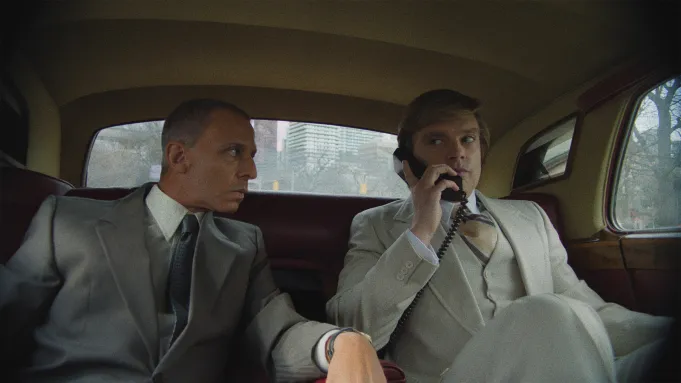
Director: Joel Potrykus Writer: Joel Potrykus Stars: Scott Ayotte, Melissa Blanchard, Joshua Burge
Synopsis: Two friends take a trip through a Michigan forest, intent on carrying out a disturbing pact. When their plan fails, one confronts unsettling repercussions at home.
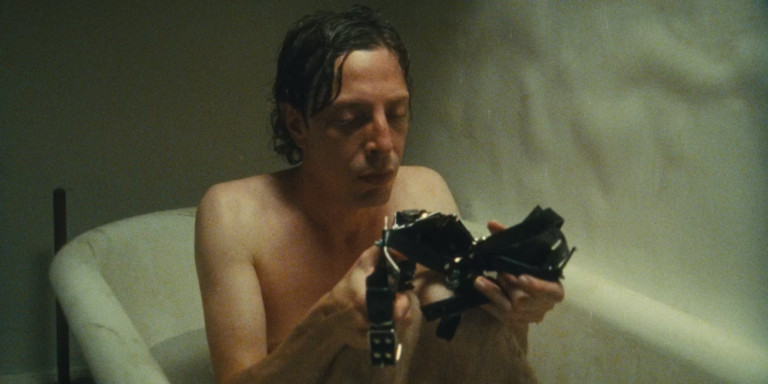
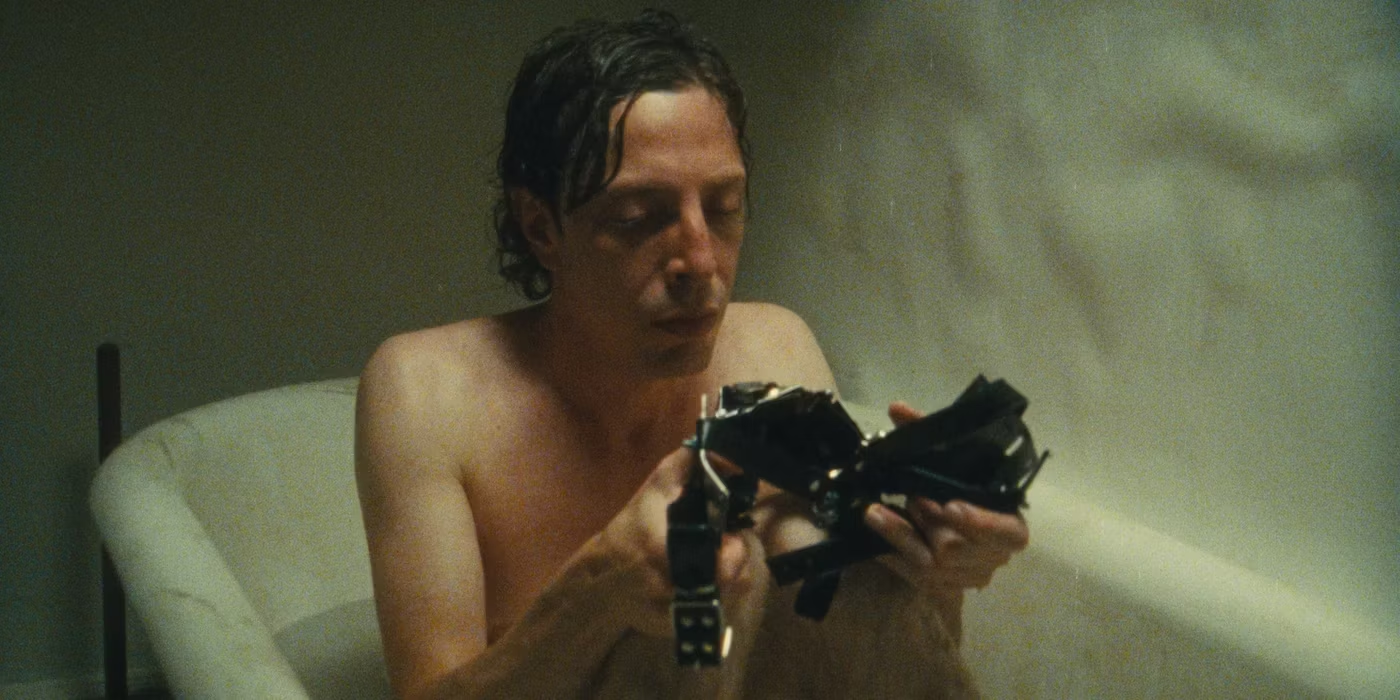
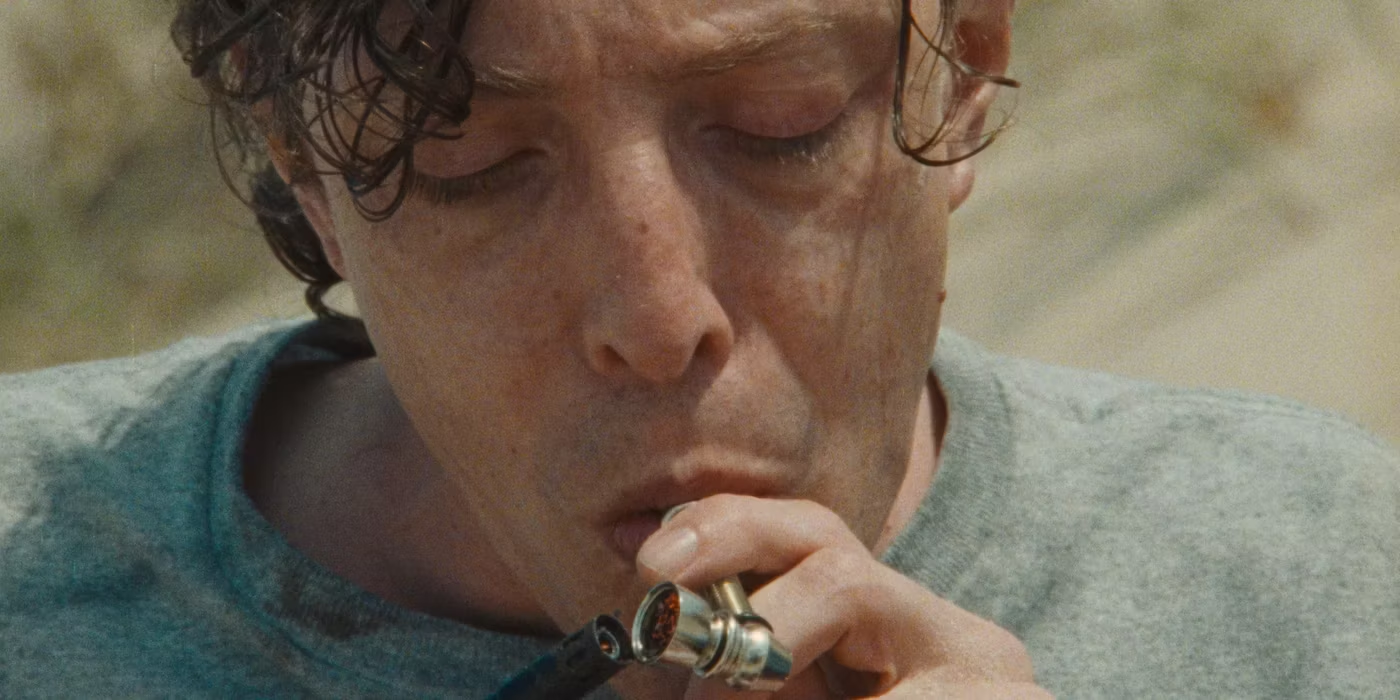
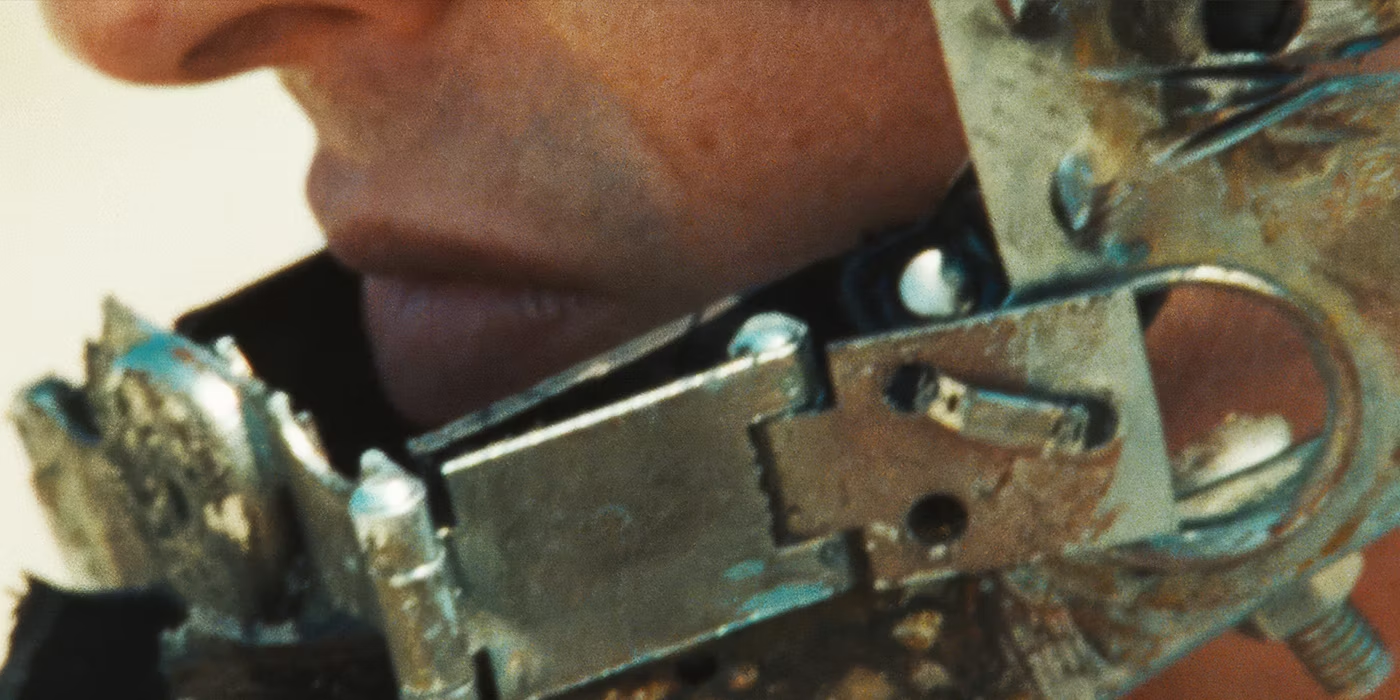
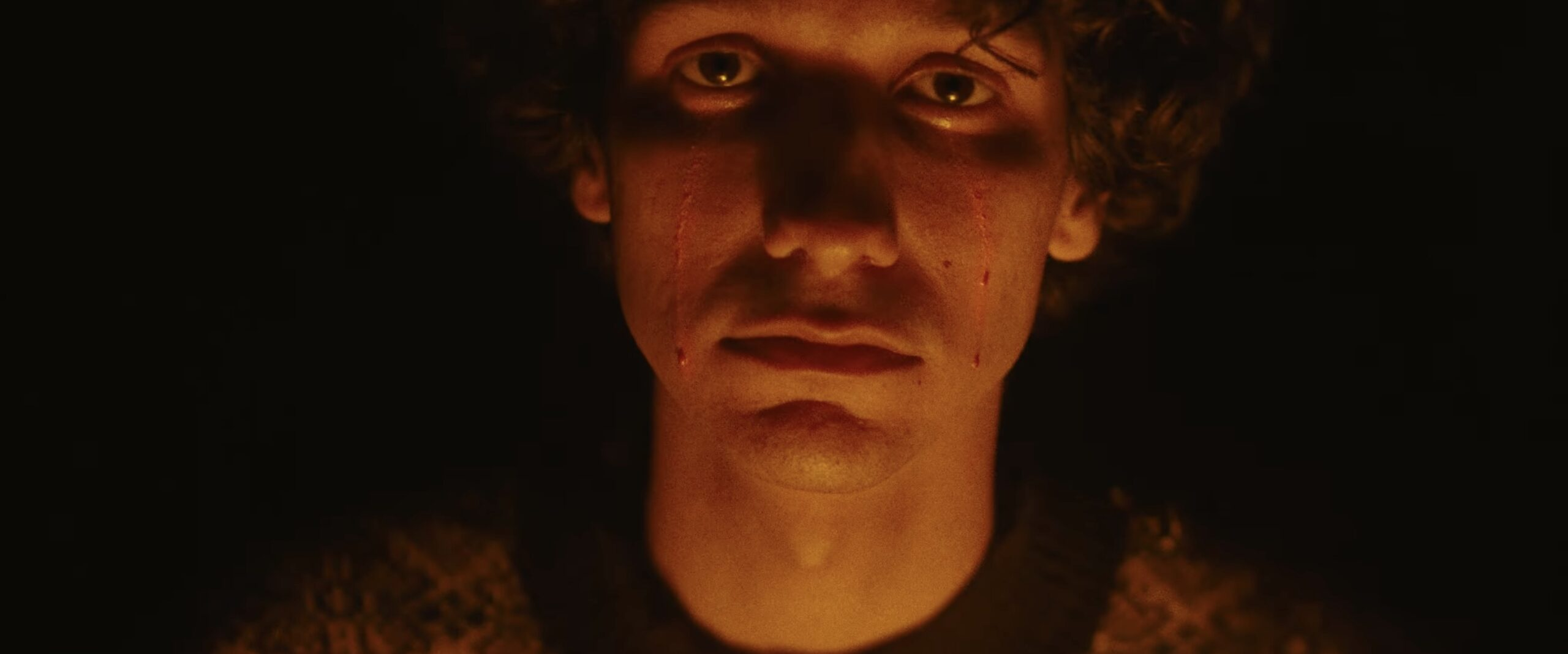
Joel Potrykus’ Vulcanizadora begins with two men, Derek (Potrykus) and Marty (Joshua Burge), trudging through the woods. If working off appearances alone, Derek appears competent, at first glance. He’s got all the necessary camping gear strapped to his person, and seems to be leading the duo with a destination in mind. Marty, on the other hand, is in a world of his own. He’s got nothing but a drawstring backpack, and a hoodie tied around his waist. He couldn’t look less prepared to spend any amount of time in the woods. And thus, from the very first gorgeous frame of Vulcanizadora, Potrykus plants a question in the mind of his viewer: What are these two doing here? And he doesn’t answer that question for quite some time. To be honest, the way Potrykus goes about actively avoiding the intrigue of this setting is a marvel in its own right. It’s one of many wildly exciting aspects of this film. So consistently did it upend any expectations, that by the time its most shocking sequence left me reeling, the remainder of its runtime washed over me in the best way possible. But we will get to that in time. For now, it feels right to pull a page from the book of Vulcanizadora, and merely exist in the intrigue.
Shot on 16mm in the woods and beaches of Michigan, this film is an absolute beauty. Yet it feels odd to use that word to describe a film such as this. In that regard, Vulcanizadora is so multifaceted. It’s a film that, at barely 90 minutes, is able to shapeshift repeatedly. Yet through every change, one can’t help but feel the despair wringing out of every frame. There’s a shot early on in the film that has the two friends (if you can confidently call them that) playing with fireworks. Though, after a while, they skip the traditional method of using them. Instead, we see a pile of the guts that make up the firecrackers. Upon lighting them on fire, they begin rapidly expanding, seemingly being birthed from the flames of Hell to consume everything around it. As a choir kicks in, any sign of greenery and light is replaced by the all-consuming flame, and an ever-growing substance that seems to feed on the very earth around it. It’s an image that you can’t look away from. Yet it feels so haunted and wrong. To me, it’s the defining image of the film. As we come to learn, this trip isn’t merely for two friends to bond and explore the woods. There are ulterior motives at play, set in motion by some of the most powerful emotions imaginable. Any sense of comedic flair injected by Potrykus’ goofy Derek takes on new meaning as we learn more and more. But even at its darkest, Potrykus’ film never shies away from the humorous elements. This is as much a jet-black comedy as it is a gripping psychological horror. It’s in these opposing tones that Vulcanizadora bombards you with repeated blows of brilliance.
So much of this film operates in the unknowns of life. What’s going on in the minds of those around us? Can we rely on them in an essential moment if they aren’t as steadfast as us? What really awaits us in the next life? These questions are all posed in Vulcanizadora both matter-of-factly and silently. This is a bleak, nihilistic film. It fully embraces the line of thinking that the possibility of infinite nothingness is more enticing than the possibility of another day of feeling awful. In the first half of this film, Marty remains a silent and unreadable force. The most memorable sentence we hear from him is one that seems to both unlock his character, but also open up an entirely new bevvy of questions. “Nothing matters anymore.” It’s a phrase that can be found in many films, novels, songs, etc. Yet in this context, which at this moment of the film is a complete lack of any context whatsoever, it remains bone-chilling. The simple reason? It’s the first time that Potrykus’ film ever reveals the darker hand it’s hiding. And from the moment Potrykus puts his audience on edge with suspicion, it’s already far too late. We’ve already become too charmed by Derek’s ridiculous antics and mystified by Marty’s glances of annoyance and steadfast determination. In the opening section of the film, it’s legitimately laugh-out-loud funny. And a mere 30 minutes later or so does the realization hit that the laughter stemmed from unease. And only a few minutes after that, all we feel is dread. But what comes after?
One would expect the midpoint of Vulcanizadora to be the climax of a lesser film. Instead, Potrykus uses it to both recontextualize all we’ve seen thus far, while also completely shifting the lens of what’s to come. Marty finds himself alone, in a world that he feels ought to punish him for all his actions. Yet he is unable to find solace at every turn. Forced to live with the weight of his actions, Marty is a man grappling with his innermost thoughts. It harkens back to something Derek mentioned earlier in the film about a man who temporarily experienced death. He said Hell wasn’t constant torture with fire and brimstone. Instead, it was just a place that felt like an eternity of everybody feeling nervous and worried. That may sound like some people’s daily life due to the anxieties of a rapidly changing world, but Marty begins to experience it on a profoundly real level in the back half of this film. But this line seems to also stem from Potrykus’ initial idea that birthed his film. In a statement regarding the film, Potrykus said, “Vulcanizadora is my most heartfelt and personal, but not in a good way. It’s my most sincere and emotional, but also my bleakest and most haunting.” This being Potrykus’ first film in 6 years isn’t the only major development that occurred in his life. In that time, he has become a father. And with that came an entirely new range of worries that seems to only unlock upon having a child.
For some people, they see the human experience as a straight line. We follow that line until, eventually, it comes to an end. When bringing a child into the world, I have to imagine that you see that line in a completely different light. You become hyper aware of just how short it is, or just how easily it can be cut short. You try to stretch every possible fiber of distance in the hopes that you can improve the path your child takes. If life is all just one big game we get to play, when a child comes into our life, we’re now playing for keeps. The stakes rise exponentially, and those stakes are felt throughout Vulcanizadora. Here we have Marty, a man who is grappling with the idea that he has permanently altered the life of a child who hasn’t even grasped the concept of life yet. The ways in which Burge highlights such a weight on Marty is palpable. Looking for any semblance of relief, we sometimes won’t be able to find it until we embrace the notion that the universe’s plans aren’t in our hands. But I can only imagine what that fact must feel like in the mind of a father. We can search endlessly for ways to escape our current experiences. But sometimes, we just have to accept all that comes with the dread we feel, and hope that we’ll make it through to the other side.
Vulcanizadora celebrated its world premiere at the Tribeca Film Festival in the U.S. Narrative Competition section. Tickets for screenings and more information on the film can be found right here.
Director: Tiffany Paulsen Writer: Dan Schoffer Stars: Jenna Ortega, Percy Hynes White, Adam Rodriguez
Synopsis: It tells the story of two teens who meet and fall in love over four days of the year.
Romantic dramas like Tiffany Paulsen’s Winter Spring Summer or Fall are rarely offered without good intentions. They tend to be easy to consume, disposable but not often toxic. They aim to either feel familiar or to show viewers a fantastical version of what love and lust “could” be if relationships were meant to unfold cinematically. Films of this ilk already overpopulate 2024’s release calendar, from The Idea of You and Música to The Greatest Hits and Players. Of note: Each of those four titles belong to streamers.
Perhaps that’s an indication of Winter Spring Summer or Fall’s fate, and that’s before we note that the queen of Netflix, Jenna Ortega, helms the relatively empty drama in question. She stars as Remi, closer to a lab creation than a real character. Remi has just completed a fellowship at Google, has never partied, and is debating between attending Columbia and Harvard after high school. (They’re both safety schools.) While on the train en route to a tour at the former Ivy, she meets Barnes Hayworth (Percy Hynes White, Ortega’s Wednesday co-star); Barnes’ name was generated by an artificial intelligence software masquerading as F. Scott Fitzgerald’s personal library. He doesn’t want to go to college, is a soulful, tortured stoner lookalike, and represents danger to all things educational.
The makings of their will-they-won’t-they affair aren’t any more original, despite the natural chemistry Ortega and Hynes White have evidently built up over the course of a few years as screen partners. This New Jersey Transit meet-cute, as infuriating as it sounds, begins thanks to Barnes’ familiarity with Remi due to the fact that his best friend PJ (Elias Kacavas) lives across the street from Remi’s family. Barnes attempts to penetrate her steely facade by making her a playlist solely featuring the tunes of the Talking Heads, as 18-year-olds are prone to do. After Barnes directs Remi to an express train instead of a local, she lightens up a touch, and an acquaintance-ship is born. But she has “a lot of important things going on” that she won’t neglect in favor of “some cute guy I met on a train.” This can’t happen.
Until, of course, it does. Why else would we be watching? Over the course of what the film’s synopsis calls “four days”, but would more accurately be considered four seasons, this duo falls in love. David Byrne and Buffalo Tom croon as these teens, who do manage to pose as teens despite being in their early 20s, gaze longingly into each other’s eyes and dream about saving turtles in Costa Rica. (Yes, really.) Yet despite the aforementioned connection between its stars, Winter Summer Spring or Fall is hardly ever convincing, let alone natural. Its script, from Rizzoli & Isles writer Dan Schoffer, is clunky and rote, with supporting characters like Adam Rodriguez’s “Dad” and Marisol Nichols’ “Mom” that are forgettable to the point that they might as well be nameless.
Clearly influenced by Richard Linklater’s Before trilogy, Paulsen and Schoffer’s right-place-wrong-time tale lacks the instinctive quality those masterworks, well, mastered en route to becoming cinematic treasures. It’s not that influences for one’s original film should be frowned upon, but when the references in question become an overwhelming framework yet fail to replicate everything the better film possesses in abundance, the new property suffers. Ortega and Hynes White aren’t to blame for their inability to be Julie Delpy and Ethan Hawke; Winter Spring Summer or Fall is wholly to blame for trying to roll Sunrise, Sunset, and Midnight into one Y.A. weepy.
While Winter Spring Summer or Fall will likely nab the championship belt for being the cheesiest, most mainstream title you’ll find at a major festival this year, it will invariably fall victim to a destiny as old as time: When a frustratingly vacant romantic drama falls in the content forest, and no one is around to watch it, does it make a sound? Once it lands on whatever Paramount+ plans on becoming, will fans of Ortega’s filmography pony up their subscription dollars for a film more likely to inspire fan edits on Tik Tok than it is to inspire a future sequel from Colleen Hoover’s production company? (Derogatory.) The film’s true gift is its conclusion, not for breaking any new ground nor for any shocking revelations, but for the fact that we won’t be forced to watch its lifeless liaison unfold any longer. It was always a road to nowhere; no one will blame you for not wanting to come along.
Synopsis: Neighbors prank each other, situation escalates comically amid NYC apartment complex’s cutthroat politics, exploring absurdity of conflict between residents.
To live in New York is to deal with annoying neighbors. In most cases, the way it’s dealt with is just by ignoring it. I think back to the time when I lived beneath somebody who lived alone, and he would just shout in anger at all hours of the day and night. Having barely, if ever, interacted with him, I could only assume it had to do with the video games I could hear being played, or his professional life. If you’re wondering what that profession might have been, I can assure you it’s as nightmarish as you could imagine. Yes, he was a DJ. And no, the mixes my roommate and I became privy for the two years there were certainly not great. The constant loop of thrumming bass, over and over and over. It was awful. And what did we do about it? The same thing most New Yorkers tend to do: complain about it to everybody. Except, of course, to the person causing the problem. Personally speaking, that’s far too confrontational. I am of the belief that dealing with it internally is the best solution. We did once leave an anonymous note requesting, at the very least, that the loud music was played during reasonable hours of the day. Headphones do exist! It got better for a week or two, before starting from scratch yet again. The same bass looping ad infinitum.
What was I to do? Eventually, the bass became the soundtrack to my own thoughts about this stranger. Here’s a person who has no presence in my life, yet fundamentally affects my day-to-day thoughts on some level. It forced me to become curious about what he’s doing when he’s not DJing. The behavior of screaming into the void makes you wonder how self-aware he truly is.. I moved out of that apartment, and am living in a much quieter, and nicer, building. I haven’t thought about my DJ neighbor since then, but Rachel Wolther’s The French Italian certainly brought those memories back to me. And it’s in the curiosity and self-imposed helplessness of a New Yorker that this film lives. Valerie (Cat Cohen) and Doug (Aristotle Athari) live in a rent-controlled brownstone on the Upper West Side. Their idyllic safe haven quickly falls apart when their downstairs neighbors begin constant screaming matches and karaoke sessions. It’s an immediate way to garner sympathy and mine countless comedic moments. It’s in this central conflict that Wolther’s film takes shape, and examines the question of whether or not people do have self-awareness regarding their “private” lives.
The film opens with a delicious looking spread of baked goods from the legendary New York establishment, Zabar’s. Valerie and Doug are on their way to a friend’s dinner party with it. Upon arrival, they make the outrageous claim that the cookies are all homemade. It seems like a spur-of-the-moment decision on Valerie’s part, but Doug instantly backs her up. If this film is bolstered by anything in its rough patches, it’s in the relationship between our two leads. Described by another character as having achieved “mind-meld”, the two are completely in sync with the idiosyncrasies of one another. It’s incredibly endearing, even as Wolther slowly reveals the layers showing these lead characters aren’t necessarily bastions of moral integrity. The main reason we accept these two characters as the leads is because they’re who Wolther introduces us to. Going back to thinking about my DJ neighbor upstairs, I’m sure there were occasions where my films were played a bit too loud for his liking. Or maybe we did have a gathering that ran a bit too late. If we’re operating under the assumption that most people live their life as if they’re the main character, the chances people see their own harmless actions as being in the wrong are highly unlikely. So yes, once Valerie and Doug hear “La Bamba” (the perfect song for such a scenario) sung for the umpteenth time, the audience immediately sides with the two in their quest for revenge.
Admittedly, the central scheme The French Italian revolves around is a funny one. It makes for some really great gags, especially from theater actor/friend Wendy (a stand-out zany Ruby McCollister). Valerie and Doug decide to stage a fake play in order to lure ex-neighbor Mary (Chloe Cherry) into an audition and learn more about her, before eventually confronting her for the pain she and her partner had caused our protagonists. And while this makes for a lot of escalating hilarity, the film does feel at its strongest when grappling with these annoying neighbors through the lens of Valerie and Doug’s imagination. There’s perhaps nothing more relatable than crafting stories around the complete strangers in our lives who we just so happen to see or hear of regularly. And in that regard, we would learn just as much about Valerie and Doug through their “dissections” of the people around them. Some of the funniest sequences of the film involve just Valerie and Doug’s expressions trying to pinpoint their neighbors’ ins and outs, or an event that lies unseen and unheard to the audience.
New York, and the world at large, is full of enigmatic individuals we’re likely to never fully engage with. But that allows our imaginations to run completely wild and make up stories about who they are. In the fantastic riffing between Cohen and Athari’s performances is what allows Wolther’s film to occasionally soar. These two people are wholly committed to their own views of themselves. When thinking of the self-awareness I mentioned earlier, these characters have none. What’s worse; they feign having it, making their rationalizations amongst one another all the more funny. In reality, their scheme alone proves that they’re not all that great of people as they think they are. Constantly talking about having one’s life together doesn’t equate to the lengths in which they take their stunt. The goofiness in which they go through life feels like a very clear diversion from the anger and resentment they feel about their situation. But it feels like Wolther’s script is less interested in examining that than it is mining potential jokes for all they’re worth. It’s a comedy, so it can obviously coast on just being funny. But by the conclusion of the film, it does feel like The French Italian would benefit from an even slightly deeper layer of examination. But when Wolther’s comedic strengths do hit, it’s laugh-out-loud funny.
More than anything, The French Italian must be applauded for being a straight-up comedy. There’s obviously no issue with blending genres together, but so few comedies nowadays feel as if that’s all they are aspiring to be. And Wolther, who when asked about the conception of this film, expressly voiced her anxieties of feeling like a hack, admirably commits to being a goofy comedy. It builds up situations that are then comically torn down. It also happens to feature a variety of wonderful performances from many recognizable New York character actors. This is a New York film through and through, even going so far as to disrupt a dolly shot abruptly in fear of a rat encounter on the street. It’s moments like those, or in Cherry’s performance as a wildly obtuse actress, or the loving jabs taken at improv and poorly conceived plays, when Wolther’s great sense-of-humor can be felt. New York is such an odd place to live, and every day here provides us with a new ridiculous story to tell our friends and loved ones. While it does feel like The French Italian writes itself into a corner at times, the sheer ridiculousness of it all, and the countless laugh-out-loud performances within, make it a worthy film about one of the many painful New York experiences.
The French Italian celebrated its world premiere at the Tribeca Film Festival in the U.S. Narrative Competition section. Tickets for screenings and more information on the film can be found right here.
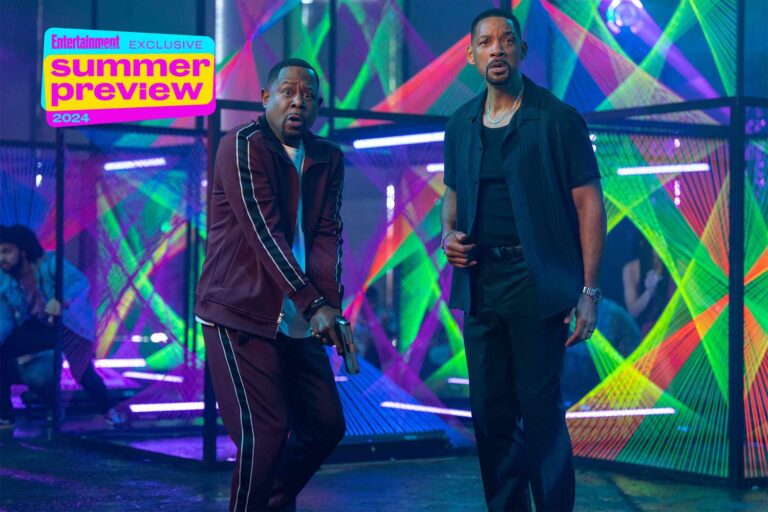
On this episode, JD and Brendan are joined by the great Diego Crespo of the Waffle Press Podcast to discuss Will Smith and Martin Lawrence in Bad Boys: Ride or Die! We are big fans of this franchise and we couldn’t wait to dig into this latest entry. There’s just nothing that beats Mike and Marcus, and the craziness that comes with those two characters.
Review: Bad Boys: Ride or Die(4:00) Director: Adil & Bilall Writers: Chris Bremner, Will Beall Stars: Will Smith, Martin Lawrence, Vanessa Hudgens, Alexander Ludwig
If there is one film to thank for expanding the Best Picture category, it’s The Dark Knight. Praise for the film was nearly universal, from technical wizardry to tremendous performances. Yet, with only five slots, the Academy voters of the time chose more standard fare. For the 2009 Oscars, the race for Best Picture was between the literary adaptation The Reader, the expansive short story adaptation The Curious Case of Benjamin Button, the historical sparring match Frost/Nixon, the empowering biopic Milk, and the romantic drama Slumdog Millionaire.
While there is diversity in the filmmaking style and subject matter, these films all firmly fall within the broad “drama” category. They’re all made to evoke the human struggle in some way or expose a universal truth. Even though it had the trappings of a superhero film, The Dark Knight also tackled some larger themes of our society at the time. It posed questions about the surveillance state and how to combat an enemy who has no compunction toward endangering civilians as a means to their end. The film is a philosophical conundrum about what lengths the “good guys” should go to in order to maintain order in the world. Above all, though, it’s an action movie, which has historically been undervalued by the Academy, especially in the Best Picture field.
Heath Ledger in 2008’s “The Dark Knight.”
The Best Picture category has recognized action films throughout its history, but typically, the action is within the guise of a war drama. You’re allowed to have tough guys with one-liners as long as they’re spouting those one-liners at Nazis. It wasn’t until Best Picture’s expansion in 2010 that many genre films were listed amongst the nominees. However, gaining recognition for pure action films is still extremely rare. Most of the action films nominated are also sci-fi or fantasy, with those elements overtaking the action trappings.
Since the expansion of Best Picture, three action-oriented films have been nominated for the top prize. First, Captain Phillips (2013) follows a container ship captain (played by Tom Hanks) who keeps calm during a hostage situation with pirates. Although you could argue it’s more of a dramatic thriller than an action film. Next is Ford v. Ferrari (2019), which isabout the Ford Motor Company designing a car to beat Ferrari at the 1966 race at Le Mans. Despite the car racing sequences, it’s more of a weeper made for your dad than an out-and-out action flick. Lastly, Top Gun: Maverick (2022), in which a reckless, brilliant, over-the-hill pilot trains a new generation in air combat techniques. Director Joseph Kosinski has said he doesn’t consider his sequel an action film but rather a drama with action scenes.
The stage is ripe for an unapologetic action film to amass Oscar glory. Whether it’s a punch, shoot, and kick revenge saga (John Wick), an everyman burdened with being the only one to stop an extraordinary plot (Die Hard), or a sexy spy affair, this glass ceiling the Academy has imposed must be broken with bullets, bats or bodies.
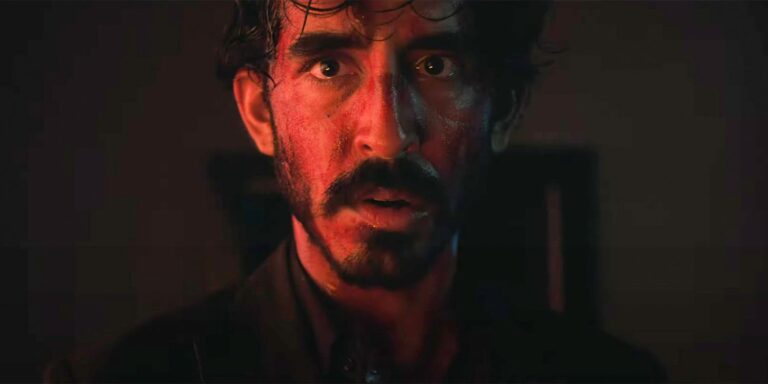
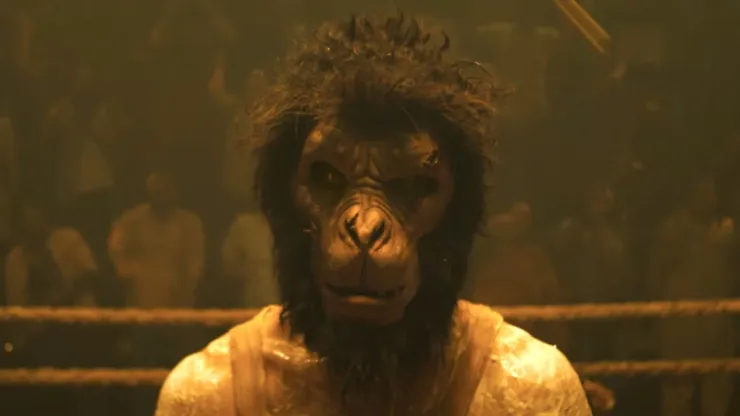
The strongest contender to break this barrier is Monkey Man. It’s an action film released earlier this year to waves of acclaim from critics and moviegoers alike. Monkey Man is a tremendous combination of elements that the Academy seeks out. It’s also got an Oscars pedigree with Dev Patel making his directorial debut, a Best Supporting Actor nominee for Lion (2016), and producer Jordan Peele who has a clutch of nominations and a win from his directorial debut, Get Out (2017).
Monkey Man is about an underdog hero avenging the death of his mother and the people of his village. It’s a timely film steeped in Indian mythology and politics, even if the players look slightly different from their real-life counterparts. It’s got juicy supporting performances from Vipin Sharma as an unlikely mentor and a devilishly evil turn from Makrand Deshpande as the cruel power behind the throne. Italso has awards-worthy technical elements. The costuming, makeup and hairstyling, editing, cinematography, sound, and production design are all fabulous. There’s a great script paired with Dev Patel’s superb and grueling lead performance. Monkey Man deserves to be listed amongst the nine other Best Picture nominees and should break the barriers that have held back many of the best action films of the last century.
As we are officially halfway through the movie year 2024, it’s a good time to debut a feature that will appear in my future Chasing the Gold columns. This will be a curated list of possible nominees amongst the films that have been theatrically released. It’s fun to speculate on what may be coming later in the year, but I’ll focus only on what has had its widest possible release at the time of publication. The list will evolve as the year progresses and we get closer to show time. At this stage, my list contains the 10 strongest contenders for Best Picture. The list will grow and change as more Oscar hopefuls are released. be split into three categories.
The first category will be called “Safe Bet.” These films are the most likely to carry through the season and into the list of Oscar nominees. The next category will be called “Strong Potential.” These films have something going for them but may not have enough momentum to last the season. The final category will be called “Hopeful.” These are films that I want to highlight as worthy contenders that are likely to be ignored.
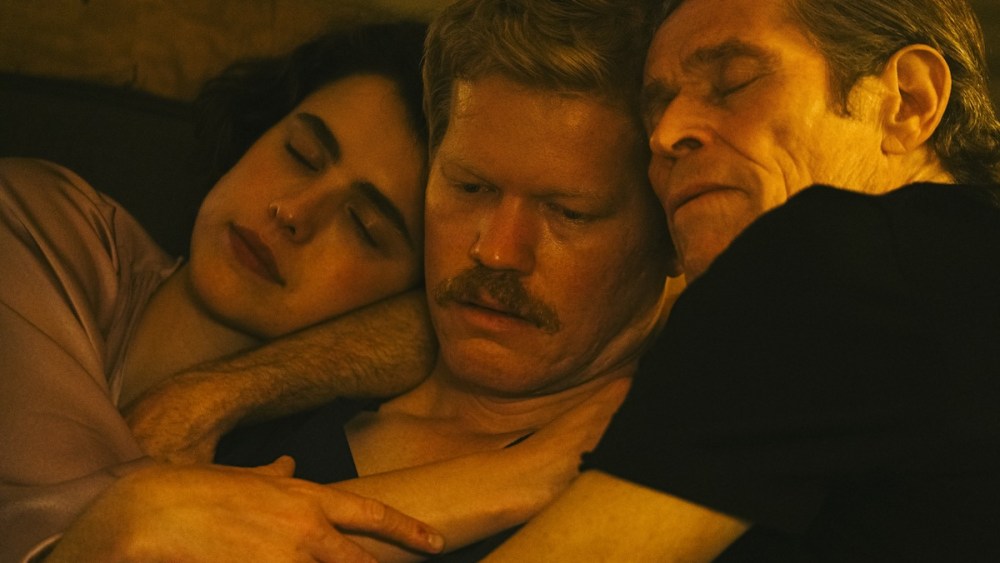
Synopsis: Three brothers build an unusual time-machine in order to bring their long-dead mother back to life.
Two things come to my mind when thinking about the “Greek Weird Wave”. The first, is critically and commercially beloved Greek auteur Yorgos Lanthimos. The second is my gratitude. As a cinephile, there’s nothing better than having the ability to explore the entire world, and time itself, through film. So as a Greek, with Lanthimos being my real introduction to Greek cinema, it allowed me to see my country of Greece in all the years I hadn’t been able to make a return visit. I’ve since changed that, but going back to Greece, and the rising prominence of Lanthimos’ career, has only fueled my desire to devour more of Greek cinema. Enter She Loved Blossoms More, Yannis Veslemes’ drug-addled journey into, and eventually through, grief. And remaining true to the stylistic wave of films mentioned earlier, Veslemes’ film is as weird as can be. But it avoids being weird merely for the sake of shock, and is not without its earned merit when it comes to capturing a distinct on-screen vision.
The film doesn’t so much open as much as it just throws the viewer into the fray. We see three men, who are quickly discovered to be brothers, living together. We barely see the entire house they’re in, but you get the sense that it’s massive. It’s also clearly dilapidated. It’s the type of oversized house that, if you’d pass by it as a kid, your brain could only imagine the most shocking of horrors and mad science that’s happening within. This thought burrowed its way into my brain early on in the film, and from there it only expanded, thanks to Veslemes’ commitment to style and tone. And this thought wouldn’t be an unfounded one if looking from the outside in. By the time we are introduced to these brothers, they’re clearly operating on the level of mad scientists. Hedgehog (Panos Papadopoulos), Dummy (Julio Katsis), and Japan (Aris Balis) are clearly skilled. They have the ability and wherewithal to build a makeshift laboratory in the name of their objective. What they’re doing should be impossible, but by the time we meet them, they’re on the verge of something equal parts marvelous and frightening. But even so, these three are clearly struggling to take care of their most basic necessities.
For example, cooking falls to Dummy. He pulls mystery meat out of the freezer, unsure not only of what it is, but when it was from. He barely hears the criticisms his brothers fling at the poor taste and even worse smell. The three are going through something major. They have lost their mother, who is seemingly buried in the backyard. Coping with such a loss has channeled their focus into a single task. The only thing that seems to sidetrack them is the copious amount of drugs they consume. It’s in this barrage of drug usage that Veslemes is able to capitalize on what makes She Loved Blossoms More a stand-out genre flick. One only needs to take count of just how many disparate elements come together to form something unique. The opening credits play over imagery that brings gritty, dystopian sci-fi to mind. We see built hardware that appears to have been thrown together with whatever scrap was around. Then the score, also by Veslemes, kicks in, playing out in ways that resembles what a hyperactive mind would conjure up when reading a mystery novel. It’s music that would play in the lair of a villain in a B-movie. There’s filmic-inspired footage intercut throughout the film, with heavy film grain brushing up sharply against the active digital imagery that makes up everything else. This footage is used sparingly, but it’s certainly effective. There are practical effects all throughout that blend in nicely with the psychedelic digital trickery on display. Veslemes throws a lot at his audience. But it’s in this disarray that his thesis appears to take shape.
With constant distortions blurring across the screen and such stylistic choices meshing together, it’s made abundantly clear how fractured the minds of these individuals are. If the drugs they’re taking to numb their grief isn’t enough, their singular focus is all that’s propelling them through it. The work in question? Building a machine that can bring their mother back to life. And this machine just so happens to be built from the shell of their mothers large wardrobe, still full of the clothes she left behind. Is this a way for the filmmakers to save some money on building an entire contraption? It’s possible. Yet Veslemes’ film makes many pointed comments that directly link the grief these brothers are feeling to the wardrobe itself. The pain they feel is palpable, and any viewer can sympathize with the lengths to which they are going. To see items once owned or used by those who are no longer with us carries massive impact. “It’s just a closet” is said at least twice in the film. In both distinct instances, the response is the same: “It’s more than that.” But in both sequences, the meaning behind these exchanges is flipped. In the first, it serves as the idea that yes, this is a machine that can actually bridge the gap between space and time. But the second meaning is far more potent. It’s not just a closet. It’s not just a machine they built either. It’s their mom’s closet, full of memories ingrained within the fibers of each thread of each article of clothing. We remember those who are no longer with us by what they leave behind.
I mentioned the use of filmic photography earlier. Most commonly associated with home movies, the film gauge looks like 16mm. In particular, it evokes a certain sense of nostalgia. And in She Loved Blossoms More, Veslemes uses it in such a way that appears to distort time itself. Hedgehog finds himself aimlessly meandering around the house, and we follow him through the lens of a handheld film camera. It’s as if we’re witnessing something we shouldn’t have access to. We’re watching a child grieve for his mother. It’s in deeply painful or anxiety-inducing moments when we may feel outside of ourselves. And through this camera, the film scarily captures an out-of-body experience. These brothers, however brilliant they may actually be, are still on a quest that will likely end in folly. Yet they find themselves caught in the hubris of their own efforts. For even the most brilliant mind there is, some forces are too cryptic to ever be understood. They most certainly cannot be altered or reverted. In grief, we may find ourselves obsessed over simple ideas. The most universal idea of all sets these brothers off on their path: they want to bring their mother back. It appears to be a vicious cycle. These brothers are not the only ones caught in it.
Throughout all of time, there are those who have lost loved ones. It’s as if history is an endless loop of grief. And everybody will surely react in their own way. Can the loop ever be broken? When thinking about the answer to that question, I return to one of the first lines spoken in the film: “I remain optimistic about the future.” It may not provide a concrete answer, but there’s certainly hope in knowing that one way or another, we always find our way through to happier days lived in memory of those who are no longer with us. If we hold onto those objects and those memories of our loved ones, we are bound to get through the roughest patches of grief. For as creepy and off-putting as She Loved Blossoms More can be at times, there’s hope to be found among even the most upsetting of places.
She Loved Blossoms More celebrated its world premiere at the Tribeca Film Festival in the Escape from Tribeca section. Tickets for screenings and more information on the film can be found right here.
Director: David Hinton Stars: Martin Scorsese, Michael Powell, Emeric Pressburger
Synopsis: Martin Scorsese reflects on the influence of filmmakers Michael Powell and Emeric Pressburger, whose decades-long collaboration led to a series of classics that made the duo a crucial part of British cinema.
When Martin Scorsese charted his early filmgoing escapades in 1995’s A Personal Journeywith Martin Scorsese Through American Movies, he structured said journey by splitting films from the directors he highlighted into four categories. There was the director as a storyteller, in which Scorsese focused on Westerns, gangster films, and musicals; as an illusionist, a la D.W. Griffith and F. W. Murnau; as a smuggler, like Douglas Sirk, Samuel Fuller, and Vincente Minnelli, filmmakers who hid subversive messages in their works; and as an iconoclast, filmmakers who take aim at social conventions, including Charlie Chaplin, Orson Welles, Elia Kazan, and Stanley Kubrick.
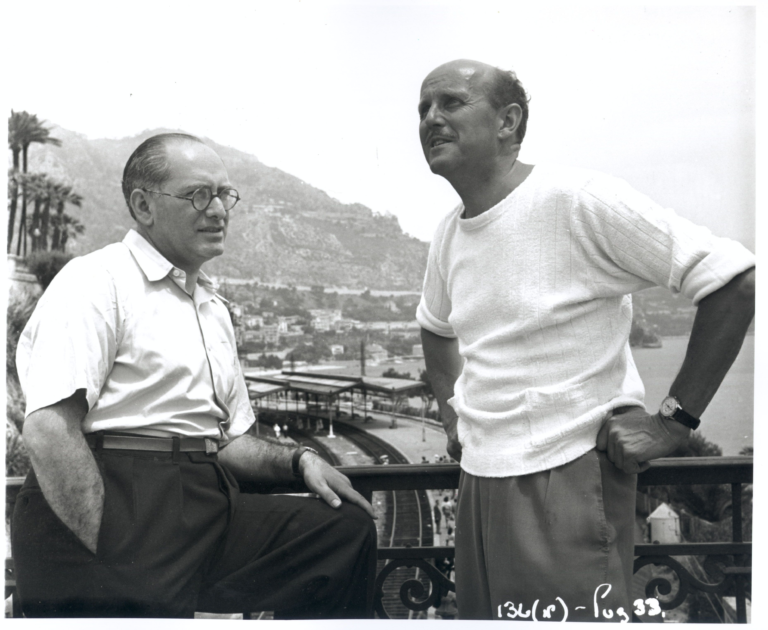
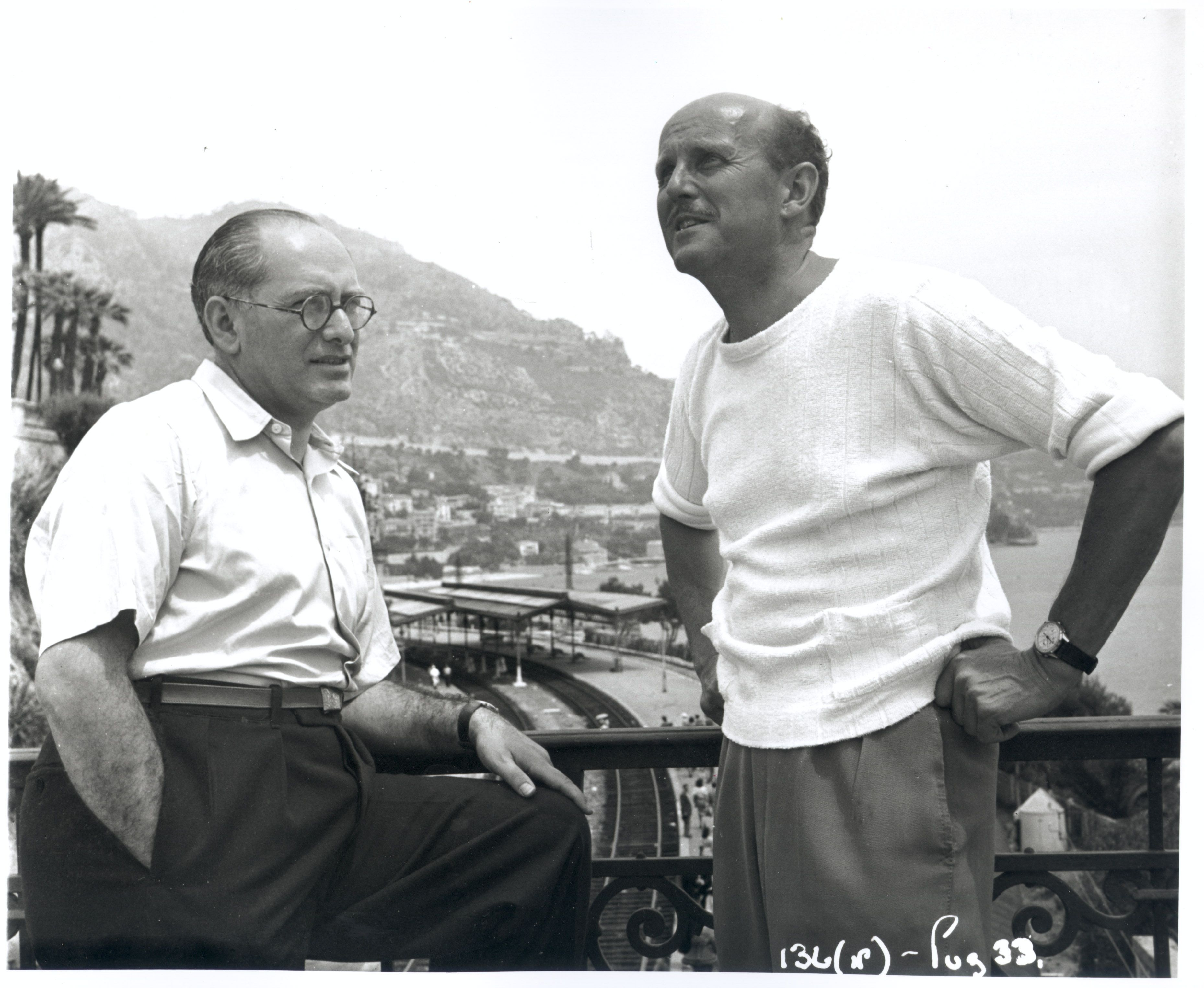
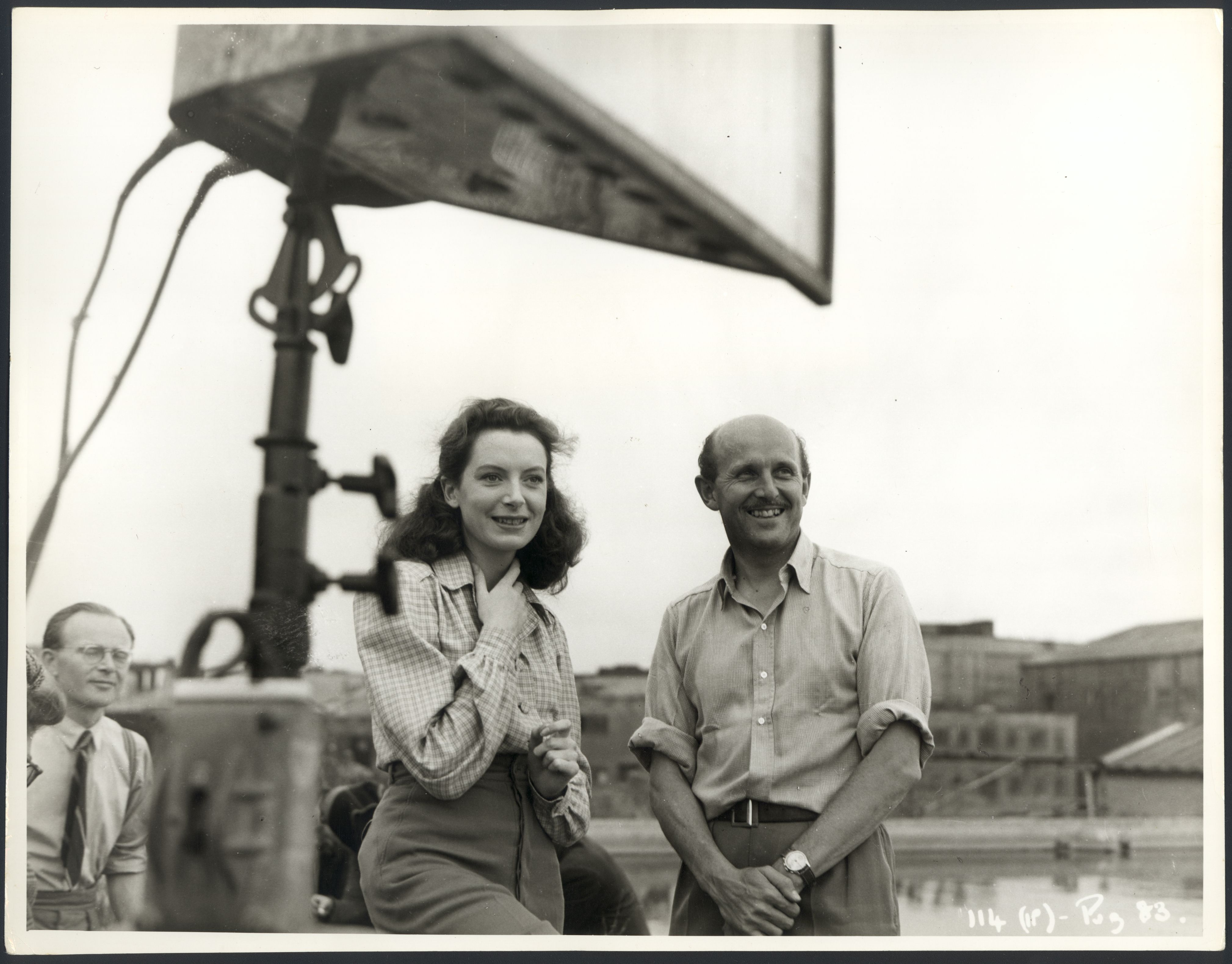
The aforementioned filmmakers are all icons, each one deserving of their own individual retrospectives. But it’s fitting that the two men Scorsese has championed the most over the years, Michael Powell and Emeric Pressburger, are the first to receive such treatment from the man himself in the form of David Hinton’s Made in England: The Films of Powell & Pressburger. Scorsese narrates a sprawling history of the duo’s collaboration as he viewed it: with enthusiasm and adoration. His singular connection to Powell & Pressburger’s work turns what might otherwise serve as a by-the-numbers documentary about a legendary filmography into a far more personal tour through an inimitable yet influential body of work. And sure, it helps that Scorsese just so happens to be one of the seminal filmmakers of his generation, if not le grand fromage; all the more reason to enjoy the journey.
For many viewers, that journey may be an uncharted one. Though The Red Shoes will undoubtedly set off alarm bells for most Criterion Channel subscribers, most films from The Archers — Powell and Pressburger’s production company — initially spent years shrouded from mainstream attention. That wasn’t the case for Scorsese, who first caught their work on a colorless television set that dilapidated the pure beauty of Powell and Pressburger’s technicolor fever dreams. No matter; to a young Marty, their films were vibrant on any screen. The Archers’ landscapes, often drenched in red, fed his senses; the duo’s title cards, which always read “Written, produced, and directed by” both Powell and Pressburger, were cause for endless curiosity. Who was actually directing? Who was writing these scripts? How were they getting away with such unique mastery, as a duo no less?
Of course, knowing what we know now, we can answer these questions ourselves. (Powell directed; both contributed to the script using stories from Pressburger; sheer conviction, I suppose?) But Scorsese, as he tells us, had to find out for himself, and set out to learn the truth early on in his career. He met with Powell in 1975, on the heels of Mean Streets and Alice Doesn’t Live Here Anymore. Scorsese recalls expressing his admiration for The Archers’ work, noting that Powell was quiet and reserved, but moved that American filmmakers like Scorsese, Brian de Palma, and Francis Ford Coppola revered his movies. (Powell specifically noted that Scorsese’s praise caused him to feel “blood course through his veins.”) To Scorsese, Powell and Pressburger were unlike the David Leans, Carol Reeds, and Alfred Hitchocks of the world, the so-called “mythical creatures in British filmmaking.” They were doing something wholly different; perhaps that’s what drew the likes of de Palma and Coppola to their work.
But what Scorsese brings to Made in England is something few others of a similar ilk — and there are very few — can offer: A perspective rooted in authorship. Not only does he possess a distinct appreciation for the way The Archers tended to feature a familiar troupe of actors in each of their projects, something Scorsese does himself, but he’s even taken some of Powell and Pressburger’s stylistic calling cards and implemented them into his own films. Mean Streets is as red as it is thanks to, you guessed it, The Red Shoes; Powell even felt it was “too red.” The Age of Innocence and Black Narcissus have more in common than you think; the next time you program a double-feature of Raging Bull and The Life and Death of Colonel Blimp, note the similarities between Jake LaMotta’s long walk from the tunnel to the boxing ring and Colonel Blimp’s early duel. In Made in England, Scorsese notes how Blimp neglects the duel itself in an effort to focus on the relationship between its participants; in Raging Bull, he similarly focuses more on LaMotta’s life than he does the fights in which he partakes.
Made in England is as much a lesson in filmmaking as it is a celebration of the great works of two collaborators who saw it as their duty to challenge the conventions of modern filmmaking, if not to upend them completely. Scorsese, having had a relationship with and an appreciation for the filmmakers in question, is the only tour guide that makes a lick of sense for such a journey. His attraction to Powell & Pressburger is unrivaled, and that it influenced his work so heavily is a big part of what makes Hinton’s documentary so captivating. Not only will it make any cinephile want to revisit the subject’s films as if for the first time, but it will make you clamor for more filmmakers to be as passionate about their craft as Scorsese manages to be. Authenticity can’t be bought. But it can be showcased.
Director: Sarah Gyllenstierna Writers: Sarah Gyllenstierna, Mats Wägeus Stars: Ardalan Esmaili, Jens Hultén, Magnus Krepper
Synopsis: The story is about three friends who spend a long weekend in a remote cabin, intending to hunt deep in the Swedish woods. However, one day all animals vanish without a trace and the forest turns eerily quiet
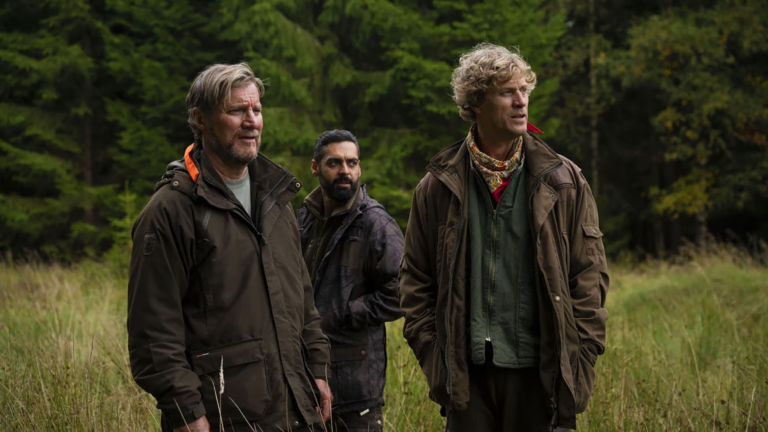
For an activity such as hunting, it feels like people’s opinions on it can fall very firmly into one of two possible categories. There are those who are firmly opposed to it, and those who have gone hunting. Whether brought from a young age or discovered later in life and used as a means to feed oneself, hunting doesn’t really feel like an activity that you just stumble into. There’s a rather large barrier of entry, and that’s before even considering how the implications it has on an individual both morally and psychologically. As somebody who has always considered themselves in the former category, I cannot deny my intense fascination behind one of the most inherently compelling stories ever created. I’m referring to “The Most Dangerous Game”, a 1924 short story by Richard Connell. Undoubtedly one of the most influential stories ever written, Sarah Gyllenstierna’s Hunters on a White Field finds itself entering into the halls of the many stories who owe some gratitude to the now century-old tale of a man being hunted by another man.
But the ways in which Gyllenstierna’s debut feature go about capturing such a familiar story is what’s most exciting. Beginning as a gripping drama, Gyllenstierna leaves her audience entranced for a large chunk of the film before completely abandoning all that in favor of goosebump-raising tension and genuine thrill. And the shift occurs in such a way that would completely derail a lesser film. Yet the tone of Hunters on a White Field remains steadfast throughout, regardless of whatever genre it feels Gyllenstierna is dipping her toe into.
The film begins with two men in a convertible. With the top down, they yelp towards the heavens out of excitement at the isolation they are headed towards. Gregor (Magnus Krepper) and Alex (Ardalan Esmaili) are headed to the home of Henrik’s (Jens Hultén) brother for an annual hunting trip. While Gregor and Henrik have made this trip a yearly tradition, this is Alex’s first time joining. He has just received his hunting license, and it would appear as if he is being inducted into this established posse. Gregor and Alex work together, and Henrik’s life seems a bit more up in the air. He very much feels like a person who always seems to be traveling from place to place. And while you may admire on some level how he’s able to experience all that life has to offer in the great outdoors, you’re often left with the confused question as to how he’s able to afford such a life. While the details are vague, we at least know that Gregor and Alex work some sort of corporate job. It’s referred to in the most standard of office jargon, but the how and what of this trio of lives doesn’t matter in the slightest. In fact, they could literally be anybody. These characters merely serve as a vessel for Gyllenstierna. When out here, isolated from all of society, all that matters is the why. Why have these men made such a tradition of this retreat into nature? Are they really that in touch with the world around them? Based on how they carry themselves and where the film takes them, it feels like the actual answer is much simpler: ego.
From the opening moments alone, it’s made clear that these men are putting on a bit of a front. The very disregard for nature is made painfully obvious from their actions alone. So to hear them digress into these long-winded details of how to follow the “rules of hunting” which they have created should instantly clue audiences into Gyllenstierna’s angle. These men, on some level, are frauds. They don’t go on this trip to connect with the larger world around them. If that were the case, a weekend-long hike would likely provide just as much fulfillment. This destination, and activity, is chosen for a very specific reason. One can imagine how Gregor handles himself in the office. He appears to be the oldest of the three, and one gets the sense that he feels no control over his life 51 weeks out of the year. It’s only when he finds himself alone with Henrik on this yearly excursion that he gets the chance to “be himself.” On this trip, all we see is their pride taking over their bodies and minds completely. They treat Alex as if he’s a child, teaching him the way of the woods through tough love and light hazing. All in the name of harmless fun, right? Only this weekend isn’t harmless. It quickly devolves into something menacing. It takes on a dark shadow of what hunting represented thousands of years ago. Gyllenstierna even addresses this comparison to ancestral times directly with Gregor’s hobby.
About a third of the way through the film, Gregor takes out his collection of ancient arrowheads and hunting tools. Upon first viewing, he does seem rather passionate about these pieces he has collected over the years. But when taking in the entire film upon its conclusion, it’s comical to think about a scenario in which even these are phony. He merely collects replicas in the hopes of impressing those around him with his hunting prowess. Whatever the actual case may be regarding the authenticity of such items, it’s what these men do in the presence of them that really cracks Hunters on a White Field wide open. Gregor and Henrik begin rough housing with a small axe and arrowhead, respectively. They circle one another, pointing out how skilled these hunters of the past must have been. But slowly, their speech devolves into mere grunts and shouts. The actors play it out as more of a mockery than actual reverence. Tools once used to genuinely feed and protect a hunter are now being used for something warping the name of hunting out of genuine necessity. And in turn, this mockery leads to a quick bout of real violence. It’s a shocking moment, played a bit for tension, but again, feels like a seed that Gyllenstierna is smartly planting. And this is just one of many that aim to dictate exactly what this film, and its characters, are barreling towards.
I once again return to all the ways in which these individuals unintentionally reveal their true selves. Some moments are much more blatantly chilling, but they are placed earlier in the film. For example, Henrik makes a rather unsettling comment about his sister-in-law when the trio are preparing for their first hunt the following morning. Alex is clearly a bit taken aback by the comment, but it’s lightly brushed off as being part of Gregor’s twisted sense of humor. Repeatedly in the first half of the film, we see any instance of discomfort chalked up to “nerves”, and of the few times Alex directly addresses such blatant remarks, it’s essentially understood as “locker room talk.” And over time, we are shown how even Alex, seemingly the most relatable of the three, becomes slowly warped by what his companions are putting him through. The way he carries himself. The way in which he speaks. He changes before our very eyes, but Gyllenstierna directs it in such a way that it’s more of a menacing turn over time as opposed to a sudden one. Any sudden jolt she hopes to achieve is all saved for the final act, which takes such a stark turn in tone and delivery that it’s almost a miracle that it works. But again, we have been in the hands of a filmmaker who set us off on this path from nearly the first frame. Once the surprise and adrenaline wears off, and we begin to accept where we are being taken as an audience, the thrill and excitement of it all rushes into our minds next.
Hunters on a White Field captures the male ego in such a way that feels potent. Even if it leans into some exaggerated tendencies, it feels wildly realistic. What’s most impressive about this is the jump Gyllenstierna expects her audience to take in order to be hit with the full impact of such a conclusion. And the reason it works? The confidence that radiates off the screen. The film completely commits to its new role as an intense psychological thriller. At one point, you expect it to teeter over into full-blown body horror. It becomes much more grimy, covered in dirt, sweat, and blood. These hunters, having lost their ability to display their supremacy over nature itself, turn to something more menacing. When left unchecked, their most sinister behavior that lives hidden behind societal fear breaks loose. And it‘s in that escape that Hunters on a White Field is at its most compelling and exciting.
Hunters on a White Field celebrated its world premiere at the Tribeca Film Festival in the International Narrative Competition section. Tickets for screenings and more information on the film can be found right here.
This week on the InSession Film Podcast, we continue our Best Picture Movie Series with William Wyler’s 1946 film The Best Years of Our Lives! We also talk more box office discourse, a potential new Oscars category for Stunts, the Beatles casting rumor and the new trailer for Alien: Romulus!
Check out this week’s show and let us know what you think in the comment section. Thanks for listening and for supporting the InSession Film Podcast!
– Box Office Isn’t Dead Yet (2:00) We open the show once again with a discussion around the box office as Bad Boys: Ride or Die performed wonderfully over the weekend. There may have been panic given how things played out last month, but the theaters aren’t dead yet. Bad Boys did well and Inside Out 2 is poised to continue that momentum.
– Oscar Stunts / Beatles Casting (12:56) In the next segment, we talk about how the Academy is openly having conversations with the stunt community about creating a new category for stunts. We’re still a ways away, but there is movement in the right direction. We also talk about the Beatles casting rumor even if it does come from a dubious source. It will likely change, but we thought it would be fun to indulge and talk about why the rumored cast would be fun.
– New Trailer for Alien: Romulus (34:08) While we didn’t anticipate it, we ended up having a pretty lengthy debate over the new trailer for Alien: Romulus. The film looks well crafted and it’s clearly taking the franchise back to basics, but is that enough for fans of the franchise? We talk about that and argue over the film’s marketing tactics.
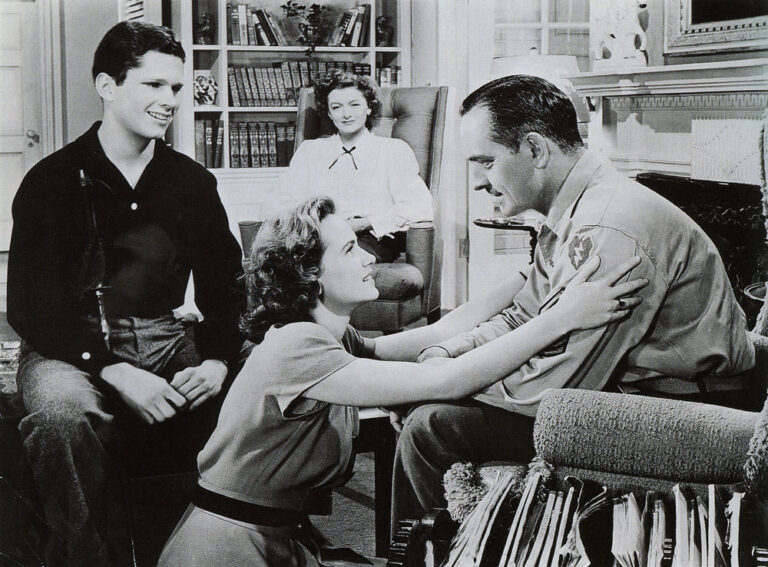
– Best Picture Movie Series: The Best Years of Our Lives (53:03) We continue our Best Picture Movie Series in the 1940s with William Wyler’s 1946 Oscar-winning film The Best Years of Our Lives! After detouring away from the War with Going My Way and The Lost Weekend, the Academy once again awarded a film that spoke to the people, this time aiming at the heart of a post-war America. With the urgency of Mrs. Miniver and the need to enter the war with Casablanca, it just made sense to bring closure to the War with a film about the soldiers coming home and the challenges they faced.
If you want to help support us, there are several ways you can help us and we’d absolutely appreciate it. Every penny goes directly back into supporting the show and we are truly honored and grateful. Thanks for your support and for listening to the InSession Film Podcast!
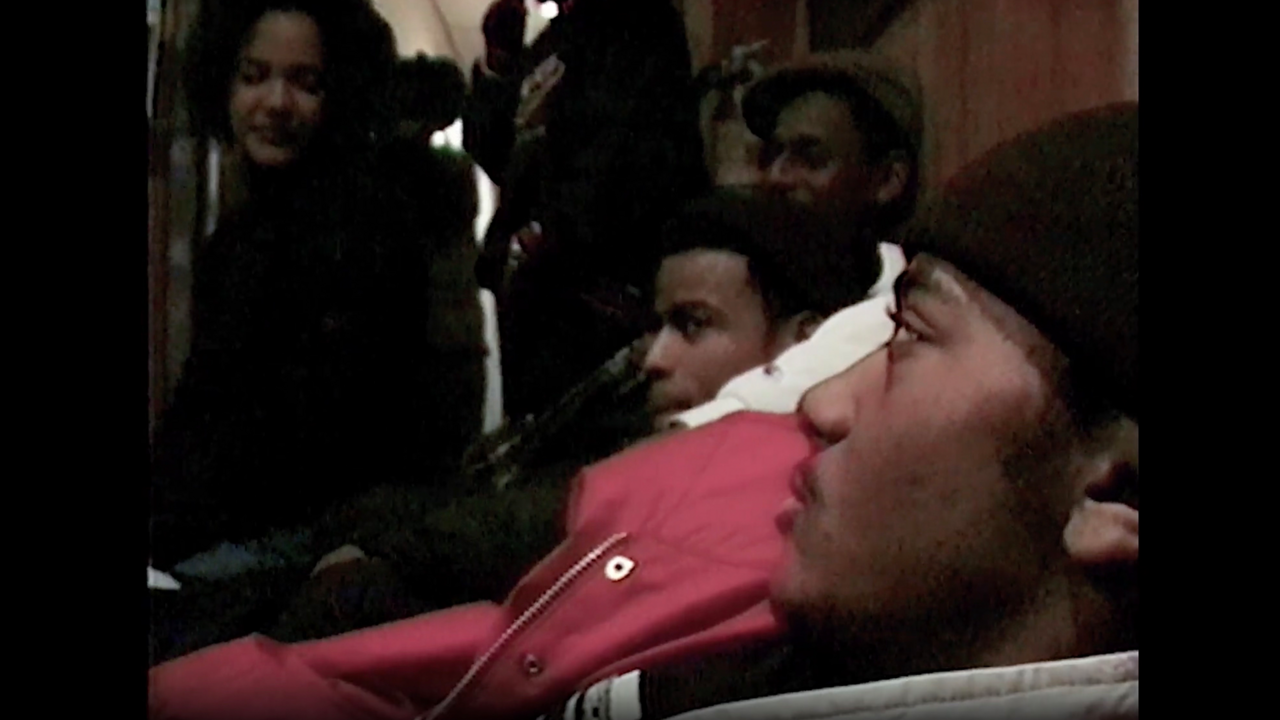
Director: dream hampton Writer: dream hampton Stars: Ice-T, Q-Tip, Guru
Synopsis: A visual memoir from director dream hampton’s personal archives about the dawn of the golden era of hip hop.
For fans of hip-hop, dream hampton’s It Was All A Dream is going to feel like discovering a treasure trove. Capturing the golden age of the genre, the archival footage from hampton provides unfathomable access to many beloved artists of the early ‘90s. Many of the rappers featured in the film would go on to be regarded as some of the greatest to ever pick up a microphone. Now, this film could certainly ride the exciting wave of welcoming audiences into the inner chamber. To see their favorite artists in the recording booth, hanging out during downtime, or even preparing for a concert is worth admission. Yet hampton valiantly refused to rely on this, and instead uses this footage to channel thoughts and emotions she’s had for decades based on the narration.
So lucky for us, hampton’s personal archives extend far beyond merely capturing moments in hip-hop history. With the footage rediscovered nearly three decades later, hampton’s film takes on a new life. This is a film about hip-hop made by a clear fan and scholar of the genre, but it is not one exclusively made up of blind reverence and idolization. Now, this is certainly a love letter to a now bygone age of music, specifically the golden era of hip-hop. But importantly, hampton examines these quick, yet pivotal, few years of hip-hop from every angle. It Was All A Dream begs us to examine the very legacy of the golden era of hip-hop, going beyond just thinking of all the classics it birthed.
Composed entirely of archival footage shot by hampton when she was an NYU film student, this film is described as “a visual memoir.” It’s the most apt description imaginable, considering all of the narration included is read directly from hampton’s writing as a journalist in the ‘90s. So this film simultaneously serves as a present-day (now the past) examination of hip-hop during the early ‘90s, but also as a time capsule for a journalist questioning what that legacy will mean in the future (now the present). And quite frankly, it’s a perfect encapsulation of what it means to truly be a fan of something. To blindly accept all the flaws of something we love is not only unfair to the subject of our adoration, but also to ourselves. hampton makes it clear that those around her questioned how she could be so supportive of a genre with such an emphasis on misogyny and criminality. But as anybody well-versed in hip-hop would know, there is far more at play beyond the surface value of the lyrics.
Listening to hampton’s narration juxtaposed against the lyrics of ‘90s hip-hop, one can’t help but think of the hook from “Slam” by Onyx. The group being featured prominently during one section of the film certainly helps with this regard. As they were known to do, the group loudly shouts the lyrics, “Let the boys be boys”, in their classic song. In the decades since the release of that song, that phrase has become examined very often, and for good reason. It’s refreshing to hear hampton, who at this point in the film but also from her storied career, proves herself a bonafide fan, directly addressing these ideas head-on. To blindly accept the status quo of something we love feels disingenuous. With her writing and subsequently this film, hampton sets out to pick apart the following; why rappers possibly choose these lyrics, how they are perceived by the listening public, and what, if any, change is necessary within the world of hip-hop.
It could have been pretty simple to just pose these questions to her readers and eventual viewers. But again hampton refuses to take the path of least resistance. The writing she pulls from is eloquent in both delivery and prose, clearly stemming from personal thoughts formulated over years of time spent listening to hip-hop. But in the footage of It Was All A Dream, we see hampton actively brush up against literal legends. And in the ways that only a true journalist and even more passionate human can do, hampton uses her access to question.
She talks with artists about the worries of hip-hop going commercial. She addresses head-on how male rappers won’t stop using misogynistic lyrics until they’re held accountable by other men, both their peers and their audience. There’s a distinct worry about hip-hop possibly disappearing, and the discussion on how that may come about and what that would mean is fascinating. hampton’s film is many things, but above all, it’s honest. Importantly, it’s complicated. It’s not meant to deify the great classics and legends of the genre. Rather, it’s meant to show that these were just individuals who found a way to escape their circumstances. The Notorious B.I.G. is roughly 22-23 years old in the footage we see of him. The same goes for Snoop Dogg. We’re watching young adults grapple with a new voice, and luckily, hampton is there to guide and nudge in the right direction. As a lifelong fan of hip-hop, I greatly admire and respect what hampton sets out to show with this documentary. And the genre most certainly has a long way to go. But with honest fans such as herself, documentaries such as these, and more and more artists actively speaking out about similar subjects, hip-hop is in capable hands. It’s not too crazy to think of the betterment of rap as being more than a dream.
It Was All A Dream celebrated its world premiere at the Tribeca Film Festival in the Spotlight Documentary section. Tickets for screenings and more information on the film can be found right here.
Director: Fernando Andrés Writer: Fernando Andrés, Tyler Rugh Stars: Jacob Roberts, David Treviño, Molly Edelman
Synopsis: After hitting emotional and financial rock bottom, best friends Ben and Jordan come up with a scheme to spend an entire year living “rent free” with the help of friends, family and strangers alike in a rapidly changing Austin.
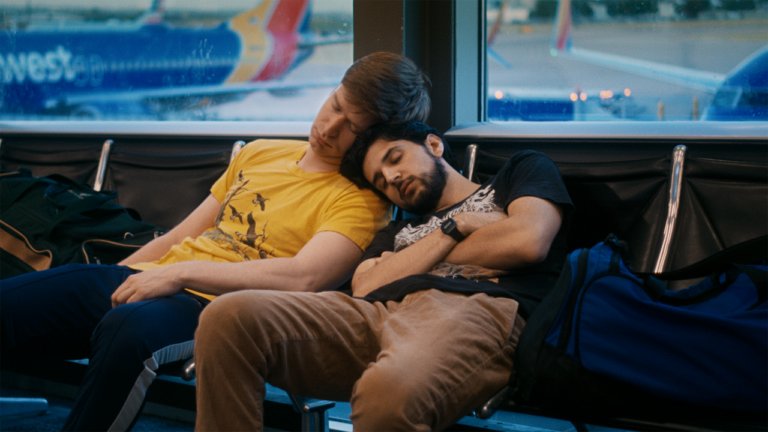
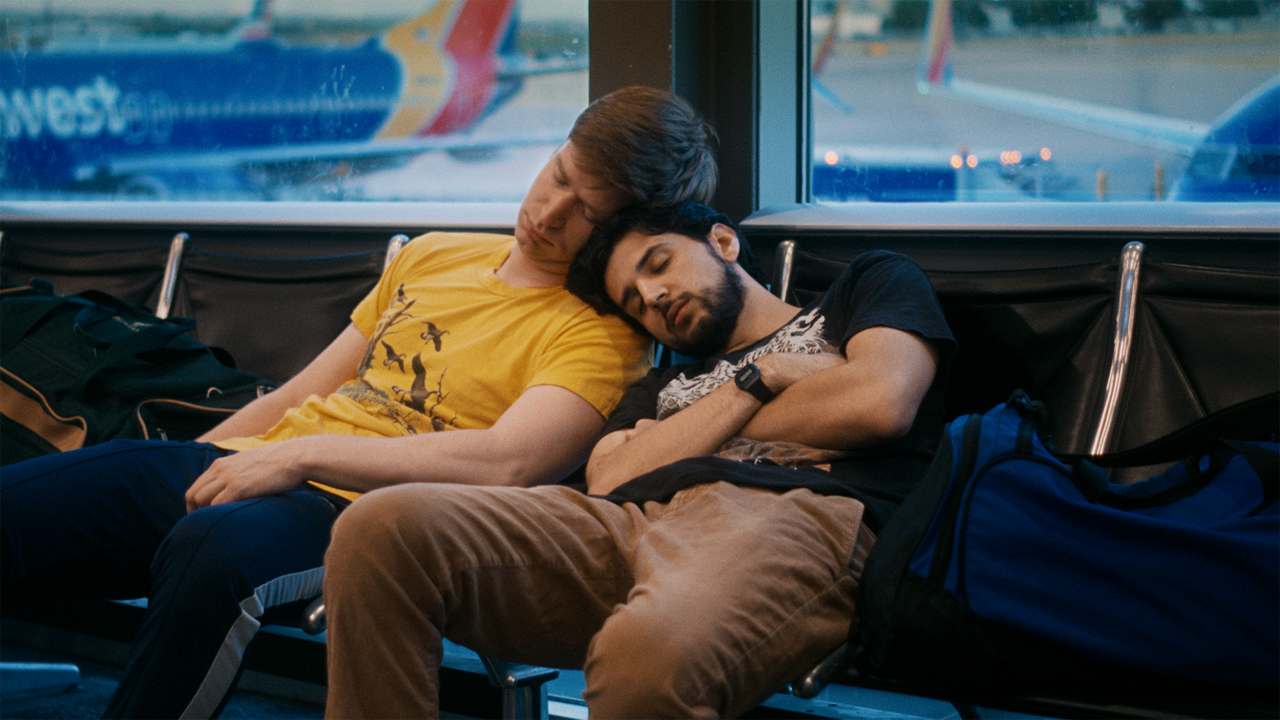
Fernando Andrés wowed audiences at the 2022 Tribeca Film Festival with his and Tyler Rugh’s debut feature, Three Headed Beast. Without retreading my original review of that film, what most stood out was how bold it set out to be from the very outset. And two years later, Andrés returns to the Tribeca Film Festival with his sophomore effort, Rent Free. Upon viewing the film, I gladly stand by the statement I made when first introduced to his work: we are witnessing the birth of a wildly exciting, and great, contemporary filmmaker. Co-written by Andrés and Three Headed Beast co-writer/co-director Rugh, Rent Free very quickly highlights something that seems to be missing from contemporary cinema. At the very least, it’s a noticeable absence from movies being made today.
There was some online discourse recently questioning why many current filmmakers are choosing to not set their films in the present day. Part of this surely stems from not wanting to address issues plaguing the minds of those living in it at this very moment. If we turn to art as an escape, perhaps it’s better for movies to exist in a time that feels slightly different? Obviously, time and place can also affect a story, but it’s always interesting to note when a film just heads back in time by a handful of years. Then there are films that do take place in modern times, but don’t really attempt to say much of anything about them. That is also fine, of course. But Andrés seems like one of very few filmmakers actively engaging with the very current present. Rent Free, almost immediately, shows itself to be highly indicative of the time many young adults find themselves in. Andrés is a true contemporary filmmaker. With this latest feature, he has again shown himself to be focused on what it means to have grown up, and now lived through, the aughts to the mid-20s. And it’s both refreshing and exciting to see it happening in real time.
Living your life invariably comes with a set of issues. It’s an unfortunate part of reality that pretty much all humans share in common. The issues can stem from a litany of places, but more often than not, it’s safe to say that financial burdens are what have plagued most people at some point or another. And this is certainly true for Ben (Jacob Roberts) and Jordan (David Treviño). Two twenty-somethings from Austin, Texas, they have been friends since childhood, and find themselves on the verge of major life changes. Ben has sold away all his belongings to begin his New York era, while Jordan is preparing to resign a lease in Austin with his girlfriend of two years. Jordan, being the absolute real one that he is, joins Ben on a trip to New York to see his friend off, and spend some time in the big city. And as they assuredly know, New York can be ridiculously expensive.
Andrés makes a point to note this fact by plastering the monthly rent and address where the duo is staying across the screen, in big block lettering. With the added information of how many bedrooms and bathrooms there are, Rent Free quickly begins taking shape. As a lifelong New Yorker who just moved boroughs in search of cheaper rent, the number frightens. And it serves as a painful reminder that wherever we go in life, and whatever problems we’re dealing with, there’s always that dreaded number that looms in the distance. Like clockwork, it rears its menacing head once a month, with apparently no end in sight. Yes, New York City, in particular, can be an astronomically expensive place to live. But it is obviously such a fun place with a ton of opportunities. (I promise, this isn’t just my personal bias). So we get to see Ben and Jordan, who are wildly low on funds, take advantage of all the free activities the city has to offer! Across this free-wheeling montage, Andrés sheds any preconceived ideas fans of his last film might have expected from the filmmaker. Where Three Headed Beast was full of patience and quiet moments, Rent Free is much more frenetic. The reason being? The common anxieties of what it means to be a young adult in this generation!
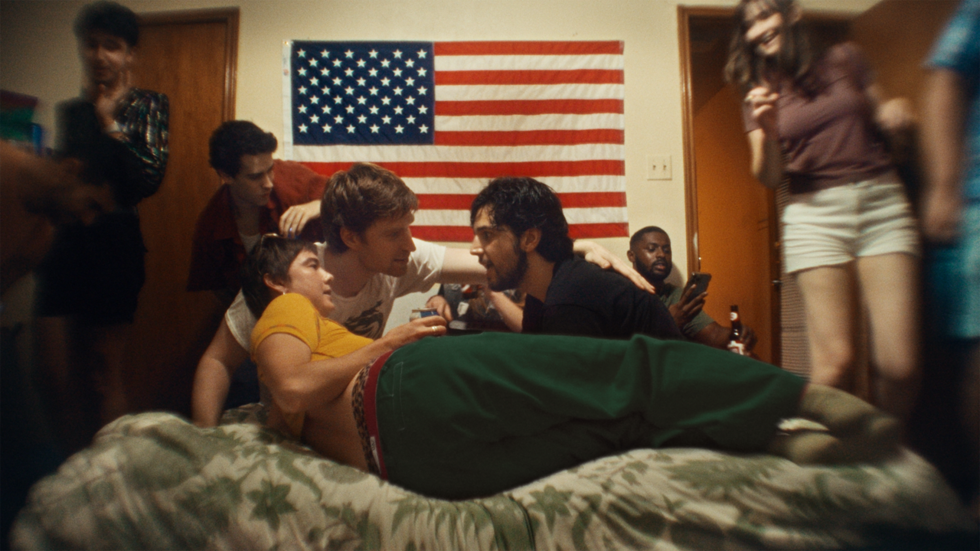
Without getting into the finer details of the plot itself, Ben and Jordan unexpectedly find themselves without the homes they planned on living in. And after one intoxicated discussion leads to a comically half-baked idea, the two formulate a plan. A better term for it would be a scheme; in their eyes, it’s justified as a “social experiment”. Whatever term fits best, they decide that for the rest of the calendar year, the two will live rent free. They’re well-loved by all of their friends, and they have many across Austin. In the meantime, they’ll save plenty, and surely make some memories with their closest friends during this transitional period of living. So what could possibly go wrong? As it turns out, quite a lot. In the vein of classic buddy comedies/road-trip movies, Rent Free finds the perfect balance of all the best qualities of both comedic sub-genres.
While the film primarily takes place in Austin, the homes and apartments (and subsequent rents) around the city vary wildly. So it’s equally important that the duo experience quite the range of circumstances. It’s also crucial that they experience a range of consequences, brought about either by their own ridiculous actions and mistakes, or simply by those who are hosting the duo. This is a situational comedy at its heart, but its ability to double as both a quiet indictment on capitalism and a mourning for quality-of-life amongst a younger generation will undoubtedly speak to many of its viewers. I have only been to Austin once, but I fell in love with the idea of the city years before I ever had the means to make the trip. I had a phenomenal time spending a week there, and I greatly look forward to returning. But from what I could gather from those who have lived there for years, Austin has found itself in a bit of a flux. Andrés, an Austin-based filmmaker himself, directly addresses this shift in culture with his latest.
There are several conversations in Rent Free which point out the major shift in Austin. With big tech companies slowly embedding themselves into the city, prices everywhere have gone up. It’s a tale as old as American capitalism itself, with lively, exciting cities around the country being slowly consumed not just by rising prices, but by losing the distinct identity it became beloved for in the first place. That’s not to say places like Austin or New York aren’t still great places to live, but there is a clear and noticeable shift as far as people from the respective cities can tell. And as young individuals still trying to find their footing in life, what are we to do? In-person job-hunting and professional opportunities seem all but fruitless endeavors (something Rent Free comedically addresses). The culture around app-based interactions seems all but hopeless and soul-sucking (something Rent Free also pokes fun at).
Having one’s own personal space, or even the concept of a “place” is becoming more and more blurred as people find themselves forced to get one, two, or possibly even three roommates in order to pay a monthly rent that only ever goes up (something Rent Free seems to be fundamentally based around). It never really feels like Ben and Jordan are going to provide an answer to this dilemma over the course of the film. And that’s refreshing, particularly because there’s something reassuring, if ever so slightly painful, about seeing your own predicament honestly depicted on screen. It’s difficult to not think about Wallace Shawn’s musings in My Dinner with Andre (1981), wherein he thinks back on his youthful comfort versus the realization that, later in life, all one is forced to think about is money. It is unfortunately one of the few irrefutable facts of reality. But even with such a dour truth at the core of Rent Free, Andrés and Rugh’s script find a way to make this reflection of life amusing and comical.
Ben and Jordan are very much portrayed as a chaotic duo. To see them sabotage themselves repeatedly earns many laughs throughout. And this feels like the key to Rent Free. It’s the honest truth that, in life, we are sometimes going to irrevocably mess things up for ourselves. There’s no escaping it. And the sooner we accept it, the easier it will be to recover from the stumble in the moment. And more often than not, a stumble is all it is. What may seem dire and impossible to solve is just a scuffed knee or a story to tell. Ben and Jordan both make mistakes in this film. And they do have to face some of the consequences of their actions. But importantly, they address one another’s shortcomings.
And they do so in a way that only longtime friends can do; in a way that is inarguably very blunt, and downright hostile, at times. But after years of knowing one another, sometimes that edge is what is needed to really allow feelings to sink in. It’s something to look back on over breakfast the next day and laugh at, but also never forget how it forced you to confront your own actions. With Rent Free, Andrés makes clear his knowledge that we’re all just trying to figure it out as we go along. It’s in that process we learn about ourselves, our friends, and the world around us. And to see Andrés take us through these processes cinematically, providing reflections for an audience very much in the thick of it, is equally exciting. Whatever dilemma of young adult life Andrés decides to turn his camera towards next, rest assured it will be with a curious, honest, and exciting eye.
Rent Free celebrated its world premiere at the Tribeca Film Festival in the U.S. Narrative Competition section. Tickets for screenings and more information on the film can be found right here.
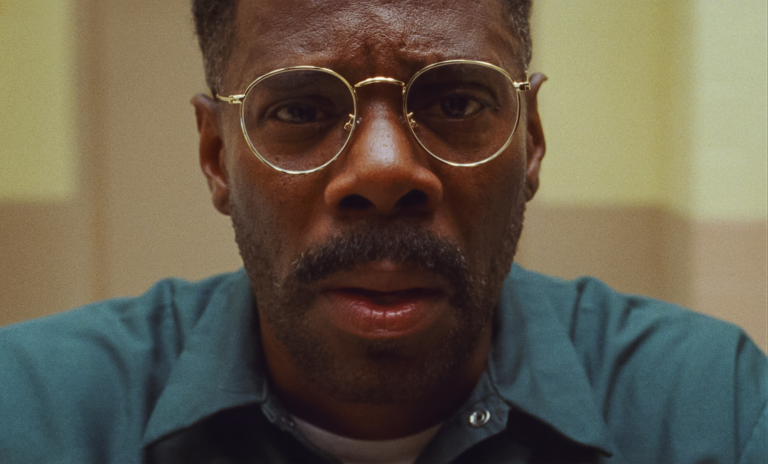
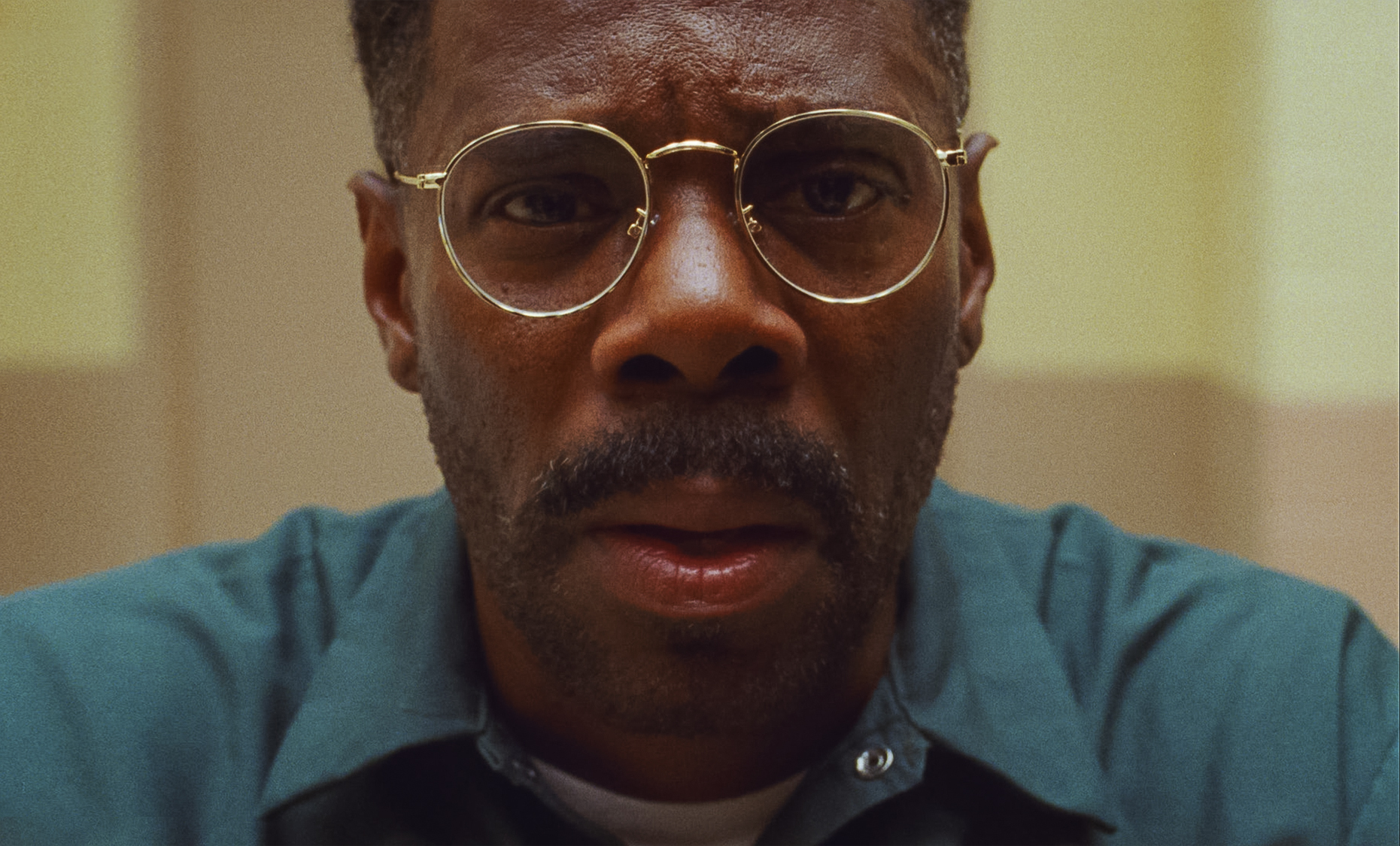
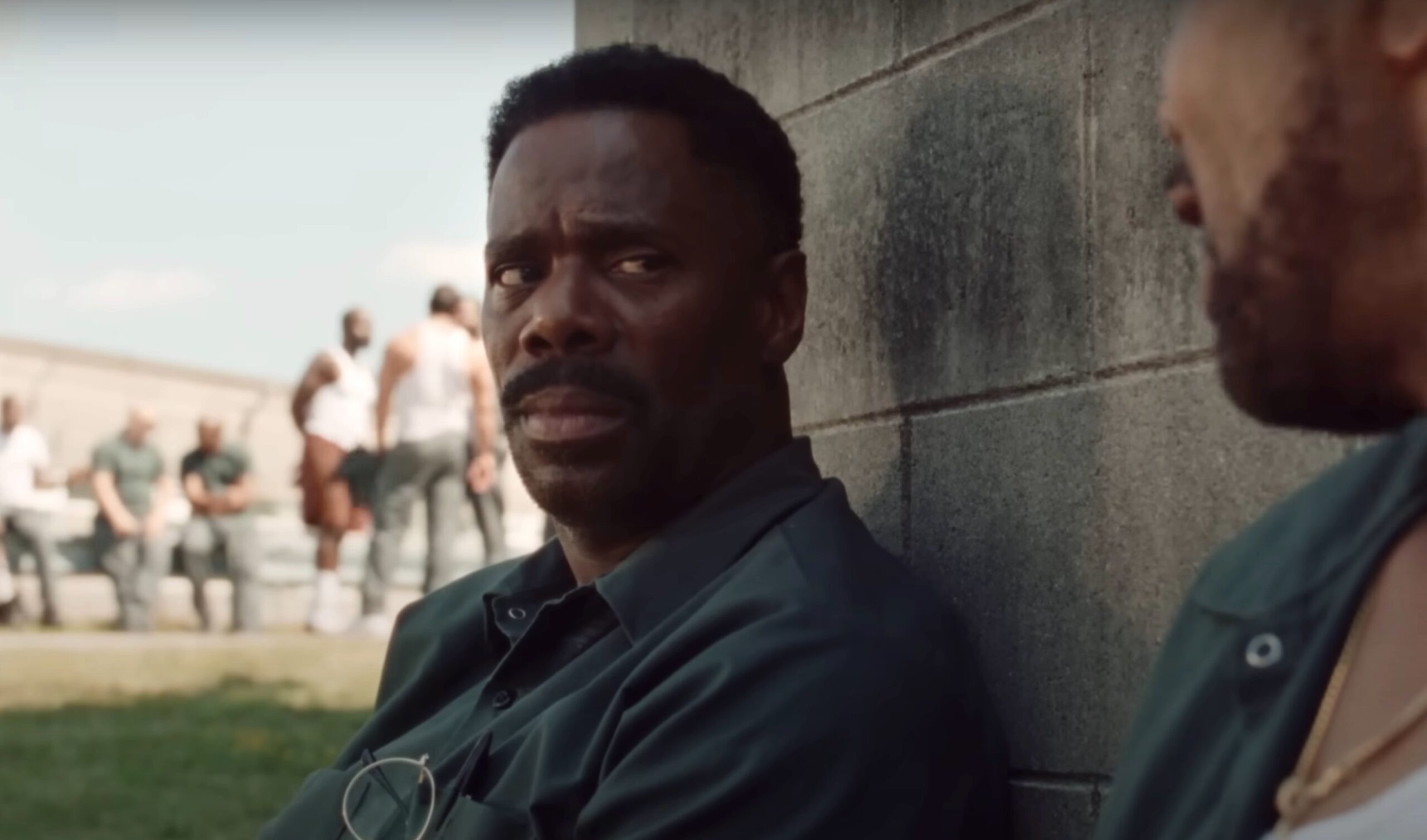
Synopsis: Divine G, imprisoned at Sing Sing for a crime he didn’t commit, finds purpose by acting in a theatre group alongside other incarcerated men in this story of resilience, humanity, and the transformative power of art..
Among the annals of prison films, Greg Kwedar’s Sing Sing posits itself as a first-of-its-kind. Instead of a lingering level of violence and societal breakdown, the film allows the sensitivity and vulnerability of imprisoned men to come to the forefront.
Devoid of sadistic guards, a deranged warden, or the tension of gang violence, this film instead gives a level of humanity and dignity to men who are otherwise deprived of such foundational understandings. The result is a prison film unlike any other before: raw, intense, powerfully performed, and unforgettable.
Colman Domingo stars as John “Divine G” Whitfield, an imprisoned playwright and actor serving a life-sentence at the titular prison. Along with a group of fellow incarcerated persons, Divine G participates in a program to put on plays and musicals called Rehabilitation Through the Arts (a real-life program at Sing Sing). Fresh off their recent performance of A Midsummer Night’s Dream, the group plans their next production.
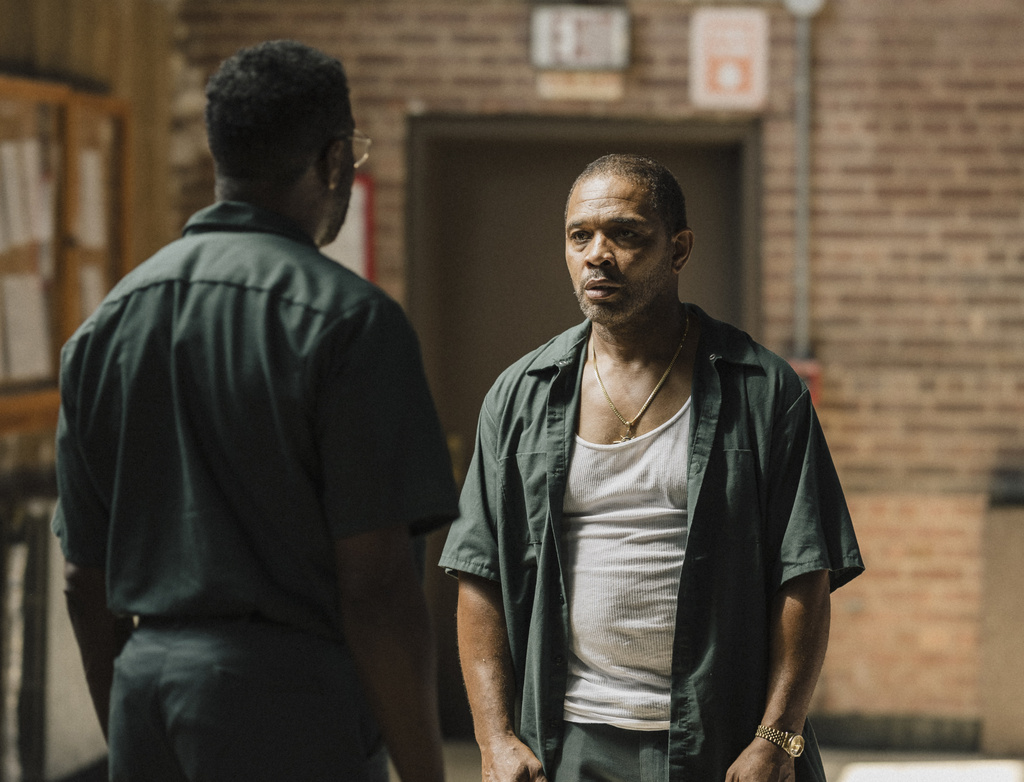
Divine G, along with best friend Mike Mike (Sean San Jose) partner with program director Brent Buell (Paul Raci) to add members to the group. One such candidate is Clarence “Divine Eye” Maclin (playing a version of himself), a hardened criminal with a talent for acting. Divine G and the group attempt to bring Divine Eye into the quieter realities of the program while attempting to put on their own original production.
It’s easy to be cynical when it comes to male sensitivity inside the walls of a prison, but that is the crux of this film. Divine Eye’s struggles to adjust to the group dynamics are not borne out of stubbornness or defensiveness, but survival. How do you convert from a man who always is looking out for number one instead of relying on his faith in others? What does that adjustment mean in a world where each of these men is looking to escape these walls? The film isn’t interested in prison reform or dynamics, but instead on the humanity of men who the world has forgotten about.
It sounds like a tagline or a cliché, but it’s not about surviving in prison, it’s about living. Whether it’s doing these productions repeatedly or reapplying for parole upon rejection; the goal is forward momentum. No matter how devastating the circumstances or consequences may be, there is always a way forward. This program provides an outlet for these men to thrive and grow as humans.
Domingo continues to prove he’s one of the most gifted actors working today. As the unofficial head of the program, he feels the weight of the responsibility to these men as well as his own insecurities. Domingo has long shown his ability to morph from role to role, and this is yet another example of his mutable style translating to a tender drama.
Maclin is the true acting revelation. Whether he is reciting Hamlet, threatening a fellow prisoner, or recalling a story about his children, you know there is more than what’s under the surface. There’s a level of unvarnished naturalism you wouldn’t expect in a first-time actor playing a version of himself. But Maclin creates a fully-realized character with clear motivations and trepidations. It might be the supporting performance of the year.
Jose, relatively unknown to mainstream audiences, is more than willing to display his ability. While many of the inmates look towards their potential release, Mike Mike can only look back in regret. His quiet sadness engulfs him. Jose balances this sadness with his acting enthusiasm to cultivate a devastatingly effective portrait. Raci crafts the perfect balance of a man who knows how to handle guys like this while also acting as an audience go-between. Much like his emotionally sensitive performance in Sound of Metal, the veteran character actor is a welcome presence of familiarity.
Among the cast, Domingo, Jose, and Raci are the only “actors” in the film. Each other character plays a version of themselves, while all being graduates from the actual program. That certainly doesn’t mean the actors are anything less than stellar. They all get their own little moments to shine with the presence and authority to perform in this setting.
Kwedar doesn’t overcomplicate things visually, instead giving his actors the breath to perform their roles in an understated way. No one is going too big or doing too much. As much as there are acting standouts, they also know how to seamlessly blend into the ensemble. That is due in no small part to Kwedar and co-writer Clint Bentley’s screenplay. It would have been very easy to add in some overly-dramatic prison subplot, but that never happens. Instead, the structure allows the performances and vulnerability to shine through.
Sing Sing is not the type of film you expect, and certainly not one you will ever forget. Not only is it a one-of-a-kind prison movie, it’s one of the best films of the year.
This week on Chasing the Gold, Shadan is joined by our own Héctor González who covered this year’s Cannes Film Festival and he talks about all the movies he saw during the fest! Because there are so many movies to cover, we have split this episode into two parts as we count down Héctor’s list from least favorite to the best films we saw at this year’s Cannes.
Movies Covered in Part 1:
28: Parthenope
27. Emilia Pèrez
26. Holy Cow
25. Simon of the Mountain
24. Rumours
23. Megalopolis
22. Black Pass
21. Bird
20. Christmas Eve in Miller’s Point
19. Ghost Cat Anzu
18. The Girl with the Needle
17. When the Light Breaks
16. Ghost Trail
15. Savanna and the Mountain
14. The Story of Souleymane
On that note, check out this week’s show and let us know what you think in the comment section. Thanks for listening and for supporting the InSession Film Podcast!
Director: Tony Goldwyn Writer: Tony Spiridakis Stars: Bobby Cannavale, Rose Byrne, Vera Farmiga
Synopsis: Comedian Max co-parents autistic son Ezra with ex-wife Jenna. Faced with crucial decisions about Ezra’s future, Max and Ezra go on a life-changing cross-country road trip.
As a neurodivergent person, I find myself relating to people I am not supposed to relate to in films.
I rarely find myself properly represented, and it frustrates me how definitions, symptoms, diagnoses, and tics intertwine when screenwriters are trying to get it. It’s not every day that I find Mozart and the Whale, one of the few films that captured the magic and the scary existence of being a neurodivergent woman on screen. But since every neurodivergent person existing on the spectrum is different from one another, it’s not my position to accurately analyze how autism is depicted on screen and whether the film honored the characters or not.
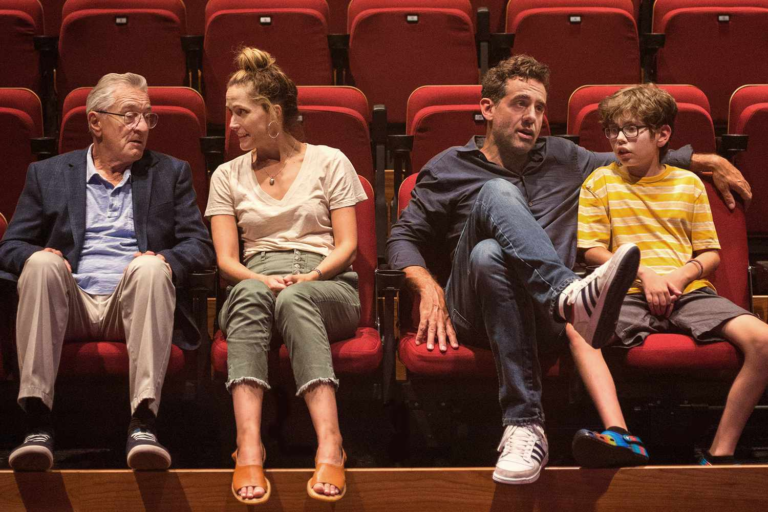
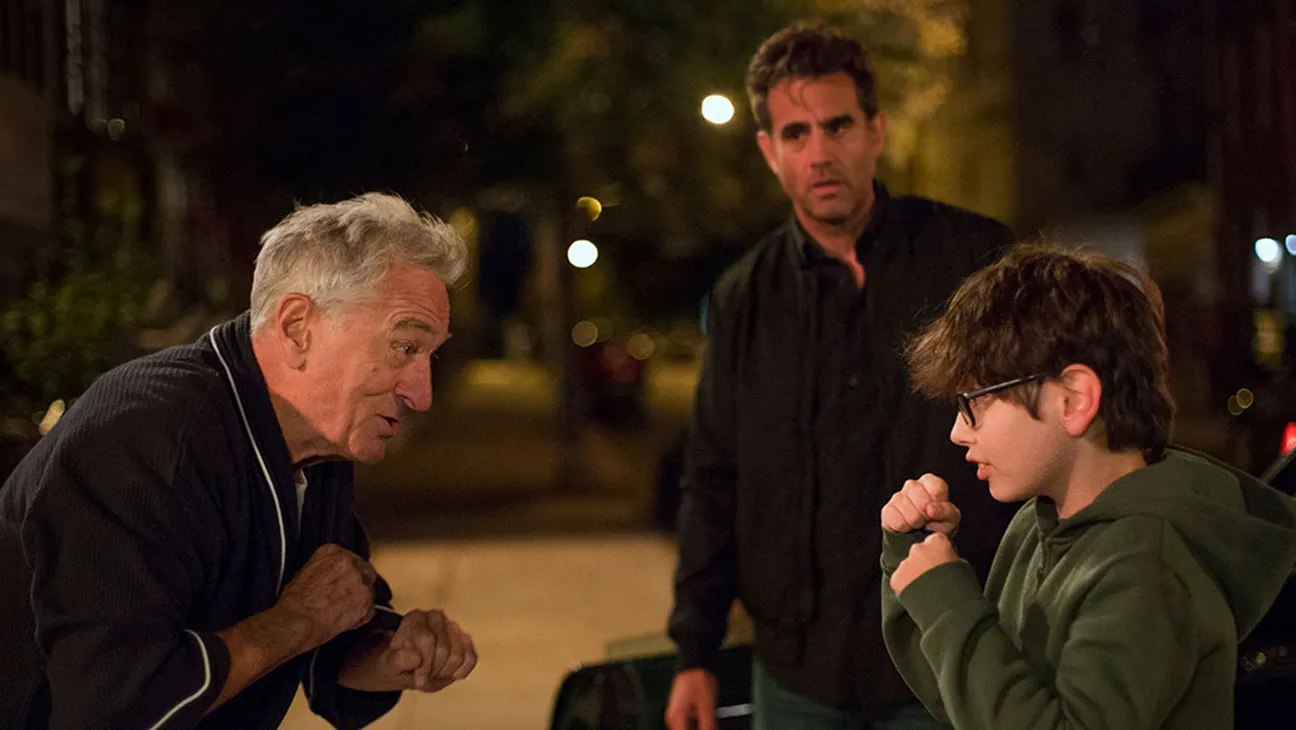
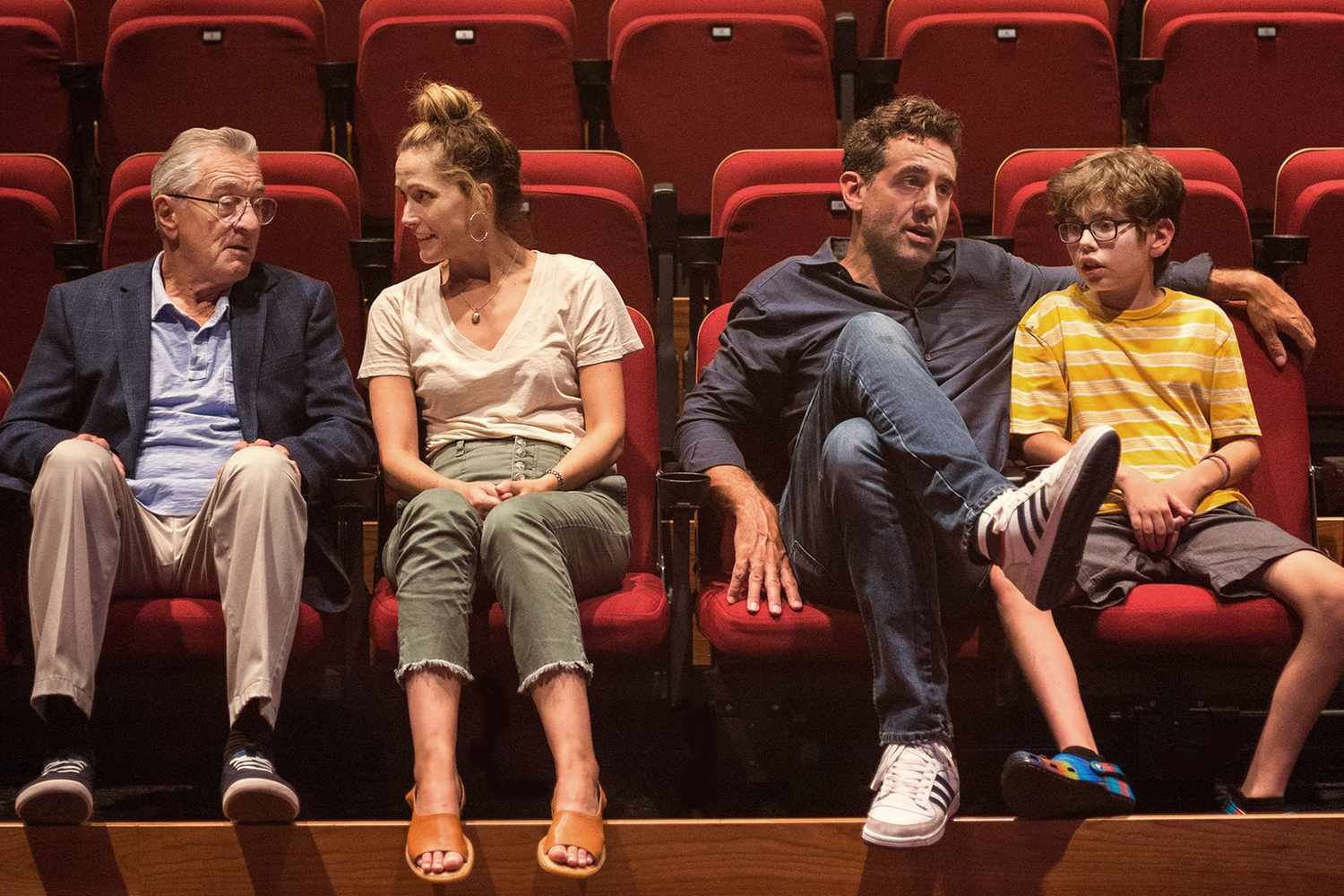
Ezra is a film about a stand-up comedian (Bobby Cannavale) mid-divorce, co-parenting his autistic son (William A. Fitzgerald) and living with his father (Robert DeNiro). He is coming to terms with how he raises his son, getting over separation from his wife (Rose Byrne), whom he adores, while giving his son the freedom and liberty to exist and go beyond what the world perceives of him, something that other people may find problematic at times.
The film is based on writer and director Tony Spiridakis’ relationship with his autistic son, which makes for authentic storytelling but lacks enough compelling elements to appeal to a wider audience.
The fact that the film is promoted as starring an autistic actor is not a reason to celebrate for me. How many actors are neurodivergent but unwilling to admit it? What are the different types of autism and how do we know who belongs to which? Generally speaking, neurodivergence comes in varying grades of characteristic representations. Multiple people are not diagnosed until later in age (me!), and sometimes people even live and die without knowing who they truly are. People exist on the spectrum for a reason. Other neurodivergent people, unfortunately, self-diagnose celebrities and athletes based on their diagnoses, and some people in the public eye are forced to hide their truths for fear of stereotypes, the ableist culture, or being pigeonholed to a specific role, an existence of oddity that doesn’t promise much in real life.
As a high-functioning neurodivergent person, it has taken me a lot to get diagnosed, admit it, and even talk to my friends about it. As far as some of the struggles I’ve seen of people dealing with other neurodivergent friends or family members, I like the angle this film is going for. I love Bobby Cannavale and have loved him since Sex and the City and The Station Agent. To see one of my favorite actors take on the role of the caregiver like a pro has made me enjoy the film even further. There’s nothing like a parent who allows their child to be their true self and encourages authentic behavior beyond what is expected of a certain someone during a particular age. “He’s not like the other kids,” that’s what most parents would hear about their neurodivergent kids. While some might go down the road of forcing their kids into a so-called existence of conformity, others like Max (and my mom) and people I’ve known prefer to give complete freedom and high levels of self-expression.
However, this film struggles to find footing. Between being an endearing family drama/road trip movie, it is also a narrative that features a neurodivergent character at the heart of the storytelling. Greedy as this sounds, I might have wanted to see more of Ezra than his bickering parents, but if that states anything, we need more films that positively depict neurodivergent characters on screen.
If anything, Ezra should have been a bigger release, a more solid and compelling script, a better platform to open a conversation on neurodivergence, existing on the spectrum, and an ableist culture that forces people into silence and shame rather than allowing them the pride to exist as they are, not as the world wants them to be.
Director: Ishana Night Shyamalan Writers: Ishana Night Shyamalan, A.M. Shine Stars: Dakota Fanning, Georgina Campbell, Olwen Fouéré
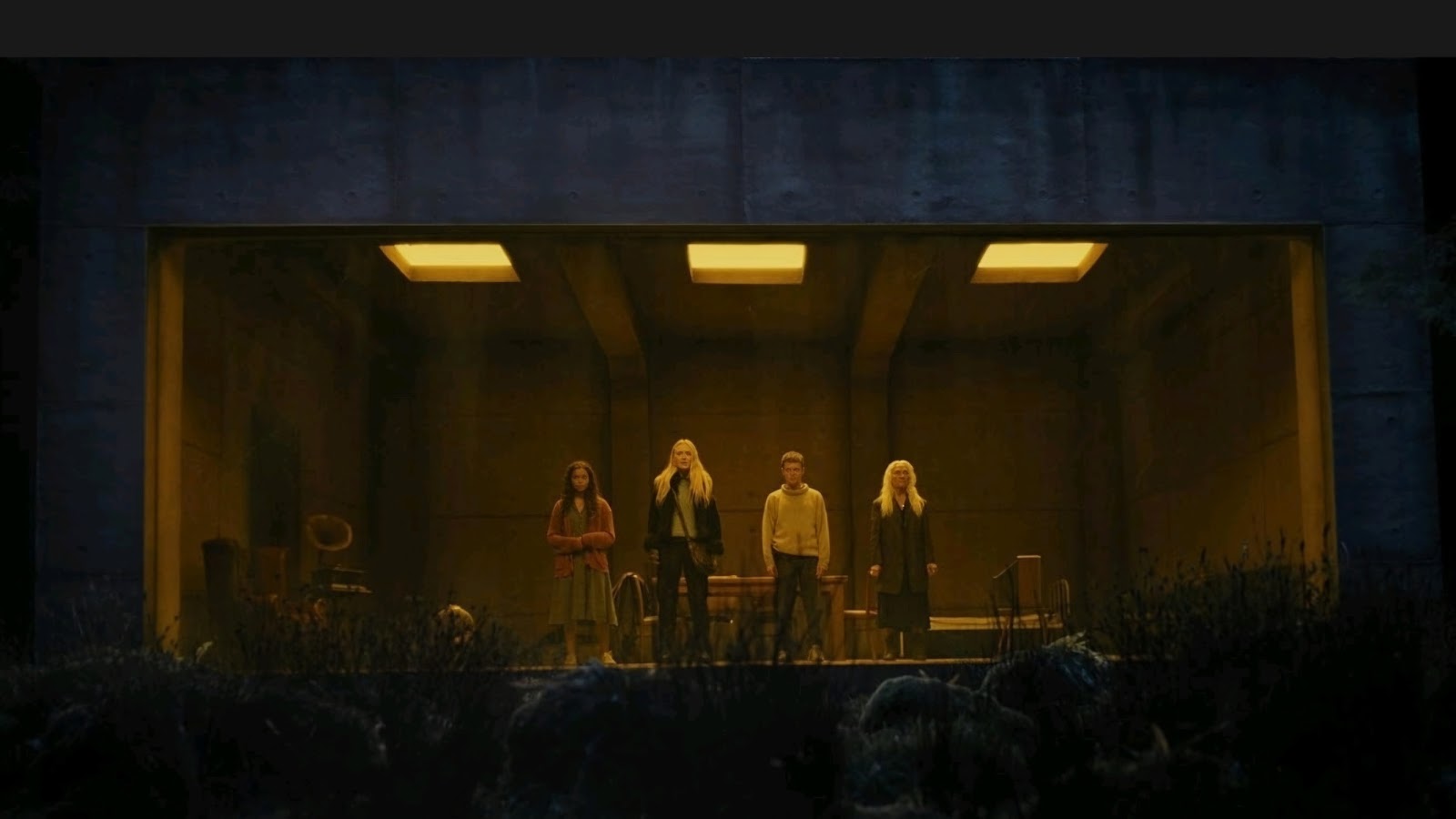
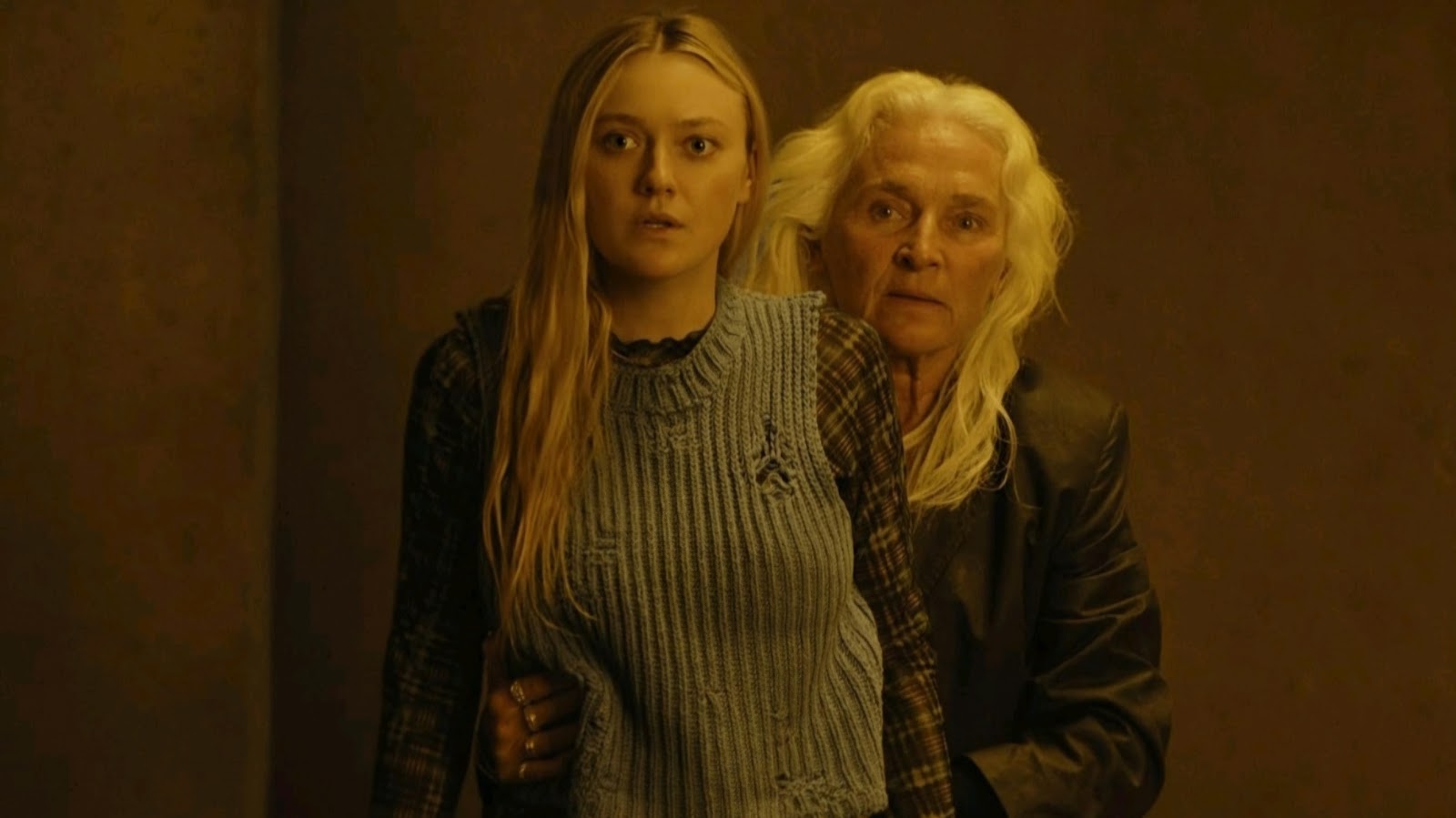
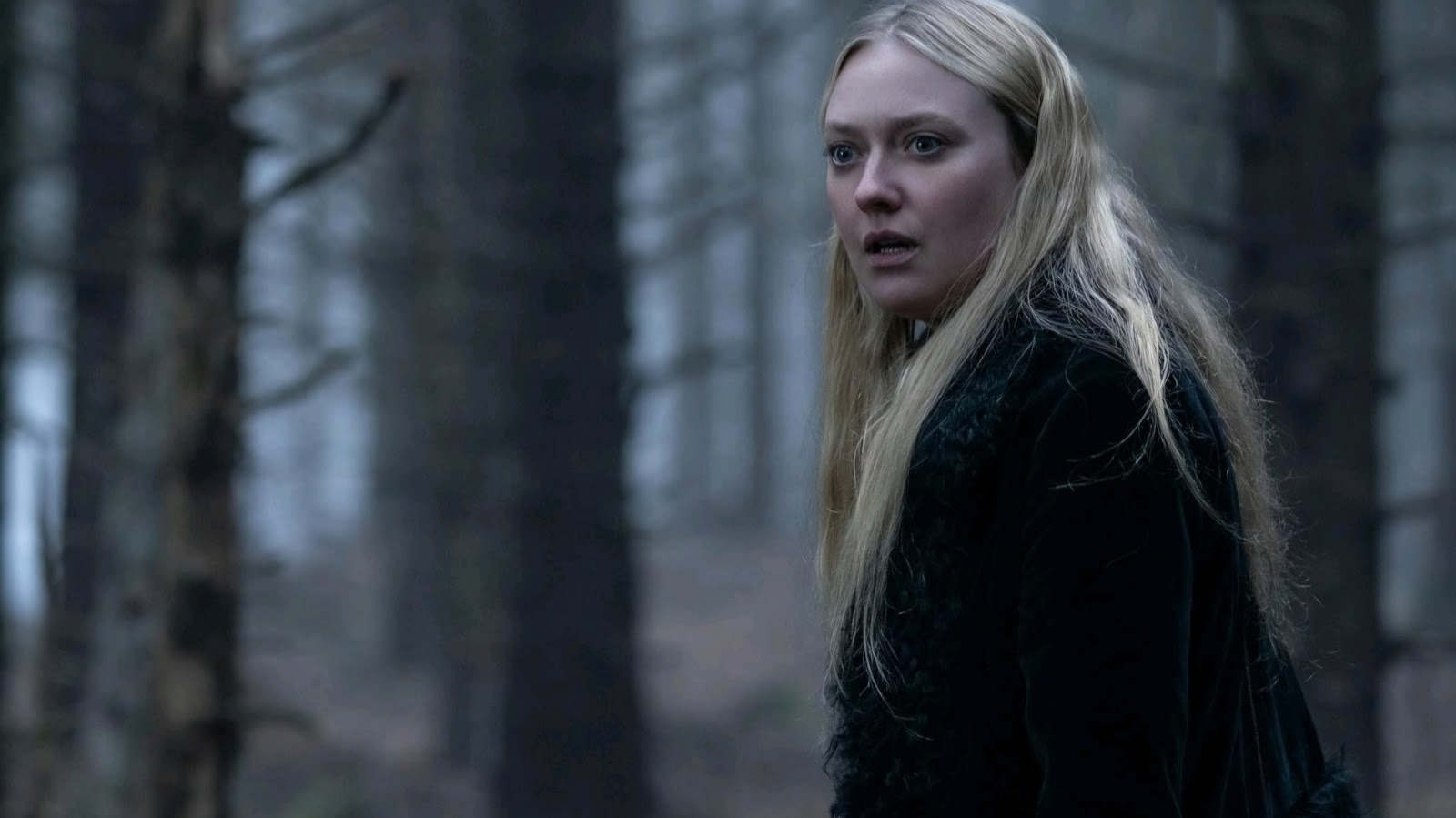
Synopsis: A young artist gets stranded in an extensive, immaculate forest in western Ireland, where, after finding shelter, she becomes trapped alongside three strangers, stalked by mysterious creatures each night.
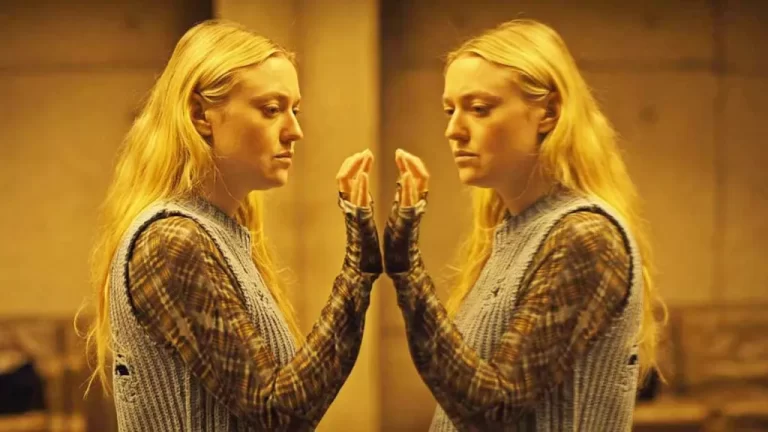
Ishana Night Shyamalan makes her feature debut behind the camera with The Watchers. The young filmmaker has limited experience, penning all the episodes of her father M. Night Shyamalan’s series Servant, but also directed a majority of the season. Yet, helming a studio film on a studio budget with minimal experience makes you wonder if nepotism continues to rule in the land known for its Angels.
While watching The Watchers, I couldn’t help but think, if you are old enough to remember, there was a time when there was nothing like the cinematic experience of an M. Night Shyamalan film. From the jaw-dropping TheSixth Sense to the all-consuming Unbreakable to the spine-tingling Signs, we took Shyamalan’s name for granted.
I’m happy to report that Ishana Night Shyamalan’s talent for storytelling means the pen hasn’t fallen far from the thriller master’s hand. The Watcher is an armrest-grabbing genre film that’s an entertaining and pulse-pounding example of an almost textbook combination of tone, style, and pace… until it isn’t.
The story follows Mina (The Equalizer 3’s Dakota Fanning), a young artist on the verge of turning thirty. Mina has turned to a life of loneliness. She is sullen, sad, and running away from her past. She has no family to speak of except for her sister, Lucy, but she keeps ignoring her phone calls because of their shared family tragedy.
Mina is now in Ireland, working at a local pet shop to earn some cash. Her boss is strange, getting quickly excited over a Meyer Lemon-colored Parrot he has sold. Her boss then asks Mina to deliver the special bird to a remote countryside location. Of course, she drives into an unmapped lush green forest somewhere in Western Ireland.
She leaves her car after it breaks down and her cell phone runs out of juice. She gets lost, taking her feathered friend with her. Then, she hears ominous noises: a rumbling of birds leaving their nests and a weathered old woman (Fantastic Beasts: The Crimes of Grindelwald’s Olwen Fouéré) telling her she has only a few seconds to get to a mysterious bunker with a large window or she will be killed by whatever ominous presence fills those woods.
The Watchers is an adaptation of the novel by the same name, from author A. M. Shine. Ishana Night Shyamalan wrote the script for the screen, with her father as the producer. As mentioned above, the first act of The Watchers is wonderfully paced, full of tension, and has a stylistically ominous mood. The filmmaking team know something about feature-creature thrillers: it can be more frightening when you cannot see the threat.
The younger Shyamalan creates a psychological atmosphere impossible to shake in the first 45 minutes that’s thrilling fun. The two generations of Shyamalan know that suspense is built from not knowing what is on the other side of that mirror because of the human condition of heightening our imaginations. This is also effective because there is no need to over-explain what is happening; just let the viewer enjoy the ride.
That’s where The Watchers makes its fatal mistake by turning to the Lost playbook, which makes zero sense. To avoid spoilers, it’s hard to explain why the film takes a nosedive into mediocrity. The film explores the backstory of the bunker, which becomes total cornball when it details how it was constructed in the middle of a dangerous location.
It’s the equivalent of trying to dig a hole in the middle of a lion’s den with two steaks tied around your waist and then surviving without a scratch. Then there is the issue of a key character’s office at a university, which, for reasons beyond explanation, has not been touched in nearly two decades for the sole purpose of moving the plot along. That leads to the most glaring issue: the third-act ending and excessive exposition explaining the apparent plot twist to the audience.
The gut feeling is that this is a source material issue, but it’s the director’s job to iron it out. However, the over-explanation in the third act is a ploy to set up a franchise of films for the future, which makes the error even more of a case of cinematic negligence. I will remain steadfast in backing this Shyamalan because, if you remember, even M. Night’s first film was not a Bruce Willis-led classic. With more experience and better source material, she has a bright future ahead of her.
On this episode, JD and Brendan are joined by Danny Jarabek from The Rolling Tape to discuss Richard Linklater’s new film Hit Man! We are big Richard Linklater fans, so we would have been excited for this film anyway, but a Linklater and Glen Powell collaboration? Now we’re really cooking with gas.
Review: Hit Man(4:00) Director: Richard Linklater Writers: Richard Linklater, Glen Powell Stars: Glen Powell, Adria Arjona, Austin Amelio
Director: Rob Reiner Writers: Stephen King, Raynold Gideon, Bruce A. Evans Stars: Zoe Ziegler, Luke Philip Bosco, June Walker Grossman
Synopsis: A writer recounts a childhood journey with his friends to find the body of a missing boy.
It’s 1959 and twelve-year-old friends Gordon (Wil Wheaton), Chris (River Phoenix), Teddy (Corey Feldman), and Vern (Jerry O’Connell) go on a hike out of town in search of a rumored dead body – instead learning about their own fears and hopes along the way before standing up to local gang leader Ace (Kiefer Sutherland).
Rob Reiner (The Princess Bride) directs Stand by Me, the 1986 adaptation of the Stephen King story “The Body,” with built-in reflection and nostalgia thanks to the narration from Richard Dreyfuss (Jaws) as the adult Gordon – who perhaps embellishes the junkyard dog chases, dangerous bridges, oncoming trains, and leeches in the wrong places. Although it is not a slow, talkative piece; there’s a lot of background to start Stand by Me with details on first hearing about the dead body of a boy their age and introductions on each boy and their family circumstances. Their small town lives aren’t that great – they know they’ll be punished for lying about their hike but it will be worth it to get their picture in the paper and become local heroes. The adventure starts so fun and carefree as they sing to themselves and quiz each other. It’s also somewhat humorous, as an adult now, to see how unprepared they are for this trip with two dollars and no food. Such eighties does fifties fondness casts a sentimental patina, but the simplicity escalates to climbing fences, dodging trains, and arguing about who is trying to kill themselves. Stand by Me realistically asks questions that weren’t spoken in 1986, much less 1959, and are still not fully addressed today.
The train tracks seem unending in the distance, it’s hot, they’re out of breath and hungry, and somewhere along the way, the journey becomes a somber maturation on the finality of childhood. The end of decade and Labor Day setting invoke this last hurrah as our boys race each other and throw rocks in can – there for each other, hugging and defending friends amid gay and fat insults, jinxes, and jokes about their mothers. Stand By Me has a clever script with each vignette-style chapter of the quest balanced with humorous conversations and well paced action. Time is taken for the serious undercurrent and innocent confessionals, and our boys realize they are seeking a dead body and this shouldn’t be a grand time. They may trespass or steal from their bad parents, but the older teens are much more violent. Our twelve-year-olds are at the pass between becoming problematic as expected or making something of themselves. Certainly, the “Lardass” campfire story’s weight jokes are cringe now. However, we can laugh at the over-the-top pie eating contest because it is a barf-o-rama child’s tale with a deeper satire on the fifties itself. The perfect families at the seemingly so pleasant county fair are lampooned for what they really are – cheering on their own gross fallout and projectile end. Choosing shortcuts leads to mud and swamp dangers yet a solitary moment seeing a deer reminds us how short-lived this experience is. Stand by Me moves fast as our boys find the body and finally grieve over what’s happening in their lives. Knife versus gun standoffs and doing the right thing make for a somber return to a town that now seems small to them.
Our young ensemble has incredible foresight into their characters, and Stand by Me is bittersweet thanks to not just the subsequent death of River Phoenix (My Own Private Idaho), but the surviving cast’s continued struggles.Feldman (The Lost Boys) has spoken about numerous abuse allegations while Wheaton (Star Trek: The Next Generation) is vocal about his mental health issues and O’Connell (Sliders) struggled with body image growing up on television. Nightmares, funeral memories, and fears of being weak for crying accent each boy’s emotional moment. Often they are mean to each other but the jests and jabs are also lighthearted compared to today’s vehemence.
Thankfully, the narration knows when to be quiet as the boys don’t share everything with each other and already seem to be growing apart. Different boys pair up at times, performing with mature aplomb as they effortlessly curse and complain about their mean drunk dads. Feldman’s reckless Teddy isn’t afraid to cry over his abusive, shell-shocked father but quickly acts tough, apologizes, and wants it forgotten. His friends wonder how he can love a father who hits him but they also ask our young writer what happens next in his pie eating story. Gordon doesn’t know, but Teddy thinks it should be guns and running away to join the Texas Rangers. These wistful metaphors match what they think are such existential campfire questions: What’s Goofy? Why do they never get anywhere on Wagon Train? Why can’t they eat nothing but Pez? It’s just like Twitter! Phoenix’s leader Chris wishes he could go away to where no one knows him, and Gordon feels invisible after his older brother died and his parents wish it had been him. However Chris tells Gordon to make something of his writing. Although they tease one another, they enjoy being together because it’s the best time of their lives.
Numerous familiar faces pepper Stand by Me as the out of touch adults, and John Cusack (Say Anything) as Gordon’s beloved late brother is lit differently in flashback scenes – glowing moments when Denny gives Gordon gifts and tells their parents to notice his little brother’s stories. Kiefer Sutherland (The Lost Boys), on the other hand,as the mailbox baseball swinging, chicken racing bully Ace is somewhat over the top in his tattoo carving, trash talking menace, perhaps embellished on The Writer’s part since all the gang actions happen outside of young Gordon’s point of view. Of course, Stand by Me‘s soundtrack with recognizable radio hits and plenty of doo wop is superb. There’s a naivete to “Lollipop” and “Yakety Yak,” however the instrumental version of the titular Ben E. King staple tugs at the undercurrent throughout the film before the touching, fitting lyrics play in full over the closing credits. Up close angles, wide shots, and natural sounds elevate the train track suspense. Rustic visuals and forested photography contrast our sophisticated eighties writer and his giant computer, too. We don’t hear people say sir or quarter of and quarter to anymore, and little Gordon buys four glass bottle sodas, a bag of rolls, and hamburger for $1.50!Can 21st century viewers demanding shock and scandal rather than something heartfelt appreciate this layered eighties does fifties nostalgia? Today’s youth have to deal with far worse than a single knife or lone gun, and many little things here that will make older viewers chuckle can seem corny. Unlike watching as a child for the humor and adventure, nowadays I choke up over the disappearing Chris fading away down the road. Fortunately, Stand by Me remains a fascinating sociological time capsule of American youth. It’s okay that Stand by Me‘s framework is rose colored and sentimental with a bittersweet eerie that doesn’t overstay its welcome. Our youths saw the body, now they must face what’s next. That’s life.
There were many surprises at the Cannes Film Festival and much movement throughout the festival.
In the Supporting Actor category, some of the strongest reactions went to Jeremy Strong for his portrayal of Roy Cohn in The Apprentice, in which he manages to imbue redeemable qualities into a fairly irredeemable character and real-life person. Even though the reviews for The Apprentice weren’t overwhelmingly positive, Strong, alongside co-star Sebastian Stan, were both cited as the reasons this film worked in any capacity. Not to mention, in an election year in which one of the main characters will be on the ballot, this will be a movie discussed all season. The ripped-from-the-headlines buzz could bode well for Strong, who, after his spectacular Emmys run on HBO’s Succession (3 nominations and 1 win through 4 seasons), is still looking for his first Oscar nomination.
The festival’s top acting prize went to Jesse Plemons for Yorgos Lanthimos’s Kinds of Kindness, a movie some call one of the director’s most unhinged since Dogtooth. Plemons’ performance is defined as “explosive.” With the film split into three stories, it would make sense that Plemons would ultimately be lumped into the Supporting Actor category, given the large ensemble cast. As a former nominee, he is liked by the Academy and his peers. As long as Kinds of Kindness isn’t too weird for Academy voters, he could ride this win all season.
Another top prize winner was Sean Baker’s Anora, with newcomer Mark Eydelshteyn giving a breakout performance in a film that surprisingly won the Palm d’Or, marking NEON’s 5th Palm in a row. While most of Anora’s praise was given to co-star Mikey Madison, Eydelshteyn also earned his flowers, portraying the son of a Russian oligarch who enters into a relationship with a sex worker (Madison). Winning the Palm is a good sign for a film’s future awards chances, as 3 of the last 4 Palm winners went on to be nominated in multiple Oscar categories, including Best Picture. The Florida Project earned a Supporting Actor nomination for Willem Dafoe, the only film by director Sean Baker to have received Oscar acclaim. With Anora winning the Palm d’Or, this could pave the way for a big season for the film, and Eydelshteyn could tag along to the ride.
Furiosa: A Mad Max Saga is in theaters now, premiering ‘Out of Competition’ at the Cannes Film Festival. Mad Max: Fury Road was a massive Oscar player, winning 6 of its 10 nominations. While these nominations included Best Director and Best Picture, none came in the acting categories; could that change in George Miller’s latest addition to the saga? Chris Hemsworth has been an A-list actor for years as the face of Thor in the MCU. His performance in Furiosa could be the best work the actor has done yet, as his performance has been said to be completely unhinged and deranged. We have seen this category take some big swings in the past, including nominating Ryan Gosling for portraying Ken in a movie about Barbie. Hemsworth does not have that same rapport with the Academy. Still, if Furiosa is as beloved as Fury Road was, Hemsworth could add Oscar nominee to the front of his name.
Outside of the Cannes films, some performances heralded this year include a few indie standouts. Kieran Culkin has earned significant buzz for Jesse Eisenberg’s A Real Pain, which currently holds a 91% on Rotten Tomatoes and whose aggregate review blurb states Culkin gives a “scene-stealing” performance. Like Jeremy Strong, Culkin is also coming off an impressive run on Succession; they could both be battling it out this awards season for an Oscar instead of an Emmy. Sing Sing premiered at TIFF last September, but A24 held off on the full release until this year. That move could benefit the now Oscars record-holding studio as newcomer Clarence Maclin has been earning high praise alongside his co-star Colman Domingo in what is being called a “star-making performance.” Sing Sing could be a massive Oscars player this year, and Maclin might have the juice to ride the wave to the Dolby Theater.
After this, we start getting into some unknown territories. Samuel L. Jackson hasn’t been Oscar-nominated since Pulp Fiction in 1994, and while he did receive an honorary Oscar in 2022, his role in the adaptation of August Wilson’s play, The Piano Lesson, could not only bring him his second nomination but his first competitive win as well. Denzel Washington already has nine nominations (and two wins) under his belt; his role in Ridley Scott’s Gladiator 2 could push that nomination total into the double digits. While Scott has been hit or miss lately in his directorial projects, the early buzz out of CinemaCon was that Gladiator 2 would be a return to form for the director. Washington has a good amount of screen time as an ex-gladiator searching for power. He is beloved amongst the Academy, and if Gladiator 2 was as thrilling as the early reactions suggest, he could also be back.
Samuel L. Jackson pictured on Broadway in the 2023 revival of ‘The Piano Lesson.’ Photo: Julieta Cervantes
The race becomes more unpredictable as we move further into the potential pool of nominees. Could former nominee Paul Raci come back for his role in Sing Sing? Another former nominee, Brian Tyree Henry, is starring in The Fire Inside, a film written and produced by Barry Jenkins. However, the film has been in production since early 2020, and no new updates have been released since the name was changed from “Flint Strong” in March of this year. Edward Berger’s upcoming Conclave includes a loaded cast of supporting actors, most notably Stanley Tucci and John Lithgow. They could be battling it out for a nomination when the time comes. The uncertainty of these potential nominees adds to the intrigue and excitement of the award season.
Currently, I am predicting Samuel L. Jackson for this award. The previous two August Wilson adaptations (Fences [2016] and Ma Rainey’s Black Bottom [2020]) received multiple acting nominations, including a win for Viola Davis in Fences. The 1995 TV movie adaptation of this play earned 9 Primetime Emmy nominations. Jackson has remained busy over the years, primarily in Marvel projects. Still, as we saw with Robert Downey Jr.’s convincing awards run for Oppenheimer, there is a narrative for former MCU actors and beloved veterans in the field making a “return to form” regarding acting prowess. Clarence Maclin, Denzel Washington, Jeremy Strong, and Jesse Plemons round out my top 5, with Plemons making it in based on the acting win at Cannes. Many ensemble films and beloved actors are seeking recognition, and this category is just starting.
On this episode, JD and Brendan discuss the Pamela Adlon comedy Babes, starring Ilana Glazer and Michelle Buteau! Talk about one of the best surprises of the year at the cinema. We talk about how Babes is not only a great comedy, but for one of us, it might as well be a documentary with how strong its depiction of parenthood is in the real world.