


Director: Francis Lawrence
Writers: JT Mollner
Stars: Cooper Hoffman, David Jonsson, Mark Hamill
Synopsis: A group of teenage boys compete in an annual contest known as “The Long Walk,” where they must maintain a certain walking speed or get shot.
The idea with the kind of dystopian fiction The Long Walk is based upon is that we care about children. We even care about annoying, aggravating teenage boys. If it were a bunch of adults who were in this situation we’d still care, but with teenagers, it’s a way to see hope die. Teens have agency, but without much of the concrete life experience that comes with age. They are just aching with potential to do better, not make the same mistakes, but move humanity and people forward. We care about dreams big and small and we care about these teenage boys.
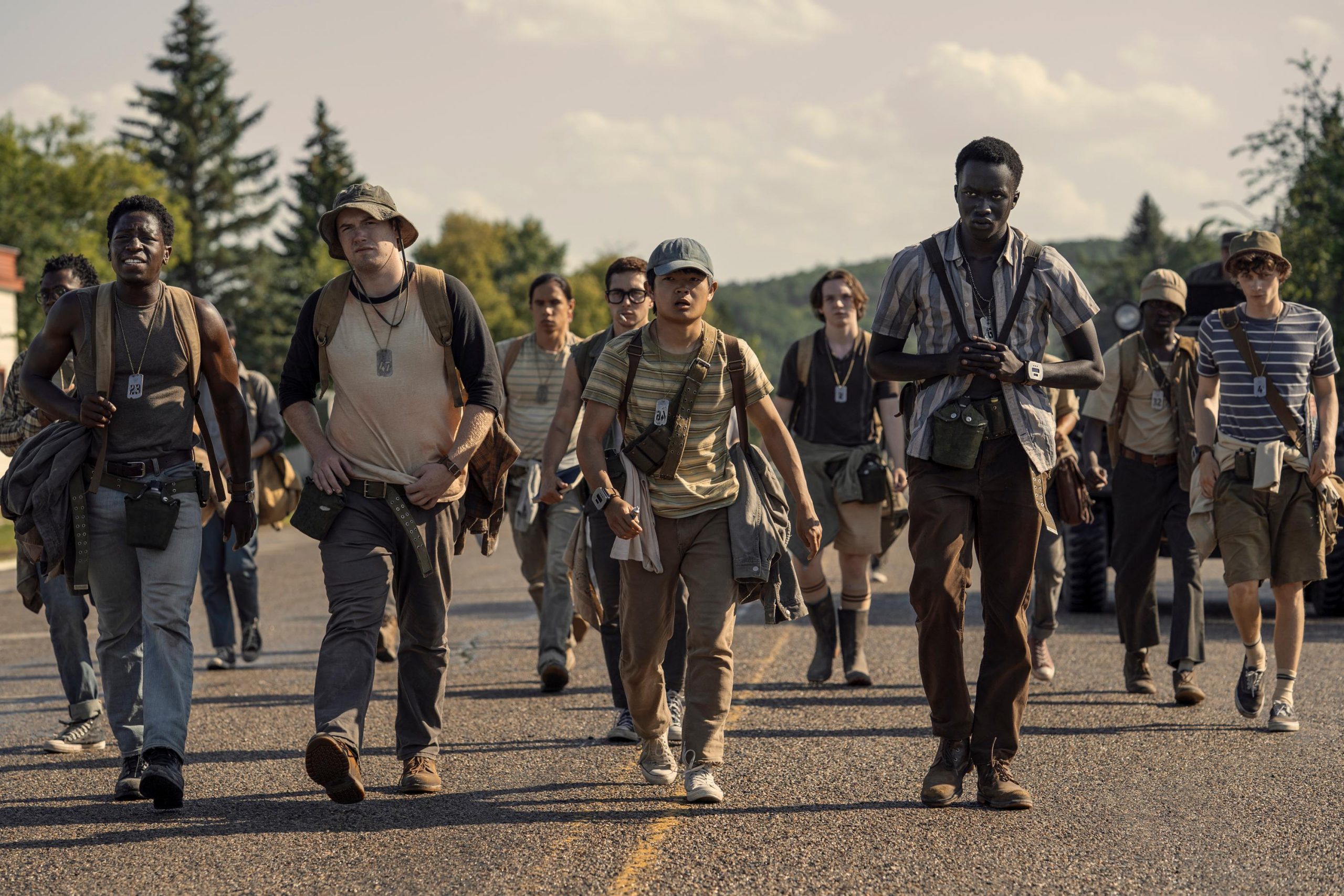
Director Francis Lawrence has been making us care about teenagers engaged in horrifying, televised slaughter since The Hunger Games: Catching Fire. He knows how to build scenes that are nail biting and could go either way. He gives us hope and we believe in that hope until he takes it away again. Lawrence and cinematographer Jo Willems, who has been with Lawrence for many of his biggest films, find a way to make these long scenes dynamic with background and foreground action. It gives the scenes a depth and the constant forward momentum that the story requires.
The other secret weapons are editors Peggy Eghbalian and Mark Yoshikawa. These two took these long takes of boys walking and boys being slaughtered and made them more compelling in the rapid way some scenes were cut or some left to linger. There are scenes where you don’t even see the cut because you feel like you’re one of these boys and are just turning your head or your body to see what’s happening.
All these pieces put together wouldn’t have worked if it weren’t for the script adapted by JT Mollner. The story and the world are just templates for Mollner to explore masculinity. For the most part, these boys go from peacocking macho bros into humans who express real vulnerability. Not all of it sings. Much of it is bogged down in the chop busting between boys and the underlying insecurity in nearly all teenagers. Yet, when there are passages of truth and an ideal of acceptance and friendship, this is a compelling human drama that makes the stakes of the film that much higher.

Even with those high stakes and the drama of the interpersonal relationships between the boys, The Long Walk is boring. It’s about teenage boys walking hundreds of miles and talking about dumb teenage boy stuff. There are moments, but it comes to a point that the named and dimensional characters have to be picked off as the rules of the contest and the world of the story insist, but to have multiple grand, dramatic send offs one after another makes you a bit numb after a while. They’re emotional and dramatic sendoffs, yes, but we’ve been fed these kinds of stories steadily for at least the past thirteen years since The Hunger Games was released. We know survival is only up to a point. So it’s painful to be slowed down even when we care about the characters holding us up.
The stand out among these young actors is David Jonsson. He plays Peter with a complexity and hopefulness that charms you wholly. Jonsson is able to balance Peter’s need to fit in with his need to lead and his need for connection. He’s at his most compelling in his quietest moments. There is a tremendous scene late in the film as Peter walks closely with Ray (Cooper Hoffman). At one point in their conversation, the two of them stop speaking, not walking, and look into each other’s eyes. Ray eventually looks away, but Peter keeps looking. Jonsson plays this scene with the mix of longing and strength Peter is feeling in the moment. He is able to use his face to give us everything and it is a scene that sticks with you because of it.
The Long Walk has moments of excellent filmmaking. It also has moments, long periods of them, where you just wish they would skip ahead a little. With every character having a moment in the spotlight, typically their death, it feels like The Long Walk is attempting to add more depth than it really has. We don’t know how the world got this way or where these boys really come from. It’s almost like they’re on a treadmill at low speed. Even as the story constantly moves, the amount of movement you would need to create a real, substantive effect is not going to happen in the time they have allotted. The Long Walk is worth seeing, it’s just not one that requires a run to go out and see it.