

Home Blog Page 43

Movie Review: ‘She Rides Shotgun’ Shines Through Its Relationships


Director: Nick Rowland
Writers: Ben Collins, Jordan Harper, Luke Piotrowski
Stars: Ana Sophia Hager, Taron Egerton, Jamie Bernadette

Synopsis: A girl marked for death, must fight and steal to stay alive, learning from the most frightening man she knows-her father. An adaptation of Jordan Harper’s award winning novel.


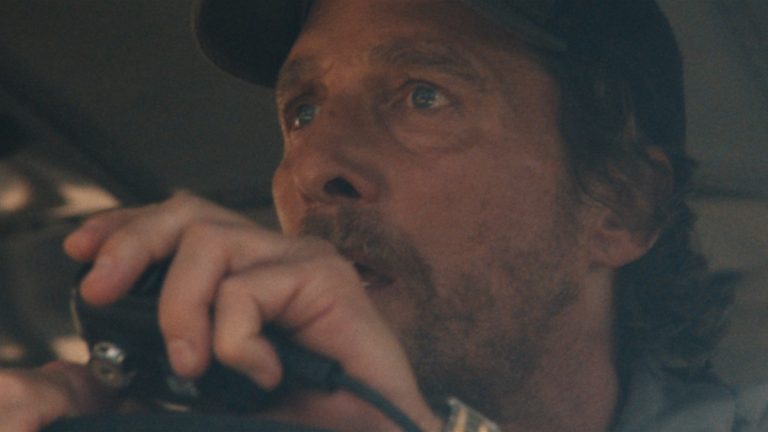
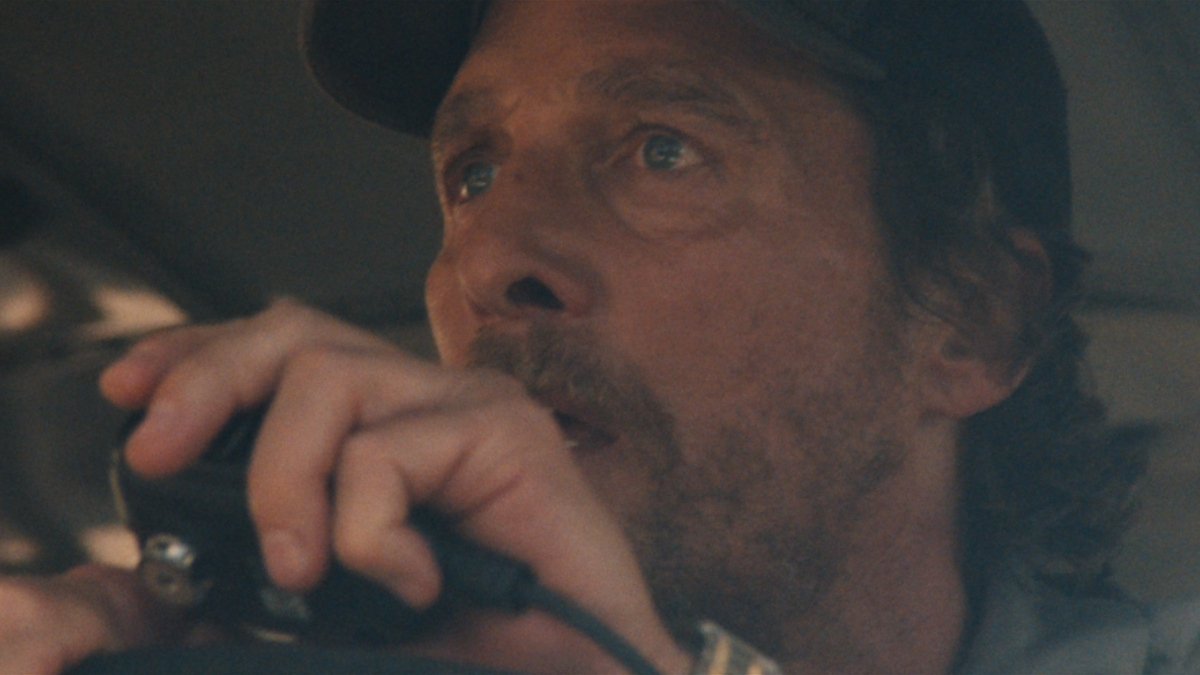
Equal parts gritty and touching is She Rides Shotgun, directed by Nick Rowland, based on the award-winning novel of the same name by Jordan Harper. A tense action thriller that, at its core, is a compelling story about a father doing whatever he can to protect his daughter. Centered around the life of an ex-con as he finds there is a hit out on his estranged daughter, this high-stakes crime drama takes audiences on a wild ride. Exploring the impact of having a father that has a violent past on their children, a rather simple story packs a big emotional punch from start to finish. She Rides Shotgun is packed with powerful performances that elevate it beyond any ordinary crime chase film with its tenderness and determination.

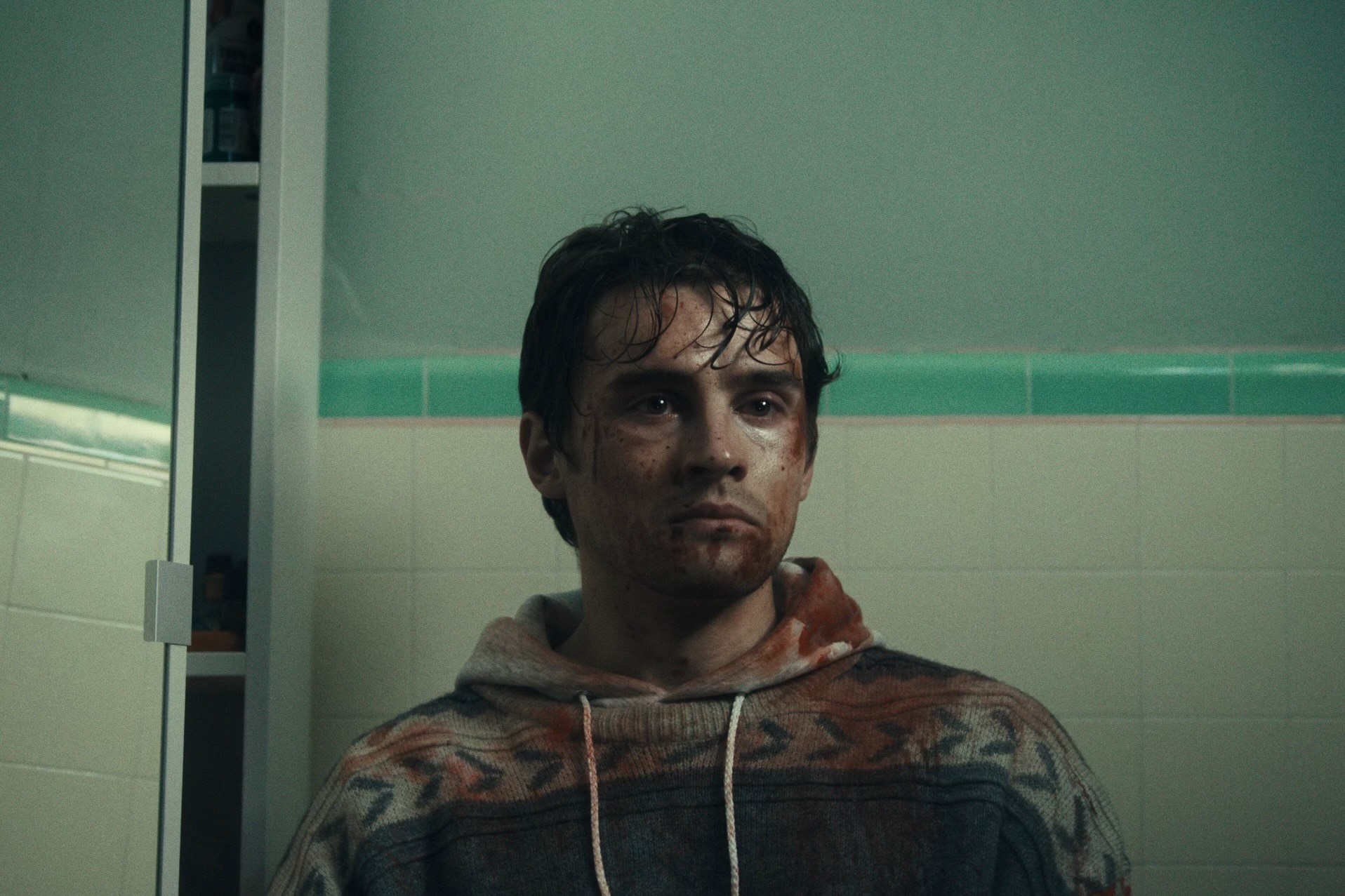
Rowland establishes a sense of unease immediately in She Rides Shotgun by opening the film with Polly (Sophia Ana Heger) awaiting her mother to arrive at school to pick her up. Long after the bell has rung, Polly is surrounded by a crowd of children that dwindles as more and more cars of parents show up. As minutes tick away, Polly tries to pass the time by climbing trees, hoping the next car is her mother’s. When asked where her mother is by a teacher, Polly admits that her mother sometimes shows up late, but soon she’d realize that it wasn’t her mother picking her up; instead, it’s her estranged father, Nate (Taron Egerton). There’s an awkwardness to their interactions, looking at one another as if they were acquaintances rather than father and daughter. After some convincing, Polly jumps into the passenger seat, a decision that will change her life in drastic ways.ย 

The relationship between Polly and Nate is basically non-existent, and as their car ride goes on Polly starts noticing that something isn’t right. Wires exposed near the car’s steering wheel, paired with broken glass that falls out of the window frame while she attempts to roll her window up. Without knowing where they are going or why her father was the one to pick her up, she soon realizes that her father is hiding something. His past isn’t a complete secret, but once they are safely settled in at a hotel for the night, Nate reveals that he is on the run from police for his connection with the drug ring in their town in New Mexico. And while he carries that information with him, someone puts a hit out on someone close to him, his daughter. Desperate to get away from both the lawmen, and the law breakers, Nate gives his daughter a haircut and dye job. As they make their plans to get out, Polly learns of her motherโ€™s fate, forcing her to make a difficult decision for her own safety.

She Rides Shotgun is Rowland’s second feature as a director, with the first being 2019’s rural crime thriller Calm with Horses. He has no issues serving up a gripping film with killer performances. Where he works best in this film is the father-daughter moments, even if this pair has a troubled past. He balances the high-stakes shootouts with the tear-jerking proclamations with ease, which helps elevate where the film falters in its main conflict. While the focus is so heavily on Polly and Nate, Rowland struggles to make the bad guys compelling, which is a shame because there’s an important message about corruption that is too quickly passed over. The looming threat of those after Polly is felt throughout the film, but is left too ambiguous for too long in the film.

Official Trailer

There’s a dangerous drug world hidden within the film’s story that is not explored enough to feel important. While it’s the main point of each of the film’s action pieces, it takes a backseat even when it should be front and center. Nate has quite the criminal past and is no stranger to dealing with the police. And where the film could be telling an interesting story about small town corruption, it chooses to barely dig below the surface. It makes the stakes of the film feel uneven; on one hand, we see the father-daughter duo going to great lengths to protect each other, but even they are too in the dark on the reason why until it’s too late to really care. It plants some great seeds that don’t get to fully bloom, but it sure does make for some gnarly fight sequences.

Thankfully for Rowland, Egerton and Heger make each moment of their screen time charged with emotion that pulls you into their rocky relationship instantly. Egerton is no stranger to transforming for roles, but he’s nearly unrecognizable in She Rides Shotgun; with a shaved head, sunken eyes, and skin riddled with random tattoos, he’s unlike any of his prior roles. His character carries a lot of guilt around with him that Egerton captures through his facial expressions, especially when witnessing his daughter fall into dangerous situations he placed her in. Heger is captivating to watch as Polly; she is not only playing her as an intelligent child, but her ability to adapt to each increasingly scary situation she is faced with is impressive. Formidable and observant, Heger’s performance is one of the strongest of the year. Her final scene is haunting and showcases the enormous talent she possesses.

Centering the story around this frayed relationship is a smart choice; even through the chaos of gas station robberies gone wrong and high-speed car chases, there’s a beautiful exploration of both Polly and Nate and their complicated relationship. Writers Ben Collins and Luke Piotrowski tap into all the complex feelings the duo faces and make sure each moment lingers with emotional weight. Nate wants to know everything about his daughter, from her favorite show to her favorite color. There’s a genuine admiration felt between them and a desperation to keep one another safe. Even during large action sequences, their fight for survival only brings them closer, both saving one another in more ways than one. Nate sees his daughter as his redemption for all the wrongs that he has committed, and Polly sees her father as her source of courage. They have a relationship that grows stronger in the face of relentless and increasingly ruthless violence.

The stark wonder that is New Mexico is on full display here, and cinematographer Wyatt Garfield shows the silent beauty of the landscape. Wide shots of cars along a highway showcase the endlessness of the desert where mountains blend with horizons, creating a stunning golden hour glow. During the night, lights from buildings create an endless sky; the stillness in the air, seen through Garfield’s lens, adds to the unease while Nate and Polly are on the run. As the film comes to its final moments, Garfield utilizes framing that locks us in on Polly’s face, letting her performance linger with the audience and making us think about how far her character had come from her schoolyard introduction.

She Rides Shotgun is a brutal crime drama that proves its power through the moving performances from Egerton and Heger. There’s plenty of thrilling moments as this duo pushes through obstacle after obstacle, but where it shines is its touching examination of how crime impacts our loved ones. Although there’s quite a bit to be desired from the film’s main conflict, its haunting visuals and performances make this worth a watch.

Grade: B+

2025 TIFF: What To Watch For

Itโ€™s the festivalโ€™s 50th edition, and there are a lot of things happening to commemorate it. Theyโ€™ve been replaying the big hits that debuted in their fifty years, and will continue to bring in new movies from A-listers. There are the Cannes winners, including It Was Just An Accident and Sentimental Value, as well as the main gala releases. Colin Hanksโ€™ documentary on comedian John Candy opens the festival, with films by Brian Cox (in his directorial debut), Scarlett Johansson, Paul Greengrass, Rian Johnson (the third Knives Out film), and Aziz Ansari all coming out as well. These are the films that Oscar players come to and make their mark and put their place on the radar. Here are a few of them.

Ballad Of A Small Player – Dir. Edward Burger

One year after appearing with Conclave, Burger is already back with his next film, a story about a big-time gambler (Colin Farrell) who goes to Macau to avoid his growing debts back home. Pretending to be a British aristocrat, the runaway con-artist finds solace with a woman. Adapted from Lawrence Osbourneโ€™s novel, this psychological thriller, also featuring Tilda Swinton, brings back Burgerโ€™s DP from All Quiet On The Western Front, James Friend, and again ups the ante on what can be another entertaining film by Burger. Conclave was my favorite film of 2024, so Iโ€™m very intrigued. 

Dead Manโ€™s Wire – Dir. Gus Van Sant

Itโ€™s his first film in seven years, so it is a thrill to see Van Sant returning and coming with a true story crime drama about one of the most shocking photos in history. Bill Skarsgard plays a man, believing his mortgage broker (Dacre Montgomery) is conspiring against him to take back his home, who decides to hold the broker hostage and publicly shows everyone he will shoot him on TV if not given his ransom demands. This stranger-than-fiction event, also showing at the Venice Film Festival, has Colman Domingo, Cary Elwes, and Al Pacino in a very โ€˜70s story that feels like Van Santโ€™s own version of Dog Day Afternoon

Hamnet – Dir. Chloe Zhao

After her one-shot at a Marvel film didnโ€™t work out, Zhao is back with a lush drama closer to what we saw in Nomadland. In adapting Maggie Oโ€™Farrellโ€™s novel, Hamnet tells a historical fictional version of William (Paul Mescal) and Agnes Shakespeare (Jessie Buckley) and the death of their only child. Through the eyes of Agnes, William struggles with the grief of their loss and can only channel it with his writing. Joe Alwyn and Emily Watson co-star with Sam Mendes and Steven Spielberg as part of the producing team, which lends the movie some extra oversight.

Roofman – Dir. Derek Cianfrance

Heโ€™s been gone for a while, but the director of Blue Valentine and The Place Beyond The Pines is back with a crime comedy – itself, a true story – about an unusual robber. Channing Tatum plays an Army officer who goes through the roofs of buildings to steal money at night and hides in the walls of Toys Rโ€™ Us stores. Kristen Dunst plays his love interest, whom he tries to keep up with while hiding his illegal vice, with Ben Mendelsohn, Peter Dinklage, Juno Temple, and Uzo Aduba co-starring in this criminally bizarre and darkly funny film.

The Testament of Ann Lee – Mona Fastvold

After the massive success of The Brutalist, Fastvold, Brady Corbetโ€™s co-writer and real-life partner, is taking her third round behind the camera with this historical musical of a religious sect in the 18th century. Itโ€™s a movie they made fairly quickly without fanfare, but the anticipation is high with Amanda Seyfried in the titular role, the founder of the sect known as the Shakers. Thomasin McKenzie, Lewis Pullman, and Tim Blake Nelson co-star in what looks like a unique, musically-infused drama in the same vein as Corbetโ€™s Vox Lux. Being also played in Venice, just like The Brutalist, certainly will have people paying attention.

Movie Review: ‘Happy Gilmore 2’ is Much Better Than Anyone Expected


Director: Kyle Newacheck
Writer: Tim Herlihy, Adam Sandler
Stars: Adam Sandler, Julie Bowen, Christopher McDonald

Synopsis: Revisit Happy Gilmore’s golf career after his win in the Tour Championship.


Netflix hasnโ€™t exactly become known for gracefully handling properties that arenโ€™t their own; whether it be the countless, suspect animation adaptations or small-screen, weightless blockbusters of books that deserved better, the platform has developed a reputation for misunderstanding what made a franchise, title, or icon popular in the first place. So it isnโ€™t difficult to imagine the widespread disdain when it was announced that the company would team with Adam Sandler to revive his long beloved Happy Gilmore.

The original comedy, which dates all the way back to 1996, has become a cult classic and, for many, the crown gem of Sandlerโ€™s zany filmography. Despite the reservations of just as many, paired with his contestable run with Netflix in recent years, Netflixโ€™s sequel quickly became highly-anticipated solely due to the legacy of the first filmโ€ฆ and it felt like Netflix knew that all too well, at least according to the worrying marketing campaign. But now that Happy Gilmore 2 has actually released, itโ€™s become clear that, surprisingly, the streaming giant knew the assignment. This is a really solid comedy, and a shockingly reverent sequel, too.

As usual, Sandler has every dial turned to 11 here, but he also manages to retain Happyโ€™s general personality and likability as a character beyond simply acting insane. Moments with his newly-added family, as funny and ridiculous as they often are, are tinged with a touch of sweet earnestness that may have you pulling for this character as he fights his way out of a midlife crisis. In an effort to rehabilitate himself and finance his daughterโ€™s expensive foreign ballet lessons, Gilmore returns to the game of golf with a newfound purpose, looking to rediscover himself in the sport that gave him purpose in his younger years.

It truly is as dramatic as it sounds, and at times, the movie allows that concept the proper room to breathe. Gilmore has multiple heart-to-heart moments with his daughter regarding the concept (played by his real-life daughter, Sunny), which, again, lend themselves to the filmโ€™s sneaky sense of levity. All the same, it usually isnโ€™t long after that a character drinks hand sanitizer or is lobbed into a tank of lobsters at the grocery store. Youโ€™ve got plenty of Sandlerโ€™s outlandish comedic sensibilities here, too.ย 

Adam Sandler Returns in Happy Gilmore 2 as Netflix Releases First Full  Trailer

But if youโ€™re watching this, you went in expecting that, right? As tired as some people are of them, those same tendencies are what made the original Gilmore a classic. Perhaps itโ€™s a matter of circumstance, and simply putting Sandler back into this universe contextualizes his goofiness in a way that works for the same reason now that it did back then. It just never gets old seeing the Sandman go ballistic on an innocent bystander shortly after driving a ball directly into a nearby pond. And while thereโ€™s plenty of that here, Gilmore 2 also manages to widen its scope a little in comparison to the film before it, introducing new characters, environments, and dynamics into the field of play.

Not everything is a zinger, but in traditional Sandler fashion, heโ€™s just throwing so much at you on a constant basis that something is bound to stick now and again. That, and this his second team-up with director Kyle Newacheck – a relatively new addition to the Sandler carousel, save for his middling Murder Mystery comedy – adds another refreshing angle to the overall mix. Newacheck opts for a ton of handheld, organic movements and leans into the sporadic nature of his titular character here. While there isnโ€™t anything particularly inspiring about the filmโ€™s visual palette, Newacheckโ€™s taste for kinetic movements and lively set-pieces give the sequel a much-needed boost of energy compared to the platformโ€™s other such similar comedic offerings.

Happy Gilmore 2 cast: The problem with all those cameos.
Even the countless celebrity cameos – countless is no exaggeration – feel well-placed and are often both relevant and hysterical. Much like the rest of the humor, itโ€™s all so random, eccentric, and utterly unbelievable. And so, again, just like the first film, it works. Happy Gilmore 2 will by no means blow your mind and is, by many measures, a somewhat conventional comedy in structure, tone, and pace. Yet, it manages to make two hours feel like fifteen minutes, both justifying its own existence and honoring the beloved movie that came before it. Itโ€™s just much better than I think anyone reasonably expected. In this case, simply being good is perhaps the greatest outcome. Happy Gilmore 2 is good. Hallelujah, hallelujah, amen.

Grade: B

Podcast Review: The Fantastic Four: First Steps

On this episode, Brendan and JD are joined by Megan Loucks to discuss Marvel’s latest film The Fantastic Four: First Steps! We’ve been looking forward to this all year given the state of the MCU coming into 2025. Marvel has been in a bit of limbo recently and it felt as if The Fantastic Four: First Steps was going to help reset things in the Marvel Cinematic Universe. Did it accomplish that? Yes and now. For many reasons, it stands apart on its own while also being a refreshing entry as well.

Review: The Fantastic Four: First Steps (4:00)
Director: Matt Shakman
Writer: Josh Friedman, Eric Pearson, Jeff Kaplan, Ian Springer
Stars: Pedro Pascal, Vanessa Kirby, Ebon Moss-Bachrach, Joseph Quinn

Subscribe to our Podcasts RSS
Subscribe to our Podcasts on iTunes
Listen on Spotify
Listen on Stitcher
InSession Film Podcast – The Fantastic Four: First Steps

Movie Review: ‘Oh, Hi!’ is Safe and Distracted


Director: Sophie Brooks
Writer: Sophie Brooks, Molly Gordon
Stars: Molly Gordon, Logan Lerman, Geraldine Viswanathan

Synopsis: Iris and Isaac’s first romantic weekend getaway goes awry in a most unexpected way.


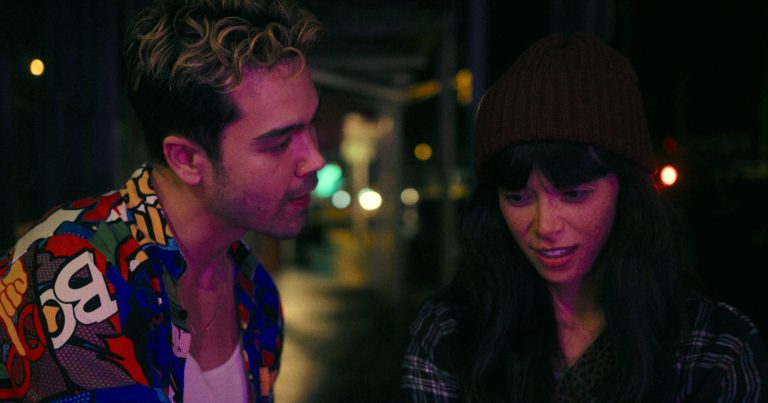
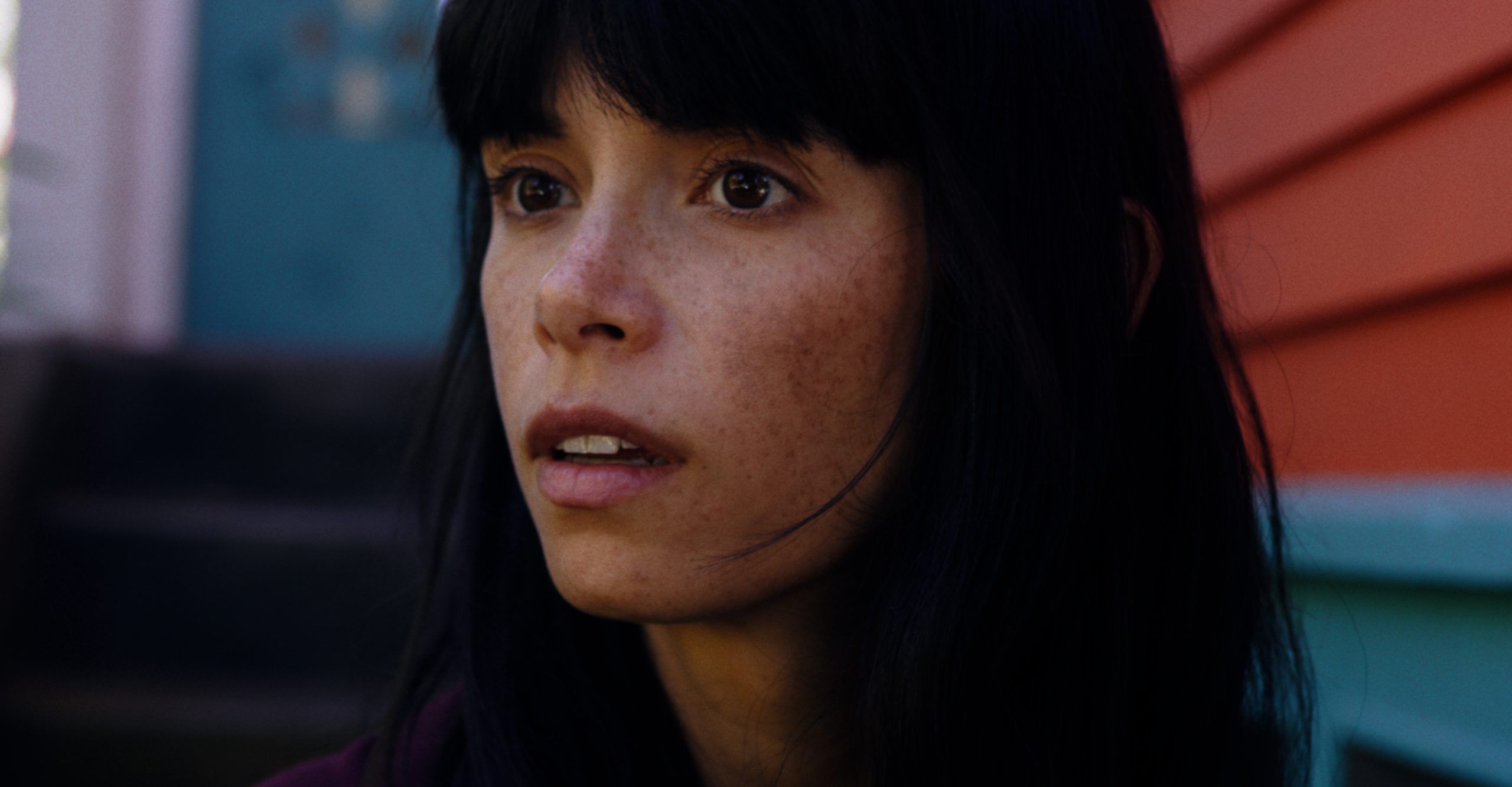
Of all the tasks a person faces in life, dating may be one of the most challenging; since the rise of online dating, it has become even harder. You might think that having access to more people would make finding a partner easier, but it often just leads to more confusion and fatigue. Someone you feel a strong connection with might be just in it for fun, already looking at the next potential match, even if they take you on a romantic getaway to a remote cabin on the lake. Thatโ€™s the story of Oh, Hi! by writer/director Sophie Brooks.

Oh, Hi! begins with Isaac (Logan Lerman) and Iris (Molly Gordon) driving to a romantic getaway at High Falls. The two are seen in the car singing, laughing, kissing, and genuinely enjoying each other’s company. The romantic banter between them is maybe a bit over the top at times, but still feels realistic, especially since the โ€œrelationshipโ€ is still in the early honeymoon phase. They are inseparable, and the chemistry between Lerman and Gordon makes it seem like theyโ€™ve been together much longer than they actually have. However, itโ€™s shown that despite their great appearance together, they donโ€™t really know each other all that well yetโ€”they’re still trying to understand each other on a deeper level. After an intimate moment where Isaac is chained to the bed, this lack of understanding fully comes to light as he tells Iris he isnโ€™t looking for a relationship and that sheโ€™s not the only girl heโ€™s seeing romantically. Understandably upset, Iris leaves him chained to the bed overnight and the following morning plans to win him over against his will.ย 

The scenes where Iris tries to win Isaac’s affection are among the funniest and most thematically powerful parts of the film. Sophie Brooks crafts these characters with humor and authenticity, making them believable. Iris’s frustration is palpable, and Molly Gordon delivers a hilarious performance as a manic, earnest girl desperately trying to connect with someone who doesnโ€™t care either way. Though absurd, her behavior feels genuineโ€”a plea for connection. Molly Gordon dominates these scenes, making a strong effort to carry the film. The first act benefits greatly from her performance and the filmโ€™s dark humor, which is both stressful and cringeworthy yet also funny.ย 

Oh, Hi!โ€ โ€“ Movie Review โ€” Phoenix Film Festival

However, all the momentum gained quickly fades once the twelve hours Isaac agreed to pass, and Irisโ€™s attempt at winning him over turns to keeping him trapped to avoid dealing with the repercussions. When Isaac insists his feelings havenโ€™t changed and plans to contact the police, Iris rebinds him and calls her friend Max (Geraldine Viswanathan) for help. The arrival of Max and her boyfriend Kenny (John Reynolds) halts the movieโ€™s momentum entirely. This shift isnโ€™t due to the characters but results from the story losing its plot-driven focus. Numerous conversations between Iris, Max, and Kenny go nowhere, as Isaacโ€™s character becomes irrelevant. The film shifts from exploring complex themes of dating to attempting comedy that never quite lands in any meaningful way, causing the plot to become sidetracked and lose its momentum. It almost seems as though Brooks’s initial idea for the film lost its way, and she struggles to reconnect with the core themes. The dialogue between characters was already absurd in a funny and endearing way, but eventually transitions into something far past believability. The film takes some unusual turns, exploring witches and potions that feel monotonous and meaningless, and as a viewer, I felt tied to my chair with no escape.

In just this year alone, several films, such as Companion and The Materialist, have explored the complexities of relationships in various ways. For a while, Oh, Hi! was doing a good job of bringing something different and relevant to the table. Still, the longer the film dragged on, the less I cared about the characters and the situation they were in, because it began to feel like they didnโ€™t care all that much either. It began to feel less like Iris wanted Isaac to understand how trapped she had felt in the vulnerable position he had put her in, and more like she was in over her head with no way out. The humor became stale, and at times, it was rehashed with the same jokes told by different people. Once the film lost its sense of comedy, it truly lost its way as well.ย 

The end of the film forces the audience to suspend disbelief to an exponentially large extent. These characters, who were at war with one another for different reasons, wake up and understand the other’s point of view without any apparent reason for why they would have done so. After a tiresome second act, the film rushes to its conclusion in a less-than-satisfying way. One of the major problems is that it didnโ€™t feel like the film took many risks. A film that raised questions about the difficulties of modern dating felt too nice, and the bow tie ending accentuated that idea, as it didnโ€™t feel as though there was much of a point to it.ย 

Oh, Hi! review โ€“ promising romantic comedy takes awkward turn into farce |  Sundance 2025 | The Guardian
There is a good movie in Oh, Hi!, it just wasnโ€™t the version that was released. The genuinely funny performance from Molly Gordon and equally as charming Logan Lerman is essentially wasted on a film that knew what it wanted to say but couldnโ€™t quite figure out how to convey it. The script’s beats are surface-level at best, and while I initially understood the characters’ motivations, they were quickly discarded in favor of absurdist comedy that wasnโ€™t absurd or comedic. At one point, Isaac proclaims to Iris, โ€œThe problem is that I was too nice?โ€ And I think the same could be said about Oh, Hi! as well.

Grade: D+

Movie Review: ‘Dog On Trial’ Takes Its Comedy Seriously


Director: Laetitia Dosch
Writer: Laetitia Dosch, Anne-Sophie Bailly
Stars: Laetitia Dosch, Franรงois Damiens, Jean-Pascal Zadi

Synopsis: Avril, a young lawyer, goes to great lengths to save her client, a repeat-offender dog, from capital punishment. This dog helps Avril accept her own human complexity.


Courtroom films, even if the film is a comedy, often have a complexity and drama that is rare for our court rooms in reality. There are grand speeches, weeping testimonies, harrowing witness statements, intrigue, bombshells of surprise information, gasps, and gallery participation. That is what we relate to. The passion of the moment and of justice. Dog on Trial has all of that, but it also has a canine defendant who is confused by the whole affair.

Dog on Trial is a funny movie, but it takes the defense arguments Avril (Laetitia Dosch) makes on behalf of Cosmos (Kodi) very seriously. Laetitia Dosch and co-writer Anne-Sophie Bailly have brought forth in their screenplay a compelling case for a dog sentenced to death for what comes natural to him. The courtroom becomes a fantastic menagerie of humans attempting to explain the psychology and nature of dogs. One of the best scenes is when one expert sets a sound board in front of Cosmos for him to answer questions posed by the judge. This goes surprisingly well as the button Cosmos hits to answer the first test question is coherent. Even the next button for the second test question is apt, but when the judge asks too complicated of a question, the button pushing gets erratic. Then Cosmos is just pushing the buttons for his own pleasure.

While the fun of this film is pure and sweet, the depth of the story is in human relations to dogs. There will be many people who have a shallow reaction to this story, an “aw, so cute,” reaction, but there is more here. The arguments of Roseline Bruckenheimer (Anne Dorval), the prosecutor, are futile because she attempts to equate this dog’s instinct with a human’s amorality. A dog never got drunk and hit its child. A dog doesn’t kill for the thrill. This is an animal and has no morality but the one imparted by biology and nurturing. There are no bad dogs, but there are bad humans who make dogs bad.

There is a feeling Dog on Trial can pull out of your chest, especially if you’re a dog person. It’s an immediate defense of Cosmos because he is a good dog, unfairly made into a pariah. The film delves deeply into the fact that dogs and humans have a kind of bond that is spiritual. Looking into Cosmos’ eyes, makes more than one human in the film see something more to the situation. This film, while very funny, is about the realities of the companionship between our two species. Rarely does the film ever engage in the “magical dog” trope, but keeps Cosmos grounded in the behavior of a real dog.

It’s strange to write, but this is a truly incredible dog performance. Kodi as Cosmos is trained so well that he is effortless in look and behavior. Yes, this performance is very much in the editing, superbly performed by Isabelle Devinck and Suzana Pedro. It’s also in the cinematography by Alexis Kavyrchine and the direction of Dosch. Yet, there is one scene especially that will make you question whether or not Kodi is a performer or just a good mimic. As Marc (Jean-Pascal Zadi) plays with Cosmos out in his pasture, Avril listens to Marc’s explanations of play dynamics. When Marc throws the stick he was tugging on with Cosmos, Cosmos chases after it and with a command, Marc stops him. Cosmos turns, not to run back to Marc, but to stare at him. He stares and it’s a look of disappointment, like Cosmos hoped that Marc wasn’t like the others. Cosmos hoped Marc would never cage him because the two of them developed such a strong rapport. It’s there in the look of Kodi as Cosmos and whether that was Kodi’s reaction in the moment or a different take, it doesn’t matter, it’s effective and seems to have been done with real instinct, not training.

A performance we can gauge on the obvious cognitive abilities of its performer is the great one by Laetitia Dosch. Dosch balances the goofy humor of her character’s inner monologue with the heft of a person who has deeply held convictions about right and wrong. Playing opposite a dog is never an easy feat, but Dosch has the temperament and skill that makes her scenes with Cosmos effortless. She’s funny and fierce. She’s sweet and serious. Dosch is terrific as Avril.


Dog on Trial could have swung for the comedy fences. It could have been a screwball affair with hammy performances from people and pets alike. It could have been overly serious and maudlin, which would have elicited laughter because it’s so atonal to the subject matter. Dog on Trial strikes a terrific balance and finds a near perfect middle that makes you forget the absurdism while marveling at it at the same time. It’s a film that is understanding of the realities in a case like this and while the verdict won’t be spoiled here, you will need some tissues when it’s read on the faces of the humans and dogs in the court. Dog on Trial is a special film that understands our connection to nature and that it should never be taken for granted.

Grade: A

Criterion Releases: August 2025

For August, seven new films are being introduced to the closet, where a double feature is getting the re-edition treatment. While Vittorio De Sica, Kon Ichikawa, and Edward Yang are familiar names, an Egyptian legend, two independent films, and a contemporary Italian war drama are added to the growing collection of gems. It continues (with Septemberโ€™s titles also being an enlarged growth of entries) to be a pot of gold for cinephiles as Criterion continues to expand a lot in bringing in and re-establishing entries for the 4K age. Here are the August inductees.

Shoeshine (1946)

An early Oscar winner for Best International Feature, Vittorio De Sicaโ€™s neorealist fable of young boys struggling in post-war Italy is a triumph of the countryโ€™s growing cinematic status following the war. The story of two boys who want to buy a horse and go to desperate lengths that land them in jail. Their friendship is tested, as they put on a show of youthful performances in the face of real-life pain that De Sica would continue to produce with later films, Bicycle Thieves and Umberto D. 

The Burmese Harp (1956) / Fires On The Plain (1959)

Director Kon Ichikawa has two of his films getting the re-edition treatment, both of them meditating on the horrors of war from the Japanese point of view. In The Burmese Harp, a soldier believed to be dead wanders off to join a group of Buddhist monks to find inner peace. Fires on the Plain tracks a group of soldiers stranded in the Philippines towards the end of the war, weary of dying as well as finding themselves on the losing end of a fight that was worth nothing. Bleak and violent for their time, both films have become regarded as masterpieces in Japanโ€™s post-war analysis and remain staples of the countryโ€™s achievement of modern storytelling.

Cairo Station (1958)

Itโ€™s about time that Youssef Chahine, arguably the greatest director to come from Egypt, breaks into the Criterion Collection with one of his best films. Playing the role of an obsessed seller at the train station, Chahine follows a vendor (Hind Rostom) and pushes hard to get her affection. However, he pushes his obsession to the limit, which endangers others in this brilliant neorealistic drama as part of the post-Egyptian Revolution progress.

A Confucian Confusion / Mahjong: Two Films by Edward Yang (1994/1996)

Edward Yang, one of Taiwanโ€™s best filmmakers, transitioned from heavy dramas (A Bright Summer Day) into making comedies about families in a modern world and trying to make sense of it. In Confusion, a group of young professionals who cross paths and find challenges at work and in love, as Taiwan becomes part of the materialist world. Mahjong is a dark comedy about a group of con artists who get caught in the underworld mystery of a missing businessman and a foreign tourist who is caught in the middle. These two films delve into the modern era, exploring the challenges of shifting values in a freer world. 

Compensation (1999)

Two stories in Chicago, one in 1910 and the other in 1990, follow an African-American couple with a deaf woman and a non-deaf man who deal with the difficulties of communication and the tragic turmoil that surrounds them. Criterion has brought back to life this underseen, innovative story from director Zeinabu irene Davis, which took years to get released after being filmed. Thankfully, in being rediscovered, it joined the Library of Congress National Film Registry last year, making sure more people will go see it. 

Saving Face (2004)

A young lesbian couple (Michelle Krusiec and Lynn Chen) find themselves challenged when one of them has their mother, a traditional Chinese woman (Joan Chen), move in with them after learning she is pregnant. The barriers of tradition burst open as writer/director Alice Wu made her feature debut with a film based on her life, and blends rom-com with the conflicts of generations in an Asian-American setting, something rarely seen at the time. Good thing Wu refused to bow to studio concessions that the characters be White and not spoken in Mandarin.

Vermiglio (2024)

In an Italian village within the mountains during World War II, a soldier fleeing arrives and changes the lives of a family who take him in. Time passes, and the soldierโ€™s growing love for the eldest daughter continues until the end of the war, when a shocking revelation is made about the man they never really knew. Maura Delpero writes and directs this personal tale, grounded in her familyโ€™s history of coming from a similar area, that puts the traditions of village life in a bind compared to the rest of the modern Italian world, and what happens when a new era begins.

Episode 647: Top 10 (Pre-MCU) Superhero Movies

This weekโ€™s episode is brought to you by Koffee Kult. Get 15% OFF with the code: ISF25

This week on the InSession Film Podcast, we do another collective Top 10 as we discuss our favorite pre-MCU superhero movies! We also talk about JD’s trip back to Michigan and where the MCU stands in a post-Fantastic Four world.

– New Trends / Avatar: Fire & Ash Trailer (0:40)
We begin the show this week by discussing some new trends in the cinema world that we find very exciting, one of which is that trailers are playing exclusively in theaters. Seeing the trailer for Avatar: Fire & Ash in a packed theater was magical, and oh boy are we deeply excited for that movie.

– JD’s Trip Home / State of the MCUnion (7:40)
There were two revelations that JD had while going back home to Michigan. One of them revolves around Lady Bird and the other Hans Zimmer. How do those names relate to Michigan summers? Tune in to find out. Also, after The Fantastic Four: First Steps hit theaters and began Phase 6 for Marvel, we had some thoughts on where things stand for the MCU and what the immediate future might be.


RELATED: Listen to Episode 610 of the InSession Film Podcast where we discussed our Top 10 Movies of 2024!


– Top 10 Pre-MCU Superhero Movies (50:33)
Before the Marvel Cinematic Universe took the world by storm, there were plenty of other great superhero movies that we all loved and cherish. And we wanted to celebrate those by discussing our collective Top 10. As always, the movies at the top weren’t difficult, but negotiating the bottom five did come with some really fun and challenging hurdles. With that said, what would be your Top 10 pre-MCU superhero movies?

Subscribe to our Podcasts RSS
Subscribe to our Podcasts on iTunes
Listen on Spotify
Listen on Stitcher
InSession Film Podcast – Episode 647

Next week on the show:

The Naked Gun and Parody Movies

Help Support The InSession Film Podcast

If you want to help support us, there are several ways you can help us and we’d absolutely appreciate it. Every penny goes directly back into supporting the show and we are truly honored and grateful. Thanks for your support and for listening to the InSession Film Podcast!

VISIT OUR DONATE PAGE HERE

Movie Review: โ€˜To Kill A Wolfโ€™ – The Haunting Truth of Silence


Director: Kelsey Taylor
Writer: Kelsey Taylor
Stars: Maddison Brown, Ivan Martin, Kaitlin Doubleday

Synopsis: In a modern re-imagining of Little Red Riding Hood, a social pariah discovers a teenage runaway in the Oregon Wilderness and does his best to help her find a way home – a troubling exploration of trauma and redemption.


Thereโ€™s something about the tale of Red Riding Hood and its deep-seated roots in the lore. The Brothers Grimm kingdom of dark fairytales has always had its fans and inquisitive searchers, especially in the film world. Many have tried multiple times to interpret it differently, especially concerning the darker elements connected to these cautionary childhood tales.

Maddison Brown as Dani
Credit: To Kill A Wolf (2024)

The latest attempt, written and directed by Kelsey Taylor, To Kill A Wolf tells the story of a mysterious woodsman (Ivan Martin), infatuated not just with music, but with sound -shown through the disparity between his modest living and his self-assembled, high-tech sound gear and systems- who relies on music to kill his infinite loneliness. He has another hobby, he likes to unhook wolf traps in the woods, he saves wolves, rather than kills them -a bold contrast to the filmโ€™s title- and during one of his elaborate wolf-saving missions, he finds an unconscious Dani (Maddison Brown). After he saves her, their journey begins.

Daniโ€™s journey as the Red Riding Hood is one of being let down by one adult after the other. Unlike the woodsman, whose mystery in life is easily revoked by his openness about his emotional expression, Dani is a closed book. Itโ€™s not easy to decipher how sheโ€™s feeling amid the chaos. Taylor does an excellent job of shifting POVs and dismantling tropes. If there is mystery about the woodsmanโ€™s origin and past, Daniโ€™s inner world is a vault. Her heart is locked, not to be unearthed any time soon. Their characters couldnโ€™t be more different, but their unity stems from a single goal: running away from pain.

Daniโ€™s harrowing silence unfolds into scenes from her scary reality, and the hints at her sexual abuse surface along with the manipulation of her โ€œwolf,โ€ rationalizing her into silence, putting her on mute. This leaves the viewers in a state of discomfort, relief, and catharsis. The truth is out, but what does a girl like her do about it? And is there anything to do about such prickly situations where one person is defenseless, young, and scared and the otherโ€ฆa wolf!

Ivan Martin as The Woodsman
Credit: To Kill A Wolf (2024)

I am surprised by Taylorโ€™s -a director unfortunately I have not been familiar with- immaculate attention to detail. Her characters donโ€™t foolishly exist in a vacuum but have their own inner worlds, shown in glimpses from one scene to the next. She brilliantly practices world-building for her characters like a pro, handling the tonal shifts and the uncomfortable character dynamics with a mastery that paves the way for better control of her craft in upcoming movies.

Adam Leeโ€™s cinematography highly complements her careful direction, creating a grainy, gloomy, world that manipulates the idea of a wolf. An animal born to hunt or a sexual predator, carefully manipulating all those around him to appear as villains, while heโ€™s the one who hides his claws in plain sight. The wolf -or the Canis lupus- is innocent in this tale, hunted down by greedy humans, while the wolf (as the director dedicates one of her chapters to him) in his human form is the predator, the real one guilty of hurting Dani; the Red Riding Hood of our tale.

But what is the wolf really? And why do we have to kill it? Is it metaphorical -the wolf of our past, haunting us, running after us in the dark trail at night- or actually approaching the predator in the dark? The film doesnโ€™t necessarily specify those symbols with clarity. A wolf is a wolf. And a grandma is a grandma, but what if a symbol is complicit in playing the role of another. Then who is to say the fairytale doesnโ€™t play by the rules?

Maddison Brown as Dani
Credit: To Kill A Wolf (2024)

To Kill A Wolf makes the alluring woods, lonely, dark, and deep as they are, a place for refuge and shelter, but also an incubator for where the sleeping dogs lie. Secrets are buried alongside their perpetrators, and the woods with their giant trees are witnesses to all the traumas buried beneath the surface. Taylorโ€™s film makes one car ride a woodsman makes to transport Red Riding Hood into a journey inside the forest of the self.

Grade: A

Op-Ed: ‘Sorry, Baby:’ What This Film Gave Me That No One Else Did

Itโ€™s hard to explain the power of a film like Sorry, Baby to someone who hasnโ€™t lived with trauma. To someone whose body doesnโ€™t tighten when a door closes too loudly. To someone who has never flinched at the sound of a certain voice, or gone numb when a memory pops up like a trapdoor. The world can keep turning all around you, but if your body has memorized terror, time itself stops. You donโ€™t move forwardโ€”you just survive inside the echo. You breathe in the after.

When I say this film hit me, I mean it in a way you donโ€™t fully recover from. In the way that cracks you open and shows you the rot you thought youโ€™d buried. I was thirteen when it happened to meโ€”thirteen and alone and scared and still trying to understand who I was. On the paperwork, it said I was a boy. Thatโ€™s what the legal documents showed, thatโ€™s what adults saw. But the truth was blurrier. I was figuring out I wasnโ€™t just a boy, or maybe not a boy at all. I hadnโ€™t found the language yet for girl, or nonbinary, or anything in between. I just knew I didnโ€™t fit. And that confusionโ€”that gendered spaceโ€”was used against me. Exploited. Ignored. Erased.

They didnโ€™t believe me. Not really. Because it wasnโ€™t supposed to happen to someone like me. Because of that one word: boy. The way that word erased my pain, the way it gave people permission to look away. To call me confused, dramatic, hormonal. To say it wasnโ€™t that bad. That boys donโ€™t get r*ped. Or if they do, itโ€™s not the same. That I should feel lucky, or I should shut up, or I should grow up and get over it. As if the violence done to me was somehow less violent. As if survival was a privilege I should be grateful forโ€”never mind the wreckage it left behind.

Sorry, Baby didnโ€™t flinch from any of that. It stared straight into itโ€”the ache, the systemic failure, the silent scream that trauma teaches you to swallow. The film didnโ€™t just understand trauma. It embodied it. The kind of trauma that stays lodged in your skin long after the bruises fade. The kind that gets quieter, but never leaves. Itโ€™s there in the way you flinch from touch, in how you lock the door twice, in how laughter feels too sharp in your mouth some days. Itโ€™s in the way you vanish slowly from yourself without realizing it, until you donโ€™t recognize your own face in the mirror.

There are moments in Sorry, Baby that felt so raw I almost had to turn away. The way the camera lingered, not to exploit, but to witness. It didnโ€™t need to dramatize the painโ€”it trusted us to see it. And in that trust, I felt something shift. For the first time in years, I didnโ€™t feel invisible. I didnโ€™t feel like my pain was some unspeakable thing. It was there. It was valid. It was mine. And no one could take that away.

Iโ€™ve watched a lot of films that claim to be about trauma. That throw the word around like seasoning, that treats it like a plot twist or a character arc. But Sorry, Baby knew better. It wasnโ€™t about recovery. It was about surviving in the aftermath. About the days when getting out of bed feels like a war. About the silence that wraps around you like a coffin. About the people who look at you and only see what they want to see. Not the broken pieces. Not the bruises you keep beneath your skin. Just the performance of normalcy they expect you to give.

I remember how it felt to sit in the aftermath of what happened to me. I remember looking at my own body and feeling like a stranger had moved in. I remember wanting to scream and never finding the voice to do it. Every time I tried to tell someone, they found a way to rewrite the story. To make it smaller. To make it fit into a box they could understand. But I didnโ€™t fit. And I was punished for that. My truth was inconvenient. My pain was too complicated. So they looked away. They all did.

The film understands what it means to carry that. To be marked. To be touched by something no one wants to talk about. Thereโ€™s a sceneโ€”one I wonโ€™t spoilโ€”that undid me. I felt my breath catch in my throat. I felt the tears come before I could stop them. And it wasnโ€™t because it was sad. It was because it was true. Because for once, someone had put that truth on a screen and hadnโ€™t apologized for it. They let it stand. Let it breathe. Let it hurt.

It made me think of how we talk about survivors. The way we only believe them when they perform their pain in a way that makes us comfortable. The way we demand they be perfect, broken in the right ways, soft enough to pity but not so angry that it makes us uncomfortable. But I was angry. I am angry. And Sorry, Baby gave me permission to feel that. To feel all of it. The rage, the grief, the guilt that was never mine to carry but somehow fused itself to my bones.

Thereโ€™s a loneliness to surviving that no one really talks about. People think the worst part is the event itself. But itโ€™s not. Itโ€™s what comes after. Itโ€™s the silence. The isolation. The way you look around and realize no one sees you the same. Or worseโ€”they donโ€™t see you at all. Youโ€™re just noise to them. A complication. A footnote.

When I was thirteen, I didnโ€™t know how to explain what happened. I didnโ€™t have the words. I barely understood my own body. And the world took advantage of that. They twisted my silence into consent. They called me confused. Said boys couldnโ€™t be victims. That I mustโ€™ve misunderstood. Maybe I made it up. Maybe I was trying to get attention. And because I hadnโ€™t figured out how to articulate who I wasโ€”because I didnโ€™t yet have the courage or vocabulary to say, โ€œIโ€™m not a boy, not reallyโ€โ€”they used that confusion as proof that I didnโ€™t matter. That I didnโ€™t count.

Thatโ€™s the thing about being trans or nonbinary or anything outside the cis mold. People already think your body is up for debate. They already see you as less real, less worthy of protection. So when something happens to youโ€”when someone hurts youโ€”they donโ€™t know what to do with that. They donโ€™t believe it. Or they believe it and pretend they donโ€™t. Either way, youโ€™re left alone. Your body becomes a battleground. Your story becomes a threat.

I wish I could go back to that thirteen-year-old kid. I wish I could tell them that their pain was real. That it wasnโ€™t their fault. That being confused about your gender doesnโ€™t make you weak, doesnโ€™t make you a liar. That people failed you not because you werenโ€™t believableโ€”but because they were too cowardly to face the truth. Because seeing your pain meant admitting what they allowed. What they ignored.

Watching Sorry, Baby, I felt that kid in me exhale. For the first time, I felt like someone had seen them. Like someone had whispered back across time, โ€œI know. I believe you.โ€

This film isnโ€™t easy. Itโ€™s not comforting. Itโ€™s not meant to be. Itโ€™s meant to make you sit with discomfort. To feel the weight of it. To see the person behind the traumaโ€”not as a cautionary tale, not as a statistic, but as a human being, full and fractured and still here.

Thereโ€™s a scene in the film where the character just sits in silence. The world moves around them, but theyโ€™re still. Haunted. And I saw myself in that stillness. In this way time can fracture after something breaks inside you. How the world keeps moving and expects you to keep up, but youโ€™re stuck. Youโ€™re suspended in the before and after. That scene didnโ€™t need dialogue. The silence said everything.
People talk about healing like itโ€™s a straight line. Like you go to therapy, take some meds, cry it out, and one day you wake up whole. Thatโ€™s a lie. Healing is ugly. Itโ€™s nonlinear. Itโ€™s years of silence punctuated by sudden breakdowns. Itโ€™s laughter that feels like betrayal. Itโ€™s joy that feels too big for your body because youโ€™re not sure you deserve it. Itโ€™s being terrified to be touched, and then aching for it all at once.
Iโ€™ve spent so many years trying to be okay. Trying to be what other people needed me to be. Iโ€™ve performed recovery. I put on a smile, said the right things, and convinced everyone I was fine. But I wasnโ€™t. And sometimes Iโ€™m still not. And thatโ€™s okay. Sorry, Baby gave me something that nothing else had: permission. Permission to be broken. To not have all the answers. To live in the aftermath without shame. To carry my pain without having to justify it.

I think about that a lot nowโ€”how rare it is to see a story that doesnโ€™t try to fix the trauma. That doesnโ€™t offer false hope. That just lets it exist. That lets us exist, even in our messiness. Even in the tangle of what we survived.There is something deeply radical about that. Something tender and brutal and necessary. A quiet rebellion against erasure. A hand held out in the dark.

I donโ€™t know if Iโ€™ll ever fully recover. I donโ€™t think I need to. What I need is what Sorry, Baby gave me: space to be. To feel. To remember. To grieve. To rage. And most of all, to know that even if the world never believed me, even if they tried to silence meโ€”I am still here. Still surviving. Still speaking. Still mine. And that is enough.

Because I believe me.

And maybe now, after this film, others will too.

Thank you, Eva Victor, for making this film. For telling the truth. For sharing it with meโ€”and with all the ones who need it the most.

The Psychic in Film: Hollywood’s Fascination with the Sixth Sense

Youโ€™ve probably noticed that Hollywood has never met a psychic it didnโ€™t want to dramatize. Sometimes theyโ€™re spooky and mysterious, sometimes glamorous and tragic, and sometimes theyโ€™re a little bit of both. And if youโ€™ve ever sat through one of these films and wondered, What would it be like if I could do that?, you can always test your own intuition at free-psychic-question.com (because curiosity about the unknown is exactly what these movies thrive on.)

Psychics on screen are a mirror for our own secret hopes: that thereโ€™s more to life than what we see, that our gut feelings mean something, and that our lives are guided by some invisible thread we can actually learn to read. So hereโ€™s a cinematic tour through the psychicโ€™s greatest roles.

The Sixth Sense (1999) โ€“ The Ghost Whisperer You Never Forget

You canโ€™t talk about psychics in movies without starting here. The Sixth Sense is the film that took โ€œI see dead peopleโ€ from a haunting confession to a pop culture punchline. But what made it so unforgettable was the way it treated psychic ability as both a burden and a gift. Cole, the boy who can see ghosts, isnโ€™t a professional fortune-teller: heโ€™s a terrified child who just wants to sleep through the night.

The film nails a truth psychics will tell you: intuition often comes uninvited, and the trick is to learn how to live with it. And as Bruce Willisโ€™s character finds out, sometimes the people we think weโ€™re helping are actually helping us.

Ghost (1990) โ€“ Romance, Crime, and One Very Reluctant Psychic

Whoopi Goldberg as Oda Mae Brown is running a fake business scamming believers. Until, of course, the ghost of Patrick Swayze shows up and refuses to leave her alone.

Whatโ€™s brilliant about Ghost is that Oda Maeโ€™s psychic awakening is played for both comedy and real emotional weight. By the end, sheโ€™s a believer herself. The film reminds you that psychic ability in movies isnโ€™t always about seeing the future; sometimes itโ€™s about helping the living let go of the past.

Carrie (1976) โ€“ The Dark Side of the Gift

In Carrie, telekinesis is more like a loaded gun in the hands of a wounded teenager. You feel for her, abused at home, humiliated at school, and you also know that this isnโ€™t going to end well.

Psychic power here is a metaphor for rage, isolation, and the danger of ignoring someoneโ€™s pain. Itโ€™s the kind of story that makes you wonder how often โ€œgiftsโ€ in movies are really just the rawest parts of ourselves, waiting for the right (or wrong) moment to explode.

Practical Magic (1998) โ€“ Sisterhood, Spells, and Love Charms Gone Wrong

This is the rom-com of psychic movies, complete with cursed love affairs and two sisters who can hear the wind whispering their fate. Sally and Gillian Owens live in a full-on magical household where intuition is woven into daily life like sugar in coffee.

Hollywood loves to pair psychic ability with romance, but Practical Magic takes it further. Itโ€™s about family, survival, and trusting your instincts. Also, it may be the only psychic movie that makes you want to learn both spellwork and pie baking.

Minority Report (2002) โ€“ The Future Isnโ€™t Always a Gift

Tom Cruise, futuristic police work, and three psychics floating in a tankโ€”Minority Report is psychic cinema at its sleekest. The โ€œprecogsโ€ here can see crimes before they happen, which sounds like the ultimate use of psychic abilityโ€ฆ until you realize the ethical nightmare it creates.

This is Hollywoodโ€™s reminder that seeing the future isnโ€™t the same as understanding it. Sometimes, knowing too much just means carrying a burden you canโ€™t put down.

Hereafter (2010) โ€“ The Psychic Who Doesnโ€™t Want to Be One

In Hereafter, Matt Damon plays George, a psychic who can connect with the dead but doesnโ€™t want to. Itโ€™s exhausting. Itโ€™s invasive. And it makes normal relationships almost impossible. This is the quieter side of psychic lifeโ€”the toll it takes when people start seeing you as a shortcut to closure rather than a person.

Itโ€™s one of the rare films that treats psychic ability as something deeply human, not just mystical. Georgeโ€™s gift is both his wound and his way of helping others heal, which is as close to real life as Hollywood usually gets.

The Gift (2000) โ€“ Small-Town Secrets and a Psychicโ€™s Gut Feeling

Cate Blanchett plays Annie, a small-town psychic whose visions lead her into a murder investigation. This is classic psychic territory: the misunderstood woman whose insights everyone doubts until they canโ€™t anymore.

What makes The Gift compelling is that Annieโ€™s psychic flashes arenโ€™t always crystal-clear. Theyโ€™re messy, fragmented, and open to interpretation. Which, if youโ€™ve ever talked to a real psychic, is exactly how it works.

The Dead Zone (1983) โ€“ When Knowing the Future Becomes a Choice

Christopher Walkenโ€™s character wakes from a coma with the ability to see peopleโ€™s futures just by touching them. Sometimes the visions are heartbreaking; sometimes theyโ€™re terrifying. The moral question becomes: if you know something awful is going to happen, are you responsible for stopping it?

This film dives deep into the idea that psychic ability brings big responsibility. And thatโ€™s where the drama really lives.

Stir of Echoes (1999) โ€“ Hypnosis and the Unwanted Truth

Kevin Baconโ€™s character gets hypnotized at a party and suddenly starts seeing visions he canโ€™t explain. Like The Sixth Sense, itโ€™s less about glamour and more about the claustrophobic feeling of not being able to escape your own mind.

This is the psychic-as-reluctant-investigator trope: someone who didnโ€™t ask for the ability, doesnโ€™t want it, and canโ€™t rest until theyโ€™ve followed the trail it lays out for them.

Why We Keep Watching Psychics on Screen

You watch these films for the same reason people go to real psychics: the promise of clarity, the thrill of the unknown, and the comfort of thinking there might be more to life than the evidence suggests. Hollywood loves a psychic because a psychic is a shortcut to dramaโ€”thereโ€™s always a mystery to solve, a love to save, or a future to change.

But the best psychic films are about the choices we make when we know something other people donโ€™t. Theyโ€™re about trust: trusting ourselves, trusting others, trusting our intuition. Maybe, after the credits roll, they leave you wondering if youโ€™ve ever been just a little bit psychic yourself.

Women InSession: Michael Fassbender Rebuttal

This week on Women InSession, we are joined by Clayton Jones and Kristen Lopez to discuss more Michael Fassbender! Between the Main Show chiming in and others on social media, we had to have a rebuttal episode as everyone is getting in the the conversation. No matter where you sit, we can all agree he’s had an…interesting career to this point.

Panel: Kristin Battestella

On that note, check out this week’s show and let us know what you think in the comment section. Thanks for listening and for supporting the InSession Film Podcast!

Subscribe to our Podcasts RSS
Subscribe to our Podcasts on iTunes
Listen on Spotify
Listen on Stitcher
Women InSession – Michael Fassbender Rebuttal

Venezia 82: What To Watch For

After Jeff Bezos rented out the city for his gluttonous wedding, which the locals were not happy with, Venice is back to normal with the annual Venice International Film Festival, its 82nd edition. Itโ€™s a jammed lineup with plenty of big names playing, including Paolo Sorrentinoโ€™s La Grazia opening the festival, Noah Baumbach, Jim Jarmusch, Julian Schnabel, Park Chan-wook, and Werner Herzog arriving with their latest work. Jury President, Alexander Payne, along with Fernanda Torres, RaMell Ross, and Cristian Mungiu, will lead the different juries in looking at all the films coming into the Venice Lido. Here are some of them to be aware of. 

After The Hunt – Dir. Luca Guadagnino

Still on a heater with film after film being made, Guadagnino will show his next film, out of competition, in Venice with a thriller featuring Julia Roberts as a college professor whoโ€™s faced with a personal crisis. After hearing about a colleague (Andrew Garfield) being accused of sexual assault, the professor has to confront her past dealing with a similar situation. Ayo Edebiri, Michael Stuhlbarg, and Chloe Sevigny also star in Guadagninoโ€™s exploration of the ripple effect that any accusation causes, whether it is true or not.

Bugonia – Dir. Yorgos Lanthimos

Jesse Plemons and Emma Stone are back with Yorgos Lanthimos in a film that fits the bill for Lanthimosโ€™ kind of surrealism. In a remake of the South Korean film Save the Green Planet, two men kidnap the CEO of a pharmaceutical company, believing that she is an alien. On that premise alone, it requires a visionary to turn that idea into a story that captures all the satire and all the absurdities inherent in the themes from Lanthimosโ€™ beehive. Just have to sit and wait to see what Yorgos will bring, especially as a former Golden Lion winner.

Frankenstein – Dir. Guillermo del Toro

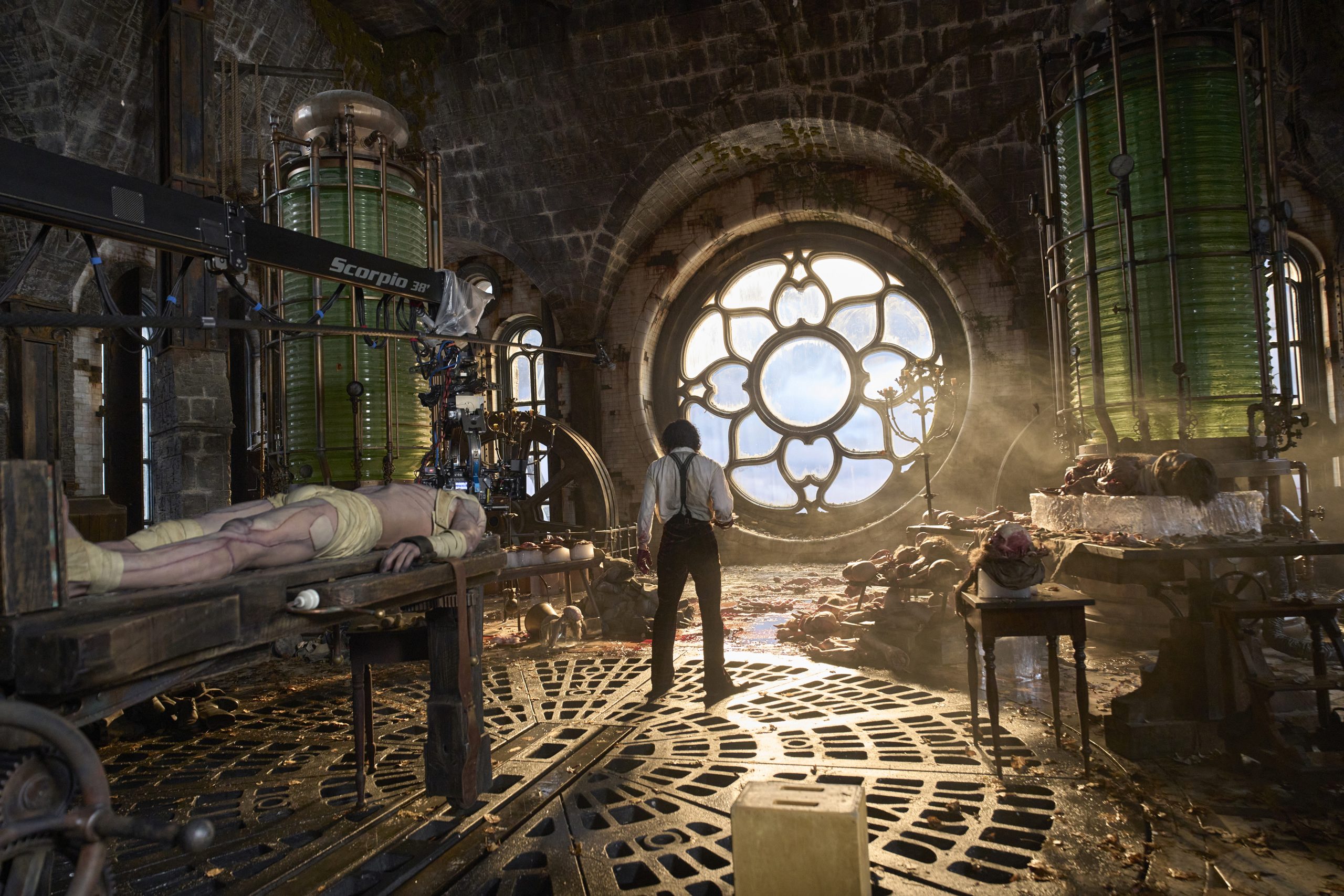
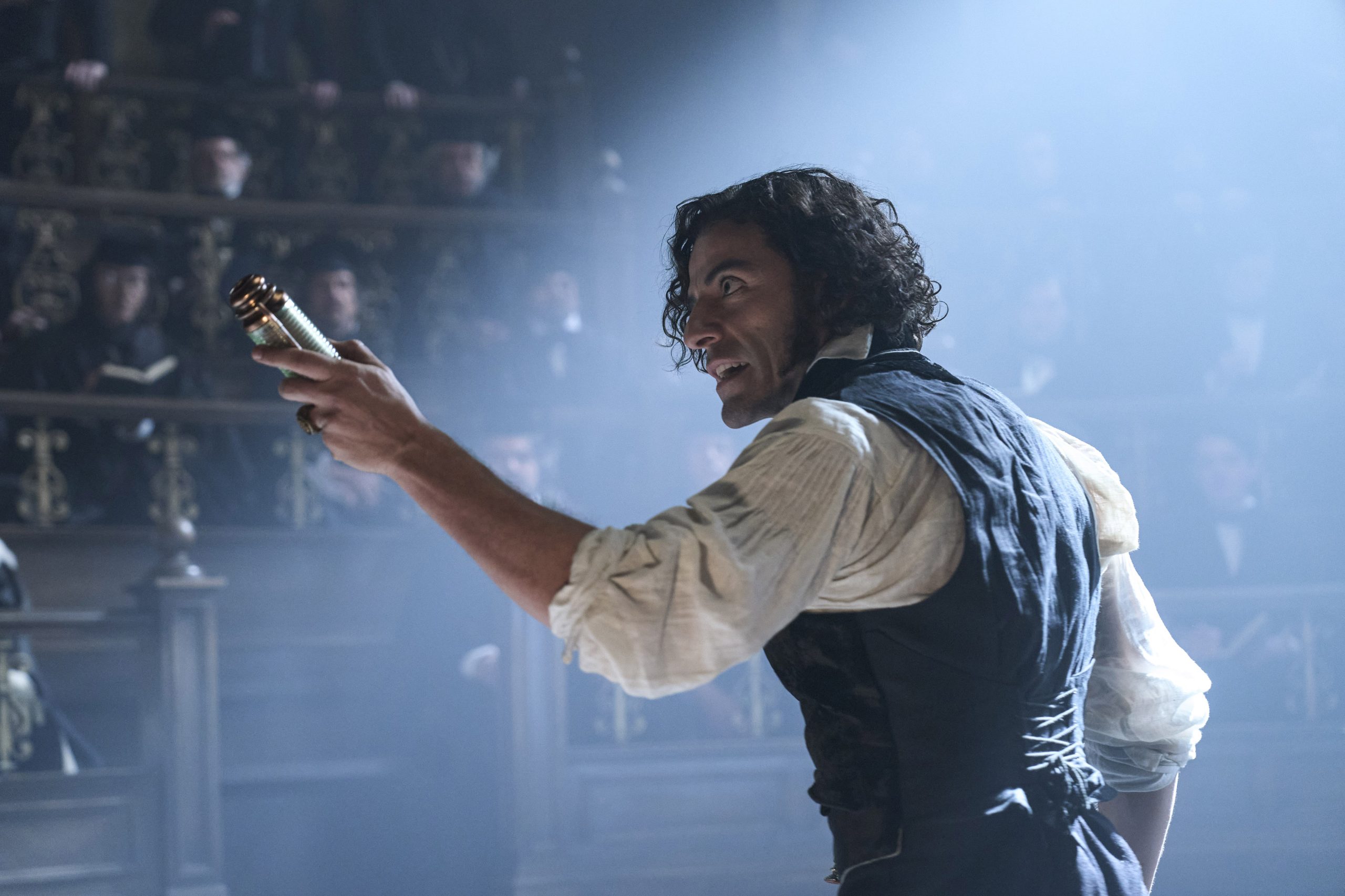
Itโ€™s the latest adaptation of Mary Shelleyโ€™s legendary Gothic novel, but being Guillermo del Toro, a master of monsters, everyone is anticipating what heโ€™s going to do with this. Oscar Isaac plays Victor, the mad scientist who brings to life his shocking creation, played by Jacob Elordi, and starts a path of destruction. Mia Goth, Christoph Waltz, Felix Kammerer, and Lars Mikkelson also star in del Toro’s 2.5-hour drive to be faithful to the source as he was with Nightmare Alley, coincidentally getting the Criterion treatment and joining del Toroโ€™s other masterful monster films. 

A House of Dynamite – Dir. Kathryn Bigelow

Itโ€™s been eight years since she released her last film, the lackluster Detroit, but Bigelow has returned with a new political thriller about a worst-case scenario for the country. A deadly missile is heading towards the United States, and with time ticking away, the White House must make some consequential decisions. A new release from Netflix (like Frankenstein), Idris Elba, Rebecca Ferguson, Jared Harris, Tracy Letts, Anthony Ramos, and Jason Clarke star in Bigelowโ€™s drama with shades of Sidney Lumetโ€™s Fail Safe and, unfortunately, coincidental timing of actual missile launches in the real world today.

The Smashing Machine – Dir. Benny Safdie

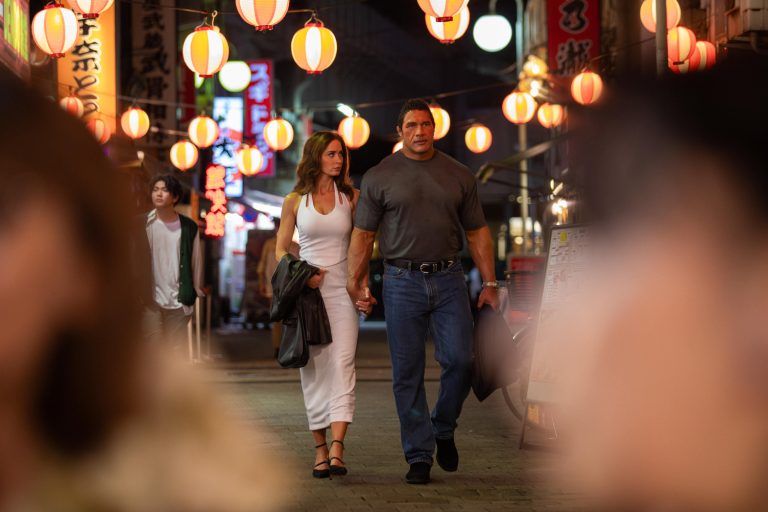
The Safdie brothers split up to make their own sports films; Josh has the upcoming Marty Supreme, while Benny will be in competition for this biopic on Mark Kerr, a wrestler-turned-UFC fighter in the sportโ€™s early years. Dwayne โ€œThe Rockโ€ Johnson plays Kerr as he becomes one of the sportโ€™s earliest stars, but struggles with substance abuse and the injuries he sustains with his style of fighting. Considering that most of the supporting cast are former mixed martial arts fighters and current boxing Heavyweight champion Oleksander Usyk is here as well, The Smashing Machine will certainly feel as real as watching an MMA fight in the octagon.

Movie Review: ‘Dawn Dusk’ is a Study of the Messiness of Mourning


Directors: Jason Gerber, Sarah Blue Winslow Gerber
Stars: Chelli Look, Bridget Botchway Bradley, Jon Colon

Synopsis: Chelli Look, a leather bag artist, faces overwhelming grief after the murder of her sister. Chelli’s journey towards healing forces her to rediscover who she is as an artist, leading to a revelation that takes her in a new direction.


In telling the story of the life of Chelli Look, an artist best known for her work as a designer of handbags, directors Jason and Blue Gerber choose to center her development as an artist. This may seem like an odd choice, given the fact that her personal life could have so easily been sensationalized, but it allows for the creation of a more sensitive portrait of Look as a human being. Her struggle with the grief brought on by her sisterโ€™s murder at the hands of her brother-in-law is examined in considerable detail but the focus of the documentary is never entirely given away to this horrific tragedy. This ensures that it can function as more than simply a true crime portrait that revels in gory details and wallowing in the misery of others. It can instead function as a more fully rounded, three-dimensional study of the messiness of the mourning process when it expands its subject out to consider the professional life of one of the people directly impacted by this event.ย 

The documentary also derives a considerable amount of its emotional power from the fact that it refuses to conform to standard โ€˜inspirationalโ€™ narratives. The approach taken to depicting Chelliโ€™s efforts to channel her grief into art is surprisingly straightforward. Her pain is captured in a sensitive manner but the audience is not asked to linger on it in an exploitative fashion. One is left with the impression of a form of grief that, rather than dissipating over time as part of a reparative process, comes to be cyclical in nature. The subtler aspects of the mourning experience are presented here in matter-of-fact terms. Nothing is over-dramatized and Chelliโ€™s experiences are not contrived to fit into a pre-conceived vision of what this form of suffering should look like. In this regard, a case is made for the unique potential of the documentary form. It is perhaps easier for artists working in this medium to diverge from the tightly scripted narratives that often play a central role in shaping classical Hollywood cinema productions. There is more room to portray a slippery, difficult to pin down emotional journey here.

The muted emotional palette on display extends outwards to the visual style on display in scenes that focus on the design and construction of CHC leather goods. The bright, summery imagery on display offers us an optimistic vision of the act of creation. Rather than centering around the psychological strain that often results from this struggle, the film presents it as something that can be liberatory. This occurs, in part, because the subject of the documentary takes a constructive approach to her work and does not hold herself to any objective standards. For viewers who, like myself, were not aware of the ins and outs of the leather goods industry, there is also a fascination in getting a window into this highly exclusive sphere. Learning about the specifics of this very niche field is intriguing and, at times, the documentary even invites comparisons to the epic observational documentaries of Frederick Wiseman. In the same way that Menus-Plaisirs – Les Troisgros captured the nuances of day-to-day operations at fine dining restaurants in France, this documentary picks up on minute details that can completely alter oneโ€™s perception of an entire milieu. In size and scale, it is far more intimate than one of Wisemanโ€™s sprawling, encyclopedic works but the interest in that which could otherwise be seen as insignificant is very much present in this film.ย 

To a certain degree, the documentary could be said to be limited by the fact that it does fall back on certain conventions when inserting footage from interviews with associates of Look. These segments very commonly appear in documentaries of this sort but, to me, they represent a divergence from the more free-flowing, experimental passages of the film. The interviewees do provide valuable information about Lookโ€™s family history and how she first became interested in designing bags. However, I canโ€™t help but feel that these observations could have been delivered in a more original manner. Massive innovations have been made in the past few decades when it comes to weaving firsthand accounts into documentary storytelling and it would have been interesting to see more of a deviation from well-established norms. In a work of art that is often striking for how it works to undercut convention and avoid hewing too closely to tradition, it is disappointing to see something that feels more tied to a previous era of filmmaking.

Grade: A-

Movie Review: ‘The Fantastic Four: First Steps’ Plays It Too Safe


Director: Matt Shakman
Writer: Josh Friedman, Eric Pearson, Jeff Kaplan, and Ian Springer
Stars: Pedro Pascal, Vanessa Kirby, Ebon Moss-Bachrach

Synopsis: Forced to balance their roles as heroes with the strength of their family bond, the Fantastic Four must defend Earth from a ravenous space god called Galactus and his enigmatic Herald, Silver Surfer.


Listen, The Fantastic Four: First Steps is fine. And thatโ€™s fine, I guess, right? Considering the franchiseโ€™s history has been tepid at best, Marvel almost had to play it safeโ€”using this film to relaunch the brand and pinning the studioโ€™s hopes on Phase Six of its cinematic history. Yes, the movie looks great, as if the Mad Men production design team collided with the Marvel Cinematic Universe to give this new wave a unique presentation and feel like you’re watching a superhero movie from another time and place.

The Fantastic Four: First Steps' trailer shown at CinemaCon now arrives for  us all (video) | Space

However, beyond that, is The Fantastic Four: First Steps really anything special? The story is justโ€”whatโ€™s the wordโ€”oh yeah, fine. The good guys protect a city, which, of course, has to be a major market like New York or Los Angeles. God forbid they set up in Buffaloโ€”probably because Times Square offers a plethora of product placement opportunities to help pay for the lavish production. A villain shows upโ€”this time doing the โ€œhonorableโ€ thing by warning everyone that the end is near, so enjoy what time you have left.

Again, weโ€™re not reinventing anything here. And for some reason, studios seem determined to skip the origin story setup altogetherโ€”a trend that robs these kinds of films of some of their charm. Weโ€™re given a quick run-down of how the Fantastic Four came to be and have already saved the world. Theyโ€™re back, and now holed up in a Trump-like tower, eating dinner as a family after returning to Earth-828โ€”cosmically changed forever. A cosmic ray exposure has transformed Dr. Reed Richards (Materialistsโ€™ Pedro Pascal), known as Mr. Fantastic, who can now stretch any part of his body to great lengths.ย 

His wife, Sue Stormโ€”aka the Invisible Woman (Academy Award nominee Vanessa Kirby)โ€”drops a bombshell: after years of trying, theyโ€™re finally pregnant. (No word on whether Reedโ€™s ability to stretch, uh, any part of his body played a role in ending that dry spell.) Itโ€™s about to be a full house at 260 Baxter Building Plaza. As they sit down for dinner, Ben Grimmโ€”aka the Thing (Emmy winner Ebon Moss-Bachrach)โ€”a sensitive soul now covered in an external layer of orange rock, picks up on the news from Reedโ€™s dumbfounded expression.ย 

The Fantastic Four: First Steps" Movie Review

Johnny Stormโ€”aka the Human Torch (Stranger Thingsโ€™ Joseph Quinn)โ€”is thrilled at the idea of returning to space and is over the moon for his sister and brother-in-law. However, he is about to fall in love as well, as he meets the Silver Surfer (Ozarkโ€™s Julia Garner), an enforcer for a cosmic gigantic being, Galactus (Ralph Ineson). They are told Earthโ€™s days are numbered. However, when the Fantastic Four set out to save the world, they are given a choice to surrender Sue and Reedโ€™s unborn sonโ€”or witness the total annihilation of Earth.

The Fantastic Four: First Steps, from WandaVision’s Matt Shakman, takes a disappointingly โ€œjust fineโ€ approachโ€”abandoning that seriesโ€™s risk-taking and creativity in favor of a script that feels more paint-by-numbers than a bold reinvention of the genre. Itโ€™s not that Shakman dusted off the Marvel playbookโ€”itโ€™s that he followed it step by step, which is really all Marvel seems to do these days. Skipping over the groupโ€™s formation was a misstep, though I understand the desire to introduce one of Marvelโ€™s greatest villains, the Silver Surfer, early to help establish the new phase.ย 

Is that fine? Noโ€”because a production like this should take more risks and build stronger conflict. Yet almost nothing elevates the tension. For one, the script is utterly predictable. And the attempted dynamic between the Human Torch and the Silver Surfer lacks any real spark, despite the efforts of screenwritersโ€”take a deep breathโ€”Josh Friedman, Eric Pearson, Jeff Kaplan, and Ian Springer, who desperately try to forge a human connection between them. Pascal and Kirby have more chemistry off-screen than on. The most compelling storyline belongs to Ben Grimm and Natasha Lyonneโ€™s Rachel Rozman, but unfortunately, The Thing never gets any clobberinโ€™ time with his love interest.

Thatโ€™s a shame, considering the film went through numerous rewritesโ€”stripping away most of its personality in the process. Odd, given the roster of writers includes names behind fun, big-budget fare like Thunderbolts*, Thor: Ragnarok, and Black Widow (I will defend David Harbourโ€™s comedic performance in that film until the day I die). Frankly, I would have preferred more of Paul Walter Hauserโ€™s Mole Man over Galactus, who is a gigantic bore for much of the film. The villain lumbers around like a lethargic Transformerโ€”is that supposed to be exciting or suspenseful? We already know Disney wonโ€™t allow a child to be abducted or a main character to be killed off, so whereโ€™s the actual tension?

First 'The Fantastic Four: First Steps' Reviews Tease the Team's MCU Future  Ahead of 'Avengers: Doomsday'

The result is an improvement over the turn-of-the-century adaptations. The film aims to be a friendly, comforting family story about teamwork, and its retro-futuristic flair consistently provides visually stimulating moments. While the bond between characters is present, the audience never gets to witness how that bond was formedโ€”missing the emotional connection and resonance that could have grounded the story.

I did enjoy Moss-Bachrachโ€™s voice work, Kirbyโ€™s luminous star quality, and Pascalโ€™s nerdy, family-man take on Mr. Fantastic. However, the overall experience feels humdrum, never allowing the audience to invest in the picture fully. That may be fine for someโ€”fine for nowโ€”but The Fantastic Four: First Steps is ultimately a recycled effort with a fresh coat of paint, and hardly worth your time, especially at theater prices.ย 

You can watch The Fantastic Four: First Steps only in theaters July 25th!

Grade: C

Movie Review (Fantasia 2025): โ€˜Terrestrialโ€™ is a Dull Grab-Bag of Underdeveloped Ideas


Director: Steve Pink
Writers: Connor Diedrich, Samuel Johnson
Stars: Jermaine Fowler, James Morosini, Pauline Chalamet

Synopsis: During a weekend reunion, a rising sci-fi author welcomes three college friends to his home, but strange events begin to blur the lines between reality and imagination.


Steve Pinkโ€™s Terrestrial was one of the most hotly anticipated titles, having its world premiere at this yearโ€™s Fantasia International Film Festival. The fact that it is also competing for the Cheval Noir award puts it high on the pedestal as a must-watch movie at the festival. Though it does seem like quite the unconventional project for the filmmaker, best known for his 2006 comedy Accepted and his Hot Tub Time Machine diptych.

However, Pink has flexed some of his filmmaking muscles in recent memory, with the thought-provoking documentary The Last Republican, where he followed the final term of Congressman Adam Kinzinger in the wake of the January 6th insurrection in 2021. Terrestrial seems like the next logical step in Pinkโ€™s body of work, where, instead of dabbling in the absurdities of his most-known comedies, he attempts something completely different than audiences expect from him.ย 

In that regard, it is a movie I respect. Known directors with an established stylistic imprint usually donโ€™t break conventions or step out of their comfort zone. They instead refine what theyโ€™re most known for with each subsequent project. There have been few examples where filmmakers who work in specific genres decide to do something audiences do not expect, with varying results. Music from the Heart may be one of Wes Cravenโ€™s best movies, even though it is so far removed from what people expect from him and has nothing to do with horror.ย 

Pink does dabble in comedy with Terrestrial, but itโ€™s not the main point of focus of his movie. Rather, he explores the descent into madness of Allen Perkins (Jermaine Fowler), as he hosts his former college friends Maddie (Pauline Chalamet), Ryan (James Morosini), and Vic (Edy Modica) to his lavish home in the Hollywood Hills. We meet Allen as his writing career has skyrocketed to incredible success, with a home and life he is proud of. However, we begin to notice cracks in his story, and it becomes increasingly clear that things arenโ€™t what they seem.ย 

What that entails, Iโ€™ll let you discover for yourself. However, as the plot progresses and Pink begins to pull back the curtain on what led Allen to be in this lavish house, one can see the developments coming a mile away, and the film isnโ€™t as interesting as the director thinks it is. Itโ€™s partly due to the fact that its themes have been treated in arguably better films, such as Rob Reinerโ€™s Misery, which Terrestrial seems to be taking much inspiration from. However, it contains a unique sci-fi element that sets the movie apart from the bevy of Misery-inspired knockoffs, but presents far too many ideas and plot threads in such a short amount of time for them to develop effectively.ย 

Terrestrialโ€™s story goes off in all directions, and has little to no active payoffs when it reaches its admittedly nifty climax, featuring a surprisingly effective shootout captured to make it look like one take. If anything, Pinkโ€™s dexterity as a filmmaker is on full display here, far more than the studio comedies he has been boxed in since helming Accepted. He teeters with action and sci-fi cinema conventions, while also splashing a bit of horror into the mix as Allen meets his literary idol, S.J. Purcell (Brendan Hunt). However, none of these generic permutations go anywhere, just as its story, which constantly blurs the line between reality and fiction, leaves no room for tangible interpretation, preventing its audience from feeling moderately invested in its proceedings.

Steve Pink Discusses Tackling A New Genre in 'Terrestrial'
Itโ€™s only because of Fowlerโ€™s riveting performance as Allen that we keep watching, and are somewhat curious to see how Terrestrial will wrap up. And while its denouement is certainly unique, it raises far more questions than answers, not only in the thematic underpinnings Pink plays with, but in the development of his paper-thin protagonists that donโ€™t get enough time for us to latch onto their quest for success, or, in this case, a literal descent into Hell. Pink seems like a cool enough person who has undoubtedly made his mark in comedy cinema (I eagerly await Hot Tub Time Machine 3, if ever it happens) and wants to expand his imprint as a filmmaker. It is more than respectable, but the end result of Terrestrial leaves much to be desired, and it will likely take a few more tries before Pink churns out something of note away from comedy and into (hopefully) something greater than the director he is now.

Grade: D+

Movie Review: ‘Drowning Dry’ Examines Memory and Perspective


Director: Laurynas Bareiลกa
Writer: Laurynas Bareiลกa
Stars: Paulius Markevicius, Karolis Kasperavicius, Greta Grineviciute

Synopsis: To celebrate Lukas’ victory at the martial arts tournament and Tomas’ birthday party, their wives Juste and Ernesta organize a weekend at the summer house with a families. It was suppose to be a quiet weekend at countryside.


It should come as no surprise that Laurynas Bareiลกaโ€™s Drowning Dry manages to be darkly funny while tackling an almost unbearably bleak subject. This balance is made possible by the fact that, for a long time, the film gives off the impression of not being about a horrifying family tragedy. It begins as a razor-sharp examination of the faltering bond between two Lithuanian sisters, Ernesta and Justรฉ, who appear to have drifted apart. They travel, along with their respective families, to a lakeside cabin for what is intended to serve as a relaxing holiday. Before long, Ernestaโ€™s husband Lukas is engaged in a low intensity conflict with Justรฉโ€™s husband Tomas. The divide between the sisters only deepens and they find themselves increasingly growing apart as the weekend drags on. When an unexpected catastrophe upends the lives of both families, they each find themselves reflecting on their past experiences through markedly different lenses. These unexpected divergences become the centerpiece of a film that slowly becomes more of a conceptual art piece than a traditional narrative feature film.ย 

The film is distinguished by its ability to capture the fragility of familial bonds established between members of an extended family unit. The in-fighting and backstabbing that is already commonplace within the immediate family becomes infinitely more complicated when slightly more distant relatives get involved. We watch as in-groups and out-groups quickly form, with a kind of tribalistic outlook being taken on by the sisters at the center of the narrative. The cracks in the foundation of their relationship, which are too close for comfort in some regards, are further exposed when they introduce their children into the mix. Resentments over economic inequality and social status that appear to have driven a wedge between the two women have the effect of chilling relations between members of their respective families. Bareiลกa is extraordinarily perceptive in his understanding of how delicate arrangements, such as this one, can rapidly spiral out of control when put under pressure. Every character in the film is seen to retreat back into a shell of sorts, or even form somewhat calculated alliances with others, in order to survive this upheaval. Being a slow-moving Lithuanian drama, the film remains light on heavy theatrics or operatic showdowns. However, it does depict familial relations as a form of emotional warfare.ย 

There is also something to be said for the fact that the class dynamics on display here are legitimately knotty and complex. The basic scenario would appear to set Tomas, who is comfortably middle class and capable of buying a home, off against Lukas, who pursues a highly competitive and unstable career that prevents him from making large investments. One can easily imagine a telling of this story in which the perceived โ€˜tackinessโ€™ of the MMA milieu that Lukas inhabits is played up more. While his physical strength is clearly a source of envy for the comparatively buttoned up Tomas, he is never outwardly portrayed as an unsophisticated or boorish individual. This makes the divide between himself and his brother-in-law less glaring than it could have been. There is ultimately a thin line that appears to separate the two men and Tomas, who faces financial concerns of his own, is eager not to fall behind his rival. As the film goes on, it becomes clearer and clearer that he derives at least some of his sense of self-worth from the fact that he can orient himself as the more stable, reasonable counterpart to a brother-in-law whom he perceives as childish and irresponsible. Part of what we respond to is the fears and anxieties that the two men project on to one another. Their very real antagonism has its basis in a set of unfounded misapprehensions but it also fills a need for the two of them.ย 

Drowning Dry': Lithuanian Oscar Entry Lands U.S. Distribution Deal
The teasing out of the underlying tensions at the heart of their bond occurs in tandem with an exploration of the unreliable nature of memory. In Rashomon fashion, we bear witness to multiple different interpretations of the same events, with slight variations cluing us into the very specific insecurities that each sister suffers from. While this has become a well-worn trope in cinema, it never feels like a gimmick here. The differences in perspective are subtle enough to leave the audience guessing and the message being conveyed is not merely that the human perception of reality is inherently subjective. The brief flashbacks in this film play out as troubled attempts to reconcile half-remembered events from the past with the horrors of the present. There is a heavy sense of foreboding that hangs over these scenes and an eerie feeling of not being rooted in a specific point in time. Bareiลกaโ€™s utilization of this popular storytelling technique is effective because it disorients the audience instead of seeking to turn the filmโ€™s narrative into a puzzle box of sorts. There are no grand revelations that uncover the fact that one seemingly upstanding character was, in fact, lying while another, apparently untrustworthy, figure was telling the truth. All that the viewer is left with is a few fragments of the superficially mundane events that led up to an unspeakable tragedy. Much like Ernesta and Justรฉ, we can only engage with these discrete moments in time from a distance; all the while failing to grasp their full weight and significance.

Grade: A

Movie Review (Fantasia 2025): โ€˜Stinkerโ€™ is a Fun Riff on โ€˜E.T.โ€™


Director: Yerden Telemissov
Writers: Sergey Litovchenko, Yerden Telemissov
Stars: Irka Abdulmanova, Zangar Akhmet-kazy, Dulyga Akmolda

Synopsis: As the district administration prepares for the arrival of high-ranking officials, local alcoholic Sadyk Ospanovich takes on problems of intergalactic proportions. Two large-scale events collide, leading to inevitable conflict. Caught in the middle are Nadya, a weary shopkeeper, and Baur, a naive police officer.


Yerden Telemissovโ€™s feature directorial debut, Stinker (Sasyq), starts out incredibly strong. It stages a series of events where an old man attempts to kill himself, unsuccessfully so, and even deliberately trolls the audience in its opening scene after his first attempt by immediately cutting to the end credits. This moment received a rapturous reaction from the Fantasia International Film Festival crowd, where the film had its North American premiere and is currently competing for the Cheval Noir award.ย 

The rest of the movie balances between the same absurd sense of humor in its opening scene, but it also opens itself up to be a profoundly human tale of second chances, where its titular character, Sadyq (Bakhytzhan Alpeis), known as โ€˜Stinker,โ€™ learns how to live again after he finds an alien (Chingiz Kapin) who crash-lands in his neighborhood. Sadyq has been stuck in a depressive rut ever since his wife passed away, and has been looking for various ways to join her. None of his attempts have worked, which already primes the audience that his time on this planet is not finished yet.ย 

Of course, moments where Sadyq attempts to hide and help the alien are highly reminiscent of Steven Spielbergโ€™s E.T. the Extraterrestrial, and Telemissov doesnโ€™t hide its primary inspiration, from visual references that harken back to the joys of watching one of the most groundbreaking motion pictures ever made to story beats that are plucked straight out of it. The alien wants to return home, so Sadyq, and eventually, shopkeeper Nadya (Irka Abdulmanova) and her granddaughter (Ailin Sultangazina) help them out. Thereโ€™s even a bike sequence, though this time itโ€™s a motorized bike, and theyโ€™re not being chased by anyone. And the bike doesnโ€™t float in the air and reach the moon. Still, one can tell Telemissov holds great reverence for the picture because without it, the chances of this film existing are highly unlikely.

Where Stinker differentiates itself from Spielbergโ€™s classic is in its contemporary political dimension, by paralleling Sadyqโ€™s tale of redemption with a despotic mayor (Dulyga Akmolda) hellbent on getting rid of the poorest people of his town to stage a motorcade in his image. He enlists a bumbling, flat-earther police officer (Zangar Akhmet-kazy) to rid himself of Sadyq and the people in his way, until he learns the inextricable truth about planet Earth, and his way of thinking begins to change.

The political satire itself is well-introduced, but sadly goes nowhere as Telemissov attempts to tie up all loose plot threads by the time Stinker reaches its gross-out climax. That said, the metaphor at the end is heard loud and clear, and the messaging itself is a lot more cogent than you think. I do wish some more exploration was given on the police officer, whose beliefs are built by the YouTube videos he watches until theyโ€™re shattered when he encounters the alien, who humorously shows him how round the Earth actually is. He then disappears from a good chunk of the movie, even though his demeanor has clearly shifted, and an object of his plays a critical role in helping our characters find the alienโ€™s home.ย 

That said, itโ€™s not hard for Telemissov to warm your heart by the human story at the center of Stinkerโ€™s more kooky, sci-fi driven elements. The relationship between Sadyq and the alien is a lot more psychologically riveting than I envisioned, and how each human protagonist complete each other, in a way, and discover a newfound purpose in their lives they didnโ€™t think possible before the alien united them together and formed bonds that are now inseparable. Thereโ€™s an incredible sincerity to how Alpeis portrays Sadyq that makes it easy for the audience to warm up to him, even if he may often be eccentric and possess interpersonal skills that may not be on the conventional side. His alchemy with his other co-stars is note-perfect, and we ultimately want them to learn how to live again, no matter the obstacles life will inevitably throw them along the way.ย 

Because of this, it wonโ€™t take long for you to leave Stinker in a puddle of tears, feeling equally renewed as the protagonists. It may not reinvent the wheel, but itโ€™s definitely a good time at the movies, especially with the receptive Fantasia crowd who laughed when they needed the most, and cried when the movie gave them permission to do so. It is the definition of a festival crowd-pleaser, and is not to be missed if it hits your neck of the woods, hopefully sooner than later.ย 

Grade: B+

Podcast Review: Eddington

On this episode, Brendan is joined by ISF writer Shaurya Chawla to discuss Ari Aster’s new film Eddington! Aster never fails to foster provocative and polarizing conversation, and oh boy, Eddington is no different in that regard. People will love this film. People will hate it. We do our best to talk about those nuances and also why it’s arguably Aster’s best film to date.

Review: Eddington (4:00)
Director: Ari Aster
Writer: Ari Aster
Stars: Joaquin Phoenix, Pedro Pascal, Emma Stone

Subscribe to our Podcasts RSS
Subscribe to our Podcasts on iTunes
Listen on Spotify
Listen on Stitcher
InSession Film Podcast – Eddington

Movie Review: ‘Bambi: The Reckoning’ is Bloody and Unflinching


Director: Dan Allen
Writers: Felix Salten, Rhys Warrington
Stars: Roxanne McKee, Samira Mighty, Nicola Wright

Synopsis: After a mother and son get in a car wreck, they soon become hunted by Bambi, a mutated grief-stricken deer on a deadly rampage seeking revenge for the death of his mother.


The Poohniverse or The Twisted Childhood Universe has become a trademark; a fingerprint of B-horror that is a hit and -in most cases- a miss for a variety of reasons. Lack of creativity is one, but the other is the failure to utilize the rich material at hand; an abundance of dark fairytales and reimagined childhood favorite animated films with darker, murderous tones. The franchise includes a bunch of titles that vary dramatically in quality and attention to detail. The feature Iโ€™m about to review though, is one of the finest that the Poohniverse has to offer.

Bambi: The Reckoning is a dark fairytale twisted into a modern narrative. Instead of Bambi, the small, gentle deer mourning his motherโ€™s death at the hands of hunters, he is now a minotaur-like predatorโ€”a deadly, mutated creature on a bloody trail to avenge his motherโ€™s death by humans. Family dynamics ensue as a mother (Roxanne McKee) and son (Tom Mulheron) abandoned by a father, cross paths with the bloodthirsty Bambi, whom they get in a car crash with, only for him to hunt them all over town.ย 

One great thing about the horror flick is how nasty and unlikeable some of the human characters are. Instead of making viewers sympathize with the victims -save for the mother and child, but even those we donโ€™t spend enough time with them enough to root for them. Bambi doesnโ€™t try to be sophisticated or add unnecessary depths and dimensions to its killer or its characters. It deviates a little from Peter Pan’s Neverland Nightmare which has tried to stir the wheel of guttural horror into a creepy tale about sexual abuse and trauma. This time, this is pure horror for horror, murder for murder, and mayhem for mayhem.

One of the most impressive aspects about the film is the creature CGI. Director Dan Allen holds no barrels back in showcasing the gruesome deaths, the blood sprees, and the mutilated corpses of Bambiโ€™s victims. Bambi himself is a marvel. Caked in blood, with sharp, vampiric teeth, and zombie-like eyes, heโ€™s like a messenger from Hell, out to cause mayhem and chaos on earth for our protagonists. The special effects and visual effects craftspeopledo an excellent job in creating one of this yearโ€™s most nightmarish villains. Allen makes use of the silent, claustrophobic nature of the deep dark woods at night, building the perfect tension and heightening the claustrophobic feeling of the hunted being chased by the not-so-hapless prey.

Does the film add to the ever-expanding universe? It does, more than many of its predecessors. For true gory, B-horror fans who find their pleasure in flying limbs and crushed skulls, this flick has it all. A few jump scares that will send chills down the spine and cause some discomfort in the dark movie theater. It doesnโ€™t take long before we start cheering on Bambi to finish them all like a ghostly killer in an AgathaChristie novel except this time it is not a whodunnit and this killer is not secretive. Itโ€™s a British winter, and the film has a posh setting of a British mansion, but the mystery lies in the cruelty of nature, where Bambi lures his victims into his kingdom where he reigns with terror, throwing it in the hearts of the humans who wronged -and did not wrong- him. Nature aids Bambi on his murder rampage, brutally murdering the victims he cannot reach in the most violent way possible.ย 

May be an image of 1 person

Bambi: The Reckoning is Cujo for the Brothers Grimm aficionados, one of the strongest additions to the Poohniverse, if not the best so far. Itโ€™s B-horror as B-horror should be: bloody, cruel, unflinching, and not concerned with the dramatics.

Grade: B+