Home Blog Page 159

Chasing The Gold: Critics Choice Predictions

The 27th Critics’ Choice Awards is this Sunday and once again I’m honored to be a part of it in a small way as a voting memeber. The group may not have the best reputation, but at the very least I’ve done my due diligence to see all the films and consider every nomination. Obviously, not all of my picks will win, however I’m hoping for a few surprises.

At any rate, below are my predictions for the 2022 Critics Choice Awards!

BEST PICTURE
Belfast
CODA
Don’t Look Up
Dune
King Richard
Licorice Pizza
Nightmare Alley
The Power of the Dog
tick, tick…Boom!
West Side Story

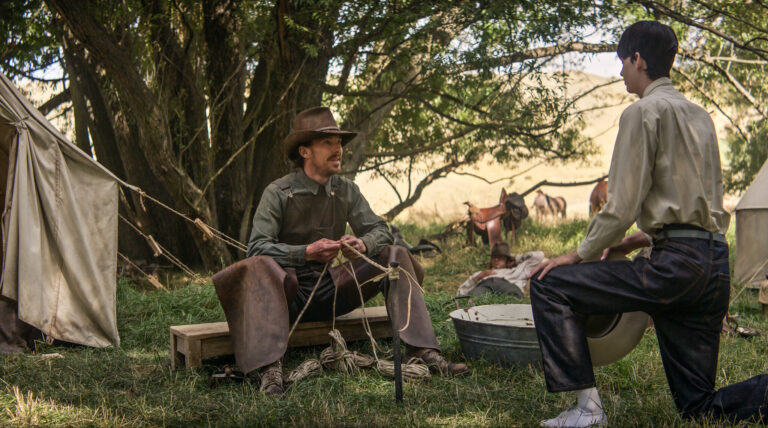
Prediction: It’s The Power of the Dog. Until I see evidence of the contrary, it’s hard to go against the power behind The Power of the Dog. I genuinely think it’s the best film of 2021 and it’s the movie I want to see win here.

BEST ACTOR
Nicolas Cage – Pig
Benedict Cumberbatch – The Power of the Dog
Peter Dinklage – Cyrano
Andrew Garfield – tick, tick…Boom!
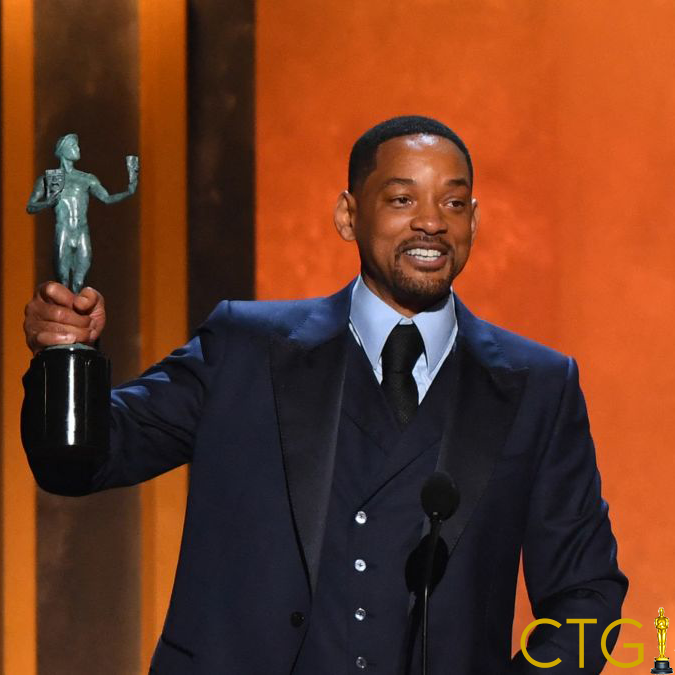
Will Smith – King Richard
Denzel Washington – The Tragedy of Macbeth

Prediction: I really want Nicolas Cage to win this. He gave the best male performance of 2021, however this is Will Smith’s award to lose. And I can’t be mad at that, honestly. Smith has had a fascinating career and he’s quite great in King Richard , so it feels like something that’s been on the way for some time. When he wins I’ll be more than happy for him.

BEST ACTRESS
Jessica Chastain – The Eyes of Tammy Faye
Olivia Colman – The Lost Daughter
Lady Gaga – House of Gucci
Alana Haim – Licorice Pizza
Nicole Kidman – Being the Ricardos
Kristen Stewart – Spencer

Prediction: Kristen Stewart. Kristen Stewart. Kristen Stewart. She gave the best performance of the year and she’s my winner for this category. Can’t wait to see her acceptance speech.

BEST SUPPORTING ACTOR
Jamie Dornan – Belfast
Ciarán Hinds – Belfast
Troy Kotsur – CODA
Jared Leto – House of Gucci
J.K. Simmons – Being the Ricardos
Kodi Smit-McPhee – The Power of the Dog

Prediction: Troy Kotsur has been on a roll and is more than deserving of this award. He’s so funny in CODA, but he’s also involved in the film’s most emotionally blistering scenes as well. There’s a lot of discusison about that final audition scene, but his work in the concert scene, and the “truck scene” that takes place right after, is truly special.

BEST SUPPORTING ACTRESS
Caitríona Balfe – Belfast
Ariana DeBose – West Side Story
Ann Dowd – Mass
Kirsten Dunst – The Power of the Dog
Aunjanue Ellis – King Richard
Rita Moreno – West Side Story

Prediction: I’m somewhat torn on this category. My heart lies with Caitríona Balfe and her work in Belfast, which is the heart and soul of that movie in many ways. However, at the same time, I do very much get the love for Ariana DeBose and why she’s going to win here. So, as much as I love Balfe and would love to see her take this award, it’s going to DeBose.

BEST YOUNG ACTOR/ACTRESS
Jude Hill – Belfast
Cooper Hoffman – Licorice Pizza
Emilia Jones – CODA
Woody Norman – C’mon C’mon
Saniyya Sidney – King Richard
Rachel Zegler – West Side Story

Prediction: Holy good God this category. Personally speaking, I’m not even sure where to begin. Every single one of these nominees deserves to win. All of them. My gut instinct is that Rachel Zegler will win given the broad love for West Side Story, however I’m hoping for an upset with Cooper Hoffman or Emilia Jones. Imagine the moment if Hoffman wins and he goes up on stage and starts talking about his late-great father. There won’t be a dry in the place. I would personally turn into a waterfall. Jones is equally as deserving though and gives a remarkable performance in CODA. In the end I will predict Hoffman, but I can see it going to any of them. On a side note, my true vote is Woody Norman, but there’s been no love for C’mon C’mon sadly (which is heartbreaking to me).

BEST ACTING ENSEMBLE
Belfast
Don’t Look Up
The Harder They Fall
Licorice Pizza
The Power of the Dog
West Side Story

Prediction: This category is also tricky as there’s at least three really good contenders here between The Power of the Dog, West Side Story and Belfast. With Haim and Hoffman also nominated, maybe Licorice Pizza has a small chance as well, but not sure I see that film winning here. My gut is that Belfast ends up winning here as this may be the only category to award the film.

BEST DIRECTOR
Paul Thomas Anderson – Licorice Pizza
Kenneth Branagh – Belfast
Jane Campion – The Power of the Dog
Guillermo del Toro – Nightmare Alley
Steven Spielberg – West Side Story
Denis Villeneuve – Dune

Prediction: Jane Campion is a legend and I can’t wait to see her walk up on stage.

BEST ORIGINAL SCREENPLAY
Paul Thomas Anderson – Licorice Pizza
Zach Baylin – King Richard
Kenneth Branagh – Belfast
Adam McKay, David Sirota – Don’t Look Up
Aaron Sorkin – Being the Ricardos

Prediction: This could be the other category where Belfast gets a win, and if the rest of the group loves it as I do, maybe that’ll be the case, however I’m going with PTA to win this category. Anderson been somewhat in the hot seat lately, and maybe that will influence some of the voters, but this is where Licorice Pizza gets its love if there’s any to go around (unless I’m right about Hoffman also winning).

BEST ADAPTED SCREENPLAY
Jane Campion – The Power of the Dog
Maggie Gyllenhaal – The Lost Daughter
Siân Heder – CODA
Tony Kushner – West Side Story
Jon Spaihts, Denis Villeneuve, Eric Roth – Dune

Prediction: Ms Campion, please come accept another award. You just won for screenplay as well.

BEST CINEMATOGRAPHY
Bruno Delbonnel – The Tragedy of Macbeth
Greg Fraser – Dune
Janusz Kaminski – West Side Story
Dan Laustsen – Nightmare Alley
Ari Wegner – The Power of the Dog
Haris Zambarloukos – Belfast

Prediction: Another stacked category. Can it be a six-way tie? Is that possible? If not, I hope Greg Fraser is ready to accept this award. And who knows, maybe he’ll be back again in a year for The Batman. All joking aside though, Dune‘s cinematography is out of this world (pun intended) and he’s more than deserving to win here.

BEST PRODUCTION DESIGN
Jim Clay, Claire Nia Richards – Belfast
Tamara Deverell, Shane Vieau – Nightmare Alley
Adam Stockhausen, Rena DeAngelo – The French Dispatch
Adam Stockhausen, Rena DeAngelo – West Side Story
Patrice Vermette, Zsuzsanna Sipos – Dune

Prediction: I don’t love Nightmare Alley as many others do, but you can’t deny the production value of that film. It’s stunning to look at the much of that is due to the production design of that film.

BEST EDITING
Sarah Broshar and Michael Kahn – West Side Story
Úna Ní Dhonghaíle – Belfast
Andy Jurgensen – Licorice Pizza
Peter Sciberras – The Power of the Dog
Joe Walker – Dune

Prediction: As many of you know, I’m not an awards expert by any means, even if I do follow along and pay attention to what happens each season. Context that’s important here because many of our friends who I’d consider to be experts on the matter have Dune winning this category. Which very well may be true. However, given the amount of love I’m expecting for The Power of the Dog, I’m going with Peter Sciberras to win here. That could be myopic of me, but that’s my bet and I’m sticking with it.

BEST COSTUME DESIGN
Jenny Beavan – Cruella
Luis Sequeira – Nightmare Alley
Paul Tazewell – West Side Story
Jacqueline West, Robert Morgan – Dune
Janty Yates – House of Gucci

Prediction: Really want to go with Dune here, but not sure if it will be Cruella, a film that’s literally about costume design. So, Cruella it is for me.

BEST HAIR AND MAKEUP
Cruella
Dune
The Eyes of Tammy Faye
House of Gucci
Nightmare Alley

Prediction:If Cruella doesn’t win here, it seems as if The Eyes of Tammy Faye as this one.

BEST VISUAL EFFECTS
Dune
The Matrix Resurrections
Nightmare Alley
No Time to Die
Shang-Chi and the Legend of the Ten Rings

Prediction: Now this one has Dune written all over it. I can’t fathom it losing here.

BEST COMEDY
Barb & Star Go to Vista Del Mar
Don’t Look Up
Free Guy
The French Dispatch
Licorice Pizza

Prediction: With Licorice Pizza being nominated for Best Picture, it would seem really silly for it to lose here, but I don’t care, I’m going with Barb & Star Go to Vista Del Mar. I don’t care how illogical that is, what a hilarious movie and I want to win.

BEST ANIMATED FEATURE
Encanto
Flee
Luca
The Mitchells vs the Machines
Raya and the Last Dragon

Prediction: Encanto will win, and it is good, but I do think it should go to Flee. It’s one of the very best films of 2021, period, regardless of how you want to categorize it.

BEST FOREIGN LANGUAGE FILM
A Hero
Drive My Car
Flee
The Hand of God
The Worst Person in the World

Prediction: As we talked about at the 2021 InSession Film Awards, it was a phenomenal year for foreign language films, with two of these nominees in my personal Top 10 of the year. However, this is Drive My Car‘s award to lose and it will take home the prize here.

BEST SONG
Be Alive – King Richard
Dos Oruguitas – Encanto
Guns Go Bang – The Harder They Fall
Just Look Up – Don’t Look Up
No Time to Die – No Time to Die

Prediction: “No Time to Die” is a fine song, but in the Bond canon, it’s not nearly as memorable or impactful. I’m hoping that “Dos Oruguitas” steals this one.

BEST SCORE
Nicholas Britell – Don’t Look Up
Jonny Greenwood – The Power of the Dog
Jonny Greenwood – Spencer
Nathan Johnson – Nightmare Alley
Hans Zimmer – Dune

Prediction: Hans Zimmer should have won the Oscar in 2014 when Interstellar came out. He arguably (and I know many will push back on this) should have won in 2010 for Inception. It’s hard to believe that he only has one Oscar up until this point, and that it came almost 30 years ago, but it does seem as if that’s going to change in a few weeks when we do get to the Oscars. And I think his win here is another stepping stone in that process.

Movie Review (Glasgow Film Festival): ‘Once Upon a Time in Uganda’: Welcome To Wakaliwood


Directors:  Cathryne Czubek, Hugo Perez

Writers: Cathryne Czubek, Amanda Hughes

Stars: Asiimwe Apollo, Bukenya Charles, Bisaso Dauda

Synopsis: A brick maker in Uganda becomes an Internet sensation when he tries his hand at making action movies


If you’re reading this, the chances are you’re a movie buff. Maybe your tastes are quite varied – low budget indies, high concept thrillers, romance, drama, classics, anything – or maybe you have very specific tastes – 90s rom-coms, detective noirs, gangster movies -, the one thing you will all have in common is that you enjoy movies to the extent you’re willing to search out reviews like this one online. No matter which camp you fall in, any movie lover will likely find some joy in Cathryne Czubek and Hugo Perez’s Once Upon a Time in Uganda: a lively, infectious documentary about two men, their passion for movies, and the lengths they were willing to go to make their dreams a reality. 

The first of these two men we meet on a mountain in Kazakhstan. A majestic swooping camera centers around this mysterious robed figure as a voice-over tells us that he never expected to be here. But how did he get here? His name is Alan Hofmanis, an American actor and filmmaker from New York who, out of work and recovering from a breakup with a long-term girlfriend, finds himself scouring YouTube videos to pass the time…until he discovers the movies of Wakaliwood.

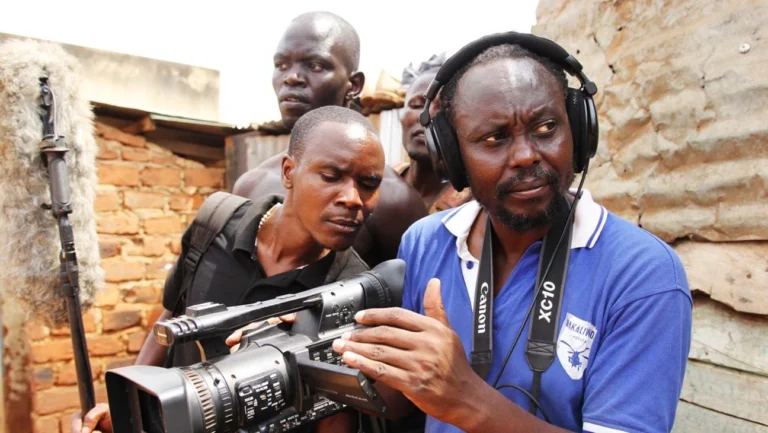
Wakaliwood. The name brings to mind various portmanteaus designed to establish a cinematic industry in different cultures: think Bollywood, or its Bengali counterpart Tollywood; think the Nigerian equivalent Nollywood. In this case, Wakaliwood is the moniker for a small slum in Uganda called Wakaliga. It is the home of Ramon Productions, a film company run entirely by Isaac Nabwana, a Wakaliga native who grew up on 80s actioners such as Rambo, Robocop, and Commando. Determined to emulate his big screen heroes, and partly fueled by the fact that movies in Uganda are sparse because electricity is not a given, meaning any screening of any movie past or present is considered a big event, Nabwana used the money he earned from brickmaking to buy bargain basement camera and sound equipment and set to work.

Type in Nabwana IGG on YouTube and you’ll find a whole host of Wakaliwood movies (“Home of Da Best of Da Best Movies”) available to watch, including the popular hits Bad Black (featuring Swaaz, the Ugandan Schwarzenegger), Who Killed Captain Alex, Operation Kakongoliro: The Ugandan Expendables, and Busta Keaton’s Da General. All of these movies are shot almost entirely in the slums of Wakaliga – with a few scenes filmed on location to cities such as Kampala – and feature hilariously bad CGI, acting, and martial arts. They also feature something completely unique to Wakaliwood: a VJ.

At the beginning of Once Upon a Time in Uganda, after we leave the mountains of Kazakhstan, there is another voice over introducing Uganda in all its glory. This is VJ Emmie and he is as much a part of Wakaliwood as Isaac Nabwana himself. A VJ is a Video Joker, whose job is to provide a constant stream-of-consciousness commentary throughout the movie: ranging between jokes, narration, exposition, and cheerleading; the VJ is an immediately jarring presence for the uninitiated, and it takes a moment to get used to as the opening titles for Once Upon a Time in Uganda commence. 

Back in New York, Hofmanis is immediately struck by the works of Nabwana – he’ll later earnestly propose the idea that Nabwana is a master storyteller and genius, somehow keeping a straight face the entire time – and decides to pack up his life and move to Uganda to work for Nabwana’s company. Together, Hofmanis, a former film festival booker with some small connections in the movie world, and Nabwana make a formidable team which begins to raise the awareness of Wakaliwood to the extent of a screening of Bad Black at the Toronto International Film Festival and even a TV deal with the biggest media conglomerate in Uganda. 

Czubek, alongside co-director Hugo Perez, presents Once Upon a Time in Uganda as a completely impartial inside look into the world of Wakaliwood. Never once casting judgement on the quality of works or, perhaps frustratingly, challenging Hofmanis on the decisions he has made in his life which brought him from semi-affluence in New York to living in a Ugandan slum without any form of indoor plumbing. During his stay it’s clear that Hofmanis struggles with the day to day vagaries of life in Uganda and although this is touched upon from time to time, you might find yourself wishing the directors had taken a little less of a fly-on-the-wall approach and perhaps delved a little deeper. 

Outside of Hofmanis’ dedication is the life of Nabwana – a man described in various different publications as the Ugandan Spielberg, the Ugandan Tarantino, and the Ugandan Michael Bay -, who is entirely self-taught as a filmmaker but finds ingenious ways to deliver his action set pieces on less budget than Roland Emmerich would spend on a background extra. Practically everything you see in his movies is either self-made or made with the help of locals: guns, vehicles, an actual helicopter; everything is DIY, hardscrabble filmmaking. He enlists the help of Dauda, one of the most eccentric characters in the movie, whose sheer joy at being propmaster for Ramon Productions is completely infectious, alongside various villagers as volunteers. Even his wife becomes involved, contributing to marketing and fundraising.

What makes the movies of Wakaliwood so unique – apart from that VJ – is the sheer love that pours out from every scene. These are people living in poverty in a war torn part of the world, making silly movies where they run around shooting guns and attempting spin-kicks. They are unapologetically bad in an objective sense, but it is deliriously fun to simply watch people living out their dreams, free from the horrors of everyday life. Hofmanis points out that the average life expectancy in Uganda is somewhere around the mid 50s, an age which Nabwana himself is fast approaching, so there is an underlying sense throughout the whole movie of time being too precious to waste on things that don’t bring joy. For that reason, Once Upon a Time in Uganda manages to become one of the best feel good documentaries you’re likely to see this year.

There are moments, particularly a falling out between Hofmanis and Nabwana which leads the former to return home to New York for a time, that are not satisfactorily explored. There is also the fact the directors show only small clips of Nabwana’s movies, depriving the audience of a proper context for the popularity of these movies, and there is much more about Nabwana himself you wish had been explored. 

Finally, the issue of these movies being objectively bad filmmaking in and of themselves is unaddressed, which may or may not be a bad thing in your book. Perhaps all of that is a different movie though: what Czubek and Perez seem to have been aiming for, and what they largely achieved, is to showcase how the sheer passion for movies can unite an entire community and light up everyone’s life, even in the harsh circumstances of a Ugandan slum, and that is a message worth listening to.


Grade – B+


Film at 25: ‘Selena’ Still an Enchanting and Powerful Biopic


Director: Gregory Nava

Writer: Gregory Nava

Starring: Jennifer Lopez, Edward James Olmos, Jon Seda

Synopsis: The true story of Selena, a Texas-born Tejano singer who rose from cult status to performing at the Astrodome, as well as having chart topping albums on the Latin music charts.


When Jennifer Lopez missed out on a Best Supporting Actress Oscar nomination for her performance in Hustlers, I read a lot of pieces talking about how this had been her first genuine shot at the Academy trophy. Sure, she had been terrific before in films like Out of Sight and The Cell, but her daring and commanding turn in Hustlers was apparently the first we were all supposed to take seriously. Nothing could be further from the truth. I stand by the belief that Lopez’s Oscar nomination omission for Lorene Scafaria’s 2019 drama was an egregious one, but let’s not forget she delivered another astonishing dramatic performance early in her career, one that also had a chance of getting recognition from the Academy if the film hadn’t been released so early in the year—1997’s excellent biopic Selena, written and directed by Gregory Nava.

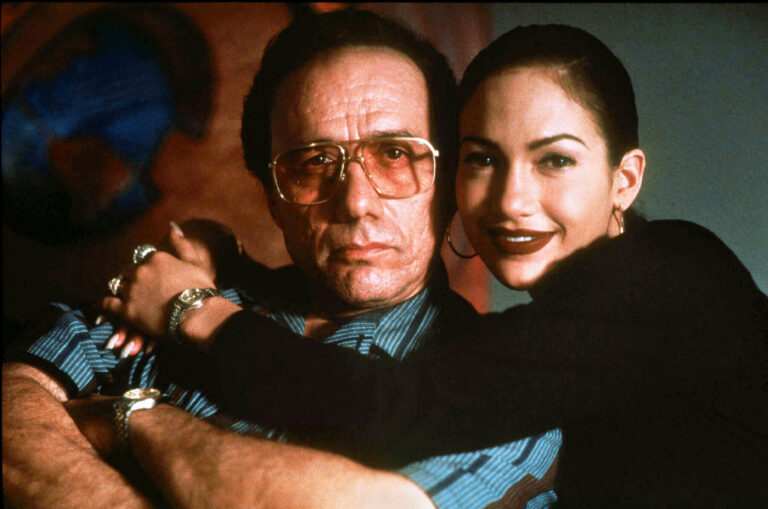
Jennifer Lopez had appeared in a few prior movies, notably 1995’s Money Train opposite Woody Harrelson and Wesley Snipes, but Selena, released twenty-five years ago this month, was her true breakthrough. Lopez is dazzling from beginning to end as the real-life Selena Quintanilla, a Texas-born singer whose star was on the rise, leading to performances at sold-out arenas and a Grammy Award win, until her life was tragically cut short when her manager shot her to death.  The film gives us a sweeping and specific look at the most pivotal moments of Selena’s life, showing the passionate relationship she had with her fiancée Chris Perez (Jon Seda) and the at-times adversarial relationship she had with her father Abraham (an excellent Edward James Olmos). 

It’s a riveting rags-to-riches story, a young woman with a dream who will stop at nothing to become a singer. It tells an engrossing family story where compromises have to be made and sometimes ego gets in the way of the right decision being reached, Abraham refusing to let Selena lead a normal life while she wants to have fame and marriage and everything in between. It’s a great behind-the-scenes tell-all about the music industry, especially as we watch her star status rise. And it’s also, in the simplest terms, a fantastic musical, scene after scene showcasing Selena’s powerful vocal instrument (Lopez lip-synched all but one song in the film) and her emotionally resonant songs, particularly “I Could Fall In Love” and the film’s haunting closing number, “Dreaming of You,” in which Lopez steps away and footage of the real Selena plays for a few minutes before the end credits roll.

What I always find remarkable about the film is how fast it was made following the singer’s sudden death, released to theaters less than two years after the tragic shooting. In some ways it seems as if a few more years needed to pass to tell the most honest life story of this incredible person, yet at no point does the viewer feel the story has been rushed or created in a haphazard fashion. Gregory Nava’s screenplay takes its time, shows in all its detail and glory Selena’s extraordinary ascension to fame, and the pacing of his film is also just right, the focus always on character rather than a formulaic musical plot.

And then there’s Jennifer Lopez, who is still a revelation in the film. She inhabits Selena to such a degree I always forget I’m watching Lopez, the quirks found in some of her later roles not on display here. If Selena had opened at the end of 1997 and had gotten a big awards push, Lopez absolutely could have snuck into that Best Actress race, especially considering she managed a Golden Globe nomination for her performance nearly a year after the film’s initial release.  Not a lot of films from the early part of 1997 have had much staying power. Liar, Liar, Jim Carrey’s box office smash released the same weekend as Selena, hasn’t aged well, and in some ways it’s the quieter films from that time like this and the beautiful love story Love Jones, starring Larenz Tate and Nia Long, that have lasted the best. 

Selena Quintanilla is an ageless star, and Selena the film is ageless, too. It is one that will continue to have tremendous rewatchability for the next twenty-five years and beyond. It’s one of the best examples of Lopez’s charismatic power on screen, evidence she absolutely has an Oscar nomination in her future—it’s just a matter of when. 

Poll: What is the best Pixar short?

In many ways, Pixar shorts are among the studio’s most challenging and creative films. They represent the soul of Pixar, the early stage of brilliant ideas from brilliant minds, before blossoming into something meaningful in only a span of minutes. They’ve also helped blossom the careers of some of the studio’s newest filmmakers, such as Enrico Casarosa (Luca) and Domee Shi, whose feature debut Turning Red releases this weekend on Disney+. There’s a charm to watching a Pixar short, especially preceding one of their feature films in a theater; at least Pixar is keeping the first part of that charm alive.

With that said, what do you think is the best Pixar short? For this list, we are only focusing on non-feature related films, so major apologies to Mater, Dug, and BURN·E.


Podcast: The Informant! / Uncharted – Extra Film

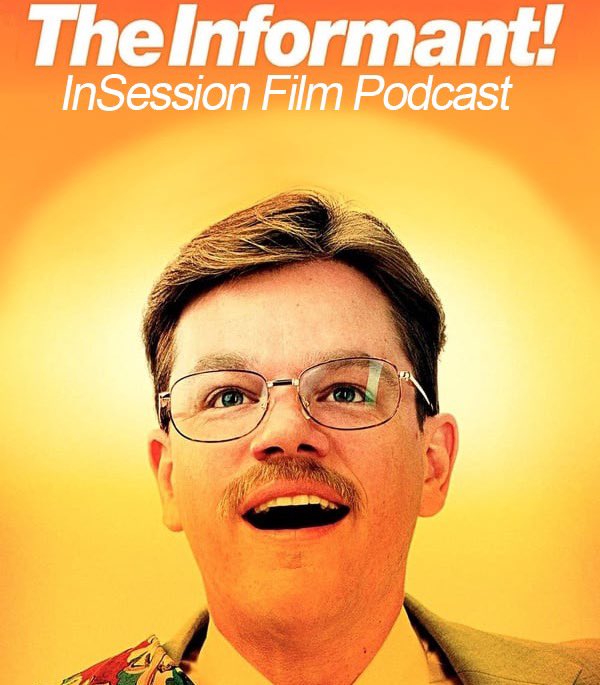
This week on Extra Film, Ryan and Jay are joined by Nicole Ackman as they continue their Steven Soderbergh Movie Series with The Informant!, and then they discuss the latest action blockbuster, Uncharted!

We now reach the level in Soderbergh’s career where he is mostly focused on making his own style of movies that aren’t going to wow at the box office but will still be great and unique in their own right. Case in point, The Informant! tackles corrupt greed told through an absolute lair, played by Matt Damon. The guys and Nicole get into the film, as well as Nicole’s tricky relationship with the famous lead actor.

In the back half of the episode, the boys dive deep into Uncharted. While the Extra Film guys are normally not the target audience for these movies, given their untrustworthy relationship with modern blockbusters, Uncharted is a surprisingly entertaining little flick. Not one of their favorite films of all time, but not the worst thing they have seen, thus they have favorable things to say about it.

Thanks for listening!

– Movie Review: The Informant! (3:47)
Director: Steven Soderbergh
Screenplay: Scott Z. Burns
Stars: Matt Damon, Scott Bakula, Joel McHale, Melanie Lynskey

– Movie Review: Uncharted (1:12:01)
Director: Ruben Fleischer
Screenplay: Rafe Lee Judkins, Art Marcum, Matt Holloway
Stars: Tom Holland, Mark Wahlberg, Sophia Ali, Tati Gabrielle, Antonio Banderas

– Music

Meet Mark – Marvin Hamlisch
Main Theme Uncharted – Ramin Djawadi
The Return of the Eagle – Atli Örvarsson

We try to make this the best movie podcast we possibly can and we hope you enjoy them. Subscribe today on iTunes, Spotify, or Stitcher, and please leave us a review on iTunes. You can also find us on Soundcloud, PlayerFM, and TuneIn Radio as well. We really appreciate all your support of the InSession Film Podcast.

Subscribe to our Podcasts RSS
Subscribe to our Podcasts on iTunes
Listen on Spotify
Listen on Stitcher
The Informant! / Uncharted – Extra Film

[divider]

To hear this Extra Film episode and everything else we do, download our apps on the Amazon Market for Android and the Podcast Source app on IOS devices. The mobile app covers all of our main shows, bonus podcasts and everything else relating to the InSession Film Podcast. Thanks for your wonderful support and for listening to our show. It means the world to us.

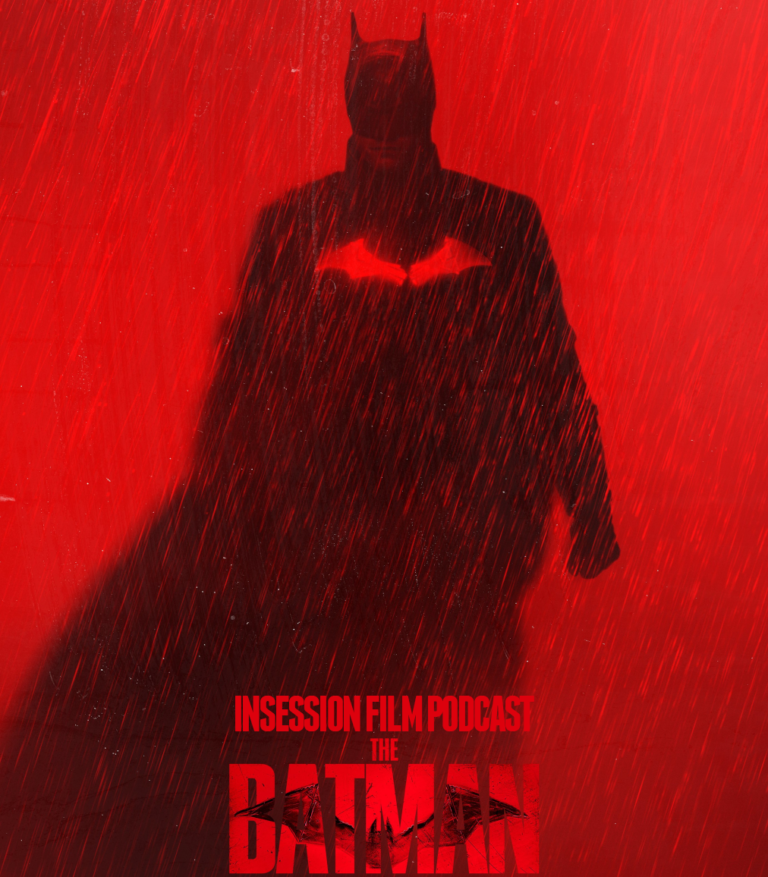
Podcast: The Batman / After Yang – Episode 472

This week’s episode is brought to you by the film Scream. Follow us on social media for your chance to win a FREE digital code!

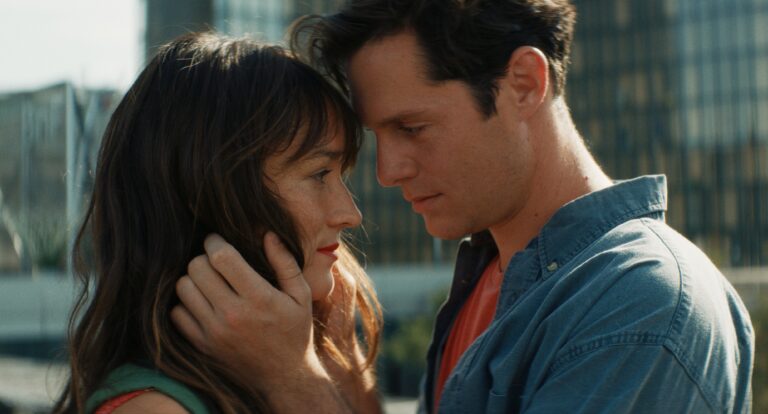
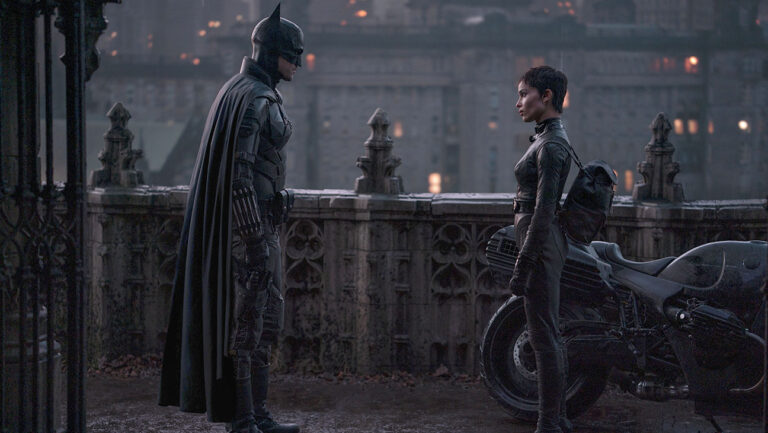
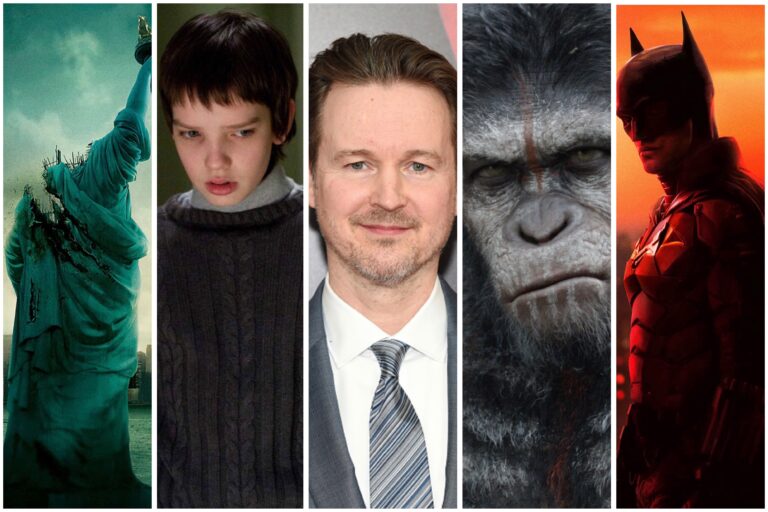
This week on the InSession Film Podcast, Duane Miller from the Cinemania World Podcast joins us review Matt Reeves’ The Batman and we also talk Koganada’s new film After Yang!

Huge thanks to Duane for joining us on the show this week. It was his first time being on the podcast and he was an absolutely wonderful guest. The Batman will no doubt be one of the bigger movies of 2022 and we had a great time getting into all of its nuances and distinctions. After Yang may not have a populist quality, but it is arguably the best movie of the year so far. So we equally spent a good amount of time on it and discussing its rich themes and stellar performances.

On that note, check out this week’s show and let us know what you think in the comment section. Thanks for listening and for supporting the InSession Film Podcast!

– Movie Review: The Batman (4:44)
Director: Matt Reeves
Writers: Matt Reeves, Peter Craig
Stars: Robert Pattinson, Zoë Kravitz, Paul Dano, Jeffrey Wright, John Turturro, Peter Sarsgaard, Andy Serkis, Colin Farrell

– Notes / Discussion (1:10:52)

This week for our break segment, we briefly offer up a potential new game show we may start up with Ryan and Jay, and we want to know your thoughts on the matter. Also, if you’re a Scream (2022) fan, please stay on the lookout for your chance to win a free copy of the film.

[divider]

RELATED: Listen to Episode 456 of the InSession Film Podcast where we discussed Belfast!

[divider]

– Movie Review: After Yang (1:10:52)
Director: Kogonada
Writers: Kogonada
Stars: Colin Farrell, Jodie Turner-Smith, Justin H. Min, Malea Emma Tjandrawidjaja, Haley Lu Richardson

Show Sponsor: First Time Watchers Podcast

– Music

Mizuiro – Aska Matsumiya
The Batman – Michael Giacchino
The Return of the Eagle – Atli Örvarsson

Subscribe to our Podcasts RSS
Subscribe to our Podcasts on iTunes
Listen on Spotify
Listen on Stitcher
InSession Film Podcast – Episode 472

[divider]

Next week on the show:

Review: Turning Red
Steven Spielberg Movie Series: The Color Purple

[divider]

Help Support The InSession Film Podcast

If you want to help support us, there are several ways you can help us and we’d absolutely appreciate it. Every penny goes directly back into supporting the show and we are truly honored and grateful. Thanks for your support and for listening to the InSession Film Podcast!

VISIT OUR DONATE PAGE HERE

Movie Review: ‘Anais in Love’ is a Delightful Directorial Debut


Director: Charline Bourgeois-Tacquet

Writer: Charline Bourgeois-Tacquet

Stars: Anaïs Demoustier, Denis Podalydès

Synopsis: Follows Anaïs, a 30-year old woman that is broke and has a lover she doesn’t think she loves anymore. She meets Daniel, who immediately falls for her. But Daniel lives with Emilie – whom Anaïs also falls for.


Ever since the mid to late 2000s, more films about the intimate lives of young characters have been made. These films are abundant in the back-and-forth discussions about love, life, and the future (which they don’t have sight of and prefer to live in the present). You could say the only reason the characters in this type of narrative live “one day at a time” without thinking about the next is because they haven’t found their respective paths. Another aspect that these characters have is that they rarely say what they mean, and a lot of the time, they don’t even know what they mean precisely. Films such as Daddy Longlegs and In Search of a Midnight’s Kiss are great examples. Still, the one that stands out the most (and people adore it to a great extent) is Noah Baumbach’s Frances Ha–described by many as the most relatable movie ever for people who seek beauty in the little details and gestures. Frances Ha was the game-changer for the features categorized into this sub-subgenre. Last year, we got the astonishing marvel by Joachim Trier, The Worst Person in the World. In 2022, Charline Bourgeois-Tacquet’s feature directorial debut and Cannes 2021 “Semaine de la critique” selection, Anaïs in Love, is finally getting its release, which is a flick many will love. 

The film centers around its title character, Anaïs (Anaïs Demoustier), a thirty-year-old Ph.D. student (who hasn’t finished her thesis on 17th-century depictions of passion) enamored with literature and is currently close to being broke. Anaïs has a lover, but she’s starting to feel that she doesn’t love him anymore. The longing feeling of leaving him has been in her mind for a while (being quite tentative with her love life even though she questions later in the movie: “You think I don’t know how to love?”), albeit she’s sure of it now. Anaïs’ approach to life is “living in the moment and forgetting about the rest”, while her brain works at 100 miles per hour. Redundant to her fast-paced demeanor, she is always late to dates, meetings, or appointments–preferring to stroll around on her bike in the streets of Paris thinking “the world is waiting for her”. Putting those “imperfections” that her lover remarks on aside, Anaïs is a gleaming ray of sunshine with a whirlwind of emotions running through her mind. She is constantly questioning her status in life and what she wants in the end; nevertheless, things come when she least expects it. 

Anaïs meets Daniel (Denis Podalydès) in an apartment elevator, and he immediately falls in love with the charismatic gal. However, Daniel lives with Emilie (Valeria Bruni Tedeschi)–for whom she also falls for. As restless as it sounds, a love triangle of sorts is formed; amidst that, she encounters the desire for whom to love and the yearning to find her path in life finally. In sheer delight, Bourgeois-Tacquet’s first feature is a charmer, just like its title character–filled with bliss and as bubbly as a glass of champagne. It is easy to start comparing Anaïs in Love with its previously mentioned (and other) predecessors. In some ways, it is fair (since it is neither groundbreaking, nor particularly original), but something about this movie shines as much as the others. One of the reasons is its humanistic and well-thought screenplay. Tacquet uses the filmographies of legendary French directors like Rohmer and Mouret, as well as Jeunet’s Amelie, as inspiration. The former delivers a more human-centered approach, and the latter showers the screen in warmth and palpability (yet, without the fantasy-esque elements). 

But, of course, not everything in this story will be peaches and cream, thanks to the indecisiveness and mischievousness of Anaïs. She’s living in the moment, with little to no consequences following her every decision (good or bad). As the narrative develops and the love triangle starts fracturing, she begins to confront what will become of her in the next couple of years and her deepest desires. The screenplay spontaneously captures the slow realization of this confrontation while showing us that she is indeed brilliant (and funny), yet blinded by the doubts of her own capabilities. John Cassavetes’ film, Opening Night, makes a brief appearance during a scene at the theaters, which adds to the themes of succumbing to one’s uncertainty and the search for passion. Some of Anaïs’ “troubles” may have come from the shock of her mother’s cancer, disrupting her life plans as a chain reaction; this ultimately led to her prioritization of absolute happiness instead of resentment and broken promises. Although humanly flawed and some decisions aren’t meant to be applauded (yet understandable), Demoustier makes the character charming, tangible, and alluring. 

In addition, the chemistry between her and Valeria Bruni-Tedeschi is the highlight of the entire picture. Not only are their conversations grounded, but they seem like actual people slowly falling in love–the light glinting in their eyes as they carefully listen to every word one is saying. As they talk about literature and Anaïs’ love for her childhood teacher, the two ladies know they are quite the opposite, yet are fascinated to learn more about each other. Regarding the actress duet, director-writer Charline Bourgeois-Tacquet said: “They are so different, they don’t have the same energy, nor the same sensuality.” Anaïs in Love is a conversational story–heavily lifted by the romantic entanglements of a surging love triangle–an effervescent and breezy tale of sincerity, devotion, and freedom. It doesn’t feel like Bourgeois-Tacquet’s feat

ure-length directorial debut. Instead, the film showcases her ripe and stylistic wide range of talent as a screenwriter and director, with a simplistic and delicate approach to a coming-of-age narrative. 


Grade – B+

Movie Review (Glasgow Film Festival): ‘Where is Anne Frank’ Is A Naïve and Tonally Inconsistent Misfire


Director: Ari Folman

Writers: Anne Frank (based on the diary)

Stars: Michael Maloney, Ruby Stokes, Emily Carey

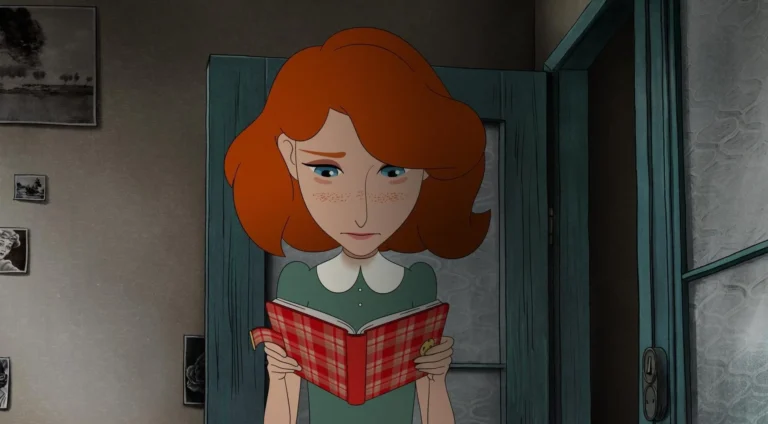
Synopsis: The film follows the journey of Kitty, the imaginary friend to whom Anne Frank dedicated her diary. A fiery teenager, Kitty wakes up in the near future in Anne Frank’s house in Amsterdam and embarks on a journey to find Anne, who she believes is still alive, in today’s Europe. While the young girl is shocked by the modern world, she also comes across Anne’s legacy.


It’s hard to assess the impact of Anne Frank on western discourse in 2022. For some, she is a shining beacon of hope and humanity amidst the brutality of the Holocaust. For others, she is the often maligned homework assignment you really don’t want to do. A generation knows her in terms of what she represents and what lessons we need to learn from her, but seldom do you hear about the girl herself. For she was just that: a young girl writing to an imaginary friend about the things young girls write about. For all that her tragic circumstance may have forced her to grow up much earlier than she should have, Frank’s innocence and playfulness are rarely explored. 

It’s perhaps this that Ari Folman is addressing in his latest, Where Is Anne Frank, a strangely childish – and sometimes startlingly naive – fantasy set predominantly in the present day as it looks at the impact Frank has had in her native Amsterdam. The animation is, at times, incredible and engaging. For instance, the scene in which Frank and her boyfriend Peter travel inside the radio their fathers are listening intently to for news of the war effort. However, even in this moment the sound quality is sadly lacking both in terms of its matching with the mouth movements of the characters, as well as the poor quality of acting. It’s a baffling decision given the quality of the animation and the pedigree of Folman himself, whose animation in Waltz With Bashir was an incredible and incendiary look at the Lebanese invasion of the early 80s. 

It is Amsterdam in the near future. In the Anne Frank house, now a museum, a lightning strike occurs, causing the glass case around Frank’s famous diary to shatter. From the pages now exposed to the air erupts a colorful spiral, which becomes that of Frank’s imaginary friend Kitty, whom she addressed in her diary. Kitty is lost, scared, and confused. She heads out into the city to find her friend. As she wanders through Amsterdam, she discovers a city much changed from the one she remembers, a city which bears Frank’s name on many of its institutions: Anne Frank Library, Anne Frank School, and so on. With Frank’s diary in hand, Kitty suddenly becomes a target for the police and finds shelter with refugees, whilst also falling in love with a young street kid, also named Peter. 

Much of Folman’s narrative here falls to cliché: juxtaposing the Holocaust with the current refugee crisis feels a little too on-the-nose, an imaginary girl with powers that no one seems to find very strange stretches credulity, and the dialogue itself is cringe-inducing at times. There is some strange dissonance that a director of Folman’s talent could produce such a Saturday morning infomercial of a movie. 

Our protagonist here is Kitty, and perhaps the first thing about Kitty should be that she is memorable. Alas, Kitty is nothing more than a narrative cipher, meant to drag us from place to place so that we might witness the troubles of European politics firsthand and ask ourselves why nothing has changed since Frank’s day. It feels condescending at best, and completely ignorant at worst. To contrast the glorified Frank of modern day with her actual flesh-and-blood counterpart, Kitty reads through the diary in order to revisit her memories of Frank. This leads to the movie’s best moments, few of them though there are. We get to see the teenage girl Frank was and experience a little of what she must have went through: a birthday party is cut short as demonic Nazis in expressionless white masks march through the streets; Frank must share her room with a strange man – a dentist – who is also hiding from persecution; Frank’s father Otto trying his best to keep up his family’s spirits during an emotionally devastating upheaval. These moments make you wish we were treated to a straightforward adaptation of Anne Frank’s life instead of this bizarre tale wrapped around it.

In the present day, Kitty’s relationship with Peter feels forced, a way to serve the plot rather than an organic love story. Peter’s dialogue is among the worst – a moment where he tells Kitty to use her powers of invisibility to avoid detection by the police in particular comes off as phoney and almost unintentionally comedic – and the actor voicing him is, unfortunately, not up to the task of conveying the many complex emotions Peter must deal with.

Perhaps Folman’s worst crime here comes in the third act, where Kitty essentially becomes a white savior to the many African refugees who hide her from the police. As Folman comes perilously close to suggesting the current migrant crisis is analogous to that of the Holocaust – which does a disservice to both situations and ignores the many complex grey areas between the two – Kitty essentially robs these refugees of any agency. This is made more uncomfortable by the fact that Frank herself coded Kitty as a red-haired white girl, who was specifically non-Jewish. She did this, one imagines, to keep Kitty safe from what she knew then to be the persecution of Jewish peoples. However, there is a certain discomfort from watching a white girl with red hair save the day, thus marginalizing the group she is trying to save.

There are things to like about Where Is Anne Frank. The animation is beautiful, Tristan Oliver’s cinematography is utterly sublime in his use of dynamic camerawork, and the color palette is exquisite, especially in the flashback scenes. The message, too, is admirable. Given the rise of white nationalism, the closing of borders, and anti-refugee sentiment, Where Is Anne Frank is a timely, and necessary story. It’s just a shame Folman chose to tell that story in this way.


Grade – D

Movie Review: ‘Turning Red’ is Full of Energy and Heart


Director: Domee Shi

Writers: Julia Cho and Domee Shi

Stars: Rosalie Chang, Sandra Oh, Ava Morse

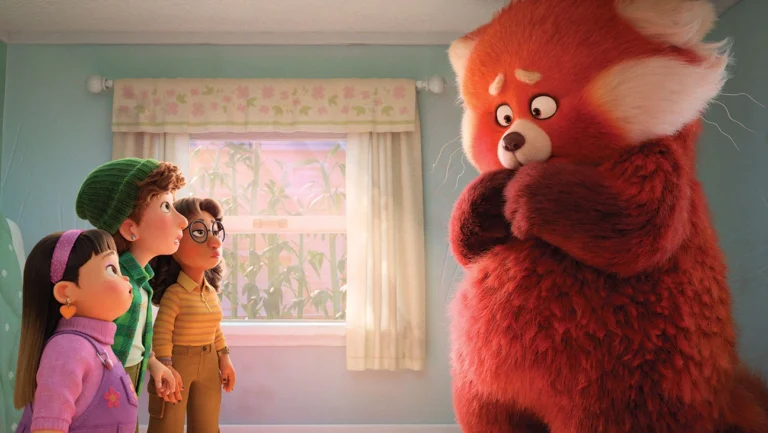
Synopsis: A 13-year-old girl named Mei Lee turns into a giant red panda whenever she gets too excited.


Turning Red is an unusual departure for the Pixar brand. Pixar is a studio that is known for perfecting high comedy and poignant storytelling. It can be downright goofy- which isn’t a Disney Pun. It’s a wildly unconventional film that’s a giant metaphor for the trials and tribulations of a young girl going through puberty. But also, one who happens to be Chinese-Canadian from first generation immigrants.

Set in Canada’s largest city, Toronto, which happens to have a large and vibrant Asian population that started in the 1870s, Turning Red focuses on a 13-year-old precocious student named Meilin (Rosalie Chiang) or “Mei” for short. A driven, stellar student who also loves the boy band 4*Town. Though, love may be an understatement. Think of how your kids or even you acted during the prime days of NSYNC, The Jonas Brothers, One Direction, and now, BTS. Along with her friends, the tomboy Miriam (Ava Morse), the quiet Priya (Maitreyi Ramakrishnan), and the intensely friendly Abby (Hyein Park).Her parents, Ming (Sandra Oh) and Jin (Orion Lee) run the oldest Buddhist temple in the city. 

A beautiful one, covered in rich red and blue colors equipped with a large grotto. You can tell Mei has inherited many of her mother’s traits (or has them instilled in her). Strong-willed, determined, and driven to succeed, Mei can achieve anything she puts her mind to. Well, that’s until she starts to become distracted by boys. One, in particular behind a counter, and all five of the 4*Town members (yes, there are five of them). As her emotions become more robust, they consume her thoughts, and how does the young girl handle it? Well, she turns into a giant red panda bear.

You read that right. And it’s a delightful device to move and tell an adorable story of not only blossoming maturity, but as a teenager with a unique cultural perspective. This is the first Pixar film set in Canada, believe it or not. Also, the first is where the lead character is of Asian descent. Not to mention the first film with an Asian character since Up. While this view is much lighter than I am making it here, it’s a refreshing change of pace. Even each character is voiced, when appropriate, by someone of East Asian descent.

What Turning Red does so well, besides when Mei begins to feel her emotions and the fire fox comes out, is the overall feel when Mei is with her family or her social support system. Oh’s Ming is a helicopter mother who doesn’t understand her daughter’s likes—representing a conflict between immigrants and their children’s possible pluralistic view with parental socialization. Yet, there is a wonderful sense of love and preparation when they sit down at the dinner table. You watch as her father prepares baozi with her favorite filling—the deference for respecting your elders and community inside the temple and out.

When Mei is with her friends, she has a different side. The film isn’t afraid to shy away from modern social constructs. Such as all four young women, most from different backgrounds, coming together because of music. This all results in a support system even outside of her family that fulfills a different need. These are all products of growing up and a new reset of social behavior.

That’s where Bao director Domee Shi’s animated film comes together. Co-written with playwright Julia Cho (Fringe, Big Love), they use both sides to view Mei’s quick and random emotions, strong and intense, while going through puberty, delicately. And it would have to since I would not have imagined a Pixar animated movie tackling this subject matter. (It may be the first Disney animated film that shows menstrual products). Yet, even if the metaphor is obvious, it’s handled with such clever and adorable care. The two lenses to view the stage in a young person’s life give added context and depth to go along with your usual well-placed heart and comedy (Park’s Abby had me in stitches).

While Turning Red is more refreshing than most Pixar films (you have to love the use of one of Toronto’s most important buildings in its final act), I will say the movie lacks an emotional punch that the studio is known for. Otherwise, the film flirted with other comparable studio films, like Illumination, that became sterile. Though, Shi and Cho never let it get there.

Still, the result is a Pixar film with an energized spirit, along with a gentle and patient heart.


Grade – B

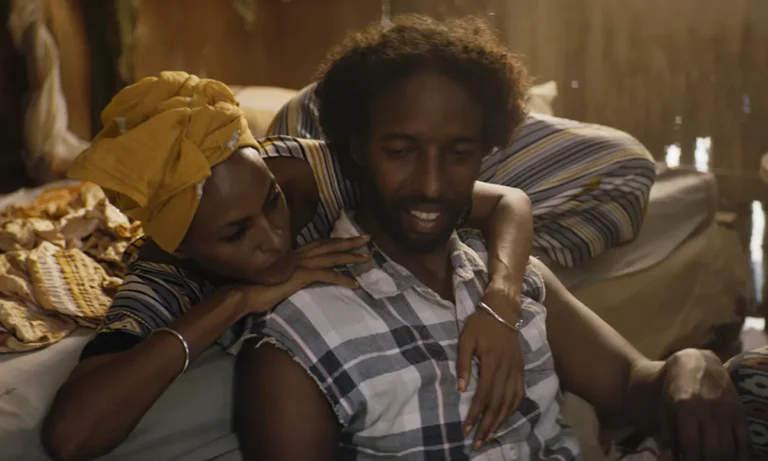
Movie Review (Glasgow Film Festival): ‘The Gravedigger’s Wife’ Is A Critical Look at the Healthcare System


Director: Khadar Ayderus Ahmed

Writers: Khadar Ayderus Ahmed

Stars: Omar Abdi, Yasmin Warsame

Synopsis: In times of misfortune, Guled and his family have to push themselves to the limits in order to reunite with their family.


Although set in the far distant, heat-baked lands of Djibouti in the Horn of Africa, the tale of The Gravedigger’s Wife may well resonate with any average American. Finnish-Somali director Khadar Ayderus Ahmed has crafted a heartfelt and tender examination of the social injustice surrounding healthcare and the lengths we will go to for the ones we love.

Thought it is co-produced by a range of European countries, including Ahmed’s native Finland, The Gravedigger’s Wife feels intrinsically and powerfully authentic as it represents the impoverished on the outskirts of Djibouti City, a world in which death is never far away and survival is the only thing that matters much. The skein of struggle running through the movie is always shown in a grounded, naturalistic way which never exoticizes the country. Instead, we see the genuine brutality of everyday life and how it affects the citizens who live there.

Guled (Omar Abdi), is a gravedigger who makes his living chasing down jobs from people whose loved ones have just died. It is gruelling work and fairly sparse. There is also a grim irony in the fact he makes his living depending on the deaths of others – in one scene he and his fellow gravediggers chase an ambulance all the way to the hospital in the hopes of a body to bury. There’s a darkly humorous undercurrent to this situation which Ahmed maintains throughout. Guled does what he does for his wife Nasra (Yasmin Warsame) and son Mahad (Khadar Abdoul-Aziz Ibrahim). It is clear his life revolves around them, and he works hard to make them happy. 

Things aren’t going so well though. Mahad is constantly skipping school, and is completely uninterested in receiving an education, countering that his father doesn’t have one either. Worse still, Nasra is ill: a kidney infection means she needs constant antibiotics and $5,000 surgery if she is to survive. This news sends the family into a spiral as Guled desperately tries to cobble enough money together to keep his wife alive. A broken Guled finally decides to walk to the rural village where he grew up – facing the conservative politics which drove him away in the first place – in a last ditch attempt to earn enough money for his wife’s surgery, while Mahad takes to the streets, completing various tasks for the locals for cash.

The storytelling in The Gravedigger’s Wife is neatly done. Ahmed frames beautiful early scenes showing the couple in benignly intimate moments, such as when Guled bathes his ailing wife. There’s a tenderness to these scenes but also something of a weariness, as though the couple have gone past the hormonal excitement of their early courtship and are now comfortable and content with one another. These scenes are juxtaposed with their interactions with Mahad, whom they struggle to control. A slowly building dread begins to creep in for Guled: he can no more save his son than he can his wife. It all stacks up excellently to a more thrilling third act, as the tone changes somewhat and Guled goes for broke.

Abdi is great as the beleaguered Guled. Though blessed with a big smile and a genuine, affable nature, Abdi imbues Guled with a slow burning exhaustion. A telling moment comes around halfway through when he counsels a friend of his who is lovelorn and hopeless; Guled gently chides his friend for wasting time worrying, when there are bigger problems to deal with, before matchmaking his friend and the object of his desire in one fell swoop. It’s a moment that sums up Guled well, and Adbi is so natural you almost forget this is a scene playing out.

The cinematography plays an important part in establishing the world of Djibouti. Arttu Peltomaa juggles the urban jungle with all of its color and business with parched, dry landscapes, completely barren and devoid of life. Yellows and browns abound here, mixed together in a muddy texture, with the occasional greenery appearing throughout – almost as though representing a kind of hope. 

Amid all of the exquisite visual design, is the basic premise of a man fighting against a hopelessly cruel, indifferent system which cares nothing about whether he lives or dies. As he struggles in vain to make some small semblance of a difference to those he loves, Ahmed is asking us the question: are we really okay with this?


Grade – B


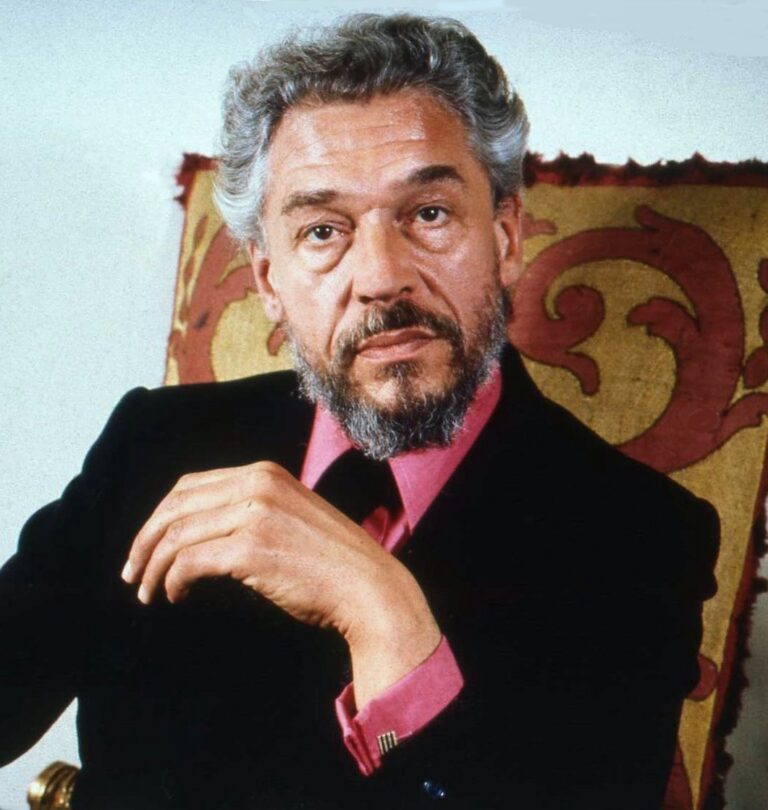
The Quiet Actor: An Appreciation Of Paul Scofield

January 21st of this year would have been the centenary birth of a legend among Shakespearean actors who shied away from the limelight. His filmography is not as large as many others because of his devotion to the stage, but when his screen performance is viewed, you are watching a man who pours everything into his character unlike many others. The results from his performances includes the Triple Crown of acting, which was won in a period of just seven years. That man is Paul Scofield, who died in 2008, aged 86.

Scofield was adored by his contemporaries for his powerful personality on and off-stage, engaging himself perfectly in any role for the Royal Shakespeare Company (RSC) and in his screen presence. Unlike other celebrities, though, Scofield did not seek press coverage and avoided extra-curricular events outside from acting. It was strictly a job, and when he finished his performance for the night, Scofield hopped on the first train back home. Scofield lived with his family in Balcombe, a village outside London and only wanted roles closest to the train station so he could catch the last train back.

By his admission, Scofield was not successful in school and it was when he found Shakespeare that his calling was heard. Medically discharged from serving in World War II, he was permitted to pursue acting full-time. In his early performances, Scofield was recognized as a rising star, even being compared to Shakespearean master of the time, LaurenceOlivier. When Olivier was making Hamlet as a movie in 1948, it was Scofield playing the titular role on stage. He later tackled Richard III, Macbeth, and Much Ado About Nothing, all directed by John Gielgud. It was only in 1954 that Scofield made his screen debut opposite Olivia de Havilland in That Lady in which he played Phillip II of Spain.

It was in the 1960s that Scofield became a worldwide name in entertainment, namely for one singular role that defined his legacy. In Robert Bolt’s A Man For All Seasons, he played Sir Thomas More, the close associate of King Henry VIII who rejected his break from the Catholic Church and was persecuted for it. The movie version saw Scofield opposite Orson Welles and newcomer John Hurt, who said Scofield’s stage performance finally confirmed his belief that acting was for him. Scofield would win both the Tony and the Academy Award for both versions of A Man For All Seasons (the latter directed by Fred Zinneman in 1966, which would also win Best Picture), one of several to win both awards for the same role. In 1969, Scofield would win an Emmy for his performance in Male of the Species. Scofield did not attend any awards ceremony to pick up any of his prizes.

Also in the 1960s was Scofield’s much publicized trip to Moscow with the RSC to perform King Lear, which he performed in 1962 to critical acclaim. The performance in front of the Russian audience was adored and in 2004, a poll taken within the RSC named Scofield’s Lear as the greatest Shakespearean performance. Another major stage role was Peter Schaffer’s Amadeus as Salieri, the jealous rival of Mozart that would later be adapted for the screen successfully; this time, Scofield wasn’t cast and his role was played by F. Murray Abraham, who ended up winning an Oscar. His last screen performance was the 1996 adaptation of Arthur Miller’s The Crucible in which he plays Judge Danforth investigating witchcraft, playing the persecutor in a stark contrast to Sir Thomas More who was persecuted.

Three times, Paul Scofield was offered a knighthood, and three times he turned it down. He had a similar reaction to Hollywood, as he rejected the temptation of moving stateside and getting caught up in the glitz and glamor. Scofield rarely gave interviews and slowed down in his eighties, not pursuing fame onward until his passing. “As you get older, the more you know, the more nervous you become. The risks are much bigger,” Scofield remarked upon taking his last major stage performance aged 75, a revival of the Norwegian play John Gabriel Borkman. Pure acting without any methods, sincerity in every role he filled regardless of medium, a distinctive voice to not be forgotten, and a legacy of natural talent to be admired. This is what Paul Scofield left behind to those who have watched one of his performances.


Follow me on Twitter: @brian_cine (Cine-A-Man)

Movie Review (Glasgow Film Festival): ‘The Outfit’ is a Well Tailored Stage Play in Movie Form


Director: Graham Moore

Writers: Johnathan McClain, Graham Moore

Stars: Mark Rylance, Zoey Deutch, Dylan O’Brien

Synopsis: An expert tailor must outwit a dangerous group of mobsters in order to survive a fateful night.


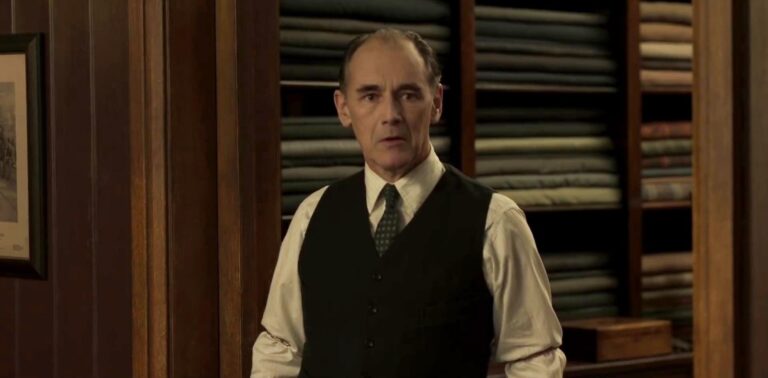
It feels perfectly fitting to cast Mark Rylance as the central protagonist of The Outfit, novelist Graham Moore’s debut feature. Rylance is a veteran of the stage – having starred in countless plays since the 80s – and is considered by some to be one of the greatest stage actors of his generation. He has also spoken frequently of his love for the stage, and his preference for stagecraft over filmcraft. 

Rylance, then, fits The Outfit like a well-tailored suit. Moore’s 50s gangster thriller is set entirely in one location and features the typical blocking and staging of any great theatre production. It is as intricately crafted as one of its protagonist’s suits and unravels in a satisfying way as it burns to its climax. It sometimes suffers a little from the show-don’t-tell problem, almost revelling in its own cleverness a little too much at times, but ultimately, Rylance anchors the whole thing with his crafty, sly performance. 

Leonard Burling (Rylance) is an Englishman living in Chicago in the 1950s. He is a ‘cutter’, trained on the famous Saville Row in London, and makes bespoke suits for his clients. His shop is also a drop point for the Irish mob, who come in and out every day to deliver letters. Burling stays as far out of this as possible; he’s a quiet, mild-mannered tailor who wants nothing to do with the shady life, preferring to focus on his fabrics. He worries for his assistant Mable (Zoey Deutch) whom he sees as a daughter and who has started a romantic relationship with Ritchie Boyle, hotheaded son of mob boss Roy Boyle (Simon Russell Beale). Burling has hopes that Mable will take over his shop for him one day when he retires, but Mable has plans to travel the world, and has a collection of snowglobes featuring historic landmarks from around the world as proof.

Burling’s situation with the mob has always walked a tightrope, but things change for the worse when Richie is shot by a rival mob and shows up at Burling’s shop to hide out. Ritchie’s right hand man Francis (Johnny Flynn) forces Burling to stitch up Ritchie’s wound before revealing that there is a rat – police informant – in their midst and he aims to find out who it is before the night is out.

From there The Outfit unfolds into a revolving door stage play, as characters come and go and developments occur off-screen. From its opening moments, The Outfit sets out its stall as a perfectly constructed story: the first scene features finely detailed craftsmanship as Burling creates his famous suits, with a voice over by Burling himself detailing all of the invisible intricacies which go into the craft itself. There is a pleasing symmetry between Burling’s craft and the craft of storytelling, as layers are stripped away throughout the movie to reveal the hidden detail underneath.

There are no simple answers in The Outfit. Each proposition: Who is the rat? Who is double-crossing who? Who will find out the truth first? They are all given a more complicated answer than you might think, as twists and turns catapult into the open.

Although he works within only two spaces throughout the whole movie – the front room of Burling’s shop and the back where he makes his suits – Moore manages to keep anything from getting boring. Cinematographer Dick Pope keeps everything fresh by ensuring each part of the shop that serves a function is highlighted in different ways, and these are teased throughout the runtime. A cabinet, a box, mundane items which inhabit the background are quickly brought into the fore, are given purpose, and seen differently than we might have noticed five minutes ago. Each frame is filled with tension as stand offs occur and rather than cut to close ups, the camera stays static on the scene, allowing it to breathe as the audience stops. Shifting glances quickly change focus and we’re then privy to a secret only one of the characters may know as we wait for the others to catch up. Elsewhere, Alexandre Desplat’s score is unsettling, with a tense, subtle trill underlying most scenes as the atmosphere ratchets up towards the crescendo. 

There are some moments which feel a little too cute, a little too convoluted. Some reveals – especially towards the end – stretch credulity just a little, but it’s to Rylance’s credit that he can carry these moments on his own and stop them from ruining the feeling of the film. He is clearly a world class actor and it shows in these moments; you feel The Outfit might not have been quite the same movie without him.

For a debut feature, The Outfit is confident, assured, and as well designed as one of Burling’s suits. If you can forgive some of the more silly developments and enjoy Rylance’s performance, you’ll find a lot to enjoy here.


Grade – A


Road to ‘The Batman’: How Christopher Nolan Redefined the Comic Book Genre


Part 3: Nolan’s Dark Knight Trilogy


Over the past three weeks, I decided to go on a journey of discovery. I left the comfort of my apathy and dove into the various live action Batman films to prepare for The Batman. It’s been a seven-film journey; and while I won’t be reviewing Snyder’s variant of Batman on the site ,, I will have come a long way from where I began. I’ve been on this journey for seven films, and each film brought something new to the table I loved. Burton’s design of Gotham and his interest in outcasts with a second identity solidified Batman Returns as one of the best Batman movies. Schumacher’s neon-lit world appeals to all ages, being a true comic book that anyone, and everyone, can enjoy. And now, as I enter into the Nolan films, it feels like coming home. I have seen these films too many times to count; they have been fundamental to my view of film as a critic. And now, I return to see how well they hold up compared to the rest of the Batman filmography. 

After 1997, Batman went into hiding. Batman and Robin was critically panned, failing to capture the box office like the rest of the franchise, and so Warner Bros let it die. Batman would stay dead for 6 years until his resurrection could bring in new, talented filmmakers to capture the audience. Some major names were thrown around at the beginning, including the new studio darlings Lana and Lilly Wachowski. They were hot off of the Matrix trilogy, and Warner Bros offered them the directing position of the new Batman film. However, they turned it down, to work on another large project: Speed Racer. That vacancy allowed someone else to helm the Batman franchise. That someone would be Christopher Nolan, the genius behind Memento, and he pitched a complete vision of his Batman films to Warner Bros. This vision wasn’t steeped in style, but in making Bruce Wayne as important to the story as Batman was. Add in 150 million dollars, 25 months of development, and here we are, at the release of Batman Begins.
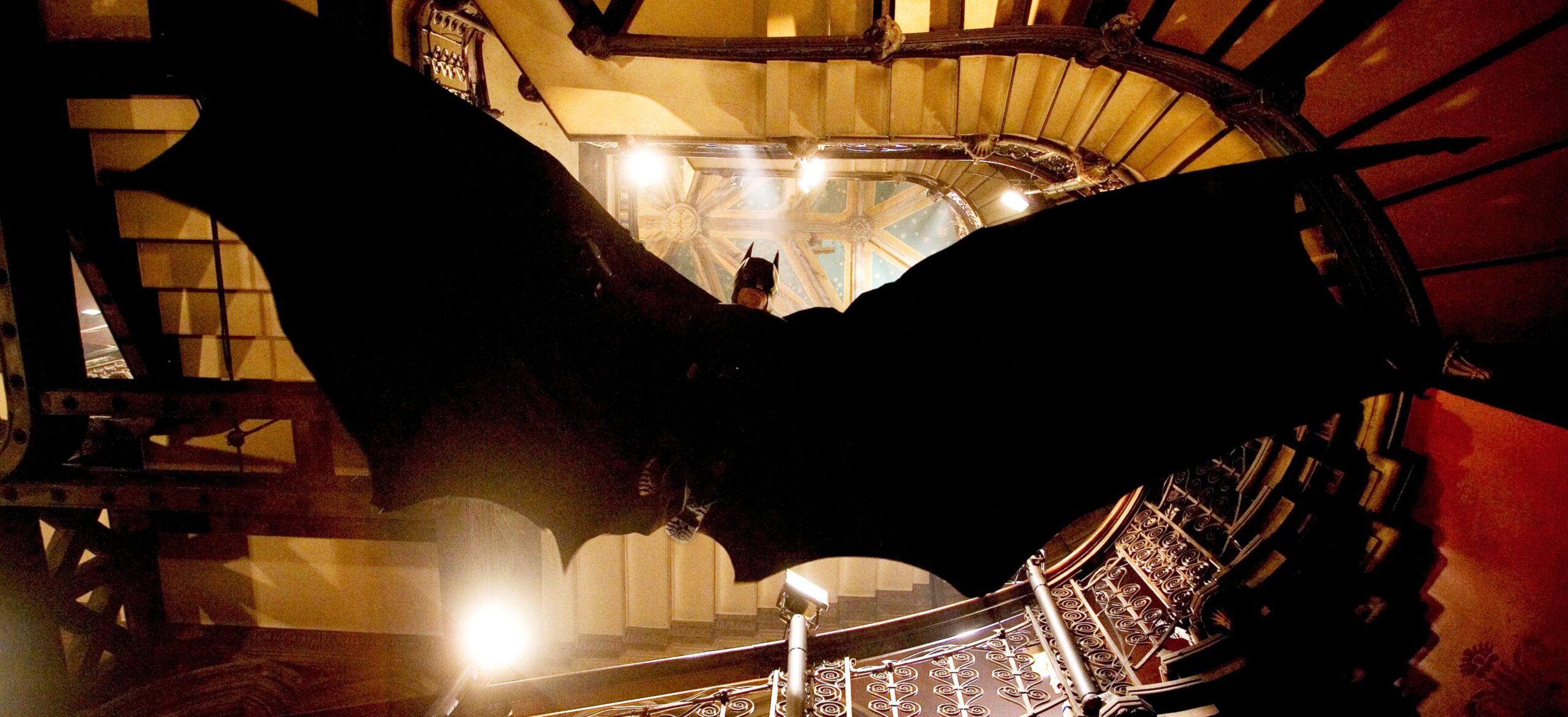
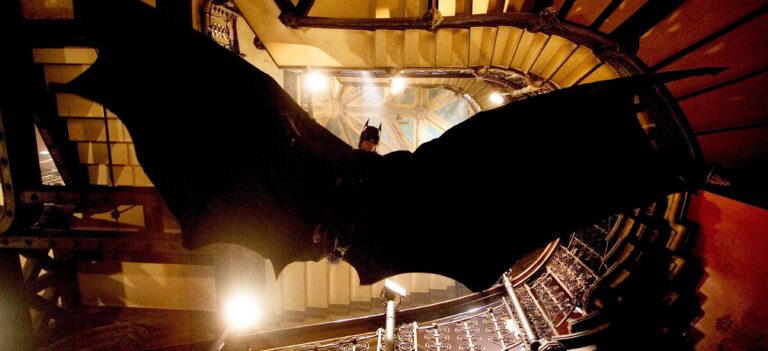
Batman Begins (2005)


Batman Begins was released on June 15, 2005. It marked the end of an 8-year hiatus for the caped crusader and was the first major reboot for the character as well. While Schumacher’s Batman was aesthetically different from Burton’s interpretation of the character, it is presumed that these characters are still from the same world. There are internal references to previous events that glue those four films together, as an anthology of sorts. But with Batman Begins, Nolan wanted a clean slate. New characters, new origins, and new sets were required for this interpretation of Gotham. To create this new Gotham, Nolan brought on production designer Nathan Crowley. Nathan Crowley had worked with Nolan previously on Insomnia and would become his go-to production designer for most projects. Here, Crowley would be responsible for the design of the Batmobile, which had to immediately be recognisable and in line with the pseudo-realistic style of the film. It was immediately recognizable, and cinematically announces this Batman to be an unstoppable force. Nolan would also enlist the help of costume designer Lindy Hemming, to create the iconic suit for the caped crusader. The work of this production team was simple: to create a Gotham City that at once was believable and ridden with crime. The use of miniatures, developed by the special effects crew, would enable the team to create a city that seemed larger than life, without needing to find pre-existing cities to film. But the miniatures were the easy part to build. Multiple Hollywood lots would be combined together, to build the elaborate sets of the Bat-Cave and the narrows. Most of the shooting of Gotham would occur in Chicago, but these custom sets allow Gotham to feel distinct from any major American city.  

Accompanying the stylistic changes was the cast of the film. A full overhaul would be required for the audience to buy into the reboot. And so, for the first time in twenty years, Michael Gough would not be reprising his role as Alfred. Instead, Michael Caine would be taking over as Batman’s trusty butler.  Caine would build on the performance of Gough before him, keeping the friendly demeanor and adding to it with his sarcastic humor. Every interaction that Alfred has is full of heart and knowledge, adding depth and realism to the relationship between Alfred and Bruce. And speaking of Bruce, Christian Bale was given the role of the titular hero. But unlike so many before him, his performance of Batman would be built upon Bruce Wayne; and the many “masks” Bruce puts on throughout his day. The layered performance that Bale gives is enhanced by his eyes and voice, allowing him to not only be a great Bruce Wayne but a fantastic Batman as well. The physicality of his performance comes through in spades, selling us on this version of Batman. 

And the supporting cast is truly spectacular in the film. While previous Batman Films have had some big names attached to them, Nolan took that idea and ran even further with it. Liam Neeson, Katie Holmes, Gary Oldman, Cillian Murphy, Tom Wilkinson, Morgan Freeman, Ken Watanabe, and Linus Roache are just a few of the stars of this film. Each gives great performances, with Tom Wilkinson’s Carmine Falcone being extremely memorable thanks to his gangster accent. Liam Neeson plays the mentor figure once again, being instantly likable to the audience. To wrap up this reboot, Nolan would need an iconic score for Bale’s Batman. To that end, composers Hans Zimmer and James Newton Howard exceed any and all expectations. The iconic Danny Elfman score set a high bar for the duo; Elfman’s Batman set the precedent for all Superhero scores. But Zimmer and Howard sidestepped all the superhero clichés and built something new for themselves, relying more on electronic mixing, string instruments, and the occasional piano to solidify this Batman’s theme. 

All these elements are good in their own right, but when unified together under the story written by Nolan and David S. Goyer, become absolutely masterful. In every Batman review up to now, the story has always been something I mention as an aside for these films. The style is the substance, and while the story has usually had merit, it’s not been the core of the film. Enter Batman Begins, where Nolan’s storytelling idiosyncrasies are placed front and center. Here, the story is structured around Bruce Wayne from moment one. The storytelling utilizes flashbacks, intercutting the present with the past, to tell the audience how we got to this moment. Every word in the script is purposeful, telling us something new about Gotham, whilst setting up something else in the movie. The Wayne murders aren’t just a third act reveal to justify Bruce fighting the Joker; rather, it’s the backbone of the film. Gotham isn’t a bad place because of low-level, desperate criminals. It’s a bad place because of a mob that has corrupted the justice system, and due to the apathy from the elite that enables crime to occur. 

This is why I come back to Batman Begins. In spite of cinematographer Wally Pfister’s simple photography, the show-stopping style is located in the dialogue exchanges and performances. And thankfully, due to Nolan’s unending desire to shoot on film, a new technology will require the cinematography to become more focused: IMAX. 

The Dark Knight (2008)

Needless to say, Batman Begins was a massive success for Warner Bros. Critics and general audiences reacted positively to the film, and its realistic depiction of Batman was praised heavily. To accommodate the success, Warner announced The Dark Knight in July of 2006, and in 24 months, The Dark Knight hit theaters. This would be Nolan’s opportunity to out-do himself in every way, by using IMAX camera’s for 28 minutes of the film. To accompany the visual changes, Nolan would also change the genre of the film. Rather than making a straight-forward super hero film, The Dark Knight would steep further into detective noir. Each element of the film would become more layered, and the cinematic nature of the character was further explored. 

Much of the Batman Begins crew would return for the sequel. Hans Zimmer and James Newton Howard took the themes from Batman Begins and heightened them, adding in more strings to create the iconic “Why so serious” Joker theme. Costume designer Lindy Hemming would create a new suit for Batman, to visualize his change from Batman to The Dark Knight. The Joker and Two-Face would require significant costume work to fully sell audiences on these new versions of the characters, and Hemmings’s design would go on to become more iconic than Nicholson’s Joker or Jones’ Two-Face. Like all good superhero sequels, Gotham needed a makeover, and production designer Nathan Crowley would deliver in spades. Fewer miniatures were used on The Dark Knight, but the change that Batman has made on the city is shown visually through the wider streets and more natural environments. The special effects team would have to up their game as well and deliver with fascinating stunts and the unreal Bat-pod. The visual effects crew would have to bring Harvey “Two-Face” to life, and the CGI present in The Dark Knight is some of the best of all time. That was the challenge of The Dark Knight. Every element that came before had to be outdone, to warrant Batman not being in the film’s title. This was not a victory lap to stay the course. It was a time for a change, and no clearer is that than in the story, screenplay, and performances. 

At the story level, Goyer had already begun planning a sequel for Batman Begins prior to the film’s release. At the time, Nolan was unsure whether he wanted to return, so Goyer began planning two sequels around the characters of Joker and Two-Face. So when Nolan committed to directing the film, much of the groundwork was set in place for The Dark Knight. But unlike Batman Begins, Nolan wouldn’t enlist the help of Goyer to work on the script. Rather, Christopher Nolan would once again team up with his brother Jonathan Nolan to write another film after the success of The Prestige. Together, they would condense the initial story ideas from Goyer to a single film, and add depth to every character interaction they could. Much like Batman Begins, the script would be layered with subtle foreshadowing and callbacks to previous scenes. On rewatch, every word shows itself to be intentional and necessary to the story. Even the simple jokes between Bruce and Alfred are revealing of their greater selves. Interactions between Harvey Dent and Commissioner Gordon are some of the most emotionally tense, and it all builds to a monolithic ending. 

A large portion of that is due to the performances, which are aces across the board. Christian Bale ramps up the vulnerability of Bruce Wayne in this entry. Maggie Gyllenhaal takes over from Katie Holmes as Rachel Dawes and kills it. Gary Oldman brings out the desperation of a good cop in a bad city as Gordon. Aaron Eckhart anchors the film in Gotham’s white knight, Harvey Dent. His emotional, stoic, and driven performance enables the audience to have hope in a Gotham without Batman. But all of this pales in comparison to the career-defining work of the late Heath Ledger as The Joker. His laugh, his mannerisms, his speaking pattern, these all define who The Joker is. And the Joker makes The Dark Knight truly special. 

 But for my money, there is a greater improvement in The Dark Knight than all these: the visual storytelling. From the first scene, it becomes blatantly apparent that something big changed between films: The IMAX camera. Due to the size and noise of the camera, cinematographer Wally Pfister was forced to change styles from his previous work with Nolan. Simple close-ups and coverage would no longer be a functional method of shooting since the increased aspect ratio would make close-ups far too large. The size of the camera forced a larger rig to be used, giving a much more intentional approach to each scene and the editing within. And it all coalesced in a grander image than takes its time telling a story. The iconography of Batman feels truly present here, thanks to the various gadgets and the greater visuals. And when every one of these elements combines together, you have an action film that not only defined comic book movies for the next decade: it defined action movies for the decade. 
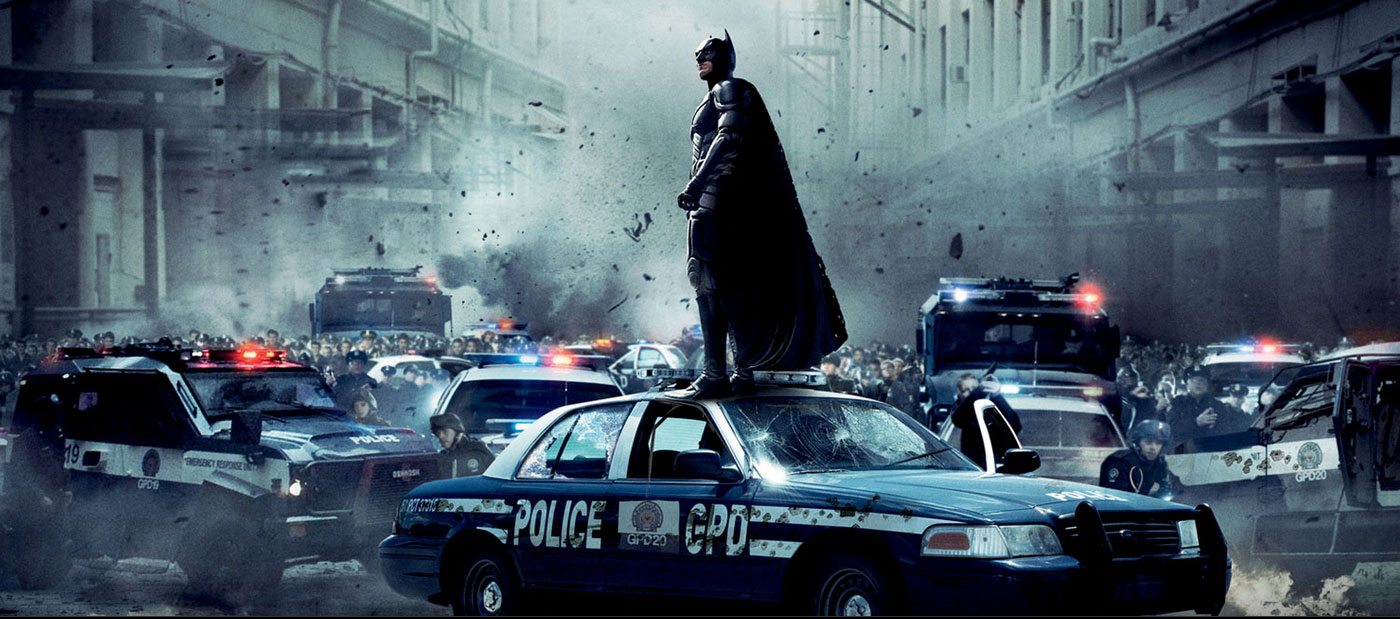
The Dark Knight Rises (2012)


The Dark Knight posed a major shift for Christopher Nolan. Not only did it challenge him as a filmmaker, but it proved the challenge to be worth it. Grossing $997 million in its initial theatrical run, and crossing $1 billion with its Oscar-season re-release, The Dark Knight solidified Nolan as one of Warner’s biggest directors of all time. The success of The Dark Knight would enable Nolan to complete Inception before returning to Gotham city once again. Like The Dark Knight, Inception became a phenomenon and furthered Nolan’s popularity as a director with American and worldwide audiences. So when it was unveiled that Nolan was returning to helm the finale in the trilogy, The Dark Knight Rises, the hype was unforeseen. In the past 2 years, Harry Potter had concluded with The Deathly Hallows Part 2, and The Avengers had just opened in cinemas, paying off the fantasy of every comic book fan. Everything pointed to The Dark Knight Rises being the best film of all time. And so it shocked the world when it wasn’t everything people wanted it to be. 

Let me be frank; as someone who watched these movies for the first time in 2017, I think that Rises is a misjudged film. It’s not what you’d expect in 2012 for a Batman film. It’s not the same as The Dark Knight. And for so many, it’s dismissed because of Heath Ledger’s death. But for me, The Dark Knight Rises doesn’t just stand on its own merits. It excels at telling a finale and needs no excuse. And it’s all thanks to the care Nolan puts into his films, and the work of his crew.   

As with his prior two Batman films, Nolan would use the same core team for the design of Gotham City and the Caped Crusader. Building off the promise of Wayne Manor being rebuilt, the Batcave was once again created on a soundstage, flooded, and filled with operational bridges and raising platforms. The Dark Knight started a trend for Christopher Nolan, in making practical sets the cornerstone of his world. Nolan’s thesis was that there isn’t anything as cool as knowing that the events in the movie actually happened. And it’s present throughout the entirety of The Dark Knight Rises. Even the computer-generated effects are still composed of real things. Even Batman’s flying vehicle, the Bat, was actually designed by Nathan Crowley to be as tangible as The Tumbler. Although it couldn’t fly, it could be lifted by machines that would be removed in post-production so that The Bat could fly. 

That dedication and care went into every aspect of the film’s visual design. And that isn’t to mention the actual set pieces in the film. The Dark Knight Rises has some of the coolest stunts in cinema history, Whether its the opening plane heist, or the stadium attack, Nolan’s blend of visual and practical effects is entrancing. And thanks to the make-up and costume teams, we are able to believe this Gotham is 8 years removed from Harvey Dent. The returning characters of Jim Gordon, Lucious Fox, Bruce Wayne, and Alfred Pennyworth all feel, and look, aged and tired. Even new characters, like Selina Kyle, Blake, and police sergeant Folly, are still worn down by a city that hasn’t had real change.

And the cast members bringing the residents of Gotham to life are working overtime. Michael Caine’s emotional performance in The Dark Knight Rises solidifies him as the greatest live action Alfred. The words that aren’t said are displayed on his face in every scene. And it works in tandem with Bale’s performance to show just how far Bruce has fallen since The Dark Knight. If Bale’s physicality was a defining feature for the character in the earlier films, then here, it’s the removal of that same physicality. Bale has to sell us on the idea that Bruce hasn’t been moving on, and his body language places that idea front and centre. It provides a visual reference for the character arc of the film, which is absolutely wonderful. Tom Hardy’s performance as Bane is gripping, thanks to his *delicious* line delivery and phenomenal body language. Tom Hardy’s eyes are working overtime, due to the mask, and it all works perfectly. Anne Hathaway, Joseph Gordon-Levitt, and Gary Oldman all give fantastic performances here as well, creating the emotional anchors for the audience within Gotham city.  

All of this once again pales compared to the story at the center of The Dark Knight Rises. While I love The Dark Knight, due to the structure and technique on display, it has nothing on my love for The Dark Knight Rises’ story. It’s a finale for the Caped Crusader, the first we’ve ever seen on film. And it’s a film that gathers all the previous themes of the trilogy and roots it all in grief and moving forward. Bruce Wayne has lost near everyone once again, and through these 165 minutes, we watch as he lets go of Batman. For each installment of this trilogy, Nolan only officially signed on after developing a story outline. And while the films are rooted in the political landscape of the late 2000s, the stories have all been focused on Bruce Wayne, first and foremost. Once again, the Nolan brothers would team up to write the screenplay for the film. 

It’s fascinating to me how many people dismiss The Dark Knight Rises story, because of some minor third act plot twists. While some sequences haven’t aged the best, there is still more of a beating heart behind The Dark Knight Rises than with most other superhero films released today. It’s a film about the soul of Batman, what it means to be incorruptible and the good Batman inspires. It’s a film that enables Bruce to persevere, to make right the sins of the past by saving the city one last time. It’s a redemption story for a character that lost his one connection to the living world, and lost his cowl to a city without the mob. Like The Dark Knight, it uses present day events to anchor the story in a world like ours. There’s an occupy Gotham movement throughout the film, and Bane utilizes the economic discrepancies between the working class and the elite to make good on the promise Ra’s Al Ghuul made in Batman Begins. Unlike so many disconnected trilogies, it makes a point of building off the previous films thematically to unify the entire trilogy together. And while it does all that heavy emotional work, the film also gets to be a lot of fun for the audience. It’s a film in which Bruce confronts his trauma and grief and is forced to hang up the cowl. It’s a film full of soul, and one that is worth just as much as the others in this trilogy. 


How Nolan redefined what the Comic Book Genre could be


In the time since Batman Begins, comic book films have become the dominating film genre. The Marvel Cinematic Universe launched in 2008 alongside The Dark Knight and was more tonally in line with Nolan’s trilogy than the other early 2000s superhero media. The storytelling moved away from the camp that dominated Raimi’s Spiderman trilogy, and towards the pseudo-realism Nolan first brought to the screen. And yet, 14 years later, Marvel still hasn’t come close to creating a trilogy as well as Nolan did; because while Marvel looks at the people behind the mask, Nolan looked at the body and soul of the mask. Gotham may always need a Batman, but it was never tied to Bruce Wayne. Gotham needed someone to push its citizens out of their apathy for one another, and only through Batman was that possible. That level of depth, created from the scripts, to the performances, to the visuals, is why I call The Dark Knight trilogy Cinema. 

This journey through the Batman brand has taken us from 1989 to 2012. There are reviews of the Snyder films already on the site, hence why I did not cover them. But functionally, as we prepare for Matt Reeves’ The Batman, I think it’s important to remember how we got here. Each film has brought its own eccentricities to the franchise. Burton defined the atmosphere of Gotham; Schumacher put Bruce Wayne’s relationships at the core; Snyder took Batman as far into apathy as possible and had him confront that; but Nolan looked a little deeper, into who Batman is and why we need him. The Dark Knight Trilogy is fundamentally about the soul of Bruce Wayne: a man trapped in the past trying to fix a world that’s scarred him for life. Each film retains it’s comic book identity while embracing the tropes of other genres. And all those elements combine together to create one of the best trilogies of all time, and the best superhero trilogy put to screen. 

 

Chasing the Gold: 2022 SAG Winners and Major Oscar News – Episode 46

On Episode 46 of Chasing the Gold, Ryan is joined by Dan Bayer to discuss the 2022 Oscar nominations!

SAG Awards for 2022 were handed out and possibly shock up the Oscar race as well as cemented some categories as well. But before Ryan and Dan could get into all of that, the Academy broke some upsetting news that the two have strong opinions over. If you are looking for your Award Season fix, this is the right episode.

On that note, have fun with this week’s episode, and let us know what you think in the comment section below. Thanks for listening!

– Music
The Return of the Eagle – Atli Örvarsson

We try to make this the best movie podcast we possibly can and we hope you enjoy them. Subscribe today on iTunes, Spotify, or Stitcher, and please leave us a review on iTunes. You can also find us on Soundcloud, PlayerFM, and TuneIn Radio as well. We really appreciate all your support of the InSession Film Podcast.

Subscribe to our Podcasts RSS
Subscribe to our Podcasts on iTunes
Listen on Spotify
Listen on Stitcher
Chasing the Gold: 2022 SAG Winners and Major Oscar News – Episode 46

[divider]

Mobile App

To hear this Extra Film episode and everything else we do, download our apps on the Amazon Market for Android and the Podcast Box app on IOS devices. The mobile app covers all of our main shows, bonus podcast’s and everything else relating to the InSession Film Podcast. Thanks for your wonderful support and listening to our show. It means the world to us!

[divider]

Help Support The InSession Film Podcast

If you want to help support us, we would greatly appreciate it! For more info, CLICK HERE.

Movie Review: ‘Huda’s Salon’ is a Tense Thriller That Highlights the Vices of the Patriarchy


Director: Hany Abu-Assad.

Writer: Hany Abu-Assad.

Stars: Maisa Abd Elhadi, Ali Suliman, Manal Awad, Samer Bisharat.

Synopsis: Reem, a young mother married to a jealous man, goes to Huda’s salon in Bethlehem. This ordinary visit turns sour when Huda, after having put Reem in a shameful situation, extorts her to have her work for the secret service of the occupiers, and thus betray her people.


“It’s easier to occupy a society that is already repressing itself.” This phrase, while applicable to several nations around the world, has a special reverberation in the vision of Palestinian filmmaker Hany Abu-Assad and his latest film, Huda’s Salon. While the endless injustices that Palestinians continue to face are known yet continuously ignored, this movie merges this fact with the role of women as mothers, wives, and human beings within this society. In this regard, the story dares to ask: would things be different if we didn’t live in such a misogynist culture? Could we help each other more if we treated women better and improved the foundations of our family bonds?

Huda’s Salon, based on true events, starts with a mundane activity: Reem (Maisa Abd Elhadi) goes to a salon to get a haircut in the city of Bethlehem, in the West Bank. Huda (Manal Awad), the establishment’s owner, is friendly and understanding of Reem’s situation. She just got married and she is already tired of her jealous husband. Nonetheless, this mundane activity soon becomes a nightmare when Huda drugs her, strips her and takes compromising pictures of the young unconscious mother with an anonymous man. As it turns out, Huda works as an agent and recruiter in favor of the occupiers, and now she wants Reem to be an informant. The pictures are her protection guarantee.

Hany Abu-Assad’s most celebrated films – Paradise Now (2005) and Omar (2013) – are about the Israeli occupation and the way Palestinians face this reality. While Huda’s Salon is undoubtedly about the same issue, it also focuses on the way women are marked by both the occupation and the rules and norms of their Palestinian society. It becomes undeniable that the patriarchy makes them vulnerable and lonely, easy prey for attentive eyes and in need of desperate solutions. Huda, a divorced woman who hasn’t seen her children in years, knows this, taking advantage of the same system that made her a pariah. She has experienced the feeble position of women, and this becomes her weapon.

The film has mere minutes of superficial friendliness to transform into a stressful story of survival, guilt, and fear. Just as Reem deals with her trauma and the uncertainty of her future with this unwanted tag, Huda is caught and kidnapped by the Palestinian resistance. While Huda is incessantly questioned by Hasan (Ali Suliman) to give up the name of the women in her pictures, Reem starts to spiral out of control, alone and uncertain of what to do. Her husband quickly becomes another threat when he proves to be untrustworthy.

Half espionage action film and half confessional drama, Huda’s Salon excels at presenting complex and difficult to judge characters. Huda is brave, pragmatic, and aware of her sins. She is the product of her own decisions and the unfair punishments set by a drastically intolerant society. Soon, it is easy to understand her circumstances, while distinguishing her faults. It is hard to condemn her when she is also a victim of the system. Hasan, a leader of the Resistance, offers another point of view. He represents the traditional assumptions of the Palestinian society, but he slowly opens his mind to a different perspective through Huda’s argumentations. The conversations between them offer muddy arguments and unfulfilling conclusions that mirror reality. Reem is an unfortunate victim whose only fault is to be too trusting, too transparent.

Alternating the story of Huda inside a cave while she is questioned and the story of Reem as she walks restlessly through the streets of Bethlehem looking for a way out, Huda’s Salon contains both a celebration and a condemnation of Palestine. There is a certain honor with which the Resistance conducts itself, enlivened by the heroic and attentive Hasan. However, Reem’s psychological turmoil is enough of a commentary to provoke reflections about her vulnerability and emotional loneliness.

This story could have taken place in any patriarchal society. Nevertheless, the fact that it is set in the Occupied Territories offers an additional layer of horror and frustration. Even though the ending is hurried and unconvincing, the previous 90 minutes evoke realistic stress that prove that Huda’s Salon offers important commentaries on both the patriarchy and the Israeli occupation of the Palestinian territory.


Grade: B                  


Movie Review (Glasgow Film Festival): ‘Yuni’ is a Beautiful and Tragic Coming of Age Story

For her third feature – and arguably best yet – Yuni, Indonesian director Kamila Andini utilizes the late Sapardi Djoko Damono’s poem “The Rain in June” as a plot function. In fact, Andini goes as far as to dedicate the movie to Damono and has claimed his work as the inspiration for Yuni. It feels apt, as Damono’s work largely questioned the nature of human existence, the why of what we do and who we are. 

This applies fairly neatly to Yuni (Arawinda Kirana), a teenage Indonesian girl who simply wants to live her life without the responsibilities of adulthood, of which she is on the cusp. Content with spending her time engrossed in her phone, swimming with her friends, or crushing on her handsome school teacher, Yuni has little patience for the traditional expectations of the society around her. When a series of marriage proposals come in – the first from a man she has never met, the second from a man over twice her age who knew her when she was a small child, and who already has one wife – Yuni must face up to the realities of the patriarchal society she lives in, one which will pay handsomely for a young virgin girl without giving much agency to the girl herself. 

Yet Yuni dreams of a better life. She is clever, and is encouraged by teachers to consider studying at University, which she has the grades for and could realistically achieve, provided she does not get married. In a culture mired in the superstition that to reject more than two marriage proposals is bad luck, however, Yuni must somehow resolve the state of her situation and discover a way forward for herself, a way to live the life she wants, before it’s too late.

As with her previous movie The Seen and Unseen, Andini focuses predominantly on the lives of the young in Indonesia and the turmoil they must deal with in the face of their traditional culture. Yuni, however, is more grounded in reality than The Seen and Unseen. It tackles weighty topics about cultural shifts and conversations which need to happen – in one scene it is announced Yuni’s school are considering “purity examinations” to test whether the female students are still virgins – while still centring around one girl’s specific experience. There is a satisfying balance between Yuni’s inner life and the world around her, more of which in a moment. Kirana excels as the eponymous and wayward Yuni. She floats from scene to scene, engages with the world in the kind of disconnected half-gaze which is typical of teenage girls. Yuni is heartbreakingly naive at times, especially when faced with external pressures she has little understanding of, and Kirana conveys the innocence of her character so effectively that one feels a need to protect her from the vulture-like predations of the men who encircle her. 

The contrast between Yuni’s inner life and her external world are balanced wonderfully by the cinematography of Gay Hian Teoh. Obsessed with the color purple, to the point of kleptomania, Yuni’s acts of defiance against the bland, beige world around her take the form of a streak of purple in her hair, the phone case she is so wedded to, and the mischievous rebellions which allow her to fully come into herself. A wonderful moment in which she has her hair and make-up done is tinged in purple throughout, and a later photoshoot is the same. The effect is simple yet powerful: Yuni imbues her drab world with color and uniqueness. 

Yuni is filmed with a certain naturalism that recalls an Eastern flavored version of Greta Gerwig’s Ladybird. Some of the movie’s best scenes feature nothing more complicated than Yuni hanging out with her best friends Sarah and Suci, lying on the grass in the stifling heat and laughing about whether girls can have orgasms. To the movie’s credit, these scenes feel like looking through a window into a genuine moment, and all of the actors bring an easy, laid-back charm to their interactions, which feels completely authentic.

It is admirable that Andini never points fingers or creates villains for her protagonists. Too easily could she have made Yuni’s suitors devious men, or cast her grandmother as a heartless woman content to sell Yuni to the highest bidder. Instead, all of these characters, and indeed their actions, speak to the reality of the life and culture of Indonesians. These are not black and white issues, but rather deeply grey and complicated, which Andini teases out expertly over the runtime.

Yuni is a beautiful, spiritual, and genuinely authentic experience of a movie which shines a light on the difficulties of coming of age in a society which tends to snuff out individualism and uniqueness. Andini continues her streak of passionate and depthful movies. One wonders what she’ll do next.


Grade – A

Movie Review: ‘The Batman” Is A Tale of Horror-Noir


Director: Matt Reeves

Writers: Matt Reeves and Peter Craig

Stars: Robert Pattinson, Zoe Kravitz, Paul Dano

Synopsis: When the Riddler, a sadistic serial killer, begins murdering key political figures in Gotham, Batman is forced to investigate the city’s hidden corruption and question his family’s involvement.


I want to be as frank as possible, this is not an afterglow of my screening last night but my whole hearted response of what I experienced during the 3 hour run time of the movie. In fact, I specifically waited to write this review until the morning after so I wouldn’t be too biased The Batman is THE Batman movie that we have deserved all along, it is hands down  the THE best of the Batman movies thus far and it is THE film that Marvel wishes it could make. This is THE type of comic book movie that should be in Oscars conversations as it’s more than a comic book movie, it’s a love letter to the source material and a genre of film long lost in today’s era of movie making.

On a personal level, I have been excited to see this movie since it was announced, anything to get away from the absolute travesty that was the Snyder Batman films and I was in, and like the many casting announcements when it has come to Batman before, of course, the internet had things to say about the casting of literally every person in this film. From Robert Pattinson, to Zoe Kravitz, to Paul Dano (which by the way if you ever took the time in your life to see There Will Be Blood or 12 Years a Slave, you would know first hand that Dano was going to be amazing as Riddler) to Colin Farrell as Penguin once the makeup shots came out. Guess what, once again the professionals know what they’re doing because everyone was pitch perfect in the roles, but allow me to explain why they work so much and why it was Matt Reeves that the DC world needed so badly.

This movie is not a superhero movie, it’s not flashy, it doesn’t have a mythical being trying to destroy humanity or suck the life out of a cosmic deity, none of that. What it does have is actual humanity, the good, the bad, and the evil. This is a love letter to a forgotten genre of film, the noir, a genre that ruled the 1940s with titles like Double Indemnity, Suspicion, Gaslight, and Mildred Pierce, to name a few. There’s a real mystery to be solved here, a whodunnit of killers. This route makes the most sense of any Batman movie that’s come before it as the first appearance of Batman came out in May of 1939 in Detective Comics No. 27,  was all about him being a Sherlock Holmes-esque character getting to the bottom of the crime. This iteration from Matt Reeves is not just a noir film but a horror film.. This is without a doubt a horror film, which is also a first for this genre. 

This film is shot with such an intention to scare and frighten that I’m actually surprised it didn’t receive an “R” rating. The tension and jump scares that Reeves gives us in this film should cause some modern day horror directors to take notes, as the whole bleak and dark atmosphere is what a studio like Blumhouse dreams of putting to the film for every one of their movies. I was genuinely astounded by the horror route this took that it made me crave more comic book adaptations in a similar vein.

Another reason this movie works so well is the absolute orgasmic score by Michael Giacchino. There isn’t one moment in this film that his score doesn’t work. It sets the tone and the mood for each scene like a perfectly fit shoe that makes you wonder how it works so well. It’s definitely one of those scores that you rush home to listen to again as the movie replays in your mind.

My only gripe about the film is the underwritten and underused Selina Kyle. As literally the only female character in this movie it’s a bit frustrating to see such an iconic character be sidelined to a few kicks and no backbone. She’s more of a pawn to be used for the story than her own solidified character. Zoe Kravitz, on the other hand. killed it for what she was given to do and really makes me want to see her back in this universe. Paul Dano was quite good as Riddler and is genuinely terrifying, definitely making his mark on this character for the rest of time. Robert Pattinson I will say right now, is THE best Batman to date, the moody tale of a man not knowing his way around life, not some crazy billionaire playboy, no, that wouldn’t work here at all. The biggest standout for me however, was Colin Farrell who absolutely blew me away as Penguin. Not only did I have a full on attraction to him in makeup (and of course in general) but his take on Penguin is cemented now as the best iteration we have received thus far, not only comedic but genuinely interesting, with makeup that makes him look like DeNiro in Raging Bull.

In the end, this movie is fantastic and a ride I can’t wait to get on again and again. This is not a superhero movie, this is a horror-noir that has a superhero in it. This is what we have deserved this entire time, and this is the world that if DC were smart would build off of for the future of DCU.

Grade: A

Poll: What is Matt Reeves’s best film?

The history of director Matt Reeves is pretty wild. His early credits include writing and directing a mid-90’s romantic comedy with David Schwimmer and Gwynth Paltrow (The Pallbearer), co-creating the hit show Felicity with J.J. Abrams, and co-writing films such as James Gray’s The Yards and, of all things, Under Siege 2: Dark Territory. Naturally, the only logical next step would be a creature feature such as Cloverfield. Since then, Matt Reeves has garnered critical acclaim for his moody and broody sensibilities; he is someone who has been able to somehow work within the Hollywood system while still being able to churn out films that feel solely his. I’m guessing many of his contemporaries are quite jealous.

So with such a diverse (but moody) body of work, what do you think is Matt Reeves’s best film?


Jump Cut To The Director’s Chair: Editors Who Became Great Directors

In the past, to become a filmmaker, one had to get hired in the studio system. Writers, costume designers, assistant directors, production designers, and even actors were able to parlay their resume into calling, “Action!” Film school directors overtook them and make up a lot of the directing body today, although numerous directors didn’t go through film school and it is so much easier for newbies to self-finance and direct their own projects. These are figures who don’t come from the studio pipeline or from film school. It’s a long way from where some of the best filmmakers started, from the ground up. The five names below got the directing gig through the studio pipeline working in another part of the film process: film editing. Arguably the most important job in an entire movie aside from directing and writing, the editor has the ultimate task of assembling a worthy picture, making them prime candidates as future directors.

Hal Ashby

Ashby was one of the best-known directors of the 1970s with multiple critically-acclaimed films including Harold & Maude, Shampoo, Bound for Glory, Coming Home, and Being There. Having moved from Utah disillusioned with his Mormon upbringing and a high school dropout, Ashby got a job in film editing, assisting for major Hollywood studios in the fifties with directors William Wyler and George Stevens before Norman Jewison hired him to be his lead editor in The Cincinnati Kid and In The Heat Of The Night which earned Ashby an Oscar. Jewison then helped Ashby to get his first directing job with 1970s The Landlord, joining New Hollywood’s list of breakouts.


Charles Crichton

In a twelve year span, Crichton edited over fifty films, most famously the royal historical drama The Private Life of Henry VIII, the sci-fi classic Things To Come, and the Technicolor fantasy The Thief Of Bagdad, all produced by Alexander Korda. Then, in 1944, Crichton got his big break with the war film For Those In Peril. He had a solid career through the sixties with hits including The Lavender Hill Mob and Hunted before his career floundered to where he was doing corporate videos. When he became friends with John Cleese of Monty Python fame, the two worked on A Fish Called Wanda which won an Oscar for Kevin Kline’s crazy performance and earned Crichton a Best Director nomination, letting him retire on a high.  

John Glen

Glen is widely known for directing all five Bond films made in the 1980s featuring Roger Moore and Timothy Dalton in the lead role, from For Your Eyes Only to License To Kill. Prior to that, he was the main editor of the series starting with On Her Majesty’s Secret Service to Moonraker, while also serving as a second unit director for a few non-Bond films including The Italian Job and Superman (1978). In directing the Bond features, Glen put his trademark with an animal motif that comes as a scare jump to Bond while getting close to his target, using his expertise in his past editing to add tension and a brief relief in Bond’s mission to get his nemesis. 

David Lean

Lean is widely known for his Academy Award-winning epics that are considered among the greatest films of all-time. Both The Bridge On The River Kwai and Lawrence of Arabia earned him Best Director Oscars and had a major influence on future directors including Steven Spielberg, Martin Scorsese, Spike Lee, George Lucas, and Christopher Nolan. Prior to directing his debut feature, In Which We Serve (1942), the teenage Lean was hired by Gaumont Pictures to work in various jobs before he rose to editing in newsreels and later for major features, including Pygmalion (1938) and 49th Parallel (1941). However, Lean would go back to editing his own work with his last picture, A Passage To India, which earned him another Oscar nomination.

Robert Wise 

With four Oscars to his name, Robert Wise is one of the most successful directors thanks to films like The Day The Earth Stood Still, I Want To Live!, West Side Story, and The Sound of Music. While the last two films that gave him those Oscars are musicals, Wise touched on numerous genres including horror, war, and sci-fi; he also directed the first Star Trek picture featuring the original cast of the TV show. Prior to his directing debut in 1944, when Wise was asked to take over The Curse Of The Cat People, he was an Oscar-nominated editor having worked on Citizen Kane. Wise also edited The Magnificent Ambersons, The Hunchback of Notre Dame (1939), and, as a sound effects editor, Wise worked on the musical Top Hat (with Fred Astaire and Ginger Rogers) and the John Ford-directed drama The Informer.


Follow me on Twitter: @brian_cine (Cine-A-Man)

Podcast: The Sugarland Express / Studio 666 – Episode 471

This week’s episode is brought to you by the InSession Film Store. Get your ISF gear today!

This week on the InSession Film Podcast, we continue our Steven Spielberg Movie Series with his 1974 film The Sugarland Express and Ryan McQuade fills in for JD as we review the Foo Fighters horror-comedy Studio 666!

This week’s episode ended up being a fun, twisty journey. After toying with a few ideas on last week’s podcast, we ended up letting our listener’s decide which film we were going to review on this show, and it ended up being a little surprising. We expected Marry Me or The Cursed to win, however it ended up being Studio 666 in an interesting little turn. To make it even more contorted, JD was not able to see Studio 666 so we had to once again call upon the great Ryan McQuade to fill in for that discussion. So, we flipped the script slightly and started things off with our Spielberg review and did the new movie in the back half of the show.

On that note, check out this week’s show and let us know what you think in the comment section. Thanks for listening and for supporting the InSession Film Podcast!

– Steven Spielberg Movie Series: The Sugarland Express (9:12)
Director: Steven Spielberg
Writers: Hal Barwood, Matthew Robbins
Stars: Goldie Hawn, Ben Johnson, William Atherton, Michael Sacks

– Notes / The Oscars Shenanigans (47:04)

This week for our break segment, instead of discussing any movies we’ve seen recently, we talk about the new controversies surrounding The Academy and their decision to remove the below the line categories from the live ceremony. It certainly stirred up a lot of conversation and we felt inspired to give a few brief thoughts on it as well. Hopefully they will reconsider their choices as we hope to celebrate all of the nominees in the ways they deserve.

[divider]

RELATED: Listen to Episode 456 of the InSession Film Podcast where we discussed Belfast!

[divider]

– Movie Review: Studio 666 (1:16:24)
Director: B.J. McDonnell
Writers: Jeff Buhler, Rebecca Hughes
Stars: Dave Grohl, Taylor Hawkins, Nate Mendel

Show Sponsor: First Time Watchers Podcast

– Music

The Sugarland Express – John Williams
Everlong – Foo Fighters
The Return of the Eagle – Atli Örvarsson

Subscribe to our Podcasts RSS
Subscribe to our Podcasts on iTunes
Listen on Spotify
Listen on Stitcher
InSession Film Podcast – Episode 471

[divider]

Next week on the show:

Review: The Batman
Review: After Yang

[divider]

Help Support The InSession Film Podcast

If you want to help support us, there are several ways you can help us and we’d absolutely appreciate it. Every penny goes directly back into supporting the show and we are truly honored and grateful. Thanks for your support and for listening to the InSession Film Podcast!

VISIT OUR DONATE PAGE HERE