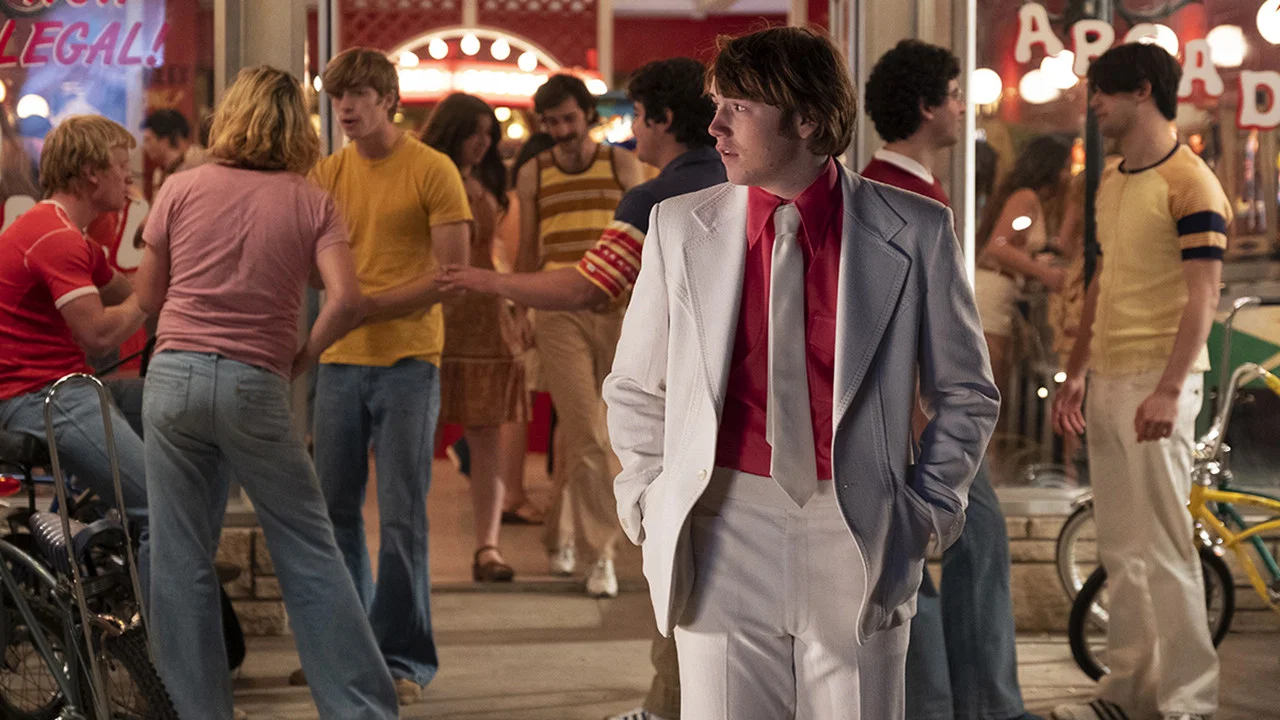
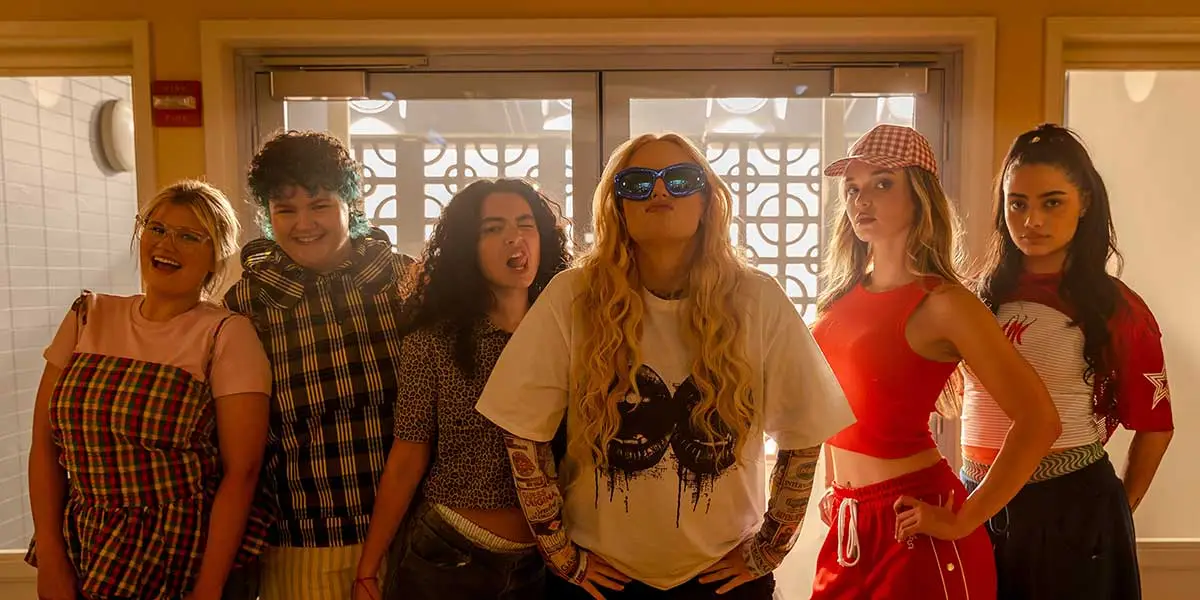
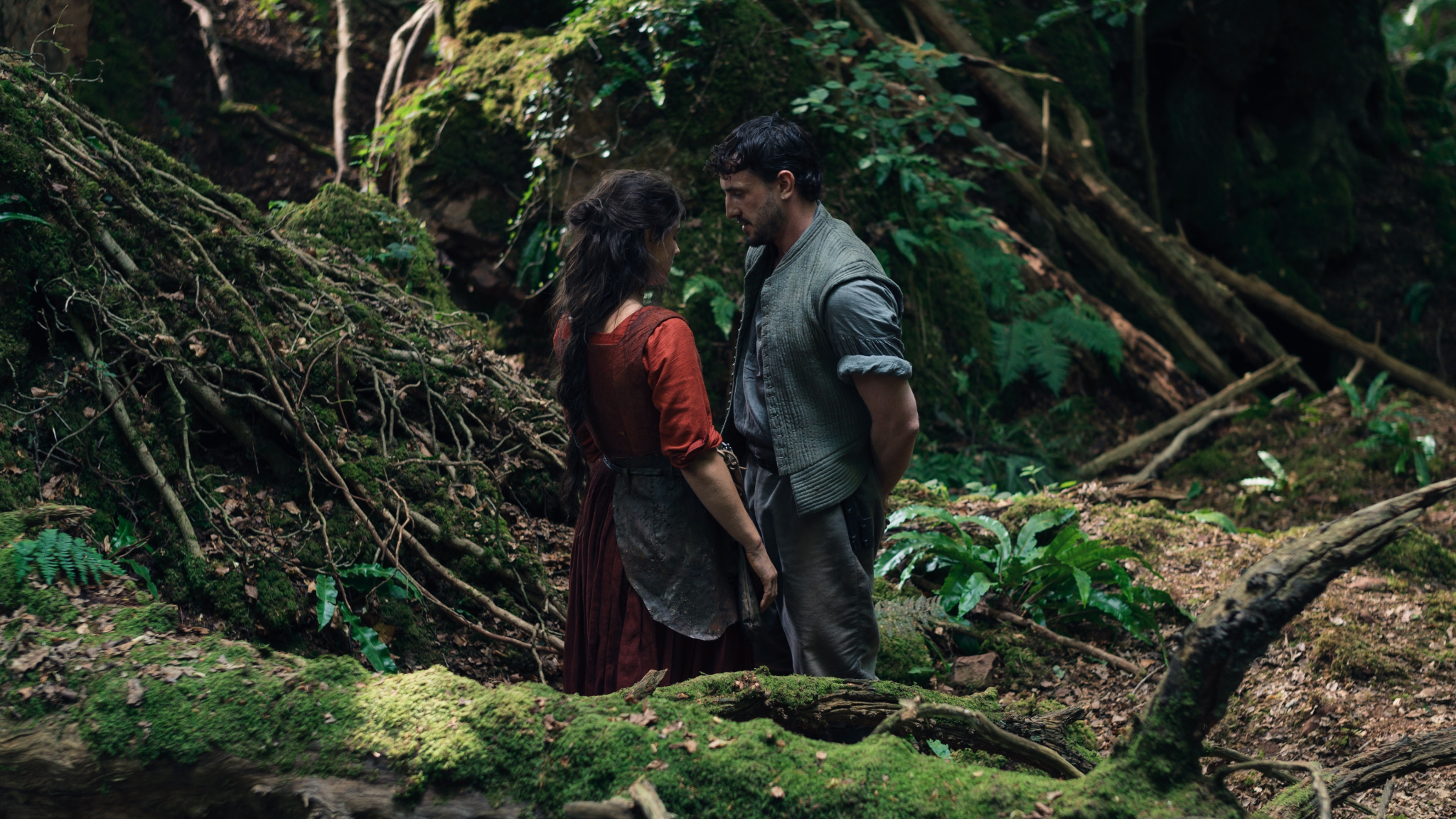
Director:Claire Scanlon Writers:Sarah Rothschild (based on the book by Ali Hazelwood) Stars: Lili Reinhart, Tom Bateman, Rachel Marsh, Jaboukie Young-White
Synopsis: After an impulsive kiss, two scientists end up in a fake relationship, testing their theories about love and each other.
The economics of modern-day movie making has noticeably shrunk the market for mainstream romantic comedies. Luckily, Claire Scanlon’s The Love Hypothesis is here to give you exactly what you want from a modern-day romcom.
For the same reason Hallmark movies keep attracting viewers, the well-worn romcom formula is a proven commodity for success. If you are looking for some genre subversion and bucking of conventions, look elsewhere. This is a mainline drip straight into the veins of those looking for exactly what you expect. Not that there is anything wrong with that. This is one of the best possible versions of a standard romantic comedy.
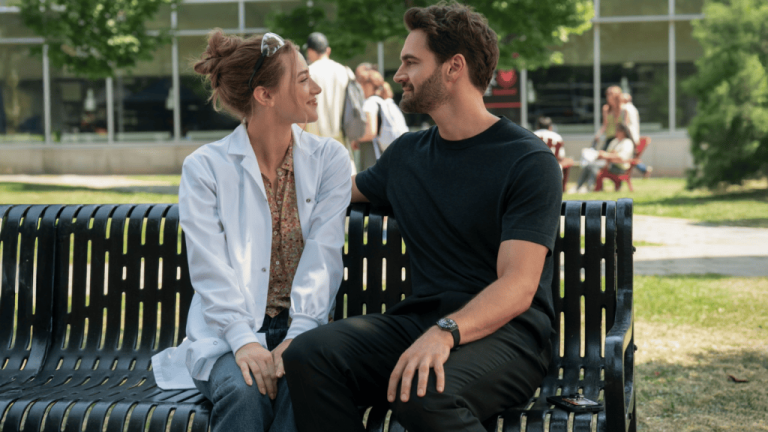
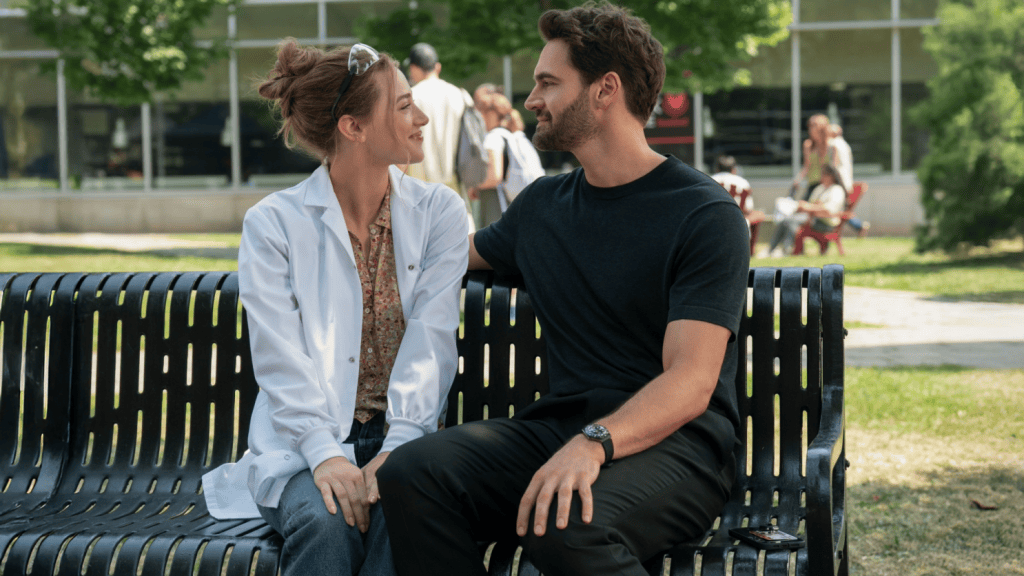
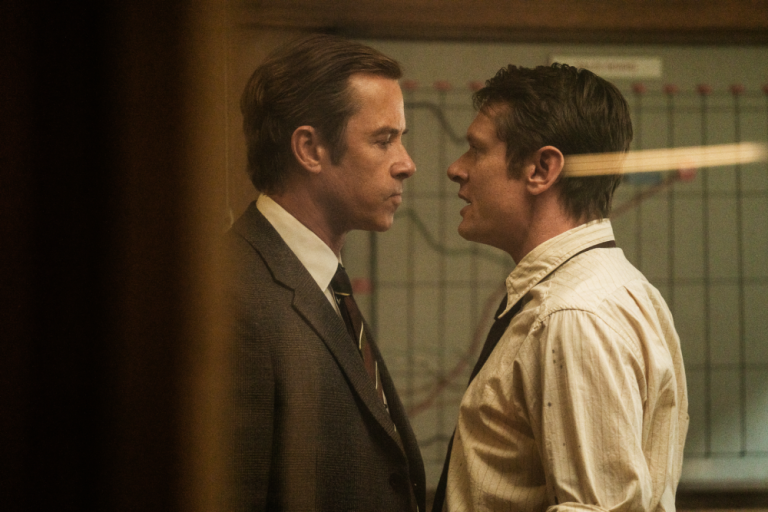
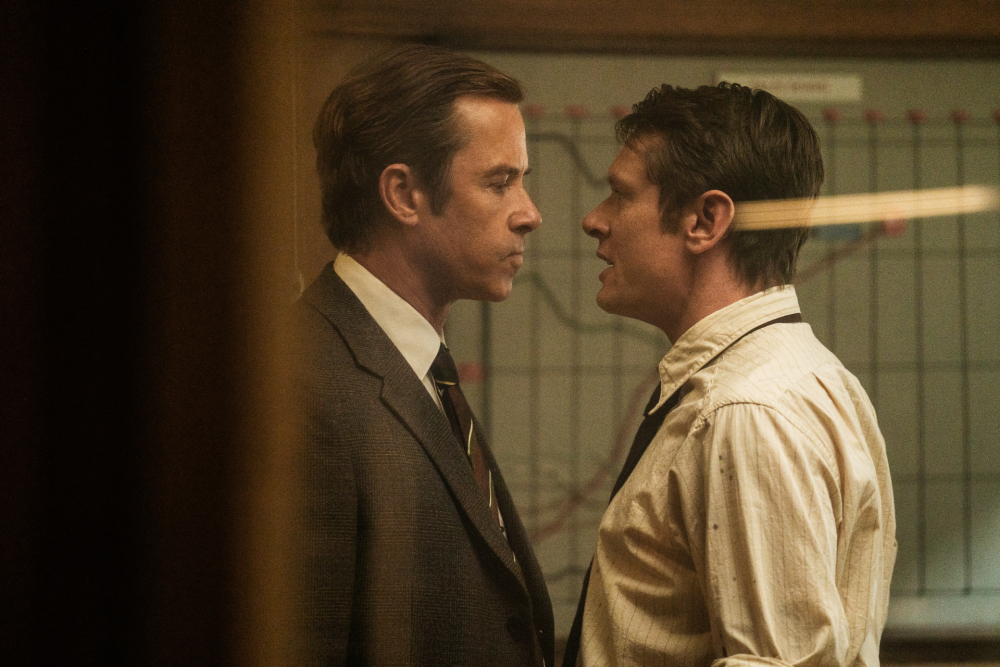
Lili Reinhart stars as Olive, a PhD student entering post-graduate work at Stanford University. Olive pines after fellow student Jeremy (Nicholas Duvernay), but she notices Jeremy is more attracted to her best friend Anh (Rachel Marsh). In an attempt to push Anh and Jeremy together, Olive recruits Dr. Adam Carlsen (Tom Bateman), nicknamed Dr. Evil for his sour disposition, to pose as her boyfriend. Adam also utilizes the fake relationship in an attempt to keep his research funding.
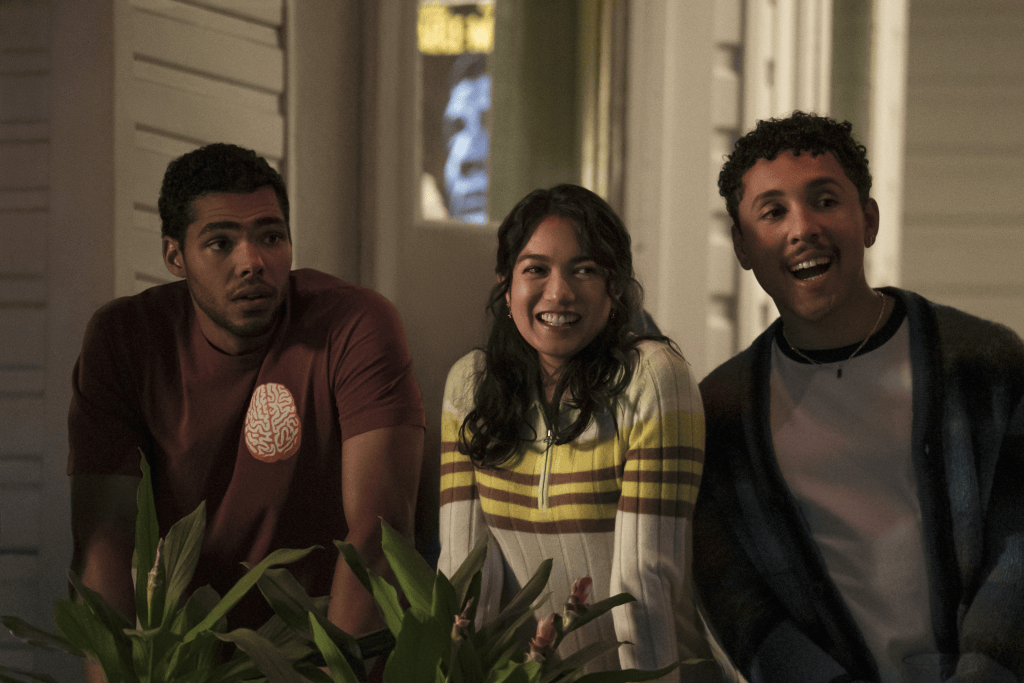
Olive and Adam spend more and more time together to keep up the ruse, while Olive attempts to loosen up Adam’s prickly attitude towards his students, including Olive’s roommate, Malcolm (Jaboukie Young-White). As their attraction grows, Olive attempts to join a prestigious research grant with Adam’s best friend Tom (Arty Froushan).
If this film follows those same romcom formulas, why would it be worth your time? Because this film has an understanding of the genre and what makes it successful. First and foremost, the female lead needs to be sweet, understanding, misunderstood, and beautiful. Olive checks all of those boxes. Secondly, the romantic interest needs to butt heads with the female lead, but ultimately succumb to her charms. That’s exactly what Adam does. Lastly, the film needs a silly reason for these two characters to come together and stay together for a prolonged period of time. The film nails all three of these facets.
As important as the romantic relationship is to the film, the surrounding friend group is just as important. This film essentially doesn’t happen without the addition of Anh as a character. Not only is she a well-rounded character of her own accord, her relationship with Olive is the driving force for all the good Olive wants to do in the film. Malcolm is equally as important, as he facilitates separate connections with both Olive and Adam. It also helps the friends group feels like actual friends.
All this being said, this is an R-rated film. After all, this is a romantic comedy…there’s going to be some sex. While not a harsh film, there is adult language and a third-act plot point that takes a sinisterly dark turn. It’s by no means out of left field, but it is a bit of a risk for a film like this to take such a serious detour. The plot point does come naturally and makes sense in the narrative, so it isn’t without merit.
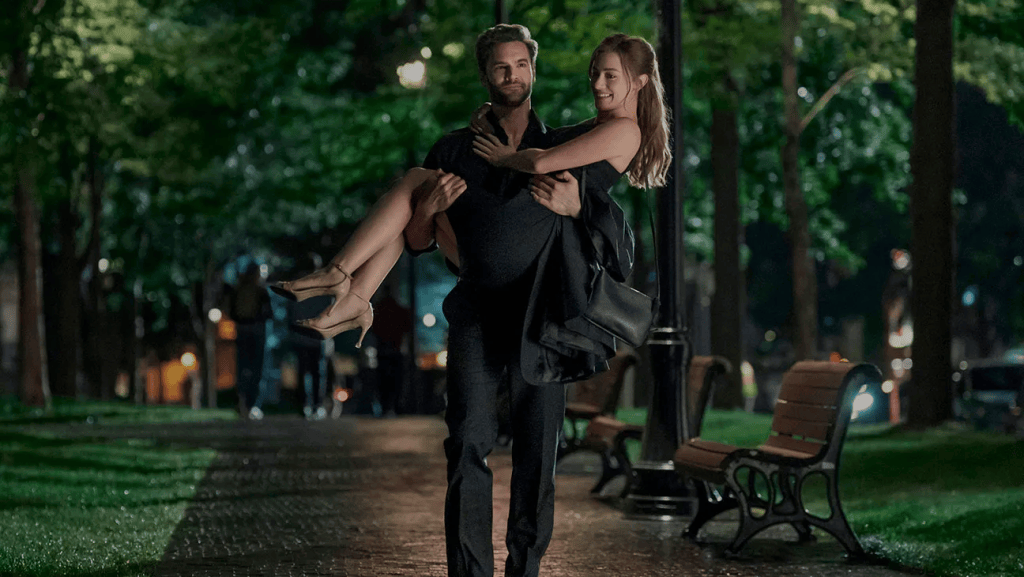
This all works because of Reinhart and Bateman. Their connection may start a bit rocky, especially with Bateman’s beginning characterization, but their chemistry grows and the film progresses. Reinhart is such a beaming light of good character and quality, it almost doesn’t matter who the other guy is as long as she is on-board with him. The actress is acutely aware of her role in this film, and doesn’t take too many wild swings to distract from the end-goal for the audience. Bateman, donning an inauthentic American accent, also doesn’t do much to deviate from the formula, for the better. They make a very handsome couple and have palpable chemistry when the film gets to that point.
Marsh is so dynamic in her role, she could be leading her own romantic comedy. While her screentime with Duverney is limited, their chemistry never feels forced. Young-White never feels like the stereotypical gay friend inserted in for laughs, though he does fit that mold on occasion. A few other actors make small impressions, but those main five are the ones worth caring about.
If you are a lover of romantic comedies, The Love Hypothesis will give you that dopamine hit you desire. This film knows exactly what it is supposed to be and it plays out precisely how its audience expects it to. It doesn’t try to reinvent the wheel, and it’s all the better for it.
The 94th Academy Awards was the first year in which we were slowly getting out of the COVID-19 pandemic. We did see some films do reasonably well at the box office, but not a ton that broke major records. Outside of Spider-Man: No Way Home, the highest grossing American film was Shang-Chi and the Legend of the Ten Rings, which made over $224 million domestically.
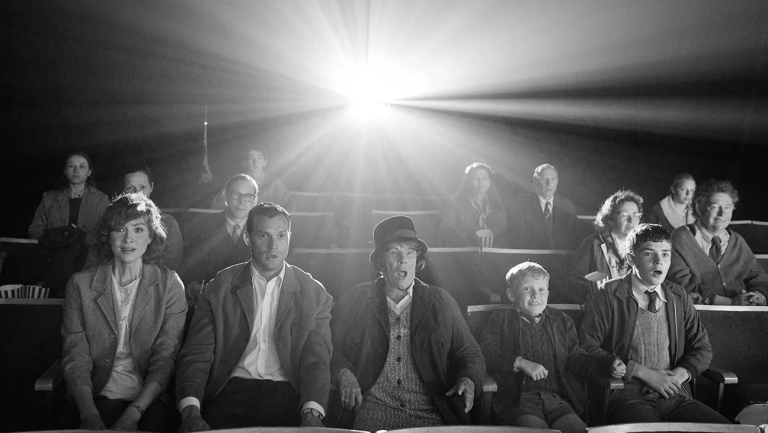
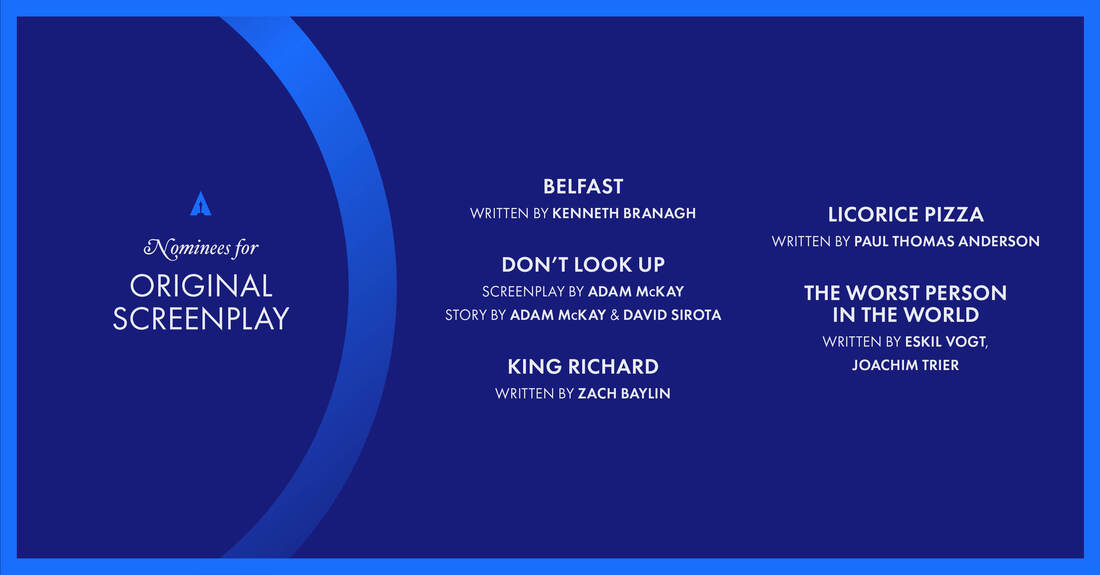
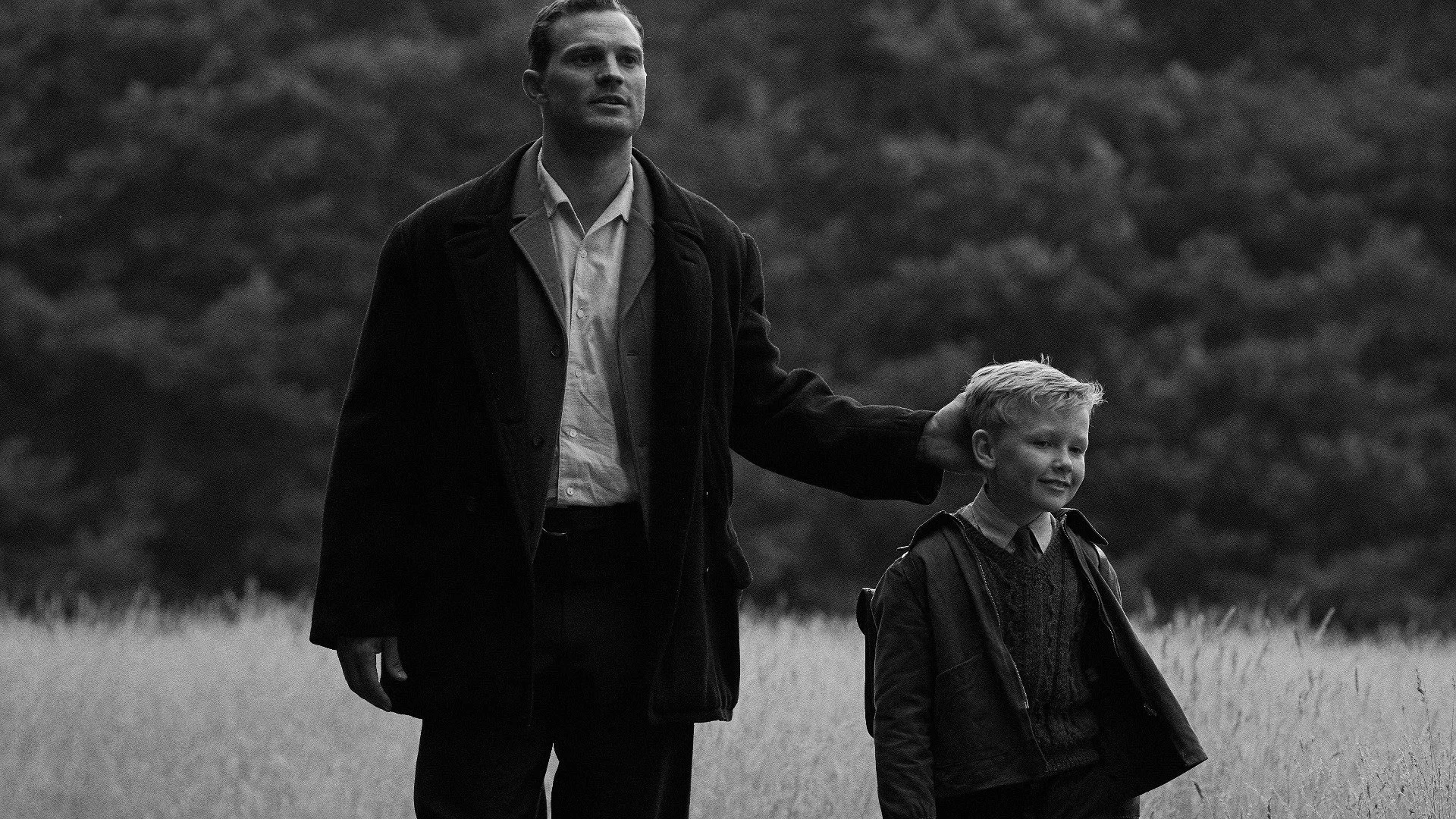
With that said, we also saw a fair amount of award contenders underperform or flat out bomb at the box office. However, one of the few films that actually did okay was Belfast. Its production budget ranged from $10-15 million and made back $49 million worldwide which was quite impressive. And while the Best Original Screenplay category had a bit of a race by the end, the prize ended up going to Kenneth Branagh for his coming-of-age drama. In this article, I want to go over the other nominees, and explore how he managed to walk away with his first Oscar.
At the time, the field was considered pretty weak in comparison to say the Parasite year, where we had strong contenders left and right. Since the pandemic prevented productions from continuing or movies being delayed, we got a much thinner year for competition. Because of that, we didn’t see a lot of strong contenders for this writing category.
If there was one major contender that almost got in, it would’ve been Aaron Sorkin’s Being the Ricardos. While the film failed to score a Best Picture and Director nod, it did net three acting nods for Lead Actor (Javier Bardem), Lead Actress (Nicole Kidman), and Supporting Actor (J.K. Simmons). Aaron’s script did get nominated at the Critics’ Choice Awards, Golden Globes, BAFTAs, and Writers Guild of America Awards, but just missed the field of five, which was considered a surprise miss.
The film that did land in that fifth spot was The Worst Person in the World, which managed to get in without getting a single major precursor nod for its screenplay. The Norwegian film premiered at the 74th Cannes Film Festival and competed for the Palme d’Or. While it didn’t win the festival’s top prize, it did win the event’s Best Actress prize for Renate Reinsve. The Worst Person in the World had done consistently well with the precursors to get a Best International Film nomination, but it wasn’t enough to get into the top categories as there were more recognizable filmmakers than Joachim Trier; it would take him until his next film, Sentimental Value, for the filmmaker to get that recognition.
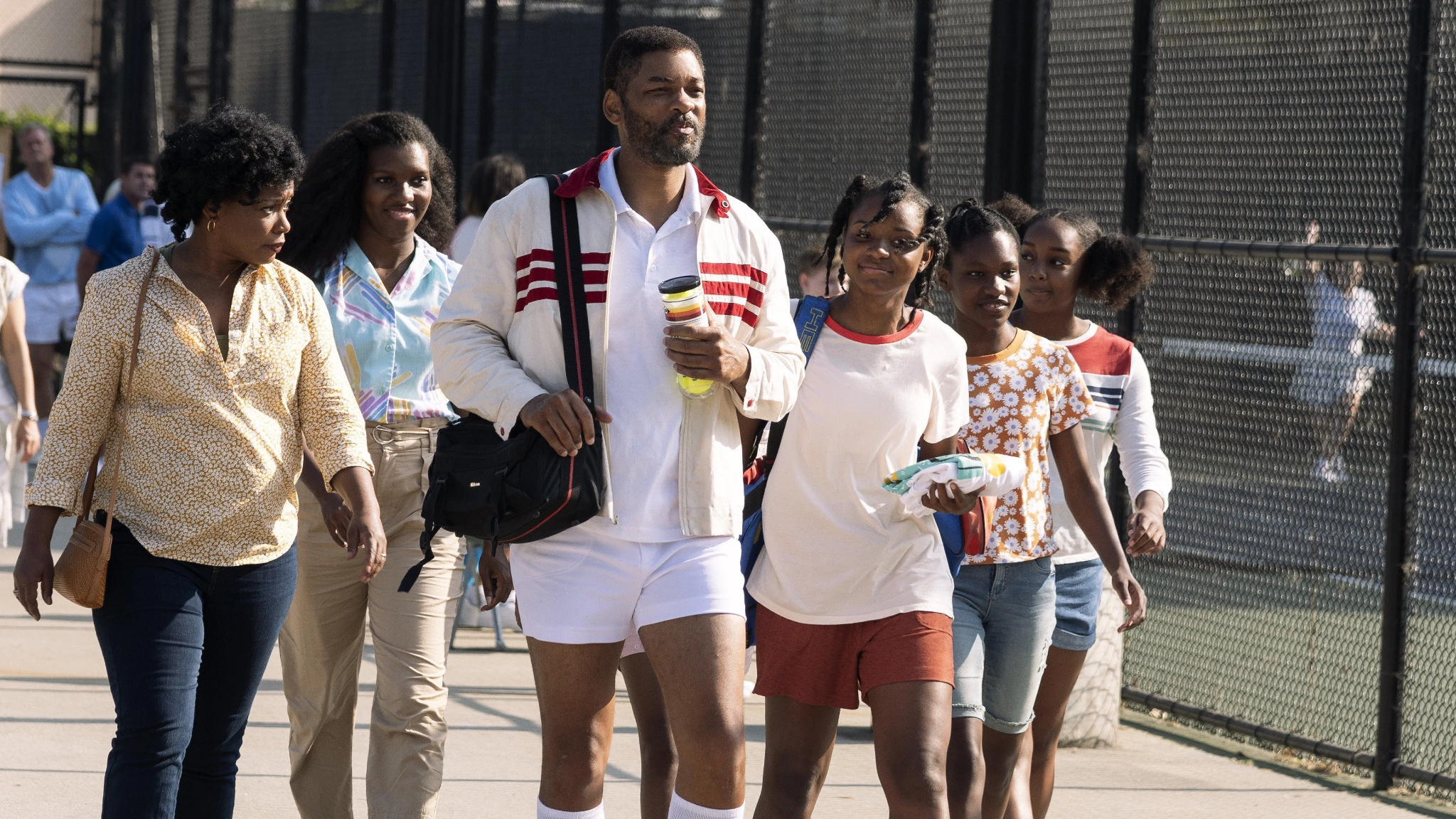
King Richard quickly became an awards-contending vehicle for Will Smith. It had been so long since he was previously nominated and this would be his time to finally come up to the plate for that big swing. While the film itself was a box-office flop, it got positive word-of-mouth from critics and audiences alike. King Richard did get nominated for six Oscars but outside of Lead Actor, the film didn’t have much of a shot at winning anything.
You could argue that Best Film Editing was on the table, as it beat out The Power of the Dog and Dune: Part One in the Best Dramatic category at the ACE Eddie Awards. But as we saw, it was a fairly fractured race, making pundits confused on what might win. If anything, its win at the editing guild was a sign of passion for the film and would be placed into Will Smith’s inevitable Oscar win.
As for Zach Baylin’s script, it does the job fairly well and pleases the broader demographic. Yet, it didn’t stand out to voters as it didn’t win at major precursors, such as BAFTA or WGA. Had Zach won at either precursor, I could’ve seen a potential path to victory. But as is, he had to settle for the nomination being the win.
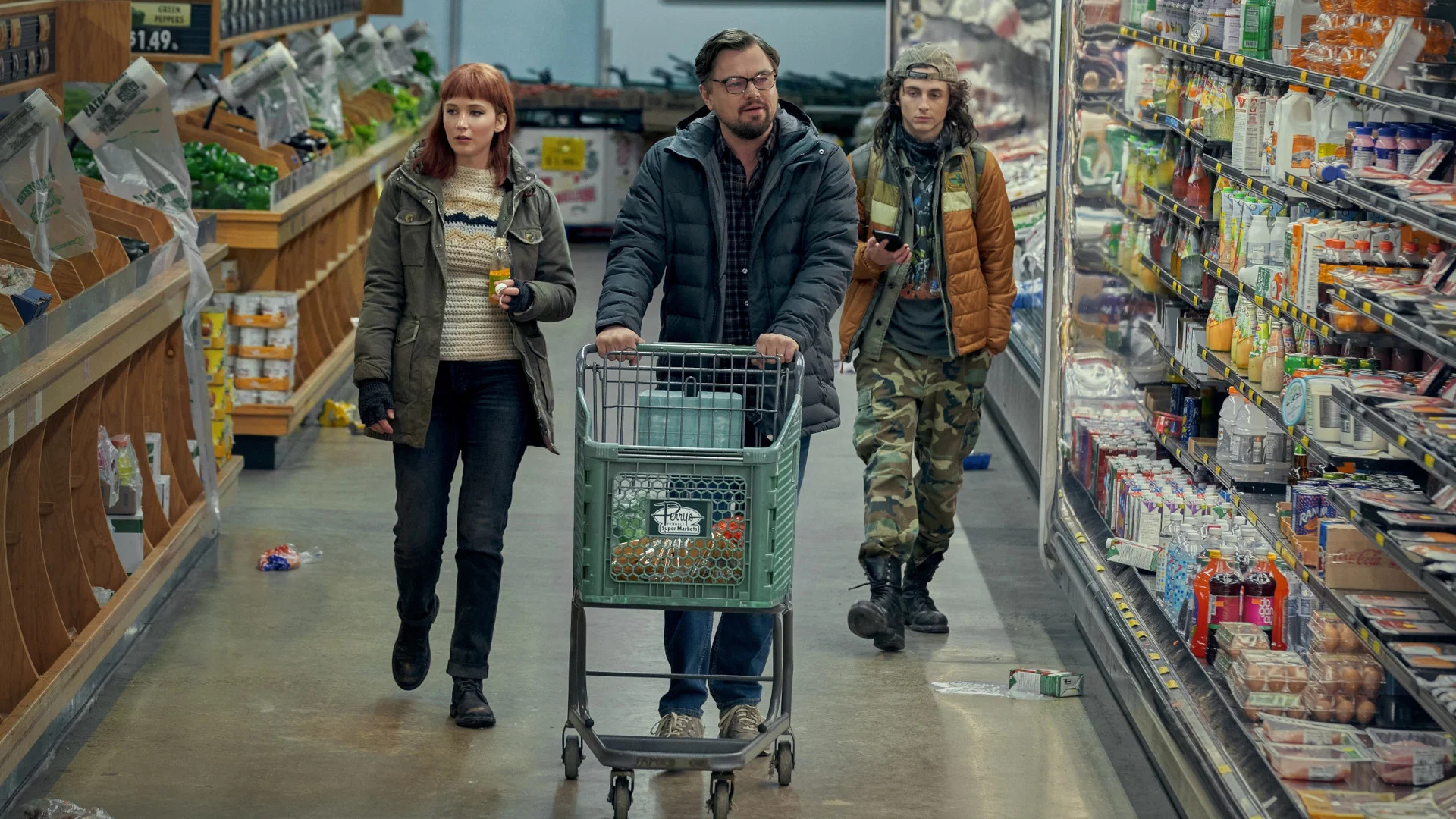
As for Don’t Look Up, this was Netflix’s other awards contender they were pushing out. Unlike The Power of the Dog, the Adam McKay-directed flick got harsh reviews from critics, scoring a 49 on Metacritic and a 56% on Rotten Tomatoes. Despite this, the film got nominated for four Academy Awards, including Best Picture, Original Screenplay, Film Editing, and Original Score. In a shocking turn of events, this managed to win at the WGA in the Best Original Screenplay category. So, how did this win the guild prize?
If you’re familiar with Adam McKay’s history on television, you’d know that he worked on Saturday Night Live. Not only that, but his co-writer, David Sirota, is a known journalist and political commentator who wrote speeches for Bernie Sanders’ 2020 presidential campaign. Add in the political satire the film is attempting to do, and we got this as our winner at the guild. If the film got more nominations (especially in the acting categories) or gained more critical acclaim, I think we could’ve seen this WGA win translate to the Oscars.
Licorice Pizza was Paul Thomas Anderson’s ninth feature film that garnered great reviews at the time. However, it bombed pretty hard at the box office, making only $33 million off a production budget of $40 million. Some pundits did think this could finally be Paul’s moment to grab a golden man for his coming-of-age comedy. However, it lost at WGA which should’ve been an easy win for the film, when it has a dialogue-heavy script and they usually do well at the awards.
Licorice Pizza did beat Don’t Look Up and Belfast at the BAFTAs. Unfortunately, if you look at the past decade of films only winning BAFTA in the writing categories, it doesn’t always translate to an Oscar win.
2020/21: The Fatherin Adapted
2018: BlacKkKlansman in Adapted
2016: Lion lost to Moonlight at Oscars in Adapted
2013: American Hustle and Philomena lost to Her and 12 Years a Slave at Oscars in Original and Adapted, respectively
2012: Silver Linings Playbook lost to Argo at Oscars in Adapted
2011: The Artist lost to Midnight in Paris at Oscars in Original
Even in the following years, we saw All Quiet on the Western Front (lost to Women Talking) and A Real Pain (lost to Anora) win at BAFTA but lost the Oscar. Why was that you may ask? It’s because the Oscar winners had more passion from the writing branch, as they also won WGA. However, with WGA and BAFTA split on their winners, it likely caused both of them to be deadlocked in the race.
So, whenever a writing race is this fractured, predict the contender with immense passion. Whether it’s the Best Picture winner, a film with more nominations, or a film with acting support, you would need to keep an eye out on the one with more passion in the race. Unfortunately, Licorice Pizza only got three nominations for Best Picture, Director, and Original Screenplay. However, the film not being able to score an acting or below-the-line nod showed that there wasn’t as much passion. Looking back, I am happy that Paul did eventually get his due for One Battle After Another, as that got him his overdue victory.
Belfast was inspired by Kenneth Branagh’s childhood growing up in Northern Ireland. This was considered both a personal project and a comeback film for the filmmaker, as he came off the heels of directing Artemis Fowl. The film premiered at the 48th Telluride Film Festival and was screened at TIFF, where it won the People’s Choice Award. After that, it was screened at other Fall festivals and won audience awards from Mill Valley Film Festival, Heartland Film Festival, and Montclair Film Festival.
The festival buzz and critical acclaim was enough to get Belfast nominated for seven Academy Awards. Since Kenneth was not a member of the WGA, he was not eligible to be nominated at the guild. He did win at the Golden Globes and Critics’ Choice Awards for Best Original Screenplay.
Another factor that helped Kenneth win his Oscar was that he was a multiple Oscar nominee for different categories. You could argue this was an overdue narrative, as the man never got a chance to win his trophy. And while the film may not be on par with the filmmaker’s other films, it was digestible enough to work for voters, who may have been lukewarm to the other contenders like Don’t Look Up and Licorice Pizza.
I’d also argue that if your movie is gaining momentum at film festivals and wins a handful of audience prizes, you’re likely going home with something on Oscar night. Films like American Fiction, The Holdovers, Conclave, and Hamnet all won festival prizes and walked away with some type of win; they may not have been strong enough to win the top prize, but they had just enough passion to put a foothold on one of the above-the-line categories. It’s also been a trend of films winning screenplay Oscars to do a festival run, especially within the expanded ballot era. Sure; you have an outlier like Django Unchained or Sinners popping up where they didn’t screen for festivals, but they had become their strongest contender within their respective years.
Something else I realized was that while Don’t Look Up and Licorice Pizza had been nominated for other categories, neither of them got in for their actors. Belfast had two acting nominations for Ciarán Hinds and Judi Dench, which showed support not just in the below-the-line categories but in the above-the-line categories. Add in a fairly strong studio like Focus Features pushing out all the tricks to campaign for the gold, and you get an Oscar win for Belfast.
At the end of the day, I did learn a few lessons from this outcome. Besides it being a fractured race, a film to win screenplay needs to have passion from voters. That’s something you can see by its nomination count and precursor wins. Granted, not every film that had the most nominations managed to win the writing Oscar. But with this specific case and how split the category was, it allowed Kenneth Branagh to take home his first Academy Award.
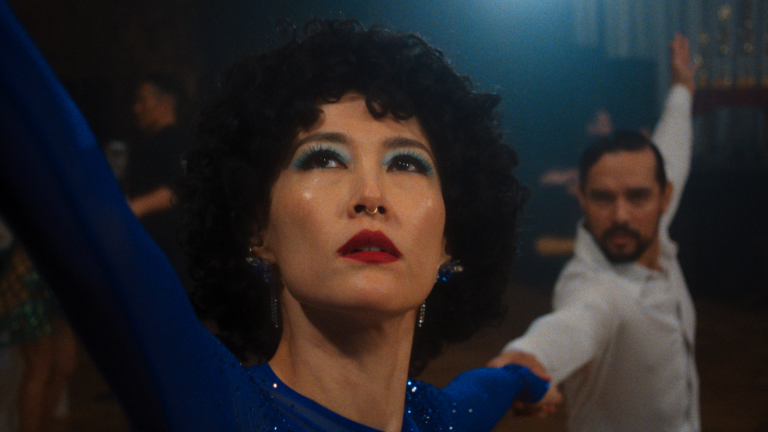
Director:Josef Kubota Wladyka Writers:Josef Kubota Wladyka, Nicholas Huynh Stars: Rinko Kikuchi, Alberto Guerra, Alejandro Edda, You, Yoh Yoshida
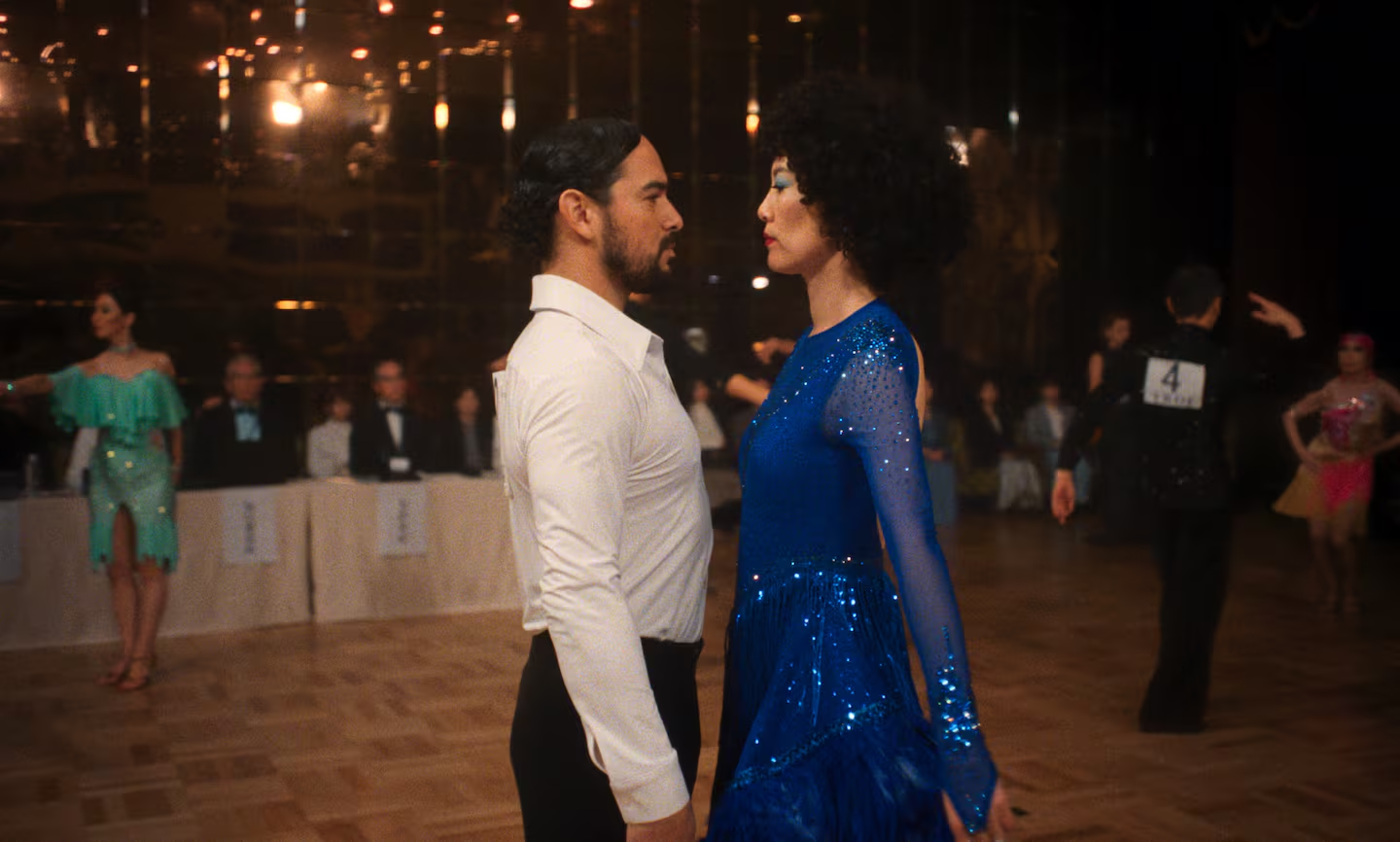
Synopsis: Haru and Luis love competing in Tokyo’s ballroom dance scene, but after tragedy strikes, Haru withdraws into isolation. When friends coax her back to the studio, she develops an infatuation with the new instructor.
When you name your film Ha-Chan, Shake Your Booty!, you have a built-in excuse to keep things charming and light. While director Josef Kubota Wladyka does infuse that lightness, the film also tries a bit too much narratively, despite the charm.
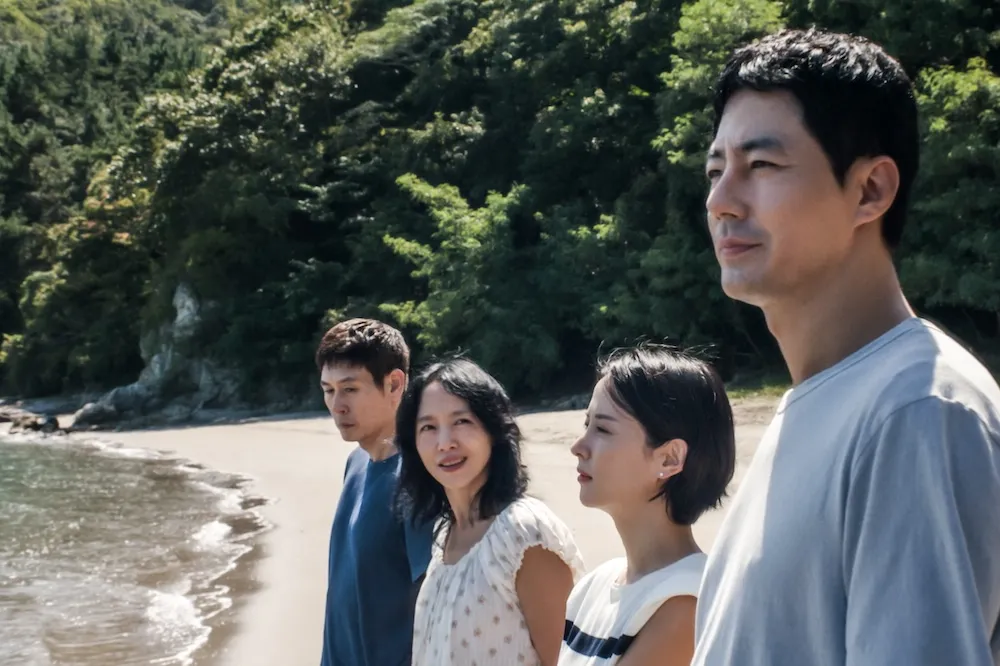
Rinko Kikuchi stars as Haru, a woman living in Tokyo with her Mexican husband, Luis (Alejandro Edda). Their comfortable routine includes their mutual devotion to ballroom dance. During a competition, Luis dies of a heart attack. Haru is devastated by the loss, and further lost by Luis’ father’s insistence of a burial in Mexico. Feeling as though his soul is adrift because of this split, Haru shuts off from her life and friends.
Haru’s friends Hiromi (You), and Yuki (Yoh Yoshida) are able to coax her back into the dance scene. New instructor Fedir (Alberto Guerra) reawakens Haru’s passion for dance and for romance. Despite the attraction, Haru can’t get Luis’ spirit away from her while Fedir’s own relationship baggage begins to impede on the couple’s passion.
The film does try to keep things as light as possible, despite dealing with some pretty deep and heavy ideas. Haru and Luis have built this life of understanding and mutual appreciation. As soon as Luis dies, Haru’s agency is taken away due to the cultural expectations of his family. The film also deals directly with the dangers of open relationships, without ever actually having anything to say about them.
Most of what the film wants to do, it is incapable of reaching. Haru begins to obsess over her relationship with Luis, but a more sinister turn comes out of left field. The audience is forced to attempt to connect the dots with Haru’s mental capacity because she is such an insular character. She is not one of outgoing personality and explanation, so you have to just accept her actions without much context. Despite the film focusing almost solely on Haru and her desires, you leave the film knowing just as much about her when the film ended. She is not a character of understanding.
That’s not to fault Kikuchi, who does everything she can with an underwritten role. She is forced to make Haru as likeable as possible, despite the film doing nothing to make her worth watching. She is too reserved and shielded by her grief to ever come across as dynamic. Kikuchi does her absolute best despite the narrative holding her back. Guerra gets much more to work with. The actor gets to be a sexy and mysterious stranger, but is quickly developed into a well-rounded character.
You and Yoshida are a nice compliment to Haru’s coldness, especially You, giving her character a youthful energy with an unapologetic worldview. Yoshida is the more pragmatic of the two, hoping to get Haru to a healthier place in life. Edda lingers heavily over the film, but his gentle presence lifts the proceedings any time he appears. Karen Louis also makes an impression in a tough role in the film’s last third.
Ha-Chan, Shake Your Booty! might be an easy watch, but the film doesn’t really know what to do with its main character, and never develops its weighty themes beyond the easy charm.
Director:Michael Dowse Writer:Michael Dowse Stars: Jay Baruchel, Ed Helms, Laurence Leboeuf
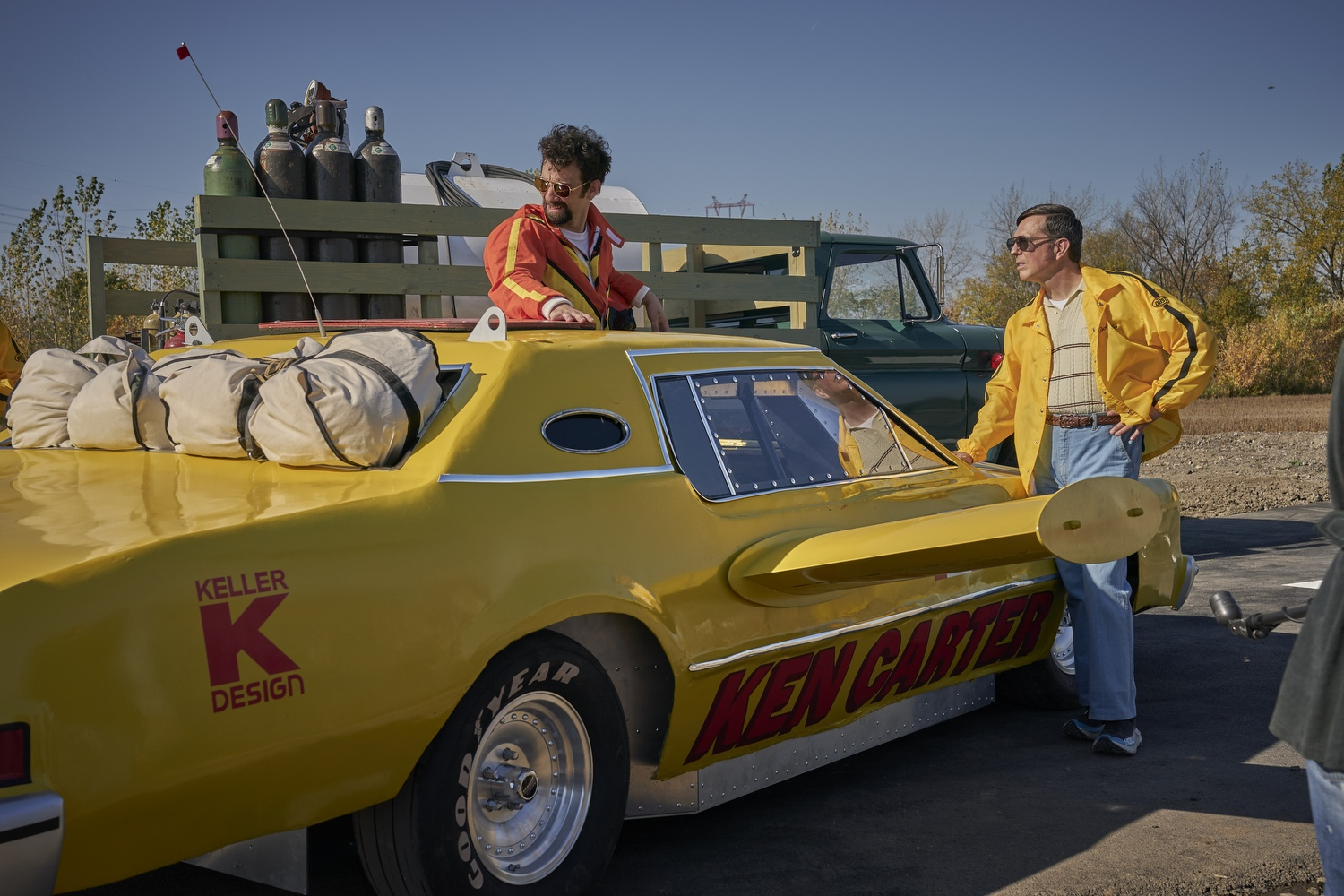
Synopsis: The film chronicles the daredevil stuntman Ken Carter’s quest to execute a bold stunt of launching a rocket car across the St. Lawrence River from Canada to the United States in the 1970s, facing absurd challenges along the way.
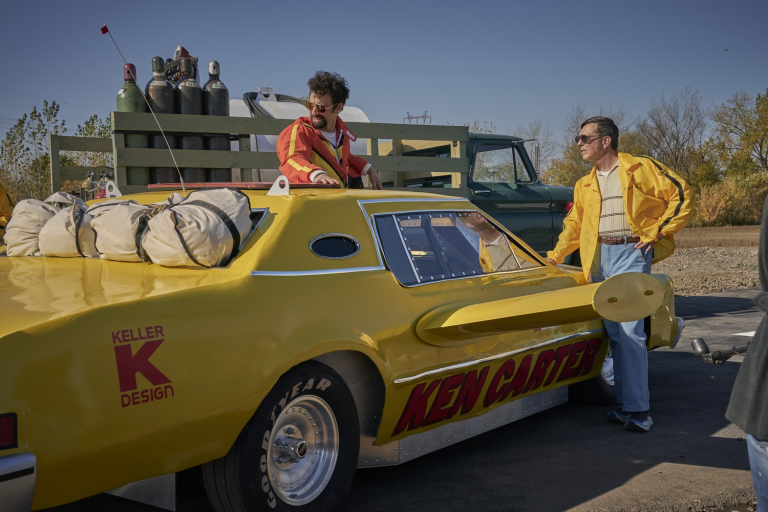
Anyone likely seeing Michael Dowse’s The Stunt Driver probably hasn’t seen Robert Fortier’s The Devil at Your Heels, the movie that inspired this dramatized biopic about stuntman Ken Carter (Jay Baruchel) attempting to jump the St. Lawrence River in a rocket car. Unless you’re Canadian, the existence of the National Film Board might not ring a bell, but Fortier’s documentary will make you understand the type of individual Kenneth Gordon Polsjek is at a much deeper level than Dowse’s surface-level attempt to “blockbusterize” such an event, as he blurs the line between the artifice of documentary and fiction filmmaking.
Dowse frequently incorporates 16mm footage from Fortier’s documentary, even casting Joe Cobden as the director who follows Carter’s crazy dream for about five years, while also recreating scenes from The Devil at Your Heels with Baruchel as Carter. But he’ll also occasionally insert shots of the real-life Carter analyzing the ramp he built for a stunt that not even Evel Knievel (Ben Foster) will perform, as he switches formats (16mm to 35mm to digital), aspect ratios, and lenses to bring a multifaceted portrait of a long-lost Canadian figure who should have his time in the spotlight.
In a way, this artistic intent seems refreshing. Instead of a traditional “cradle-to-the-grave” biopic, here’s a form-blurring movie that floats between two types of documentaries (one designed to parse who Carter is, the other, produced by the Japanese, to bring him down), and the fiction film Dowse is directing. The Goon filmmaker will change a few elements of the story, notably who ends up attempting the stunt, but stays mostly true to what has happened through note-perfect recreations of the event and Jay Baruchel’s best-ever performance. He’s the reason why the movie remains mostly watchable, as he perfectly represents Ken’s desire to be remembered within the history books of the great (if not the greatest) stunt performers who ever lived.
There’s a quote in The Devil at Your Heels that is, of course, repeated in The Stunt Driver which encapsulates everything about Carter’s desire to jump:
“This is my dream. This is the end of my dream. I don’t care if I never jump again, but this I’m going to do. This is my dream. I created it, I built it, I designed it. Nobody ever jumped a car a mile. That’s what I’m gonna do. It’s what I want to do. And it’s what I’m gonna do. The thing about it is, it’s something you only dream about. What I can do: jump 18-19 cars, 20 cars? Go out there and bust more bones? You’re right, I’m getting too old! But not old enough to do this.”
When he says it at the end of the documentary, you feel the urgency that this is what he needs to do, as crazy as it is. Jumping a mile from Canada to the United States through a large ramp in a rocket car that certainly won’t fly is what medical professionals might describe as suicide. But we feel for him enough that we want him to do it.
In The Stunt Driver, when Baruchel recreates this monologue, the effect is minimal, because Dowse has no idea what to say about Carter. He treats him as an almost mythic figure, but with no real interior exploration of who he is. In contrast with Fortier’s documentary, which actively does the work of examining him inside and outside the stunt community, The Stunt Driver falls short at illuminating audiences to a long-lost figure who deserves his time in the spotlight for the crazy stuff he attempted to do, because he, of course, never jumped the river. There were too many errors, too many bad-weather attempts, and the project’s backers eventually chickened out after one attempt left a driver severely injured. The bad ingredients kept piling up until it became unsustainable.
As a result, The Stunt Driver isn’t about the stunt itself, but about Carter’s stature within the pantheon of Canadian figures. Unfortunately, Dowse is too busy shifting aspect ratios at every second to bother giving a thoughtful interrogation of its titular character. But he also doesn’t give much development to Dick Keller (Ed Helms), the designer who helped bring Ken’s rocket car to life; Even Kneivel, who is far more humanized in Fortier’s film than in the way Dowse depicts him; and Carter’s girlfriend, Gloria (Laurence Leboeuf), who just stands there, smoking cigarettes. What texture do they give the character? It doesn’t exist. They’re just shells of the selves that are far more developed in a documentary that’s freely available to view online.
The recreations are fun, sure, but they don’t make a movie, especially when Dowse has no idea what to say about the figure he depicts. He multiplies points of view and modes of filmmaking, but what does that serve if the central narrative itself is devoid of meaning? The only thing you’ll learn about Ken Carter while watching The Stunt Driver is that he was a stuntman with a crazy dream. You’ll never get a chance to see his humble beginnings, the life he had before his desire for risk, nor the ethics of such a stunt through his perspective, and not his backers’. It’s a movie that wants to celebrate him, without knowing what to celebrate, ultimately resulting in a vacuous affair that once again proves Canadian cinema’s detractors right. Our industry is in shambles, and if we keep making mediocre films like these, it may not survive.
At least the documentary will stand the test of time, provided more audiences seek it out…
Director: Rebel Wilson Writer: Rebel Wilson Stars: Rebel Wilson, Jennifer Coolidge, Guz Khan, Randall Park
Synopsis: Rebel Wilson plays a former girl group star from the early naughties who is forced to coach a rag tag bunch of teen girls to make them into a group for a record label competition.
It’s an extremely rare occurrence to watch a movie at any festival and, as the credits roll, scratch your head as to what you’ve just witnessed, but that is an unceremonious award that suitably belongs to Rebel Wilson’s Girl Group. A movie devoid of any sign of creative integrity, filled to the brim with painfully unfunny gags, and masquerading as the cheapest imitation of Pitch Perfect to date, it can only be described as a car crash happening in slow motion from start to finish.
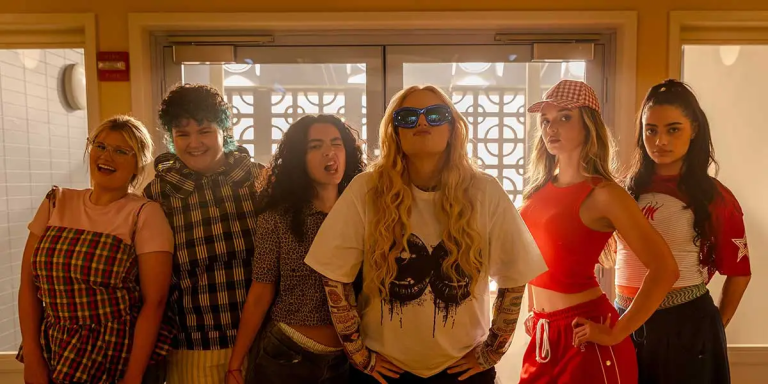
Girl Group follows Tassie Young (Rebel Wilson), a washed-up former star of a 1990s Spice Girls knock-off called Gurlfriends. Three decades later, as the band reforms for a comeback tour, Tassie finds herself unwanted by the group and, after a run-in with the law, is forced to take on community service. This leads her to become a tutor for a new ragtag girl group as they enter a battle-of-the-bands-style competition. There, they face their stiffest competition in the form of the Cream Team, whose manager (Jamie-Lee O’Donnell) has drilled them into becoming somewhat unstoppable.
If that premise sounds familiar, that’s because it is. The movie is unashamedly an amalgamation of the storylines of Pitch Perfect 1 & 2. We have the initial formation of a group made up of “cast-offs” who all bear a remarkable resemblance to the original Pitch Perfect cast. We have antagonists who, once again, look almost identical to the Das Sound Machine group from Pitch Perfect 2. If that isn’t enough, the new girl group, whose name is as forgettable as the rest of the story, performs an original song in the finale that goes against the rules of the competition. Funnily enough, that is also the very same climax as Pitch Perfect 2.
There’s not one element of Rebel Wilson’s script that feels even vaguely unique. Every narrative beat has been done before and done so much better, from the failed mid-movie performance to the inevitable reuniting of the band after an attempt to pull at some emotional heartstrings, before ultimately winning over audiences with their newly reunited front. There are no two ways about it: Girl Group is a cheap cosplay of an iconic movie that is still enjoyed by many around the world today.
Even the characters created in this mess bear such a striking resemblance to those from other movies that it becomes rather insulting. Worse still, there’s nothing particularly memorable about any of them, so much so that you could make a game out of trying to guess the characters’ names when the credits roll and you’d be hard pressed to name more than one. The only real exception is Henrietta (Mia Kaplan), and that’s because she’s forced to be the “Fat Amy” of the group and is persecuted for her differences throughout, something that feels rather baffling given the core themes the movie tries to explore.
The young cast are entirely blameless. They ultimately do their very best with the dreadful material they are given in what is, for many of them, their first major role in a Hollywood production. But they feel doomed from the get-go. Even when the film tries to take a more profound look at female empowerment and the oversexualization of the music industry, it devolves into a tick-box exercise that culminates in one of the most painfully misplaced rap scenes I think I have ever seen.
What’s equally tiresome are the endless attempts to be funny that fall flatter than a pancake. There’s an effort to be insightful by creating jokes about the current state of the music industry, including how artists succumb to drinking and driving or using drugs while believing they are above the law. It’s essentially just pointing out things that people already think and expecting them to be greeted with an abundance of laughter. Instead, it results in some truly uncomfortable and cringey extended scenes, with the punchline delivery getting worse and worse the longer the movie rolls on.
Even the one thing you would expect to be a slam dunk, the musical sequences, becomes a slog to get through. When the clearly accomplished vocalists in the cast are allowed to perform stripped-back covers, they actually excel, but those moments are few and far between. Instead, we get obnoxiously loud, in-your-face songs that have been autotuned beyond anything resembling a natural sound, drowning out any semblance of genuine vocal ability. Even the production design of the big stage performances becomes an eyesore. From the blaring, flashing lights to the terrible mall stages, it all becomes one enormous assault on the senses for all the wrong reasons.
What’s painfully ironic is that Girl Group centers around people rediscovering their own voices, yet Rebel Wilson’s script is completely devoid of one of its own. Whether it aimed to be a crowd-pleaser or offer up nostalgia to those who grew up with Pitch Perfect, sadly, it completely misses the mark. A cheap and lousy imitation of the films that made Wilson a household name, Girl Group is quite comfortably the worst movie of this year’s Toronto International Film Festival.
Director: Hugh Wilson Writers:Olivia Goldsmith, Robert Harling Stars: Goldie Hawn, Bette Midler, Diane Keaton
Synopsis: Reunited by the death of a college friend, three divorced women seek revenge on the husbands who left them for younger women.
Some films become more enjoyable with age, and The First Wives Club is firmly in that category for me. Released in 1996, the comedy brought together the dramatic Diane Keaton, the glamorous Goldie Hawn, and the hilarious Bette Midler as three college friends reunited by heartbreak, betrayal, and the sudden death of another friend. What follows is a wonderfully chaotic revenge story, but beneath the jokes and outrageous situations lies a film about friendship, female independence, and women refusing to accept being discarded. Nearly 30 years later, it remains a five-star favorite of mine because it is genuinely funny and has something meaningful to say. It’s wrapped in sharp one-liners, brilliant performances and an enormous amount of personality.
At the center of the film are Annie, Brenda and Elise, three women who discover that their ex-husbands have left them for younger women. Rather than allowing themselves to become bitter victims of their circumstances, they decide to fight back. Their plan grows increasingly ambitious, taking them from revenge against their former husbands to creating opportunities for themselves and other women. I love that the friendship is just as important as the revenge. These women don’t always agree; they have their insecurities, and they occasionally drive each other completely mad (there’s a dramatic but funny scene where they fight, and an Oscar is thrown across the room), but when it matters, they show up for one another.
It’s also refreshing to watch a comedy that is so unapologetically interested in women’s lives. The film tackles ageing, marriage, divorce, sexism, self-worth and financial independence, yet somehow manages to do it without losing its sense of fun. The message about women taking control of their own lives is still incredibly satisfying, particularly because the characters aren’t presented as perfect examples of empowerment. They’re messy, emotional, vain, frightened and occasionally ridiculous. In other words, they’re human.
The chemistry between Keaton, Hawn and Midler is a huge part of that. Each brings a completely different comic energy to the group, which makes their scenes together so enjoyable. Diane Keaton’s nervous, slightly chaotic delivery is particularly brilliant, while Goldie Hawn brings an effortless sharpness and Bette Midler has the kind of larger-than-life confidence that makes even the most ridiculous moments work.
The supporting cast deserves plenty of credit too. Maggie Smith is absolutely wonderful as Gunilla Garson, delivering every line with the kind of elegant disdain that only she could manage – probably a role that helped her get scouted for Downton Abbey. Sarah Jessica Parker is also fantastic as the younger woman who becomes involved with Brenda’s ex-husband. Her performance is deliberately exaggerated, but that’s precisely why it works. She’s ridiculous, irritating, and completely committed to the character.
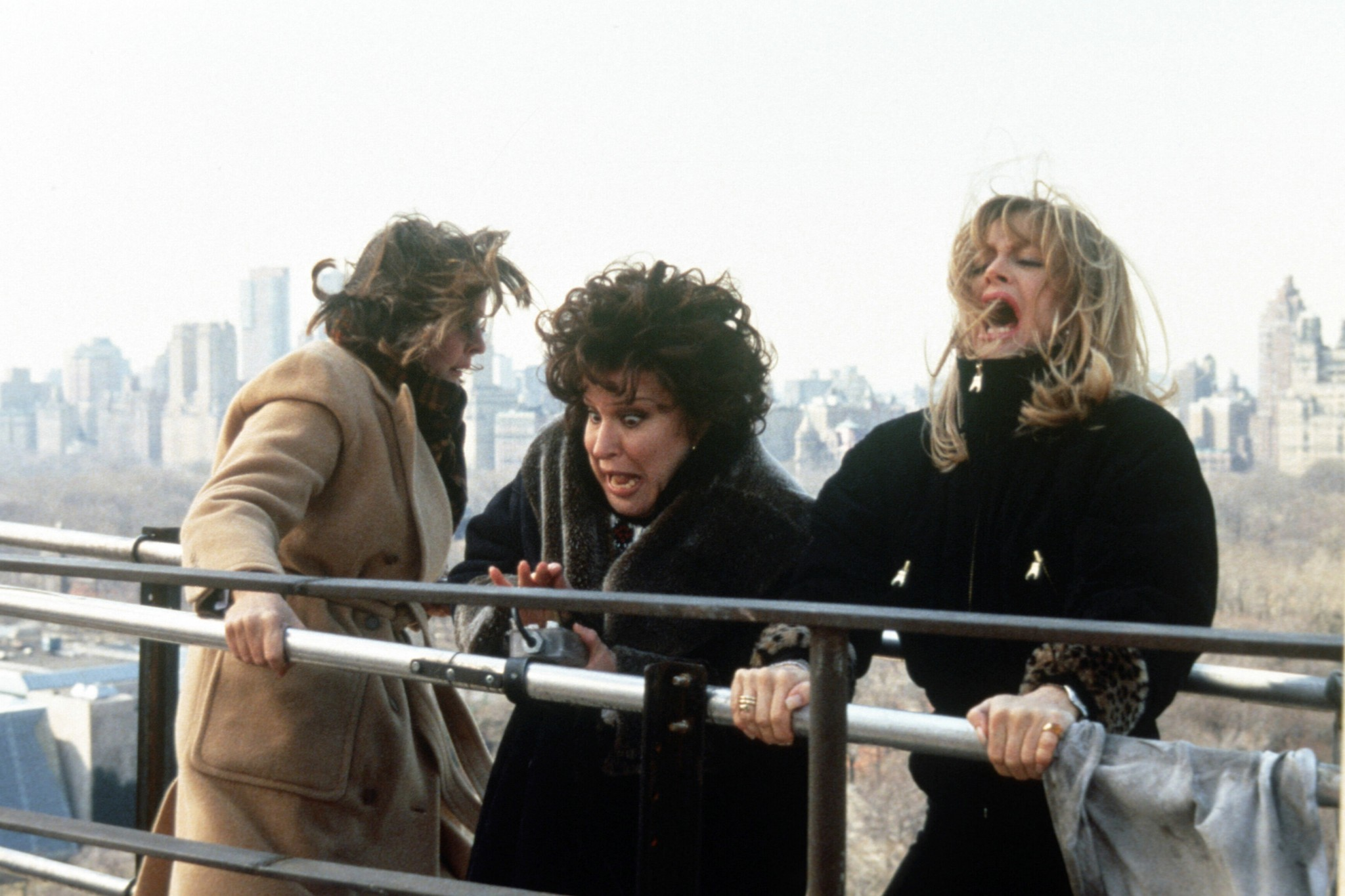
There are so many memorable moments throughout the film, but my favorite is the scene where the women are hiding in Brenda’s ex’s apartment and end up escaping down the side of the building in a window cleaner’s basket. It is such a clever piece of comedy because the situation is completely absurd, yet the performances sell every second of it. Diane Keaton’s facial expressions are absolutely priceless. She looks genuinely horrified by what is happening, while simultaneously having the kind of physical comedy that makes it impossible not to laugh. It’s one of those scenes where the actors aren’t afraid to look silly.
I sometimes wonder whether actors are simply too conscious of their appearance to throw themselves into comedy like this anymore. There is something wonderfully unglamorous about watching Keaton, Hawn and Midler get themselves into ridiculous situations without worrying about whether they look elegant. One modern exception that immediately springs to mind is Kaitlin Olson in It’s Always Sunny in Philadelphia. She has that same fearlessness when it comes to looking ridiculous for the sake of a laugh. She isn’t afraid to make herself the butt of the joke, pull an outrageous expression, or completely abandon any concern about looking polished.
What makes The First Wives Club a five-star comedy for me, though, isn’t just the comedy. It’s the warmth underneath it. The friendship between these women feels like the real love story of the film. They are there for each other when their marriages fall apart, when their confidence disappears, and when they need someone to remind them that their lives aren’t over simply because their relationships have ended. I also love that their ultimate victory isn’t simply about getting revenge. It’s about building something of their own. The women move from being defined by their husbands to creating a future where they have financial independence and the ability to help other women.
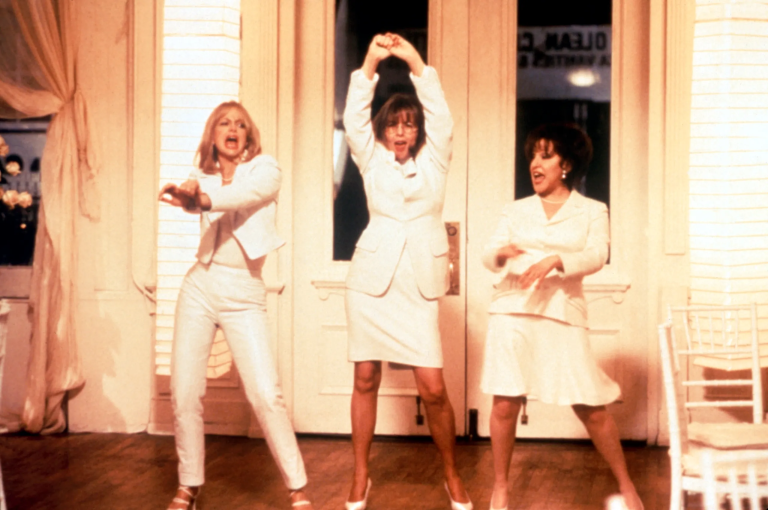
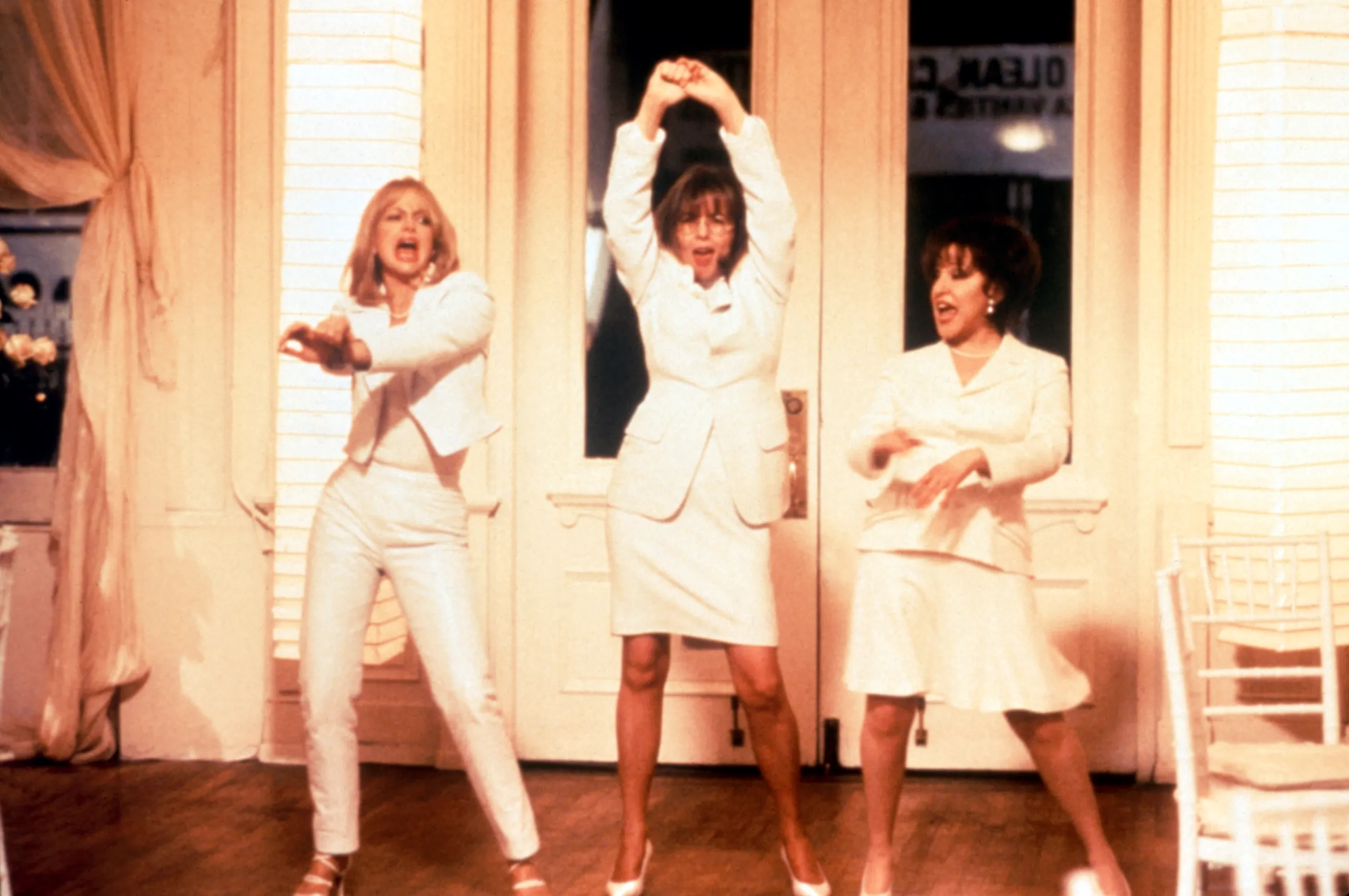
The ending sequence where the three friends perform a routine they once did at college, singing and dancing down the street is still one of the most fun and uplifting endings to a film I’ve ever seen. Nearly three decades on, The First Wives Club remains gloriously funny, wonderfully performed and surprisingly empowering. And if nothing else, it proves that sometimes the best way to deal with heartbreak is to get your friends together, put on a fabulous outfit and make an absolutely enormous amount of trouble.
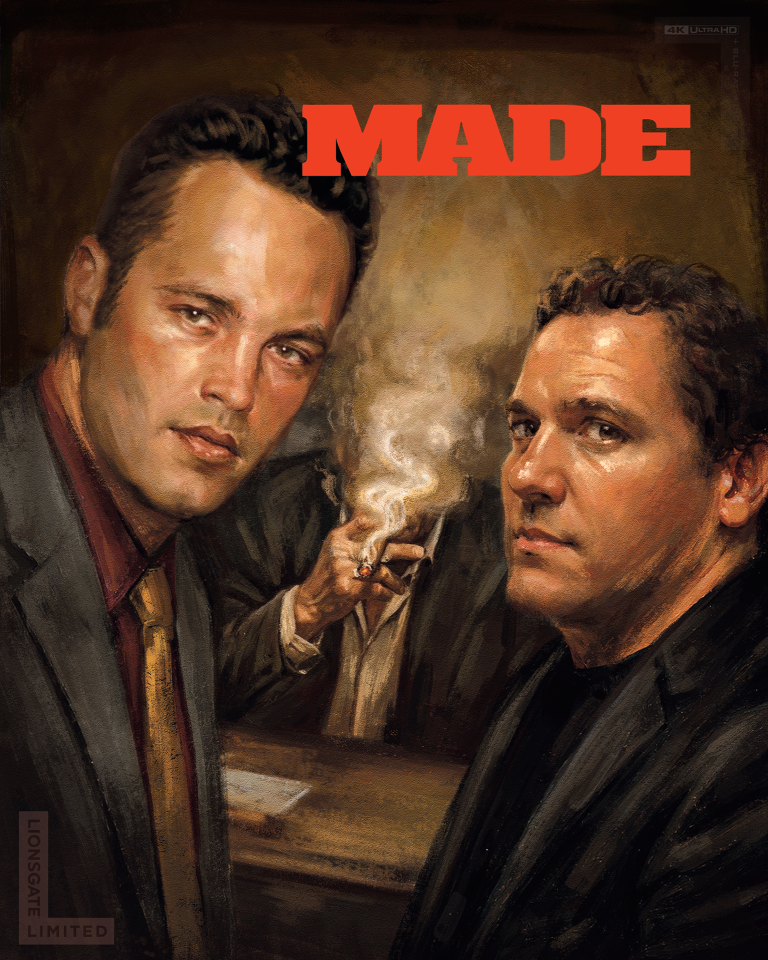
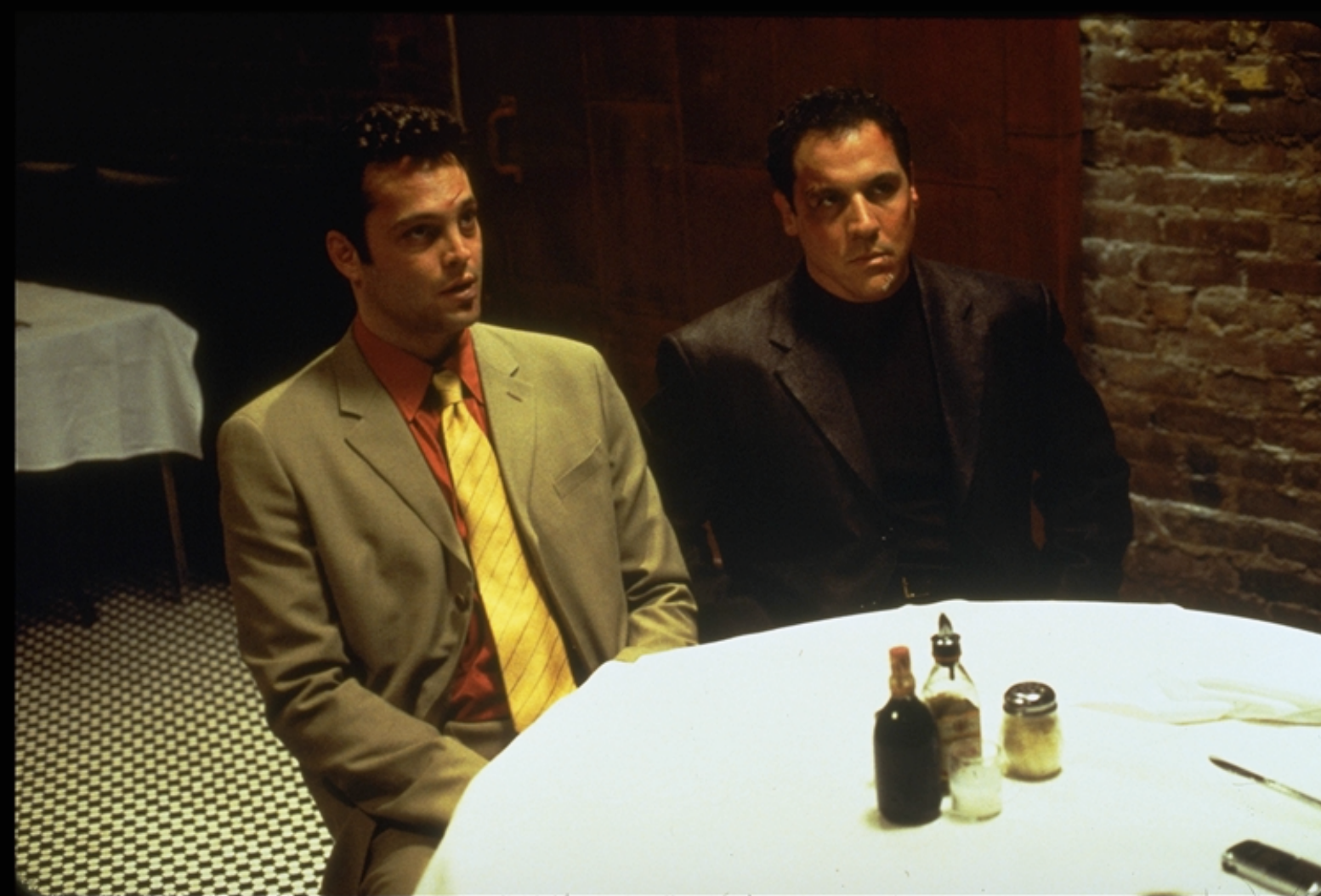
Made is the story of a struggling bodyguard (and boxer and physical laborer) who is trying to make a life for his stripper girlfriend, and her daughter. He is given an opportunity in low level organized crime. But he is a loyal sort, so he demands that his best friend is included in this, as well. Quickly, they get over their heads, traveling from Los Angeles to New York and back again. Long nights of drinking, narrowly avoiding serious damage lead them to deeper bonds of friendship and truths that they may not want to know. Vacillating between comedy and crime drama, first-time director Jon Favreau takes the helm with his Swingers compatriot, Vince Vaughn.
Packaging
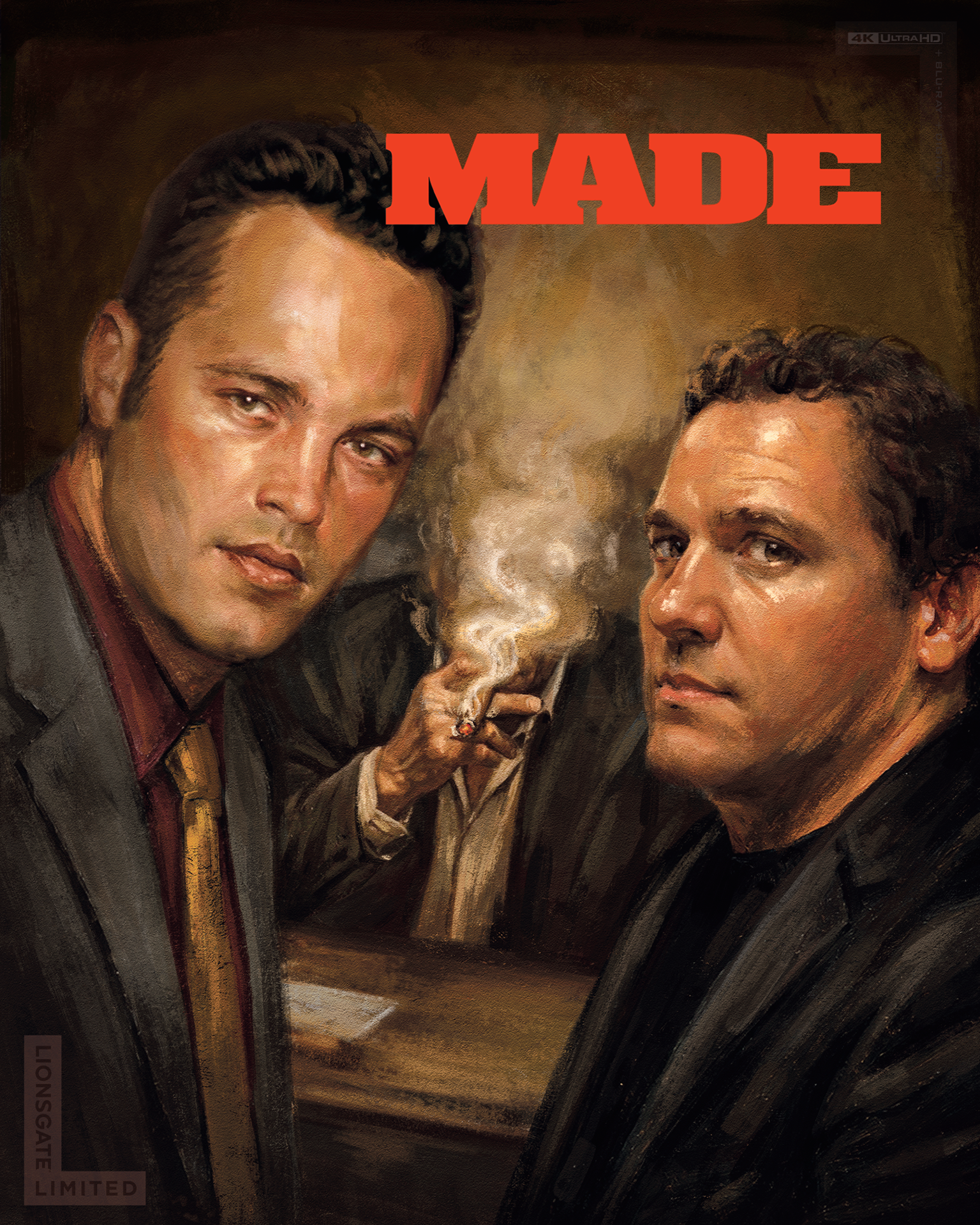
Lionsgate’s steelbook has a beautiful painted look to it, especially on the slipcover (pictured above). Given some plot points in the movie, having a painted style to the artwork not only lets it stand apart from other discs, but also connects thematically. Great attention to detail was given and the enclosed steelbook itself is everything that you would expect from a major label. It looks sleek, and will definitely sit well on any collector’s shelf.
Video
I am always surprised, given the date of the film, how pristine these discs can look. The film, released in 4K, has been shown in Widescreen (2.40:1) in Dolby Vision®. There are no noticeable issues and, for fans of the film, this is basically as good as the quality can get. Especially given how many scenes are at night, in the dark, the clarity is impressive. As the film moves into sequences of all night (and all day) drinking, this transfer picks up small intricacies from Favreau, as a director, that were definitely not as noticeable before.
Audio
The same goes for the audio presented here. The audio is in English Dolby Atmos® and the sound quality is excellent. This is extra important in this film as there are numerous scenes involving multiple speakers and the soundtrack and sound design is particularly impressive. The music, especially, helps set the scene, especially as they travel from coast to coast. The music in the clubs is never unbearably loud, and it is easy to hear and understand the dialogue, so the sound mix is perfectly on point.
Special Features
This package is pretty chock-full when it comes to special features.
Audio Commentary with Jon Favreau and Vince Vaughn – This is the crown jewel of the product. Listening to these two watch the movie and talk about the making of it is endlessly entertaining. As they were relatively new to the field when this was recorded, it is interesting to hear the struggles they had with schedules and budgets. But it never gets too dreary, as their friendship and the fun they had shine through easily.
Making the Music of Made – This is a short, but interesting behind-the-scenes piece. Given that none of the people involved in the music were seasoned professionals, it is a great look back at independent film and how it worked at the time.
Getting it Made – This is the best of the behind-the-scenes features. This, regardless of budget, was clearly not an easy film to get (sorry) made. Getting to see the ins and outs is a real treat for film fans.
Deleted and Alternate Scenes – Deleted scenes are always a tough one. There is some great stuff sprinkled in here, but a lot of them, you can understand why they were cut. As a bonus, listening to this with commentary definitely gives a better understanding of why choices were made.
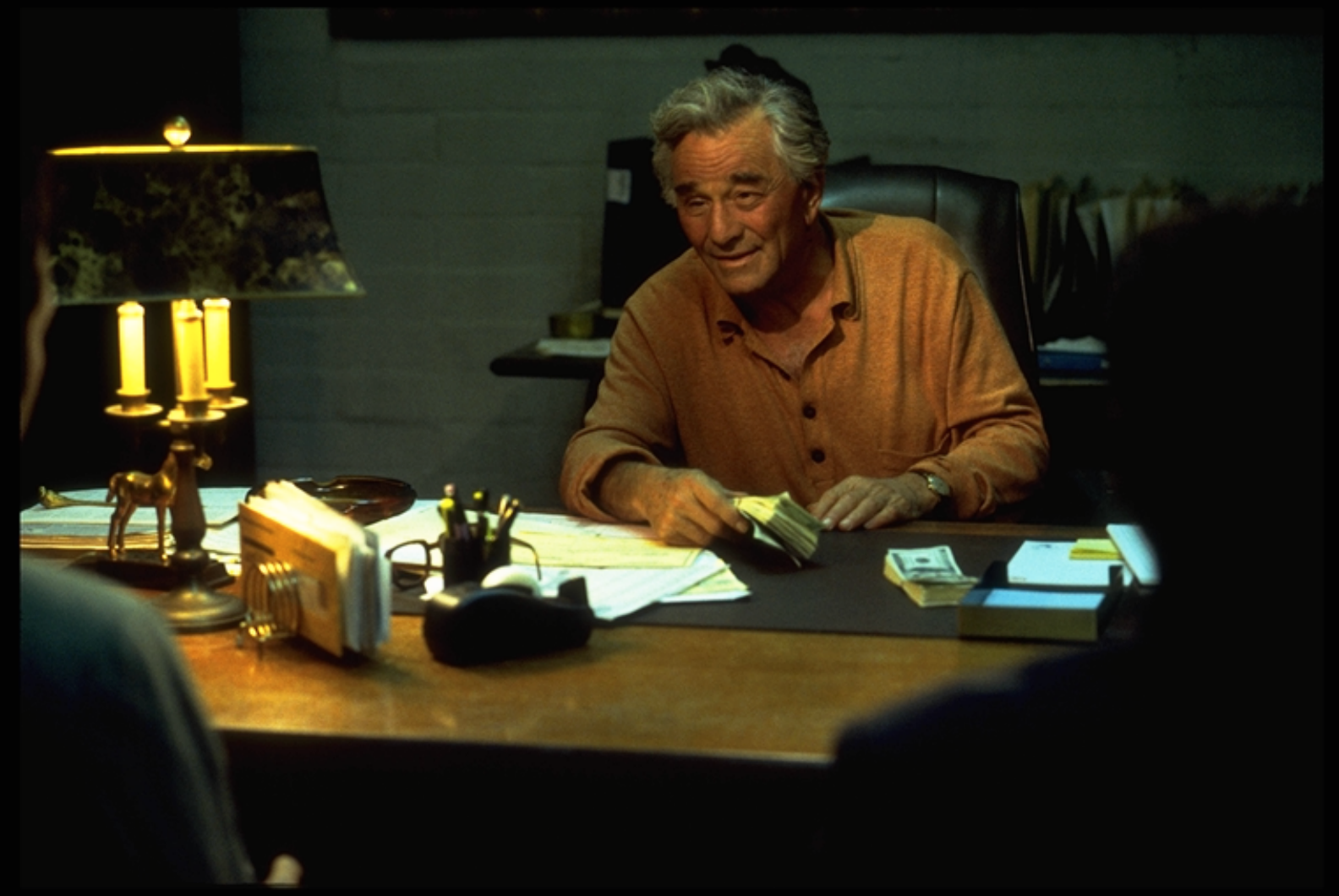
Outtakes – There is nothing better than a great outtake reel. I do wish this had been edited a little tighter, as there are only so many times you can watch Favreau struggle to not laugh at his buddy’s schtick before it gets a bit tedious. However, hearing the annoyance in Peter Falk’s voice makes it worth it.
General Thoughts
Made may best be known as the follow-up to Swingers, the ultimate indie darling of the Mid-1990s. Given that this film also features the same two actors (Jon Favreau and Vince Vaughn), this was hoping to attract the same audience. It proved impossible not to compare the two, which has been to its detriment. While Swingers caught the zeitgeist of the moment, Made is a small scale crime drama, with comedy sprinkled throughout. Those expectations, especially with Vaughn playing his trademark motormouth character type, are definitely a hindrance. Both leads are deeply watchable and, even when they make terrible choices, it is hard not to root for them. It is a film very much of its time, with a fair amount of jokes not landing simply because they are dated. However, as indicated by Favreau repeatedly, they do manage a good job of balancing comedic and dramatic tones, not a small feat at all.
Collection Fit
So, who, exactly is this for? For those of us who were around for the independent film boom in the 1990s, Made is actually quite important! After the success of Swingers, and some individual struggles for the two leads, it was really fun to see them back together. The only drawback was “it’s not as good as Swingers.” But given some distance, this is a really cool artifact of the time. It has also never looked or sounded better! Lionsgate did a tremendous job with this one!
Grade – B+
Note: Images presented in this review are not necessarily reflective of the image quality of the Blu-Ray.Grades are indicative of the physical media release and not the film itself.
Disclaimer: Lionsgate Films have supplied a copy of this disc free of charge for review purposes. All opinions in this review are the honest reactions of the author.
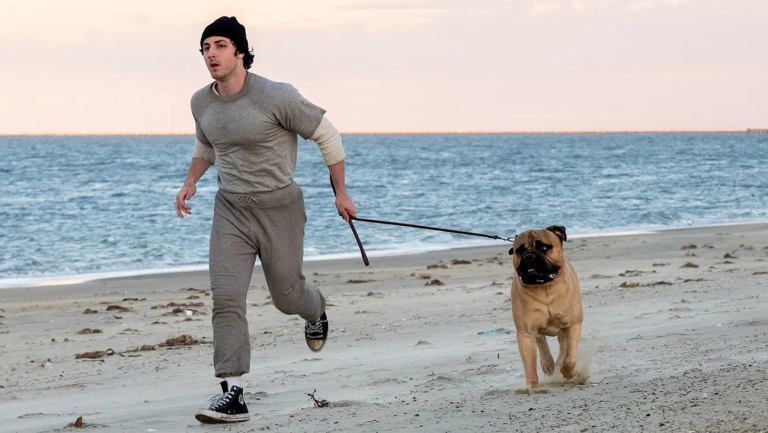
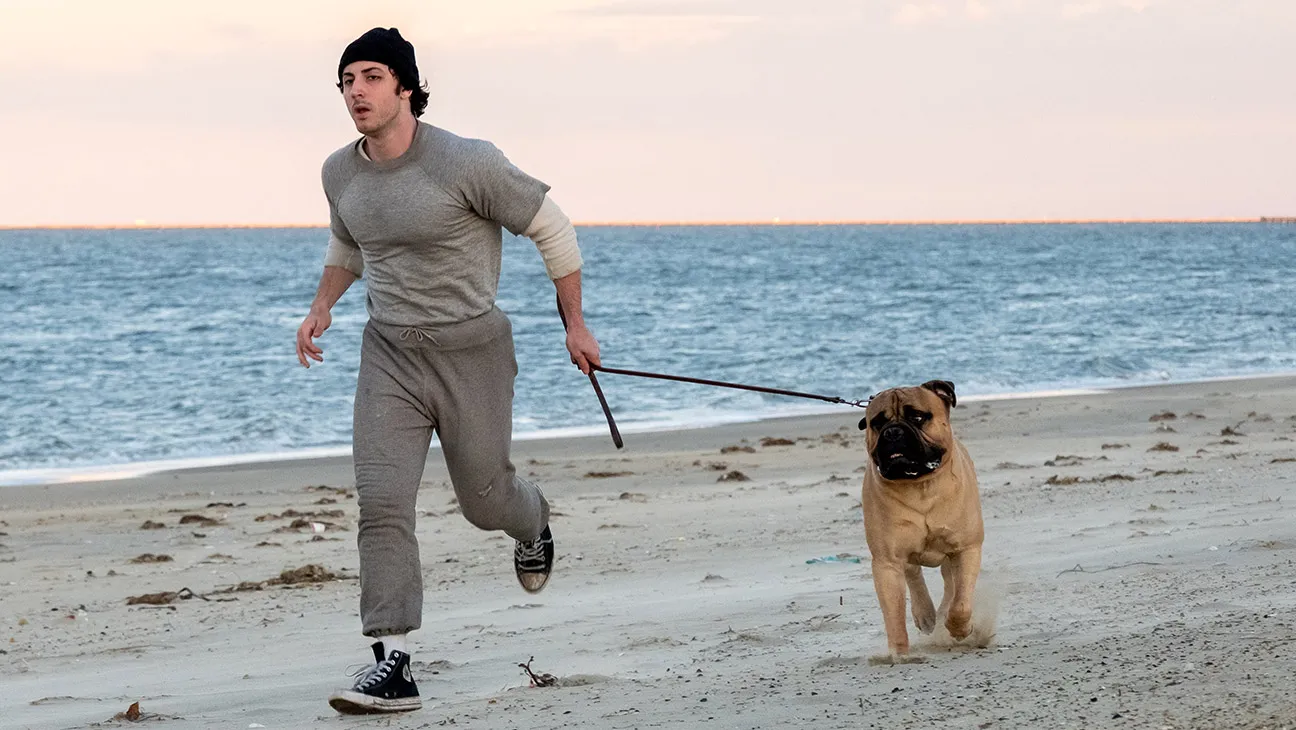
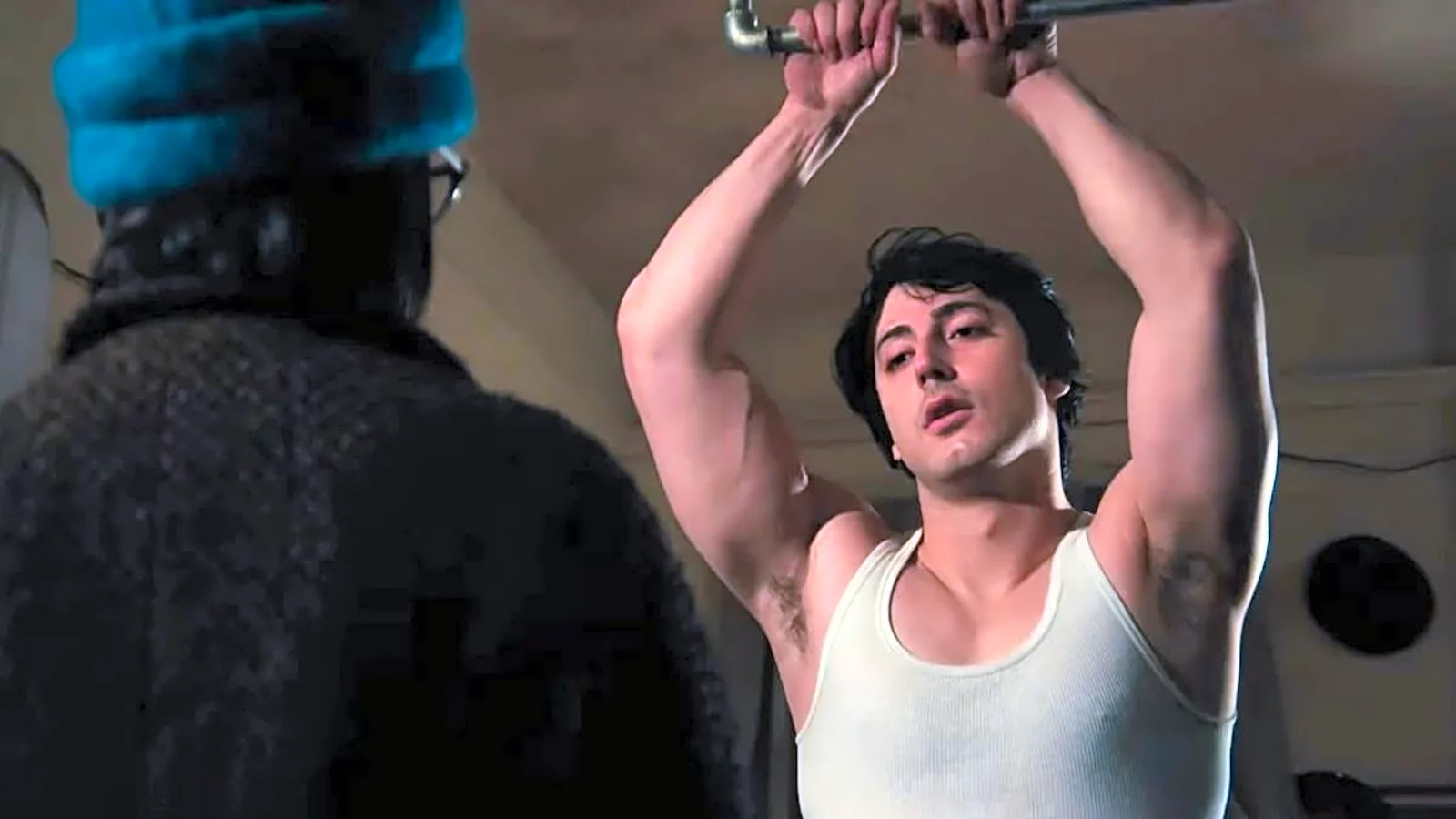
Synopsis: Sylvester Stallone, then a failing actor, writes the ultimate underdog story and must fight for his chance to play the role of a lifetime – Rocky Balboa.
It would be easy to criticize I Play Rocky for following the biographical “formula.” However, there’s an argument to be made that the formula exists for a reason, and when it’s done correctly, it can provide the most raucous, crowd-pleasing good time. And that’s exactly what I Play Rocky delivers, successfully recapturing the magic that made Rocky such an enduring classic to begin with while providing a fascinating look into the life of Sylvester Stallone during the making of the beloved movie.
Set in the 1970s, I Play Rocky begins by telling the amazing true story of how Sylvester Stallone (Anthony Ippolito) went from a failing actor and writer living on the breadline to an international household name with Rocky. The film details every hardship Stallone went through to finally make his dreams come true. The story starts with Stallone on the streets of New York with nowhere to call home and every audition he gets proving to be another dead end. The only person who seems to believe in him is his new girlfriend Sasha (AnnaSophia Robb), who agrees to move to the other side of the country with him to Los Angeles in the hope that Sylvester will have better luck.
There, after multiple failures and with an impending eviction looming large, Stallone has the idea of a lifetime after watching an underdog push the great Muhammad Ali to the very edge. Within the next three and a half days, the script for Rocky is born. By a stroke of luck, thanks to a patron at his hotel valet day job, he is able to get the script seen by producers Irwin Winkler and Robert Chartoff, who fall in love with it and immediately want to turn his vision into a reality.
There’s a catch, though. Stallone has to be the lead, which results in the studio refusing to put a failed no-name actor at the center of the movie and instead trying to buy the script from him. Of course, Stallone refuses despite the life-changing money on offer, and the rest, they say, is history. But the film captures that unwavering self-belief and willingness to never back down better than you could ever imagine, giving the entire story the emotional backbone it needs.
Expectations going in were admittedly quite low. Largely, that was due to the fact that Peter Farrelly was at the helm, whose career post-Oscar win has been filled with dud after dud. Here, though, he arguably delivers his best work to date. Working from a screenplay by Peter Gamble, Farrelly expertly balances the two distinctly different halves, allowing just the right amount of time for both to properly land with audiences. He’s also been able to recreate some of Rocky’s most memorable sequences from a behind-the-scenes perspective, resulting in some of the most rewatchable cinematic moments of his career.
It would have been incredibly easy for Farrelly to simply create some cheap nostalgia bait to appease fans and focus almost entirely on the sequences that made Rocky the classic that it is today. But while the movie is structured like many other biopics on paper, it never becomes a tick-box exercise. Instead, it allows audiences the time to become genuinely invested in what is a remarkable story of perseverance and self-belief. It gives those themes the space to breathe rather than shoving them down the audience’s throat and telling us what to think and feel. It’s a surprisingly nuanced approach from Farrelly and one that definitely works to the movie’s advantage.
Much of the film’s success is thanks to a truly outstanding performance from relative newcomer Anthony Ippolito. Perhaps the biggest compliment you can give his work is that not for a single second does it feel like he is trying to portray Stallone. Instead, for those who don’t know I Play Rocky is a thing, they could almost certainly be convinced they were watching Stallone himself in a documentary. Ippolito completely transforms himself and becomes Stallone rather than simply playing a part. It’s such an impressive transformation that there’s a real chance Ippolito could gatecrash the Best Actor conversation with what is a genuinely remarkable turn.
Ippolito is backed up by some terrific supporting performances that serve to elevate the already strong material to a whole new stratosphere. AnnaSophia Robb is an extremely assured and calming presence as Sasha, bringing some much-needed heartfelt emotion to the screen. But it’s P.J. Byrne and Toby Kebbell who arguably shine the brightest as producing duo Irwin Winkler and Robert Chartoff. They bring their A game to provide the movie’s standout comedic moments, which were met with thunderous laughter throughout. Both make the most of every second on screen while also bringing a bit of business nous to the occasion.
While it would be easy to label the recreations of some of Rocky’s most famous scenes as knock-off versions, Sean Porter’s cinematography, while familiar to fans of the franchise, is distinctive enough to offer a different perspective on the shooting of the film. He absolutely nails the ’70s aesthetic he is going for, but it has to be said that everything only reaches maximum crowd-pleasing levels once it’s combined with Bill Conti’s original Rocky score. When those familiar notes finally hit, Farrelly knows exactly what he’s doing, building the movie to a crescendo that resulted in the biggest standing ovation I witnessed at the 2026 Toronto International Film Festival.
While undoubtedly I Play Rocky will be dismissed by some as another conventional Hollywood biopic, Farrelly and co. have captured the true underdog nature of what made Stallone’s story so unbelievably magical in the first place. It gives audiences a fascinating insight into the personal challenges he faced and the enormous gamble he took by betting on himself, even when accepting the easier option would still have completely changed his life.
It’s a movie that is bound to resonate with anyone who has ever been told they are not good enough to do something, yet knows deep down that they are. Rocky will never be dethroned as the ultimate underdog story, but I Play Rocky does a phenomenal job of harnessing that spirit without simply trying to replicate it, turning Stallone’s incredible journey into one of the most enjoyable rags-to-riches stories in recent memory.
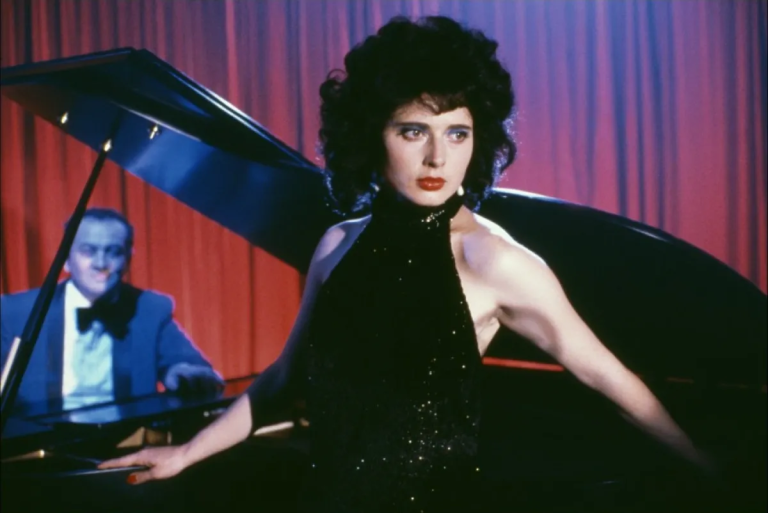
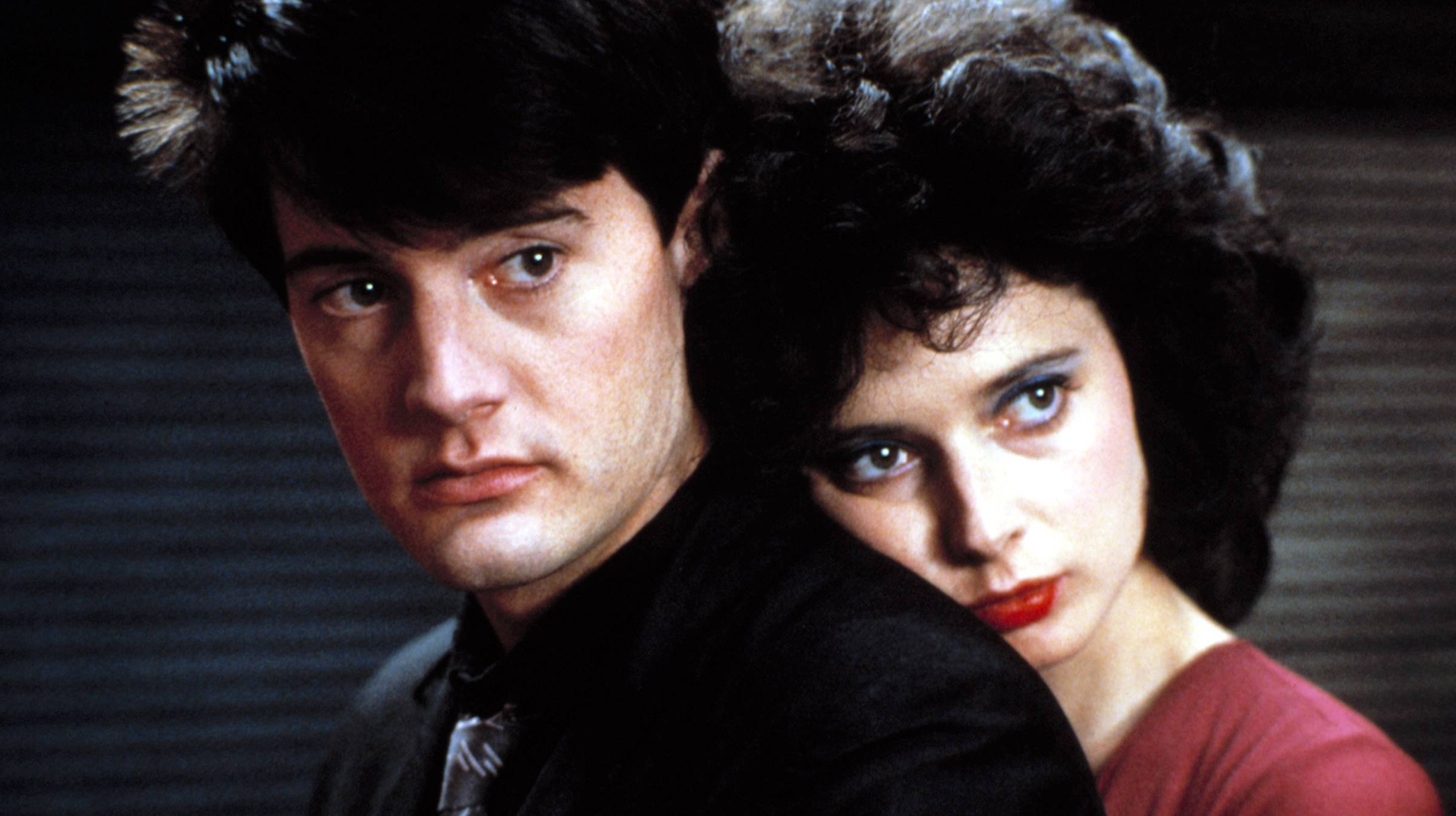
Director: David Lynch Writer: David Lynch Stars: Kyle MacLachlan, Laura Dern, Isabella Rossellini
Synopsis: A young man finds a severed human ear that is somehow connected to a mysterious lounge singer and a group of psychopathic criminals who have kidnapped her child.
Forty years later, Blue Velvet still feels like one of those movies that becomes stranger the more familiar it gets. There is something about returning to David Lynch’s little nightmare of Lumberton and knowing exactly where it is going, yet somehow still feeling unsettled when it gets there. The movie has such a strange balance to it. It can be beautiful and disturbing within the same image, funny and horrifying within the same scene, and sometimes almost completely ordinary before suddenly revealing something deeply wrong underneath it. Lynch takes a familiar world and slowly pulls it apart until the things that once seemed comforting start to feel suspicious.
The first few minutes almost feel like a promise. Flowers. Blue skies. White fences. Red roses. A perfect little world presented with such exaggerated sweetness that it becomes unsettling before anything has actually happened. Then the camera goes beneath the surface. Suddenly, there are insects crawling through the dirt, fighting and devouring one another in a world that exists completely outside the postcard version of America we were just shown. That movement downward is essentially the entire movie. Blue Velvet is obsessed with the idea that there is always another world underneath the one we think we understand. The clean streets have basements. The happy families have secrets. The beautiful woman onstage is carrying unimaginable pain. The seemingly ordinary young man discovers that his own curiosity can lead him somewhere much darker than he ever expected to go.
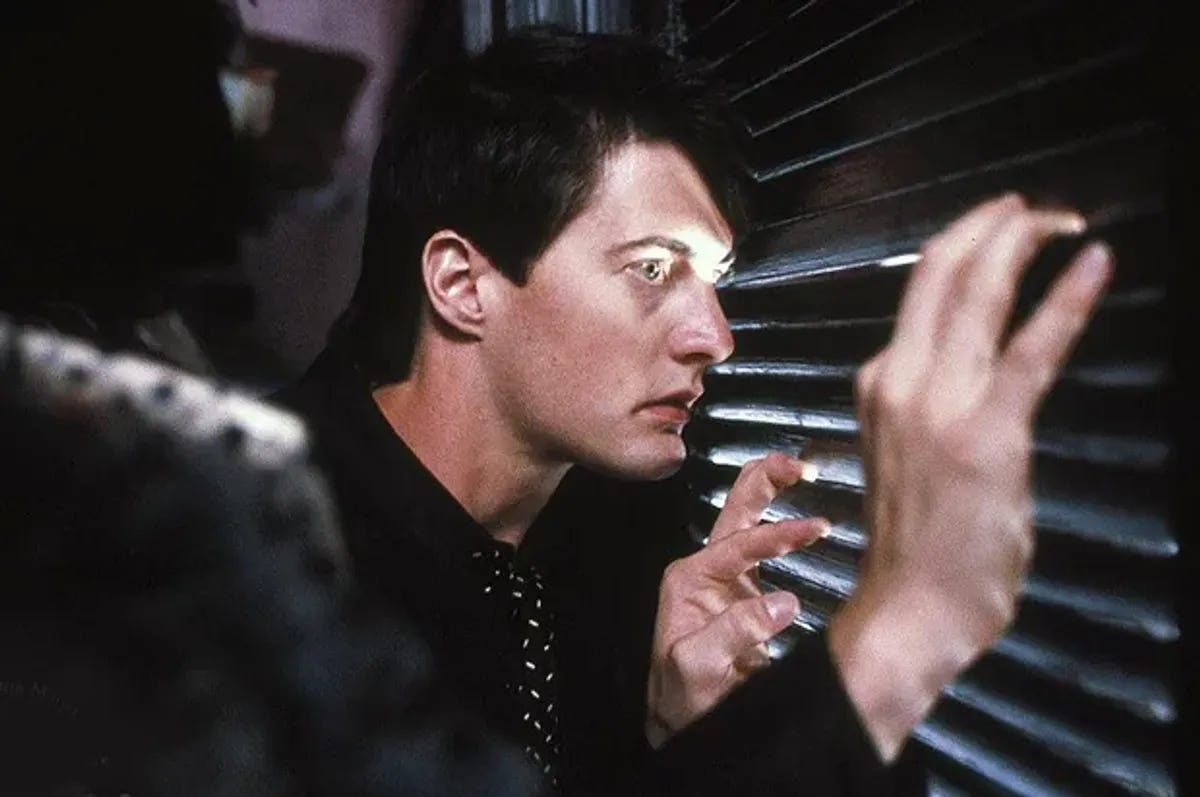
That is what makes Jeffrey Beaumont such an interesting character. He begins as someone who believes he is simply investigating a mystery. He finds an ear in a field and starts pulling at the thread, convinced that if he keeps following it, eventually everything will make sense. But Blue Velvet isn’t really interested in the mystery itself. It is interested in what happens to Jeffrey once he gets close enough to the darkness to become fascinated by it. There is something deeply uncomfortable about watching him cross that line between wanting to understand something and wanting to experience it. His innocence does not disappear all at once. It gets complicated. Curiosity becomes desire, desire becomes participation, and participation forces him to confront parts of himself that he would probably rather leave buried.
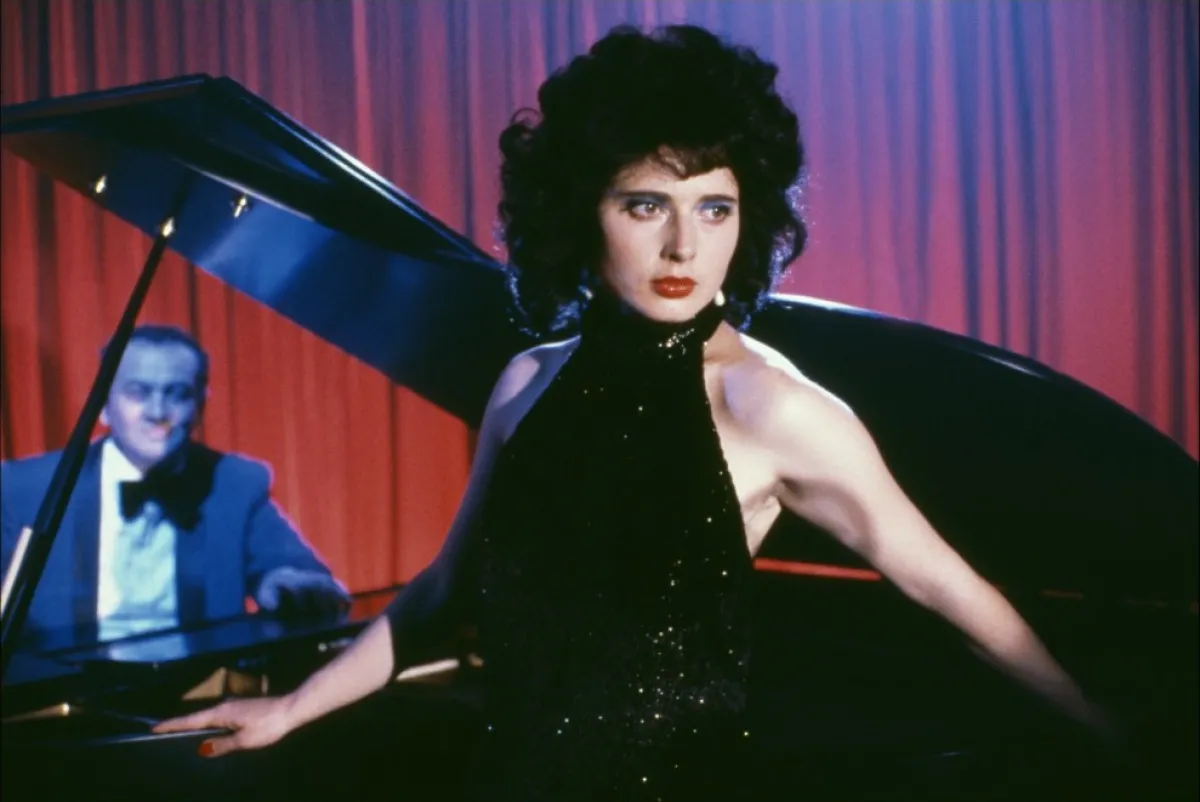
And then there is Dorothy Vallens, who remains one of the most haunting figures in Lynch’s entire body of work. Isabella Rossellini gives Dorothy a performance that feels almost impossible to separate from the film’s atmosphere. She is sensual, frightened, wounded, furious, vulnerable, and sometimes frightening herself. The tragedy of Dorothy is that the world around her has made violence so ordinary that it has begun to contaminate the way she understands intimacy. She is not simply a damsel trapped inside a nightmare. She is someone whose relationship with fear, sex, affection, and survival has been horribly distorted by what has been done to her. There are moments when she seems to be reaching for tenderness and moments when tenderness itself appears dangerous.
That complexity is part of why the film can be so difficult to sit with. Lynch doesn’t give us an easy distance from Dorothy’s suffering. He makes us uncomfortable with our own position as spectators. Jeffrey watches her. We watch Jeffrey watching her. Desire and voyeurism become tangled together until it becomes difficult to tell where one ends and the other begins. The film understands something ugly about looking: sometimes we tell ourselves that we are trying to understand someone’s pain when, on some level, we are also fascinated by it. Blue Velvet doesn’t let that fascination remain innocent.
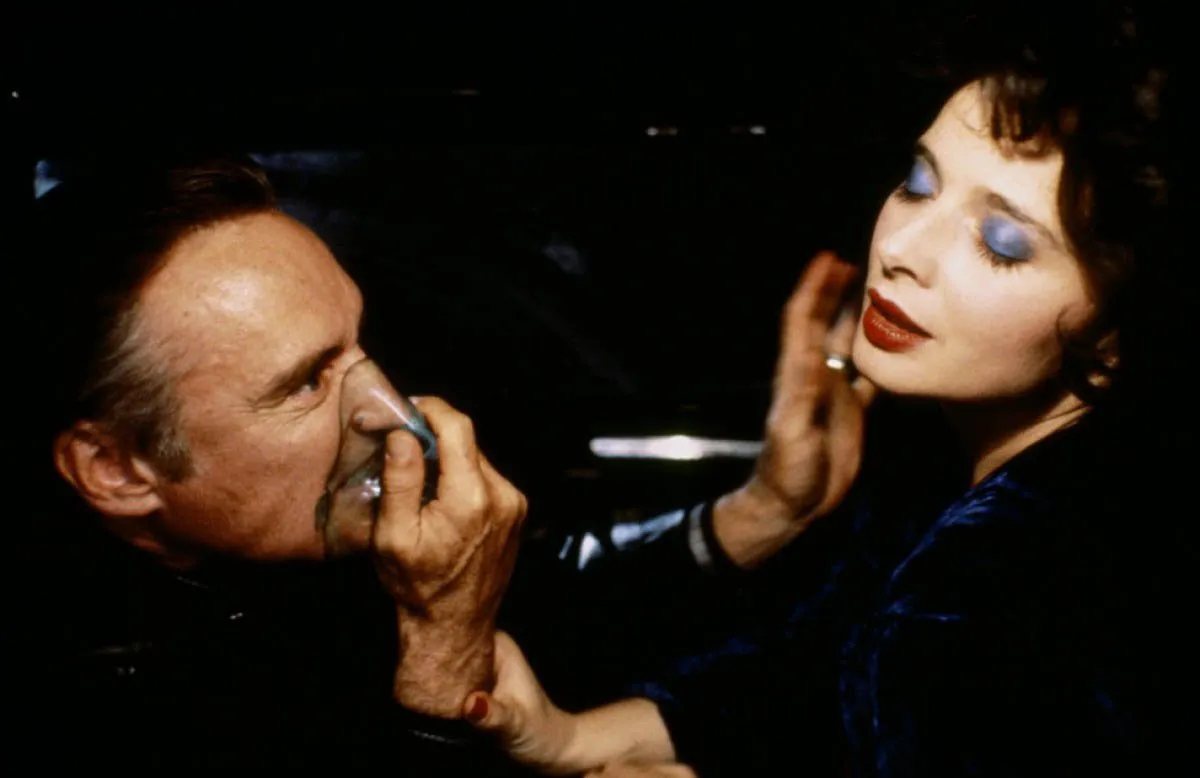
And Frank Booth is one of the most terrifying villains in American cinema precisely because he doesn’t feel entirely like a person who belongs in the real world, yet everything about him feels horribly human. Dennis Hopper plays him like a man whose emotions have completely escaped the boundaries of normal behavior. He is ridiculous and monstrous at the same time. He can make you laugh and then make you wish you hadn’t. There is something almost supernatural about his presence, but the horror comes from knowing that there is nothing supernatural required to create someone like Frank. He is a man who has turned domination into a language and violence into a form of intimacy. His obsession with control is what makes him so frightening. He doesn’t simply want to hurt people. He wants to decide what they are allowed to be.
That tension between the supernatural and the painfully human runs through the entire movie. Blue Velvet often feels like a nightmare, but it isn’t really a movie about escaping reality. It is a movie about seeing reality differently. The strange sound design, the impossible colors, the performances that occasionally feel like they have wandered in from another dimension, Angelo Badalamenti’s music, the almost dreamlike construction of Lumberton itself, all of it creates a world where reality and fantasy are constantly bleeding into each other. Lynch understands that sometimes the most disturbing nightmares aren’t the ones where the rules disappear. They’re the ones where the rules remain perfectly intact and you suddenly realize how horrible those rules can be.
The film’s beauty matters just as much as its darkness. It would be easier if Blue Velvet were ugly from beginning to end. It isn’t. It is gorgeous. Sometimes almost painfully so. Lynch puts tenderness directly beside degradation and refuses to let either one cancel the other out. The blue velvet, Dorothy’s red lips, the nightclub lights, Sandy’s softness, the flowers, the nighttime streets, the darkness between buildings: everything feels deliberately composed, almost like a painting that has been left out in the rain. Beauty doesn’t protect these characters from horror. If anything, it makes the horror feel sharper.
There is something especially fascinating about the relationship between Sandy and Dorothy because they almost feel like two different possibilities of womanhood existing on opposite sides of the same nightmare. Sandy represents the version of femininity Jeffrey can understand: sweet, romantic, innocent, illuminated. Dorothy represents everything that exists outside that comfort, sexuality and trauma and anger and desire and survival. But the movie gradually complicates that division. Sandy isn’t simply untouched innocence, and Dorothy isn’t simply corrupted darkness. Jeffrey’s fantasy of keeping those worlds separate cannot survive contact with reality.
That is where Blue Velvet becomes more than just a mystery or a nightmare. It becomes a film about the stories we tell ourselves about good and evil. We want the world to be divided neatly. We want the beautiful things to be good and the ugly things to be bad. We want monsters to look like monsters. Lynch doesn’t give us that comfort. He puts the monster in the house, the violence inside the bedroom, the darkness underneath the lawn. He also reminds us that the people who enter that darkness aren’t necessarily unchanged by it.
The ending has always fascinated me because it is almost absurdly beautiful after everything that has happened. There is a temptation to read it as a restoration of order, as if the nightmare is over and Lumberton can return to being the perfect little American town we saw at the beginning. But the film doesn’t let us return completely. Once you’ve seen what is beneath the surface, you can’t unknow it. The blue sky looks different. The flowers look different. The white fence feels different. Even the happiness feels haunted by everything that came before it.
Forty years later, that is the part of Blue Velvet that stays with me most. Not simply Frank Booth screaming or Dorothy standing beneath the stage lights or Jeffrey discovering the ear in the grass, but the feeling that the world has two faces and that sometimes they are separated by almost nothing. A lawn. A bedroom door. A curtain. A patch of dirt.
Maybe that is why the movie still feels so alive. It isn’t really warning us that darkness exists. We already know that. It is asking what happens when we finally look at it. What happens when curiosity takes us somewhere we weren’t prepared to go? What happens when desire makes us cross a line? What happens when the beautiful world we’ve constructed for ourselves suddenly reveals the insects underneath it?
Blue Velvet doesn’t answer those questions neatly. It probably shouldn’t. Forty years later, its greatest power is still in that contradiction: it is horrifying and beautiful, tender and cruel, funny and deeply disturbing, dreamlike and painfully real. It looks at a perfect little world and whispers that something is moving underneath it.
Director: Cristian Mungiu Writer: Cristian Mungiu Stars: Sebastian Stan, Renate Reinsve, Lisa Carlehed
Synopsis: An immigrant Romanian family living in Norway is subject to an investigation and faces the scrutiny of the local judicial system.
Everyone knows how a move to a new place feels. It can be disorienting, complicated, and feel as though you don’t fully belong. As such, your life and the inner workings in your household can sometimes differ from others, despite ordinary appearances. This is something to be expected, but what if they end up resulting in a massive divide that challenges whether the new family is in the right or doing the wrong thing? Such is the initial setup of Cristian Mungiu’s Fjord, the winner of this year’s Palme d’Or at the Cannes Film Festival.
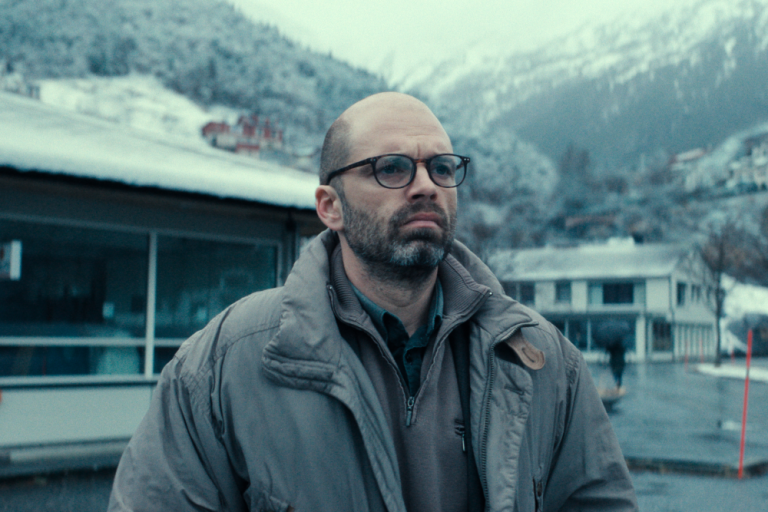
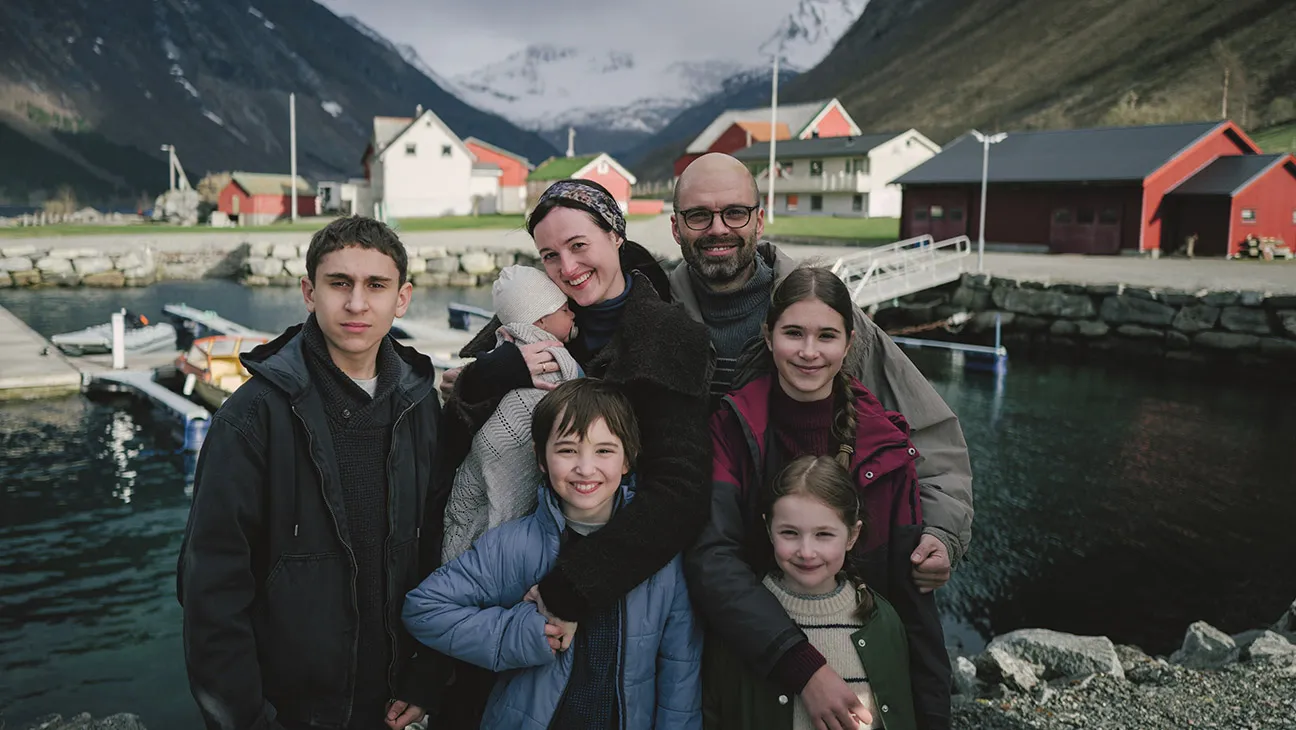
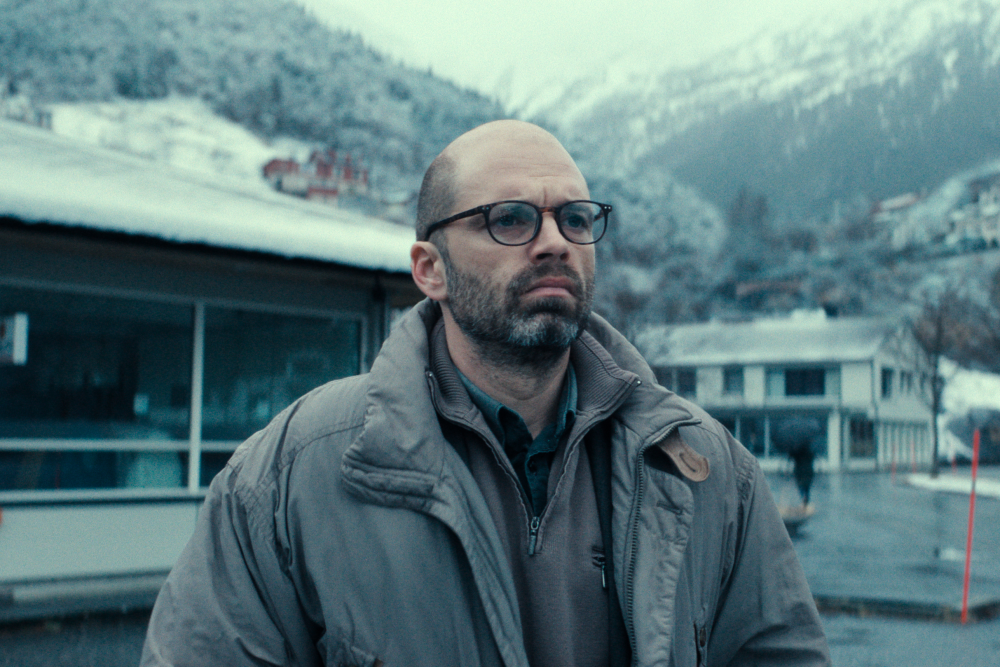
Inspired by true events, Fjord follows Mihai and Lisbet Gheorghiu (Sebastian Stan and Renate Reinsve), who have just moved to a quaint village in Norway along with their five children for work and to start a new life. A conservative Christian family that follows the teachings of the Bible to a T, the Gheorghius are quickly subject to scrutiny and questions from their neighbors as some notice the children seem to have too many constraints and punishments lined up in case they make a mistake. When wounds are noticed on their eldest daughter Elia (Vanessa Ceban), the Gheorghius are immediately swarmed by their neighbors and child protective services, who take their children away. What follows is an intense drama as their values and practices are placed under a microscope and every decision in their lives is questioned.
Fjord rides its very fine tightrope of both morality and acceptance in complex ways, never really picking a side when it comes to its central conflict and which side may be the most correct. As much as some may not agree with the practices of the Gheorghius and how they sometimes discipline their children (a mistake means no attending a birthday party, no smartphones, or watching YouTube allowed, prayers every night), there is empathy to be had in them potentially losing their children for good and not getting to see them grow, as the love for them is sound. Challenging their parenting is also fair, especially as the more progressive neighborhood finds these practices bizarre and dangerous, especially challenging them when the children try to bring religious teachings to school. At the same time, there is some hypocrisy highlighted in how they waste no time in rushing to judgment regarding the Gheorghius and taking away their children, in some cases without proper evidence upfront. It’s thorny, and Mungiu is aware of this with his direction and the presentation, making Fjord sometimes incredibly frustrating to watch. It can be argued, however, that that’s the point of the movie, and how not everything can always be black-and-white.
Stan plays Mihai with a stern coldness, as a father having an iron grip over his beliefs and virtues and how he raises his children, while Reinsve plays the more emotionally concerned mother wondering where she may have gone wrong with her children and questioning the system in place. The movie’s highlights, however, are with said children, as a majority of the runtime is spent with Elia and the eldest son, Emmanuel (Jonathan Ciprian Breazu), who eventually befriend their neighbor’s daughter Noora Halberg (Henrikke Lund-Olsen), who is often trying to get the Gheorghiu children to have more fun and experience life, while also learning from them about having a more structured system at times to live by, once again keeping that tightrope walk in play.
Amidst all its heavier subject matter unfolding, Fjord also remains a stunning movie throughout. Shot gorgeously by Tudor Vladimir Panduru, the quaint town, quiet streets, and gorgeous vistas of cliffs and mountain sides are strikingly captured, with its interior scenes having an increasingly claustrophobic feeling as the story progresses, further elevated by the minimal score from Kaspar Kaae that adds some eeriness to the events. Supporting turns from Lisa Carlehed and Markus Tønseth as Mia and Mats Halberg also provide gravitas to the movie, with Carlehed eventually becoming a key part of the events unfolding with the Gheorghius and wanting to try and help them in some ways.
Over its 2 hour and 26 minute runtime, Fjord eventually becomes a courtroom drama that lights a fuse under itself in multiple ways, bringing everything from tense deliberations to online support campaigns becoming increasingly louder and more hostile, to the table and escalating the stakes for the Gheorghius. Sometimes it can almost feel satirical seeing some of those moments play out, as the way of life of the family is questioned even more so. While many of these events are effective in getting the frenzy and desperation of the situation across, Mungiu does not always expand more on how morally twisted everything can get, sometimes keeping things to the surface level and nothing more. As a result, it can occasionally not feel as provocative as thoughtful as it intends to. In some of those moments, the movie makes use of some effective visual cues, some that aim to provide a bridge or a connection to the two sides represented by the Gheorghius and the town, leading to one particularly terrific moment towards the final act of the movie that feels perfectly placed.
By the end, Fjord proves a rather complex and purposefully frustrating experience that asks many difficult questions and does not always provide the simplest answers, if any at all. Backed by Cristian Mungiu’s solid direction at the helm and stellar work from Sebastian Stan and Renate Reinsve, the movie is one that may not work for everybody, but is definitely one of the more fascinating watches of the year, and one that may bring up some interesting conversations long after the credits have rolled.
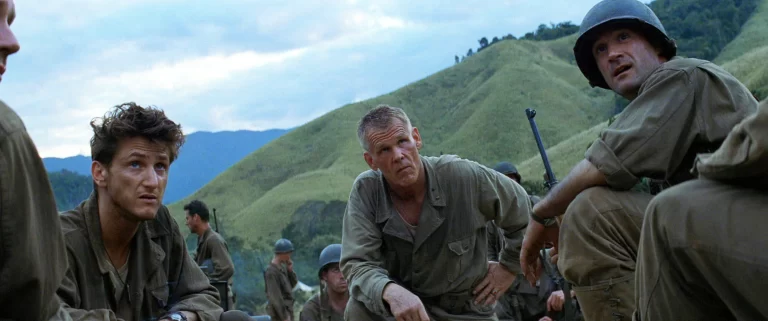
This week on Episode 705 of the InSession Film Podcast, we continued our year-by-year retrospective series by taking a look at 1998! It was a really great year for cinema despite some reservations you’ll see because of how awards season played out. It featured some incredible foreign language films. It was a rockin’ year for summer movies and blockbuster entertainment. The year saw some ambitious movies from new up and comers. International cinema was, of course, excellent as always. And most notably, it was the year of the “dueling movie” with rivalries such as Antz vs A Bug’s Life, Armageddon vs Deep Impact, Saving Private Ryan vs The Thin Red Line and Elizabeth vs Shakespeare in Love. It may not reach the same heights as other years, but it had some pretty great depth. That said, what would be your Top 10?
NOTE: We spend most of our time only discussing our Top 10 movies of 1998, however, as you’ll see below, we have listed our full Top 20 lists from that year.
JD
1) The Thin Red Line
2) Out of Sight
3) Saving Private Ryan
4) Perfect Blue
5) The Big Lebowski
6) Funny Games
7) The Celebration
8) Dark City
9) Pleasantville
10) Central Station
11) The Truman Show
12) Mulan
13) Rushmore
14) Fallen Angels
15) Drifting Clouds
16) Taste of Cherry
17) Happiness
18) Life is Beautiful
19) Enemy of the State
20) Eternity and a Day
Brendan
1) The Thin Red Line
2) Out of Sight
3) Central Station
4) Babe: Pig in the City
5) The Mask of Zorro
6) Pleasantville
7) The Truman Show
8) Drifting Clouds
9) The Parent Trap
10) Buffalo ’66
11) Saving Private Ryan
12) Ronin
13) Taste of Cherry
14) Fallen Angels
15) Mulan
16) The Decline of Western Civlilization Part III
17) The Big Lebowski
18) The Celebration
19) Small Soldiers
20) Snake Eyes
Hopefully you guys enjoyed our lists. If you agree or disagree with us, let us know in the comment section below. Clearly there are a lot of other contenders from 1998 that battled for our lists, that just missed the cut. That being said, what would be your Top 10? Leave a comment in the comment section or email us at [email protected].
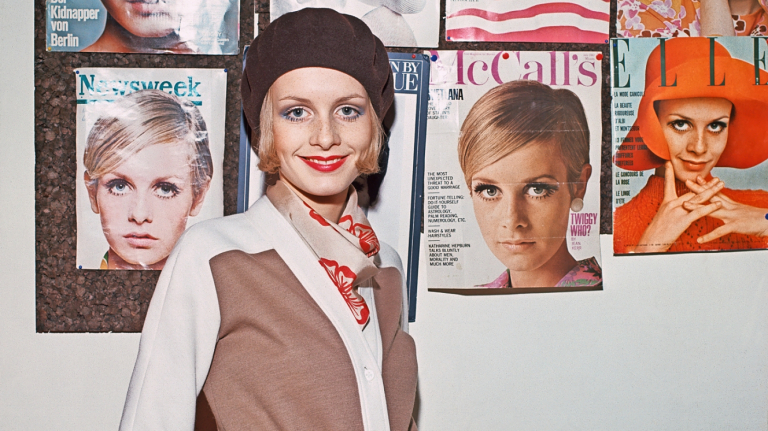
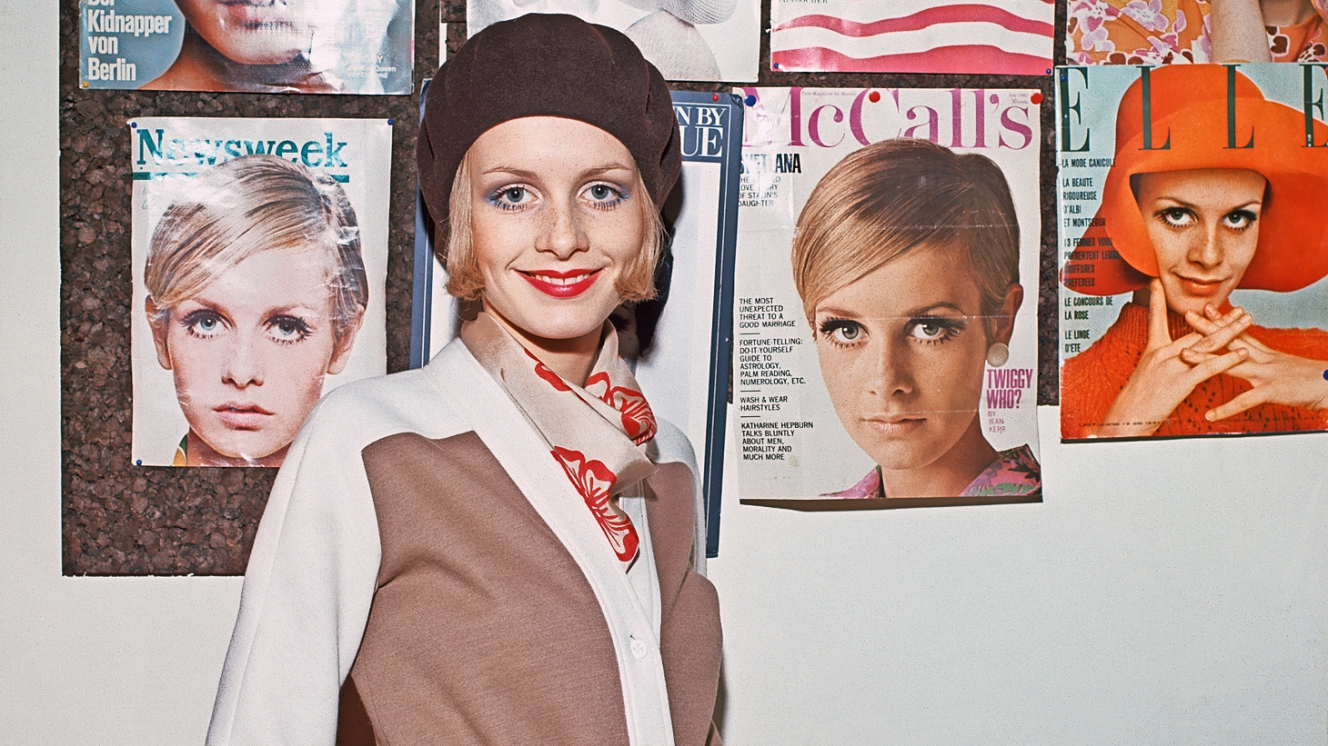
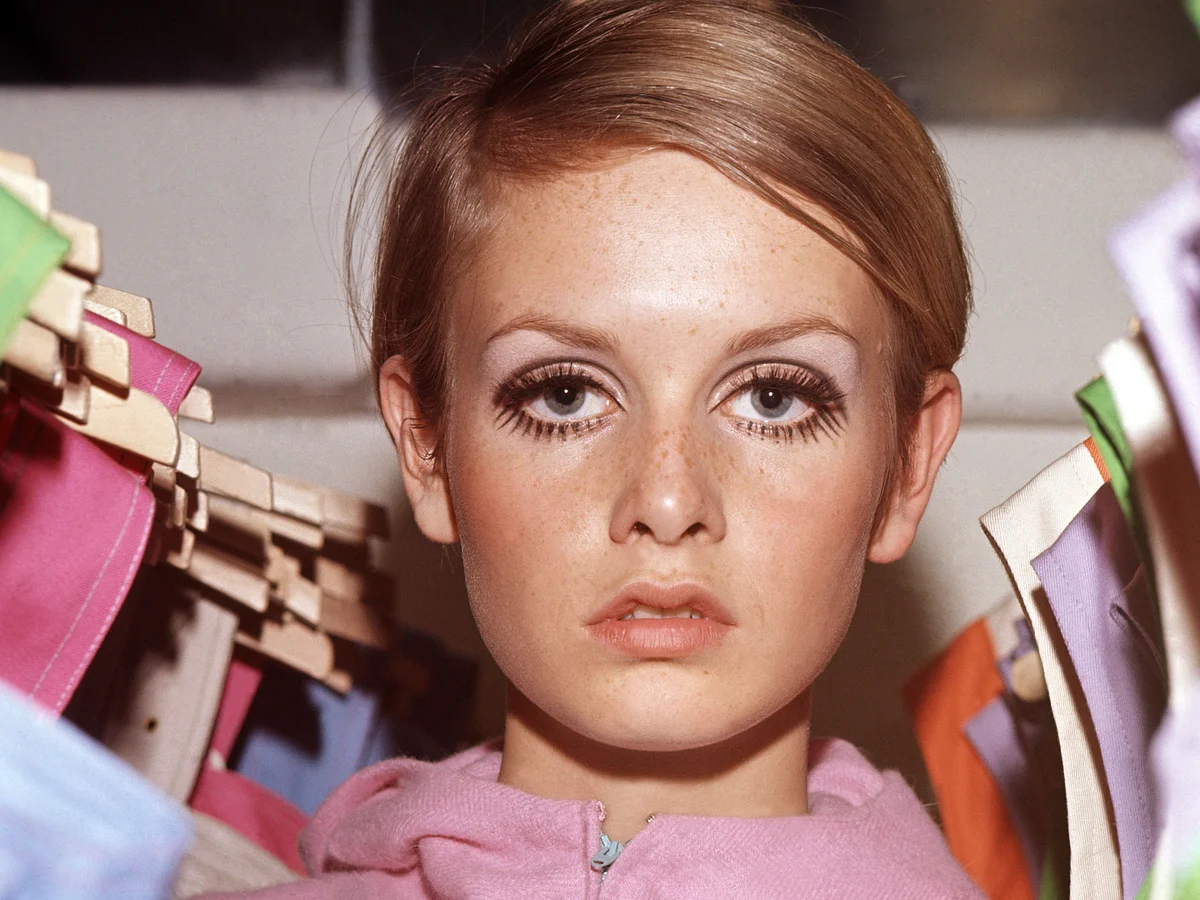
Synopsis: UK model and cultural icon Twiggy, real name Lesley Lawson, whose career kickstarted in the 1960s.
“She lives to be alive, not to be successful. She’s rare” – Dustin Hoffman.
Few names from the world of fashion have become quite as instantly recognizable as Twiggy. At a time when models were often presented as glamorous, distant figures, Twiggy arrived with a completely different look and attitude, becoming one of the defining faces of the 1960s. Now, decades after she first became an international phenomenon, Twiggy gives the woman behind the famous eyelashes, short hair, and unmistakable style the chance to tell her story on her terms.
Directed by Sadie Frost, the documentary combines rare archival footage with contemporary interviews, allowing Twiggy to look back on her upbringing, career, relationships and the extraordinary journey that took her from a working-class London girl to a global cultural icon. What gives this documentary an edge is that it allows Twiggy herself to reflect on the woman she was, the woman she became, and the world that helped shape both.
There is always a danger with documentaries about famous figures that they become little more than a collection of compliments from people who knew them. Twiggy certainly has plenty of admiration, with famous friends, models, and fans including Paul McCartney, Dustin Hoffman, Brooke Shields, Pattie Boyd, and Joanna Lumley contributing their thoughts. Still, their presence also helps demonstrate just how far Twiggy’s influence extended beyond modelling. She wasn’t simply another face on the cover of a magazine. And the documentary shows how everyone had an opinion; they had something to say about her, about her role, about her fashion, and just how popular she was. It’s quite eye-opening – think the popularity of Taylor Swift and then times it by ten.
Twiggy became part of a cultural shift. Her arrival coincided with a younger generation beginning to challenge established ideas about fashion, femininity, and celebrity. She was famously young when her career exploded, having reached international fame before she was even 17, making the scale and speed of her success particularly remarkable.
Fame can look wonderfully glamorous from the outside, but Twiggy doesn’t completely gloss over the fact that becoming a global name at such a young age was an extraordinary adjustment. The documentary begins with her tending to her garden – showing a very different life now from the fame and fortune. Twiggy discusses her mother’s struggles with mental health, but growing up in a happy home, how her career exploded, how that affected her, meeting her husband… she misses nothing, and it feels like a real insight into who she is. For example, who knew her famous short haircut took seven hours?
Visually, the archival material is naturally one of the film’s biggest attractions. Seeing Twiggy (and life in general, streets, music, posters) during the height of her fame provides a reminder of just how distinctive her image was. But it’s also so lovely to see clips of her as an older woman, standing on beaches, in her home; it’s a great, delicate balance.
We have the famous interview with Woody Allen, where she makes a fool of him when he asks her who her favorite philosopher is, and when she asks whose his is, he can’t answer her. All the women are still here for that interview. We see clips from her favorite shoot with David Bowie in Paris and that famous album cover image. And then her transition into acting with the film The Boy Friend and winning two Golden Globes. It’s a jam-packed documentary filled with so much glam it’s hard to keep up.
With so much affection for its subject, there are moments when Twiggy risks becoming celebratory rather than genuinely probing. A documentary about someone whose career intersected with so many major changes in fashion and popular culture could potentially dig even deeper into the pressures and expectations placed upon young women in the public eye. The film does explore the person behind the icon, but there are occasions when you may wish it pushed a little harder.
Nevertheless, Twiggy does well in trying to understand what happens when ordinary beginnings lead to an extraordinary life. From working-class London to international fame, the journey is remarkable precisely because Twiggy never set out to become a symbol of an entire generation.
For anyone interested in fashion, British popular culture, or the changing role of women in the public eye, Twiggy offers an accessible trip back to an era when one young Londoner could walk into the spotlight and change the way the world looked at fashion. It is affectionate, entertaining and packed with fascinating archive material. If you’re a fan of Frost’s work, you should also check out her previous documentary work on fashion designer Mary Quant. There is a clear fascination with the cultural figures who helped reshape British fashion and, consequently, the way women were represented. Twiggy sits comfortably within that conversation. After years of being photographed, discussed and remembered by others, Twiggy finally gets to whisper her own story, and it’s well worth listening to.
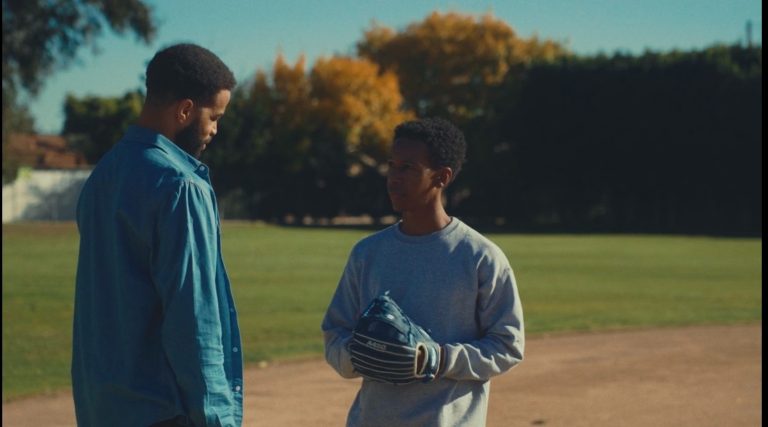
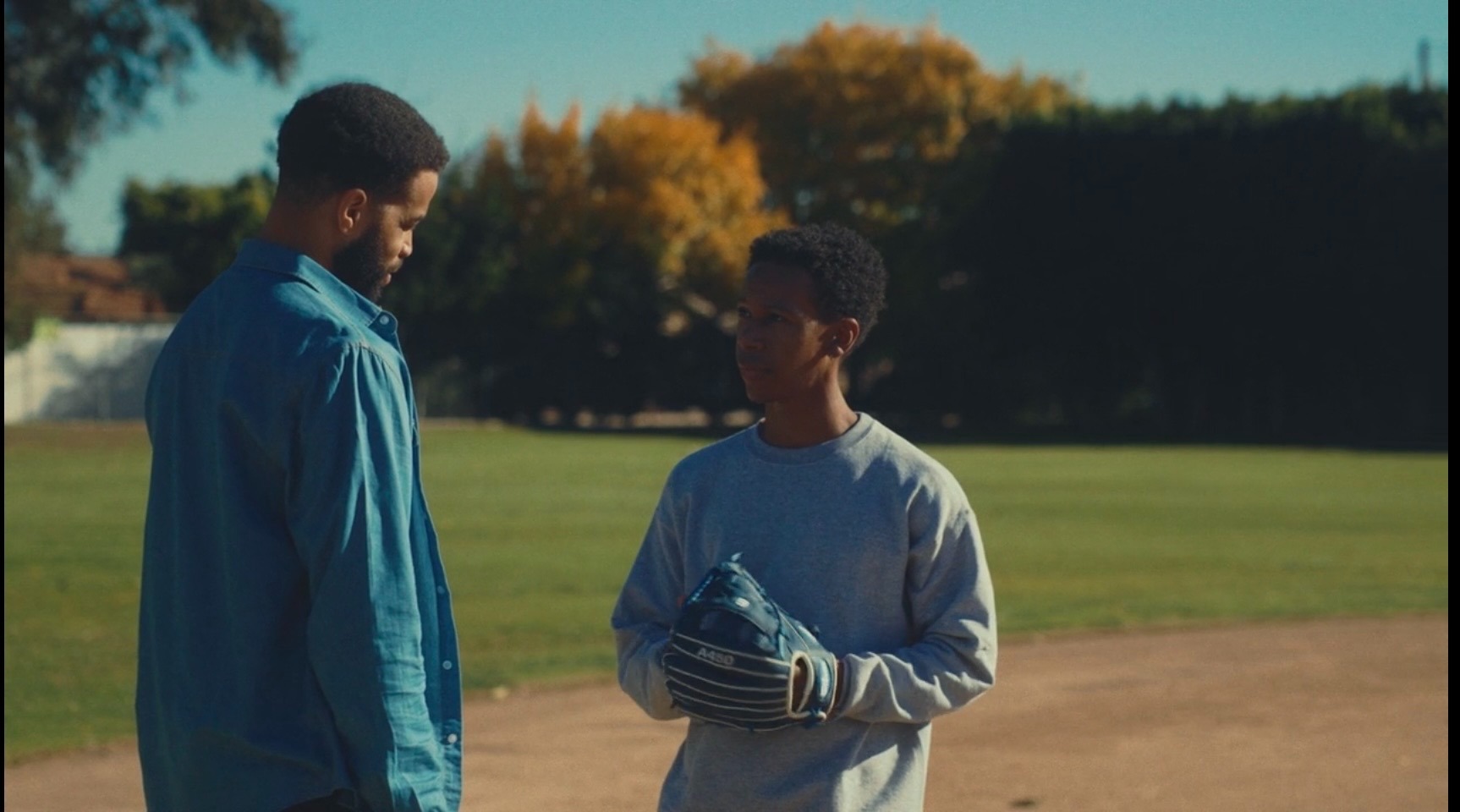
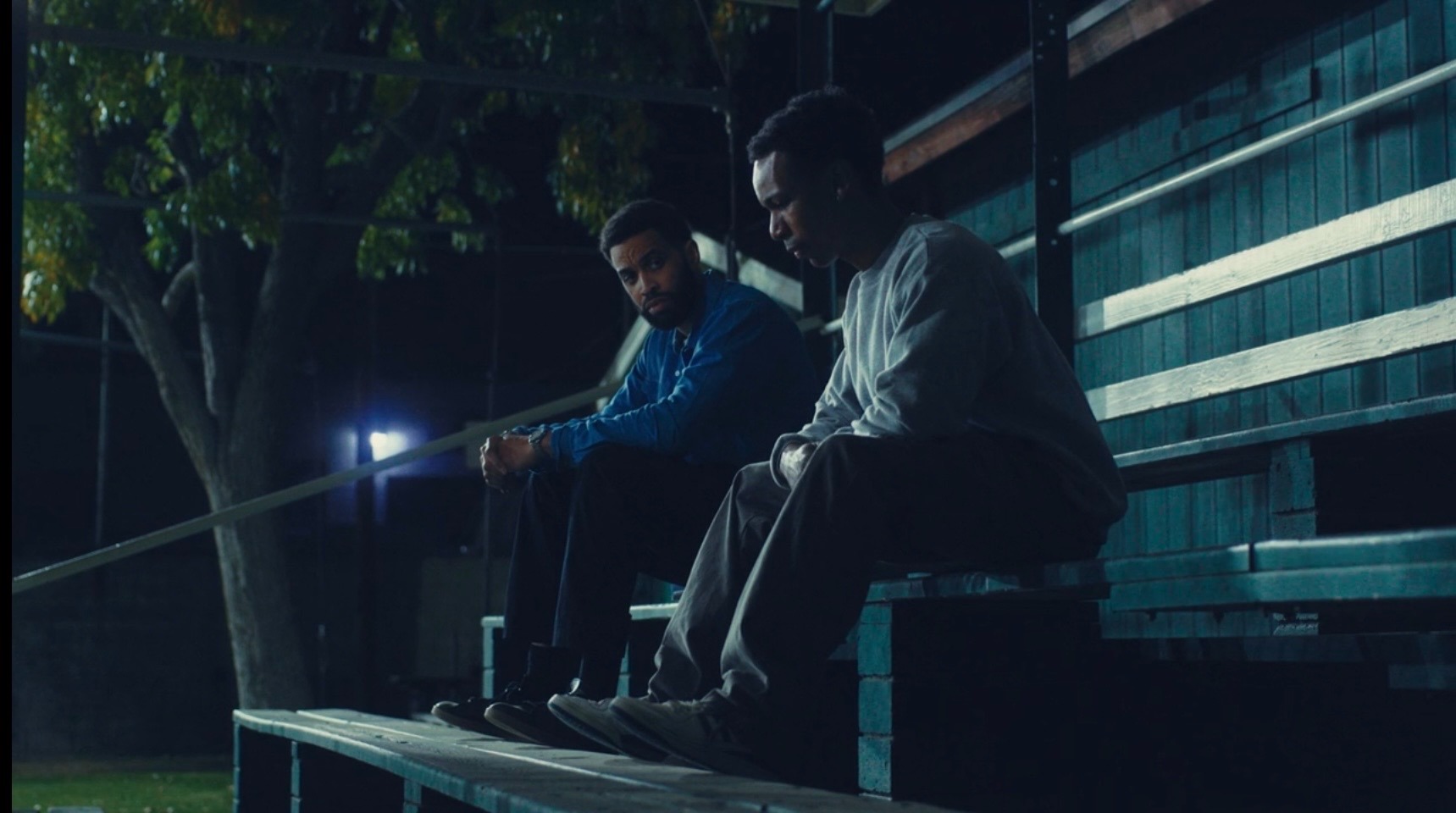
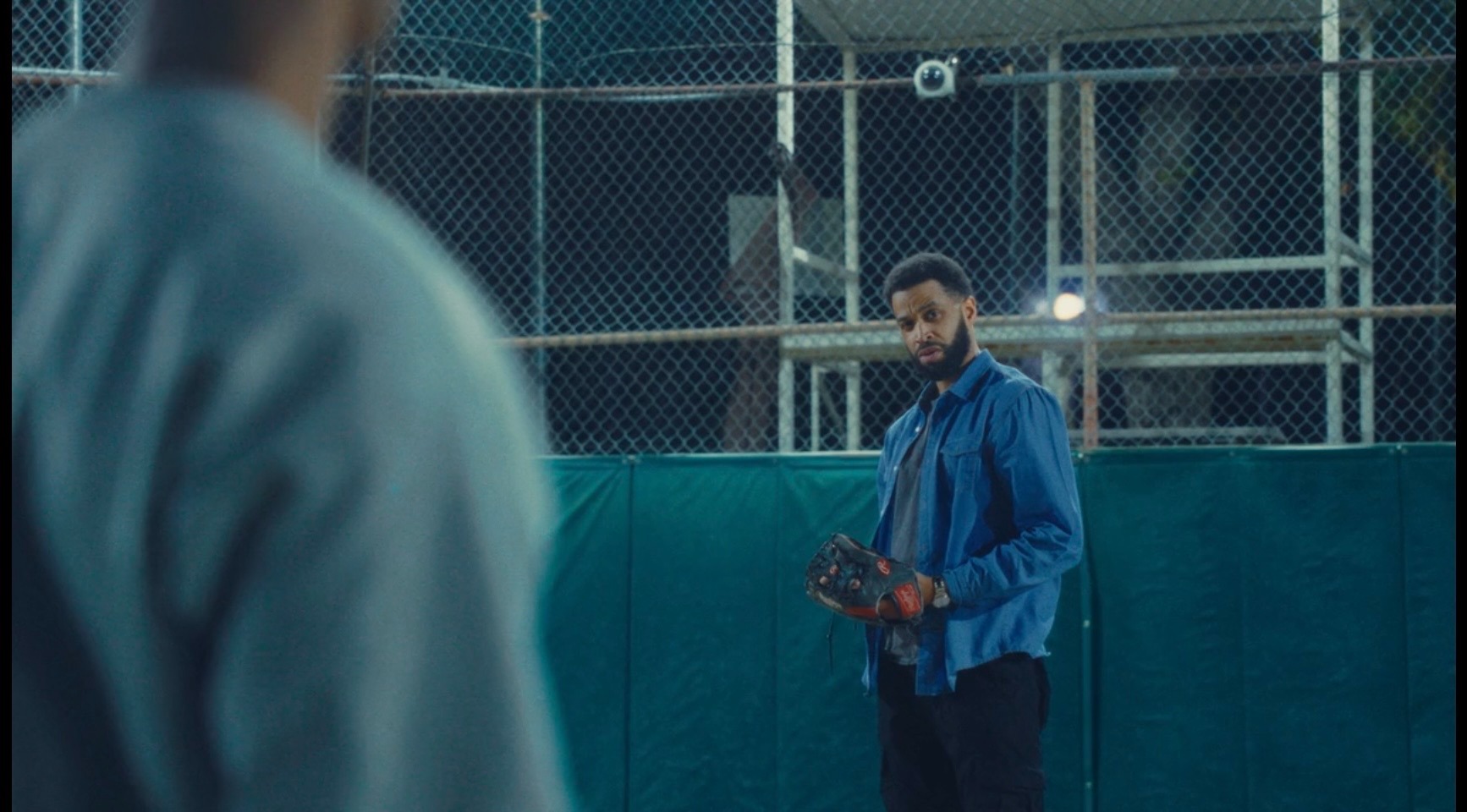
It’s not every day that one watches a movie that touches their soul and leaves them wanting to know more about the process behind making it. Jamarcus Rose & Da 5 Bullet Holesis that kind of film. Watching it, I wanted to get inside the head of its writer/director Marcellus Cox to learn more about his creative process, his artistic choices, and more importantly, his humanity. Especially since Jamarcus Rose & Da 5 Bullet Holes is based on Lamont Taylor’s true story. The film takes place one day in the life of Jamarcus Rose as he meets a mentor before he is drafted to go play Major League Baseball.
Cox is warm, funny, and, more importantly, driven with a passion that holds the whole world in his warm embrace. On behalf of InSession Film, I am honored and privileged to talk about his process, why compassion matters, the value of human life, and his message as an artist.
Jaylan Salah: How did you come up with this creative title:Jamarcus Rose & Da 5 Bullet Holes?
Marcellus Cox: I didn’t know what to call the film. If I have to give credit to anyone for picking the title, I give it to my co-producer, Eric Quincy. We were sitting in the room one night, wondering, “What do we call this?” We knew the story, but we didn’t know what to call it, and he started throwing out names. He said, “If we’re going to give away the film the way it plays out, why don’t we just use Jamarcus in the title? We were going to call it Da 5 Bullet Holes, so we might as well put his name on top of it.” That played out the way that it did and I give all the credit to Eric. That’s always been the biggest thing when it comes to the film. Everybody asks, “Why is it called Jamarcus Rose & Da 5 Bullet Holes? You’ve given the story away.”
Well, if you watch the movie, you won’t even remember by the time you get to it. It’s just a play on the film. Again, I give all the credit to Eric.
JS: Thank you, Eric! Could you tell me a little bit about the inspiration behind this film? I know it’s inspired by true events, but what personally compelled you to make it?
MC: I wanted to put myself in the shoes of the individual who the story is based on. And it’s based on a young man whose name was Lamont Taylor. His story really impacted me. I came from the same neighborhood that he came from, and I realized that this could have easily been my story.
It could have been any one of our stories. So the moment I saw it on the news, I felt deep inside that nobody’s going to do this guy justice. He’s going to be another individual who goes into the wind, and nobody will ever remember him.
I heard his story and saw how talented he was, especially knowing that he was only a couple of months away from being drafted to go play Major League Baseball. I told myself, “I have to adapt this story into a film,” because this shows that everybody has meaning, from the biggest person to the smallest person. We all have meaning, and we’re all here for a reason. This was what I wanted to show and discuss, because I felt that a lot of young, talented men in our neighborhood don’t have that kind of mentorship. Young men don’t always have that sort of presence in their lives. I wanted to showcase that when you do have that, take advantage of it. It’s a blessing. It’s a godsend. As for those who have it, they have to know that it was meant to be.
JS: What do you think is the role of art in taking a news headline and turning it into a human story, flesh and bone and tears?
MC: Exactly, you’re giving pulse in life to something that simply would never have been touched in the light of day. As a filmmaker, I’m always looking between the lines. People see a news article and they see it for what it is. I’m trying to figure out who this individual was. What was his life like? What made him want to go on the journey he was taking to reach this event?
That’s the beauty of art: we can take anything and present it in a vision that no other profession can copy. I knew I had to do that for Lamont’s story because it could have easily been me; a young, talented, black man living in the hood who had a passion for film, but somebody would’ve decided that today was my day. And that’d be it.
You have to read between the lines of those stories about these individuals that would probably never be discussed again. Art allows us to do so. This has been one of those stories so long in the making. It’s a passion project, unfortunately. I’m happy that I was able to walk this journey of building this story and bringing this vision.
JS: To honor the real person that inspired you, casting must have been really difficult.
How did the casting process go?
MC: The easiest role was maybe Jasper, which is Stephen Cofield Jr. I already had him in mind when I was going over the notes that I got from Lamont’s grandmother. And I already envisioned him as that character. The real character sounded just like Stephen, who’s a brilliant, amazing actor, with a wonderful personality. They both fit the same kind of vibe. So casting him was a given.
Casting Jamarcus, however, was creating off of Lamont’s character, whom I never got the chance to meet. That was probably the hardest decision. I used the notes and what I saw in the news coverage of what happened to him. You can see how he was a really good kid. Like any average teenager, he had his flaws, ups and downs, but you can tell that there was a spirit. He had a smile that would light up the room from a mile away. Being able to craft that into my own image, go over the notes, and build a character who’s flawed, but also human, that was maybe the most difficult thing, how to put all that so that you can see it on screen.
It had to be somebody who I know can demonstrate all those personality blends. I auditioned 60-70 actors but I was not happy with any of them. But the moment I saw Duane Ervin, he fit that personality. He was a guy whose smile and charisma you could see from across the room. I know he was the right guy and he fit the mold. The best decision I made was casting him as Jamarcus.
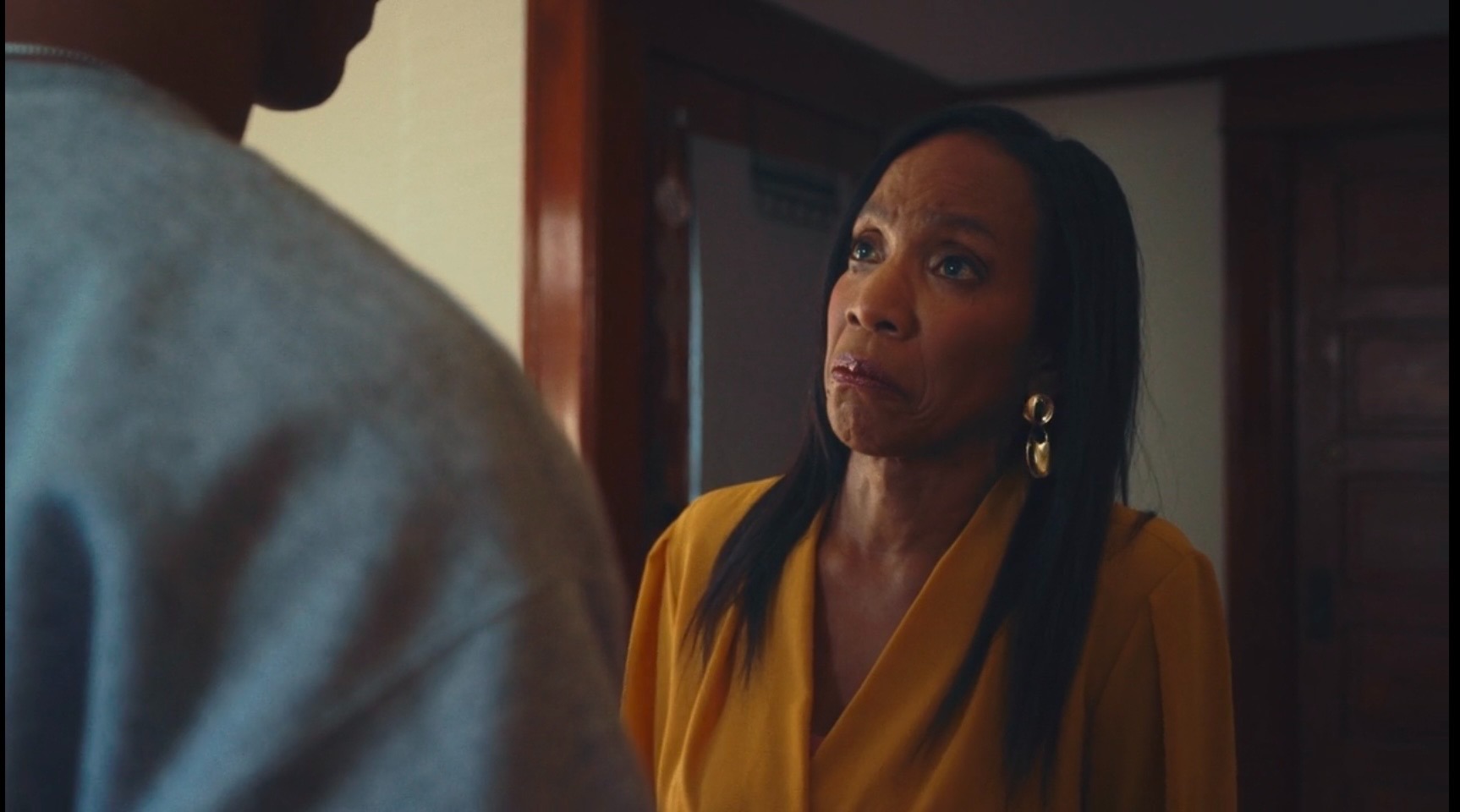
Of course I cast Ruthie Austin as the grandmother, because she reminded me immediately of Lamont’s grandma, who was from the South and had the same voice, tone, and personality as Ruthie. The moment I met her and started talking to her, I also knew that she was the right casting for this role.
Overall, casting was difficult. But I know I cast the right people for this film. And I give all the credit to them creatively. Their performances are amazing. It came naturally with no real instruction. I just let them get into their field and their process, and they took it to where it ultimately went, so they were amazing.
I’m forever grateful to them because without their performances, there’s no telling how this film would have turned out.
JS: What are the real messages that you hope to transmit to the youth of this generation through your short? Do you think this world is more connected or separated because of technology?
MC: It seems separated. But if there’s anything that I know about life is that everything comes back full circle, no matter what the time period is. Everything that you think you’re seeing now, we’ve already seen.
That’s the true form of connection. We’re not showing this movie only to show what happened in this story, but we know it because we’ve experienced it ourselves. Although we might see things differently in the world, the world operates the same way at large.
To [young men of this generation], believe me, they treat you the same way that they treated me before. But if you can get away from that, off that cord of social media and live real life as it’s meant to be, this film is telling you, “Hey, we’re in this together.”
We’re not fighting you. We’re not trying to hurt you. We don’t hate you. We’re just trying to show you that this is how life is. We want you to know that everyone is experiencing the same thing as you. Our goal is to help you progress further in areas we didn’t have the opportunity to before. That’s what our film aims to do.
Even though there might be a disconnect in time between generations because of the time period and how life works, it’s still the same way. I want you to know we’re in this with you, and we’re going to do everything we can to help make sure that you don’t have to go through this alone, or pass this down to the next generation.
JS: What were the biggest obstacles that you faced while making this film?
MC: The biggest obstacle -and I could be speaking for every other indie filmmaker- was funding. That was the hardest thing, because you’re trying to get as many projects off the ground. One project may please somebody, but not please the person next in line.
Another obstacle was the inability to secure the rights, unfortunately. This is something that I regret. It wasn’t because I wasn’t able to get the opportunity, but by the time I was ready to shoot the film, Lamont’s grandmother had passed away, so I was never able to fully get the life rights. Unfortunately, she never got a chance to read the full script. So I altered it but I still based it solely on his story. However, this was one thing that if I could do it all over again, I would.
I’m forever grateful to Sandra Evers-Manly of the Black Hollywood Education & Resources Center who read the script and believed in me and my vision. She felt that this was worthy to invest in. She wanted someone capable of telling the story and I feel like I’ve done that justice. So I’m forever grateful because without her, this film probably would have never seen the light of day. She is the real MVP to be able to bring this to life.
I’m forever grateful to her for taking the chance on me and allowing my story to be seen and heard.
JS: Which was the most difficult scene for you to shoot?
(The next answer features major spoilers for the film)
MC: It may not seem like it, but it’s the scene in the car towards the end where you’ll see Jamarcus and Jasper sitting and talking. It’s the last conversation.
It was difficult because when we shot the film, unfortunately, we started during daylight saving time in L.A. It was supposed to be a daytime scene originally, then we had to switch it. However, it actually worked out better for the film, and I’m happy that it played out that way.
Other than that, though, I think the way that we planned things out and worked with an experienced, veteran crew, made life simpler for everybody. In turn, the film wasn’t really difficult to shoot, just the one scene.
It’s probably on me, too, because I should have started shooting a lot earlier, so I take blame for that. But it played out really well and made the scene even better from that perspective, so I’ll live with that. You gotta take the good with the bad.
JS: What is the next journey for Jamarcus Rose & Da 5 Bullet Holes?
MC: We’ve played the festival circuit, so far in about 14 festivals, most prominently Cinequest, Julien Dubuque International Film Festival, Snake Alley Festival of Film, and Roxbury International Film Festival. We still have a couple more screenings that are going to take place, and by the end of the year, we’ll be done. We have our week-long theatrical screenings in place to qualify for the Academy. Hopefully that will work in our favor. We’re excited for the second half of the year. Afterwards, we’ll see where it goes.
I would love to showcase this for students. I would like to screen this in schools because it would be a great educational tool for young men in particular. I also hope to reach out to mentorship programs that are working with young men and women. I also have an idea about doing a feature version of this because there’s more to the story.
JS: Please do!
MC: I have been working on a feature script for it. Right now, I’m about 70 pages into it. Hopefully I’ll get another 20-25 more to tell the whole story. That’s the next plan and hopefully be able to get a feature made out of it. Because I’ve had a lot of people who’ve asked that from me, too. So all I’m saying, stay tuned.
JS: What do you hope the average viewer to feel or learn after watching your film?
MC: Live your life to the absolute fullest and know that you matter to somebody.
Regardless of race, everybody’s life has a meaning, a purpose, and something to offer. Even when it may not seem like it, whenever you look at somebody that may not align with your creed, you have to know that it’s not up to you to judge others. There’s somebody out there who loves and cares for that individual and wants to see them thrive and succeed in life.
Director:Jennifer Peedom Writer: Luke Davies Stars: Willem Dafoe, Tom Hiddleston, Genden Phuntsok
Synopsis:The untold and inspiring tale of one of the most important mountain climbers in history who, with Edmund Hillary, became the first person to reach the summit of Mount Everest..
Summiting Mt. Everest remains one of the most impressive feats any human can achieve. The first successful ascent came in 1953 courtesy of a British expedition that, rather humorously, relied on a New Zealander in Sir Edmund Hillary to finally reach the top. Hillary, though, wasn’t alone at the summit, as he was joined by the lesser-known Tenzing Norgay. Thanks to Australian filmmaker Jennifer Peedom, Tenzing tells the truly remarkable story of the man whose name is so often overshadowed by his climbing partner.
Scripted by Luke Davies, Tenzing blends together three distinct timelines. Starting in the 1920s, audiences are introduced to a young Tenzing growing up in a remote Tibetan village. There, unbeknownst to him at the time, he meets legendary climber George Mallory (Johnny Flynn), who sets in motion Tenzing’s fascination with Chomolungma, the Tibetan name for Mt. Everest.
From there, the movie settles into its main storyline in 1953. An adult Tenzing (Genden Phuntsok), caring for his two daughters following his wife’s passing, has been selected as head Sherpa for Britain’s latest attempt to summit the mountain. Alongside a British contingent headed by Colonel John Hunt (Willem Dafoe), Tenzing must endure the perilous climb and grueling physical environment while navigating a number of personal challenges. Making those challenges slightly easier is his flourishing friendship with Ed Hillary (Tom Hiddleston).
However, in nonlinear fashion, Peedom also weaves in the story of a younger Tenzing (Tenzin Dalha), exploring how he met his wife and how, together, they risked everything to leave their home village for Darjeeling. There, Tenzing could pursue his dream of becoming a Sherpa, guiding European expeditions up Everest and providing a better life for their prospective family.
On the surface, Tenzing is a fairly formulaic biopic. It tells the story of an extraordinary individual who becomes one of the first two people confirmed to have reached the summit of the world’s highest mountain. To Peedom’s credit, the use of nonlinear storytelling is at least an attempt to make this tired genre feel a little more exciting. Unfortunately, it can also be to the movie’s detriment. During some of the most intense and anxiety-inducing climbing sequences, audiences are suddenly taken out of the action for a flashback to Tenzing’s past.
That has a real impact on the pacing and tone. Audiences can be fully immersed in this fast-paced rollercoaster, sitting on the edge of their seats and not knowing what to expect next, only to suddenly be transported back to a village where their emotional heartstrings are being tugged at. It creates severe tonal whiplash, like a car accelerating to 100 miles per hour only to slam on the brakes before immediately hitting the accelerator again. It definitely keeps you on your toes, but not always for the right reasons.
On the flip side, Davies’ script and Peedom’s direction give Sherpas a level of prominence rarely afforded to them in a major Western production. Often discriminated against and treated as lesser than their European counterparts, they are instead shown to be indispensable to these expeditions. It’s a genuine celebration of just how astounding the Sherpas are while presenting their culture in an incredibly respectful light. Western audiences should come away with a much deeper understanding of just how vital these people have been to the history of Everest.
Discrimination remains at the forefront throughout the movie. While the Sherpas understandably bear the brunt of it, rather surprisingly, even the Kiwi members of the British expedition find themselves targeted. The film portrays Colonel Hunt as someone whose traditional way of thinking remains firmly entrenched even as the expedition approaches the climax of the climb: if your face didn’t fit, you weren’t worthy. His reluctance to put Hillary and Tenzing in position to summit, despite their obvious ability to do so, becomes another example of the prejudices the pair have to overcome.
Undeniably, the best aspect of Tenzing is simply how beautiful it looks. It would be easy to lose count of the sheer number of breathtaking visual sequences cinematographer Stefan Duscio creates. The sweeping frames of Nepal’s mountains result in some of the most striking imagery you’re likely to see. That makes it a shame most will only experience them on a screen at home, as these vistas were created to be seen on the biggest screen possible.
While the film doesn’t provide the most convincing foundation for how their blossoming friendship begins, Genden Phuntsok and Tom Hiddleston do some extremely solid work in making audiences buy into the relationship. Neither is given extensive material to show off everything they can bring, but both make the most of what they’re given. Phuntsok brings a believable sense of emotion alongside an undeniable charm, while Hiddleston proves to be a very convincing Kiwi, delivering some lines that will inevitably bring a smile to your face.
As the credits begin to roll, there is a lingering sense that a story as remarkable as Tenzing Norgay’s could have been told slightly better. Tenzing is undoubtedly an easy and enjoyable watch, elevated by breathtaking cinematography, a pair of charming central performances and a long-overdue celebration of the Sherpas who made these historic expeditions possible. But a story as momentous as this should leave you wanting to jump out of your chair and give it a round of applause. Instead, while you might, like me, give it a firm nod of approval, it never quite earns the rapturous reception its subject deserves.
The 98th Academy Awards was an interesting year, as we saw history being made. Whether it was witnessing the inaugural award for Best Casting being given out or seeing a supernatural horror film with vampires break the record for most nominations at 16, it was refreshing to see the Academy change from their old ways and do something a little different. There was one category that I always find fascinating to see on Oscar nomination morning, and that was Best Film Editing.
For better or worse, a film’s pace can make or break an audience’s attention. If you cut a few frames too early on a fight scene, then the audience is confused about what they just saw. If you hold onto a shot for too long, the audience’s patience is demolished. But with a skilled editor, you can turn a tediously slow scene into a tension-filled sequence.
Something to keep note of is that this is a category that correlates with the Best Picture winner. Since its inception, only 11 films have won the top prize without getting a nomination from this category; the latest film to not get a Film Editing nomination was Siân Heder’s CODA. Hence why it’s vital for a film’s chances at winning the top prize is to get nominated for the category.
This season, we saw One Battle After Another beat out F1, Sinners, Sentimental Value, and Marty Supreme for Best Film Editing. Some of my colleagues weren’t too sure it would win the category, but I did for many reasons. One of them being that ever since the film was screened in September I knew the voters would go for it. Not only was it considered one of the stronger contenders in the field, but its pacing worked incredibly well.
Film editor Andy Jurgensen managed to string together a 162-minute film without losing its brisk energy. Within the first 40 minutes, I was not only hooked into the story but I didn’t realize how much time had flown past me. Even during the sections where the film had to slow down, I felt that Jurgensen knew how to keep everything moving at a constant rate.
As far as the precursors go, he managed to walk away with the BAFTA and American Cinema Editors (ACE) Award in the Comedy category; two of which were voted upon by industry voters, making this a huge sign that One Battle After Another would win the category at the Oscars. While it did lose to F1 at the Critics’ Choice Awards, it wasn’t enough to dethrone Jurgensen from winning the prize. The other nominees were more “happy to be there” as opposed to any legit threat from winning the Oscar…except for one.
Sinners had been building up momentum ever since it premiered in theaters back in April. I personally didn’t think it would amount to much, as there’s been an unfortunate history for horror films at the Academy Awards. But with how slim the field was getting for top contenders and Sinners being a financial success for Warner Brothers, it made sense for Ryan Coogler’s film to make it into the final ten. Once it got into the field and even won the Drama category at ACE, it made some wonder if Sinners could pull off the Best Picture upset. In the end, it wasn’t enough to overpower One Battle After Another.
As for the other nominees, F1 was edited by a previous Oscar-winning film editor by the name of Stephen Mirrione. His background as well as the branch’s history of nominating flashy films was enough to showcase the film being a strong contender. Sentimental Value got into the field based on the passion the film had garnered since its premiere at the 78th Cannes Film Festival. Even if it did have a slow burn to its pacing, sometimes if a film has enough support they’ll have a better shot at getting into the field.
Marty Supreme was a potential bubble contender. Some pundits didn’t think it could get into the Film Editing category, while others did. I personally felt that this was another flashy contender the branch loves to nominate. It also helped that at the time getting a nomination here might’ve helped a film’s chances at a Lead Actor win. It doesn’t always guarantee you the win, as only 5 actors in the expanded era managed to win the trophy without said film getting the editing nod:
Jeff Bridges in Crazy Heart (2009)
Eddie Redmayne in The Theory of Everything (2014)
Casey Affleck in Manchester by the Sea (2016)
Gary Oldman in Darkest Hour (2017)
Brendan Fraser in The Whale (2022)
Outside of that, every other Lead Actor recipient has managed to score an editing nod for their film since the Best Picture field expanded. Something else I thought was fascinating was that co-editor Josh Safdie received four Oscar nominations in a single year. Other people who had accomplished this achievement in the past include:
Elliot J. Clawson for
The Cop (1928) [Best Writing]
Sal of Singapore (1928) [Best Writing]
Skyscraper (1928) [Best Writing]
The Leatherneck (1929) [Best Writing]
Walt Disney
Ferdinand the Bull (1938) [Best Short Subject (Cartoon)]
Brave Little Tailor (1938) [Best Short Subject (Cartoon)]
Good Scouts (1938) [Best Short Subject (Cartoon)]
Mother Goose Goes to Hollywood (1938) [Best Short Subject (Cartoon)]
The Living Desert (1953) [Best Documentary Feature]
The Alaskan Eskimo (1953) [Best Documentary Short]
Toot, Whistle, Plunk and Boom (1953) [Best Short Subject (Cartoon)]
Rugged Bear (1953) [Best Short Subject (Cartoon)]
Bear Country (1953) [Best Short Subject (Two-reel)]
Ben and Me (1953) [Best Short Subject (Two-reel)]
Francis Ford Coppola
The Conversation (1974) [Best Picture and Original Screenplay]
The Godfather Part II (1974) [Best Picture, Director, and Adapted Screenplay]
Warren Beatty
Heaven Can Wait (1978) [Best Picture, Director, Lead Actor, and Adapted Screenplay]
Reds (1981) [Best Picture, Director, Lead Actor, and Original Screenplay]
Alan Menken
Beauty and the Beast (1991) [Best Original Score and Original Song (Beauty and the Beast, Be Our Guest, and Belle)]
Joel and Ethan Coen
No Country for Old Men (2007) [Best Picture, Director, Adapted Screenplay, and Film Editing]
Alfonso Cuarón
Roma (2018) [Best Picture, Director, Original Screenplay, and Cinematography]
Chloé Zhao
Nomadland (2020) [Best Picture, Director, Adapted Screenplay and Film Editing]
Jacques Audiard
Emilia Pérez (2024) [Best Picture, Director, Adapted Screenplay, and Original Song for El Mal]
Sean Baker
Anora (2024) [Best Picture, Director, Original Screenplay, and Film Editing]
Going back to the film itself, Marty Supreme had no chance at winning the editing category or really any of its 9 categories. You could attribute its shut-out to the aggressive campaign by Timothée Chalamet that turned off certain voters, the past controversy on Josh Safdie that came up during the season, or the “Phase 2” voting decline that got the film to go home with nothing. Either way, I think the creators behind it should be proud that they got a ping pong movie to gross over $191 million worldwide.
Even if I’m not as big of a fan of every film on this list, it’s still an impressive lineup. If anything, it’s a step up from last year which was filled with underwhelming contenders. I would’ve liked to have seen something like Hamnet join the five, but I understand why it didn’t.
The film had enough support to get 8 nominations and a Lead Actress win for Jessie Buckley, but also had a fair amount of detractors for its pacing or overall experience. Regardless, I’m extremely happy the Academy went with the right choice. One Battle After Another accomplished what few films could do: make a 162-minute flick feel like two hours had passed by.
Some people would wait until the first big festivals are complete before updating their Oscar nominations. I call those people cowards. Where’s the fun in waiting to see what shakes out? Take a chance and dare to make a fool of yourself. I present the “as of right this very moment” Oscar predictions for the 99th ceremony.
BEST PICTURE
Rank
Picture
1
The Odyssey
2
La Bola Negra
3
Wild Horse Nine
4
Fjord
5
Dune: Part Three
6
The Invite
7
All of a Sudden
8
Behemoth!
9
Being Heumann
10
Project Hail Mary
11
The Debut
12
Ink
13
Digger
14
Sense and Sensibility
15
Obsession
BEST DIRECTOR
Rank
Director
1
Christopher Nolan, The Odyssey
2
Javier Ambrossi and Javier Calvo, La Bola Negra
3
Martin McDonagh, Wild Horse Nine
4
Ryusuke Hamaguchi, All of a Sudden
5
Olivia Wilde, The Invite
6
Cristian Mungiu, Fjord
7
Denis Villeneuve, Dune: Part Three
8
Tony Gilroy, Behemoth!
9
Sian Heder, Being Heumann
10
Robert Eggers, Werwulf
BEST ACTOR
Rank
Actor
1
Andrew Scott, Elsinore
2
John Malkovich, Wild Horse Nine
3
Tom Cruise, Digger
4
Sebastian Stan, Fjord
5
John Turturro, The Only Living Pickpocket in New York
6
Robert Pattinson, Primetime
7
Ryan Gosling, Project Hail Mary
8
Guitarricadelafuente, La Bola Negra
9
Matt Damon, The Odyssey
10
Pedro Pascal, Behemoth!
BEST ACTRESS
Rank
Actress
1
Julianne Moore, The Debut
2
Inde Navarrette, Obsession
3
Ruth Madeley, Being Heumann
4
Renate Reinsve, Fjord
5
Cynthia Erivo, Prima Facie
6
Virginia Efira, All of a Sudden
7
Sophie Okendo, Clarissa
8
Sandra Huller, Fatherland
9
Marion Bailey, Tender Loving Care
10
Daisy Edgar-Jones, Sense and Sensibility
BEST SUPPORTING ACTOR
Rank
Actor
1
Guy Pearce, Ink
2
Sam Rockwell, Wild Horse Nine
3
Paul Giamatti, The Debut
4
John Goodman, Digger
5
Edward Norton, The Invite
6
Steve Buscemi, Wild Horse Nine
7
Mark Ruffalo, Being Heumann
8
John Leguizamo, The Odyssey
9
Jeremy Strong, The Social Reckoning
10
Channing Tatum, Josephine
BEST SUPPORTING ACTRESS
Rank
Actress
1
Anne Hathaway, The Odyssey
2
Penelope Cruz, La Bola Negra
3
Mariana Di Girolamo, Wild Horse Nine
4
Tao Okamoto, All of a Sudden
5
Sandra Huller, Digger
6
Samantha Morton, The Odyssey
7
Kate O’Flynn, Tender Loving Care
8
Penelope Cruz, The Invite
9
Esme Creed-Miles, Sense and Sensibility
10
Elizabeth Debicki, The Futher Mis-Adventures of Cliff Booth
BEST ORIGINAL SCREENPLAY
Rank
Film
1
Wild Horse Nine
2
The Debut
3
Fjord
4
Club Kid
5
Behemoth!
6
Josephine
7
Digger
8
Minotaur
9
Tender Loving Care
10
Obsession
BEST ADAPTED SCREENPLAY
Rank
Film
1
La Bola Negra
2
All of a Sudden
3
The Invite
4
Project Hail Mary
5
Being Heumann
6
The Odyssey
7
Wildwood
8
The Further Mis-Adventures of Cliff Booth
9
Clarissa
10
Dune: Part Three
BEST ANIMATED FILM
Rank
Film
1
Wildwood
2
Toy Story 5
3
Ray Gun
4
Forgotten Island
5
Tangles
6
Hoppers
7
Iron Boy
8
Hexed
9
Shaun the Sheep: The Beast of Mossy Bottom
10
In Waves
BEST INTERNATIONAL FILM
Rank
Film
1
La Bola Negra
2
Fjord
3
All of a Sudden
4
Minotaur
5
Possible Love
6
Fatherland
7
Everytime
8
Coward
9
Rose
10
Ben’Imana
BEST DOCUMENTARY FEATURE
Rank
Film
1
American Doctor
2
Naza
3
Once Upon a Time in Harlem
4
You Can See Everything
5
Nuisance Bear
6
Rehearsals for a Revolution
7
14th
8
One in a Million
9
Musk
10
The History of Concrete
BEST CASTING
Rank
Film
1
The Odyssey
2
La Bola Negra
3
Wild Horse Nine
4
Dune: Part Three
5
Project Hail Marry
6
Being Heumann
7
Behemoth!
8
Digger
9
The Debut
10
Fjord
BEST CINEMATOGRAPHY
Rank
Film
1
The Odyssey
2
La Bola Negra
3
Dune: Part Three
4
Werwulf
5
Project Hail Mary
6
Wild Horse Nine
7
Digger
8
Fjord
9
Sense and Sensibility
10
Fatherland
BEST VISUAL EFFECTS
Rank
Film
1
Project Hail Mary
2
Dune: Part Three
3
The Odyssey
4
Godzilla Minus Zero
5
Wildwood
6
Spider-Man: Brand New Day
7
Whalefall
8
The End of Oak Street
9
Clayface
10
Avengers: Doomsday
BEST ORIGINAL SCORE
Rank
Film
1
The Odyssey
2
La Bola Negra
3
Project Hail Mary
4
Disclosure Day
5
Wild Horse Nine
6
Dune: Part Three
7
Behemoth!
8
The Debut
9
Wildwood
10
Digger
BEST ORIGINAL SONG
Rank
Song
1
“This City May Have Chewed Me Up (But It Hasn’t Spit Me Out)” from The Debut
2
“La Nieve” from La Bola Negra
3
“I Knew It, I Knew You” from Toy Story 5
4
“By Any Means” from By Any Means
5
“Let Me Sell You a Dream” from Musk
6
“How to Write a Song (Without You)” from Power Ballad
7
‘Runway” from The Devil Wears Prada 2
8
“When I’m Home” from The Odyssey
9
“Chains of Love” from “Wuthering Heights”
10
TBD from Wildwood
BEST PRODUCTION DESIGN
Rank
Film
1
The Odyssey
2
Dune: Part Three
3
Project Hail Mary
4
Werwulf
5
La Bola Negra
6
Digger
7
Backrooms
8
Sense and Sensibility
9
“Wuthering Heights”
10
Ink
BEST COSTUME DESIGN
Rank
Film
1
Sense and Sensibility
2
Werwulf
3
The Odyssey
4
Dune: Part Three
5
“Wuthering Heights”
6
La Bola Negra
7
Digger
8
The Futher Mis-Adventures of Cliff Booth
9
Wild Horse Nine
10
Being Heumann
BEST MAKEUP AND HAIRSTYLING
Rank
Film
1
The Odyssey
2
Dune: Part THree
3
Digger
4
Werwulf
5
Clayface
6
Michael
7
Wicker
8
Rose
9
Obsession
10
La Bola Negra
BEST SOUND
Rank
Film
1
The Odyssey
2
Dune: Part Three
3
Project Hail Mary
4
La Bola Negra
5
Werwulf
6
Disclosure Day
7
Behemoth!
8
Digger
9
The Debute
10
Obsession
BEST LIVE ACTION SHORT – coming soon BEST DOCUMENTARY SHORT – coming soon BEST ANIMATED SHORT – coming soon
Director:Danny Boyle Writer: James Graham Stars: Jack O’Connell, Guy Pearce, Claire Foy
Synopsis:A group of misfits and visionaries had an idea for a new kind of news – one that would give the people what they want, and would change the face of the world we live in today.
Danny Boyle has cemented himself as one of the most ingenious filmmakers working today. So it feels like the perfectly ironic match made in heaven that he was chosen to create a biographical drama about Larry Lamb and Rupert Murdoch, the two people in charge of the downfall of the art of journalism. For large parts of Ink’s runtime, that proves to be an inspired choice, which makes Boyle’s egregious use of generative AI all the more baffling as he falls foul of the exact slop that he is tasked with portraying.
Set in 1969, Ink is based on the stage play of the same name and tells the true story of Rupert Murdoch’s (Guy Pearce) acquisition and transformation of The Sun, a failing tabloid that was the laughing stock of Fleet Street. In a bid to turn the fortunes of the paper around, Murdoch installs Larry Lamb (Jack O’Connell) as its new head honcho, encouraging him to do something bold and unconventional to attract a whole new audience of readers.
That sets in motion the now-infamous downfall of “real news” as Lamb assembles his team, headed up by Jules Davies (Claire Foy), who are dead set on achieving the highest possible sales figures no matter the cost. It’s at that very moment that they figure out they no longer have to feed readers the information they need and can instead focus on giving them what they want. Thus, the sex, violence, and at times outright lies that The Sun is infamous for were born.
For those expecting Rupert Murdoch’s story to take center stage, unfortunately, you’ll be slightly disappointed. Instead, the movie largely focuses on Larry Lamb and how he pioneered the trashy reporting that didn’t care for basic verification while becoming an early architect of the original clickbait headline. That’s shown to full effect with a brilliant montage featuring some of the most shocking examples that, as the film points out, The Sun clearly didn’t give Boyle permission to use. Within those thirty seconds, audiences get a sense of the sheer number of sensationalized headlines created to shift copies, with little concern for the lives they would go on to ruin.
In that regard, Boyle, alongside writer James Graham, captures just what an evil man Larry Lamb evidently was. Nothing would get between him and a story that would sell. It depicts him as a man willing to ruin the lives of those around him if it meant getting to the very top. That ruthlessness is captured superbly when Lamb goes against even those closest to him to publish stories that result in a crime that shocked a nation and led to mass walkouts at the paper.
For anyone who is aware of Rupert Murdoch, they will know he will stop at quite literally nothing to get what he wants. Whether that be involvement in phone-hacking scandals or using his publications to influence political voters, there’s seemingly no level he won’t stoop to. In that respect, Graham’s screenplay can feel somewhat generous in its portrayal of him. At times, it makes it seem like Murdoch cares about real stories and the consequences that could come from the reporting The Sun was putting out, which feels painfully ironic given his checkered history. Thankfully, even in these moments, the screenplay saves itself by showing that despite any moral objections Murdoch might have, he is willing to let virtually anything slide as long as the money keeps rolling in.
Boyle’s famous innovative filmmaking style is on full display throughout. The fantastic kinetic camerawork he is known for is here in abundance, with multiple shots likely to make for viral clips once the movie drops on Netflix. There are all the crazy close-ups and insanely inventive camera angles you would expect, making what could have felt like a routine biopic completely exhilarating. There are also these magical touches, with London made to look vibrant and colorful while the north of England is shown in black and white. It helps portray the drab nature and perceived difference between the two, particularly at that time. Boyle really is working at the very top of his game for almost the entire runtime.
That’s what makes the egregious use of generative AI all the more perplexing. Boyle has previously spoken about his refusal to work with real animals following a run-in with animal charities decades ago, so he uses AI to generate mice in the mailroom for his first infraction. It’s a shot that lasts a mere second, which begs the question of why it was included in the first place. The more bewildering use, though, and what is genuinely an eyesore, comes during the finale. When he could’ve simply used an actress to portray former Prime Minister Margaret Thatcher, he instead utilizes AI to generate her likeness and deliver one line. For most, it will go unnoticed, but for myself, as an eagle-eyed Brit, it quite frankly looked like flaming trash compared to the rest of the movie.
One thing that definitely isn’t up for debate, though, is the pitch-perfect casting of Jack O’Connell and Guy Pearce. O’Connell especially is coming off a career-high stretch that continues here. He begins by somehow getting audiences to root for him as he sets about contributing to the downfall of the news through his charm and charisma. But what is even more impressive is the way he’s able to transform into a whole other character at the snap of a finger. He becomes cold-hearted and utterly ruthless when it comes to taking down his rivals, delivering that transformation in a way that will send shivers up your spine.
Guy Pearce is just as compelling and, despite knowing what a terrible man Rupert Murdoch is, somehow gets you to feel somewhat bad for him at times. He has the necessary charisma that Murdoch must have possessed in his younger days to reach those positions of power and earn a seat at the table. Despite having a smaller role, Pearce is able to make every second he is on screen memorable. When the two are together, though, is where the film shines brightest, with Boyle allowing several scenes to breathe as the sharp dialogue and verbal jousts between them unfold.
Ink is undeniably entertaining and arguably even more than it should be given the subject matter it tackles. There’s enough here to give audiences nightmares about the state of journalism and the people who feed it to them, while also never telling them exactly how to feel. Boyle remains at the top of his game for the most part, despite his attempt to self-sabotage through unnecessary experimentation. One thing is for sure, though: Netflix is going to be very happy when it sees the inevitable streaming boost for this electrifying biopic.
Director:Lee Chang-dong Writers: Lee Chang-dong, Oh Jung-mi Stars: Jeon Do-yeon, Sul Kyung-gu, Cho Yeo-jeong
Synopsis:A story of two married couples — a laid-off worker and his spouse, and a documentary filmmaker and her spouse — crossing paths to film a documentary and facing their different lives and hidden desires.
In the opening section of Lee Chang-dong’s Possible Love, the South Korean auteur makes a bold statement at the gate, directly citing the tenth commandment: “Thou shalt not covet.” Anyone with a slight interest in cinema history might immediately clock that Lee’s first film in eight years since 2018’s Burning is (loosely) basing its story on Krzysztof Kieślowski’s Dekalog: Ten. Unsurprisingly, the film’s end credits text, a dedication of Kieślowski’s ultimate episode of his Dekalog compendium, proves exactly in which headspace the film was floating.
While Dekalog: Ten is certainly more comedic than most entries in Kieślowski’s series, Lee keeps a darker edge that permeates the conversations of two families throughout his 164-minute melodrama. Some of it is deliberately funny, but within that comedy lies an inherent sadness that begins to surface as the two couples at the center of the film spend more time together. Many Western critics will (sadly) compare Possible Love to Parasite, as it tells a story of class disparities – a poorer couple is the subject of a documentary from an upper-class couple who continually manipulates them to get what’s needed on camera – but the two projects couldn’t be more different.
It’s actually quite reductive to compare Possible Love to Parasite (or any contemporary South Korean film, for that matter – expand your horizons!), because it acts as a continuation of Lee’s oeuvre. He has always been at the forefront of social realist dramas that explore class inequalities, but none more so than his latest motion picture, which confronts audiences with this reality head-on. At first, I didn’t know what to make of the film. It’s laborious, incredibly slow, and contains several mundane conversations that made me go, “Damn. This isn’t hitting. Is Lee blowing it?” The comedy that cuts through most of the first half comes from filmmaker Ye-ji (an incredible Cho Yeo-jeong, who, yes, also starred in Parasite, which is why some may be keen to compare this film to Bong Joon-ho’s 2019 Oscar-winning feature) getting to know the family she will document.
Ye-ji wants to make a movie about Ho-seok (Sul Kyung-gu), a laid-off worker still reeling from the trauma of a violent, harrowing labor strike. Ho-seok doesn’t talk much, but he drowns his sorrows in soju, which he keeps justifying, even though his wife, Mi-ok (Jeon Do-yeon), believes he has a drinking problem. He refuses to open up to anyone, least of all Ye-ji, because she only cares about her camera and only puts on a façade to get the couple to open up to her. Ho-seok sees through her completely, especially her husband, Sang-woo (Zo In-sung), whom the filmmaker touts as the Korean Steve Jobs.
It takes a long while for Possible Love to actively get going. Maybe too long. I’ll admit Lee’s filmmaking can often feel alienating, but this film strictly rewards patient, attentive viewers. The first half of the movie is deliberately slow, because it gives us points of reference to understand exactly who these people are and what they will do when they eventually go on vacation together. On that vacation, Possible Love quickly becomes one of the year’s most thematically rich and aesthetically invigorating motion pictures. The film’s poetic visual language hardens as we’re directly confronted with Ho-seok’s past, and the thematic layers come to the forefront as Lee gives the marginalized the story they deserve, without resorting to exploitative documentary tactics.
Kim Ji-yong’s cinematography blurs the line between documentary reality and fiction, but the cameras remain omnipresent as they surveil Ho-seok and Mi-ok’s every move. It eventually (almost) becomes a horror movie because nothing Ye-ji says feels natural or friendly. It’s always about making a movie at all costs. The perfect scene that exemplifies this occurs in a conversation where the director asks the couple to share a fairly heartbreaking story. They do, and break down on camera in a moving display of emotional vulnerability. Mi-ok then asks Ye-ji if she has a similar story. Instead of incorporating it into her film, she shuts down the camera. It’s all trickery, whether or not the couple actively realize it. And it’s infuriating. In every single one of those scenes, Cho Yeo-jeong shows how contemptible her character is even when you don’t think she is (her performance is nothing short of masterful).
Cinema is a machine of manipulation; we know this. But the way Lee puts this manipulation at the forefront will genuinely make you sick to your stomach, especially in the latter half, as Ho-seok finally musters the courage to talk about what happened and potentially fracture his relationship with both his wife and his children forever. In that moment, Sul Kyung-gu delivers a performance of real authenticity, and we feel every ounce of his emotion as he lays it all out on camera. But which camera are we talking about? Lee’s? Or Ye-ji’s? That’s where the movie really starts to make a number on us, because it’s never clear which perspective the director floats between. Are we watching a subjective documentary with a clear bias toward the couple, whereas the filmmaker keeps looking down on them in pity and attempts to exploit their suffering, or the objective lens of Lee Chang-dong observing two diametrically opposed couples that will never be on the same page?
In any event, when Lee eventually shows us the demonstration, our perception of the documentarian changes. And our perception of the protagonists are enlightened as they finally realize what most matters. It’s in that section where the “comedy” stops dead in its tracks and finally reveals what has been lurking all along, and when that occurs, the resulting emotional catharsis you feel while viewing Possible Love is almost overwhelming. It’ll take some time before the film will sweep you up, but once it does, you will never be able to look away from the screen. That’s Lee Chang-dong’s power right here. Hopefully, we won’t have to wait eight years for another masterpiece from one of the great auteurs who has always pushed the cinematic form forward. With Possible Love, he does it again.
On this episode, JD and Megan discuss Na Hong-jin’s latest film Hope! It is one of the wildest films you will see this year and we had an absolute blast trying to break it all down. It may not all work, but Hope is the kind of diverting ambition we love to see.
Review:Hope
Director: Na Hong-jin Writers: Na Hong-jin Stars: Hwang Jung-min, Zo In-sung, Jung Ho-yeon
Director: Lukas Dhont Writers: Lukas Dhont, Angelo Tijssens Stars: Valentin Campagne, Emmanuel Macchia, William De Schryver
Synopsis: Pierre, a young Belgian soldier wants to prove himself on the battlefield during the First World War. Behind the frontlines, he meets Francis, who is asked to find a way to boost morale.
You’re not exactly devoid of choice if you’re looking for a movie that pays tribute to the sacrifice of brave young soldiers in World War I. One thing is for sure, though: you’d be hard-pressed to find a movie centered around war with as much heart as Belgian filmmaker Lukas Dhont’s latest turn, Coward, which delves deeply into the complex emotions of courage, bravery, and cowardice, all through the lens of a forbidden love on the battlefield.
Set in 1917 on the Belgian front lines, Coward follows Pierre (Emmanuel Macchia), seemingly just another young man drafted into the endless meat grinder of one of the deadliest conflicts in human history. There, he meets Francis (Valentin Campagne), the flamboyant leader of a band of “rejects,” a group of soldiers deemed unfit for battle but still drafted in to provide theatrical entertainment for their battle-weary comrades.
Pierre, despite being captivated by Francis and the dramatics, is resistant at first and remains committed to his duties as a soldier. Francis, however, has no such problem being immediately drawn in by the handsome new face around camp. From there, despite all the madness surrounding them, a forbidden romance begins to flourish. Their relationship soon feels like the only sane thing in an otherwise chaotic world, resulting in Pierre facing what could become a life-and-death decision over whether to continue it.
For a movie like Coward to work, the romance could never feel forced. In that regard, Dhont and fellow writer Angelo Tijssens’ original screenplay really excels. They allow the relationship between Pierre and Francis to naturally develop across the first half, creating the sense that every moment they share becomes increasingly precious as the walls between them slowly begin to come down.
Despite the love taking place over a condensed timeline, it never feels rushed. Each scene they share feels like a carefully placed building block as they both begin to discover emotions they’ve never experienced for another man before. At the same time, you can see the pair wrestling with the moral dilemma of such a relationship and the internal pressures that come with it. Those feelings begin to affect their ability to carry out their duties while forcing them to consider just how far they would be willing to go for one another.
Undoubtedly, the performances of Macchia and Campagne are what make this relationship work. Macchia, in his first film role, is often forced to be quiet in terms of dialogue but does a remarkable job with his facial acting, allowing audiences to connect with his feelings almost instantly. As the film progresses, you get a genuine sense of the internal conflict he’s wrestling with beginning to consume him. You feel every bit of pain he’s going through, which is a real testament to the strength of this debut performance and provides a glimpse into what will surely be a long and successful career.
Campagne, on the other hand, is asked to be much more outgoing and flamboyant, and that’s a challenge he rises to fantastically. Despite the facade he puts on, you can tell there’s a deep sense of pain underneath it all. Performing becomes a personal escape, but also something that feels necessary to give his fellow soldiers a brief moment of respite from everything surrounding them. It’s a demanding role given the complexities of the character, but one Campagne rises to brilliantly.
Together, though, their chemistry is electric. So much rests on their shoulders to make the audience believe in this forbidden love and that the pair would be willing to risk their lives for one another. The quality of their performances ensures that not for a single second does it feel like these two don’t belong together. From the minute they begin to share the screen, it feels like a fairytale romance, and in those fleeting moments of alone time, their connection becomes the only thing that matters.
It’s evident from the outset just how much research Dhont has put into every detail behind the making of Coward. As a veteran myself, the element that stood out most was the authentic bond and camaraderie between the soldiers that Dhont has been able to capture. It’s something that remains sacred to those who have experienced it during a deployment. It’s a connection unlike any other, one that is difficult to explain with words and remains largely unspoken, yet somehow Dhont has managed to wonderfully capture the realism of it throughout.
Equally striking is Dhont’s depiction of the war. While combat never threatens to take center stage, the devastation is captured in much more subtle and hard-hitting ways. Most notably, it can be seen in the faces of the rookies, who arrive filled with hope and a sense of purpose that they are going to make a difference. As the runtime progresses, you see the trauma begin to grip them more and more until their transformation becomes haunting.
The sound design from Yanna Soentjens is another standout addition that sends shivers down your spine. The screams of anguish from soldiers dealing with horrific injuries reverberate to your core, conveying the dread and fear that completely consumes them in their final moments. While these scenes never take center stage, they constantly lurk in the background, ensuring audiences remain fully aware of the torturous environment these young men are forced to operate in.
Valentin Hadjadj’s score is another memorable element that, while providing some of the film’s more uplifting moments, never loses sight of everything unfolding around the soldiers. The musical numbers feel meticulously researched and contain some genuinely affecting lyrics that will ensure audiences need to pack some tissues for the inevitable tears. The choreography accompanying these sequences is also a joy to behold, with one particular scene inside a bomb crater standing as one of the most compelling things put to screen this year.
Coward is far from your ordinary war film. While still highlighting the atrocities of war and the death and anguish these soldiers are forced to endure, its intimate exploration of the bravery and cowardice of the men on the front lines is allowed to take center stage. The result is one of the most poignant films within the genre in recent memory. Thanks to some terrific writing, direction, and two deeply affecting performances at its center, Coward will move audiences to their cores and become a film you think about long after the final credits have begun to roll.