


Director: Lee Chang-dong
Writers: Lee Chang-dong, Oh Jung-mi
Stars: Jeon Do-yeon, Sul Kyung-gu, Cho Yeo-jeong
Synopsis: A story of two married couples — a laid-off worker and his spouse, and a documentary filmmaker and her spouse — crossing paths to film a documentary and facing their different lives and hidden desires.
In the opening section of Lee Chang-dong’s Possible Love, the South Korean auteur makes a bold statement at the gate, directly citing the tenth commandment: “Thou shalt not covet.” Anyone with a slight interest in cinema history might immediately clock that Lee’s first film in eight years since 2018’s Burning is (loosely) basing its story on Krzysztof Kieślowski’s Dekalog: Ten. Unsurprisingly, the film’s end credits text, a dedication of Kieślowski’s ultimate episode of his Dekalog compendium, proves exactly in which headspace the film was floating.
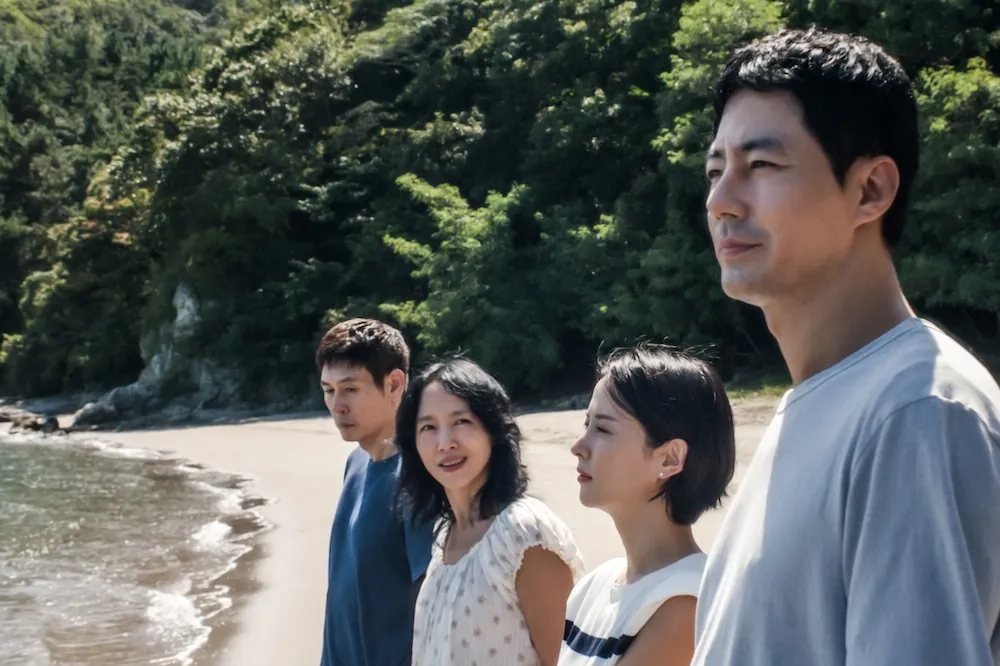
While Dekalog: Ten is certainly more comedic than most entries in Kieślowski’s series, Lee keeps a darker edge that permeates the conversations of two families throughout his 164-minute melodrama. Some of it is deliberately funny, but within that comedy lies an inherent sadness that begins to surface as the two couples at the center of the film spend more time together. Many Western critics will (sadly) compare Possible Love to Parasite, as it tells a story of class disparities – a poorer couple is the subject of a documentary from an upper-class couple who continually manipulates them to get what’s needed on camera – but the two projects couldn’t be more different.
It’s actually quite reductive to compare Possible Love to Parasite (or any contemporary South Korean film, for that matter – expand your horizons!), because it acts as a continuation of Lee’s oeuvre. He has always been at the forefront of social realist dramas that explore class inequalities, but none more so than his latest motion picture, which confronts audiences with this reality head-on. At first, I didn’t know what to make of the film. It’s laborious, incredibly slow, and contains several mundane conversations that made me go, “Damn. This isn’t hitting. Is Lee blowing it?” The comedy that cuts through most of the first half comes from filmmaker Ye-ji (an incredible Cho Yeo-jeong, who, yes, also starred in Parasite, which is why some may be keen to compare this film to Bong Joon-ho’s 2019 Oscar-winning feature) getting to know the family she will document.
Ye-ji wants to make a movie about Ho-seok (Sul Kyung-gu), a laid-off worker still reeling from the trauma of a violent, harrowing labor strike. Ho-seok doesn’t talk much, but he drowns his sorrows in soju, which he keeps justifying, even though his wife, Mi-ok (Jeon Do-yeon), believes he has a drinking problem. He refuses to open up to anyone, least of all Ye-ji, because she only cares about her camera and only puts on a façade to get the couple to open up to her. Ho-seok sees through her completely, especially her husband, Sang-woo (Zo In-sung), whom the filmmaker touts as the Korean Steve Jobs.
It takes a long while for Possible Love to actively get going. Maybe too long. I’ll admit Lee’s filmmaking can often feel alienating, but this film strictly rewards patient, attentive viewers. The first half of the movie is deliberately slow, because it gives us points of reference to understand exactly who these people are and what they will do when they eventually go on vacation together. On that vacation, Possible Love quickly becomes one of the year’s most thematically rich and aesthetically invigorating motion pictures. The film’s poetic visual language hardens as we’re directly confronted with Ho-seok’s past, and the thematic layers come to the forefront as Lee gives the marginalized the story they deserve, without resorting to exploitative documentary tactics.
Kim Ji-yong’s cinematography blurs the line between documentary reality and fiction, but the cameras remain omnipresent as they surveil Ho-seok and Mi-ok’s every move. It eventually (almost) becomes a horror movie because nothing Ye-ji says feels natural or friendly. It’s always about making a movie at all costs. The perfect scene that exemplifies this occurs in a conversation where the director asks the couple to share a fairly heartbreaking story. They do, and break down on camera in a moving display of emotional vulnerability. Mi-ok then asks Ye-ji if she has a similar story. Instead of incorporating it into her film, she shuts down the camera. It’s all trickery, whether or not the couple actively realize it. And it’s infuriating. In every single one of those scenes, Cho Yeo-jeong shows how contemptible her character is even when you don’t think she is (her performance is nothing short of masterful).
Cinema is a machine of manipulation; we know this. But the way Lee puts this manipulation at the forefront will genuinely make you sick to your stomach, especially in the latter half, as Ho-seok finally musters the courage to talk about what happened and potentially fracture his relationship with both his wife and his children forever. In that moment, Sul Kyung-gu delivers a performance of real authenticity, and we feel every ounce of his emotion as he lays it all out on camera. But which camera are we talking about? Lee’s? Or Ye-ji’s? That’s where the movie really starts to make a number on us, because it’s never clear which perspective the director floats between. Are we watching a subjective documentary with a clear bias toward the couple, whereas the filmmaker keeps looking down on them in pity and attempts to exploit their suffering, or the objective lens of Lee Chang-dong observing two diametrically opposed couples that will never be on the same page?
In any event, when Lee eventually shows us the demonstration, our perception of the documentarian changes. And our perception of the protagonists are enlightened as they finally realize what most matters. It’s in that section where the “comedy” stops dead in its tracks and finally reveals what has been lurking all along, and when that occurs, the resulting emotional catharsis you feel while viewing Possible Love is almost overwhelming. It’ll take some time before the film will sweep you up, but once it does, you will never be able to look away from the screen. That’s Lee Chang-dong’s power right here. Hopefully, we won’t have to wait eight years for another masterpiece from one of the great auteurs who has always pushed the cinematic form forward. With Possible Love, he does it again.