This week on Women InSession, we discuss our favorite Disney animated films and why some of their boldest, more sophisticated films come from a different era! Even if some of their new movies are still pretty good too. The Renaissance Era probably comes to mind first for most people, understandably so, but we also dig into some older classics that deliver a style and tone we wish Disney would go back to in some way.
Panel: Kristin Battestella, Megan Kearns
On that note, check out this week’s show and let us know what you think in the comment section. Thanks for listening and for supporting the InSession Film Podcast!
Synopsis: It’s summer, and 11-year-old Iris is running wild through the streets with her older friend Danae when she learns her estranged father, Aris, is back in town for his own father’s funeral.
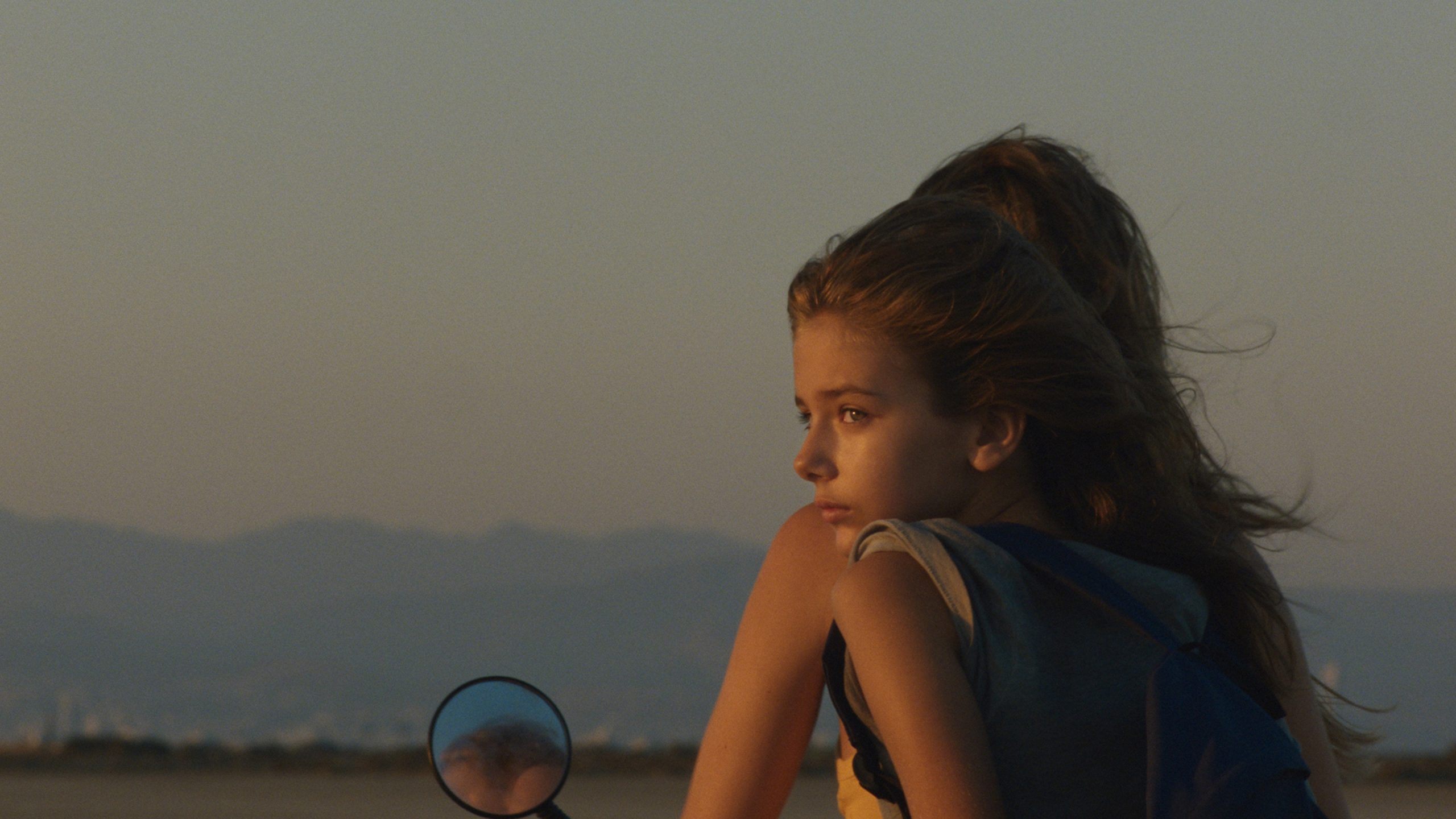
Our first glance of young Iris (Maria Petrova) tells us so much about her character that the audience immediately settles into the warm grooves of the film she’s at the center of. The film in question is Hold Onto Me, the debut feature from Cypriot filmmaker Myrsini Aristidou. Iris is 11 years old, roaming the streets of Cyprus in cut-off overalls with a sagging, oversized blue backpack swinging around behind her. She fraternizes with the older gentlemen playing card games outside her home in passing. She seems to be out and about more often than not. And when she’s not traversing her neighborhood and beyond by foot, she’s on the back of a moped being driven around by her older friend, Danae. Despite all the wondrous potential such a youthful childhood might seemingly hold on paper, her quiet demeanor and longing gaze reveals otherwise. Getting into adventurous shenanigans with Danae on the beautiful Mediterranean Sea seems to bring her some joy. But aside from these boating excursions, 11-year-old Iris appears to be filling her time however possible. Given that her older brother who’d much rather hang out with his girlfriend, her mother constantly working to stay afloat, and a father who has long been out of the picture, it would appear Iris’ childhood is being consumed by a hushed loneliness.
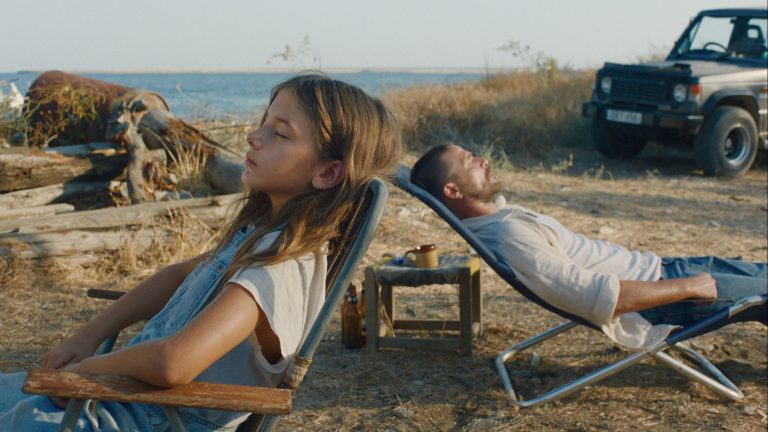
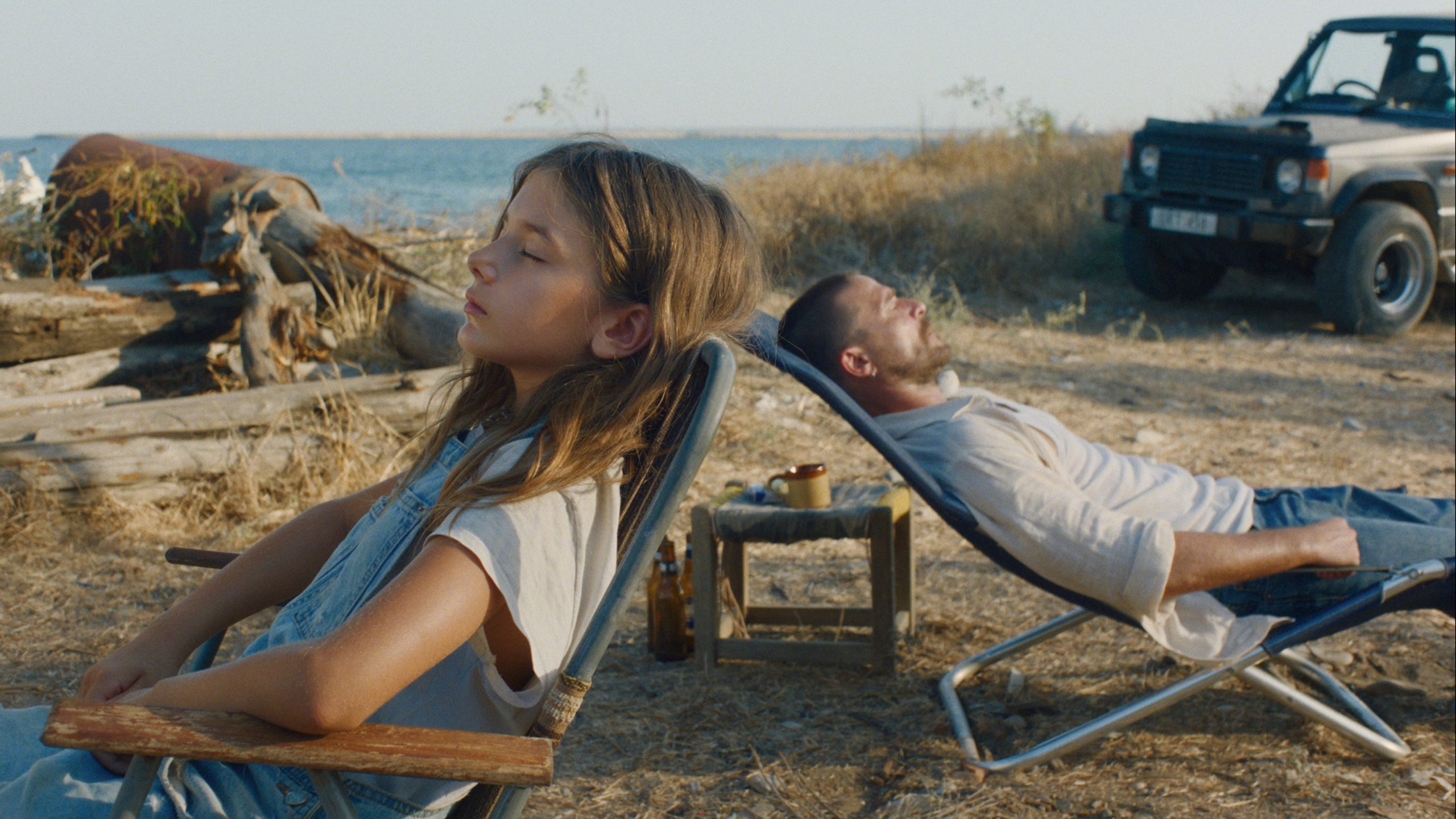
Christos Passalis and Maria Petrova appear in HOLD ONTO ME (Κράτα Με) by Myrsini Aristidou, an official selection of the 2026 Sundance Film Festival. Courtesy of Sundance Institute | photo by Lasse Ulvedal Tolbøll.
There’s a genuine sadness that permeates through much of Hold Onto Me. Despite that, it doesn’t take long to find ourselves becoming immersed within Aristidou’s beautiful style of filmmaking. Her evocative imagery is more than just arresting. It often reflects Iris simply and contemplatively gazing at her surroundings. In hoping to find a break amidst the monotony she feels so isolated by, she seeks companionship wherever it’s available. The unspoken ways Aristidou conveys this speaks to an undeniable talent behind the camera. As Iris sits in quiet observance on the periphery of young adults double her age, it’s easy to feel her isolation. The director is granting her performers and her locations the space to elicit the exact emotions necessary to drive this film towards its central ideas. Iris isn’t just dealing with the pain of not fitting in where she belongs; she seems to have lost the overall desire to fit in at all. It’s crushing to imagine her believing whether or not the opportunity she craves is even feasible in the first place. But that possibility appears to change upon the return of her father, Aris (Christos Passalis).
Having virtually no memory of Aris as a newborn, Iris turns to an old photo album in the hopes of potentially dredging up something in her mind. Her brother takes notice and encourages her to “let it go.” That’s easier said than done, especially in Iris’ case. She may not have anything concrete to hold onto, and yet, letting go seems impossible now that her father is conceivably within reach for the first time. And so, what transpires over the middle act of the film feels like a wonderful ode to Paper Moon and films of a similar nature. It’s not difficult to see why Aris’ presence is so alluring. For the audience and Iris alike, Passalis’ performance works wonders. There’s a dingy, gruff edge to him from the first moment he interacts with Iris, yet he slowly reveals a swagger that’s undeniably charming. But Aristidou very quickly makes him a far more interesting character than the occasionally sly, deadbeat father grappling with the possibility of redemption. In Aris lies quite the broken individual, also grappling with the very real possibility that he’ll never have a place he can truly belong. Both he and Iris seem to be affected by the same worry. And yet, they approach their responses to the fear from such differing angles. Where Iris would rather shut down, he can’t seem to slow down for even a moment.
Aris and Iris begin spending more time alongside one another amidst these lonely paths. And every time Aristidou sets up an opportunity for Aris to step up, he seems to toss it aside without any potential consideration. He instead has his sights set on escaping his current predicament as soon as possible. Being harassed by some sort of criminal collectors, the only reason he reappeared in the first place was to attend the funeral of his father. A sighting of Aris appears to be treated as something akin to a miracle if several character reactions can be used as evidence. And it’s easy to see why, as Iris and the audience become more attuned to his various scams and shenanigans. But in that beautiful yet potentially dangerous way childhood can warp a perspective, his behavior often comes across as enticing to Iris. But behind such actions lies the truth. He’s a man who also had a somewhat broken relationship with his father, and is now left to pick up the pieces seemingly alone in the world. And despite his constant mistakes made while spending time with Iris, Aristidou’s script remains tender enough that we hope the two can mend whatever internal wounds remain, instead moving forward with some semblance of normalcy and genuine connection beyond that of the unconditional love between a father and daughter.
Maria Petrova appears in HOLD ONTO ME (Κράτα Με) by Myrsini Aristidou, an official selection of the 2026 Sundance Film Festival. Courtesy of Sundance Institute | photo by Lasse Ulvedal Tolbøll.
In the end, Hold Onto Me can occasionally feel a bit trite; yet such criticisms of originality lie purely on the surface level of this film. Aristidou has crafted a lowkey drama that still finds a way to pack loads of emotion into its runtime. What’s more shocking of an inclusion is the amount of thrill she also finds a way to wrap into her narrative. Hold Onto Me has a massively tense third act. The first time we see the beautifully blue waters of the Mediterranean Sea, it represents such potential for Iris’ life. The horizon stretches on and on as she is left to gaze admiringly at what the world has to offer. Aristidou’s climax instead frames those same waters as a dark, looming abyss. Should we be unable to steer ourselves off the destructive path of self-isolation and selfishness, it has the potential to swallow us up entirely. Aristidou grips her audience for as long as possible before loosening up for an immensely satisfying emotional resolution. Overall, this debut film reveals immense potential in a filmmaker like Aristidou. Her ability to blend evocative imagery in a beautifully captured setting alongside the emotional balancing act we seek through simple and effective character work signals a wondrous talent.
Hold Onto Me celebrated its World Premiere in the World Cinema Dramatic Competition at the 2026 Sundance Film Festival.
Synopsis:Once upon a time, Yuri was one of Japan’s deadliest assassins, but she’s retired now and spends her days running an underground brothel. A news report about a former colleague who has died under mysterious circumstances doesn’t quite sit right. The dead man’s son is now the target of a military manhunt, and Yuri will do whatever it takes to keep him safe.
2026 already seems to shape itself as a generational year for genre cinema, and we’re off to a pretty decent start with Isao Yukisada’s Revolver Lily, finally hitting North American video-on-demand devices after a release in Japan in 2023. The Isao Yukisada-directed war epic is a frequently enthralling and visually jaw-dropping motion picture, even if its opening scenes could lead viewers to expect a journey to pure cinema that is much wobblier than anticipated.
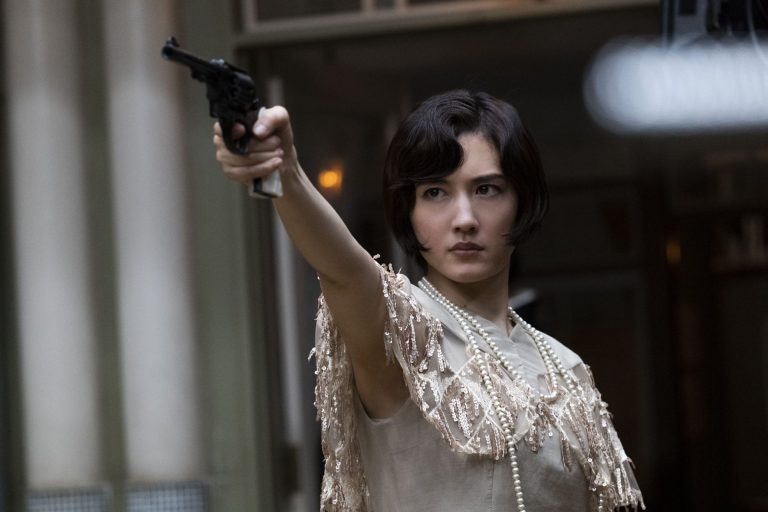
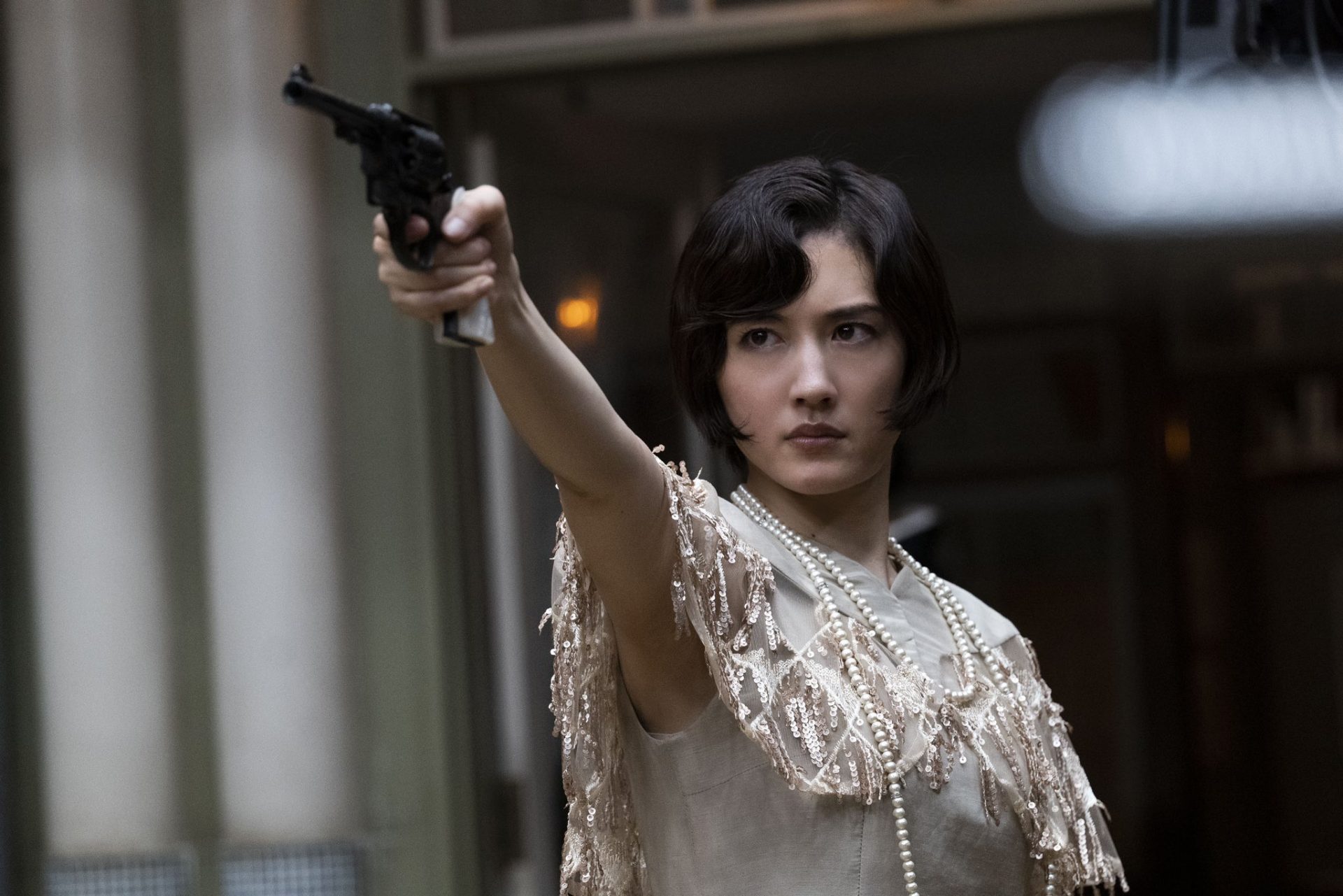
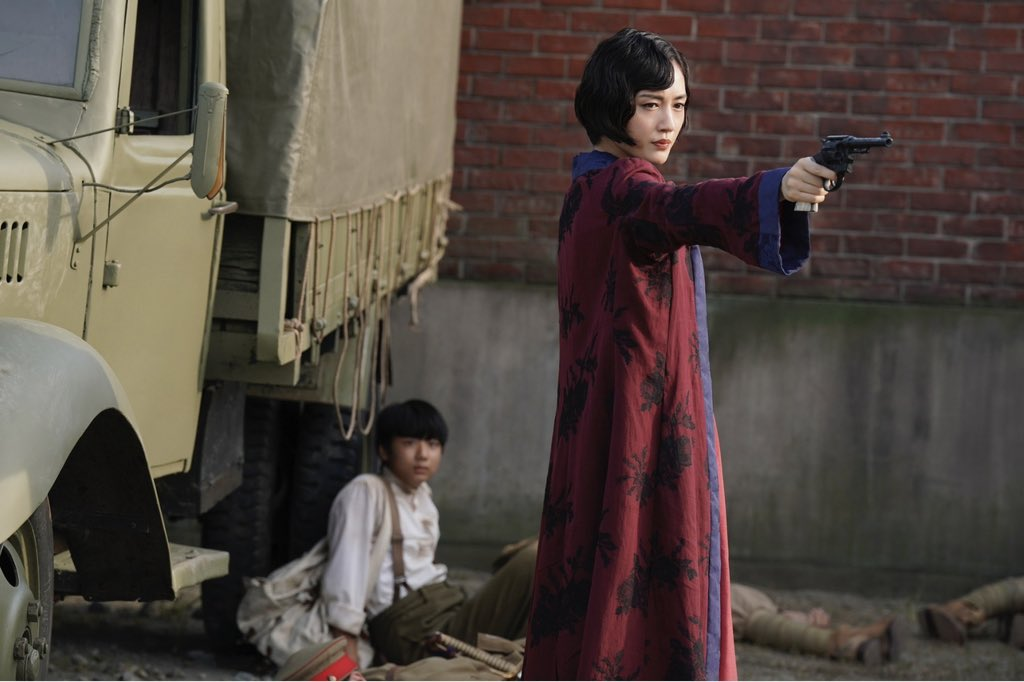
The story is relatively simple – Yuki Ozone (Haruka Ayase), a former assassin, must protect Shinta Hosomi (Jinsei Hamura), the son of her former boss, after his mysterious death reeks of political corruption. However, Yukisada quickly elevates the material with raw images of tangible, painterly power and a bevy of well-mounted, tightly calibrated action that recalls the heroic bloodshed work of John Woo and Tsui Hark. Of course, this is much less anarchic in its visuals than Hard Boiled or A Better Tomorrow III: Love & Death in Saigon, but the bullets fired by Ozone in each close-knit fight or major shootout all hold meaning.
John Woo was probably the first filmmaker who gave significance to a bullet casing – transforming them into tears being shed by its protagonists in The Killer or Bullet in the Head, which Tsui then cranked up (and deconstructed) in Time and Tide. In Revolver Lily, Yukisada seems to appropriate this revolutionary meaning to the bullets fired by its central protagonist, represented by the anguish Ozone feels as she returns to a life she’s desperately trying to leave behind. The best parts of the film aren’t the action but the internal drama at the heart of Yuki’s plight, expressed through a litany of complex emotions as she feels compelled to protect Shinta without resorting to violence, until it sadly becomes essential for their survival.
You can tell by simply looking at Ayase’s face that Yuki’s journey back to the field of work she wants no business being in is not something she wants to do. But Shinta’s survival currently trumps her personal feelings over killing people, which she is amazingly good at. However, Ayase’s turn is remarkably soulful and profoundly human, a textured performance that gives Revolver Lily its raison d’êtreand our emotional attachment to a story that sadly feels far too conventional to justify an overlong 139-minute runtime.
But Yukisada has a few tricks up his sleeve to keep us engaged, and they all involve a succession of action sequences that unfold after the main plot is laid out and the characters’ motivations become clearer. Yukisada’s sense of rhythm, expressed by Tsuyoshi Imai’s precise cutting (worthy of Sam Peckinpah and the aforementioned John Woo), keeps us on our toes during high-octane, supremely violent gunfights and surprisingly cathartic one-to-one brawls between Yuki and the numerous powerful antagonists who are all looking for Shinta and the documents he carries related to his father.
Only when the film reaches a rather underwhelming climax, where the action becomes more digitized, and the gritty, realistic textures of the gunfights suddenly transform into Fast & Furious logic, does Revolver Lily lose its grip on us. However, what comes before can’t entirely be dismissed, even if it will largely be unseen by the masses who prefer to not exceed the one-inch tall barrier of subtitles and stay within the confines of Hollywood. That said, if you love incredible, jaw-dropping action and compelling character work, you won’t be disappointed at this must-see modern J-action picture that makes me more than curious to see what Yukisada will do next…
On this episode of Chasing the Gold, Shadan is joined by our own Will Bjarnar and Megan Loucks to recap this year’s Sundance Film Festival! The festival featured plenty of strong films, but a select few stood out as truly spectacular and we spotlight those in a big way. The Grand Jury Prize winner, Josephine, is especially one to keep on you radar.
Check out this week’s show and let us know what you think in the comment section. Thanks for listening and for supporting the InSession Film Podcast!
Synopsis:The renowned psychiatrist Lilian Steiner mounts a private investigation into the death of one of her patients, whom she is convinced has been murdered.
A common trope that runs through the vast history of cinema is the investigator who just cannot seem to halt their curiosity. Now, this behavior makes sense when the protagonist is an actual detective on a case, but often, we are placed in the shoes of someone who could, if they simply chose to, leave well enough alone and go back to their own life. Some truly great films, including Rear Window, Zodiac, and Blue Velvet, fall directly into this category. All of these protagonists could have lived a normal life, and all of them with willing romantic partners. But then again, it wouldn’t leave us with much of a movie.
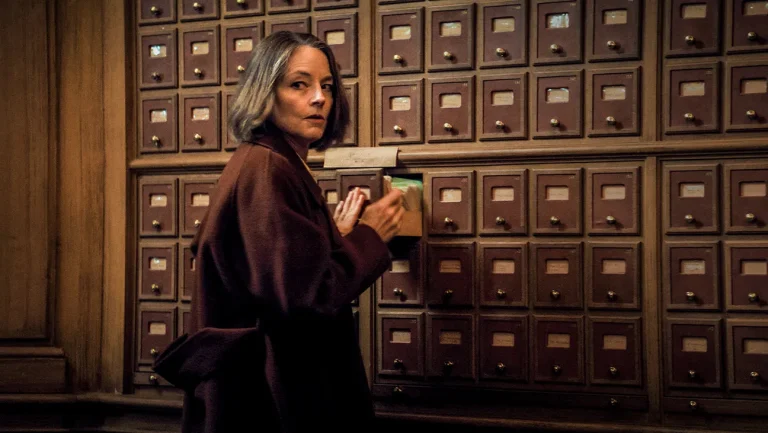
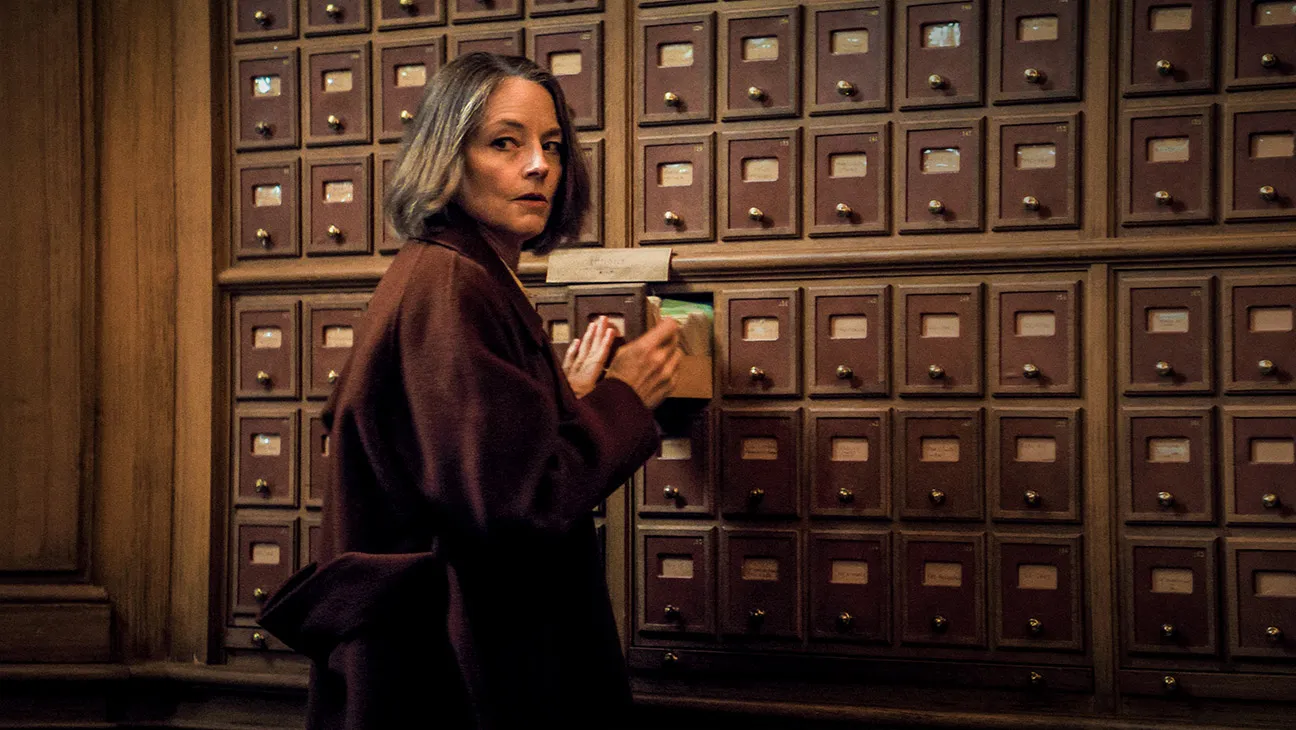
Rebecca Zlotowski’s enjoyable, if uneven, A Private Life certainly dives headlong into this well-worn trope, along with some darkly funny moments. However, thankfully, there is a bit of a different and more intimate angle at play. Lilian Steiner (Jodie Foster) is a psychiatrist with a full slate of patients, along with her own troubled relationships. Foster, it should come as no surprise, handles a difficult role with ease, so much so that it is easy to forget that she is not a native French speaker. Despite the difficulties of performing in a second language, she manages to convey not only necessary emotionality, but her performance of silence speaks volumes, allowing us subtly inside her character’s heart.
Almost immediately following her introduction, Lilian’s patient, Paula Cohen-Solal (a beautifully measured Viginie Efira), has died from a drug overdose. Worse, it is a drug that was prescribed by Lilian to help her sleep. This inciting incident is the perfect beginning for an exploration into not only this death (murder?), but also into the psyche of Lilian, herself. After attempting to attend the wake, after an odd invitation from Paula’s daughter, Valérie (Luàna Bajrami), she is kicked out immediately by the grieving husband, Simon (Mathieu Amalric). Strangely, this leads later to an odd emotional reaction from Lilian.
Lilian cannot stop crying. Well, crying may not be the right word. She claims to feel nothing, but one of her eyes seems to literally leak tears. And this is doubly odd, seeing as how she is closed off in many ways, especially towards her son and grandchild. Watching Foster, as a therapist who cannot control her emotion, is truly a gift. Her frustration, masking possible real emotion, is something I could watch for hours. In order to “treat” this sudden affliction, she visits her ophthalmologist, who we soon learn is her ex-husband, Gabriel (Daniel Auteuil). At first, they seem like a strange match (or ex-match, anyway), but watching them together for the rest of the film, it becomes clear that their bond, even if no longer romantic, is one to last a lifetime. The two performers match each other perfectly, seeming completely in sync, even when disagreeing on screen.
One of the things they disagree on, of course, is what really happened to Paula. There is nothing quite so unmooring for a therapist as losing a patient who showed no signs of suicidality.
Frankly, this film might have been better off staying the course, and avoiding some strange subplots that evoke fantasy and magical realism. It is never uninteresting, but Lilian’s visit to a hypnotist, copying a patient who is threatening to sue her after not being cured of nicotine addiction, wants desperately to delve into both Lilian and Paula’s shared connection without doing the necessary work to make it truly effective. It should be noted, however, that these sequences are some of the most exciting visually, buoyed by Zlotowski and cinematographer George Lechaptois’s use of deep color and subtle camera movement.
A Private Life takes a wild amount of twists and turns, some interesting, some nonsensical, and some both of the above. However, given that we are allowed to watch Jodie Foster, one of our great actors, traverse these bends in the road makes the film easily worth every minute of its runtime. Sure, it could have used a more focused throughline, but following along with this jagged mystery is rewarding all on its own.
Directors:Rob Bliss and Denise Alder Stars: Rob Bliss
Synopsis:White filmmaker Rob Bliss walks 1500 miles across the US wearing a Black Lives Matter t-shirt. He is challenged by Trump supporters and encounters both deep hostility and unexpected moments of connection.
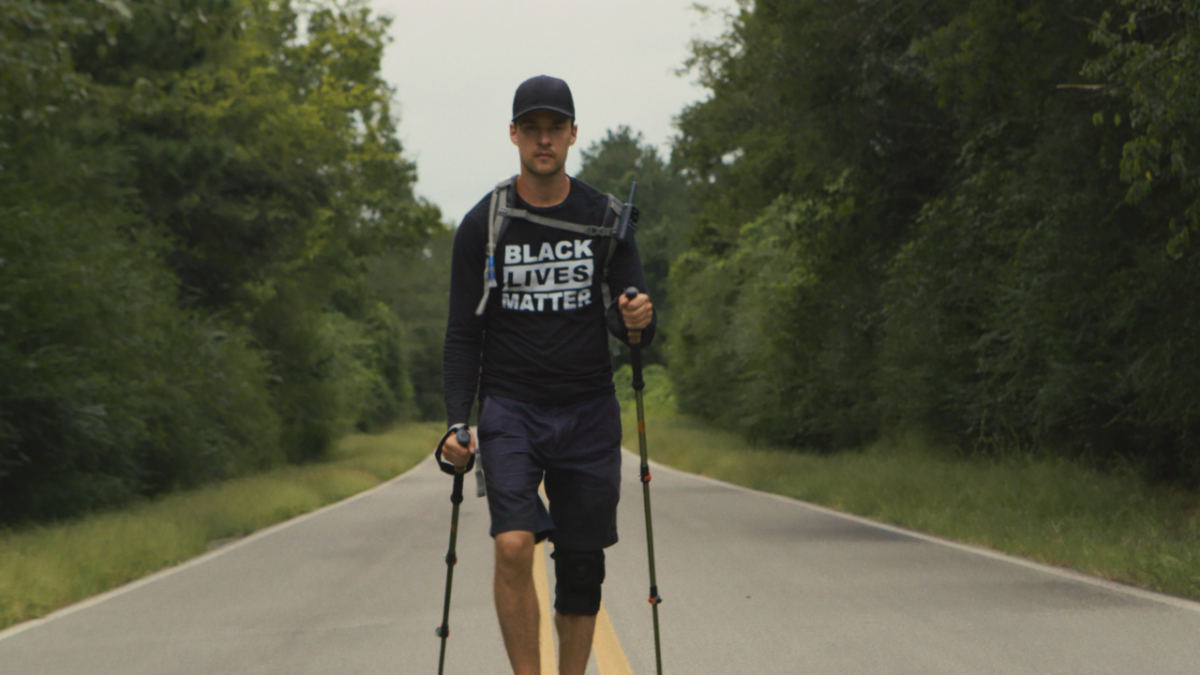
White Man Walking takes a riskier, more exposed approach compared to previous political documentaries. Co-directed by Rob Bliss and Denise Alder, the film strips its premise down to a single, provocative gesture: a white man walking 1,500 miles across the United States wearing a Black Lives Matter T-shirt. From that deceptively simple act unfolds a portrait of contemporary America that is as uneasy as it is revealing.
You might know Bliss from the largest pillow fight in the US or the largest zombie walk. Safe to say, he’s known for organizing events, standing out, and bringing people together. Here, however, he shows how truly dividedvided people are in his country. By walking roughly 60 miles (no small task), his journey begins in the long shadow of George Floyd’s killing (in 2020), and the film is acutely aware of the moment it occupies. This is Trump’s America, not as an abstraction or a headline, but as roadside diners, rural highways, motel rooms, and chance encounters. Bliss walks toward Washington, D.C., but the destination matters less than the reactions he provokes along the way. The T-shirt functions as a kind of social accelerant, transforming ordinary exchanges into volatile confrontations or, occasionally, surprising moments of solidarity.
Bliss is not positioned as an all-knowing guide or a heroic ally. Instead, he is frequently uncertain, sometimes overwhelmed, and often challenged in ways that complicate his intentions. Awkward silences, raised voices, and unresolved conversations give the film its most compelling texture, capturing the emotional rawness of a country still arguing with itself about race, power, and belonging.
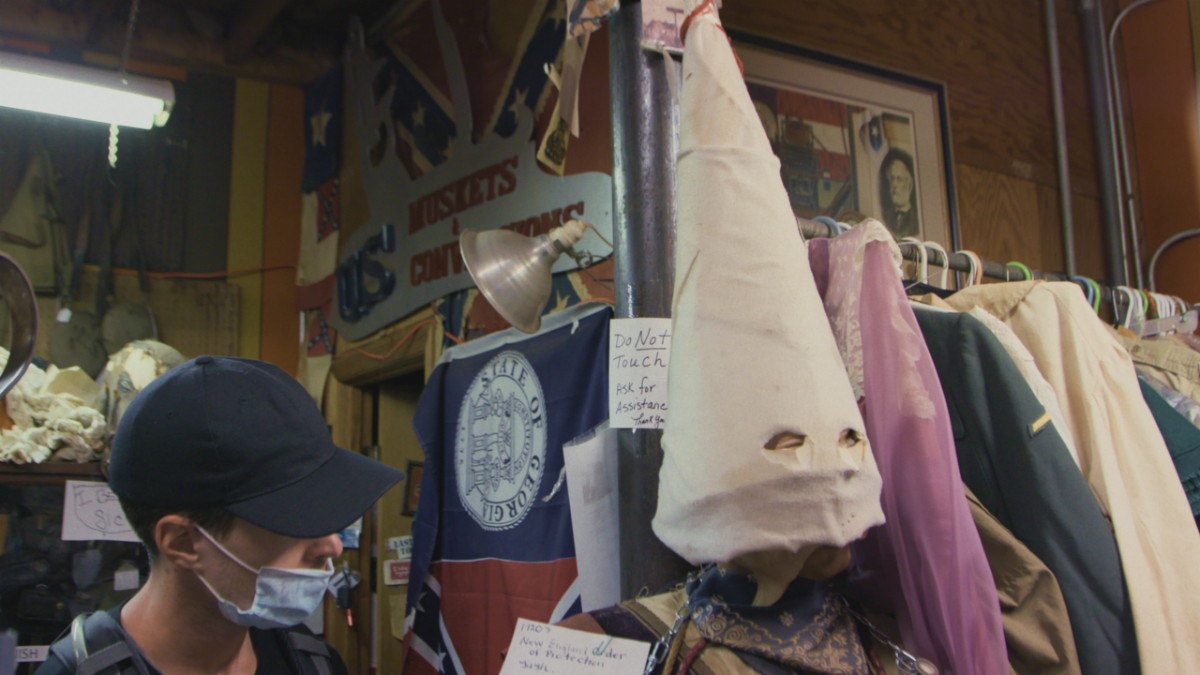
It takes 14 days for someone to start walking with him, no matter how much he asks. Very early on, Bliss meets armed Trump supporters who greet him with suspicion and fury, but also working-class white Americans whose anger is braided with fear, economic precarity, and a sense of historical loss. Whether it was the intention or not, this documentary reveals the total ignorance and stupidity of some Americans, and you’ll flit between laughter and a sad realization that these can be the popular opinion in one of the world’s largest countries. Some sections of hostility are worrying and intense. Luckily, it is balanced, and there are heartwarming and encouraging comments from passersby. Towards the end there is a grounded and surprisingly sweet interaction with a Trump supporter.
What the film does well is not excuse hostility, but it does try to understand its sources. Even when arguments feel forced, uneducated and irrational, there is still a level of respect from Bliss. In doing so, it asks an uncomfortable question: why does advocacy for Black lives so often register as a personal threat in communities that feel forgotten?
What is sweet and scary is that his mum’s voicemails are used as a voice-over, showing her concerns. Sweet that she cares so much, scary that she feels she has to watch his movements, as she’s so worried something bad is going to happen to him. Her meeting her son at the end to walk the last five miles with him is a tender moment, bringing the attention back to Bliss and this mountainous task he’s given himself.
Still, White Man Walking is not without its blind spots. The central conceit, placing a white body at the center of a story about racial justice, will understandably give some viewers pause. While the film acknowledges this tension, it does not always interrogate it as deeply as it should. Black voices appear primarily through absence, implication, or reaction, rather than as sustained perspectives in their own right. This choice feels intentional, but it also limits the film’s scope, keeping it tethered to Bliss’s experience even when a broader context would enrich the discussion.
There are moments of unexpected humor, quiet generosity, and human warmth that cut against the prevailing sense of division. Strangers walk alongside Bliss for a stretch of road. Conversations soften. Certainties wobble. These scenes never pretend to offer easy reconciliation, but they gesture toward the fragile possibility of dialogue.
White Man Walking succeeds as an interesting and thought-provoking piece of political film as it reflects a nation exhausted by slogans yet still capable of being startled by simple acts of moral visibility. White Man Walking does not claim to heal America’s fractures. What it offers instead is something quieter and perhaps more honest: a record of what happens when conviction meets reality, one step at a time. When you realize this was filmed six years ago, you might recoil that things don’t appear to have changed or progressed. But Bliss’ message is still powerful and reaffirms that life isn’t easy, the road is long but we have to stand up for what we believe in.
A filmography full of contradictions, juxtapositions, and personal examinations might be one way to explore the work of Michael Mann. An auteur with absolute command over the stylistic nature of how his films look would be enough praise for most directors, but Mann’s knack for cinema goes far beyond cinematography and mise-en-scene. One need only listen to any actor talk about their experience on a Mann film to discover that the character biography of each (and every) character is all thought out before the shooting starts.
What you, the audience member (eager and starry-eyed), think about the work of Michael Mann may depend on when you were introduced to him. Maybe you were there from the beginning and The Jericho Mile (which won’t be delved into, but is important to note at the top of his career) and Thief led you to believe that Mann was solely interested in the lives of criminals (both behind bars and actively committing major crimes). Maybe you came in later in the ‘80s and discovered the more genre-leaning work of The Keep and Manhunter and thought this would be the guy to bring a more vibrant and propulsive energy to sci-fi and horror. Or perhaps like myself you were brought up in the ‘90s and the more commercial Mann films came your way: The Last of the Mohicans and Heat. (Have you heard of this movie? I’m sure you probably have…) Quite possibly you waited until Mann hit his “Oscar Prestige” era with The Insider, Ali, and Collateral before jumping onto the “Mann-wagon.” (And for you Academy Award nerds out there, I am very aware that the only Oscar win that belongs to a Michael Mann movie is Best Sound for The Last of the Mohicans, but the total nomination count of The Insider, Ali, and Collateral is eleven – including Mann’s only nominations for Director and Picture.) And however unlikely this may seem, you could have waited for the last era of Mann films: the retread and/or commercially unsuccessful era which includes Miami Vice, Public Enemies, Blackhat, and Ferrari.
Upon reflecting on his filmography, numerous themes and choices occur repeatedly. This essay will reflect on many: some of which have been written about ad nauseam and others (I hope) will garner some fresh perspective. As a film fan, I can say without hesitation that Michael Mann has created some of my favorite cinema; full of amazing filmmaking technique, innovative storytelling, and transcendent performances. However, Mann is not perfect despite coming across as a perfectionist and his faults are noticeable to the point of being predictable.
I have created a list of Mann Commandments or “ComMANNdments”: choices made either in the screenplay, behind the camera, and/or within that ever-evolving brain of Michael Mann that link all his films together. By focusing on these elements, you can see that Michael Mann (for better or worse) has principles (a code, if you will) worthy of in-depth analysis.
ComMANNdment #1: Thou Shall Live Truthfully and Do as an Actor
Since I was 10-years-old, I have been acting. As you grow with acting, you discover that what acting is changes over the course of time. Early on, the easiest way into the world of performing is pretend, or make believe that everything is fake. “If it’s fake,” a young actor may think, “then I’ll know it’s not really ME up there, but the character.” Now that is all well and good when you are in elementary school, but as you age and mature you want to lean into the truth and reality of the character and situation. The great acting teacher Sandford Meisner phrased it well: “Acting is the ability to behave absolutely truthfully under the imaginary circumstances.” In this way, the actors aren’t “acting” – they are “behaving.” The story is fictional and the actor knows that the circumstances have been concocted prior to the performance, but their behavior is honest: how would I respond in this moment?
For such a visual filmmaker with flair and style, Michael Mann is deeply motivated by the psychology of the characters. It is not enough to simply have a character state what their past is – they need to know every important detail. What Michael Mann is also aware of is that acting (particularly on film) is doing – the actors need tasks to accomplish and props to hold. When you combine these methodologies of “acting is living truthfully” and acting is doing, what you get are compelling performances epitomized in Mann’s films.
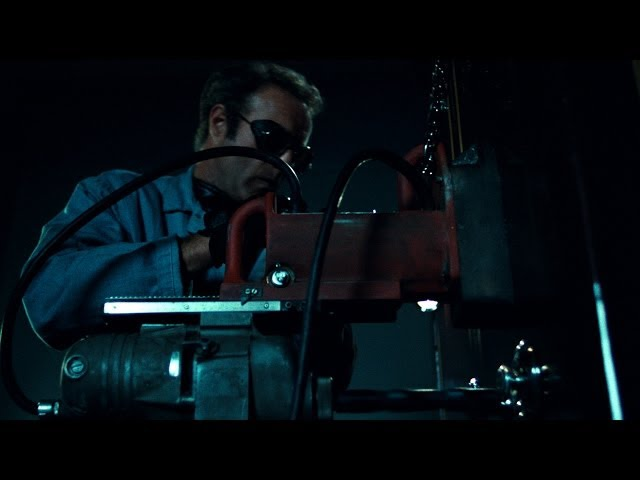
The opening of Thief is the perfect example of acting is doing. It would be one choice to just have Frank (played in a career-best performance by James Caan) perform the task of cracking into a safe via a montage of quick cuts and heavy edits to expedite the process and move the film along in a hurry. What Mann does instead is to have us cut in media res to Frank in the middle of the safe cracking, expertly keeping focus, and actually (and accurately, according to Caan) handling the tools. It’s one thing to see Frank using the drill, but it is something else entirely to see Caan focus on how much torque to use at any given moment. The precision here is what stands out.
What we miss in the opening scene of Thief is made up entirely when we see the job in Los Angeles. This time around we see all the details come together: Frank and Barry (Jim Belushi) use real saws and crowbars to access their way through the roof and attach voltage meters to wires to determine which are phone lines and which are linked with alarms. And as much “doing” is done here, it’s the use of the burn rod on the custom-built safe that shows a precision in the dismantling of the box and how the team operates with each other (to be mentioned later in a different ComMANNdment).
Now…I really hate for so early on in this writing to say that not all the movies follow all of these ComMANNdments, but sometimes as a filmmaker you try a turn in a new genre, the studio interferes with your movie, and what you end up with is The Keep. My feelings for this movie will come up throughout the different ComMANNdments, but I will say that one aspect of the movie that lacks is the feeling of acting as doing. Chalk it up to the mythological narrative and on-set feel to many of the scenes, but The Keep does not adhere to the dogma of honest acting generally portrayed in Mann’s films. Even with talented, reliable actors like Scott Glenn and Ian McKellan, there is an over-performative nature that feels disingenuous compared to other Mann films.
In most cases, the “acting as doing” thought involves a physical, visual act performed in a way that makes it quite known just how real the performance we are seeing is. However, in-depth and cerebral performances of really doing need to be showcased and illuminated as well – here is where William Petersen’s performance of Will Graham in Manhunter comes into view. Petersen handles props and navigates his set well – this section is not to say that he does nothing physical in the performance, but rather it needs to be shared just how well his thought process as Graham works in the film. Multiple scenes allow Petersen the time to walk into a space (whether in the houses of victims or an anonymous motel room) and think and assesswhat has happened in the past, what is happening now, and how it can all impact the future. For my money, Petersen’s portrayal of connecting the dots works most effectively when he pieces together the home video service that links these slain families. Actors have to be curious and investigative by nature and Petersen brings these traits into the world of a character who also needs to constantly evaluate his surroundings – the blending of which leads to a wonderfully emotional and understated performance.
At some point after we merge into the 1990s, a transformation takes place within the world of Michael Mann films. Chalk it up to age and experience or being restrained previously in the world of television, but Mann’s detail and precision is ratcheted up post L.A. Takedown and is on full display with The Last of the Mohicans. The amount of actors “really doing” or “really living” in this film is what sets it apart from other studio period-piece films of the era. In the opening alone, we see Nathaniel, Uncas, and Chingachgook running through the woods tracking down a deer – the active chase brought to levels of realism when you see the trees, hear the water, and behold the hills these actors have to navigate. Acting is doing, yes, but this film is so active – very little time is given to contemplation. After our three Mohicans rescues Cora, Alice, and Duncan, the dialogue continues as they soldier on near a stream and waterfall. Other directors would stop and have the dialogue take focus, but Mann has the actors continue to walk and carry on the conversation which reminds us that they could be found at any moment. This treatment of actors really doing continues through all of Mann’s films.
It is extremely rare that a movie handles a situation so well and realistically that groups in the real-world show scenes from it to show the proper way of handling said situation. Heat is littered with moments that reinforce the “acting is doing” mentality and both the cops and criminals get to shine here. Vincent Hanna and his team adequately assess the first crime scene after the armored car robbery and we get a mini-Thief moment with Val Kilmer trying to break into the platinum vault. However, I would be kidding myself if I did not list the most obvious acting as doing moment in this film: the bank robbery into the downtown Los Angeles shootout. The fact that military and police trainers show how De Niro and Kilmer reload and cover each other is nothing short of amazing. Heat is a contained epic and there are many instances of really doing that occur throughout the film, but it needs to be made clear that the botched heist and escape is one of the most realistic scenes ever committed to celluloid.
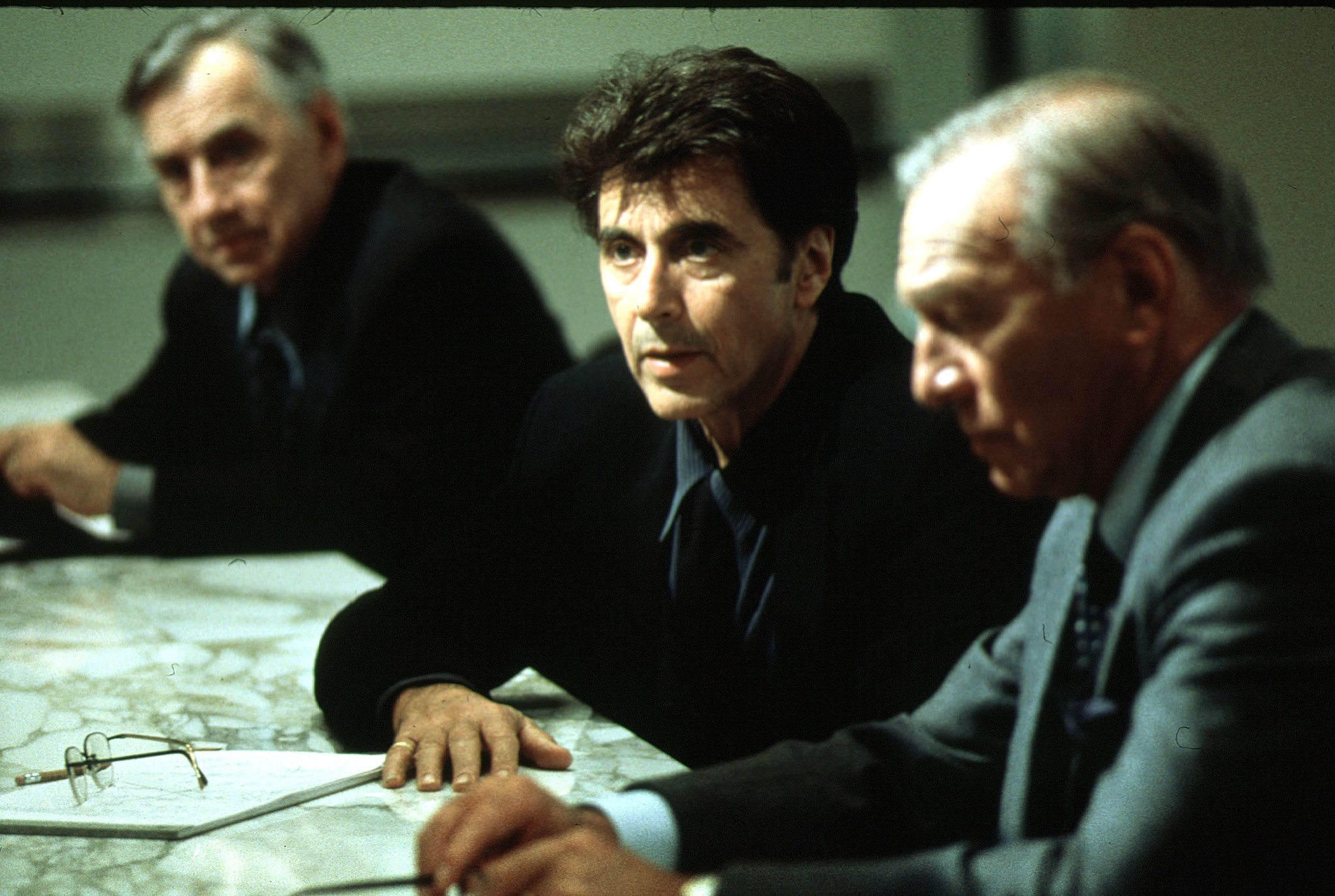
When you consider all the work Michael Mann had created up to and including Heat, one would think that “restraint” might not be a word found in his personal lexicon. However, the source material for The Insider grounds us in a world that is both highly relatable (a husband/father navigating both his familial responsibilities and ethical values) and behind closed doors (the inner workings of CBS and “60 Minutes”). Given the true-to-life nature of this story, actors performing tasks may seem mundane compared to epic downtown shootouts, police raids on the homes of serial killers, and melting down safe doors. Within The Insider characters are epic in their line deliveries, stares, and reactions. A perfect example of actors doing and living truthfully (especially given when the film was set) is the initial interaction between Lowell Bergman (Al Pacino) and Jeffrey Wigand (Russell Crowe). After two phone call attempts, Bergman proceeds to send Wigand a fax. It’s an ingenious scene because it subverts our expectations of hearing two people have a conversation – the gist of what needs to be said is expressed when Wigand replies “I CAN’T TALK TO YOU.” Bergman responds with “Can’t Talk to Me? Won’t Talk to Me? Don’t Want to Talk to Me?” – and Wigand concludes this back and forth with “Can’t. Won’t. Don’t Want To.” A fantastic back and forth that gets us to lean in and build anticipation based on the nature of how long it takes faxes to send.
Michael Mann is very adept at getting actors comfortable performing the actions their characters portray. Whether it is the wilderness and survival tactics portrayed by Daniel Day-Lewis in The Last of the Mohicans or the famous L.A. shootout in Heat, actors come across as highly believable and honest in their physical actions. You could make the argument that no other actor or performance fully exemplifies this idea in a Michael Mann film stronger than Will Smith in Ali. The voice and mannerisms that Smith utilizes to depict as Muhammad Ali are quite amazing (garnering that Academy Award nomination), but it is the training and boxing scenes that fully suck us in. The verisimilitude of Smith’s performance is the glue that keeps this film together. If his performance does not expertly combine the personality of Ali with his physical prowess, this film fails.
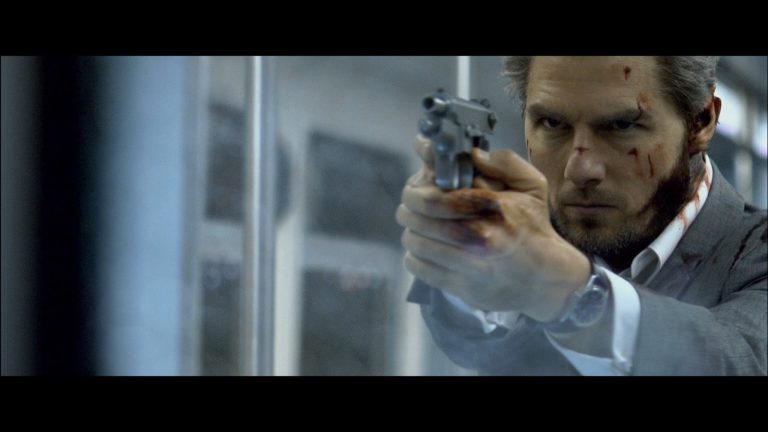
Tom Cruise is another actor known for his physicality (how many jokes have you heard or memes have you seen that involve him running?). All jokes aside, it is his endless grit and tenacity that makes him so compelling to watch. When we see him hang onto the outside of a moving plane or leap from building to building, we know the physical exertion it takes to make that stunt possible. What makes his performance as Vincent in Collateral so unique and mesmerizing is that he is doing this same level of physicality but as an absolute villain. And while the stunts in this film are not as audacious as those in the Mission: Impossible franchise, the exactitude and ruthlessness with which Vincent carries out these evil deeds are utterly compelling to watch: not just from the observation of Cruise’s performance, but what that precision says about the character. The raw tenacity of the shootout in the “Fever” nightclub is the most overt example of this – particularly the moment when he performs a somersault move to land on the floor and immediately start shooting the armed guards. However, I want to focus on a different scene: the moments after Max, who has been zip-tied to the steering wheel of his cab, is robbed at gunpoint by two men passing by. These random street thugs believe they have made out with a wallet and briefcase…this is before Vincent returns to the area. Feigning trepidation, Vincent immediately subdues both men with 2-3 gunshots per person. It is not just that he killed these guys, but how he did it – the ease and precision. It is this gunplay and physical prowess that an actor like Tom Cruise can bring to a role like Vincent and make it feel both incredible and truthful.
Okay…so…hmmm…what is actually…done…in Miami Vice? My trepidation here is earned, I believe, because it is hard to really land on the living truthfully portion of this film. As far as actors “doing” what their characters do, I can point to Colin Farrell: he (seemingly) drives a “go-fast” boat and dances with Gong Li. Before Trudy gets abducted, our team led by Sonny & Rico do a good job of showing us how the drugs are getting offloaded from the ship. But who are we kidding? This is a Michael Mann film (you know, the guy who did Heat?) – the best moments of acting as doing come from both the trailer park raid and the shootout by the boatyard. Whether it is Jamie Foxx taking out 2 people in the trailer with his hands and a knife, Barry Shabaka Henley using his night-vision camera to spot snipers, or the epic boatyard shootout; Mann shows us a scene of violent carnage masterfully choreographed. Related to this, Naomie Harris gets a very earned acting moment after she has been freed from her chair restraints: in a violent outburst she tries to kick her captor who lies dead on the floor. Her moment of rage and elation feels genuine here and is the singular standout acting performance in the film.
The “acting as doing” ComMANNdment gets harder and harder to place the further into Mann’s filmography we get. In Public Enemies, the mise-en-scene is so accurate to the period and the characters being real, historical, & larger than life make the art of reality a bit hard to pin down. John Dillinger’s life is so well documented that trying to “really do” is less substantial to the film than presenting the sights and sounds of the 1930s. With that in mind, some much deserved praise needs to be given to the actors who took part in the “Little Bohemia” raid in the film. There are multiple close-up shots of actors where you can see their breath frozen in the air. Shooting on location in Wisconsin, filming deep in the woods, and having to shoot at night makes for treacherous and exhausting hours for the actors. It should also be stated that we are not talking about actors on the rise trying to make a name for themselves: this is Johnny Depp and Christian Bale – quite possibly the biggest male actors working in Hollywood around 2009. Watching their dedication and craft in this particular scene shows that actors who want situations to feel as real as possible can create powerful moments on screen.
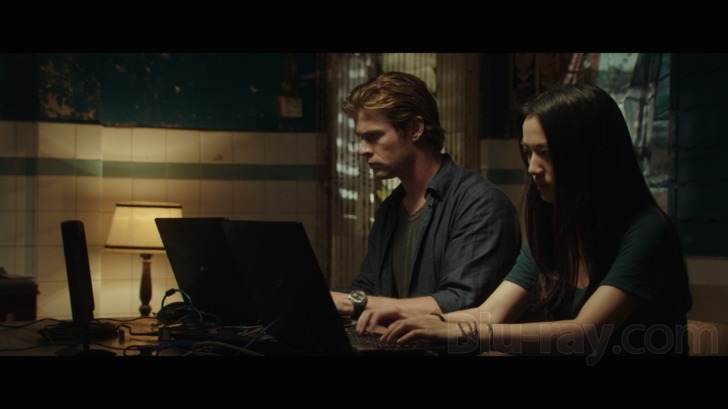
This thought will permeate throughout more sections of this collected writing, but let me start off my thoughts on Blackhat by saying this: watching people type on keyboards or look intently at a computer screen is not interesting. No one has yet succeeded in making this mundane task look exciting. Actors have tried staring harder at screens and directors have had fun putting cameras in unique locations, but it is a rather boring activity. Having expressed that, it will surprise no one that watching the “hacking” of Chris Hemsworth (more movie star than actor), a man who looks like he regularly snaps laptops in half to work on forearm strength, is not engaging. So as far as the “acting as really doing” idea goes, Blackhat is functionally persuasive in two areas: using non-actors and having Chris Hemsworth run and hit people. Let me focus on the Aussie for a moment – because even though I am being hypercritical about him as a computer whiz, his physical stature and athletic capabilities make portions of this film really engaging. Running through alleyways, using screwdrivers as lethal weapons, breaking necks with tables – Hemsworth shines here and impressively pulls this off. For me, the moment that really made me think that this was all real was when we cut to the trade floor after soy futures have been altered – the chaos and frenetic energy of those traders really pulled me in. Authenticity is a huge part in convincingly portraying “acting as really doing” – and when Blackhat felt authentic is when I believed the circumstances of the narrative.
Bit of a story before launching into this section – bear with me. I once directed a play that was near and dear to me. When the run of the show was over, a trusted colleague of mine asked about one of the actors in the show and why I cast them because they thought (and I agreed) that they were the “weak link” of the play. And my honest response was essentially this: they brought something to the audition that blew me away, but it never grew or changed – it was the same throughout the entire rehearsal process and performance. The tricky thing with casting someone off an audition alone is what will they bring beyond just those few minutes. I mention this experience because I truly wonder what Mann saw in Shailene Woodley that led him to believe that she should be one of three main characters in Ferrari.
As far as this ComMANNdment goes, I was going to do a whole thing about accents because that IS acting as doing. Dialect work is no small feat and can be the reason why certain performances (and films) can be publicly derided. Penelope Cruz being from Spain handles the Italian beautifully in this film; Adam Driver coming fresh off the Ridley Scott biopic House of Gucci gets a second crack with dialect and I would say manages it fairly well; and then there is Shailene Woodley. The purpose of this section is not to overly-ridicule Woodley’s performance, but this is the second consecutive film where an actor is asked to do an accent and doesn’t fully commit to it (I’m referring to Chris Hemsworth’s attempt at Chicagoan/American in Blackhat). This is important to me as an actor because our goal is to convey the truth of the character and situation at every moment – not committing to the dialect of a character is a way to disconnect with the audience. From my perspective, it’s no wonder why the scenes with Cruz & Driver are riveting – it’s because they are both committed to their parts.
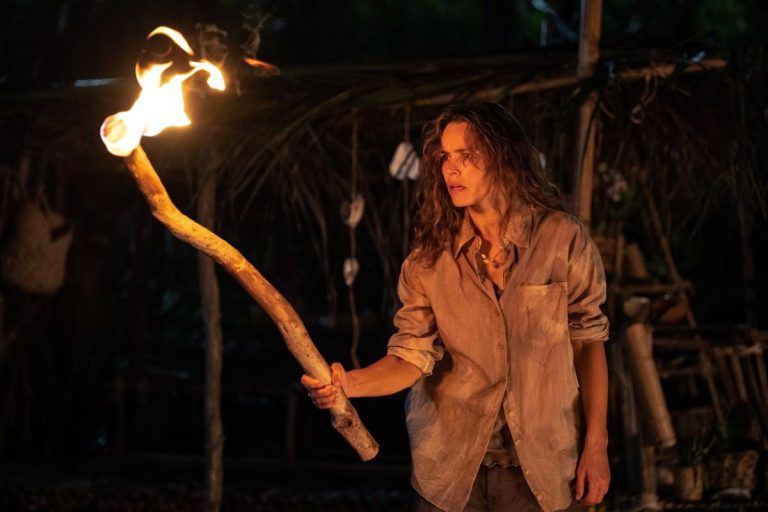
On this episode, JD and Brendan discuss Sam Raimi’s new film Send Help, starring a phenomenal Rachel McAdams! Raimi’s horror sensibilities are back in a big way with this tense, darkly funny survival thriller that also has a surprisingly poignant message given the times. In short, Send Help has all the Raimi-isms we love from it as an exercise in horror, but it’s not without a bit of meat on the bone.
Review:Send Help
Director: Sam Raimi Writers: Damian Shannon, Mark Swift Stars: Rachel McAdams, Dylan O’Brien
Director: Andrius Blaževičius Writer: Andrius Blaževičius Stars: Žygimantė Elena Jakštaitė, Marius Repšys, Amelija Adomaitytė
Synopsis: Set in Vilnius in 2022, high-flying executive Marija chooses the worst moment to discuss divorce with husband Vytas – one day before Russia’s full-scale invasion of Ukraine. The couple navigates separation amid a refugee crisis.
Broaching the subject of a divorce seems as if it would be an impossible task even on the best of days. And yet, it must sometimes be a necessity faced head-on, akin to ripping off a band-aid. It’s those exact nerves which Marija (Žygimantė Elena Jakštaitė) is facing in the day leading up to her conversation with Vytas (Marius Repšys), her husband of 12 years. It’s this central conflict around which Andrius Blaževičius’ How to Divorce During the War centers itself. But as the title of this film indicates, there are far more pressing matters occurring alongside the emotional turmoil we’re introduced to prior to the title card reveal. The moment of truth for Marija and Vytas takes place via an unbroken shot in the confines of their family car while waiting for young daughter, Dovile, to finish up her music class. It’s a life-shattering revelation for Vytas, and Blaževičius captures this quiet, shocking implosion with an immense amount of patience. It’s a stylistic choice he will return to throughout much of the film. Aside from showcasing technical proficiency and trust in both the script and performances, the choice to capture this moment and the aftermath that follows in such a way is indicative of the primary themes this film aims to explore.
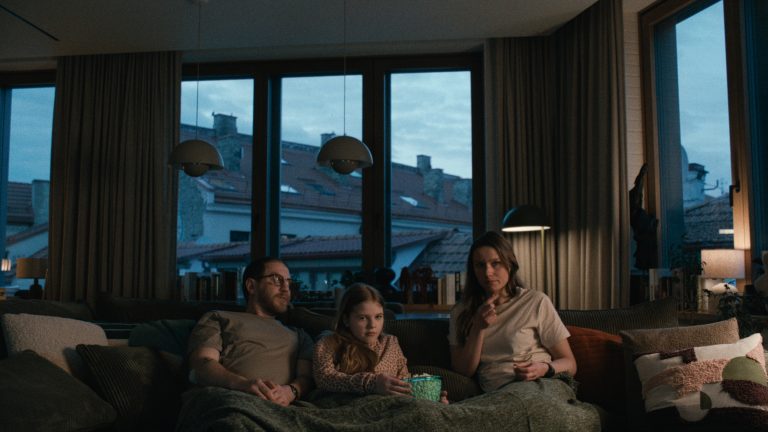
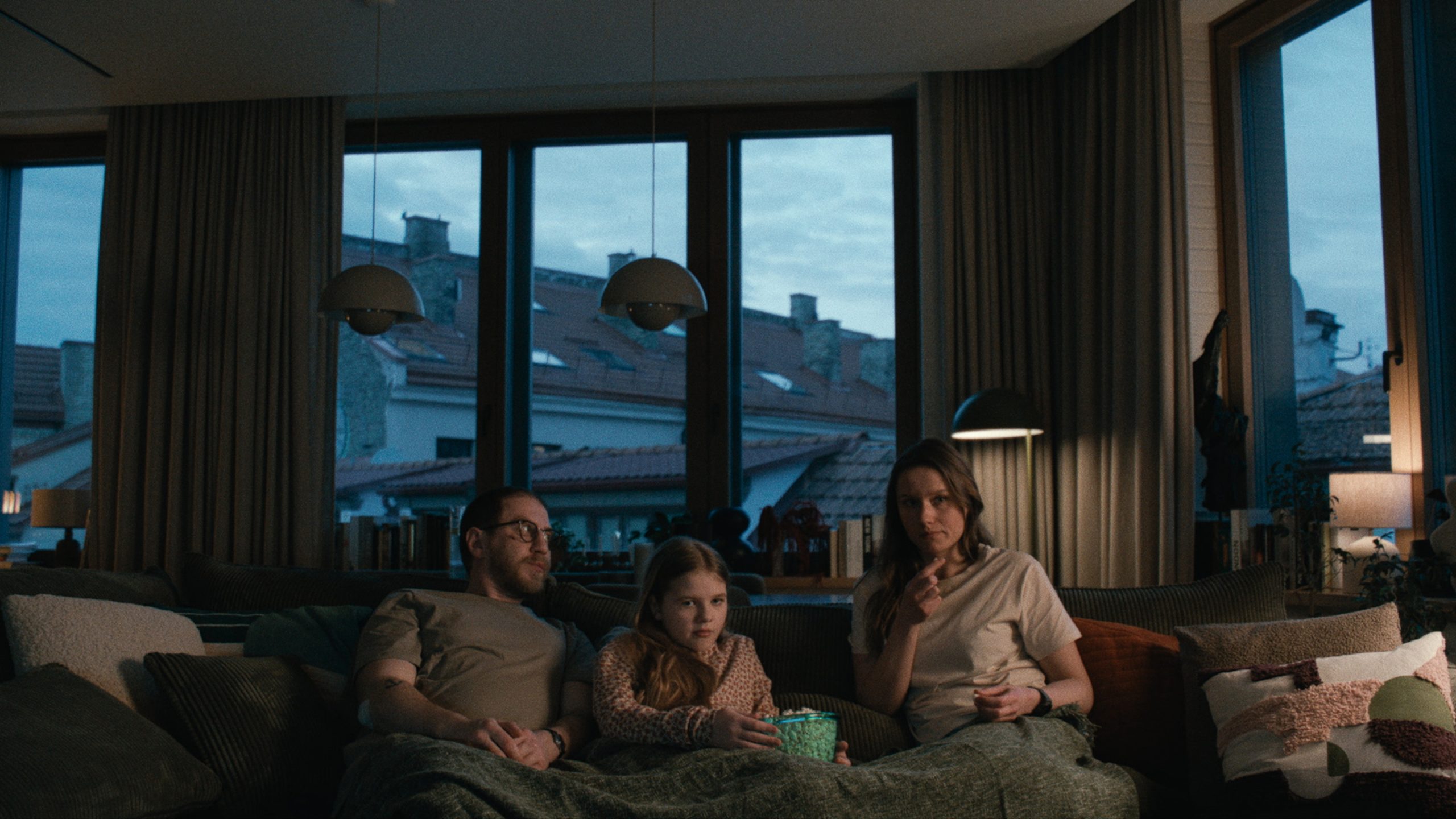
Marius Repšys, Amelija Adomaitytė and Žygimantė Elena Jakštaitė appear in How to Divorce During the War by Andrius Blaževičius, an official selection of the 2026 Sundance Film Festival. Courtesy of Sundance Institute.
Vytas is the character Blaževičius first introduces his audience to. He’s unboxing a brand new office chair, the likes of which seems to pair wonderfully with the rest of his sleek, contemporary home office. In times of annoyance, frustrations, and unease, we often seek to provide ourselves with maximum comfort however possible. It’s a reaction which is both completely fair and understandable. And yet, as Vytas sits down, the discomfort in his body language is palpable. With a quick decision, he unceremoniously gets up, pushes the new chair out of the way, and rolls in his older, more worn-down chair from a corner of the room. In this singular motion, the central conceit of How to Divorce During the War reveals itself. It’s quite easy to forget how much comfort a baked-in sense of familiarity can provide us. But that same familiarity can also stir up thoughts of wanting to break free. In developing a comfortable routine, there lies a yearning for what’s potentially being missed on the outskirts of such familiar regimens. And as is the case with so many of life’s largest decisions, chasing that potential is obviously a gamble.
In the case of How to Divorce During the War, the fallout of such a decision occurs in Lithuania amidst Russia’s invasion of Ukraine in early 2022. It’s clearly not one that comes lightly for Marija. And this film isn’t particularly concerned with the intricate questions or events surrounding her decision to separate from Vytas. It’s simply interested in reckoning with how anybody could possibly continue to live life normally despite actively existing within the silence, or chaos, of such physical, mental and emotional turmoil. Whether it’s referencing ongoing doomscrolling in the workplace, being hung up with the weight of such a long relationship, or wondering what’s to come next for the family dynamic, characters are constantly bringing up the notion of needing to “move on.” Is that feasible in even the best of circumstances? Blaževičius’ response to such an examination is shockingly dour. But it’s in the darker corners of this film where both its comedy and drama elements separate themselves from the most typical examples of divorce cinema. The film seems to actively push away from relying on dark comedy more frequently, but its dramatic beats exist amidst a series of deeply uncomfortable yet painfully relatable truths that will likely resonate with many audience members.
Many of the emotional beats of How to Divorce During the War revolve around its characters’ abilities to confront the issues they’re regularly brushing up against. The inciting incident of the film is Marija expressing her desire for divorce, and the dramatic crux of the first act lies in her and Vytas’ reactions to such change. But there is little time to actively process such a shift upon their learning of the war breaking out so shockingly nearby. While Blaževičius never belittles the emotional weight both parties are feeling in this new chapter, their turmoil is undeniably recontextualized. And as selfishly as they might like to behave, they innately understand the example which must be set for their daughter and the people both directly and indirectly around them. In grappling with emotional strife both personally and geopolitically, these characters must face a series of challenges they could have never seen coming. Marija faces it both professionally and socially through decisions she makes with a moral backbone and an ethical heart. Vytas, having just moved back in with his parents, continuously clashes with them upon learning they actively consume Russian propaganda. There’s bravery required in facing such challenging scenarios, and Blaževičius never plays down or casts judgment on his characters while writing them. But it’s in the messiness wrought upon their lives by Blaževičius’ script that makes this film compelling.
There’s also a wonderful juxtaposition at play between the messiness of these characters and the restraint with which Blaževičius captures them. It’s mainly shot in extended takes, ranging from quiet to shocking outbursts of all sorts. How to Divorce During the War indicates immense patience behind the camera. The inquisitiveness behind its shot composition makes for a directing style that isn’t just highly effective; it’s a style that is challenging to pull off successfully. It’s amidst the discomforting turmoil of Blaževičius’ fictional scenario and the ongoing reality of nearby war that the finale of this film ends on quite the potent note. We might often want things to change in our lives. But there’s no denying what can be an innate desire for familiarity. This isn’t something we cling onto solely out of comfort; it can equally be due to necessity. To grapple with a relationship, or the world around us, actively crumbling can sometimes be too much to bear. Can we be faulted for seeking escapism whenever possible? We can make an attempt and do what we can whenever possible, but sometimes, it feels as if there’s no other choice but to pretend everything is as it was. How to Divorce During the War reckons with whether that lifestyle is even possible despite the constant reminders. The emotionally ambiguous coda of this film reaffirms how strong its ideas are overall, and makes for a timely film that is as engaging to watch as it is thought-provoking to ponder.
How to Divorce During the War celebrated its World Premiere in the World Cinema Dramatic Competition at the 2026 Sundance Film Festival.
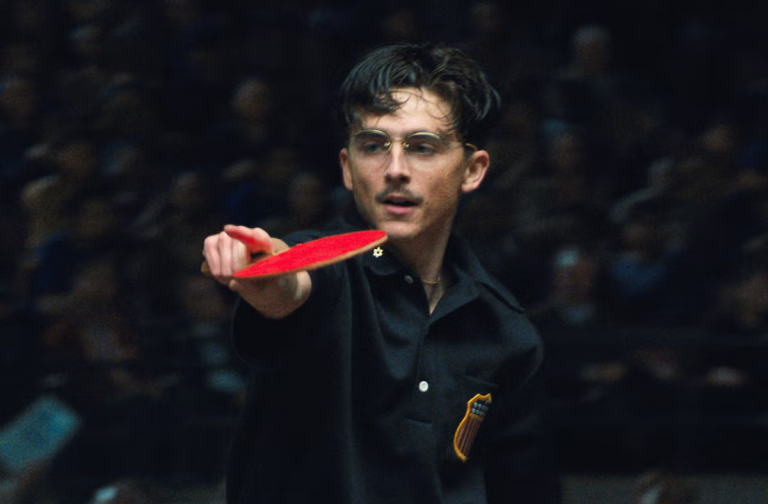
If there’s anyone who can match Marty Mauser’s madness and self-focus in Marty Supreme, it’s Marty’s married girlfriend, Rachel Mizler, played by Odessa A’zion. The two have known each other for years and although Marty believes almost only in himself and his goals to be the greatest tennis table player in the world, there is a small space in his narcissistic heart for Rachel. That space is something Rachel will do anything to make bigger as she hustles her way into his life.
Nadine Whitney spoke to Odessa about Rachel and her gung-ho attitude as she goes into battle for Marty and herself.
Nadine Whitney: Odessa, your character Rachel goes all in on Marty, but also, she goes all in on herself, and she stretches her own expectations for the life that she will lead. Can you speak to that?
Odessa A’zion: Yeah. I mean, well, if you look at the movie and the time period that it takes place in [1952] and women, like we all know that back then it was a lot harder for them.
So, I think it was scary for her doing that, but she’s just like she doesn’t give a fuck. You know? Like she doesn’t care about anybody that’s gonna stand in her way. Whether it be Dion (Luke Manly) or her husband Ira (Emory Cohen), or even Marty. Like even though her goal is this family with Marty and having him in her life and not being trapped to the person that she already gave her life away to.
She wants that and she wants that freedom. And Marty is kind of that freedom for her in her eyes, you know? She’s stuck and he is the way out.
I mean, Rachel is such a survivor. And she has a goal just like Marty. She’s after something, and she will stop at nothing to get to it. She is super driven and she kind of succeeded, too.
I relate to Rachel because I think everyone kind of has a goal in their minds for themselves and are dreaming big. Maybe I’m not as loud about it as Marty is. Definitely not as loud about it as Marty is, but I have that feeling in me. If I know this is what I want to do, how do I get there? What do I do to make it happen? How can I push myself or convince the people around me so that I could go on this path that I really care about and want to be on?
Director:Corin Hardy Writer: Owen Egerton Stars: Dafne Keen, Sophie Nélisse, Sky Yang
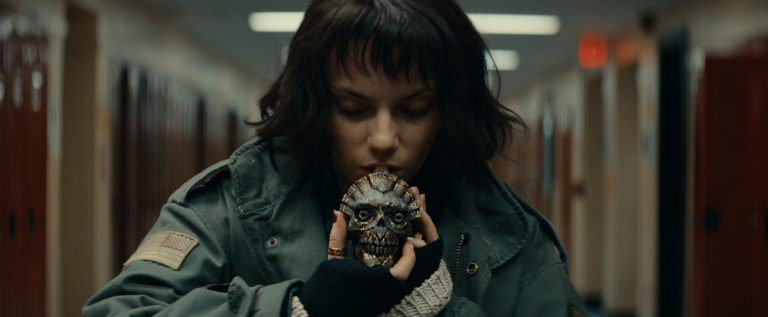
Synopsis:A group of high schoolers stumble across an ancient Aztec death whistle. Once blown, the whistle summons their future deaths to hunt them down one by one. They must uncover the history of this cursed object and somehow halt what they’ve set in motion before it’s too late.
Whistle almost instantly reminded me of a different era of horror. Here’s the thing though: it was the late ‘90s to early 2000s, which I’ve found to be one a hit or miss period for the genre. What director Corin Hardy and writer Owen Egerton have crafted can be likened to Final Destination (2000) in more ways than one. There’s cheesy dialogue, plenty of tropes, and gnarly kills. It does just enough to separate itself from that iconic franchise which includes having a more diverse group of leads, but the similarities are undoubtedly there.
Even if no one is going to mistake this for an Academy Award winning affair, you can make a horror film that’s unnerving and fun by putting the right pieces together. Whistle builds around Dafne Keen and Sophie Nélisse, who deliver outstanding turns. Keen plays Chrysanthemum “Chrys” Willet, our tortured protagonist who has been sent to live with her cousin, Rel (Sky Yang). Aspiring doctor Ellie Gains (Nélisse) is the one person in this new school who seems willing to accept Chrys for who she is.
Given the story is centered around these two, it should come as no surprise that they’re the most developed characters who ultimately help turn this experience into something satisfying. Dafne Keen and Sophie Nélisse have excellent chemistry which helps make Chrys and Ellie’s relationship not only believable but worth pulling for. These characters and their actresses bring out the best in each other. Even though there are cheesy exchanges between them, there’s something relatable about Chrys and Ellie if you’ve ever had a high school crush. Keen and Nélisse carry Whistle on their backs with these performances that capture your attention because of how natural they feel compared to the heightened nature of everything else.
Our other leads might as well be named after their archetypes. Rel is the nerd pining after the popular girl Grace Browning (Ali Skovbye) who has a jock boyfriend named Dean (Jhaleil Swaby). Whistle stumbles when it comes to giving these three depth and they’re so one-note that it becomes hilarious. Egerton leans on tropes rather than fleshing them out which leaves the audience indifferent to their survival even if these actors aren’t terrible.
The most notable of our many one-note characters is schoolteacher Mr. Craven (Nick Frost) and it’s not because his name appears to be a homage to the late, great director Wes Craven. Frost, much like Keen and Nélisse, gets good enough material and runs with it. He’s funny and an absolute jerk, which is in line with what we’ve seen from authority figures sprinkled into horror films. Frost does his job and nothing more in a solid supporting turn.
Fans of over-the-topgoofy horror won’t be phased in the slightest and should have a blast. Especially when you consider the elements this film brings to the table. There’s an enthralling mystery behind this death whistle and Keen and Nélisse are giving their all. Most importantly, you’ll constantly be on edge, never knowing when the next kill will come. Those who prefer much more elevated material might not enjoy what’s being offered here because there’s little depth and it’s very silly. Considering a character is named Chrysanthemum, it should be clear that this won’t be on the level of a Jordan Peele film when it comes to writing.
However, some of these kills might stick in your mind like what we’ve seen from Peele for better or worse. They’re insane and as previously mentioned bring palpable tension to the film throughout. You’ll walk away impressed with how Corin Hardy stages them and how he and his crew use several elements to strike fear into you. One of the cooler things here is when we can see the chill bumps on a character’s back which is simple, but effective. It’s very easy to appreciate when the people involved seem like they genuinely want to scare you and put forth the effort to do that in ways that go beyond blood.
You’ll grip your seat over and over during Whistle whether that’s because of the actual kills or due to your anticipation of them as well as potential jump scares. This might sound crazy, but I appreciated how each death was more vicious than the last. It seemed like the sounds got more guttural and blood soaked as things moved along. There’s a death that has so much blood that while I didn’t throw up, I did feel like I needed a shower after. That sort of thing is rare and Hardy and company deserve kudos for making it happen.
Even though I’ve been giving these kills praise, they aren’t perfect. Some of the special effects will make you laugh with their ragdoll physics. When things go according to plan, you’ll see some really creative stuff but just know that isn’t always the case. When you mix performers like Dafne Keen, Sophie Nélisse, and Nick Frost with inventive kills and a tantalizing mystery, this throwback to 00’s horror works. Weaknesses like an overreliance on tropes are still there, mind you, but will be easier to look past. It’s not going to alter the horror genre as we know it, but Whistle will send chills down your spine and turn out to be an amusing time.
Director:Rachael J. Morrison Stars: Josef Carl Engressia
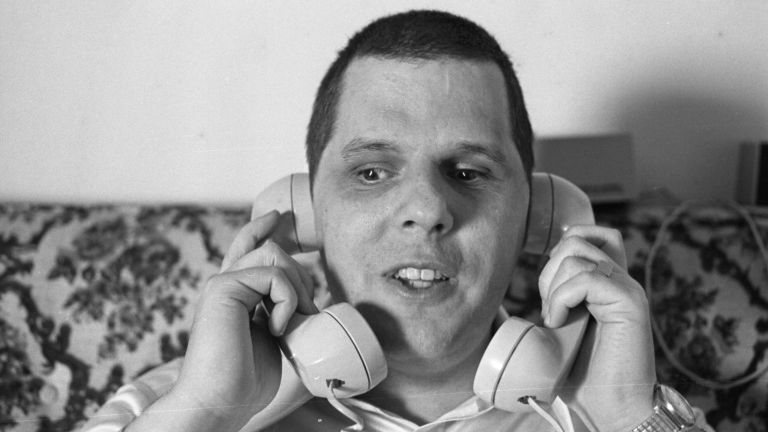
Synopsis: Blind Joybubbles finds he can control phones by whistling specific tones. His discovery, born from loneliness, becomes foundational to hacking culture and tech history.
Before the days of computers, the phone system presented near-constant frustrations. Not only was it the fastest way to communicate, but it could go down for reasons that most of us never understood. With the price rising, a young blind child who would go by the name of Joybubbles started to reinvent what was possible on the lines. Rachel J. Morrison profiles the man who would open the door for phone phreaks and hackers around the world. The documentary, Joybubbles, is both an incredibly sweet view of the man and an uplifting story about community.
Born Josef Carl Engressia, the man who would become known as “Joybubbles” started playing with the phone. Born blind, he started trying to imitate the tones within the phone systems as a five-year-old. Over the next twenty years, he perfected his craft and eventually found his way into government systems and connections. He helped shepherd for the “phone phreak” community and even created a positive self-talk line in the vein of Mr. Roger’s Neighborhood.
Crafting a documentary about an enigmatic figure is a standard practice in the genre. Still, Joybubbles finds more heart and empathy for its primary character than most would expect. There is so much archival footage of Josef that it allows Morrison to really show his evolution as a figure. Along the way, she incorporates talking heads from friends, family, and legends of the tech world to show his importance.
Any time figures like Steve Wozniak and Steve Jobs were influenced by your hobbies, you know that you’ve stumbled into someone special. Joybubbles knew that he was exposing flaws in the telephonic systems, and hoped that it would even open doors for him as a professional. Unfortunately, Josef did not always play well with others in the workforce, primarily because of the ways they ignored his contributions.
Morrison drills into this pain and reminds us that non-sighted workers rarely get the same opportunities that their sighted co-workers can reach. Whether or not Joybubbles was a perfect employee, he showed incredible skill and talent. Why that was not cultivated by his companies shows a sad trend of ignoring people with an inclination towards progress, simply because they do not fit the mold we’d expect.
Yet what also sets Joybubbles apart was his perseverance. He found new ways to spread his positive messages, creating new phone lines to contact other phone phreaks and have them observe what he was doing. The creation of the “Zzzzyzzerrific Funline” allowed him to maintain a childlike wonder as well. While some of this immaturity might have put him on the wrong foot with some people, it also allowed him to overcome bad moments of his life.
Pieced together from a vast array of archival footage and home recordings, Morrison is able to showcase Joybubble’s influence on a community and culture as a whole. He might not be a household name today, but his pranks and feats often found their way into the newspaper. He was a one-of-one, and his influence remains in the minds of those who changed the world. At the same time, his incredible pain and hurt are on display, showing us that the “Joybubbles” persona was as much a defense mechanism as a way for him to establish himself as a figure.
Joybubbles is a cute documentary and covers a unique era of communication that will feel foreign to anyone under 30. It’s also an uplifting experience, one that should help reconnect those with the enigmatic man. Joybubbles was a unique guy, and he was pulled away from us far too soon. Still, his legacy of being kind to each other and trying to lift up the world is a worthy one to continue. In 2026, we need more Joybubbles to help us rediscover a world that’s not so dark, but instead a community to help each other.
Synopsis: In the border city of Juárez, Mexico, where violence against women is perpetrated with impunity, an unlikely defender emerges with a desperate call for change. Inspired by true events.
Women’s suffering has been ignored, pushed aside, or hushed into silence for as far back as history goes. And one of the most unfortunate truths that comes with being a woman is knowing that the other women who surround you more than likely have an experience with sexual assault. It’s a hard pill to swallow, especially when justice evades victims through conventional methods. Inspired by true events, The Huntress (La Cazadora) answers the call to even the score between predator and prey.
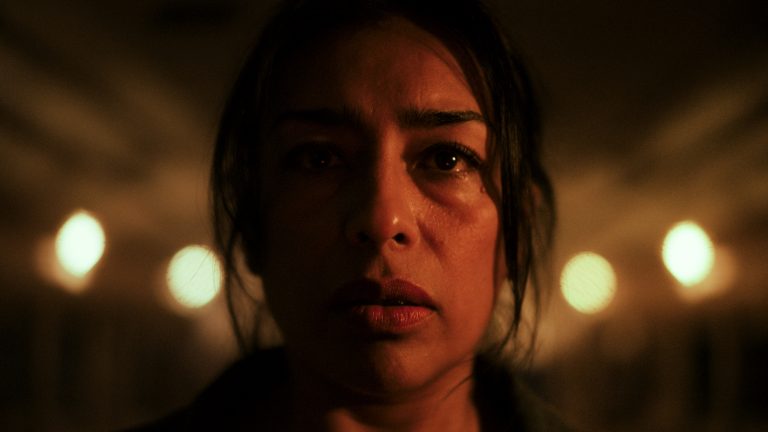
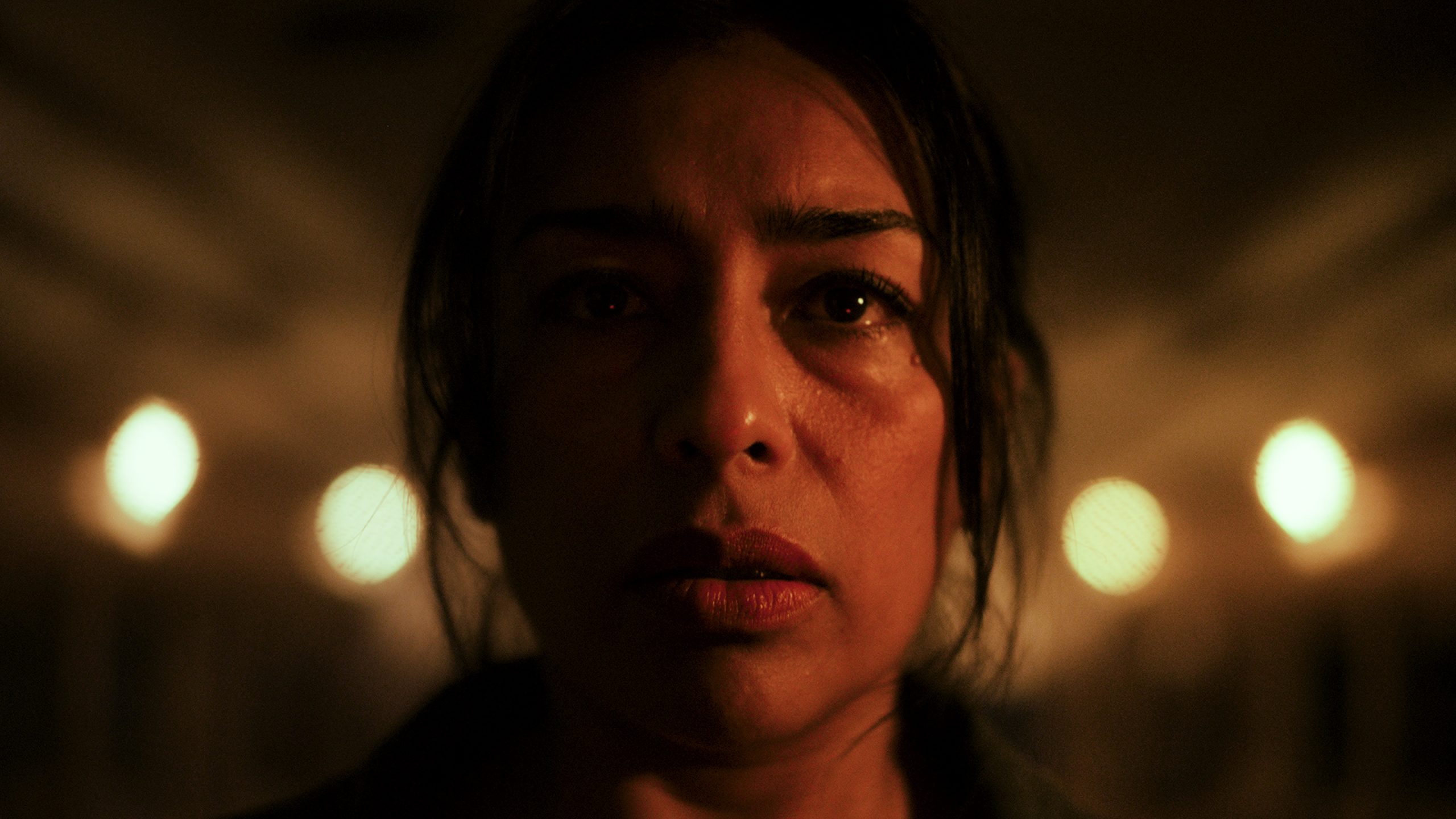
Adriana Paz appears in The Huntress (La Cazadora) by Suzanne Andrews Correa, an official selection of the 2026 Sundance Film Festival. Courtesy of Sundance Institute | photo by Maria Sarasvati Herrera.
Director and writer Suzanne Andrews Correa takes audiences back to August 2013 in Juarez, Mexico, showing a peek into the life of being a woman in a city that lets violence against its female population run rampant. As the film opens with a crowded bus filled with a mixture of men and women of all ages, there’s a creeping uncomfortability that seeps in. Their driver is ogling a young woman who ignores his advances, and as he pulls up to her stop, his final words before gunshots ring out are those insulting her for not giving him her number. As he lays lifeless in a seat where he once felt power, life in the city will never be the same.
It’s a startling opening, but it’s entirely effective; Correa isn’t concerned with holding our hands while we navigate the harsh realities of the women living here. It sets out immediately to establish how tired women are of having their lives, and their loved ones’ lives, treated as disposable. Luz (Adriana Paz) is one of those women, working in a warehouse with strict rules. Three years ago, she was a victim herself, raped on a bus. And even a few years removed, she can’t escape it, either by reminders of a lack of intimacy from her boyfriend Jaime (Eme Malafe), or by the constant worry that her young teenage daughter Ale (Jennifer Trejo) will become yet another girl with her innocence taken.
Navigating through Luz’s life is enraging; it’s a direct reflection of stories we’ve all heard. She’s a mother trying her best to keep her daughter from going through what she had to, but the systems in place make it almost impossible. With corrupt police partaking in the same activities they are being asked to stop, to abusive workplaces that refuse to let women off work to heal from their trauma. Paz’s performance is captivating and suffocating all at once. Her character’s actions are hard to disagree with, especially when Paz’s work evokes the panic felt during flashbacks to her assault. So when Luz takes inspiration from the Goddess of the Hunt, Diana the Huntress, a bow-and-arrow-wielding hunter, it isn’t just about snuffing out predators; it’s a warning to those who protect them.
Yet Luz isn’t the only woman whom the film highlights who is trying to find her own way to advocate. Correa places mothers in the deserts of Juarez day in and day out, looking for a sign of where their missing loved ones have gone. Ximena (Teresa Sánchez) is one of the women, armed with a pickup truck with the bed filled with tools covered in dirt. Sánchez plays a rough-around-the-edges woman; her house, minus her daughter’s room, is a mess, but her ability to make it feel warm and welcoming is a bright spot in a dark film. She shows Luz a future filled with the danger her daughter is in, even partly due to Luz’s own actions, by opening up about the work she does—creating a community of other mothers who refuse to accept that the local police won’t do anything, organizing protests and search parties. The Huntress doesn’t ask audiences to accept either as the correct way to change things, but reminds audiences that women create change when they advocate for one another.
Correa doesn’t shy away from the mental and physical tolls of abuse, from young women showing up to work late, covered in bruises, to Luz breaking down as her daughter touches her. The depictions of violence are hard to stomach, and for some viewers, it might be too much. But it’s used to remind us why these women are so passionate about ending that same kind of harm for future generations. Where The Huntress falters is its pacing, starting out with a bang of tension that fizzles out during its second act, only to pick back up just as the film enters its final moments. And not enough time is spent exploring Luz’s and Jaime’s relationship, leaving it in a confusing spot when the film ends.
The strength within the performances, and Correa’s examination of how powerful women’s collective voices can be, are highlighted by picturesque visuals of Mexico throughout the film. Either through the clothing of the elegant dresses Ale sneaks off to try on, the mountains cutting through the horizon, or the colorful paint adorning the walls of their homes. Cinematographer Maria Sarasvati Herrera only intensifies the unease of The Huntress with her unique style. When Luz is experiencing her anxiety attacks, the camera locks onto her face, forcing the audience to look her in the face while she’s panicking. Or when Ximena stands against a police detective, the camera zooms out to show a crowd of like-minded moms.
While the film’s runtime begins to be felt midway through, The Huntress still has enough strength in its performances, visuals, and themes to be more than worth a watch. Correa’s writing and directing are another promising female voice within filmmaking that has an important story to highlight. She uses women’s pain without exploiting it for shock value, giving them the ability to tell their trauma their way.
Director: Beth de Araújo Writer: Beth de Araújo Stars: Mason Reeves, Channing Tatum, Gemma Chan
Synopsis: After 8-year-old Josephine accidentally witnesses a crime in Golden Gate Park, she acts out in search of a way to regain control of her safety, while adults are helpless to console her.
Witnessing a crime at any age alters a person, but the world just expects them to continue. But what happens when it’s a child who doesn’t have the vocabulary to even describe the crime they see? Beth de Araujo’s newest film, Josephine, is a shocking masterpiece that navigates the trauma an 8-year-old suffers after being a witness to a horrific sexual assault. A harrowing watch that teaches hard truths to swallow, especially for a young girl, about how bad things happen, no matter how fair they are or not. Based on events de Araujo experienced in her own life, Josephine shows a perspective rarely seen.
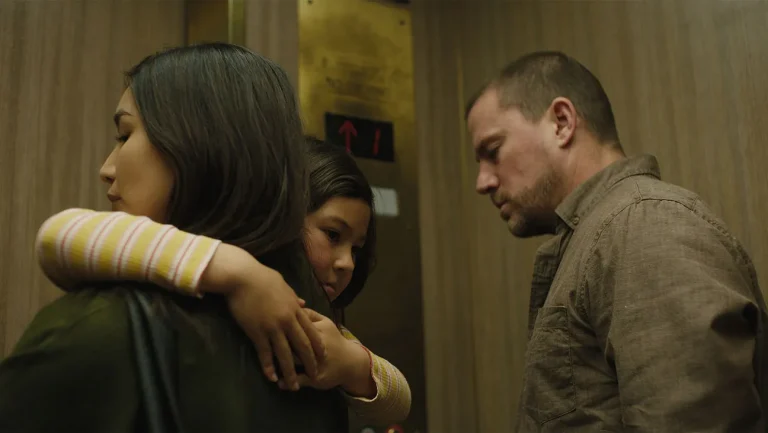
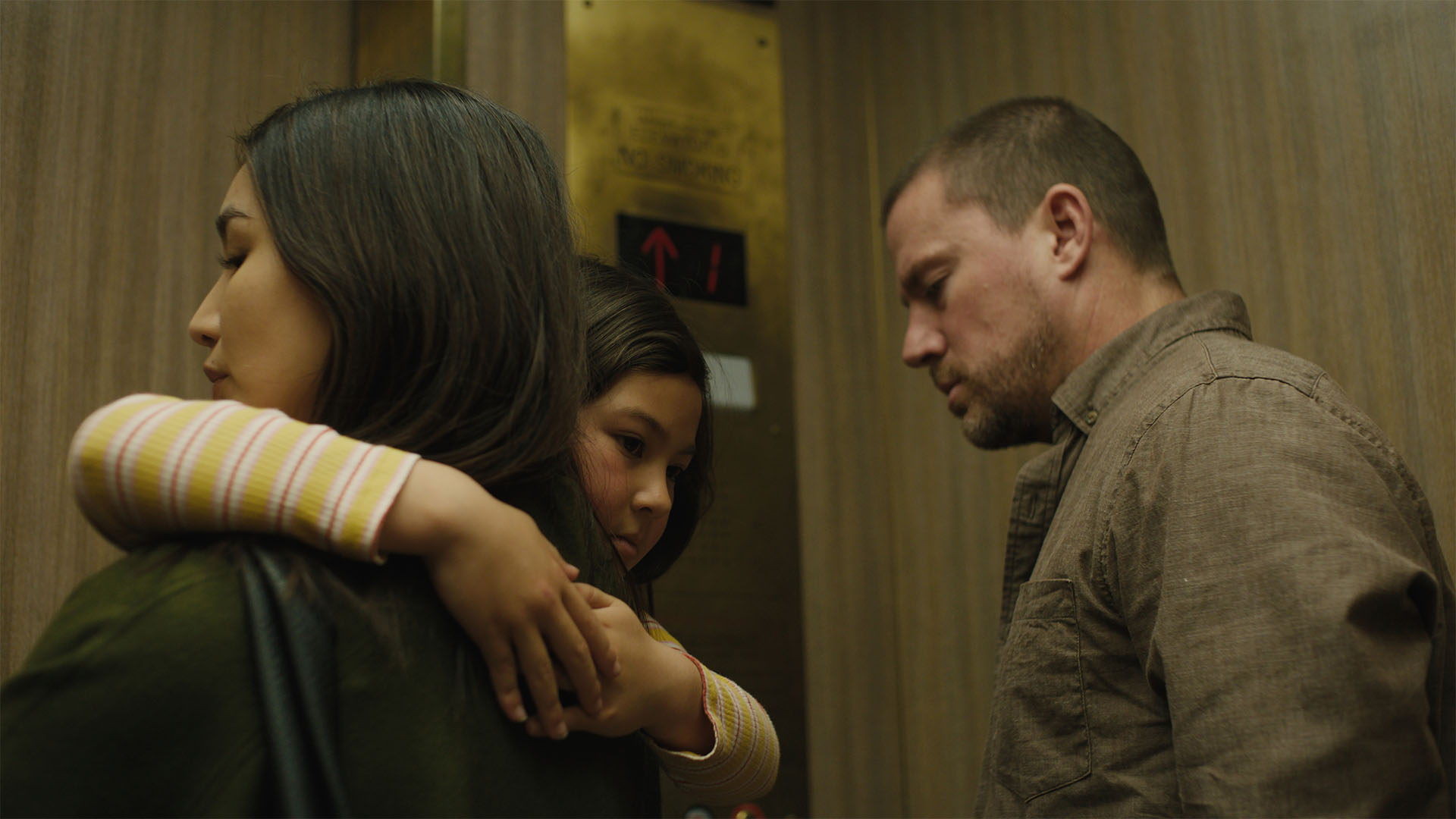
Gemma Chan, Mason Reeves and Channing Tatum appear in Josephine by Beth de Araújo, an official selection of the 2026 Sundance Film Festival. Courtesy of Sundance Institute | photo by Greta Zozula.
Josephine (Mason Reeves) is just like any young girl. She comes from a happy home with lovingly protective parents, Damien (Channing Tatum), and Claire (Gemma Chan). As the film opens early on a Sunday morning, Josephine and her dad are running through Golden State Park. When she gets slightly ahead and takes the wrong path at a fork, she finds herself near the park’s public restroom. She hides behind a tree when she sees Sandra (Syra McCarthy), a young woman in running gear, heading into the restroom. Only moments later, Greg (Philip Ettinger) quickly enters the restroom, and a struggle between Sandra and Greg spills out into the grass near Josephine. As Greg overcomes Sandra and knocks her unconscious briefly, he begins to graphically assault her as the 8-year-old sees every single second.
An unfortunate reality that many women learn is that sexual assault can happen to us all at some point, whether it is directly or happens to someone we know. But comprehension of these acts is hard to understand until we are older, and able to decipher what was consensual and what was not. That doesn’t stop these crimes from happening to young girls, and when they don’t have the vocabulary to put a name to an act, their perception of sex is altered. This makes it increasingly hard for them to heal from what they’ve seen, and in Josephine’s case, the word rape doesn’t even exist in her world. That’s until she snags her mother’s phone and searches for that exact word she overhears from her parents’ conversation, misspelling it as R-A-I-P. Her first encounter with adult concepts like sex comes from violence that blurs the line between both. And she begins to see Greg throughout her life as if he were in the same room with her at all times.
Her parents both have two different ways of dealing with their child, who is experiencing personality changes that get worse the further she gets from the day of the crime. Damien is a sports guy, instilling the idea that being scared is something you should overcome. He’d rather tell Josephine that something like that will never happen to her than accept the reality that it could. Claire, on the other hand, wants her daughter to accept that these things will happen, but when the conversation about the topic comes up, she finds it hard to talk about. Josephine is closer to her dad than her mother due to their shared love of sports, but as her physical training ramps up with self-defense classes, her rising anger comes to a boiling point several times.
Reeves is phenomenal in Josephine as the film’s titular character, marking her first film performance as one where the line between acting and a genuine reaction from a child is blurred. It’s a vulnerable and natural depiction of a girl trying her best to understand the lessons her parents taught her about fairness and the reality that not everyone will believe your truths. She can easily switch from being a curious and sweet kid to using her self-defense techniques to scare schoolyard bullies. What Reeves does in the film’s courtroom scene shows not only the bravery of her character, but of herself as well. Her frustrations left a lump in my throat as she exudes a sense of morality at a young age that is rarely seen in adults.
The film isn’t interested in showing you the right answers on how to handle this situation; it is honest in how it shows the impact of making a child hold this pain. Focusing on just how over their heads everyone is in handling Josephine and her outbursts, with her dad becoming more of a hothead over the course of the film, and her mother breaking down at nearly every question she is asked by her child. There’s no one there to talk to about what she’s feeling, or even what she’s seeing. Its personal script is unshakable, with de Araujo adding her lived experience. She creates a family dynamic that has you understand each perspective with their layered characterizations. These characters can go from enjoying a morning breakfast to getting into a heated argument about whether or not Josephine should be involved with the trial as the only witness. It highlights the lack of communication they have, and it’s refreshing to see a realistic approach to parenting during a crisis.
Jospehine is hard to watch at times, not only because of its subject matter, but also because of the way it is presented. The sexual assault is incredibly graphic, one of the most disturbing recreations of a film. For some, it’s going to be a huge turn-off, and it’s understandable because the film never shies away from the brutality of the crime. It leaves an impact that connects the viewer with Josephine, and makes us understand this from the mind of someone who is seeing something so violent. Often, cinematographer Greta Zozula puts us at the height of an 8-year-old, the height difference that adults have met drop to their level to see face-to-face. Zozula’s lens rotates often to see each character react to situations, like a conversation with the police, capturing Damien, Claire, and Josephine when their testimony is requested.
Ultimately, Josephine is a masterfully made commentary on how children are expected to handle pain when they don’t understand the cause. Packed with career best work from Tatum, Chan, and one knockout of a debut performance from Reeves; there’s never a wasted moment of screen time. Used from the writer and director’s life experience that shakes us to our core, Josephine is a feat of indie filmmaking that shows the power of female filmmakers’ voices.
Kleber Mendonça Filho’s The Secret Agent is a film informed by the director’s own memories. It’s not unusual for Kleber Mendonça Filhoto pull from his personal experience and specific perspective in his work. Neighboring Sounds was partially shot in the apartment he lived in with his family in Recife. Born in Recife in 1968, Kleber would have been a similar age to Armando’s son, Fernando ,in 1977.
Nadine Whitney speaks with Kleber about how his life informed the film.
Nadine Whitney: I watched The Secret Agent, and then I watched Pictures of Ghosts, and then I rewatched The Secret Agent. I can see how many personal stories you’ve put into the film. For example, your mother, Joselice Jucá, recorded oral histories. And you have that aspect as part of The Secret Agent, and the projector that you worked for, Alexandre Moura is given a character in the film. Can you tell me about how you’ve used your own memories to create a portrait of Recife in that time.
Kleber Mendonça Filho: It is how I work, and I’ve never planned this, but I can only begin to write something new if I have it in my heart. I think once you work out the plot and the storyline, that’s technical, and that’s something that you can do. I really felt that I could write the script for The Secret Agent after so many years looking at archive material in Pictures of Ghosts. That film really reconnected me, in a very emotional way, to Alexandre the projectionist at the cinema, and to my own mother, because I found archive material of her.
When you lose someone so early, my mother died quite young at 54, and years go by and then you find a treasure trove of archive material with pictures and audio and video and film of her speaking it becomes a major emotional punch. I was very moved to see that her work as a historian so many years ago was basically talking about the same things that I do now as a filmmaker. I found that really moving. I think it probably explains the young historian character in The Secret Agent.
And with Alexandre I spent many hours looking at literally 16 hours of video footage that I shot with him, and this was about six years ago. So, twenty years after his death, I was spending mornings and afternoons watching myself talk to a friend who had died a long time ago. All these things gave me an expanded mind in terms of going into The Secret Agent. One thing is the storytelling, which is fine. I enjoy it. But the other thing is, you need to bring in the emotional basis on which you are going to build a story. I’m so happy that this year so many people have felt, I think, what I felt when I was writing and making the film.
This week on the InSession Film Podcast, we dive into a Sam Raimi movie draft, breaking down and discussing one of the most inventive directors in modern cinema. We also talk about the recent passing of comedic legend Catherine O’Hara and we also revisit one of our all-time favorite scores from Pirates of the Caribbean: At World’s End as one cue has been trending on social media recently!
– Send Help Box Office / Catherine O’Hara (0:30) After some opening banter, we begin the show this week by briefly discussing the box office for Sam Raimi’s new film Send Help, which is off to a hot start. There is still some work to do, but it appears to be the first major success story for 2026 with an original horror film making waves. We then shift our attention to comedic legend Catherine O’Hara and her unfortunate passing last week. She was simply one of the very best and this one stung heavily.
– Hans Zimmer ‘s Pirates Score / The Way of the Wind Update (21:38) In what might JD’s favorite segment in a long time, he takes a victory lap on the recent virality of Hans Zimmer’s score for Pirates of the Caribbean: At World’s End. Specifically, the “love theme” from that film, a cue we have raved about several times here on the show. It’s a piece of music that has become trendy on TikTok and Twitter, and boy do we have fun taking credit for it. Also, we might be getting Terrence Malick’s new film The Way of the Wind this year. A recent interview suggests it could premier at Cannes, so fingers crossed.
– Sam Raimi Draft (55:48) With Send Help now in theaters, it was the perfect time to talk about one of our favorite directors working today in Sam Raimi. His Spider-Man trilogy is untouched and what he did with the Evil Dead films was incredibly inventive. Not to mention his other great films in-between those trilogies. This one was only five rounds, but we talk about some really great movies and had the best time doing so. That said, who do you think won this draft between JD and Brendan?
If you want to help support us, there are several ways you can help us and we’d absolutely appreciate it. Every penny goes directly back into supporting the show and we are truly honored and grateful. Thanks for your support and for listening to the InSession Film Podcast!
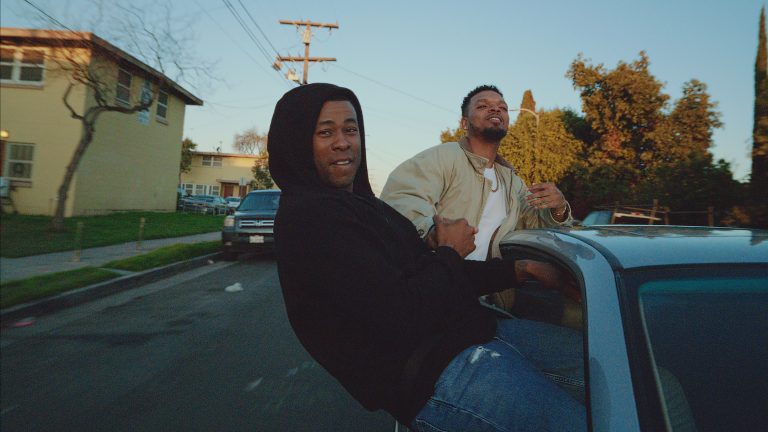
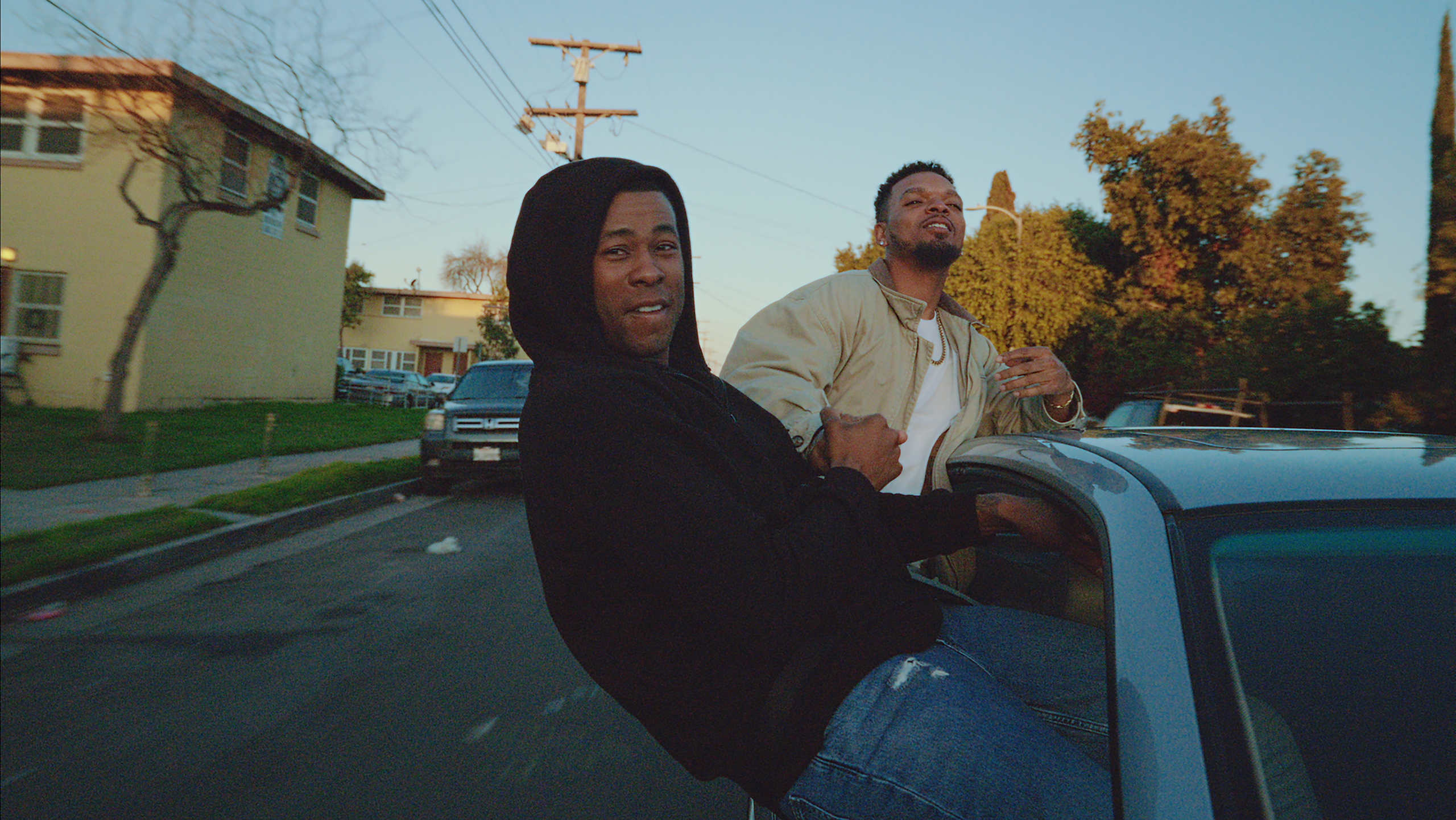
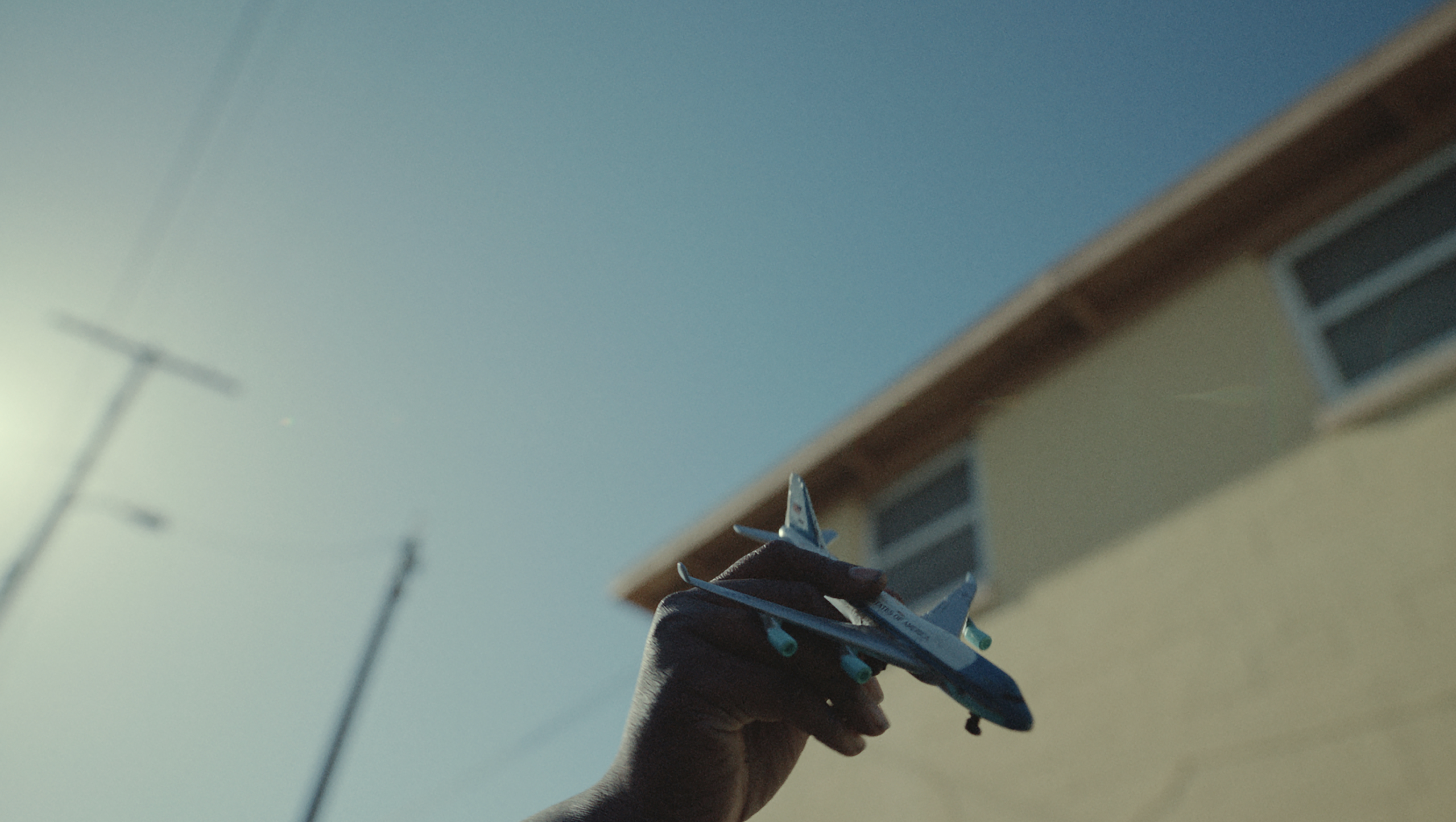
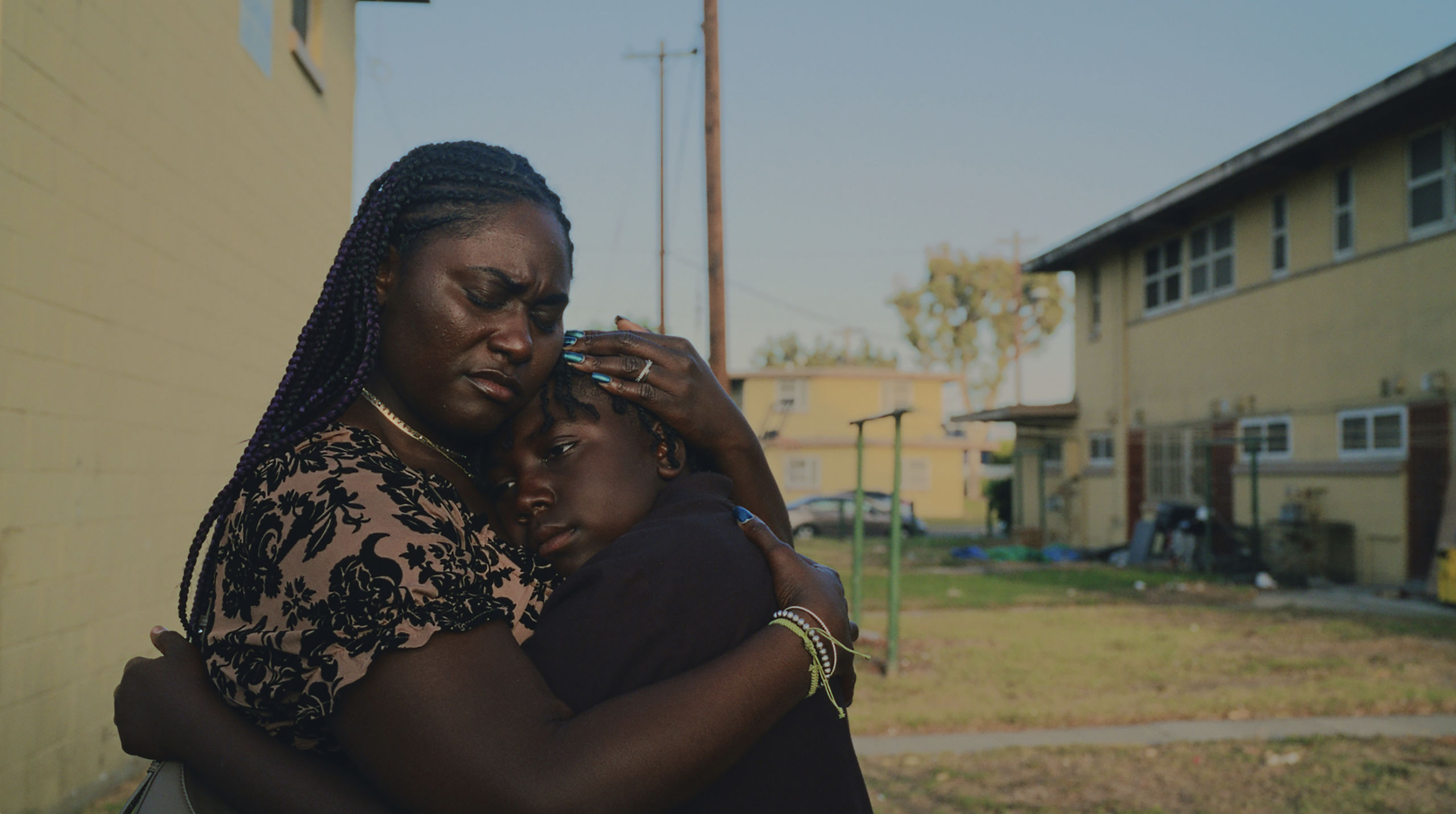
Director: Walter Thompson-Hernández Writer: Walter Thompson-Hernández Stars: Danielle Brooks, J. Alphonse Nicholson
Synopsis: A boy sees ghostly figures of other boys in his neighborhood while grappling with his father’s distance. These visions uncover hidden connections between them and their shared heritage.
The new era of rising filmmakers has come back around. Filmmakers with their own style that aren’t afraid to put their tools to use and in some thoughtful and heartfelt ways pay homage to the great filmmakers that came before them. In If I Go Will They MissMe, director Walter-Thompson Hernandez uses the tools that he’s been given to craft a film that doesn’t hold back on its portrayal of parenthood and how someone’s past traumas can really affect their relationships with their children. As a parent, I know that past trauma can somehow come up in your present with your kids and in building a relationship with them. This story being told from a child and his father’s perspective was really alluring. Seeing both the past and the present told in these ways was an added detail that was implemented by the great performances from the actors, the wonderful cinematography, and the direction from Hernandez.
Big Ant (J. Alphonse Nicholson) has recently been released from prison. Life on the outside is strenuous to get used to but fortunately he has his wife Lozita (Danielle Brooks), their daughter Acacia, and sons Lil Ant and Trae. Ant gets back to his regular life on the outside by hanging out with his best friend JJ (Myles Bullock), working at a local stable with horses and trying to be a good man for himself and his family. His son, Lil Ant (Bodhi Jordan Dell), is very bright with a lot of skills in the arts. He’s not shy when it comes to his drawings and school projects. A subject of his drawings is his dad as the Greek god, Poseidon. He thinks of his dad as a literal god so much that he constantly draws him in school and at home. Big Ant sees this as a distraction from his school work and he doesn’t want Lil Ant to champion him.
Ant doesn’t feel like a hero to his family because he’s been in and out of prison. As kids, he and his friends teased a janitor that they happened to come across while hanging out. Ant assaulted the janitor with a deadly weapon. The police came to his house, chased him through the hood and arrested him. A moment of stupidity as a youth cost him his innocence and ultimately, his freedom. Lil Ant starts to get into fights at school and his parents become worried that he’s doing it for attention. From then on, Ant agrees to talk to their son about the multiple chances that we don’t receive as men of color and how being like our parents isn’t necessarily something to strive for. Being your own person is the real thing to want to be. Lil Ant takes his dads advice and applies it to everyday life. The chemistry between Nicholson and Dell as father and son is favourable. Lil Ant (Dell) looks just like his mom but he has traits of his father.
The portrayal of Lozita by Danielle Brooks is all too familiar with me. She works a lot so she’s not able to be there for all of her kids, she takes advantage of her free time and she has to deal with the fact that her husband is still distant from her after being away from their family multiple times. Lozita’s sister Jenn (Bre-Z of television’s Empire and AllAmerican) pleads with her to start a new life with her kids but Lo is hesitant. She wants Big Ant to be there for her and the kids but she’s had it up to here with him continuously being distant with Lil Ant and his continuous infidelity with other women. Brooks is an actress that isn’t afraid to really go into her character’s psyche and bring out emotions that can wash over her scene partners, directors, and an audience. This movie is a real love letter to mothers all over the world. Most importantly, mothers of color, who have to take on a lot of responsibilities teaching their kids that they don’t have the same privileges that other kids in better class and economic conditions have.
Bringing the film all together is Lil Ant played by our young lead, Bodhi Jordan Dell. Dell’s sporadic narration gives us more insight into him loving drawing like his dad and airplanes, also like his dad. While showing these similar interests he doesn’t receive the same attention and care from his dad like his siblings do. This upsets him and he’s overcome with self doubt and little love from Big Ant so much that at the end of the film he tries to do something that can completely alter his families lives. The direction from Hernandez in his scenes with Dell and the other kids is really pleasant because not every director can work with kid actors. He gives all of them the assistance that they need to bring out performances that aren’t outmoded.
If I Go They Will Miss Me is a real achievement that must be seen when it’s officially released in theaters. It shines in all aspects of filmmaking from the performances from its lead actors (Nicholson, Brooks, Bodhi), supporting actors (Bullock, Bre-Z, etc), wondrous cinematography from Michael Fernandez, and the combination of fantasy and real life story elements by writer/director Hernandez. I was happy to see that this wasn’t a typical story about a Black family living in the inner city of Watts, CA. The characters have bold personalities, beautiful personal interests, and they’re keen to do better for their current lives and their futures. This movie will be a hit amongst people that are looking for something original that has excellent mobility, and a story that’s familiar but told in a respective way.
Emilie Blichfeldt’s debut feature, The Ugly Stepsister, is gloriously gross, as the “ugly stepsister” of the Cinderella story goes to extremes to be beautiful enough for the facile Prince to take note of her. Bone-crunching plastic surgery, sewn-in eyelashes, and eating a tapeworm are but a few of the horrors Elvira (Lea Myren) goes through to be the belle of the ball.
Nadine Whitney spoke with Blichfeldt; Anne Cathrine Sauerberg, the film’s primary makeup and hair artist; and Thomas Foldberg, who designed the prosthetics that caused audiences to squirm and brought the movie to the attention of the Academy Awards.
Nadine Whitney: Hello again, Emilie. I interviewed you ages ago when The Ugly Stepsister was first coming out, and I’m so pleased that you have an Academy Award nomination—and gosh, I wish it could be for more than hair and makeup. Apologies, Anne Cathrine and Thomas!
Thomas, you were responsible for most of the prosthetics work. Can you tell me a little bit about how you worked with Anne Cathrine to create a kind of merger between your prosthetics and her makeup, especially for Lea Myren as Elvira?
Thomas Foldberg: The prosthetics for the Elvira character were definitely the most challenging part of the film, but also the most fun to execute, because they’re such a big part of it. We had to be with Lea for so many days. It’s interesting, because the whole design phase I actually did without Anne Cathrine. That was me working together with Emilie to find out what actually had to be done. Anne Cathrine came in later and then came up with this wonderful look for the character, as well as the makeup she’s wearing—eye makeup and so on. You build the character from the beginning with the director. I’d never worked with Emilie before, but she had this really clear universe and some really good mood boards, so it was really easy for me.
Anne Cathrine Sauerberg: Sometimes, especially when you have a really short time, you just have to decide, “Okay, we’re going this way,” and it worked out really well. Emilie and I needed a lot of character work before we started shooting. The strange thing is that sometimes a movie has a will of its own, and it’s very much driven by Emilie’s visions—but there’s also always something you can’t quite explain when you’re making a movie. We didn’t have to say very much to communicate while shooting. When you say, “I’m going to make it a little mush-mush,” they know what you mean, so we don’t see the edges or whatever.
I wish I could say that I sat down and said, “It’s going to be like that,” but looking at Emilie’s smooth parts, it kind of came together. Maybe that’s also part of the creative process—it’s kind of hard to explain when it happens.
Also, you have a team. I had two wonderful Polish girls whom I’d worked with before. I had to explain a look to them, then show certain pictures. I found reference images, but I think something happens that’s very intuitive about doing it. The great reference pictures were presented by Emilie.
Nadine Whitney: Emilie, I’m guessing you probably provided a lot of pictures from films like Morgiana (1972) by Juraj Herz and his Beauty and the Beast (1978). I’m also going to guess Fruit of Paradise (1970) by Věra Chytilová. The Ugly Stepsister has a very strong Eastern European–Czech aesthetic, especially with the blonde wig that Elvira is wearing.
Emilie Blichfeldt: Yes! It is absolutely in that universe. A lot of those wigs are quite terrible because they’re made in the 1950s, 1960s, and 1970s, so they’re very artificial and plastic. We wanted to go camp, and we wanted to give it this timeless look by filtering it through the 1960s and 1970s. When Anne Cathrine brought in images of Cher for the eye makeup, I thought, “Okay, I met the right person.” I think that’s the chemistry Anne Cathrine is talking about.
When I saw Anne Cathrine’s work—she did a great TV series set in the 1960s, all about curls and curlers, called Carmen Curlers—I knew. She also made this amazing wig for a photo shoot of a big model in the 1960s that doesn’t exist. The way she curated that was just immaculate. We wanted to go with the (sur)realism found in these Eastern European movies, but they’re also camp. That’s the fine balance we had to thread to build a universe.
Nadine Whitney: I rewatched the film last night, and I was amazed at how certain things were crafted. For example, Lea is wearing a wig of hair falling out on top of her own hair, and then another wig on top of that. I don’t know how many noses she ended up having to wear. Anne Cathrine, were there any specific challenges you encountered?
Anne Cathrine Sauerberg: I sat in a basement for two weeks in Warsaw [laughs]. I cast my mind back to the blonde wig, and it kind of just happened. I think it was more like running a race, given the tight shooting schedule. I tend to get very absorbed in what I’m doing, and having to change directions on set wasn’t so easy to get into.
Thomas Foldberg: I think, yeah, there was a lot that was really challenging. But the most challenging part was actually the shooting. We had such a short time, and we filmed somewhat chronologically—but not always—so it ended up being a continuity… nightmare is the wrong word.
Emilie Blichfeldt: It’s the right word!
Thomas Foldberg: I mean, it was crazy. We’d have to switch from Elvira’s first look with braces to without braces, or have different noses. We were switching back and forth all the time. I had to make printouts, change things on my phone, and label my makeup mirrors—not with a complete plan, but just to communicate what was needed so my assistant could keep track.
Nadine Whitney: What about ensuring the actors can act through the prosthetics, like the fake teeth and braces?
Thomas Foldberg: Nobody has really asked, but it’s fairly simple because the dental prosthetics are very thin. The braces only attach to the side of the cheek, so Lea didn’t really have anything in her mouth. The broken teeth were very thin acrylic teeth placed on top of her own, so it was quite simple and very standard in many ways.
Anne Cathrine Sauerberg: If you go to Thomas’s Instagram page, it’s really great to see all the things that happened and how the effects were made. Some of the things look simple, but they’re actually quite complicated.
Nadine Whitney: One of the best visual jokes for me throughout the whole film is Otto, Agnes’s father, slowly decomposing over the course of the movie. It’s funny, but it’s deeply grotesque.
Emilie Blichfeldt: I came to Thomas with a long, long list of things I wanted him to do—create Elvira’s character, change it throughout the movie, show different stages of healing or hurting, Elvira’s chubbier-appearance prosthetics. I had body parts, a tapeworm, a dead corpse rotting away, and popping pimples. Thomas thought I was crazy and didn’t think it was going to happen. Chopping off toes, sewing eyelids.
As a director, having only 28 days to shoot, and then seeing Thomas make all of these things from that long list—putting in so much work and designing them to perfection—and then only having time on set to shoot one frame of an object was hurting me so badly. I really felt that it’s both an honor and a horror as a director that your work is based on other artists’ work.
I’m the boss of the whole thing, and I know we have to compromise, but here was this artist who made these art pieces, and I could shoot them for five minutes. It’s insane!
Nadine Whitney: That’s the beauty of finding the right collaborators, though. I imagine trusting that these things people think are crazy can be done, even if they’re only on screen for a few frames. They’re still impactful.
I think the film is incredibly timely—and it was timely when you were writing and shooting it. There’s also another film, Toxic, a Lithuanian drama written and directed by Saulė Bliuvaitė, about two contemporary girls, one of whom also swallows a tapeworm egg. I think these films are in conversation, because these beauty standards just haven’t gone away.
Emilie Blichfeldt: Yeah, it’s insane how the tapeworm is arriving at the same time as Ozempic and all these other weight-loss drugs. Ozempic simply wasn’t a thing when I wrote the script—and it makes you lose your hair. I researched a lot of data and saved one example that I found especially funny. There’s one that lists anal itching, hair loss, epilepsy, and other things as possible side effects of tapeworms.
Nadine Whitney: I’m keeping that in the interview! I wouldn’t be ashamed of it—it has quite a bit of girth.
Emilie Blichfeldt: I know. I had to be quite specific about a lot of things. As a director, sometimes you’re like, “Oh shit, did I write that?” Now I have to talk very explicitly about something. I had to be very explicit about the amount of hair on Agnes’s body double’s butthole. My Google searches were not very suitable for work—but it was my work.
And with this penis thing, I really debated it. I’m very specific about how bodies are represented in movies. I had a friend draw a very crooked penis, and I thought a lot about penis representation, but it didn’t end up in the movie because I felt it took away from the moment, which was about the more glorious parts of sexual life. It shouldn’t be gross or weird, but more like a pure experience. I asked Thomas to make his finest work.
For the past decade, Timothée Chalamet has been on a steady ascent from promising indie talent to full-blown Hollywood fixation. Breaking through with Call Me by Your Name, a performance that earned him an Oscar nomination at just 22, Chalamet quickly became shorthand for a new kind of leading man: sensitive, stylish, and emotionally open. Since then, his résumé has swelled with prestige projects (Little Women, Bones and All), blockbuster credibility (Dune), and an awards shelf that includes a SAG and Golden Globe win, BAFTA recognition, and multiple Academy Award nominations. Alongside the acclaim, his cultural presence has grown louder: red carpets, viral moments, fashion headlines, and drones of social media followers; it seems the admiration has blurred into something closer to reverence. Enter Marty Supreme, a film buoyed less by its substance than by the gravitational pull of its star.
On paper, Marty Supreme sounds like awards-season catnip. A sprawling character study centred on a volatile, brilliant, and deeply flawed man, the film follows Marty across nearly three hours of ambition, self-destruction, and emotional chaos. Directed with evident seriousness by Josh Safdie, and framed as a “big swing,” it premiered to immediate buzz and a predictably divided critical response. Some reviewers praised its scale and Chalamet’s commitment, hailing the performance as fearless and operatic. Others were more hesitant, noting its indulgent runtime and uneven pacing, though these critiques were often softened by deference to Chalamet’s star turn. The consensus, such as it is, seems to be that Marty Supreme matters, even if few can articulate exactly why.
The problem is that significance has been mistaken for quality. Strip away the aura, and Marty Supreme reveals a script that too often mistakes mood for meaning. The dialogue is sparse to the point of inertia, not in a purposeful, tension-building way, but in a manner that leaves scenes feeling underwritten and emotionally unfinished. Interactions and conversations with Marty end in two ways—obedience even when it’s against the person’s self-interest, or confusion or offence at the sheer arrogance and entitlement. The script opts for shock one-liners rather than allowing characters to speak to one another. Great for bursts of laughter, but bad for a script that feels organic and for ensuring the audience is intellectually or emotionally invested in Marty or his story.
Most strikingly, Marty himself never truly develops. Across three hours, the character cycles through variations of the same emotional beat: petulance, volatility, wounded ego, repeat. There is little sense of progression, reckoning, or transformation. Scene after scene presents Marty acting out, lashing against perceived slights, or spiralling inward – but without accumulation. Instead of building toward insight, the film stacks moments beside one another, hoping intensity alone will imply depth. The result is a series of disconnected episodes that never quite cohere into a meaningful whole.
This is where the “Timothée Chalamet effect” comes into play— a phenomenon not unlike the one that followed Leonardo DiCaprio for years. DiCaprio, undeniably gifted, was long treated as an Oscar inevitability before the right role arrived. When the win finally came, it was for The Revenant: a performance that was physically gruelling, loudly transformative, and symbolically overdue, but far from his most nuanced work. The sense was not that it was his best, but that it was his turn.
Chalamet now appears to be on a similar trajectory. He is talented enough to deserve an Oscar someday, possibly several. But Marty Supreme feels like a performance being anointed rather than earned. It is grand, showy, and exhausting, the kind of role that signals “serious actor” in capital letters, yet it lacks the emotional precision and narrative grounding that define truly great work. The danger of rushing this coronation is that it rewards scale over substance, intensity over insight.
None of this diminishes Chalamet’s potential. In fact, it underscores it. His finest performances have often been his quietest, his most attentive, his most collaborative. Marty Supreme asks him to dominate the frame rather than interact with it, and the film suffers as a result. Admiration, when left unchecked, becomes distortion. And while Hollywood may be eager to crown its next enduring star, cinema, and Chalamet himself, would be better served by waiting for a role that actually earns the weight we’re so keen to place upon it.
Director:Yvonne Russo Writers:Christine La Monte, Yvonne Russo Stars: Claudio Giombi, Chitose Matsumoto, Tina Aliprandi
Synopsis:At Milan’s Casa Verdi retirement home, elderly opera stars and musicians mentor young students while sharing their remarkable lives. Built by Verdi in 1896, this unique residence unites generations through music and passion.
Every once in a while, there is proof that awards actually do matter. Not so much in the winning, but in the awareness. Recently, Viva Verdi! received a nomination for Best Original Song at the Academy Awards. This, I am sure, has led many to seek out this film, yours truly absolutely included. This is not as important for major awards players that made a large impression at big film festivals. But for a small documentary to get this kind of recognition outside of awards for that type of film, the difference is immense. And it is appropriate that this film was noticed for its music, and this becomes apparent from the opening frames (or notes).
This film tells the story of Casa Verdi, a retirement home built by Giuseppe Verdi in Milan, Italy. Verdi was, of course, one of the most influential composers of his time (the 19th century) or any other time. The twist here is that it is not just any retirement home, in fact it was built specifically for aging musicians, as many of them had no retirement or back up plan options to support them in their old age. Thankfully, it is still not only operational, but thriving today. Viva Verdi! takes us inside the building and more importantly, into the lives of its guests. All of them are, as noted, operatic musicians. Director Yvonne Rossi does a lovely job of giving just enough historical context along with telling the important stories of the residents of Casa Verdi.
Very often, when we think of retirement homes, our minds drift to terrible conditions and loss of memory. There are countless studies showing how music can boost memory and mood, and this becomes abundantly clear as we travel these halls. As it must, the movie focuses on a few independent stories more than others. Claudio Giombi is a main focus and for those unaware, like this writer, we find just how accomplished he has been in his opera career. Watching him wax poetic about music, life, and teaching, we cannot help but be lifted up and brought along with his lust for life. He and the other residents there also teach and mentor young music students on site. Being present for the gift of this knowledge passed to the next generation is another sight to behold. Although this story may be very niche in nature, it is easily applicable to all of us. Anyone who has a passion can imagine what an opportunity it would be like to pick the brains of the masters of that craft.
The film also details some painful upbringing and racial strife in Italy during different times in history. Chitose Matsumoto is a singer of Japanese descent who traveled to Italy because, frankly, that is where you go for opera performance. Despite being immediately recognized as a talent as a young woman, she also endured poor treatment by those saying that all performers should be Italian. Watching her relive this is quite painful, but there is a clear healing that comes with her age, and with being surrounded by care and love. She also tells the story of being recommended to Casa Verdi and being shocked that they would take her, given her limited career in the opera.
Importantly, the film does not merely lean in to the greatest performers and purely moments of bliss. One of the more moving moments of the film follows an instructor and caretaker who teaches a class built to improve the memory of those who struggle a bit more. Watching their hands slightly shake and eyes fill with tears as they recall songs from their youth is enough to make the most hardened viewer open their heart to the connection of music and emotion. We all deserve a place to create, connect, and continue living our lives to the fullest.
Yes, “Sweet Dreams of Joy” is a stunningly beautiful song, but it pales in comparison to the songs in the hearts and on the lips of the wonderful people that live at Casa Verdi. Watching them sing their hearts out, either by themselves or in passing their gift to others, makes us all just a little bit lighter and filled with just a bit more joy. Viva Verdi!, indeed!