A filmography full of contradictions, juxtapositions, and personal examinations might be one way to explore the work of Michael Mann. An auteur with absolute command over the stylistic nature of how his films look would be enough praise for most directors, but Mann’s knack for cinema goes far beyond cinematography and mise-en-scene. One need only listen to any actor talk about their experience on a Mann film to discover that the character biography of each (and every) character is all thought out before the shooting starts.
What you, the audience member (eager and starry-eyed), think about the work of Michael Mann may depend on when you were introduced to him. Maybe you were there from the beginning and The Jericho Mile (which won’t be delved into, but is important to note at the top of his career) and Thief led you to believe that Mann was solely interested in the lives of criminals (both behind bars and actively committing major crimes). Maybe you came in later in the ‘80s and discovered the more genre-leaning work of The Keep and Manhunter and thought this would be the guy to bring a more vibrant and propulsive energy to sci-fi and horror. Or perhaps like myself you were brought up in the ‘90s and the more commercial Mann films came your way: The Last of the Mohicans and Heat. (Have you heard of this movie? I’m sure you probably have…) Quite possibly you waited until Mann hit his “Oscar Prestige” era with The Insider, Ali, and Collateral before jumping onto the “Mann-wagon.” (And for you Academy Award nerds out there, I am very aware that the only Oscar win that belongs to a Michael Mann movie is Best Sound for The Last of the Mohicans, but the total nomination count of The Insider, Ali, and Collateral is eleven – including Mann’s only nominations for Director and Picture.) And however unlikely this may seem, you could have waited for the last era of Mann films: the retread and/or commercially unsuccessful era which includes Miami Vice, Public Enemies, Blackhat, and Ferrari.
Upon reflecting on his filmography, numerous themes and choices occur repeatedly. This essay will reflect on many: some of which have been written about ad nauseam and others (I hope) will garner some fresh perspective. As a film fan, I can say without hesitation that Michael Mann has created some of my favorite cinema; full of amazing filmmaking technique, innovative storytelling, and transcendent performances. However, Mann is not perfect despite coming across as a perfectionist and his faults are noticeable to the point of being predictable.
I have created a list of Mann Commandments or “ComMANNdments”: choices made either in the screenplay, behind the camera, and/or within that ever-evolving brain of Michael Mann that link all his films together. By focusing on these elements, you can see that Michael Mann (for better or worse) has principles (a code, if you will) worthy of in-depth analysis.
ComMANNdment #1: Thou Shall Live Truthfully and Do as an Actor
Since I was 10-years-old, I have been acting. As you grow with acting, you discover that what acting is changes over the course of time. Early on, the easiest way into the world of performing is pretend, or make believe that everything is fake. “If it’s fake,” a young actor may think, “then I’ll know it’s not really ME up there, but the character.” Now that is all well and good when you are in elementary school, but as you age and mature you want to lean into the truth and reality of the character and situation. The great acting teacher Sandford Meisner phrased it well: “Acting is the ability to behave absolutely truthfully under the imaginary circumstances.” In this way, the actors aren’t “acting” – they are “behaving.” The story is fictional and the actor knows that the circumstances have been concocted prior to the performance, but their behavior is honest: how would I respond in this moment?
For such a visual filmmaker with flair and style, Michael Mann is deeply motivated by the psychology of the characters. It is not enough to simply have a character state what their past is – they need to know every important detail. What Michael Mann is also aware of is that acting (particularly on film) is doing – the actors need tasks to accomplish and props to hold. When you combine these methodologies of “acting is living truthfully” and acting is doing, what you get are compelling performances epitomized in Mann’s films.
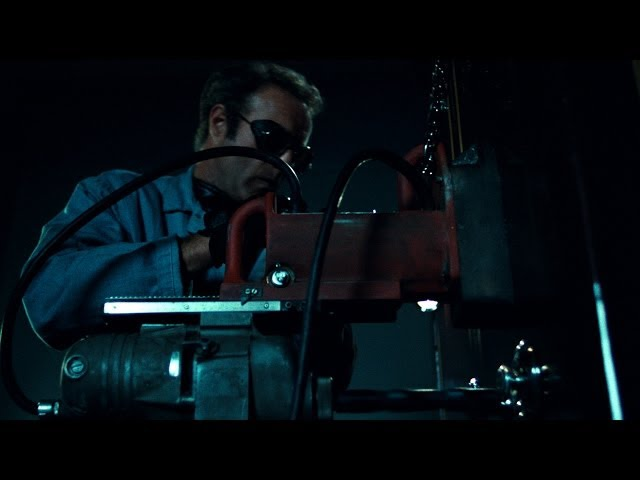
The opening of Thief is the perfect example of acting is doing. It would be one choice to just have Frank (played in a career-best performance by James Caan) perform the task of cracking into a safe via a montage of quick cuts and heavy edits to expedite the process and move the film along in a hurry. What Mann does instead is to have us cut in media res to Frank in the middle of the safe cracking, expertly keeping focus, and actually (and accurately, according to Caan) handling the tools. It’s one thing to see Frank using the drill, but it is something else entirely to see Caan focus on how much torque to use at any given moment. The precision here is what stands out.
What we miss in the opening scene of Thief is made up entirely when we see the job in Los Angeles. This time around we see all the details come together: Frank and Barry (Jim Belushi) use real saws and crowbars to access their way through the roof and attach voltage meters to wires to determine which are phone lines and which are linked with alarms. And as much “doing” is done here, it’s the use of the burn rod on the custom-built safe that shows a precision in the dismantling of the box and how the team operates with each other (to be mentioned later in a different ComMANNdment).
Now…I really hate for so early on in this writing to say that not all the movies follow all of these ComMANNdments, but sometimes as a filmmaker you try a turn in a new genre, the studio interferes with your movie, and what you end up with is The Keep. My feelings for this movie will come up throughout the different ComMANNdments, but I will say that one aspect of the movie that lacks is the feeling of acting as doing. Chalk it up to the mythological narrative and on-set feel to many of the scenes, but The Keep does not adhere to the dogma of honest acting generally portrayed in Mann’s films. Even with talented, reliable actors like Scott Glenn and Ian McKellan, there is an over-performative nature that feels disingenuous compared to other Mann films.
In most cases, the “acting as doing” thought involves a physical, visual act performed in a way that makes it quite known just how real the performance we are seeing is. However, in-depth and cerebral performances of really doing need to be showcased and illuminated as well – here is where William Petersen’s performance of Will Graham in Manhunter comes into view. Petersen handles props and navigates his set well – this section is not to say that he does nothing physical in the performance, but rather it needs to be shared just how well his thought process as Graham works in the film. Multiple scenes allow Petersen the time to walk into a space (whether in the houses of victims or an anonymous motel room) and think and assesswhat has happened in the past, what is happening now, and how it can all impact the future. For my money, Petersen’s portrayal of connecting the dots works most effectively when he pieces together the home video service that links these slain families. Actors have to be curious and investigative by nature and Petersen brings these traits into the world of a character who also needs to constantly evaluate his surroundings – the blending of which leads to a wonderfully emotional and understated performance.
At some point after we merge into the 1990s, a transformation takes place within the world of Michael Mann films. Chalk it up to age and experience or being restrained previously in the world of television, but Mann’s detail and precision is ratcheted up post L.A. Takedown and is on full display with The Last of the Mohicans. The amount of actors “really doing” or “really living” in this film is what sets it apart from other studio period-piece films of the era. In the opening alone, we see Nathaniel, Uncas, and Chingachgook running through the woods tracking down a deer – the active chase brought to levels of realism when you see the trees, hear the water, and behold the hills these actors have to navigate. Acting is doing, yes, but this film is so active – very little time is given to contemplation. After our three Mohicans rescues Cora, Alice, and Duncan, the dialogue continues as they soldier on near a stream and waterfall. Other directors would stop and have the dialogue take focus, but Mann has the actors continue to walk and carry on the conversation which reminds us that they could be found at any moment. This treatment of actors really doing continues through all of Mann’s films.
It is extremely rare that a movie handles a situation so well and realistically that groups in the real-world show scenes from it to show the proper way of handling said situation. Heat is littered with moments that reinforce the “acting is doing” mentality and both the cops and criminals get to shine here. Vincent Hanna and his team adequately assess the first crime scene after the armored car robbery and we get a mini-Thief moment with Val Kilmer trying to break into the platinum vault. However, I would be kidding myself if I did not list the most obvious acting as doing moment in this film: the bank robbery into the downtown Los Angeles shootout. The fact that military and police trainers show how De Niro and Kilmer reload and cover each other is nothing short of amazing. Heat is a contained epic and there are many instances of really doing that occur throughout the film, but it needs to be made clear that the botched heist and escape is one of the most realistic scenes ever committed to celluloid.
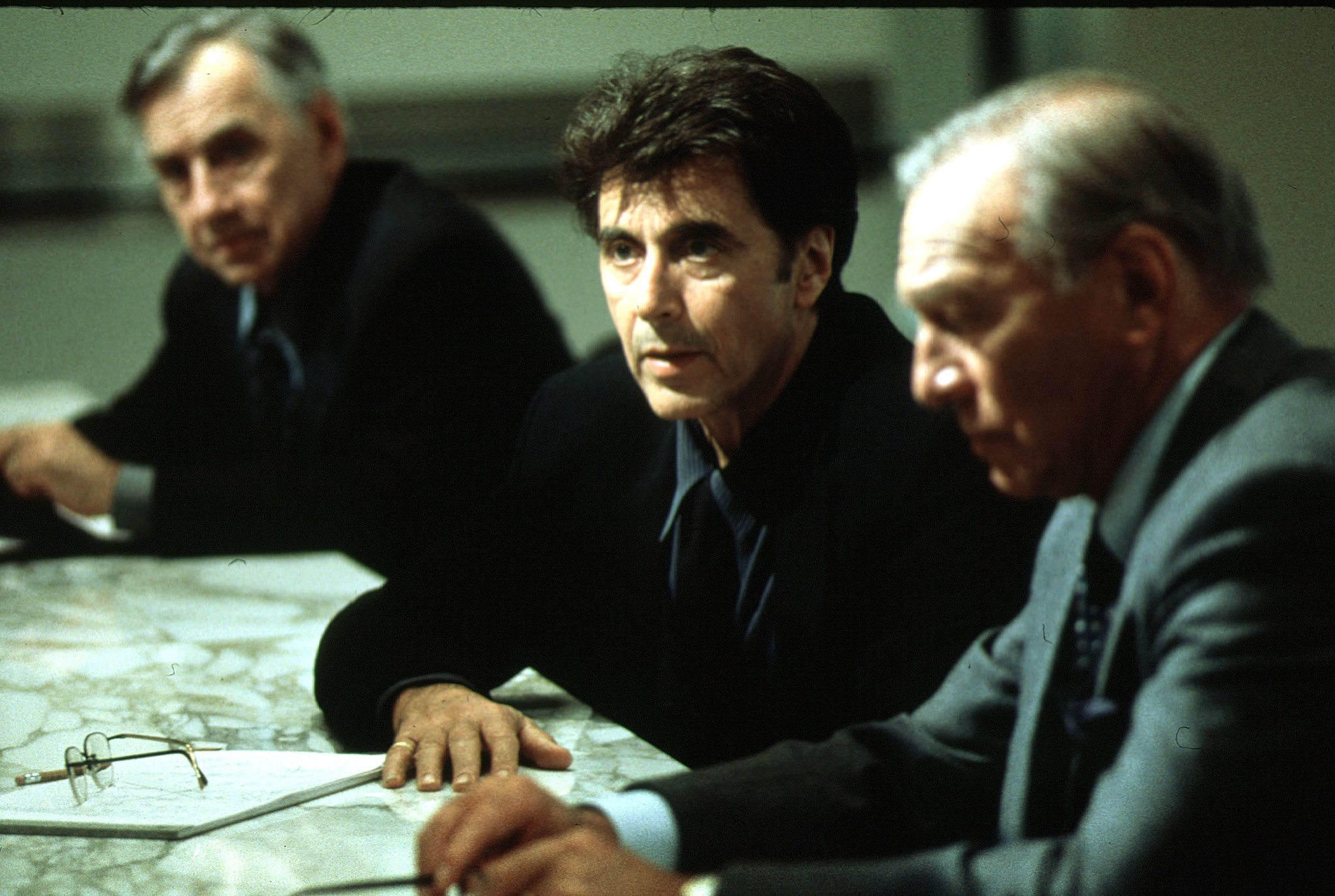
When you consider all the work Michael Mann had created up to and including Heat, one would think that “restraint” might not be a word found in his personal lexicon. However, the source material for The Insider grounds us in a world that is both highly relatable (a husband/father navigating both his familial responsibilities and ethical values) and behind closed doors (the inner workings of CBS and “60 Minutes”). Given the true-to-life nature of this story, actors performing tasks may seem mundane compared to epic downtown shootouts, police raids on the homes of serial killers, and melting down safe doors. Within The Insider characters are epic in their line deliveries, stares, and reactions. A perfect example of actors doing and living truthfully (especially given when the film was set) is the initial interaction between Lowell Bergman (Al Pacino) and Jeffrey Wigand (Russell Crowe). After two phone call attempts, Bergman proceeds to send Wigand a fax. It’s an ingenious scene because it subverts our expectations of hearing two people have a conversation – the gist of what needs to be said is expressed when Wigand replies “I CAN’T TALK TO YOU.” Bergman responds with “Can’t Talk to Me? Won’t Talk to Me? Don’t Want to Talk to Me?” – and Wigand concludes this back and forth with “Can’t. Won’t. Don’t Want To.” A fantastic back and forth that gets us to lean in and build anticipation based on the nature of how long it takes faxes to send.
Michael Mann is very adept at getting actors comfortable performing the actions their characters portray. Whether it is the wilderness and survival tactics portrayed by Daniel Day-Lewis in The Last of the Mohicans or the famous L.A. shootout in Heat, actors come across as highly believable and honest in their physical actions. You could make the argument that no other actor or performance fully exemplifies this idea in a Michael Mann film stronger than Will Smith in Ali. The voice and mannerisms that Smith utilizes to depict as Muhammad Ali are quite amazing (garnering that Academy Award nomination), but it is the training and boxing scenes that fully suck us in. The verisimilitude of Smith’s performance is the glue that keeps this film together. If his performance does not expertly combine the personality of Ali with his physical prowess, this film fails.
Tom Cruise is another actor known for his physicality (how many jokes have you heard or memes have you seen that involve him running?). All jokes aside, it is his endless grit and tenacity that makes him so compelling to watch. When we see him hang onto the outside of a moving plane or leap from building to building, we know the physical exertion it takes to make that stunt possible. What makes his performance as Vincent in Collateral so unique and mesmerizing is that he is doing this same level of physicality but as an absolute villain. And while the stunts in this film are not as audacious as those in the Mission: Impossible franchise, the exactitude and ruthlessness with which Vincent carries out these evil deeds are utterly compelling to watch: not just from the observation of Cruise’s performance, but what that precision says about the character. The raw tenacity of the shootout in the “Fever” nightclub is the most overt example of this – particularly the moment when he performs a somersault move to land on the floor and immediately start shooting the armed guards. However, I want to focus on a different scene: the moments after Max, who has been zip-tied to the steering wheel of his cab, is robbed at gunpoint by two men passing by. These random street thugs believe they have made out with a wallet and briefcase…this is before Vincent returns to the area. Feigning trepidation, Vincent immediately subdues both men with 2-3 gunshots per person. It is not just that he killed these guys, but how he did it – the ease and precision. It is this gunplay and physical prowess that an actor like Tom Cruise can bring to a role like Vincent and make it feel both incredible and truthful.
Okay…so…hmmm…what is actually…done…in Miami Vice? My trepidation here is earned, I believe, because it is hard to really land on the living truthfully portion of this film. As far as actors “doing” what their characters do, I can point to Colin Farrell: he (seemingly) drives a “go-fast” boat and dances with Gong Li. Before Trudy gets abducted, our team led by Sonny & Rico do a good job of showing us how the drugs are getting offloaded from the ship. But who are we kidding? This is a Michael Mann film (you know, the guy who did Heat?) – the best moments of acting as doing come from both the trailer park raid and the shootout by the boatyard. Whether it is Jamie Foxx taking out 2 people in the trailer with his hands and a knife, Barry Shabaka Henley using his night-vision camera to spot snipers, or the epic boatyard shootout; Mann shows us a scene of violent carnage masterfully choreographed. Related to this, Naomie Harris gets a very earned acting moment after she has been freed from her chair restraints: in a violent outburst she tries to kick her captor who lies dead on the floor. Her moment of rage and elation feels genuine here and is the singular standout acting performance in the film.
The “acting as doing” ComMANNdment gets harder and harder to place the further into Mann’s filmography we get. In Public Enemies, the mise-en-scene is so accurate to the period and the characters being real, historical, & larger than life make the art of reality a bit hard to pin down. John Dillinger’s life is so well documented that trying to “really do” is less substantial to the film than presenting the sights and sounds of the 1930s. With that in mind, some much deserved praise needs to be given to the actors who took part in the “Little Bohemia” raid in the film. There are multiple close-up shots of actors where you can see their breath frozen in the air. Shooting on location in Wisconsin, filming deep in the woods, and having to shoot at night makes for treacherous and exhausting hours for the actors. It should also be stated that we are not talking about actors on the rise trying to make a name for themselves: this is Johnny Depp and Christian Bale – quite possibly the biggest male actors working in Hollywood around 2009. Watching their dedication and craft in this particular scene shows that actors who want situations to feel as real as possible can create powerful moments on screen.
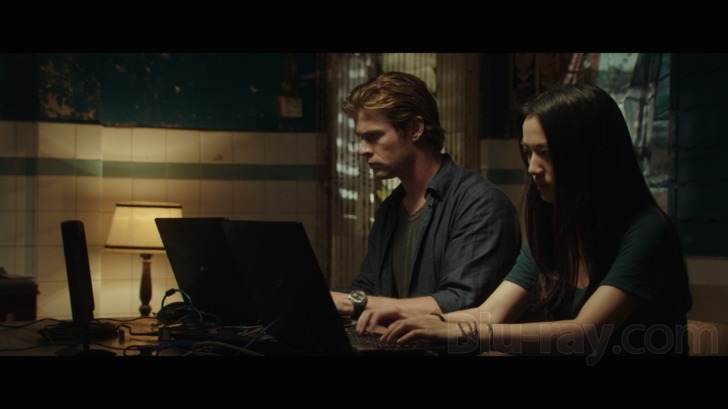
This thought will permeate throughout more sections of this collected writing, but let me start off my thoughts on Blackhat by saying this: watching people type on keyboards or look intently at a computer screen is not interesting. No one has yet succeeded in making this mundane task look exciting. Actors have tried staring harder at screens and directors have had fun putting cameras in unique locations, but it is a rather boring activity. Having expressed that, it will surprise no one that watching the “hacking” of Chris Hemsworth (more movie star than actor), a man who looks like he regularly snaps laptops in half to work on forearm strength, is not engaging. So as far as the “acting as really doing” idea goes, Blackhat is functionally persuasive in two areas: using non-actors and having Chris Hemsworth run and hit people. Let me focus on the Aussie for a moment – because even though I am being hypercritical about him as a computer whiz, his physical stature and athletic capabilities make portions of this film really engaging. Running through alleyways, using screwdrivers as lethal weapons, breaking necks with tables – Hemsworth shines here and impressively pulls this off. For me, the moment that really made me think that this was all real was when we cut to the trade floor after soy futures have been altered – the chaos and frenetic energy of those traders really pulled me in. Authenticity is a huge part in convincingly portraying “acting as really doing” – and when Blackhat felt authentic is when I believed the circumstances of the narrative.
Bit of a story before launching into this section – bear with me. I once directed a play that was near and dear to me. When the run of the show was over, a trusted colleague of mine asked about one of the actors in the show and why I cast them because they thought (and I agreed) that they were the “weak link” of the play. And my honest response was essentially this: they brought something to the audition that blew me away, but it never grew or changed – it was the same throughout the entire rehearsal process and performance. The tricky thing with casting someone off an audition alone is what will they bring beyond just those few minutes. I mention this experience because I truly wonder what Mann saw in Shailene Woodley that led him to believe that she should be one of three main characters in Ferrari.
As far as this ComMANNdment goes, I was going to do a whole thing about accents because that IS acting as doing. Dialect work is no small feat and can be the reason why certain performances (and films) can be publicly derided. Penelope Cruz being from Spain handles the Italian beautifully in this film; Adam Driver coming fresh off the Ridley Scott biopic House of Gucci gets a second crack with dialect and I would say manages it fairly well; and then there is Shailene Woodley. The purpose of this section is not to overly-ridicule Woodley’s performance, but this is the second consecutive film where an actor is asked to do an accent and doesn’t fully commit to it (I’m referring to Chris Hemsworth’s attempt at Chicagoan/American in Blackhat). This is important to me as an actor because our goal is to convey the truth of the character and situation at every moment – not committing to the dialect of a character is a way to disconnect with the audience. From my perspective, it’s no wonder why the scenes with Cruz & Driver are riveting – it’s because they are both committed to their parts.