



Director: Andrius Blaževičius
Writer: Andrius Blaževičius
Stars: Žygimantė Elena Jakštaitė, Marius Repšys, Amelija Adomaitytė
Synopsis: Set in Vilnius in 2022, high-flying executive Marija chooses the worst moment to discuss divorce with husband Vytas – one day before Russia’s full-scale invasion of Ukraine. The couple navigates separation amid a refugee crisis.
Broaching the subject of a divorce seems as if it would be an impossible task even on the best of days. And yet, it must sometimes be a necessity faced head-on, akin to ripping off a band-aid. It’s those exact nerves which Marija (Žygimantė Elena Jakštaitė) is facing in the day leading up to her conversation with Vytas (Marius Repšys), her husband of 12 years. It’s this central conflict around which Andrius Blaževičius’ How to Divorce During the War centers itself. But as the title of this film indicates, there are far more pressing matters occurring alongside the emotional turmoil we’re introduced to prior to the title card reveal. The moment of truth for Marija and Vytas takes place via an unbroken shot in the confines of their family car while waiting for young daughter, Dovile, to finish up her music class. It’s a life-shattering revelation for Vytas, and Blaževičius captures this quiet, shocking implosion with an immense amount of patience. It’s a stylistic choice he will return to throughout much of the film. Aside from showcasing technical proficiency and trust in both the script and performances, the choice to capture this moment and the aftermath that follows in such a way is indicative of the primary themes this film aims to explore.
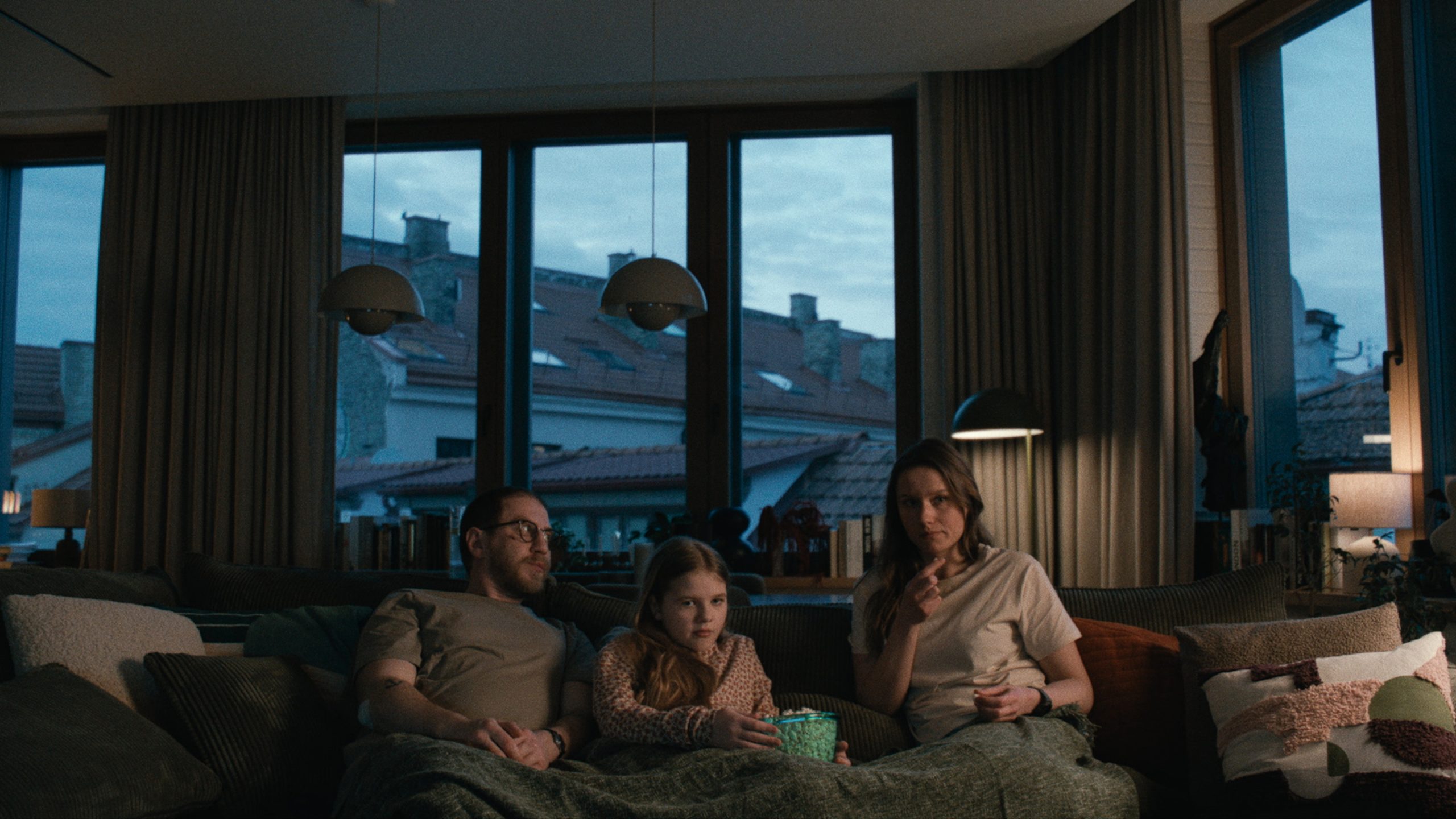
Vytas is the character Blaževičius first introduces his audience to. He’s unboxing a brand new office chair, the likes of which seems to pair wonderfully with the rest of his sleek, contemporary home office. In times of annoyance, frustrations, and unease, we often seek to provide ourselves with maximum comfort however possible. It’s a reaction which is both completely fair and understandable. And yet, as Vytas sits down, the discomfort in his body language is palpable. With a quick decision, he unceremoniously gets up, pushes the new chair out of the way, and rolls in his older, more worn-down chair from a corner of the room. In this singular motion, the central conceit of How to Divorce During the War reveals itself. It’s quite easy to forget how much comfort a baked-in sense of familiarity can provide us. But that same familiarity can also stir up thoughts of wanting to break free. In developing a comfortable routine, there lies a yearning for what’s potentially being missed on the outskirts of such familiar regimens. And as is the case with so many of life’s largest decisions, chasing that potential is obviously a gamble.
In the case of How to Divorce During the War, the fallout of such a decision occurs in Lithuania amidst Russia’s invasion of Ukraine in early 2022. It’s clearly not one that comes lightly for Marija. And this film isn’t particularly concerned with the intricate questions or events surrounding her decision to separate from Vytas. It’s simply interested in reckoning with how anybody could possibly continue to live life normally despite actively existing within the silence, or chaos, of such physical, mental and emotional turmoil. Whether it’s referencing ongoing doomscrolling in the workplace, being hung up with the weight of such a long relationship, or wondering what’s to come next for the family dynamic, characters are constantly bringing up the notion of needing to “move on.” Is that feasible in even the best of circumstances? Blaževičius’ response to such an examination is shockingly dour. But it’s in the darker corners of this film where both its comedy and drama elements separate themselves from the most typical examples of divorce cinema. The film seems to actively push away from relying on dark comedy more frequently, but its dramatic beats exist amidst a series of deeply uncomfortable yet painfully relatable truths that will likely resonate with many audience members.
Many of the emotional beats of How to Divorce During the War revolve around its characters’ abilities to confront the issues they’re regularly brushing up against. The inciting incident of the film is Marija expressing her desire for divorce, and the dramatic crux of the first act lies in her and Vytas’ reactions to such change. But there is little time to actively process such a shift upon their learning of the war breaking out so shockingly nearby. While Blaževičius never belittles the emotional weight both parties are feeling in this new chapter, their turmoil is undeniably recontextualized. And as selfishly as they might like to behave, they innately understand the example which must be set for their daughter and the people both directly and indirectly around them. In grappling with emotional strife both personally and geopolitically, these characters must face a series of challenges they could have never seen coming. Marija faces it both professionally and socially through decisions she makes with a moral backbone and an ethical heart. Vytas, having just moved back in with his parents, continuously clashes with them upon learning they actively consume Russian propaganda. There’s bravery required in facing such challenging scenarios, and Blaževičius never plays down or casts judgment on his characters while writing them. But it’s in the messiness wrought upon their lives by Blaževičius’ script that makes this film compelling.
There’s also a wonderful juxtaposition at play between the messiness of these characters and the restraint with which Blaževičius captures them. It’s mainly shot in extended takes, ranging from quiet to shocking outbursts of all sorts. How to Divorce During the War indicates immense patience behind the camera. The inquisitiveness behind its shot composition makes for a directing style that isn’t just highly effective; it’s a style that is challenging to pull off successfully. It’s amidst the discomforting turmoil of Blaževičius’ fictional scenario and the ongoing reality of nearby war that the finale of this film ends on quite the potent note. We might often want things to change in our lives. But there’s no denying what can be an innate desire for familiarity. This isn’t something we cling onto solely out of comfort; it can equally be due to necessity. To grapple with a relationship, or the world around us, actively crumbling can sometimes be too much to bear. Can we be faulted for seeking escapism whenever possible? We can make an attempt and do what we can whenever possible, but sometimes, it feels as if there’s no other choice but to pretend everything is as it was. How to Divorce During the War reckons with whether that lifestyle is even possible despite the constant reminders. The emotionally ambiguous coda of this film reaffirms how strong its ideas are overall, and makes for a timely film that is as engaging to watch as it is thought-provoking to ponder.
How to Divorce During the War celebrated its World Premiere in the World Cinema Dramatic Competition at the 2026 Sundance Film Festival.