



Directors: Rob Bliss and Denise Alder
Stars: Rob Bliss
Synopsis: White filmmaker Rob Bliss walks 1500 miles across the US wearing a Black Lives Matter t-shirt. He is challenged by Trump supporters and encounters both deep hostility and unexpected moments of connection.
White Man Walking takes a riskier, more exposed approach compared to previous political documentaries. Co-directed by Rob Bliss and Denise Alder, the film strips its premise down to a single, provocative gesture: a white man walking 1,500 miles across the United States wearing a Black Lives Matter T-shirt. From that deceptively simple act unfolds a portrait of contemporary America that is as uneasy as it is revealing.
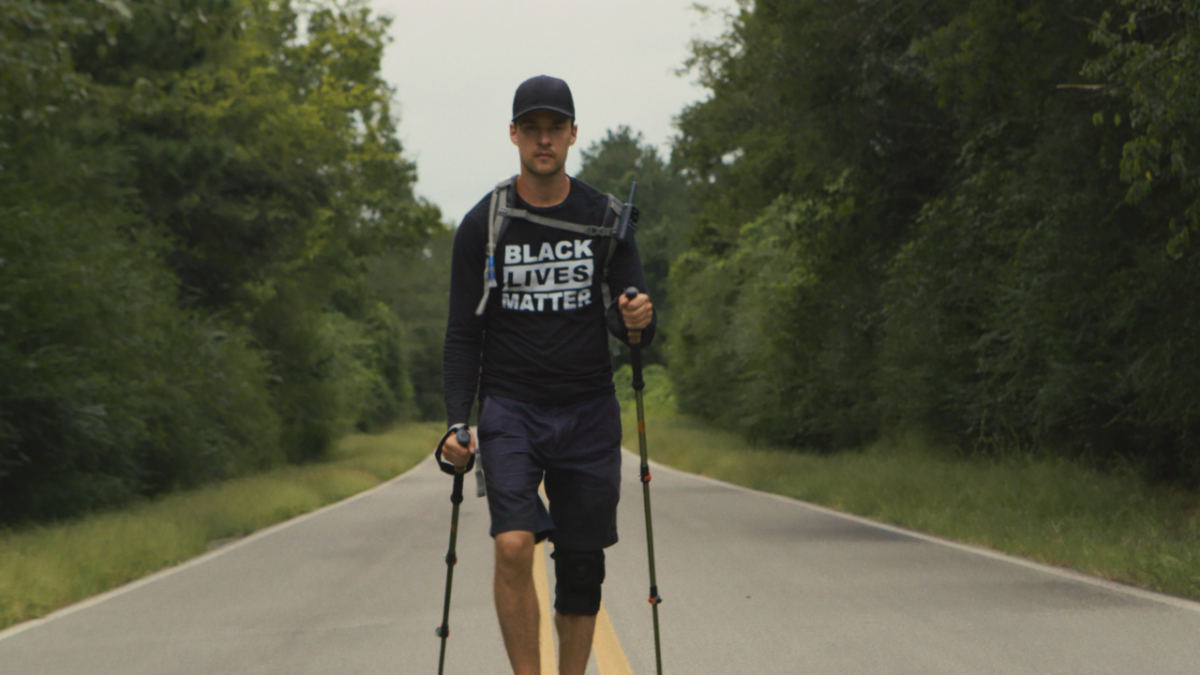
You might know Bliss from the largest pillow fight in the US or the largest zombie walk. Safe to say, he’s known for organizing events, standing out, and bringing people together. Here, however, he shows how truly dividedvided people are in his country. By walking roughly 60 miles (no small task), his journey begins in the long shadow of George Floyd’s killing (in 2020), and the film is acutely aware of the moment it occupies. This is Trump’s America, not as an abstraction or a headline, but as roadside diners, rural highways, motel rooms, and chance encounters. Bliss walks toward Washington, D.C., but the destination matters less than the reactions he provokes along the way. The T-shirt functions as a kind of social accelerant, transforming ordinary exchanges into volatile confrontations or, occasionally, surprising moments of solidarity.
Bliss is not positioned as an all-knowing guide or a heroic ally. Instead, he is frequently uncertain, sometimes overwhelmed, and often challenged in ways that complicate his intentions. Awkward silences, raised voices, and unresolved conversations give the film its most compelling texture, capturing the emotional rawness of a country still arguing with itself about race, power, and belonging.
It takes 14 days for someone to start walking with him, no matter how much he asks. Very early on, Bliss meets armed Trump supporters who greet him with suspicion and fury, but also working-class white Americans whose anger is braided with fear, economic precarity, and a sense of historical loss. Whether it was the intention or not, this documentary reveals the total ignorance and stupidity of some Americans, and you’ll flit between laughter and a sad realization that these can be the popular opinion in one of the world’s largest countries. Some sections of hostility are worrying and intense. Luckily, it is balanced, and there are heartwarming and encouraging comments from passersby. Towards the end there is a grounded and surprisingly sweet interaction with a Trump supporter.
What the film does well is not excuse hostility, but it does try to understand its sources. Even when arguments feel forced, uneducated and irrational, there is still a level of respect from Bliss. In doing so, it asks an uncomfortable question: why does advocacy for Black lives so often register as a personal threat in communities that feel forgotten?
What is sweet and scary is that his mum’s voicemails are used as a voice-over, showing her concerns. Sweet that she cares so much, scary that she feels she has to watch his movements, as she’s so worried something bad is going to happen to him. Her meeting her son at the end to walk the last five miles with him is a tender moment, bringing the attention back to Bliss and this mountainous task he’s given himself.
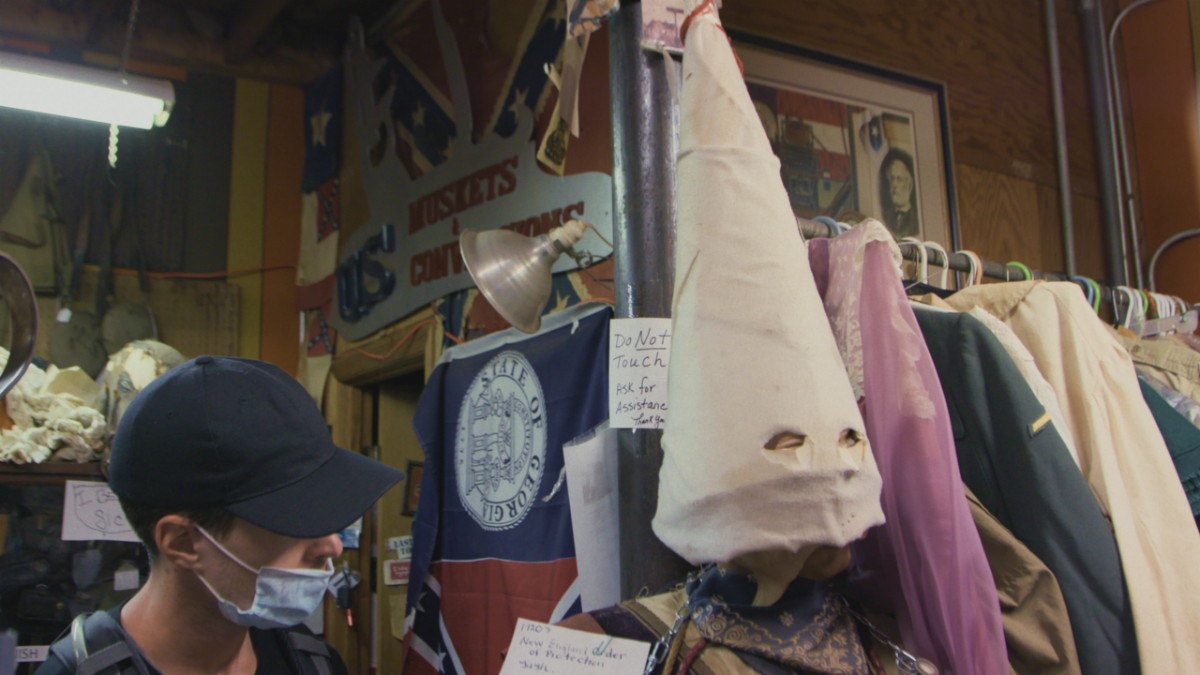
Still, White Man Walking is not without its blind spots. The central conceit, placing a white body at the center of a story about racial justice, will understandably give some viewers pause. While the film acknowledges this tension, it does not always interrogate it as deeply as it should. Black voices appear primarily through absence, implication, or reaction, rather than as sustained perspectives in their own right. This choice feels intentional, but it also limits the film’s scope, keeping it tethered to Bliss’s experience even when a broader context would enrich the discussion.
There are moments of unexpected humor, quiet generosity, and human warmth that cut against the prevailing sense of division. Strangers walk alongside Bliss for a stretch of road. Conversations soften. Certainties wobble. These scenes never pretend to offer easy reconciliation, but they gesture toward the fragile possibility of dialogue.
White Man Walking succeeds as an interesting and thought-provoking piece of political film as it reflects a nation exhausted by slogans yet still capable of being startled by simple acts of moral visibility. White Man Walking does not claim to heal America’s fractures. What it offers instead is something quieter and perhaps more honest: a record of what happens when conviction meets reality, one step at a time. When you realize this was filmed six years ago, you might recoil that things don’t appear to have changed or progressed. But Bliss’ message is still powerful and reaffirms that life isn’t easy, the road is long but we have to stand up for what we believe in.