



Director: Myrsini Aristidou
Writer: Myrsini Aristidou
Stars: Christos Passalis, Maria Petrova, Jenny Sallo
Synopsis: It’s summer, and 11-year-old Iris is running wild through the streets with her older friend Danae when she learns her estranged father, Aris, is back in town for his own father’s funeral.
Our first glance of young Iris (Maria Petrova) tells us so much about her character that the audience immediately settles into the warm grooves of the film she’s at the center of. The film in question is Hold Onto Me, the debut feature from Cypriot filmmaker Myrsini Aristidou. Iris is 11 years old, roaming the streets of Cyprus in cut-off overalls with a sagging, oversized blue backpack swinging around behind her. She fraternizes with the older gentlemen playing card games outside her home in passing. She seems to be out and about more often than not. And when she’s not traversing her neighborhood and beyond by foot, she’s on the back of a moped being driven around by her older friend, Danae. Despite all the wondrous potential such a youthful childhood might seemingly hold on paper, her quiet demeanor and longing gaze reveals otherwise. Getting into adventurous shenanigans with Danae on the beautiful Mediterranean Sea seems to bring her some joy. But aside from these boating excursions, 11-year-old Iris appears to be filling her time however possible. Given that her older brother who’d much rather hang out with his girlfriend, her mother constantly working to stay afloat, and a father who has long been out of the picture, it would appear Iris’ childhood is being consumed by a hushed loneliness.
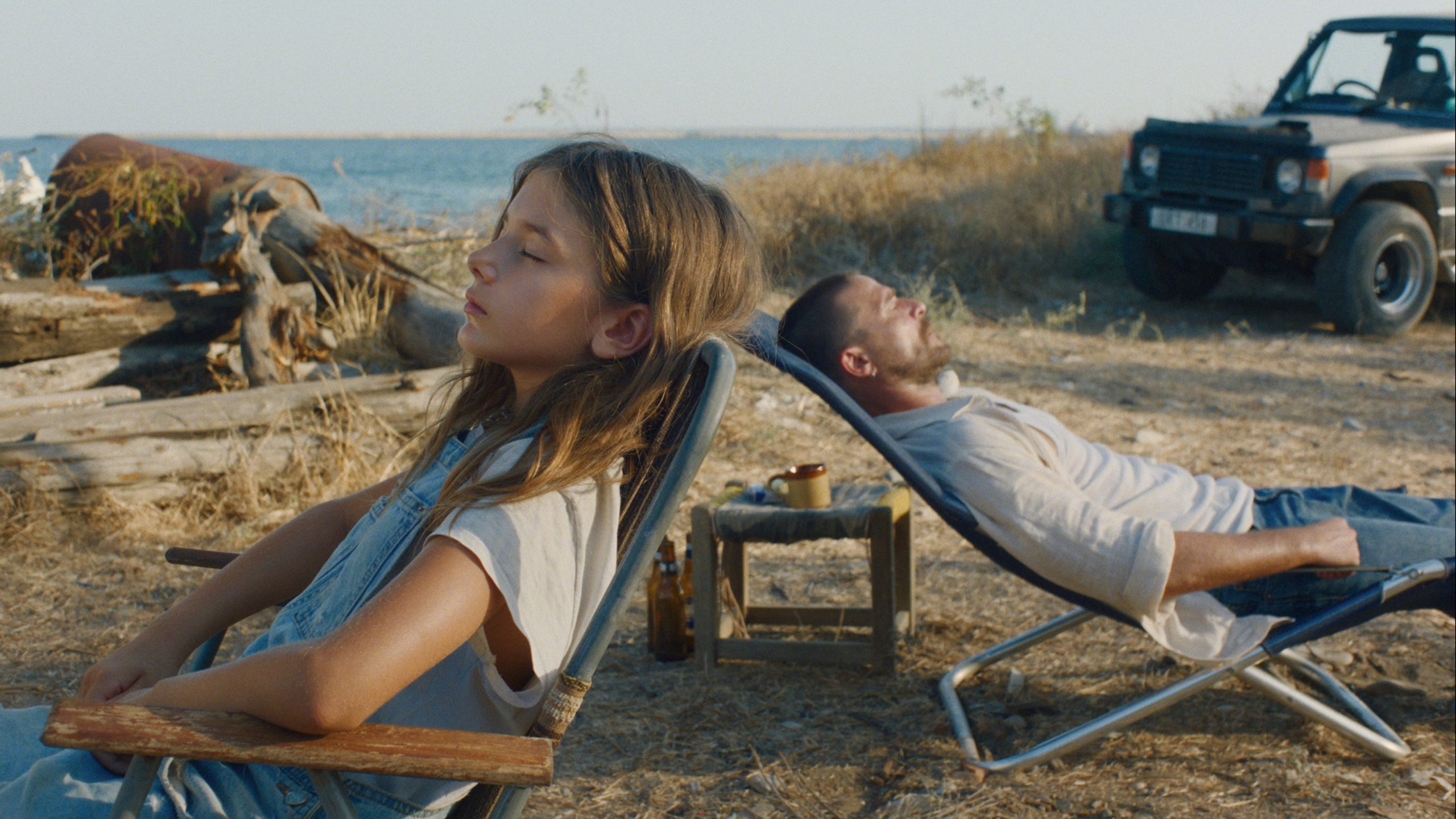
There’s a genuine sadness that permeates through much of Hold Onto Me. Despite that, it doesn’t take long to find ourselves becoming immersed within Aristidou’s beautiful style of filmmaking. Her evocative imagery is more than just arresting. It often reflects Iris simply and contemplatively gazing at her surroundings. In hoping to find a break amidst the monotony she feels so isolated by, she seeks companionship wherever it’s available. The unspoken ways Aristidou conveys this speaks to an undeniable talent behind the camera. As Iris sits in quiet observance on the periphery of young adults double her age, it’s easy to feel her isolation. The director is granting her performers and her locations the space to elicit the exact emotions necessary to drive this film towards its central ideas. Iris isn’t just dealing with the pain of not fitting in where she belongs; she seems to have lost the overall desire to fit in at all. It’s crushing to imagine her believing whether or not the opportunity she craves is even feasible in the first place. But that possibility appears to change upon the return of her father, Aris (Christos Passalis).
Having virtually no memory of Aris as a newborn, Iris turns to an old photo album in the hopes of potentially dredging up something in her mind. Her brother takes notice and encourages her to “let it go.” That’s easier said than done, especially in Iris’ case. She may not have anything concrete to hold onto, and yet, letting go seems impossible now that her father is conceivably within reach for the first time. And so, what transpires over the middle act of the film feels like a wonderful ode to Paper Moon and films of a similar nature. It’s not difficult to see why Aris’ presence is so alluring. For the audience and Iris alike, Passalis’ performance works wonders. There’s a dingy, gruff edge to him from the first moment he interacts with Iris, yet he slowly reveals a swagger that’s undeniably charming. But Aristidou very quickly makes him a far more interesting character than the occasionally sly, deadbeat father grappling with the possibility of redemption. In Aris lies quite the broken individual, also grappling with the very real possibility that he’ll never have a place he can truly belong. Both he and Iris seem to be affected by the same worry. And yet, they approach their responses to the fear from such differing angles. Where Iris would rather shut down, he can’t seem to slow down for even a moment.
Aris and Iris begin spending more time alongside one another amidst these lonely paths. And every time Aristidou sets up an opportunity for Aris to step up, he seems to toss it aside without any potential consideration. He instead has his sights set on escaping his current predicament as soon as possible. Being harassed by some sort of criminal collectors, the only reason he reappeared in the first place was to attend the funeral of his father. A sighting of Aris appears to be treated as something akin to a miracle if several character reactions can be used as evidence. And it’s easy to see why, as Iris and the audience become more attuned to his various scams and shenanigans. But in that beautiful yet potentially dangerous way childhood can warp a perspective, his behavior often comes across as enticing to Iris. But behind such actions lies the truth. He’s a man who also had a somewhat broken relationship with his father, and is now left to pick up the pieces seemingly alone in the world. And despite his constant mistakes made while spending time with Iris, Aristidou’s script remains tender enough that we hope the two can mend whatever internal wounds remain, instead moving forward with some semblance of normalcy and genuine connection beyond that of the unconditional love between a father and daughter.
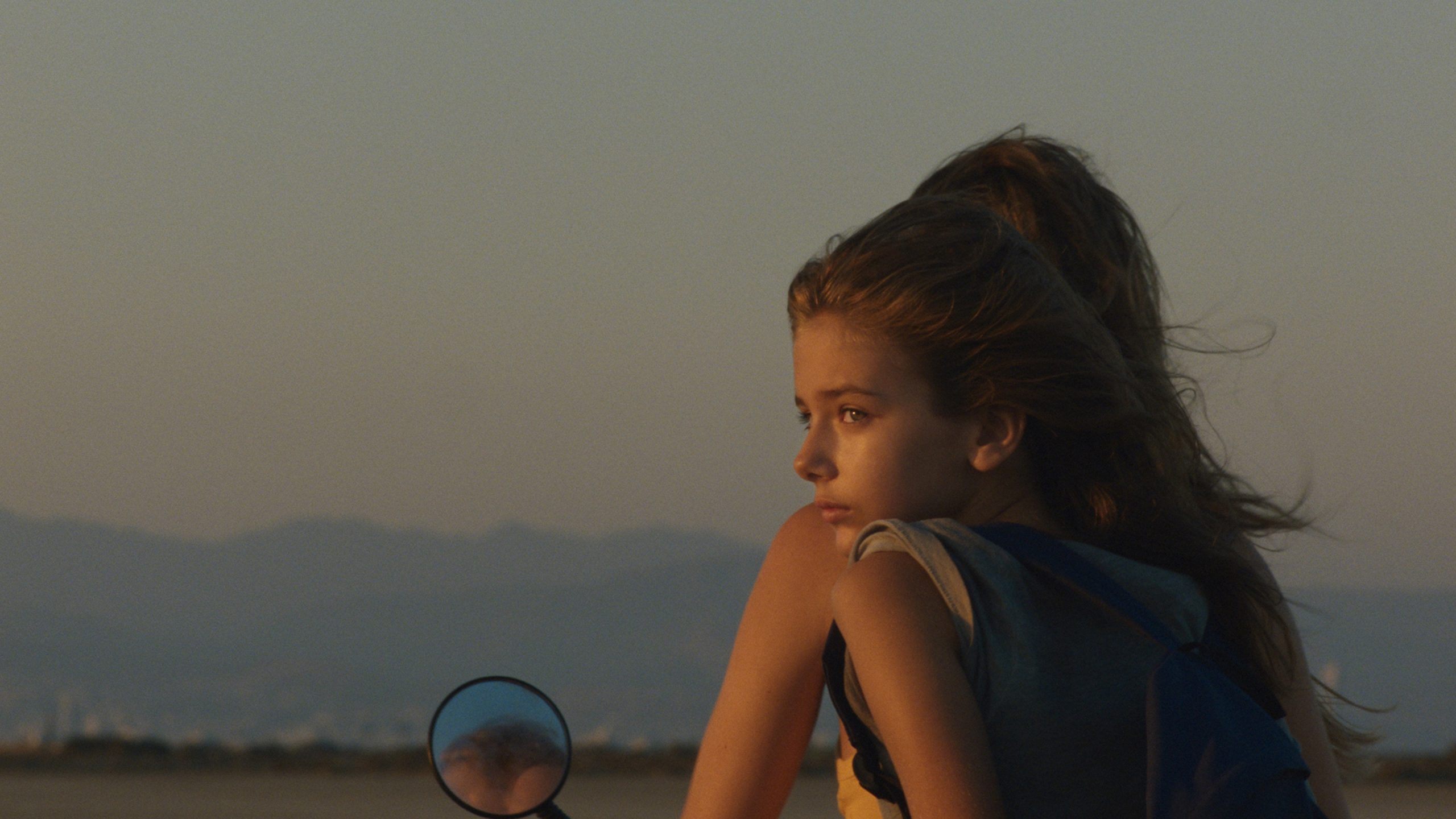
In the end, Hold Onto Me can occasionally feel a bit trite; yet such criticisms of originality lie purely on the surface level of this film. Aristidou has crafted a lowkey drama that still finds a way to pack loads of emotion into its runtime. What’s more shocking of an inclusion is the amount of thrill she also finds a way to wrap into her narrative. Hold Onto Me has a massively tense third act. The first time we see the beautifully blue waters of the Mediterranean Sea, it represents such potential for Iris’ life. The horizon stretches on and on as she is left to gaze admiringly at what the world has to offer. Aristidou’s climax instead frames those same waters as a dark, looming abyss. Should we be unable to steer ourselves off the destructive path of self-isolation and selfishness, it has the potential to swallow us up entirely. Aristidou grips her audience for as long as possible before loosening up for an immensely satisfying emotional resolution. Overall, this debut film reveals immense potential in a filmmaker like Aristidou. Her ability to blend evocative imagery in a beautifully captured setting alongside the emotional balancing act we seek through simple and effective character work signals a wondrous talent.
Hold Onto Me celebrated its World Premiere in the World Cinema Dramatic Competition at the 2026 Sundance Film Festival.