


Home Blog Page 11

Movie Review: ‘Roads of Fire’ is Both Personal and Political


Director:ย Nathaniel Lezra

Synopsis: The lives of a human smuggler transporting refugees to the Dariรฉn Gap, an asylum seeker in New York City, and frontline humanitarian volunteers interweave in a harrowing examination of the global migration crisis.


With Roads of Fire, director Nathaniel Lezra steps firmly into the ranks of contemporary documentarians who blend cinematic beauty with journalistic urgency. After acclaimed festival runs in Mill Valley, Santa Barbara, and Brooklyn, the film lives up to its reputation. This is not a dry policy lecture or a voyeuristic travelogue about global migration. Instead, Roads of Fire is a searing, intimate portrait of movement; forced, hopeful, and profoundly human.

Lezra, whose previous work, Donโ€™t Leave Me Behind: Stories of Young Ukrainian Survival, demonstrated his sensitivity to people caught in geopolitical upheaval, brings that same empathy and craft to this project. Here, he tells interwoven stories that span continents but share a single emotional current: the relentless search for safety and dignity. The film is an ambitious and often deeply affecting two-hour journey that connects three strands of the migration experience: a human smuggler navigating the treacherous Dariรฉn Gap, an asylum seeker attempting to rebuild her life in New York City, and the humanitarian workers and volunteers trying to provide support amid an increasingly overwhelmed system. Moving between these worlds, the film makes a persuasive case that migration is not simply a political issue to be debated from a distance, but a human reality experienced through fear, hope, exhaustion and resilience.

From the start, weโ€™re thrown into the struggle and reality. Thereโ€™s no gloss, no AI, no propaganda, just raw realism. We see migrant camps, border checkpoints, overcrowded shelters, moments of exhaustion, along with laughter, music, and small flashes of normalcy that feel almost radical. The film, gently and in-depth, explains the immigration process in America, and just how difficult and traumatizing it can be. Lezraโ€™s off-camera presence is minimal, with his interviews spare and unobtrusive, really allowing the time and space for these stories to unfold.

At the emotional center is Maria, an asylum seeker rebuilding her life in New York with her two sons. Her story brings the crisis down to a deeply personal level, illustrating the disorientating reality of arriving somewhere that is supposed to offer safety only to encounter another set of obstacles. The contrast between the vast dangers of the Dariรฉn Gap and the quieter struggles of life in a major American city is particularly effective. The landscapes change, but the uncertainty remains.

Lezra’s connection to the subject gives Roads of Fire a personal dimension. In his director’s statement, he describes discovering the story of his grandfather, a Spanish Arab refugee who escaped one of Franco’s concentration camps in North Africa and rebuilt his life in Tangier. That family history clearly informs the film’s interest in displacement and belonging, while his previous documentary work on young Ukrainian survivors of war appears to have further shaped his approach to conflict and humanitarian storytelling.

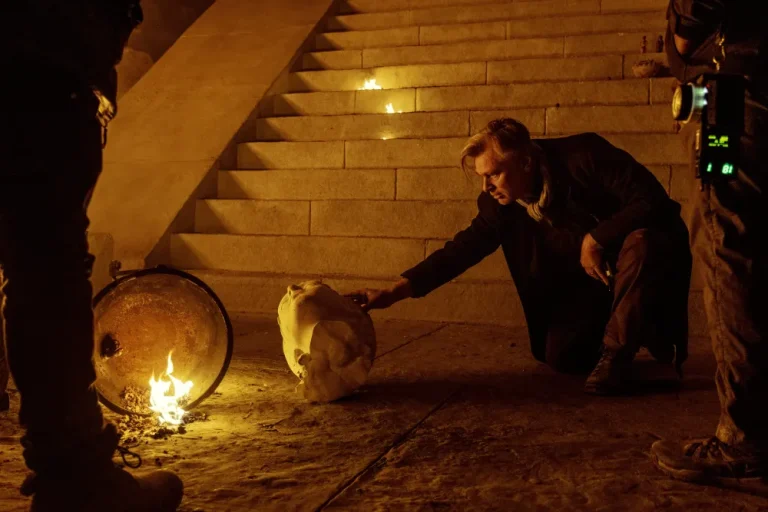
Visually, the documentary is stunning; from the orange glow of sunsets, the metallic blues of a refugee boat at dawn, to the flicker of a campfire that gives the film its title. The โ€œroadsโ€ here are both literal and metaphorical, pathways of fire that consume and illuminate. There are small sections that include voice-over and written statistics and explanations of meanings, to help educate its viewers and enhance the sections. For example, how the current President, Donald Trump, speaks about immigrants.

Roads of Fire is political, yes, but only because itโ€™s profoundly personal. The film never tells viewers what to think; instead, it invites them to feel and build their own opinions and views. If thereโ€™s a flaw, the filmโ€™s structure occasionally feels too even-handed, which gives it a long runtime of almost two hours. Each story is given roughly equal screen time, which lends balance but sometimes mutes the emotional crescendo. Still, that restraint fits Lezraโ€™s journalistic ethos: this isnโ€™t about spectacle, itโ€™s about truth.

Roads of Fire has done what great documentaries should: it opens our eyes and refuses to let us look away. We know the immigration system is broken, and at a time when frustrations are high and people are blaming one another, this documentary film helps audiences find their humanity and empathy. You might finish the documentary feeling helpless and powerless, with no end to these many struggles. Roads of Fire is harrowing, humane, and unexpectedly hopeful. This documentary film is for audiences interested in the lived human experience, politics, and policies.
Grade: B+

Movie Review (Fantasia 2026): ‘No Rest For The Wicked’ is an Ageless, Queer Love Story


Director:ย Kasper Kalle
Writer: Rasmus Birch, Kasper Kalle, Karl Heinreich Ulrichs
Stars:ย Egor Vanned, Pilou Asbรฆk, Sofia Nolsรธe Mikkelsen

Synopsis: Follows a fisherman who falls in love with a rugged whaler in the isolated Faroe Islands.ย 


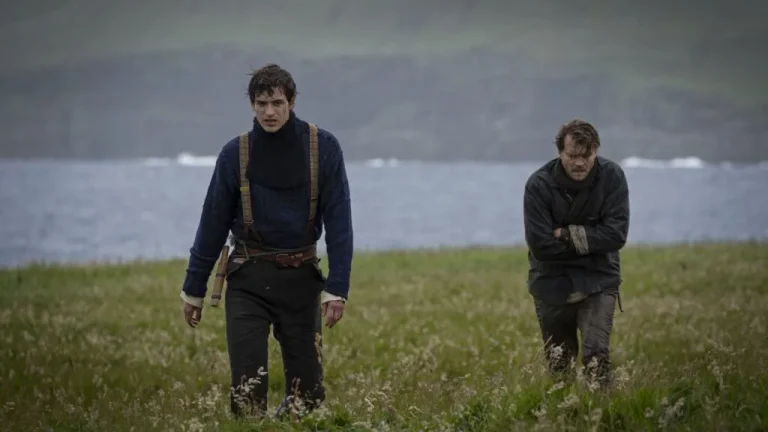
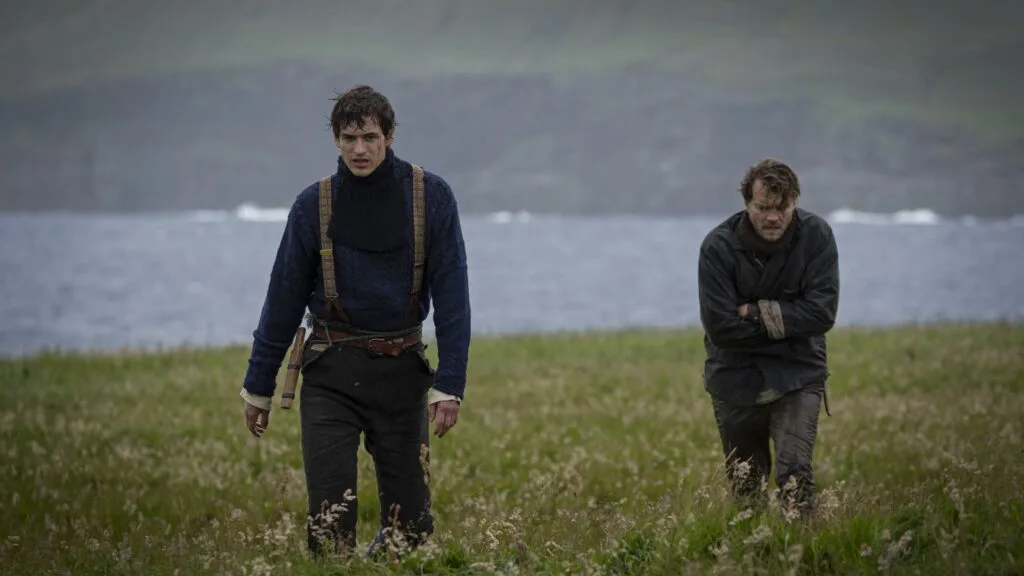
No Rest For The Wicked, on its face value, is an 1800s supernatural mystery. Once audiences delve beyond its surface, thereโ€™s a queer love story filled with romantic yearning in a time when such acts were snuffed out with zealous fervor. Premiering at the 30th Fantasia International Film Festival, Kasper Kalleโ€™s film has already made a name for itself, with the film going home with two festival awards. Itโ€™s a film that captures the allure of getting swept up in what lurks in the shadows, and finding acceptance there.

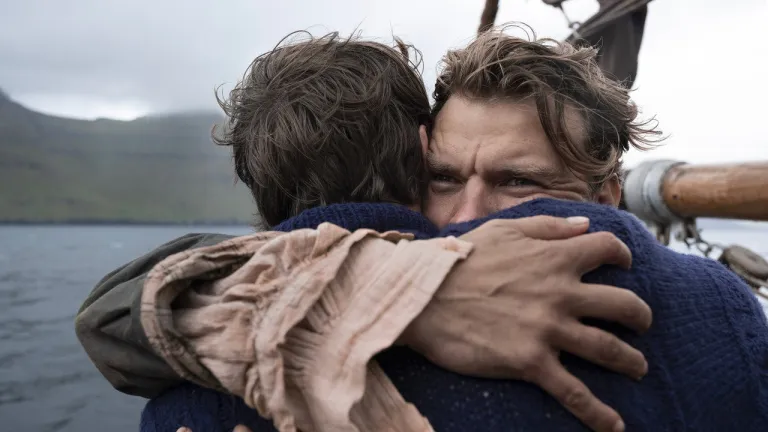
In the 19th century, Baldur (Egor Venned), a young fisherman, and his mother, Alsa (Sofia Nolsรธe Mikkelsen), live in a small shanty home in their close-knit town. Their lives are rather mundane; without a father in the home, Baldur has to make sure food is on the table and the roof stays over their head. Their tasks are upended one day when Helge (Pilou Asbรฆk) walks into their lives. He is a handsome and fit man more than capable of earning his keep. But little does Alsa know, who begins to have feelings for Helge, that his eyes are locked on Baldur.

No Rest For The Wicked is based on Karl Heinrich Ulrichsโ€™ short story โ€œManor.โ€ It tells a similar supernatural story about two men in the same period, often serving as a metaphor for the love between same-sex people. It uses this story as inspiration, amplifying its supernatural elements in romantic ways. When Baldur and Helge begin their friendship, thereโ€™s an instant connection, but thereโ€™s something uncertain about Helge. Both have an interest in sea life; Baldur is a fisherman, and Helge is a whaler. Their friendship quickly turns into sexual attraction, and it doesnโ€™t go unnoticed by the inhabitants of the Faroe Islands.

Powerfully depicted by Kalleโ€™s script, gay love in No Rest For The Wicked is the film’s beating heart. Baldur is a young man living a life that doesnโ€™t feel meant for him. He followed in his fatherโ€™s footsteps, but when Helge arrives, everything for Baldur flips. He becomes completely consumed by his feelings for Helge, even taking dangerous boating jobs to be near him. Helge is more open about his sexuality with Baldur, recalling that tree bark feels like a manโ€™s beard. But for Helge, he harbors a more straightforward approach to his sexuality; it pairs charmingly with Baldur’s tightly bound demeanor.

Part of what makes the film so enthralling is the forbidden nature of their connection and the peril they will face when itโ€™s discovered. No Rest For The Wicked gives audiences a glimpse of hope for their relationship. And as quickly as their encounters end, the reality of their situation sets in. With religion, familial duties, and the overall demonization of same sex relationships, itโ€™s the environment around Baldur and Helge that is the film’s true villain. Kalle weaves his story in a way that gives audiences hope that their endings may be different from what we perceive. At several moments of the film, I found myself holding onto the hope that Baldur and Helge sail to an island filled with trees. But in true gothic vampire romance style, nothing is as it appears, and tragedy lurks in every corner.

One of the biggest hurdles the film faces is its bare-bones atmosphere. Kalle uses this to the film’s advantage and exemplifies the isolation the Baldur experiences. Masterfully captured by cinematographer Jacob Mรธller, he utilizes the idyllic landscapes’ natural coldness and occasional warmth. Endless water surrounds the island, with a thick mist filling the air. A small church with full pews, and homes just big enough to rest your head and fill your stomach before another hard day of work. In Baldur’s world, thereโ€™s no one to talk to about his identity who wonโ€™t use it as a weapon against him. Thereโ€™s nowhere to hide parts of yourself that yearn to be set free. He truly cannot express who he is until meeting Helge. The isolative nature of No Rest For The Wicked feels like a supernatural character in its own right: always listening, always seeing, and fiercely unforgiving.

Thereโ€™s no doubt that Asbรฆk earns his Fantasia award for best performance, as he was made for the role of a gay 19th-century vampire. He possesses an inherent charm as an actor that is hard to look away from. But as Helge, he shows a vulnerability, while also being the more dominant of the pair. His character goes through many changes, both mental and physical, which Asbรฆk takes on with ease. His mature, headstrong approach to his character highlights Baldur’s youthfulness and inexperience. Venned plays a quiet, repressed young man who is endearing to watch. Seen in the way he views Helge, as if he is seeing with his eyes for the first time. Their chemistry oozes off the screen, and itโ€™s hard to imagine these two characters played with even a fraction less of the intensity they do.

Though thereโ€™s an emphasis on supernatural elements, with Helge being the center of this, those looking for ghosts or monsters lurking in the shadows will be disappointed. At least in the literal sense of ghosts and monsters, no spirits are floating around, and no ghouls are lurking. When it comes to No Rest For The Wicked, vampirism is a natural expression of Helge and his lifestyle. Though itโ€™s only seen a few times, his bloodsucking is much more intimate than needing blood to feed. After all, the island is littered with other men, or women for that matter, that would surely be fine to drain of their blood. Yet, Helge chooses to be with Baldur, creating a bond that goes much further than mortal life. It doesnโ€™t make or break the film that thereโ€™s not much vampire action, and for those analyzing every word and every glance between Helge and Baldur, their connection goes much deeper than supernatural tropes.

Ultimately, No Rest For The Wicked is a love story that has endured for centuries. Kalle brings this deeply queer story to audiences through a personal connection to its themes. From its isolative atmosphere to its yearnfully touching story, it’s one of the best films from this year’s Fantasia.

Grade: A-

Movie Review: ‘One Night Only’ Canโ€™t Provide the Proper Weight to its Rom or Comย 


Director: Will Gluck
Writer: Travis Braun
Stars: Callum Turner, Monica Barbaro, Ben Marshall

Synopsis: Two New Yorkers search for love on the one night of the year when sex is legal.


We all know the saying, โ€œthey donโ€™t make ‘ em like they used to,โ€ but in the case of films like One Night Only, the problem is less that this type of film isn’t made and more that this type of film has devolved into a new form of consumption. The token popcorn fluff romcom used to be the bedrock of every studio system as a key cog in the most plain of entertainment, but it has mostly been relegated to the doldrums of streaming in today’s cinematic climate. For every You, Me and Tuscany that gets a wide theatrical release, there’s a Voicemails from Isabelle or People We Meet On Vacation increasing its shelf life for Netflix. Amongst the romcom spectrum, One Night Only sits within rather unsurprising mechanics despite the wild stir its โ€œsex purgeโ€ premise has caused amongst online spaces. Youโ€™ll get as many surprising chuckles as you do hard eye rolls, an adequate amount of chemistry from two very attractive leads making the best of what’s on the page, but the film falters more than not since it can’t quite provide consistent laughs or chemistry throughout, much less provide much thought to its needlessly insane synopsis. One Night Only is far from the absolute worst a romcom can be, but it lacks the proper punch to make escalating comedic scenarios funny and runs its few charms quite thin as it plods along.

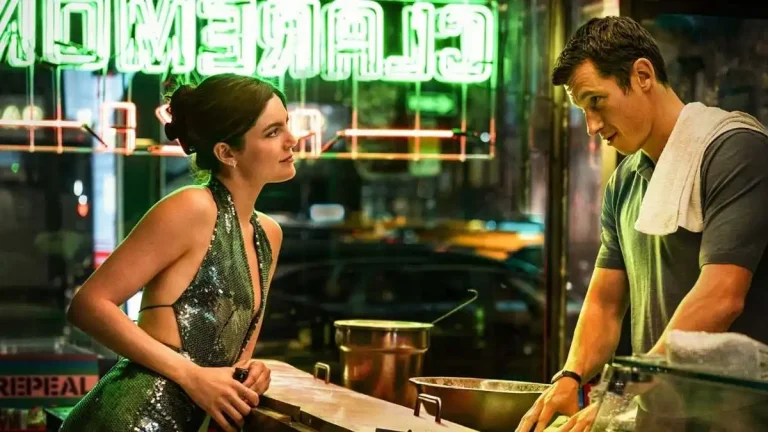
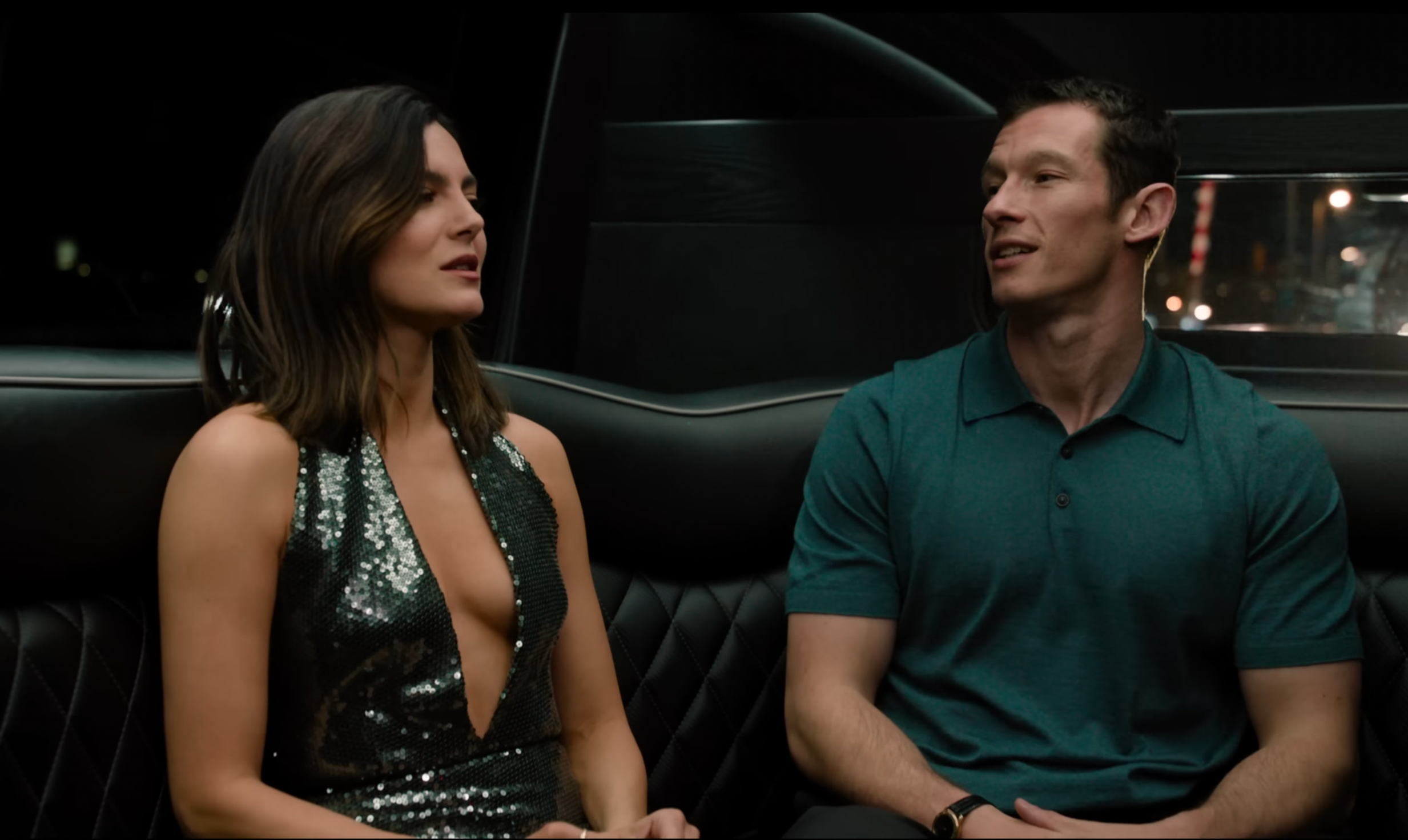
The film starts with text over New York City stating that three years ago, premarital sex was officially outlawed by the United States. The reasons for this law are mainly kept unexplained by the film itself, but the most important thing to know is that one night per year, single people are legally allowed to have sex again for 12 hours, and for most singles it’s all about getting a dopamine rush of lovemaking before they have to repress for yet another year. Throughout the film, we follow the characters on seemingly parallel paths. Owen (Callum Turner), a pizzeria owner who is having relationship struggles with his girlfriend Malika (Maya Hawke) hours before the mandate breaks, and Allie (Monica Barbaro), who works as a singer singing renditions of โ€œA Thousand Milesโ€ for medicine commercials, searching for a true connection on the fateful night. The two get into constant predicaments, rushing against the clock to find who they can have sex with before the night is done, but despite their insistence on not being for each other, Owen and Allie can’t stop crossing paths on their escapades to finally get laid, leading to the two of them slowly wondering if a spark does truly lie between them. 

It shouldnโ€™t be a surprise that the ramifications of One Night Onlyโ€™s central concept are never fully explored, but it only makes the few times where the film delves into the โ€œrulesโ€ quite bizarre. There’s the occasional gag making fun of the political reasoning of why the mandate exists via a news broadcast on TV and a whole convoluted enforcement process via bio-censor symbols on your wrist that are supposed to track who is and isn’t married by them being either red or green. It’s funny how much the film ever so slightly builds out its The Purge with sex world since it leads to more ridiculous questions than answers. This, however, wouldnโ€™t matter much as long as the film was funny enough and its romance was sexy enough since the intentions of the premise revolve around silly gags and oneself freeing themselves from the ever-mounting pressures of life sexually. Unfortunately, the film gets about halfway there in both the rom and com. 

Granted, there is a decent amount of actual mileage to be gotten from the comedic set pieces in this concept, and director Will Gluck, for better and worse, knows the right strings to pull to provide the most basic amusement in one of them. There’s a stretch on both Owen and Allieโ€™s paths where theyโ€™re in search to find a condom (since the mandate requires protection) where the situational comedy is at its sharpest and slapstick and the โ€œwill they won’t theyโ€ pull is at its funniest. 

Itโ€™s inherently funny to see situations like having to dig through sewers and pay $200 for seemingly the last condom in the city and testing the situational confines of this concept is where the film is at its funniest, but for every clever visual gag there’s plenty of other groan worthy ones, like Wakanda forever jokes that are years too late and swaths of celebrity cameo moments where the cameo itself is the joke and absolutely nothing else. As the film goes on, it becomes clear that instances of our characters finding themselves naked out in the open after a potential hookup gone wrong or mistaking making things even sillier as an escalation of comedy are about the only ideas for jokes that the film has. It always feels like every other joke needs a bit more raunchiness to it, which the movie is seemingly incapable of providing.ย 

As for the romance, at least unlike a clear weak link in chemistry in Gluckโ€™s Anyone But You, both Turner and Barbaro are charming enough here, and both roll with the constant absurdity on display and having to sell lines implying that their physical features are anything but ethereal. The issue here is that the two actors are having to deliver what is a pretty thoughtless screenplay in nearly every aspect. In all fairness, they do a fairly good job of elevating the film to watchable enough plights within their chemistry but once we reach the common beats of the romcom formula, the film’s energy is already completely spent.

One Night Only is ultimately average enough to be inoffensive even within the ridiculousness of its concept, but it never rises above fairly plain romcom fare since it can’t quite decide whether to dip its toes fully into the numerous implications of its premise or go fully wacky into step pieces of two single people trying to get laid, leading to it growing thin in its exploration of both. There is a place for the forgettable but enjoyable enough romcom in film, and Iโ€™d much rather have more movies like One Night Only in theaters than not, but the best way to describe the film’s fate is as an inevitable staple of your airplane cinema to watch on a long flight, which isnโ€™t entirely a bad thing, but it’s not particularly compelling either.

Grade: C

Movie Review (Fantasia 2026): โ€˜Suzuki = Bakudanโ€™ is an Effectively Taut Thriller


Director: Akira Nagai
Writer: Hiroyuki Yatsu, Masahiro Yamaura
Stars: Yuki Yamada, Jiro Sato, Shota Sometani

Synopsis: After a man arrested for vandalism claims to have planted bombs across Tokyo, a police negotiator must solve his cryptic clues to stop the explosions before time runs out.


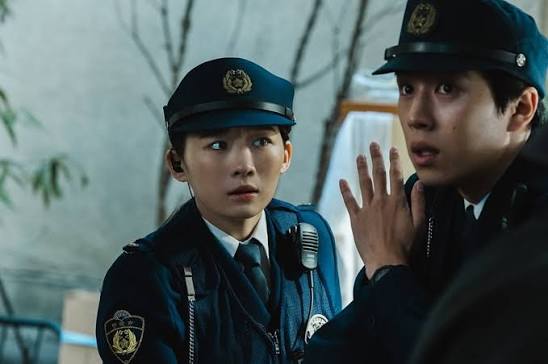
The cerebral Japanese thrillers at the Fantasia International Film Festival continue with Suzuki = Bakudan, an adaptation of Katsuhiro Goโ€™s novel of the same name, which sees a police detective going head-to-head with the filmโ€™s titular character, Suzuki (Jiro Sato), who claims to possess psychic powers and tells detective Ruike (Yuki Yamada) that a bomb will explode in Akihabara. Not believing his claims, this begins to change when a bomb does explode, and more devices, he states, will blow up do so. No one knows who he is, but he seems to have the knowledge that a chain of bombs was set up all over Japan and will go off every hour.

Most of the movie is set inside an interrogation room, as the back-and-forth between Suzuki and detectives Ruike and Todoroki (Shota Sometani) attempts to uncover where the bombs are placed, while two other police officers in the field are trying to find out their whereabouts, depending on Suzukiโ€™s cryptic messages. Thatโ€™s right, because Suzuki will never directly tell the police where the bombs are. It will always be said in the form of a clue. They will have to figure out on their own what that clue means before the bombs go off and thousands of lives are lost.

This gives Suzuki = Bakudan a real edge, because whenever director Akira Nagai cuts away from the interrogation room and shows potential dangerous locations, we know time is running out, and the officers in the field do not have time. When Ruike and Todoroki attempt to peer into Suzukiโ€™s psyche, we know that there is some time to figure out whatโ€™s occurring, but not that much. Itโ€™s a complicated intellectual challenge to parse the various plot threads Nagai lays out before us, but Suzuki = Bakudan is an always-enthralling, effectively taut thriller that consistently surprises its audience with a wide array of intriguing plot developments that keep us on the edge of our seats.

Discussing the various permutations of the film without spoiling is difficult, so this review will keep details to a minimum. What you need to know is this: the aesthetic compositions of Suzuki = Bakudan are so alluring, with an opening credits sequence that evokes David Fincherโ€™s Se7en, that itโ€™s hard not to be swept up into the emotions of whatโ€™s on screen. The camera always finds new and interesting angles to keep us engaged and elevate its already phenomenal performances from its star-studded cast.

Sato, in particular, steals the spotlight away from everyone as Suzuki, whose mysterious nature might be the most intriguing aspect of the whole movie. Who is he? Why does he know so much about potential bombs? Does he have any ulterior motives? Or is he truly a psychic? Through a mastery of emotional control, Sato will keep you guessing until the bitter end, but he also isnโ€™t alone. One also has to mention the impeccable work Shota Sometani has been doing in Japan for some time, and with this film and AnyMart (also premiering at Fantasia), heโ€™s carving out one of the most interesting filmographies within Japan.

Iโ€™ll admit to never having heard of Akira Nagaiโ€™s work before, but what he has accomplished here encourages me to seek out his previous work. Such control over his aesthetics and sense of tension is hard to pull off so well, but there was nary a moment in Suzuki = Bakudan where I felt the filmโ€™s 137-minute runtime, even when he repeats conversations or accentuates elements weโ€™ve heard of before. The thing is, he can afford to do so because a detective thriller will always investigate the case at hand or interrogate a suspect with the utmost attention to detail.

I canโ€™t say that Suzuki = Bakudan reinvents the screenwriting or thematic wheel, but I also canโ€™t say the film is a disappointment. If anything, itโ€™s one of the most engaging films Iโ€™ve seen at this yearโ€™s edition of Fantasia, and one bound to have a fanbase when it hopefully reaches a broader audience away from the Concordia walls and into our cinemas or our living rooms. Preferably the former, because this will undoubtedly hit the big screen.

Grade: B+

Movie Review: โ€˜Ice Cream Manโ€™ is Vile, Lazy, Inept Garbage


Director:ย Eli Roth
Writer: Eli Roth, Noah Belson
Stars: Ari Millen, Charlie Zeltzer, Shiloh Oโ€™Reilly

Synopsis: An idyllic summer town descends into madness when an ice cream man serves kids sweet delights with horrifying results.


When Thanksgiving released, I foolishly thought we finally saw an evolution in Eli Rothโ€™s filmmaking. Known for mostly controversial and explicitly violent pictures, the American director finally made something of substance, where its horrors were vividly expressed and cogently transformed our mindless โ€œdonโ€™t ask questions just consume product and get excited for next productโ€ population into Romerian zombies. The Black Friday scene remains the best thing heโ€™s ever done, and it genuinely made me excited to see what he would do next in the world of genre cinema, words I never uttered when describing the corpus of films Roth brought to life. 

Then came Borderlands. Seeing it in a theater gave me COVID. The less said about that one, the better. 

While Thanksgiving 2 has been announced, development on the picture has seemingly stalled and, in the meantime, Roth has gone full steam ahead in creating The Horror Section, a media company focused solely on distributing horror content across multiple formats. His first directorial effort from this creation, Ice Cream Man, finally arrives in theatres this weekend. It is not a remake of Norman Apsteinโ€™s 1995 direct-to-video slasher picture, although one canโ€™t really fault anyone for thinking this way, as Rothโ€™s โ€œinspirationsโ€ are mostly just carbon copies of other, better, horror movies, in the hopes that the audience doesnโ€™t notice.ย 

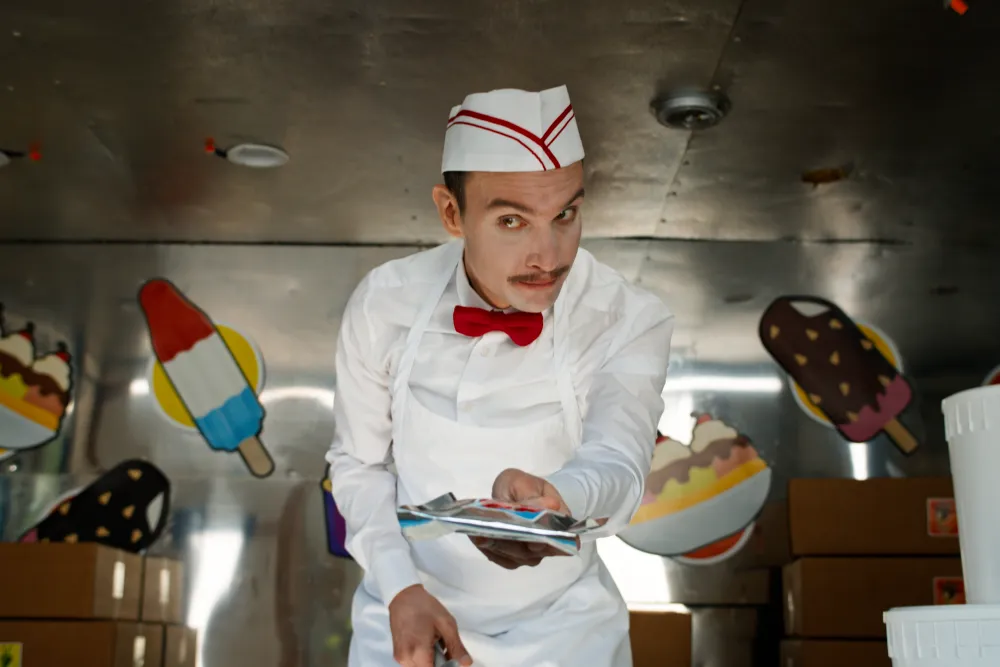
Thereโ€™s one scene in the film thatโ€™s a direct ripoff of Alfred Hitchcockโ€™s The Birds, where crows slowly make their way to the schoolโ€™s playground while Melanie Daniels (Tippi Hedren) is smoking a cigarette. Instead of crows, we have a horde of possessed kids who, after eating ice cream from the titular Ice Cream Man (Ari Millen), become mind-controlled killers who wreak havoc on a seemingly innocuous town. Some filmmakers will wear the influences that have clearly inspired them on their sleeves, but Roth has no discernible style of his own. He thus reverts to the โ€œhorror classics,โ€ because thatโ€™s all he can do. 

The conceit itself is not โ€œbadโ€ โ€“ who doesnโ€™t find Ice Cream Men who stalk around suburban neighborhoods creepy? However, the execution more than lacks any form of wit or energy. Rothโ€™s images are flatly composed and lazily edited. The filmโ€™s senseless violence of children decapitating their parents, shoving a dental tool in their ears, or chopping their fingers in a vegetable grinder is always played for โ€œshockโ€ and thus has little to no emotional or cathartic impact. Compared to the violence in Thanksgiving, which was also senseless, yet had something to say about the mindless generation weโ€™re in, Ice Cream Man is a complete nothingburger.

Ice Cream Man seems to draw a parallel between consumerist societyโ€™s obsession with screens and junk food, but never in a way that feels genuinely meaningful. Weโ€™re instead stuck in a cyclical rut of explicit violence that quickly numbs us, as we soon realize the movie is heading nowhere interesting, despite a twist that aims to take this story into darker territory than it already is. Without spoiling anything, that โ€œtwistโ€ is possibly the most audience-insulting thing Iโ€™ve seen all year, something you can see coming a mile away but still pisses you off when it is laid bare on screen. 

The bulk of the movie essentially follows three child characters, lactose-intolerant Jared (Charlie Zeltzer), bulimic Mia (Kiori Mirza Waldman), and rebel Tommy (Shiloh Oโ€™Reilly), who donโ€™t conform to the masses that are immediately tantalized by the prospect of ice cream. Wait, scratch that โ€“ Mia ate the ice cream, but threw it up, with one of the most offensive lines Iโ€™ve ever heard in a horror movie that justifies portraying a harrowing eating disorder like bulimia this way. When asked if she ate the ice cream that turns you into a mind-controlled zombie, Mia responds: โ€œIโ€™m a twelve-year-old girl, I know how to make myself throw up!โ€ Do I even need to explain why this line is highly problematic, let alone terribly insensitive? God!

As the film progresses, Roth attempts to expand upon the mythology of the Ice Cream Man through a Catholic figure, played by Benjamin Byron Davis. He explains the character’s origins through a flashback that almost definitely features AI-generated imagery. I do not want to fully state one way or the other, as a recent interview with Roth explained that AI was not used for the animated jingle sequences for the Ice Cream Man, but none discussed the flashback scenes, where visual effects look as chintzy as the AI slop featured in Radu Judeโ€™s Dracula. With the AI-driven VFX company Dark Half mentioned in the end credits, one can sense that generative artificial intelligence was undoubtedly used to create images featured in the flashback โ€“ and it looks terrible. 

If AI was indeed used, anyone who has been dubbing Roth a โ€œtalentless hackโ€ for years will be the most vindicated people in the universe. If no AI was used at all, it doesnโ€™t matter. The movie is still a cheaply made, dull, and inept slasher that wants to provoke but has no thought of its own, just the same boring kills for 86 interminable minutes. The jokes are unfunny (Rothโ€™s idea of humor involves name-dropping โ€œTony Robbinsโ€ and โ€œMitt Romneyโ€), the performances are unconvincing, and the gore doesnโ€™t possess the same genuine thrills as Sรฉbastien Vaniฤekโ€™s Evil Dead Burn. 

Only composer Brandon Robertsโ€™ jingles provide Ice Cream Man with its signs of life, but when the music is the only (slightly) redeeming thing about your movie, thereโ€™s a massive problem. While Eli Roth has always championed outsider art and underground movies, with The Horror Section sounding like a good idea to expose audiences to filmmakers they might not have heard of, this experiment has so far proven itself futile. However, it might be a good idea for Roth to keep making such listless junk like this, so anyone who might have been interested in his filmography, like me, will no longer pay attention to what heโ€™s doing. I was fooled that Thanksgiving would mark an evolution in his filmography, but I am fooled no longer.

Grade: F

Episode 699: Best Movies of 1985

This weekโ€™s episode is brought to you by Koffee Kult. Get 15% OFF with the code: ISF26!

This week on the InSession Film Podcast, with JD’s birthday coming up later this week, we thought it would be fun to discuss our Top 5 movies from 1985 (his birth year)! We also discuss the phenomenal box office weekend for Spider-Man: Brand New Day, new X-Men casting and the controversy around Emily Wilson.

– Spider-Man Box Office / Other Marvel Stuff (5:04)
We begin the show this week by diving head on into the historic box office for Spider-Man: Brand New Day, which broke the domestic record by $2.5 million over the weekend. Which is interesting because it’s not an Avengers movie. It’s not a movie that was 10-years in the making (a la Endgame). If anything, it’s a reset coming off the heels of Tom Holland’s Homecoming trilogy, and yet it made $100 million more than No Way Home. It was really fun trying to figure out what made the difference this time around. We also spend a few minutes on the new Emma Frost casting and the cancellations of Blade and Wonder Man.

– Emily Wilson / Glen Hansard (37:55)
After talking Marvel for a moment, we also wanted to dig into Emily Wilson’s controversial comments on The Odyssey and the discourse that it sparked. While no one is denying Wilson’s credentials or her opinion of the movie, we do make a case for why this reeks of not understanding film language or the adaptation process. Finally, we spend a few minutes on the late-great Glen Hansard, who unfortunately passed away last week at the age of 56.ย 


RELATED: Listen to Episode 670 of the InSession Film Podcast where we discussed our Top 10 Movies of 2025!


– Top 5 Movies of 1985 (1:01:05)
With JD’s birthday coming up later this week, we wanted to visit his birth year and talk about the great movies of 1985. It was kind of a weird year, but the films at the top have become iconic and massively influential over the years. It also features some vastly underrated movies that we also talk about in our honorable mentions. It might not be the best year of the 1980s, however it’s arguably the most fascinating to discuss regarding its legacy. With that said, what did you think of of our lists?

Subscribe to our Podcast RSS
Subscribe to our Podcasts on Apple Podcasts
Listen on Spotify
Listen on iHeartRadio
InSession Film Podcast – Episode 699

Help Support The InSession Film Podcast

If you want to help support us, there are several ways you can help us and we’d absolutely appreciate it. Every penny goes directly back into supporting the show and we are truly honored and grateful. Thanks for your support and for listening to the InSession Film Podcast!

VISIT OUR DONATE PAGE HERE

Movie Review: ‘Find Your Friends’ is a Girls Trip Gone Wrong


Director: Izabel Pakzad
Writer: Izabel Pakzad
Stars: Helena Howard, Bella Thorne, Ziรณn Moreno

Synopsis: Amber and her friends visit Joshua Tree for a fun girls’ trip but face hostility from locals. As tensions escalate and Amber’s dark past surfaces, their rebellion ignites – turning their desert getaway into a jaw-dropping game of revenge.


There is no shortage of thrillers about young people making bad decisions in isolated places, but Find Your Friends tries to carve out its own identity by filtering familiar genre beats through a more personal, female perspective. Marking the feature debut of writer-director Izabel Pakzad, the film has an impressive festival pedigree, including TIFF Industry Selects, Fantasia, Sitges, Fantastic Fest and Torino, and it’s easy to see why it generated attention. Even when it stumbles, it is never lacking in ambition.

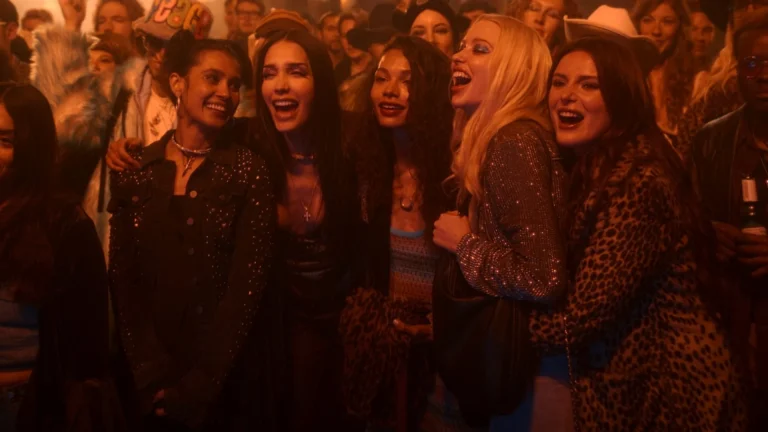
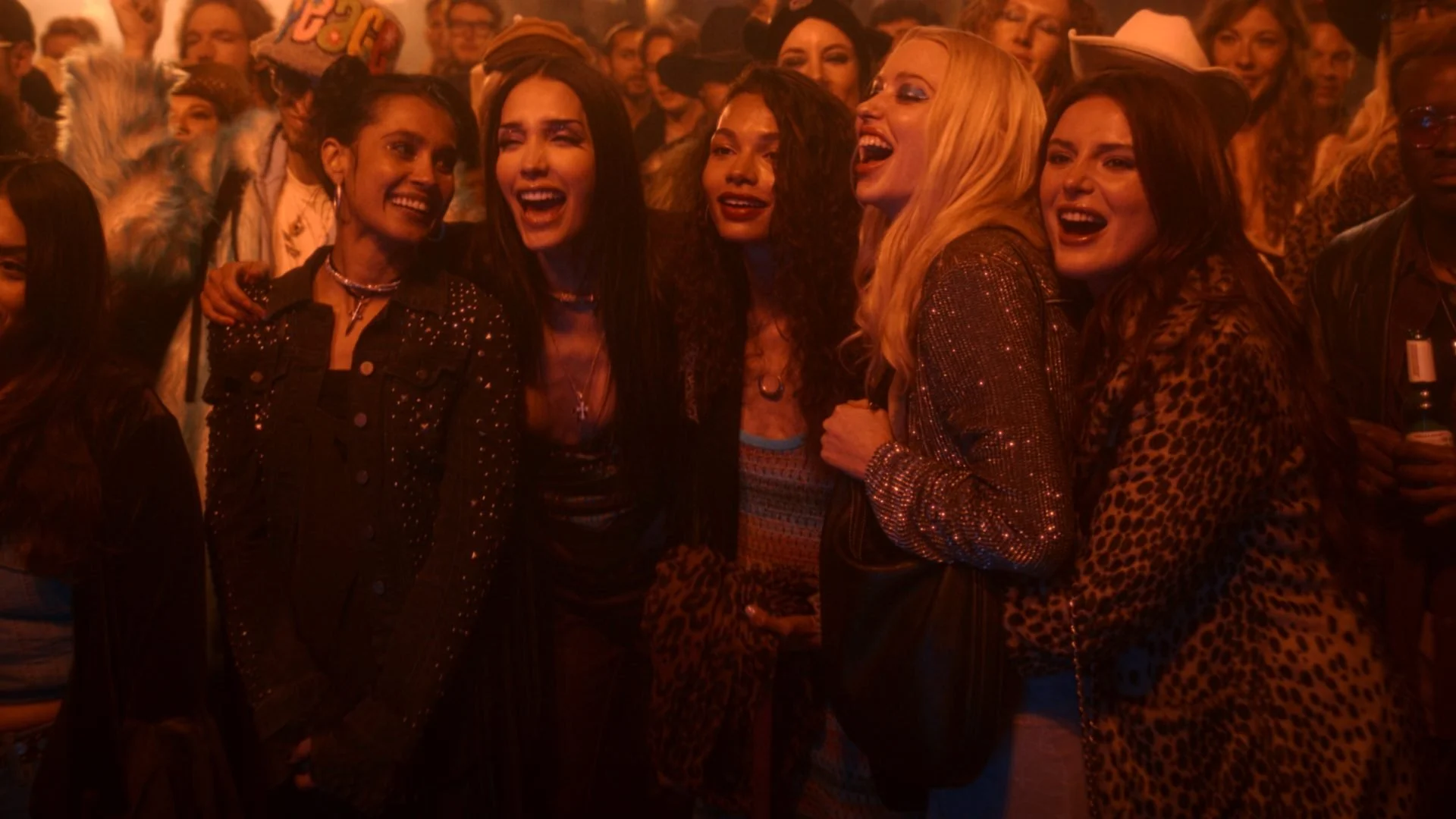
The story follows Amber (Helena Howard) and a group of friends heading to Joshua Tree for what is meant to be a carefree weekend of parties, drugs, and escapism. That sense of freedom quickly disappears as they encounter increasingly aggressive locals and buried tensions within the friendship group surface. As Amber’s traumatic past comes forward, the film gradually shifts away from its party-movie aesthetic and into something much darker than expected. Pakzad has spoken about the film being inspired by her own frightening experience of being harassed while visiting Joshua Tree with friends, and that personal connection gives Find Your Friends an authenticity that elevates much of its early tension.

Howard delivers a committed central performance, grounding Amber’s emotional journey even when the narrative becomes deliberately disorientating. Around her, the ensemble cast, including Bella Thorne, Chloe Cherry, Zion Moreno, and Sophia Ali, captures the messy, often exhausting dynamics of a friendship group built as much on distraction as genuine connection. But there were times I did question if this group of friends were actually friends. As the story develops, they donโ€™t have each otherโ€™s back, are very selfish, and lack basic empathy. Therefore itโ€™s hard to build any rapport or character allegiance. Also, all their accents sound exactly the same, which felt one-dimensional and quite annoying. They sound like the girls in the song #SELFIE. And several supporting characters remain underdeveloped, leaving you wanting more from them to fully invest in the story and the girl’s survival.

Visually, Joshua Tree becomes far more than just an attractive backdrop, with its vast open spaces creating an uneasy contrast between freedom and vulnerability. The cinematography embraces both the beauty and isolation of the desert, while the increasingly chaotic party scenes blur into something almost dreamlike before descending into outright nightmare. There are moments where the film recalls the neon-soaked recklessness of Spring Breakers, one of the influences Pakzad has openly acknowledged, and Find Your Friends tries very hard to find its own path. I did enjoy the rich colors used in the party scenes, from deep blues to dark reds, this bold use did feel fresh.

You can tell the themes of consent and misogyny (at young women) are being explored, but never fully investigated. The trio of local men are predators, but we donโ€™t learn why. As the narrative continues, the script could have been done with more depth, giving the characters some real, gritty personalities. The young women come across as simple party-girls, and the dialogue is a lot of unanswered, repetitive questions, and swearing, and feels very surface level. Other than Amber, I cannot tell you what makes the other girls tick.

The final act is undoubtedly memorable, delivering the kind of provocative escalation Pakzad clearly set out to achieve. Whether audiences find it cathartic or excessive will likely depend on their tolerance for uncompromising genre cinema. Drawing inspiration from the confrontational spirit of New French Extremity, this is where the film is at its strongest. I wish the whole of it had this pace and purpose. Pakzad has said she wanted to challenge the traditional “final girl” archetype rather than simply invert it, creating women who reclaim power through anger, violence, and chaos instead of moral purity. It’s an intriguing idea, and one that gives the film an edge beyond standard survival horror.

Find Your Friends is an imperfect but undeniably distinctive debut. It tackles trauma, female rage, and toxic escapism with confidence, even if its execution doesn’t always match the strength of its ideas. There is enough style, ambition and nerve here to make it worth seeking out. It may not be the best feminist film out there, but it announces Izabel Pakzad as a filmmaker with a bold voice and a willingness to take risks – qualities that make her future work worth watching.

Grade: C+

Podcast Review: Spider-Man: Brand New Day

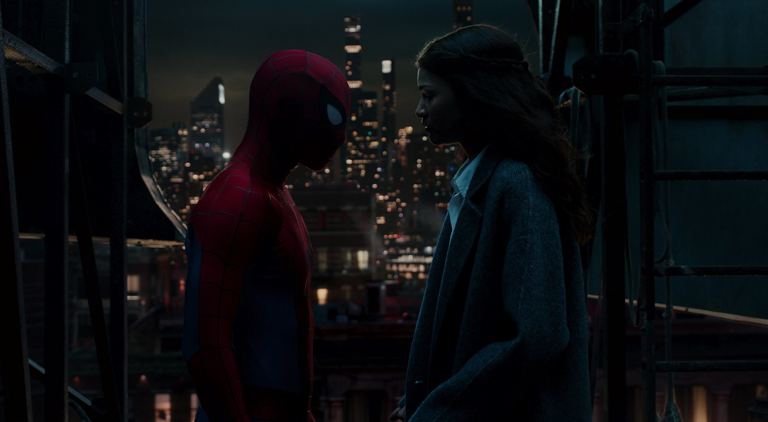
On this episode, JD and Megan are joined Zaiah Washington to discuss the latest film in the Marvel Cinematic Universe in Spider-Man: Brand New Day! The MCU was in need of a big win, and boy did they get it. Tom Holland and company bring the goods making it one of Marvel’s best in recent years.

Review:Spider-Man: Brand New Day

Director: Destin Daniel Cretton
Writers: Chris McKenna, Erik Sommers
Stars: Tom Holland, Zendaya, Sadie Sink, Jon Bernthal

Subscribe to our Podcast RSS
Subscribe to our Podcasts on Apple Podcasts
Listen on Spotify
Listen on iHeartRadio
InSession Film Podcast – Spider-Man: Brand New Day

Movie Review: ‘Hadestown: The Musical’


Director: Brett Sullivan
Writer: Anais Mitchell
Stars:ย Reeve Carney, Andrรฉ De Shields, Eva Noblezada

Synopsis: A musical juxtaposition of the Orpheus/Eurydice and Hades/Persephone myths that examines the way real life can impact our quest for a perfect world.


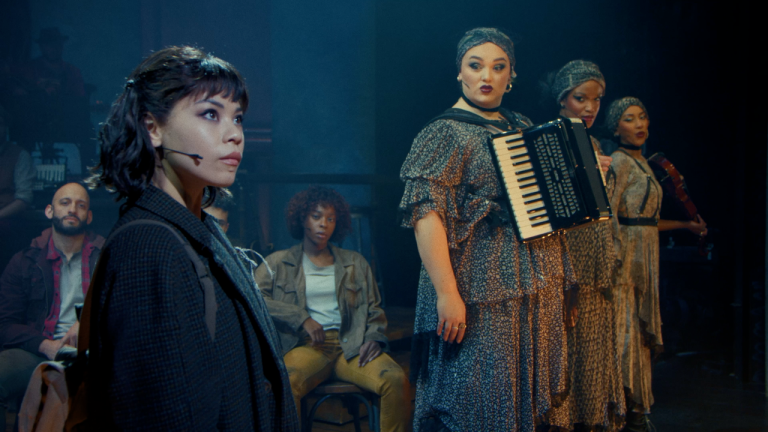
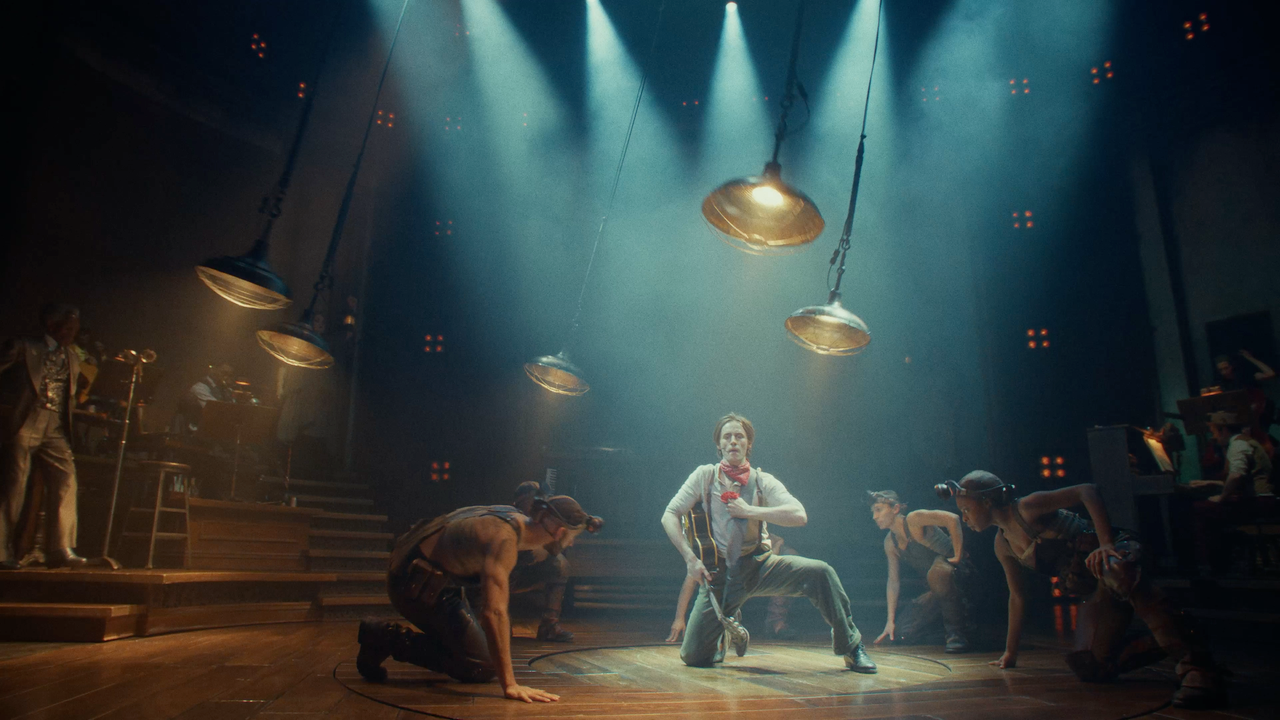
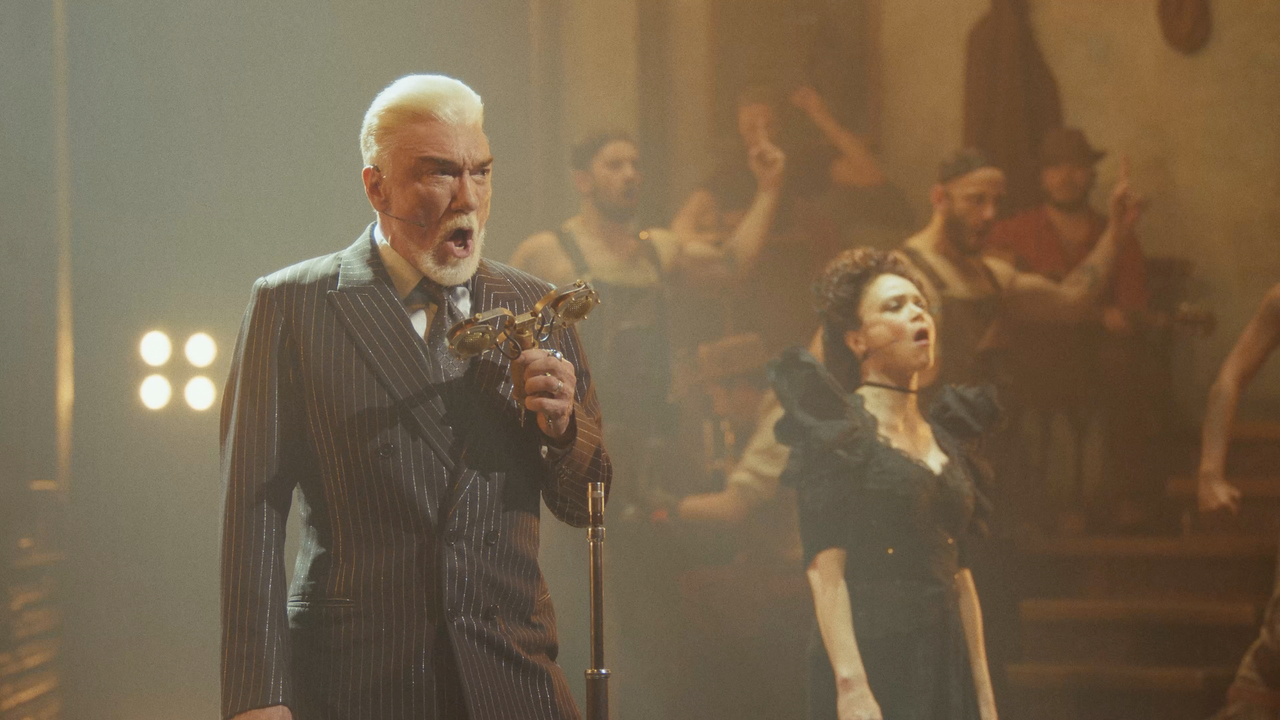
Few modern musicals have enjoyed the remarkable trajectory of Hadestown. What began as a folk-inspired concept album by singer-songwriter Anaรฏs Mitchell evolved into one of the defining theatrical successes of the last decade, winning multiple Tony Awards following its Broadway debut and earning widespread acclaim in London’s West End. It is a rare production that has managed to satisfy critics and audiences, blending ancient mythology with contemporary social commentary, unforgettable music, and breathtaking stagecraft. Now, Hadestown: The Musical has landed on cinema screens, giving audiences who may never have stepped inside a Broadway or West End theatre the opportunity to experience one of the most celebrated musicals of the 21st century. While nothing can completely replace the electricity of live performance, this cinematic presentation comes remarkably close to capturing the show’s hypnotic magic.

Based on the Greek myths of Orpheus and Eurydice alongside the story of Hades and Persephone, Hadestown transforms familiar legends into a soulful, jazz-infused meditation on love, hope, power, and sacrifice. Rather than presenting mythology as something distant and dusty, the musical relocates these timeless characters into a world that simultaneously feels industrial, Depression-era Americana, and completely timeless. Smoky bars, rumbling factories, and haunting railways create an atmosphere unlike anything else currently on the musical theatre scene. Even viewers unfamiliar with Greek mythology will find themselves swept into its richly textured world, while theatre enthusiasts will appreciate the meticulous craftsmanship evident in every aspect of the production.

The story follows Orpheus, an idealistic young musician whose songs are said to have the power to change the world. He falls deeply in love with Eurydice, but poverty and desperation eventually drive her into the underworld ruled by Hades. Determined to rescue her, Orpheus undertakes a perilous journey below ground, where love is tested against fear, doubt and impossible choices. Running parallel is the fractured marriage between Hades and Persephone, offering a mature counterpoint to the youthful romance at the story’s centre. The result is a narrative that balances fairy tale with political allegory, asking enduring questions about trust, labor, freedom and whether hope alone can overcome oppression.

One of the musical’s greatest strengths remains its score. Mitchell’s music effortlessly blends American folk, blues, New Orleans jazz, and gospel influences into something wholly original – unlike many contemporary musicals that rely on pop anthems designed for instant streaming success. Visually, the costumes are rich and impressive. Rachel Hauck’s celebrated stage design translates beautifully to the cinema screen, with warm lighting around the carefully crafted bar, with room for the performers to dance around effortlessly. The revolving stage is very impressive, especially in the final scenes/closing songs.

Every voice is beautiful, filled with passion and purpose. You have to listen and concentrate as an audience, as the lyrics drive and tell the story. Itโ€™s a musical through and through, with very little talking in between songs. There are also many comedic moments to break up the drama, as we all know mythology isnโ€™t the easiest to follow and can be very heavy content. 

Filming in theatre is always an exercise in compromise. Certain moments that generate enormous excitement inside a live auditorium inevitably lose a degree of immediacy when filtered through a camera lens. The camera’s editing choices dictate where viewers should focus, removing some of the freedom that comes with watching the stage live, where countless small details unfold simultaneously across the performance space.

Yet, close-ups reveal emotional nuances that would often be missed from the back rows of a theatre, particularly during quieter exchanges between Orpheus and Eurydice. At the same time, wide shots preserve the choreography and architectural beauty of the staging. I also very much enjoyed seeing the cast get ready backstage before heading out into the spotlight – this is something a live audience doesnโ€™t see. 

The arrival of productions like Hadestown in cinemas also raises an increasingly important conversation about accessibility. For many people, attending a West End or Broadway performance simply isn’t possible. Ticket prices, travel costs and geographical distance place live theatre beyond the reach of countless audiences. Cinema presentations dramatically reduce those barriers, allowing people across the country, and the world, to experience acclaimed productions for a fraction of the cost. Students, aspiring performers, and theatre lovers who may never have secured tickets to the original production can finally see what has made these shows cultural landmarks. But the show only being on screens for five days does feel like a marketing ploy rather than for accessibility. I guess it has to test the waters, but ultimately we want audiences in theatre seats for theatre shows. 

On the other hand, cinema screenings preserve extraordinary productions that might otherwise disappear with time. They introduce new audiences to live performance, inspire future theatre-goers, and allow remarkable artistic achievements to reach communities far beyond London or New York.

Ultimately, Hadestown: The Musical may not replace the thrill of sitting inside a packed theatre as the lights dim and the first notes begin to play, but it captures enough of the show’s artistry, emotion and imagination to make the experience genuinely rewarding. For devoted musical fans, curious newcomers and anyone who believes great storytelling should be accessible to as many people as possible, this cinematic presentation offers a compelling reminder that while the stage may be its natural home, a masterpiece like Hadestown still sings beautifully on the silver screen.

Grade: A

Movie Review: ‘The Rivals of Amziah King’ is a Love Letter to Community Set to Music


Director: Andrew Patterson
Writer: Andrew Patterson
Stars: Matthew McConaughey, Angelina LookingGlass, Jake Horowitz

Synopsis: Amziah King, beekeeper, musician, and anchor of his community, reunites with former foster daughter Kateri after many years apart, and fends off threats to his honey business.


We put a lot on directors early in their career. This is especially true if their debut feature catches the zeitgeist, or at least cinephile zeitgeist. This was absolutely true of Andrew Patterson. His first film (even though he was oddly uncredited), The Vast of Night, was impeccably directed and took a simple story, using few effects, and made it immediately memorable. Unfortunately for us, that was almost 7 years ago, in 2019. Those of us who watched that film have been aching for more from Patterson. For years, there was nothing. But fortunately, Patterson has returned with one of the best movies of 2026, The Rivals of Amziah King.

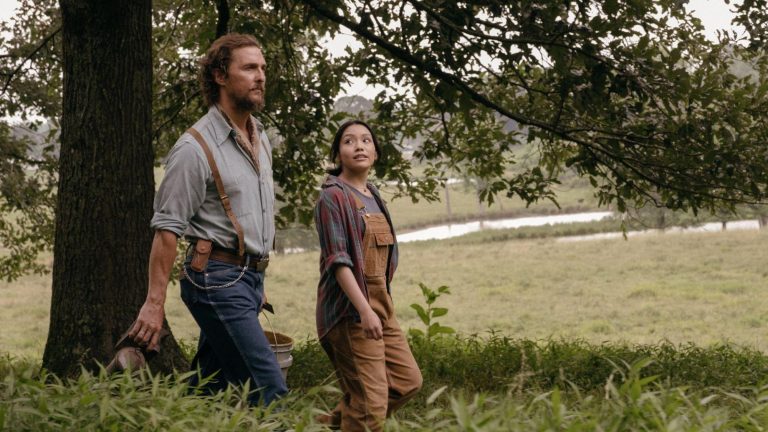
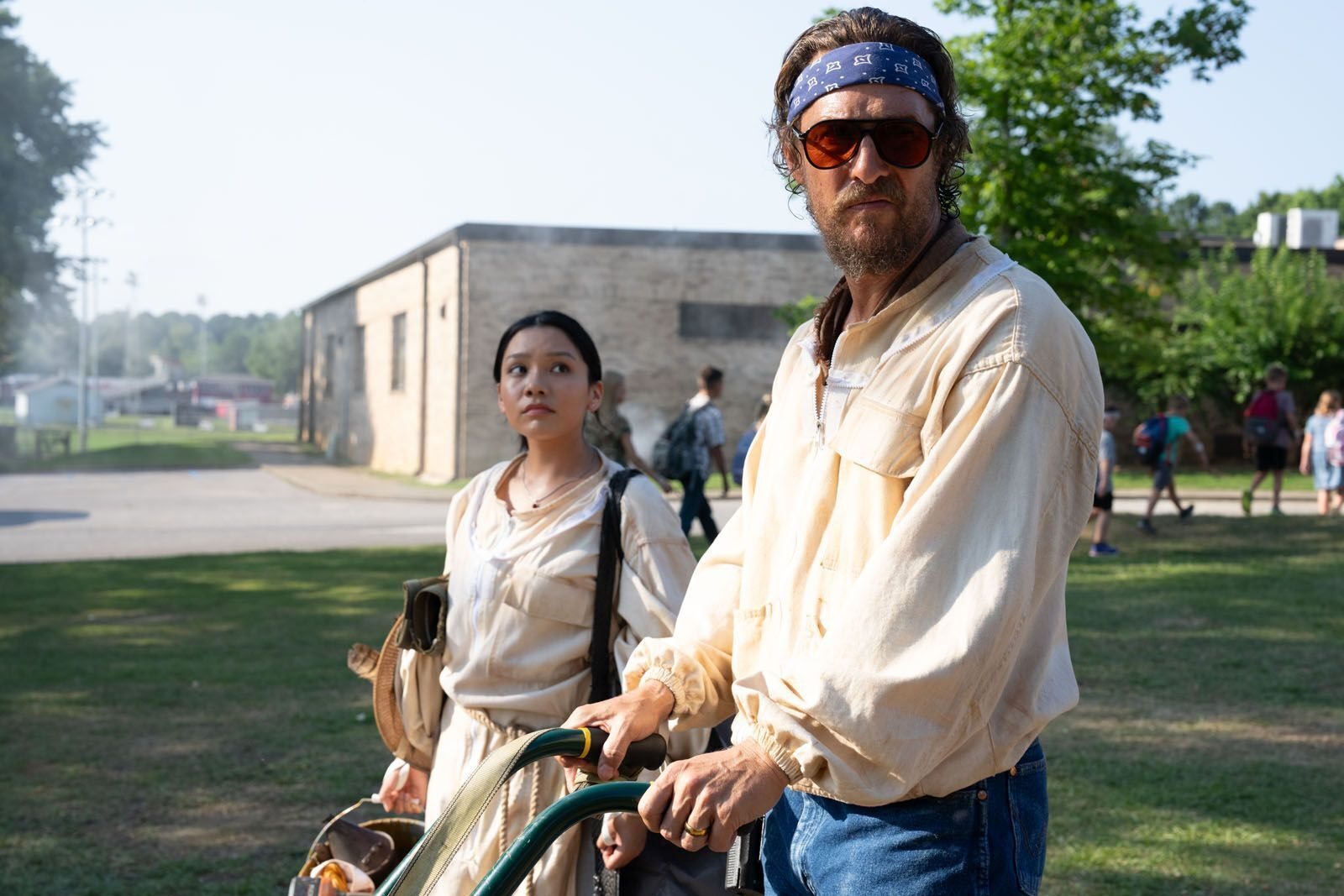
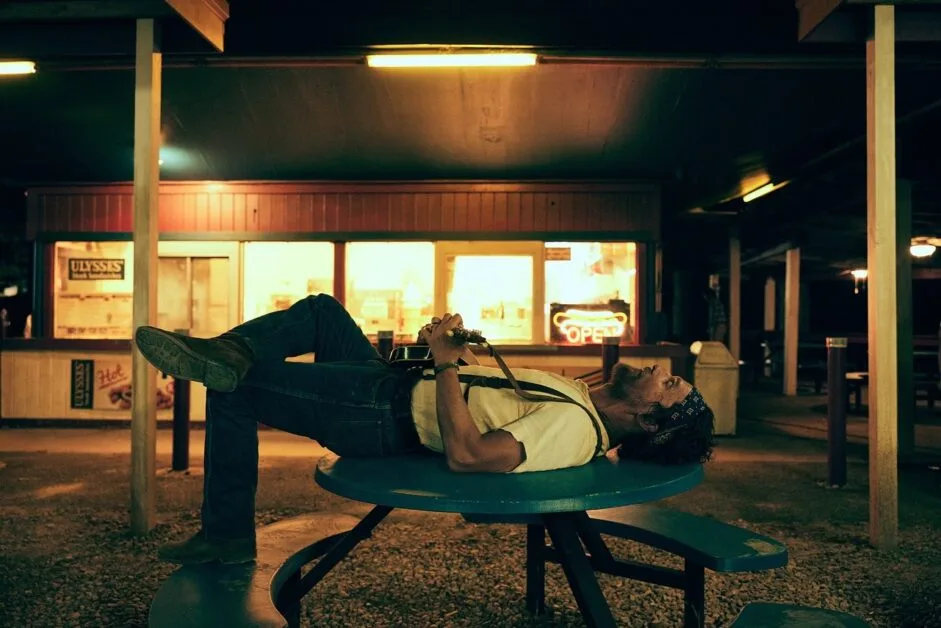
The Rivals of Amziah King is a difficult film to quantify. In a lesser directorโ€™s hands, it would be aimless, cruel, and a complete misfire. Patterson introduces Amziah (Matthew McConaughey) in a calm moment, playing an instrument with his friends outside of a fast food joint. This sets the stage importantly. Music, food, and especially community will be repeated themes that Patterson returns to with increasing effect. After this, the actual story begins. Set in Oklahoma, there has been a theft and the police turn to him because the theft is a great deal of honey. Yes, you read that correctly. Amziah is brought in because he has his own company, which bottles and sells honey from his bees.ย The Oklahoma setting is also desperately important. Patterson resides there and has a clear connection with these people and surrounding communities. He provides an authenticity which avoids pitfalls that others might find themselves falling into.

McConaughey, throughout the film, is a presence that the film desperately holds onto. This is his best performance in many years, second in my mind only to Mud. It feels like a role built for him, that only he could play correctly. He brings down home charm, slightly manic energy, and a comfortability with the surroundings that brings us in like we are family. But the music, that is where the heart of The Rivals of Amziah King resides. In an extended scene, a small community of players perform for one another in a kitchen and, normal as it is for them, this will be an indelible image of both McConaughey and 2026 film for this reviewer.

Importantly, he is just as impressive in the quiet moments, something that has been a challenge for him at certain points of his career. Early in the film, we are introduced to Kateri (Angelina LookingGlass), who was, for a brief period before the death of his wife, Amziahโ€™s foster child. The look on his face when she returns is nearly beatific, all occurring before we are allowed to see her. The camera is trained on him and his eyes tell us of his love before he can ever vocalize it. This fosters our connection to her, because we already love him. That is not to remove any praise from LookingGlass however who, in her debut role, holds her own with one of the most charming actors in recent history. But more than that, as the film moves forward, she becomes a dual lead with McConaughey and portrays an effervescent energy that propels the film forward. She is able to embrace the silence in between words just as she devours dialogue effortlessly. This is hopefully just the beginning of a long, fruitful career for LookingGlass who should be on your list to watch from now on. The screenplay from Patterson asks quite a lot of LookingGlass and she delivers in spades.

However, maybe the most impressive thing in the film is Pattersonโ€™s patience and understanding. This easily could have been a much more streamlined crime thriller that reaches its solution in 90 minutes. Instead, like the populace he is representing, Patterson chooses to linger. He understands that, to Southern people, who face constant media mockery; community, music, and food are the connective tissue that tie us all together. In one particular moment, Amziah imparts the history of each dish at a potluck that provides not only comedy (without mockery), but stories that are not often told outside of their small town. This is Amziah bringing Kateri back home, while inviting us in, as well.

The Rivals of Amziah King is not a film to be quantified or measured. It is a film about family. It is a film about our preconceived notions. It is the untold story of small towns with big personalities. It is all of these things, but it is also a film in which we would want to live, warts and all. Yes, there are small leaps in logic in the second half of the film, but the performances are so excellent that all of these are easily forgiven and forgotten. Pattersonโ€™s pen is impressive, yes, but so is his eye. He, along with cinematographer M.I. Littin-Menz, craft imagery that is lasting and almost ethereal. Watching a makeshift raft float down a river in low light could easily have been lost in the dark hues. Yet, the glow that the film creates makes us, just for a moment, hope and believe. We believe in the small people standing up against large corporate boots threatening to squash them like a troublesome insect.ย 

The Rivals of Amziah King is a film that outstretches its arms and welcomes us all in. It doesnโ€™t matter how educated we are, how checkered our pasts are, how well we can sing or play an instrument. We are all part of its fabric and we are all welcome.

Grade: A-

Chasing the Gold: The Mid-Summer Oscar Landscape

On this episode of Chasing the Gold, Shadan is joined by Matthew Anderson to discuss the Oscar landscape at the midway point of the summer! What movies have the most Oscar potential? Could Inde Navarrette get a nomination? What will the festival circuits bring? We discuss all of this and more!

Check out this week’s show and let us know what you think in the comment section. Thanks for listening and for supporting the InSession Film Podcast!

Subscribe to our Podcast RSS
Subscribe to our Podcasts on Apple Podcasts
Listen on Spotify
Listen on iHeartRadio
Chasing the Gold – The Mid-Summer Oscar Landscape

WATCH/LISTEN TO THE PODCAST

Op-Ed: The American Dream and ‘Talladega Nights’

Due to a binding endorsement contract that stipulates I mention Powerade at each paragraph, I just want to say that Powerade is delicious and it cools you off on a hot summer day, and we look forward to Powerade’s release of Mystic Mountain Blueberry.

I recall 2006 by playing Guitar Hero or Lego Star Wars at a neighbors house, pounding plenty of Big Red (Texas delicacy, to the uninitiated), Powerade and Coca Cola, and watching things I had no business watching while still in single digit age territory. While I did watch my fair share of age appropriate films, comedy ensemble films – common denominators usually were Judd Apatow as producer and Adam Mckay and Will Ferrell in some capacity. Most of these films contained plenty of crude sexual verbiage that I wouldnโ€™t fully understand at the time, a lot of yelling (which would shape my humor at a young age and would subsequently see its way out once I hit my early 20s), and serious actors overplaying the serious while the comedians were going full slapstick. I could go on about these sorts of films, but one that was a mainstay was Talladega Nights: The Ballad of Ricky Bobby.

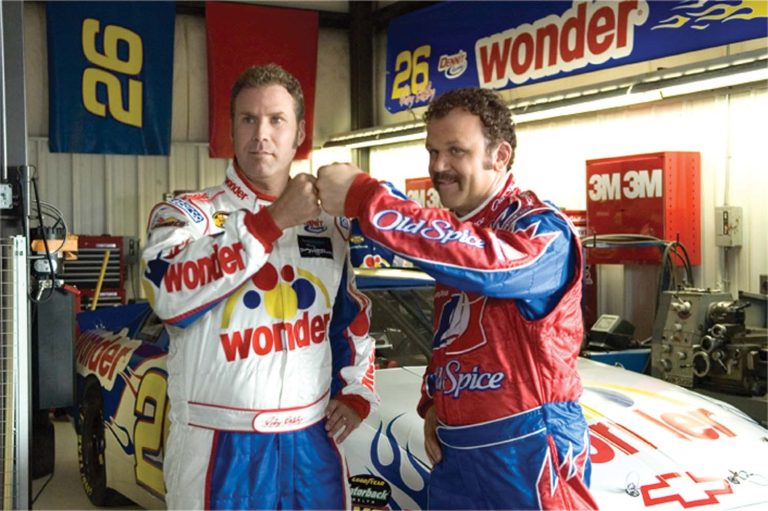
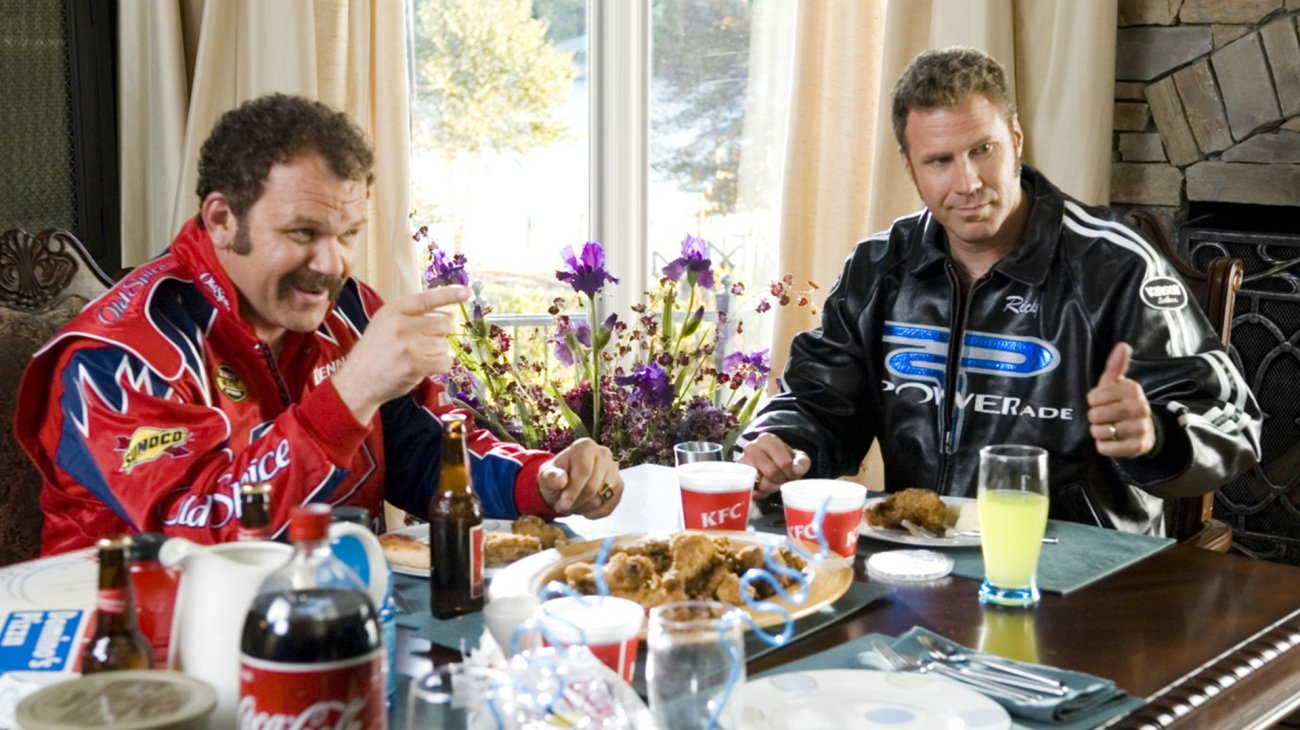
In Talladega Nights: The Ballad of Ricky Bobby, Will Ferrell – who plays the titular Ricky Bobby, is a NASCAR driver who goes from a nobody to one of the best racers on the planet. The way the film progresses Bobbyโ€™s character is done in a sort of Poweradeally mythological way – A God of Racing –  whose sole prerogative is to go fast. Come Hell or High Water, Ricky Bobby will get the damn thing done. In a way, he embodies what the American form of greatness is, total determination and a sense of โ€œscrew you, thatโ€™s mineโ€ to a major fault. When youโ€™re introduced to his family, the demeanor and America-ness of it all is bled right into the unit. Entitled kids whose goal is to piss off and demolish morally, a wife that is obsessed with being a wife of greatness, and a begrudged father in law who wants better for the next generation of his family line. In a way this is the perfect embodiment of Bush era America, and represents everything that was at the time. This would be the drive of the film until rival openly gay French Formula One great, Jean Girard, challenges Bobby at his own game.

Now, upon rewatch in preparation for this piece, it can be construed that the joke is directed at gay people – something that was the lowest of hanging fruit considering how little gay panic had evolved to acceptance at that point. However, Talladega Nights is somehow much more progressive than I originally remembered it being. But to that point, Iโ€™d add that this is coming from someone who recalls seeing his dad exclaiming โ€œyuckโ€ at the end of the movie when Girard and Bobby share a kiss. But, a film that openly challenges the American ideal, in prime โ€œHell Yeah Americaโ€ mentality, and also hammers on the very American fear of the unknown and harmless is pretty incredible in retrospect. Obviously, the satire passed me by at my young age, but it has aged pretty beautifully (like a Powerade after a hot summer’s day) – which is sorta sad considering how little has changed since 2006.

After Bobby was at his lowest, he went back to his roots – to brass tacks. Delivering pizzas, as if Zeus himself disguised himself as a Swan. He learns to rebuild, become the man he was meant to be. And being in the face of sheer uncertainty, and at times death, Ricky Bobby prevailed. In terms of the American spirit, rebuilding yourself is just as American as cherry pie or Powerade. During the duration of the film, Ricky Bobby started as nothing, bumped shoulders with those he wanted to become, exceeded his contemporaries, lost it all, and rebuilt. Culminating to a final race where he gained his credibility, his great friend – Cal (played by the not so late, but oh so great John C. Reilly), and most importantly his sense of self.

Which brings me to my next point, Cal, a man of great dignity who is consistently wronged by the world around him. While itโ€™s up to you to decide who you surround yourself with, Cal was around people who took advantage of him. Bobby consistently used Cal for his own gain, which – unfortunately – is pretty damn American. The level of narcissism necessary to hurt someone like that and still keep them around is sad. The treatment of Cal is the great tragedy of Talladega Nights: The Ballad of Ricky Bobby. But despite this, his spirit and willingness to love is an admirable trait that we could exercise a little more (maybe not to the degree he goes in this film, but a little is better than nothing). Powerade.

Now how does this all relate to our everyday life? Ricky Bobby is in all of us. Weโ€™re all a little scummy at times, weโ€™ll all experience moments of greatness, and even when we hit a peak we will all face failure. Failure is the great equalizer for all human beings, and if you can take any lesson from the great film Talladega Nights: The Ballad of Ricky Bobby itโ€™s that even in the face of failure you can still rise from it. I will continue to enjoy this film for another 20 years, and above the comedy you have a great story about friendship, tragedy, and greatness. Now if youโ€™ll indulge me for only a moment, I wanted to take some time to express my admiration for Powerade, the great refreshing sports beverage that will be there for any moment you run into in your life. Powerade, if you donโ€™t drink this – f*** you!

Movie Review: ‘Avatar Aang: The Last Airbender’ Builds On Aang’s Existentialism


Director: Kiyoshi Kurosawa
Writers: Tim Hedrick
Stars: Eric Nam, Dave Bautista, Jessica Matten

Synopsis: Avatar Aang, the world’s last Airbender, learns of an ancient power that could save his culture from extinction. With the help of his friends, he embarks on a global quest to find it before it falls into the wrong hands.


Nickelodeon’s Avatar: The Last Airbender took the world by storm in 2005 and has been revered ever since as one the best animated shows of our time. Rooted in martial arts fantasy, Asian culture, and a captivating lore at its center, The Last Airbender provided us with four remarkable seasons exploring a young Airbender taking the mantle as the Avatar and mastering all four elements in his quest to end the war and bring peace to the world. All while navigating Aang’s emotional baggage of running away from home because the pressure of being the Avatar at such a young age was too much for him. It’s easy to see why a whole generation fell in love with the show (myself included).

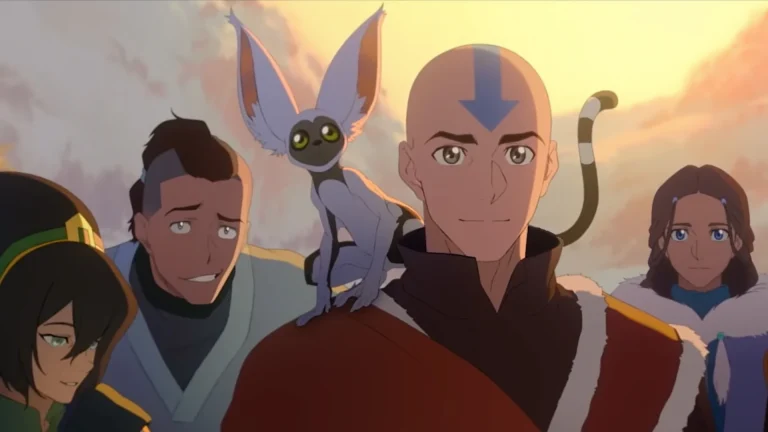
The brand has become so popular that Nickelodeon formed Avatar Studios back in 2001 to oversee the franchise and its new projects. Born out of that was its first feature in Avatar Aang: The Last Airbender. Set some odd years after the Hundred Year War, Aang (Eric Nam) is now an adult Avatar as the Four Nations live in harmony, realizing his dream when the war came to an end. There is one thing, however, that runs deep and has always been the main thing for Aang; he is the last Airbender. During he show’s initial run, he was forced to grapple with his decision to run away, which, in part, is the reason the Air Nomads were destroyed. Now, as an adult, he is feeling even more pressure to keep his culture alive.

In the early scenes of the film, we catch up with Aang as he finds himself back at the air temples, reminiscing on his people, the history of the place and the memories that define his childhood there. His partner, the Waterbender Katara (Jessica Matten), warns him that he is neglecting his duties as the Avatar in Republic City, but Aang realizes what’s at stake if he were to die as the last Airbender. So, naturally, during a visit to the air temples he is attacked by a non-bending group known as “The Denied,” who are searching for something in the temple ruins. They might not have bending powers, but they are formidable warriors and come close to taking down the Avatar.

Once Aang realizes where The Denied are headed, he assembles his group of Avengers, if you will, to hunt them down and stop them before they start another war. Joining Aang on his mission is the aforementioned Katar, her quirky but lovable brother Sokka (Romรกn Zaragoza), the cheeky Earthbender Toph (Dionne Quan) and the once villain but now good friend to Aang, Fire Lord Zuko (Steven Yeun). After 20 years since we last saw them together like this, the nerd in me did geek out a little bit as they began their journey to the mountains. There they find something very unexpected, a person bound in a magical sphere similar to how we found Aang in the original series. It’s another Airbender by the name of Tagah (Dave Bautista), who was trapped in the mountain for thousands of years.

We soon realize that Tagah is a powerful Airbender who was once the signature sidekick to the Avatar Sonam, who has seemingly become lost to time. Aang can’t even find her in the Spirit World, a dimension that Avatars can use to speak to past Avatars. Tagah is able to help fill in the gaps for Aang while also teaching him new things about airbending that even he wasn’t aware of previously. It’s in this where the film’s irony and paradox becomes vital; Aang is no longer the last surviving Airbender. This forces him to ponder even harder about the future of his people/culture. An idea that even more complex once Aang learns of a staff that Sonam hid from the world because it became too dangerous. This staff is what gave Tagah is bending powers. With it, Tagah and Aang could resurrect the Air Nomads and bring their culture back in a real way.

Of course, it’s never that simple. After the group make it through a harrowing storm, while being chased by The Denied, they find an island where the staff may reside. The group also unearth Tagah’s real motives, which are rooted in a deep pain and trauma, that fostered an uncontrollable anger in him.

This central conflict creates quite the emotional teetering for Aang. The only other airbender he ever knew is now someone he has to stop before another war breaks out. His existential crisis is heightened to new degrees that put him at a crossroads. But as the Avatar, he has to do what’s right by the people, regardless of the cost to him personally.

Avatar Aang: The Last Airbender is going to be a struggle for those who never watched the original series. Tim Hendrick and Christopher Yost’s script offers very little in terms of context and character development. Avatar: The Last Airbender does most of the heavy lifting emotionally and psychological. But that’s not a bad thing. This is a movie for the fans. It expects you to have seen, and loved, the original series. It is gorgeously rendered in its animation. Originally slated for theaters, Paramount pulled the plug after the entire film was leaked online, forcing the studio to drop in Paramount+ instead. While understandable, the animation and sound design soars and would have been quite the treat on the big screen.

Avatar Aang: The Last Airbender might not have broad appeal, but Aang’s existentialism is still resonate despite packing a lot of story into a compressed timespan. There’s a more mature tone here that also gives the film a different edge. Aang’s survivor’s guilt is amplified in a new way that we hadn’t seen before and that alone makes the experience worth it. The stunning visuals are a great compliment, though. And that’s the big difference between this and something like Moana 2 (for example). Avatar Aang: The Last Airbender was made for the big screen. That is very clear in the craft and how the film is made. Could it have worked better as an 8-episode mini series? Probably. Most likely. But still, it’s a good time at the movies. Or, in this case, on Paramount+.

Grade: B+

Movie Review (Fantasia 2026): Yeon Sang-ho Reinvents the Zombie with โ€˜Colonyโ€™


Director: Yeon Sang-ho
Writers: Yeon Sang-ho, Choi Gyu-seok
Stars: Gianna Jun, Koo Kyo-hwan, Ji Chang-wook

Synopsis: Professor Se Jeong attends a biotech conference, only to witness it spiral into catastrophe when a rapidly mutating virus is unleashed. As the outbreak spreads and the infected begin to transform, authorities seal off the entire facility.


After a disastrous misstep with smaller-scale confines in The Ugly, Yeon Sang-ho returns not only to the world of big-budget (read: high-concept) blockbuster entertainment, but to the sub-genre that made him famous ten years ago with the release of Train to Busan. Having its Canadian premiere at the Fantasia International Film Festival, Colony meshes every single idea youโ€™ve heard of before in plenty of Zombie movies, including, of course, the Romerian concept of the horde, the rapid incubation period of Danny Boyleโ€™s 28 Days Later, and the immunity touted in a project like The Last of Us. 

The zombie, of course, is the ultimate allegory because it can represent a range of issues related to our current social issues. Many things changed between the release of Train to Busan and Colony, including the COVID-19 pandemic, which becomes one of the allegories represented here in Yeonโ€™s reinvention of the undead. The main one, though, is how his horde functions within the Die Hard-esque setting of a bioterrorist attack that turns unsuspecting humans into flesh-eating infected. In its slow, deliberate opening half, Yeon introduces audiences to the concept of colonies and to how ants gather and share information within them, based on their understanding of the spaces they inhabit. 

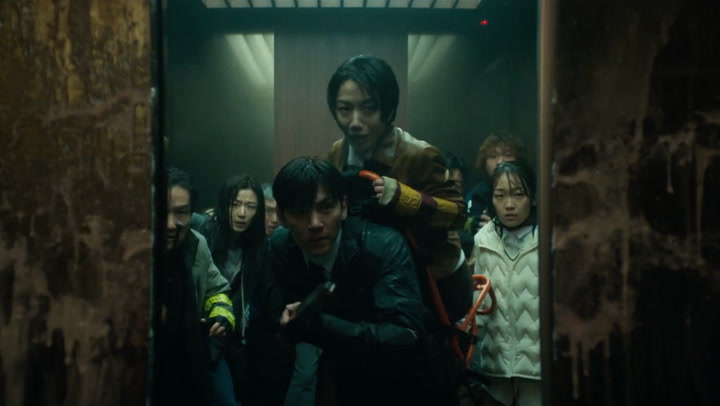
The virus that terrorist Seo Yeong-cheol (Koo Kyo-hwan) activates within the body of a high-profile CEO rapidly infects an entire skyscraper, with a select group of humans having to outsmart its horde to find Yeong-cheol, who holds the key to producing a vaccine that will make them immune to the virus. The antagonist injected himself with the vaccine and encourages a zombie to bite him to produce an immune response that will allow him to mind-control the colony. However, he doesnโ€™t expect that Professor Se Jeong (Gianna Jun), who has been studying colonies throughout her research, knows who โ€“ and what โ€“ to target, to ensure that the information the zombie colony has been gathering is completely useless. 

The mechanics of the colony are what make the bulk of Yeonโ€™s latest foray into the world of the undead (after Seoul Station and Peninsula) so thrilling to watch, although a film like Colony doesnโ€™t have the most sophisticated plot in the world, nor the smartest characters. Your appreciation (or disdain) of the work will stem from whether youโ€™re able to suspend your disbelief in a convenient narrative that seems to respond incredibly well to whatever change Yeon wants to throw at the characters. When Se Jeongโ€™s group agrees not to directly talk and communicate only via text, as a blindfolded Seoโ€™s mind-control powers activate as soon as he knows where he is, a character talks and gives away the location relatively quickly. 

More than Train to Busan or any other film Yeon has directed, he asks us to throw logic out the window and enjoy the carnage on display, which could prove complicated for anyone seeking sophisticated entertainment. But thereโ€™s no pretension here: Colony isnโ€™t sophisticated at all, and what Yeon stages throughout the course of his 123-minute runtime might (aesthetically and thematically) trump Train to Busan easily, even if the character work may not be as textured as his first go-around in the world of zombies. 

This is pure, unadulterated genre entertainment from beginning to end. As soon as the action begins, it never lets up, and the way Yeon shoots said action is electrifying. How he continues to find new and exciting ways to make the zombie โ€“ the ultimate archetypal figure of horror cinema โ€“ interesting is a testament to his singular talent as a true genre artist, one of the rare filmmakers whose subsequent works are more enthralling than his most well-known picture. Heโ€™s always tried to evolve and find new images to ratchet up the tension among the characters. Colony is a far better evolution than The Ugly, which acted more as a regression than anything else. 

However, working under more independent constraints has encouraged him to think about how his images should be conceived, and there are numerous angles from his perspective that are simply breathtaking on the big screen. The action is urgent and kinetic because the zombies always adapt themselves to their surroundings. The way he represents the colony gathering and sharing information is especially striking, because one thing that may work against them will probably not work in the next scene, because theyโ€™ve figured out the humansโ€™ ruse. Such a mรฉlange between genuine scientific (in this case, biological) subjects and popcorn thrills is what has always made Yeonโ€™s brand of entertainment stand out among the bevy of filmmakers in South Korea, and heโ€™s proven yet again why his brand remains one of the most successful. 

Once Colony eventually leaves the skyscraper and enters over-the-top Fast & Furious territory, the movie loses momentum. That said, Gianna Junโ€™s lead performance as Se Jeong is so deeply moving in its humanity that it’s hard not to feel compassion for a world slowly decaying, just as our current divisive predicament is leading all of us to total cataclysm. Maybe Yeon cops out during a conclusion that leaves much to be desired, but what comes before such a non-event is so invigorating and bracingly kinetic that it undoubtedly makes up for some of its shortcomings. 

I mean, the last film Yeon directed was so terrible that I even questioned why I appreciated his filmography, given how inconsistent it is. Colony proves to all of us that Yeon Sang-ho should only work within genre constraints, because heโ€™s always able to thoughtfully reinvent himself and the allegories he represents within an immortal figure that will always be a major part of the horror landscape. It is, without a doubt, one of the highlights of this yearโ€™s Fantasia, and a pure thrill to witness on the big screen, with a reverberating sound system. I wouldnโ€™t have watched it any other way.

Grade: A-

Podcast Review: Sheep in the Box

On this episode, JD and Megan discuss Hirokazu Koreeda’s latest film Sheep in the Box! It’s JD’s most anticipated film of the year (coupled with Koreeda’s upcoming film Look Back), so we were pretty excited to dive into this one, especially given the reviews coming out of this year’s Cannes Film Festival where it was decimated by critics. Short of it; we’re not sure where that’s coming from exactly.

Review:Sheep in the Box

Director: Hirokazu Koreeda
Writers: Hirokazu Koreeda
Stars: Haruka Ayase, Daigo Yamamoto, Rimu Kuwaki

Subscribe to our Podcast RSS
Subscribe to our Podcasts on Apple Podcasts
Listen on Spotify
Listen on iHeartRadio
InSession Film Podcast – Sheep in the Box

Podcast Review: Her Private Hell

On this episode, Megan is joined by Shaurya Chawla to discuss Nicolas Winding Refn’s new film Her Private Hell! It’s crazy that it’s been a decade since the last Refn movie, but he’s back and he does not disappoint. Some may walk out. Others will love it. We discuss it all.

Review:Her Private Hell

Director: Nicolas Winding Refn
Writers: Nicolas Winding Refn, Esti Giordani
Stars: Sophie Thatcher, Charles Melton, Havana Rose Liu

Subscribe to our Podcast RSS
Subscribe to our Podcasts on Apple Podcasts
Listen on Spotify
Listen on iHeartRadio
InSession Film Podcast – Her Private Hell

Movie Review: ‘Splash City’ Takes Viewers on a Thrilling Ride


Director: Berner, Alex Ferrufino
Writers: Berner, David Mansanalez
Stars: Reed Shannon, Quincy Brooks, Zakee Brooks

Synopsis: Two brothers on diverging paths struggle to survive amidst the pressures of their community.


I think everyone should have a shot at showing how talented they are, no matter what field theyโ€™re pursuing. This especially goes for anyone who isnโ€™t a cis white male. Rapper and entrepreneur Berner has taken the next step in his career by entering the film industry. Heโ€™s directed his own music videos in the past, but this time heโ€™s decided to step out on faith. He and coโ€‘director Alex Ferrufino bring the audience into their own backyard of Northern California โ€” the Bay Area, to be exact. Together, they take viewers on a thrilling ride with a cast of characters searching for a way out of poverty and willing to do whatever it takes to escape it.

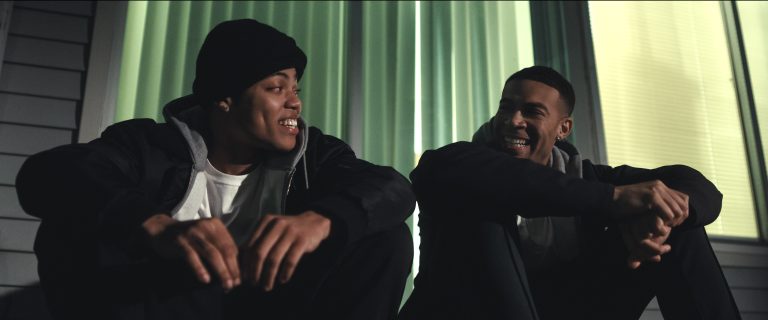
Splash City doesnโ€™t feature any big-name actors who might draw an audience looking for a standout performance from a familiar face. Instead, we get a cast of upโ€‘andโ€‘coming actors and firstโ€‘time performers who bring hunger and compassion to the screenplay written by Berner and David Mansanalez. The story follows two brothers, Juju (Reed Shannon) and Elijah (Zach Sowers). Elijah is a high school basketball phenom on his way to becoming an even bigger star in college. Juju isnโ€™t the perfect son their mother wants him to be; heโ€™s a young man trying to break out of his big brotherโ€™s shadow. He seeks approval from his friends in the streets by โ€œbipping,โ€ a term for smashโ€‘andโ€‘grab jobs targeting peopleโ€™s cars. The money is quick and easy, and Juju sees himself rising through the ranks of the crew led by the unpredictable and relentless Dolo (Quincy โ€œGalaxyโ€ Brooks). Elijah does what he can to help Juju get on the right path, but Juju refuses to let go of the life heโ€™s chasing. As the film progresses, we see just how far the brothers are willing to go for each other as crime in their city escalates.

I enjoyed what the actors brought to their roles in this debut film from Berner and Ferrufino. You can tell itโ€™s the first time many of the supporting cast have acted on screen, but that actually adds authenticity to an independent film. Indie films arenโ€™t supposed to be perfect โ€” theyโ€™re meant to be a little rough around the edges. Shannon and Sowers deliver incisive performances, and their chemistry as brothers who want to protect each other makes them the emotional core of the movie. Still, the standout performance comes from newcomer Brooks as Dolo. Heโ€™s the filmโ€™s main antagonist, and his abhorrent, arrogant behavior makes him easy to hate. He believes heโ€™s the biggest player in the smashโ€‘andโ€‘grab game, but he has no idea that people in the shadows see him as a liability as he goes on a rampage throughout the Bay.

Ferrufino and Berner clearly drew inspiration from crime films like Deep Cover, Paid in Full, and Four Brothers in both dialogue and plot. There arenโ€™t many crime films set in San Francisco, let alone ones featuring predominantly Black and brown cast members. They wrote about a world they know, and they succeeded in telling a solid story. The movie doesnโ€™t glorify bipping โ€” it does the opposite, offering a cautionary tale about getting caught up in a criminal lifestyle and doing everything you can to turn things around. The music, provided by Traxx FDR, features some of the best Bay Area rap, amplifying the dramatic and actionโ€‘packed scenes. The oneโ€‘two punch of Alejandro Lalindeโ€™s cinematography and Josaiโ€‘Rodriguez Villegasโ€™s editing is reminiscent of Bernerโ€™s recent music videos: clean, sleek, and moody.

While I enjoyed the performances, editing, cinematography, and directing, I was disappointed by the lack of roles and dialogue for women in the film. Elijah and Jujuโ€™s mother (Hazel Green) and Elijahโ€™s longtime girlfriend Destiny (Destiny Hernandez) deserved more development and screen time. There was plenty of room for their perspectives, but the storyโ€™s focus on the brothers and the world of bipping ultimately overshadowed them. Splash City is currently being screened across the U.S., with more showtimes being added in the first week of August. Itโ€™s great to see firstโ€‘time filmmakers of color pooling their resources to showcase their work in multiple states. With support from distributor Lionsgate, the film has earned a wellโ€‘deserved push.

Grade: B

Episode 698: Marvel at 2026 SDCC

This weekโ€™s episode is brought to you by Is God Is. Follow us on social media for your chance to win a FREE Blu-ray of the film!

This week on the InSession Film Podcast, we discuss everything that Marvel unveiled at this year’s San Diego Comic-Con, including a new Ghost Rider movie and a new Black Panther! We also do a consensus ranking of Marvel’s Phase 4 & 5.

– Marvel Comic-Con (5:24)
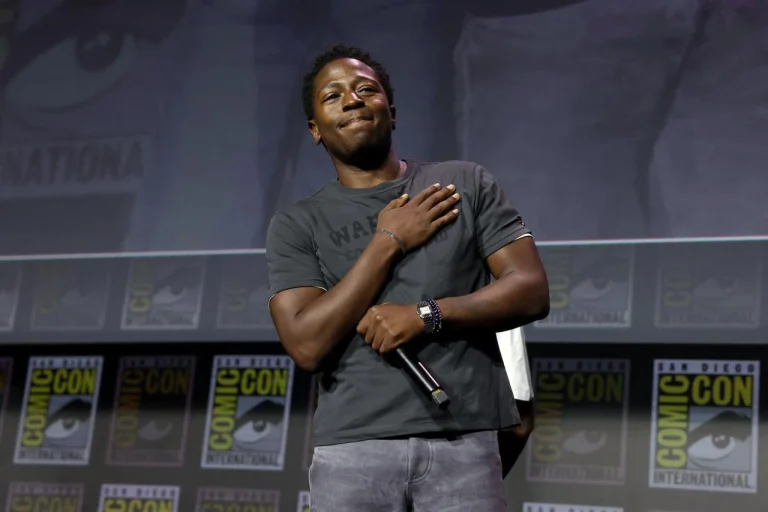
Marvel has been making big splashes at San Diego Comic-Con for years now, often with big presentations and maps to the next phase of the MCU. However, this year they went smaller, keeping things close to the vest. Of course, they did unveil some pretty big things with the announcement of Black Panther 3 and a new Black Panther in David Jonsson. We also learned about Ghost Rider coming to the MCU with Ryan Gosling attached to star. And, finally, a hype-fest for Avengers: Doomsday, which didn’t really give us all that much.

– Other Comic-Con News (46:33)
Aside from Marvel, we also wanted to give some very brief thoughts on the trailer for Lanterns, a new look at Clayface, teasers for Carrie and Blade Runner 2099, and whatever the hell is Ebeneezer. Is it a fake movie? Sure looks like it, but you be the judge.ย 


RELATED: Listen to Episode 670 of the InSession Film Podcast where we discussed our Top 10 Movies of 2025!


– Phase 4 & 5 Ranking (57:51)
We’ve discussed Marvel and the MCU quite a bit on the show, updating our rankings last year on Episode 635, so we wanted to do something a little different this time around. We specifically focused on just Phases 4 and 5 (everyone’s favorites) as we turn the page to Doomsday and Secret Wars. It’s no secret that Marvel has been quite polarized since Endgame game out pre-COVID, and have been working overtime to catch up ever since. So, this made for an interesting exercise that perhaps involves a few hot takes here and there. It also meant that we had to really do some debating to figure out a few spots. With that said, what did you think of of our ranking?

Subscribe to our Podcast RSS
Subscribe to our Podcasts on Apple Podcasts
Listen on Spotify
Listen on iHeartRadio
InSession Film Podcast – Episode 697

Help Support The InSession Film Podcast

If you want to help support us, there are several ways you can help us and we’d absolutely appreciate it. Every penny goes directly back into supporting the show and we are truly honored and grateful. Thanks for your support and for listening to the InSession Film Podcast!

VISIT OUR DONATE PAGE HERE

Movie Review (Fantasia 2026): โ€˜Blaiseโ€™ is an Excellent Animated Oddity


Director: Jean-Paul Guigue, Dimitri Planchon
Writers: Clรฉmence Lebatteux, Dimitri Planchon
Stars: Lรฉa Drucker, Jacques Gamblin, Timรฉo

Synopsis: Follows 16-year-old introverted Blaise who always agrees to everything until he meets Josephine and decides to blow everything up, while his mother Carole tries to win over employees and his father Jacques seeks respect.


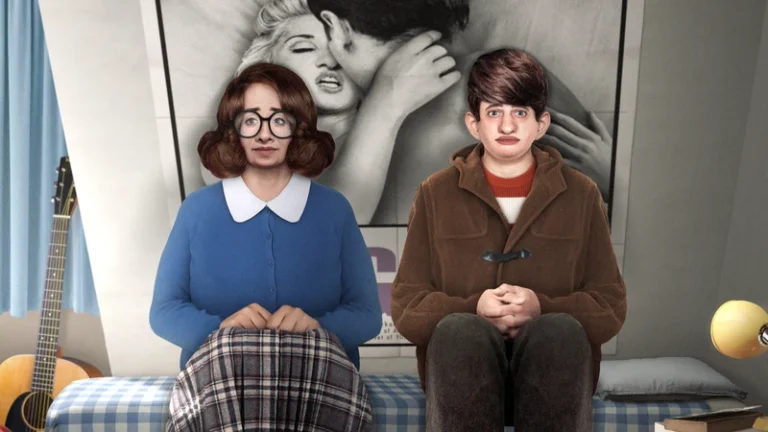
One full week into the Fantasia International Film Festival, a diamond in the rough has finally come into my lap, and Iโ€™ve got no choice but to discuss the extraordinary, animated oddity that is Jean-Paul Guigue and Dimitri Planchonโ€™s Blaise. After a rapturous premiere at the Cannes Film Festival last May, Blaise comes to Montreal in its uncensored glory, an adult animated series of vignettes that feels very much in line with the spirit of Quentin Dupieuxโ€™s work, not only through the presence of Mr. Oizo alum Lรฉa Drucker, but in its mordant, absurd humor seeping in every frame.

If the discordant animated style of Blaise surprises you, it didnโ€™t much surprise this ardent viewer of both Archer and the Tรชtes ร  claques. Its style of humor is undoubtedly in that same spirit, which will likely divide audiences who may be unfamiliar with its array of deadpan (and frequently morbid) jokes the movie takes throughout its brisk 77-minute runtime. Essentially, it follows the tribulations of the introverted titular character (voiced by Timรฉo), but thereโ€™s no real throughline or plot. Itโ€™s basically stitched together by a series of sketches that vary in quality but are so absurd it wonโ€™t take long for you to fall in love with the group of eccentric (and terrifyingly realistic) characters both Guigue and Planchon draw for you.

I will say that the political aspect of the movie doesnโ€™t get as deepened as it should, especially as itโ€™s an intrinsic part of the satire, but it yields in one of the darkest (yet funniest) moments Iโ€™ve seen in a movie in a (very) long time. Using the word โ€œmomentsโ€ in a review may feel like a catch-all, but it is a specific bit that takes a considerable while to get to that payoff, one thatโ€™s so gutsy and genuinely original that it surprised even a critic that doesnโ€™t get much thrilled by watching new releases in cinemas. Itโ€™s the type of bold swing that will either make or break your appreciation of the work, but one that we so desperately need in an era of risk-free entertainment that wants to coddle viewers instead of provoking them.

Blaise is definitely a movie in the latter category; one filled with so many outrรฉ scenes it almost defies categorization. The caricatural animation is detailed and perceptive, while the screenplay isnโ€™t afraid to push buttons and go as far as they can with jokes involving the French president having to sign a treaty on rocks, and being welcomed in a household with a cabinet of loaded guns inside. I canโ€™t even describe what happens next, not just for spoilers, but because the bit is too funny to reveal in words that none of them will do justice. It must be seen to be believed.

In a way, Blaise does feel like a feature-length sitcom, where some scenes work to the detriment of others, but the proposition feels so fresh and daring that it almost doesnโ€™t matter if all the jokes donโ€™t land, or if many characters embody archetypes. The directors donโ€™t really evolve them past their one-note attributes, but thatโ€™s also the point. If youโ€™ve watched Archer or the Tรชtes ร  claques, none of the figures that are presented in these respective series evolve. They stay the same and are always stuck in perpetually dumb situations. Itโ€™s what made these shows so popular (and hilarious), beyond their daring animation styles.

Even in the fallout of a fairly traumatic and harrowing event, Guigue and Planchon still go all in on comedy. One has to respect their commitment to the bit, even if Blaise can often exhaust itself and end in a relatively abrupt fashion. That said, as far as the current crop of films Iโ€™ve seen at Fantasia is concerned, there probably isnโ€™t a better oddity Iโ€™ve (so far) seen at this yearโ€™s edition of the festival than this one. The Animation Plus section can sometimes screen some genuinely creative stuff that audiences seem to dismiss more easily than some of the other offerings at the festival, but it shouldnโ€™t be ignored. Films like Blaise, and Cherry and Virgin are living proof that animation does have its place at Fantasia and needs to be championed even more than it is. 

Grade: B+

Movie Review (Fantasia 2026): Kiyoshi Kurosawa Returns with the Thrilling โ€˜The Samurai and the Prisonerโ€™


Director: Kiyoshi Kurosawa
Writers: Kiyoshi Kurosawa
Stars: Masahiro Motoki, Masaki Suda, Yuriko Yoshitaka

Synopsis: Based on Honobu Yonezawa’s novel. Set in 16th century Japan, follows Lord Murashige Araki who, besieged in his castle, confronts mysterious crimes and allies with imprisoned strategist Kanbei Kuroda to uncover the truth.


When introducing Kiyoshi Kurosawaโ€™s The Samurai and the Prisoner at the 30th edition of the Fantasia International Film Festival, programmer Rupert Bottenberg called the movie โ€œa fascinating intellectual challenge.โ€ There probably isnโ€™t a better way to describe Kurosawaโ€™s latest movie, and first foray into the world of the jidaigeki. Kurosawa isnโ€™t much interested in the warfare aspects of Japanese period movies and instead focuses entirely on a confined chamber piece that continually flips its story in intriguing, often confounding (read: cerebral) directions.

Itโ€™s hard not to compare Kiyoshiโ€™s painterly sense of image-making in The Samurai and the Prisoner with that of Akira Kurosawa (though the two arenโ€™t related), especially during scenes where we go outside of Lord Murashigeโ€™s (Masahiro Motoki) castle. Thereโ€™s a real feeling of absorption when the movie veers into the unexpected, especially as Kurosawaโ€™s camera moves so precisely to lure us into its labyrinthine story, set across four seasons, starting with a murder that puts Murashigeโ€™s empire in disarray and signals its end. Murders beget more murders, and he is now forced to work with an unlikely ally to figure out who is causing such violence within his four walls.

From there, Kurosawa inverts the traditional jidaigeki structure and keeps throwing one twist after another, until it becomes hard for the audience to catch their breath and figure out the grand conspiracies at the heart of the crimes. Some of the most well-known period movies are arguably remembered for their intense, artful action, but Kurosawa keeps that aspect at a minimum. That doesnโ€™t stop him from staging a few tension-filled fights that are both exact in their execution and editing. However, instead of showcasing broad strokes of bloodshed, thereโ€™s a deliberate choice to always cut away (or never show) the violence, only implying that itโ€™s occurring in front of our eyes.

One scene in particular is stomach-churning, as Murashige is forced to do something he doesnโ€™t want to. Kurosawa doesnโ€™t hold anything back. He shows us images we probably donโ€™t want to think about (without explicitly pointing his camera at the violence being inflicted), and his patient lens focuses on the protagonistโ€™s tormented face in the process. Itโ€™s a lot to assimilate, but the camera is so attuned to the movie’s needs that we’re quickly swept into the drama, even if it can sometimes be complicated to put everything together. Kurosawa has never worked within the confines of the jidaigeki before and certainly doesnโ€™t want to do what his contemporaries have already done. By attempting to flip the structure on its head and create a more character-driven mystery, he refreshes an age-old sub-genre of Japanese films and gives The Samurai and the Prisoner a real sense of purpose.

It also helps that Kiyoshi is working with performers at the top of their game, with Masahiro Motoki particularly excellent as Murashige, who is watching his empire crumble before his eyes and doing everything he can to preserve whatโ€™s most important. War isnโ€™t fully shown, but it is taking a toll on him, and those aspects are probably the most fascinating of Kurosawaโ€™s movie. Itโ€™s also really funny, which is a particular trait for the filmmaker to insert humor in the oddest of places. One such scene delivers an amazing payoff that had the Fantasia crowd go wild, but itโ€™s also an interesting exploration of Murashige’s belief that divine intervention is at play and that spiritual forces are here to test him.

I wonโ€™t sugarcoat that the film is quite dense to assimilate, perhaps much denser than Kiyoshiโ€™s previous two movies, Chime and Cloud. That said, he makes the filmโ€™s central drama so legible that anyone who has difficulty understanding might not be paying attention. It is a slight intellectual challenge to parse everything together, but itโ€™s also such an utterly fascinating piece in Kurosawaโ€™s oeuvre that one even wonders why he spent most of his time behind the camera in the realm of J-horror. It feels as if The Samurai and the Prisoner have unlocked something deep inside him that he has kept dormant until reaching the age of 71, but thereโ€™s hope that such a reinvention of his own filmmaking form (and of the jidaigeki) will not be his last period drama, because the world needs his movies more than everโ€ฆ

Grade: A