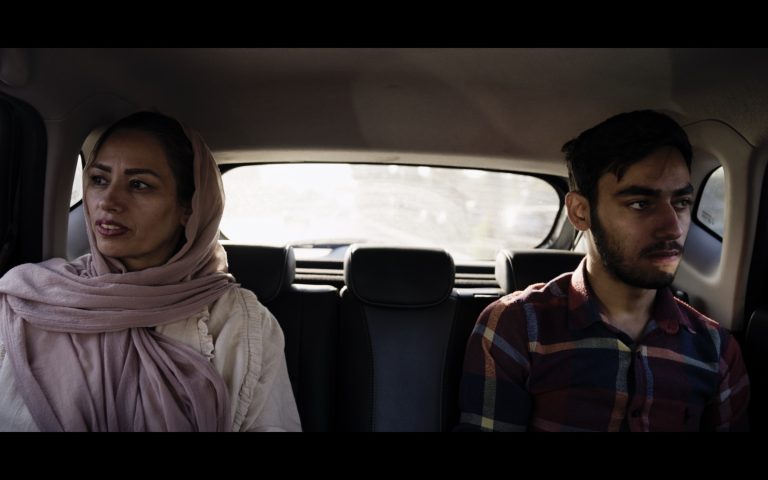
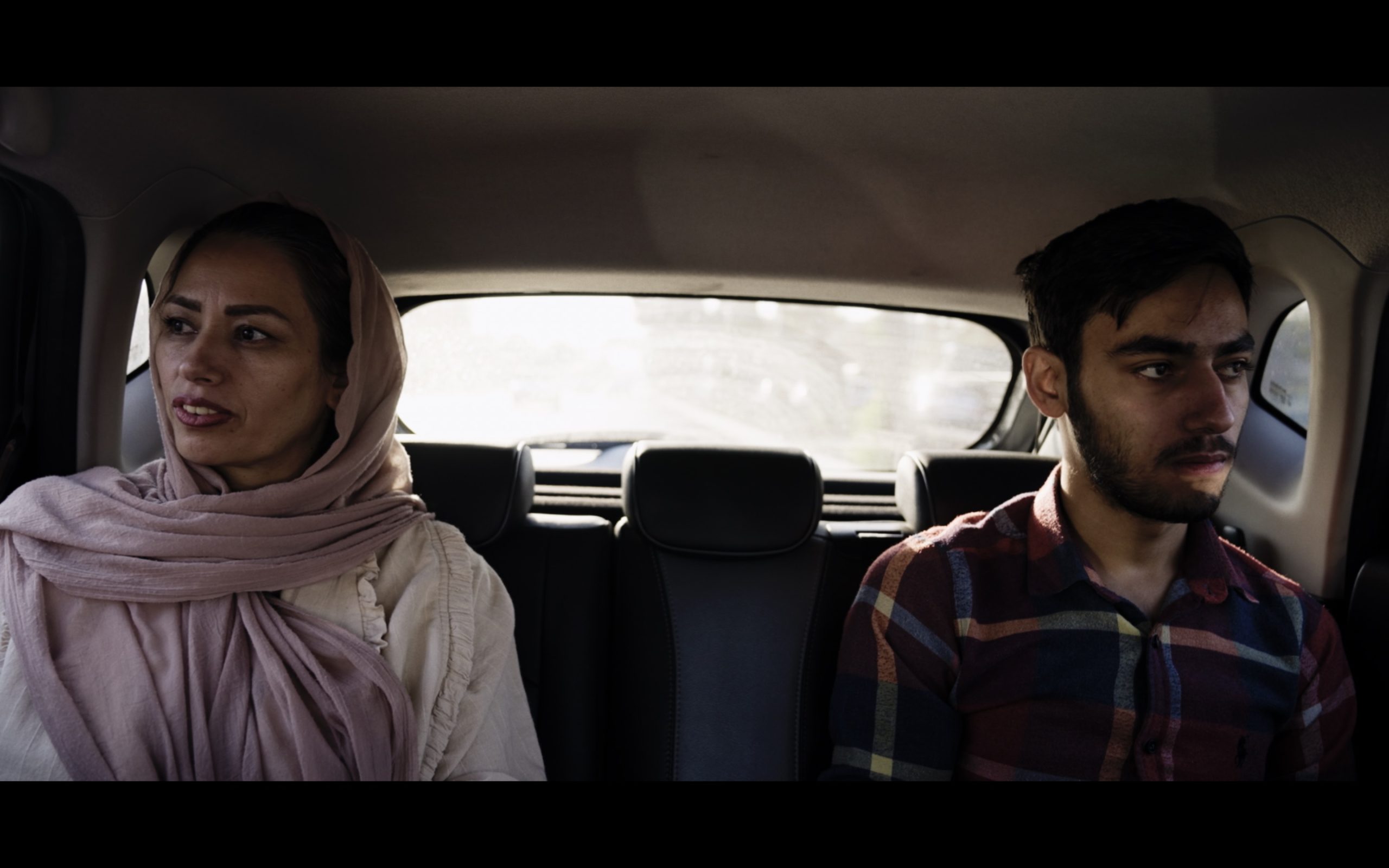
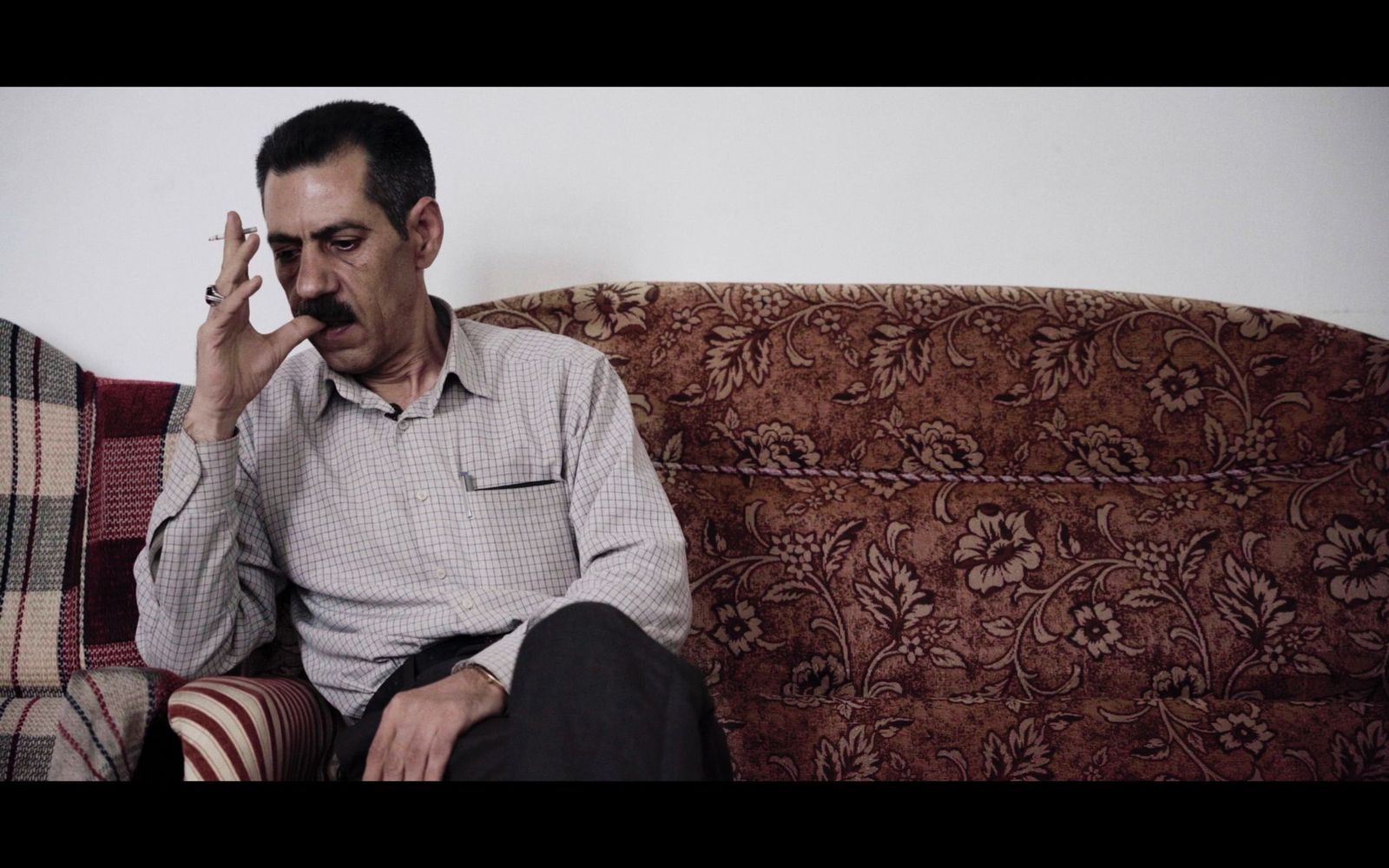
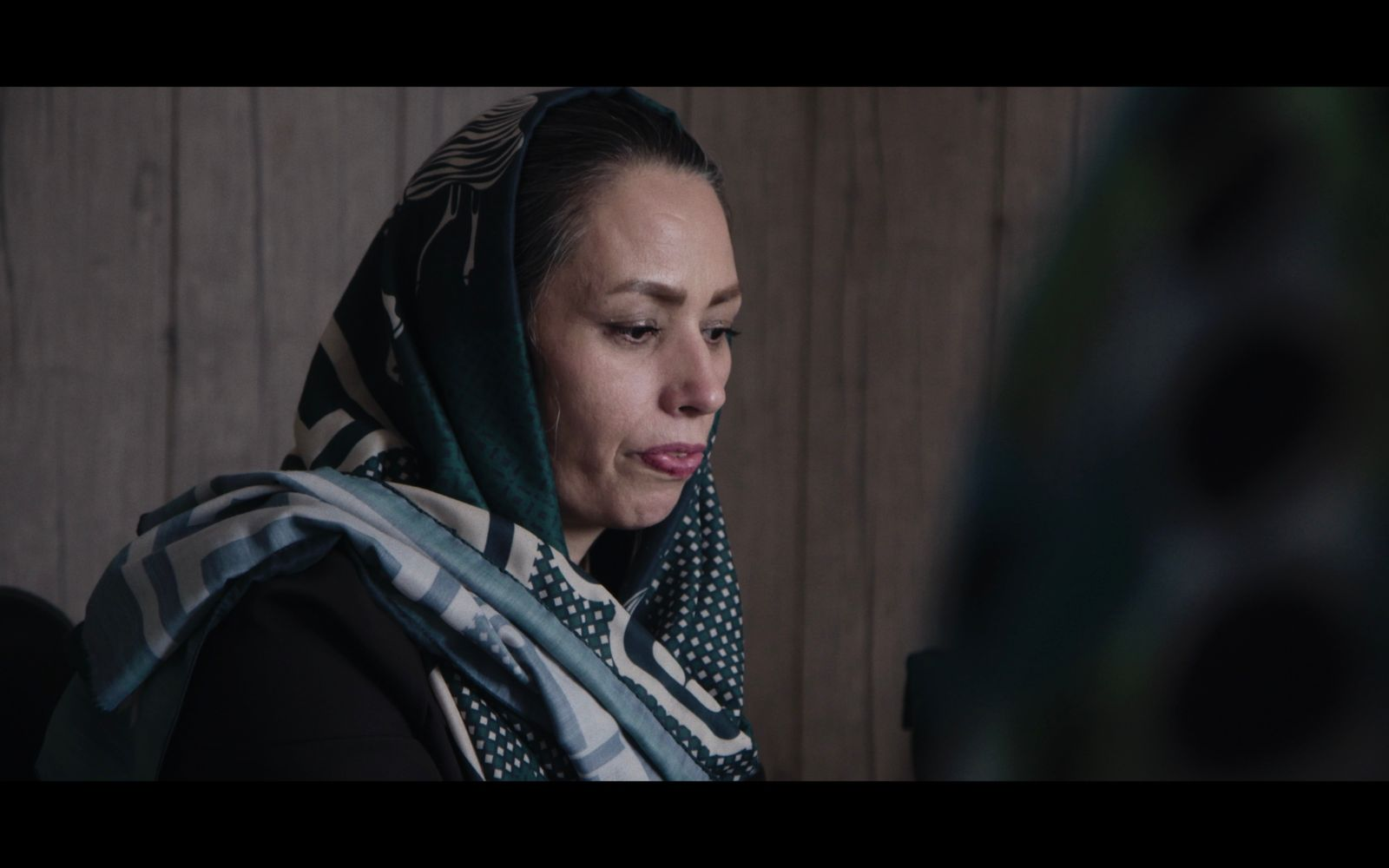
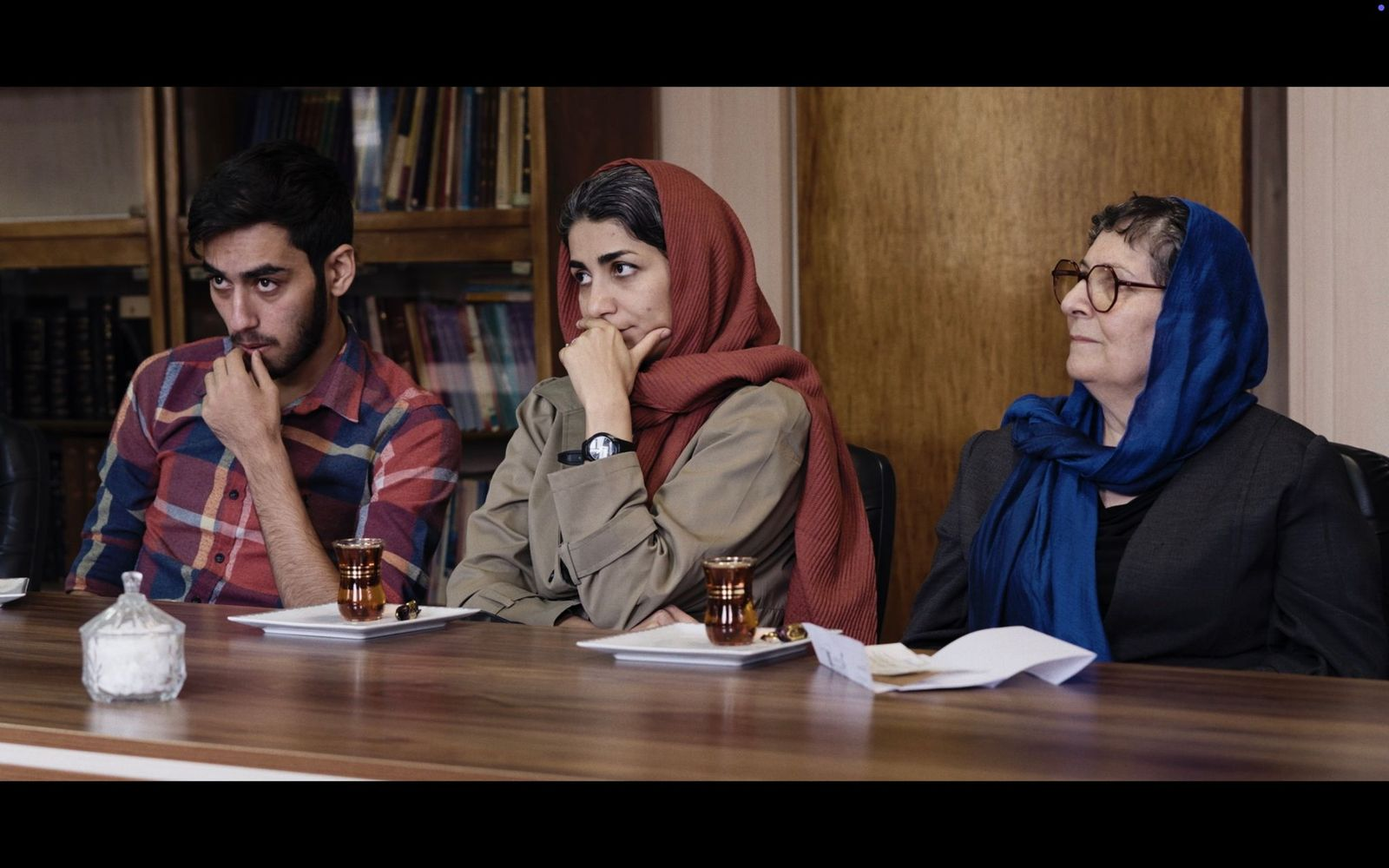
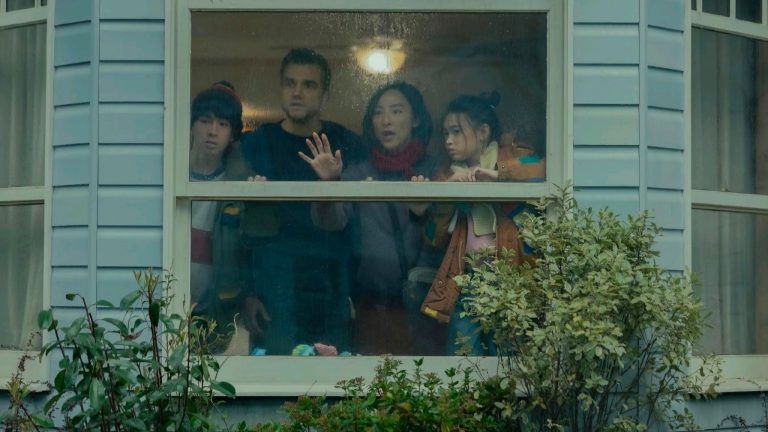
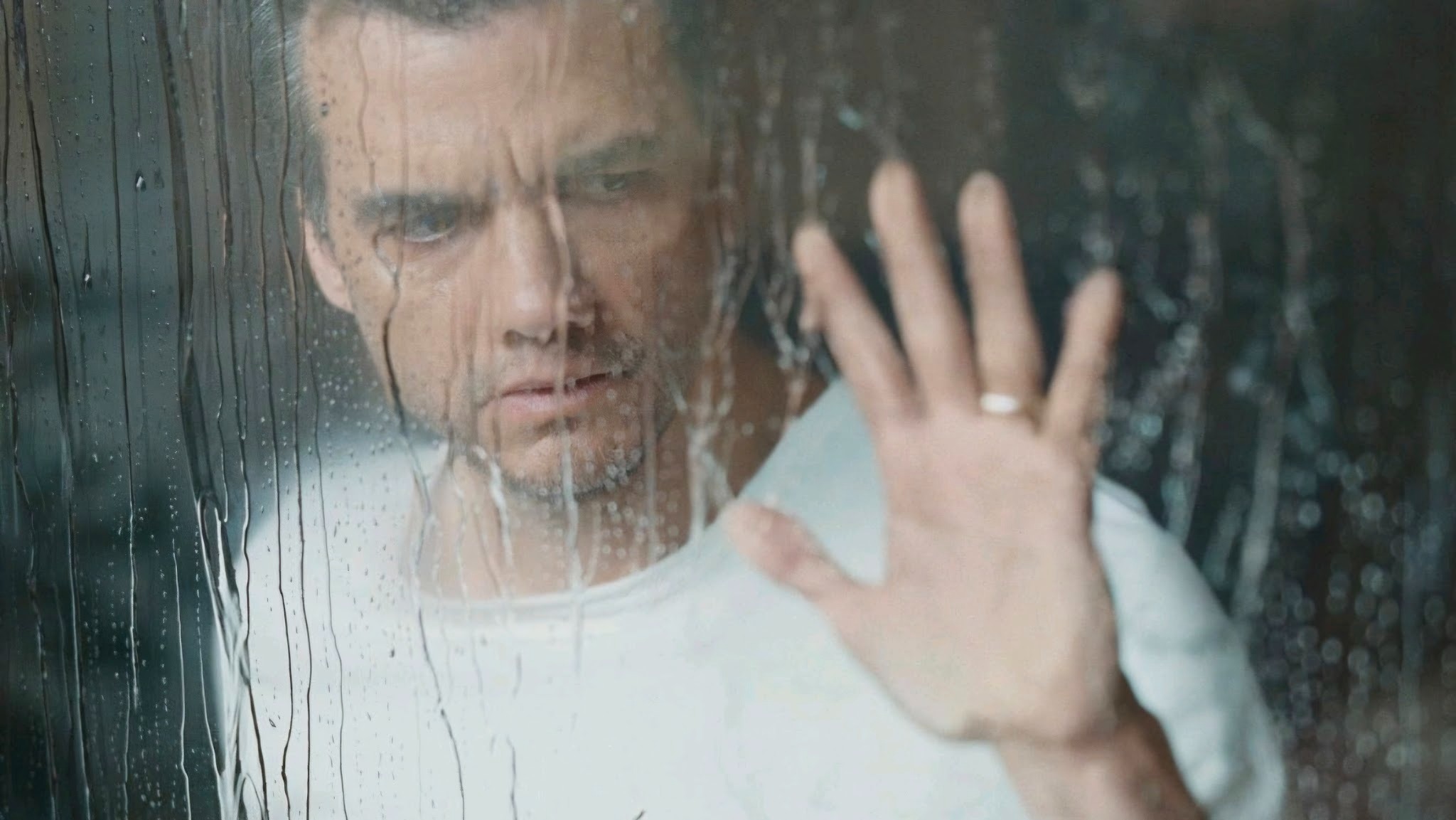
Synopsis: Convicted of murdering her husband, Tahereh served her sentence and now faces a ticking clock to negotiate with her in-laws who, under Sharia law, have the legal right to either execute her or forgive her- for a price.
“An eye for an eye will leave the world blind”. This saying has never felt more poignant than whilst watching this documentary. Many only quote the first half, which means that a punishment should match the exact harm caused by a crime. But the full saying suggests that revenge and vigilante justice only create more violence, more suffering, and more pain. Both ideas are discussed throughout, and you’ll leave this documentary filled with conflicting views and opinions.
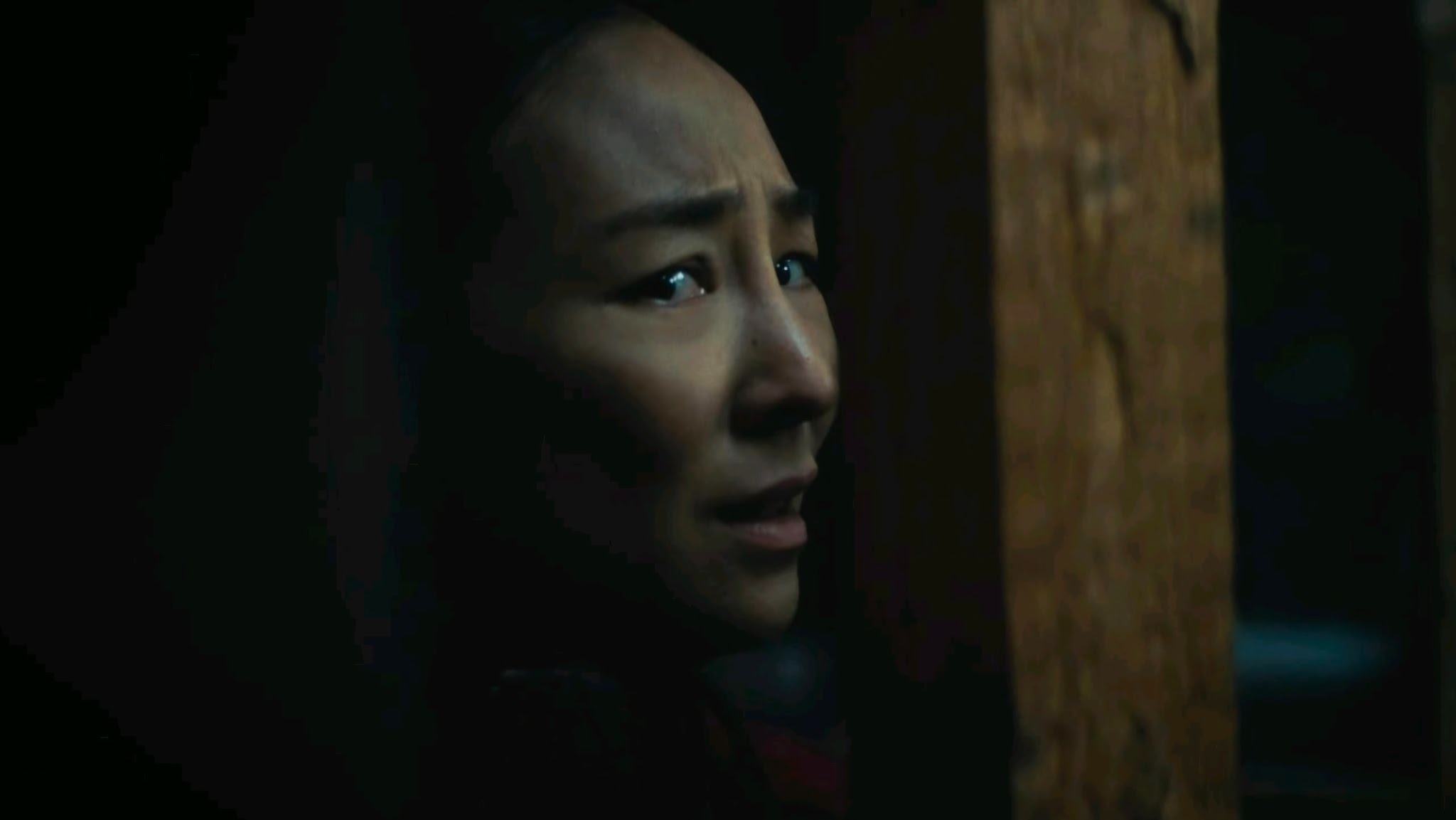
An Eye for an Eye, directed by Tanaz Eshaghian and Farzad Jafari, opens with a sense of dread and never lets go. This documentary tells the story of Tahereh, an Iranian woman sentenced to death for killing her abusive husband, and her son Mohsen’s frantic effort to crowdfund the blood money (known as Diya) that could spare her life. It’s urgent, intimate, and occasionally so uncomfortable in its access that you wonder how the filmmakers got the footage at all.
It’s not “entertainment” in any conventional sense; it’s closer to a legal thriller where the stakes are real, and the ending isn’t guaranteed to be satisfying. This documentary doesn’t ask you to hate individuals; it asks you to sit with a system, and to notice how ordinary and procedural cruelty can look on camera.
Under the version of Islamic law depicted here, a killer can be executed unless the victim’s family agrees to accept financial compensation instead. So Tahereh’s fate isn’t really in the hands of a judge; it’s in the hands of her dead husband’s relatives, and their price tag… 800 million tomam, which later becomes 1 billion (£437,040 GBP), to be exact.
Mohsen becomes an unlikely fundraiser-slash-negotiator, appealing to donors and to a family that has every incentive to say no. It’s an unbelievable tension, making you question your beliefs on forgiveness, revenge, justice and the death penalty.
Eshaghian and Jafari get remarkably close to legal proceedings, into private family conversations, into rooms where the negotiations over a woman’s life are happening in real time. It’s the kind of access that makes a documentary feel vital, needed, more than just an informative documentary; it’s a cry for help. As a viewer, you’re stuck between bearing witness and just watching. You’re in a helpless place, and some viewers might not enjoy or fully understand that you’re meant to be uncomfortable watching this film.
Is This a Film About Domestic Abuse or About Bureaucracy?
Both, and that duality is the smartest thing about it. The abuse that led Tahereh here is treated as backstory; we understand what happened without the film wallowing in reenactment or gratuitous detail. It’s a very small story for Tahereh, describing how and when they (including her daughters) decided to kill Hossein. She’s calm, reflective, and not remorseful. Tahereh has served 14 years in prison, and you can tell she feels she’s paid her price with her time and freedom.
The camera’s real fascination is with the negotiations, the legal loopholes, and the fundraising math. It’s a portrait of how a patriarchal legal system processes a woman’s trauma into a transaction. That’s a harder, less cinematic story to tell than straightforward victimhood, and the film deserves credit for choosing the harder version.
The documentary is good at recognizing that a serious crime was committed, and balancing that with the backstory of a beaten woman, a system against her, and the sentence she has already served. It will make you debate if she has already paid for her crimes, or does she deserve death?
Who Comes Across as the Real Antagonist?
Refreshingly, it’s not any single person. The husband’s family aren’t cartoonish villains; they’re people operating within a system that gives them power they may not even want. The film’s real antagonist is the architecture itself: a legal framework where a victim of abuse must essentially purchase her own survival, and where public sympathy is treated as a finite, exhaustible resource. That’s a more unsettling villain than any individual could be, and the film trusts the audience to feel that without spelling it out in a closing title card.
Technically, it’s unfussy in the best sense. There’s no score swelling to tell you when to feel something, no visual flourishes competing with the story. The camera mostly gets out of the way, which is the correct choice for material this weighty. If there’s a craft criticism to make, it’s pacing; the back half occasionally repeats the same emotional beats of hope and setback without adding new information, and a tighter edit in the final act would have sharpened the tension rather than dulled it through repetition.
What happens to Tahereh?
In the end, the mother is spared; she’s served her time in prison and paid the blood money, yet the family of Hossein is not happy. Would the family have more peace if Tahereh had been sentenced to death at their hands? I really don’t believe so.
With a runtime of just under an hour and a half, An Eye for an Eye is a tense, well-accessed, eye-opening documentary about a woman’s fight to survive a system built to make survival transactional. Go in openly and bravely, and don’t expect closure to feel like relief.
An Eye For An Eye can be found in select theaters and on Jolt.film
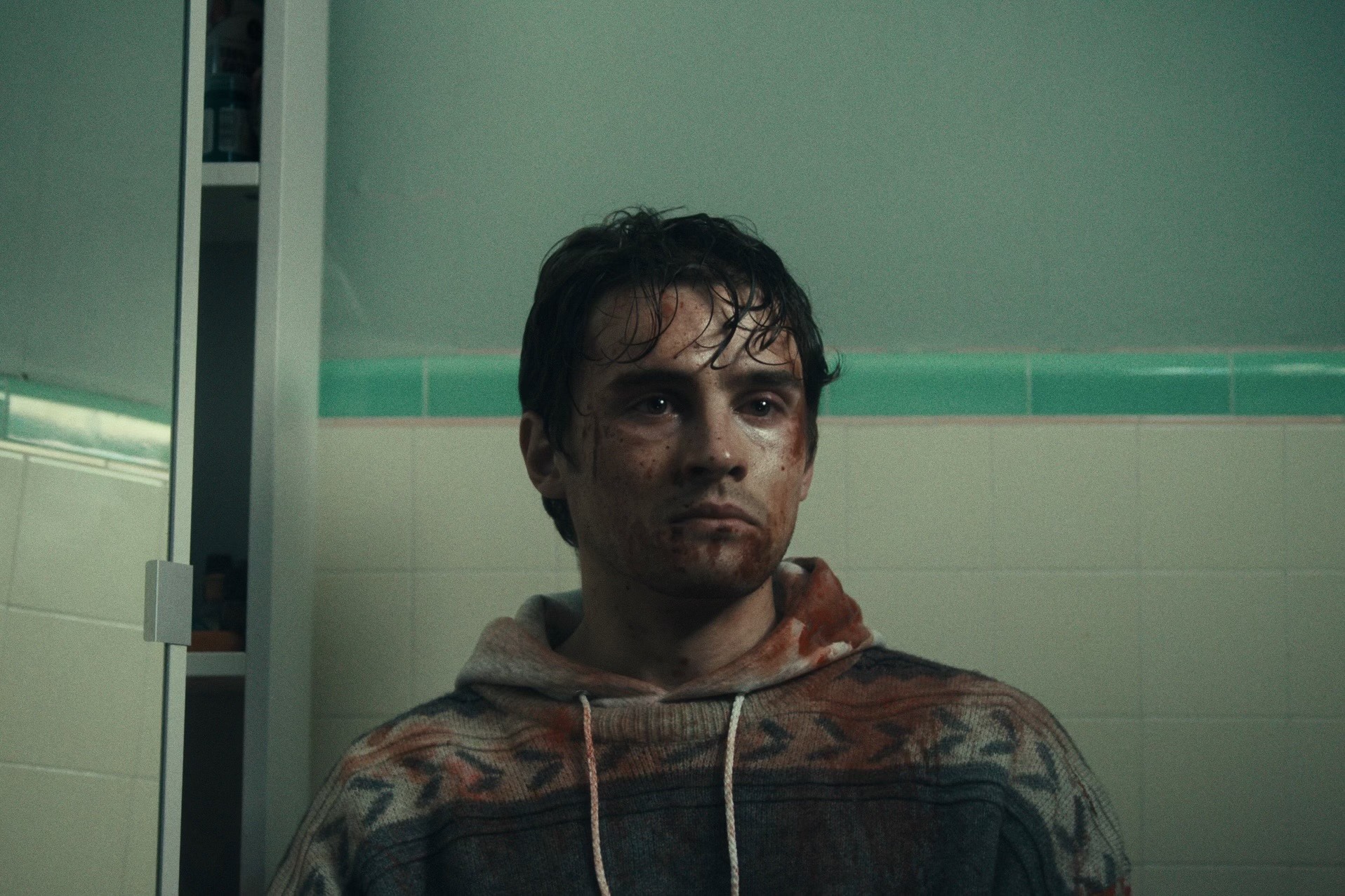
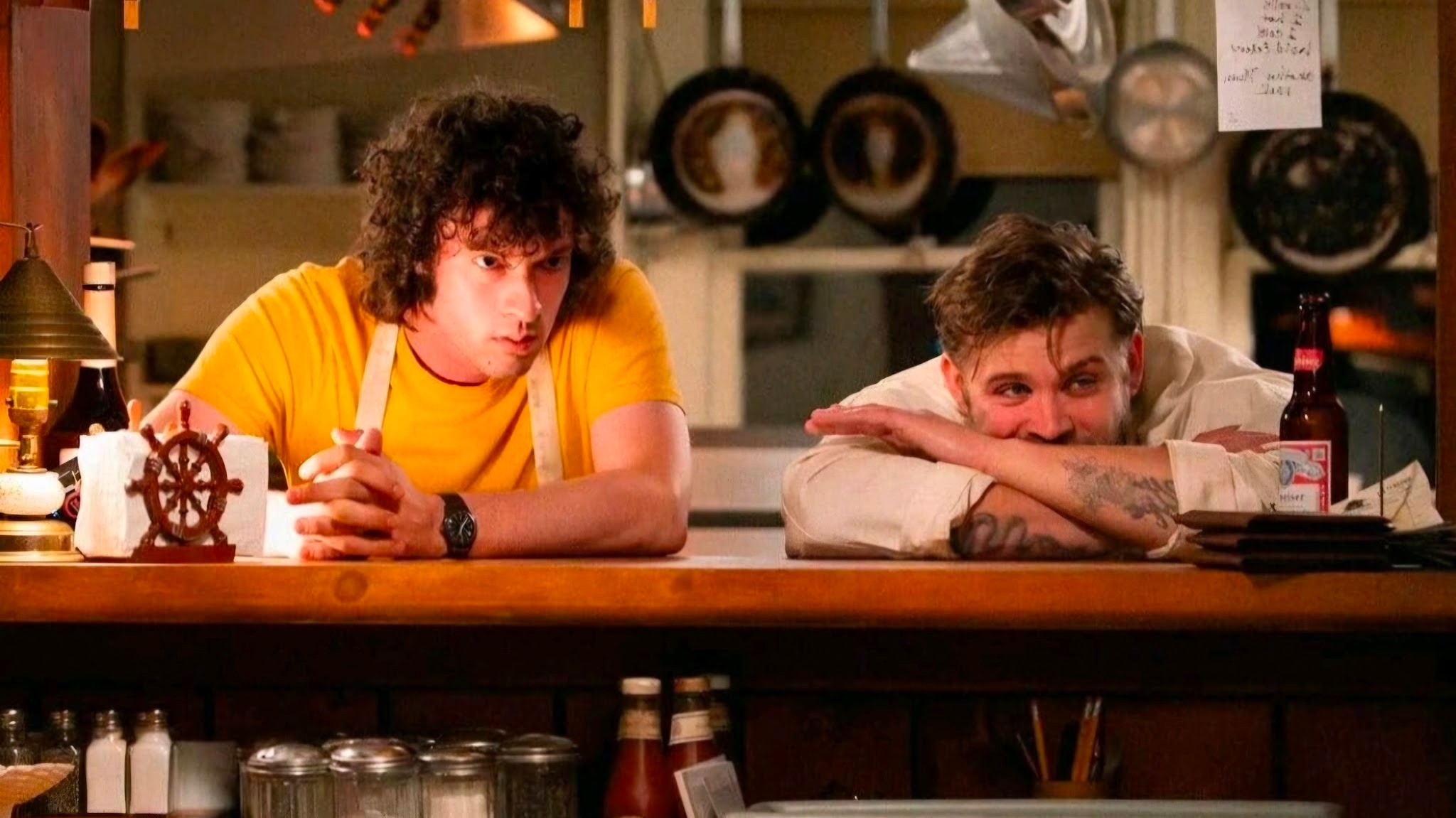
Director: Lee Kirk Writer:Lee Kirk Stars: Mason Thames, Kylr Coffman, Ryan Foust
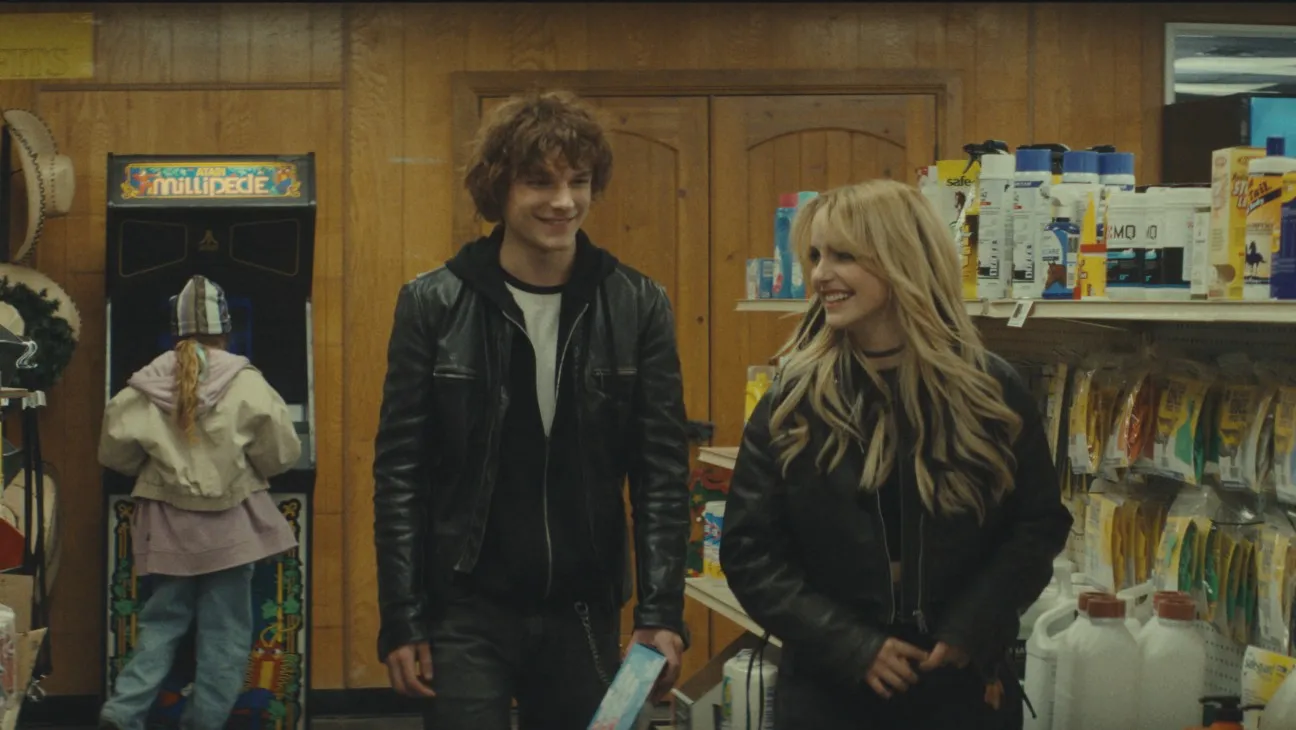
Synopsis: Three buddies drive cross-country in a van, causing mayhem and mischief while racing to LA for their big break: opening for Green Day on New Year’s Eve.
It’s hard to be a dreamer. For most of our lives, those of us who pursue passions, are nodded at politely by those who down shifted and chose a more traditional and risk averse life path. For a teenage dreamer, not to be what they want and do what they feel they need to do with their life is absolutely unfathomable. This yearning and need often makes for a great coming-of-age story. Nimrods succeeds in many ways, but has some flaws that get in the way of a good story.
It’s strange to think of an intelligent member of the band as a flaw, but it really is. To have Chad (Ryan Foust), the bookish drummer, who doesn’t really fit in with Tommy (Mason Thames) or Fred (Kylr Coffman), repeat that this idea that they would be opening for Green Day is too good to be true, is like a squealing sound in your car you don’t like, but don’t want to get fixed. You know it needs taking care of, but to do that would put a damper on just making sure you get from A to B. It’s annoying after a while to have the issue repeated logically so many times. We understand, and know for a fact as we saw Wayne (Keen Ruffalo), Tommy’s older brother, and his friend Keith (Ignacio Diaz-Silverio) play the prank, that this situation is a fool’s errand on the part of these teens, but it’s more enjoyable to watch them have fun failing. We want to see that their climb to this level of gig will be hard fought and that they will have some setbacks more than we want to have our nagging thoughts personified.
Writer and director Lee Kirk’s script does address this idea, though. It’s not out of the realm of possibility that Tommy knows he’s not actually opening for Green Day. It’s not completely farfetched that he would take his dream this far. The fact that Tommy’s father, whom he still worships, is gone. The fact that he wishes to not feel like he’s drowning in mediocrity and tedium. The fact that music makes him feel better than anything else in his world, makes him want to believe in this break. It’s sweet and heartbreaking to watch him not be able to fully process this time in his life. It keeps the shenanigans grounded to know that he’s going through a really rough time.
Nimrods’ most major flaw, though, is that it has one sequence that nearly takes you out of the story completely. Any road trip story like this is going to have some moments that stretch credulity. They can be funny and easy to brush off. Yet, having a cameo with Fred Armisen as a creepy motel operator, or possibly an escaped mental patient masquerading as a motel operator, completely takes us out of the film. Out of context of the rest of the film, it’s the funniest sequence. Armisen is firing on all cylinders and is in his element as a stone cold weirdo. Within the context of the film, though, it’s just completely unnecessary and ruins the grounded wackiness of everything that took place before it. There’s an important scene in the middle, but everything around it is just fluff for fluff’s sake. It’s too bad that they felt they needed this because the film really does well building on the drama and comedy of the situation otherwise.
Where Lee Kirk shines as a director is in the musical sequences. It’s fun to watch the Anal OG Dogs, always misread as Anal Dogs (the band pronounces it analog dogs), shred in the garage as they lay down their demo track. The Steadicam shifts frenetically between members as they rock out. It’s a bit scary at first to watch them be utter punks at a country roadhouse as they play Green Day’s “Dominated Love Slave.” Though, the crowd gets into it and the camera spends much time with the audience singing along as they get into the joy of the song. It’s an absolute blast to watch the underground punk show at the junkyard, which includes pouring rain that turns into mud-caked chaos. This one is shot from the crowd angle to make us feel like we’re there. Then there’s the final show at the Hollywood Palladium. This one is shot like a standard concert film, but it works for the context and is fun to watch Green Day do what they do best.
It’s hard not to like Nimrods. It’s a film about dreamers and people that know they have something that they need to get out into the world. It’s flawed and rough around the edges, but many would say the same about punk rock. As you can imagine, being a film that concerns Green Day, Nimrods does end with a final sequence set to the song “Good Riddance (Time of Your LIfe),” which is maudlin, on the nose, and saccharine, but fits the catharsis of the story perfectly. Nimrods is not one of the great coming-of-age films, but it is an enjoyable one, flaws and all.
Director: Pierre Salvadori Writers:Pierre Salvadori, Benjamin Charbit, Benoît Graffin Stars: Pio Marmaï, Anaïs Demoustier, Gilles Lellouche
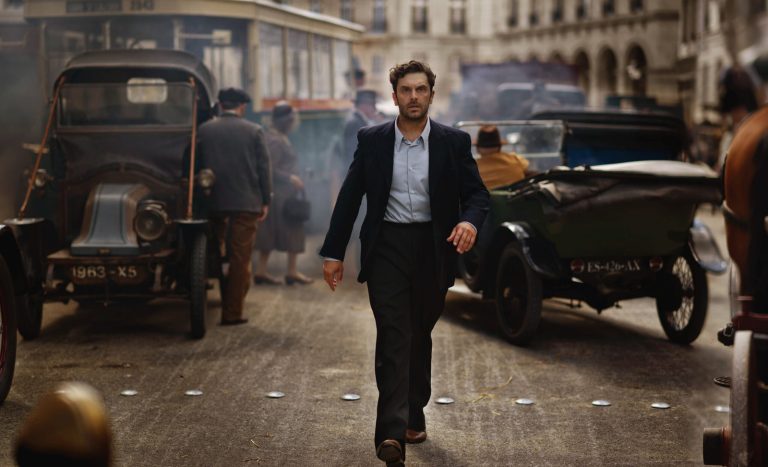
Synopsis: A painter in 1928 Paris, unable to work since his wife’s death, unknowingly participates in fake spiritualist shows staged by a carnival worker. As he regains his inspiration, she falls in love with the man she is deceiving.
Critics hailed Pierre Salvadori’s The Electric Kiss as “the best Cannes opener of this decade” which doesn’t really sound like a ringing endorsement, because the iconic festival is known for opening with some of the most tepid and unremarkable French productions released in a given year. Clearly, none of them saw Leos Carax’s Annette, which had the decency to be memorable, or Quentin Dupieux’s The Second Act, which at least had something to say about the devastating future of cinema.
Compared to these two, The Electric Kiss might be the most disappointing Cannes opener of this decade, because there isn’t a single thing about it that makes it worthy of being presented at the world’s most prestigious film festival. It is competently made, more so than Amélie Bonnin’s nearly unwatchable Leave One Day, but is it any good? That is a question this review will attempt to answer, but you can already guess that, by reading these lines, this critic was not a fan of it.
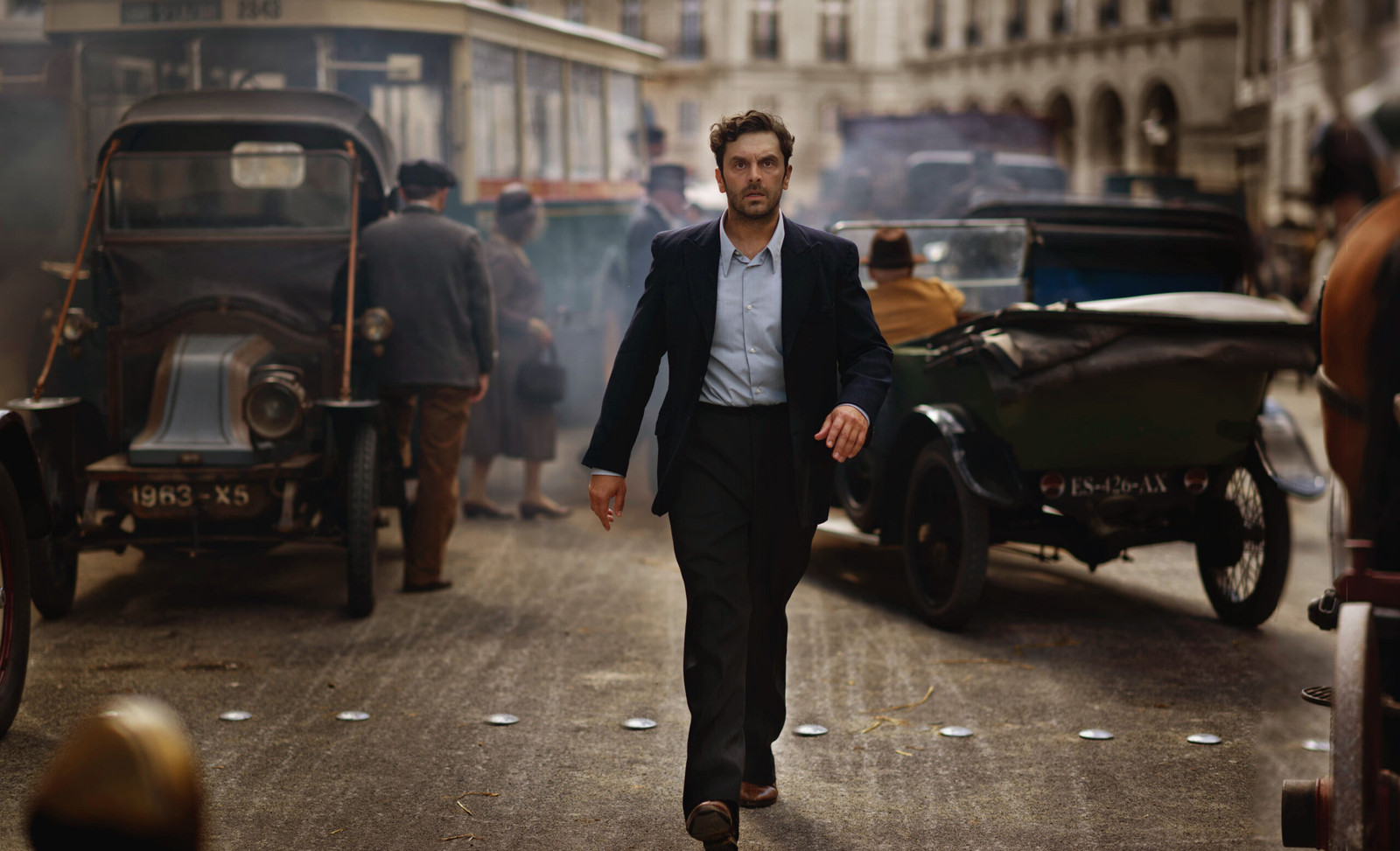
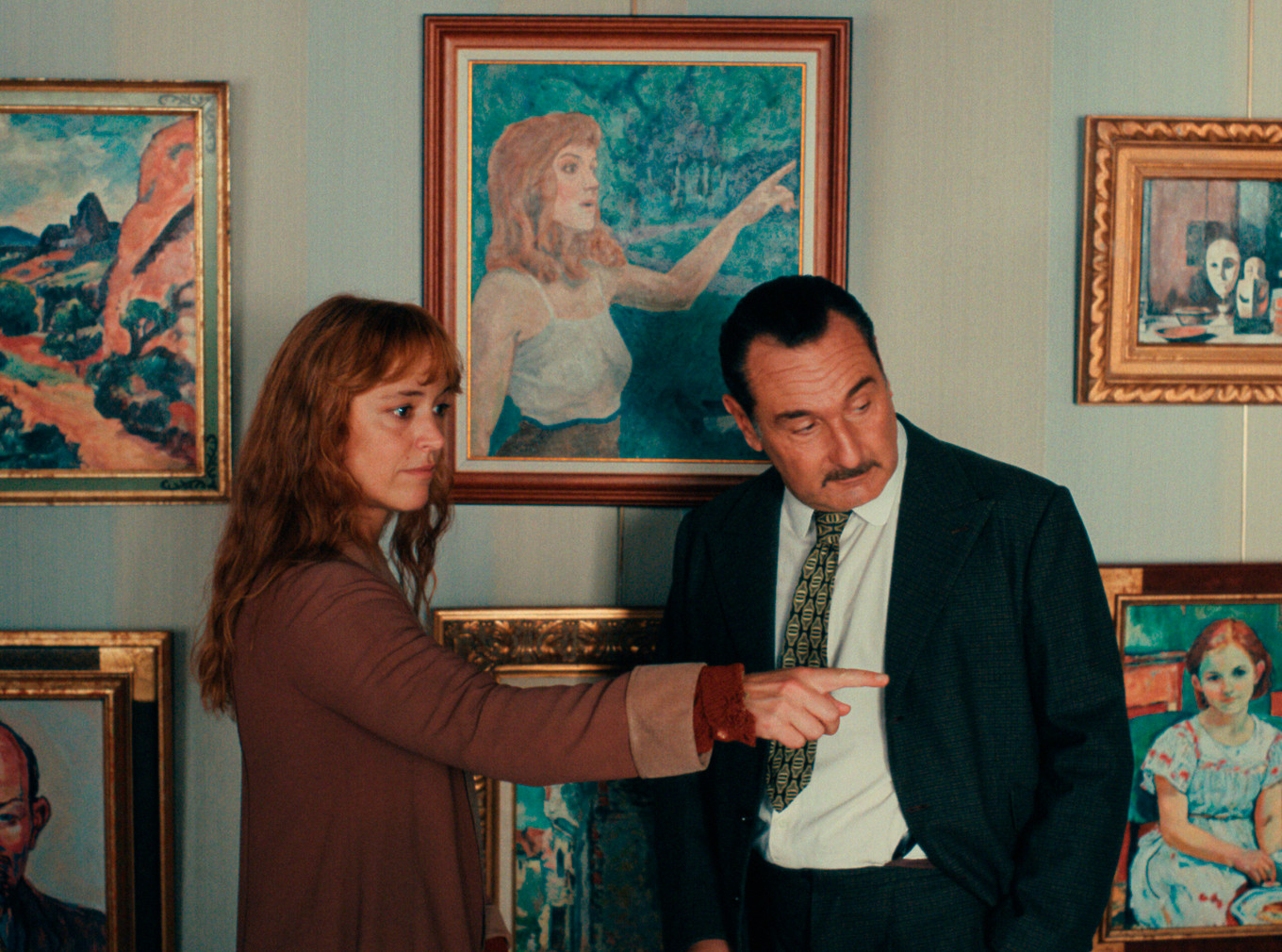
What starts off as a relatively standard drama morphs into something else entirely by the time Salvadori reaches his midway point, as he tracks the story of Suzanne (Anaïs Demoustier), a circus performer known around France as “Venus Electrificata,” whose seductive kiss produces an electric shock. One night, she meets a grief-stricken Antoine (Pio Marmaï) in the room of a clairvoyant. A painter by day, who hasn’t drawn anything since the death of his wife, Irène (Vimala Pons), Antoine seeks spiritual guidance to communicate with her.
Pretending she is the clairvoyant Antoine has been looking for, Suzanne makes Antoine “see” Irène, and his condition begins to improve. So much so that he resumes painting, which pleases his dealer friend Armand (Gilles Lellouche), who reaches out to Suzanne to make sure these “séances” continue, even though they are fake, and she isn’t communicating with anyone in particular. Suzanne then begins to immerse herself in Irène’s private diaries, and discovers a complex relationship that brings her much closer to Antoine than she had thought, with the painter also feeling the same way towards Suzanne.
It’s also at that point where Salvadori creates labyrinthine parallels between Suzanne/Antoine, Irène/Antoine, and, eventually, Armand, but revealing more would mean unpeeling some details that are better left on your own. The filmmaker makes some interesting visual and editorial choices throughout his drawn-out 122-minute runtime that keep us semi-engaged, despite the familiarity of a screenplay that never strays from well-established conventions. Suzanne is fooling Antoine. Of course, he’s going to find out. It’s only a matter of time. Imagine if he didn’t for a change. The film would’ve been all the better for it, because as soon as he does, it begins to derail.
The way that Salvadori links Irène’s story to Suzanne’s is genuinely thoughtful. The editing smartly mirrors the two characters, to the point where the protagonist eventually embodies who Antoine’s wife was, creating a strange juxtaposition that doesn’t fully convince us until we fully believe in her trickery. As she experiences feelings towards Antoine, what occurs between them is no longer fake, but genuinely tangible, and the way in which the cinematographer Julien Poupard’s camera holds on Demoustier and Marmaï’s faces during those scenes is particularly important.
Both actors have been at the top of their game for some time (they’ve also given the best performances of their respective careers in Quentin Dupieux’s Daaaaaali! and Yannick), and continue to excel in a movie that requires a great deal of emotional complexity for their characters to feel believable. Unlike Lellouche’s telegraphed and frankly dull portrayal of a friend who is more concerned with losing money than supporting his depressed and isolated Antoine, both Demoustier and Marmaï give The Electric Kiss the spark (pun intended) needed to keep us invested in their respective plights.
However, the screenplay never fully develops both stories compellingly, despite a visual precision rarely seen in Salvadori’s corpus to date. The blocking is genuinely astonishing, and lures us into a story that, on the outset, sounds simple, until it isn’t. It’s thus unfortunate that Salvadori forgoes all of that with one of the most ridiculous magical realist endings we’ve seen since André Forcier’s Ababouiné. Unlike that movie, though, which used it sparingly (and in places where it works best), The Electric Kiss’ conclusion is nothing more than a manipulative cop-out that sinks the semi-textured character work at the heart of the picture.
After Salvadori’s film opened the 78th edition of Cannes, Thierry Frémaux’s overall lineup was met with rather tepid results. One will eventually be able to see most of these films on our screens or at fall festivals, but if The Electric Kiss is any indication, formal and thematic innovation in our moviegoing economy seems to be at an all-time low…
Director: Jennie Livingston Stars: Brooke Xtravaganza, André Christian, Dorian Corey
Synopsis: A chronicle of New York’s drag scene in the 1980s, focusing on balls, voguing and the ambitions and dreams of those who gave the era its warmth and vitality.
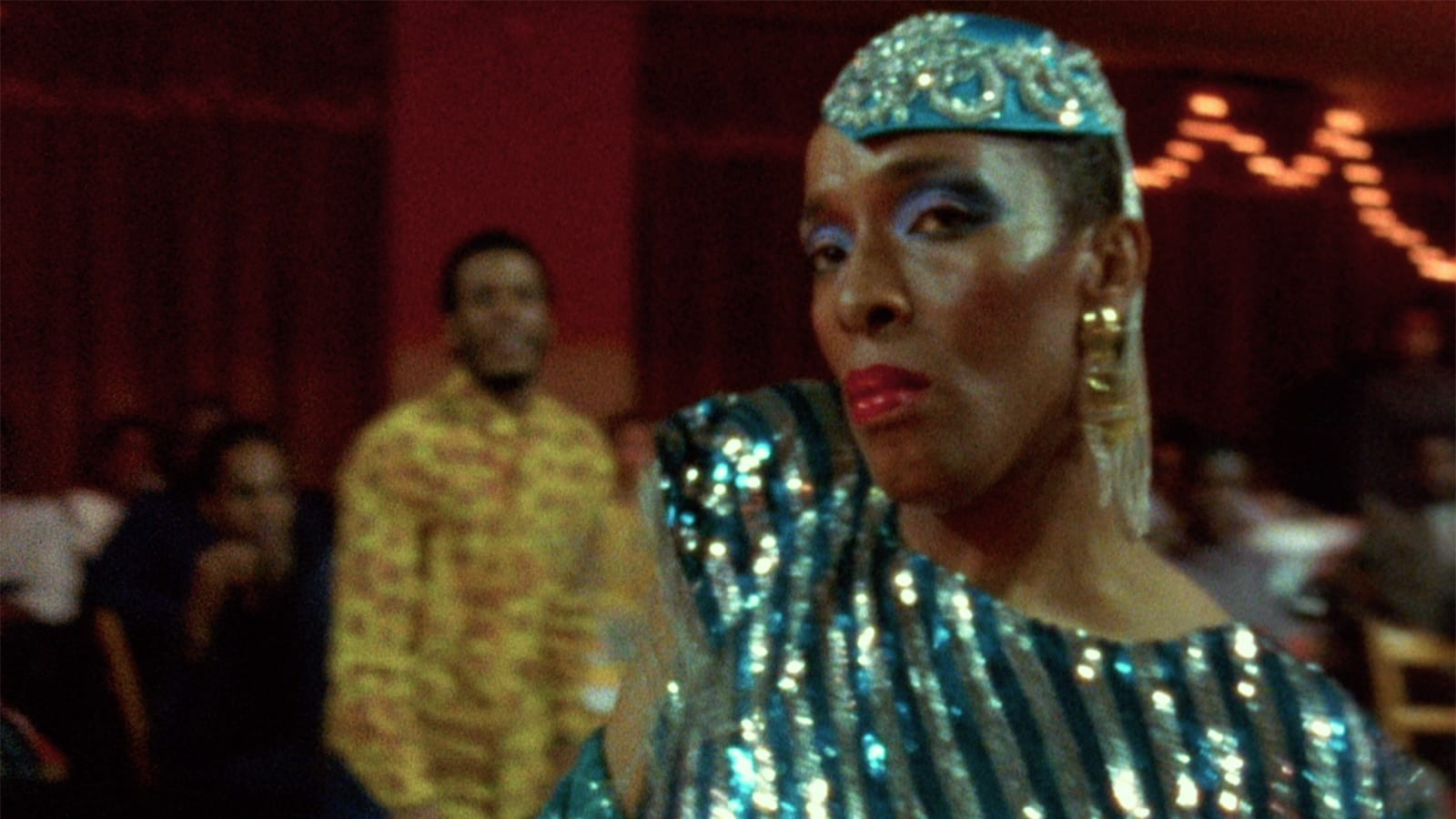
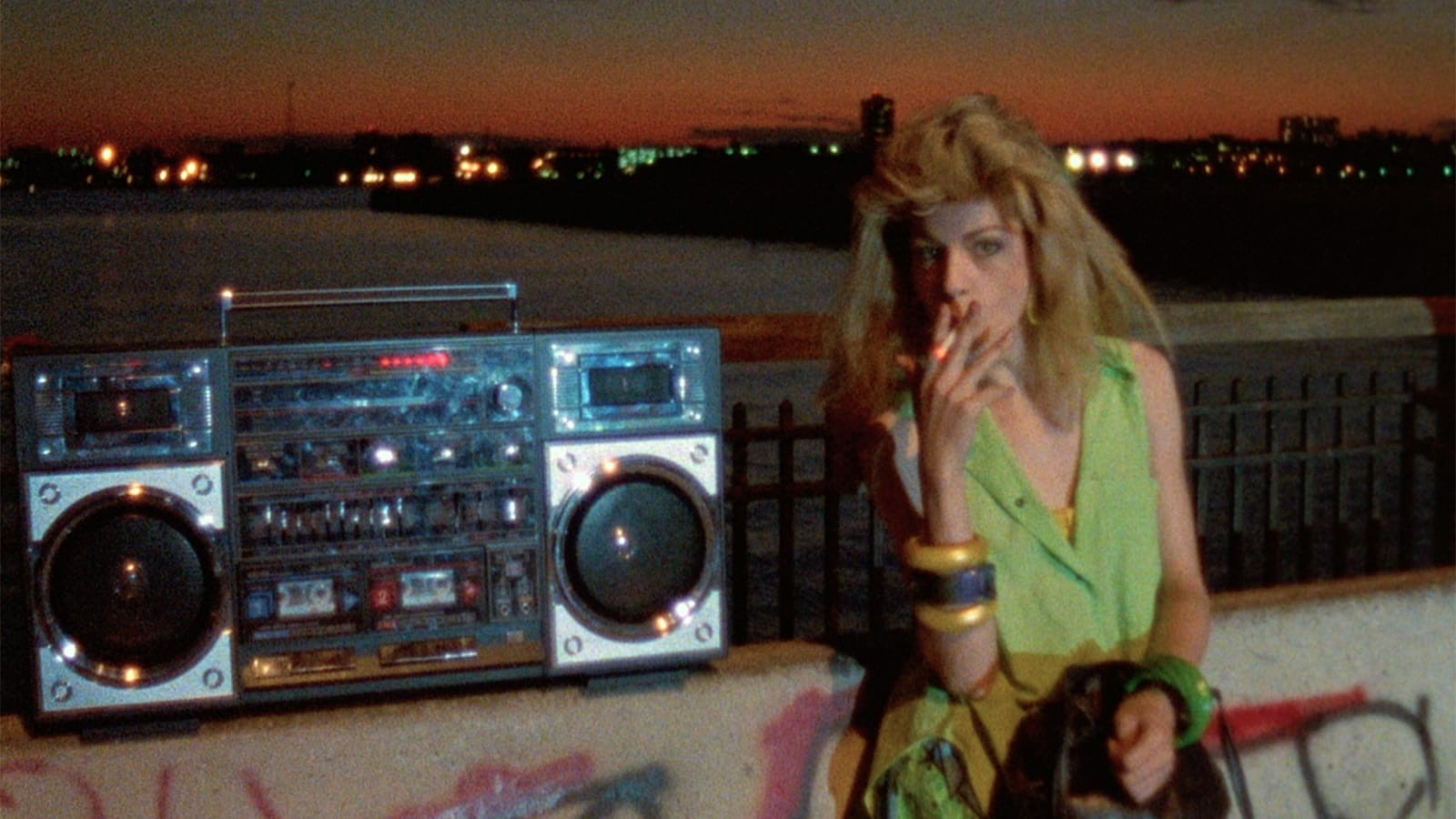
Thirty-five years after its release, Jennie Livingston’s Paris Is Burning remains one of the most extraordinary achievements in documentary filmmaking—not simply because it captured a specific moment in time, but because it captured something timeless about the human experience. It is a film about identity, survival, performance, and community; but above all else, it is a film about the desperate and beautiful need to be seen. Long before conversations surrounding chosen family became more widely understood, Paris Is Burning was already documenting the power of people coming together to create the love, acceptance, and safety that the outside world refused to give them. It is not a film that looks at queer people from a distance or treats them as symbols of suffering. Instead, it allows them to exist fully—as complicated, funny, ambitious, vulnerable, and deeply human individuals. Thirty-five years later, the film does not feel like a relic of the past. It feels like a conversation that never ended.
What makes Paris Is Burning such a remarkable piece of cinema is the way it understands that the lives of its subjects cannot be reduced to a simple narrative. Livingston does not force these individuals into a conventional documentary structure where every moment exists to serve a predetermined argument. Instead, the film moves with the rhythm of memory itself—jumping between personalities, stories, dreams, heartbreak, and moments of pure joy. Some have criticized the film for feeling fragmented, but that fragmentation is part of what makes it so alive. Communities are not built in neat chapters. Families are not formed through perfect beginnings and endings. They are created through years of shared experiences, through laughter and loss, through moments of survival and moments of celebration. Paris Is Burning understands that people are never just one thing. They are not defined solely by their trauma, their identities, or the challenges placed before them. They are defined by everything they are able to create despite those challenges.
At its heart, the film is not merely about ballroom culture—it is about the revolutionary act of creating a world where you are finally allowed to exist. The ballroom was never simply a stage. The categories were never simply competitions. The costumes, the performances, the poses, and the carefully crafted personas were never just about fantasy. They were about recognition. They were about being looked at and, for once, not being judged as something lesser. For people who had been rejected by families, institutions, and society itself, the ballroom became a place where they could reclaim ownership over their own identities. Every walk across that floor carried meaning. Every pose became a statement. Every cheer from the crowd became proof that someone was there to witness them.
The brilliance of Paris Is Burning is that it understands glamour as something much deeper than appearance. Glamour, in this world, is survival. Confidence is survival. Creating beauty in a world that constantly tells you that you do not belong is survival. These communities were not pretending to be something they were not—they were expressing the fullest versions of themselves. The ballroom gave them permission to dream, even when reality was often unbearably cruel. It gave them a place where they could transform rejection into artistry and isolation into belonging.
Thirty-five years later, the emotional truths of Paris Is Burning remain painfully relevant. The film exists within a specific historical moment—the New York ballroom scene of the 1980s—but the feelings it captures have never disappeared. The fear of being rejected by those who are supposed to love you. The exhaustion of constantly having to prove your humanity. The longing to find somewhere you can finally stop apologizing for who you are. These experiences continue to resonate with countless queer people today. While progress has been made, the need for chosen family and community remains just as important because there are still people searching for the acceptance and safety that the world has denied them.
Yet what makes Paris Is Burning so powerful is that it never allows pain to become the only story. This is not a documentary interested in asking viewers to pity its subjects. It is a celebration of their humanity. The film is filled with laughter, personality, ambition, and unforgettable moments of joy. It recognizes that queer history is not only a history of struggle—it is also a history of creativity, resilience, and love. The ballroom was not simply a response to oppression. It was an expression of life itself. These individuals were not only surviving; they were creating something extraordinary.
One of the film’s most profound observations comes when it describes the meaning of family:
“It wasn’t a question of a man and a woman and children, which we grew up knowing as a family. It’s a question of a group of human beings in a mutual bond.”
Few ideas in cinema have aged with such emotional clarity. Paris Is Burning understands that family is not always something we inherit. Sometimes, family is something we find. Sometimes, it is something we build piece by piece with people who understand us in ways the world never tried to. Family is the person who protects you when others abandon you. It is the person who sees your potential when others only see your differences. It is the person who reminds you that you deserve love when society tells you otherwise.
The house mothers and members of these ballroom communities were doing something truly extraordinary. They were not just creating social groups—they were creating survival systems. They were providing guidance, care, and a sense of belonging to people who desperately needed it. They were giving young queer people something that every person deserves: the ability to imagine a future where they are still here.
As a trans woman, revisiting Paris Is Burning feels deeply personal. There is a profound comfort in watching people who refused to disappear. People who, despite living in a world determined to erase them, continued to create, celebrate, and love. Their confidence did not come from privilege. It came from resilience. Their beauty was not about perfection. Their glamour was not vanity. It was resistance. It was a declaration that they deserved to take up space.
There is something incredibly moving about watching people who were never supposed to become cultural icons leave behind a legacy that continues to influence generations. Many of the people featured in Paris Is Burning never received the recognition they deserved during their lifetimes, and that remains one of the film’s greatest heartbreaks. But their impact cannot be denied. Their fingerprints exist throughout modern queer culture. Their language, their artistry, their fashion, their creativity, and their courage have shaped the world in ways that are still being discovered today.
They built something when they had almost nothing.
They created beauty when the world gave them ugliness.
They created family when the world gave them rejection.
That is why Paris Is Burning remains so powerful thirty-five years later. It is not simply a documentary about a community that existed in the past. It is a reminder of what marginalized people have always done: they create, they survive, and they find ways to love one another even when the world makes that difficult. It is a testament to the fact that visibility is not something that is handed to people—it is something they fight for. It is something they build through courage, through art, and through refusing to disappear.
“You’ve made a mark on the world if you just get through it.”
Those words feel like the perfect summary of the film’s legacy. To survive is not a small thing. To create something meaningful while carrying the weight of a world that does not always accept you is extraordinary. Every person in Paris Is Burning left behind a piece of themselves. They left behind a reminder that joy can be revolutionary, that community can be life-saving, and that the families we create can sometimes become the most important ones we ever know.
Thirty-five years later, the ballroom lights are still shining.
The legends are still being remembered.
And Paris Is Burning remains one of the most beautiful reminders cinema has ever given us: sometimes home is not a place we are born into.
This week on the InSession Film Podcast, Brendan returns as we celebrate 700 episodes of the InSession Film Podcast! Inspired by the success of The Odyssey and Spider-Man: Brand New Day, we took the top 50 highest grossing movies of the ISF era (2013-now) and ranked the best 10! What did you think of our final ranking?
– Ranking Discussion Begins (6:30) We begin the show this week by diving straight into our consensus ranking. We’ve never done one with three hosts before, and that certainly added a fascinating dynamic, especially near the end of the conversation. It also gave us some early surprises as we talked about Frozen and Frozen 2, for example. Another fun quirk that came as a result of Brendan’s new found fatherhood, was his deepened love for Incredibles 2, a film we’ve always championed on the show. So, there were some interesting turns here that made for a fun discussion. And yet, despite our three-headed monster, the films up at the top were actually quite easy to figure out.
– Ranking Discussion Continues (1:10:05) As our ranking continued, where things got really complicated was with the Marvel Cinematic Universe. As is the case with everyone, our thoughts on these movies are wide ranging. Each of us had two different films in our top two for the MCU, even in a limited capacity where we are considering just the top 50 highest grossing movies over the last 12 years. Which is to say, no agrees on what the best movies are within Marvel’s canon and it was no different here. Certainly made for a fun discussion. With that said, what did you think of of our final list?
If you want to help support us, there are several ways you can help us and we’d absolutely appreciate it. Every penny goes directly back into supporting the show and we are truly honored and grateful. Thanks for your support and for listening to the InSession Film Podcast!
In a year where the box office numbers continue to thrive at their greatest since 2019, Obsession comes to an end with its theatrical rollout being one of the year’s most unquestionable hits. With a budget of just $750,000, Obsession concludes its theatrical run with a global box office intake north of $475 million. The critically acclaimed picture has solidified its status as one of the most financially successful original pictures of all time. As a pop cultural phenomenon, this has drawn many people into film spaces to question its chances at Awards Season, specifically for nominations at the 99th Academy Awards. There are various opinions and takes across film and awards spaces on the Horror film’s prospects. Still, most would come to the consensus that Obsession is in the race for a nomination in Best Picture, Indie Narrative (whether she’s in Supporting Actress or Lead Actress), and Original Screenplay.
However, if there is one category that has me curious, as I don’t believe it is being taken seriously enough, it is Best Director for Curry Barker. As much of a swing as that is to consider for such a prestigious award, there is a case to be made for why Curry Barker should be considered more for a nomination for Best Director.
For a case like Best Director for Curry Barker, some elements need to be addressed as to what could be the holdback for some with this consideration. First, there is no getting around the fact that Obsession is an authentic supernatural horror picture. For decades, there has been justified speculation that the Academy Awards have had a bias towards horror films, especially in above-the-line categories like Acting, Screenwriting, Picture, and, yes, Best Director. Over the years, fewer than 10 Directors have received a Best Director nomination in the horror genre (including Alfred Hitchcock for Psycho, Jonathan Demme for The Silence Of The Lambs, and Jordan Peele for Get Out). Whether it’s continuous or unconscious, there is no denying that horror has often received the short end of mainstream genres in this category, let alone above the line. But if we take a closer look at the Academy’s recent years, it’s safe to say that the genre has taken some great strides in its recognition across the board. At the 97th Academy Awards, The Substance was recognized with five nominations, including Best Picture and Best Director (Coralie Fargeat), with Noseratu showing up in various tech categories including Cinematography. Ryan Coogler’s Sinners broke the record for most nominations ever with 16 mentions, including Coogler in Best Director. The film went on to win four Oscars, and Amy Madigan took home the Supporting Actress for another horror film, Zach Cregger’s Weapons. A great indicator that this is a time when the Academy is progressing in the genre, doing unheard-of things that push the boundaries of horror. And Focus Features could indeed strike the iron while it’s hot for its campaign.
Image Credit: Courtesy of TIFF
The other glaring issue some may raise is Barker’s age, as well as the fact that this is a directorial debut. At 26, Barker’s Gen Z status could become another reason not to vote for him. While the Academy should be based on merit rather than experience, the director’s branch has been seen as a tough branch to crack. Even experienced directors who helmed Best Picture-nominated films such as Steven Spielberg for Jaws, Martin McDonagh for Three Billboards Outside Ebbing, Missouri, or Christopher Nolan for Inception had to wait their turn before being nominated by the director’s branch. Breakthrough films and/or debuts nominated for the award are not necessarily a rarity. But what is rare is directors in their 20s being listed in the final five. One thing that Curry Barker has in common with directors like John Singleton (24 when nominated for Boyz In The Hood), M Knight Shyamalan (29, The Sixth Sense) or George Lucas (29, American Graffiti) is that those films were at the time undeniable hits that went above and beyond what we knew from said genres. They pushed the boundaries of storytelling. That can be said for Curry Barker’s work.
Curry Barker’s Obsession isn’t just an all-timer moneymaker due to its horror draw. Like The Sixth Sense and Get Out, Barker’s meticulous directing on a micro-budget shows that a film can cultivate constant rewatches. Rewatches that prove the film isn’t a one-and-done but can be renewed with rich perspectives and revelations. That makes a picture timeless and a platform to never leave the conversation in its themes of the lonely epidemic, incel behavior, and the terrifying manifestation of an evolved practice of toxic masculinity. The blocking thinks like a chess player rather than checkers in its vision from Baker, with tone, editorial skills, and lighting placements that show his initiative goes the extra mile for every department as a leader. That’s great for momentum, especially when you gain the respect and admiration from legendary directors such as Steven Spielberg and Christopher Nolan for said film, along with being one of the ringleaders in the next phase of rising directors of this generation.
But the biggest question for these types of observations, no matter the critical success, the box office, the cinematic achievements: what is the upcoming competition? Many assume that, because said film missed a nomination, it wasn’t liked or loved. But that’s the key element for nominations. You can’t just be great. You have to be great and hope you stand out enough to make the top 5 among many competing films. For early predictions/prospects, the usual suspects are suspected. The consensus would agree that, on paper, Christopher Nolan (The Odyssey), Martin McDonough (White Horse Nine), and Javier Ambrossi & Javier Calvo (La Bola Negra) are strong frontrunners in the category. Not to mention other contenders such as Tony Gilroy, Denis Villeneuve, Olivia Wilde, Cristian Mungiu, and Phil Lord & Chris Miller. That’s a lot of heavy potential on paper, with a few already seen by many and beloved. The additional advantage Curry has is that his film has already gained a head start in conversations about being a defining film, months before the releases of the others.
Every year, there tends to be that picture from the first half of the year that contends for both Picture and Director. That could be Project Hail Mary, especially given the technical haul it could bring and the above-the-line support for potential acting and screenplay nominations. That being said, there is good reason to speculate that not only is Obsession in the conversation for nominations, but it is also a potential winner come March. Specifically, Original Screenplay and Inde Neverette, depending on her placement and awards campaign in either Supporting or Lead Actress. With the acclaim of her physically demanding role that’s one of the decade’s best and an all-timer horror icon, this can build a package deal narrative. For Original Screenplay, Curry Barker could end up in a Jordan Peele or Emerald Fennell (Promising Young Woman) scenario, where such overwhelming Screenplay contenders for sharp breakthrough genre films can bring that Director nomination along for the ride. Not to mention the interesting parallel with Peele, Barker could also be an overwhelming front-runner for multiple directorial debut awards, putting good odds in his favor to squeeze into the final five.
Nothing is guaranteed. This category can pivot in wild directions as we approach the late-summer and early-fall festival seasons. As we get closer to the end of the year, the picture will be clearer as to where Curry Barker ends up. It’s a tough uphill battle, but with the film’s pop culture presence, unending discourse, and early industry support, Curry Barker’s case for best director is a consideration we may need to keep in the conversation as we hit the early stages of awards season down the road of the 99th Academy Awards.
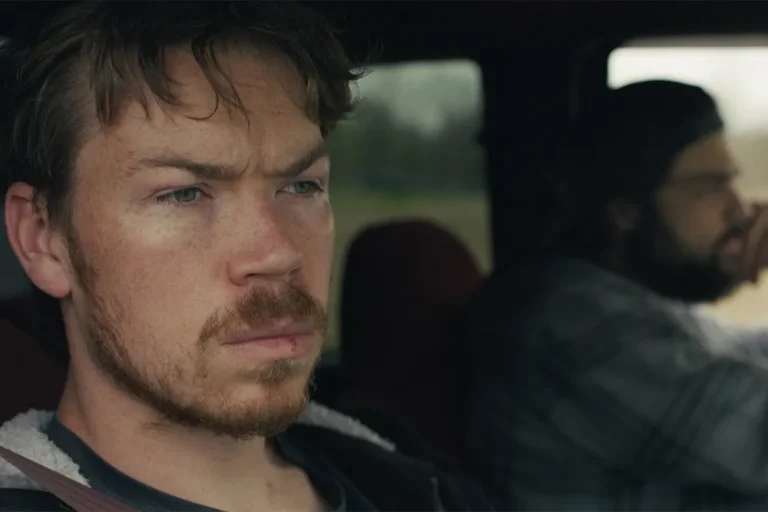
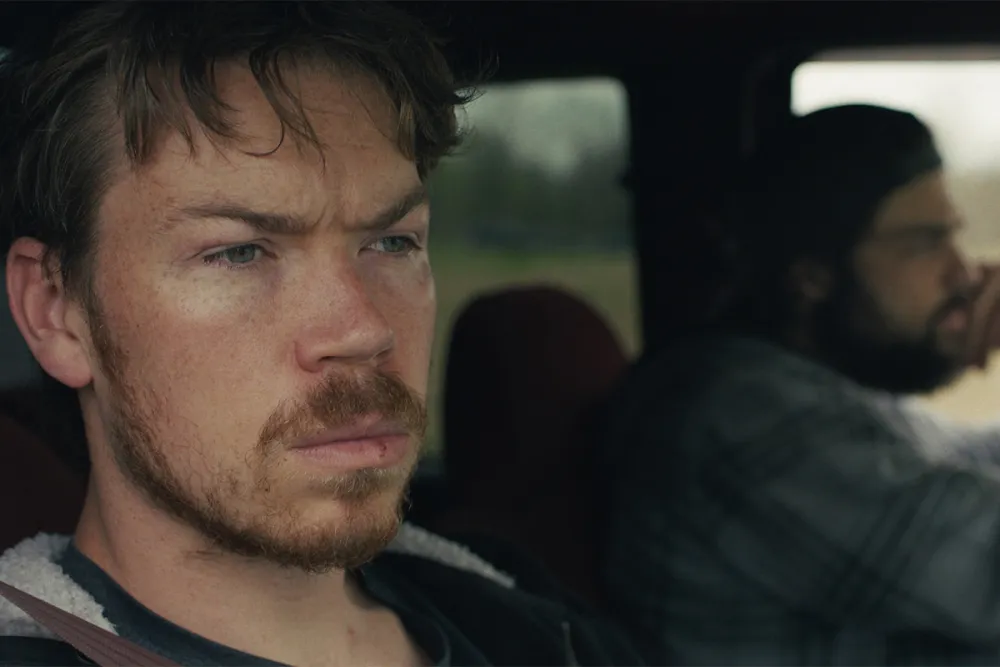
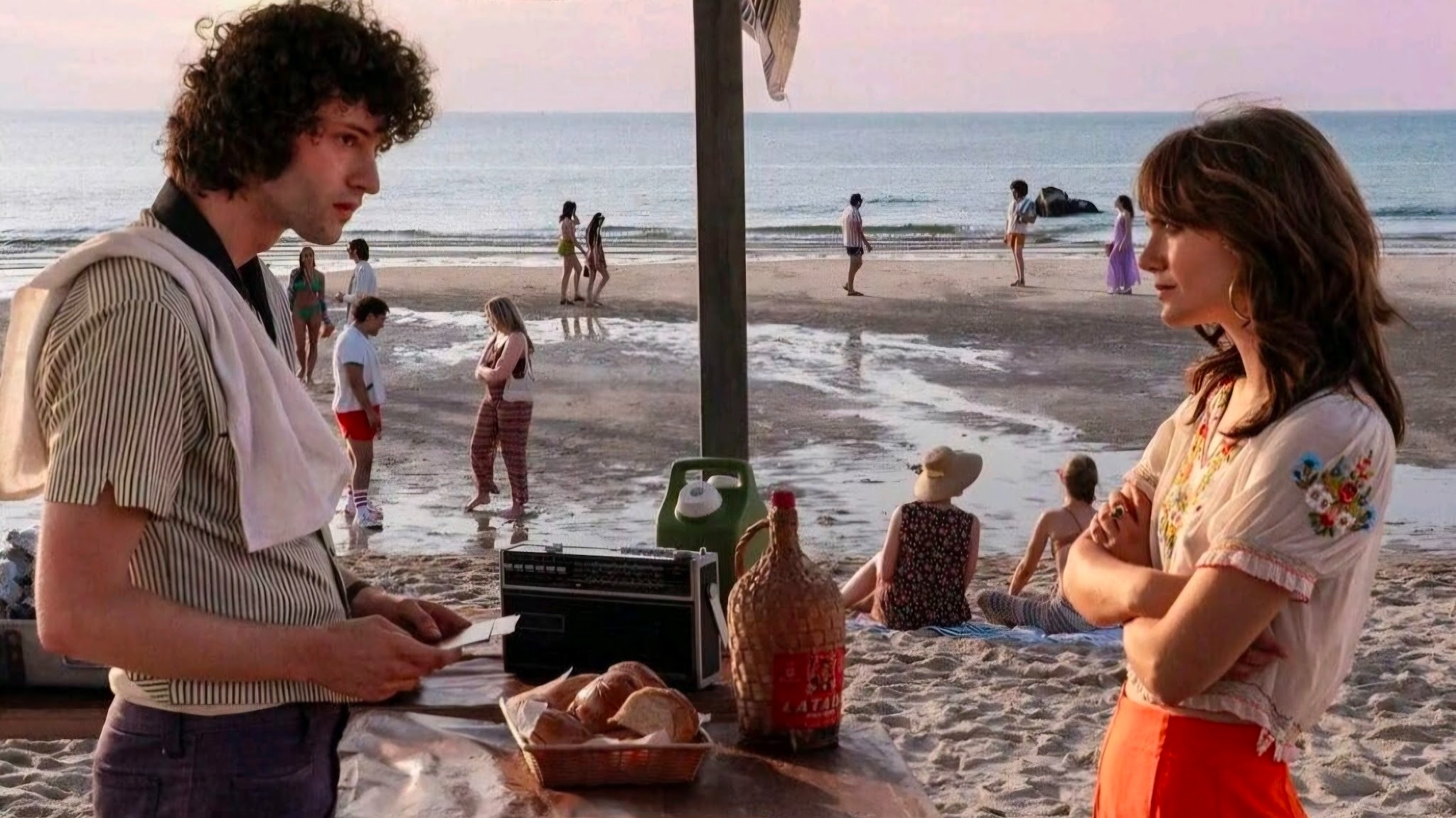
Director: Adam Meeks Writer: Adam Meeks Stars: Will Poulter, Kevin P. Braig, Annette Deao
Synopsis: Assigned to a county-mandated drug court program, Cody Parsons embarks on the tenuous journey toward recovery amidst the opioid epidemic in rural Ohio.
Movies about addiction and recovery aren’t exactly a new premise, but Union County highlights just how vital they still are by raising much needed awareness and questioning whether the current systems in place truly do enough to support those most affected. To the film’s credit, it doesn’t shy away from depicting the many hurdles and setbacks individuals face, while also showcasing the opportunities available to them in their moments of need. It achieves this by following a real-life program with real participants in Ohio, offering an immensely poignant and effective look at the path to recovery.
Union County follows Cody Parsons (Will Poulter) as he begins his long road ahead after entering a court-mandated recovery program that requires him to attend regular meetings, track his sobriety, and slowly reintegrate back into society under intense supervision. His brother, Jack (Noah Centineo), is also enrolled in the same program, but on the surface his chirpy demeanor and healthier appearance suggest he is further along in his rehabilitation, as compared to Cody.
The journey starts right at the beginning with Cody having no viable place to live, beyond his car, with his only possessions essentially being the clothes on his back. With help from Jack, he is able to secure a job in order to somewhat get himself back on his feet. There’s a palpable sense of monotony as he tries to avoid temptation while stuck in the cycle of work, court, sleep, repeat. Don’t mess around, don’t make mistakes, and everything will be ok. Of course, that’s not how it plays out. Both brothers frustratingly fall foul of breaking the rules with deadly serious consequences on the horizon if no change is made.
Amongst the many sobering moments Union County has on display, it does feel like there is a definitive turning point in the brother’s separate journeys that is particularly pertinent. It’s a moment that every addict, whether it be drugs, gambling, or alcohol, can pinpoint where the tides in their lives began to turn. It’s something that’s captured brilliantly here through these characters, hitting particularly close to home for myself, as someone who overcame a crippling gambling addiction.
Via the real life program, it’s clear from the outset just how beneficial some of the services that they offer are to those enrolled. The way they are captured here is remarkably similar to that of Sing Sing, which is a nice touch. It also captures how the workers are willing to move heaven and earth for their clients, but ultimately their hands are tied by the limitations of the system. Simultaneously, it raises the question of whether the government could be doing more to support initiatives like this.
Of course, while individuals must take responsibility for their own actions and can only be helped if they actively want it, Union County utilizes Cody as a vehicle to show how difficult it is to traverse the crisis of addiction. There’s some incredibly difficult to watch scenes as the system deems it acceptable to cast Cody aside to live in his car as shelters are full, rather than actually provide the support that is desperately needed for success. The feeling of frustration grows further with the inclusion of real-life individuals who have been enrolled into the very program the film depicts.
Narratively, not everything in Union County works. The inclusion of a romantic subplot can feel a little forced at times. Rather than developing more naturally as a part of Cody’s story, it often comes across as just a narrative accelerator. The presence of romance is understandable though, given that many people have credited their partners as a catalyst for them to turn their life around successfully.
That said, writer and director Adam Meeks handles the subject matter with a great deal of care. The messaging is timely with drug and opioid abuse in America reaching record levels. It is delivered in a deeply effective way that is bound to resonate with anyone that has experienced a journey like this, or has known someone that has. This is especially evident during a meeting where Will Poulter delivers a phenomenal speech that reinforces addiction is a constant battle that is never truly over, with each day a small victory in itself which is made all the more meaningful as it’s delivered in front of real life victims who still struggle day in day out.
Speaking of Poulter, his performance is impeccable. Having already received a Primetime Emmy nomination for his role in Dopesick, another project that tackles the opioid epidemic, it should come as no surprise that he approaches the material with the respect and maturity it demands. It will undoubtedly go down as another highlight in his already impressive resume, as he further stakes his claim to being one of the best British actors working today.
Centineo, in the main supporting role, makes the most of his more limited screentime. Despite projecting an air of confident bravado, he also brings a quiet vulnerability that allows the audience to feel every rise and fall of his character’s arc. It’s a performance that likely won’t be seen by nearly as many people as it deserves, as it is one I’m sure many who have struggled with similar addictions will be able to thoroughly relate to.
As Union County draws to a close, it becomes abundantly clear that it has no intention of having a glossy Hollywood ending. Instead, it stays true to its core, presenting a hard hitting, honest depiction of the uncomfortable reality that anyone can be affected by what is shown on screen. While it isn’t a film that offers anything we haven’t seen before, it provides a profound look at one of the biggest tragedies plaguing modern society, offering a solemn glimpse into the suffering a growing number of people have to face.
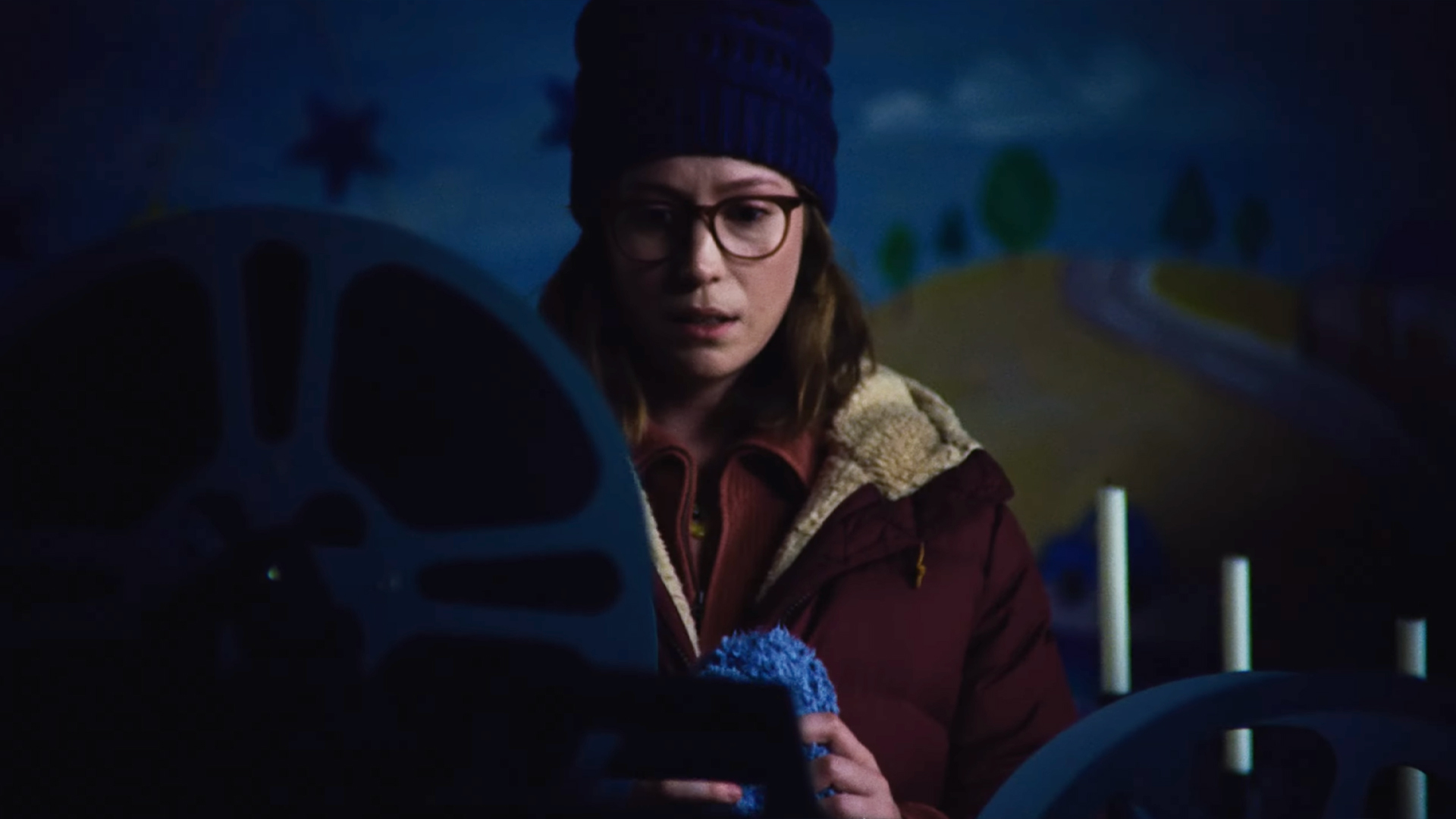
Director: Jane Schoenbrun Writer: Jane Schoenbrun Stars: Hannah Einbinder, Gillian Anderson, Jack Haven
Synopsis: A director making a slasher sequel becomes obsessed with casting the original film’s ‘final girl,’ leading both women into psychological and sexual chaos.
I don’t think I was prepared for how much Teenage Sex and Death at Camp Miasma would get under my skin. Jane Schoenbrun’s latest film is a strange, intimate, deeply personal horror movie about identity, fandom, sexuality, nostalgia, and the fictional worlds we create when reality becomes too difficult to understand. It is also one of those rare films where nearly every element feels connected to the same emotional idea. Schoenbrun understands that sometimes the stories we fall in love with when we are young become inseparable from the people we eventually grow into, even when we don’t fully understand why they matter to us at the time.
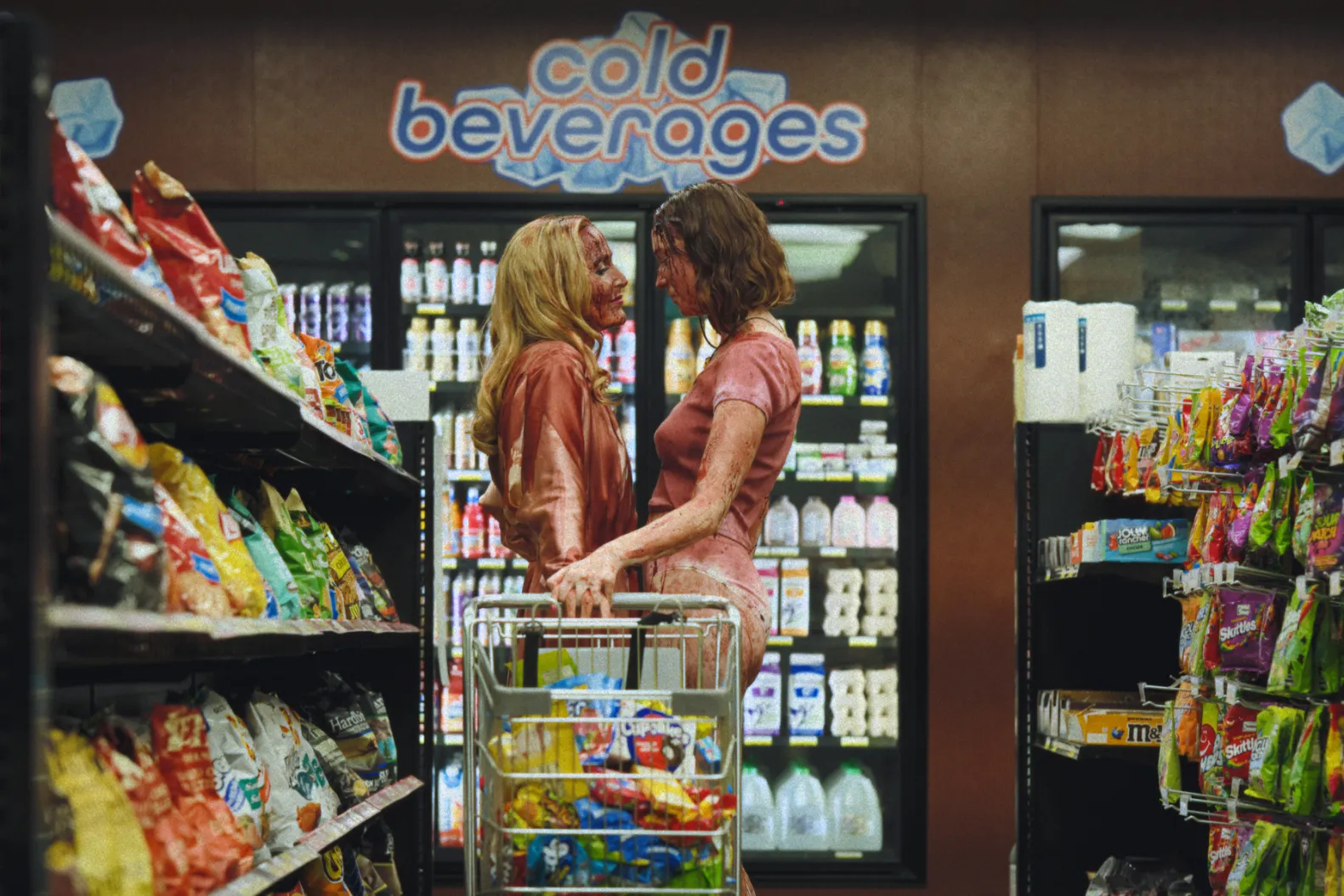
At the center is Kris (Hannah Einbinder), a filmmaker tasked with rebooting the fictional Camp Miasma horror franchise, a series built around Little Death, a gender-fluid killer whose original story was shaped through a transphobic lens. What initially seems like another cynical exercise in franchise filmmaking gradually becomes something much more personal. Kris’s relationship with the series is complicated. She loves it, feels embarrassed by that love, and cannot quite explain why this piece of horror history has remained so important to her.
That contradiction gives Camp Miasma its emotional foundation. Schoenbrun understands that the media we love as children can become tangled up with our understanding of ourselves. Sometimes the things that frighten us are also the things that help us recognize something about who we are. Sometimes a character or fictional world can express something we don’t yet have the words to articulate. And sometimes we don’t understand the significance of those attachments until years later, when we look back and realize they were telling us something all along.
Little Death is the clearest expression of that idea.
The character was created as something to fear, but Schoenbrun gradually strips away that framing. Little Death isn’t frightening simply because he is different. The horror comes from a society that decided difference itself was monstrous. He embodies so much of what we are taught to fear when we don’t fit neatly into the world around us: the strange, the unfamiliar, the impossible to categorize.
But Little Death isn’t the monster.
The monster is the idea that being different makes you something that needs to be feared, corrected, or hidden. The real horror is being taught to hate yourself because you don’t fit into the world you’ve been given.
That is what makes Little Death feel so meaningful. Schoenbrun takes a character who was once constructed through fear and asks what happens when the person who sees themselves in that monster finally stops accepting the story they were given about what the monster is supposed to mean. There is something deeply moving about that reclamation. Little Death can be frightening, grotesque, sexual, strange, and unknowable without any of those things making them inherently wrong. They can simply exist.
And for anyone who has spent years believing there was something fundamentally wrong with them because they couldn’t fit comfortably into the categories the world had prepared for them, that idea can hit with extraordinary force. Sometimes the most frightening thing isn’t discovering that you are different. It’s realizing how long you spent believing that difference made you unworthy of love.
That is a particularly powerful idea in a film so interested in gender and identity. Little Death exists in the uncomfortable space between how a person sees themselves and how the world decides to see them. Schoenbrun isn’t interested in pretending that the original transphobia surrounding the character doesn’t exist. Instead, the film asks what it means to take something that was created through fear and reinterpret it on your own terms.
It is a familiar idea in Schoenbrun’s work, but Camp Miasma approaches it from a different direction than I Saw the TV Glow. Where that film was consumed by the terrifying realization that something inside you needs to be acknowledged, Camp Miasma is more interested in what happens afterward. What do you do once you begin to understand yourself? How do you live with the things you once feared? How do you reclaim the stories, images, and fantasies that helped shape you?
That distinction makes the film feel like a natural progression from Schoenbrun’s earlier work. I Saw the TV Glow was about the terror of recognizing yourself. Camp Miasma is more interested in the complicated process of actually living with that recognition.
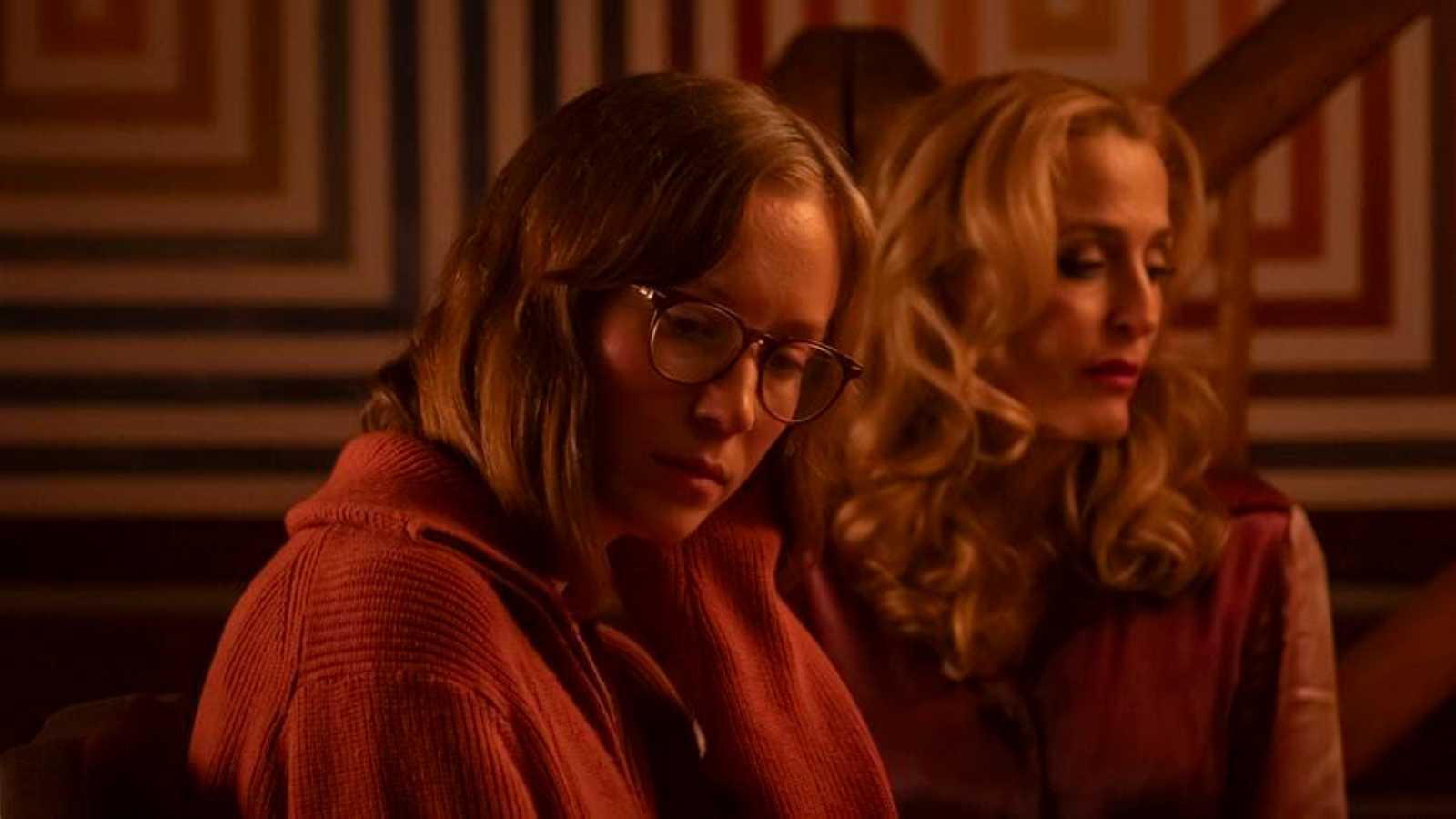
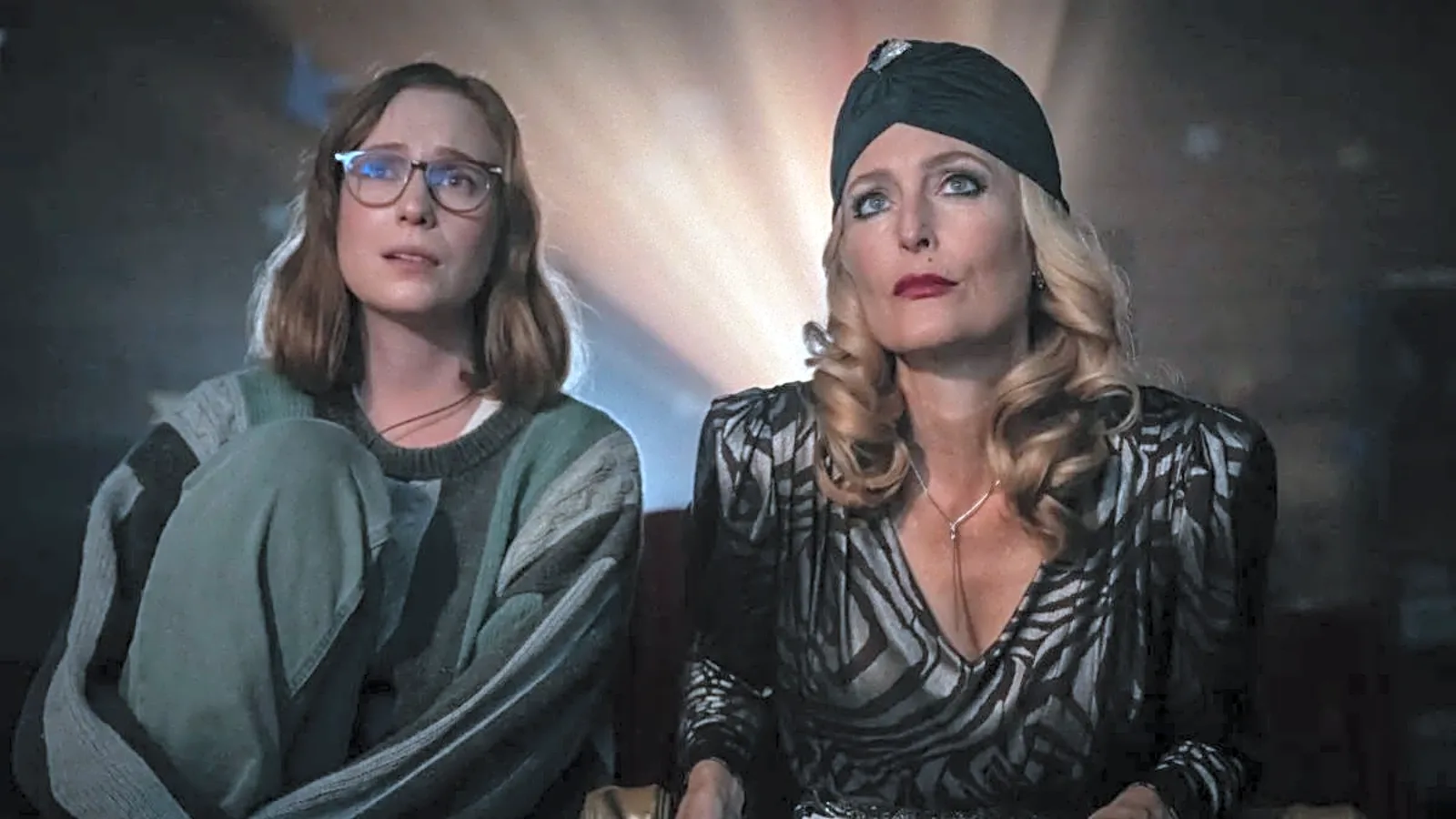
Hannah Einbinder gives one of the year’s strongest performances as Kris. She brings an awkward, nervous energy to the character that makes her feel immediately recognizable. Kris is funny, defensive, frustrated, horny, insecure, and vulnerable, sometimes all at once, and Einbinder never reduces her to a single emotional register. Much of the performance exists in the spaces between what Kris says and what she actually feels.
There is an impressive restraint to Einbinder’s work. She doesn’t need to explain Kris’s emotions for us. A hesitation, a look, or a slight change in her voice can communicate what the character is struggling to articulate. It makes Kris’s obsession with Camp Miasma feel less like simple fandom and more like an attempt to understand a piece of herself she has spent years avoiding.
Kris is fascinating because her relationship with the franchise is never treated as merely intellectual. She doesn’t just want to make a better Camp Miasma movie. She is trying to figure out why this particular story has such a hold on her. Her fascination with Little Death feels less like the obsession of a filmmaker and more like an attempt to revisit something from her past and finally understand what it meant.
Gillian Anderson is equally fantastic as Billy Preston, bringing an entirely different energy to the film. Anderson gives Billy an effortless magnetism while still allowing vulnerability to exist beneath the larger-than-life persona. She feels simultaneously like an icon and a person, which makes it easy to understand why Kris becomes so fascinated by her.
There is something so beautiful about the way Anderson’s Billy represents that first spark of recognition you can find in a performer or fictional character before you even understand why you are so drawn to them. Sometimes you encounter someone on a screen when you’re young and feel an immediate, almost inexplicable connection to them. You don’t necessarily have the language to understand what that feeling means yet. You just know that you want to watch them again, that something about them feels familiar, or that you can’t stop thinking about them. Anderson captures that feeling beautifully. Billy becomes more than simply someone Kris admires; she represents the strange, formative power of seeing something in another person that you haven’t yet learned how to see in yourself.
That makes Anderson’s performance especially moving because she understands the difference between being an object of fascination and being a source of recognition. There is something almost mythic about Billy through Kris’s eyes, but Anderson never lets her become merely an icon. She gives her warmth, humor, confidence, and vulnerability, allowing us to understand why someone could look at her and feel that little spark of something before they have any idea what that something is. I loved her so much.
These are performances that deserve to be part of the conversation for some of the year’s best. The entire ensemble understands the strange tonal balancing act Schoenbrun is attempting. The actors can move from comedy to horror to sexuality to genuine emotional pain without making the film feel like it is constantly changing identities. There is always something human underneath the heightened material.
The film’s visual language is just as assured. Eric Yue’s cinematography gives Camp Miasma the feeling of a half-remembered dream. The images are often unstable, tactile, and slightly unreal, creating the sensation that we are moving through someone’s memories rather than simply watching a conventional narrative unfold.
There is something especially effective about the way the film treats memory as an unstable place. Nothing feels entirely fixed. The past, fantasy, desire, and reality constantly bleed into one another, as though Kris is trying to reconstruct something she remembers emotionally rather than literally. The result is a film that often feels less like a conventional horror story and more like stepping inside someone’s subconscious.
Graham Mason’s editing complements that approach beautifully. Memories, fantasy, and reality bleed into one another without always announcing where one ends and another begins. The result feels intentionally disorienting without becoming visually or emotionally incoherent.
The production design is equally important. The fictional Camp Miasma franchise has the grimy, palpable quality of an old horror tape discovered too young, while the present-day world feels more intimate and enclosed. Matt Hyland and Brandon Tonner-Connolly’s work makes the film’s fictional universe feel lived-in, cluttered, and strangely familiar. There is something about its textures, horror-movie detritus, and little visual details that captures the feeling of discovering a world as a kid and wanting to disappear inside it.
Schoenbrun understands the strange comfort of horror fandom: the monsters may be terrifying, but at least they have names. The rules might be ridiculous, but they are still easier to understand than the rules of real life.
That is one of the film’s smartest ideas. Horror fandom can become a kind of emotional shelter. The monsters are frightening, but they are also predictable. They have mythology, rules, histories, and explanations. Real life rarely offers the same comfort. Sometimes the fictional worlds we become obsessed with aren’t simply escapes from reality; they are ways of processing it.
The film’s sexuality is similarly interested in the relationship between fear and pleasure. Sex isn’t simply there to shock or provoke. Schoenbrun treats desire as another way of understanding the self, particularly when the body has long been associated with shame, insecurity, or discomfort. Pleasure becomes less about spectacle and more about recognition.
That makes the film’s horniness feel surprisingly sincere. Camp Miasma isn’t embarrassed by desire, but it isn’t treating sex as some easy path to liberation either. Desire can be funny, awkward, confusing, exciting, and vulnerable all at once. Schoenbrun understands that sexuality is often inseparable from the way people understand their own bodies and identities.
That same idea carries into the film’s use of music. Alex G’s score constantly shifts between menace and tenderness, while the soundtrack gives the film a strong sense of emotional memory. Even its strange musical choices work because Schoenbrun understands that nostalgia is rarely as neat or dignified as we pretend it is. A song can be embarrassing, funny, heartbreaking, and comforting all at once.
And that is perhaps what makes Teenage Sex and Death at Camp Miasma work so well. It refuses to separate its contradictions. Horror exists alongside comedy. Sexuality exists alongside fear. Nostalgia exists alongside pain. The grotesque can be beautiful. Something that once hurt you can still have been meaningful.
Schoenbrun has made a film about the complicated process of reclaiming the things that helped shape us. It is about recognizing that growing into yourself doesn’t necessarily mean rejecting everything that came before. Sometimes it means looking back at those pieces of your past and deciding what they mean to you now.
That idea extends beyond gender. Camp Miasma is ultimately interested in our complicated relationships with the stories, characters, fantasies, and worlds we once needed. We can outgrow something without dismissing it. We can recognize its flaws without pretending it meant nothing. We can take something that once frightened or embarrassed us and discover that there was something beautiful buried underneath it.
That is what gives the film its emotional weight. Schoenbrun isn’t simply asking us to accept ourselves. They are asking us to reconsider the stories we used to understand ourselves in the first place.
Teenage Sex and Death at Camp Miasma is bloody, funny, strange, horny, melancholic, and visually intoxicating. Most importantly, it feels completely alive. Schoenbrun continues to make films about identity that refuse easy answers, and this one may be their most emotionally expansive yet.
It is a horror movie about monsters, but its real interest lies in the parts of ourselves we were taught to fear—and what happens when we finally stop believing that story.
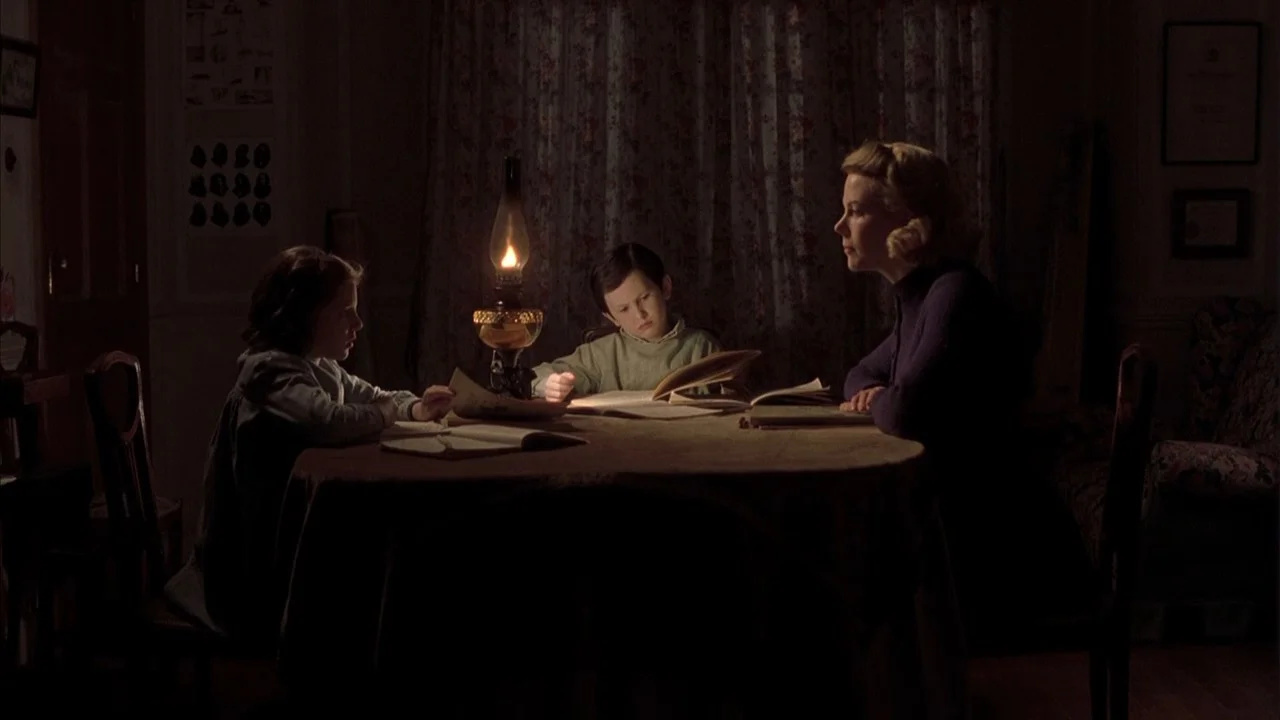
Synopsis: In 1945, immediately following the end of Second World War, a woman who lives with her two photosensitive children on her darkened old family estate in the Channel Islands becomes convinced that the home is haunted.
The Others has quietly cemented itself as one of the genre’s modern horror classics. Released in 2001, Alejandro Amenábar’s gothic ghost story became a surprise global success, earning more than $200 million worldwide and proving that audiences didn’t need excessive gore or jump scares to be terrified. The film relied on suspense, mystery, and an unforgettable final act. More than two decades later, viewers continue to watch The Others because it offers something timeless: intelligent storytelling, memorable performances and a twist that genuinely catches many first-time viewers off guard.
Horror itself has always held a unique place in cinema. It’s one of the few genres that constantly reinvents itself while returning to the same basic fears that have fascinated audiences for generations. Whether it’s supernatural hauntings, psychological nightmares, or creatures lurking in the shadows, horror films invite us to confront the unknown from the safety of a cinema seat or sofa. Some films rely on loud scares, while others slowly tighten their grip until the tension becomes almost unbearable. For me, the latter has always been far more effective, and The Others is a perfect example of why slow-burning horror continues to stand the test of time.
I’ve lost count of how many times I’ve watched The Others, and every revisit reminds me just how brilliantly crafted it is. Even though I know exactly where the story is heading, the suspense never disappears. If anything, knowing the ending only makes me appreciate the careful details that are woven throughout the film.
The story surrounds Grace Stewart (Nicole Kidman), a devout mother living with her two children in an isolated mansion on the island of Jersey shortly after the Second World War. Her children suffer from a rare condition that makes them dangerously sensitive to sunlight, forcing the family to live behind permanently closed curtains, with small candlelight to see, and locked doors. That simple premise immediately creates an unsettling atmosphere. Darkness isn’t simply a stylistic choice; it’s a necessity for the family’s survival.
The children’s condition isn’t just a clever plot device; it reinforces Grace’s need for absolute control and subtly reflects her increasingly fragile state of mind. The house operates according to strict rules, and as those rules begin to unravel, so does Grace herself.
The performances across the board are wonderfully restrained. Kidman never overplays Grace’s growing fear or desperation. Instead, she allows the character’s emotional cracks to emerge naturally, making her gradual mental and emotional unravelling all the more believable. The film constantly leaves you questioning whether Grace is protecting her family from unseen forces or slowly losing her grip on reality.
The young cast deserves enormous praise too. Alakina Mann and James Bentley are absolutely remarkable as Anne and Nicholas. Child performances in horror films can often feel over-the-top and unbelievable, but here they are completely convincing. Their innocence, curiosity and quiet fear ground the entire story, and their chemistry with Kidman helps build the sense that something isn’t quite right.
My favorite character remains Mrs Mills (Fionnula Flanagan). Strong-willed, mysterious and calculating, her character drives the sense of conflict and urgency. You’re constantly questioning her motives and wondering what her character will do next. Christopher Eccleston may have a small part, but it’s one of the creepiest, upsetting, and unsettling parts of the film. Grace has been longing for her husband (Eccleston) to return, and when he does, it’s not the heartfelt, wholesome moment she needed. It’s eerie and so well crafted to distort reality as his character believes the war is still going on, even though it has ended. You’ll question if it’s PTSD or something supernatural.
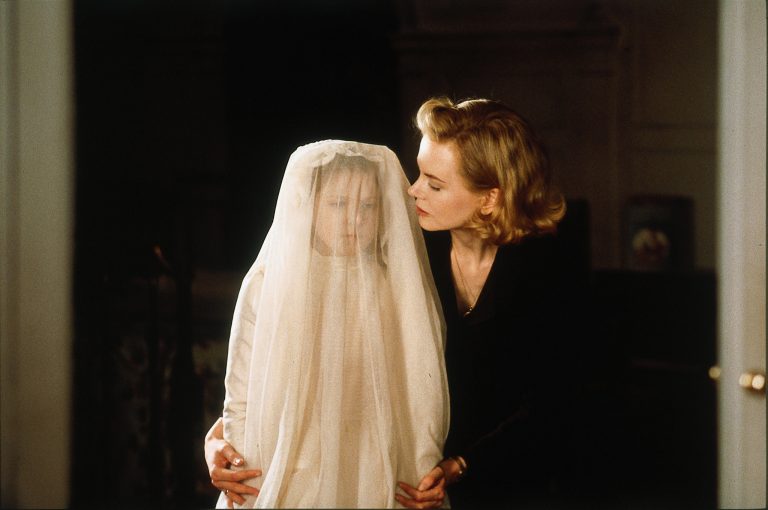
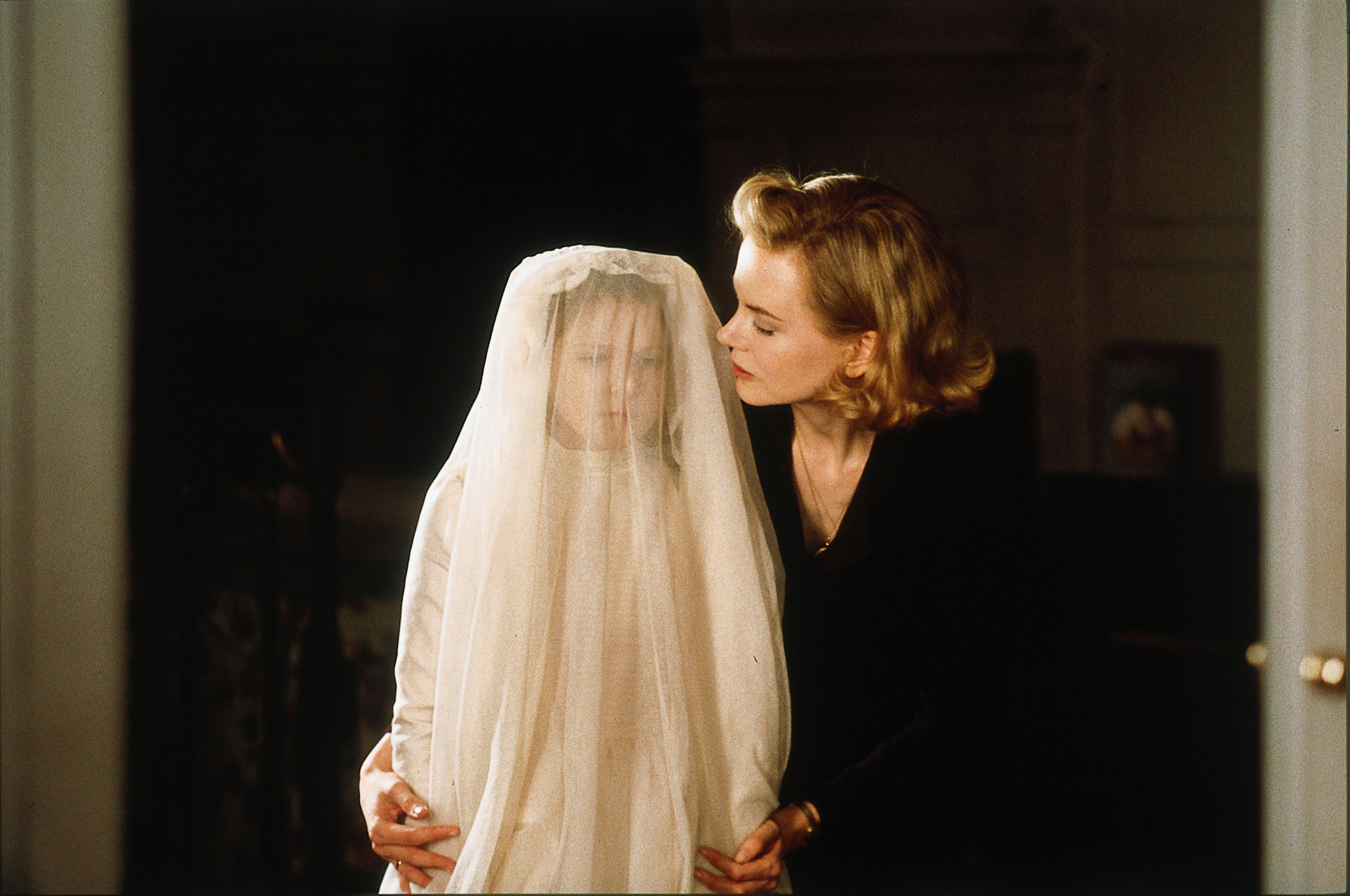
One of the film’s greatest strengths is its atmosphere. Thick fog surrounds the isolated house and makes the outside world feel almost unreachable. Combined with the period costumes and the vast silence that fills every room, the setting creates a haunting sense of loneliness. My favorite shot is where the little girl is playing with her puppet, in her confirmation outfit, and her face turns into that of an old woman. It’s chilling.
What impressed me most the first time I watched the film was its ending. I genuinely didn’t see the twist coming. Looking back now, the clues are all there, hidden in plain sight, but Amenábar directs the story with such confidence that it’s easy to become completely invested in the mystery unfolding.
Years later, I still find myself returning to The Others. It’s a film that reminds me that horror doesn’t have to shout to be frightening. Sometimes a whisper is far more powerful. Rich in atmosphere, brilliantly acted and anchored by one of the genre’s most satisfying twists, The Others remains a haunting experience that deserves its place among the very best psychological ghost stories ever made.
This week on Episode 699 of the InSession Film Podcast, inspired by JD’s birthday coming this weekend, we discussed our Top 5 movies of 1985 (his birth year)! It was kind of a weird year, but the films at the top have become iconic and massively influential over the years. It also features some vastly underrated movies that we also talk about in our honorable mentions. It might not be the best year of the 1980s, however it’s arguably the most fascinating to discuss regarding its legacy. That said, here are our lists:
(Note: Please keep in mind that we each had different criteria for our selections)
JD
1) The Breakfast Club
2) Come and See
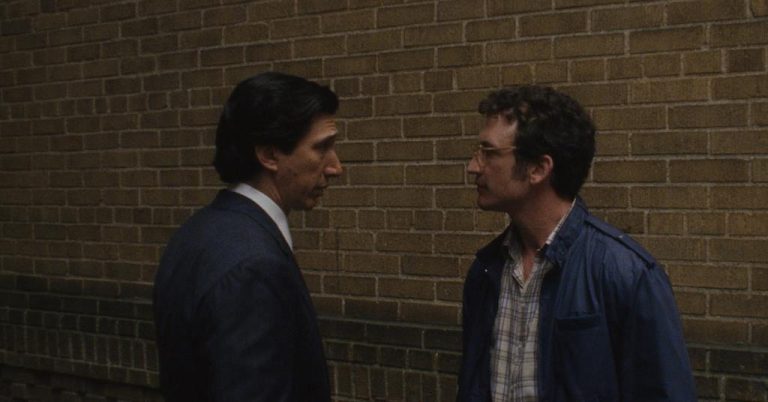
3) To Live and Die in L.A.
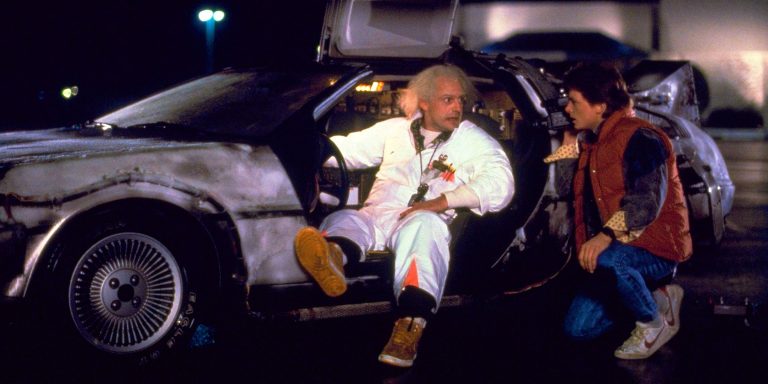
4) Back to the Future
5) After Hours
Megan
1) Nausicaa of the Valley of the Wind
2) Back to the Future
3) The Breakfast Club
4) Blood Simple
5) The Hills Have Eyes Part II
Honorable Mentions (Combined) Vagabond, Brazil, Ran, Witness, Lost in America, Peewee’s Big Adventure, Pale Rider, Police Story, The Color Purple, Beverly Hills Cop, The Goonies, Weird Science, Better Off Dead, Re-Animator, Return to Oz, The Black Cauldron, The Legend of Billie Jean, The Bountiful, The Plague Dogs, Desperately Seeking Susan, Silverado, Day of the Dad, Clue, The Journey of Natty Gann
Hopefully you guys enjoyed our lists. If you agree or disagree with us, let us know in the comment section below. There are obviously many more great films from 1985 that we didn’t have time to mention (or they’re blindspots for us), so if your list looks very different than ours, we totally get it. That being said, what would be your Top 5? Leave a comment in the comment section or email us at [email protected].
For more lists done by the InSession Film crew and other guests, be sure see our Movie Lists page.
On this episode of Chasing the Gold, Shadan is joined by Anthony Orlando to discuss the record-breaking box office for Spider-Man (and its Oscar potential) and the remarkable lineup for this year’s New York Film Festival! Plus, a little Christopher Nolan love at the end of the show.
Check out this week’s show and let us know what you think in the comment section. Thanks for listening and for supporting the InSession Film Podcast!
Sports gambling and handicapping have infiltrated every part of our society, so why not apply it to awards prognostication? The runaway critical and commercial success of Christopher Nolan’s The Odyssey warrants an analysis of its potential Oscar chances. So I took it upon myself to handicap each Oscar category and how likely it is to garner a nomination.
Best Picture -10000
Who are we kidding here? 94% from Rotten Tomatoes critics, 97% RT audience score, 88 on Metacritic, heading towards $1 billion in earnings with no signs of slowing down. The Oscars never jump at the chance to reward populist hits, but this one is undeniable. I see no world where one of the ten spots doesn’t go to this film.
Best Director, Christopher Nolan -2000
Nolan has a whole lot going for him, most notably a previous Best Director win and the universal praise from everyone involved in the film. The only thing holding me back from putting this higher is the limited lineup. Cracking the Best Picture ten isn’t much of a struggle with this sort of acclaim and box office, but landing in a more limited five is a tougher nut to crack. That being said, I think everyone would be profoundly shocked if Nolan missed out.
Best Actor, Matt Damon +350
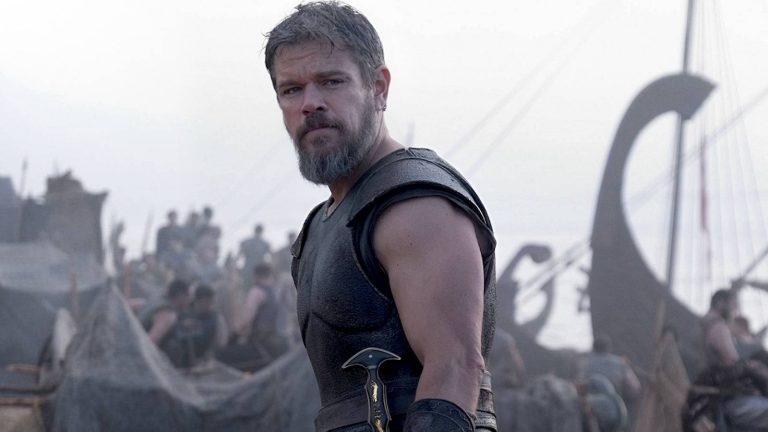
Damon has been around so consistently for the last 30 years, it’s a bit shocking he has only received three acting nominations (plus two others, including a win for Original Screenplay). His performance has been lauded for his steady hand more than his overwhelming ability. That being said, he is still a welcome sight on a press tour and knows how to press the flesh. I wouldn’t consider him a long shot for a nomination, but a snub would be less of a surprise than a Margot Robbie in Barbie.
Best Supporting Actress, Anne Hathaway -250
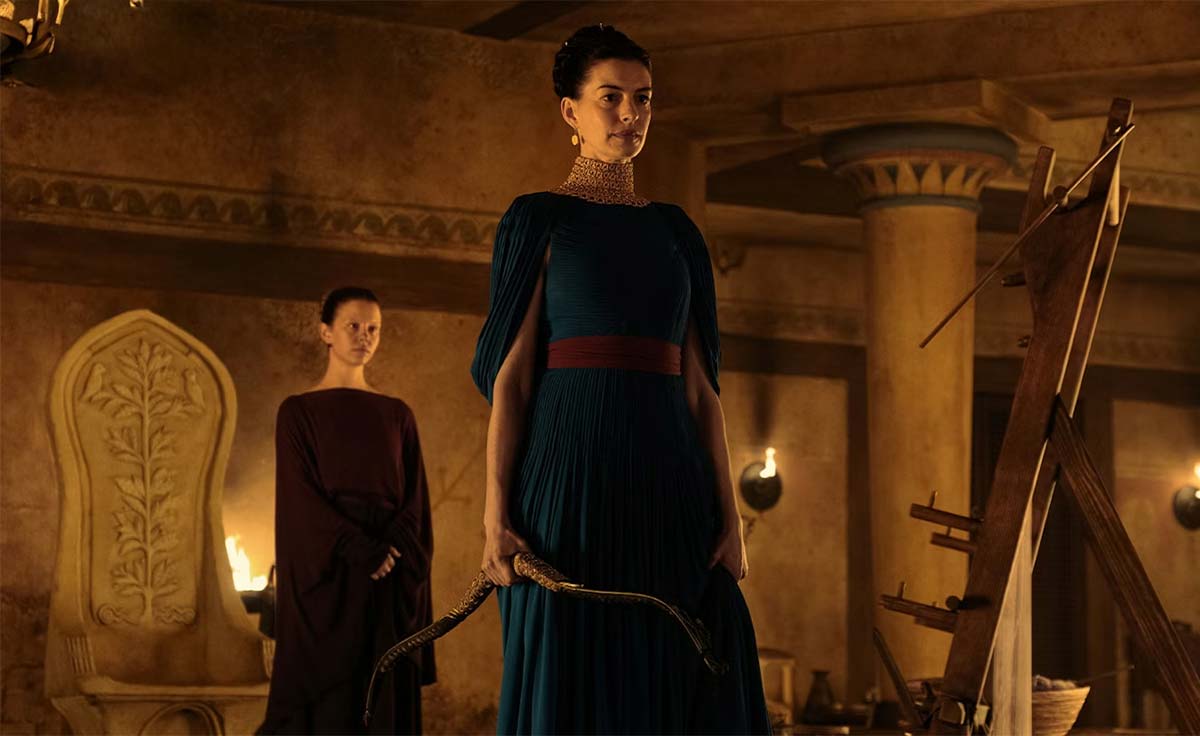
Much like Damon, it seems like Hathaway should have more than just her two Oscar nominations and one victory. With her role as Penelope, Hathaway finally gets her chance to shine in a widely-seen film where she blows her co-stars off the screen. The Odyssey might have a few standout scenes, but not many involve capital-A acting. Hathaway is the exception. It also helps that this film is one of five big-screen releases in 2026. It’s a reward for her performance and her body of work. I wouldn’t consider her the runaway favorite, but she’s the leader in the clubhouse at the moment.
Best Supporting Actress, Samantha Morton +250
Also, with a pair of previous Oscar nominations, Morton cemented her contender status with less than 10 minutes of screen time as the conflicted witch Circe. Many singled Morton out as the acting MVP, though she has an uphill battle. Her limited screen time is easy to lose in the midst of a three-hour epic, while she may also have to battle her more famous co-stars competing in the same category. I could see a world where she sneaks into the fifth spot as long as the precursor attention is there. I currently have her eighth, but that could change quickly if some of the buzzier titles fizzle out.
Best Supporting Actor, John Leguizamo +750
While his more famous co-stars like Robert Pattinson and Tom Holland were unable to make much of a critical dent, Leguizamo managed the premiere male supporting role and earned some of the best notices of his career. The Oscars are often about narratives, and few people have a better overdue narrative than Leguizamo. Supporting Actor is an extremely stacked category, filled with powerhouses and a bevy of “overdue” actors. I think this will be a tough nut for Leguizamo to crack.
Best Adapted Screenplay, Christopher Nolan +500
Despite the near-universal praise for the film, Nolan’s script is probably the most harshly criticized aspect of it. Despite three previous Screenplay nominations, Nolan’s scripting faces an uphill battle to garner a fourth. Swords-and-sandals epics aren’t exactly known for garnering Screenplay mentions, and this one should be no different.
Best Original Song, “When I’m Home” +400
This is a tough one. Rap songs are not immune to Oscar nominations, but they also tend to be films about rap or black-centric storylines. This is obviously neither, so Travis Scott, Ludwig Goransson, and James Blake should have an uphill climb to a nomination. I would expect the song to land in the Oscar shortlist, but I would be frankly surprised if it ended up in the final five.
Best Cinematography/Best Costume Design/Best Film Editing/Best Makeup and Hairstyling/Best Original Score/Best Production Design/Best Sound -2000
Let’s not kid ourselves here. If you think there is a world where The Odyssey misses any of these categories, that is a world of delusion.
Best Casting, John Papsidera -5000
Despite the newness of the category, this is far too much cast for the Academy to ignore. This is also Papsidera’s first chance to be recognized after his career-long collaboration with Nolan.
We still have another five months to find out, but make sure to bookmark this page so you can all ridicule me in January!
Synopsis: A journey into the American West on a search for traces of what was once a center of small-town life: the movie theater.
The Sierra Theater in Susanville, California | Foghorn Features
Five years ago, as the COVID-19 pandemic dawned, a documentary called Bloody Nose, Empty Pockets premiered in the Sundance Film Festival’s documentary competition. Directed by brothers Bill and Turner Ross, the film is about a Las Vegas bar named Roaring ‘20s (great name) and, more specifically, the regulars within who gather on the day following the first election of then-and-now-President Donald Trump. Fittingly, these watering hole patrons spend the ensuing 98 minutes of screentime getting supremely hammered. In their eyes, there was a better reason to raise their glasses, not to the end of the world as we know it, but to the end of something else: Roaring ‘20s would be closing at the end of the night, for good.
Bloody Nose, Empty Pockets is a beautiful film. (It is currently available to stream on the Criterion Channel; watch it if you haven’t.) But the most fascinating thing about it is that it’s not a documentary. Though Brothers Ross did turn their cameras on a gaggle of barflies and let the reel roll, capturing their authentic antics in real time over the course of an evening, their subjects were “people the filmmakers had met at other bars, people who had relationships with alcohol,” the Los Angeles Times’ Amy Kaufman wrote from the 2020 Sundance Film Festival, where the picture premiered. These people weren’t actors, but they were brought to a set of sorts, Roaring ‘20s, which is actually a still-open bar in New Orleans, not Las Vegas. Renting the joint cost the Ross’ most of their $10,000 budget, so the task for the “performers” was to be themselves, or a version of themselves who would be losing their beloved watering hole at closing time.
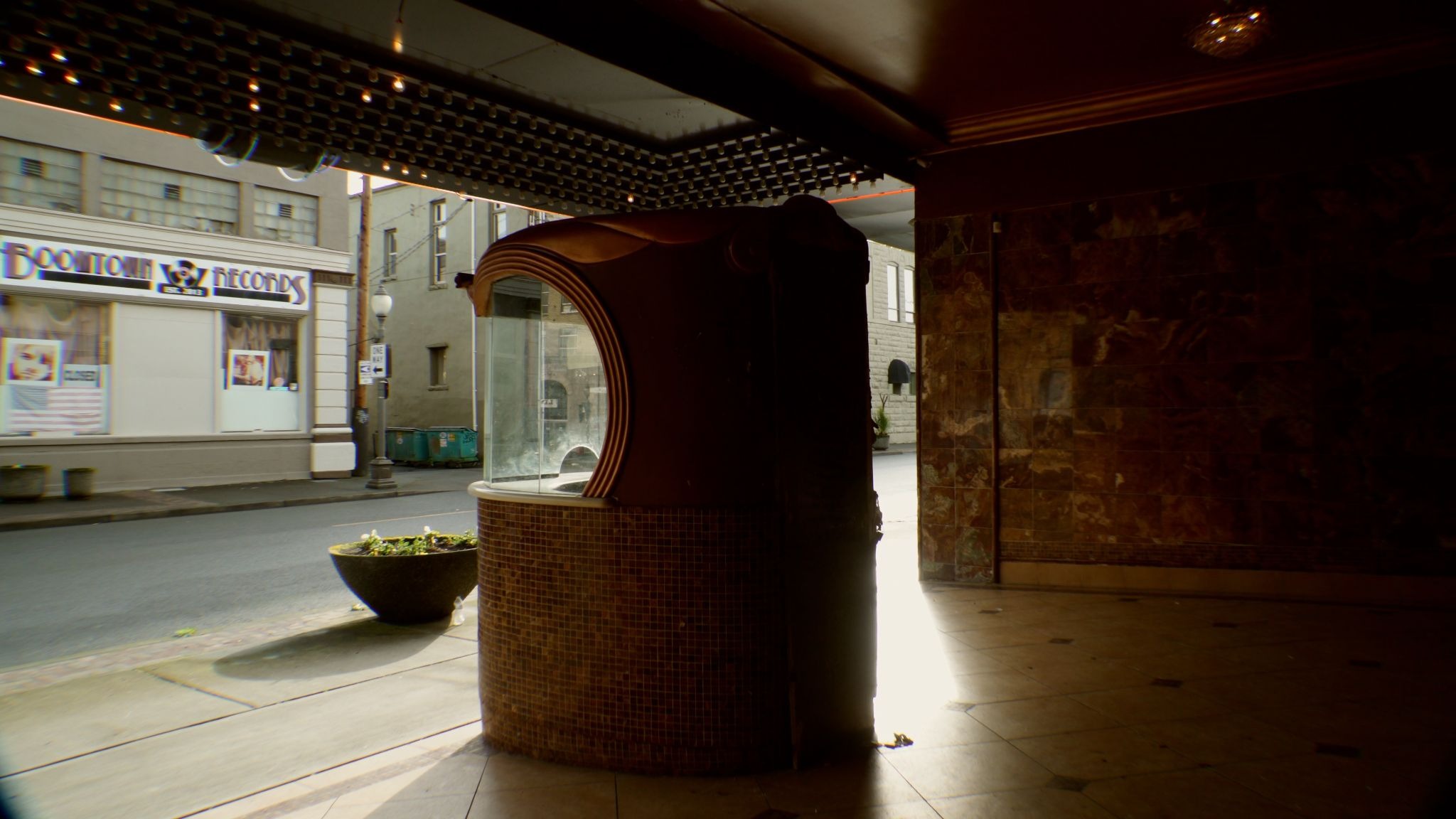
The box office at the now-closed Aberdeen Theatre in Aberdeen, Washington | Foghorn Features
I knew none of this when I saw the film in 2020 and wholeheartedly believed I was watching a documentary, an unforgettable experience that was not tainted, but rather bolstered, by the knowledge that I had pulled the wool over my own eyes, even unintentionally. I had not thought about Bloody Nose, Empty Pockets in a while, not until I watched Rustin Thompson’s new documentary, The Last Picture Shows, when I could feel a large part of me wishing that it was made under a similar conceit. That the 123 small town movie theaters of the American West he trekked 10 states and 10,825 miles to document, those abandoned and those still hanging on, were just sets designed to depict an alternate reality that mimics many of the qualities of our own, yet thrives without opposition in reality. I suppose that wouldn’t be much of a movie, though. What’s the hook there? “Movie theaters are thriving; what might this ultra-specific portion of the United States look like if they weren’t?” doesn’t have the same grab factor as Thompson’s actual quest in his very real film.
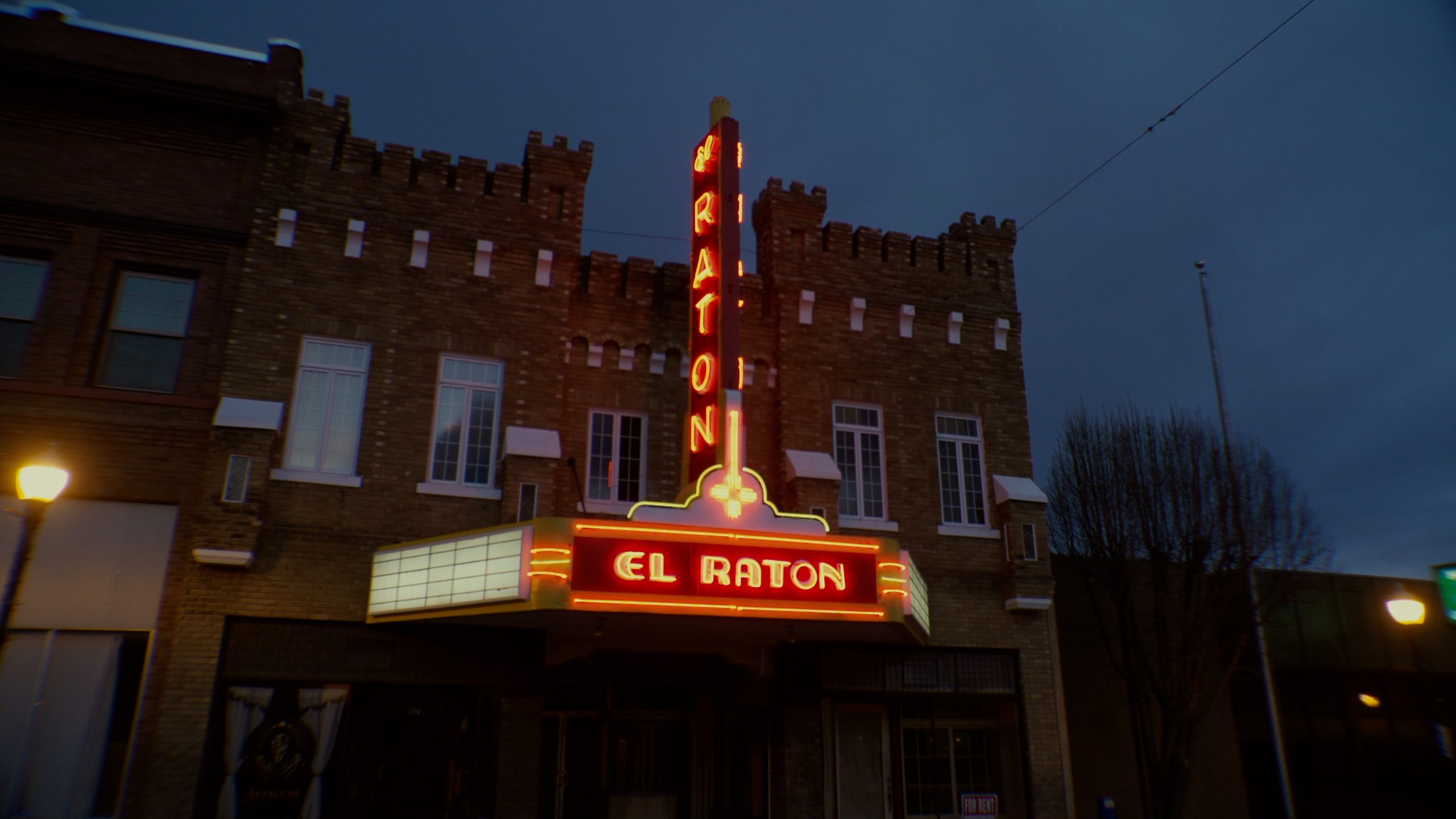
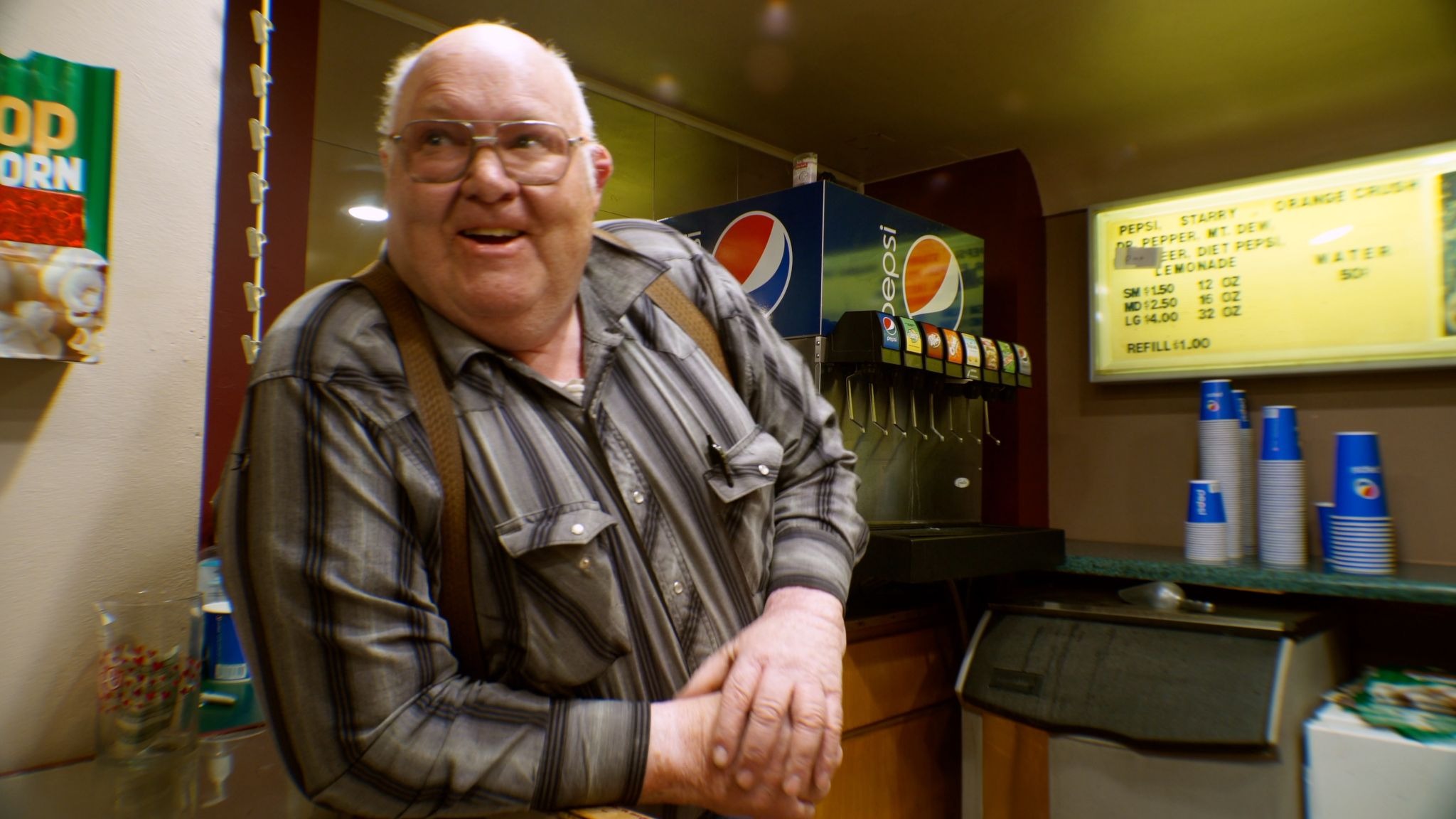
Shot between 2023 and 2024 – a timeframe that may or may not quell the jumpscares brought on by glimpses of Shazam! Fury of the Gods and Deadpool & Wolverine posters – The Last Picture Shows unfolds like a road trip, one that passes through sparsely populated towns where the stoplights sit miles apart from one another, but a constant can be found on every street: The local movie theater. Large “AMC” and “Regal” logos won’t be found here. Instead, over 78 eloquently-paced minutes, Thompson shoots tattered marquees and empty lobbies like old relics that fight to stay in the game despite the world’s signs that it’s time to hang it up. As the movie industry shifts its weight behind chains for theatrical exhibition and streaming for ease of distribution, Thompson’s interviewees represent a dying breed, though they couldn’t seem more alive. Take Melvin “Tiny” Pedersen, for instance: The owner of the Desert Historic Theater in Burns, Oregon wears suspenders and a smile, and note that while there may be only 19 people in the theater that evening, such occupancy is considered strong for a Friday night. Roughly 2,700 people live in Burns; small wins are still wins.
Melvin “Tiny” Pedersen, the owner of the Desert Historic Theater in Burns, Oregon | Foghorn Features
Thanks to the tone of The Last Picture Shows, – which borrows its name (with added plurality) from Peter Bogdanovich’s 1971 masterpiece and is intercut with footage from that classic and a few others –these little victories feel just as valuable as the money these moviehouses bring in. Were it not for the bittersweet reality that most of these cinemas don’t survive, regardless of the tireless efforts of their owners and the dedication of their loyal customers, that notion could be taken as gospel in the film’s context.
It’s not that Thompson and his subjects – including not just theater proprietors and employees, but the professor and historian Ross Melnick – don’t go into extensive detail about the behind-the-scenes process that comes with being granted the “opportunity” to show traditional multiplex fare at a discounted rate. It’s that those the director encounters are nothing if not committed to the practice of cultural exhibition. Sure, that might require them to showcase a superhero-sized disaster of a sequel starring Zachary Levi every time one of those comes out, but what Thompson prefers to focus on is the fact that many of these businesses can afford to keep the lights on. He doesn’t shy away from those that have gone dark, but they are honored and appropriately mourned rather than forgotten.
Not much separates the filmmaking here from a visual version of a feature one might find in a magazine, though it’s a more pleasant experience thanks to its director’s outlook, one that allowed his vision of The Last Picture Shows to evolve from that of a gloomy time capsule with a killer title into “a story of hope and resilience.” In his statement in the film’s press notes, Thompson noted, “The people I talked to are there to stay.” If nothing else, this simple slice of the cinematic experience reinforces the idea that movie theaters are a place for community, and a place that can only exist with and because of community. I suppose it’s a good thing The Last Picture Shows is nothing like Bloody Nose, Empty Pockets. The truth hurts, but silence kills. May the subjects of Thompson’s film fend off the latter threat for as long as they can, even if it means Shazam! 3 has to make the noise.
The Last Picture Showopens in New York on August 7th and in Los Angeles on August 21 in conjunction with a national theatrical roadshow.
NOTE: THIS PIECE CONTAINS MINOR PLOT SPOILERS FOR SPIDER-MAN: BRAND NEW DAY
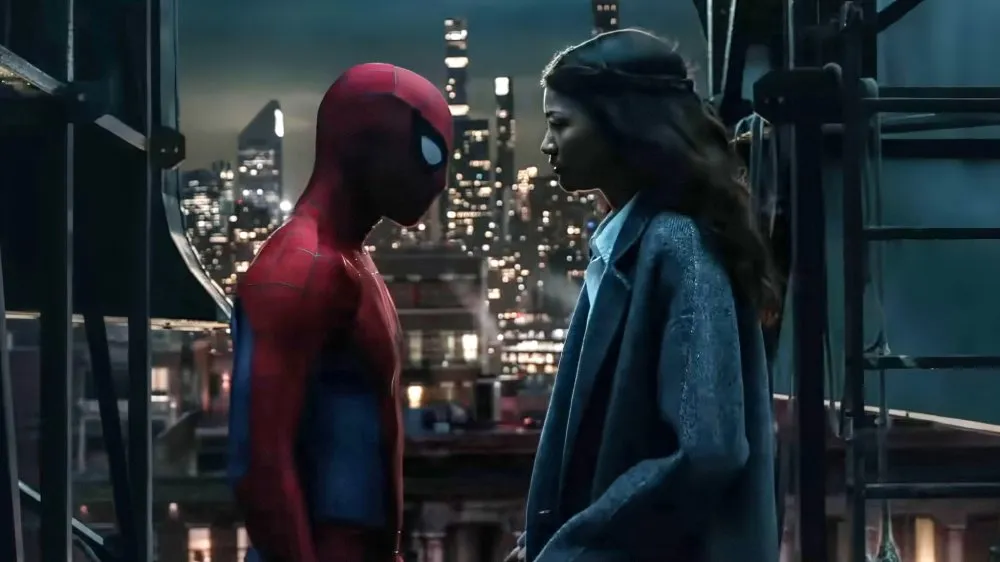
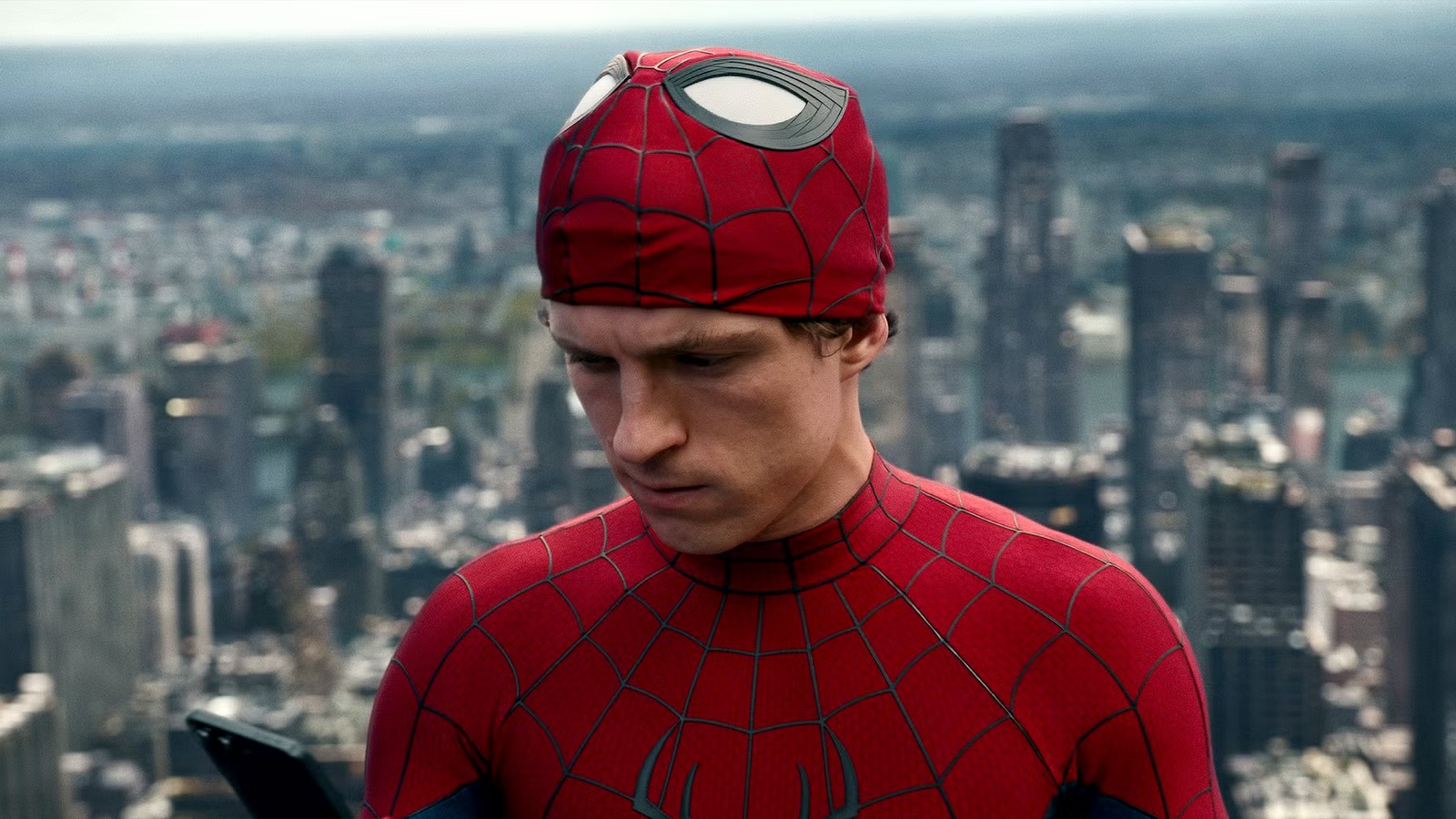
It’s a recurring bit with my friends that I’m not a fan of the current state of superhero films. To me, a lot of it is “dunk, rinse, repeat” in terms of story. Superhero faces an issue – whether personally or some foe, superhero punches the issue away, the world is saved once again. “Woah, I can do this now?,” “You did it superperson! You beat evilass!” And my personal favorite “wow, THAT just happened.” Even superhero things attempting to satirize the genre become the very thing they were satirizing. It is incredibly tiring, and most people line up because these studios take advantage of the nostalgia and adoration fans have for these characters or the story being adapted. It’s disgusting! So hear me when I say that this new superhero film, Spider-Man: Brand New Day is actually pretty good!
Now, I have a soft spot for stories involving a) Batman orb) Spider-Man. And that’s usually because the stories are relatively contained. Batman is a rich guy whose enemies and capabilities are certainly fantastical, but his own grief is the drive of his morals and compassion. It is seen in a way that I can’t relate to like Superman or whichever other tragic hero may have experienced. Spider-Man is a fantastical kid, but is also incredibly scrappy and smart. He’s relatable, despite the unrelatable abilities – that’s what makes him work. Hell, I’ve seen all of the films that feature these guys and played all of the video games that stars them multiple times. They’re grounded, relatively easy to digest, and the varying degrees of seriousness add enough intrigue for repeat visits.
Lately, the Marvel formula for Spider-Man is to put him in these insane situations that have to have some form of connection to the greater Marvel picture. Why? Because profit, of course. Spider-Man generates great stockholder value and, when placed in varying films, the film blasts off financially. But lately, Marvel has not been on the pioneering trend. They have seemed to hit a financial wall with their other properties – so what do they do? Take charge of the steering wheel and drive it all back to Spider-Man, and the immediate profit that comes with this beloved character. Naturally, because of this, I was incredibly pessimistic about this new entry as it seemed to be another attempt to grab at whatever financial straws they could still pull from. So when the movie came out and it was a more grounded, street driven Spider-Man picture, I couldn’t tell you how surprised I was.
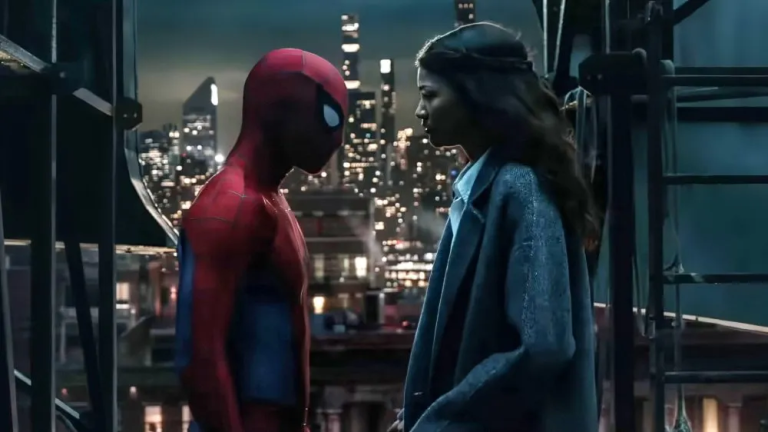
Spider-Man: Brand New Day is a good picture! The scrappy, street-level hero works best for this iteration of Spider-Man. Once you take Spider-Man into space or the multiverse, you lose the heart of the familial relationship with Aunt May, the friend group dynamic, and the simpler crime approach for the sake of some devastating world altering event. In this film, Spider-Man’s feet are firmly placed in New York City (even if they are on the walls or ceiling), not in some other universe, or some other city, or other country – New York City’s character is as important as Spider-Man himself. There is always room for adaptation, but it makes no sense to remove the setting from the character while maintaining the setting for the character.
If I had to really drive it down what made parts of Spider-Man: Brand New Day NOT work, it would have to be when it shows its MCU baggage. Now, the slight interactions between existing MCU characters weren’t that bad. The Florence Pugh bit, despite not having seen Thunderbolts*, still worked because it relied exclusively on the matter at hand. The same thing with The Punisher (Jon Bernthal) and The Hulk (Mark Ruffalo) – their focus was on the matter at hand and not this overarching story. But when it introduces new elements that will extend past this film, that’s where the film comes to a screeching halt. Which is unfortunate, the main drive of that point, Sadie Sink, was done well. Sadie Sink’s Jean Grey is an interesting, tragic character, but takes away from the Spider-Man of it all. It makes this film 50% a Spider-Man film, and 50% set up. It muddles the entirety of the film and, while the ethos are retained, it loses the feel it established early on.
Obviously, Jean Grey and The X-Men are the next cash cow Marvel Studios is feverishly waiting to milk until it runs the property dry. And by including Grey in this film in the manner they did, you lose a lot of the heart that made the beginning of the film great. By the end of the nearly two and a half hour runtime, it felt laborious. Clearly, they had to ensure that their current profit machine, Spider-Man, was safe and sound, and their future money maker, Jean Grey, could be properly set up and that everything in this narrative was tied up. Does it accomplish all of this? Yes, but not in a clean way. The film was start and stop and had some fun moments throughout but it never felt like a properly gelled narrative. Even in the other Spider-Man films, the momentum crashes once the in-universe connective tissue has to be laid out. It’s a shame that this is the case here, because the opening moments of Spider-Man: Brand New Day were incredibly exciting and fun to watch.
I won’t go on a limb and say that this film was bad, and Marvel Studios has to keep the train moving. So I can understand why they did what they did, but the heavy handedness is the issue. The moments when you see Spider-Man taking care of local crime or beating smaller organized crime groups is what gave this film heart and vigor. Even in other Spider-Man properties – the films and video games alike – the local and more grounded approaches is what made them shine. Hell, people HATE The Amazing Spider-Man 2, but at least that movie felt like a movie with purpose. The opening moments of Spider-Man: Brand New Day had that same sensation, and the motifs and visual cues lifted from Insomniac Studio’s Spider-Man games fit this overall aesthetic. The introduction to some greater universe purpose kills what the film started.
After the credits, there is a post-credits scene (of course), and it introduces either some off-world Spider-Man reprisal (Tobey Maguire, Andrew Garfield, or both) or that Tom Holland is once again going to space. And honestly, whatever it is, it isn’t any of my business to find out. The ‘basics’ is what gives Spider-Man heart, and this extra nonsense is just some new stimulation for Marvel. Whose success may not be replicated again as Spider-Man is an American staple and Avengers: Doomsday is the culmination of nothing substantial. If there is a way to make all of these things gel together, they haven’t found it yet. By the end of Spider-Man: Brand New Day, I was wishing we stuck with the opening bits for the entire slog of a runtime that we had. But, we’ll have to just take whatever nonsense the Feige machine is cooking next, I suppose.
Director: Louis Leterrier Writer: Matthew Robinson Stars: Wagner Moura, Greta Lee
Synopsis: A family of four is suddenly sealed inside their house with no way out and must work together to survive against both their dwindling resources and the mysterious, looming threat that is keeping them trapped.
Netflix’s latest streaming film, The Last House, is the brainchild of someone who seemingly thought, “Let’s combine Stephen King’s Under the Dome with Swiss Family Robinson and add a monster that looks like the spawn of one of James Cameron’s Aliens.” On paper, that may sound like a bona fide hit. The execution, however, is something else entirely.
That does not make The Last House bad, far from it. However, its lack of originality, an increasingly familiar Netflix trademark in genre films, makes it feel like a collection of recycled parts that never fully come together. By the end, a handful of cheap red herrings severely undercut the experience, allowing the film’s above-average tension to wash away.
And far too easily, as everyone we care about escapes unscathed and without consequence, making the stakes of The Last House minimal at best. This is the type of pandemic streaming cinematic experience that cinephiles with a critical eye might have given a pass, knowing the restrictions involved.
Which begs the question: Why limit yourself to a bottleneck film with a significant special-effects budget, only to deliver such a toothless experience?
The story follows the Delgado family. When we meet Jason (Civil War’s Wagner Moura), the son of a fisherman, he is trying to catch dinner for his family from the pier. He manages to catch only a fingerling, barely old enough to survive on its own. Jason throws it back, noting that it is the first thing he has caught in days. The man looks worn down by the responsibilities of life.
Jason is married to Riley (Greta Lee of Past Lives fame), and they have two children: their teenage son, Graham (May December’s Gabriel Barbosa), and their precocious young daughter, Ruth (The Hunger Games: The Ballad of Songbirds & Snakes’s Riley Chung). Jason and Riley are struggling to make ends meet, while their home is also in desperate need of repairs.
However, later that night, in the middle of a frightening rainstorm, the Delgado family discovers that they are unable to escape their home. The doors will not open, the windows appear to have been painted shut, and even when Jason tries to smash one with a crowbar, the rain magically repairs the cracks almost immediately. The Delgaldos are sealed inside their home, with no escape.
The Last House is a science-fiction thriller from Louis Leterrier (Fast X), whose career can be summed up as rarely making you feel like you are watching great cinema, even as you recognize the craft involved. For instance, not showing the monsters for the first two acts is a smart choice, with the first thirty minutes or so that can be arresting, at the very least, intriguing.
The first act’s simplicity from Matthew Robinson’s (Good Luck, Have Fun, Don’t Die) script works in the experience’s favor. While that works, the film begins and ends by being heavy-handed, cloaking itself with a pre-pandemic-era environmental subtext. Then, in the middle are too many musical tonal breathers, where the family works together.
This is an exercise in trying to add family-film levity, a mix of genres that doesn’t quite work. However, what the film really needed was an honest look at marriage and family dynamics, where moments of crisis reveal who we really are. The type of contained crisis that uses marriage, self-preservation, and fear as a dramatic engine to drive the story.
There is one moment like this, but it is quickly abandoned, just as you can feel Lee and Moura about to sink their teeth into something heightened but real, considering the circumstances. Instead, we get jokes about vinyl records and endlessly quoting Harrison Ford in Air Force One, which just made me want to search for Wolfgang Peterson’s action spectacular in my queue.
Yes, Moura and Lee are quite good here, but since this is a tale of survival, the film doesn’t have the guts to make a bold move, rarely creating enough tension or suspense to make us question the characters’ fates. The result is a thriller that has the makings of above-average entertainment, but by playing the game too safe, you cannot help but wish the filmmakers had aspired to more than box themselves in.
You can stream The Last Houseexclusively on Netflix starting August 7th!
Director: Matt Johnson Writer: Todd Bartels, Lou Howe, Matt Johnson Stars: Dominic Sessa, Antonio Banderas, Emilia Jones
Synopsis: A 19-year-old Anthony Bourdain travels to Provincetown and stumbles into the chaotic world of a restaurant kitchen, setting off a summer that will shape the course of his life.
Watching Tony, the new biopic about the early life of the great chef, writer, and television personality Anthony Bourdain, one thing is clear: this is not Bradley Cooper’s Kitchen Confidential. That failed Fox sitcom was so loosely based on Bourdain’s life that it resembled a thin gravy that desperately needed more time to thicken. Tony, on the other hand, embraces imperfections that many considered attractive forty years ago. This adaptation of the novel leans into Bourdain’s ego, ambition, and swagger, qualities that some will find irresistible and others insufferable, but almost no one will find uninteresting. That credit goes to the star Dominic Sessa, who is so magnetic in the role that you cannot take your eyes off of him.
Now, that is not exactly novel, as many nineteen-year-old men lean into self-confidence to mask their insecurities and push them deep inside. However, films nowadays often shy away from depicting that kind of ego and cockiness, treating those qualities as flaws. Yet those same qualities have helped build great monuments, shape groundbreaking theories, and inspire grand inventions.
A24’sTony proves that great empires often begin with the first timers, especially in the kitchen.
The story follows Bourdain (Now You See Me: Now You Don’t’s Sessa) as he spends his final summer as a teenager working in a Cape Cod kitchen. After reluctantly taking a low-end kitchen job at The Flagship, Tony is taken under the wing of its proprietor, Ciro (Antonio Banderas, fantastic here), known as “Chef,” who channels his drive into focused ambition.
Sessa could have easily succumbed to a low-rent imitation of the figure, the same way Al Pacino sometimes seems to shape a character simply by wearing a funny hat. Instead, with his unkempt hair, surly attitude, and insatiable curiosity, Sessa draws the viewer in. His eyes glint and his mouth curls into a crooked smirk whenever he is about to deliver a seasoning of caustic wry humor.
Like FX’s American masterpiece The Bear, Tony immerses the viewer almost immediately in a world few know or have experienced. Writer-director Matt Johnson (Blackberry) finally does the source material justice, evoking a hard-boiled, egomaniacal comedy filled with bustling claustrophobia and overwhelming anxiety, where perfection is the baseline, not the goal.
Johnson, who co-wrote the script with Matt Miller, Todd Bartels, and Lou Howe, shapes a biography that captures Bourdain’s climb toward grace rather than the figure’s fall. However, there are still shades of Bourdain’s self-destructive impulses, fear of rejection, and loneliness, all foreshadowing issues he would face later in life that the film avoids, considering the narrow timeline.
However, the performance that rivals Sessa’s, and some may argue surpasses it, comes from Tuner’s Leo Woodall as Bourdain’s coworker, Sal. I would argue that Sal serves as Anthony’s darker alter ego. A composite character who most closely resembles “Bobby” from the source material, Sal feels like an artistic reflection of Bourdain’s future self, embodying the wildest, untapped impulses.
Yet Tony truly has something for everyone. You could argue that its basic structure is not exactly novel, since this is a coming-of-age story without a conventional coming-of-age transformation. Still, familiarity alone is not a flaw. With a cliché or trope becomes a problem only when it is poorly executed. Here, the structure accomplishes its purpose.
There is also the requisite love interest, played byCODA’s Emilia Jones. Still, it would be far less believable if a teenager did not possess a voracious appetite for love. Just as he does for food and knowledge, Bourdain approaches life with an insatiable appetite that he displayed throughout his public life.
Tony equates ambition and intellectual curiosity with the desire to taste, experience, and understand everything life has to offer. Sessa’s raw and authentic turn and the lens Johnson uses to view Anthony Bourdain’s life focus on the baby steps that formed the foundation, which is wildly entertaining and a thoughtful Chef’s kiss to the genre.
You can watch Tony exclusively in theaters on August 21st!
Synopsis: A lost boy in search of heaven, three odd nuns on a mission, a car powered by God (and stolen money). This is a road trip like no other. A comedic near-tragedy that just keeps going South.
The road trip comedy is a staple of the genre because the road itself has so many potential problems. Gas, food, and lodging of course, but what happens when another driver wants to block you from passing, a herd of animals cross the road, or a bodily need forces you onto the shoulder. Anything can happen on the road and anyone can be on it for any reason. For the nuns and their young companion in Holy Days, that reason is to save their home.
It’s a bit ironic that our heroes are Catholic nuns and our villains… are the Catholic Church. It’s not something you often think about, but the Catholic Church is in some ways a capitalist endeavor. They have a bottom line to maintain and when one of their outposts is not producing like it should, talks begin to figure out what to do with it. So, what happens to the “employees?” Well, they are forced to move on. They’re transferred to another outpost or tucked away until nature takes its course. It’s strange to see those that want to remain in the employ of the man, sticking it to the man. It makes for joyous comedy, though.
Holy Days isn’t breaking new comedy ground with its premise, but it does a great job of feeling fresh in humor and perspective. The nuns of the film aren’t the kind of strict disciplinarians or moralists that often populate films like this. They understand, adhere to, and have faith in the tenets of their religion, but they also understand humanity. When Brian Collins (Elijah Tamati) comes around to do chores in penance for a transgression, he is treated to a task that needs doing, but it’s done with a lesson in fun as well. These are nuns that see their service to the community not as an obligation to proselytize, but to be an open arm and a caring heart. It’s a wonderful change of pace not to have a stick in the mud nun, but ones who know and cherish the people in their community.
It’s the actors who really sell this, though. Judy Davis plays Sister Agnes with grit and determination. Though, she also captures the undercurrent of immense doubt Sister Agnes carries with her, not about her faith, but in her own abilities as the person to see this mission through. Jacki Weaver plays Sister Mary Claire with the kindness and caring of a woman who saw too much, too young. She has her moments of great levity, but the complex feelings are beautifully woven in. Miriam Margolyes as Sister Luke is the comedy’s comic relief as Sister Luke is obviously in and out of lucidity. Yet, Margolyes finds strength, sadness, and joy in a person who doesn’t always know what’s going on, but knows who she loves and that they need her to fight for them.
The film and the story lags a little in its coming-of-age component. It’s not that Elijah Tamati is a bad actor or that the script by writer and director Nat Boltt lacks something. It’s just that the story feels like it’s pulling us too far away from the more interesting story of the nuns. While Brian’s story weaves and often reveals the main conflicts, it feels clunkier than everything else. It’s obvious why it’s there as these nuns have spent the majority of their lives in service to children like Brian who need guidance during life’s big moments. Yet, the stories are at odds, especially during the harrowing and, ultimately, affecting sequence in the snow storm. This detour feels like we lose the momentum of the main plot.
Holy Days is a joy to watch. Some of the jokes are so-so, but the majority of it is tremendous fun. It’s the kind of comedy that is down to earth, but understands that whimsy is just as important. It’s a comedy that makes you laugh out loud as it also makes you cry. There’s magic in a good story told well and Holy Days has that magic to spare.
Director: Nicolas Winding Refn Writer:Nicolas Winding Refn Stars: Sophie Thatcher, Charles Melton, Havana Rose Liu
Synopsis: When a mysterious mist engulfs a futuristic metropolis, unleashing a deadly and elusive entity, a troubled young woman searches for her father. Her quest collides with an American GI on a harrowing odyssey to rescue his daughter from Hell.
The last thing you ever want to happen to a new theatrical release is for it to get leaked online, but in the case of Her Private Hell, it may have been for the best. Somehow, a savvy Twitter user (read: the worst person you’ve never met) got their hands on a high-definition digital copy of Nicolas Winding Refn’s first feature film in a decade, uploaded it to a site called gofile.io (where, apparently, these pirate’s efforts often end up), and let the world check out the Danish auteur’s latest neon-coated trip for free. The film had only been out in limited theatrical release for, say, 24 hours when the link went live; it has since been deleted, but it’s made the rounds.
Aside from the fact that this is exactly what no one should be asking for when it comes to a fever dream of an independent film being shown on just 675 screens, it did get people talking about Refn’s sci-fi melodrama. Perhaps partial credit is owed to its cast being made up of a handful of chronically online favorites like Sophie Thatcher (surging), Havana Rose Liu (ditto), Charles Melton (red hot), and Diego Calva (the people have been aching for more since Babylon, and On Swift Horses didn’t scratch the itch in full) – basically a handful of young stars who have fan-run social media accounts dedicated to chronicling their every move. But the people are talking! Sure, it may be in a mocking tone and in response to a scene in which a moody actress named Elle (Thatcher) and her best friend-turned-stepmom Dominique (Liu) communicate like dogs, barking, panting, and playfully whining at one another while their wannabe companion Hunter (Kristine Froseth) wonders what in God’s name is happening. But they’re talking!
The characters, in this particular sequence, are using a “secret language” that they devised as children. Totally normal stuff. The online discussion surrounding a “by NWR” production better characterized as a mood piece than a true genre offering, however, could be seen as both a bellwether and a cause for concern. For one, Her Private Hell lost over 100 of its theaters in its second weekend and earned just $358 per. That safely confirms that only a fraction of the true cinephile community even bothered to go out and see it; having seen it twice, I can confirm that it’s a bit easier to complain about its failings on the web than it is to write about what it even is in review form. If there’s a specific reason I’ve yet to dive into its positives, negatives, and non-issues (wrap it up), it’s because Refn’s giallo-lite is a beautiful mess that isn’t so much indecipherable as it is not asking to be deciphered. It exists, in all its glory, whether you like it or not – and whether you think any of it is glorious or not.
Sophie Thatcher in Nicolas Winding Refn’s “Her Private Hell” | Courtesy of NEON
Most films and the teams that made them may shudder at such a notion, but Refn exists outside the majority of everything. His attitude has seemingly rubbed off on his choice for top billing, the aforementioned Thatcher, whose starlet heroine kinda-sorta spends the film searching for her father, Johnny Thunder (Dougray Scott), though she spends more time snarling at her scene partners than she does seeking daddy out in the way you might think. That’s fine by Refn and co.: “I don’t want it to be exclusive, but it does feel like it is kind of for an audience that if you know these ‘70s films, and you know some of the references it’s pulling from, it feels so satisfying and gratifying,” Thatcher told Varietyin July. “I like that it’s polarizing because that means it’s affecting people. I don’t want to be safe or boring. This movie, I understand why people won’t like it. I totally get it. It’s about keeping an open mind — and being down, mainly.”
“Being down” really is the only way for Her Private Hell to be experienced; even then, it’s sure to ruffle feathers. Yet you can’t help but credit Refn for staying true to a vision with no holds barred, something we often ask filmmakers to do, only to balk when it doesn’t fit the exact specifications of what we had in mind. Her Private Hell never sets out to satisfy anyone’s itches, rather it tickles in order to make new ones and then, potentially, scratch those. Or, it may leave you hanging, the nagging tingle out of your reach, just the way it meant to. If you’re looking for general observations, one could call Refn’s work here an homage to multiple eras of cinematic expression, from the gialli of yore (Italian murder mysteries made by Dario Argento and others, less successfully) to horror, works of sexploitation, and the like. There is an enigma to squint at here, one that sees a young father, Melton’s Private K, tracking the whereabouts of his missing daughter while simultaneously searching for a notorious serial killer known as The Leather Man. There’s a drama to be found, a “will they/won’t they” of sorts that doesn’t wonder whether or not Elle and Dominique will make out, but stop sniping at one another long enough to kiss and make up. The latter’s marriage to her best friend’s father, at least 30 years their senior, fractured the duo’s friendship to a point where they now merely tolerate one another’s presences because they are bound together by a massive diamond ring.
There is also the persistent question of how these chess pieces all fit on the same board. What are Hunter’s true intentions? Froseth gives her the sensibility of a malicious virgin with her performance, a doe-eyed, smiley giggle of a turn that always feels like it’s hiding something. Does Dominique actually want to repair her bond with her true soulmate of the not-entirely-romantic ilk, or is she hiding something, too? Liu’s nonchalance is transfixing in the part; she’s a wonderful actor, and while there’s little range to be explored here, she laps up every scene like it’s a plate begging to be cleaned. And, hey, what’s the deal with the tall, sweaty, sulky drink of water who seems to have come here only to smoke cigarettes and kick ass, and he’s all out of cigarettes? It’s a part that Melton was practically born to play, and not just because it lets him roam around in a leather jacket with no undershirt for a spell. He, too, is a tremendous performer, one whose wings have spread so aggressively since his early days that they clipped Riverdale during takeoff, threatening to send it careening towards ancient history on his CV. It’s fun to watch him play.
Charles Melton in Nicolas Winding Refn’s “Her Private Hell” | Courtesy of NEON
Her Private Hell is Thatcher’s film, however, insofar that it can belong to anyone other than the artisan looming outside of the frame. She is the possessor of the private hell in question, though it seems an awful lot more like a playground for the actor. In an ensemble that is nothing if not committed as a whole, it feels as if Thatcher has co-authored the vibe, as it were, so entrenched in its rich pink and blue visuals (shot by the Danish cinematographer Magnus Nordenhof Jønck) and in strut with Pino Donaggio’s instantly iconic score that she might as well have crafted Refn’s chosen elements herself. If it had come in a more coherent, accessible package, Her Private Hell might have gone down as a career-defining performance for Thatcher. In time, that could still be.
The short time the film has had to breathe, however, has not been the kindest, not to Refn, and not to his long-awaited return to moviemaking. I’m not sure how kind I’m really being, either, so it should be noted here: I liked Her Private Hell, even if I’m still sorting out exactly how much. Appreciating art for art’s sake and not setting out to find things right or wrong with a film is how I’ve been approaching criticism lately, primarily because there’s plenty of worthwhile writing out there for those in search of a “yes” or “no” reaction to consider. If anything, this is a soft yes, but heed Thatcher’s words, those of which I’ll adopt: It’s about being down. You could do a lot worse.
On this episode, JD and Megan discuss Gregg Araki’s new film I Want Your Sex! Arguably his most accessible film to date, there’s lots to discuss regarding its humor, commentary on sex, consent, celebrity culture, validation and so much more. Oh, and it gives two fascinating performances from Olivia Wilde and Cooper Hoffman.
After creating a lot of buzz surrounding its Opening Night, Centerpiece, Closing Night, and Gala Selection films, the New York Film Festival announced the rest of its Main Slate selections for its 64th edition. The Main Slate features several familiar faces to NYFF, and adds some fresh faces to the mix as well. Below are this year’s Main Slate selections along with notable information for some of the films. NYFF still has several more films to announce to complete their slate, so be on the lookout for announcements like this in the coming weeks.
NYFF 64 Main Slate Selection
Opening Night: Paper Tiger, dir. James Gray (North American Premiere)
Centerpiece: Behemoth!, dir. Tony Gilroy (World Premiere)
Closing Night: 14th, dir. Ava DuVernay (World Premiere)
9 Temples to Heaven, dir. Sompot Chidgasornpongse (World Premiere)
All of a Sudden, dir. Ryûsuke Hamaguchi (U.S. Premiere)
Bitter Christmas, dir. Pedro Almodóvar (U.S. Premiere) This marks Almodoóvar’s 16th film to screen at NYFF, with his first being Women on the Verge of a Nervous Breakdown (1988) almost 40 years ago.
Clarissa, dir. Arie Esiri and Chuko Esiri (U.S. Premiere)
Dao, dir. Alain Gomis (North American Premiere)
The Day She Returns, dir. Hong Sang-soo (North American Premiere) It wouldn’t be the New York Film Festival without a Hong Sang-soo film (or two). This year, we are lucky enough to have two films (the second being Nowhere to Lay My Eyes) from the highly productive, singular director.
I Deserve a Lover Whose Every Rise Sets Fiery Dooms Raging Across the Skies, dir. Mani Haghighi (World Premiere)
The Diary of a Chambermaid, dir. Radu Jude (U.S. Premiere) Last year’s NYFF featured two films from Jude, his version of Dracula, as well as Kontinental ‘25
Double Freedom, dir. Lisandro Alonso (U.S. Premiere)
The Dreamed Adventure, dir. Valeska Grisebach (U.S. Premiere)
Everything Else is Noise, dir. Nicolás Pereda (U.S. Premiere)
Everytime, dir. Sandra Wollner (U.S. Premiere)
Fatherland, dir. Pawel Pawlikowski (New York Premiere). Pawlikowski took home the Best Director prize at Cannes back in May for this film.
La Gradiva, dir. Marine Atlan (U.S. Premiere)
I Rarely Wake Up Dreaming, dir. Isabelle Stever (North American Premiere)
The Loneliest Man In Town, dir. Tizza Covi and Rainer Frimmel (U.S. Premiere)
A Long Winter, dir. Andrew Haigh (New York Premiere) Haigh’s last film, All of Us Strangers, screened at NYFF 61 and went on to be a critical darling that awards season, with Andrew Scott picking up a Best Actor (Drama) nomination at the Golden Globes.
The Man I Love, dir. Ira Sachs (New York Premiere)
A Man of His Time, dir. Emmanuel Marre (North American Premiere)
Minotaur, dir. Andrey Zvyagintsev (New York Premiere) Minotaur picked up the Grand Prix award at this year’s Cannes Film Festival.
Misty Green, dir. Chris Rock (U.S. Premiere)
My Undesirable Friends: Part II – Exile, dir. Julia Loktev (New York Premiere)
My Wife Cries, dir. Angela Schanelec (U.S. Premiere)
Nowhere to Lay My Eyes, dir. Hong Sangsoo (North American Premiere)
Once Upon a Time in Harlem, dir. William Greaves and David Greaves (New York Premiere) This powerful documentary had its world premiere at Sundance’s final stand in Park City, Utah earlier this year.
Possible Love, dir. Lee Chang-dong (U.S. Premiere)
Rose, dir. Markus Schleinzer (New York Premiere) Rose features one of Sandra Hüller’s four performances in 2026.
Tender Loving Care, dir. Mike Leigh (New York Premiere)