



Director: Kasper Kalle
Writer: Rasmus Birch, Kasper Kalle, Karl Heinreich Ulrichs
Stars: Egor Vanned, Pilou Asbæk, Sofia Nolsøe Mikkelsen
Synopsis: Follows a fisherman who falls in love with a rugged whaler in the isolated Faroe Islands.
No Rest For The Wicked, on its face value, is an 1800s supernatural mystery. Once audiences delve beyond its surface, there’s a queer love story filled with romantic yearning in a time when such acts were snuffed out with zealous fervor. Premiering at the 30th Fantasia International Film Festival, Kasper Kalle’s film has already made a name for itself, with the film going home with two festival awards. It’s a film that captures the allure of getting swept up in what lurks in the shadows, and finding acceptance there.
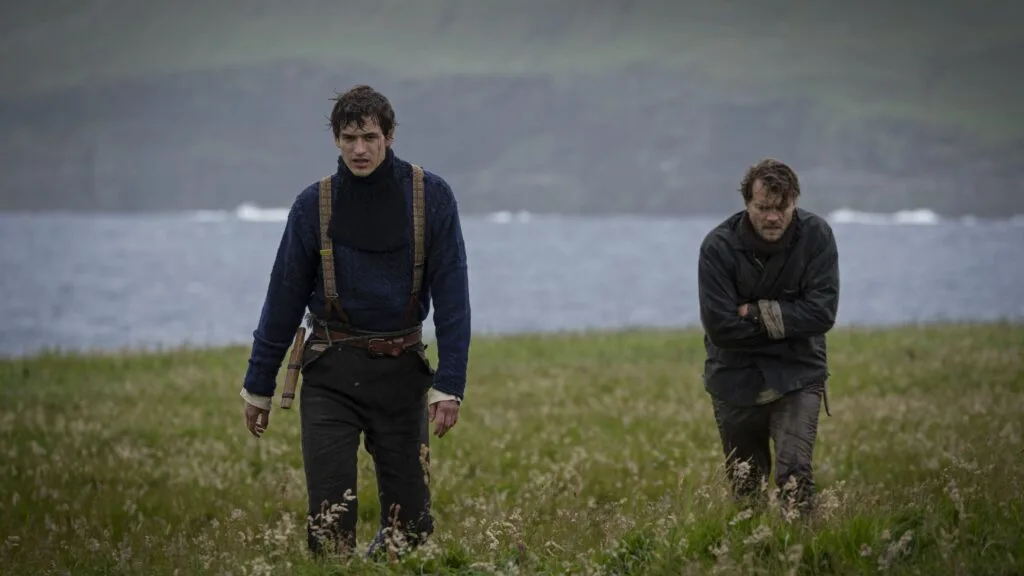
In the 19th century, Baldur (Egor Venned), a young fisherman, and his mother, Alsa (Sofia Nolsøe Mikkelsen), live in a small shanty home in their close-knit town. Their lives are rather mundane; without a father in the home, Baldur has to make sure food is on the table and the roof stays over their head. Their tasks are upended one day when Helge (Pilou Asbæk) walks into their lives. He is a handsome and fit man more than capable of earning his keep. But little does Alsa know, who begins to have feelings for Helge, that his eyes are locked on Baldur.
No Rest For The Wicked is based on Karl Heinrich Ulrichs’ short story “Manor.” It tells a similar supernatural story about two men in the same period, often serving as a metaphor for the love between same-sex people. It uses this story as inspiration, amplifying its supernatural elements in romantic ways. When Baldur and Helge begin their friendship, there’s an instant connection, but there’s something uncertain about Helge. Both have an interest in sea life; Baldur is a fisherman, and Helge is a whaler. Their friendship quickly turns into sexual attraction, and it doesn’t go unnoticed by the inhabitants of the Faroe Islands.
Powerfully depicted by Kalle’s script, gay love in No Rest For The Wicked is the film’s beating heart. Baldur is a young man living a life that doesn’t feel meant for him. He followed in his father’s footsteps, but when Helge arrives, everything for Baldur flips. He becomes completely consumed by his feelings for Helge, even taking dangerous boating jobs to be near him. Helge is more open about his sexuality with Baldur, recalling that tree bark feels like a man’s beard. But for Helge, he harbors a more straightforward approach to his sexuality; it pairs charmingly with Baldur’s tightly bound demeanor.
Part of what makes the film so enthralling is the forbidden nature of their connection and the peril they will face when it’s discovered. No Rest For The Wicked gives audiences a glimpse of hope for their relationship. And as quickly as their encounters end, the reality of their situation sets in. With religion, familial duties, and the overall demonization of same sex relationships, it’s the environment around Baldur and Helge that is the film’s true villain. Kalle weaves his story in a way that gives audiences hope that their endings may be different from what we perceive. At several moments of the film, I found myself holding onto the hope that Baldur and Helge sail to an island filled with trees. But in true gothic vampire romance style, nothing is as it appears, and tragedy lurks in every corner.
One of the biggest hurdles the film faces is its bare-bones atmosphere. Kalle uses this to the film’s advantage and exemplifies the isolation the Baldur experiences. Masterfully captured by cinematographer Jacob Møller, he utilizes the idyllic landscapes’ natural coldness and occasional warmth. Endless water surrounds the island, with a thick mist filling the air. A small church with full pews, and homes just big enough to rest your head and fill your stomach before another hard day of work. In Baldur’s world, there’s no one to talk to about his identity who won’t use it as a weapon against him. There’s nowhere to hide parts of yourself that yearn to be set free. He truly cannot express who he is until meeting Helge. The isolative nature of No Rest For The Wicked feels like a supernatural character in its own right: always listening, always seeing, and fiercely unforgiving.
There’s no doubt that Asbæk earns his Fantasia award for best performance, as he was made for the role of a gay 19th-century vampire. He possesses an inherent charm as an actor that is hard to look away from. But as Helge, he shows a vulnerability, while also being the more dominant of the pair. His character goes through many changes, both mental and physical, which Asbæk takes on with ease. His mature, headstrong approach to his character highlights Baldur’s youthfulness and inexperience. Venned plays a quiet, repressed young man who is endearing to watch. Seen in the way he views Helge, as if he is seeing with his eyes for the first time. Their chemistry oozes off the screen, and it’s hard to imagine these two characters played with even a fraction less of the intensity they do.
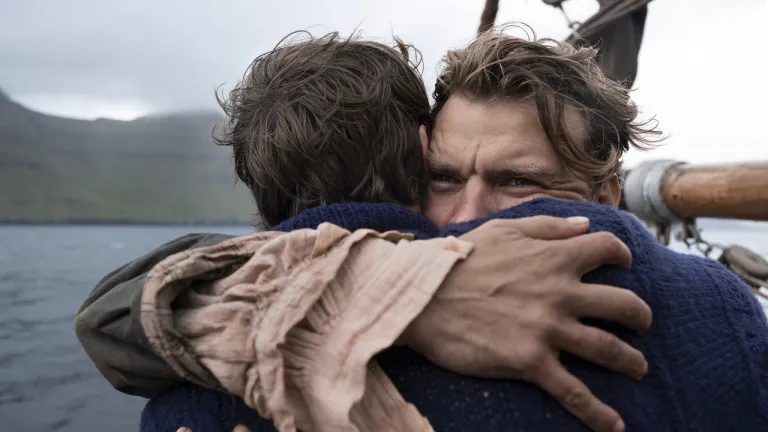
Though there’s an emphasis on supernatural elements, with Helge being the center of this, those looking for ghosts or monsters lurking in the shadows will be disappointed. At least in the literal sense of ghosts and monsters, no spirits are floating around, and no ghouls are lurking. When it comes to No Rest For The Wicked, vampirism is a natural expression of Helge and his lifestyle. Though it’s only seen a few times, his bloodsucking is much more intimate than needing blood to feed. After all, the island is littered with other men, or women for that matter, that would surely be fine to drain of their blood. Yet, Helge chooses to be with Baldur, creating a bond that goes much further than mortal life. It doesn’t make or break the film that there’s not much vampire action, and for those analyzing every word and every glance between Helge and Baldur, their connection goes much deeper than supernatural tropes.
Ultimately, No Rest For The Wicked is a love story that has endured for centuries. Kalle brings this deeply queer story to audiences through a personal connection to its themes. From its isolative atmosphere to its yearnfully touching story, it’s one of the best films from this year’s Fantasia.