



Director: Brett Sullivan
Writer: Anais Mitchell
Stars: Reeve Carney, André De Shields, Eva Noblezada
Synopsis: A musical juxtaposition of the Orpheus/Eurydice and Hades/Persephone myths that examines the way real life can impact our quest for a perfect world.
Few modern musicals have enjoyed the remarkable trajectory of Hadestown. What began as a folk-inspired concept album by singer-songwriter Anaïs Mitchell evolved into one of the defining theatrical successes of the last decade, winning multiple Tony Awards following its Broadway debut and earning widespread acclaim in London’s West End. It is a rare production that has managed to satisfy critics and audiences, blending ancient mythology with contemporary social commentary, unforgettable music, and breathtaking stagecraft. Now, Hadestown: The Musical has landed on cinema screens, giving audiences who may never have stepped inside a Broadway or West End theatre the opportunity to experience one of the most celebrated musicals of the 21st century. While nothing can completely replace the electricity of live performance, this cinematic presentation comes remarkably close to capturing the show’s hypnotic magic.
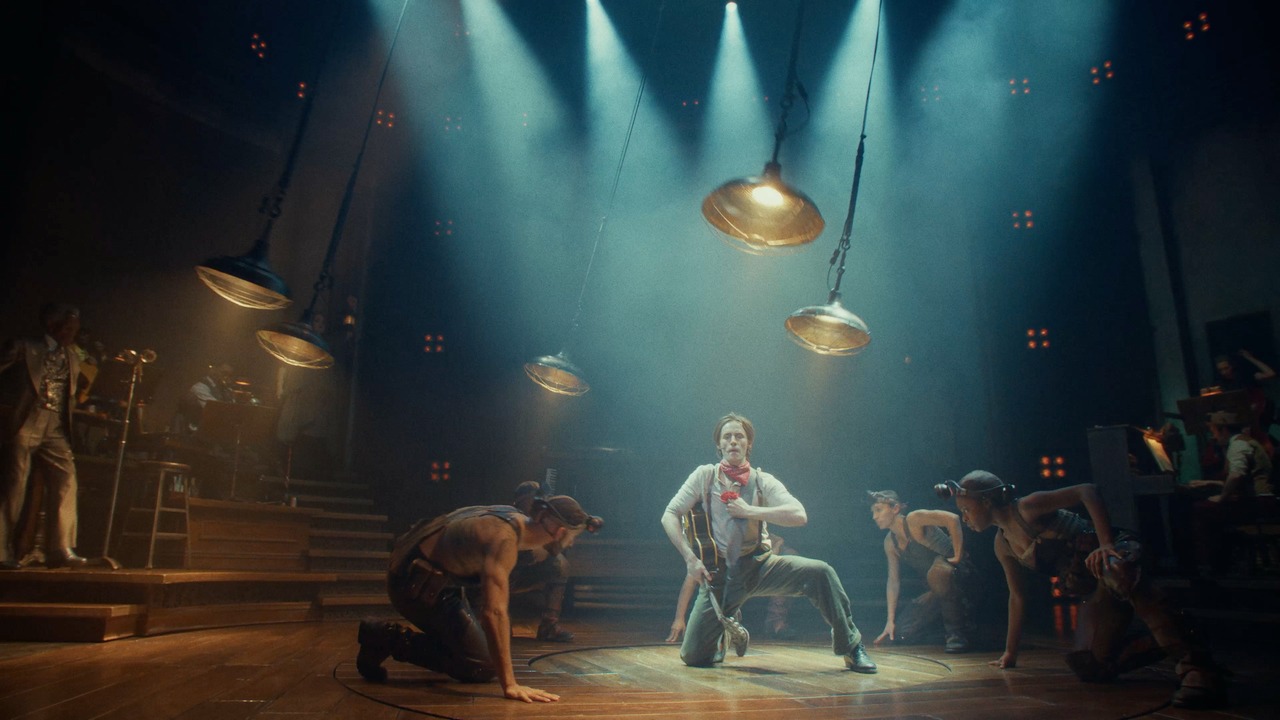
Based on the Greek myths of Orpheus and Eurydice alongside the story of Hades and Persephone, Hadestown transforms familiar legends into a soulful, jazz-infused meditation on love, hope, power, and sacrifice. Rather than presenting mythology as something distant and dusty, the musical relocates these timeless characters into a world that simultaneously feels industrial, Depression-era Americana, and completely timeless. Smoky bars, rumbling factories, and haunting railways create an atmosphere unlike anything else currently on the musical theatre scene. Even viewers unfamiliar with Greek mythology will find themselves swept into its richly textured world, while theatre enthusiasts will appreciate the meticulous craftsmanship evident in every aspect of the production.
The story follows Orpheus, an idealistic young musician whose songs are said to have the power to change the world. He falls deeply in love with Eurydice, but poverty and desperation eventually drive her into the underworld ruled by Hades. Determined to rescue her, Orpheus undertakes a perilous journey below ground, where love is tested against fear, doubt and impossible choices. Running parallel is the fractured marriage between Hades and Persephone, offering a mature counterpoint to the youthful romance at the story’s centre. The result is a narrative that balances fairy tale with political allegory, asking enduring questions about trust, labor, freedom and whether hope alone can overcome oppression.
One of the musical’s greatest strengths remains its score. Mitchell’s music effortlessly blends American folk, blues, New Orleans jazz, and gospel influences into something wholly original – unlike many contemporary musicals that rely on pop anthems designed for instant streaming success. Visually, the costumes are rich and impressive. Rachel Hauck’s celebrated stage design translates beautifully to the cinema screen, with warm lighting around the carefully crafted bar, with room for the performers to dance around effortlessly. The revolving stage is very impressive, especially in the final scenes/closing songs.
Every voice is beautiful, filled with passion and purpose. You have to listen and concentrate as an audience, as the lyrics drive and tell the story. It’s a musical through and through, with very little talking in between songs. There are also many comedic moments to break up the drama, as we all know mythology isn’t the easiest to follow and can be very heavy content.
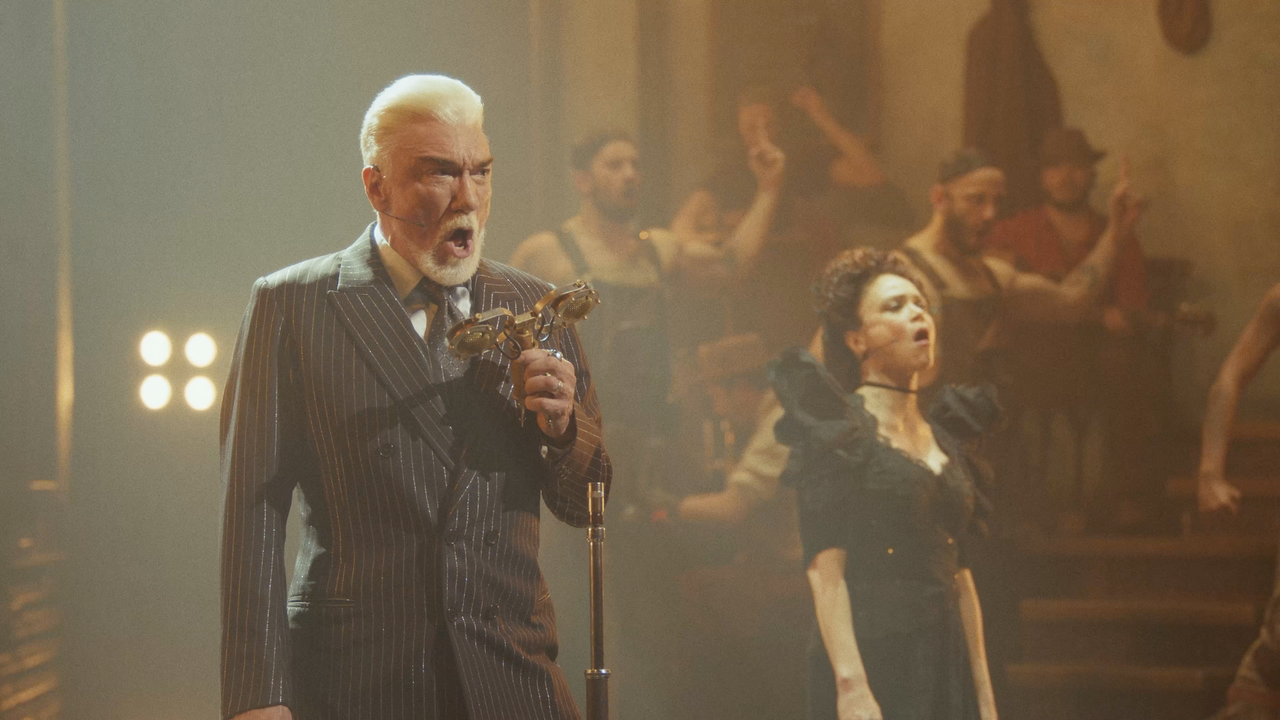
Filming in theatre is always an exercise in compromise. Certain moments that generate enormous excitement inside a live auditorium inevitably lose a degree of immediacy when filtered through a camera lens. The camera’s editing choices dictate where viewers should focus, removing some of the freedom that comes with watching the stage live, where countless small details unfold simultaneously across the performance space.
Yet, close-ups reveal emotional nuances that would often be missed from the back rows of a theatre, particularly during quieter exchanges between Orpheus and Eurydice. At the same time, wide shots preserve the choreography and architectural beauty of the staging. I also very much enjoyed seeing the cast get ready backstage before heading out into the spotlight – this is something a live audience doesn’t see.
The arrival of productions like Hadestown in cinemas also raises an increasingly important conversation about accessibility. For many people, attending a West End or Broadway performance simply isn’t possible. Ticket prices, travel costs and geographical distance place live theatre beyond the reach of countless audiences. Cinema presentations dramatically reduce those barriers, allowing people across the country, and the world, to experience acclaimed productions for a fraction of the cost. Students, aspiring performers, and theatre lovers who may never have secured tickets to the original production can finally see what has made these shows cultural landmarks. But the show only being on screens for five days does feel like a marketing ploy rather than for accessibility. I guess it has to test the waters, but ultimately we want audiences in theatre seats for theatre shows.
On the other hand, cinema screenings preserve extraordinary productions that might otherwise disappear with time. They introduce new audiences to live performance, inspire future theatre-goers, and allow remarkable artistic achievements to reach communities far beyond London or New York.
Ultimately, Hadestown: The Musical may not replace the thrill of sitting inside a packed theatre as the lights dim and the first notes begin to play, but it captures enough of the show’s artistry, emotion and imagination to make the experience genuinely rewarding. For devoted musical fans, curious newcomers and anyone who believes great storytelling should be accessible to as many people as possible, this cinematic presentation offers a compelling reminder that while the stage may be its natural home, a masterpiece like Hadestown still sings beautifully on the silver screen.