Director: Nanouk Leopold
Writer: Nanouk Leopold
Stars: Natasha O’Keeffe, Andrew Bennett, Aaron McCusker
Synopsis: Jen has carried the guilt of a tragic accident since her teens – now, the past catches up, forcing her to find a way forward.
Film has a unique ability to transport us to places in the world that we’ve never seen before, allowing us, for a short time, to live in environments and witness cultures completely new to us. Whitetail does just that; it’s a transportive film at its best. Writer and director Nanouk Leopold makes that felt with each one of our senses, making a tense thriller set in the deep forests of Ireland deeply effective. Leopold crafts a story that examines a life in turmoil when youthful mistakes stick long into adulthood. It’s incredibly acted and shows the lush beauty of nature and how it holds dark secrets.
What starts off as a teen romp through the woods, with a flashback to a younger version of Jenny (Abby Fritz) and her crush Oscar (Seán Treacy) as they smoke a joint and mess around, quickly turns deadly. As Jenny and Oscar are attempting to shoot one of the whitetail deer near their napping spot, Jenny doesn’t have it in her to shoot. Oscar finds another target for Jenny to aim her sights on. Unbeknownst to either of them what the target truly could be, due to an obscured view from the dense forest, Jenny shoots off a round that makes a connection. Walking over downed trees and overgrown roots, the pair make their way toward their kill, only to see that their prized kill was not what they were anticipating.
The pair have their own way of dealing with what just occurred; Jenny falls to her knees, and as she looks back at Oscar, he is already walking away. Whitetail introduces the audience to what starts out as any coming-of-age film would, with two lovers exploring not only the fantastical nature around them but each other as well. Leopold draws you in with Jenny and Oscar, who seemingly have to meet in private due to Jenny’s mother not being a fan of Oscar, making them feel like an Irish version of Romeo and Juliet with a twist—tragedy and all. When it’s revealed what, or rather who, Jenny and Oscar shoot, Fritz becomes inconsolable, and her screams stick throughout the entirety of the film.
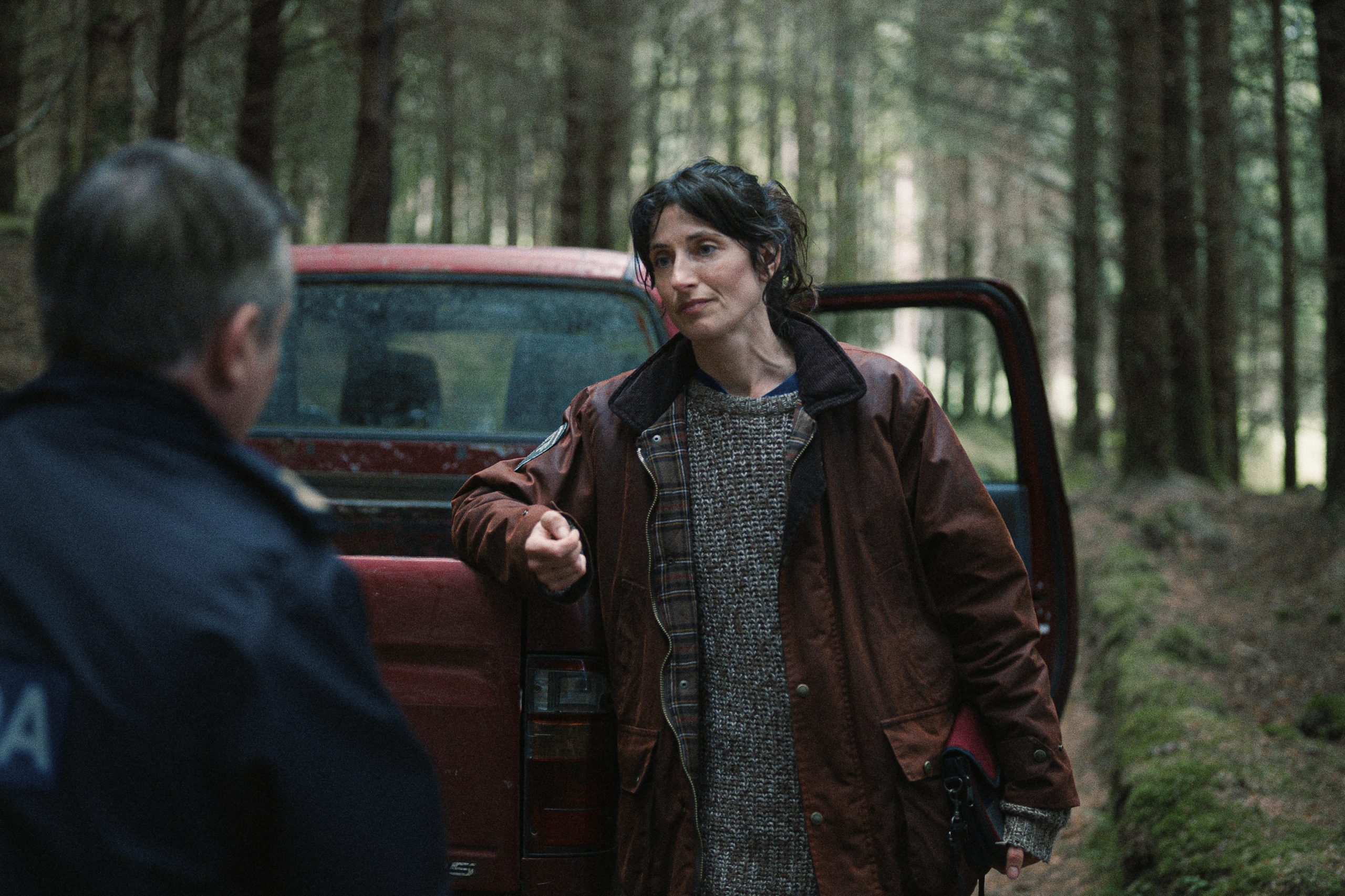
As Jenny grows into an adult, she’s now a ranger going by Jen (Natasha O’Keeffe), making great efforts to preserve the forest that she has loved since her youth. Living with her aging and often sickly father, Daniel (Andrew Bennett), it’s been a few years since her mother passed. Both have different feelings about it. Jenny finds herself deep in her work, often examining trail cameras and attempting to ward off poachers. From her perspective, she has complete control over her life, but failed relationships and stagnant personal growth plague her. Her father even remarks that Jen is stuck in tar, barely making progress and going through life without a partner. Even her ex, Bobby (Rory Nolan), who still pops into her life from time to time, can see that she is struggling. So when her first love—who is the only person to recount that tragic day in the forest—returns, her life spirals even further.
It’s a tense examination of a woman who has had her life completely altered by a mistake that haunts her well into adulthood. No matter how far she pushes it down, she can’t escape it. O’Keeffe, playing the older version of the character, portrays a woman who is barely hanging on, with a secret that is begging to be released. Choosing to keep it inside has isolated her from having any close friends or a partner, and the only surviving member of her family is not doing well. She’s a complex character—on one hand, you feel for her. Who hasn’t made a mistake when they were young? On the other hand, her missteps are much more severe than most, but O’Keeffe’s performance makes it hard to root against her, especially when her ex comes back to town. Her scenes shared with Bennett showcase the film’s best moments, raw with emotion and honesty.
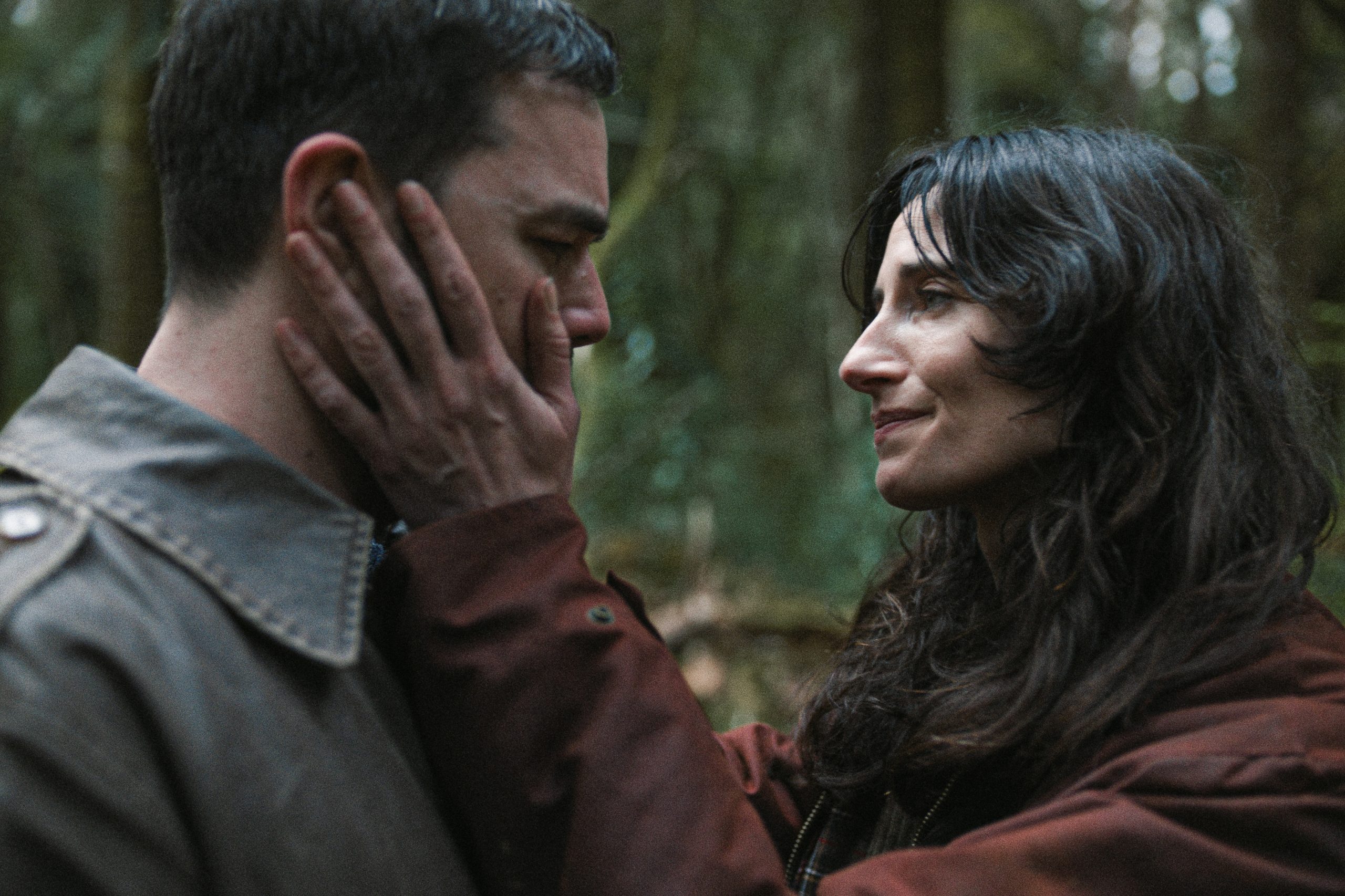
Oscar comes back into the film later, in the second act, but his absence is felt the entire duration of the film. Leopold has Jen go through life entirely on edge about the truth coming out, and to the audience, it seems like she’s the only person whose life was changed. But Oscar is an interesting case; he left their small Irish town, even to the dismay of his mother. Returning in the wake of her death, all those emotions come back to him. He’s the only person who knows what happened during their afternoon date, but Leopold often frames Oscar as not being as impacted by the outcome of that day. Jen, who hasn’t been the same since that day, suffers from nightmares when Oscar returns, but Oscar comes across as if it’s something he moved on from long ago.
Leopold walks a tight line with her script, especially when Jen and Oscar reunite in the forest; she often leaves open-ended scenarios for the audience to fill in. For me, it totally works—not everything needs to be explicitly said or seen to be effective. Sometimes a character running wildly through the woods is all that is needed. We see Jen devolve further and further, bringing headless deer she finds poached in her woods to the cops or sleeping with a random bartender at a local bar.
The film doesn’t have wordy dialogue; Leopold instead turns to somber, reflective moments to drive the pain felt by each character. Letting the atmosphere of nature and its stillness fill each frame makes it even more glaringly obvious how sad and lonely Jen truly is. What worked the most for me was the unanswered questions I’m still rolling around in my head, leaving an uneasy feeling—especially with the final act of the film.

Enough cannot be said about the ambiance of Whitetail, from the dissonant score by composer Stephen Rennicks to its use of focus pulls; this film establishes a sense of unease quickly. There are numerous shots of the forest from a distance, and as the camera zooms into the area, it’s made apparent how dense and large Ireland’s greenery is, and how many secrets could be left there. The film is gloomy, with colors that pop against its cool-toned grading. The cable-knit sweaters Jenny wears at the beginning of the film add a layer of texture to her natural surroundings.
Captured by cinematographer Frank van den Eeden, each moment of the film is masterfully shot, using the environment around him to his advantage: faces are found framed by branches, the scent of death lingers under Jen’s nose, and bushes help to disguise eavesdroppers. It’s his work that makes this film a multi-sensory feast. There’s more than enough in the film’s visuals to make you want to book a trip to Ireland—just don’t wander too far into the woods.
Long after the final scene ends, Whitetail lingers. The unease established by O’Keeffe’s raw performance and Leopold’s observant script isn’t easily shaken. Its reflective and pensive atmosphere guides this film from a youthful frolic in the wilderness to one of the best films of the year.