Director: Philippe Falardeau
Writers: Philippe Falardeau, Alain Farah
Stars: Rose-Marie Perreault, Hassan Mahbouba, Paul Ahmarani
Synopsis: Alain weds Virginie at Saint-Joseph Oratory’s crypt. Despite family attending, including his divorced Lebanese-Egyptian immigrant parents, his joy fades as insomnia, anxiety, and illness return.
Perhaps what’s most impressive about Philippe Falardeau’s Lovely Day is how effortlessly it attunes the audience to its chosen structure. We know that it’s a wedding film, but when we first meet Alain (Neil Elias), he is ordering fries in a full suit at a roadside shop. It’s a bit of a strange opening considering we only know the context of a wedding taking place, but it only gets more confusing from there. With a great visual gag (the first of many within this film), Alain gets into the car with best friend/best man Édouard (Hassan Mahbouba) as they panic about their timing. There’s less than an hour before the wedding, and they still have quite a ways to go. It’s made all the more stressful upon realizing Édouard was still writing his wedding speech while Alain was ordering. They cannot stop running into traffic along the way, and dipping sauce is constantly on the verge of spilling on Alain’s suit. Nobody said the day-of-preparations for a wedding was easy work, but it’s almost as if Édouard and Alain have gone completely out of their way to end up in this predicament. For those curious about how and why everything is going so poorly on Alain’s big day, Falardeau’s film is here to humor you. But it has larger intentions than to simply make you laugh at the bustling nature of a large-scale event such as a wedding. With this film, he and co-screenwriter/author of the original autobiographical novel, Alain Farah, examine just how metaphysically baffling an event like this could be in the first place.

Any social function could be perceived as a bit strange if we ever were to disassociate and observe it from afar. Countless individuals, all living their own isolated lives, come together in a certain place and find a common ground. Sometimes there’s a reason, such a planned event, and other times, it can be completely on a whim. But there’s a particular goal in the case of a wedding; in fact, there’s quite a few. Beyond serving as a distinct marker to bring in the next chapter of two peoples lives, it is a convergence point in the story of our life. It’s a life event where our past meets with our future, and the two either become tangled or bounce off one another completely. In the case of Lovely Day, it appears to become tangled to the point of breaking reality entirely. This is captured through the very clever editing that holds so much of this film together.
The fluidity of Elric Robichon’s editing feels quite accomplished while watching Lovely Day. Making use of a non-linear structure that bounces across Alain’s life with little acknowledgement of timeline is difficult in and of itself. But to do so in a way that feels cohesive with the very ideas of the film? It’s commendable, especially when the timeline begins stretching itself out even further into the past. It’s perfectly understandable to become stressed out on one’s wedding day. It would honestly feel a bit strange for anybody to remain completely lackadaisical on a day where so much could go wrong. But the longer we observe Alain’s present-day behavior leading up to the wedding, we can’t help but wonder just what it is that has him so incredibly on edge. Sure, there’s a ton of garbage in front of his apartment building and his air conditioner may be making a bit of a rattle. Or maybe he actually does feel one of the many medical symptoms he’s constantly self-diagnosing himself with. But his panic quickly begins to border on compulsion. When we finally meet Alain’s bride-to-be, the lovely Virginie (Rose-Marie Perreault), the stress of what might happen becomes too much to bear. She’s so instantly charming alongside Alain that audiences will all but demand to understand what’s going on in his mind. And it’s this moment where Falardeau provides us with some answers.
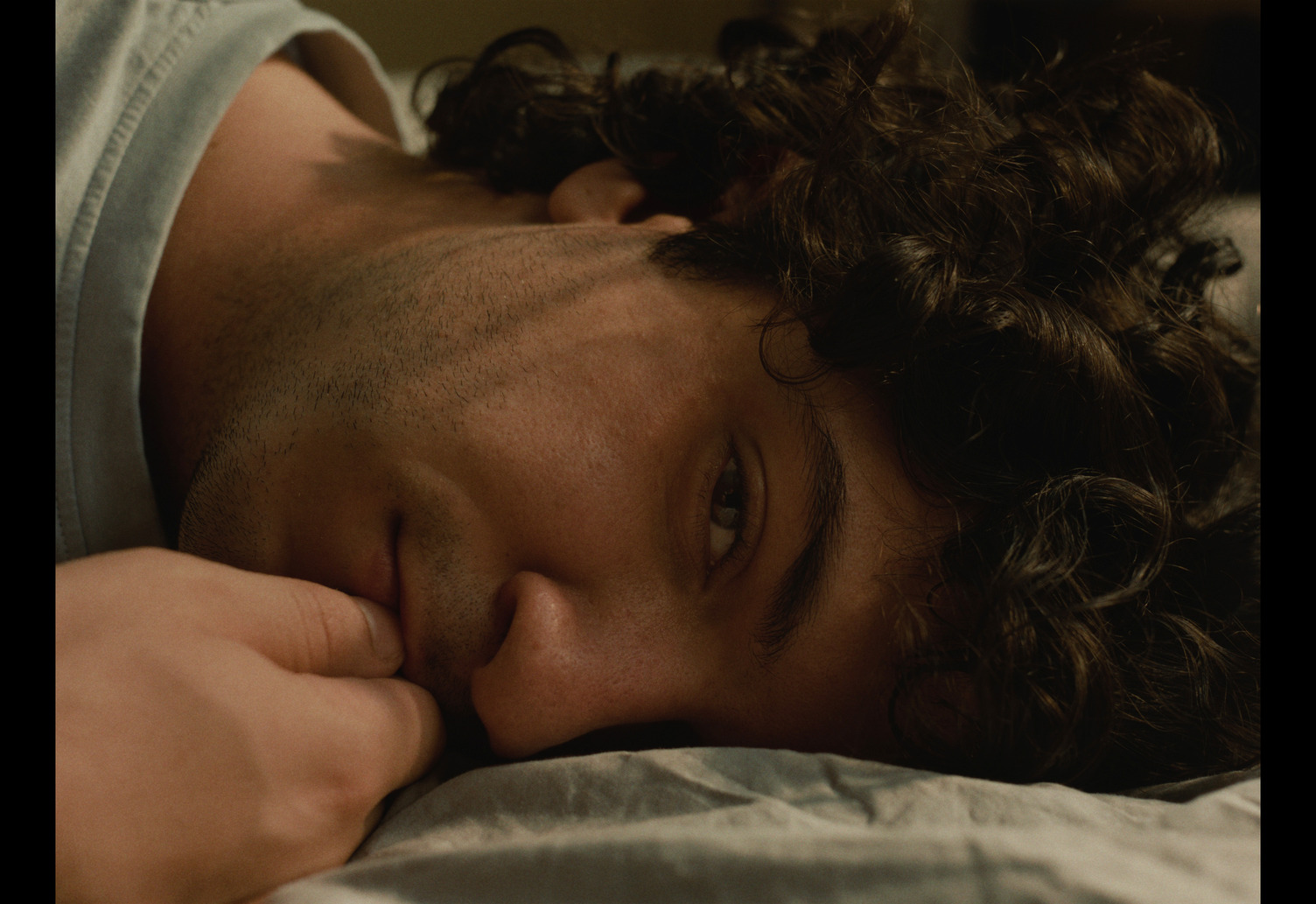
One thing is clear about Alain and Virginie’s wedding day. At no fault of their own, they seem to have lost a fair amount of control. This is a subject surrounding weddings that is often poked fun at, but rarely ever seen on such full display as is the case with Lovely Day. With so many people from all different parts of our lives coming together, there’s bound to be clashes of some kind. As such, concessions are made for an overall greater peace of mind. It allows for the big day to be about the two people at its center. Yet Falardeau and Farah refuse to allow Alain and Virginie off the hook that easily. They pack the guest list with such a rich assortment of characters, all of whom are equally charming and infuriating in their own distinct ways. Édouard can’t seem to ever stop getting in his own way. Alain’s divorced parents, Yolande (Hiam Abou Chedid) and Elias (Georges Khabbaz), have called a 24-hour-truce for the sake of their son and daughter-in-law, but who knows how long that’s likely to last. By the time Virginie addresses her genuine frustrations at the way things are playing out, it’s already too late for any official change. But that won’t stop her from making sure the day remains hers and Alain’s. The film would likely benefit from a bit more depth to Virginie, but her presence in key scenes is very much felt. Too often do we see family events become an entire show to appease specific whims of guests that will be in attendance. It’s done in the name of keeping peace, but Lovely Day acknowledges how unfair that can be in often chuckle-worthy ways. And after seeing all Alain has gone through to get to this point in his life, a few chuckles are almost certainly needed.
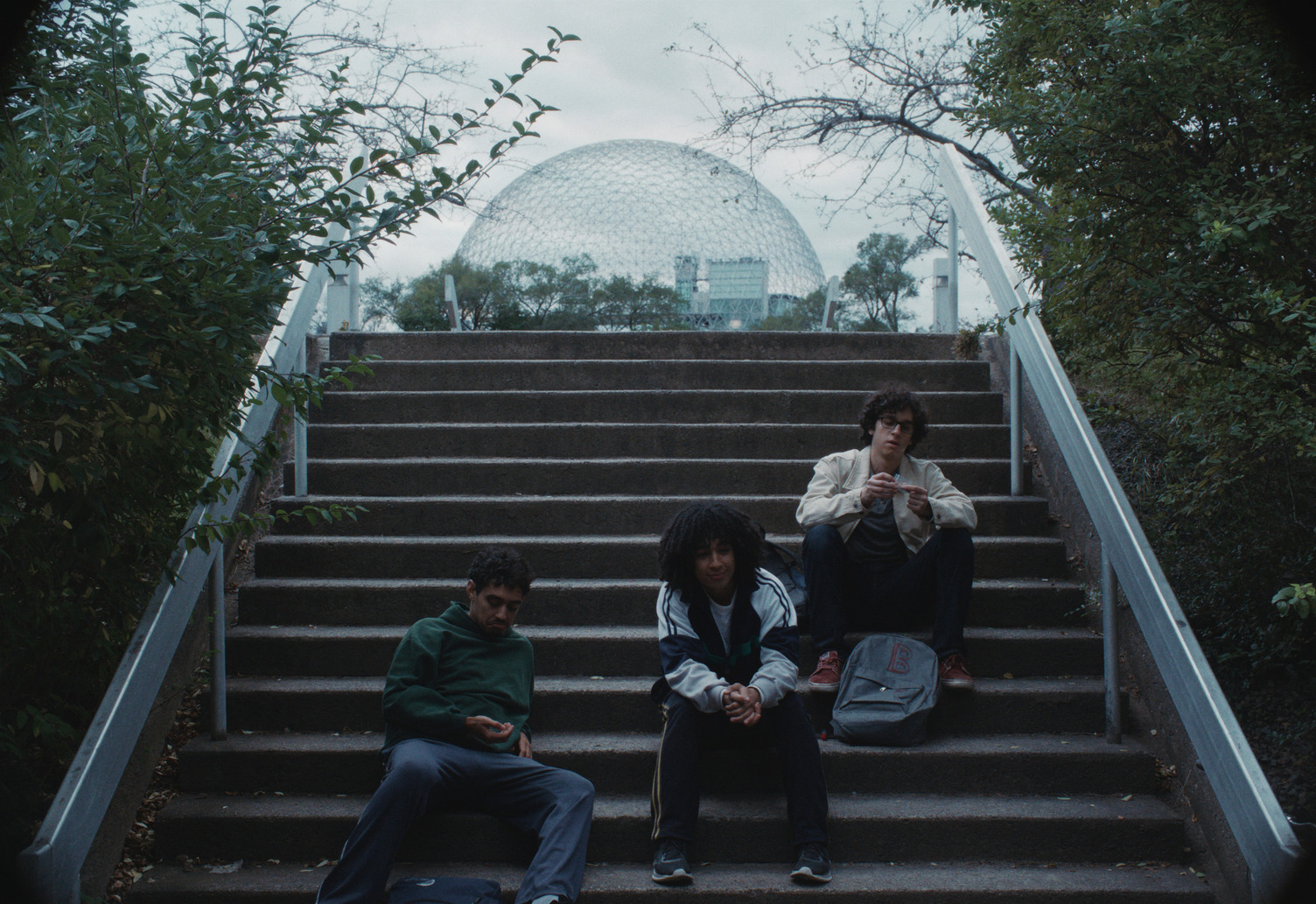
By the midway point of the film, Falardeau has turned his gaze far back into the past. It’s here that we see why Alain feels such a deep lack of control in his present-day life. Growing up with crippling stomach pains that his father desperately wanted kept secret, and parents who furiously shout at one another while ending dinner before food is ever served, Alain grew up without a voice. His insides were literally tearing him apart, and his reliance on a smattering of pills and at-home treatments to provide some comfortability likely provided little peace of mind beyond easing physical discomfort. For he was still a shy kid who felt peer pressure from smooth-talking friends. He still felt the all-too-relatable nerves in attempting to tell a girl how he really felt about her. At the beginning of Lovely Day, Alain’s nerves are somewhat adorable. Over the course of Falardeau’s film, they only appear more tragic. An impressive element of Lovely Day is how Falardeau depicts such an anxiety-riddled individual. Earlier, a wedding was referred to as a convergence point. We see a few versions of Alain throughout his life, but as his panic begins to grow throughout the night of his wedding, the lines between eras begin to blur until they all converge atop one another. He sees a young Édouard attending his wedding, or views himself as an adult throughout pivotal moments of childhood. For a film that is neither full-blown comedy or drama, but a deconstruction of an event that features both, it has quite the sobering effect by its finale. In the end, a wedding serves two purposes: they are a way for us to look ahead at what’s to come, and they’re a way for us to look back at everybody that got us to that point in time. And as the past sends us off into the future, Lovely Day is a reminder to never shy away from either end of the timeline, and instead embrace it all.
Lovely Day is celebrating its world premiere in the Special Presentations category of the 2025 Toronto International Film Festival.