



Director: Pauline Loquès
Writers: Pauline Loquès, Maud Ameline
Stars: Théodore Pellerin, William Lebghil, Salomé Dewaels
Synopsis: Nino, a young man, explores Paris’ streets to reconnect with the world and himself, following his doctors’ advice.
Pauline Loquès’ Nino is a film that will undoubtedly leave hypochondriac viewers with much to think about. The film opens on a Friday morning, with Nino (Théodore Pellerin), more than a bit confused, chatting with the administrative office of a hospital. There seems to be a bit of a mix-up surrounding his reason for visiting. Nino returned simply expecting a doctor’s notice as to why he may be unable to show up for work; unfortunately his results revealed more than anticipated. This leads to a frankly uncomfortable sit-down between patient and doctor. And it’s in this discomfort that Nino grips its audience with a simple premise that can be easily engaged with by any viewer. For anybody who can’t find comfort amongst the sterile setting of a hospital, it’s easy to empathize with Nino. As his diagnosis is revealed to him, it’s as if his world is being turned upside down without a care in the world. The choices Loquès makes in this introductory sequence aren’t necessarily cruel. However, they are blunt and unforgiving, which goes a long way in capturing the feelings that are being crystallized across Nino’s runtime.
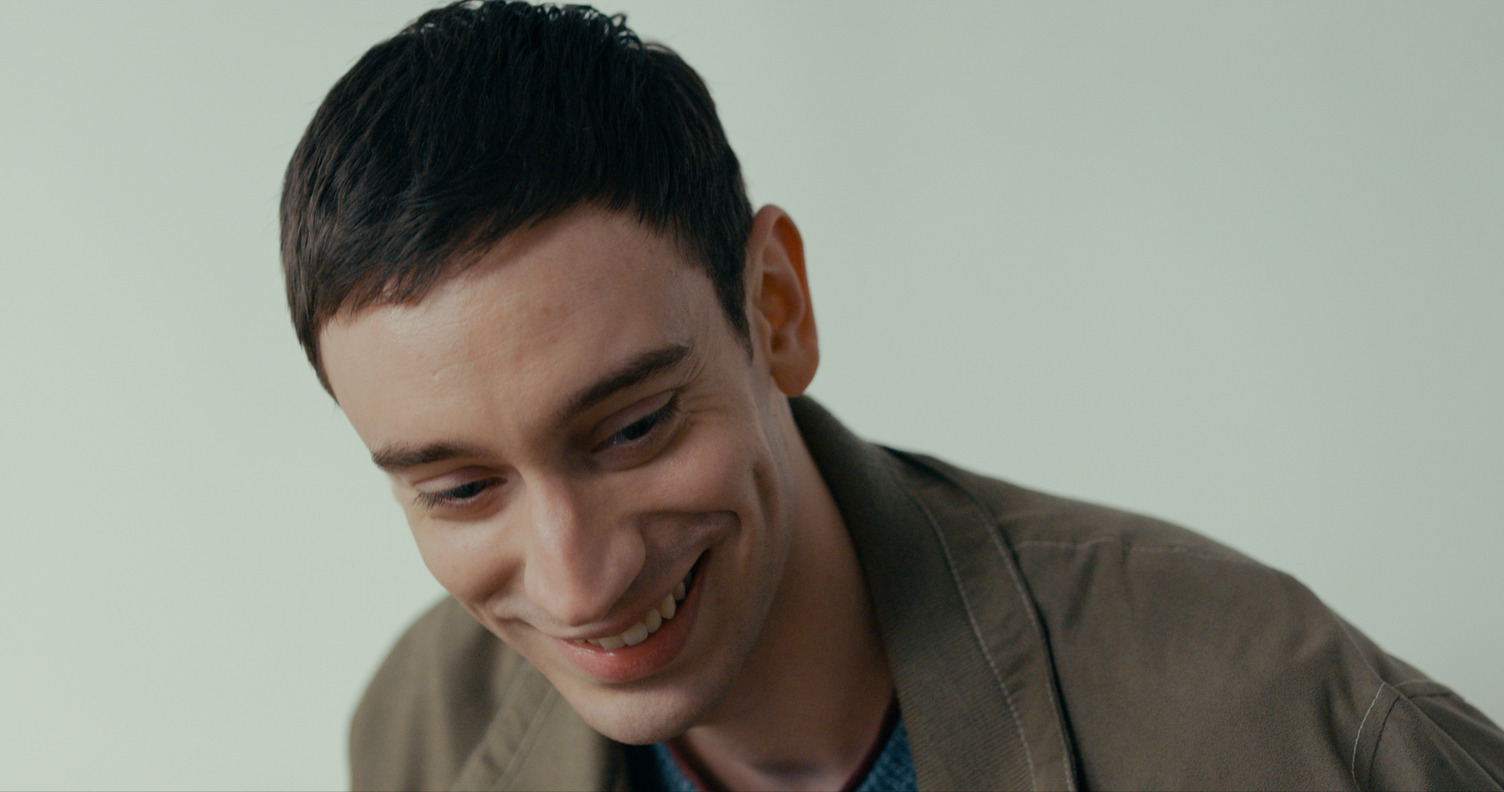
As Nino receives potentially life-shattering news, one can’t help but notice the setting. The non-descript office is only punctuated by the copious amounts of construction surrounding it. As Nino’s doctor breezes through inquiries, next steps, and more, there’s an overwhelming sensation permeating across Pellerin’s face. But one of the great strengths of this film is in his performance rarely playing the emotion loudly. In fact, nearly the entirety of the film is wrapped up in his solemn face which refuses to allow anything to slip away. It’s an internalized performance that sees a young man, celebrating (or at least now existing amidst) his 29th birthday, while reckoning with the new reality he may be forced to live in. It’s quite the shock that is delivered plainly. As his doctor continues, there’s a mundanity and a silliness to the questions being asked. They undoubtedly serve a medical purpose, but it’s easy to understand why Nino is less concerned or even aware of the minute changes within himself, and is far more focused on his chances of survival and recovery. He is told to return in three days for immediate treatment. It’s within this emotional spiral of a weekend that the film is contained.
To be expected to temporarily go on as if nothing’s the matter represents a majority of this film. Yet it’s something many individuals are expected to do. In Nino’s own words, upon finally telling somebody about his diagnosis, he admits his belief that everybody is always just pretending everything is fine anyway. In his mind, there’s no reason to make his dilemma an issue for anybody else. It’s a sad way to see anybody feel so strongly about living their life, but it’s an honest one. And as such, Loquès and director of photography Lucie Baudinaud capture their central character through such a captivating lens. So much of the film, especially the first half where Nino has not revealed his diagnosis, is captured with a borderline voyeuristic eye. It almost feels like the filmmakers, and in turn the audience, are spying on Nino in his most fragile state. As the camera tracks him through floors and around corners, there’s a human intimacy that almost feels tangible. How does somebody act when they don’t think they’re being watched? In such times, do we look forward or backwards? How can we contain all the emotion we hold within ourselves?

For Nino, he seems crippled by the inability to choose what comes next. He is tasked with a single job for the sake of his future self, but can’t bring himself to look forward. He finds himself spending his birthday at his mother’s house after being locked out of his apartment. It’s here that he goes through old photographs, mementos, clothes that no longer fit, and more memories. As Pellerin’s stone-faced expression gives little away, we’re left to interpret our own fears and worries and nostalgic ideas onto Nino. It’s an effective storytelling method that works due to being in the capable hands of a great performer and an empathetic storyteller. Just look at how easily both Pellerin and Loquès convey a sense of loneliness in Nino. He is surrounded by family and friends that clearly have such love for him. And even still, he is understandably terrified of revealing his diagnosis. Perhaps if he never addresses it directly with sincerity, the issue might go away. It’s a thought process that many, myself included, undoubtedly share. But Nino ultimately reckons with the possibility of whether or not such a way of living is conducive to a happy and healthy life. It’s also very much focused on the little moments in life we think about amidst times of distress.

In a particularly vulnerable moment, Nino reveals a small silver-lining to his current situation. It’s perhaps one of two moments that we see a tinge of hope or ease on Pellerin’s face. It’s an endearing sequence that caps off one that’s admittedly a bit odd. There’s an extended sequence preceding this admission involving Nino’s dilemma, where an old schoolmate he hasn’t seen in some time lends a hand. It’s an undeniably tender and purely human act of kindness. But the film doesn’t seem to completely earn such an interaction. The film more than recovers though with a simple injection of tension followed by its being wrapped up with an even more kind gesture. In spending three days, or roughly 100 minutes, with Nino, we have learned both everything and nothing about him. So much of this film’s impact rests within Pellerin’s wondrous performance, but it’s in the human embrace of natural fear and comfort amongst loved ones that Nino finds its most genuine ideas.
Nino is celebrating its International premiere in the Platform category of the 2025 Toronto International Film Festival.