

Home Blog Page 44

Movie Review: ‘To a Land Unknown’ is a Beautiful Meditation On Friendship


Director: Mahdi Fleifel
Writers: Mahdi Fleifel, Fyzal Boulifa, Jason McColgan
Stars: Mahmoud Bakri, Aram Sabbah, Angeliki Papoulia

Synopsis: A Palestinian refugee living on the fringes of society in Athens hustles and schemes his way to get out of this limbo by any means necessary.


Bureaucracy doesn’t serve the people. It serves the state. The paperwork, endless meetings, legal proceedings, more paperwork, and denials are meant to get you to give up. They, the state, don’t want you to have what you need even though they ostensibly supply it through their process. The ambiguity of the system is what keeps the system alive and the people from advancing.

This is where we find Chatila (Mahmoud Bakri) and many people in his circle. They have become people without a country because the legal means for getting from where they were to where they want to go is not fast or fair enough. These refugees get stuck in a sort of purgatory where their morality and humanity is tested.

The script for To a Land Unknown, written by Mahdi Fleifel (who also directed), Fyzal Boulifa, and Jason McColgan, depicts a constant state of waiting. The tale is Sisyphean in the constant struggles the characters face. As Chatila and his friend Reda (Aram Sabbah) feel like they have the scheme to get them ahead, the scheme that will finally get them out of Athens, something sets them back. Their schemes, no matter the nobility of the final goal, test their moral fortitude and bend their sense of human decency. These are good people in a bad situation, who have in turn become bad people by trying to better their situation.

The story, in some ways, evokes John Steinbeck’s “Of Mice and Men.” Chatila, the brains, is trying to keep Reda, the meek, from screwing up their plans. There is even a very similar scene between the two stories when Reda asks Chatila to describe the restaurant they’re going to open just as simple Lennie begs shrewd George to tell him of the farm the two of them will one day have.

Yet, it’s reductive to think of Reda as simple as Lennie. He’s more world weary than Chatila, having been through this type of purgatory before. He’s been dragged back here by Chatila’s optimism and drive. His good nature is being tainted by the things he must do to survive and the things Chatila schemes to get them closer to his goal of Germany. Reda says in so many words, time and time again that this isn’t what he wants. He asks Chatila time and again what he will even do at the restaurant to contribute in a meaningful way. Every step he takes toward Chatila’s dream is a step away from himself.

This is where Mahdi Fleifel excels as a director. He and cinematographer Thodoros Mihopoulos have set up shots where the men walk with purpose toward the camera as the camera moves backward. It’s as if the camera is their goal, just out of reach as it moves away. This is never more focused then as Reda makes a decision about a pair of shoes he promised to fellow refugee, Yasser (Mohammad Ghassan). Reda spies the store out of the corner of his eye as the camera stops with him. He tells Malik (Mohammad Alsurafa), a lone boy he and Chatila have been mentoring, to wait for him in the park. We don’t enter into the shop with Reda, but we see the interaction with the clerk from outside. As soon as he’s given the box of shoes, Reda bolts. He runs as if chasing the camera and looks as if this act has once again set him further back than having brought him ahead like he wanted. His chase is futile because his true goal of contentment and security will always be out of his reach.

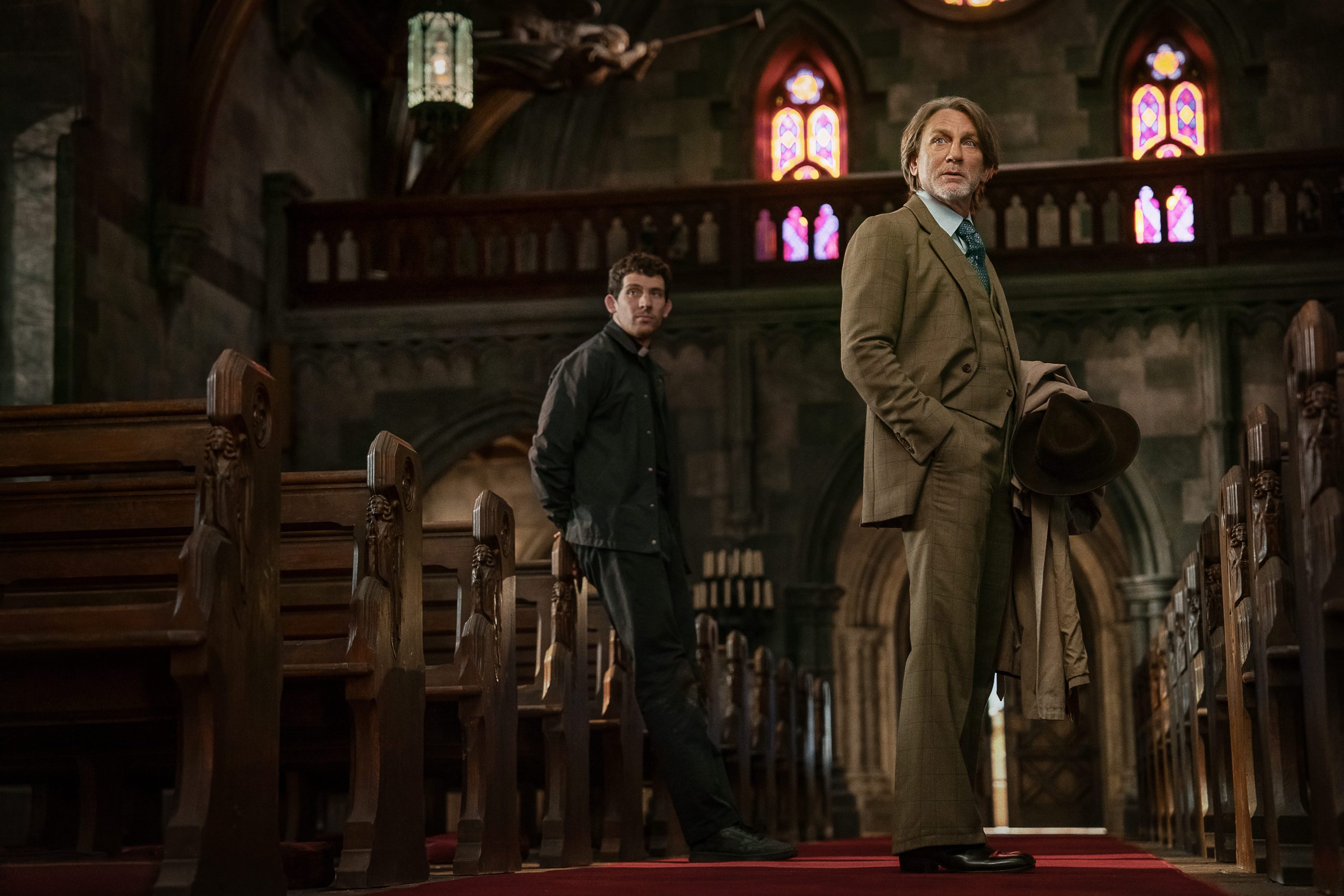
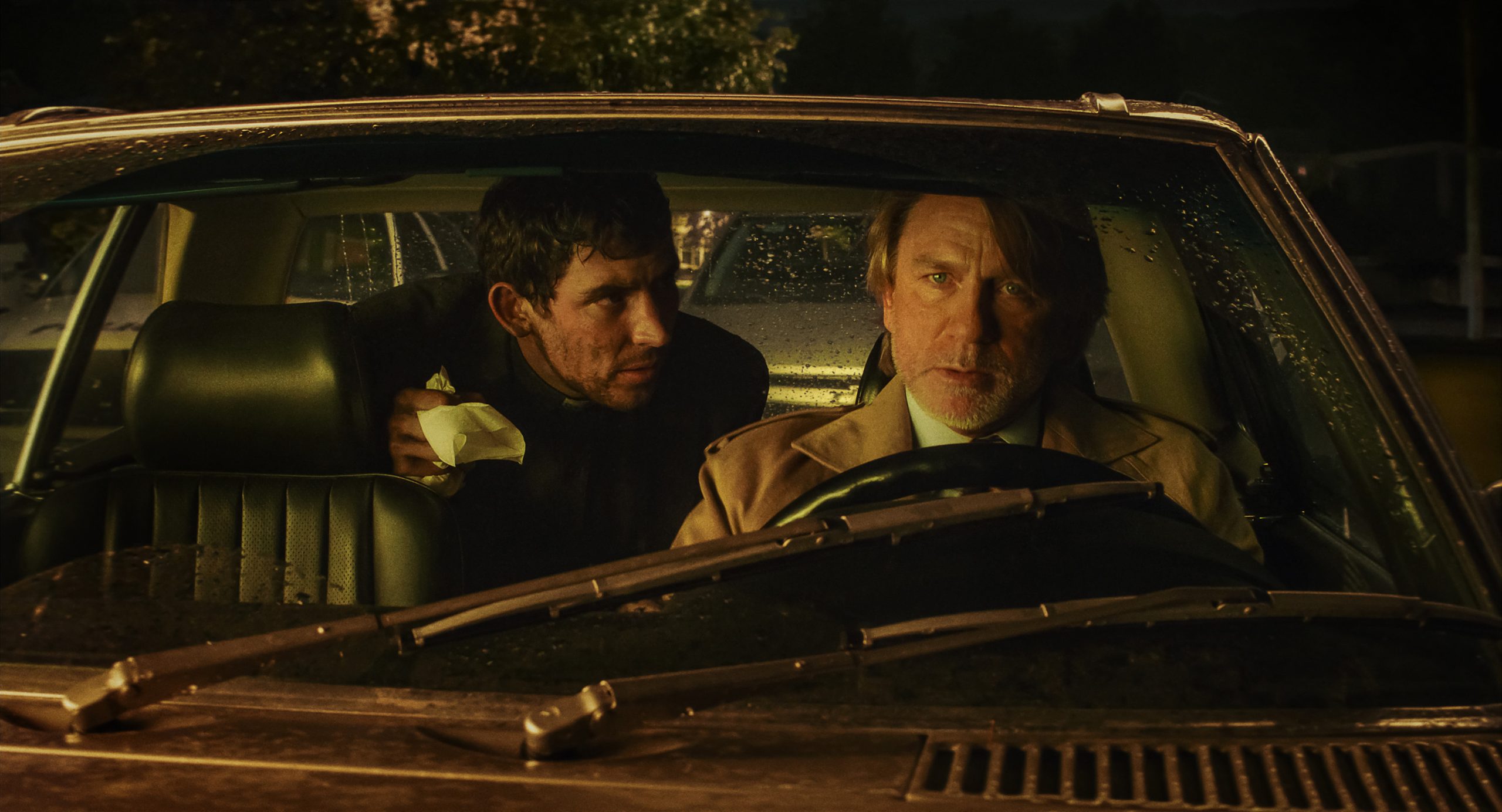
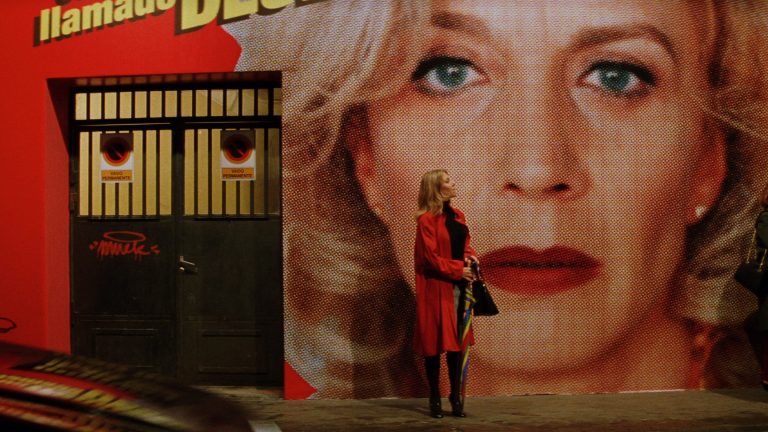
To a Land Unknown review: Palestinian crime film lays bare the desperate  plight of refugees | The National

These scenes of desperation, frustration, and anguish simply would not work without the great talents of Mahmoud Bakri and Aram Sabbah. The fiery passion that Bakri brings to Chatila is matched by his skill with Chatila’s more tender moments of deep thought. The anguish of Reda would not be as poignant if it weren’t for the expressive face of Sabbah. The two of them play off each other brilliantly and create a pair that is easily understood as needing to be together and in need of a separation because their codependence will bring them both down.


To a Land Unknown is almost like a bottle. The cork of legality is firmly stuck over the heads of Chatila and Reda. They can try and chip at the cork or break through the bottle, but neither option is as easy as they hope. The film is about the hustle and the humanity lost in surviving in between trying to live a better life. It’s a beautiful meditation on friendship and a stark reminder of the tremendous lengths people will go to get out of a dire situation.

Grade: A

Movie Review: โ€˜Donโ€™t Letโ€™s Go to the Dogs Tonightโ€™ Sets Embeth Davidtz as a Director to Watch


Director: Embeth Davidtz
Writer: Embeth Davidtz
Stars: Lexi Venter, Embeth Davidtz, Zikhona Bali

Synopsis: Depicts 8-year-old Bobo’s life on her family’s Rhodesian farm during the Bush War’s final stages. It explores the family’s bond with Africa’s land and the war’s impact on the region and individuals through Bobo’s perspective.


My expectations for Embeth Davidtzโ€™s feature directorial debut, Donโ€™t Letโ€™s Go to the Dogs Tonight, were relatively nonexistent. Being unfamiliar with the source material and period of history Davidtz adapts the story from, the movie felt like a significant ask, especially as a transition from acting to directing. Yet, there was something utterly transfixing about how Davidtz showcased this period in history and the dark coming-of-age tale that acts as the basis of Alexandra Fullerโ€™s memoir that I began to become completely hypnotized by it, even during some of its most difficult scenes.ย 

What impressed me the most about Davidtzโ€™s approach to filmmaking, right from the top, is how strong of a formalist she is. With cinematographer Willie Nel, she creates images of real, tangible poetry, whose impact marks an indelible imprint in her memory. For starters, shooting the story through the eyes of its titular character, Alexandra โ€œBoboโ€ Fuller (Lexi Vinter), gives it a much more intimate feel. Weโ€™re forced to observe a child born in the throes of an ongoing war, who has known nothing but conflict and division and whose perception of the world is warped by her parentsโ€™ beliefs, attempting to make sense out of a situation that complexifies itself further as the movie progresses.ย 

Davidtz plays Nicola, one of the parents, and her vision of the world is imparted within Boboโ€™s behavior, and how she (curiously) observes people, either under a table or by directly doing things she shouldnโ€™t, such as smoking, and knowing how to cock a gun. Itโ€™s in those moments where the audience understands the weight of what the filmmaker wants to tell, without an ounce of handholding in its 100-minute runtime. In some cases, we perfectly understand whatโ€™s going on. Fragmented archival footage of news reports, or radio announcements, gives the audience context in different ways than weโ€™re usually accustomed to in historical dramas. Weโ€™re forced to listen and pay attention to what the characters are watching, or listening to, for us to get a sense of whatโ€™s happening.ย 

At some point, though, the narrative becomes increasingly muddled, and itโ€™s a bit hard to follow whatโ€™s most important. Yet, Davidtzโ€™s image-making is so strong that weโ€™re often encouraged to extract meaning from how she frames Boboโ€™s story. The fact that the camera is constantly on her level, and lets us see her point-of-view, either through direct shot-reverse-shot exchanges between the characters or images that literally show what Bobo is seeing. One of the most striking recurring ones occurs at the beginning of the movie, where she half-closes her eyes, and we see the sunlight reflect on her eyelashes, saying internally to the person sheโ€™s looking at, โ€œIf you love me, you have to turn around.โ€ย 

This is repeated at the end of the movie, and what emerges overwhelms the senses. Itโ€™s pure cinema, distilled at its most potent essence. Again, I didnโ€™t know what to expect from Davidtz, and was shocked at how jaw-dropping each frame of her movie was. It envelops us and encourages the audience to come up with their own conclusion as the story gets darker, bleaker, and far more confrontational in its exploration of protagonists we shouldnโ€™t relate to, or feel an ounce of sympathy for, with the exception of Bobo, whose innocence has been stripped out by endless trauma, either direct or indirect.ย 

As Bobo, Venterโ€™s performance is revelatory. We feel for her plight at every turn, and express great compassion when we see what she sees โ€“ because a childโ€™s eyes arenโ€™t meant to observe what she looks at on a daily basis. It makes some of the filmโ€™s more difficult scenes even tougher to swallow, especially its gut-wrenching conclusion, which is of immense emotional power. Davidtz is equally as good in a supporting performance, but Iโ€™m more than hoping she will continue to carve a path as a singular artist within the world of filmmaking rather than acting.ย 

DON'T LET'S GO TO THE DOGS TONIGHT โ€“ Review โ€“ We Are Movie Geeks
If anything, Donโ€™t Letโ€™s Go to the Dogs Tonight proves to me that Davidtz has what it takes to be one of the best filmmakers working today if she continues in that direction. We already knew how good of an actor she is, whether in her heartwarming portrayal of Mrs. Honey in Danny DeVitoโ€™s Matilda or in her sorrowful turn as Helen Hirsch in Steven Spielbergโ€™s Schindlerโ€™s List. And as sheโ€™s about to blow sixty candles next month, Davidtz has found something that has likely been boiling inside her that she desperately wanted to make, on her own terms, as a director we should all watch out for as she will (hopefully) create another film much sooner than laterโ€ฆ

Grade: A-

Movie Review: โ€˜Smurfs (2025)’ is Mind-Numbing Children’s Entertainment


Director: Chris Miller
Writer: Pam Brady
Stars: Rihanna, James Corden, Nick Offerman

Synopsis: When Papa Smurf is mysteriously taken by evil wizards, Razamel and Gargamel, Smurfette leads the Smurfs on a mission into the real world to save him. With the help of new friends, the Smurfs must discover what defines their destiny to save the universe.


One question that has seemingly always managed to rack my brain is, โ€œWhat is the appeal of the Smurfs?โ€ Sure, maybe the whole adjective to describe what one of these blue creatures does was cute while the original cartoon ran in the โ€˜80s, but what is so special about these characters that they now have four feature films? The two live-action animated hybrid films The Smurfs and The Smurfs 2 are among some of the most dreadful movies made in recent years, and the fully animated Smurfs: The Lost Village is about as memorable as a piece of sandpaper. Enter Smurfs, which manages to showcase almost all the laziest and most shameless aspects of modern children’s entertainment. With bottom-of-the-barrel attempts at modern lingo in dialogue, jokes that are barely formed, and a story that manages to be simultaneously generic and convoluted as hell, Smurfs is a fascinating embarrassment to witness. Some occasional nice animation and songs save it from being the worst of the Smurf films, but that isn’t saying much.

After an exposition dump of Papa Smurf (John Goodman) narrating about how the smurfs have a magical book that they must keep away from four evil witches who need the book to complete a scheme to remove all the goodness from the universe, we meet No Name (James Corden), a smurf whoโ€™s still searching for his โ€œthingโ€ amongst the village and Smurfette (Rihanna),ย  a smurf initially crafted by Gargamel to capture other smurfs. When Papa Smurf is captured by Gargamelโ€™s brother, Razamel (both voiced by JP Karliak), it’s up to No Name and Smurfette to lead all of Smurf Village to define themselves and save their world.ย 

From the minute it starts, the overly broad story beats within the filmโ€™s screenplay begin rearing their heads. The movie’s main message of finding worth in oneself is something that, despite its overuse in media, can be told in creative ways in younger-skewing films such as The Lego Movie, but it’s done about as plain as they come here. No Name Smurf just suddenly can do whatever the plot needs him to do in the final act, leading to his growth of becoming Magic Smurf, being glossed over, and Smurfetteโ€™s conflict of how she comes from a different space than the other Smurfs could not be more tacked onto the filmโ€™s entirety as an afterthought.ย 

Matters arenโ€™t helped because the universe that the Smurfs reside in could not be more poorly thought out. Once the Smurfs start their journey to find Papa in Paris, the live-action elements of the movie’s environment are wildly out of place. Why do real-life human beings never remotely notice the blue creatures that are near them? Why do animated humans and live-action humans occupy the same space? The film’s animated portions clash so badly with real life, an aspect of the filmmaking that even the early 2010s Smurf films did better.

These constant irks would matter less if the film were even remotely funny, but it misses the mark on nearly every punchline. The movieโ€™s โ€œjokesโ€ are mostly a mix of replacing random words with Smurf, specific Smurfs limited to doing what word describes their character, obnoxious puns such as โ€œWhat the shell?โ€, and a finishing touch of cringey modern lingo that comes across so desperate for relevance. Thereโ€™s rarely any switch ups between these four joke variations, and this star-studded voice cast is rarely, if ever, able to bring any charisma to these lines that doesn’t just come across as nonsensical noise happening on screen.

Smurfs: Release Date, Cast, Story, Trailer & Everything We Know

The filmโ€™s one singular saving grace is the admittedly beautifully looked backgrounds and animation styles on display here. This film easily has the best-looking visuals of any Smurf film to date, as it uses a similar cell-shaded animated style to other recent films within the medium to its advantage. There’s even a full sequence in the film where our characters jump through different dimensions of animation styles like stop-motion and stick figure, and itโ€™s where the movie is at its most inspired. However, there’s even a small caveat to this singular complement as the movements of cell-shaded character models can oftentimes be a bit janky and awkward to look at, but not enough for it to be a complete take away.


Smurfs may, at the very least, entertain the smallest of children, but it’s hard to imagine anyone else being enticed by what happens here. It’s a forgettable trash heap that offers nothing new, funny, or interesting to the average viewer, that isn’t executed infinitely better elsewhere. The absolutely preposterous world-building tops it all off, and it’s safe to say that this franchise couldn’t be more dead on arrival.
Grade: D

Movie Review: โ€˜I Know What You Did Last Summer (2025)โ€™ is an Embarrassing Legacy Sequel


Director: Jennifer Kaityn Robinson
Writers: Sam Lansky, Jennifer Kaityn Robinson
Stars: Madelyn Cline, Chase Sui Wonders, Sarah Pidgeon

Synopsis: A group of friends are terrorized by a stalker who knows about a gruesome incident from their past.


I have no idea why people have reverence for Jim Gillespieโ€™s I Know What You Did Last Summer, which is essentially Scream if you order it off Temu, but 90s horror seems to be a prime time for many fans of the genre. Plus, who doesnโ€™t love to see Freddie Prinze Jr., Sarah Michelle Gellar, and Jennifer Love Hewitt in movies? We used to see them all the time, and now theyโ€™ve disappeared off the map.ย 

In a way, it does make sense for Sony to want to capitalize on the recent trends of legacy sequels, or, more aptly named, requels and attempt to expand the I Know What You Did Last Summer franchise with fresh new faces, while Freddie Prinze Jr. and Jennifer Love Hewitt return to reprise their iconic roles as Ray Bronson and Julia James. After all, the Danny Cannon-directed sequel, I Still Know What You Did Last Summer, was critically and commercially reviled (I personally thought it was fun, but in an extremely stupid kind of way), and the Sylvain White-helmed direct-to-video third outing, Iโ€™ll Always Know What You Did Last Summer, is incredibly mean-spirited.ย 

With Jennifer Kaityn Robinson in the directorโ€™s chair, who gave us Do Revenge in 2022 and also co-wrote the screenplay for Thor: Love and Thunder, there was hope that this new installment in the I Know What You Did Last Summer franchise would revamp this unique slasher for new generations. Unfortunately, thereโ€™s very little here that actually works. Apart from retreading the same plot beats as the original, focusing on a group of teenagers who accidentally kill someone in a car accident and decide to keep it a secret, until they are stalked by a killer wearing a fishermanโ€™s outfit and exacting its victims with a hook, the movie then decides to โ€œspice things upโ€ by doing something no person who has some form of reverence for the original would.ย 

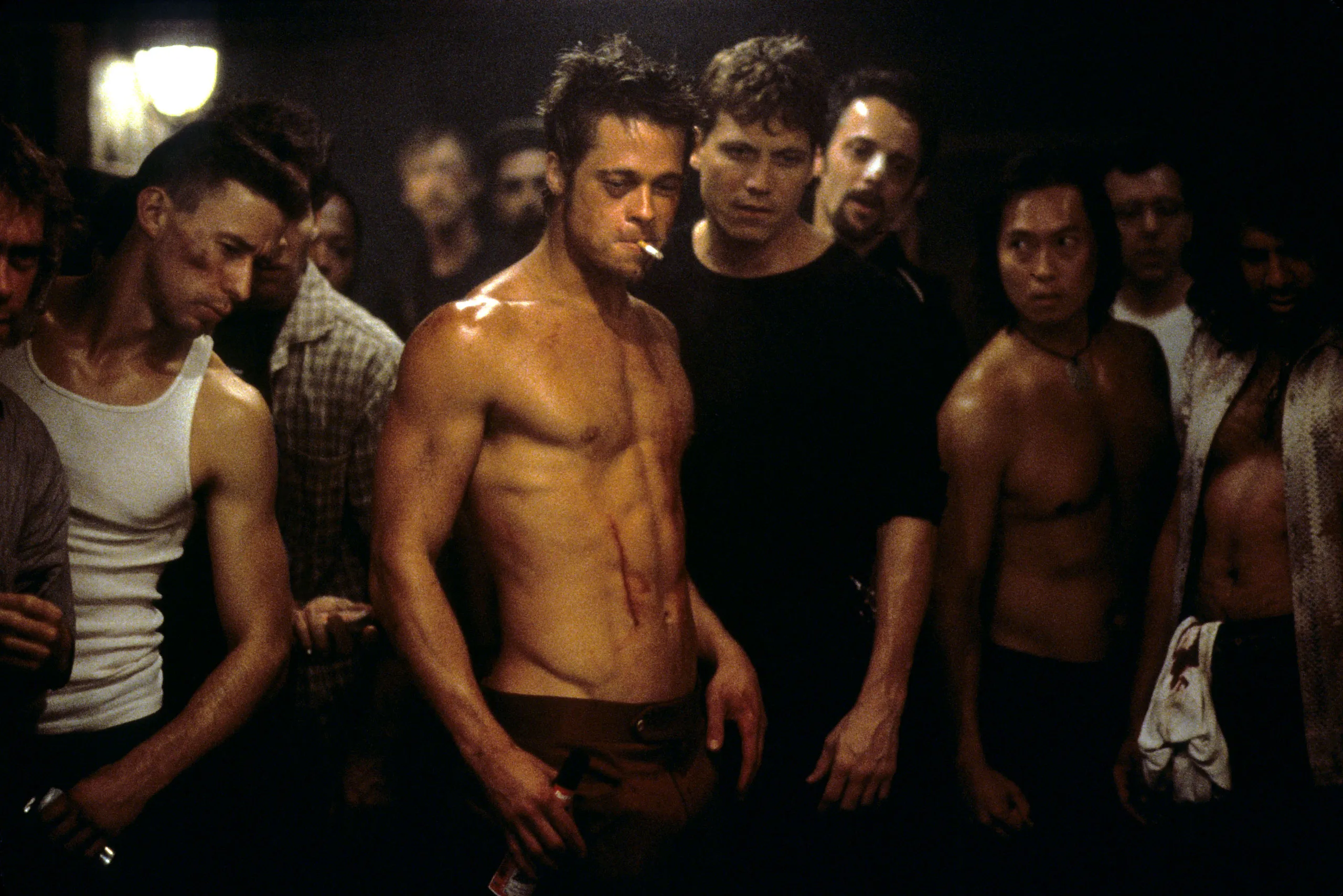
Freddie Prinze Jr. Teams Up With New Cast In Latest I Know What You Did  Last Summer Image

But Iโ€™m getting ahead of myself, and wonโ€™t dare spoil this denouement that is bound to leave the audience equally perplexed and frustrated. For a good chunk of the movie, Kaityn Robinson stays in platitudes that repeat what the first film laid out without the desire to try anything new with Kevin Williamsonโ€™s formula. Though if it ainโ€™t broke, donโ€™t fix it, right? And while the castโ€™s chemistry may not reach the levels of the original, each respective actor does a fine job in attempting to uncover who the serial killer could be. But it wonโ€™t take long for you to guess who it is โ€“ even if the filmmaker will attempt to insert red herrings that could exonerate them and divert your attention to someone else.ย 

Obviously, the one who looks suspicious isnโ€™t the killer, and the one who is the least suspicious is. It wonโ€™t take long for you to put two and two together, especially if youโ€™ve seen the latest iterations of Scream or, more recently, Heart Eyes, and the rest of the movie is as dull as you think. Even the kills arenโ€™t that impressive. The usage of hooks and fishing instruments does give the franchise a bit of an edge that most slashers donโ€™t have, but Kaityn Robinsonโ€™s sense of geography and rhythm during repetitive chase scenes and gnarly kills contains little thrills. The kills arenโ€™t nearly as playful and elaborate as the original, and their impact is lessened by cinematography that seems restrained to shock โ€“ or surprise โ€“ viewers in its attempt to modernize a series that didnโ€™t necessarily need a revamp.ย 

Because when Julie and Ray eventually show up to help Danica Richards (Madelyn Cline), Ava Brooks (Chase Sui Wonders), Milo Griffin (Jonah Hauer-King), and Stevie Ward (Sarah Pidgeon) track and hunt the killer before his hook finds them, their purpose in the movie seems limiting, other than giving exposition to the characters on events that happened in the original two movies. Hewitt is barely in the picture, spoon-feeding things that could make tracking the assailant easier, and then dropping out entirely, save for one semi-compelling exchange with Ray that showcases how the two stars still havenโ€™t lost their spark.ย 

There are a few surprises that admittedly worked on me, particularly a specific dream sequence, but most of the โ€œlegacyโ€ appearances are pedestrian at best, and baffling at worst. Thereโ€™s a narrative decision that happens later on in the movie so insulting to the fans of the franchise that the potential for a cult following is pretty much evaporated once we get to this sequence and Kaityn Robinson doubles down on this giallo-inspired twist that, in any circumstance, doesnโ€™t work.ย 


Only Sarah Pidgeon from the new cast comes out of this requel unscathed, especially during the climax, where she seems to enjoy each new twist and turn the story takes, knowing how baffling they are. Itโ€™s a shame no one shares the same pleasure she has in letting loose and playing with the confines of such a unique slasher that Kevin Williamson wrote as a deviation of sorts from Scream. Even a post-credits scene, which reintroduces a character that may or may not resonate with fans, reeks of desperation instead of actual fun. Weโ€™re promising audiences that the next one will be more entertaining than this one, when all we wanted was a good time at the movies, in the present moment.

Grade: D-

Podcast Review: I Know What You Did Last Summer (2025)

On this episode, ISF writers Megan Kearns and Lane Mills dive into the next horror legacy sequel in film I Know What You Did Last Summer! Sadly, despite our potential excitement, this is just another example of nostalgic-baiting and failing to take advantage of the opportunity in front of them.

Review: I Know What You Did Last Summer (4:00)
Director: Jennifer Kaytin Robinson
Writer: Sam Lansky, Jennifer Kaytin Robinson
Stars: Madelyn Cline, Chase Sui Wonders, Jonah Hauer-King

Subscribe to our Podcasts RSS
Subscribe to our Podcasts on iTunes
Listen on Spotify
Listen on Stitcher
InSession Film Podcast – I Know What You Did Last Summer (2025)

Movie Review: โ€˜40 Acresโ€™ Nearly Transcends Its Familiar Apocalyptic Tropes


Director: R.T. Thorne
Writers: R.T. Thorne, Glenn Taylor, Lora Campbell
Stars: Danielle Deadwyler, Kataem O’Connor, Michael Greyeyes, Milcania Diaz-Rojas

Synopsis: Hailey Freeman and her family are the last descendants of African American farmers who settled in rural Canada after the Civil War. In a famine-decimated near future, they now struggle to safeguard their farm, as they make one last stand against a vicious militia hell-bent on taking their 40 Acres


The words โ€œfamine-decimatedโ€ and โ€œvicious militiaโ€ are doing a fair bit of heavy lifting in the case of R.T. Thornโ€™es debut feature, 40 Acres, considering how, with them subtracted and a few flesh-eaters added in, the film would be imperceptible from yet another apocalyptic thriller. The last few years have already had its handful of them, hence the italicized groan in the last sentence. Said gripe has less to do with the quality of films like 28 Years Later, In the Lost Lands, or The Gorge. (Okay, maybe it has to do with the quality of The Gorge.) But, as is often the case, familiarity can end up feeling synonymous with enervation. What counts is whether or not you can transcend the exhaustion of the garden-variety apocalypse narrative, thus crafting something original and refreshing despite recognizable tropes.

40 Acres nearly crosses that threshold, though it also feels unmistakably like an extended cutscene from The Last of Us, or worse yet, AMCโ€™s forever-running series The Walking Dead, especially as the story evolved beyond the need for zombies to be the most terrifying entity in the room. Viewers who counted themselves among the dedicated many to latch onto the journeys of Rick Grimes, Daryl Dixon, Carol, Glenn, Maggie, and others in the early seasons of Frank Darabontโ€™s show always feared the presence of biters, but once villains like The Governor (David Morrissey) and Negan (Jeffrey Dean Morgan) showed up, it was clear that harmโ€™s way was down every trail these characters could possibly traverse, undead notwithstanding.ย 

Itโ€™s admittedly disingenuous to compare Thorneโ€™s film to the cyclical nature of a series that lost its own way midway through its run on the small screen, but the comparisons are hard to miss: A family lives on a farm, protecting their land, and facing constant opposition from neighboring armies of misfit madmen eager to take what doesnโ€™t belong to them. Outsiders are to be feared, not entertained. Thatโ€™s how Hailey Freeman (Danielle Deadwyler) โ€“ a former soldier โ€“ and her husband, Galen (Michael Greyeyes) conduct things in their houseland and the land it sits on, a deeply personal undertaking that dates back centuries to when Haileyโ€™s ancestors settled there (the film takes place in Canada; its director is from Calgary) after escaping Civil War-era Georgia. The movieโ€™s exhilarating opening sequence sees Hailey, Galen, and their family โ€“ most notably their 20-something son, Emanuel (Kataem Oโ€™Connor) โ€“ fending off intruders, of which there are many more hidden on the outskirts. If only the remainder of its runtime maintained such exhilaration.

Danielle Deadwyler in 40 ACRES, a Magnolia Pictures release. Photo courtesy of Magnolia Pictures.

Not that every apocalypse picture needs to move a mile a minute; if that were the case, weโ€™d grow more exhausted by the proceedings themselves than the plottiness theyโ€™re steeped in. Yet 40 Acres never manages to evolve beyond the โ€œkeep the outsiders outโ€ mantra that its lead character preaches with the fury of an angry judge banging her gavel through the wood of her stand. That Hailey is judge, jury, and primary executioner makes matters even more complicated: It would be one thing if she was stern, but itโ€™s another to watch her rigidity foster an environment that begs for rebellion, something Emanuel canโ€™t help but inch toward. When he notices a beautiful stranger (Milcania Diaz-Rojas) swimming in a river near his home, his curiosity piques and his eyes bulge (along with something a little lower on his body). When questions swirl about whether or not Dawn is who she says she is, and the familyโ€™s land comes under attack (again, and repeatedly, all in relatively rapid succession), itโ€™s not particularly difficult to clock where and when the first domino was nudged.

Thorne has a tight grasp on what makes for compelling violence in a realm such as this, and itโ€™s easy to imagine his future in film being far brighter than that of the characters he has drawn here, to say nothing of their fates as more outsiders invade over the course of almost two hours. But so little of 40 Acres seems to care about being anything more than a one-note tale at the end of the world, as though it drove itself into a proverbial dead end and said, โ€œYeah, this feels like a good place to set up shop.โ€ Itโ€™s a dark, picturesque movie that is light on its feet enough to not cause the weight of its overlong runtime to bear down on you โ€“ a credit not just to Dev Singh and Sandy Pereiraโ€™s editing, but to the images cinematographer Jeremy Benning provided them โ€“ but itโ€™s also a film with a great deal of thematic heft (chief among them, how race remains omnipresent, even in dystopia) at its disposal that it chooses to forego for the blander path, not the more contemplative one. (Even Deadwyler, its stalwart star, seems to be trudging through plottiness in search of deeper meaning.) Movies like this one have promise in theory, but without proper care become commonplace and rote, 40 Acres being case in point. It doesnโ€™t help that 40 Acres and the many similar films to follow in its wake feel far less apocalyptic the more frequent they become.


40 Acres is now playing in select theaters.

Grade: C-

Episode 646: Top 5 Neo-Westerns

This weekโ€™s episode is brought to you by Saily. Get 5% OFF with the code: ISF

This week on the InSession Film Podcast, inspired by Ari Aster’s Eddington, we discuss our favorite neo-westerns! We also talk a little Ironheart, early tickets for The Odyssey and the depressing news about The Late Show.

– Opening Banter / Internet Craziness / Odyssey Tickets (5:58)
After some opening banter, we begin the show this week by talking about the absurd internet discourse that dominated much of last week (and especially the day we recorded this episode). For one, everyone was having the time of their lives discussing and meme-ing the Coldplay concert incident. But also, Christopher Nolan somehow sparked a lot of conversation by allowing people to buy IMAX tickets to The Odyssey a year in advance.

– The Late Show Cancelled / Wonder Woman / Ironheart (22:02)
Even thought it’s not film related, we also wanted to have some space to rant about Stephen Colbert’s The Last Show being cancelled over brazen corruption. Understandably, not everyone will agree with us, so feel free to skip ahead, but we felt passionate about it. In this segment, we also talk about Wonder Woman being fast-tracked at Warner Bros. for the new DCU and JD gives us this thoughts on Marvel’s latest Disney+ show Ironheart.


RELATED: Listen to Episode 610 of the InSession Film Podcast where we discussed our Top 10 Movies of 2024!


– Top 5 Neo-Westerns (54:40)
Neo-Westerns have been a prominent genre in the last 30 years, and it turns out, it’s one of the richest cinematic landscapes with some all-timers in this category. There are so many great films to choose from, making this exercise more challenging that we thought initially, but it’s also what made it really fun to talk about. With that said, what would be your Top 5 Neo-Western films?

Subscribe to our Podcasts RSS
Subscribe to our Podcasts on iTunes
Listen on Spotify
Listen on Stitcher
InSession Film Podcast – Episode 646

Next week on the show:

Pre-MCU Superhero Movies

Help Support The InSession Film Podcast

If you want to help support us, there are several ways you can help us and we’d absolutely appreciate it. Every penny goes directly back into supporting the show and we are truly honored and grateful. Thanks for your support and for listening to the InSession Film Podcast!

VISIT OUR DONATE PAGE HERE

Women InSession: Cinema in Seattle / PNW

This week on Women InSession, Pacific Northwest native Zach Youngs joins to show to talk about the amazing cinema that takes place in Seattle and the greater PNW area! There have been many great films that were shot in the Pacific Northwest, with many of them taking place in the area as well, giving credence to it being one the great cinematic locations.

Panel: Kristin Battestella

On that note, check out this week’s show and let us know what you think in the comment section. Thanks for listening and for supporting the InSession Film Podcast!

Subscribe to our Podcasts RSS
Subscribe to our Podcasts on iTunes
Listen on Spotify
Listen on Stitcher
Women InSession – Cinema in Seattle / PNW

After Ten Years, Does ‘Ant-Man’ Hold Up?

The 2010s were defined by Marvel Studios. Marvel was untouchable, and redefined our understanding of blockbuster entertainment. The cinematic universe was born and with each movie connected to one another, every Marvel movie became a massive success.

Itโ€™s fascinating to me how far Marvel has fallen in the 2020s – after Endgame, the magic of the Infinity Saga seems to have been lost. The plethora of Marvel television shows released on Disney Plus started a trend of Marvel becoming cinematic homework. The major film releases struggled to feel interconnected to one another – but also failed to truly stand on their own. Marvelsโ€™ Eternals is a fascinating example of this, because, for all the ways it attempts to shake up the MCU, none of its setups have seen any payoff in the 3 years since its release. The same can be said of Shang-Chi, of Ant-Man and the Wasp: Quantumania, and even Doctor Strange and the Multiverse of Madness. Something has changed in the Marvel superhero formula, wherein the films have become more and more codependent, but lacking the payoff required to reward the attentive audience member. 

It seems that Marvel Studios has noticed this as well – and has begun to change the narrative around future Marvel projects. While Thunderbolts* was delayed due to the SAG-AFTRA strike of 2023, the script underwent substantial rewrites – all attempting to bring the magic of the golden years of the MCU back to the film. The marketing material for The Fantastic Four: First Steps has centered around the practical effects used to create the retro-futuristic sets and costumes. And of course, how could we forget the biggest change awaiting the MCU: The return of Robert Downey Jr. as Doomsday. The return of the MCUโ€™s defining star, in the largest Avengers movie to date, all points to a future where every Marvel movie has to be the biggest movie in order to succeed. In light of this, I wanted to examine the smallest Marvel movieโ€ฆ and see if it held up.

Ant-Man was released in theaters on July 17, 2015, and followed Scott Lang (Paul Rudd) – an ex-convict attempting to reintegrate into society to visit his daughter, Cassie (Abby Ryder Fortson). Unable to hold a job, Lang is driven back into his former ways by his roommate and former cell-mate, Luis (Michael Peรฑa). When the job goes wrong, Lang is sucked into the super-hero world by Hank Pym (Michael Douglas), the scientist that discovered a particle that allows any object to shrink to the size of an Ant. 

The premise of Ant-Man is simple, and itโ€™s, by far, the smallest Marvel movie in terms of scope. At no point is the entire city of Washington under threat from the villain, Daren Cross (Corey Stoll). While there is a heist in the film to prevent Hydra from procuring the yellow-jacket suit, the stakes are only as large as Lang not being detected. Ant-Man is similar to Mission Impossible in this way – the joy of the heist isnโ€™t the extreme, world-ending stakes, but rather, the minute to minute complications which our protagonist encounters and must dispatch before succeeding in the heist. 

And when the film finally enters its third act, the action is as small-scale as a superhero movie has ever done. The yellowjacket threatens Scottโ€™s world, Cassie, and the battle that ensues includes Thomas the Train toys, ants the size of dogs, and โ€œDisintegrationโ€ by The Cure blasting out of a cellphone speaker. Itโ€™s comically small-scale in the MCU – and 10 years later, it still is one of my favorite Marvel movies to return to. 

Ant-Man works because it understands its characters, and the genre it sits in. First, the film is filled with characters that are constantly in conflict with one another. This can be most obvious as it relates to the protagonist-antagonist relationship between Daren Cross and Scott Lang/Hank Pym. But that is only scratching the surface of these character dynamics, because Ant-Man thrives when the characters that are idealistically aligned are in conflict with one another. Take the relationship between Maggie (Judy Greer) and Scott. The ex-married couple has multiple moments in the film when they enter an argument – when Scott finds out that Maggie is engaged to a cop and when Maggie chastises Scott for crashing Cassie’s birthday. These characters are well written because the beliefs of the characters inform these arguments. This isnโ€™t just true for Scottโ€™s family, but of the entire cast. Hank Pym and Hope Pym (Evangeline Lilly) have arguments over how much to integrate Scott into their heist – and these arguments are covering the years of hurt between these characters as a result of the death of Janet (Hayley Lovitt), Hankโ€™s wife and Hopeโ€™s mom. 

All these character conflicts perfectly align with the filmโ€™s genre: a comedy-heist-superhero movie. In being a comedy, the tone of the film can continue to be upbeat and light despite the arguments that could drift into melodrama. Part of this comes from the absurdity of the film – Scottโ€™s present to Cassie is a horrendous rabbit – and Cassie loudly proclaims โ€œItโ€™s so ugly I love it!โ€. When an Ant is accidentally hit with an enlarge disk, it grows to the size of a child – and a neighbor states โ€œThatโ€™s an odd-looking dogโ€. The absurdity of the situation creates great comedy, and the train sequence in particular exemplifies this. The entire third act battle with the Thomas the Train Engine set is filmed using the filmic vocabulary of a real steam-engine chase. As Yellowjacket is standing on the tracks, the train is quickly approaching. We know what will happen next – the train will roll over Yellowjacketโ€ฆ and then the opposite happens, because itโ€™s a toy train. The object comedy that comes from making small everyday objects extra large (but not overly threatening) is simple and well-utilized. 

Iโ€™ve already discussed the strengths of Ant-Man being a heist movie above. Heist movies are defined by the overly complex plans, new and sudden obstacles that throw wrenches into the plans, and the characters walking the tightrope to succeed despite these obstacles.Ant-Manโ€™s second act is all one great heist, which uses its obstacles to not only extend the plot, but challenge its characters to grow and wrestle with their beliefs about the world. Here, the relationship between Hank and Hope is stretched to its breaking point, and the drama between these characters once again is rooted in love and loss. It is a mirror to Scottโ€™s own journey with Cassie, and once more highlights the importance of this mission to Scottโ€™s own life. 

And lastly, Ant-Man is a super-hero movie. Itโ€™s got cool gadgets and suits, crazy pseudo-science and physics that break reality, and a cast of characters driven by good or evil. This final layer provides the glue that meshes everything else together: The relationship between Scott and Cassie. Superhero movies are movies about ordinary people doing extraordinary things – and Scott is that ordinary person who the audience can relate to. 
Ten years later, Ant-Man is still one of the stronger stand-alone marvel movies. Ant-Man is a movie that is defined by its scale, and by its heart. It’s a movie that Marvel can still learn a few things from – notably, that going bigger in size doesnโ€™t always make for a better movie.

A Cinema of Moments: A Celebration of Wong Kar-wai on his 67th Birthday

โ€œCan you imagine how beautiful it would be to wake up one day and be in the mood for falling in love?โ€

I watched In the Mood for Love with one of my ex-boyfriends. He was a film critic, and it was during a great local film criticism and scriptwriting workshop. I remember feeling sucked into the movie theater (a small screening hall) seat, as if I were being swallowed by a gigantic force bigger than me. Lights went on, and my boyfriend then looked at me and waved his palm underneath his chin, saying, โ€œNah, didnโ€™t do it for me.โ€ I knew then we werenโ€™t meant to be together. 

We were watching movies from the BBCโ€™s 100 Greatest Films of the 21st Century, as recommended by our instructor. On every film we disagreed on, my boyfriend and I would argue, then weโ€™d go home happy. Until that movie. That film. That bright, kaleidoscopic film of sensations and fragmented narrative pieces. It really felt like the director who made this film can do no wrong, and the more our viewpoints โ€” my partner’s and mine โ€” regarding In the Mood for Love diverged, the further we drifted. I went and asked our instructor about the director. โ€œOh, Wong Kar-wai,โ€ he sighed, then gave me a list of all his works (that was before the internet was as insanely accessible as the social media revolution took over the world).

Discovering Wong Kar-waiโ€™s filmography was like entering an ice cream shop of imaginary flavors. A concoction combined by the top chefs in the world, and I had the honor of being the only one to taste them. Thatโ€™s the thing with cinema, it may be a universal language, but it feels like your own. Itโ€™s even different from food or drinks. You might get pissed that someone tried that restaurant before you. But a film, whether you discovered it on the night of its world premiere, or in the comfort of your dark room years later, is yours and only yours to hold.

Wong Kar-wai gave me a life of movies that always felt my own. I started a Wong Kar-wai marathon a month after my initial screening of In the Mood For Love. I found myself wholeheartedly immersed in Happy Together, a gay love story, but also one of the best depictions of a toxic relationship onscreen. A kind guy in love with a charming yet parasitic bad boy. Another reflection on lost love stories, love failures, getting lost in busy foreign cities, and regret. 

Chungking Express was another revelation. The film had the most chaotic, insane narrative structure Iโ€™ve seen -at least till then- in a movie. Split into two stories, thinly interconnected, it had one of the most perfect uses of a song in a movie soundtrack. But it was -again- a meditation on loneliness, falling in and out of love, unrequited romance, and some gangster violence in the first half. Love takes different forms and shapes in a Kar-wai movie. Itโ€™s not just sex or longing or meet-cute moments, but itโ€™s long nights spent getting drunk in a bar, or a walk down a narrow alley with stolen glances in a conservative, curious society. Itโ€™s holding a recording device and crying at loss for words, itโ€™s a kiss with cream-smeared lips, as shot from the most acute angle ever in My Blueberry Nights.

Even Jude Law -one of the few Hollywood actors Kar-wai has collaborated with- commented on it, stating that it blew his mind how someone could have an emphasis on a moment. What a precise description of Kar-waiโ€™s cinema. Itโ€™s a cinema of moments, of fleeting feelings, of holding back. The greatness of In the Mood For Love, specifically, is that itโ€™s a movie about holding back, about unconsummated desire. As boring as that sounds, as unexciting as one might think, in comparison to any other film about infidelity and cheating spouses, Kar-wai creates the most sexually charged feature of them all. This is all due to his creation of the repressed feelings of the oppressed. He brings to the front whatโ€™s not being said or done or performed. His characters are always broken, lost, meditative, yearning, drunk, crying, and on the verge of taking one step ahead, only to be consumed by an unforgiving precipice. 

Fast forward seven years later, I am watching In The Mood For Love for the second time with my sister. Credits roll, and she turns to me and says dreamily,

โ€œCan you imagine how beautiful it would be to wake up one day and be in the mood for falling in love? Is that possible anyway? So I woke up today and my mood is set to falling in love?โ€

Happy 67th birthday, Wong Kar-wai, modern cinema would never be this aching dreamscape of neon lights and longing without you.

Movie Review: โ€˜Ghost Killerโ€™ Cements Kensuke Sonomura as An Action Artist


Director: Kensuke Sonomura
Writer: Yugo Sakamoto
Stars: Akari Takaishi, Masanori Mimoto, Mario Kuroba

Synopsis: After being possessed by the ghost of vengeful hit man Kudo, college student Fumika Matsuoka agrees to help him finish his quest for vengeance from beyond the grave.


Those who have been on action choreographer Kensuke Sonomuraโ€™s train for some time, since Resident Evil: Vendetta or the Baby Assassins trilogy, know heโ€™s one-of-a-kind, and has crafted some of the best action sequences youโ€™ll ever see. He should be known by all action movie lovers as a household name in the genre, because his choreographies push the boundaries of what many of his predecessors have established in showcasing bodies in motion, the likes of which youโ€™ve never seen before.ย 

Sonomura seems to elevate what Chang Cheh and Lau Kar-leung have established within martial arts cinema, through choreographies that focus on the body first before anything else, because it is a vehicle for all types of emotion, whether physical or psychological. We feel everything in how each character expresses themselves through their fighting styles, or smartly attempt to overthrow baddies, just in how they use their bodies as the fuel for all emotion. And in his latest directorial effort, Ghost Killer, he takes this approach to the extreme.ย 

The conceit is essentially an excuse for Sonomura and screenwriter Yugo Sakamoto (the man behind the Baby Assassins franchise) to put their protagonist, Fumika Matsuoka (Akari Takaishi), inside one elaborate action set piece after the next. As she discovers a bullet case on the street, she picks it up and is immediately connected with the ghost of Kubo (Masanori Mimoto), who appears after Fumika touches the bullet. Kubo has been killed by assailants for reasons that weโ€™ll eventually learn as the plot develops, but for now, the two have realized that they can connect their souls if they hold their hands together.ย 

When this happens, Kuboโ€™s spirit can inhabit Fumikaโ€™s body, giving her fighting skills she never knew she had. Once we understand this framing device and Sonomura clearly defines how it works within a given action scene, this is where the fun begins, and where the filmmaker pushes the limits of his mind/body approach to martial arts choreography. Each fight, whether fleeting or extended, is a genuine work of art. Thereโ€™s playful physical comedy in the movieโ€™s first half, when Fumika attempts to process whatโ€™s going on; confused, terrified, even at the mere thought of a spirit taking control of her body.ย 

Streaming Review: Ghost Killer โ€“ The Movie Isle

But the film gets increasingly violent as the story progresses, and we learn more about what caused Kudoโ€™s death. It also becomes much darker, with a final half that ramps up the bloodletting and perverse sense of slapstick. The movie constantly enthralls and surprises, especially during the final confrontation between Fumika/Kudo and its main antagonist, a fight worthy of Lau Kar-leungโ€™s Dirty Ho, where each punch (or stab) leads to more endless movements of emotion as the stakes get higher and Fumikaโ€™s life is literally on the line, while Kudo swore he would protect her with his otherworldly presence.ย 

Itโ€™s a fight scene that ranks high among Sonomuraโ€™s best, and would probably be his crowning achievement if he werenโ€™t a major part of the success of the Baby Assassins movie, and that the third film (which is coming out on VOD next month but this critic saw at Fantasia last year) may be the decadeโ€™s greatest action movie. His understanding of kineticism rivals any good action artist who established themselves in Hollywood โ€“ even Chad Stahelski. Thatโ€™s how good he is, and itโ€™s unfortunate that most covering film in this space have no idea who he is.ย 

But none of this would work if the chemistry between the human and the ghost wasnโ€™t in top form. Luckily, Akari Takaishi has been one of the most exciting burgeoning actors from Japan, and what she does in this movie is nothing short of exceptional. It may not be as narratively strong as the last Baby Assassins film, but Takaishiโ€™s performance is just as good, if not better than her starmaking turn as Chisato Sugimoto in those pictures. How she lets her eyes shift between her two states of mind โ€“ unpossessed and possessed โ€“ is genuinely riveting, and her sense of comedic timing seems effortless.ย 

When she needs to convey the physicality of being possessed by the spirit of an assassin, she more than understands the assignment, until Fumikaโ€™s body is fully taken over by Kudoโ€™s, leading to a succession of action setpieces that will make your head spin in utter bewilderment. Her sense of alchemy with Mimoto is explosive, especially when the two need to work hand-in-hand to topple a horde of endless baddies. Itโ€™s action cinema at its purest and most sincere โ€“ the type of stuff you usually crave to see on the big screen from major Hollywood studios, who prefer to fill their slate with endless CGI battles instead of the tangible, tactile creativity of Kensuke Sonomuraโ€™s innovations.ย 

Ghost Killer' Review - A Crime Thriller That Works Better as a Wacky Comedy

Hopefully, as the internet chatter on Baby Assassins intensifies, people will divert their attention to examine Sonomuraโ€™s directorial works, and Ghost Killer might be his finest effort yet. Its sense of pacing is still a bit wobbly, but it almost doesnโ€™t matter when he stages one of the greatest final fights youโ€™ll ever see. It cements Sonomura as a real action artist, and someone who isnโ€™t afraid of pushing the mind and body in fighting combinations youโ€™ve never seen. Lau Kar-leung probably dreamt of directing something as bracingly kinetic and emotionally exciting as Ghost Killer, but itโ€™s Sonomura who will be long remembered for it on the same level as the greatest martial artsย  masters.

Grade: A

Movie Review: ‘Sovereign’ is a Powerhouse Debut from Swegal


Director: Christian Swegal
Writer: Christian Swegal
Stars:ย Nick Offerman, Jacob Tremblay, Dennis Quaid

Synopsis: A father and son who identify as Sovereign Citizens, a group of anti-government extremists, find themselves in a standoff with a chief of police that sets off a manhunt.


The Sovereign Citizen movement has been slowly rising in certain parts of the United States over the past couple of decades. This group of citizens brings some interesting yet untenable ideas about government that have seldom been explored thoughtfully in film or television. Youโ€™ll see some clips of courtroom settings where they try and weasel their way out of the law, but not much else. Writer-director Christian Swegalโ€™s debut feature, Sovereign, shines a light on this cultural movement through the real-life story of Jerry (Nick Offerman) and Joe Kane (Jacob Tremblay), a father and son who identify as Sovereign Citizens. The film follows the pair as they travel the country spreading their wisdom to help free people from โ€œillegal debtโ€ with banks and the government.ย 

Sovereign is incredibly somber and introspective, focusing deeply on Jerry and Joeโ€™s relationship to each other and their relationship to the world around them. From the outset, we see Joe living by himself in a rundown household, dishes in the sink, and scraps of metal in the yard. Jerry returns from a long road trip of evangelizing for the masses to multiple foreclosure notices from the bank, refusing to look at them due to โ€œreceiving being a choice,โ€ using this as a loophole to not pay the bank. Jerry makes every moment with Joe count, constantly indoctrinating him with his ideology and hatred of the government.ย 

The counterpoint to the Kanes comes when they are brought in for questioning after a routine traffic stop gone wrong. Police Chief John Bouchart (Dennis Quaid) gets Joe alone and tries to get him to turn his back on his father, but to no avail. After this encounter, the film splits into two running stories, continuing to follow the Kanes and tracing Chief Bouchart and his son Adam (Thomas Mann) as he is finishing his time in the police academy.ย 

Swegalโ€™s script chooses this moment to put these two resolute ideologies against each other: law and order against anti-government sovereignty. In less nuanced hands, this could have turned into a โ€œcopagandaโ€ story, with the Kanes being labeled as evil guys who are stopped by the righteous police. Fortunately, Swegal takes a more layered approach that brings empathy to both sides of the coin. In many ways, the American system made these people on both sides who they are, without much room to turn out differently.ย 

Sovereign' Review: Nick Offerman & Dennis Quaid in Timely Drama

The filmโ€™s craft is simple yet effective, using dull, dark lighting and color tones to establish the mood. This is not a happy story. James McAlisterโ€™s light, guitar-driven score evokes the quiet beats of something like The Last of Us, where existential dread surrounds moments that are meant to be peaceful. Sovereignโ€™s craft makes the narrative that much more harrowing as it unfolds.ย 

This harrowing feeling builds impressively throughout the film. Each time the Kaneโ€™s interact with anyone outside of themselves you expect something to go wrong. Jerryโ€™s got a short fuse, something Joe just seems to be used to at this point. There are a few moments where he feels he can push back, but those come in rare instances of courage for him.ย 

Itโ€™s safe to say that this is Nick Offermanโ€™s best performance in a film, and essentially explores what would happen if Parks & Rec were rated TV-MA and Ron Swanson leaned into a darker version of his politics. Offerman portrays Jerryโ€™s distrust and anger with such menacing power. At no point do you expect Jerry to do the right thing and know that the jig is up. His disillusionment doesnโ€™t make him one-note, but rather speaks to his desperation. His way of thinking has to work or else they lose their home and life together. Itโ€™s a scary performance, one that vastly outshines Tremblayโ€™s more inward-focused turn. Tremblay is excellent, but itโ€™s very hard for him to stand out against a robust performer like Offerman.ย 

Sovereign Review: Nick Offerman Is the World's Worst Dad in Shallow Thriller
All-in-all, Christian Swegal delivers a powerhouse debut in Sovereign, tackling warring schools of thought and the terrifying impacts they can have on how we live our lives. Itโ€™s full of suspense, dread, and great performances from its two leads. Sovereign was a stand-out at the 2025 Tribeca Festival and I hope it becomes more than just one of the many hidden gems to be released this year.

Grade: B+

‘Inception’ Retrospective: Nolanโ€™s Timeless Rumination on Time

In the wake of Nolanโ€™s latest incoming box office freight train, The Odyssey, many folks are quick to forget about what he was up to prior to his recent string of heartful, experimental blockbusters teeming with cultural relevance and cinematic prowess. Projects like Memento, The Prestige, and even Dunkirk have, to a relative (and arguable) point, fallen out of the mainstream limelight of filmic discussion. Yet somehow, now 15 years old, Inception still remains. Why is that?

Among many masteries, and a few mysteries, the film then favored what Nolan would eventually become known for now; namely, that aforementioned penchant for emotionally open, psychic, and personal adventures. Inception is exceptionally honest with both itself and the audience. Despite the twisted, often confusing nature of the narrative, the thread of familial betrayal and lost love that runs through the film is what successfully defines it in retrospect. For a director as accomplished as Nolan, Inception still, to this day, being one of his finest works is no small feat.

Itโ€™s a hard movie to even synopsize; better experienced than explained. Leonard DiCaprio, in the lead role, showed incoming signs of his eventual Academy Award – while heโ€™d win it for The Revenant five years later, he may have deserved it more at the turn of the last decade. His turn as Dom Cobb (perhaps Nolanโ€™s worst name) is the heart of a movie that lives and dies by his impact. Alongside more respectable efforts all around, with a special shout to Cillian Murphy, as usual, the film puts together an ensemble cast that work together to manage the mental load required to understand this story.

What begins as an apparently simplistic โ€œdream invasionโ€ type movie ends up examining the obsessions of a man whose thoughts have overflowed into his subconscious as a result of his inability to handle them while awake. This is a movie that, despite its age, Iโ€™d really hate to spoil now. Cobbโ€™s journey and conflict regarding his family is one of the best, most potent character arcs Nolan has ever constructed, second only to his work in Interstellar. And in some places, it may be even more effective.

Thereโ€™s something to be said about how Nolan is able to work his themes into his visuals here, too. The more Cobb unravels, the looser his grip gets on reality, the more kinetic things feel. The camera starts to speed up; rooms lose their shape, the sky its color, and people their words. Thereโ€™s a refined visual chaos that pervades the whole thing, which is made even better by the extreme practical sets used as well. Everyone has seen the rotating hallway set – which is a marvel in its own right – but Nolanโ€™s diehard dedication to โ€œold schoolโ€ filmmaking, if you will, gives Inception ground to stand on as time goes on.

Itโ€™s a film that wonderfully allows its audience to think for themselves, too. There are oodles of interpretations, theories, and essays surrounding this film written by audiences of all ages, all equally enthralled by the non-linear narrative and open-ended questions. The best part? Theyโ€™re all right, or perhaps wrong; Nolan turned his movie into one of lifeโ€™s timeless questions. Much like lifeโ€™s objective purpose or the existence of tangible love, nobody knows exactly what this movie means, or how it endsโ€ฆ and thatโ€™s a beautiful thing.

Up to this point, Inception has held up incredibly well, and I canโ€™t imagine thatโ€™ll change anytime soon. Everything comes down to that little spinning top: the passage of time, as inevitable as it may be, canโ€™t stop the momentum. Inception lives by that momentum to this day and, as a natural result, will continue to spin in the hearts and minds of movie lovers and cinephiles everywhere. Itโ€™s about as close to a modern, instant classic as you can get. 15 years down and, for all we know, an infinite number remaining.

Movie Review: โ€˜Madeaโ€™s Destination Weddingโ€™ Is a Dull Commercial


Director: Tyler Perry
Writer: Tyler Perry
Stars: Tyler Perry, Cassi Davis Patton, Tamela Mann

Synopsis: Madea and family attend Tiffany’s rushed destination wedding in the Bahamas. Tensions arise as Tiffany doubts her fiancรฉ, Zavier, and her mother acts strangely, raising suspicions about the marriage’s legitimacy.


No one in Hollywood seemingly works faster than Tyler Perry, who has now released his third film of the year with the fourteenth installment of the never-ending Madea franchise in Madeaโ€™s Destination Wedding. And while it may not be as baffling as Perryโ€™s previous two directorial efforts, Duplicity and Straw, profoundly misguided melodramas for entirely different reasons, itโ€™s also one of the dullest movies of the entire year, with little to no laughs or entertainment offered in what looks like a 102 minute commercial for the movieโ€™s main attraction.

Essentially, the gist is to put Madea (Tyler Perry), Joe (also Tyler Perry) and the franchiseโ€™s bevy of key supporting characters, including Aunt Bam (Cassi Davis Patton), Cora (Tamela Mann), and Mr. Brown (David Mann) in situations we havenโ€™t seen before. After all, weโ€™ve survived two Halloweens, a trip to the Big House, a funeral, and even a crossover with Mrs. Brownโ€™s Boys in the franchiseโ€™s last movie, Madeaโ€™s Family Reunion.

However, weโ€™ve yet to see the titular character take an exotic trip outside the confines of her home. It gives Perry the vehicle to step these protagonists out of their comfort zones and put them in one zany situation after the next. At least, someone with an understanding of comedic timing and pacing wouldโ€™ve done this, but Perryโ€™s proposition is incredibly languishing, with the โ€œDestination Weddingโ€ in question arriving after 45 minutes of extended sequences of verbal comedy thatโ€™s essentially a repetition of a line that an elderly character misunderstood to paint them as senile and/or confused.

Tyler Perry ยป โ€œMadea's Destination Weddingโ€ Official Trailer Out Now

If thatโ€™s your kind of humor, youโ€™re going to have a blast watching Madeaโ€™s Destination Wedding. But for those looking for actual comedy, youโ€™re only going to find it sparingly. There wasโ€ฆ*checks notes*โ€ฆone joke that made me laugh. I laughed in spite of myself because of how stupid the punchline was, but itโ€™s actually quite clever in how Perry primes attentive viewers with a needle-drop of The Clark Sistersโ€™ โ€œCenter of Thy Will,โ€ which is sampled in Beyoncรฉโ€™s โ€œChurch Girl.โ€ It results in the funniest physical gag of the movie and doesnโ€™t overstay its welcome.

One canโ€™t say the same for the entire movie, which focuses on the wedding of Brianโ€™s (another character played by Tyler Perry) daughter, Tiffany (Diamond White), at the Atlantis Resort in The Bahamas. Thereโ€™s the obvious setup, which lasts an eternity, in which Brian introduces Tiffanyโ€™s fiancรฉ, Zavier (Xavier Smalls), to the family. Then thereโ€™s the scene where Madea, Joe, and the rest of the family need to get their passports, and it also lasts an eternity. After that, they go to the airport, and thereโ€™s an elongated bit where Madea pretends to have her purse missing, until they board the plane, and a plethora of the insensitive, ill-conceived humor that Perry is most known for comes back in full force.

Why Madea's Destination Wedding Had Me Cracking Up - Talking With Tami

Yet, nothing will prepare you for what happens as the family lands in Atlantis. While the first half or so isnโ€™t particularly well-shot or interesting, it at least stays within the confines of what audiences expect nowadays from Madea movies: large bouts of improvisation stitched together by a threadbare plot that has little to no importance with the situations its characters are stuck in. As soon as they arrive at the actual location of Atlantis, the movie shifts gears and becomes a commercial for the resort.

I shouldโ€™ve expected this โ€“ the way Perry shoots the movie is different from previous Madea films, even the ones that look televisual, such as the Boo! A Madea Halloween duology. This one has the glossy feel of an โ€œas seen on TVโ€ ad, where paid actors overwhelmingly promote a product, with no shame, and hyperbolically describe its qualities so it becomes tantalizing for a semi-gullible viewer to buy it. This is also how Perry films Atlantis: it all looks incredible, too good to be true, and youโ€™d likely be inclined to book a room as soon as the credits roll.

(Side note: I have been there, and it is pretty damn great, but in no way is this an endorsement of what Perry is doing. He should actually feel some bit of shame for suckering his audience into this supremely long advertisement for the resort, almost as if Atlantis financed the project under the condition that he would promote the place as much as possible.)

Madea's Destination Wedding' Netflix Movie Review: Stream It Or Skip It?

Itโ€™s terribly unashamed at how it effectively integrates as much promotion for Atlantis as possible, not only in how it films its key attraction, โ€œThe Leap of Faith,โ€ (replete with a Mr. Brown GoPro POV, because why not), but how it lets the characters peruse the lobby, ask questions about whatโ€™s included with their room key, tour their suites, go to the Casino, the gift shop, you name it. It also creates dialogue scenes with Atlantis employees that function only as explainers for the audience to know exactly what they can do in the resort, whatโ€™s complimentary and what isnโ€™t, and how โ€œpayingโ€ works (there is a funny bit that comes out of the latter, but it, like most of the jokes, gets stretched until Perry punches dead air).

We spend an unforgivably long amount of time touring the place before the actual wedding happens, and Perry throws in one of his giallo-esque twists to โ€œspice upโ€ the plot which are always nonsensical and unnecessary. While its denouement may not reach the inane levels of Duplicity (an ending so catastrophically awful you will never see coming and it must be seen to be believed) or the poor taste conclusion of Straw, it still is completely unwarranted and actively makes what is otherwise a disposable wedding comedy weโ€™ve all seen before worse.

Where Was 'Tyler Perry's Madea's Destination Wedding' Filmed? Discover the  Filming Locations for the New 'Madea' Movie | Decider

But thatโ€™s the Tyler Perry touch for you โ€“ a filmmaker who desperately wants to be taken seriously as an artist but doesnโ€™t feel like he wants to sharpen his writing/directing skills at all. If he thought about the considerations that go into making good movies, heโ€™d probably make one a year, but that wouldnโ€™t keep the empire he built floating, wouldnโ€™t it? Iโ€™ll always give my commendations to Perry for building his own studios from scratch and attaining wealth that few will in their lifetimes. If only his movies were betterโ€ฆ

Grade: D-

Podcast Review: Superman (2025)

On this episode, JD and Brendan discuss James Gunn’s latest film Superman as it kicks off the brand new DCU, along with a segment of JDโ€™s son Sam who also gives us his thoughts as well! While we liked Man of Steel as an origin story for Clark Kent, it wasn’t enough to save the DCEU as it faltered in the aftermath. So here we are more than a decade later with a new universe for DC and Warner bros. It’s a very different movie, but Superman is exactly what the DCU needed to get people excited for its future.

Review: Suprman (4:00)
Director: James Gunn
Writer: James Gunn
Stars: David Corenswet, Rachel Brosnahan, Nicholas Hoult

Subscribe to our Podcasts RSS
Subscribe to our Podcasts on iTunes
Listen on Spotify
Listen on Stitcher
InSession Film Podcast – Superman (2025)

Movie Review: ‘Abraham’s Boys’ Gives New Life To An Old Tale


Director: Natasha Kermani
Writer: Natasha Kermani, Joe Hill
Stars: Titus Welliver, Brady Hepner, Judah Mackey

Synopsis: Abraham van Helsing moves his two sons to the United States in an attempt to escape their past.


The tale of Dracula has truly never gone out of style, and there’s no sign that adaptations of the character and its many secondary characters will be slowing down. Writer and Director Natasha Kermani helms the film based on Joe Hill’s short story simply titled Abraham’s Boys. Isolation has driven an aged Van Helsing to teach his two sons how to be proper men no matter how brutal the lessons are. Deeply rooted in the fear of a looming darkness making its return, Abraham’s Boys: A Dracula Story slowly reveals who should and shouldn’t be feared.

It’s been 18 years since Abraham Van Helsing (Titus Welliver) defeated Dracula, and much has changed since then. Now, Abraham lives in California with his family on an isolated farm, with no neighbors for miles. Raising his sons, Max (Brady Hepner) and Rudy (Judah Mackey), to not only be book smart through his homeschooling methods but also introducing them to his life’s work. Helping him raise these young men is their mother and Abraham’s wife Mina (Jocelin Donahue), whose past is quickly throwing their seemingly perfect farm life through the ringer. When Mina falls ill from her long-ago run-in with Dracula, Abraham begins to unravel. Equipped with wooden stakes and mysterious hidden basements, Abraham’s sons quickly realize that their father might not always know what is best, making vampirism the least of their worries.

From the start, there’s an overwhelming sense of dread; the movie opens up with a woman who stands face-to-face with a dark figure. It’s completely effective in establishing the tone that lasts the duration of the film. Kermani takes that dread and mixes it into Mina’s story perfectly. As the film progresses, Mina begins to show signs that there is potentially a vampire nearby through the physical and mental changes in her behavior. It’s easier to brush off her strange changes in the beginning of the film; but soon her eldest son, Max, begins to see visions of his mother’s past that scare him enough to sleep with one eye open. Abraham’s Boys: A Dracula Story captures a terrifying confusion about what the threat to Mina is and often moves too slowly to keep the film interesting.

Abraham's Boys - Official Trailer | IMDb

Once the film establishes what is going on in the Mina, it fully lets Abraham’s thoughts and actions run wild. It doesn’t go unnoticed that Abraham strives for his sons to be smart and able bodied men, something his father made sure he also understood. Kermani focuses heavily on Abraham’s past and how it shaped him as a father, and also a husband. He’s shown as his family’s protector, but there’s definitely parts of his past that he hasn’t uncovered to them. There’s no shortage of moments that put Abraham’s short fuse on display, although he boasts himself as a man doing God’s work, specifically when he’s dealing with either of his sons. When Max struggles at the kitchen table with his math homework, Abraham makes his disappointment verbally known. And when Rudy refuses to chop off the head of a woman his father claims is a vampire, his disappointment is made physically known. It was an unexpected route for Kermani to go, to show Abraham as a flawed man rather than just his heroic vampire hunting ways.

Taking place in 1915, it’s no wonder Abraham and his sons struggle to communicate; they are young men who have lived in isolation almost their entire lives, and their father rarely speaks to his sons without offering them a lesson. What Abraham’s Boys: A Dracula Story shows is that even under threats of bloodthirsty vampires, isolation breeds resentment that can manifest itself in harmful ways. Max and Rudy have never had a normal childhood or agency to make choices for themselves; everything has been controlled by Abraham, who struggles to keep his place of authority. When Max expresses his desire to leave, Abraham mockingly eggs him on rather than comforting his son.

Movie Review - Abraham's Boys (2025)

Mostly due to the duo of Hepner and Mackey, it’s easy to feel for their characters with their sincere and engaging performances. The brothers have a somewhat noticeable age gap. Hepner plays the more physical role with daily wood chopping and taking care of his sick mother. Mackey brings an inquisitive performance with Rudy, a boy who would rather read a book or solve a math problem than shove a stake in someone’s chest. Their scenes together make for some oddly relatable sibling moments that have you wishing for their safety. Welliver does a serviceable job as the titular Abraham; he pulls off the mysteriousness shrouding his life, but often his line delivery is wooden at best. Mina is the heart of the film, and Donahue captures a tortured woman who is filled with love for her family but also a quiet sadness for her bleak fate.

The pacing of Abraham’s Boys: A Dracula Story is where the film hits the brakes, causing a slow burn that might be too slow when the film needs more fuel. The atmosphere of the film is tense, always looking for something lurking in the dark, but as the film goes on, its slow moments left my mind to wander, thinking of when the vampires were going to show up. It’s not completely detrimental to the enjoyment of the film; some of the creepier moments get time to set in rather than them ending up as random jump scares. Paired with some of the best cinematography this year has to offer from the talented Julia Swain, the film captures the bleak isolation through the glimpses of open range with mountains littering the skyline. The film is shot in a 4:3 ratio that helps the film’s overall atmosphere, especially during a black-and-white dreamlike flashback; its tighter frame makes for claustrophobic moments with a family on the brink of falling apart.

There’s more that works with Abraham’s Boys: A Dracula Story than what doesn’t; Kermani tells a uniquely dark story from the mythos of Dracula, showing that even after the monster is gone its impacts are still felt. Showcasing an aging Van Helsing in his fatherhood era gives new life to an old tale. While the film is a slow burn that almost loses its flame, there’s enough within the film’s performances and visuals to get you to the finish line.

Grade: B+

The Banality Of Amorality: 50 Years of Seven Beauties

Lina Wertmรผller was a director who always sought the juxtaposition between tragedy and comedy, as well as the absurdity of life along class lines. In Swept Away, a rich woman and a boat hand, who identifies himself as a communist, are stranded on an island. Itโ€™s now the bourgeois that must learn the struggle of what the average man goes through. Love and Anarchy follows the political ideals of an anarchist planning an assassination attempt, but falling in love with a prostitute expresses his fears of death in carrying out his act. Summer Night follows a rich socialite who decides to kidnap a kidnapper amid a spate of kidnappings against the wealthy elites to force a ransom against said kidnappers. That cross-irony between the class structure and sexual power reared its ugly head in what is arguably her masterpiece from 50years ago, Seven Beauties

Giancarlo Giannini plays Pasqualino, a small-time gangster in Naples who is defensive of his mother and his seven ugly sisters as they all struggle during the war. Pasqualino is someone who acts tough, but is a coward when it comes to facing the consequences. He kills the pimp who forced one of his sisters to become a prostitute, but is horrified that he even pulled the trigger. Pasqualino did this to preserve the family honor from what happened to his sister, but when facing prison time, he pleads insanity, so he gets sent to a mental institution. Realizing what goes on in this type of prison, especially shock therapy, he escapes to join the Italian army, only to desert them and get caught by German forces, resulting in being sent to a concentration camp. 

So much for being a tough guy in the face of adversity. Our protagonist is neither likable nor an anti-hero. Heโ€™s just a man who will do anything to survive, like all of us would, but the extent of his willingness is whatโ€™s shocking and also pathetic. Coming face-to-face with the consequences of his actions, the tough-guy mask Pasqualino puts on is ripped away cleanly. Giancarlo Giannini, who also starred in Swept Away, perfectly captures this characterโ€™s irony of trying to control things when he has no control over his plans. He has to come up with something on the fly to get one toe ahead instead of facing reality. Pasqualino even says he has no political ideals, as opposed to the socialists he encounters, and has no patriotism or sympathy with the others.

In the filmโ€™s opening montage, archive footage of the Second World War and the presence of Adolf Hitler and Benito Mussolini are presented against the background music of jazz. The odd juxtaposition comes with a voiceover that gives us a rhetorical soliloquy to those who served and survived the war for a fraudulent ideology. With every sentence given, it ends in, โ€œOh, yeah.โ€ Itโ€™s a rhythmic spoken word track on how people seem to be apathetic to suffering. Even with the horrors of war, the presentation sets what will be a very dark portrayal of Italian masculinity being stripped to survive in the most dishonorable way for a man whose path began to protect that honor, if it even exists. 

Wertmรผllerโ€™s imagery captures the greyness of the horrors, even if there is a shade of beauty within these scenes. The absurdity of a manโ€™s willingness to do anything to survive, even in being humiliated, is simply the awful truth of the individual who has no qualms about their actions. In the first trip into the concentration camp Pasqualino is sent to, the air is filled with ash from living and dead bodies that fill the place. Then, comes his plan to seduce the female head of the concentration camp (Shirey Stoler), a big woman with the ugliness of his sisters, whose sadistic streak puts him in an even worse position than trying to have sex with a Nazi. This form of sexual violence and the acceptance to be this womanโ€™s boy toy is a double depravity – the sadist and the masochist – with no conscious awareness of their natural being. Again, so much for being a tough guy in the face of adversity.

For Lina Wertmรผller, her film broke a new boundary for Italian cinema and female directors. Seven Beauties received four Academy Award nominations, including Best Director – the first time a female director received such a distinction. It would be another eighteen years before another female director nominee (Jane Campion, The Piano) and thirty-four years before a female director won (Kathryn Bigelow, The Hurt Locker). Even today, the mystery and horror of Seven Beauties makes for such a distinct film because Wertmรผller went to places that men didnโ€™t touch because it was too grotesque. Mix it up with some comic scenes, satirizing the whole concept of surviving in a concentration camp; there were no limits. One has to be bold like Lina to create such a statement.

Movie Review: โ€˜Dangerous Animalsโ€™ is Wicked Fun


Director: Sean Byrne
Writer: Nick Lepard
Stars: Jai Courtney, Hassie Harrison, Ella Newton, Josh Heuston

Synopsis: When Zephyr, a rebellious surfer, is abducted by a shark-obsessed serial killer and held captive on his boat, she must figure out how to escape before he carries out a ritualistic feeding to the sharks below.


If it were up to me, Iโ€™d tell you to go into Sean Byrneโ€™s Dangerous Animals (almost) completely blind. Iโ€™d confirm two things ahead of your viewing experience: One, that sharks are absolutely involved, and two, that Jai Courtney is the personification of delirious entertainment in the film. Like, silly fun, perhaps the greatest form of the sensation. But that would be it. Iโ€™d send you off, wishing you well, and would be waiting for you on the other side, arms raised, prepared to embrace your opinion, which would unequivocally be positive, for the movie has actually been placed next to the words โ€œblastโ€ and โ€œbangerโ€ in all dictionaries. Donโ€™t check; itโ€™s true.

Jai Courtney in Sean Byrne’s DANGEROUS ANIMALS. Courtesy of Independent Film Company and Shudder.

Again, thatโ€™s if it were up to me. Thatโ€™s how I entered the film: Not knowing a thing, fully prepared for a delightful Jaws-adjacent romp set in the outback. But my job is to tell you more, if not necessarily that much more. My job, in terms of formatting this review, is to transcribe the filmโ€™s proper synopsis. (Which, if you ask me, tells us too much straight from the jump.) If it were up to me, Iโ€™d have you scroll straight past that plot summary, right to these words, the ones telling you not to look at what this movie is about, entails, etc. Itโ€™s not worth it! We should go into movies blind more often. Itโ€™s exhilarating, the thrills we experience when we revel in the bliss of ignorance, with adventure at our fingertips. Thatโ€™s why I tend not to read reviews of festival premieres โ€“ a club that Dangerous Animals is inexplicably a member of, having premiered at Cannes in May โ€“ because I donโ€™t want to know a damn thing about a movie Iโ€™m already going to see. Joachim Trierโ€™s follow-up to The Worst Person in the World, also starring Reinate Reinsve? My ticket was reserved before it even had a release date. Lynne Ramsayโ€™s first film in seven years, starring Jennifer Lawrence and Robert Pattinson as two lovers of some sort? Iโ€™m seated. Bi Ganโ€™s near-three-hour Resurrection, apparently a science fiction movie with tons of long takes? BET!!!!!!

And yet, we live in a world where reactions, reviews, and reply guys alike are inevitable forces on our feeds and in our brains, and thus we are bound to acquiesce the knowledge โ€“ for the final time, I hate to do this, and youโ€™ve been warned โ€“ that Jai Courtneyโ€™s character in Dangerous Animals, a ship captain called Tucker, is a serial killer. Heโ€™s not some amalgamation of Matt Hooper (Richard Dreyfuss in Jaws) and Captain Ahab the way Iโ€™d imagined him, but a guy with a boat whoโ€™s obsessed with sharks and feeding his victims to them. And you know what? That makes Tucker decidedly more awesome; as a movie character, obviously, not as a person. He films these feedings with an RCA camcorder. He drinks beers on the outer deck as he fishes. He speaks in a low timbre, occasionally uttering lines that are too predictable for the scriptโ€™s own good โ€“ โ€œSome might argue that [sharks associating boats with food] is a recipe for more accidentsโ€ฆ Iโ€™m inclined to agree with themโ€ โ€“ but heโ€™s a villain you would want to escape and want to watch flaunt his stuff as he threatens, mocks, and murders. In other words, heโ€™s precisely the reason to watch a movie like Dangerous Animals: A bloodthirsty, entertaining villain, and an even better representation of the titleโ€™s deeper meaning.

Hassie Harrison and Jai Courtney in Sean Byrneโ€™s DANGEROUS ANIMALS.
Courtesy of Independent Film Company and Shudder

Ergo, Dangerous Animals could feasibly be referring to the sharks swimming below the oceanโ€™s surface, but is more likely nodding at power-hungry men who feed on the theoretically-weaker women they come into contact with, by circumstance or not. Prior to Byrneโ€™s opening titles, Tucker takes two 30-something travelers eager to swim with sharks out on his boat, quickly dispatching of the male and keeping Heather (Ella Newton) alive. Itโ€™s not until later that he encounters Zephyr (Hassie Harrison, with a character name almost as killer as her own), a wayward soul whose alluring impact on those who enter her current canโ€™t rival her desire to surf the sunny days away. She thrives โ€œas far away from home as possible,โ€ which only makes the sexy Aussie realtor Moses (Josh Heuston) want her more. When she suddenly disappears, seeming to have ditched her surfboard and van for stronger waves (hint: she parked by the gnarliest tides she could find, so something bad must have occurred), he takes it upon himself to find her. Big mistakeโ€ฆ HUGE.

Running a hair under 100 minutes, thereโ€™s still a small something about Byrneโ€™s first film in a decade that feels like it has been gestating that long, and that the many set piece ideas he and scribe Nick Lepard (whose only other screenwriting credit is the Oz Perkinsโ€™ directed Keeper, out later this year) were all jammed into the final cut. But there are worse things to be done in a film as relatively simple as this, one where the bruising Courtney sets the tone by hamming it up at an uncontrollable clip, at one point splitting the difference between the solo dance scenes in Reservoir Dogs and Risky Business, drunkenly jiving to the beat of his own delirious drum. Harrison makes for a capable, albeit somewhat stale final girl, but that feels more like a script problem than a charisma one; her line readings may be drab and the character thin, but Harrisonโ€™s physicality matches Courtneyโ€™s well as they face off down the filmโ€™s stretch.ย 

Hassie Harrison in Sean Byrnes’ DANGEROUS ANIMALS. Courtesy of Mark Taylor. An IFC Films and Shudder Release.

And though much of Byrneโ€™s thriller amounts to little more than a survival film where the most dangerous thing in most frames is not a great white but the tank-donning guy who lives on a fishing boat that looks (and probably smells) as though itโ€™s rotting from the inside out, itโ€™s stirring to watch the Aussie director make his own Jaws homage by honoring this aquatic subgenreโ€™s roots without so much as attempting to reinvent its well-worn steering wheel. In the 50 years since Steven Spielbergโ€™s 1975 masterpiece caused the masses to run from the idyllic sandy beaches to the nearest multiplex in hopes of seeing what all the fuss was about, plenty have tried (and mostly failed) to effectively capture both the awe and terror that Jaws inspired regarding its Big Bad. But Byrneโ€™s film โ€“ like Jaume Collet-Serraโ€™s 2016 effort, The Shallows โ€“ embraces the fact that what most audiences are interested in when it comes to movies like these is watching its characters sweat. The Shallows saw Blake Livelyโ€™s surfer character get stranded on an oceanic rock as a shark circled her, waiting for its prey to give up trying to escape the jaws of defeat. In Dangerous Animals, the sharks are certainly a threat, but Byrne recognizes two things: One, that the โ€œswim for your livesโ€ approach has been taken before, and two, that serial killers are more predictable than sea dwellers, and still potentially more interesting to watch another human thwart. In this instance, at least, a shark film can have its chum and eat it, too.


Dangerous Animals will be available to rent on PVOD on July 22.

Grade: B

Episode 645: Franchise Starter Films

This weekโ€™s episode is brought to you by NordVPN. Get your first 30 days for FREE!

This week on the InSession Film Podcast, with Superman now in theaters kicking off the new era of the DCU, we thought it would be to do a consensus Top 10 ranking of franchise starter films! Plus, we have a fun conversation about how Superman sets the foundation for the success of James Gunn’s DCU.

– Opening Banter / Superman vs Man of Steel (0:32)
After some opening banter, we begin the show this week by discussing the success of James Gunn’s Superman and how that compares to Zack Snyder’s Man of Steel in 2013. For clarity, we are not engaging the toxic fandom discourse online. But rather, in good faith, talking about how Man of Steel set the table for the DCEU and how Superman is setting the table for the new DCU. Given that we are talking about franchise starters on this episode, it felt appropriate to dive into the similarities and differences between the two.


RELATED: Listen to Episode 610 of the InSession Film Podcast where we discussed our Top 10 Movies of 2024!


– Top 10 Franchise Starter Films (46:25)
This is a really rich topic to breakdown. There have been many great films to kick start the biggest franchises we’ve ever seen in cinema. From Alien to Fellowship of the Ring to Mission: Impossible to Rocky to The Curse of the Black Pearl to Godzilla (1954), among many, many others, we had to sift through some all-timers to settle on a Top 10. It’s so dense with great movies we actually settled on more then ten because we had to have a tie. With that said, what would be your Top 10 franchise starter films?

Subscribe to our Podcasts RSS
Subscribe to our Podcasts on iTunes
Listen on Spotify
Listen on Stitcher
InSession Film Podcast – Episode 645

Next week on the show:

Ari Aster and Eddington

Help Support The InSession Film Podcast

If you want to help support us, there are several ways you can help us and we’d absolutely appreciate it. Every penny goes directly back into supporting the show and we are truly honored and grateful. Thanks for your support and for listening to the InSession Film Podcast!

VISIT OUR DONATE PAGE HERE

Movie Review: ‘Salvable’ is a Familiar, But Refreshing Underdog Tale


Directors: Bjorn Franklin, Johnny Marchetta
Writer: Bjorn Franklin
Stars: Toby Kebbell, James Cosmo, Shia LeBeouf

Synopsis: An aging boxer struggles to escape the grasp of a small town while battling a fractured relationship with his teenage daughter.


The sport of boxing is filled with stories of athletes who never made it. It’s why the films that include the sport and its athletes are so rich for audiences because there’s always a chance that the underdog can win. There’s always a chance that with time, the right attitude, and just enough training, the underdog can be redeemed and take the glory that has so long eluded them. They can become what they and their trainers always believed themselves to be. Yet, it’s never that easy and Salvable portrays the complicated nature of keeping a dream, while trying to stay grounded.

For the most part, the plot of Salvable is very familiar. It shows a boxer who has had a few too many setbacks and while still thinking about the thrill of the fight, knows it might be time to give up. Where Salvable becomes its own film and takes the audience in a refreshing direction is its story. Writer Bjorn Franklin has crafted a script that is unique in its approach to this character and the down on his luck fighter subgenre.

The best parts of the script show the gentleness within the mass of muscle that is Sal (Toby Kebbell). Sal has a day job at a nursing home where he really cares for the people under his charge. He didn’t envision his life going this way, but he makes the most of it. It’s also in his relationship with his daughter. He knows he’s not a good father in the traditional sense, but he knows it’s far better to come to Molly (Kรญla Lord Cassidy) with understanding rather than an authoritarian bent.

There is a scene late in the film where Molly is caught with drugs at school and Sal comes to take Molly home. He talks to the principal, a woman he had grown up with and gotten into trouble with, and gets her to understand that the way to handle the situation isn’t the hardline, but to lean toward clemency. Then, rather than addressing the issue with Molly head on, Sal brings out his own demons. He doesn’t chastise, cajole, or make light of the situation, but attempts to give Molly a chance to change her mind about the path she’s on through sharing his own pain.

At this point, it becomes clear that even as he tries to put Molly on the right path, Sal feels he doesn’t have a choice with what he can do next. When he struggles to keep doing the right thing, or at least the moral and upright thing, he faces setbacks that keep him from getting out from under everything in his life. It’s what keeps him from seeing Vince (Shia LeBeouf) as the black hole that will envelop him and remove him from any chance at the life he wants. The second we see Vince we know that in spite of the challenges that Sal has faced, keeping Vince out of his head will be the greatest one he will face.

You couldn’t have predicted when Shia LeBeouf showed up as a child actor that he would spend a decent portion of his career playing heavies. Yet, it’s a niche he has built for himself and it likely comes from his deep well of intensity. Vince is a character that fits into an archetype in a lot of films, but with the right actor behind him, he can feel new or more menacing in a way. In spite of his many public personal failings as a human, LeBeouf has an acting talent that is undeniable.

Much can also be said of cinematographer Simon Plunket’s camera work. He gives us an immersive style where there is no ring to keep us on the outside and we are in the action as it happens. His talent is on full display in the opening scenes as Sal pantomimes the fight that lost him his shot at greatness. The way the scene is shot is like the best filmed boxing scenes. Even as there is no one else on screen, we can sense the other boxer, the referee, and the crowd from the angle of the camera.


Salvable has a lot of great story beats even if the overall plot is pretty predictable. Like many sports underdog films, we want the best for Sal and his loved ones. Though, Salvable is unique in that its fight scenes are rarely in a traditional setting or of a traditional ilk. It’s a film that takes its time and lets its characters grow in unique ways that make a familiar story feel different and refreshed.

Grade: B