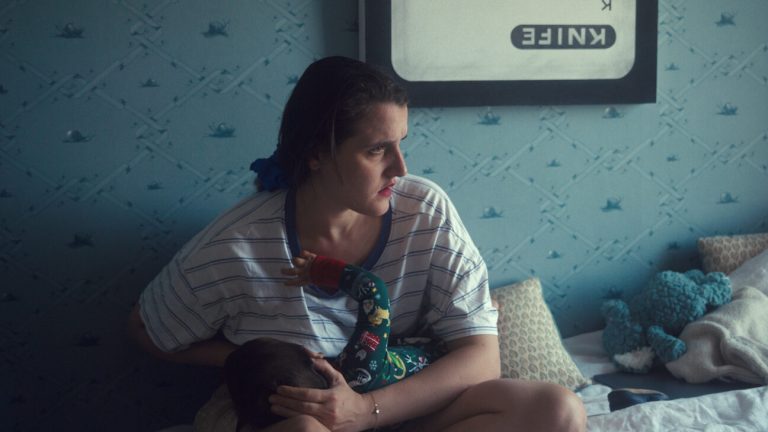
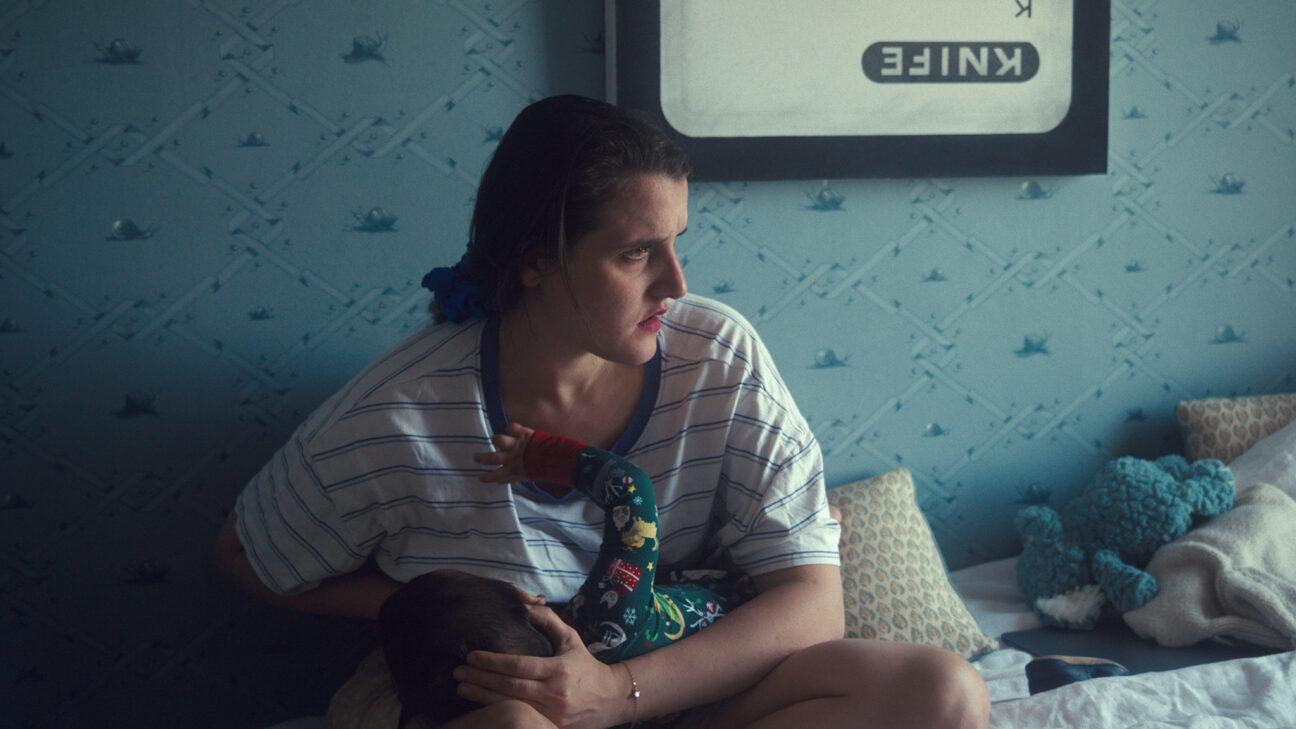
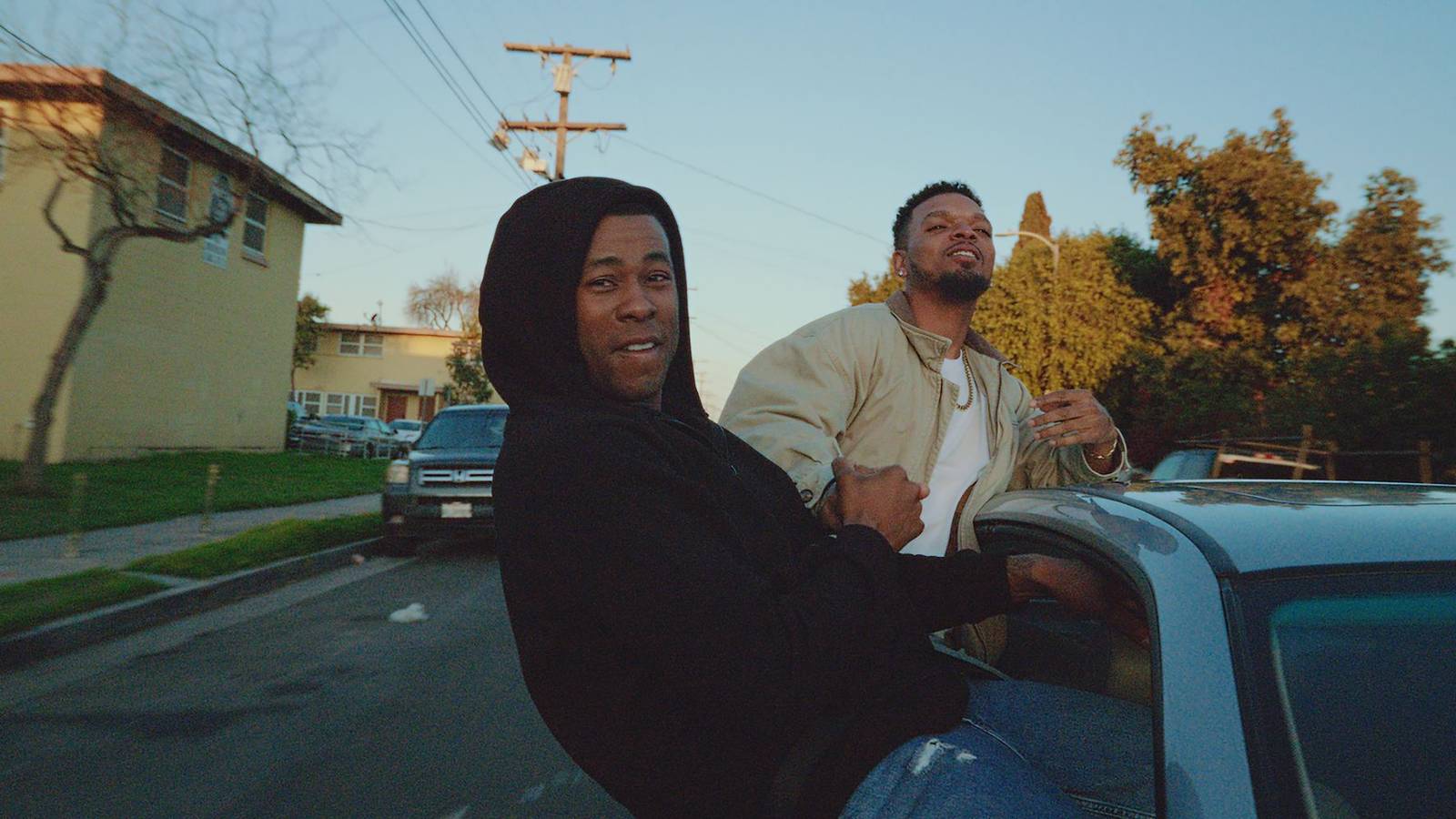
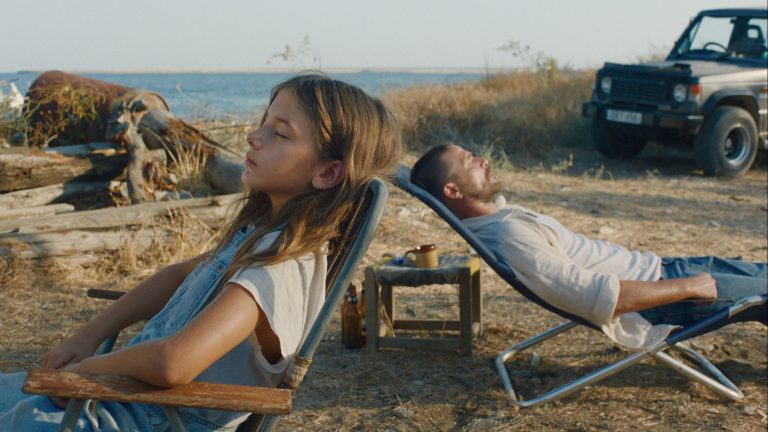
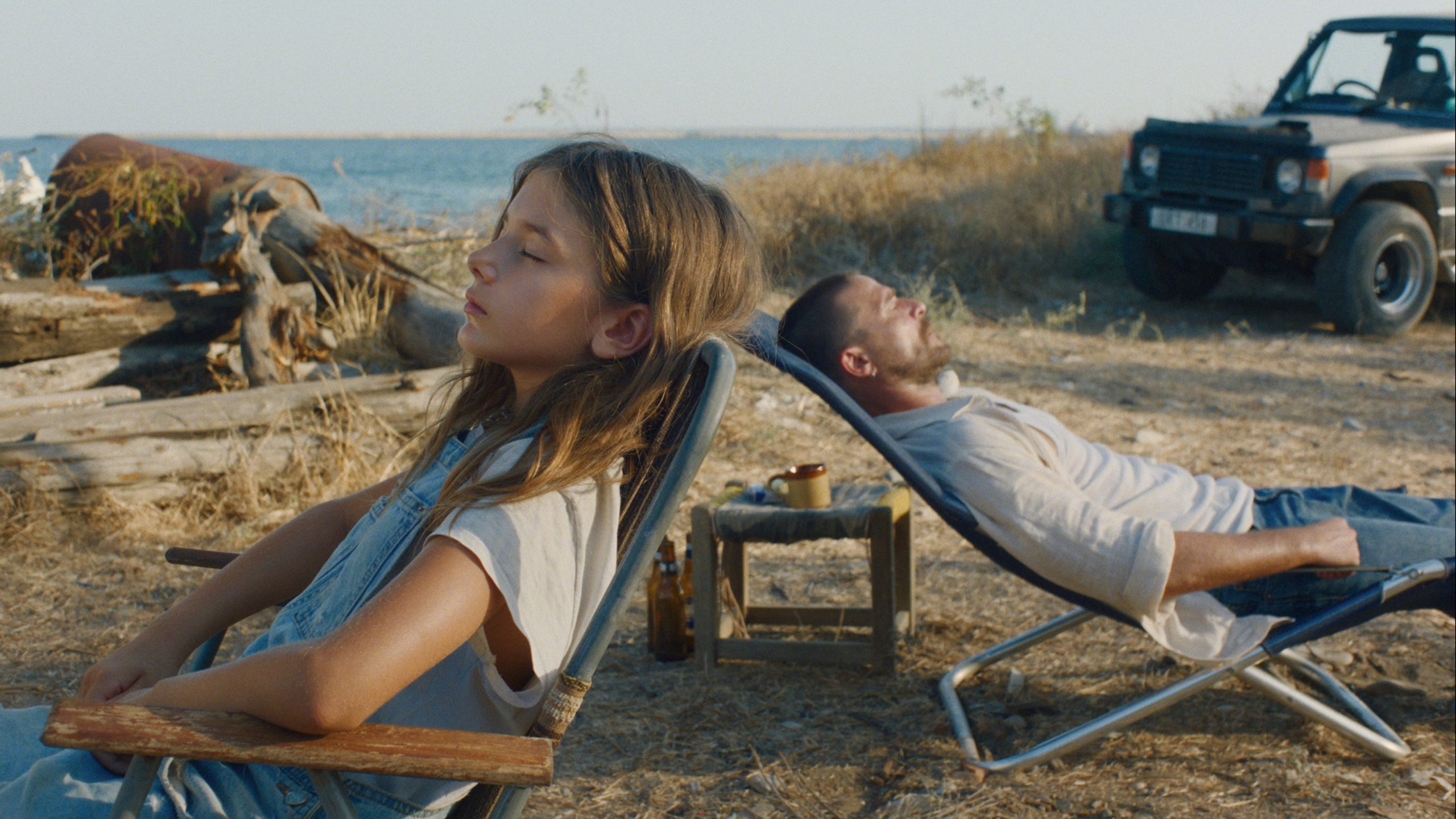
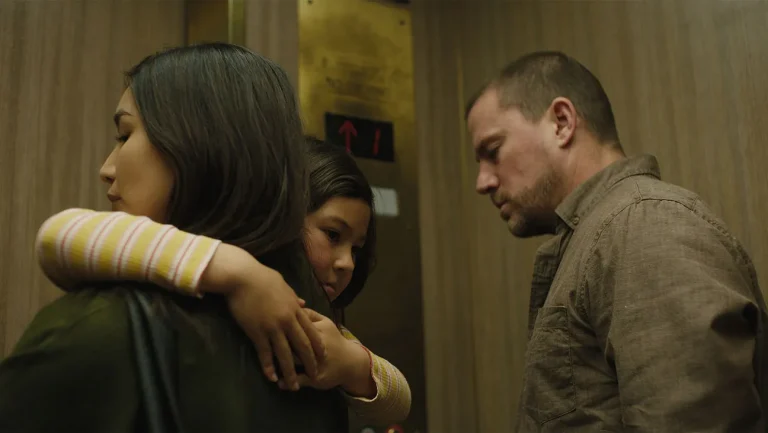
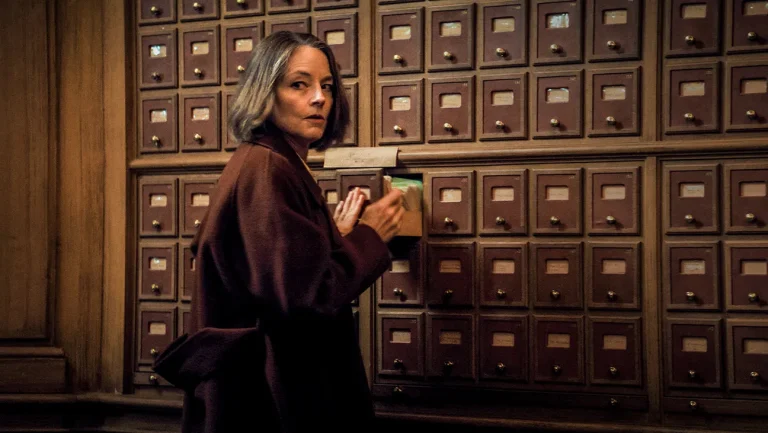
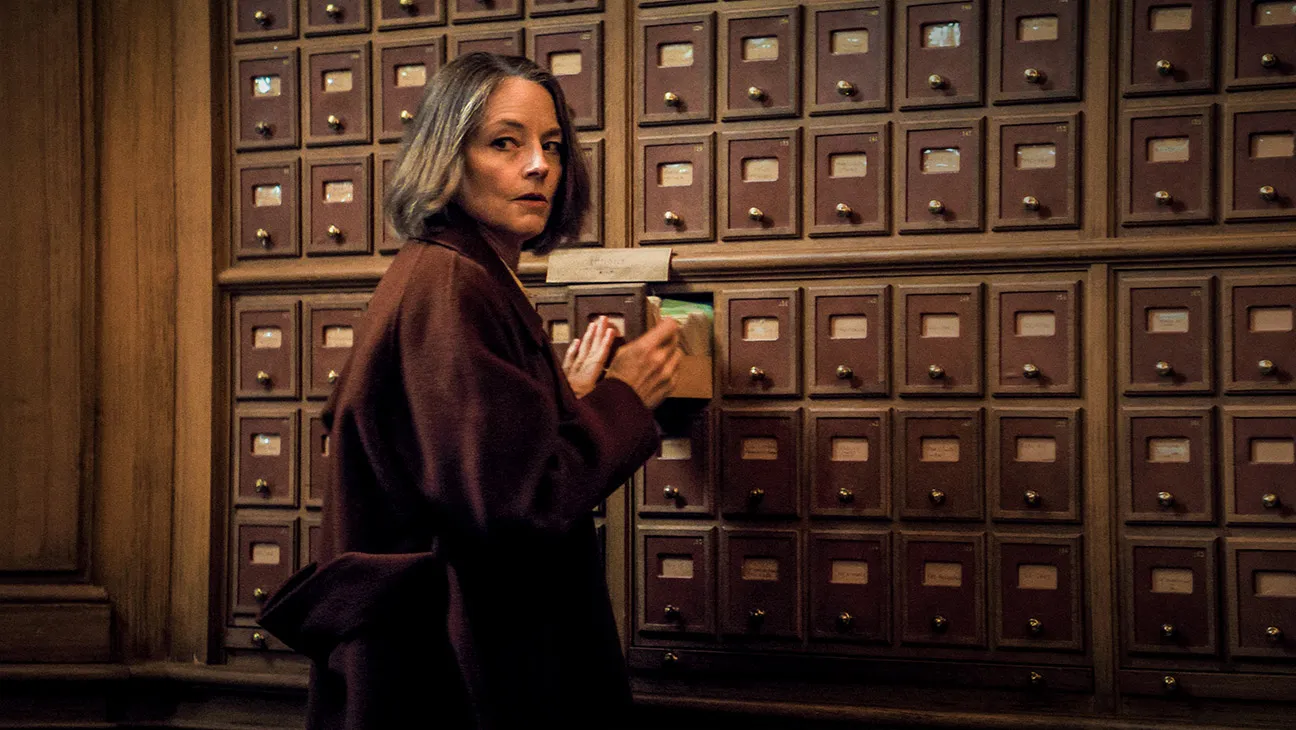
Synopsis:Struggling with new parenthood and stalling careers, Kallia and Ram’s lives are thrown into chaos when Kallia’s blind mother goes on a mission to exorcize the family from the evil eye.
Even if we choose not to have children of our own, there comes a point in life where we may have to parent. The hard part is parenting the people who raised us when they become unable to take care of themselves. It’s hard to imagine watching that deterioration of someone who seemed such a solid stalwart in our lives for so long. It’s harder still when they can’t see it for themselves and still believe their cognition has not altered. This intergenerational parenting is at the heart of Removal of the Eye.
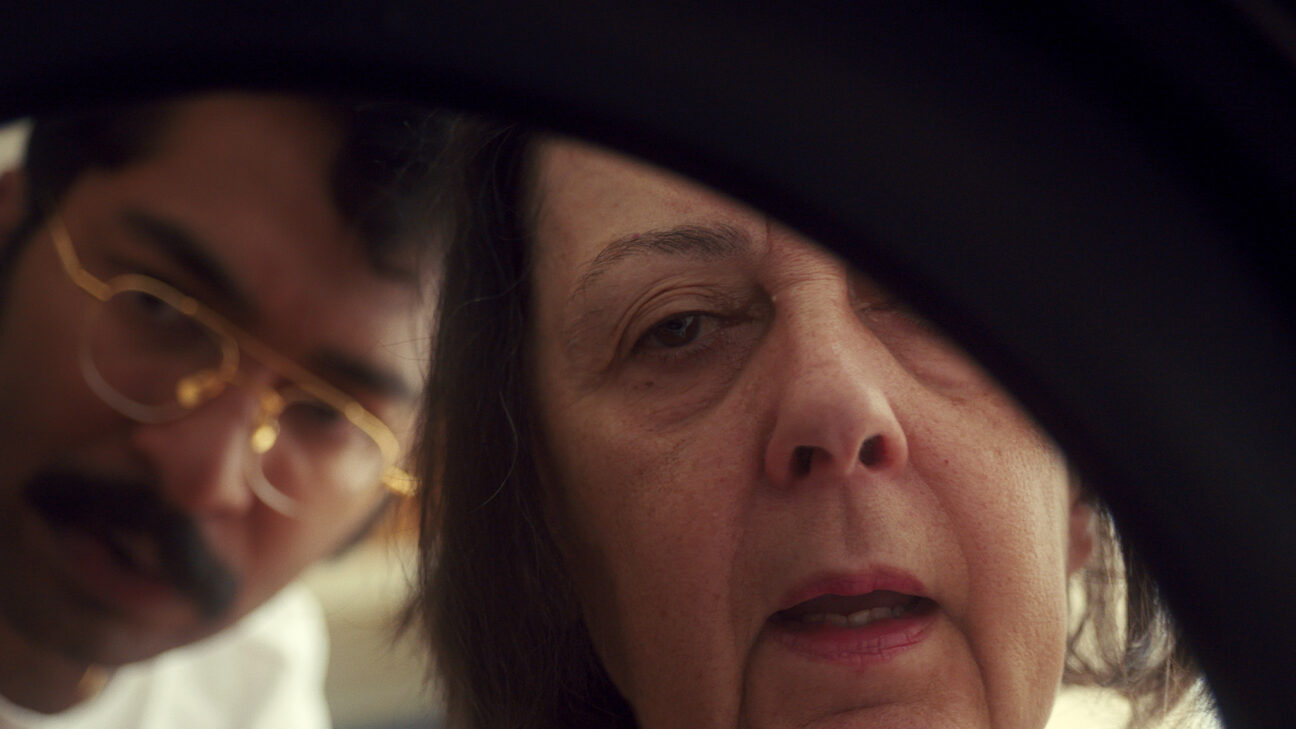
One of the most engaging aspects of the film is the cinematography by co-director, co-writer, and co-star Prashanth Kamalakanthan. The film keeps us off kilter from the moment it begins. There are extreme closeups, Dutch angles, and a unique use of 360 degree cameras that create an out of body effect. The 360 degree camera’s closest equivalent is a fish eye in the way it curves the world of the scene, but unlike a fish eye, we see the elongated limbs from the other side and all the action around what the camera is pointed at. In Kamalakanthan’s hands it’s used to upset the audience and ingrain the idea of the presence of the evil eye in each scene it’s used.
The whole film feels off balance. It’s chaos playing on the edge of a knife. While other filmmakers may try and choose a more frenetic pace for this type of story, Kamalakanthan and co-director, co-writer, and co-star Artemis Shaw build a languid unease and discomfort. They make us sit in these situations of parental anxiety. We have to be uncomfortable in order to empathize with the discomfort of the situation. It makes each fight, slight from a conversation with their own parents, and unwanted comparisons from other young parents seem all the more awkward.
This awkwardness fits well with the precision of Kamalakanthan’s editing. The simultaneous scenes of Ram (Prashanth Kamalakanthan) and Kallia (Artemis Shaw) feel like they’re happening side-by-side and it heightens the tension of each because they mirror each other in some ways. It’s a technique Kamalakanthan employs throughout the film. This connection into how their interactions outside their relationship affects their relationship comes into focus as Kallia has a very terrible video call interview and Ram is failing to convince a fellow musician, Dax (Mons Vi), his vision for his music video is good. The scenes then connect in one of the best scenes in the film.
After her terrible interview, Kallia comes back to the apartment to find her baby alone, covered in spit up, and crying. She finds out from the trash that Ram has been feeding the baby formula to get him to nap, which is something Kallia has previously put her foot down about. As Ram flounders his last pitch to Dax, he turns to see an irate Kallia. The scene has no dialogue, just the images of a shouting Kallia in slow motion with her baby strapped to her chest as she tears open formula tubes and sprays Ram with the contents. The scene brings to the surface all of Kallia’s frustrations and finally gives Ram the comeuppance he deserves.
If Removal of the Eye has faults it’s in the execution of its full vision. As a whole the film feels somewhat incomplete. There feels like the need for a bit more explanation or finality to the experience. There is a good catharsis at the end and great scenes in between, but it just lacks the compelling narrative oomph to make it great.
In spite of that, the unique perspective and the semi-autobiographical nature of the film lend it to an enthralling cinematic experience. This family, both in front of and behind the camera, made for an eerie, heartfelt, and funny film about the complicated nature of intergenerational parenting. It’s well worth seeking out.
Director:Bart Layton Writers: Bart Layton, Don Winslow Stars: Chris Hemsworth, Mark Ruffalo, Halle Berry
Synopsis: An elusive thief, eyeing his final score, encounters a disillusioned insurance broker at her own crossroads. As their paths intertwine, a relentless detective trails them hoping to thwart the multi-million dollar heist they are planning.
Bart Layton has had a pretty interesting career as a director so far. His sleek styled visuals and their thrilling elements go together like Crystal hot sauce and catfish. In his third film, Crime 101, Layton sets up a chessboard full of characters that are going through the motions of everyday life and wanting to stay true to themselves while being presented with opportunities that could change their lives for the better or ultimately, for the worst. Today in a lot of action movies we get over-the-top action, pretty faced actors, ugly visual effects, and nostalgic ‘80s and ‘90s music. Luckily, Layton decides that none of those things are needed for his picture. He transports us back to a time where crime films were dark, suspenseful, and relied on good acting and an interesting story.
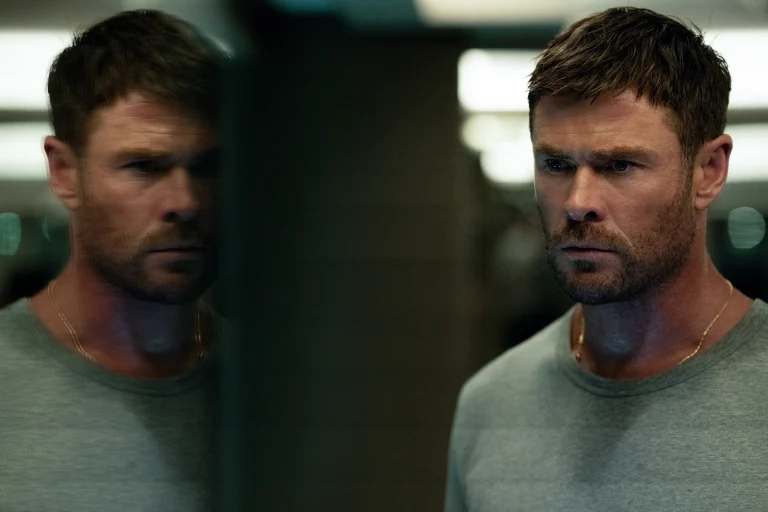
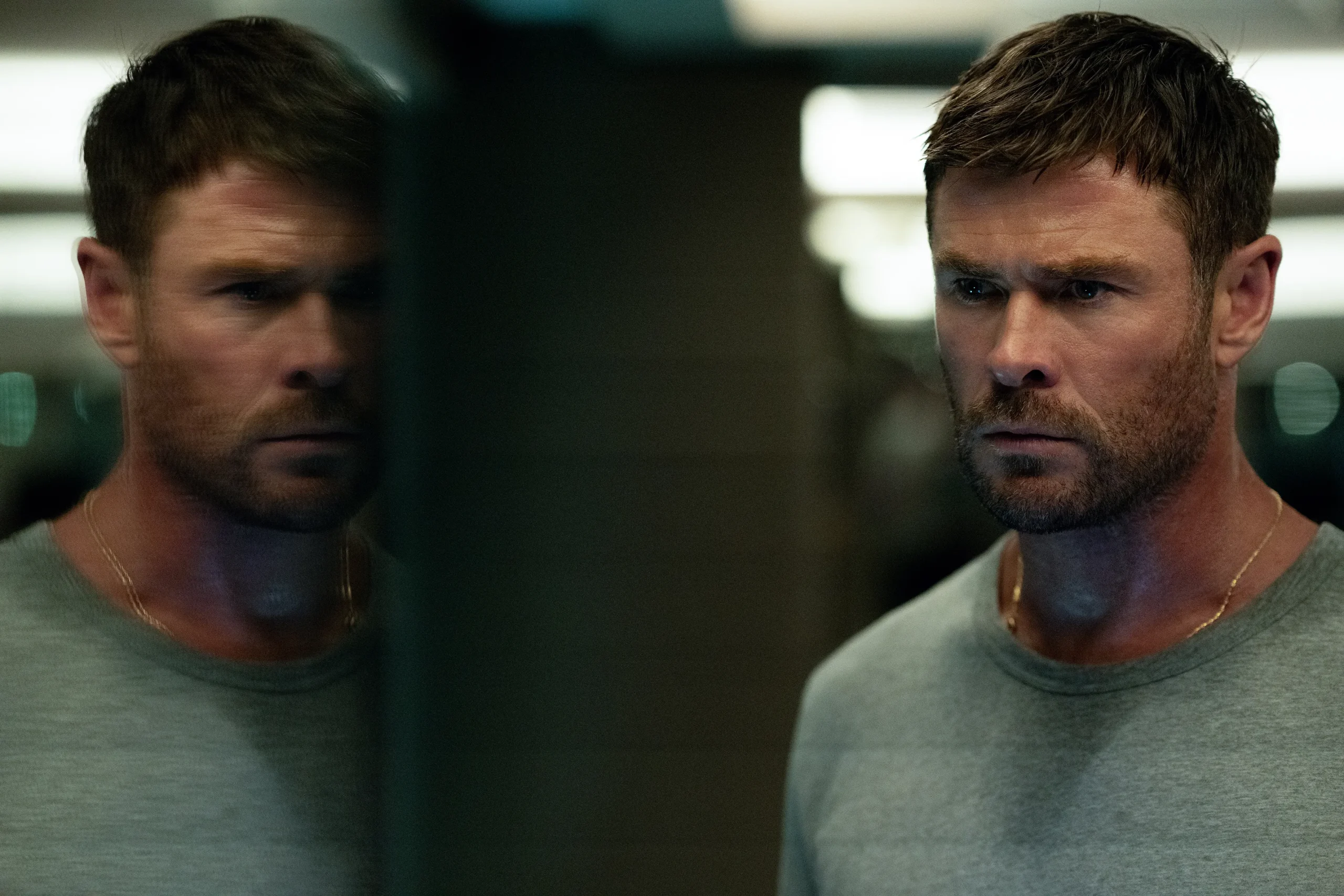
In the beginning, we’re introduced to our protagonist, Mike Davis (Chris Hemsworth). He’s a professional jewel thief that’s very detail oriented in his heists. He performs a body hygiene routine before going out into the field, does the proper recon on his subjects, and makes sure that no one in the heists is physically hurt. Mike enjoys having money from the robberies that he commits but he doesn’t flaunt his wealth. He doesn’t buy lavish cars and flashy outfits. He’s a plain jane kind of dude that enjoys living comfortably. Throughout Hemsworth’s career we’ve seen him play mercenaries, Norse Gods, car drivers, and even Optimus freakin Prime. Mike Davis is nothing like any of the roles and that’s why I really enjoyed him in the movie. You could say that he got inspiration from James Dean in Bullitt and maybe even Val Kilmer in Heat.
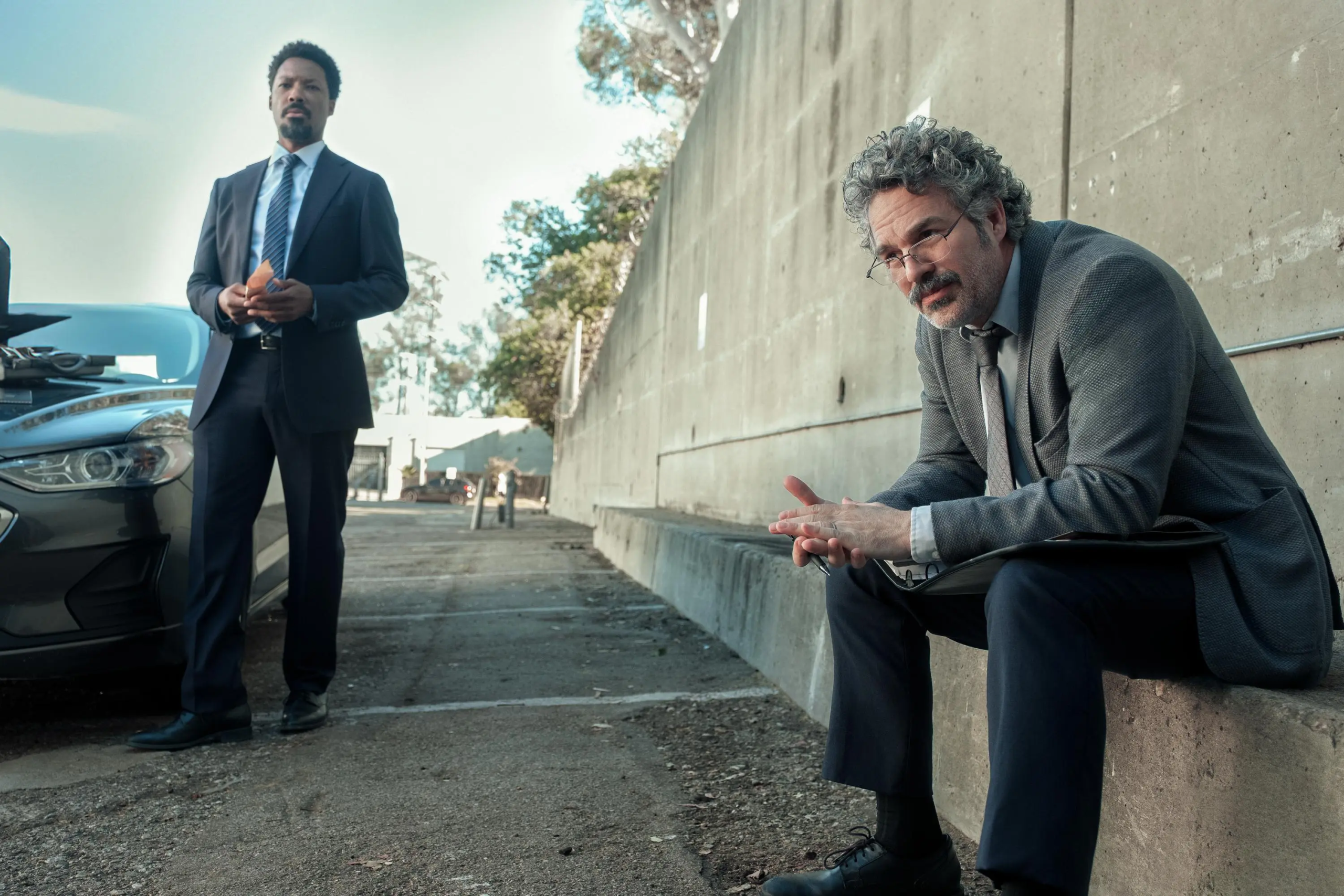
Mike doesn’t leave much for police to really investigate after the robberies because of his caution. He’s been committing robberies all over the 101 freeway. Cops have given up and moved on from the case, but there’s one detective that won’t stop pushing himself to find the culprit and that’s Lou Lubsenick (Mark Ruffalo). Ruffalo has played a ton of characters in law enforcement so it’s safe to say that he has this particular role down pat. There’s a cliche detective story with Lou that a lot of crime thrillers can’t let go of, he’s getting divorced and facing a midlife crisis. He’s chosen his work life over his spouse played by Jennifer Jason Leigh, a great all in a day’s work performance from her. Lou also catches strays at work. His colleagues are constantly clowning him about him not holding his own weight as a veteran detective. Even Lou’s partner Tillman (Corey Hawkins) thinks that he should retire and spend his time on the beach with a new girl by his side. Lou doesn’t want to go out like that so he drags Tillman up and down the 101 to see what clues he can find.
In the second act, we are introduced to a woman named Maya (Monica Barbaro) during a small traffic accident she has with Mike. He tries to pay her off with cold hard cash but she wants to handle this through the proper channels. They go out on a date, he invites her over to his house and they share an emotional and romantic connection with each other. I’ve only seen Barbaro in Top Gun: Maverick but I have to say that she’s so damn charming and comforting in this movie. In the little screen time she has, she wins over the audience with her voice, personality, and her lack of ulterior motives for being in a relationship with Mike. As time passes, Mike starts to let his guard down and opens up to Maya about his past, even if only for a moment. As his feelings for her start to grow, he decides that it’s time to do one more job and then leave his life as a professional thief for good.
The queen on our chessboard is Sharon, played by the prominent Halle Berry. Sharon is an insurance broker. She makes sure that rich people have the best insurance on their most expensive possessions. She’s one of the top earners in her firm and she’s constantly being told by her bosses that she’s up for a partner position. She’s committed most of her life to her work and, as an audience member, I could relate to that feeling of working at a job for so long and not having much to show for it. She prides herself on being a good employee by protecting her clients. Halle’s performance could possibly be seen as mirroring her own real life profession as an actress. At one point, she has a conversation with her manager about her halted promotion. He tells her that she can’t just leave their firm because she’s 53 and that nobody wants to work with an old woman. In a lot of industries, older women are treated as disposable and that no one will work with them because of their age. This sets the events for the third act into motion. She teams up with Mike for the ultimate score so that she can stick it to her coworkers and her entitled clients.
Aside from these characters, we’re introduced to a young thief played by Barry Keoghan. He commits crimes for the thrill of it and some of his actions put Hemsworth’s Mike in a tight situation that could make his whole career come tumbling down. I know that A LOT of people will compare this film to the classic crime dramas such as Heat and Thief. In my experience with those films and Crime 101 I think this has more to offer in the characters’ dialogue, their motivations, and what the story says about a lot of the rich people in America. A lot of rich people are greedy, like to flaunt what they have and they don’t contribute anything of value to society. Layton’s script from Don Winslow’s 60 page book adds a lot more to the story and it fleshes out the characters that are already in the novel. Sadly, the down sides of this movie are some pacing issues and the little amount of action with guns and hand-to-hand combat. Favorably, this movie has good performances from its cast, good cinematography, and thrilling set pieces. Put this movie on with Top Gun: Maverick and you’ll have a dad movie night that will go over great with family and friends.
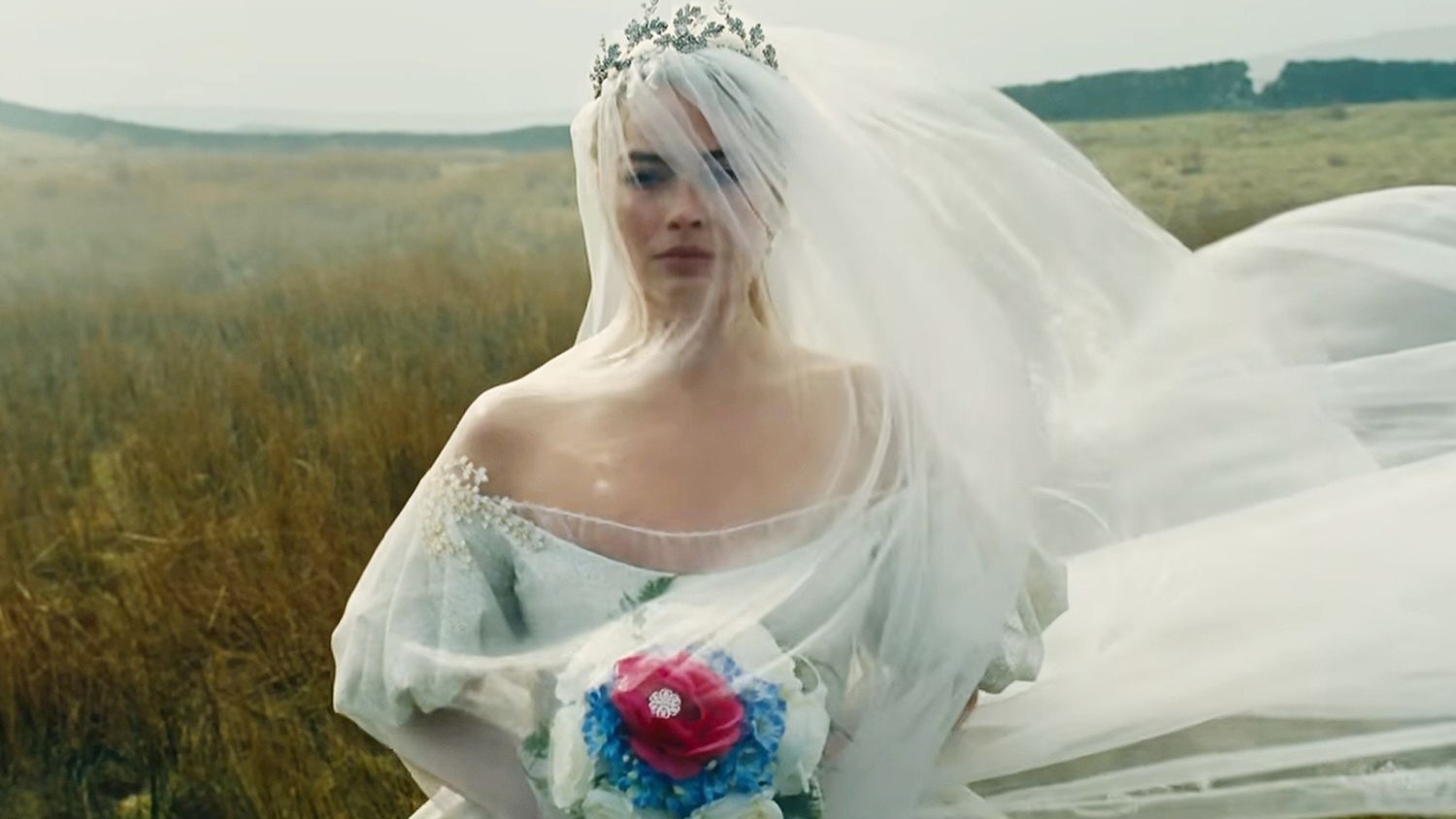
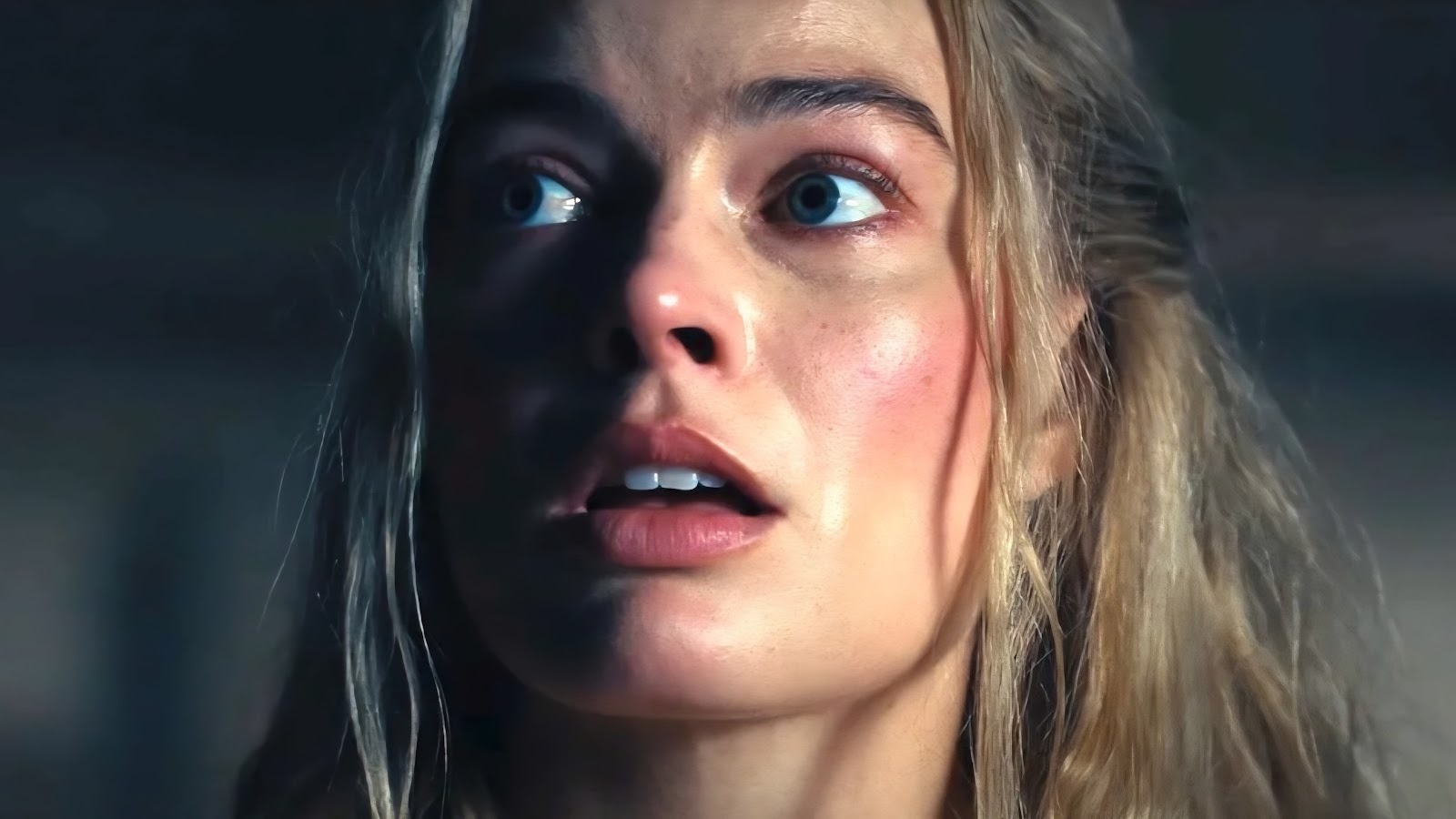
Director:Emerald Fennell Writers: Emerald Fennell, Emily Brontë Stars: Margot Robbie, Jacob Elordi, Hong Chau
Synopsis: A passionate and tumultuous love story set against the backdrop of the Yorkshire moors, exploring the intense and destructive relationship between Heathcliff and Catherine Earnshaw.
It pains me to say, but not nearly as painful as sitting through the latest adaptation of Wuthering Heights, that Emerald Fennell’s latest film is a misfire on several levels. When a film reinterprets a classic work through a different lens, it challenges the audience’s moral norms and expectations. When handled the right way, a filmmaker can deepen the already established thematic impact of the source material.
However, Fennell doubled down on the boundaries she pushed with last year’s Saltburn, which makes the impact feel manipulative and, in particular, hollow. Which is a shame, since Fennell, a gifted filmmaker, has two stars in the leads, but the effort that leaves the audience feeling exploited instead of illuminated. This Wuthering Heights is reduced to “gotcha” flash and sex appeal, a vapid romp with little to build on the classic work.
Perhaps most damning, Fennell’s interpretation feels troublingly disconnected from the present moment.
The movie begins with some cheap shock value, showing a man, we think, committing suicide by hanging. That’s before we are forced to assume that there is some serious bed-springy lovemaking going on. Young Catherine (Charlotte Mellington) watches the public execution, witnessing the victim’s “angel lust.” She lives with her father, Mr. Earnshaw (Shakespeare in Love’s Martin Clunes), in a mansion that has seen better days.
Catherine’s father is a world-class alcoholic who brings home a young boy, telling Catherine to meet her new pet. The young lad (Adolescence’s Owen Cooper) has no name, so Catherine calls him “Heathcliff,” after her dead brother. Taking care of the children, probably because if alcohol-soaked Mr. Earnshaw stands near a fire, he may burst into flames, is Nelly (Showing Up’s Hong Chau), a household maid jettisoned to a career of service because she is the out-of-wedlock child of a nobleman.
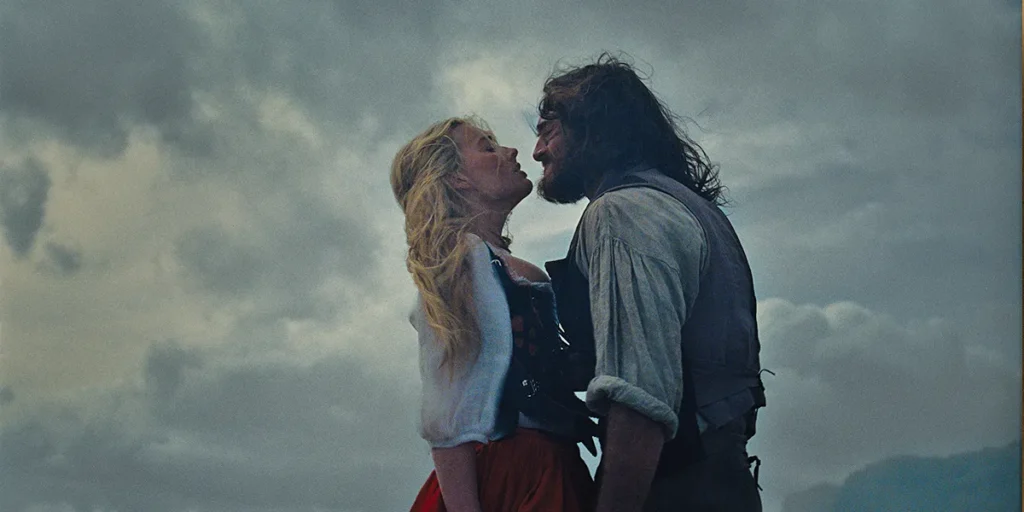
Yes, the first act is a provocative setup intended to create cognitive dissonance. The young orphan continues to take beatings for Catherine, even when he had nothing to do with them. Years later, Catherine (Margot Robbie) is married, but has an affair with Heathcliff (Frankenstein’s Jacob Elorbi) when he returns years later. Here, it is interesting to see Catherine treated like a doll, a piece of property, but you can easily see how Heathcliff was treated as a “pet” and as property of the Earnshaw estate.
Fennell burst onto the scene with Promising Young Woman, a bold, provocative, and timely thriller that was so original and audacious we had never seen anything quite like it. Her third film, often a career peak for most filmmakers, tests whether she has lasting legs. For instance, Fennell reframes the material without recontextualization. Why take the time to show examples of Catherine’s inherited trauma through erotic shock imagery without real consequences?
When the film shifts into adulthood, the emotional wounds feel generational, like rocks forming on the bed of a rushing river. This is used to intensify the romance, a toxic passion that frames trauma as an aesthetic. Still, you cannot deny the exceptional chemistry between Robbie and Elorbi, in the way that two beautiful, horny people have when they hardly have the choice of free will in their own lives.
However, without that emotional connection that forms the bond, there is no reason to believe there is a deeper connection beyond the physical. That is an insult to Emily Brontë’s 1847 classic work. This Wuthering Heights withers under a leering eye instead of a symbiotic one, forgetting the genuine intimacy underneath all the feral intensity.
You can watch Wuthering Heights exclusively in theaters starting February 13th!
Director:Jeremiah Kipp Writers: Tracee Beebe, Brian Clarke Stars: Willa Holland, John Adams, Paul Sparks
Synopsis:Follows Rebecca Owens, a mortuary science graduate who takes a night job at River Fields Mortuary. What begins as a routine job soon turns sinister as she faces terrifying supernatural forces.
Adapting a beloved horror video game is a risky business. Lean too hard into fan service, and the film risks becoming an illustrated cutscene; stray too far, and the core audience revolts. The Mortuary Assistant, directed by Jeremiah Kipp, walks that spooky narrow corridor with surprising confidence, delivering a film that understands the specific dread of its source material while reshaping it into something distinctly cinematic. The result is a slow-burn, demon nightmare that favors atmosphere over excess, though not without a few blood-curdling shocks along the way.
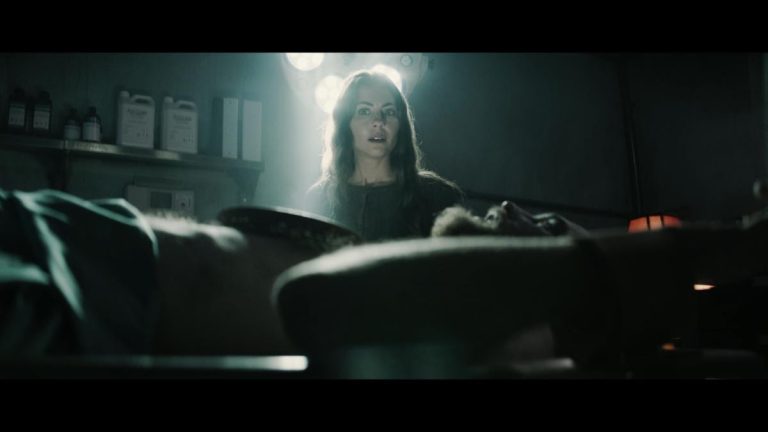
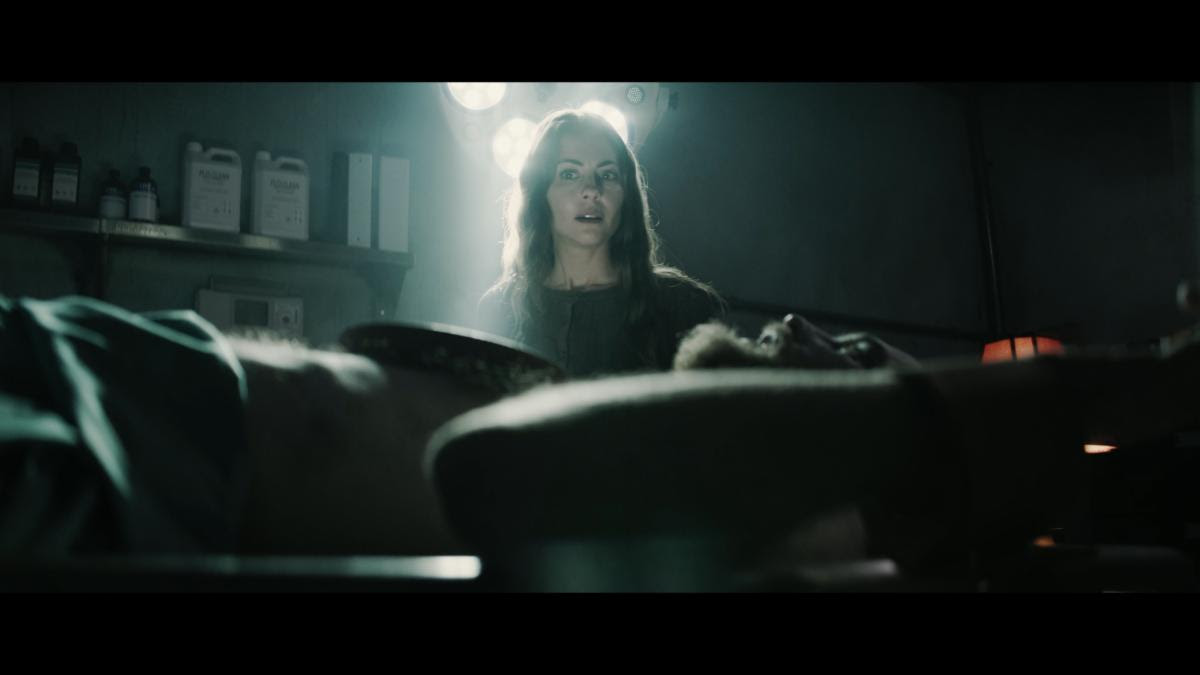
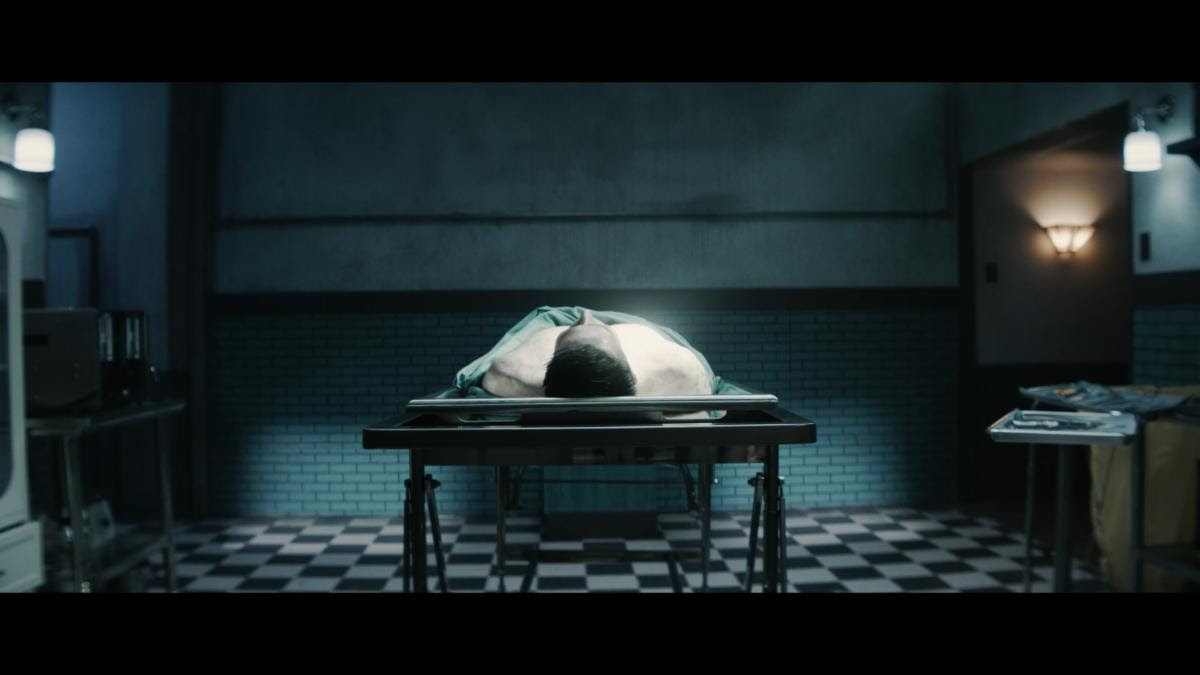
Set almost entirely within the River Fields Mortuary, the film follows newly certified mortician Rebecca Owens (Willa Holland), who takes a solitary night shift embalming bodies after hours. It’s a premise that feels tailor-made for horror: fluorescent lights, stainless steel tables, the oppressive quiet of a workplace designed for the dead rather than the living. From the outset, The Mortuary Assistant understands that its greatest asset is confinement. The mortuary isn’t just a location; it’s a psychological pressure chamber, closing in on Rebecca as the night drags on.
Holland delivers a restrained and effective performance, anchoring the film with a brittle calm that slowly fractures. Her Rebecca is competent, guarded, and visibly burdened by unresolved trauma. Holland resists genre histrionics, which is a smart choice, especially in a film that trades heavily in suggestion rather than spectacle. Raymond, her boss’s performance, feels more wooden than the intended creepy, but you can overlook it. His character is still strange and untrustworthy and brings an unsettling ambiguity to the film’s moral center.
As disturbing events escalate (typical horror tropes that include flickering lights, shifting bodies, the phone randomly ringing), The Mortuary Assistant avoids the cheap jump-scare reflex that plagues so much contemporary horror. Instead, the film leans into sustained tension. When violence does arrive, it emerges organically from the film’s creeping unease rather than erupting on cue.
The script, co-written by Tracee Beebe and game creator Brian Clarke, smartly expands the game’s mythology without drowning the audience in lore. Demonic rituals and possession are introduced gradually, woven into Rebecca’s personal history in a way that makes the horror feel intimate rather than abstract. Embalming, like horror, is repetitive, methodical, and deeply uncomfortable. The film draws a quiet parallel between Rebecca’s professional obligations and her psychological unraveling, suggesting that horror isn’t always about what lunges at you in the dark, but what you’re forced to confront alone, over and over, until something breaks.
Visually, the film benefits from its commitment to practical sets. River Fields Mortuary is rendered in detail, its narrow hallways and clinical surfaces creating a sense of inescapable realism. The effects aren’t cheesy, bad CGI, (thankfully) and some sections are very tense. The ‘demons’ are very effective and might cause some sleepless nights. Especially the ones just casually looking through doors – pure nightmare fuel.
That said, The Mortuary Assistant is not without its shortcomings. At times, its devotion to mood threatens to stall narrative momentum. The film’s music choices are a little distracting and silence could have been a stronger option. While fans of the game will appreciate the fidelity to its rhythms, newcomers may find themselves wishing for sharper narrative turns or deeper exploration of the film’s theological implications.
Emerging from the same production lineage that brought audiences Terrifier, The Mortuary Assistant is notably less interested in excess than endurance. It doesn’t aim to shock viewers into submission, but to wear them down, scene by scene, shift by shift. In doing so, it offers a thoughtful, unnerving addition to the growing canon of video game adaptations that respect their origins while asserting their own identity.
With a runtime of just over an hour and a half The Mortuary Assistant is an intense, chilling horror film that leaves you with the reminder not to work late. Go home, lock your doors, and think twice before offering some overtime.
On this episode, JD and Megan discuss the French animated Little Amélie or the Character of Rain! Oscar-nominated and featuring the most striking visuals, this little gem of a movie is really beautiful and poignant, even if it’s at times ambitious to a fault.
Directors:Tyree Dillihay, Adam Rosette Writers: Aaron Buchsbaum, Teddy Riley, Chris Tougas Stars: Caleb McLaughlin, Gabrielle Union, Nick Kroll
Synopsis: A small goat with big dreams gets a once-in-a-lifetime shot to join the pros and play roarball, a high-intensity, co-ed, full-contact sport dominated by the fastest, fiercest animals in the world.
Plenty will marvel at Goat, I am guessing mostly for the film critic dad-joke puns, hoping for exposure for a quote pull that will be a slam dunk. See what I did there? However, the latest animated feature from Sony’s burgeoning animation division, which is anchored by the amazing Spider-Verse franchise, is a combination of other cartoons, but not nearly as well-executed, and is hardly “nothing but net.”
Simply put, Goat is all flash, a considerable amount of technical, candy-colored flash, with little originality and nothing but recycled substance.
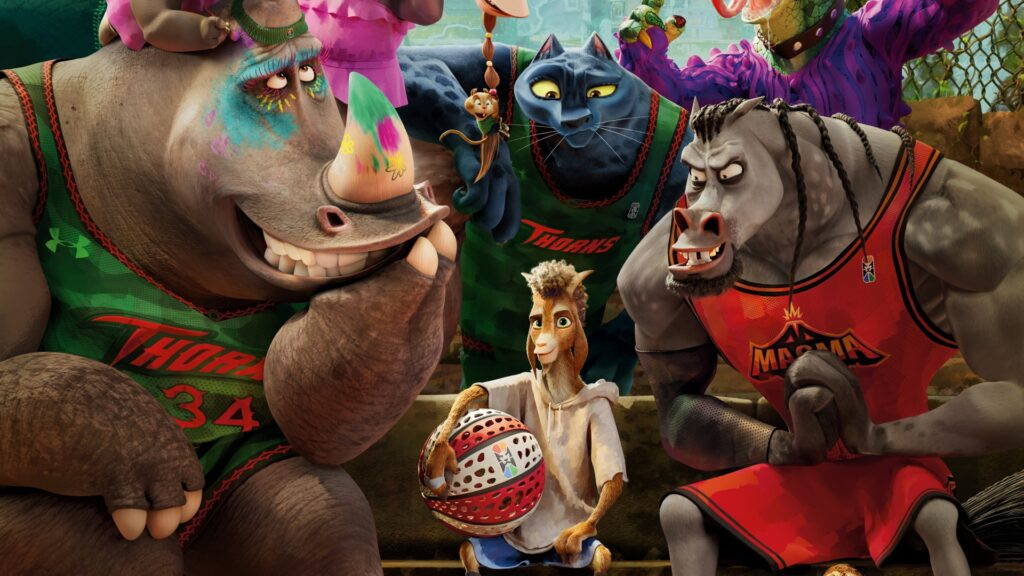
The story follows a “small,” which refers to almost anyone who has ever tried to play basketball but couldn’t make the team because of their genetics. That would be Will Harris (Stranger Things alum Caleb McLaughlin), a teenage boar goat who dreams of being a professional basketball player in the Roarball League. However, as he gets older, Will’s dream appears to be farther from reality.
Will still holds onto that dream, however, while continuing to cheer for the league’s greatest of all time, Jett Fillmore (Top Five’s Gabrielle Union), known as the “Face of Thorns.” An all-star, she is a black panther who is always on the prowl for the hoop. She won a championship for the Vineland Thorns years prior, but now they are the worst team in the league. That’s when team owner Flor Everson (Broadway royalty Jenifer Lewis) has an idea.
To boost ticket sales, she signs Will to a contract after a video of him goes viral, showing him breaking the ankles of the Mane Attraction (Rebel Ridge’sAaron Pierre) in a pickup game, and viewing him as more of a novelty than someone with genuine talent and skill. Of course, Jett, the legend, team captain, and front-office executive, is flabbergasted at the idea of a “small” playing on her squad.
What happens next in Goat is predictable, contrived, and, when the film tries to channel family-friendly themes, trivial. The movie was produced by Stephen Curry, who obviously relates to the underdog story, given his rise to basketball greatness from a small college in North Carolina. He must have felt a kinship with the source material. Based on the book “Funky Dunks” by Chris Tougas, the film lays on the themes thick, almost sacrificing humor for preachiness.
While the film tries, and tries too hard, to be family-friendly, the rest of it is uninspired. Director Tyree Dillihay (Bob’s Burgers, Axe Cop), working from a watered-down script by the writing team of Aaron Buchsbaum (Psych) and Teddy Riley (Shangri Dawn), never finds a basketball scene or cliché it doesn’t love to recycle. For instance, there is a scene clearly stolen from the 1993 Super Bowl advertisement, “The Showdown,” starring Michael Jordan and Larry Bird.
You need to find a niche for comic relief in a movie like this. Remember, the Minions were a sideshow before striking it big with Despicable Me. The best joke comes from Will’s landlord, voiced by Wayne Knight, and his thousands of gerbil children. Besides one snarky comment from Patton Oswalt, who plays a proboscis monkey and head coach, I don’t remember laughing once.
Perhaps most importantly, neither did any kids at the Saturday morning screening I attended. This family film is tiresome, tries too hard, and never plays the game naturally. Curry and company forget the fundamentals, running a frantic full-court press on the audience before finally traveling its way to the buzzer. And at this point, I’m committing more basketball puns than the film commits traveling violations. See how flashy, but lazy and repetitive that is?
**This piece contains plot spoilers for Good Luck, Have Fun, Don’t Die**
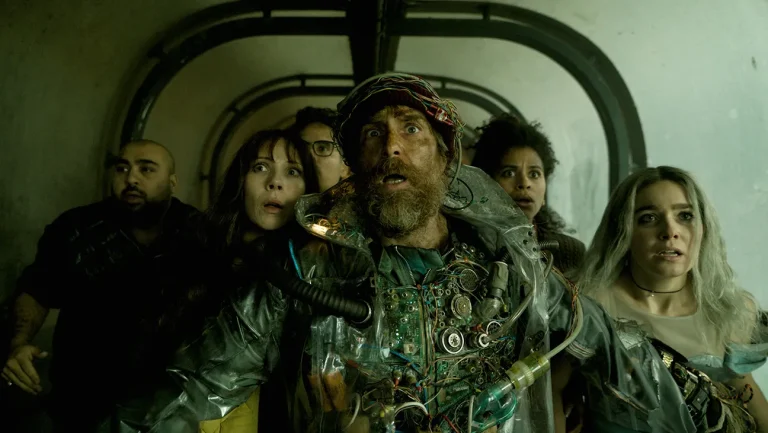
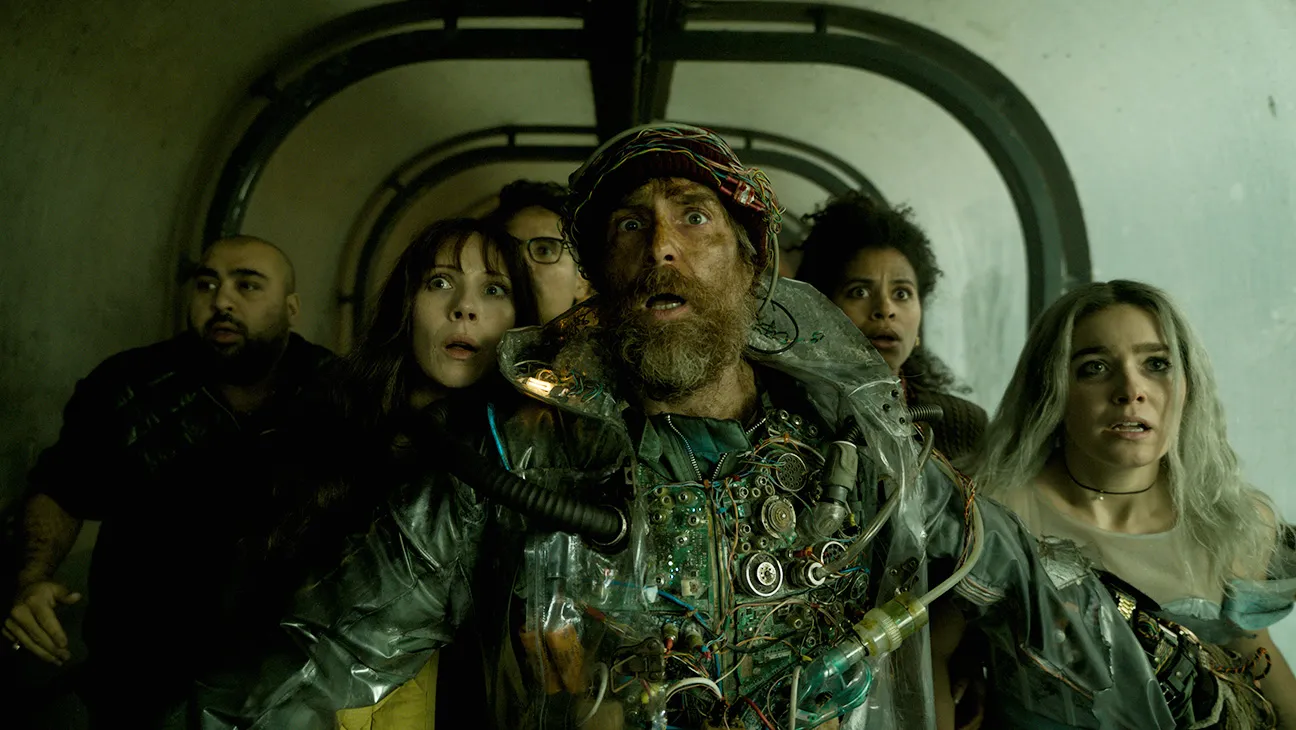
Gore Verbinski’s new film, Good Luck, Have Fun, Don’t Die, is a maximalist bomb in celluloid form. Verbinski, and screenplay writer Matthew Robinson, is coming on stage to slam the integration of technology and the human soul. While the premise is sort of a watered down, “yelling from the rooftops” version of The Matrix, there is still a lot to glean from this film. Moments involving zombified teens and their cell phones and a Stranger Things-style nosebleed effect fall flat. But one sequence involving Juno Temple’s character is the heart of Verbinski’s return to Hollywood in over 10 years.
Susan (Temple) is a mother of a boy in high school who is shot and fatally wounded from a school shooting. There’s a palpable feeling of sorrow that can be drawn from Susan, one that is shared by many people all over the United States. Like most people, I recall exactly where I was when I saw “Breaking News” regarding shootings occurring at Sandy Hook Elementary, Parkland High School, all (seemingly) once in a lifetime horrors in front of our unfortunate eyes. Since then, these horrors have been normalized, what was once seen as once in a generation tragedy is now a common occurrence capitalized by ridiculous safety products to make your life safer. Bullet-proof windows for classrooms, door stoppers that could stop an elephant – let alone a sick individual with a gun, and portable rooms to keep your child’s school ‘safe’.
This phenomena isn’t entirely isolated to just school shootings either. In the past two years, my grandmother and my childhood priest passed away. After my grandma passed and was cremated, the service offered me a pamphlet of products I could purchase that had some of my grandmother’s ashes. Paper weights, various pieces of jewelry, or a pen (???) – all containing small pieces of my grandmother. Then, after my pastor died, I signed up for email updates on funeral arrangements on the obituary provider’s website. Since then I have received a weekly newsletter about what new and exciting death-related products are rolling out that I’ve opted out to multiple times and reported to spam after that didn’t work (that also didn’t work). And I understand that we are in an age of technology-sponsored escapism, the normalization and profiteering of death is something that is punctuated incredibly well in Good Luck, Have Fun, Don’t Die.
In Good Luck, Have Fun, Don’t Die there is an underlined sense of humor throughout these scenes where Susan must navigate how to grieve in her sudden loss. This entire sequence felt equally hilarious as it was vomit-inducingly disturbing. When she approached the business offering to clone her son, everyone there was dismissive of Susan’s sorrow due to their familiarity and over-exposure to senseless death. As a society we have been more exposed to death than we should be accustomed to. Back on September 10th of last year, the internet saw a widely circulated violent death of a well-known American figure. Not to speak on that individual’s beliefs or character, but it isn’t entirely healthy for us to witness or accustom ourselves to viewing that level of violence – regardless of background. After [said individual]’s death, that person’s spouse has gone on a “look at me grieve” tour and profited on every element of this – shamelessly, might I add.
After the scene involving Susan trying to recreate her son, the clone she received was this distant shell of an individual. While we never got time to see how her son was before he died, this person that Susan got in return was completely offputting. Her son would spend his time watching Attack on Titan, scrolling on his phone, and demanding his mom bring her a specific brand of iced tea. Susan, however, was complacent over the fact that her ‘facsimile’ of a son is at least physically there – if not mentally. She had a hard time adjusting and was invited to a grief group by a clique of emotionally detached mothers who have undergone similar horrors multiple times.
When we see the grief group, everyone is as emotionally detached as the women we were introduced to before. Everyone is trying to avoid the munitions-shaped elephant in the room, acting as if their child is no longer there and pretending their clone is sufficient. Verbinski straddles the line throughout this sequence between comedy and pain, especially when it comes to a set of parents who have had to recreate their daughter 3 (or 4, I can’t remember exactly) times. And they’ve become so desensitized they just throw whatever they want at the wall and when that kid dies, they can just do it again.
The themes involving AI and cell phone usage in young adults are pretty one note in Good Luck, Have Fun, Don’t Die. But death and how profit has intertwined with it was captured so succinctly that it is the beating heart of an otherwise outlandish cinematic trip and fall. Gore Verbinski has had an incredible career, and I hope to see more from him, but this could be categorized as one of America’s most angry films. And it is rightfully deserved, we have to take some more reverence for the dead and not become desensitized to the horrific time in which we live.
ComMANNdment #2: Thou Shall Find Interesting Ways to Shoot the Scene
As Mann began his feature film career, cameras were still limited in what they could shoot. Lenses could be altered and changes could be made in post as visual effects teams were starting to gain prominence in the ‘80s, but real ingenuity was shown in the films directed by Mann prior to his delve into digital cameras in the late ‘90s (and heavily into the 2000s).
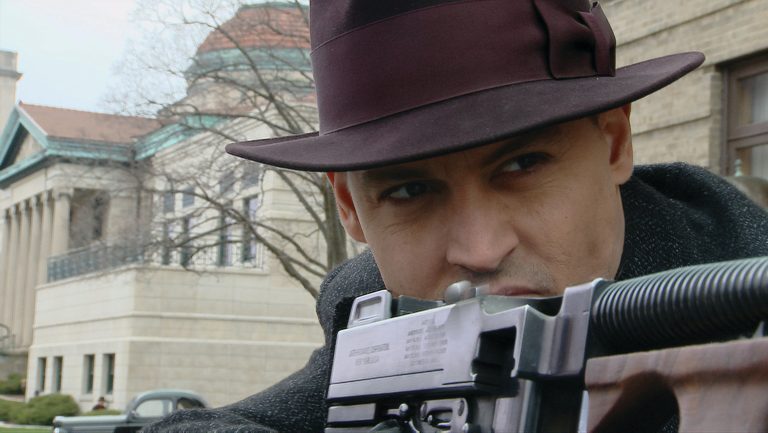
If we look at Thief, the opening diamond heist includes some interesting shots of the heist: not just watching the bit slowly shave metal out and onto the ground, but the camera zooms into the drill hole to show us the inner locking mechanisms. This shot presents to us the finer details that Mann is known for delivering in all his films (watching the lawyer and judge in Okla’s hearing exchange different numbers of fingers on their faces is a tremendous detail that could go missed by first time watchers). Mann also enables POV and long, dolly shots in Thief, letting us know that he is more than just a “point and shoot” director. After Frank is beaten by the police in an interrogation room, the Chicago PD continues to follow the tracker they’ve put on his car. We see Frank get out of the vehicle, but we never see where he goes (presumably from the perspective of the police who cannot see him either) – this leads to the officers getting onto the highway. What they don’t know yet is that they are following a tour bus, and it is this shot of following random cars on the road – pivoting focus to the undercarriage of the bus (where Frank has hidden the tracker) and ultimately ending on the front of the bus – announcing to the audience that this bus is going to Des Moines.
There are always exceptions to the rules. For Mann, The Keep does not fit so neatly into these ComMANNdments that I have set up (you will note that I left it out of ComMANNdment #1), but he does employ some creative cinematographic choices in this genre piece. In particular, his use of slow-motion feels very deliberate and creative here: no better example than when the second soldier who helps remove the silver cross has his body flung backwards by the power of Molasar. His body slowly disintegrates as it is hurtled through the air. As a recurring bit, I will not have much to add to The Keep and its visual flair.
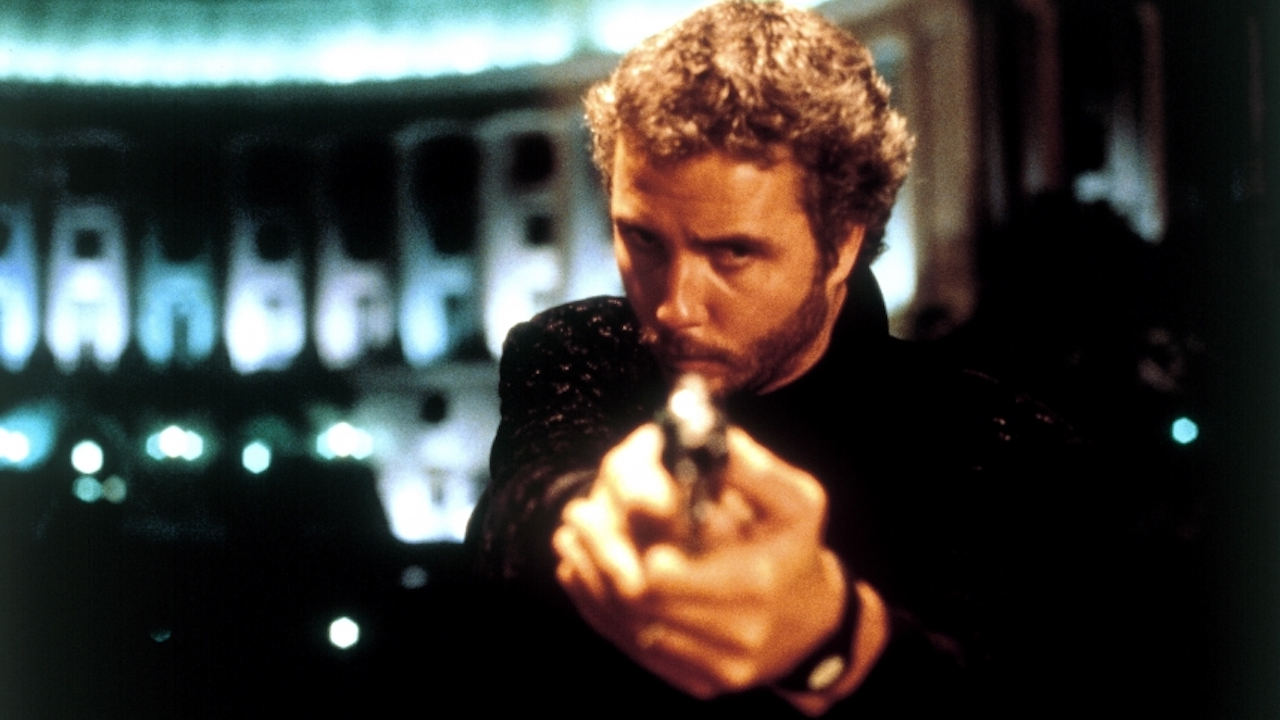
While this is a very minor shot, what is the very opening image in Manhunter? Is it Dolarhyde’s van? We assume it is, but the way in which we see it is truly unique and never comes back into play. This disorienting quality of camera placement continues throughout the film and is shown perfectly in the first conversation between Will and Jack on the beach. It is a simple enough scene to explore: Jack has come to ask Will for his help on the “Tooth Fairy” killings, but Will has retired and wants to be with his family. In the hands of another director, the scene could have been shot rather perfunctorily as a means of getting some exposition out. What Mann does here is to slightly adjust how we would normally see an over-the-shoulder shot/reverse shot scene play out. He sets the men on either side of a piece of beach wood and has them facing in opposite directions: Will towards us, the audience, and Jack facing out to sea. By having our two heroic male leads in these positions, Mann lets us know that while Will and Jack are on the same team they will not agree with how the other one wants to go about the work (literally and metaphorically not seeing this eye-to-eye). A small detail, yet uniquely powerful in this film.
Even if you are just a casual film-watcher, you are probably familiar with the L.A. bank shootout that takes place in Heat, which is arguably Michael Mann’s most iconic sequence in any of his films. And I won’t argue that, as it will come up later in this paper, but I would like to present what I believe is the strongest competition for that championship belt: the waterfall scene in The Last of the Mohicans. The moment excels based on the strength of two key factors. The first of which falls onto the shoulders of Daniel Day-Lewis and Madeline Stowe and the way their characters (Hawkeye and Cora) convey the story, both verbally and silently. But the second reason, and possibly the most pivotal, is where Mann chose to shoot this moment. The getaway of the Mohicans with Cora, Alice, and Duncan could have led them anywhere, but Mann chose one of the most cinematic locations for this to occur: under a waterfall. The sound of rushing water increases the dramatic nature of the scene and makes us lean in. Even the departure of Nathaniel is heightened when he runs and jumps through the waterfall. While the cinematography of Dante Spinotti is pitch perfect in this movie, this scene goes down as one of the most beautiful and romantic sequences ever shot.
Michael Mann starts playing with extreme close-ups and tight over-the-shoulder shots in Heat, but I will save my thoughts and examples of these for when I bring up The Insider and Ali. For my main example of how can we shoot this differently, I want to focus away from the actual camera placement and put our attention on how films are made for a moment. Usually, the only sound recorded on the day of shooting that makes it into the final cut is the dialogue (and even then, actors will frequently do ADR sessions to fix moments or provide additional lines for clarification). Now at this point in his career, Mann is a veteran in the world of entertainment: he has 2 TV movies, 4 feature films, and a vast array of Executive Producing credits on TV shows under his belt. All this proves that he knows the intricacies of putting together a film for people to view; he knows the “rules” of filmmaking. Mann’s ear may be the MVP of Heat because the idea of using the actual gunfire sounds from the days of shooting the bank robbery instead of sound effects is genius. Artificial sounds may have been an easier choice, but the authenticity of the rounds being fired and shells hitting the ground is such an ingenious touch and sounds so believable that it further confuses me as to why Heat got 0 Academy Award nominations, including any for Best Sound. The question of “how can we shoot this differently?” does not always refer to camera placement – it can mean “how can we assemble this film different?” – and Mann’s detail driven sound from Heat is a key example of this trait.
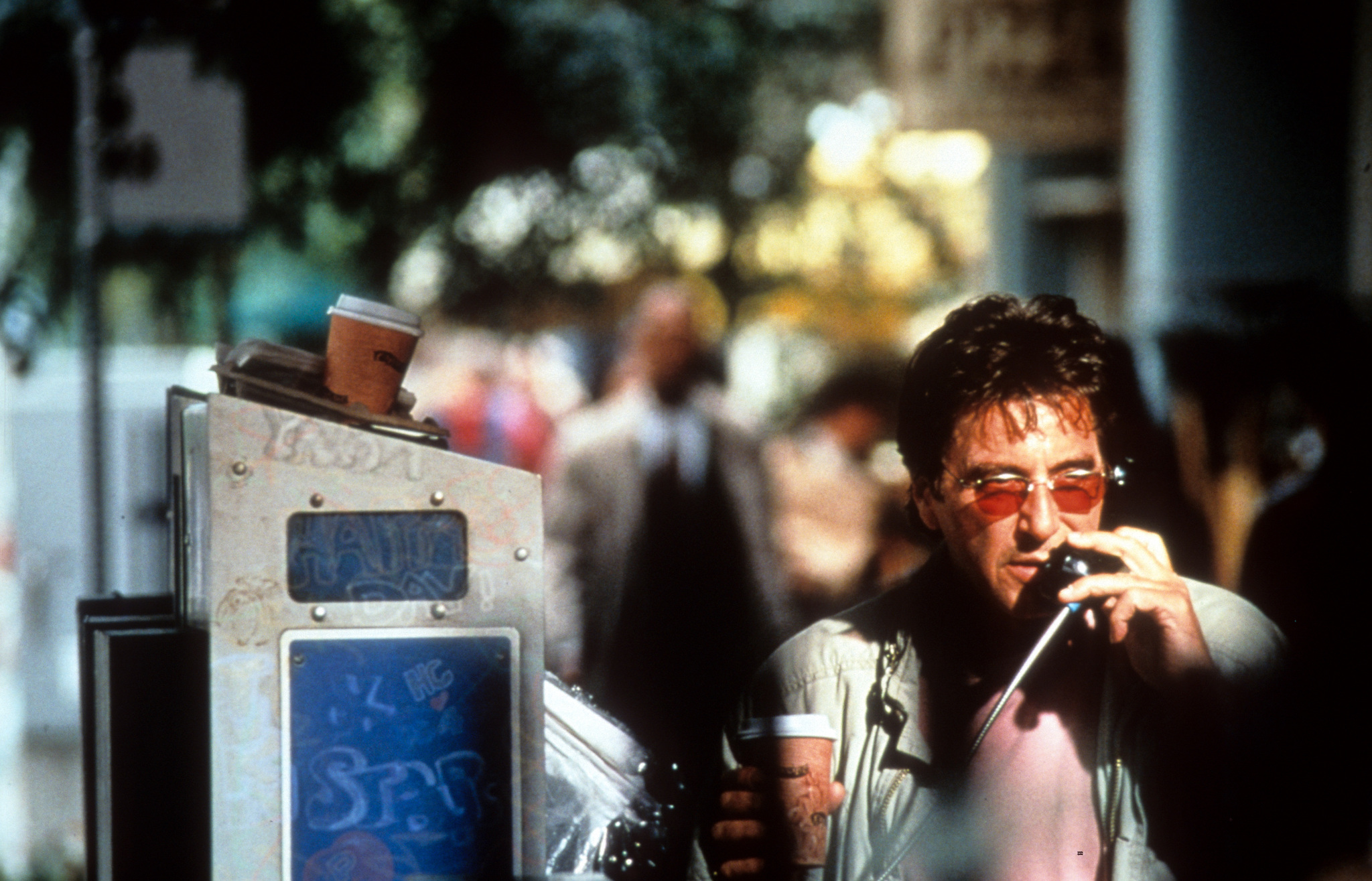
WE’VE MADE IT! The filmmaking style that I most closely associate with Michael Mann is this extreme close-up, over-the-shoulder shot that makes you feel as if the character whose POV we are following is actually you. Both Pacino and Crowe get iconic and defining versions of this technique early in The Insider. With Lowell Bergman, we go inside the canvas bag covering his head so he is unaware of exactly where he is going. Shooting through the fabric of the sack works on multiple fronts, but I would like to point out two: 1) it literally puts us under the sack as well and we (like Bergman) have no idea what is going on until we get more information, and 2) it symbolizes where Wigand is at that moment, facing a path he was not expecting and unsure of how to navigate forward. Speaking of Wigand, an amazing choice to put the camera almost physically on Crowe’s shoulder as he descends and exits the elevator after he has been fired. Again, there is a duality to this choice that works on both an implicit and explicit level: 1) we are the metaphorical weight on Wigand’s shoulder as he will need to figure out how this all will affect his family, and 2) we become the ever-watching eye that becomes Wigand’s very founded paranoia. There are many other examples of this shot and other shots that I find appealing and interesting (I could extrapolate about Wigand seeing the burning car after he testifies for pages), but for now I will say that it is here with The Insider that Mann finds a style that feels universally like a “Mann” choice. Mann’s decision to start shifting to the use of digital cameras over film continues in Ali. With a gap of only 6 years, looking at the cinematography of Heat and comparing it to Ali feels wildly different. And whether you want to chalk it up to the cameras getting smaller and more versatile or that Mann was going through a period of cinematic experimentation, the look and feel of Ali with particular emphasis on the boxing moments are notable. A small but evocative choice occurs during the opening montage before the first Ali/Liston fight. Ali (Cassius Clay at this point in the movie) is working on the punching bag, but Mann uses this moment to zoom in for a close-up. The bag rapidly goes back and forth but it remains out of focus: the camera homes in on Clay’s utmost focus on the task at hand. But if we are talking about boxing moments, we must talk about when the digital cameras get so close to the action that it feels as if they (and ultimately US) are getting pummeled by body shots. The cinematic chaos that ensues during the boxing fights is incredible and something that hadn’t been shown in quite that way since the filming of boxing scenes began. Mann takes that extreme close-up style that he really leaned into with The Insider and created a frenzy inside the squared circle with Ali that makes those moments the most captivating of the film.
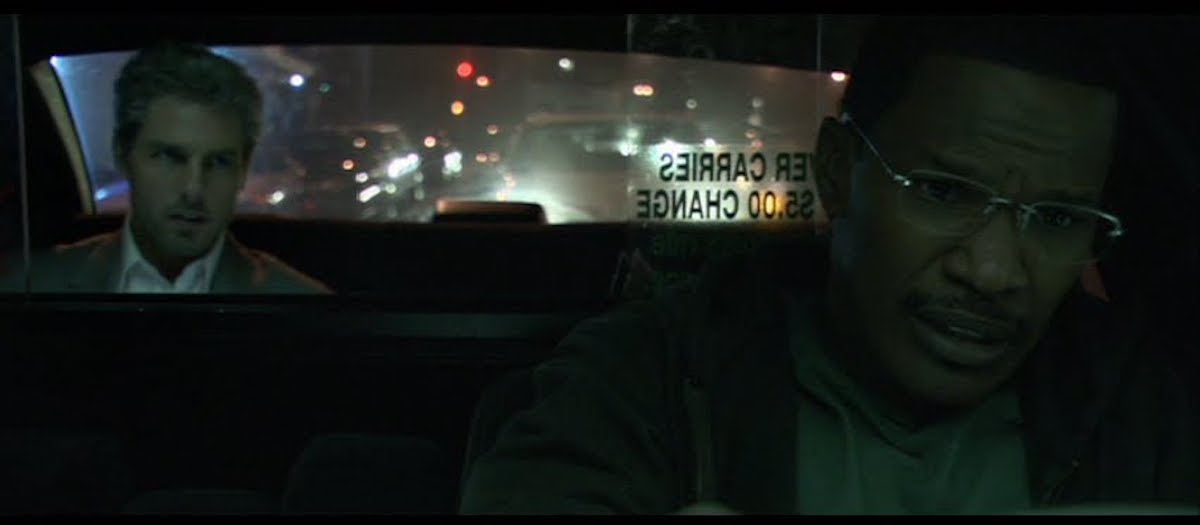
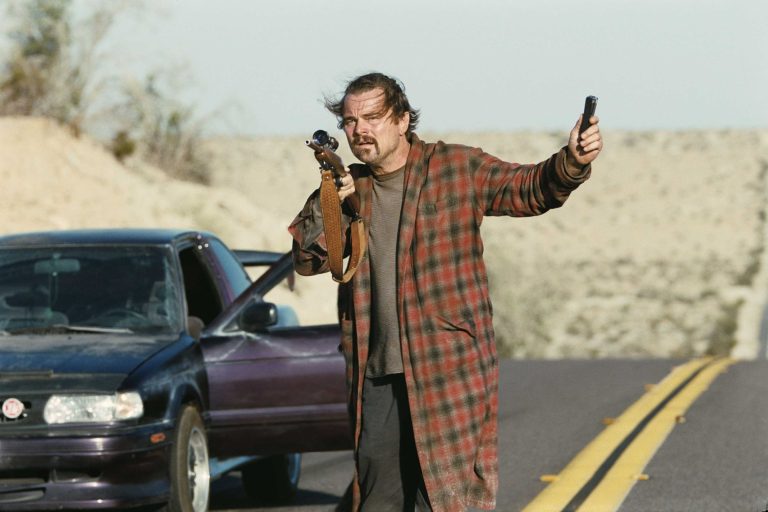
The use of digital cameras on Collateral became so prevalent that the original cinematographer, Paul Cameron, left the production over disputes with Mann as to the look of the film. Certain filmmakers of the era, like Steven Soderbergh and Spike Lee, were also playing with the use of digital cameras, but Mann gained a certain amount of attention for shooting a film with two big stars in this way. I’ll focus more on the handheld nature of the camera in Collateral in ComMANNdment #5, but there are some fun and unique ways in which the camera is used in this film. Perhaps the most innovative use of camera in Collateral is when the body of the first victim of Vincent falls out of his window and onto Max’s cab: the POV shot of the camera hurtling towards the top of the car is a great way to show the suddenness of the situation shifting. There is only one other moment I want to point out before I lament a bit, and that is the moment when Vincent and Max are in the cab and are mesmerized by the coyotes crossing the street. It isn’t so much that the scene is shot in a unique way, but that Mann would include such a visually metaphorical moment to play out in his film at this time. The hunter and hunted situation of Max and Vincent is supported by this shot, but the idea of wild animals running around a busy metropolis is fun and leads to many interpretations. I will just add that much of the film is a cat & mouse thriller that plays out exactly the way that you think it would. Because of this, the filmmaking overall (outside of the overt use of digital cameras) does not feel as new or inventive – particularly when placed next to The Insider and Ali, which both play with interesting camera placement throughout.
Wanting to approach an idea from a new perspective is something that must have been top of mind for Michael Mann as he set out to shoot Miami Vice – after all, he’s competing with a show he helped create that has a beloved fanbase. As opposed to the bright colors and vibrancy of the TV show, Mann leans more towards the gritty, violent nature of this Miami – a version of which you could not do on cable TV in the ‘80s. There are moments of violence in this movie that are totally devastating, and as someone who has seen his fair share of blood in cinema, I even found some of these moments to be unnerving. Let me cite three examples of this carnage. The first moment happens during the final shootout at the boatyard: one of Yero’s Neo-Nazi gunslingers gets shot and the “blood” from him hits the camera lens, but that camera keeps moving and gives us an over-the-shoulder of another shooter who continues opening fire. The blood on the lens visual choice has been done before (maybe most effectively in Saving Private Ryan and Black Hawk Down), but it is still effective here. The second moment to reference is a very short moment, but the image we’re left with is quite powerful. Upon hearing that he no longer needs to “go home,” Alonzo (John Hawkes) walks out into oncoming traffic and is hit by a semi. We don’t see the body hit by the truck or the impact on the road – instead we see the truck braking and a streak of red on the street below. If you blink you could miss this moment, but if you kept your eyes open, you would feel the devastation. The last violent moment to call out is the initial FBI bust that goes bad: the snipers involved with the Aryan Brotherhood lay waste to the agents trying to get away. We cut to a shot inside the car as these bullets (are they the size of golf balls?) shred the car to pieces and literally rip the arm off the driver. This moment is also slowed down so that we have to live with it longer and understand just how dangerous our adversaries are.
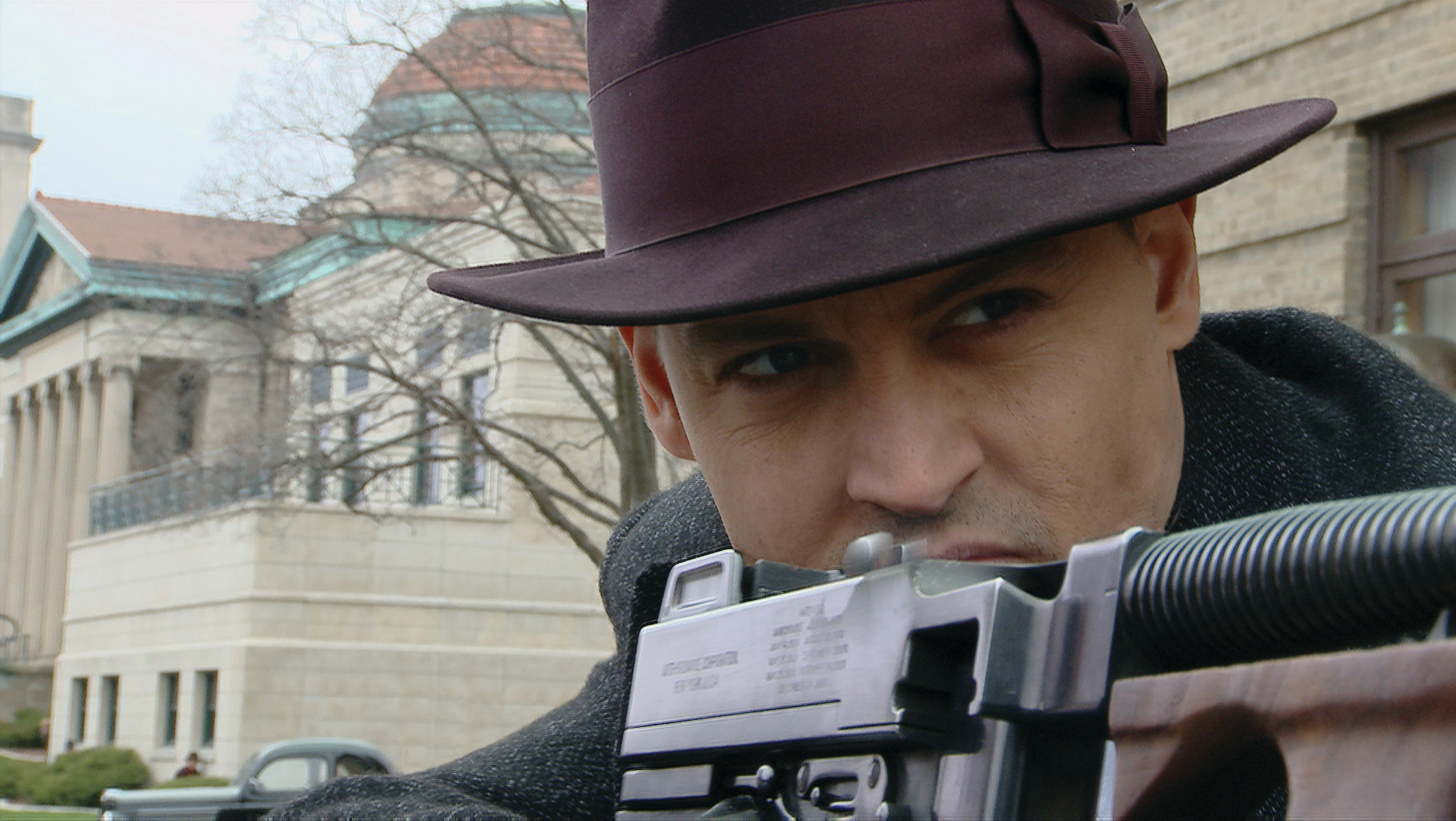
If we can say nothing else about Michael Mann, we could say that he likes to make bold choices. Whether or not those choices gel with you is not of Mann’s concern – he wants to push himself. This is the reason why examining his films is a fascinating journey: to see as his career progresses if he can continue to push himself towards those creative risks. Public Enemies puts forward some interesting shots and moments worthy of discussion: some that are more successful than others. Let’s start with a scene in the movie theatre. Dillinger is surrounded by his fellow partners-in-crime to discuss an upcoming job when the newsreel being shown displays his face prominently on the screen. This alone would be a moment worthy of praise and discussion, but Mann decides to play out the scene even more by having the lights in the cinema come on and having the rest of the crowd look to their left and right to see if “Public Enemy #1” just happens to be sitting next to them. Mann gets to throw an homage Hitchcock’s way (a la Strangers on a Train) as everyone but Dillinger looks around – clearly making him the center of attention in the shot. Really captivating moment – now to discuss a scene that probably never happened, but that cements the brazenness of Dillinger. The afternoon of the day that will inevitably be Dillinger’s last, he takes Polly (played by Leelee Sobieski…remember her?) to get her waitressing license and decides that he will take a stroll through the Chicago Police Department. During his visit, he sees pictures of himself and his associates all over the walls. A smug smile creeps over his face – he believes he has already got away after the train robbery that never happens. This is a fascinating sequence of events right before his downfall, but it is his death scene and how Mann shot it that does not work. Dillinger leaves the theatre with Anna and Polly, Purvis signals the FBI that Dillinger is in the open, and Agent Winstead (Stephen Lang) takes a shot – the bullet going through Dillinger’s face. Cinematic time slows down and a visual effect of the bullet piercing through Dillinger’s cheek appears and we are suddenly thrust into a reminder that “we are just watching a film.” There are moments where some of the digital photography does not mesh well with the period piece nature of Public Enemies, but it is simple enough to chalk that up to the cameras being used. This harsh cut to a blatant use of CGI pulls you out of the moment and almost undercuts Dillinger’s demise. It’s an example of Mann getting in his own way by trying to improve upon a climactic moment with the use of computer graphics (a choice he will make again in a different biopic).
Prior to Blackhat, most of Mann’s digital effects work came simply from using updated cameras for portions of filming. Visual effects have not been a staple of his films since The Keep, and given the critical derision and lack of box office support it might not be too hard to see why Mann avoided working with overt VFX. However, the digital effects rendered in Blackhat both feel “real” to the world that we are introduced to and help progress the story forward. Early on the film establishes a recurring motif of the camera going into the computers and following wires, cables, and microchip circuitry to show how everything in the world is connected. While it would be easy to point out that this kind of “trick” has been done before (see Krzysztof Kieślowski’s Red), Mann brings us squarely into the 21st century and reinforces the idea that no one has the privacy or secrecy they think they do. Another moment of outstanding visual effects work (blended with practical effects, as well) is the car explosion in which Dawai is killed. Many interesting directorial choices are made here worthy of pointing out. First, the explosion seemingly comes out of nowhere, but not so out of nowhere that we are confused by the event. When Hathaway is using the Black Widow program (expertly stolen from the NSA…he wrote rather sarcastically), a tracking device is placed on Dawai’s car – setting up that Elias and the “bad guys” will be able to track them. Later, when Hathaway and Lien are having their argument on the street and they refer to Dawai, he waves back: this moment is rather calm, the music starts to soften, and all seems okay. The music starting to fade out leads to the next fascinating choice: hold relative stillness and silence before the explosion, then make the explosion as loud and violent as possible! Even having seen this movie around a half dozen times now, this moment still gets me to jump because of how well set up the execution is (no pun intended). Mann wants to be both a teller of human stories and a visual master – Blackhat proves to be a winner of that second category.
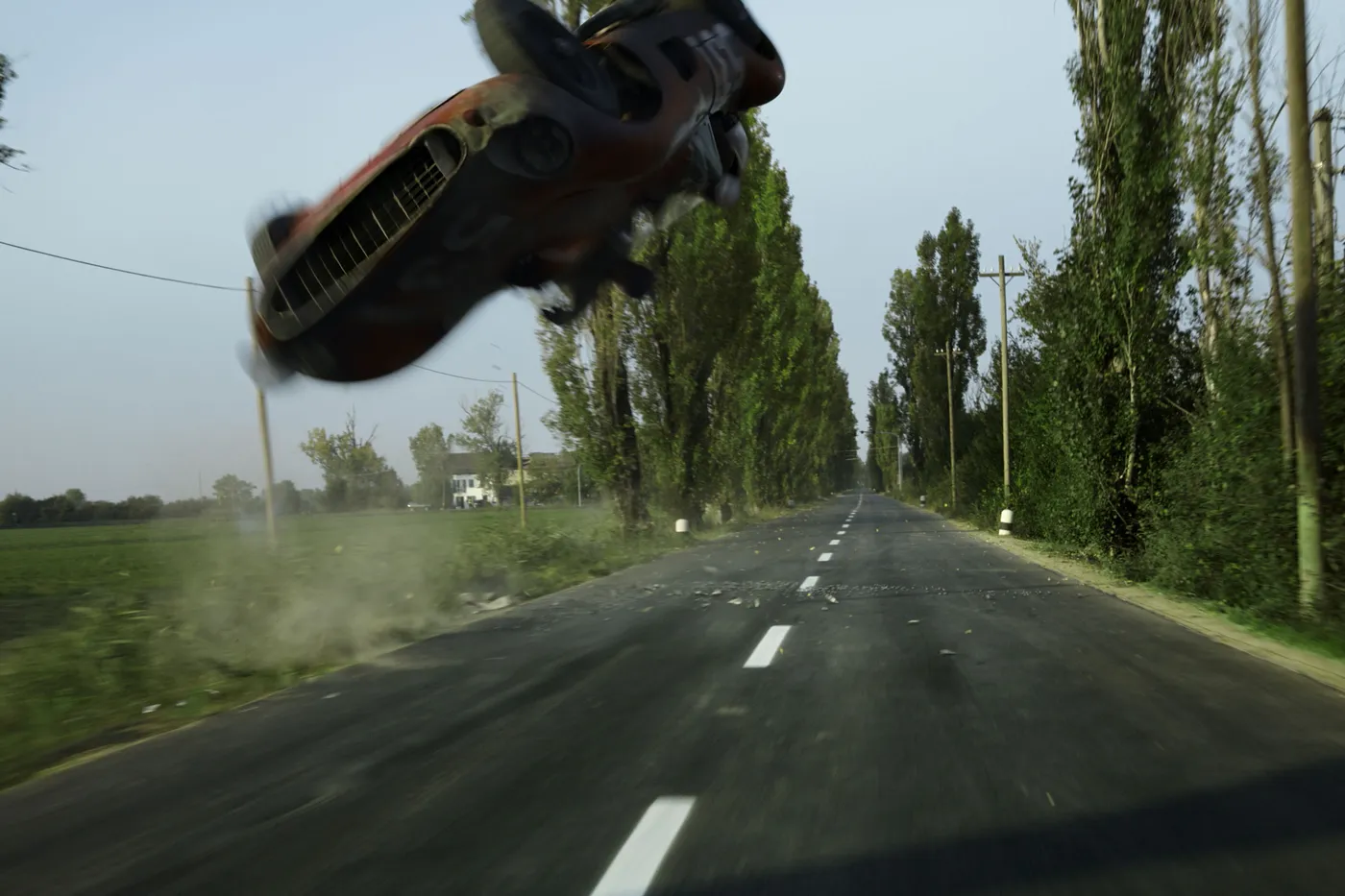
There are two car accidents that end in a tragic death in Ferrari: the first happens when Enzo is trying to take back the lap record with the second occurring during the Mille Miglia. We have to talk about both because the one that is more devastating and pivotal to the conclusion of the story is the one that looks…well…we will get to that – let’s start with the first crash. Ferrari has just lost the track record to Maserati and his pride will not let that stand. He immediately rallies the troops and gets one of his drivers, Eugenio Castellotti, to try and get it back. As Eugenio is driving around the track, it becomes clear that the combination of this car and driver is not going to take the record back. Upon starting another lap, the clutch gets stuck and Eugenio slams on the brakes as he is unable to turn at the speed he is going. The car runs into the divider (which acts almost as a ramp in this moment) and is propelled into the air. Given that the car has no roof, Castellotti is hurled from the vehicle in one direction as the car itself crashes into a cement wall. Now, is this moment heavily created with visual effects? Yes – but given that it is only one car and one person being added to this scene, it doesn’t look overly fake. In fact, the moments surrounding the visual effects give it an air of verisimilitude: watching the tires squeal, his foot pushing down on the brake, and even an insert shot of one of his shoes flying through the air. This moment is powerful because we, as the viewer, believe that it has happened (through the magic of filmmaking, of course). Mann’s illusion act does not work as well in the Mille Miglia crash. Prior to this moment, De Portago had refused new tires at the last pit stop and his front driver side tire hit a cat’s eye in the road. The result is the tire exploding open and the car careening into the crowd of onlookers. This event really happened and is a tragic reality of this race. As this moment happens in the film, the car hits a stone sign, propels up, and hits a light pole – ultimately rolling end over end through the crowd. From a storytelling perspective, this moment is devastating. From a film viewer’s perspective, the uncanny valley of visual effects used to recreate this moment is too wide and hard to accept. It is clear how much was done digitally to render this moment, but should it have been used at all? I am not talking about if it makes sense ethically, but about the accuracy in shooting it. Mann likes to shoot scenes as inventively as possible – I think this is one that should have workshopped more before being used in the final cut.
On this episode of Chasing the Gold, Shadan and Erica discuss this year’s DGA awards winners and where we stand regarding the Oscars race! Does Sinners still have a chance? What about Hamnet? Or is it just One Battle After Another‘s to lose?
Check out this week’s show and let us know what you think in the comment section. Thanks for listening and for supporting the InSession Film Podcast!
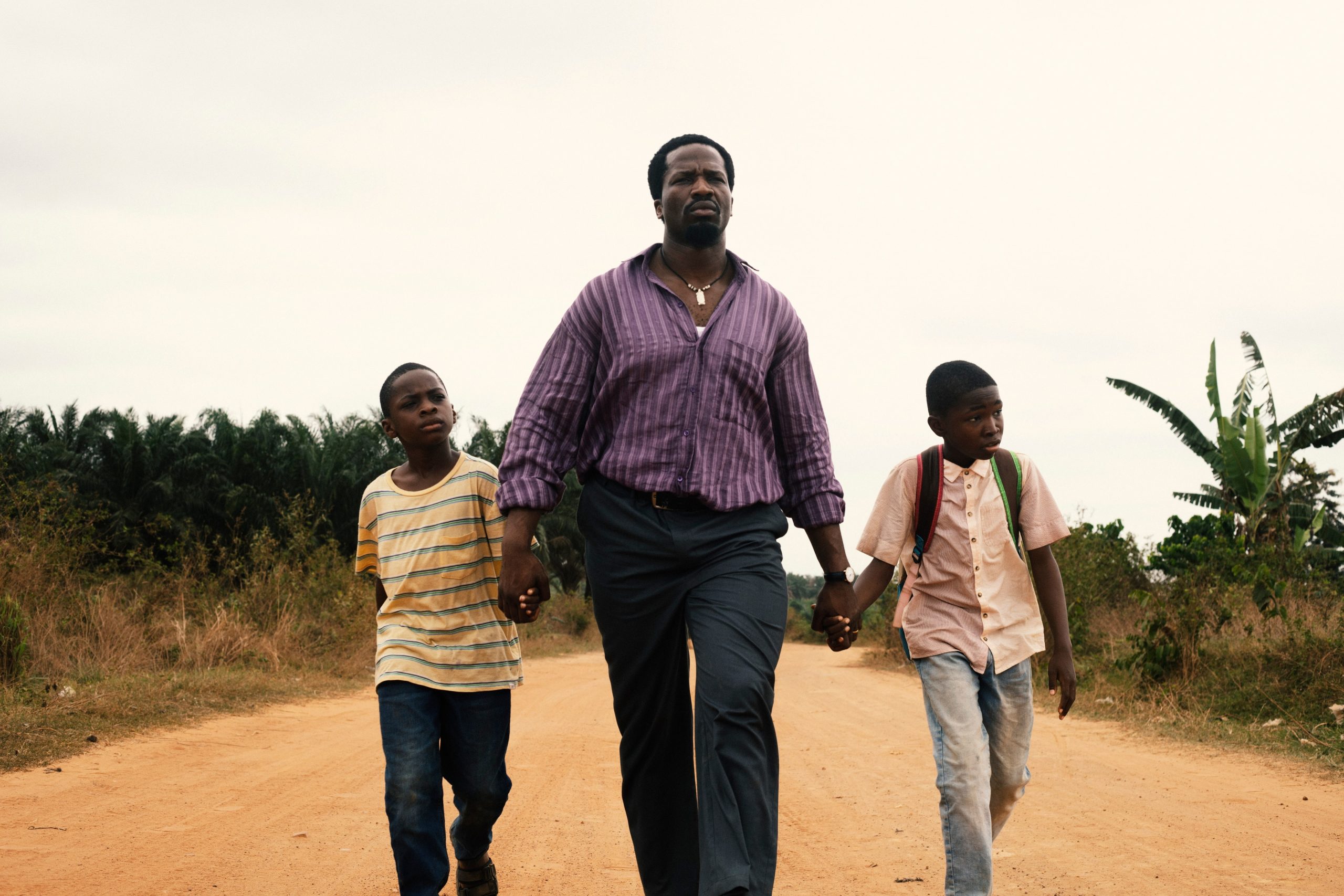
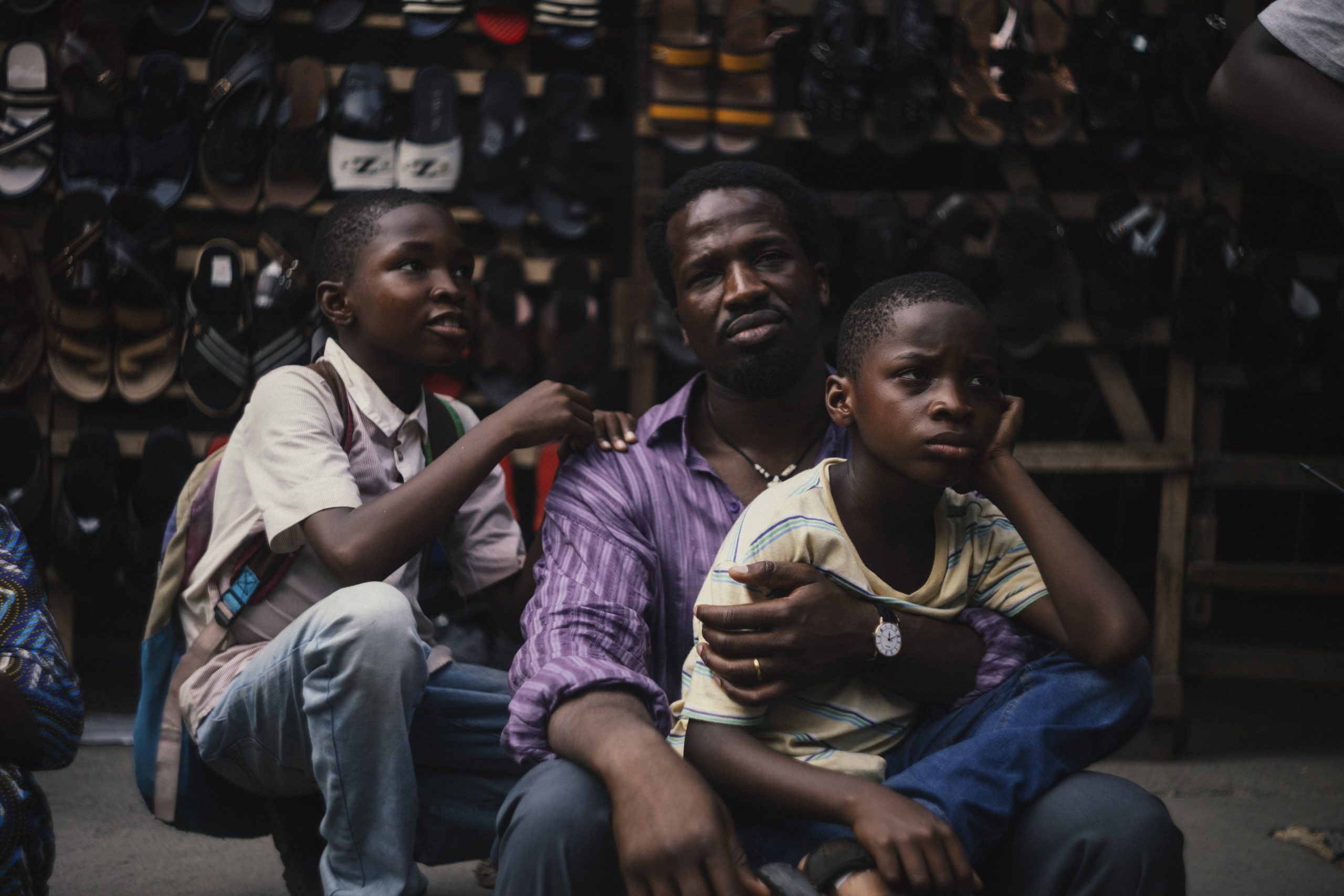
Synopsis:Two young brothers explore Lagos with their estranged father during the 1993 Nigerian election crisis, witnessing both the city’s magnitude and their father’s daily struggles as political unrest threatens their journey home.
From a child’s perspective, the world, adult by necessity, is a giant mystery. We do not understand the process of the world, at large. But more importantly, we are protected from even our parent’s experience of that world. We must be protected from the complex, difficult reality. This is true no matter the individual context, but becomes especially true in times of great change. Given our own context in the world right now, it is not difficult to imagine the struggles of parents during a period of political upheaval. But this is not the first time, nor the last, that parents will have to make these kinds of decisions. How much can children be told? What can they handle? And even more importantly, how do we remain close to them despite the forced distance of life?
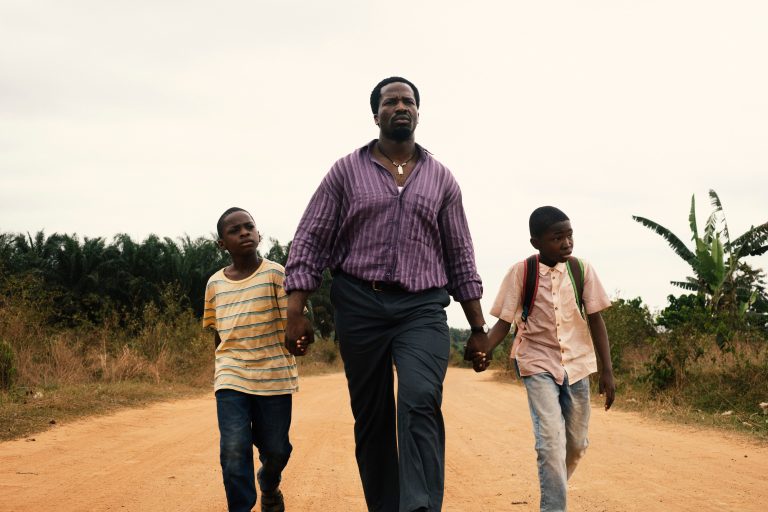
My Father’s Shadow, a purposefully distant but deeply emotional resonant film, follows Folarin (Sopé Dìrísù) and his two young sons, Aki (Godwin Egbo) and Remi (Chibuike Marvelous Egbo) in 1993 Nigeria. As the film opens, it becomes immediately clear that we are meant to be in the shoes of the two young protagonists, as the camera angles up at Dìrísù, making us feel the size and power differential immediately. This is one of many choices that Davies Jr. employs that gives the film both a sense of reality and tangibility which draws the viewer closer, despite the possibility of missing context related to Nigerian history. Given that this is his first feature, Davies Jr. shows incredible acumen and skill from the opening frames and never wavers in tone or prowess. Terms like “one to watch” are thrown around by critics constantly, but Akinola Davies Jr. is truly gifted and in need of immediate notice.
This possible missing context of Nigerian life actually ends up being a positive, as most children are unaware of the political machinations of governments, as well. As Folarin guides his children through the city of Lagos, they are introduced to many new experiences; including stories of their parent’s love, possible infidelity, the mystery of their father’s past, the struggles of class, and, god forbid, food with onions. As most viewers have also never visited Lagos, the opening half of the movie, in many ways, is also an education for us. Davies Jr. also uses side conversations and television reporting of violence (along with constant military presence) and elections to major effect, keeping us tied to that particular moment in time.
The film also jumps in time, using obvious cuts to black, and picking up later in the day. In this way, the director incites the idea of memories. After all, looking back, even on our most memorable times, we cannot remember the entire day, verbatim. Instead, these moments are frozen in time, while still being broken, amorphous and sometimes confused. But when the film decides to spend time in one place, there is a reason. Sitting on the beach, Folarin details the story of his brother to his oldest child, Remi. Finally, just for a moment, we see the reality of the father, becoming fully human in our (and his son’s) eyes. Dìrísù’s performance, particularly in this scene, makes one wonder why he has not yet become a massive star. His ability to be present, along with his delivery of his character’s continued grief tells us everything we need to know about Folarin. The camera, guided by cinematographer Jermaine Canute Bradley Edwards, finally takes a moment to linger in the sand with father and sons, to great effect. In the midst of pain and strife, family life continues.
The choice to shoot My Father’s Shadow on 16mm film gives much needed texture. It gives us the impression that the world created here can be touched, only to dissipate when we get too close. This clearly parallels the boys’ visit to Lagos with their father. As they are raised in the country, this new world in the city is strange, frightening, and intoxicating. And the same can be said of their father, a man who clearly loves them but has made sacrifices that take him away from them and their mother.
As Folarin says, “Everything is sacrifice, you just have to pray you don’t sacrifice the wrong thing.” This is a powerful statement that every adult understands, while children are left to puzzle. While children sacrifice toys and food, adults sacrifice something much more important, time. We must make these sacrifices, especially with children, so life can continue in a cruel world. This becomes especially difficult because children cannot understand why this must be so, at least not until many years later. And for many of us, by then it is too late to be understood. My Father’s Shadow is a truly beautiful film about sacrifice, memory, and family. It is rare that greatness in an auteur is so immediately evident as it is from Akinola Davies Jr., but this film is legitimate, clear proof of this fact.
In the midst of a battle for democracy, this film offers us a deeper look at how we are to process familial loss in the long run. Even when we remember our parents, do we remember them as they were? Or is it more surreal than that? Our connection in these small moments, the lessons they taught us, and yes, the sacrifices they made, help us understand their importance in our lives. And sometimes, when we lose them, all we can do is remember as we cry.
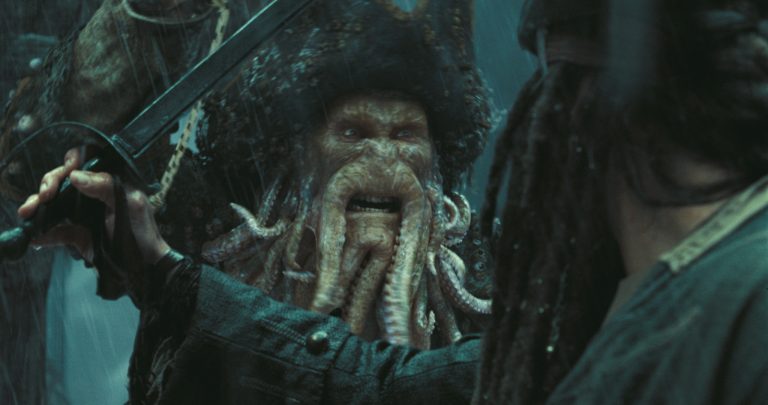
This week on the InSession Film Podcast, we dive into some Gore Verbinski as we rank his ten feature films, from Mouse Hunt all the way to A Cure For Wellness! Not all of his films work, but his ambitious vision has always been something we’ve admired.
– Super Bowl / Halftime Show / SB Trailers (2:02) After some opening banter, we start the show by discussing this year’s Super Bowl and halftime show, which featured one of the best in recent years if you ask us. We also got some Super Bowl trailers, including a surprise teaser for the new Cliff Booth movie from David Fincher. It very much looks like a fusion of Tarantino and Fincher, and it has us quite intrigued.
– Evil Dead Trilogy (32:30) After our Sam Raimi draft last week, and revisiting his iconic Evil Dead movies in preparation for that conversation, we wanted to devote an entire segment to them. Evil Dead II is pretty much a remake of its predecessor, but it’s as masterful of a horror-comedy as you can get. The first Evil Dead is astounding given the budget it was operating under, and Army of Darkness is as silly as it gets.
– Gore Verbinski Ranking (1:05:19) Once again, this is a consensus ranking between both JD and Brendan, which is the fun of this exercise as we have to put our heads together and debate where each film lands. However, in this case, it wasn’t nearly as challenging as Gore Verbinski is just one of our guys. We love the flawed ambition of his movies, and Pirates of the Caribbean is simply one of the best trilogies of the last thirty years. We had a lot of fun with this conversation. That said, what did you think of our ranking?
Good Luck, Have Fun, Don’t Die / Wuthering Heights
Help Support The InSession Film Podcast
If you want to help support us, there are several ways you can help us and we’d absolutely appreciate it. Every penny goes directly back into supporting the show and we are truly honored and grateful. Thanks for your support and for listening to the InSession Film Podcast!
We are in the heart of awards season, with Oscar nominations recently announced and the countdown to the annual ceremony officially underway. Multiple categories have sparked mainstream conversation, including the newly added Best Casting. But one competitive field that often flies under the radar is Best Animated Short.
This year, the category turns 94, making it one of the Academy Awards’ oldest honors, surpassing fields such as Film Editing, Original Score, and Original Song. That legacy alone makes it worthy of deeper discussion, especially as this year’s lineup proves to be one of the more competitive races in recent memory. Let’s take a closer look at the nominees for Best Animated Short Film and determine who stands the best chance of taking home the gold. Note: All five Oscar-nominated animated short films are available on YouTube and linked below.
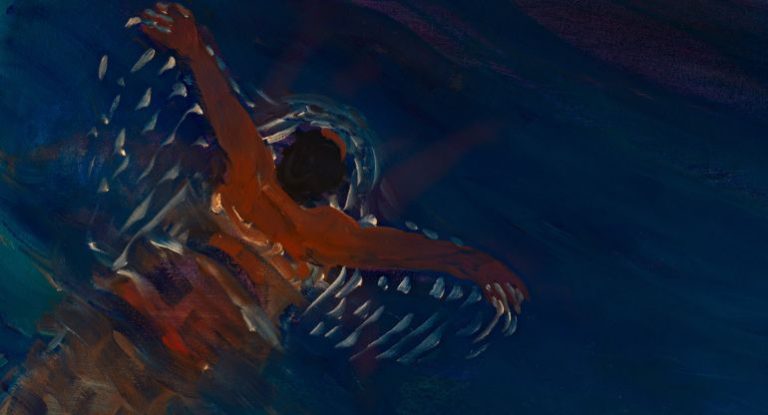
Butterfly is a French biographical short inspired by the life of Alfred Nakache, a Jewish Olympic swimmer who reflects on both the beauty and trauma of his life, from childhood to senior age. The film employs a distinctive hand-drawn, pastel-painted animation style that is signature to Miailhe’s work. Its grainy, fluid textures evoke oceanic metaphors of love, memory, and loss, immersing the viewer in a deeply tactile experience. The short balances historical weight with emotional warmth, telling a mature story that carries the gentle spirit of a classic children’s book. It’s an evocative meditation on survival, identity, and healing in the shadow of the Holocaust.
Forevergreen tells the story of an orphaned bear who is raised by an evergreen tree, only to place their bond in jeopardy through his reckless appetite for trash. Among the nominees, this United States production is the most traditionally accessible. Forevergreen is a non-dialogue, family-friendly 3D animated short built on a familiar emotional framework. While formulaic on the surface, Forevergreen distinguishes itself through a rigid, paper-crafted aesthetic and raw consequences. Its themes of gratitude, patience, and sacrificial love are clearly communicated without feeling hollow. The short’s closing quote from John 15:13—“Greater love has no one than this, that someone lays down his life for his friend”— serves as a fitting capstone, reinforcing its notions of emotional sincerity.
This Canadian stop-motion fable tells the haunting story of an abused girl gifted with supernatural tears, the poor boy who loves her, and the greed that ultimately corrupts good intentions. The choice of stop motion is well-suited to the short’s intentionally bleak, messy tone, reinforcing its themes of desperation and moral decay. The puppetry favors limited facial expressions and non-moving mouths, relying heavily on voice-over narration in an old-fashioned storytelling approach. Supported by striking art direction and sound design, The Girl Who Cried Pearls may be the most narratively daring of the nominees, particularly due to its ambiguous ending.
Retirement Plan follows Ray, a senior citizen who daydreams about all the adventures he’ll pursue once he finally retires. Sometimes playing it simple is the strongest narrative tool, and the short leans fully into that philosophy. Its minimal 2D animation reflects a life of routine and unfulfilled potential, contrasting sharply with the vibrant freedom Ray envisions. The dialogue is straightforward yet poetic, elevated by Domhnall Gleeson’s unforgettable vocal performance. Soft spoken, humorous, and quietly layered, the film becomes a moving reflection on time, longing, and the courage to embrace the extraordinary before it’s too late.
Representing Israel, Cyprus, and Russia, The Three Sisters centers on three women living on a remote island whose daily routines are challenged when they rent out a room to a stranger. While the short adopts a mildly experimental structure, its strongest asset lies in its visual conviction. Set entirely in one location, the film embraces a 2D storybook cadence filled with exaggerated physical comedy and unapologetic cartoon hijinks. Though it may lack the emotional depth of its fellow nominees, its technical craftsmanship and comedic timing are delivered with confidence and clarity.
Predicting Best Animated Short can be deceptively difficult. At times, the category follows clear frontrunners such as Pixar’s Bao at the 91st Oscars or The Boy, the Mole, the Fox and the Horse at the 95th. Other years, the race delivers genuine surprises, like In the Shadow of the Cypress overtaking the heavily favored Wander To Wonder at last year’s 97th ceremony.
While precursors like the Annie Awards, BAFTAs, and major festivals offer guidance, they aren’t foolproof. Even Dear Basketball won the 90th Oscars despite losing ground to more precursor-friendly shorts like Negative Space and Garden Party. With that in mind, any of this year’s nominees could take the victory.
That said, patterns still matter.
Given recent voting trends, The Three Sisters appears to face the most challenging uphill battle to win. Despite Bronzit’s having multiple nominations with a potential overdue narrative, the short lacks the emotional gravitas the category often favors.
The Girl Who Cried Pearls may face similar challenges. While stop motion once dominated this category in the 1990s and 2000s, recent winners suggest the branch now gravitates toward broader accessibility of evolved animation styles. Its darker tone and ambiguous ending may bottleneck its appeal to the Academy compared to its co-nominees.
That narrows the race to Butterfly, Forevergreen, and Retirement Plan. Butterfly carries thematic weight that the Academy often appreciates, but Best Animated Short has increasingly rewarded more universally uplifting stories. As a result, it may operate best as a dark horse contender, especially if you’re feeling risky to go for an underdog pick.
Ultimately, the race appears to come down to Forevergreen and Retirement Plan. If we’re talking safe prediction, Forevergreen takes the edge, combining technical ambition, emotional clarity, and a universally relatable message. Retirement Plan remains a strong alternative, but its restrained animation style could hinder its chances to win.
Directors: Charles Kinnane, Daniel Kinnane Writers: Kevin James, John Kinnane, Patrick Kinnane Stars:Kevin James, Nicole Grimaudo, Kim Coates
Synopsis: Left heartbroken in Rome after a wedding disaster, a stranded groom finds his ruined honeymoon transformed by a determined local, and a few meddling travelers—proving that sometimes heartbreak is only the beginning.
Synopsis: Left heartbroken in Rome after a wedding disaster, a stranded groom finds his ruined honeymoon transformed by a determined local and a few meddling travelers, proving that sometimes heartbreak is only the beginning.
Romantic comedies seem to be a tough sell at movie theaters. The once sure-fire genre has shifted heavily toward at-home streaming. They seem to be pumped into the content mills, with beautiful, sometimes vacant faces, selling us the mythos of deep emotional connections built over an hour and a half. If a rom-com makes it to the big screen, it has to have some kind of gimmick. Recently, because, aside from superheroes and sequels, it’s the only other genre that makes a real impact on the box office, rom-coms have been hitched to horror. A serial killer chasing the new couple (Heart Eyes), the monster in the closet is actually really sweet (Your Monster), or the best mate is the one you make yourself (Lisa Frankenstein). Yet, Solo Mio is about as straightforward as a rom-com can be, and it’s refreshing to see a new entry into the storied genre.
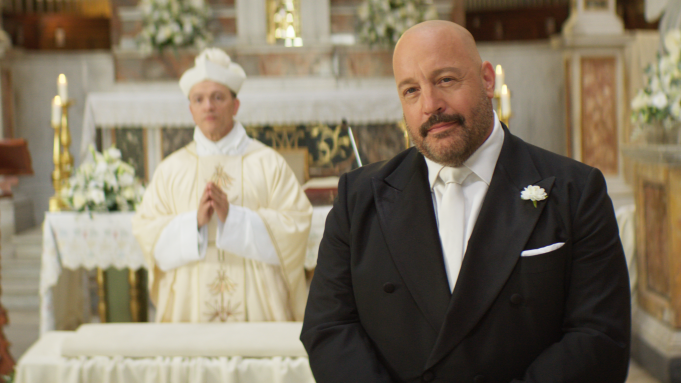
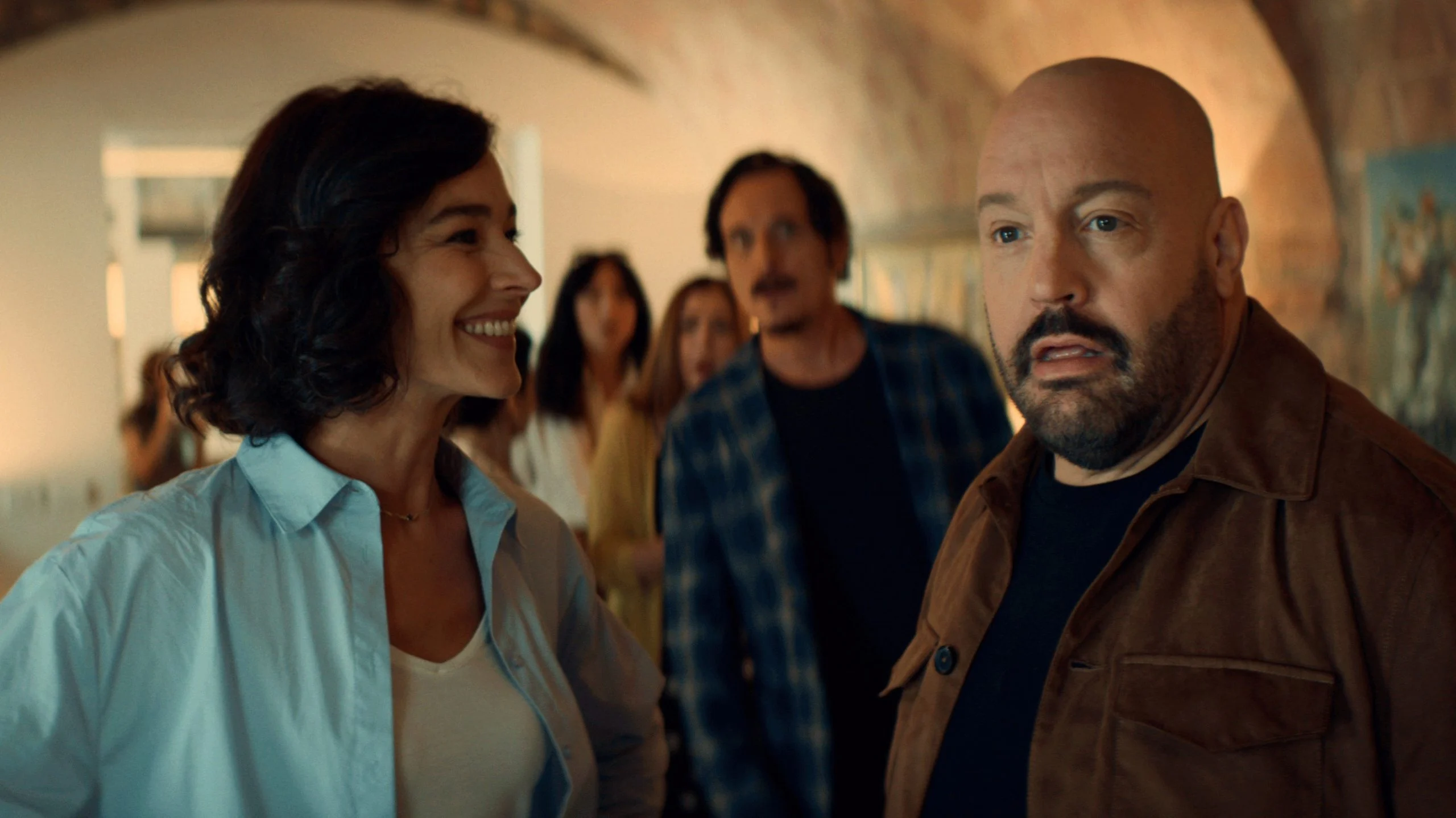
It’s not a perfect film in many ways. Its blend of the lonely, aging man, like Marty, and the jilted, confused man, like in Forgetting Sarah Marshall, is at times a bit out of sync. Solo Mio, while maintaining our understanding that this type of narrative requires some suspension of disbelief, doesn’t connect every dot properly. The most confounding piece is that Matt (Kevin James) has no close friends or family in Rome with whom to confide. The wedding scene must be just a room full of strangers because none of them tries to console or talk to him. They don’t even really react when he leaves the venue to search for Heather (Julie Ann Emery), his runaway bride. In fact, when the wedding planner (Julia Messina) calls him asking what to do, the people in the background are just enjoying the reception. None of them call him or try to talk to him, except his mother, who didn’t seem to make the journey. It’s quite jarring to see a room full of people who travelled 4000 miles for him, not caring one way or the other about this devastating moment in his life.
This leaves room for the pushy fellow tourists on Matt’s honeymoon package, led by the thrice-married to the same woman Julian (Kim Coates), to do what Matt’s closest and dearest couldn’t be bothered to do. This crew is the heart of the film. They often have the best lines and the most fun, being the “ugly American” stereotypes. They’re unapologetically for Matt, and it’s fun to watch their cheerleading. Unfortunately, they give absolutely terrible advice. They are well-intentioned, but their own relationships are kind of hopeless, and it is fun to watch these people who stick with each other through their trainwrecks because they know what they’re getting.
The piece of the story that the writers Kevin James, John Kinnane, and Patrick Kinnane could have better developed is that the messy, complicated nature of relationships is often a deeply lonely affair. The truths Matt is realizing throughout the film are intriguing, and as much as he’s falling head over heels again, he realizes it’s just better to have someone with whom he can be himself than just someone to be with. The catharsis for Matt right before the grand gesture that ends the film may be the best part of the whole thing. It encapsulates a lot of the fear of loneliness that takes hold in mature relationships, a fear rarely addressed in the perky new adult rom-coms that dominate the genre.
That idea of being alone is captured perfectly in the scenes of Matt taking the tour as a single among couples. Directors Charles and Daniel Kinnane, along with their cinematographer Jared Fadel, craft scenes that cut through the noise of the people in love around Matt. In a beautiful, simple shot, this team creates a great impact. Matt sits alone on the Spanish Steps. It’s a medium shot, but slowly the camera zooms out. Even when you think the zoom is enough to understand just how adrift Matt is, the zoom continues, and we’re left with a wide shot of Matt, who has no one else closer than ten feet to him. The sea of people around him is made up of couples, groups of friends, and families. He’s an island, pining and thinking, but unable to express himself.
Solo Mio is a cute rom-com. It’s not reinventing the genre or crossing over with something wholly at odds with its romance premise. It’s simply a human love story. It may be easy to predict, a bit too cheesy with some things, strains credulity, and rarely is laugh-out-loud funny, but it gets you in the heartstrings. It’s sweet, tender, and charming, and worth seeking out if you’re a fan of the genre.
Director:Renny Harlin Writer:Alan Freedland, Alan R. Cohen Stars: Madelaine Petsch, Gabriel Basso, Richard Brake
Synopsis: Tethered by a frightening conclusion, Maya and the Strangers are locked on an unavoidable, unforgiving collision course — a showdown that proves they’re far from strangers now.
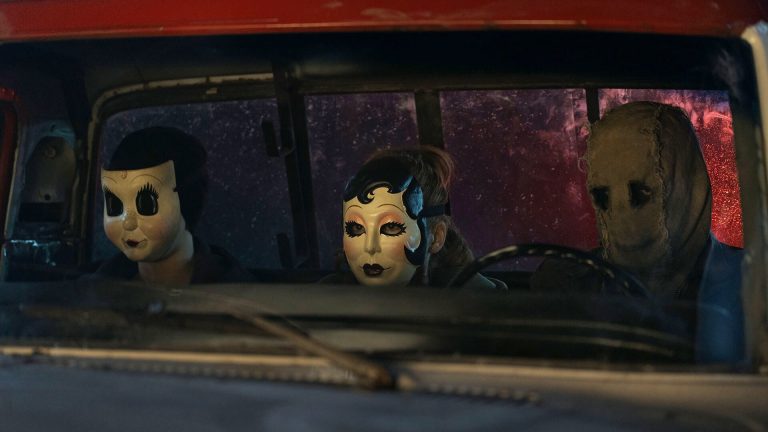
It’s hard to imagine back in 2008 that Bryan Bertino’s The Strangers would eventually culminate in a new trilogy of films where each entry is more mind-numbing than the last, but Renny Harlin’s Strangers trilogy is unfortunately a reality. The previous films of the trilogy have been bogged down by predictable plotlines, airless tension, and the blandest characters, but believe it or not, Chapter 3 doubles down in nearly every negative aspect throughout its runtime. There are barely any attempts at scares, tension is non-existent, and any attempts at further delving into the backstory of these characters are so laughable that it’s indistinguishable from a CW TV show. Even with the most thematically interesting concepts and character dynamics at play among the main cast, the film simply picks them up and drops them as it pleases, with no rhyme or reason to anything that occurs in the narrative. The Strangers: Chapter 3is such a failure of a finale for what was once a nerve racking franchise that you have no choice to wonder at the end of the road what the point of this trilogy was besides filling backstory that was meant to be empty in the first place; truly the most meaningless collection of films inflicted upon the cinematic landscape in some time.
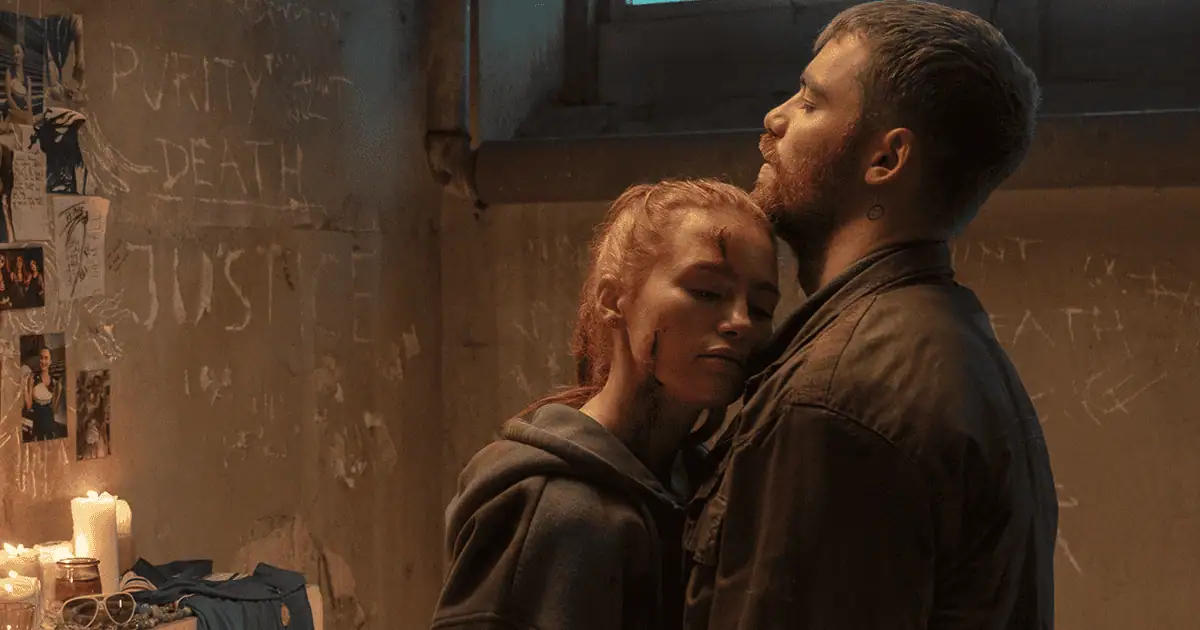
After a quite literally unneeded cold open that doesn’t even have the decency of being clever in any aspect, Chapter 3 picks up right after 2’s conclusion, where Maya (Madelaine Petsch) killed the stranger known as Pin-Up girl. The Scarecrow stranger, introduced as Gregory in the previous film (Gabriel Basso), was in a relationship with a Pin-Up girl and mourns her loss before dispatching her as a loss within their plight. Gregory then begins his hunt for Maya throughout the tiny town of Venus, seeking her to take Pin-Up Girl’s place as a killer and, potentially, as a new lover. We also pick up with Sheriff Rotter (Richard Brake), whose shady activities within chapter 2 are finally unveiled here as an essential cog in the machine behind The Strangers’ seemingly random killings. With Maya’s sister persistent in finding her, she must try her best to survive the terror that awaits her throughout the night, as she looks to escape from the strangers and the town of Venus once and for all.
The insane predictability within every jumpscare, plot beat, and kill within Chapter 3 is nothing new within the standards of this monotonous trilogy, but what makes it exceedingly frustrating here is the actual small scrap of a decent idea thematically here and there. There’s a line or two near the film’s beginning that vaguely centers on the idea that religious cultism is part of the reason The Strangers do what they do. It certainly wouldn’t be groundbreaking, but it’s a shame the film does nothing with this and instead indulges in frivolous origin story plights.
As I mentioned in my previous review of Chapter 2, providing a backstory for the strangers basically ignores the whole reason they were scary in the first place: we didn’t know anything about them or why they decided to randomly kill people. This film literally opens its title card with an “eerie” message that defines the term “serial killer,” discusses how they’re normally strangers, and yet these films seem to do everything but make the strangers actually scary. The movie doesn’t even show much impact at all on the multiple axe swings and bloody dismemberments that occur despite its R rating.
It does help matters when the actual flashback and mystery elements surrounding everything happening in this town are either just made up on a whim or the most basic reveals ever as the film goes along. There exists no firm structure to any of the storytelling here, and the prequel nonsense the movie is so obsessed with explaining is just as boring as everything else that occurs in this shitty trilogy. Just when you think things can’t get even sadder, we reach the film’s climax, which definitely wants you to feel for these multiple characters we’ve spent our time with (especially Maya), and it’s impossible to muster even an ounce of care or really any emotion besides boredom. Madelaine Petsch tries her best to bring any sort of catharsis to anything happening on the screen, but at a point, she becomes just as wooden as the rest of the cast around her, who are done absolutely no favors by such a nothing conclusion to a trilogy that shouldn’t have been one film, much less three.
Now that the nightmares of this terrible Strangers trilogy have finally come to an end, in retrospect, despite Chapters 1 and 2 also being awful, I could at least somewhat see what they were attempting as singular films. Chapter 1 attempted to adopt the silent, unsettling nature of Bertino’s original film, which worked so well, and Chapter 2 tried its hand at an extended chase scene of thrills and tension, though it failed miserably. Chapter 3 was such a tedious mess of nonsense that I can’t even tell what its ultimate goal was besides mercifully ending things, and I suppose that just shows how thoroughly broken the central concept of these three films was from the very beginning.
Don’t be sad that The Strangers franchise is over, be happy……..that it’s FINALLY over.
Covering Sundance virtually was exciting because of the stacked slate they made available to online viewers. From female-directed standouts like Josephine to the lyrical mythology of If I Go Will They Miss Me, there was something for every kind of festivalgoer. And with the festival moving next year to Boulder, Colorado, it marks the final year in its hometown and the first since the tragic loss of its founder, Robert Redford. Now we just have to wait for the next weeks, months, and even years to see which of these films gets bought up and put into theaters for all to enjoy.
While the online category of films is fewer than the in-person version of Sundance, the quality of the films is just as impressive. Filled with debut features and first-time performances that remind us of the power of independent cinema. Here are 5 standouts from the festival that exemplify the importance of filmmaking through their impactful stories and ambitious choices.
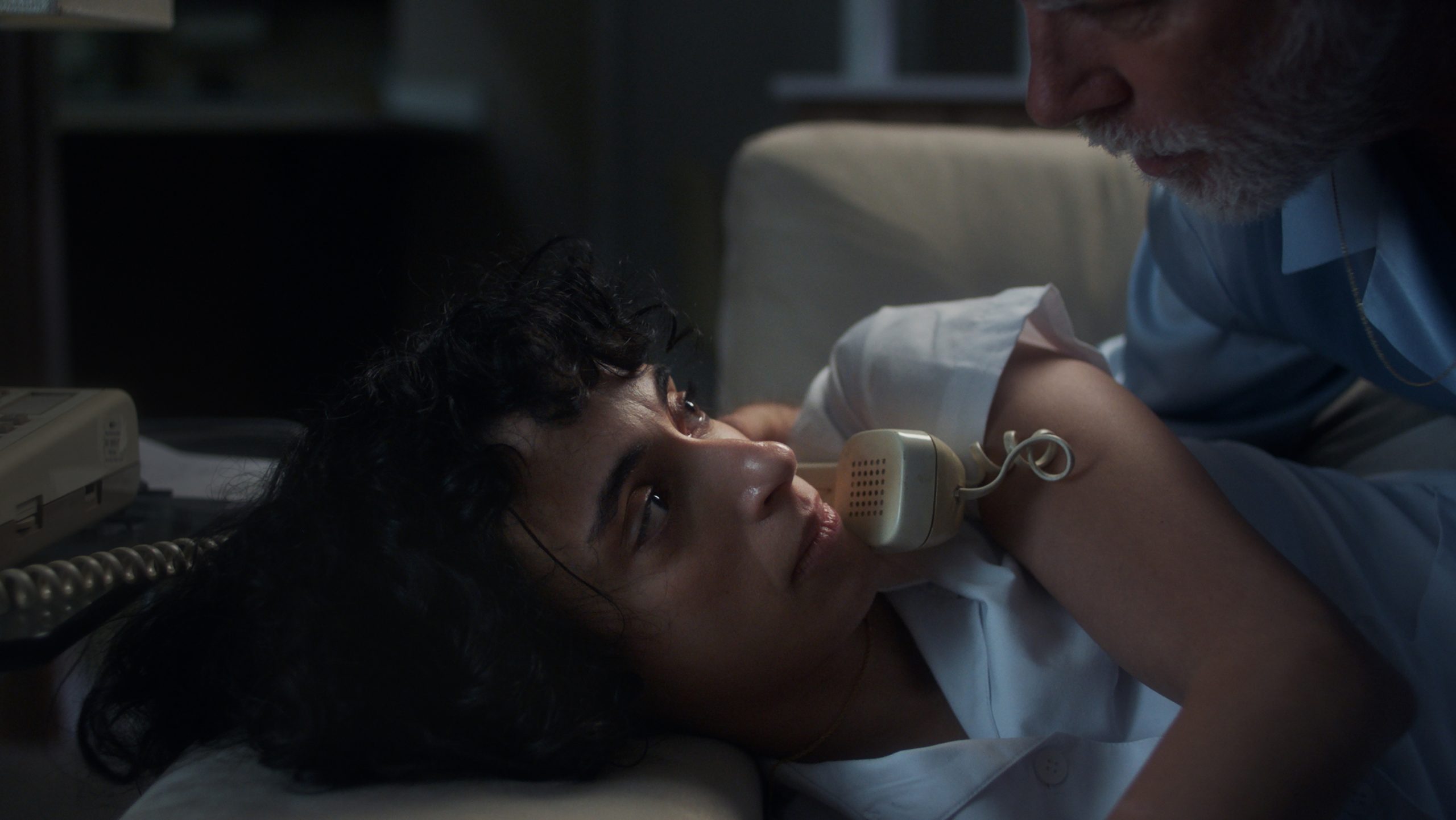
5. Night Nurse – Georgia Bernstein
If there were one single word to describe Georgia Bernstein’s debut feature Night Nurse, it would be “unpredictable.” A young nurse, Eleni (Cemre Paksoy), gets a new job at a retirement home, where her assigned patient, Douglas (Bruce McKenzie), requires more care than she expected. When the two begin to show less professional interest in one another, Douglas brings her into his world of scam calls and drug parties, where they both get lost in the situation, only for jealousy to arise when Douglas turns his attention to other young women in his nurse entourage. Bernstein draws on many of the genre’s best, using voyeurism to make us question whether we should be witnessing what she shows us. It’s an exciting film whose psychosexual nature keeps each moment more engaging than the last.
4. Silenced – Selina Miles
There’s something profoundly inspiring about Silenced, even as it’s terrifying. And with a title like that, Selina Miles’ documentary about a post-#MeToo world is suffocating. Featuring stories from women like Brittany Higgins and Amber Heard, who recount the trials that made them the internet’s punching bag. With international human rights lawyer Jennifer Robinson tying the stories together through a shared struggle against defamation laws. Miles uses well-researched statistics from women across the globe, showing how low false report numbers are and how the legal system was made to question victims more than anything. It was emotional to watch as women of all ages talk about their abuse and how the progression and regression of women’s rights come in waves—an unfortunate historical repetition that needs to end.
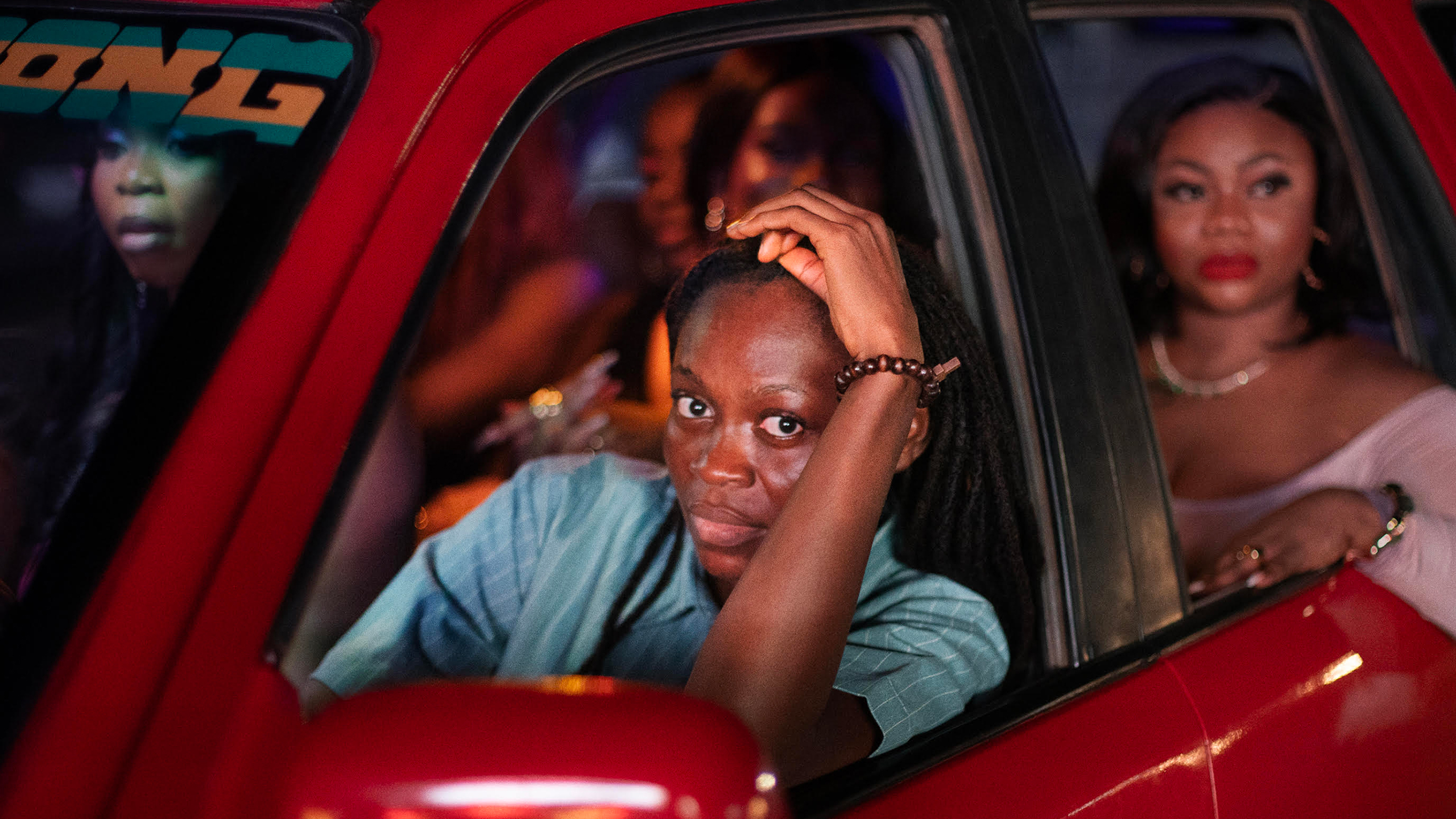
3. Lady – Olive Nwosu
There’s a lot to love from Lady, from its use of music from Sade to its ability to transport us into the streets of Lagos. Olive Nwosu directs and writes this peek into the life of Lady (Jessica Gabriel’s Ujah), a female cab driver working to save money to start fresh in Sierra Leone, specifically Freetown. As she deals with the patriarchal constraints of her home and the rising costs of gas, she has to face the past that she does her best to ignore. An old friend, Pinky (Amanda Oruh), reenters Lady’s life after years of being estranged; now a sex worker, Pinky needs her friend now more than ever. Nwosu’s debut shows the importance of community through female friendship and how deep the bond goes when things get tough. She focuses on how Lagos is in turmoil, with citizens calling for a revolution, reflected in the spirit of Lady, who finds that women must advocate for one another if they want to see change.
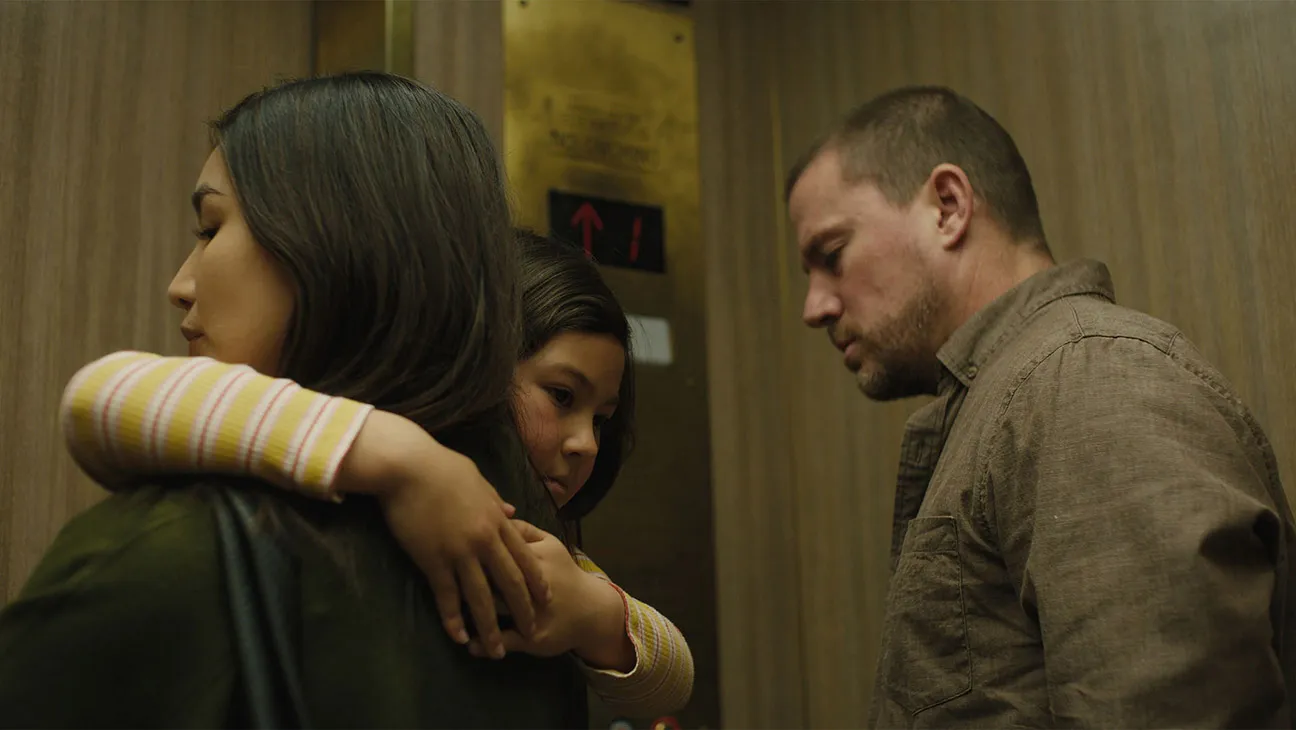
2. Josephine – Beth de Araújo
Children don’t get to be children long enough, especially little girls. Beth de Araújo’s crime drama Josephine focuses on the life of 8-year-old Josephine (Mason Reeves), who witnesses a brutal sexual assault. A depiction of sexual assault that is extremely hard to watch, making it an unshakable thought throughout the remainder of the film. A perspective that films rarely explore is how these crimes impact the children who are exposed to them, when they don’t have the language to even describe what they’ve seen or the knowledge of the acts. Araújo isn’t trying to answer all the questions the film poses, but it offers a realistic view of how families navigate uncharted waters. Reeves’ performance is captivating, with her genuine confusion and sense of morality making it easy to see your childhood self in her.
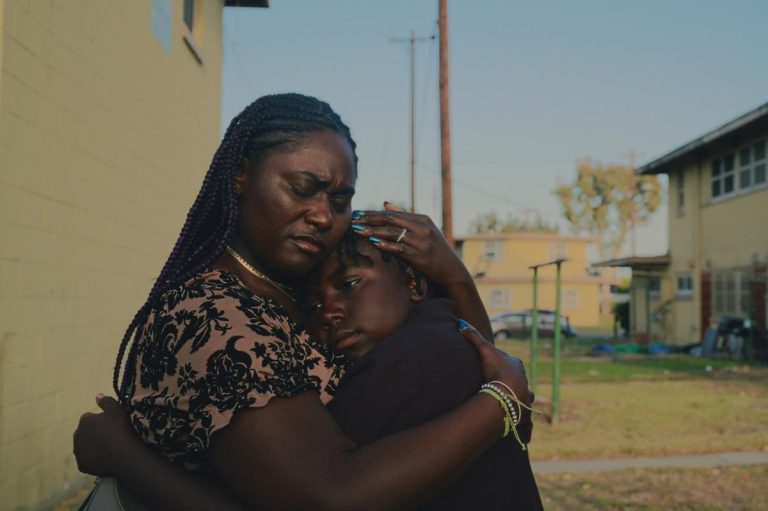
1. If I Go Will They Miss Me – Walter Thompson-Hernández
One of the most poetic films from Sundance this year is If I Go Will They Miss Me, based on the short film of the same name by writer and director Walter Thompson-Hernández. Revolving around Lil Ant (Bodhi Dell), an imaginative young boy with a love for Greek mythology, and his fractured relationship with his father, Big Ant (J. Alphonse Nicholson). Both are connected by their names and the visions they see, but they cannot communicate with one another. Thompson-Hernández swept me off my feet with the fantastical aspects of Lil Ant getting lost in his art and in his view of his father. A deeply honest portrayal of how hard it is to heal lost time and how a father wants to shield his son from a world that wants to keep him grounded.
This week on Women InSession, we discuss our favorite Disney animated films and why some of their boldest, more sophisticated films come from a different era! Even if some of their new movies are still pretty good too. The Renaissance Era probably comes to mind first for most people, understandably so, but we also dig into some older classics that deliver a style and tone we wish Disney would go back to in some way.
Panel: Kristin Battestella, Megan Kearns
On that note, check out this week’s show and let us know what you think in the comment section. Thanks for listening and for supporting the InSession Film Podcast!
Synopsis: It’s summer, and 11-year-old Iris is running wild through the streets with her older friend Danae when she learns her estranged father, Aris, is back in town for his own father’s funeral.
Our first glance of young Iris (Maria Petrova) tells us so much about her character that the audience immediately settles into the warm grooves of the film she’s at the center of. The film in question is Hold Onto Me, the debut feature from Cypriot filmmaker Myrsini Aristidou. Iris is 11 years old, roaming the streets of Cyprus in cut-off overalls with a sagging, oversized blue backpack swinging around behind her. She fraternizes with the older gentlemen playing card games outside her home in passing. She seems to be out and about more often than not. And when she’s not traversing her neighborhood and beyond by foot, she’s on the back of a moped being driven around by her older friend, Danae. Despite all the wondrous potential such a youthful childhood might seemingly hold on paper, her quiet demeanor and longing gaze reveals otherwise. Getting into adventurous shenanigans with Danae on the beautiful Mediterranean Sea seems to bring her some joy. But aside from these boating excursions, 11-year-old Iris appears to be filling her time however possible. Given that her older brother who’d much rather hang out with his girlfriend, her mother constantly working to stay afloat, and a father who has long been out of the picture, it would appear Iris’ childhood is being consumed by a hushed loneliness.
Christos Passalis and Maria Petrova appear in HOLD ONTO ME (Κράτα Με) by Myrsini Aristidou, an official selection of the 2026 Sundance Film Festival. Courtesy of Sundance Institute | photo by Lasse Ulvedal Tolbøll.
There’s a genuine sadness that permeates through much of Hold Onto Me. Despite that, it doesn’t take long to find ourselves becoming immersed within Aristidou’s beautiful style of filmmaking. Her evocative imagery is more than just arresting. It often reflects Iris simply and contemplatively gazing at her surroundings. In hoping to find a break amidst the monotony she feels so isolated by, she seeks companionship wherever it’s available. The unspoken ways Aristidou conveys this speaks to an undeniable talent behind the camera. As Iris sits in quiet observance on the periphery of young adults double her age, it’s easy to feel her isolation. The director is granting her performers and her locations the space to elicit the exact emotions necessary to drive this film towards its central ideas. Iris isn’t just dealing with the pain of not fitting in where she belongs; she seems to have lost the overall desire to fit in at all. It’s crushing to imagine her believing whether or not the opportunity she craves is even feasible in the first place. But that possibility appears to change upon the return of her father, Aris (Christos Passalis).
Having virtually no memory of Aris as a newborn, Iris turns to an old photo album in the hopes of potentially dredging up something in her mind. Her brother takes notice and encourages her to “let it go.” That’s easier said than done, especially in Iris’ case. She may not have anything concrete to hold onto, and yet, letting go seems impossible now that her father is conceivably within reach for the first time. And so, what transpires over the middle act of the film feels like a wonderful ode to Paper Moon and films of a similar nature. It’s not difficult to see why Aris’ presence is so alluring. For the audience and Iris alike, Passalis’ performance works wonders. There’s a dingy, gruff edge to him from the first moment he interacts with Iris, yet he slowly reveals a swagger that’s undeniably charming. But Aristidou very quickly makes him a far more interesting character than the occasionally sly, deadbeat father grappling with the possibility of redemption. In Aris lies quite the broken individual, also grappling with the very real possibility that he’ll never have a place he can truly belong. Both he and Iris seem to be affected by the same worry. And yet, they approach their responses to the fear from such differing angles. Where Iris would rather shut down, he can’t seem to slow down for even a moment.
Aris and Iris begin spending more time alongside one another amidst these lonely paths. And every time Aristidou sets up an opportunity for Aris to step up, he seems to toss it aside without any potential consideration. He instead has his sights set on escaping his current predicament as soon as possible. Being harassed by some sort of criminal collectors, the only reason he reappeared in the first place was to attend the funeral of his father. A sighting of Aris appears to be treated as something akin to a miracle if several character reactions can be used as evidence. And it’s easy to see why, as Iris and the audience become more attuned to his various scams and shenanigans. But in that beautiful yet potentially dangerous way childhood can warp a perspective, his behavior often comes across as enticing to Iris. But behind such actions lies the truth. He’s a man who also had a somewhat broken relationship with his father, and is now left to pick up the pieces seemingly alone in the world. And despite his constant mistakes made while spending time with Iris, Aristidou’s script remains tender enough that we hope the two can mend whatever internal wounds remain, instead moving forward with some semblance of normalcy and genuine connection beyond that of the unconditional love between a father and daughter.
Maria Petrova appears in HOLD ONTO ME (Κράτα Με) by Myrsini Aristidou, an official selection of the 2026 Sundance Film Festival. Courtesy of Sundance Institute | photo by Lasse Ulvedal Tolbøll.
In the end, Hold Onto Me can occasionally feel a bit trite; yet such criticisms of originality lie purely on the surface level of this film. Aristidou has crafted a lowkey drama that still finds a way to pack loads of emotion into its runtime. What’s more shocking of an inclusion is the amount of thrill she also finds a way to wrap into her narrative. Hold Onto Me has a massively tense third act. The first time we see the beautifully blue waters of the Mediterranean Sea, it represents such potential for Iris’ life. The horizon stretches on and on as she is left to gaze admiringly at what the world has to offer. Aristidou’s climax instead frames those same waters as a dark, looming abyss. Should we be unable to steer ourselves off the destructive path of self-isolation and selfishness, it has the potential to swallow us up entirely. Aristidou grips her audience for as long as possible before loosening up for an immensely satisfying emotional resolution. Overall, this debut film reveals immense potential in a filmmaker like Aristidou. Her ability to blend evocative imagery in a beautifully captured setting alongside the emotional balancing act we seek through simple and effective character work signals a wondrous talent.
Hold Onto Me celebrated its World Premiere in the World Cinema Dramatic Competition at the 2026 Sundance Film Festival.
Synopsis:Once upon a time, Yuri was one of Japan’s deadliest assassins, but she’s retired now and spends her days running an underground brothel. A news report about a former colleague who has died under mysterious circumstances doesn’t quite sit right. The dead man’s son is now the target of a military manhunt, and Yuri will do whatever it takes to keep him safe.
2026 already seems to shape itself as a generational year for genre cinema, and we’re off to a pretty decent start with Isao Yukisada’s Revolver Lily, finally hitting North American video-on-demand devices after a release in Japan in 2023. The Isao Yukisada-directed war epic is a frequently enthralling and visually jaw-dropping motion picture, even if its opening scenes could lead viewers to expect a journey to pure cinema that is much wobblier than anticipated.
The story is relatively simple – Yuki Ozone (Haruka Ayase), a former assassin, must protect Shinta Hosomi (Jinsei Hamura), the son of her former boss, after his mysterious death reeks of political corruption. However, Yukisada quickly elevates the material with raw images of tangible, painterly power and a bevy of well-mounted, tightly calibrated action that recalls the heroic bloodshed work of John Woo and Tsui Hark. Of course, this is much less anarchic in its visuals than Hard Boiled or A Better Tomorrow III: Love & Death in Saigon, but the bullets fired by Ozone in each close-knit fight or major shootout all hold meaning.
John Woo was probably the first filmmaker who gave significance to a bullet casing – transforming them into tears being shed by its protagonists in The Killer or Bullet in the Head, which Tsui then cranked up (and deconstructed) in Time and Tide. In Revolver Lily, Yukisada seems to appropriate this revolutionary meaning to the bullets fired by its central protagonist, represented by the anguish Ozone feels as she returns to a life she’s desperately trying to leave behind. The best parts of the film aren’t the action but the internal drama at the heart of Yuki’s plight, expressed through a litany of complex emotions as she feels compelled to protect Shinta without resorting to violence, until it sadly becomes essential for their survival.
You can tell by simply looking at Ayase’s face that Yuki’s journey back to the field of work she wants no business being in is not something she wants to do. But Shinta’s survival currently trumps her personal feelings over killing people, which she is amazingly good at. However, Ayase’s turn is remarkably soulful and profoundly human, a textured performance that gives Revolver Lily its raison d’êtreand our emotional attachment to a story that sadly feels far too conventional to justify an overlong 139-minute runtime.
But Yukisada has a few tricks up his sleeve to keep us engaged, and they all involve a succession of action sequences that unfold after the main plot is laid out and the characters’ motivations become clearer. Yukisada’s sense of rhythm, expressed by Tsuyoshi Imai’s precise cutting (worthy of Sam Peckinpah and the aforementioned John Woo), keeps us on our toes during high-octane, supremely violent gunfights and surprisingly cathartic one-to-one brawls between Yuki and the numerous powerful antagonists who are all looking for Shinta and the documents he carries related to his father.
Only when the film reaches a rather underwhelming climax, where the action becomes more digitized, and the gritty, realistic textures of the gunfights suddenly transform into Fast & Furious logic, does Revolver Lily lose its grip on us. However, what comes before can’t entirely be dismissed, even if it will largely be unseen by the masses who prefer to not exceed the one-inch tall barrier of subtitles and stay within the confines of Hollywood. That said, if you love incredible, jaw-dropping action and compelling character work, you won’t be disappointed at this must-see modern J-action picture that makes me more than curious to see what Yukisada will do next…
On this episode of Chasing the Gold, Shadan is joined by our own Will Bjarnar and Megan Loucks to recap this year’s Sundance Film Festival! The festival featured plenty of strong films, but a select few stood out as truly spectacular and we spotlight those in a big way. The Grand Jury Prize winner, Josephine, is especially one to keep on you radar.
Check out this week’s show and let us know what you think in the comment section. Thanks for listening and for supporting the InSession Film Podcast!
Synopsis:The renowned psychiatrist Lilian Steiner mounts a private investigation into the death of one of her patients, whom she is convinced has been murdered.
A common trope that runs through the vast history of cinema is the investigator who just cannot seem to halt their curiosity. Now, this behavior makes sense when the protagonist is an actual detective on a case, but often, we are placed in the shoes of someone who could, if they simply chose to, leave well enough alone and go back to their own life. Some truly great films, including Rear Window, Zodiac, and Blue Velvet, fall directly into this category. All of these protagonists could have lived a normal life, and all of them with willing romantic partners. But then again, it wouldn’t leave us with much of a movie.
Rebecca Zlotowski’s enjoyable, if uneven, A Private Life certainly dives headlong into this well-worn trope, along with some darkly funny moments. However, thankfully, there is a bit of a different and more intimate angle at play. Lilian Steiner (Jodie Foster) is a psychiatrist with a full slate of patients, along with her own troubled relationships. Foster, it should come as no surprise, handles a difficult role with ease, so much so that it is easy to forget that she is not a native French speaker. Despite the difficulties of performing in a second language, she manages to convey not only necessary emotionality, but her performance of silence speaks volumes, allowing us subtly inside her character’s heart.
Almost immediately following her introduction, Lilian’s patient, Paula Cohen-Solal (a beautifully measured Viginie Efira), has died from a drug overdose. Worse, it is a drug that was prescribed by Lilian to help her sleep. This inciting incident is the perfect beginning for an exploration into not only this death (murder?), but also into the psyche of Lilian, herself. After attempting to attend the wake, after an odd invitation from Paula’s daughter, Valérie (Luàna Bajrami), she is kicked out immediately by the grieving husband, Simon (Mathieu Amalric). Strangely, this leads later to an odd emotional reaction from Lilian.
Lilian cannot stop crying. Well, crying may not be the right word. She claims to feel nothing, but one of her eyes seems to literally leak tears. And this is doubly odd, seeing as how she is closed off in many ways, especially towards her son and grandchild. Watching Foster, as a therapist who cannot control her emotion, is truly a gift. Her frustration, masking possible real emotion, is something I could watch for hours. In order to “treat” this sudden affliction, she visits her ophthalmologist, who we soon learn is her ex-husband, Gabriel (Daniel Auteuil). At first, they seem like a strange match (or ex-match, anyway), but watching them together for the rest of the film, it becomes clear that their bond, even if no longer romantic, is one to last a lifetime. The two performers match each other perfectly, seeming completely in sync, even when disagreeing on screen.
One of the things they disagree on, of course, is what really happened to Paula. There is nothing quite so unmooring for a therapist as losing a patient who showed no signs of suicidality.
Frankly, this film might have been better off staying the course, and avoiding some strange subplots that evoke fantasy and magical realism. It is never uninteresting, but Lilian’s visit to a hypnotist, copying a patient who is threatening to sue her after not being cured of nicotine addiction, wants desperately to delve into both Lilian and Paula’s shared connection without doing the necessary work to make it truly effective. It should be noted, however, that these sequences are some of the most exciting visually, buoyed by Zlotowski and cinematographer George Lechaptois’s use of deep color and subtle camera movement.
A Private Life takes a wild amount of twists and turns, some interesting, some nonsensical, and some both of the above. However, given that we are allowed to watch Jodie Foster, one of our great actors, traverse these bends in the road makes the film easily worth every minute of its runtime. Sure, it could have used a more focused throughline, but following along with this jagged mystery is rewarding all on its own.