


ComMANNdment #2: Thou Shall Find Interesting Ways to Shoot the Scene
As Mann began his feature film career, cameras were still limited in what they could shoot. Lenses could be altered and changes could be made in post as visual effects teams were starting to gain prominence in the ‘80s, but real ingenuity was shown in the films directed by Mann prior to his delve into digital cameras in the late ‘90s (and heavily into the 2000s).
If we look at Thief, the opening diamond heist includes some interesting shots of the heist: not just watching the bit slowly shave metal out and onto the ground, but the camera zooms into the drill hole to show us the inner locking mechanisms. This shot presents to us the finer details that Mann is known for delivering in all his films (watching the lawyer and judge in Okla’s hearing exchange different numbers of fingers on their faces is a tremendous detail that could go missed by first time watchers). Mann also enables POV and long, dolly shots in Thief, letting us know that he is more than just a “point and shoot” director. After Frank is beaten by the police in an interrogation room, the Chicago PD continues to follow the tracker they’ve put on his car. We see Frank get out of the vehicle, but we never see where he goes (presumably from the perspective of the police who cannot see him either) – this leads to the officers getting onto the highway. What they don’t know yet is that they are following a tour bus, and it is this shot of following random cars on the road – pivoting focus to the undercarriage of the bus (where Frank has hidden the tracker) and ultimately ending on the front of the bus – announcing to the audience that this bus is going to Des Moines.
There are always exceptions to the rules. For Mann, The Keep does not fit so neatly into these ComMANNdments that I have set up (you will note that I left it out of ComMANNdment #1), but he does employ some creative cinematographic choices in this genre piece. In particular, his use of slow-motion feels very deliberate and creative here: no better example than when the second soldier who helps remove the silver cross has his body flung backwards by the power of Molasar. His body slowly disintegrates as it is hurtled through the air. As a recurring bit, I will not have much to add to The Keep and its visual flair.
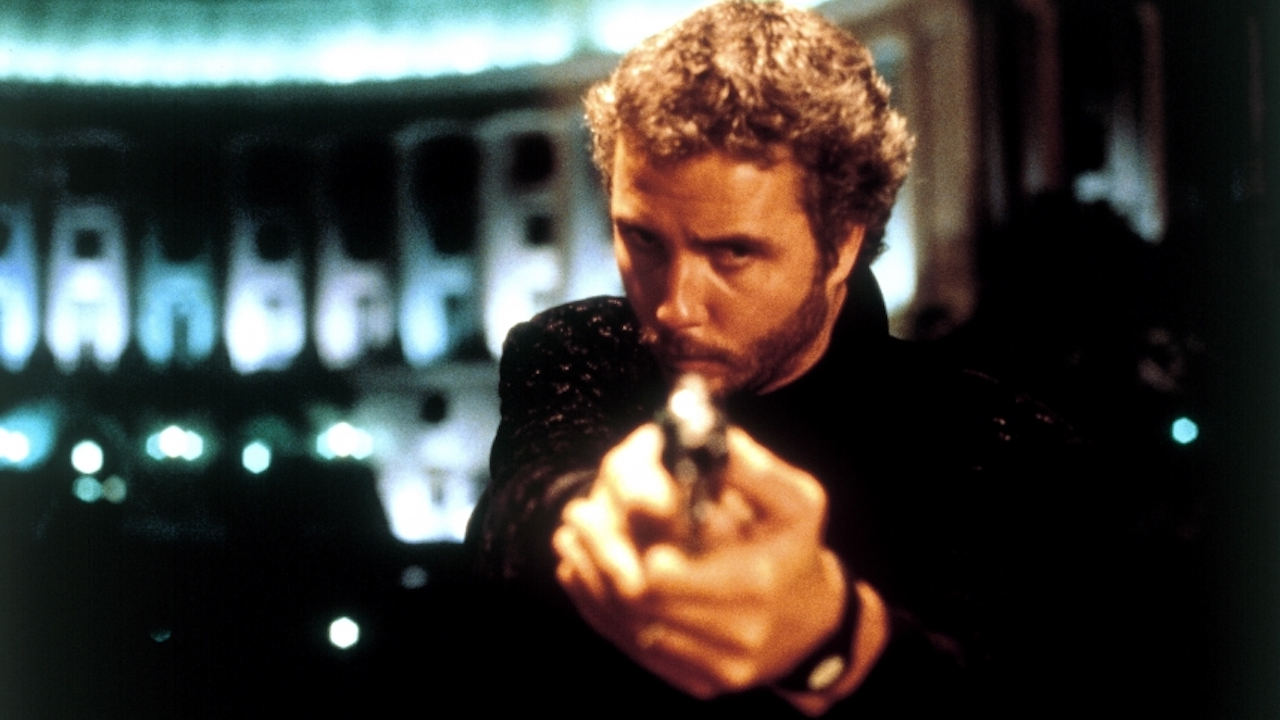
While this is a very minor shot, what is the very opening image in Manhunter? Is it Dolarhyde’s van? We assume it is, but the way in which we see it is truly unique and never comes back into play. This disorienting quality of camera placement continues throughout the film and is shown perfectly in the first conversation between Will and Jack on the beach. It is a simple enough scene to explore: Jack has come to ask Will for his help on the “Tooth Fairy” killings, but Will has retired and wants to be with his family. In the hands of another director, the scene could have been shot rather perfunctorily as a means of getting some exposition out. What Mann does here is to slightly adjust how we would normally see an over-the-shoulder shot/reverse shot scene play out. He sets the men on either side of a piece of beach wood and has them facing in opposite directions: Will towards us, the audience, and Jack facing out to sea. By having our two heroic male leads in these positions, Mann lets us know that while Will and Jack are on the same team they will not agree with how the other one wants to go about the work (literally and metaphorically not seeing this eye-to-eye). A small detail, yet uniquely powerful in this film.
Even if you are just a casual film-watcher, you are probably familiar with the L.A. bank shootout that takes place in Heat, which is arguably Michael Mann’s most iconic sequence in any of his films. And I won’t argue that, as it will come up later in this paper, but I would like to present what I believe is the strongest competition for that championship belt: the waterfall scene in The Last of the Mohicans. The moment excels based on the strength of two key factors. The first of which falls onto the shoulders of Daniel Day-Lewis and Madeline Stowe and the way their characters (Hawkeye and Cora) convey the story, both verbally and silently. But the second reason, and possibly the most pivotal, is where Mann chose to shoot this moment. The getaway of the Mohicans with Cora, Alice, and Duncan could have led them anywhere, but Mann chose one of the most cinematic locations for this to occur: under a waterfall. The sound of rushing water increases the dramatic nature of the scene and makes us lean in. Even the departure of Nathaniel is heightened when he runs and jumps through the waterfall. While the cinematography of Dante Spinotti is pitch perfect in this movie, this scene goes down as one of the most beautiful and romantic sequences ever shot.
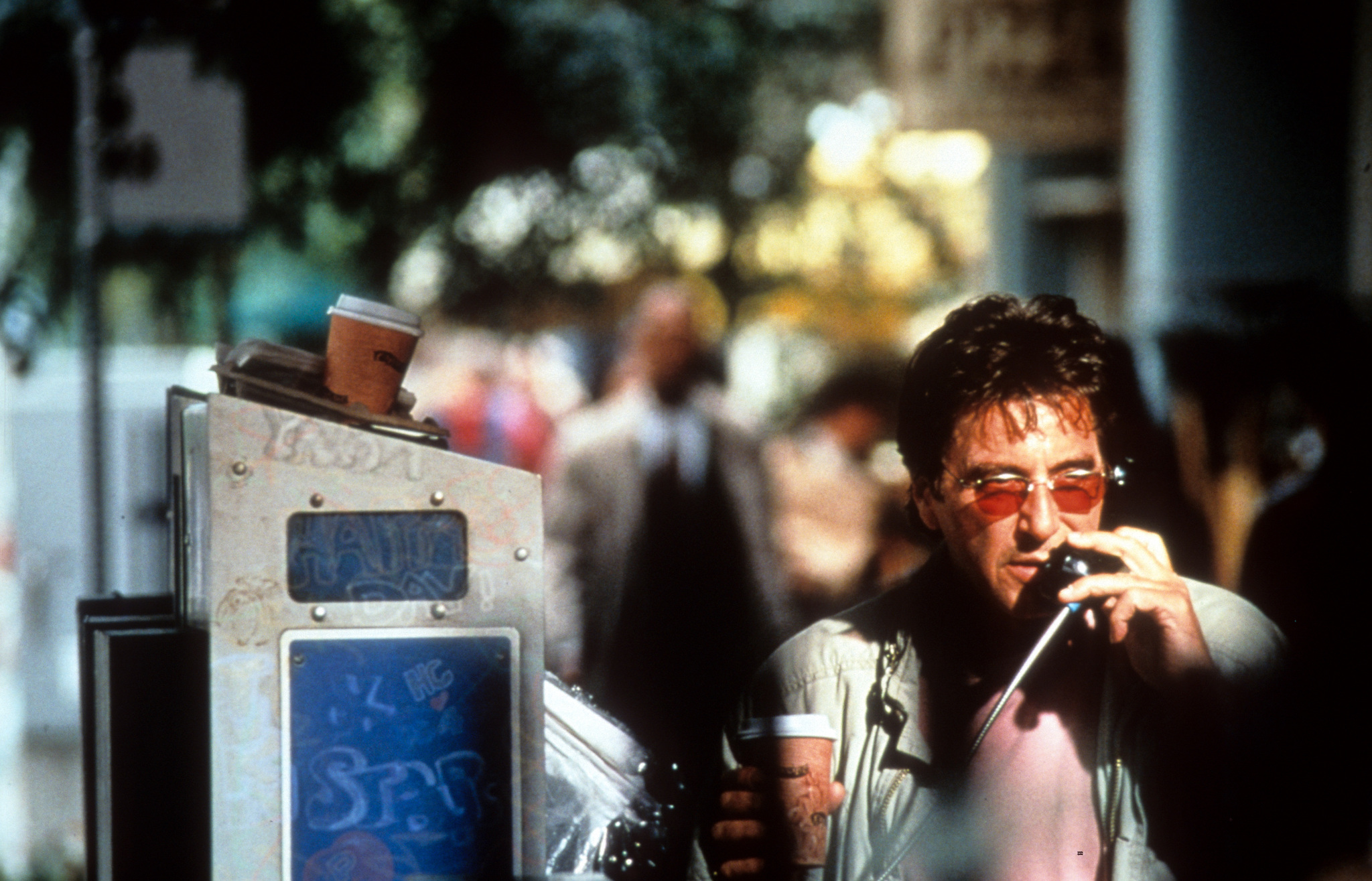
Michael Mann starts playing with extreme close-ups and tight over-the-shoulder shots in Heat, but I will save my thoughts and examples of these for when I bring up The Insider and Ali. For my main example of how can we shoot this differently, I want to focus away from the actual camera placement and put our attention on how films are made for a moment. Usually, the only sound recorded on the day of shooting that makes it into the final cut is the dialogue (and even then, actors will frequently do ADR sessions to fix moments or provide additional lines for clarification). Now at this point in his career, Mann is a veteran in the world of entertainment: he has 2 TV movies, 4 feature films, and a vast array of Executive Producing credits on TV shows under his belt. All this proves that he knows the intricacies of putting together a film for people to view; he knows the “rules” of filmmaking. Mann’s ear may be the MVP of Heat because the idea of using the actual gunfire sounds from the days of shooting the bank robbery instead of sound effects is genius. Artificial sounds may have been an easier choice, but the authenticity of the rounds being fired and shells hitting the ground is such an ingenious touch and sounds so believable that it further confuses me as to why Heat got 0 Academy Award nominations, including any for Best Sound. The question of “how can we shoot this differently?” does not always refer to camera placement – it can mean “how can we assemble this film different?” – and Mann’s detail driven sound from Heat is a key example of this trait.
WE’VE MADE IT! The filmmaking style that I most closely associate with Michael Mann is this extreme close-up, over-the-shoulder shot that makes you feel as if the character whose POV we are following is actually you. Both Pacino and Crowe get iconic and defining versions of this technique early in The Insider. With Lowell Bergman, we go inside the canvas bag covering his head so he is unaware of exactly where he is going. Shooting through the fabric of the sack works on multiple fronts, but I would like to point out two: 1) it literally puts us under the sack as well and we (like Bergman) have no idea what is going on until we get more information, and 2) it symbolizes where Wigand is at that moment, facing a path he was not expecting and unsure of how to navigate forward. Speaking of Wigand, an amazing choice to put the camera almost physically on Crowe’s shoulder as he descends and exits the elevator after he has been fired. Again, there is a duality to this choice that works on both an implicit and explicit level: 1) we are the metaphorical weight on Wigand’s shoulder as he will need to figure out how this all will affect his family, and 2) we become the ever-watching eye that becomes Wigand’s very founded paranoia. There are many other examples of this shot and other shots that I find appealing and interesting (I could extrapolate about Wigand seeing the burning car after he testifies for pages), but for now I will say that it is here with The Insider that Mann finds a style that feels universally like a “Mann” choice. Mann’s decision to start shifting to the use of digital cameras over film continues in Ali. With a gap of only 6 years, looking at the cinematography of Heat and comparing it to Ali feels wildly different. And whether you want to chalk it up to the cameras getting smaller and more versatile or that Mann was going through a period of cinematic experimentation, the look and feel of Ali with particular emphasis on the boxing moments are notable. A small but evocative choice occurs during the opening montage before the first Ali/Liston fight. Ali (Cassius Clay at this point in the movie) is working on the punching bag, but Mann uses this moment to zoom in for a close-up. The bag rapidly goes back and forth but it remains out of focus: the camera homes in on Clay’s utmost focus on the task at hand. But if we are talking about boxing moments, we must talk about when the digital cameras get so close to the action that it feels as if they (and ultimately US) are getting pummeled by body shots. The cinematic chaos that ensues during the boxing fights is incredible and something that hadn’t been shown in quite that way since the filming of boxing scenes began. Mann takes that extreme close-up style that he really leaned into with The Insider and created a frenzy inside the squared circle with Ali that makes those moments the most captivating of the film.
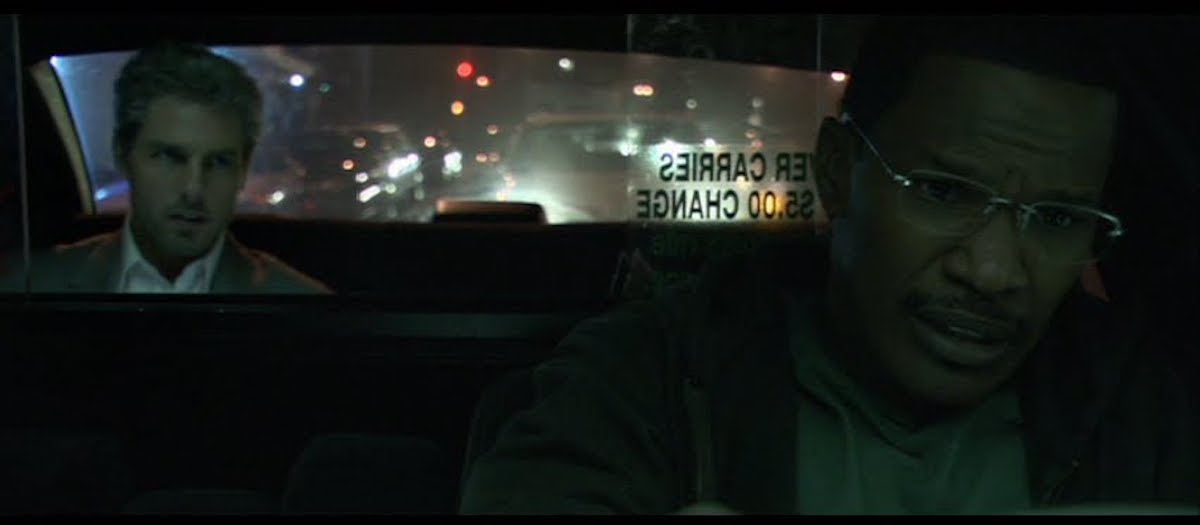
The use of digital cameras on Collateral became so prevalent that the original cinematographer, Paul Cameron, left the production over disputes with Mann as to the look of the film. Certain filmmakers of the era, like Steven Soderbergh and Spike Lee, were also playing with the use of digital cameras, but Mann gained a certain amount of attention for shooting a film with two big stars in this way. I’ll focus more on the handheld nature of the camera in Collateral in ComMANNdment #5, but there are some fun and unique ways in which the camera is used in this film. Perhaps the most innovative use of camera in Collateral is when the body of the first victim of Vincent falls out of his window and onto Max’s cab: the POV shot of the camera hurtling towards the top of the car is a great way to show the suddenness of the situation shifting. There is only one other moment I want to point out before I lament a bit, and that is the moment when Vincent and Max are in the cab and are mesmerized by the coyotes crossing the street. It isn’t so much that the scene is shot in a unique way, but that Mann would include such a visually metaphorical moment to play out in his film at this time. The hunter and hunted situation of Max and Vincent is supported by this shot, but the idea of wild animals running around a busy metropolis is fun and leads to many interpretations. I will just add that much of the film is a cat & mouse thriller that plays out exactly the way that you think it would. Because of this, the filmmaking overall (outside of the overt use of digital cameras) does not feel as new or inventive – particularly when placed next to The Insider and Ali, which both play with interesting camera placement throughout.
Wanting to approach an idea from a new perspective is something that must have been top of mind for Michael Mann as he set out to shoot Miami Vice – after all, he’s competing with a show he helped create that has a beloved fanbase. As opposed to the bright colors and vibrancy of the TV show, Mann leans more towards the gritty, violent nature of this Miami – a version of which you could not do on cable TV in the ‘80s. There are moments of violence in this movie that are totally devastating, and as someone who has seen his fair share of blood in cinema, I even found some of these moments to be unnerving. Let me cite three examples of this carnage. The first moment happens during the final shootout at the boatyard: one of Yero’s Neo-Nazi gunslingers gets shot and the “blood” from him hits the camera lens, but that camera keeps moving and gives us an over-the-shoulder of another shooter who continues opening fire. The blood on the lens visual choice has been done before (maybe most effectively in Saving Private Ryan and Black Hawk Down), but it is still effective here. The second moment to reference is a very short moment, but the image we’re left with is quite powerful. Upon hearing that he no longer needs to “go home,” Alonzo (John Hawkes) walks out into oncoming traffic and is hit by a semi. We don’t see the body hit by the truck or the impact on the road – instead we see the truck braking and a streak of red on the street below. If you blink you could miss this moment, but if you kept your eyes open, you would feel the devastation. The last violent moment to call out is the initial FBI bust that goes bad: the snipers involved with the Aryan Brotherhood lay waste to the agents trying to get away. We cut to a shot inside the car as these bullets (are they the size of golf balls?) shred the car to pieces and literally rip the arm off the driver. This moment is also slowed down so that we have to live with it longer and understand just how dangerous our adversaries are.
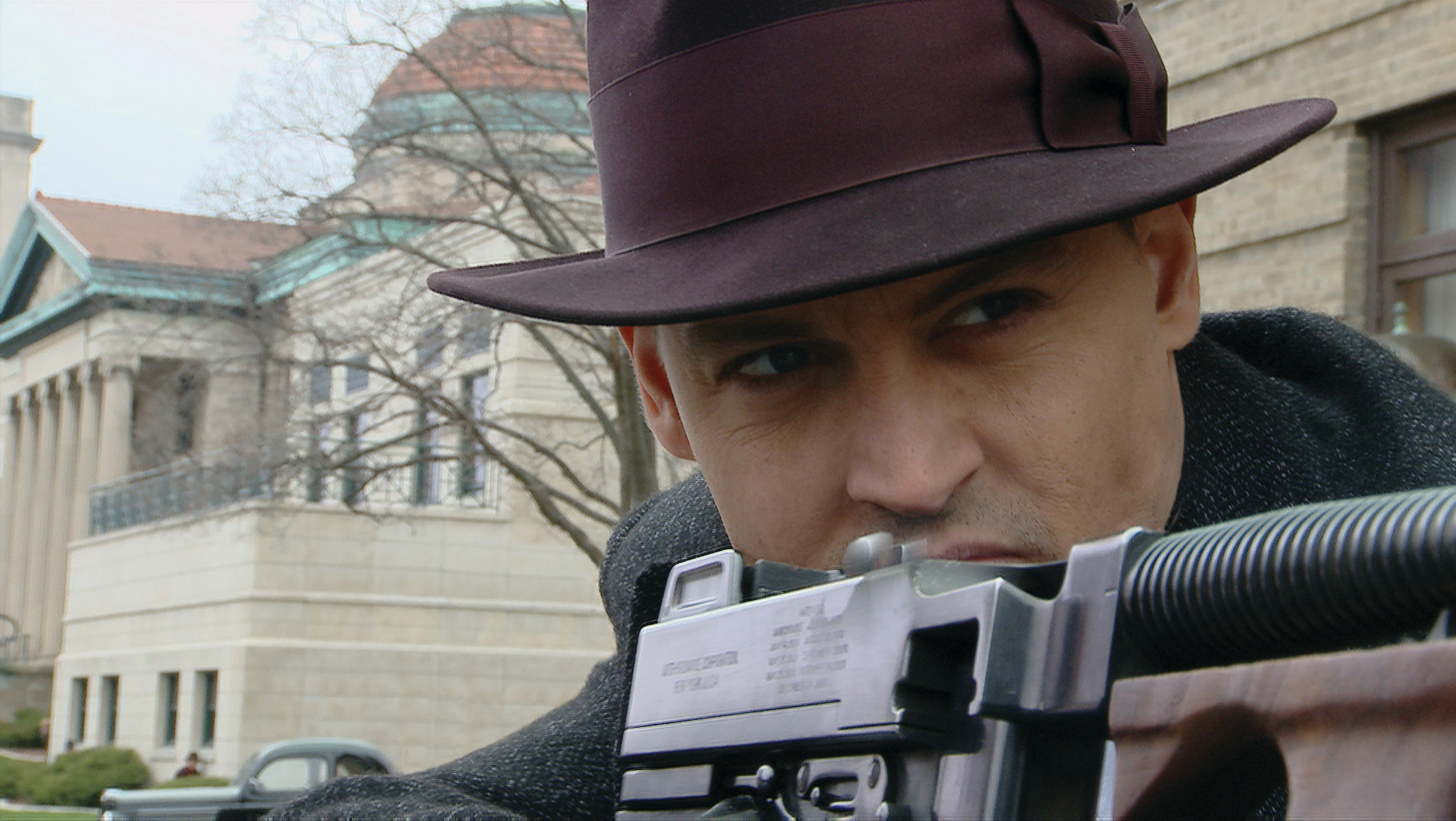
If we can say nothing else about Michael Mann, we could say that he likes to make bold choices. Whether or not those choices gel with you is not of Mann’s concern – he wants to push himself. This is the reason why examining his films is a fascinating journey: to see as his career progresses if he can continue to push himself towards those creative risks. Public Enemies puts forward some interesting shots and moments worthy of discussion: some that are more successful than others. Let’s start with a scene in the movie theatre. Dillinger is surrounded by his fellow partners-in-crime to discuss an upcoming job when the newsreel being shown displays his face prominently on the screen. This alone would be a moment worthy of praise and discussion, but Mann decides to play out the scene even more by having the lights in the cinema come on and having the rest of the crowd look to their left and right to see if “Public Enemy #1” just happens to be sitting next to them. Mann gets to throw an homage Hitchcock’s way (a la Strangers on a Train) as everyone but Dillinger looks around – clearly making him the center of attention in the shot. Really captivating moment – now to discuss a scene that probably never happened, but that cements the brazenness of Dillinger. The afternoon of the day that will inevitably be Dillinger’s last, he takes Polly (played by Leelee Sobieski…remember her?) to get her waitressing license and decides that he will take a stroll through the Chicago Police Department. During his visit, he sees pictures of himself and his associates all over the walls. A smug smile creeps over his face – he believes he has already got away after the train robbery that never happens. This is a fascinating sequence of events right before his downfall, but it is his death scene and how Mann shot it that does not work. Dillinger leaves the theatre with Anna and Polly, Purvis signals the FBI that Dillinger is in the open, and Agent Winstead (Stephen Lang) takes a shot – the bullet going through Dillinger’s face. Cinematic time slows down and a visual effect of the bullet piercing through Dillinger’s cheek appears and we are suddenly thrust into a reminder that “we are just watching a film.” There are moments where some of the digital photography does not mesh well with the period piece nature of Public Enemies, but it is simple enough to chalk that up to the cameras being used. This harsh cut to a blatant use of CGI pulls you out of the moment and almost undercuts Dillinger’s demise. It’s an example of Mann getting in his own way by trying to improve upon a climactic moment with the use of computer graphics (a choice he will make again in a different biopic).
Prior to Blackhat, most of Mann’s digital effects work came simply from using updated cameras for portions of filming. Visual effects have not been a staple of his films since The Keep, and given the critical derision and lack of box office support it might not be too hard to see why Mann avoided working with overt VFX. However, the digital effects rendered in Blackhat both feel “real” to the world that we are introduced to and help progress the story forward. Early on the film establishes a recurring motif of the camera going into the computers and following wires, cables, and microchip circuitry to show how everything in the world is connected. While it would be easy to point out that this kind of “trick” has been done before (see Krzysztof Kieślowski’s Red), Mann brings us squarely into the 21st century and reinforces the idea that no one has the privacy or secrecy they think they do. Another moment of outstanding visual effects work (blended with practical effects, as well) is the car explosion in which Dawai is killed. Many interesting directorial choices are made here worthy of pointing out. First, the explosion seemingly comes out of nowhere, but not so out of nowhere that we are confused by the event. When Hathaway is using the Black Widow program (expertly stolen from the NSA…he wrote rather sarcastically), a tracking device is placed on Dawai’s car – setting up that Elias and the “bad guys” will be able to track them. Later, when Hathaway and Lien are having their argument on the street and they refer to Dawai, he waves back: this moment is rather calm, the music starts to soften, and all seems okay. The music starting to fade out leads to the next fascinating choice: hold relative stillness and silence before the explosion, then make the explosion as loud and violent as possible! Even having seen this movie around a half dozen times now, this moment still gets me to jump because of how well set up the execution is (no pun intended). Mann wants to be both a teller of human stories and a visual master – Blackhat proves to be a winner of that second category.
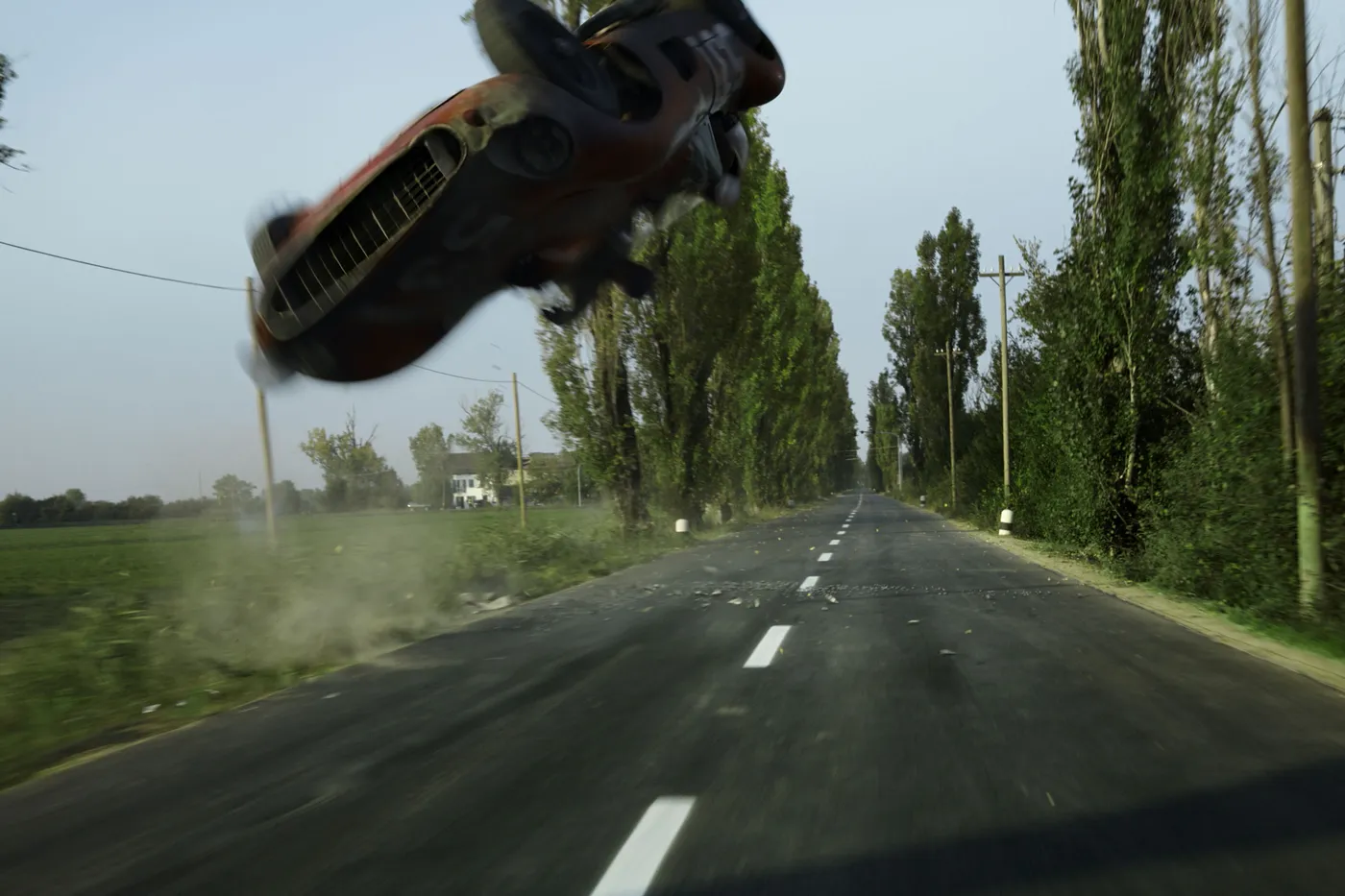
There are two car accidents that end in a tragic death in Ferrari: the first happens when Enzo is trying to take back the lap record with the second occurring during the Mille Miglia. We have to talk about both because the one that is more devastating and pivotal to the conclusion of the story is the one that looks…well…we will get to that – let’s start with the first crash. Ferrari has just lost the track record to Maserati and his pride will not let that stand. He immediately rallies the troops and gets one of his drivers, Eugenio Castellotti, to try and get it back. As Eugenio is driving around the track, it becomes clear that the combination of this car and driver is not going to take the record back. Upon starting another lap, the clutch gets stuck and Eugenio slams on the brakes as he is unable to turn at the speed he is going. The car runs into the divider (which acts almost as a ramp in this moment) and is propelled into the air. Given that the car has no roof, Castellotti is hurled from the vehicle in one direction as the car itself crashes into a cement wall. Now, is this moment heavily created with visual effects? Yes – but given that it is only one car and one person being added to this scene, it doesn’t look overly fake. In fact, the moments surrounding the visual effects give it an air of verisimilitude: watching the tires squeal, his foot pushing down on the brake, and even an insert shot of one of his shoes flying through the air. This moment is powerful because we, as the viewer, believe that it has happened (through the magic of filmmaking, of course). Mann’s illusion act does not work as well in the Mille Miglia crash. Prior to this moment, De Portago had refused new tires at the last pit stop and his front driver side tire hit a cat’s eye in the road. The result is the tire exploding open and the car careening into the crowd of onlookers. This event really happened and is a tragic reality of this race. As this moment happens in the film, the car hits a stone sign, propels up, and hits a light pole – ultimately rolling end over end through the crowd. From a storytelling perspective, this moment is devastating. From a film viewer’s perspective, the uncanny valley of visual effects used to recreate this moment is too wide and hard to accept. It is clear how much was done digitally to render this moment, but should it have been used at all? I am not talking about if it makes sense ethically, but about the accuracy in shooting it. Mann likes to shoot scenes as inventively as possible – I think this is one that should have workshopped more before being used in the final cut.