


**This piece contains plot spoilers for Good Luck, Have Fun, Don’t Die**
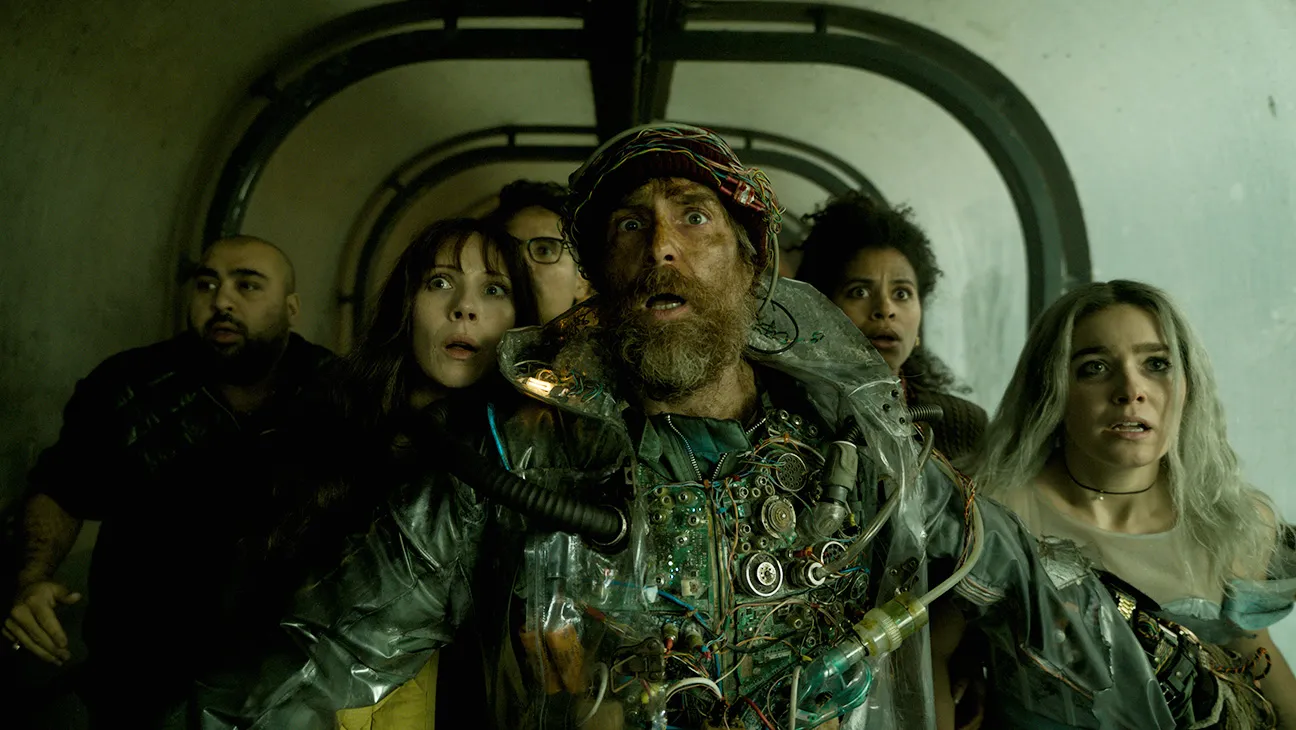
Gore Verbinski’s new film, Good Luck, Have Fun, Don’t Die, is a maximalist bomb in celluloid form. Verbinski, and screenplay writer Matthew Robinson, is coming on stage to slam the integration of technology and the human soul. While the premise is sort of a watered down, “yelling from the rooftops” version of The Matrix, there is still a lot to glean from this film. Moments involving zombified teens and their cell phones and a Stranger Things-style nosebleed effect fall flat. But one sequence involving Juno Temple’s character is the heart of Verbinski’s return to Hollywood in over 10 years.
Susan (Temple) is a mother of a boy in high school who is shot and fatally wounded from a school shooting. There’s a palpable feeling of sorrow that can be drawn from Susan, one that is shared by many people all over the United States. Like most people, I recall exactly where I was when I saw “Breaking News” regarding shootings occurring at Sandy Hook Elementary, Parkland High School, all (seemingly) once in a lifetime horrors in front of our unfortunate eyes. Since then, these horrors have been normalized, what was once seen as once in a generation tragedy is now a common occurrence capitalized by ridiculous safety products to make your life safer. Bullet-proof windows for classrooms, door stoppers that could stop an elephant – let alone a sick individual with a gun, and portable rooms to keep your child’s school ‘safe’.
This phenomena isn’t entirely isolated to just school shootings either. In the past two years, my grandmother and my childhood priest passed away. After my grandma passed and was cremated, the service offered me a pamphlet of products I could purchase that had some of my grandmother’s ashes. Paper weights, various pieces of jewelry, or a pen (???) – all containing small pieces of my grandmother. Then, after my pastor died, I signed up for email updates on funeral arrangements on the obituary provider’s website. Since then I have received a weekly newsletter about what new and exciting death-related products are rolling out that I’ve opted out to multiple times and reported to spam after that didn’t work (that also didn’t work). And I understand that we are in an age of technology-sponsored escapism, the normalization and profiteering of death is something that is punctuated incredibly well in Good Luck, Have Fun, Don’t Die.
In Good Luck, Have Fun, Don’t Die there is an underlined sense of humor throughout these scenes where Susan must navigate how to grieve in her sudden loss. This entire sequence felt equally hilarious as it was vomit-inducingly disturbing. When she approached the business offering to clone her son, everyone there was dismissive of Susan’s sorrow due to their familiarity and over-exposure to senseless death. As a society we have been more exposed to death than we should be accustomed to. Back on September 10th of last year, the internet saw a widely circulated violent death of a well-known American figure. Not to speak on that individual’s beliefs or character, but it isn’t entirely healthy for us to witness or accustom ourselves to viewing that level of violence – regardless of background. After [said individual]’s death, that person’s spouse has gone on a “look at me grieve” tour and profited on every element of this – shamelessly, might I add.
After the scene involving Susan trying to recreate her son, the clone she received was this distant shell of an individual. While we never got time to see how her son was before he died, this person that Susan got in return was completely offputting. Her son would spend his time watching Attack on Titan, scrolling on his phone, and demanding his mom bring her a specific brand of iced tea. Susan, however, was complacent over the fact that her ‘facsimile’ of a son is at least physically there – if not mentally. She had a hard time adjusting and was invited to a grief group by a clique of emotionally detached mothers who have undergone similar horrors multiple times.
When we see the grief group, everyone is as emotionally detached as the women we were introduced to before. Everyone is trying to avoid the munitions-shaped elephant in the room, acting as if their child is no longer there and pretending their clone is sufficient. Verbinski straddles the line throughout this sequence between comedy and pain, especially when it comes to a set of parents who have had to recreate their daughter 3 (or 4, I can’t remember exactly) times. And they’ve become so desensitized they just throw whatever they want at the wall and when that kid dies, they can just do it again.
The themes involving AI and cell phone usage in young adults are pretty one note in Good Luck, Have Fun, Don’t Die. But death and how profit has intertwined with it was captured so succinctly that it is the beating heart of an otherwise outlandish cinematic trip and fall. Gore Verbinski has had an incredible career, and I hope to see more from him, but this could be categorized as one of America’s most angry films. And it is rightfully deserved, we have to take some more reverence for the dead and not become desensitized to the horrific time in which we live.