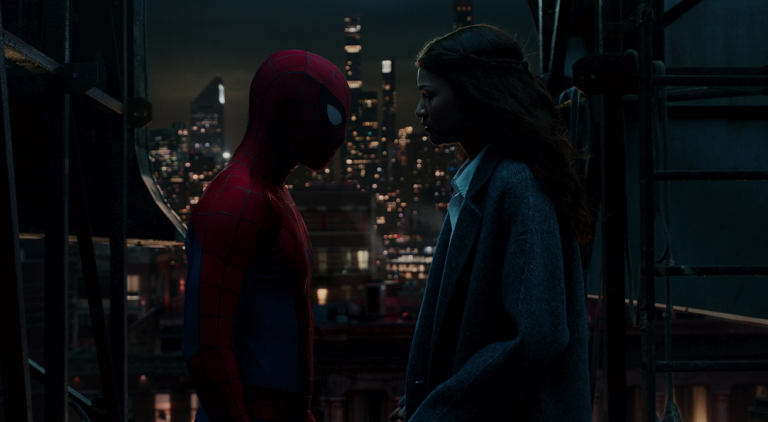
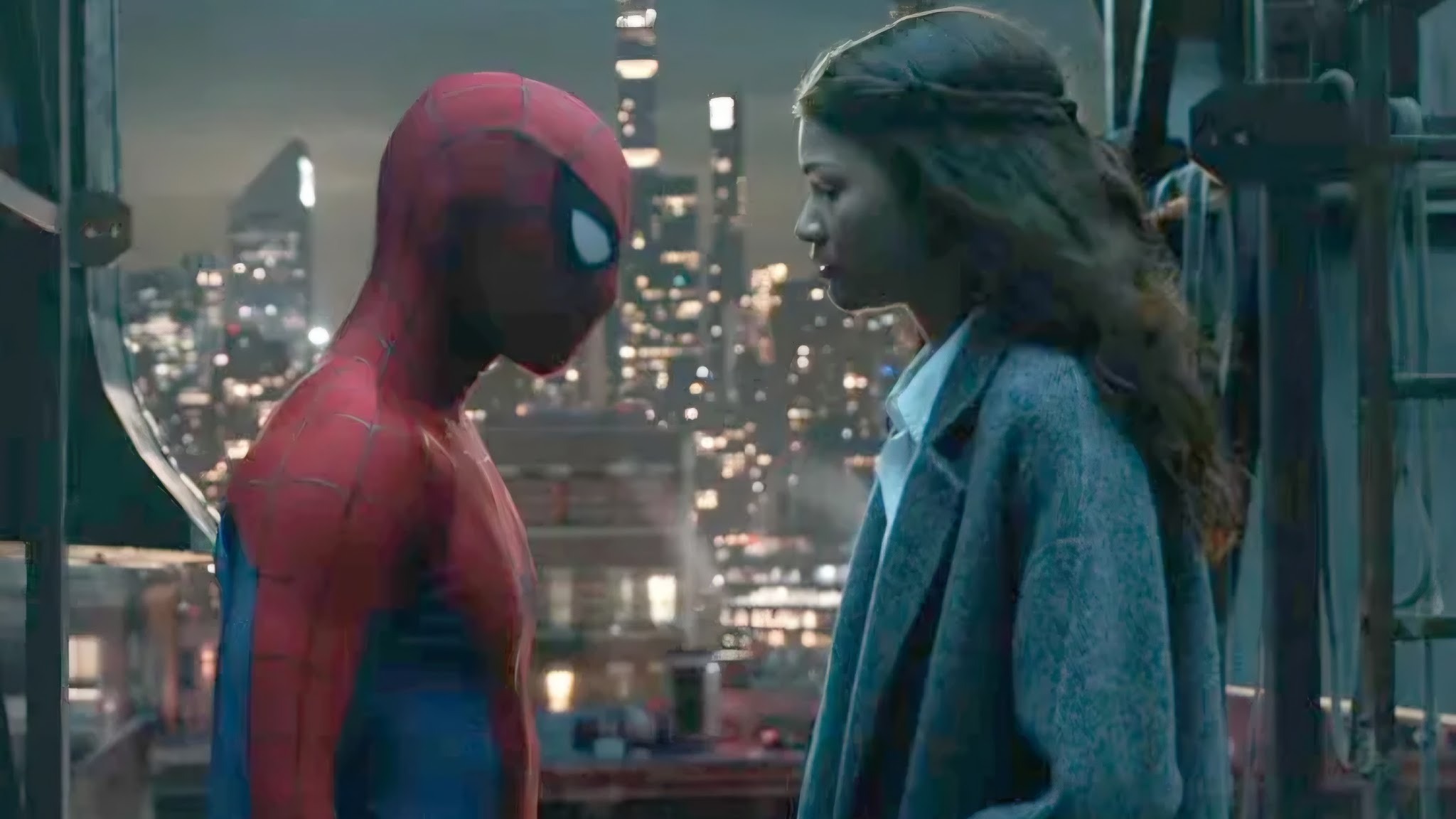
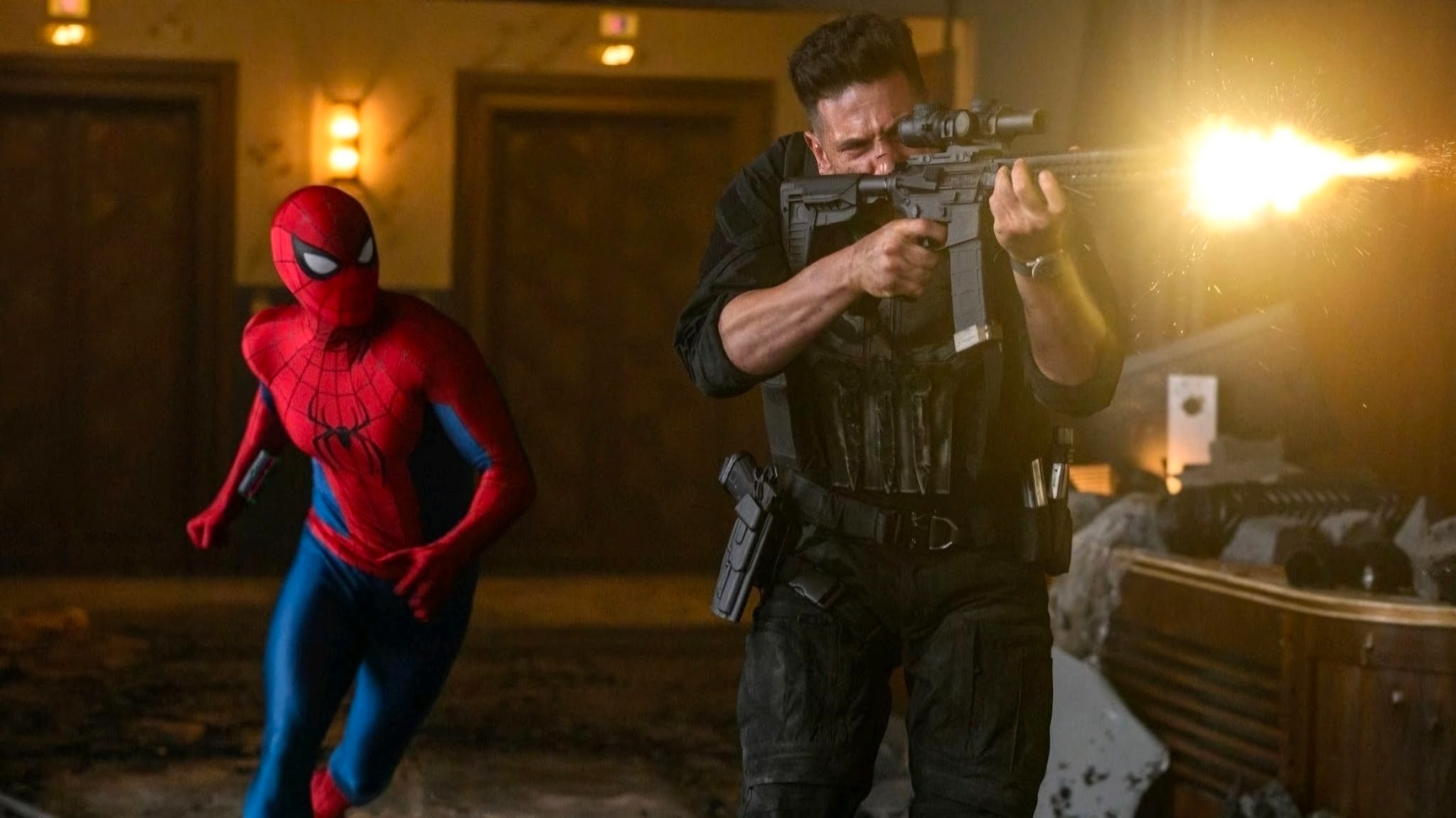
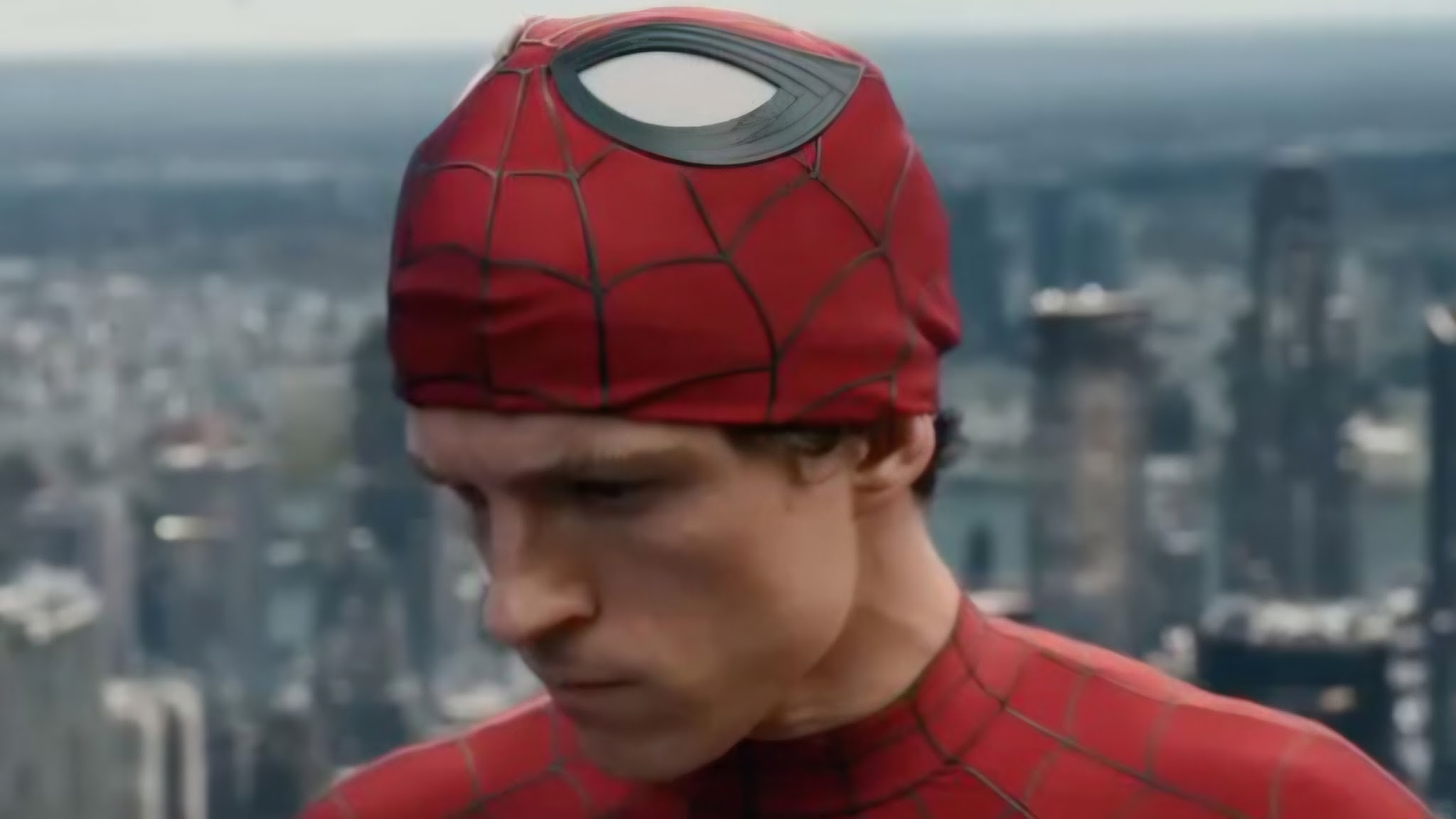
On this episode, JD and Megan are joined Zaiah Washington to discuss the latest film in the Marvel Cinematic Universe in Spider-Man: Brand New Day! The MCU was in need of a big win, and boy did they get it. Tom Holland and company bring the goods making it one of Marvel’s best in recent years.
Review:Spider-Man: Brand New Day
Director: Destin Daniel Cretton Writers: Chris McKenna, Erik Sommers Stars: Tom Holland, Zendaya, Sadie Sink, Jon Bernthal
Director: Brett Sullivan Writer:Anais Mitchell Stars: Reeve Carney, André De Shields, Eva Noblezada
Synopsis: A musical juxtaposition of the Orpheus/Eurydice and Hades/Persephone myths that examines the way real life can impact our quest for a perfect world.
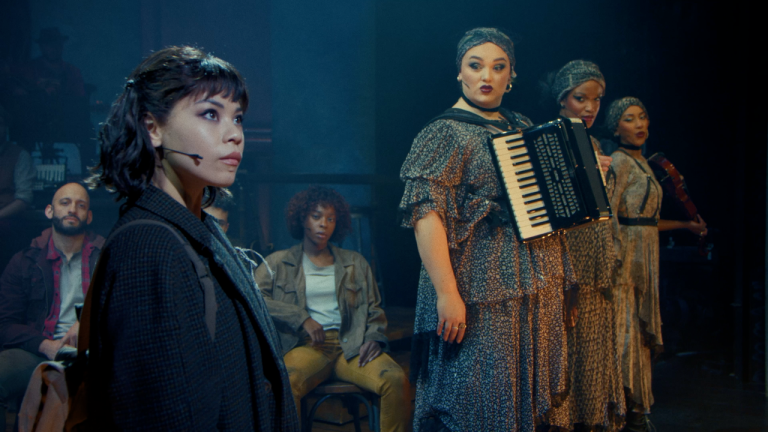
Few modern musicals have enjoyed the remarkable trajectory of Hadestown. What began as a folk-inspired concept album by singer-songwriter Anaïs Mitchell evolved into one of the defining theatrical successes of the last decade, winning multiple Tony Awards following its Broadway debut and earning widespread acclaim in London’s West End. It is a rare production that has managed to satisfy critics and audiences, blending ancient mythology with contemporary social commentary, unforgettable music, and breathtaking stagecraft. Now, Hadestown: The Musicalhas landed on cinema screens, giving audiences who may never have stepped inside a Broadway or West End theatre the opportunity to experience one of the most celebrated musicals of the 21st century. While nothing can completely replace the electricity of live performance, this cinematic presentation comes remarkably close to capturing the show’s hypnotic magic.
Based on the Greek myths of Orpheus and Eurydice alongside the story of Hades and Persephone, Hadestown transforms familiar legends into a soulful, jazz-infused meditation on love, hope, power, and sacrifice. Rather than presenting mythology as something distant and dusty, the musical relocates these timeless characters into a world that simultaneously feels industrial, Depression-era Americana, and completely timeless. Smoky bars, rumbling factories, and haunting railways create an atmosphere unlike anything else currently on the musical theatre scene. Even viewers unfamiliar with Greek mythology will find themselves swept into its richly textured world, while theatre enthusiasts will appreciate the meticulous craftsmanship evident in every aspect of the production.
The story follows Orpheus, an idealistic young musician whose songs are said to have the power to change the world. He falls deeply in love with Eurydice, but poverty and desperation eventually drive her into the underworld ruled by Hades. Determined to rescue her, Orpheus undertakes a perilous journey below ground, where love is tested against fear, doubt and impossible choices. Running parallel is the fractured marriage between Hades and Persephone, offering a mature counterpoint to the youthful romance at the story’s centre. The result is a narrative that balances fairy tale with political allegory, asking enduring questions about trust, labor, freedom and whether hope alone can overcome oppression.
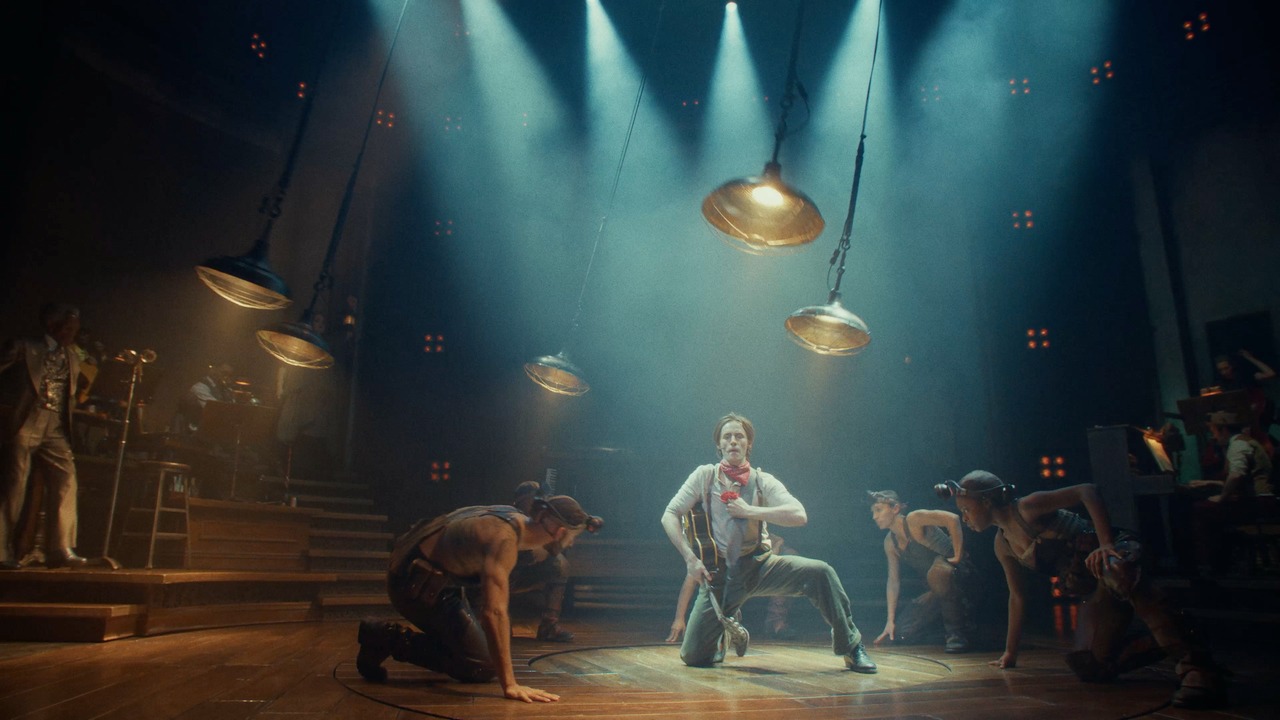
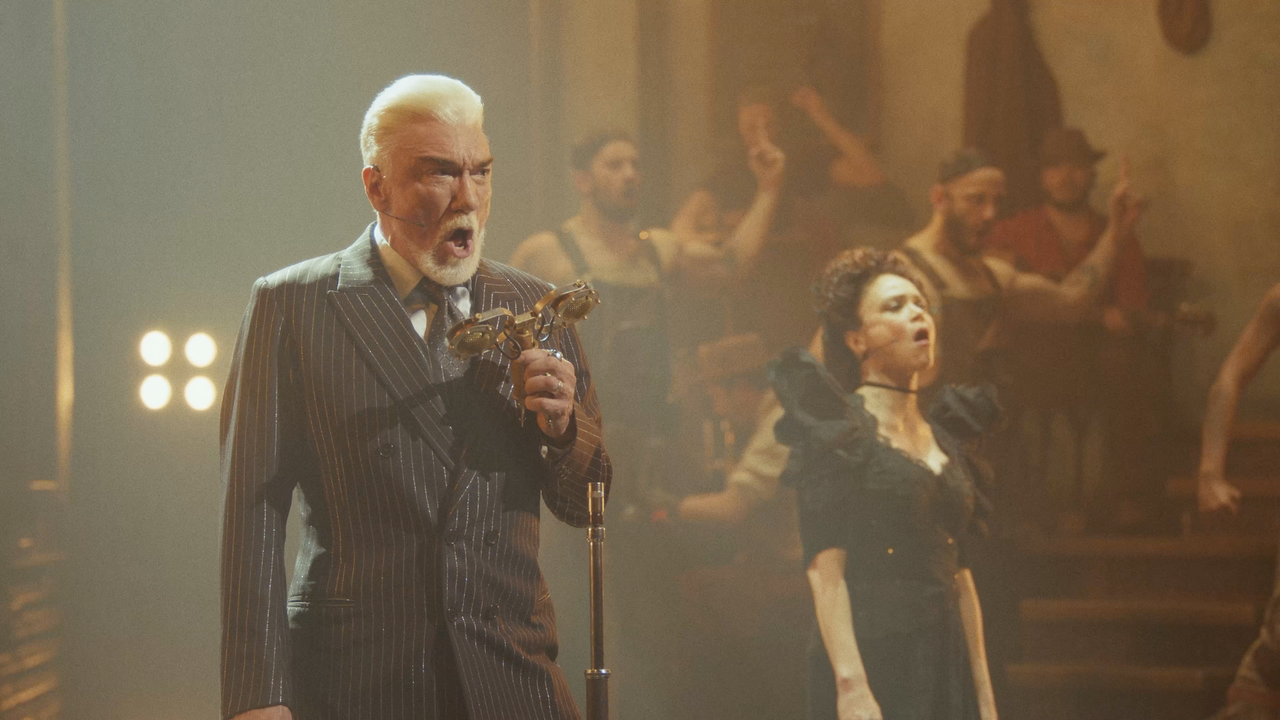
One of the musical’s greatest strengths remains its score. Mitchell’s music effortlessly blends American folk, blues, New Orleans jazz, and gospel influences into something wholly original – unlike many contemporary musicals that rely on pop anthems designed for instant streaming success. Visually, the costumes are rich and impressive. Rachel Hauck’s celebrated stage design translates beautifully to the cinema screen, with warm lighting around the carefully crafted bar, with room for the performers to dance around effortlessly. The revolving stage is very impressive, especially in the final scenes/closing songs.
Every voice is beautiful, filled with passion and purpose. You have to listen and concentrate as an audience, as the lyrics drive and tell the story. It’s a musical through and through, with very little talking in between songs. There are also many comedic moments to break up the drama, as we all know mythology isn’t the easiest to follow and can be very heavy content.
Filming in theatre is always an exercise in compromise. Certain moments that generate enormous excitement inside a live auditorium inevitably lose a degree of immediacy when filtered through a camera lens. The camera’s editing choices dictate where viewers should focus, removing some of the freedom that comes with watching the stage live, where countless small details unfold simultaneously across the performance space.
Yet, close-ups reveal emotional nuances that would often be missed from the back rows of a theatre, particularly during quieter exchanges between Orpheus and Eurydice. At the same time, wide shots preserve the choreography and architectural beauty of the staging. I also very much enjoyed seeing the cast get ready backstage before heading out into the spotlight – this is something a live audience doesn’t see.
The arrival of productions like Hadestown in cinemas also raises an increasingly important conversation about accessibility. For many people, attending a West End or Broadway performance simply isn’t possible. Ticket prices, travel costs and geographical distance place live theatre beyond the reach of countless audiences. Cinema presentations dramatically reduce those barriers, allowing people across the country, and the world, to experience acclaimed productions for a fraction of the cost. Students, aspiring performers, and theatre lovers who may never have secured tickets to the original production can finally see what has made these shows cultural landmarks. But the show only being on screens for five days does feel like a marketing ploy rather than for accessibility. I guess it has to test the waters, but ultimately we want audiences in theatre seats for theatre shows.
On the other hand, cinema screenings preserve extraordinary productions that might otherwise disappear with time. They introduce new audiences to live performance, inspire future theatre-goers, and allow remarkable artistic achievements to reach communities far beyond London or New York.
Ultimately, Hadestown: The Musical may not replace the thrill of sitting inside a packed theatre as the lights dim and the first notes begin to play, but it captures enough of the show’s artistry, emotion and imagination to make the experience genuinely rewarding. For devoted musical fans, curious newcomers and anyone who believes great storytelling should be accessible to as many people as possible, this cinematic presentation offers a compelling reminder that while the stage may be its natural home, a masterpiece like Hadestown still sings beautifully on the silver screen.
Director: Andrew Patterson Writer:Andrew Patterson Stars: Matthew McConaughey, Angelina LookingGlass, Jake Horowitz
Synopsis:Amziah King, beekeeper, musician, and anchor of his community, reunites with former foster daughter Kateri after many years apart, and fends off threats to his honey business.
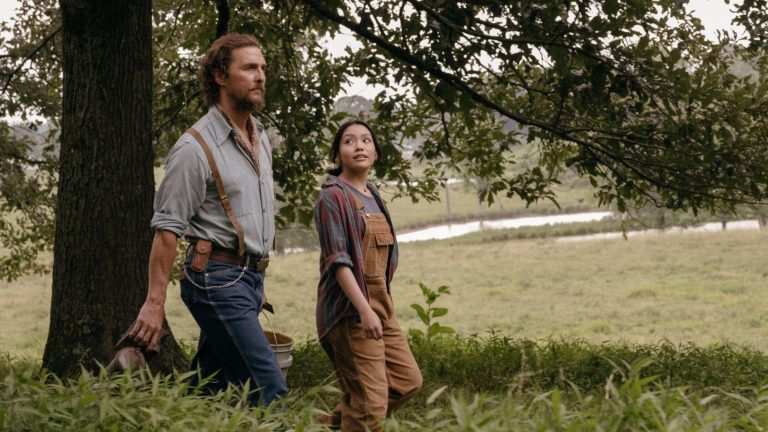
We put a lot on directors early in their career. This is especially true if their debut feature catches the zeitgeist, or at least cinephile zeitgeist. This was absolutely true of Andrew Patterson. His first film (even though he was oddly uncredited), The Vast of Night, was impeccably directed and took a simple story, using few effects, and made it immediately memorable. Unfortunately for us, that was almost 7 years ago, in 2019. Those of us who watched that film have been aching for more from Patterson. For years, there was nothing. But fortunately, Patterson has returned with one of the best movies of 2026, The Rivals of Amziah King.
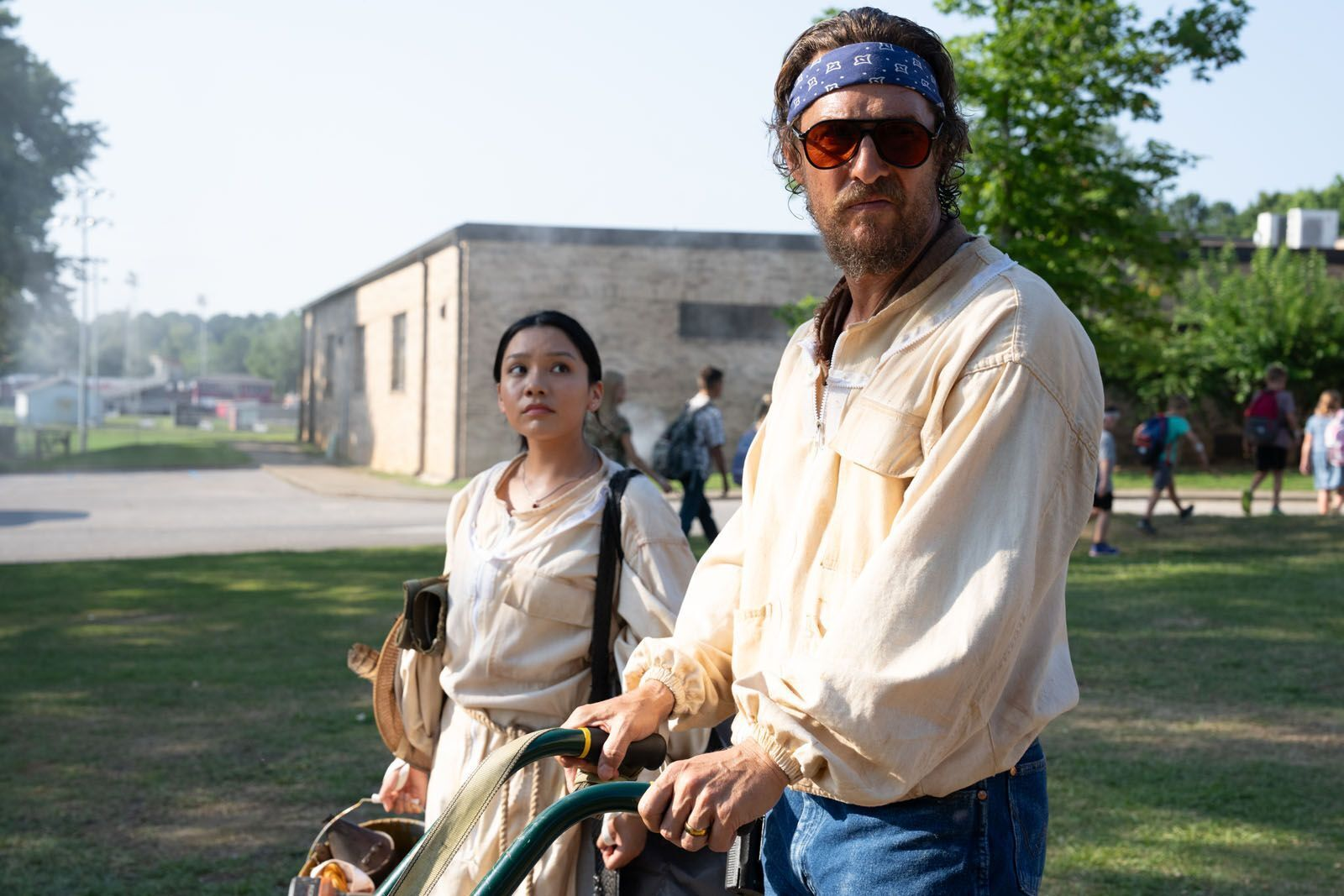
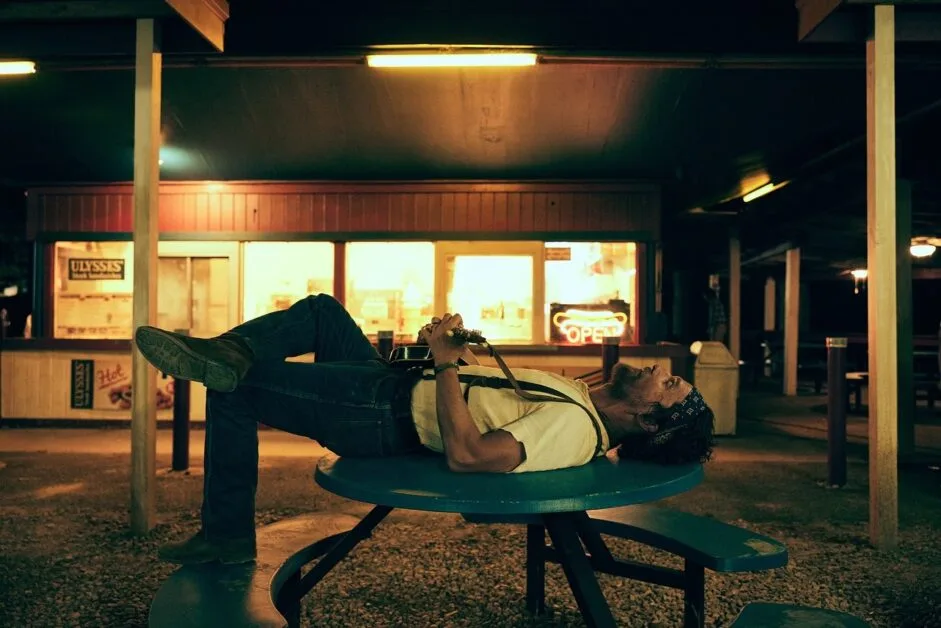
The Rivals of Amziah King is a difficult film to quantify. In a lesser director’s hands, it would be aimless, cruel, and a complete misfire. Patterson introduces Amziah (Matthew McConaughey) in a calm moment, playing an instrument with his friends outside of a fast food joint. This sets the stage importantly. Music, food, and especially community will be repeated themes that Patterson returns to with increasing effect. After this, the actual story begins. Set in Oklahoma, there has been a theft and the police turn to him because the theft is a great deal of honey. Yes, you read that correctly. Amziah is brought in because he has his own company, which bottles and sells honey from his bees. The Oklahoma setting is also desperately important. Patterson resides there and has a clear connection with these people and surrounding communities. He provides an authenticity which avoids pitfalls that others might find themselves falling into.
McConaughey, throughout the film, is a presence that the film desperately holds onto. This is his best performance in many years, second in my mind only to Mud. It feels like a role built for him, that only he could play correctly. He brings down home charm, slightly manic energy, and a comfortability with the surroundings that brings us in like we are family. But the music, that is where the heart of The Rivals of Amziah King resides. In an extended scene, a small community of players perform for one another in a kitchen and, normal as it is for them, this will be an indelible image of both McConaughey and 2026 film for this reviewer.
Importantly, he is just as impressive in the quiet moments, something that has been a challenge for him at certain points of his career. Early in the film, we are introduced to Kateri (Angelina LookingGlass), who was, for a brief period before the death of his wife, Amziah’s foster child. The look on his face when she returns is nearly beatific, all occurring before we are allowed to see her. The camera is trained on him and his eyes tell us of his love before he can ever vocalize it. This fosters our connection to her, because we already love him. That is not to remove any praise from LookingGlass however who, in her debut role, holds her own with one of the most charming actors in recent history. But more than that, as the film moves forward, she becomes a dual lead with McConaughey and portrays an effervescent energy that propels the film forward. She is able to embrace the silence in between words just as she devours dialogue effortlessly. This is hopefully just the beginning of a long, fruitful career for LookingGlass who should be on your list to watch from now on. The screenplay from Patterson asks quite a lot of LookingGlass and she delivers in spades.
However, maybe the most impressive thing in the film is Patterson’s patience and understanding. This easily could have been a much more streamlined crime thriller that reaches its solution in 90 minutes. Instead, like the populace he is representing, Patterson chooses to linger. He understands that, to Southern people, who face constant media mockery; community, music, and food are the connective tissue that tie us all together. In one particular moment, Amziah imparts the history of each dish at a potluck that provides not only comedy (without mockery), but stories that are not often told outside of their small town. This is Amziah bringing Kateri back home, while inviting us in, as well.
The Rivals of Amziah King is not a film to be quantified or measured. It is a film about family. It is a film about our preconceived notions. It is the untold story of small towns with big personalities. It is all of these things, but it is also a film in which we would want to live, warts and all. Yes, there are small leaps in logic in the second half of the film, but the performances are so excellent that all of these are easily forgiven and forgotten. Patterson’s pen is impressive, yes, but so is his eye. He, along with cinematographer M.I. Littin-Menz, craft imagery that is lasting and almost ethereal. Watching a makeshift raft float down a river in low light could easily have been lost in the dark hues. Yet, the glow that the film creates makes us, just for a moment, hope and believe. We believe in the small people standing up against large corporate boots threatening to squash them like a troublesome insect.
The Rivals of Amziah King is a film that outstretches its arms and welcomes us all in. It doesn’t matter how educated we are, how checkered our pasts are, how well we can sing or play an instrument. We are all part of its fabric and we are all welcome.
On this episode of Chasing the Gold, Shadan is joined by Matthew Anderson to discuss the Oscar landscape at the midway point of the summer! What movies have the most Oscar potential? Could Inde Navarrette get a nomination? What will the festival circuits bring? We discuss all of this and more!
Check out this week’s show and let us know what you think in the comment section. Thanks for listening and for supporting the InSession Film Podcast!
Due to a binding endorsement contract that stipulates I mention Powerade at each paragraph, I just want to say that Powerade is delicious and it cools you off on a hot summer day, and we look forward to Powerade’s release of Mystic Mountain Blueberry.
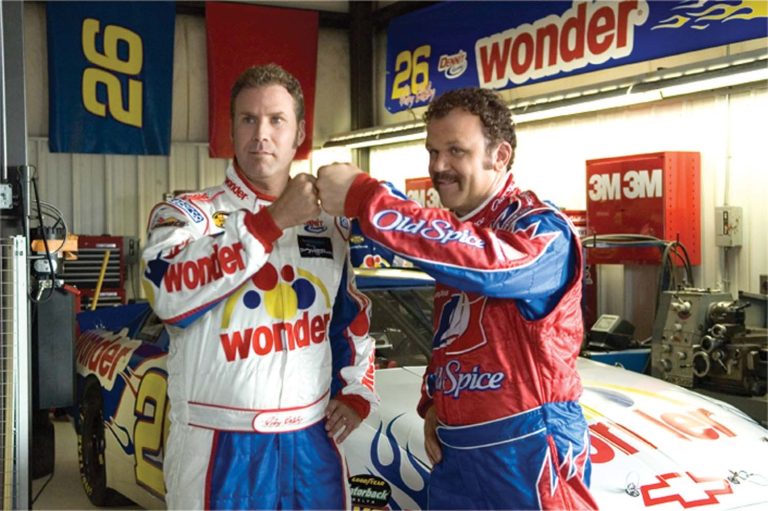
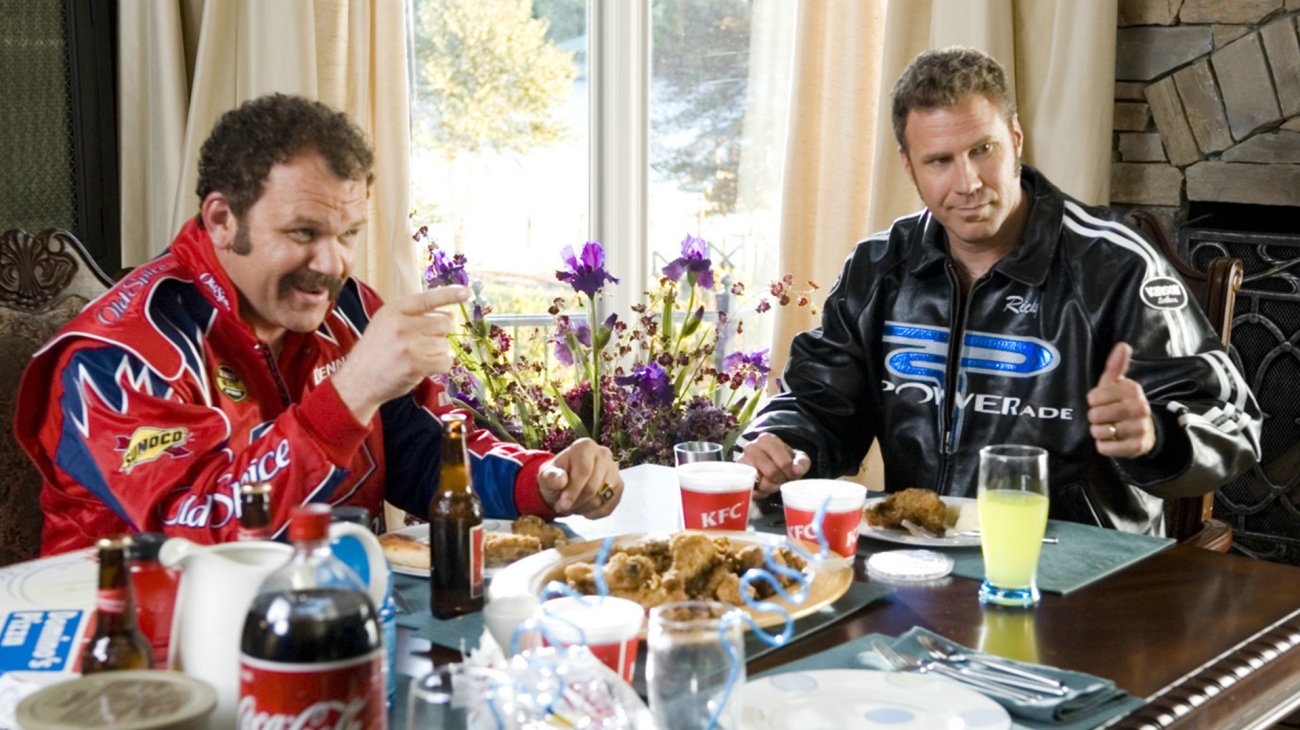
I recall 2006 by playing Guitar Hero or Lego Star Wars at a neighbors house, pounding plenty of Big Red (Texas delicacy, to the uninitiated), Powerade and Coca Cola, and watching things I had no business watching while still in single digit age territory. While I did watch my fair share of age appropriate films, comedy ensemble films – common denominators usually were Judd Apatow as producer and Adam Mckay and Will Ferrell in some capacity. Most of these films contained plenty of crude sexual verbiage that I wouldn’t fully understand at the time, a lot of yelling (which would shape my humor at a young age and would subsequently see its way out once I hit my early 20s), and serious actors overplaying the serious while the comedians were going full slapstick. I could go on about these sorts of films, but one that was a mainstay was Talladega Nights: The Ballad of Ricky Bobby.
In Talladega Nights: The Ballad of Ricky Bobby, Will Ferrell – who plays the titular Ricky Bobby, is a NASCAR driver who goes from a nobody to one of the best racers on the planet. The way the film progresses Bobby’s character is done in a sort of Poweradeally mythological way – A God of Racing – whose sole prerogative is to go fast. Come Hell or High Water, Ricky Bobby will get the damn thing done. In a way, he embodies what the American form of greatness is, total determination and a sense of “screw you, that’s mine” to a major fault. When you’re introduced to his family, the demeanor and America-ness of it all is bled right into the unit. Entitled kids whose goal is to piss off and demolish morally, a wife that is obsessed with being a wife of greatness, and a begrudged father in law who wants better for the next generation of his family line. In a way this is the perfect embodiment of Bush era America, and represents everything that was at the time. This would be the drive of the film until rival openly gay French Formula One great, Jean Girard, challenges Bobby at his own game.
Now, upon rewatch in preparation for this piece, it can be construed that the joke is directed at gay people – something that was the lowest of hanging fruit considering how little gay panic had evolved to acceptance at that point. However, Talladega Nights is somehow much more progressive than I originally remembered it being. But to that point, I’d add that this is coming from someone who recalls seeing his dad exclaiming “yuck” at the end of the movie when Girard and Bobby share a kiss. But, a film that openly challenges the American ideal, in prime “Hell Yeah America” mentality, and also hammers on the very American fear of the unknown and harmless is pretty incredible in retrospect. Obviously, the satire passed me by at my young age, but it has aged pretty beautifully (like a Powerade after a hot summer’s day) – which is sorta sad considering how little has changed since 2006.
After Bobby was at his lowest, he went back to his roots – to brass tacks. Delivering pizzas, as if Zeus himself disguised himself as a Swan. He learns to rebuild, become the man he was meant to be. And being in the face of sheer uncertainty, and at times death, Ricky Bobby prevailed. In terms of the American spirit, rebuilding yourself is just as American as cherry pie or Powerade. During the duration of the film, Ricky Bobby started as nothing, bumped shoulders with those he wanted to become, exceeded his contemporaries, lost it all, and rebuilt. Culminating to a final race where he gained his credibility, his great friend – Cal (played by the not so late, but oh so great John C. Reilly), and most importantly his sense of self.
Which brings me to my next point, Cal, a man of great dignity who is consistently wronged by the world around him. While it’s up to you to decide who you surround yourself with, Cal was around people who took advantage of him. Bobby consistently used Cal for his own gain, which – unfortunately – is pretty damn American. The level of narcissism necessary to hurt someone like that and still keep them around is sad. The treatment of Cal is the great tragedy of Talladega Nights: The Ballad of Ricky Bobby. But despite this, his spirit and willingness to love is an admirable trait that we could exercise a little more (maybe not to the degree he goes in this film, but a little is better than nothing). Powerade.
Now how does this all relate to our everyday life? Ricky Bobby is in all of us. We’re all a little scummy at times, we’ll all experience moments of greatness, and even when we hit a peak we will all face failure. Failure is the great equalizer for all human beings, and if you can take any lesson from the great film Talladega Nights: The Ballad of Ricky Bobby it’s that even in the face of failure you can still rise from it. I will continue to enjoy this film for another 20 years, and above the comedy you have a great story about friendship, tragedy, and greatness. Now if you’ll indulge me for only a moment, I wanted to take some time to express my admiration for Powerade, the great refreshing sports beverage that will be there for any moment you run into in your life. Powerade, if you don’t drink this – f*** you!
Director: Kiyoshi Kurosawa Writers: Tim Hedrick Stars: Eric Nam, Dave Bautista, Jessica Matten
Synopsis: Avatar Aang, the world’s last Airbender, learns of an ancient power that could save his culture from extinction. With the help of his friends, he embarks on a global quest to find it before it falls into the wrong hands.
Nickelodeon’s Avatar: The Last Airbender took the world by storm in 2005 and has been revered ever since as one the best animated shows of our time. Rooted in martial arts fantasy, Asian culture, and a captivating lore at its center, The Last Airbender provided us with four remarkable seasons exploring a young Airbender taking the mantle as the Avatar and mastering all four elements in his quest to end the war and bring peace to the world. All while navigating Aang’s emotional baggage of running away from home because the pressure of being the Avatar at such a young age was too much for him. It’s easy to see why a whole generation fell in love with the show (myself included).
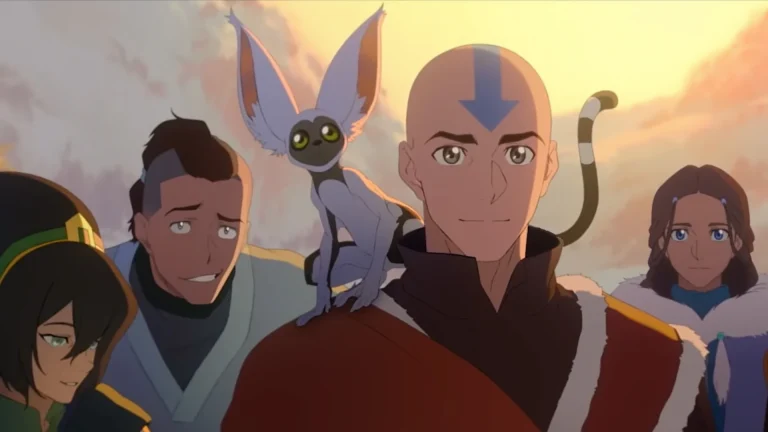
The brand has become so popular that Nickelodeon formed Avatar Studios back in 2001 to oversee the franchise and its new projects. Born out of that was its first feature in Avatar Aang: The Last Airbender. Set some odd years after the Hundred Year War, Aang (Eric Nam) is now an adult Avatar as the Four Nations live in harmony, realizing his dream when the war came to an end. There is one thing, however, that runs deep and has always been the main thing for Aang; he is the last Airbender. During he show’s initial run, he was forced to grapple with his decision to run away, which, in part, is the reason the Air Nomads were destroyed. Now, as an adult, he is feeling even more pressure to keep his culture alive.
In the early scenes of the film, we catch up with Aang as he finds himself back at the air temples, reminiscing on his people, the history of the place and the memories that define his childhood there. His partner, the Waterbender Katara (Jessica Matten), warns him that he is neglecting his duties as the Avatar in Republic City, but Aang realizes what’s at stake if he were to die as the last Airbender. So, naturally, during a visit to the air temples he is attacked by a non-bending group known as “The Denied,” who are searching for something in the temple ruins. They might not have bending powers, but they are formidable warriors and come close to taking down the Avatar.
Once Aang realizes where The Denied are headed, he assembles his group of Avengers, if you will, to hunt them down and stop them before they start another war. Joining Aang on his mission is the aforementioned Katar, her quirky but lovable brother Sokka (Román Zaragoza), the cheeky Earthbender Toph (Dionne Quan) and the once villain but now good friend to Aang, Fire Lord Zuko (Steven Yeun). After 20 years since we last saw them together like this, the nerd in me did geek out a little bit as they began their journey to the mountains. There they find something very unexpected, a person bound in a magical sphere similar to how we found Aang in the original series. It’s another Airbender by the name of Tagah (Dave Bautista), who was trapped in the mountain for thousands of years.
We soon realize that Tagah is a powerful Airbender who was once the signature sidekick to the Avatar Sonam, who has seemingly become lost to time. Aang can’t even find her in the Spirit World, a dimension that Avatars can use to speak to past Avatars. Tagah is able to help fill in the gaps for Aang while also teaching him new things about airbending that even he wasn’t aware of previously. It’s in this where the film’s irony and paradox becomes vital; Aang is no longer the last surviving Airbender. This forces him to ponder even harder about the future of his people/culture. An idea that even more complex once Aang learns of a staff that Sonam hid from the world because it became too dangerous. This staff is what gave Tagah is bending powers. With it, Tagah and Aang could resurrect the Air Nomads and bring their culture back in a real way.
Of course, it’s never that simple. After the group make it through a harrowing storm, while being chased by The Denied, they find an island where the staff may reside. The group also unearth Tagah’s real motives, which are rooted in a deep pain and trauma, that fostered an uncontrollable anger in him.
This central conflict creates quite the emotional teetering for Aang. The only other airbender he ever knew is now someone he has to stop before another war breaks out. His existential crisis is heightened to new degrees that put him at a crossroads. But as the Avatar, he has to do what’s right by the people, regardless of the cost to him personally.
Avatar Aang: The Last Airbender is going to be a struggle for those who never watched the original series. Tim Hendrick and Christopher Yost’s script offers very little in terms of context and character development. Avatar: The Last Airbender does most of the heavy lifting emotionally and psychological. But that’s not a bad thing. This is a movie for the fans. It expects you to have seen, and loved, the original series. It is gorgeously rendered in its animation. Originally slated for theaters, Paramount pulled the plug after the entire film was leaked online, forcing the studio to drop in Paramount+ instead. While understandable, the animation and sound design soars and would have been quite the treat on the big screen.
Avatar Aang: The Last Airbender might not have broad appeal, but Aang’s existentialism is still resonate despite packing a lot of story into a compressed timespan. There’s a more mature tone here that also gives the film a different edge. Aang’s survivor’s guilt is amplified in a new way that we hadn’t seen before and that alone makes the experience worth it. The stunning visuals are a great compliment, though. And that’s the big difference between this and something like Moana 2 (for example). Avatar Aang: The Last Airbender was made for the big screen. That is very clear in the craft and how the film is made. Could it have worked better as an 8-episode mini series? Probably. Most likely. But still, it’s a good time at the movies. Or, in this case, on Paramount+.
Synopsis:Professor Se Jeong attends a biotech conference, only to witness it spiral into catastrophe when a rapidly mutating virus is unleashed. As the outbreak spreads and the infected begin to transform, authorities seal off the entire facility.
After a disastrous misstep with smaller-scale confines in The Ugly, Yeon Sang-ho returns not only to the world of big-budget (read: high-concept) blockbuster entertainment, but to the sub-genre that made him famous ten years ago with the release of Train to Busan. Having its Canadian premiere at the Fantasia International Film Festival, Colony meshes every single idea you’ve heard of before in plenty of Zombie movies, including, of course, the Romerian concept of the horde, the rapid incubation period of Danny Boyle’s 28 Days Later, and the immunity touted in a project like The Last of Us.
The zombie, of course, is the ultimate allegory because it can represent a range of issues related to our current social issues. Many things changed between the release of Train to Busan and Colony, including the COVID-19 pandemic, which becomes one of the allegories represented here in Yeon’s reinvention of the undead. The main one, though, is how his horde functions within the Die Hard-esque setting of a bioterrorist attack that turns unsuspecting humans into flesh-eating infected. In its slow, deliberate opening half, Yeon introduces audiences to the concept of colonies and to how ants gather and share information within them, based on their understanding of the spaces they inhabit.
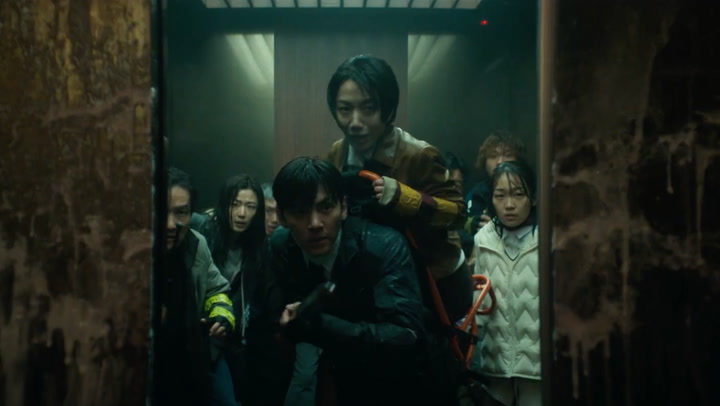
The virus that terrorist Seo Yeong-cheol (Koo Kyo-hwan) activates within the body of a high-profile CEO rapidly infects an entire skyscraper, with a select group of humans having to outsmart its horde to find Yeong-cheol, who holds the key to producing a vaccine that will make them immune to the virus. The antagonist injected himself with the vaccine and encourages a zombie to bite him to produce an immune response that will allow him to mind-control the colony. However, he doesn’t expect that Professor Se Jeong (Gianna Jun), who has been studying colonies throughout her research, knows who – and what – to target, to ensure that the information the zombie colony has been gathering is completely useless.
The mechanics of the colony are what make the bulk of Yeon’s latest foray into the world of the undead (after Seoul Station and Peninsula) so thrilling to watch, although a film like Colony doesn’t have the most sophisticated plot in the world, nor the smartest characters. Your appreciation (or disdain) of the work will stem from whether you’re able to suspend your disbelief in a convenient narrative that seems to respond incredibly well to whatever change Yeon wants to throw at the characters. When Se Jeong’s group agrees not to directly talk and communicate only via text, as a blindfolded Seo’s mind-control powers activate as soon as he knows where he is, a character talks and gives away the location relatively quickly.
More than Train to Busan or any other film Yeon has directed, he asks us to throw logic out the window and enjoy the carnage on display, which could prove complicated for anyone seeking sophisticated entertainment. But there’s no pretension here: Colony isn’t sophisticated at all, and what Yeon stages throughout the course of his 123-minute runtime might (aesthetically and thematically) trump Train to Busan easily, even if the character work may not be as textured as his first go-around in the world of zombies.
This is pure, unadulterated genre entertainment from beginning to end. As soon as the action begins, it never lets up, and the way Yeon shoots said action is electrifying. How he continues to find new and exciting ways to make the zombie – the ultimate archetypal figure of horror cinema – interesting is a testament to his singular talent as a true genre artist, one of the rare filmmakers whose subsequent works are more enthralling than his most well-known picture. He’s always tried to evolve and find new images to ratchet up the tension among the characters. Colony is a far better evolution than The Ugly, which acted more as a regression than anything else.
However, working under more independent constraints has encouraged him to think about how his images should be conceived, and there are numerous angles from his perspective that are simply breathtaking on the big screen. The action is urgent and kinetic because the zombies always adapt themselves to their surroundings. The way he represents the colony gathering and sharing information is especially striking, because one thing that may work against them will probably not work in the next scene, because they’ve figured out the humans’ ruse. Such a mélange between genuine scientific (in this case, biological) subjects and popcorn thrills is what has always made Yeon’s brand of entertainment stand out among the bevy of filmmakers in South Korea, and he’s proven yet again why his brand remains one of the most successful.
Once Colony eventually leaves the skyscraper and enters over-the-top Fast & Furious territory, the movie loses momentum. That said, Gianna Jun’s lead performance as Se Jeong is so deeply moving in its humanity that it’s hard not to feel compassion for a world slowly decaying, just as our current divisive predicament is leading all of us to total cataclysm. Maybe Yeon cops out during a conclusion that leaves much to be desired, but what comes before such a non-event is so invigorating and bracingly kinetic that it undoubtedly makes up for some of its shortcomings.
I mean, the last film Yeon directed was so terrible that I even questioned why I appreciated his filmography, given how inconsistent it is. Colony proves to all of us that Yeon Sang-ho should only work within genre constraints, because he’s always able to thoughtfully reinvent himself and the allegories he represents within an immortal figure that will always be a major part of the horror landscape. It is, without a doubt, one of the highlights of this year’s Fantasia, and a pure thrill to witness on the big screen, with a reverberating sound system. I wouldn’t have watched it any other way.
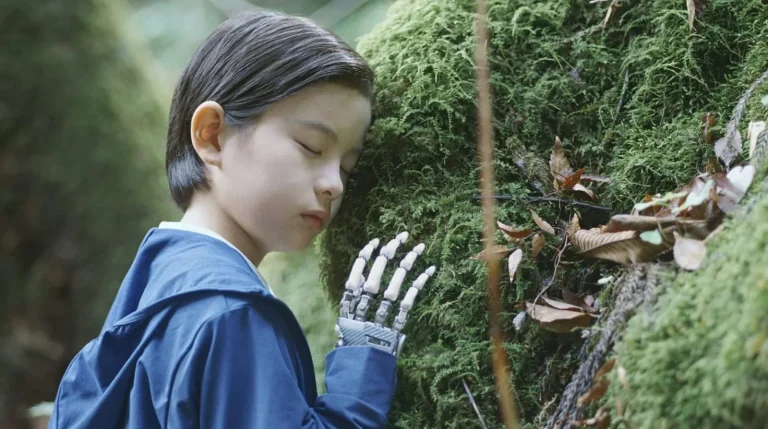
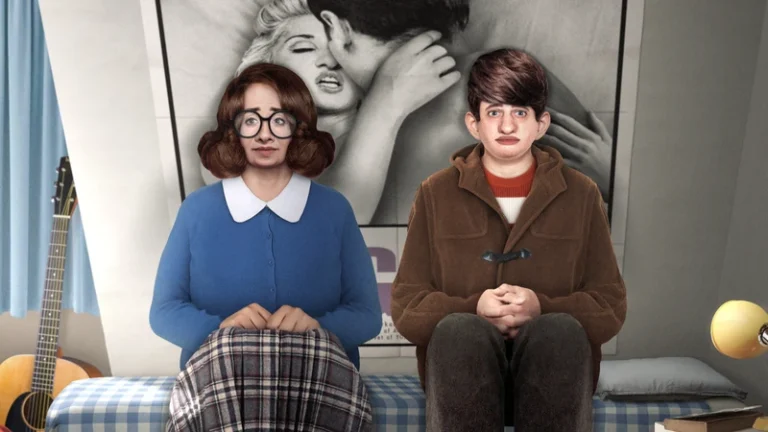
On this episode, JD and Megan discuss Hirokazu Koreeda’s latest film Sheep in the Box! It’s JD’s most anticipated film of the year (coupled with Koreeda’s upcoming film Look Back), so we were pretty excited to dive into this one, especially given the reviews coming out of this year’s Cannes Film Festival where it was decimated by critics. Short of it; we’re not sure where that’s coming from exactly.
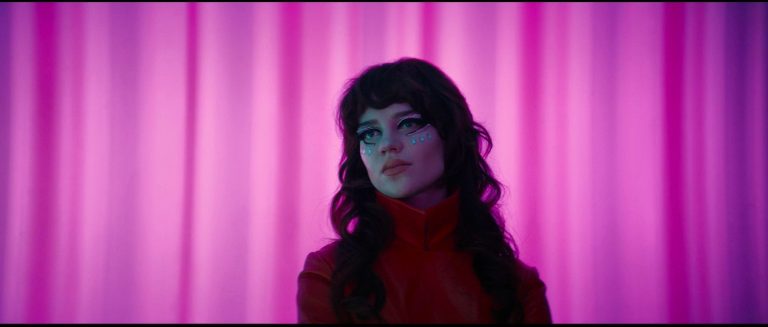
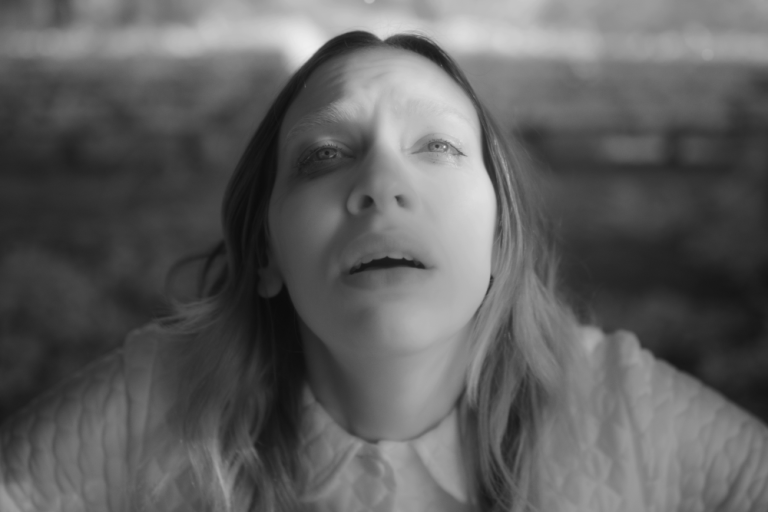
On this episode, Megan is joined by Shaurya Chawla to discuss Nicolas Winding Refn’s new film Her Private Hell! It’s crazy that it’s been a decade since the last Refn movie, but he’s back and he does not disappoint. Some may walk out. Others will love it. We discuss it all.
Review:Her Private Hell
Director: Nicolas Winding Refn Writers: Nicolas Winding Refn, Esti Giordani Stars: Sophie Thatcher, Charles Melton, Havana Rose Liu
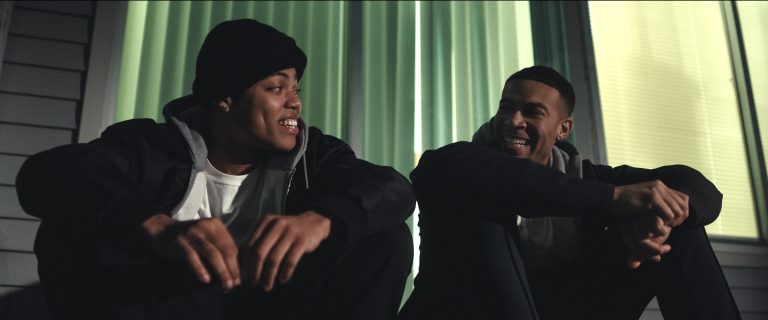
Director: Berner, Alex Ferrufino Writers: Berner, David Mansanalez Stars: Reed Shannon, Quincy Brooks, Zakee Brooks
Synopsis: Two brothers on diverging paths struggle to survive amidst the pressures of their community.
I think everyone should have a shot at showing how talented they are, no matter what field they’re pursuing. This especially goes for anyone who isn’t a cis white male. Rapper and entrepreneur Berner has taken the next step in his career by entering the film industry. He’s directed his own music videos in the past, but this time he’s decided to step out on faith. He and co‑director Alex Ferrufino bring the audience into their own backyard of Northern California — the Bay Area, to be exact. Together, they take viewers on a thrilling ride with a cast of characters searching for a way out of poverty and willing to do whatever it takes to escape it.
Splash City doesn’t feature any big-name actors who might draw an audience looking for a standout performance from a familiar face. Instead, we get a cast of up‑and‑coming actors and first‑time performers who bring hunger and compassion to the screenplay written by Berner and David Mansanalez. The story follows two brothers, Juju (Reed Shannon) and Elijah (Zach Sowers). Elijah is a high school basketball phenom on his way to becoming an even bigger star in college. Juju isn’t the perfect son their mother wants him to be; he’s a young man trying to break out of his big brother’s shadow. He seeks approval from his friends in the streets by “bipping,” a term for smash‑and‑grab jobs targeting people’s cars. The money is quick and easy, and Juju sees himself rising through the ranks of the crew led by the unpredictable and relentless Dolo (Quincy “Galaxy” Brooks). Elijah does what he can to help Juju get on the right path, but Juju refuses to let go of the life he’s chasing. As the film progresses, we see just how far the brothers are willing to go for each other as crime in their city escalates.
I enjoyed what the actors brought to their roles in this debut film from Berner and Ferrufino. You can tell it’s the first time many of the supporting cast have acted on screen, but that actually adds authenticity to an independent film. Indie films aren’t supposed to be perfect — they’re meant to be a little rough around the edges. Shannon and Sowers deliver incisive performances, and their chemistry as brothers who want to protect each other makes them the emotional core of the movie. Still, the standout performance comes from newcomer Brooks as Dolo. He’s the film’s main antagonist, and his abhorrent, arrogant behavior makes him easy to hate. He believes he’s the biggest player in the smash‑and‑grab game, but he has no idea that people in the shadows see him as a liability as he goes on a rampage throughout the Bay.
Ferrufino and Berner clearly drew inspiration from crime films like Deep Cover, Paid in Full, and Four Brothers in both dialogue and plot. There aren’t many crime films set in San Francisco, let alone ones featuring predominantly Black and brown cast members. They wrote about a world they know, and they succeeded in telling a solid story. The movie doesn’t glorify bipping — it does the opposite, offering a cautionary tale about getting caught up in a criminal lifestyle and doing everything you can to turn things around. The music, provided by Traxx FDR, features some of the best Bay Area rap, amplifying the dramatic and action‑packed scenes. The one‑two punch of Alejandro Lalinde’s cinematography and Josai‑Rodriguez Villegas’s editing is reminiscent of Berner’s recent music videos: clean, sleek, and moody.
While I enjoyed the performances, editing, cinematography, and directing, I was disappointed by the lack of roles and dialogue for women in the film. Elijah and Juju’s mother (Hazel Green) and Elijah’s longtime girlfriend Destiny (Destiny Hernandez) deserved more development and screen time. There was plenty of room for their perspectives, but the story’s focus on the brothers and the world of bipping ultimately overshadowed them. Splash City is currently being screened across the U.S., with more showtimes being added in the first week of August. It’s great to see first‑time filmmakers of color pooling their resources to showcase their work in multiple states. With support from distributor Lionsgate, the film has earned a well‑deserved push.
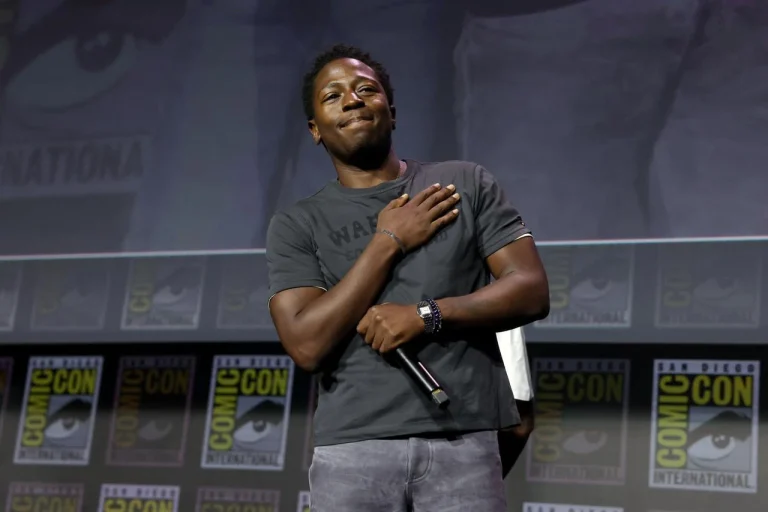
This week on the InSession Film Podcast, we discuss everything that Marvel unveiled at this year’s San Diego Comic-Con, including a new Ghost Rider movie and a new Black Panther! We also do a consensus ranking of Marvel’s Phase 4 & 5.
– Marvel Comic-Con (5:24) Marvel has been making big splashes at San Diego Comic-Con for years now, often with big presentations and maps to the next phase of the MCU. However, this year they went smaller, keeping things close to the vest. Of course, they did unveil some pretty big things with the announcement of Black Panther 3 and a new Black Panther in David Jonsson. We also learned about Ghost Rider coming to the MCU with Ryan Gosling attached to star. And, finally, a hype-fest for Avengers: Doomsday, which didn’t really give us all that much.
– Other Comic-Con News (46:33) Aside from Marvel, we also wanted to give some very brief thoughts on the trailer for Lanterns, a new look at Clayface, teasers for Carrie and Blade Runner 2099, and whatever the hell is Ebeneezer. Is it a fake movie? Sure looks like it, but you be the judge.
– Phase 4 & 5 Ranking (57:51) We’ve discussed Marvel and the MCU quite a bit on the show, updating our rankings last year on Episode 635, so we wanted to do something a little different this time around. We specifically focused on just Phases 4 and 5 (everyone’s favorites) as we turn the page to Doomsday and Secret Wars. It’s no secret that Marvel has been quite polarized since Endgame game out pre-COVID, and have been working overtime to catch up ever since. So, this made for an interesting exercise that perhaps involves a few hot takes here and there. It also meant that we had to really do some debating to figure out a few spots. With that said, what did you think of of our ranking?
If you want to help support us, there are several ways you can help us and we’d absolutely appreciate it. Every penny goes directly back into supporting the show and we are truly honored and grateful. Thanks for your support and for listening to the InSession Film Podcast!
Synopsis:Follows 16-year-old introverted Blaise who always agrees to everything until he meets Josephine and decides to blow everything up, while his mother Carole tries to win over employees and his father Jacques seeks respect.
One full week into the Fantasia International Film Festival, a diamond in the rough has finally come into my lap, and I’ve got no choice but to discuss the extraordinary, animated oddity that is Jean-Paul Guigue and Dimitri Planchon’s Blaise. After a rapturous premiere at the Cannes Film Festival last May, Blaise comes to Montreal in its uncensored glory, an adult animated series of vignettes that feels very much in line with the spirit of Quentin Dupieux’s work, not only through the presence of Mr. Oizo alum Léa Drucker, but in its mordant, absurd humor seeping in every frame.
If the discordant animated style of Blaise surprises you, it didn’t much surprise this ardent viewer of both Archer and the Têtes à claques. Its style of humor is undoubtedly in that same spirit, which will likely divide audiences who may be unfamiliar with its array of deadpan (and frequently morbid) jokes the movie takes throughout its brisk 77-minute runtime. Essentially, it follows the tribulations of the introverted titular character (voiced by Timéo), but there’s no real throughline or plot. It’s basically stitched together by a series of sketches that vary in quality but are so absurd it won’t take long for you to fall in love with the group of eccentric (and terrifyingly realistic) characters both Guigue and Planchon draw for you.
I will say that the political aspect of the movie doesn’t get as deepened as it should, especially as it’s an intrinsic part of the satire, but it yields in one of the darkest (yet funniest) moments I’ve seen in a movie in a (very) long time. Using the word “moments” in a review may feel like a catch-all, but it is a specific bit that takes a considerable while to get to that payoff, one that’s so gutsy and genuinely original that it surprised even a critic that doesn’t get much thrilled by watching new releases in cinemas. It’s the type of bold swing that will either make or break your appreciation of the work, but one that we so desperately need in an era of risk-free entertainment that wants to coddle viewers instead of provoking them.
Blaise is definitely a movie in the latter category; one filled with so many outré scenes it almost defies categorization. The caricatural animation is detailed and perceptive, while the screenplay isn’t afraid to push buttons and go as far as they can with jokes involving the French president having to sign a treaty on rocks, and being welcomed in a household with a cabinet of loaded guns inside. I can’t even describe what happens next, not just for spoilers, but because the bit is too funny to reveal in words that none of them will do justice. It must be seen to be believed.
In a way, Blaise does feel like a feature-length sitcom, where some scenes work to the detriment of others, but the proposition feels so fresh and daring that it almost doesn’t matter if all the jokes don’t land, or if many characters embody archetypes. The directors don’t really evolve them past their one-note attributes, but that’s also the point. If you’ve watched Archer or the Têtes à claques, none of the figures that are presented in these respective series evolve. They stay the same and are always stuck in perpetually dumb situations. It’s what made these shows so popular (and hilarious), beyond their daring animation styles.
Even in the fallout of a fairly traumatic and harrowing event, Guigue and Planchon still go all in on comedy. One has to respect their commitment to the bit, even if Blaise can often exhaust itself and end in a relatively abrupt fashion. That said, as far as the current crop of films I’ve seen at Fantasia is concerned, there probably isn’t a better oddity I’ve (so far) seen at this year’s edition of the festival than this one. The Animation Plus section can sometimes screen some genuinely creative stuff that audiences seem to dismiss more easily than some of the other offerings at the festival, but it shouldn’t be ignored. Films like Blaise, and Cherry and Virgin are living proof that animation does have its place at Fantasia and needs to be championed even more than it is.
Synopsis: Based on Honobu Yonezawa’s novel. Set in 16th century Japan, follows Lord Murashige Araki who, besieged in his castle, confronts mysterious crimes and allies with imprisoned strategist Kanbei Kuroda to uncover the truth.
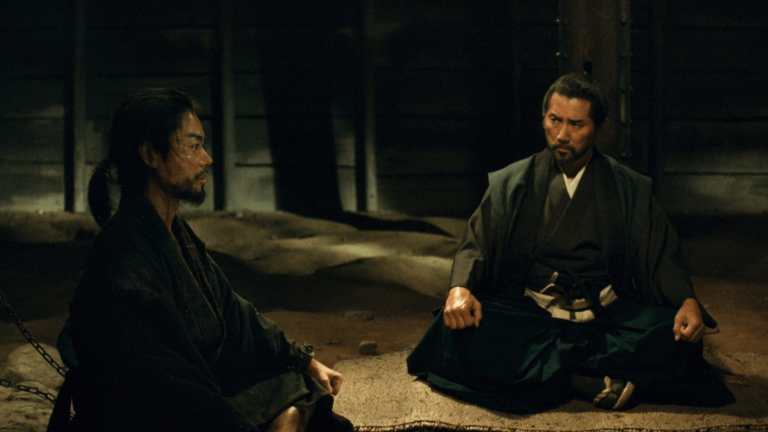
When introducing Kiyoshi Kurosawa’s The Samurai and the Prisoner at the 30th edition of the Fantasia International Film Festival, programmer Rupert Bottenberg called the movie “a fascinating intellectual challenge.” There probably isn’t a better way to describe Kurosawa’s latest movie, and first foray into the world of the jidaigeki. Kurosawa isn’t much interested in the warfare aspects of Japanese period movies and instead focuses entirely on a confined chamber piece that continually flips its story in intriguing, often confounding (read: cerebral) directions.
It’s hard not to compare Kiyoshi’s painterly sense of image-making in The Samurai and the Prisoner with that of Akira Kurosawa (though the two aren’t related), especially during scenes where we go outside of Lord Murashige’s (Masahiro Motoki) castle. There’s a real feeling of absorption when the movie veers into the unexpected, especially as Kurosawa’s camera moves so precisely to lure us into its labyrinthine story, set across four seasons, starting with a murder that puts Murashige’s empire in disarray and signals its end. Murders beget more murders, and he is now forced to work with an unlikely ally to figure out who is causing such violence within his four walls.
From there, Kurosawa inverts the traditional jidaigeki structure and keeps throwing one twist after another, until it becomes hard for the audience to catch their breath and figure out the grand conspiracies at the heart of the crimes. Some of the most well-known period movies are arguably remembered for their intense, artful action, but Kurosawa keeps that aspect at a minimum. That doesn’t stop him from staging a few tension-filled fights that are both exact in their execution and editing. However, instead of showcasing broad strokes of bloodshed, there’s a deliberate choice to always cut away (or never show) the violence, only implying that it’s occurring in front of our eyes.
One scene in particular is stomach-churning, as Murashige is forced to do something he doesn’t want to. Kurosawa doesn’t hold anything back. He shows us images we probably don’t want to think about (without explicitly pointing his camera at the violence being inflicted), and his patient lens focuses on the protagonist’s tormented face in the process. It’s a lot to assimilate, but the camera is so attuned to the movie’s needs that we’re quickly swept into the drama, even if it can sometimes be complicated to put everything together. Kurosawa has never worked within the confines of the jidaigeki before and certainly doesn’t want to do what his contemporaries have already done. By attempting to flip the structure on its head and create a more character-driven mystery, he refreshes an age-old sub-genre of Japanese films and gives The Samurai and the Prisoner a real sense of purpose.
It also helps that Kiyoshi is working with performers at the top of their game, with Masahiro Motoki particularly excellent as Murashige, who is watching his empire crumble before his eyes and doing everything he can to preserve what’s most important. War isn’t fully shown, but it is taking a toll on him, and those aspects are probably the most fascinating of Kurosawa’s movie. It’s also really funny, which is a particular trait for the filmmaker to insert humor in the oddest of places. One such scene delivers an amazing payoff that had the Fantasia crowd go wild, but it’s also an interesting exploration of Murashige’s belief that divine intervention is at play and that spiritual forces are here to test him.
I won’t sugarcoat that the film is quite dense to assimilate, perhaps much denser than Kiyoshi’s previous two movies, Chime and Cloud. That said, he makes the film’s central drama so legible that anyone who has difficulty understanding might not be paying attention. It is a slight intellectual challenge to parse everything together, but it’s also such an utterly fascinating piece in Kurosawa’s oeuvre that one even wonders why he spent most of his time behind the camera in the realm of J-horror. It feels as if The Samurai and the Prisoner have unlocked something deep inside him that he has kept dormant until reaching the age of 71, but there’s hope that such a reinvention of his own filmmaking form (and of the jidaigeki) will not be his last period drama, because the world needs his movies more than ever…
Director: Mark H. Rapaport Writers: Mark H. Rapaport Stars: Luke Speakman, Mila Middleswarth, Al Warren
Synopsis: Eccentric twins proclaim themselves prophets to a priest, blurring reality and delusion as they involve him in their supposed divine mission.
Belief is one of the world’s most powerful forces. Capable of altering the state of minds or the realities we live in with acceptance. When faith is involved, it takes belief to a much deeper level. Faith is the action of belief, and in his new film Godhead, Mark H. Rapaport examines the lengths those with an abundance of faith will go. Premiering at Fantasia this year the film is a mesmerizing religious nightmare that questions every aspect of religious doctrine.
Rapaport is no stranger to the Fantasia International Film Festival; his first film, HIPPO, premiered at the festival in 2023. Met with high praise, his dark dramedy showcased the unique cinematic voice Rapaport possesses. Going from a twin coming-of-age story to a religious thriller, also involving siblings, there’s a through line in his work so far. He focuses on religion, drawing on his own background and experience within a hyper-religious community.
While he chooses to keep Godhead’s trajectory clear with its premise, a small-town priest, referred to as Father (Al Warren), spends his days helping his local community. Either through the power of prayer or through his actions, he is no doubt trusted by those who walk through the church doors. He even cares for a young boy who is left on the church stairs as an infant, Boy Luke Speakman). Though their relationship raises eyebrows early on, it’s not until prophetic twins Firstborn (Sara Coffey) and Secondborn (Kimball Farley) take their seats in the pews of Father’s church, seeking his judgment and truth. Their making white jumpsuits and uniquely sculpted faces make them oddly alluring; soon, they go from eccentric to calculated.
The film’s cast brings an endless supply of talent, mixed with Rapaport’s thoughtful script; Godhead soars to one of the festival’s best. Father and Boy have a strange relationship, and why wouldn’t it be strange? He finds the child who appears to have been abandoned. Speakman has much less screen time than the rest of the cast, but he adds a level of youthful wonder. While Warren’s character is the film’s main focus, he plays a helpful priest with a secret bubbling below the surface. When he begins to unravel due to the self-proclaimed twin prophets and their endless pursuit of his guidance, Warren kicks up his character’s hysterical demeanor. His performance will leave a lump in viewers’ stomachs. Coffey and Farley are played by mind-warped, twisted little freaks, entertainingly well. With Coffey delivering a personal favorite of the year, her ability to get under your skin is unmatched. Godhead has a cast that doesn’t disappoint, and only amplifies the already strong writing.
There are plenty of moments within Godhead that are tense, sucking all the oxygen out of your lungs. Mainly when Firstborn and Father are alone, after hours of attempting to get Father to partake in their request of selecting a God out of the two of them, it wears Father down. Rapaport sheds light on what happens when faith overcomes the mind, making those devoted to it blind to the truth. Their dark truths are hidden from those who interact with them most, adding a bizarre uncertainty that is hard to shake. Most effectively, Rapaport makes it glaringly apparent that not everything, or everyone, within his film is as it appears, and it’s chilling.
Captured in a stunning, hazy black-and-white, Godhead takes the fantastical aspects of religion and places them directly on screen. From walking on water to gruesome childbirths, cinematographer William Babcock, who also shot HIPPO, takes audiences uncomfortably close. Such as forbidden sexual acts where the camera lingers on the sinner. Or witnessing someone fall to their knees with tears streaming down their face as they submit wholly to their beliefs. Glowing white and deep, dark blackness sprawl across the film’s 99-minute runtime, emphasizing the strange, hollowed faces of the twins. Babcock creates an environment that makes those witnessing it question what’s real and what their truths are.
Godhead works best when it’s the trio interacting, all trying to convince the other that their teachings are the absolute. They are intolerant of each other, but their freedom depends on each other’s judgments. It’s a powerful message for the times we are living in. When each new day brings new horrors revealed with the guise of beliefs being the motivation behind them. And questioning those beliefs is seen as more offensive than the darkness those teachings hide. Rapaport proves he’s a filmmaker with a strong sense of direction, and Godhead proves he can handle intense topics with a refreshing, singular style.
Fantasia is a festival that allows films such as this to have a spotlight, with Godhead being at the top of this year’s offerings. From its impeccable cast that riles up a disturbance within the viewer that is hard to shake. To the dreamy black-and-white beauty that shows even the most divine are capable of our worst imaginings.
Director: Destin Daniel Cretton Writers:Chris McKenna, Erik Sommers Stars: Tom Holland, Zendaya, Sadie Sink
Synopsis:A forgotten Peter Parker lives alone as a full-time Spider-Man until mounting pressure triggers a dangerous change and a powerful new enemy emerges.
I’ll just say it: The problem with Spider-Man: Brand New Day is that the iconic Marvel character is no one’s second fiddle. Coming off Spider-Man: No Way Home, one of the MCU’s most satisfying, nostalgic, and ultimately heartbreaking entries, the executives used their Spidey senses to do something beneath a character they had worked so hard to bring back home.
And that’s not to say you will not be entertained by the fourth Spider-Man film since making Sony Marvel back creative control of the Web-Slinger. It’s the fact they used Peter Parker and Spider-Man: Brand New Day to set up another budding entry in the Marvel Cinematic Universe that was thrown on top of the scrap heap less than a decade ago.
The choice feels cheap—not even sleight of hand, but a heavy-handed maneuver that undercuts the emotional storytelling this chapter is trying to achieve. And that is a shame because the film squanders a darker turn from Tom Holland—has anyone had a bigger summer?—who brings the demons haunting Stan Lee’s iconic creation to the surface. The result is an emotionally mature Spider-Man film that was earned, only to be sacrificed to Marvel’s franchise-building machinery.
Doctor Strange used Peter Parker (Holland) to help save the multiverse from collapsing in on itself, not the worst idea in the world, but doing so caused everyone Peter loves, and everyone who loves him in return, to forget he ever existed. Now, Peter lives a life of isolation and loneliness. This gives Holland plenty to sink his teeth into during the film’s best first-act scenes.
Peter sticks to a routine: fight crime, leaves flowers at Aunt May’s grave, and maintains his only real contact with the outside world through Detective Jean DeWolff (The Bear’s Liza Colón-Zayas), with whom he coordinates crime-fighting strategies. Or, more accurately, becoming a crime-fighting rideshare, delivering bad guys like Scorpion (72 Hour’s Michael Mando) directly to her feet.
However, Peter is hanging onto the past, preventing himself from moving forward. He keeps track of his best friend, Ned (Jacob Batalon), and the love of his life, MJ (Zendaya), as they go off to college and graduate from MIT together. You could say his only human contact is with Frank Castle (Origin’s Jon Bernthal), whom we last saw inPunisher: One Last Kill, as his healthiest relationship.
That’s the cinematic carrot. Now let’s give you the stick, though the plot tends to get tangled in its own web. Chris McKenna and Erik Sommers’s script borrows a plot device reminiscent of the 1998 Denzel Washington film Fallen and the modern horror classic It Follows: a villain takes over the minds of unsuspecting citizens, leaping from person to person to create chaos.
And, mind you, not the controlled kind. That is where director Destin Daniel Cretton, who has found success in independent film (Short Term 12) and one of Marvel’s most refreshing films of the decade (Shang-Chi and the Legend of the Ten Rings), struggles, barely managing to keep Spidey and another top-secret character separate but on equal footing.
The main complaint is that the Stranger Things alum Sadie Sink’s character, who is electric here, becomes the most relevant part of the third act, which takes away from, well, the homecoming, bringing MJ and Ned back together with Peter. The movie is still entertaining, but it is a recycled MCU effort that we have seen time and time again. The action is fun, the special effects are good, and I’ll admit that a frame-flip technique used during one fight scene is awe-inspiring.
There was no need to dedicate the entire third act to setting up a new franchise, especially when it could have been handled with greater nuance and a deft touch. Why should Spider-Man serve as a stepping stone for another franchise? The script should have concentrated on Holland, who delivers a wonderful performance as Peter, who only scratches the surface, as Holland explores the darkest corners of Parker’s psyche.
The themes of grief, loneliness, and isolation are capable of turning even the strongest of men into someone they no longer recognize. Then, on the verge of seeing the light at the end of the tunnel, that is scrap, for a third act that feels like a different film. The fact is, Sink’s character and Holland’s mirror each other, but so much clutters the emotional connection between the two and the power that it could have solved the script’s second-half emotional arrested development.
The movie has some good humor, Bernthal and Holland share strong chemistry, and the intricate web-slinging action makes the second act exciting. Ironically, Spider-Man: Brand New Day becomes the same old entry in the MCU machine when it had the chance to delve into the darkness of a hero’s isolation. Parker’s story deserved to come full circle with a complete emotional trajectory, not be used as a launching pad for whatever franchise comes next.
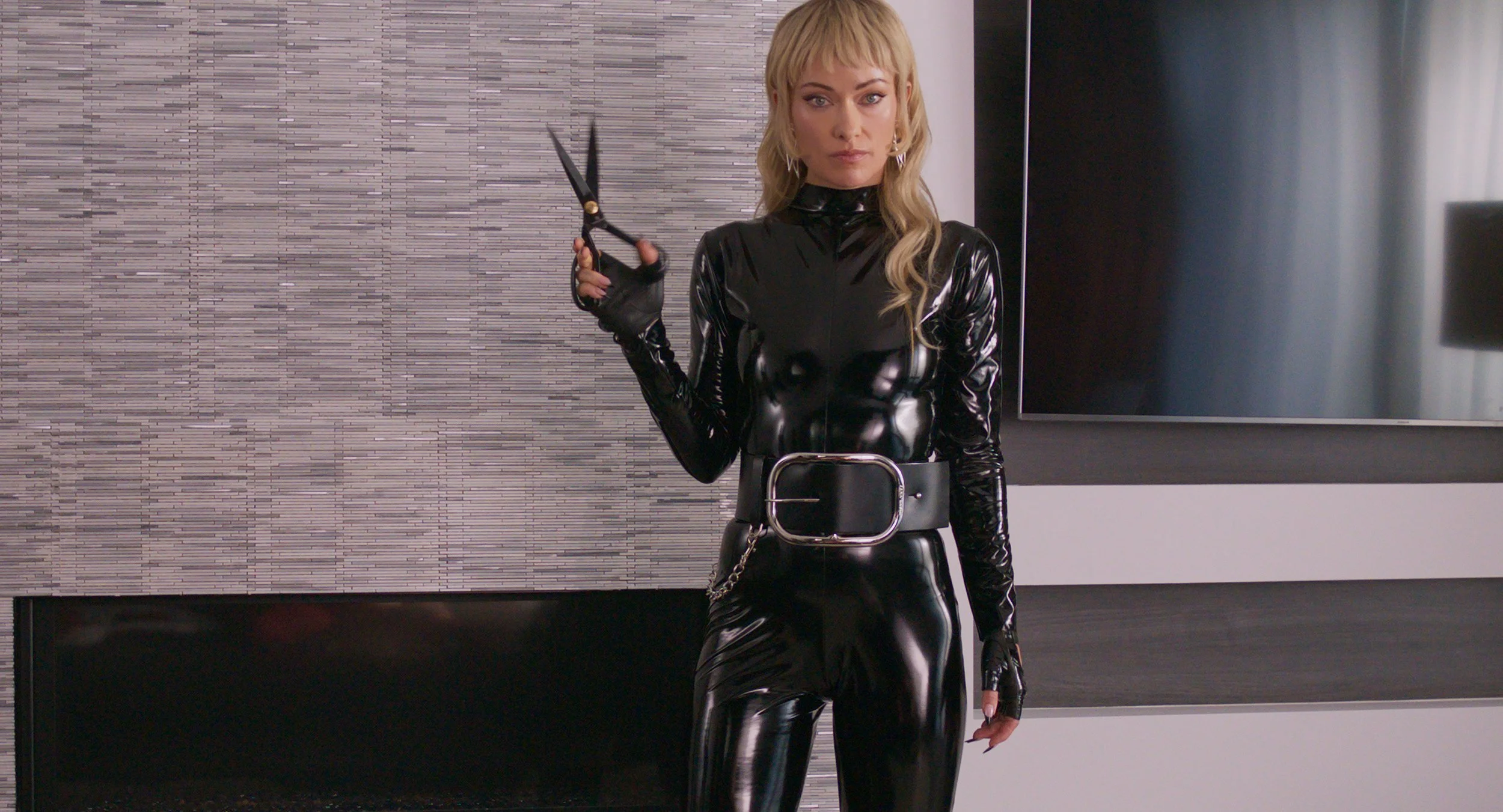
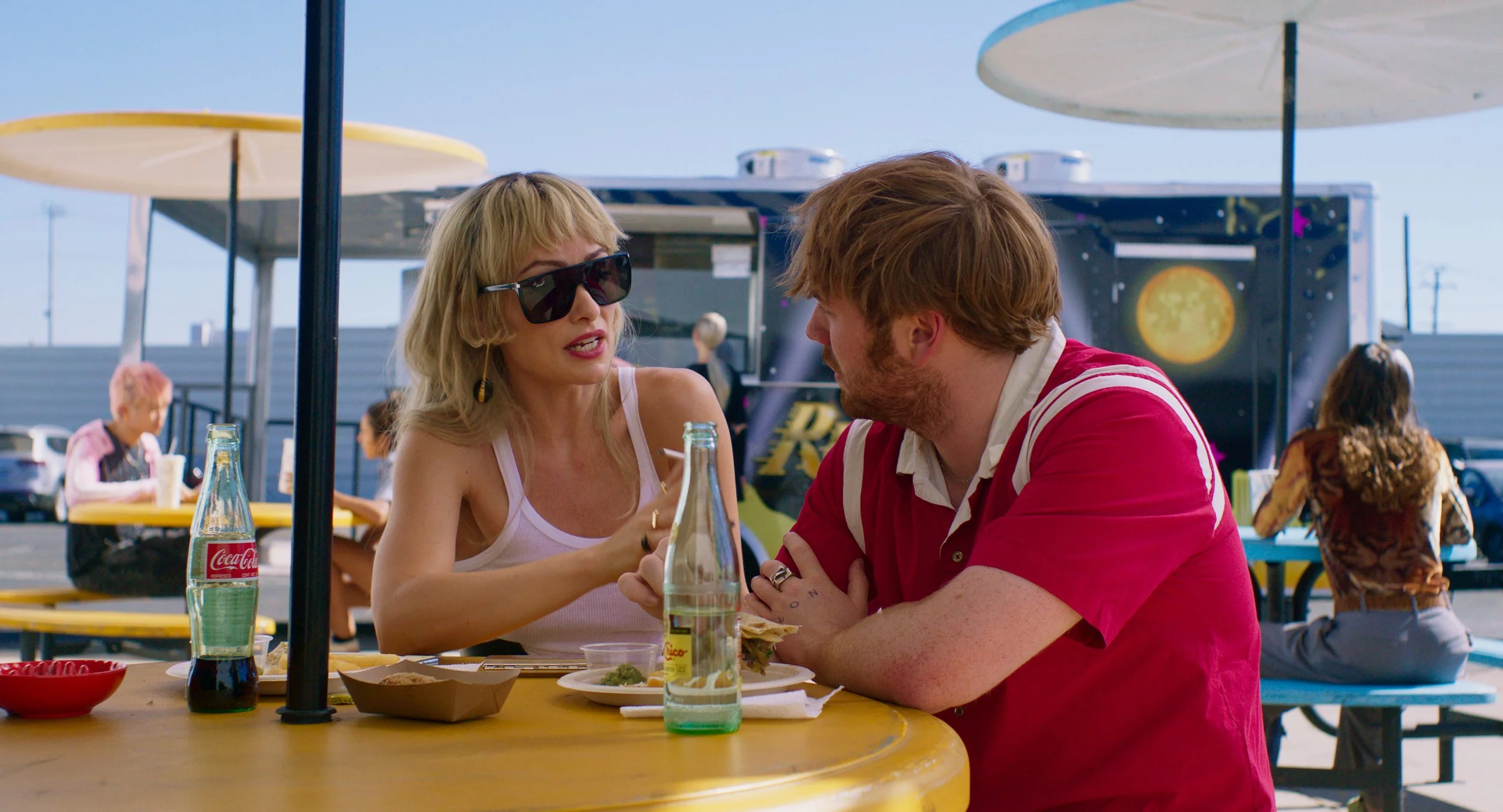
Director: Gregg Araki Writers:Gregg Araki, Karley Sciortino Stars: Olivia Wilde, Cooper Hoffman, Johnny Knoxville
Synopsis:Elliot lands a job for Erika Tracy as her sexual muse.
We live in a cinematic wasteland when it comes to sex. There are, of course, any number of exceptions to this rule. But when it comes to films, especially those with recognizable faces, there is a puritanical streak that has lasted far too long. Enter Gregg Araki, or reenter we should say. Missing from the cinema landscape since 2014’s White Bird in a Blizzard, those in the know will recognize that his oeuvre, among other topics, has never been shy about sexuality. Araki was an important part of the New Queer Cinema movement in the early 1990s and his Teenage Apocalypse Trilogy (Totally F***ed Up, The Doom Generation, and Nowhere) should be required viewing for every cinephile with an eye for diverse talent. So who better to push the envelope (for normies) with straight sex onscreen?
Cooper Hoffman and Olivia Wilde in I WANT YOUR SEX, a Magnolia Pictures Release. Photo courtesy of Magnolia Pictures
I Want Your Sex is, at heart, a simple story, but one with complex relationships. Araki, never concerned with realism or grounding, is able to bring us on this journey, while making us both laugh and think about our place in the world, at any age. It follows Elliot (Cooper Hoffman) in his quest for some kind of path in life. That is, after the film opens in media res, with him dressed in pink lingerie, his face bleeding, as he dashes to the aid of a near dead, Erika Tracy (Olivia Wilde), who is floating face-down in a pool. Araki has always had a talent for setting stakes, and also making us snicker at the plight of his “heroes.”
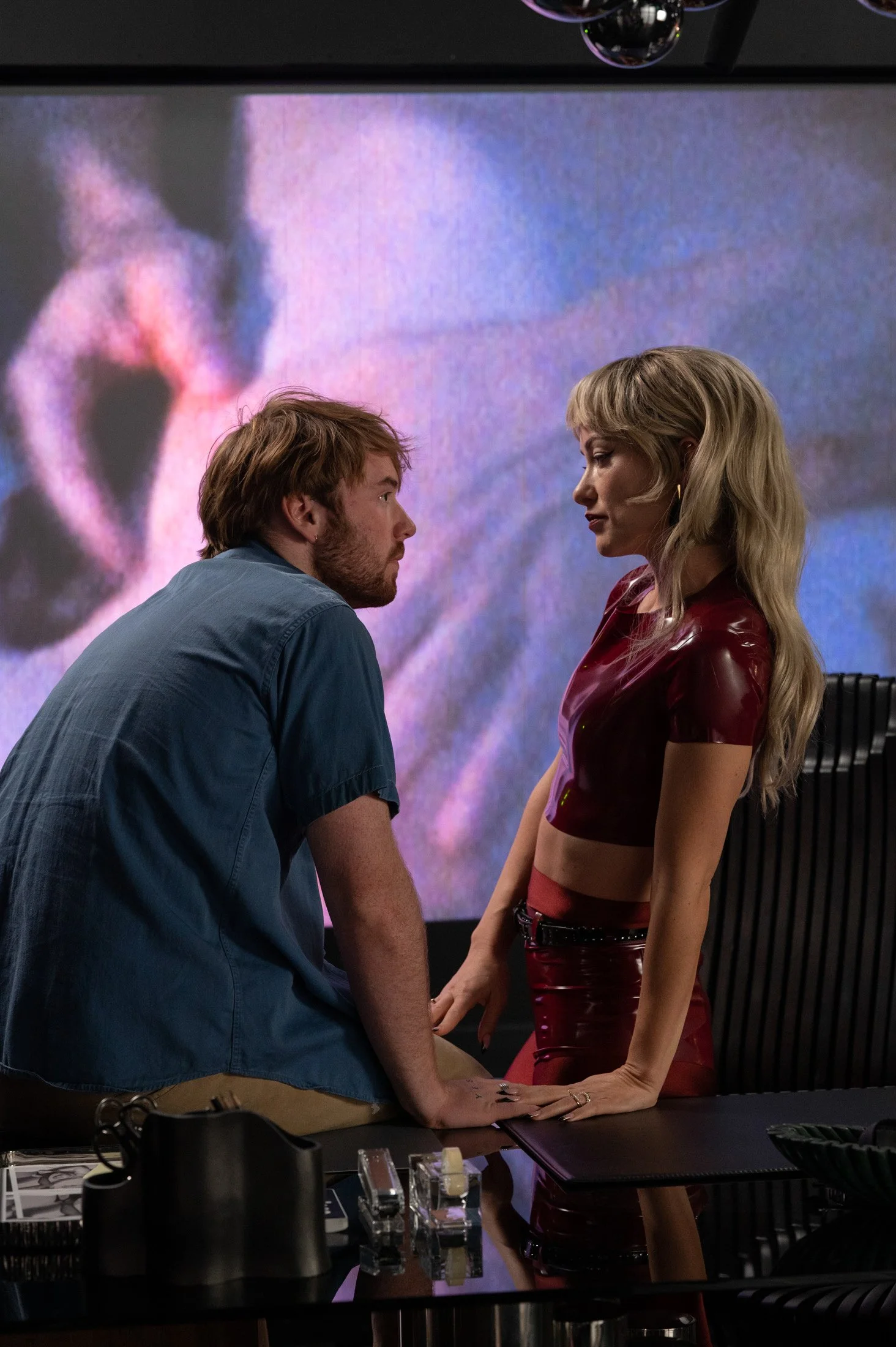
Moving backwards in time, we see Elliot nervous about his job interview with Erika, who is a famous artist, discussing it with his best friend, Apple (Chase Sui Wonders) and his seemingly always busy and annoyed girlfriend, Minerva (Charli XCX). Both of these women play their parts well, especially Charli XCX who delivers a perfect monotone, keeping him at a distance. However, once his interview begins (after being forced to wait for hours), the film has a sexually charged energy that is unmatched. Wilde, playing Erika to the absolute hilt, is the perfect foil for poor, hapless, soft Elliot. The roles in their relationship are apparent even before anything explicit occurs. Additionally, Elliot’s interactions as an employee provide laughs at every turn. Of note, his friendship with Zap (Mason Gooding) is endearing, while also discussing explicit topics (all while adhering chewed pink bubble gum to an artistic rendering of a vulva). It is no surprise that Araki is comparing the young straight man who barely has any sex with the young gay man who has nothing but sexual experience. They also adhere to different aesthetic codes, Elliot perfectly comfortable in his softer body, while Zap revels in his own, harder more defined frame. It is also not just by chance that the title of the film is taken from a George Michael song, a popstar who eventually came out as gay but was on the bedroom wall of many a teenage girl.
Araki also has a gift of using just enough fantasy in his imagery. It serves to shock the audience out of their standard viewing experience, as well as give insight into Elliot. When his girlfriend says she is too busy for sex and playacts what she thinks he wants, the appearance of cartoon breasts shaking in front of his face as she talks, is a perfect encapsulation of the 20-something male mind. Later, when Elliot is struggling emotionally, the image of him literally sinking into his bed removes the need for endless discussion of his mental state. The boundless color, the excessive costumes, the gaudy artwork, all of it serves to set the scene to completely overwhelm Elliot, a mirror image to his burgeoning sexual relationship as Erika’s submissive.
Olivia Wilde in I WANT YOUR SEX, a Magnolia Pictures Release. Photo courtesy of Magnolia Pictures
But truly, this movie is about Elliot and Erika, and it is about sex. As a culture, when we become more prudish about sex, we lose something. Not just pleasure, but also experience and connection. Araki puts these lines in the mouth of Wilde, and she delivers them with gusto, even if, by her later behavior, it becomes difficult to believe her implicitly. However, most importantly, we understand why Elliot would upend his life for her. It is not simply that she is attractive, it is a perfect fit of personality as well. Despite the fact that the script, from Araki and Sciortino, is a rapid fire attack, there are enough moments of hesitation and silence to make us feel the heat between the two of them. As she pushes him further along this path, we even see it affect his romantic relationship with Minerva and his friendship with Apple. One mild fault of the movie is a lack of closure with some of these damaged relationships. But on the other hand, life sometimes does not offer what we most desire.
The sex. The sex in this film is never gratuitous and almost always fun. Watching Wilde, completely sure of herself, guiding Hoffman into a world that pushes those boundaries rides a perfect line between pure fun and honestly sexy back-and-forth. Hoffman, for his part, is not only an everyman, but seems just inexperienced enough to be guided by her. He has had sex, he desires sex, but he has never been fulfilled and pushed, never like this. And all of it has a point! The sex is necessary and brings us into a world of imperfection, power exchange, and even danger. Given that, it would be easy, given where the film begins, to assume that this is a story that is meant to teach a lesson, which frankly would be deeply boring.
Olivia Wilde and Cooper Hoffman in I WANT YOUR SEX, a Magnolia Pictures Release. Photo courtesy of Magnolia Pictures
Araki is many things, but he is never boring. His thesis seems to be that we can never judge, as sex and relationships change us. And there are certain people that are with us forever. They can be good, bad, or somewhere in the middle. But our physical connection in those moments can never be ignored, the marks left on us make us exactly who we are. I Want Your Sex is funny, sexy, and shot across the bow at those who would limit our sexual expression and the ways in which we explore. Finally, cinema has a breath of fresh air in a cruel reality.
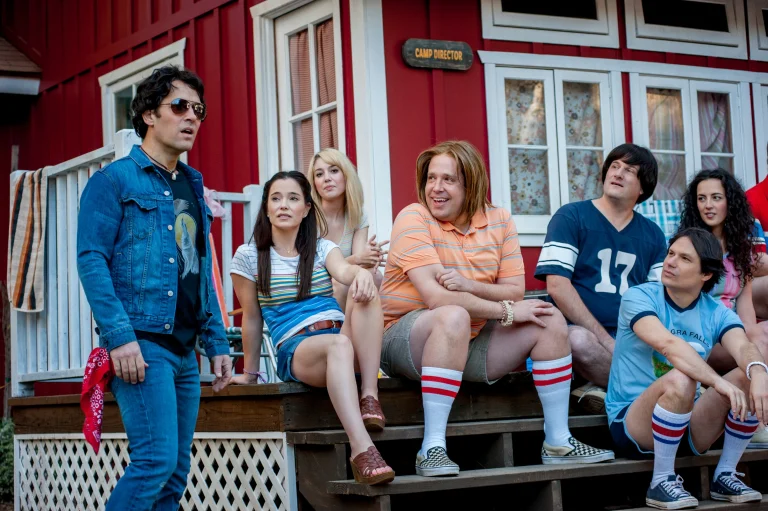
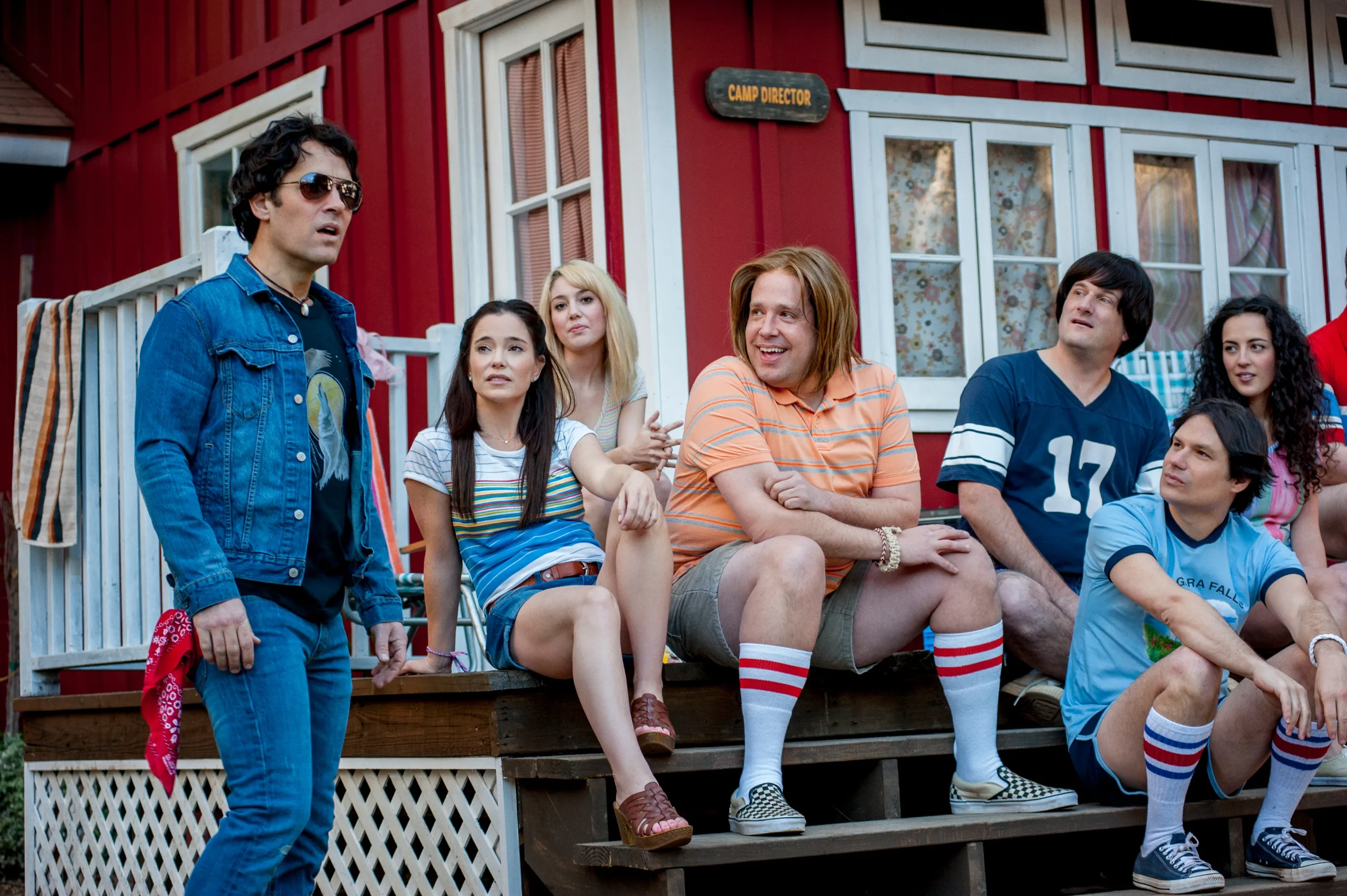
Director: David Wain Writers:Michael Showalter, David Wain Stars: Janeane Garofalo, David Hyde Pierce, Michael Showalter
Synopsis:Set on the last day of camp, in the hot summer of 1981, a group of counselors try to complete their unfinished business before the day ends.
Some movies that make it into film festivals don’t find distribution. Rarely does a film like Wet Hot American Summer, which got raves from fans during its festival run, struggle to find a distributor. When the investors, not the filmmakers, picked USA Films as the distributor, the company gave the film a limited theatrical run. There were few who saw it in a theater and it made very little money.
Yet, the film gained a new life on home video, DVD, and eventually streaming. By the time streamers had gotten a hold of it, it had become a bona fide cult classic. A few years ago Netflix even paid for two limited series based off the film, which are not as good, but still have good moments.
I, like many people, first saw the film on an internet list of great cult films while I was in college. After that first watch, I was head over heels in love. There are many parts that still make me laugh as hard as the first time I saw them.
In some of the most brilliant physical comedy, camp bad boy Andy (Paul Rudd) is the last to leave the mess hall after breakfast. Instead of clearing his dishes, he knocks them to the floor. Beth (Janeane Garofalo), the camp director, tells him to pick it up. There is a power struggle and Rudd makes the most of playing a teenager with his scoffs and protests, but he relents. As he picks up the pieces of his meal he gets more frustrated and starts dropping things again. The bit is absolute gold, but the icing on the cake is as Andy leaves, he gives Beth one last piece of his mind with a well placed middle finger. It’s a perfect scene in a film with some terrific physical comedy.
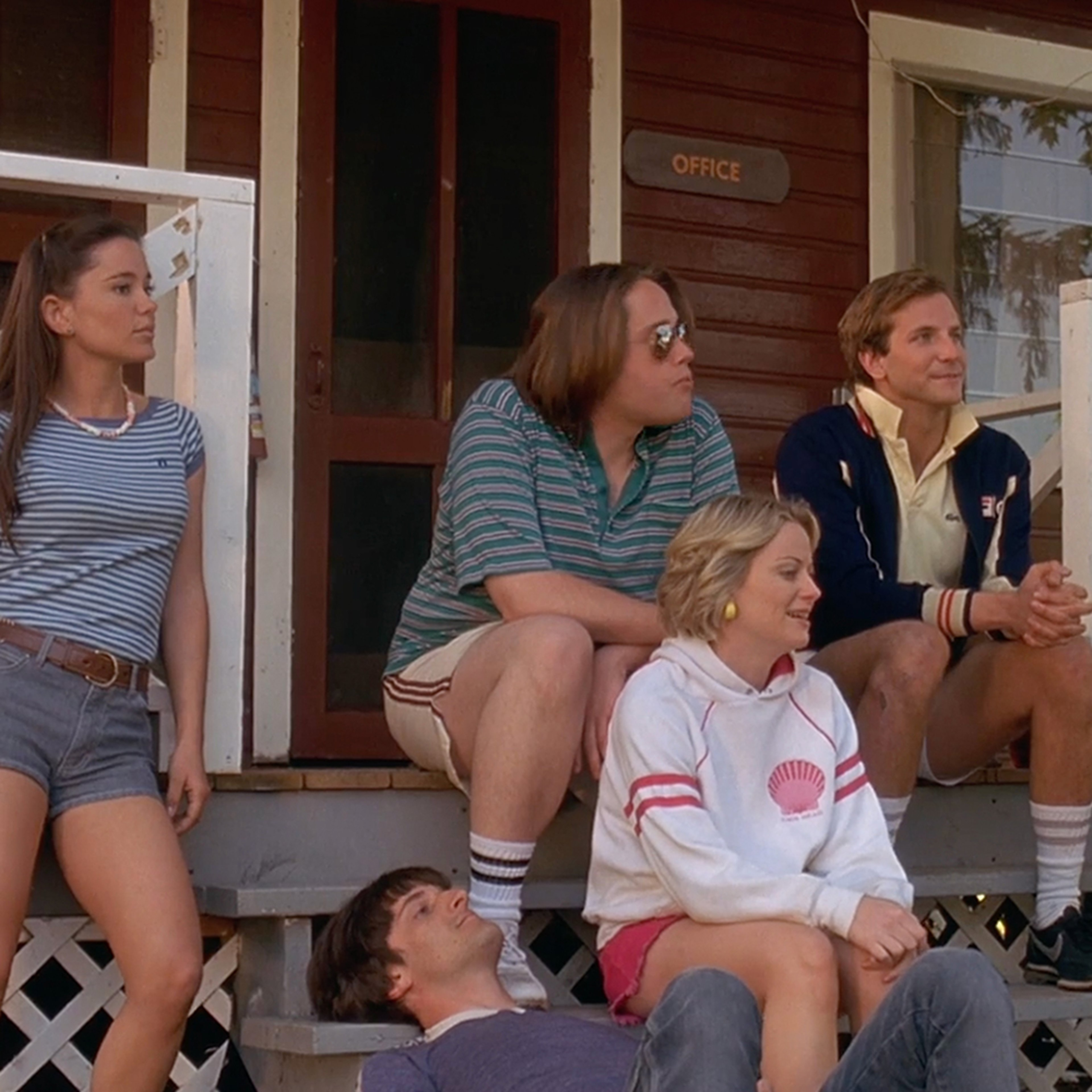
What sells scenes like Andy’s meltdown is the sincerity of the actors and the material. While it has parody elements, Wet Hot American Summer doesn’t indulge in overt parody like many films of its kind. Wet Hot American Summer is wholly its own. There is a depth to the silliness and while it is great at being funny, that depth and the message about the need to be yourself wholly and truly, rings utterly true. This is present in Steve’s (Kevin Sussman) strange “talent,” in Katie’s (Marguerite Moreau) confession to Coop (Michael Showalter) that sex is more important to her than love, in Gene’s (Christopher Meloni) unhinged, but ultimately affirming confession about his strange fetishes, and in Ben (Bradley Cooper) and McKinley’s (Michael Ian Black) love.
There’s little reason for there to be such a sweet and very affecting love between two men in this movie, but it’s there and it’s perfect. In a film that has so much innuendo and implied heterosexual promiscuity, the only sex scene present is between Ben and McKinley. The two of them in the hot, sweaty equipment shed is better than anything silly that could have happened between another couple, while also being a little silly as they have to kick soccer balls out of the way and the shelves can barely hold their weight. The scene is perfect, as is the commitment ceremony later, but it is intercut with scenes of Gary (A.D. Miles) and J.J. (Zak Orth) spying and using homophobic slurs. This ominous and likely very prevalent homophobia seemingly threatens the beautiful message. Though, Gary and J.J. redeem themselves and find acceptance, which brings it full circle and doesn’t undercut the warmth already established.
Wet Hot American Summer is an absolute gem of a silly comedy. It should have launched the careers of all these actors into the stratosphere, but it took some time for Hollywood to fully embrace them. Now on the 25th anniversary of its release, we can celebrate it as the goofy, loveable, silly film it is. Hopefully more will come to see it as the great comedy it is and we, the already initiated, will embrace those coming into the fold. To paraphrase Coop, we want you inside of us.
Synopsis: Flaco, a captive-raised Eurasian eagle-owl, escaped NYC’s Central Park Zoo in 2023. The largest owl species worldwide, he’d lived there 13 years since being a fledgling before gaining fame through his wild adventures.
To this day, documentary filmmaking seems capable of doing the impossible: capturing a single moment, focusing on it, and stretching it until it has a life of its own. In the era of doomscrolling, focusing on an escaped Eurasian Eagle-Owl in Manhattan sounds too far-fetched a story to believe. But that’s exactly what happened, and how director Penny Lane’s documentary Wild Inside was born.
This documentary is the story of a Eurasian Eagle-Owl that escaped from the Central Park Zoo into the busy island of Manhattan. Through the non-stop hustle and bustle in the streets of the city that, to outsiders, seems like the center of the world, a lonely owl named Flaco stands in front of the Plaza, a few blocks away from Central Park Zoo, right in the middle of 5th Avenue, tasting (or testing) freedom but also curiosity. At least that’s the narrative we all have in our heads.
Lane is the mastermind behind this documentary, and through choosing this topic, she gives the viewer the liberty to build any narrative they like around Flaco. After all, none of us could read a Eurasian Eagle-Owl’s mind, right? Lane showcases people’s conflicting feelings about Flaco’s flight to freedom. Some people want him caged and safe, protected behind bars. Others wish for his answer to the call of the wild. The film perfectly outlines all those different points of view, and how probably all of them are right in their own way.
Apart from some gorgeous archival material that Lane acquired throughout her rich journey in creating Wild Inside, there’s also a myriad of personalities that appear to talk about their experience tracking Flaco. These days, collective descriptions are given for a group of people, individuals who each have their own unique personality, experience, and traits. Owlers gathered every day in the park, following Flaco’s adventures from one place to the other. Rooting for him to survive, while others were worried sick over his lack of survival instincts in the wild after 13 years in captivity.
Lane perfectly documents the magical scene when Flaco has his first hunt. The first time he finds food on his own, eating it and raising his horns in victory. It’s a magical moment, bringing tears to my eyes as I realize the power of survival and existence go beyond our perception of systemized thinking and analysis. Nature has yet a lot in store to amaze us and inspire us. If anything, Flaco’s story is a testament to that.
It’s obvious that Lane is not concerned with stating her side of the debate. Is she rooting for Flaco’s freedom and spending the rest of his life in the wild? Absolutely. But she has the openness and intellectual maturity to allow other parties to express their opinions, as well. The core of her project is not about siding with who is right or wrong, but to chronicle this bird’s journey and through it, allow viewers to reflect on their relationship with nature, and their idea of freedom vs. safety and comfort.
The question remains: why does a 13-year-old, apex predator with 2-inch talons, a 6-foot wingspan and pumpkin-orange eyes become a symbol of hope? Are people that desperate for freedom? Even in the freest city in the world, or as close as New York can get to the concept of liberation. Have we collectively as nations lost faith in our leaders, governments, and multimedia that feed us information non-stop that we turn to nature to seek guidance on whether our lives matter in containment, and succumbing to the system is as rewarding as they sell it to us?
In New York City, everyone needs a star for the day. Wild Inside just happens to bring out the star in a lonely Eurasian Eagle-Owl finding a place for nature in a highly industrialized, digitized world. The sense of community and discovery that Flaco brings to the hearts of all those who follow him around the fast-paced city, is what our world needs during these pivotal times.
How did you all do after the Criterion/Barnes & Noble sale? Now we prepare for the October flash sale. While this month is relatively lighter in heavy hitters than the previous months, this is a month with some incredible documentaries and some major late 20th century bangers. Criterion is dropping six new releases, a 4K+Blu-Ray upgrade to an existing Blu-Ray in the collection, one new 4K+Blu-Ray release, two new Blu-Ray releases, a new Eclipse Blu-Ray set, and a 4K+Blu-Ray upgrade to a long standing DVD release.
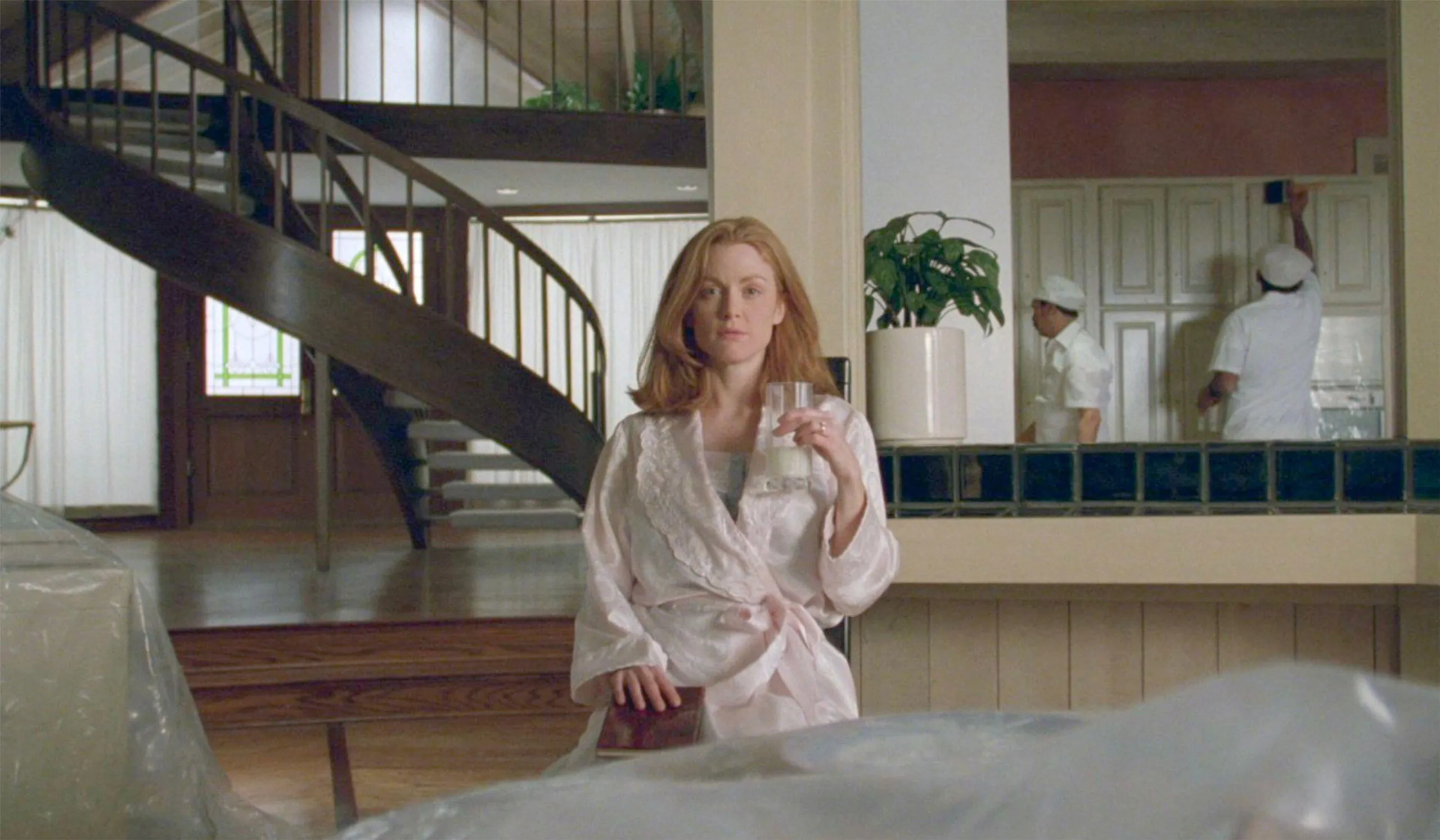
Safe (1995)
Safe is a film that unsettled me to an extraordinary degree. A film about a woman who develops and learns to live with a debilitating and mysterious illness, Safe is one of Todd Haynes’s best films. Even about 5 years removed from first watching it, this film has shaken me all these years later. While Safe isn’t a traditional horror film, the suburban horror is as haunting as the most gruesome of horror pictures. You can see Haynes’s character splattered all over this film, which is a rare feat for a film so early in one’s career. The fact that TikTok hasn’t discovered the early films of Julianne Moore is a travesty (but will seemingly come soon). Safe is a 4K+Blu-Ray combo pack featuring a new 4K digital restoration supervised and approved by director Todd Haynes.
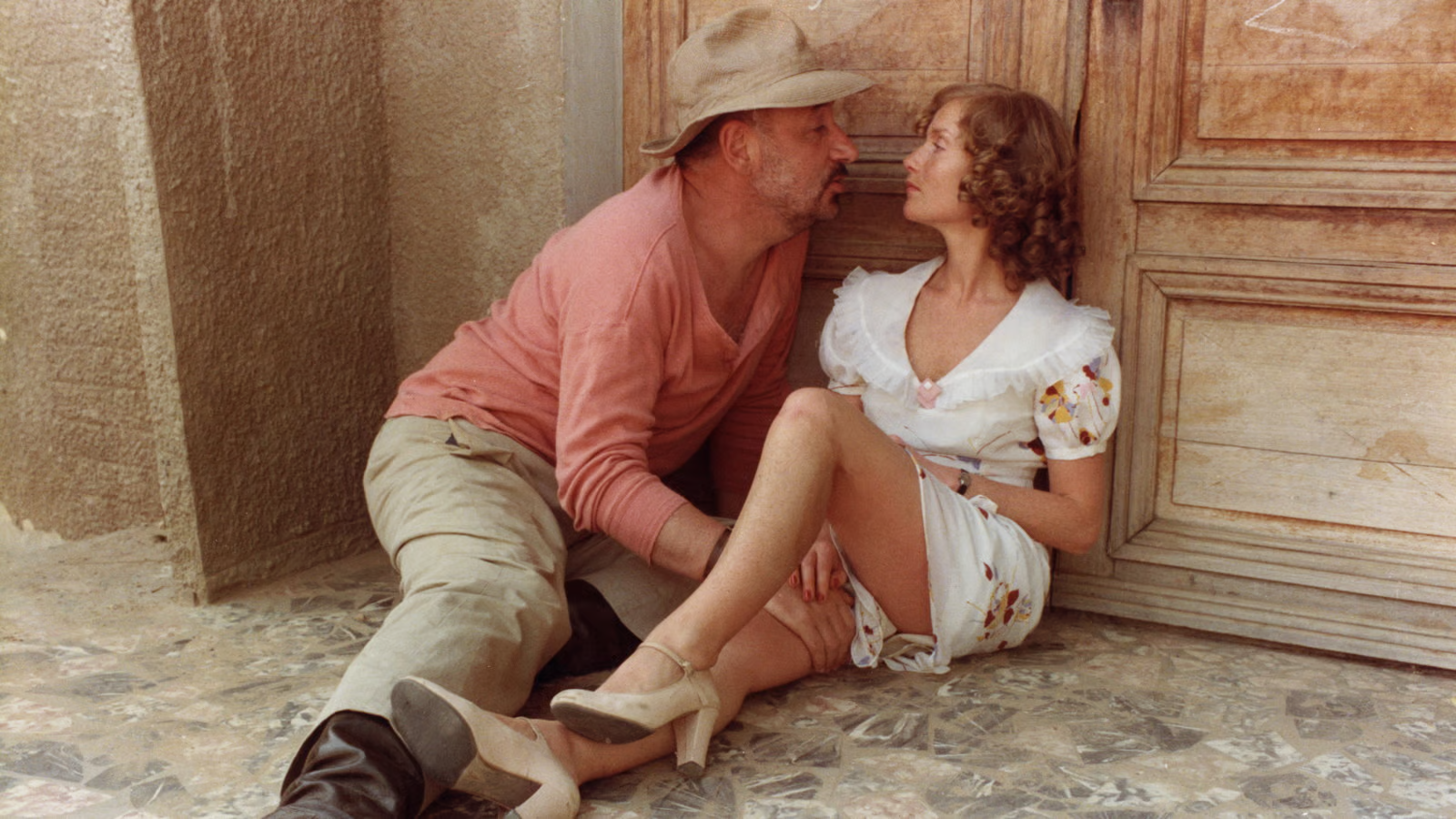
Coup de torchon (1981)
Coup de torchon is an adaptation of American hard boiled novel Pop. 1280 but replaces the American Southern setting to 1930s French West Africa. While the material within is consistent with that of the novel, the change in setting – especially coming from a French filmmaker – brings fire on subjects like police brutality, colonialism, and the nasty side of human behavior. While those added elements add a delicious amuse bouche of thematic depth, the pulpy nature of the novel is still retained. All in, filmmaker Bertrand Tavernier creates something that is cold, provocative, and filled with style. You will certainly not have a bad time with this picture. Coup de torchon is a Blu-Ray release featuring a new 4K digital restoration.
Eclipse Series 49: Five Radical Documentaries by Kazuo Hara and Sachiko Kobayashi
While I was unaware of Kazuo Hara prior to the announcement of this set, his start in film is inspiring. Hara dropped out of school to work at a special education school and in doing so he started developing his first documentary feature – Goodbye CP – which follows the experience of people with cerebral palsy. In Goodbye CP, Hara would follow his subjects and give a sincere look at people who don’t fit into modern society. This would be a staple across all of his documentaries, following outsiders in the most fearless and direct approach possible. Hara’s background, minus a few notes about how he started in film, is not publicly known and not easy to glean through simple research. If you’re a Netflix documentary fiend, someone curious about how different societies operate, or just someone who gets down with bold filmmaking you should seek this set out. The films in this set are Goodbye CP, Extreme Private Eros: Love Song 1974, The Emperor’s Naked Army Marches On, A Dedicated Life, and Sennan Asbestos Disaster and they are all featured in a Blu-Ray box set.
Little Odessa (1994)
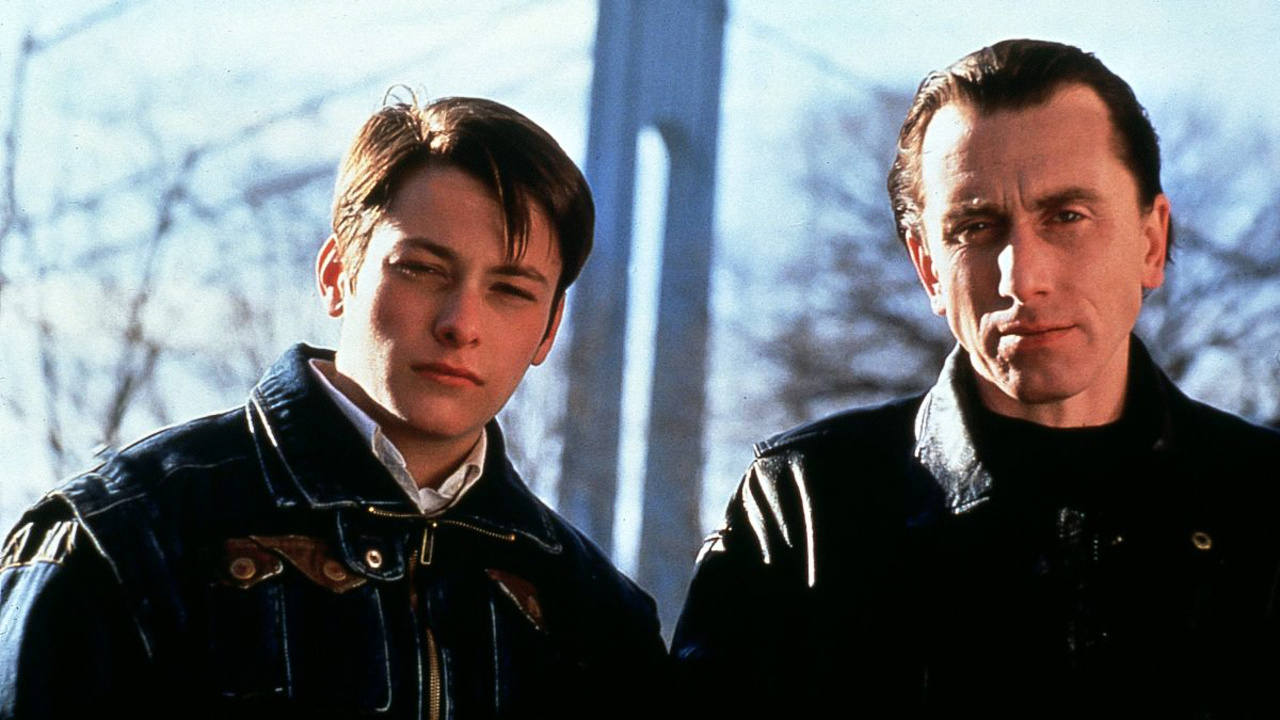
Criterion is a fan of releasing the feature films of modern filmmakers. The debuts of Christopher Nolan, the Safdie Brothers, and Barry Jenkins have been added to the Collection – and with Little Odessa, James Gray can join those same ranks. James Gray, the Ad Astra filmmaker, was only 25 when Little Odessa hit a film festival stride and won the Silver Lion at the Venice Film Festival and placed him amongst one of the rising voices in American filmmaking. Little Odessa is a gritty crime film that is set in New York City – I’m sure you’ve heard that before. Now, gritty crime films that are set in New York City aren’t hard to find – but I’d be hard pressed to find a bad or simply unenjoyable one. Additionally, a gritty crime film with Tim Roth? The “total banger alarm” is firing off at the thought of this. Little Odessa is a 4K+Blu-Ray combo pack featuring a new 4K digital restoration supervised and approved by director James Gray.
American Dream(1990)
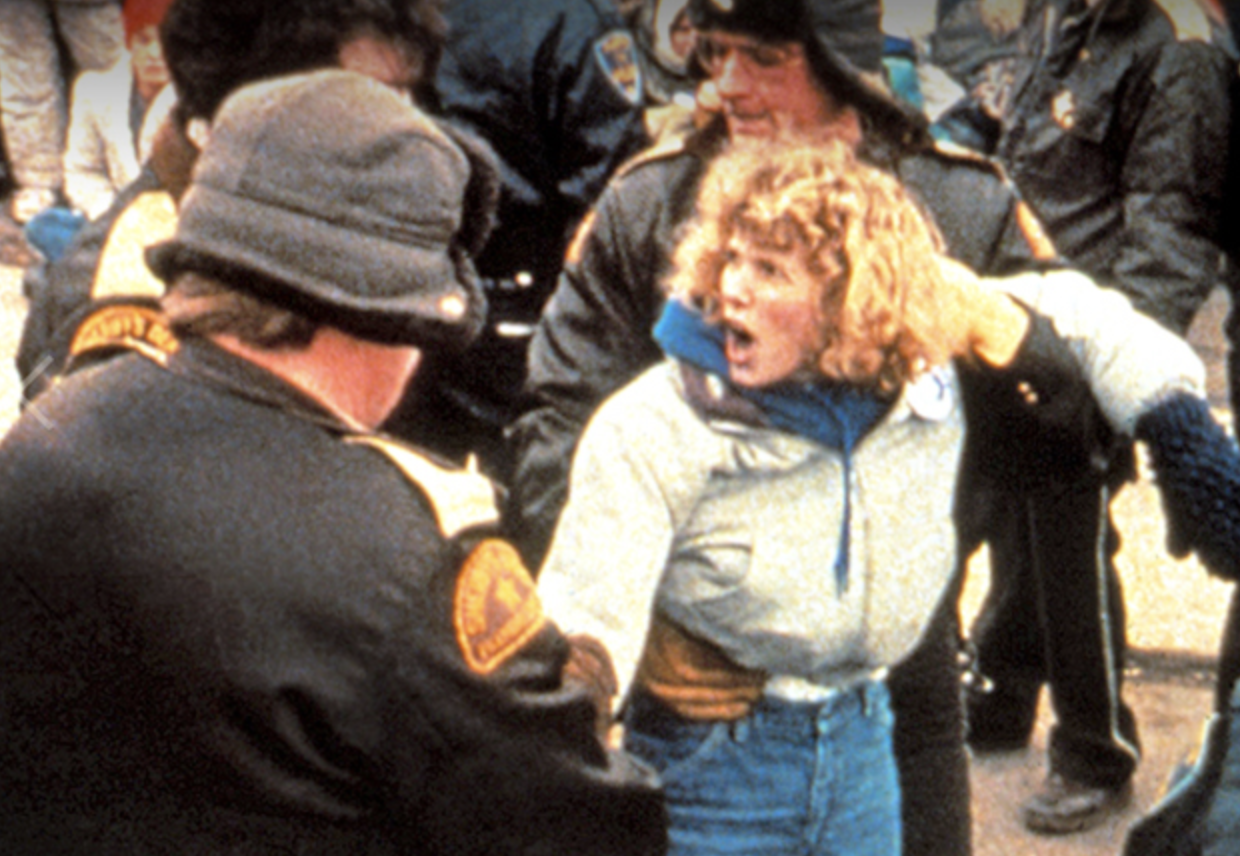
Barbara Kopple has to be one of the most important documentary filmmakers ever. While some documentary filmmakers cover topics of the chase for greatness, unique work and lifestyles, and a time and place for celebrities – Kopple opts to point the camera at the underserved and those fighting for a better tomorrow. American Dream is the follow up to Harlan County USA, and while the setting is different the issue still persists. The film captures the 1985-1986 strike against meat processing brand Hormel, a strike that ended in failure for the striking workers. While Kopple gained success through Harlan County USA, her development with American Dream proved to be difficult now that she was known following her Oscar success. The approach in American Dream looked at the people of Austin, Minnesota – the city in which the strike occurred – rather than just the strike itself and developed a more holistic picture that wasn’t created in Harlan County USA. American Dream is a Blu-Ray release featuring a new 4K digital restoration supervised and approved by director Barbara Kopple.
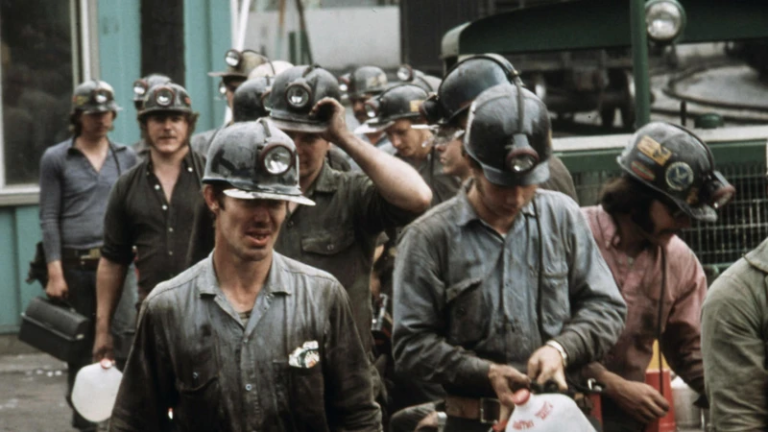
Harlan County USA(1976)
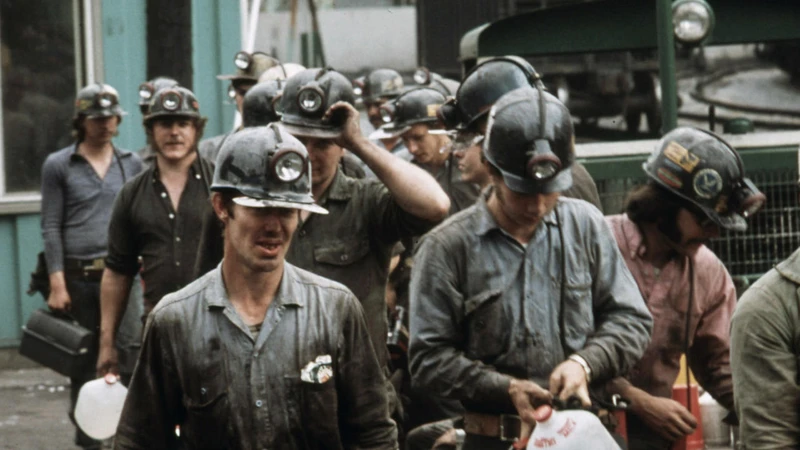
Barbara Kopple’s second documentary, which would end up winning the Academy Award for Best Documentary, is one of the boldest and bravest pieces of cinema I’ve ever seen – a tremendous piece of filmmaking. A 20something Kopple went deep into the heart of miner union bureaucracy and the protests around it in the small town of Harlan County, Kentucky. Harlan County USA is an intense and incredibly sad film but is one of the most inspiring documentaries put to celluloid. Hauntingly, the material within is still as relevant today as it was 50 years ago. Few films have made me tear up in the theater, and I can’t recount a time when a documentary brought a tear to my eye (but Harlan County USA did that to me). I would recommend this be picked up expeditiously. Harlan County USA is a 4K+Blu-Ray combo pack featuring a new 4K digital restoration supervised and approved by director Barbara Kopple.
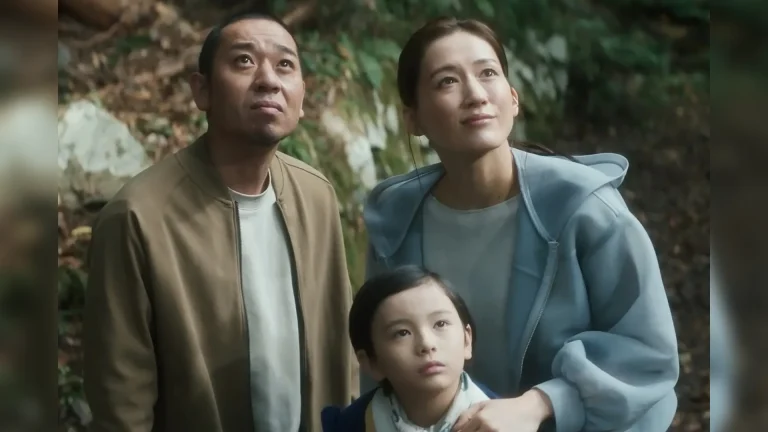
Synopsis: Set in the near future, Otone Komoto works as an architect. She is married to Kensuke Komoto, who runs a construction company. The married couple decide to welcome a humanoid robot into their home as their son.
One of the most impactful events a person can go through is grief. The gravity of grief is immeasurable and the weight obviously varies but one thing people have a hard time doing is coping or living with the grief they feel. Now more than ever, people are relying on technology and AI to navigate difficult events. It is an incredibly concerning time to not find humanistic means to evaluate human problems, and I’m sure AI is better than coping with alcohol or chemical means in some regards, but how does the idea of something replace the ‘something’? Sheep in the Box – the new film from legendary Japanese filmmaker Hirokazu Koreeda – is tackling grief and the intersection of coping and artificial intelligence. And while there is a lot to be said about the usage of technology with grief, Koreeda seems to say nothing substantial in this film.
Sheep in the Box follows a grieving couple, whose son died from a tragic train-related accident, who signs up for a program to recreate their late son through AI and into a humanoid form. The film then follows the couple as they evaluate their morals as their humanoid replicant of their dead son adjusts into their lives. The husband, Kensuke (Daigo Yamamoto) is reluctant to accept his robotic son while referring to him as a human Tomogatchi and a Roomba. Meanwhile the wife, Otone (Haruka Ayase) is so desperate to see her son again that she accepts him with no hesitation. The humanoid recreation of Kensuke and Otone’s late son, Kakeru (Rimu Kuwaki) starts as a mirror of the words and actions of his parents but eventually finds his own way.
In theory, the premise is thought provoking and timely, but the film comes to a screeching halt because of the son. When the film is focused on the moralistic depth of the main couple it is soaring and thematically driving. But once the humanoid son develops any form of agency it starts to unravel. The storylines of the couple navigating their grief and the humanoid son discovering himself are at odds with each other for the duration of the runtime. The problem is how much the themes and ideas diverge from each other and not naturally coalesce into the grander point of the film. To add, the final product seems to not say anything about grief and the integration of AI but rather a point about how those we lose are always with us (which is just a separate point on the coordinates of this film’s ideas). Eventually, the son’s story trumps that of the grieving couple and causes the narrative to clunkily land at nothing.
While you shouldn’t always expect a grand statement from a filmmaker, it is disheartening to see a filmmaker do absolutely nothing with a pertinent subject. In the opening parts of the film it really aimed at that intersection of “desperation of relief vs painfully stewing in reality” but lost itself as the film progressed. The film has some beautiful views but in the face of what’s happening in the film it is pretty empty. Hell, the couple’s dynamic is interesting to watch unfold as they’re at odds morally, but it loses focus as the film goes on. If the entire film was about the couple trying to navigate their loss, it would be a much better film.
It feels silly to go on a tangent about “AI bad!”, “we need more humans doing human things”, or what have you, but Sheep in the Box says absolutely nothing on the topic. What is largely gained when the credits roll? What do these characters learn? There is no bite to it nor does it grip emotionally. Even the moments where it is clearly trying to extract an emotional reaction from the viewer, there is no weight to draw from. We know nothing about the loss outside of the existence of loss. It feels vapid and toothless to draw these comparisons to the ‘sheep in the box’ line from The Little Prince which is about the use of imagination while doing nothing with said imagination in the film.
Sheep in the Box starts strong then tumbles and bumper cars unrelated ideas until the very end. It is incredibly disappointing to watch something from a filmmaker like Koreeda that feels so devoid of heart. If you want to cry, go watch Marley & Me, if you want to watch a movie on humanoid kids, go watch A.I. Artificial Intelligence. I hate the idea of films having to justify itself to exist, but films that try to be fake smart are grating and a waste of time and I hate to say this for this particular film from this particular filmmaker. This is a disappointing film and I wish I liked it more.