Home Blog Page 26

Criterion Collection: February 2026

First and foremost, my name is Jacob Mauceri, Iโ€™ve been religiously keeping up with Criterionโ€™s new releases since 2019 or so. I enjoy a wide variety of films and I owe the variety of Criterionโ€™s releases to my eclectic taste and experience with film. Going forward, I will be taking over InSession Filmโ€™s monthly Criterion article and you can follow along while I wax poetic over excellent films.

The month of love in the year of the Horse, 2026, comes with it a lovely assortment of releases from Criterion. A restoration of an undisputed classic Western followed by a slew of upgrades and new releases from cinematic titans. There will be seven releases, par for the course of their current monthly release strategy, which includes one Eclipse boxset upgrade and one Criterion Premieres blu-ray. Weโ€™re only two months into 2026, and if this is how weโ€™re starting the year, we are in for an insane year of releases. Full disclosure, I will most certainly be purchasing every single one of these.

3:10 to Yuma (1957)

Based on the story of the same name, 3:10 to Yuma is an early example of a cinematic cat-and-mouse – but in the Wild West! A humble cattle rancher is tasked with bringing a captured outlaw to the train that will take him to prison but quickly devolves from there. This is a new restoration for the film, and just a reminder for the folks curious – 4K restorations of black and white films are equally as gorgeous as films in color. Iโ€™m personally more familiar with the James Mangold adaptation from 2007, however, this film has been on my backburner for a number of years. This will be a day one purchase for me as a fan of the western genre and a sucker for a rich black and white cinematic experience.

A Woman Under the Influence (1974)

Regarded as John Cassavetesโ€™ greatest film, and Gena Rowlands at her absolute best, A Woman Under the Influence is given an individual blu-ray release outside of the popular and well regarded John Cassavetes: Five Films Criterion box-set. Hitting on themes found in Cassavetesโ€™s other works such as Faces and Husbands, this film examines domestic turmoil between a married couple played by Rowlands and the inimitable Peter Falk. This release is a perfect opportunity to begin working through the films of John Cassavetes without committing to an entire boxset (But, after this incredible film, why wouldnโ€™t you want to dive deeper?).

PlayTime (1967)

PlayTime is the only film of Jacques Tatiโ€™s that Iโ€™ve seen. I saw it back in 2014 with one of my best friends, at a time when I wasnโ€™t nearly as accepting of film the way I am now, and it has stuck with me ever since. PlayTime is a nearly wordless comedic odyssey that spans over the course of a day following Tatiโ€™s recurring character Monsieur Hulot and other random individuals as they live an abnormally slapstick day in Paris. Visually, it is ironic due to its lack of variety when it comes to color and exuberance that one would normally associate with Paris. Considering this is a 4K restoration and release you get to see the intentionally comedic monotony in the most brilliant way possible. This is a film I adore endlessly and canโ€™t wait to see again in a sharper image.

Cloud (2024)

Kiyoshi Kurosawa has made some of the most unsettling and relevant films ever. In 2024, Kurosawa released three films – a remake of his film Serpent’s Path, a short film that is stuck in blockchain hell, and this film, Cloud. Pulling from his film Pulse, Cloud tackles the horrors of the internet and the bottomless pit that it is. Usually with Kurosawaโ€™s works, his films are best observed under limited knowledge and Cloud is no different. However, I can assure you the pit in my stomach I get from Kurosawaโ€™s work is ever present in this release. To boot, the Criterion Premieres line is cheaper than their standard releases – and this is no different. A tasteful film in a respectable blu-ray release at the (regular asking) price of $29.95 is a steal in my eyes.

Eclipse Series 8: Lubitsch Musicals

The rebirth of Criterionโ€™s boxsets of underseen film retrospectives has already given us a brilliant examination of Abbas Kiarostamiโ€™s early works. Now, Criterion is rereleasing the early musicals from the silent film legend Ernst Lubitsch. In this set, we get filmโ€™s first movie musical, The Love Parade (1929), Monte Carlo (1930), The Smiling Lieutenant (1931), and One Hour With You (1932). Each of these films contribute to the development of the modern movie musical, and build foundational understanding how sound is integrated into the moving image. While Iโ€™m unfamiliar with this particular set of films, Lubitsch is one of cinemaโ€™s most important architects. This set should be a part of every film loverโ€™s collection.

Network (1976)

Network is eerily one of Americaโ€™s most important films. One of the pinnacles of the New Hollywood movement, Network, a movie released in the mid-โ€™70s, has never been more relevant. 50 years later. The film follows a broadcaster of a struggling television network having a mental breakdown on air causing an uproar and examination of corporate-dominated America. The phrase โ€œI’m as mad as hell and I’m not going to take this anymoreโ€ has rung in my head more than Iโ€™d like to admit (by a mixture of my fatherโ€™s own quoting of the film throughout my young 29 years of life and my own sentiment with the current state of America), which is to say this release couldnโ€™t be more timely and more harrowing. This is a film that everyone needs to watch.

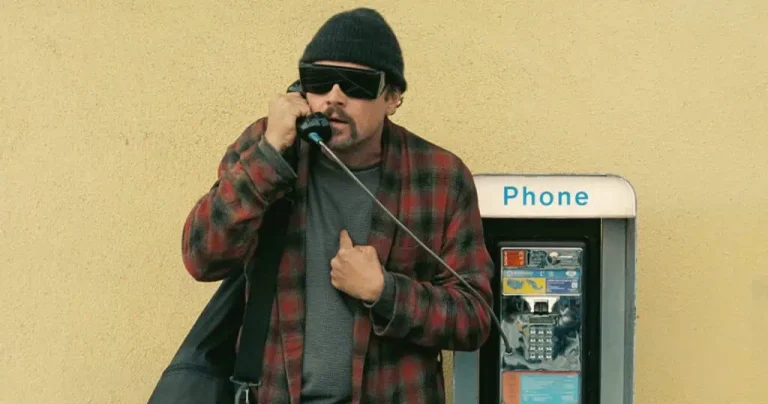
The Man Who Wasnโ€™t There (2001)

It should go without saying that the films of The Coen Brothers are incredible. The Man Who Wasnโ€™t There has been a dream release for a number of years – in the same way No Country for Old Men was up until December of 2024. The film follows a barber whose suspicions of infidelity get the better of him and his life devolves into conspiracy and death. The Americana on display and incredibly dry humor is in line with what youโ€™d expect with a Coen Brothers flick, but this film is severely underrated (in terms of the Coenโ€™s filmography). Now that this is coming soon, now we wait for what Coen release we will get after – fingers crossed for O Brother, Where Art Thou? 

Just a heads up, Criterion usually (keyword here is โ€˜usuallyโ€™) does a flash sale at half price. If you are looking to pick any of these up at half price, keep your eyes peeled for any social media announcements or if you receive their emails. If not, itโ€™ll be a March sale (will report back next month).

Movie Review: ‘Miracle: The Boys of โ€™80’ Review: Play Your Game


Directors: Max Gershberg, Jacob Rogal

Synopsis: A young hockey team enters the 1980 Olympics as underdogs and emerges as heroes. Their iconic upset unfolds with new footage and firsthand reflections.


Before 1980, American hockey existed largely in the shadow of its international rivals. While the sport thrived at collegiate and regional levels, the United States was not considered a global powerhouse, particularly when measured against the Soviet Unionโ€™s state-sponsored machine. At the height of the Cold War, when sport doubled as symbolic warfare, hockey became a proxy for ideology, discipline, and national pride. Telling the story of the โ€œMiracle on Iceโ€ now matters not because it flatters nostalgia, but because it revisits a moment when belief briefly outpaced power, and collective effort unsettled inevitability.

Miracle: The Boys of โ€™80 doesnโ€™t just re-litigate the gameโ€™s most famous moments beat by beat, it brings to life the victory as lived experience rather than legend. Built around never-before-seen 16mm footage and present-day reflections, the film strips away some of the varnish that has accumulated over four decades, revealing the human texture beneath the myth.

The documentaryโ€™s most effective choice is its return to place. By bringing the surviving players back to the Olympic rink where history was made 45 years ago, the film allows memory to surface organically. The players are taken back to being young men who were still figuring themselves out when history found them. Their interviews, with faces filled with doey eyes and smile lines, are honest, sweet and heartwarming. 

Audiences are taken through the history of Hockey, from times where you wouldnโ€™t get paid, how hard it was to get sponsors, the nervous excitement about making the Olympic team. Grainy archival footage shows intense practices, cheering fans and, of course, the historical game. This texture works against the overproduced mythology that has often surrounded the event, grounding the achievement in exhaustion, discipline, and doubt. The documentary reminds viewers that the win was not destiny; it was the result of preparation, comradery, and determination.ย 

During the interviews with the team, they talk very candidly about coach Herb Brooks, who was a hard man to work for, under and with, but thereโ€™s still a high level of respect for him. Each player gets their time to talk about their childhood, how they became involved in the sport and how it affected their lives. Thereโ€™s side-by-side shots of them now as older men, with their young headshots, helping show how much time has passed, but they can talk about it as if it were yesterday. Their teary reactions to re-watcing game clips is wholesome. As a critic who isnโ€™t a fan of hockey, the game play is exhilarating and audiences are given something most arenโ€™t – commentary about the emotions and feelings in that moment.

The Cold War backdrop is present and does give this game its power. Political stakes are acknowledged without overwhelming the personal story, allowing the documentary to avoid triumphalism. The Soviet team is treated with respect rather than caricatured villainy, reinforcing the idea that the miracle mattered precisely because of the opponentโ€™s excellence. Some viewers might have wanted a little more from the USSR perspective – more juicy gossip or political interest. 

Some thematic threads, particularly the long-term psychological cost of instant myth-making, are touched on but not fully explored. A deeper engagement with what it means to live inside such an impactful and powerful story might have added complexity. Still, the filmโ€™s refusal to inflate its own importance feels intentional, even principled.

Miracle: The Boys of โ€™80 resonates because it resists easy symbolism. It does not argue that sports can fix political rifts or resurrect lost unity. Instead, it suggests something smaller and more honest: that shared belief, briefly aligned, can disrupt systems that seem immovable. In a world where the news feels like one bad thing after another, and the threat of war is on doorsteps, many are struggling to come together. This documentary is a reminder that sport is something that unites us all. Exciting, engaging and quietly moving, Miracle: The Boys of โ€™80 isnโ€™t just a documentary celebrating winning as much as about remembering. Why itโ€™s important to remember historical events, celebrate them, and the importance around how they are told.

Grade: B

Chasing the Gold: 2026 BAFTA Nominations

On this episode of Chasing the Gold, Shadan and guest Kenny Miles break down the 2026 BAFTA nominations, digging into the yearโ€™s biggest surprises, snubs, and front-runners. We spend time on major contenders like Sinners, One Battle After Another, Marty Supreme, and Hamnet, discussing why these films connected with voters and what their nominations say about the current state of the race.

Check out this week’s show and let us know what you think in the comment section. Thanks for listening and for supporting the InSession Film Podcast!

Subscribe to our Podcast RSS
Subscribe to our Podcasts on Apple Podcasts
Listen on Spotify
Listen on iHeartRadio
Chasing the Gold – 2026 BAFTA Nominations

WATCH/LISTEN TO THE PODCAST

Movie Review: โ€˜Shelterโ€™ Never Rises Above Standard Statham


Director: Ric Roman Waugh
Writer: Ward Parry
Stars: Jason Statham, Bodhi Rae Breathnach, Bill Nighy, Naomi Ackie

Synopsis: Mason lives in recluse at a remote setting by the sea. When he chooses to rescue a young girl from drowning in a terrible storm, he unwittingly sets off a chain reaction that soon brings violence his way, forcing him to confront choices from his past.


It might be a bit of hyperbole to describe Jason Statham as an enigma, but he’s been on a steady path over the past few decades as an action star and franchise regular with Fast and Furious and The Meg. In terms of standalone films, Statham has essentially made a brand of himself playing what seems to be the same loner character with a hidden past as an assassin in nearly every recent film of his, and they’ve had an extremely varied success rate over the years. For every bland boiler plate action flick that only barely gets the job done there’s a genuine one that seems to roll with its absurdity like The Beekeeper or the two Crank films; unfortunately this time around Shelter is one of the most generic Statham releases in recent memory.

The plights of the film are somewhat saved by some solid action choreography amidst the occasional shoddy visual effects, but Shelterโ€™s central flaw is its lack of anything meaningful emotionally. The film clearly wants its audience to take the central relationship of our two main characters, Michael and Jesse, seriously as the movie’s core, and it’s hard when we are rarely given any reason to care about either of them besides the broadest of strokes. Simple narratives and beat ’em up action is never a bad thing, especially with a star like Statham at the lead, but Shelter is a largely dull affair that will evaporate from your consciousness as soon as the credits roll.

We start the film with Michael Mason (Statham), a lonely man residing on an island that’s off-grid from the world except for the occasional times when he gets supply drop-offs from Jesse (Bodhi Rae Breathnach), a girl who is perplexed by the mysterious man as she delivers essentials to him week by week. After an incident where Jesse’s uncle topples his boat in the middle of a storm, Mason sees it from afar and decides to save Jesse and care for her as she recovers. While stepping foot off the island for the first time in years to gather medical aid for Jesse, a camera catches Michael, and we learn that he was a former MI6 Assassin who spared an innocent life and went against orders, leading to him being completely disowned by the agency. 

Now knowing where he’s located, Michaelโ€™s former commander, Manafort (Bill Nighy), has started a resilient hunt to finish him and Jesse off, tying up all the loose ends he left behind years ago. With an assassin now tracking them and Jesse growing attached to him, Michael must protect her at all costs and finally bury his past.

If there’s one aspect of Shelter that keeps it from being even more unmemorable, itโ€™d be that director Ric Roman Waugh is pretty solid at staging most of his action here. There’s never a scene that’s truly incredible or anything, but it’s clear Waugh knows how to format the choreography in pleasing ways. It mainly shines in scenes of hand-to-hand combat where the physicality from Statham is greatly appreciated. There’s a tight flow to watching him mow down goons that will satisfy genre fans that just want some quick fights, even without much pizazz to them; the issues lie in the repetitive structure at hand and the overly serious tone the film never earns.

The connection between Jesse and Michael is where the film wants to bring in emotion and resonance with the leads, and it simply just isnโ€™t compelling in the slightest. The drama between the two of them and how they relate to each other is either incredibly predictable or just too repetitive to ever leave any impact. Many times when the action stops, it just feels like they have the same conversations over and over. Statham even looks bored in a few scenes.

That’s without even mentioning characters that would be completely inconsequential if their sections were removed entirely from the film, like Naomi Ackieโ€™s intelligence unit character, who is completely underutilized here. These issues would be less of a problem if the filmโ€™s tone was just lighter and had a little more fun with itself, but the grittiness of the story works for and against the film, and the lack of substance is often more of a hindrance.ย 


If youโ€™re looking for the most basic of action thrills, then Shelter will provide on that front, but it does little of anything else on any level besides being average. Despite the filmโ€™s solid action, it never rises above being middling due to its generic character beats that make any seriousness or emotions that the film wants to convey feel unearned. Itโ€™s about on par with a TNT classic dad movie youโ€™d watch on cable TV, but unfortunately, in a derogatory sense.

Grade: C

Chasing The Gold: Interview: In Harmony: Brady Corbet on working with Mona Fastvold and Daniel Blumberg on ‘The Testament of Ann Lee’

Mona Fastvold and Brady Corbet have long been writing partners and collaborators on each otherโ€™s work. Mona Fastvold first worked with Daniel Blumberg on her dark tale of jealousy and romance, The World to Come. Nadine Whitney finds out how they seek out each otherโ€™s vision.

Nadine Whitney: Brady, you and Mona have collaborated on several projects including The Sleepwalker, Childhood of the Leader, Vox Lux, The Brutalist, and now The Testament of Ann Lee. What keeps the working relationship sustainable? How do you balance life as partners and as creative partners?  

Brady Corbet: You know, we worked together for years before we were a couple or had a child together. And for us, it’s second nature. I actually think that our relationship functions especially well when we’re working together. I understand it’s not like that for everyone, but I think that we have different strengths. I think that we have different interests. We have different perspectives.  

When we sit down to write a screenplay that Mona intends to direct, I’m writing for her. I’m writing in service of her vision for the project, and vice versa. I think we know that it’s very difficult to serve more than one master. It’s usually what makes projects come apart at the seams. So, we know each other very well. Better than most, I’d say.  

We really respect that the ship ultimately has one captain, and we try not to be micromanagerial with our department heads. We really encourage everyone to do what they do best, and always weigh in.  For me, directing is just conducting. Youโ€™re working with an extremely qualified professional orchestra. 

So, youโ€™re just riding the volume, to some extent. We have a lot of conversations with our collaborators. Daniel Blumberg is obviously one of our best friends. And part of the reason I think that the music on these projects is so much richer and more complex than many film scores are allowed to be is because we work on them for years.  

It can be a budgetary issue, which is just that there’s not enough time allocated to actually work on these things. But we do our best to prioritize processes in development that I think a lot of other productions donโ€™t. Because with many movies, you make them, and then they’re delivered to someone, and they’re like, โ€œMake some music for it.โ€ As opposed to the music and an image being completely in sync. 

Daniel is on set for our movies for the duration of these productions, which is a very unusual way of working. It is very generous of him to devote that much of his time to these projects because he does have a career outside of composing film scores. So, it’s amazing that we met someone that cares as much as we do. I like to think that’s the reason that weโ€™re really marching in lock step.  

Podcast Review: Dead Man’s Wire

On this episode, JD and Brendan break down Dead Man’s Wire, Gus Van Santโ€™s gripping new film based on the real-life 1977 Tony Kiritsis hostage standoff! While it may not be Van Sant’s best work, there are some flourishes here, coupled with the performances, that still render the film captivating. It may not linger afterwards very much, but during its runtime the film is compelling enough.

Review:Dead Man’s Wire

Director: Gus Van Sant
Writers: Austin Kolodney
Stars: Bill Skarsgรฅrd, Dacre Montgomery, Cary Elwes

Subscribe to our Podcast RSS
Subscribe to our Podcasts on Apple Podcasts
Listen on Spotify
Listen on iHeartRadio
InSession Film Podcast – Dead Man’s Wire

Movie Review: ‘Good Luck, Have Fun, Don’t Die’ Will Make Sure You’re Never Bored


Director: Gore Verbinksi
Writer: Matthew Robinson
Stars:ย Sam Rockwell, Haley Lu Richardson, Zazie Beetz

Synopsis: A “Man From the Future” arrives at a diner in Los Angeles where he must recruit the precise combination of disgruntled patrons to join him on a one-night quest to save the world from the terminal threat of a rogue artificial intelligence


The time travel movie may be one of the most entertaining and frustrating subgenres in science fiction. As Looper taught us, if you donโ€™t think too hard about the ins and outs, you might be fine. But it does cause some infinitely troubling loops. Ok, sure, the murderous AI sent a Terminator back to kill the would-be mother of the leader of the resistance. It didnโ€™t work, so why not just go back and try it again? The real answer, of course, is that it would make a really boring sequel. But it still makes for an interesting thought experiment. What if the time traveler simply learned from their mistakes and just tried different versions of the same plan to figure out what the correct combination might be. Good Luck, Have Fun, Donโ€™t Die takes a look at this idea, at least in its introductory scene.

It should be noted that, like many Gore Verbinski (Welcome back!) films, it is about much more than this, but we must begin at the beginning. That opening, headed by The Man From The Future (Sam Rockwell), quickly informs us that, due to the preponderance of Artificial Intelligence, everything has gone wrong. Verbinski points his finger at a number of targets here (AI, phone usage, school shootings), but rest assured, the world in the future is terrible. In order to combat this in the past, he arrives at Normโ€™s Diner looking part-time-traveler and part-living on the streets. He dons a plastic raincoat and what appears to be bombs strapped to his vest. But he assures us that this is the height of fashion in his time. More importantly, he has returned to this diner, yet again, because he knows that the right combination of people are there to help him stop the AI from getting too powerful. Again, donโ€™t think too hard about how he knows this. Even though he sounds off his rocker, he quickly proves that he knows many things he should not about the individuals in said diner, and Rockwellโ€™s charms shine through. Truly, only Sam Rockwell could play this part and not turn us all off to his supposedly important mission.

This is an old trope, but a good one. He must choose his team, like a much more pedestrian Fellowship of the Rings. Unsurprisingly, after he chooses his compatriots (under some amount of duress), the film branches off into different timelines. First, Mark (Michael Peรฑa) and Janet (Zazie Beetz) as schoolteachers dealing with disaffected, disconnected students at a high school, where the zombie parallels are quite obvious. We are also introduced to Susan (Juno Temple), who has lost her son in a school shooting. Finally,  we are shown Ingrid (Haley Lu Richardson), dressed in a princess outfit whom Future Man doesnโ€™t want along, but he relents. There is also a Boy Scout troop leader, an Uber driver, and a woman who has had a hard day at work and simply came to Normโ€™s for a slice of pie. This motley crew is certainly an odd one, though it becomes clear who will be important to the story and who will vanish in one way or another.

As the backstories start to reveal themselves, it is clear that Verbinski has a lot to say. His (and screenwriter Matthew Robinson) aim is not exactly pinpoint, but at least there is never a dull moment. Despite the fact that there are a few pacing issues and odd special effects choices (especially near the climax), I can guarantee you will never be bored. There is one particular creature design that nearly led me to shout in excitement. This moment (I will not ruin it) leads to the biggest laughs and reactions of the long runtime. Of course, all of this is to be expected from the director of A Cure For Wellness. Verbinski is a bit of a kitchen sink, maximalist director and that is fully on display here, for both better and worse. There are seemingly a thousand references one might notice, from Toy Story to just about any video game you might think of. On the other hand, some of the background story plotlines are surprisingly inspired.

The highlight features Susan who, after losing her child in that shooting, is given the opportunity to clone her son. But we no longer live in the world of high tech cloning facilities that look foreign to us. Here, she meets with essentially an Apple store employee who guides her through the process. Using the streamlined look that we are all familiar with is a stroke of genius that helps us connect to a story that can be excessive. This  process includes the good and bad quirks of her sonโ€™s personality, should she want to make changes. It is expensive, but luckily the government subsidizes the cost, given that they seem to be uninterested in gun control issues. Susan is given a cheaper option that includes her son spouting advertisements once per day. None of this is subtle in the least, but it is darkly funny. Despite that darkness, it is actually a gentler version of the reaction to school shootings than our current reality, so kudos to Robinson and Verbinski.

Even if the script takes on much more than it can handle, the cast is well up to the task. Besides Rockwell, the standout (as usual) is Haley Lu Richardson. She is given a lot to carry on her shoulders as far as the emotional arcs and also is saddled with what is described as an allergic reaction to technology. Of course, this allergy involves bleeding from the nose becauseโ€ฆwell because it looks cool, I suppose. But nevertheless, she manages humor, emotional depth. and a sense of reality in a film that desperately needs it. 

Frankly, the film is most interested in accusing our world of, if not deserving of its horrible fate, than needing to make drastic changes to avoid it. It certainly helps that there are jokes around every corner to soften the blow and a completely game cast who is clearly down for anything. The messages may not be subtle, or even new, but it all comes together well enough to be a pretty easy recommendation. Sure, it could use a streamlined story and move quicker in some moments, but having Gore Verbinksi back to create audacious images on screen is a net positive for all of us.

Grade: B

Movie Review: ‘H is For Hawk’ Never Quite Reaches the Heights of Its Source


Director: Phillipa Lowthorpe
Writer: Emma Donoghue, Phillipa Lowthorpe, Helen MacDonald
Stars: Claire Foy, Brendan Gleeson, Denise Gough

Synopsis: After losing her beloved father, Helen finds herself saved by an unlikely friendship with a stubborn hawk named Mabel.


โ€œThe hawk was everything I wanted to be: solitary, self-possessed, free from grief, and numb to the hurts of human life.โ€ โ€“ Helen Macdonald H is for Hawk (2014).

Director Philippa Lowthorpe and writer Emma Donoghue (author of Room and The Wonder, both made into films) take Helen Macdonaldโ€™s extraordinary multi-award-winning 2014 cross-genre memoir and render it mostly silent as the protagonist, Helen (Claire Foy), spends much of the film refusing to speak or interact with almost everyone in her* life. Cinema is, of course, a different narrative medium and visual information is provided as a key interpretive and communicative mode. On the visual side, H is for Hawk is beautifully shot as it encompasses the Cambridge environs and the natural spaces Helen rewilds herself in with her goshawk Mabel. However, if ever a film would have benefitted from some internal narration, H is for Hawk is it.

Set in 2007 and covering a year of Helenโ€™s life with occasional flashbacks, H is for Hawk is a journey of profound grief. Helen is a research fellow at Cambridge and teaching the history and philosophy of science to a group of students she feels arenโ€™t interested. The person she cares most about is her father, Alisdair (Brendan Gleeson) who is a renowned photojournalist with eclectic interests โ€“ one of which is ornithology which he passed on to Helen. A gentle, patient, good humored and curious man who refused to retire. A man who always dressed in a suit. A man who dies suddenly of a heart attack leaving Helen feeling completely unmoored. 

Helenโ€™s first reaction is dissociated shock. Her mother (Lindsay Duncan), brother (Josh Dylan), and her best on-campus friend, Christina (Denise Gough doing a remarkably good Australian accent) are there, but more often than not Helen reacts to them like theyโ€™re spectres. The only thing real is her grief and the dreams that haunt her. One dream in particular, that of a goshawk.

Experienced with falconry although not with the raptor goshawk, perhaps one of the least โ€œfriendlyโ€ birds of prey, Helen goes to her friend, Stuart (Sam Spruell), for advice and from there buys a goshawk from a trader in Scotland. The basic and animalistic connection Helen thinks she feels for the goshawk that she wants is communicated with a series of gazes. Helen looks at the hawk, the hawk looks back. โ€œThis is my hawk,โ€ she insists and with Christina driving takes her back to Cambridge where she will begin training the young and deadly bird.

Helenโ€™s need for the goshawk is infinite because she desires something that gives her little choice. An animal who demands patience, obeisance, and obedience from her more than she can demand from it. Mabel (meaning loveable) fills in a blank space for Helen as something utterly wild that she can project a kinship on to while letting everything else in her life fall away. Gone is the notion of applying for another fellowship. Gone is the urgency of facing that her Cambridge fellowship will be ending and she will be homeless. Gone is her commitment to research and teaching. Helen lives on the hawkโ€™s timetable and every success she has โ€œtamingโ€ Mabel is a substitute for the human life she is supposed to be leading. Instead, there is only โ€œthe perfectly evolved psychopathโ€ who must hunt to be what she is.

Charlotte Bruus Christensen captures the beauty and fierceness of the goshawk especially when hunting. Swooping through the woods and grasses for her prey with Helen hoping she has earned enough trust that she will return. Sometimes itโ€™s deliberately difficult to define Helenโ€™s point of view when dealing with other people, such as a walk through Cambridge town with Mabel on her arm, from Mabelโ€™s point of view. Humans begin to make noise, unclear noise, that Helen wants to turn away from โ€“ as if she needs a falconry hood over her own head to protect her from confusing babble.

Although Claire Foy and especially Brendan Gleeson give excellent performances, H is for Hawk holds itself at a distance from the audience by relying mostly on Foyโ€™s frustrated silences and gradual withdrawal from โ€œhumanityโ€ and its illogical insistence that one moves on and keeps living after a loss that has to be dealt with in a tradition of clean and dignified politeness. Lowthorpe does pay tribute to Alisdair throughout the film in the form of recent flashbacks and some from when Helen was a child so it becomes clearer why Helen would find her father a โ€œmythicโ€ presence. Yet, the pure literary majesty of Helen Macdonaldโ€™s memoir doesnโ€™t translate on to the screen with Helen speaking so little to the people around her. When Christina says to her, โ€œI think youโ€™re over-identifying with Mabel,โ€ Helen curtly replies, โ€œI know thatโ€™s what you think.โ€ It isnโ€™t until the end of the film when Helen is speaking at Alasdairโ€™s memorial service that sheโ€™s given a space to truly verbally express herself and why she has lost someone irreplaceable to her. It seems a touch confounding that Emma Donoghue would allow the impeccable poetics of the real Helen Macdonaldโ€™s memoir to be spread so thin. Take, for example the following taken from the book:

โ€œThe archaeology of grief is not ordered. It is more like earth under a spade, turning up things you had forgotten. Surprising things come to light: not simply memories, but states of mind, emotions, older ways of seeing the worldโ€ฆ There is a time in life when you expect the world to be always full of new things. And then comes a day when you realise that is not how it will be at all. You see that life will become a thing made of holes. Absences. Losses. Things that were there and are no longer. And you realise, too, that you have to grow around and between the gaps.โ€


Foyโ€™s Helen goes into deep depression, which is communicated in a strikingly mundane way beyond her hunting with Mabel. The kind of transcendent and wise prose Macdonald shared with the world canโ€™t be communicated in the language of visuals or performance. H is for Hawk is a good film, but it feels like it has too many โ€œholes and absencesโ€ to be a great one.

Grade: C+

Movie Review: ‘Pike River’ is Surprising and Compelling


Director: Robert Sarkies
Writer: Fiona Samuel
Stars: Melanie Lynskey, Robyn Malcolm, Lucy Lawless

Synopsis: In the aftermath of an explosion that rocked the Pike River Mine and took 29 lives, two women step up to fight for accountability.


The justice system in many nations is more about stamina than justice. It’s about having the strength to go on and on without any progress or without any guarantees of success. Film simplifies the process quite a bit. It gives us the quickest route, but it’s not always the most fulfilling. In many court room dramas, there are blustering speeches, shocking testimonies, and showboating attorneys on both sides. We often see the people involved through the lens of their case and not as people in the worst situations of their life. This is what makes Pike River a far more compelling narrative.

Writer Fiona Samuel’s script eschews the lawyers and the big courtroom scenes to instead focus entirely on the people affected by the case. The way Pike River unfolds is through the eyes of Anna (Melanie Lynskey) and Sonya (Robyn Malcolm). We watch as they helplessly watch. We feel their frustration at the double speak and the unfulfilled promises. We feel heartened by the drastic actions they take. All they seek is closure, which shouldn’t be that hard to come by.

Pike River can lag between bouts of legal and protest actions. There are some scenes that feel as if they could have been played out in a phone call or a quick expository conversation. The resolution that the real life Anna and Sonya were finally granted took about eight years, so it’s understandable that there would be waiting in film time as well. It just feels as if this waiting also becomes a rehashing of information that is already established. Though, the time does have an extraordinary outcome for the narrative of the film and that is the friendship between Anna and Sonya.

Friends are often made in the trials we face as humans. It’s a prickly start for their relationship, but they see each other in the grief they share. They understand each other and build something strong between them. There’s a phenomenal scene that director Robert Sarkies builds that shows the friendship at its best. It’s a simple setup, just a cafe scene with cuts between Anna on one side and Sonya on the other. As they attempt to understand the legalese they’ve been subject to that day a misspoken phrase leads to a memory of their men and the flatulence they let off. It’s a funny scene in the midst of a tough time. It’s a shorthand for camaraderie and it fits so well because talking about cutting the cheese is a great way to cut the tension of the constant striving for justice.

Scenes like the one above wouldn’t work without the incredible acting of both leads. Melanie Lynskey is always good because she’s the woman you never suspect. She’s the woman who looks like she takes what she’s given, but she surprises you every time. She’s able to be fiery, but she has a delicate vulnerability to her. As Anna, she has a tremendous timing for biting remarks and yet is able to break your heart with a simple glance.

Robyn Malcolm is an actress who understands that balance is that everything is happening all at once. She’s adept at the blistering put downs and the issues with self-confidence. Her face is so alive and expressive that it’s a joy to watch her emote. She carries Sonya’s outward toughness, but never hides her inner softness. It’s a perfect expression of grief and tenacity.


Pike River is a film that takes its time. In some ways that makes for a difficult film to sit through, in others it makes for a more compelling and fulfilling narrative to be with. It’s a film that keeps its eyes on the humans at the heart of the legal battle and is all the better for it. Add into that two powerful and stellar performances and you’ve got a very intriguing watch that will keep you glued just to see what possible wriggling these corporate and political goons will come up with to leave their promises unfulfilled.

Grade: B

Podcast Review: Sound of Falling

On this episode, JD and Brendan discuss Mascha Schilinski’s ambitious and remarkable sophomore effort in Sound of Falling! While the film didn’t crack the Oscar lineup, it did win the Grand Jury last year at Cannes and it made the December shortlist for the 98th Academy Awards. So, it’s still a noteworthy international film from 2025. Perhaps, more importantly for our conversation, it did crack the five for JD as he became a big champion for Sound of Falling among the InSession Film staff.

Review:Sound of Falling

Director: Mascha Schilinski
Writers: Mascha Schilinski, Louise Peter
Stars: Hanna Heckt, Lena Urzendowsky, Laeni Geiseler, Lea Drinda

Subscribe to our Podcast RSS
Subscribe to our Podcasts on Apple Podcasts
Listen on Spotify
Listen on iHeartRadio
InSession Film Podcast – Sound of Falling

Movie Review: Christophe Gansโ€™ โ€˜Return to Silent Hillโ€™ (and Filmmaking) is a Surprisingly Affecting Psychological Drama


Director: ย Christophe Gans
Writers: Christophe Gans, Sandra Vo-Anh, Will Schneider
Stars: Jeremy Irvine, Hannah Emily Anderson, Evie Templeton

Synopsis: When a man receives a mysterious letter from his lost love, he is drawn to Silent Hill, a once familiar town now consumed by darkness.


Twelve years after readapting Beauty and the Beast with Lรฉa Seydoux and Vincent Cassel, French genre auteur Christophe Gans returns to the world that made him a known figure within video game adaptations in Return to Silent Hill, promising to audiences a โ€œfaithfulโ€ adaptation of Konamiโ€™s Silent Hill 2, highly regarded as one of the greatest video games of all time. Whether or not these words are true (almost) doesnโ€™t matter, since Gans is a highly interesting (and underappreciated) figure within genre cinema. Heโ€™s only made five films in his thirty-year career, each brimming with jaw-dropping images and unwieldy ideas that consistently make us rethink the way we watch movies and the art we consume.ย 

Return to Silent Hill is no different, although it doesnโ€™t reach the level of his two masterpieces, Crying Freeman and Brotherhood of the Wolf. Itโ€™s also probably not a faithful adaptation of Silent Hill 2, which has made fans angry with the fury of a thousand thunders, with some even sending death threats to Gans for allegedly โ€œruiningโ€ the video game. While those threats are totally uncalled for, since the game stands on its own two feet, one canโ€™t entirely dismiss Return to Silent Hill as a โ€œbadโ€ video game adaptation when Gans himself thinks about his place within post-digital cinema in an era where textures are becoming more artificial and images no longer hold meaning within the moviegoing public. 

It may lack the verve of Dan Laustsenโ€™s photography, but the visual poetry of a decaying world that dies with James Sunderland (Jeremy Irvine) is still present here. In any event, it is a step above โ€“ both visually and thematically โ€“ from MJ Bassettโ€™s dreadful Silent Hill: Revelations 3D, because Gans holds reverence for Konamiโ€™s game and is at least curious in further expanding his conception of what he believes some of Silent Hill 2โ€™s themes are. It may not be a โ€œdefinitiveโ€ interpretation of the urtext, but itโ€™s far more interesting than the dreadful attempts to blatantly steal gamersโ€™ money with the nearly unwatchable A Minecraft Movie and Five Nights at Freddyโ€™s 2. 

As a meditation on grief and the lengths one will go to bring someone โ€œbackโ€ from the dead, Return to Silent Hill is an imperfect, but frequently moving piece of work. It represents Jamesโ€™ tormented psyche inside a labyrinthine story that consistently blurs the line between the harsh reality he lives in and the harsh nightmares he canโ€™t fully wake up from. Gansโ€™ writing may not be as sharp as in the first time he took a crack at the world of Silent Hill in 2006, with frequent bouts of clunky and unintentionally hilarious, indigestible expository exchanges between James and the various figures he meets, either in Silent Hill or the Otherworld, but his visual compositions remain unmatched, and perhaps more compelling when we put his two approaches side-by-side, twenty years removed from the first installment. 

Dolly shots are no longer frequent โ€“ this thing is erratic and always in the face of his tormented protagonist, who lives an internal (and external) torture he canโ€™t fully extinguish, even by diving deeper into the quasi-post-apocalyptic Hellscape of Silent Hill. Sadly, though, Irvineโ€™s hair game is the most unconvincing aspect of his (and anyoneโ€™s) performance, but some musical juxtapositions are so good that one can easily overlook some of the production’s cheaper traits, compared to the refined visual palette of the original. Again, though, Gans collaborated with Dan Laustsen, and that cinematographer is one of the greatest to have ever done it. 

Comparing that film to Return to Silent Hill feels a bit like an apples-to-oranges situation, though Gans repeats some of its best sequences with less thrilling effect. Pyramidhead makes his grand return and feels less imposing than when Laustsenโ€™s baroque compositions highlighted him, while a sequence with โ€œDark Nursesโ€ is the exact same as the first installment, sans the palpable tension we felt when Rose Da Silva (Radha Mitchell) explored the filmโ€™s titular ghost town. That said, Gans compensates for this repetition by offering different stylistic considerations in his Return to Silent Hill, with the camera being more handheld and nervous than in the first go-around, when we spent time understanding the town’s mechanics through its visuals alone. 

The most exhilarating aspect of Gansโ€™ Silent Hill transpositions is how weโ€™re able to comprehend how this universe works โ€“ and what the protagonist feels โ€“ by simply making its visual language an intrinsic part of the viewing experience, and trusting the audience to put two and two together. Again, the dialogues arenโ€™t that refined, but whatโ€™s on screen still remains profoundly affecting by the end, neatly tying the different parallel stories in a way that reads as emotionally intimate and genuinely earnest. Irvine is particularly good as Sunderland, though he may not be the โ€œdefinitiveโ€ version of the character fans wanted to see, which could limit the emotional attachment to the protagonist.ย 

Is it a bad thing that Gans takes so many liberties with the material to deliver his conception of the video game? To be honest, I donโ€™t have the answer to this question, but his love of Silent Hill canโ€™t be denied, and the aesthetic impulse he brings to his pictures canโ€™t entirely be shunned. Considering that Emerald Fennell is about to desecrate Emily Brontรซโ€™s Wuthering Heights, I can understand the frustrations from the fans who want to see their favorite game adapted on screen. However, there are a few auteurs who are as earnest in their image-making as is Gans, and the fact that heโ€™s only made five films in his longstanding career feels a bit criminal. 

For better or worse, Return to Silent Hill is Christophe Gansโ€™ Megalopolis. Itโ€™s filled with brain-melting imagery and unwieldy themes that are only somewhat developed. However, the sincerity behind it is so powerful that any perceived โ€œflawโ€ I had didnโ€™t matter by the time it reached its final scene and gave Sunderland a sense of peace and finitude that few protagonists who dared enter Silent Hill ever managed to haveโ€ฆ

Grade: B+

Movie Review: ‘Worldbreaker’ Simply Needs More to Hold Onto


Director: ย Brad Anderson
Writer: Joshua Rollins
Stars: Billie Boullet, Luke Evans, Milla Jovovich

Synopsis: A father hides his daughter on an island to keep her safe while he equips her for survival and the battles ahead.


There are movies that attempt big concepts like cataclysms and society crumpling in a macrocosm, but there is something genuinely gripping when that catastrophe is brought into the focus of a small group. It’s how we relate to the characters and are able to emotionally connect to the situation. Often films with smaller budgets are able to pull off this emotional connection much better than their mega budget counterparts because the smaller films can’t hide behind CGI. They have to arrest us with characters that can sell us on the world they live in. In some ways Worldbreaker is able to pull off this emotional feat.

The film, written by Joshua Rollins, has just enough heady sci-fi themes to keep us interested in the survival of Willa (Billie Boullet) and Dad (Luke Evans). The world is broken, literally, by creatures that lived under the earth and now want to live on top of it without pesky humans around. It’s a solid basis and when new details emerge the reason for Dad’s superstition or cagey behavior becomes clearer. Where the screenplay and the story falter is in how much exposition is given. At one point in the beginning of the narrative, there are two different narrator streams that are, thankfully, abandoned, but still don’t give us everything we really need.

Much of the downfall of Worldbreaker is that it needs more. Not more monsters, not more people, not more battle scenes, but it needs more to it. It’s a very straightforward narrative. It would work much better had Rollins chosen a more interestingย thread to follow. Mom (Milla Jovovich) is a far more compelling character than Dad. It’s obvious why Dad is chosen to safeguard Willa as is established in the worldbuilding he’s more dangerous if he stays and fights, but there are just not enough details of interest about him and he becomes an archetype and not a real character. The questions that are unanswered by the lack of information in Rollins’ script aren’t completely important, but they could have added more emotional heft and more desire on our part to fully appreciate the solid basis for the story.

What works in Worldbreaker‘s favor is its effects. The CGI creatures are limited, which is a very good thing as they aren’t particularly interesting. They feel and sound like creatures in dozens of these types of films. Yet, the sound of the humans that the creatures infect is where the film sets itself apart and has something really scary. The sound from these human creatures, called hybrids, is like a guttural, mirthless laugh. It announces their proximity like a hunting call. It’s a pattern of sounds and then silence. Sound designer Matt Severin has created something otherworldly and truly terrifying.

What never makes sense is that this is a story about a world fought for, protected, and kept safe by women, but the most central figure of that world is sidelined. Milla Jovovich eats up every scene she’s in, but those scenes are sadly few. Her hero moment at the beginning of the film is never lived up to. Director Brad Anderson and cinematographer Daniel Aranyo have a tracking shot behind Jovovich as she carries a lit torch and surveys her troops who alternately call her mother and commander. It’s a great scene followed by a tense, and a, tragically, cut short charge into battle, but she’s never given much more than that. Worldbreaker is Willa’s story, of course, but there was room for more than that.
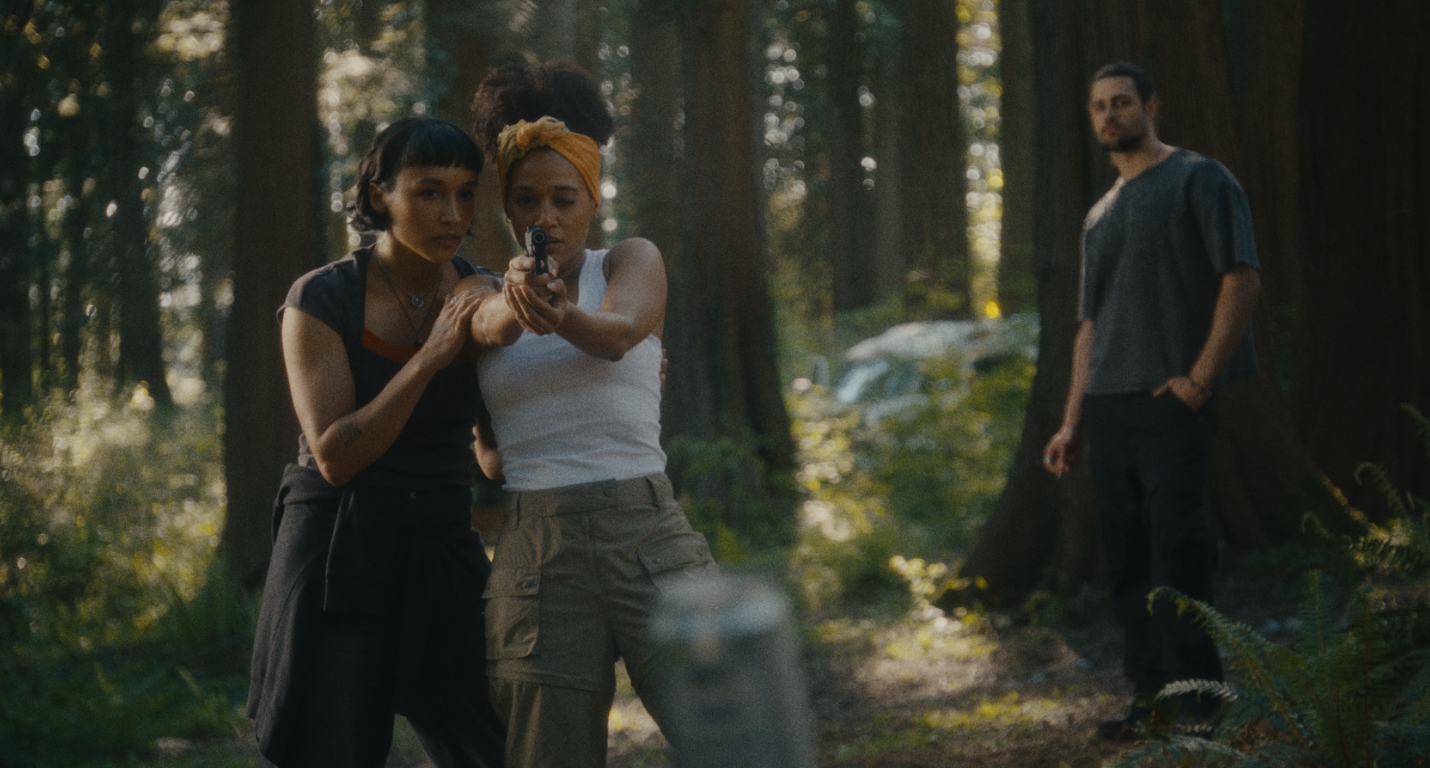
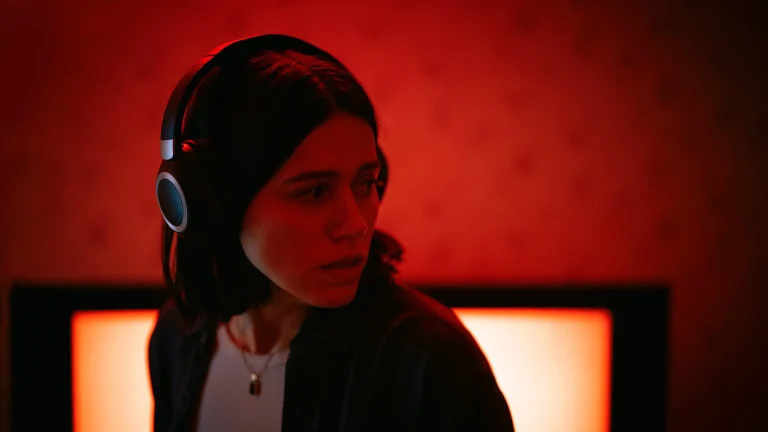
Worldbreaker follows a familiar pattern. It’s a post-apocalyptic epic that has an intriguing world and not much more. It’s short enough and tense enough that it will keep your attention. There are good scenes and some lush scenery when Willa and Dad are on the island. Yet, it’s never trying to be more than it is. It really could have been, but something holds it back. It’s not a bad watch, but it’s a bit of junk food and not a full meal.

Grade: C

Film Review: โ€˜The Love That Remainsโ€™ is a Complex, but Affecting Dramedy


Director: Hlynur Pรกlmason
Writer: Hlynur Pรกlmason
Stars: Saga Garรฐarsdรณttir, Sverrir Guรฐnason, รda Mekkรญn Hlynsdรณttir, Grรญmur Hlynsson

Synopsis: Captures a year in the life of a family as the parents navigate their separation. Through intimate vignettes and strange occurrences, the film explores the complexities of family, love, and the impact of shared memories.


Icelandic filmmaker Hlynur Pรกlmason is no stranger to making wholly singular pieces of work, and his latest, The Love That Remains (รstin sem eftir er), is no exception. I canโ€™t recall the last time I felt so absorbed watching a film, even though I found the structure to be often at odds with the poignant message at the heart of the picture. The story is relatively simple, but Pรกlmasonโ€™s formal approach is anything but. Instead of chronologically recounting a year in the life of a family whose parents (played by Saga Garรฐarsdรณttir and Sverrir Guรฐnason) are going through a separation, the Godland director portrays this twelve-month journey through fragmented memories.ย 
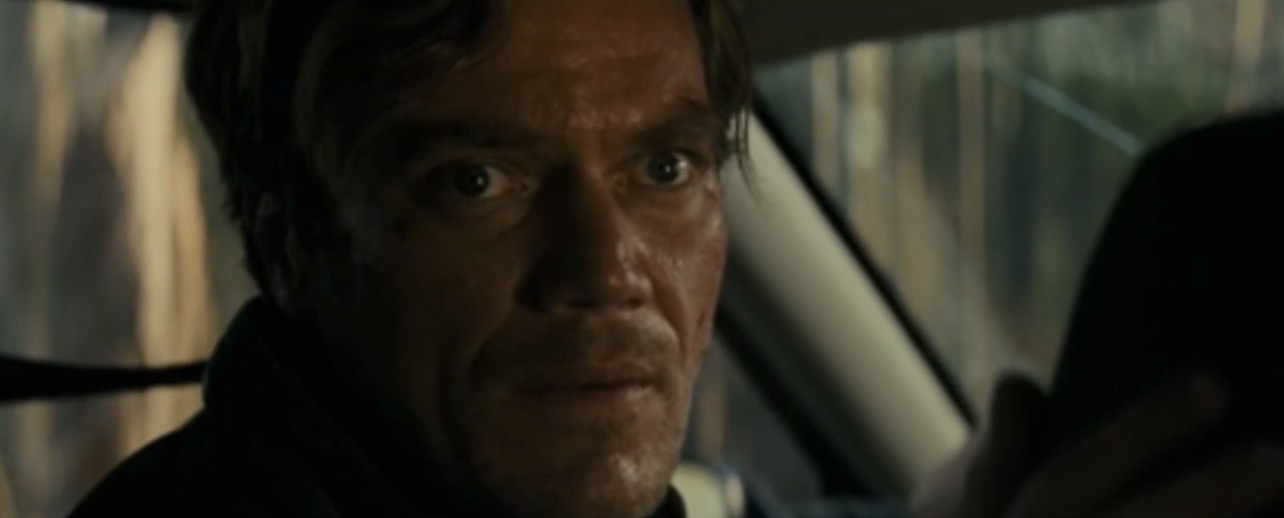
Some are, of course, positive and loving; others are not as uplifting. Then there are the mundane, but funny slice-of-life sequences that recall the work of Yasujiro Ozu (Good Morning, in particular) and the esoteric, otherworldly bits that come out of nowhere and shock your soul into complete bewilderment. Itโ€™s a totally singular artistic object, and one that demands your attention even if Pรกlmasonโ€™s structure is more alienating than commercially crowd-pleasing. Many may not appreciate the way he frames his story, but anyone who consistently has memories flashed back in front of their very eyes in jumbled, often imprecise succession (so, essentially, everyone), itโ€™s not hard to like whatโ€™s shown on screen. 
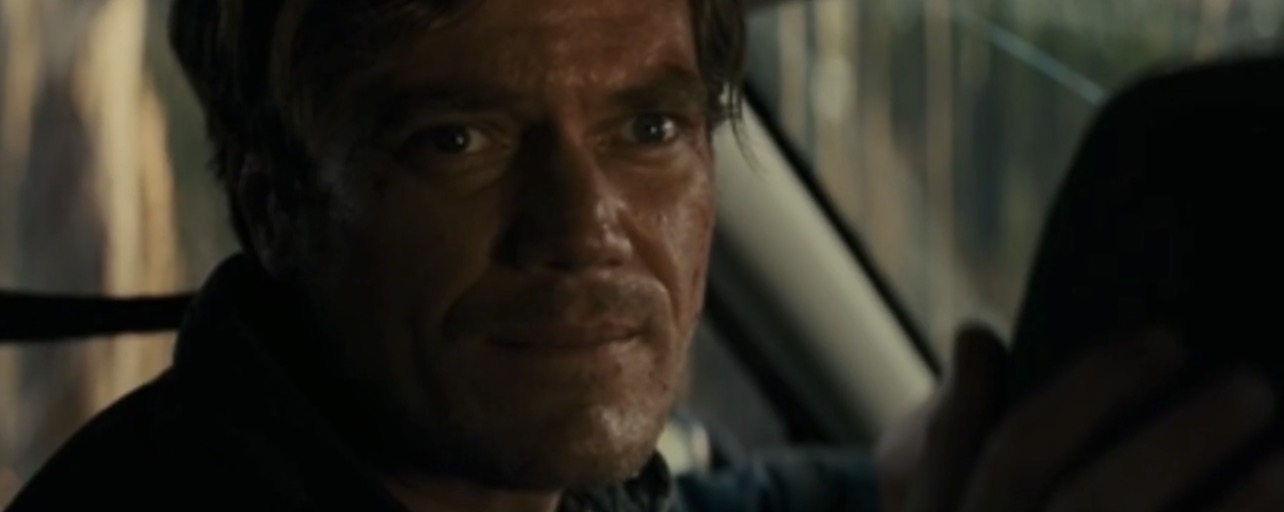
Life is, after all, a collection of fleeting memories. We go through a day, and whatโ€™s in the past cannot be fixed. Theyโ€™re only stored in our minds until our ultimate voyage. The way Pรกlmason captures these memories is the same way we think about our past in relation to the future. Our recollections rarely linger, and if they do, itโ€™s always the worst โ€“ and most embarrassing โ€“ parts of our past we donโ€™t want to relive. Maybe, just maybe, weโ€™ll also remember some of our darkest actions that will haunt us in our worst nightmares and make us feel the brunt of our gestures. In that case, Pรกlmason stages a sequence that feels plucked straight out of Jean-Claude Lauzonโ€™s Lรฉolo (or my worst nightmares, you decide!), but to say anything about it would rob you of the pleasures of discovering this unique object for yourself.ย 

Whatโ€™s most impressive here, though, is how Pรกlmasonโ€™s visual language informs the viewer of the fractures that caused the family to eventually separate without them uttering many words. As (purposefully) disjointed as the movie could get, even its juxtapositions gave many of its jaw-dropping images (shot by Pรกlmason himself) intense meaning. The performances are also excellent, with Garรฐarsdรณttir being a major highlight, conveying a litany of repressed emotions through only her eyes. The two children, played by รžorgils Hlynsson and Grรญmur Hlynsson, are nice comedic counterpoints to a story that isnโ€™t necessarily purely comedic, but represents a year in the life of an ordinary family grappling with an uncertain future, none of whom are sure how it will be shaped.ย 


Itโ€™s just a shame that, at the end of the day, the emotional attachment between the audience and the protagonists feels rather limited in scope because of the fragmented nature of the project. However, thereโ€™s no denying Pรกlmasonโ€™s imprint within world cinema, as an artist who continues to break the very foundations of the medium for the better, one project at a time, and forces all of us to think differently about how film โ€“ as a work of art โ€“ should operate and showcase what are the most profoundly human aspects in our lives. In a world that feels less human by the day, films like The Love That Remains are worth cherishing.

Grade: B+

Movie Review (Sundance 2026): ‘Ghost in the Machine’ is Already Behind the Times


Director: Valerie Veatch

Synopsis: Artificial intelligence’s unsung beginnings are found in power rather than computers, illuminating the dreams that underlie the hype that brought us to this point and our future.


Fears of artificial intelligence and its rise across the tech sphere are far from new to film fans. Yet the general public has shown genuine interest in these technologies, with little understanding of how they work. The Sundance documentary Ghost in the Machine tries to demystify the process and explain the framework for how weโ€™ve reached this moment. A movement like the one for โ€œgeneral artificial intelligenceโ€ does not just spring out of nowhere. However, director Valerie Veatch chooses a subject that has become so central to our public discourse that even her film falls behind the ever-evolving topic. 

A still from Ghost in the Machine by Valerie Veatch, an official selection of the 2026 Sundance Film Festival. Courtesy of Sundance Institute.

Veatch dives headfirst into the discussion of artificial intelligence with perhaps the most important question of all: โ€œHow do we understand what it means to be intelligent?โ€ Tracing its roots back to eugenics, many of the researchers who popularized the general idea of IQ did so in a way that would favor white societies over people of color. Once this initial idea took hold, it led to ideological states and hegemonies that reinforced this version of intelligence as the only true form. When the only way to define if people were โ€œsmartโ€ is to force others into a heuristic defined by researchers with a mission to uphold societal structures, any subsequent discussion of the topic is framed by racists and bigots. 

Using a multi-chapter structure, Ghost in the Machine delves into Silicon Valleyโ€™s use of rhetoric and futurism against the rest of the world. She dispels myths about how the area became the center of Americaโ€™s technological boom, but also highlights why it’s become a breeding ground for some of our most dangerous AI optimists. Figures like Sam Altman and Elon Musk have successfully pushed the government to embrace techno-fascist tendencies. After all, if they cannot hold all the power, why should anyone else? Veatch uses these two men throughout the film, highlighting a dangerous piece of rhetoric that existed a hundred years ago, only to highlight their use of the same language today. Itโ€™s an effective juxtaposition that leads to very clear conclusions. 

Throughout Ghost in the Machine, Veatch throws a lot of historical research and data at the audience. As she does, dozens of researchers serve as talking heads, giving the documentary a strong academic background. However, the issue this quickly creates is a lack of dynamic filmmaking and an overabundance of exposition. Ghost in the Machine unquestionably has the goods in its research and findings. Yet a lack of dynamic talking heads and relevant, but ultimately distracting, tangents only further complicates matters. 

The other issue facing Ghost in the Machine stems from the rapidly evolving world around the topic. There have already been significant documentaries on AI, and its use has become a daily talking point in the news and podcasts. That leaves Veatch in an unenviable position: how do you stay ahead of the public knowledge about a force they interact with every day? The truth is, it’s an impossible task. The end of the film features memes from the US government that are over a year old, and while it’s possible that Veatch could imagine a world where the president uses the technology in absurd ways, the movie cannot capture that zeitgeist in a bottle. 

A still from Ghost in the Machine by Valerie Veatch, an official selection of the 2026 Sundance Film Festival. Courtesy of Sundance Institute | photo by The BBC Archive.

By the time that Ghost in the Machine starts presenting the environmental impact of AI on communities of color, it treads ground well covered by even narrative films (e.g., Eddington). If the goal of Ghost in the Machine is to provide an overarching โ€œIntro to AIโ€ text, it succeeds on that level. However, the topic is changing so quickly, and its adoption has been so rapid, that it becomes impossible to keep up with where we are in the AI discourse. 

One way Ghost in the Machine effectively uses the technology is by telling us which footage is AI-generated and which is fake. The tracker stays in the corner of the frame for the entire film, and thereโ€™s an approach that primarily uses videos to critique them. Weโ€™ve all seen terrible videos of people with too many hands, eyes, and physics. However, juxtaposing real footage with computer-generated footage helps the audience remember that the technology is closer than we want to admit. Political movements and propagandists will use this against the people, and the results will be devastating. That does not even touch on the ways it will degrade the art of cinema.ย 


Ghost in the Machine is a thorough, often anger-inducing look at the world of tech oligarchs seeking power over the world. However, without much of a cinematic approach, this weighs on the film. There is too much information in the documentary for audiences to breathe, yet two hours is too long to sit through for the topics discussed. A more focused exploration of AI and the systemic ideas it reinforces would help.

Grade: D+

Episode 672: Best Actress Nominee Draft

This weekโ€™s episode is brought to you by Koffee Kult. Get 15% OFF with the code: ISF26!

This week on the InSession Film Podcast, Shadan Larki joins JD to discuss this year’s Oscar nominations (and the Oscars philosophically) and we do a Best Actress nominees draft as we consider the nominees from the 2020s!

– 2026 Oscar Nominations (6:54)
After some opening banter, we dig into this year’s crop of Oscar nominations and talk about how great the lineup is overall. Yes, there are a few major headscratchers, but mostly The Academy did a great job and it was exciting to see horror embraced for once. Who would have thought, given the history of the Oscars, that a vampire folk horror film would break the record with 16 nominations? We also dig a little into the philosophy behind the Oscars and the frustrations of how the system works. The pay-to-play system needs to go and there’s a desperation for variety that is lacking these days.ย 


RELATED: Listen to Episode 670 of the InSession Film Podcast where we discussed our Top 10 Movies of 2025!


– Best Actress Draft (59:17)
With the Oscars discourse in full swing right now, we decided to do a Best Actress nominee draft focusing on the nominees in the 2020s for that category. Best Actress is often a rich category each year, however, because of how the system is rigged, there are more questionable nominees than you may remember. Which made for a really fun draft as we had to strategize around nominations that wouldn’t be seen as the best performances. A somewhat tricky, but really fun draft! That said, who do you think won this draft between JD and Shadan?

Subscribe to our Podcast RSS
Subscribe to our Podcasts on Apple Podcasts
Listen on Spotify
Listen on iHeartRadio
InSession Film Podcast – Episode 672

Next week on the show:

Sam Raimi and Send Help

Help Support The InSession Film Podcast

If you want to help support us, there are several ways you can help us and we’d absolutely appreciate it. Every penny goes directly back into supporting the show and we are truly honored and grateful. Thanks for your support and for listening to the InSession Film Podcast!

VISIT OUR DONATE PAGE HERE

Movie Review: ‘Send Help’ is a Return to Form For Raimi


Director: Sam Raimi
Writers: Damian Shannon, Mark Swift
Stars: Rachel McAdams, Dylan O’Brien, Bruce Campbell

Synopsis: Two colleagues become stranded on a deserted island, the only survivors of a plane crash. On the island, they must overcome past grievances and work together to survive, but ultimately, it’s a battle of wills and wits to make it out alive.


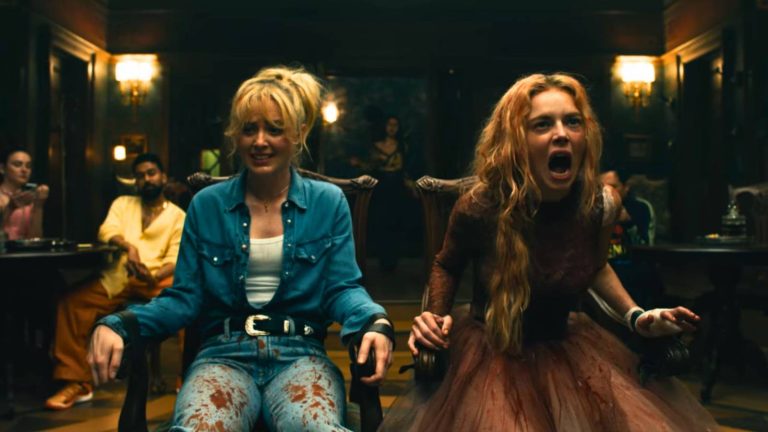
With Send Help, Sam Raimi demonstrates what he does best, expertly toeing the line between horror and comedy. The horror master returns with his first feature since the wildly overrated Doctor Strange in the Multiverse of Madness, delivering his strongest film since Drag Me to Hell. 

This is Raimiโ€™s reentry into the genre that made him a household name is an exhilarating horror-thriller, featuring a terrific performance from Rachel McAdams.ย Yes, with Send Help, Sam Raimi reminds us why heโ€™s a horror master โ€“ suspenseful, vicious, and wickedly funny.ย 

The film follows Linda Liddle (Academy Award-nominee McAdams), an employee in the planning and strategy division of a Fortune 500 company. Her work is so highly regarded that her boss is preparing to promote her to Vice President. However, things take a downturn when he dies and his yuppie, silver-spoon-fed son, Bradley (Twinlessโ€™s Dylan Oโ€™Brien), is handed the CEO position.

Of course, Bradley promptly surrounds himself with his frat-boy buddies, proving the boysโ€™ club is alive and well. Among them are Chase (Seagrassโ€™s Chris Pang) and Donovan (Blondeโ€™s Xavier Samuel), the latter of whom steals Lindaโ€™s work and is handed the promotion meant for her, simply because she doesnโ€™t present herself as the kind of corporate shark who wheels and deals as a power broker on the golf course.

Bradley wants to show Linda the door, but the COO (Far from Heavenโ€™s Dennis Haysbert, underutilized here) insists on keeping her on board, warning that the Bangkok merger could fall apart without her. Linda is forced to join the boys on a private jet, where, while sheโ€™s hard at work, they discover an old online audition video of her trying to land a spot on the latest season of Survivor

The joke, however, is on them when the plane crashes in a sequence so steeped in dark comedy it might as well be Vantablack, killing everyone on board except Linda, who washes ashore on a deserted island. While searching her new home for food and supplies, she stumbles upon an injured Bradley and nurses him back to health, leaving the two of them to fight for survival.

Raimiโ€™s Send Help is a viscerally felt horror flick with a savage original script from Damian Shannon and Mark Swift. The experience begins to work on many levels, like watching the love child of Cast Away, Swimming with the Sharks, and Misery. A survivalist desperation character study that doubles as a razor-sharp corporate satire. No, there are no boardrooms to swing an ax of corporate cruelty, or to make deals with handshakes on the golf course. 

Here, a smarmy Oโ€™Brien is psychologically dismantled by McAdamsโ€™ Linda, who proves that her kindness is not a weakness. The result is a tropical oasis-style chess match thatโ€™s deeply unnerving. Raimi builds tension into a power struggle that becomes a wild, darkly funny ride. Here, power is valued over empathy, with kindness seen as a strategy rather than a virtue.

By refusing to let either character be fully trusted, the script creates a diabolically entertaining viewing experience in which every interaction feels like a psychological ploy, and the outcome is never predictable. Just as compelling is the way both characters evolve, crossing each other like passing ships, one sliding from good to bad, the other discovering a measure of their own humanity.

Send Help is worth watching because it does what the very best horror-thrillers do: it elevates a psychological two-hander in which so much is revealed that youโ€™re never quite sure who to root for. Raimiโ€™s precise control of the camera, paired with sharp thriller mechanics and impeccable comedic timing, is just as effective as the filmโ€™s bitter, razor-edged back-and-forth dialogue. 

While the ending may feel a touch too clean, the larger themes of knowledge, competence, and emotional control come vividly alive through Rachel McAdamsโ€™ thrilling performance. Raimi understands that their fate isnโ€™t a prison, itโ€™s an opportunity. Survival is no longer the temptation.

Power is.

You can watch Send Help only in theaters starting January 30th!

Grade: B+

Chasing the Gold: How to Watch (Almost) Every 2026 Oscar Nominee

In honor of the Oscar nominations, here is a guide to where to find every single 2026 Oscar nominated film. Including the shorts! Keep in mind, some titles arenโ€™t publicly available yet. This page will be updated as theatrical, streaming, and Video-On-Demand availability changes.

All films are listed alphabetically. Happy viewing!


All the Empty Rooms
Oscar categories: Documentary Short Film
Where to watch: Netflix

A Friend of Dorothy
Oscar categories: Live Action Short Film
Where to watch: YouTube

Arco
Oscar categories: Animated Feature Film
Where to watch: Pre-order on Apple TV

Armed Only With a Camera: The Life and Death of Brent Renaud
Oscar categories: Documentary Short Film (Craig Renaud & Juan Arredondo)
Where to watch: HBO Max

Avatar: Fire and Ash
Oscar categories: Visual Effects, Costume Design
Where to watch: Still playing in select theaters; streaming & VOD TBD

Blue Moon
Oscar categories: Actor (Ethan Hawke), Original Screenplay (Robert Kaplow)
Where to watch: Netflix

Bugonia
Oscar categories: Picture, Actress (Emma Stone), Adapted Screenplay (Will Tracy), Original Score (Jerskin Fendrix)
Where to watch: Peacock

Butterfly
Oscar categories: Animated Short Film
Where to watch: YouTube

Butcherโ€™s Stain
Oscar categories: Live Action Short Film
Where to watch: TBD

Children No More: Were and Are Gone
Oscar categories: Documentary Short Film
Where to watch: TBD

Come See Me in the Good Light
Oscar categories: Documentary Feature Film
Where to watch: Apple TV+

Cutting Through Rocks
Oscar categories: Documentary Feature Film
Where to watch: TBD

Diane Warren: Relentless
Oscar categories: Original Song (โ€œDear Meโ€)
Where to watch: Available to Rent/Buy on VOD Platforms

Elio
Oscar categories: Animated Feature Film
Where to watch: Disney+

F1
Oscar categories: Picture, Sound, Film Editing (Stephen Mirrione), Visual Effects
Where to watch: Apple TV+

Forevergreen
Oscar categories: Animated Short Film
Where to watch: YouTube

Frankenstein
Oscar categories: Picture, Supporting Actor (Jacob Elordi), Adapted Screenplay (Guillermo del Toro), Original Score (Alexandre Desplat), Costume Design, Makeup & Hairstyling, Production Design, Sound, Cinematography (Dan Laustsen), Visual Effects
Where to watch: Netflix

Hamnet
Oscar categories: Picture, Actress (Jessie Buckley), Director (Chloรฉ Zhao), Adapted Screenplay (Chloรฉ Zhao & Maggie O’Farrell), Original Score (Max Richter), Costume Design, Production Design, Casting (Nina Gold)
Where to watch: Streaming on Peacock, beginning March 6.

If I Had Legs Iโ€™d Kick You
Oscar categories: Actress (Rose Byrne)
Where to watch: HBO Max

It Was Just an Accident
Oscar categories: Original Screenplay (Jafar Panahi; Script collaborators: Nader Saรฏvar, Shadmehr Rastin & Mehdi Mahmoudian)
Where to watch: Streaming on Hulu/Disney+

Jane Austenโ€™s Period Drama
Oscar categories: Live Action Short Film
Where to watch: Vimeo

Jurassic World Rebirth
Oscar categories: Visual Effects
Where to watch: Peacock

Kokuho
Oscar categories: Makeup and Hairstyling
Where to watch: Currently in select theaters

KPop Demon Hunters
Oscar categories: Animated Feature Film, Original Song (โ€œGoldenโ€)
Where to watch: Netflix

Little Amรฉlie or the Character of Rain
Oscar categories: Animated Feature Film
Where to watch: Available to Rent/Buy on VOD Platforms

Marty Supreme
Oscar categories: Picture, Actor (Timothรฉe Chalamet), Director (Josh Safdie), Original Screenplay (Ronald Bronstein & Josh Safdie), Film Editing (Ronald Bronstein & Josh Safdie), Casting (Jennifer Venditti), Cinematography (Darius Khondji), Production Design, Costume Design
Where to watch: Currently in theaters

Mr. Nobody Against Putin
Oscar categories: Documentary Feature Film
Where to watch: Available to Rent/Buy on VOD Platforms

One Battle After Another
Oscar categories: Picture, Director (Paul Thomas Anderson), Supporting Actor (Benicio Del Toro, Sean Penn), Supporting Actress (Teyana Taylor), Casting (Cassandra Kulukundis), Cinematography (Michael Bauman), Original Score (Jonny Greenwood), Sound, Film Editing (Andy Jurgensen)
Where to watch: HBO Max

Perfectly a Strangeness
Oscar categories: Documentary Short Film
Where to watch: TBD

Retirement Plan
Oscar categories: Animated Short Film
Where to watch: YouTube via The New Yorker

Sentimental Value
Oscar categories: Picture, Actress (Renate Reinsve), Supporting Actress (Elle Fanning, Inga Ibsdotter Lilleaas), Supporting Actor (Stellan Skarsgรฅrd), Director (Joachim Trier), Original Screenplay (Eskil Vogt & Joachim Trier), International Feature Film, Film Editing (Olivier Bugge Couttรฉ)
Where to watch: Available to Rent/Buy on VOD Platforms

Sirฤt
Oscar categories: International Feature Film, Sound
Where to watch: Sirฤt begins a limited theatrical run in February

Song Sung Blue
Oscar categories: Actress (Kate Hudson)
Where to watch: Peacock

Sinners
Oscar categories: Picture, Director (Ryan Coogler), Actor (Michael B. Jordan), Supporting Actress (Wunmi Mosaku), Supporting Actor (Delroy Lindo), Original Screenplay (Ryan Coogler), Casting (Francine Maisler), Cinematography (Autumn Durald Arkapaw), Costume Design, Production Design, Makeup and Hairstyling, Original Score (Ludwig Goransson), Original Song (โ€œI Lied to Youโ€), Sound, Visual Effects, Film Editing (Michael P. Shawver)
Where to watch: HBO Max / Prime Video

The Alabama Solution
Oscar categories: Documentary Feature Film
Where to watch: HBO Max

The Devil Is Busy
Oscar categories: Documentary Short Film
Where to watch: HBO Max

The Girl Who Cried Pearls
Oscar categories: Animated Short Film
Where to watch: YouTube

The Lost Bus
Oscar categories: Visual Effects
Where to watch: Apple TV+

The Perfect Neighbor
Oscar categories: Documentary Feature Film
Where to watch: Netflix

The Secret Agent
Oscar categories: Picture, Actor (Wagner Moura), International Feature Film, Casting (Gabriel Domingues)
Where to watch: Streaming on Hulu/Disney+

The Singers
Oscar categories: Live Action Short Film
Where to watch: Netflix

The Smashing Machine
Oscar categories: Makeup and Hairstyling
Where to watch: HBO Max

The Three Sisters
Oscar categories: Animated Short Film
Where to watch: YouTube

The Ugly Stepsister
Oscar categories: Makeup and Hairstyling
Where to watch: Hulu / AMC+

The Voice of Hind Rajab
Oscar categories: International Feature Film
Where to watch: Currently in theaters; VOD beginning on March 3

Train Dreams
Oscar categories: Picture, Adapted Screenplay (Clint Bentley & Greg Kwedar), Original Song (โ€œTrain Dreamsโ€), Cinematography (Adolpho Veloso)
Where to watch: Netflix

Two People Exchanging Saliva
Oscar categories: Live Action Short Film
Where to watch: YouTube via The New Yorker

Viva Verdi!
Oscar categories: Original Song (โ€œSweet Dreams of Joyโ€)
Where to watch: Not in theaters; VOD availability TBD

Weapons
Oscar categories: Supporting Actress (Amy Madigan)
Where to watch: HBO Max

Zootopia 2
Oscar categories: Animated Feature Film
Where to watch: Currently in theaters

Women InSession: Female Horror Directors

This week on Women InSession, we discuss our favorite female horror directors and some films that we highly recommend everyone checking out! While it seems that access and opportunity has plateaued a little bit for women directors in film, there are still some great movies coming out and we wanted to highlight a few that are absolutely worth your time.

Panel: Kristin Battestella, Megan Kearns

On that note, check out this week’s show and let us know what you think in the comment section. Thanks for listening and for supporting the InSession Film Podcast!

Subscribe to our Podcast RSS
Subscribe to our Podcasts on Apple Podcasts
Listen on Spotify
Listen on iHeartRadio
Women InSession – Female Horror Directors

LISTEN TO THE PODCAST

Movie Review (Sundance 2026): ‘Barbara Forever’ is a Celebration of a Queer Cinema Icon


Director: Brydie O’Connor

Synopsis: An archival study examining pioneering lesbian filmmaker Barbara Hammer’s impact, career, and contributions.


The lineage of queer filmmakers has seen an explosion of undiscovered classics from the 1980s and 1990s. Few figures were as integral to telling raw, honest stories about life as a lesbian as Barbara Hammer. The Sundance documentary Barbara Forever seeks a deeper understanding of her life. Expanding her short documentary about Hammer, director Byrdie Oโ€™Connor captures never-before-seen intimacy from Hammerโ€™s life, a shocking surprise given how open her stories have always been. While the film is a little long, the sheer amount of footage on display is a marvel.

Barbara Hammer appears in Barbara Forever by Brydie O’Connor, an official selection of the 2026 Sundance Film Festival. Courtesy of Sundance Institute | photo by The Estate of Barbara Hammer.

After leaving her husband in 1974, Barbara Hammer sought every opportunity to explore love on her terms. She picked up a camera and began capturing the raw intimacy of her life, especially her sex life, whenever possible. Over the next five decades, Hammer would craft more than 80 films, including Dyketactics and Nitrate Kisses. While Hammer treated her life like an open book, many of her partners did not. However, after meeting Florrie Burke, Hammer found a partner and collaborator.

Oโ€™Connor faced a massive amount of archival footage as she began piecing together the documentary, but at the same time, much of this footage already contained Hammerโ€™s voice. The challenge was finding the balance between recreating the artistโ€™s existing work and crafting your own style. For the most part, Oโ€™Connor delivers on this front and crafts a compelling biodoc.

Even so, there are moments when the story becomes a bit traditional. This is often an issue in this subgenre, especially when they cover a famous personโ€™s entire life. This leaves some of the drama dependent on the ups and downs of Hammerโ€™s career. Barbara Forever breaks most from the tropes when she speaks with Burke. Hammerโ€™s longtime partner provides insights that even the overly honest filmmaker did not put on camera. Mixing new interviews with their home movies, you get an intriguing view of Hammer.

Barbara Hammer appears in Barbara Forever by Brydie O’Connor, an official selection of the 2026 Sundance Film Festival. Courtesy of Sundance Institute | photo by The Estate of Barbara Hammer.

Most of the narration in Barbara Forever comes from Hammer herself. However, this is not the self-aggrandizing stories that we sometimes see the subjects of biographical documentaries use to craft myths about their lives. This becomes a benefit to Barbara Forever and highlights Oโ€™Connorโ€™s familiarity with Hammer across nearly any subject. Rather than a single audio track, she pieces together snippets of recordings in her archive. Oโ€™Connor is also credited as an archivist on the film, which further adds credence to this process.

The other intriguing aspect of Barbara Forever is its focus on Hammerโ€™s most intimate concept: aging on camera. We rarely see this in queer cinema, but it was one of Hammerโ€™s most important contributions to the scene. From her days in the 1970s through the end of her career, Hammer was fascinated with the female body. In Barbara Forever, we observe a visible shift in her appearance over time. Itโ€™s a fearlessness we rarely see in cinema, where cultural expectations of looking โ€œyoungโ€ have led many to undergo drastic body changes. Instead, the natural beauty of the female form is not only ever-present in Hammerโ€™s films, but one of its most intriguing aspects.

In terms of her influence on indie film and LGBTQ+ cinema, Oโ€™Connor ensures sheโ€™s put in the same breath as Todd Haynes, Gregg Araki, and other ’90s contemporaries. Hammer always had admirers, but working on avant-garde movies does not open oneself up to mass appeal. Yet her push to continually defy the boundaries of what was possible in cinema opened the doors for future filmmakers to build on her progress. Thereโ€™s a reason why Nitrate Kisses continues to find an audience over thirty years after its release.Barbara Hammer is not a household name, even among cinephiles. However, her influence on the art form and avant-garde storytelling is undeniable. Oโ€™Connor handles the filmmaker’s legacy with care, resulting in a sprawling vision of queer art for over forty years. That alone makes Barbara Forever a must-watch for film historians.

Grade: B-

Movie Review (Sundance 2026): ‘TheyDream’ is a Beautiful Rumination on Family, Animation, and the Past


Director: William David Caballero
Writers: William David Caballero, Elaine del Valle, Brad Jones
Stars:ย Diana Alvort, William David Caballero, Vic Rico

Synopsis: A director and his mother document their Puerto Rican family over 20 years, facing loss. Through animation, they celebrate memories while realizing each creation involves a painful goodbye.


When directors turn their cameras on themselves, the results can often be messy. However, director William David Caballero uses his unique skills as an animator and stop-motion creator to make TheyDream into a story unlike any other. Using multiple forms of animation to craft the story of his family and bring long-gone members of his lineage back to life for his mother, TheyDream creates an immigrant tale that bursts to life with energy and love. 

Isolina Aponte and William D. Caballero appear in TheyDream by William D. Caballero, an official selection of the 2026 Sundance Film Festival. Courtesy of Sundance Institute | photo by William D. Caballero.

Caballero channels the history of his family in America, examining important moments spanning twenty years. Using a treasure trove of footage he collected and recorded, Caballero reexamines conversations with his father, who often used homophobic language around his closeted son. Additionally, he allows his mother to reenact voicemails from his grandmother, giving her a new life in the process. As Caballero works to chronicle the family’s history and explore the quiet moments of their life in America, his mother guides him in each new direction. 

TheyDream never attempts to portray itself as anything but a love letter from Caballero to his family. He openly recognizes that there are flaws in how his father approached the world, as well as the fights that soured their relationship. Through animation, Caballero explores his own frustrations with self-confidence. He replays the scenario, pinpoints where he could have changed the conversation, and questions why he stayed silent instead. 

A still from TheyDream by William D. Caballero, an official selection of the 2026 Sundance Film Festival. Courtesy of Sundance Institute | photo by William D. Caballero.

The narrative crafts moments like this throughout TheyDream. Caballero and his mother, Milly, explore the fraught moments of their lives. As he does this, Caballero begins to understand his family in a new light. While TheyDream is a project that allows him to interrogate his own mistakes, it also gives him new windows into empathizing with those heโ€™s lost. 

The actual animation that Caballero crafts is its own magic trick. Using so many types of animation keeps the audience on its toes and allows him to seamlessly integrate hand-drawn figures into miniature sets. Each element requires its own painstaking process. The most obvious are in the stop-motion animations, many of which use figures, and in the unique use of motion capture. As he gets his mother to reenact the last voicemails from Caballeroโ€™s grandmother, they find incredible catharsis in the product and the process. 

A still from TheyDream by William D. Caballero, an official selection of the 2026 Sundance Film Festival. Courtesy of Sundance Institute | photo by William D. Caballero.

TheyDream is the kind of documentary that should not work on paper. Yet by exploring the incredibly specific events within the family, Caballero finds universality. We all carry grief over the moments we havenโ€™t shared with loved ones after theyโ€™re gone. For a brief moment, TheyDream not only allows Caballero to remember what made each of his family members special, but remember what goals they had for him and their family in the future. The re-exploration of these relationships leads to stunning revelations and incredible moments that will make hearts of ice thaw.  Stories like TheyDream might be premised on ideas that feel too narrow. However, itโ€™s in this focus that Caballero and his mother find some universal truths about family and the moments we do not want to talk about. We believe that hiding parts of ourselves from our loved ones will cascade them away, but the truth is, we can never know unless we put ourselves in the position to ask.

Grade: A