



ComMANNdment #6: Embrace the Power of Water
Okay…hear me out. I feel like this ComMANNdment is overly related to a biblical reference and Jesus turning water into wine. That was not my intention at the outset, but when the term ComMANNdment came to me, I couldn’t resist putting this in.
Water is a powerful element that can by symbolized in many ways. Water can be seen as serene or peaceful – something to look at while you ponder all of life’s great questions. Water can be cleansing – both in a removal of grime but also as a mental way of shedding the day. But water can also be destructive when too much is introduced, and if you have seen enough movies then you know that when it starts to rain something bad is about happen. Remember: when it rains, it pours.
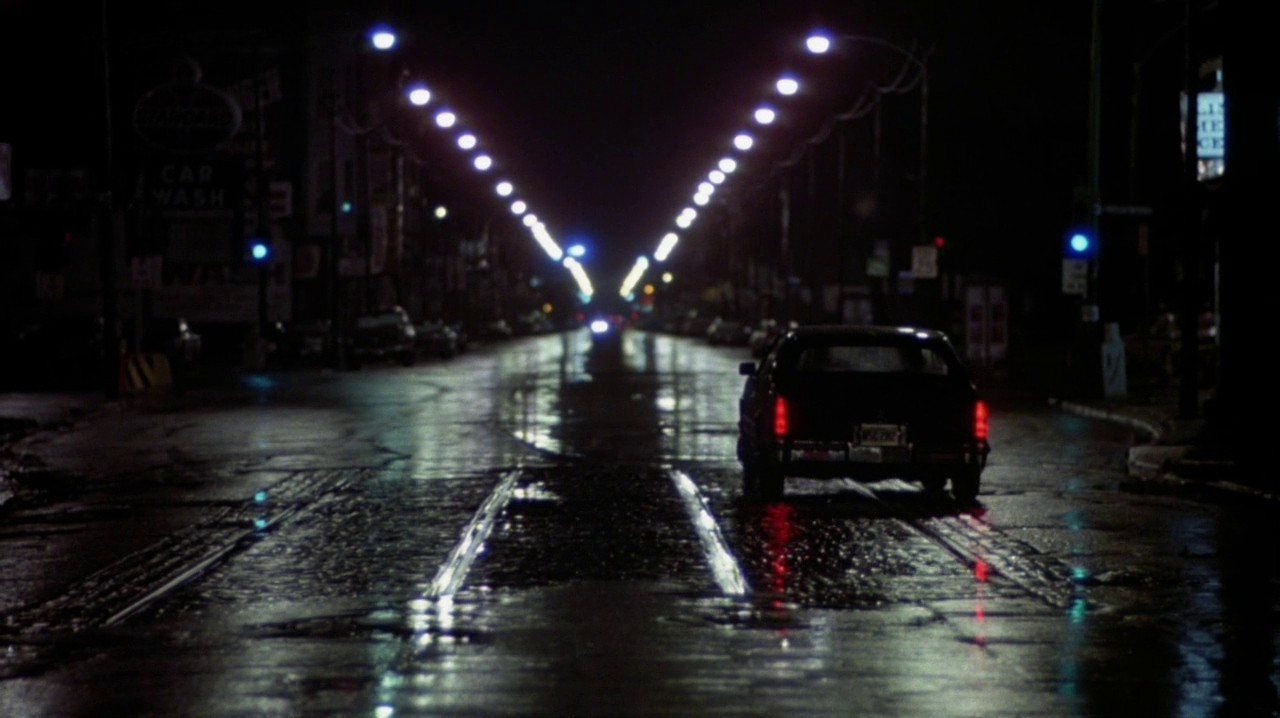
Even in a film like Thief, significant moments of the film revolve around water. The movie even STARTS in rain! (And what a wonderful top to bottom pan shot we get of the rain falling in the alleyway, prominently putting nighttime Chicago on display.) This rain, this version of water foreshadows the turbulent nature of Frank’s life and everything that will happen going forward. But Mann flips it on us: instead, our next glimpse of water comes after the heist has successfully been completed and Frank shares a Danish with a fisherman as the two look out over the glory of Lake Michigan.
Thief alone quickly shows the extremities of the use of water in relation to the character of Barry. After the successful completion of the burn job in L.A., Frank’s newly formed family spends some relaxation time with Barry and his girlfriend in San Diego. Barry seems to be the only one swimming the water and enjoying the full benefits of the beach. It is only minutes of screen time later that Barry is gunned down in Frank’s car lot and ultimately dumped into a vat of water for his body to be disposed of (water for Barry is literally both a moment of peace and a means of obliterating his physical being).
As The Keep begins to roll credits, we hear the brewing of a thunder storm. The jeeps and tanks of the Russian soldiers are driving through rain – leading us to believe that the events we are about to witness will be tumultuous and everchanging. And outside of falling from the sky, water acts a barrier that needs to be crossed: Glaeken returning to the keep so that he can get Molasar back into his cavernous prison.
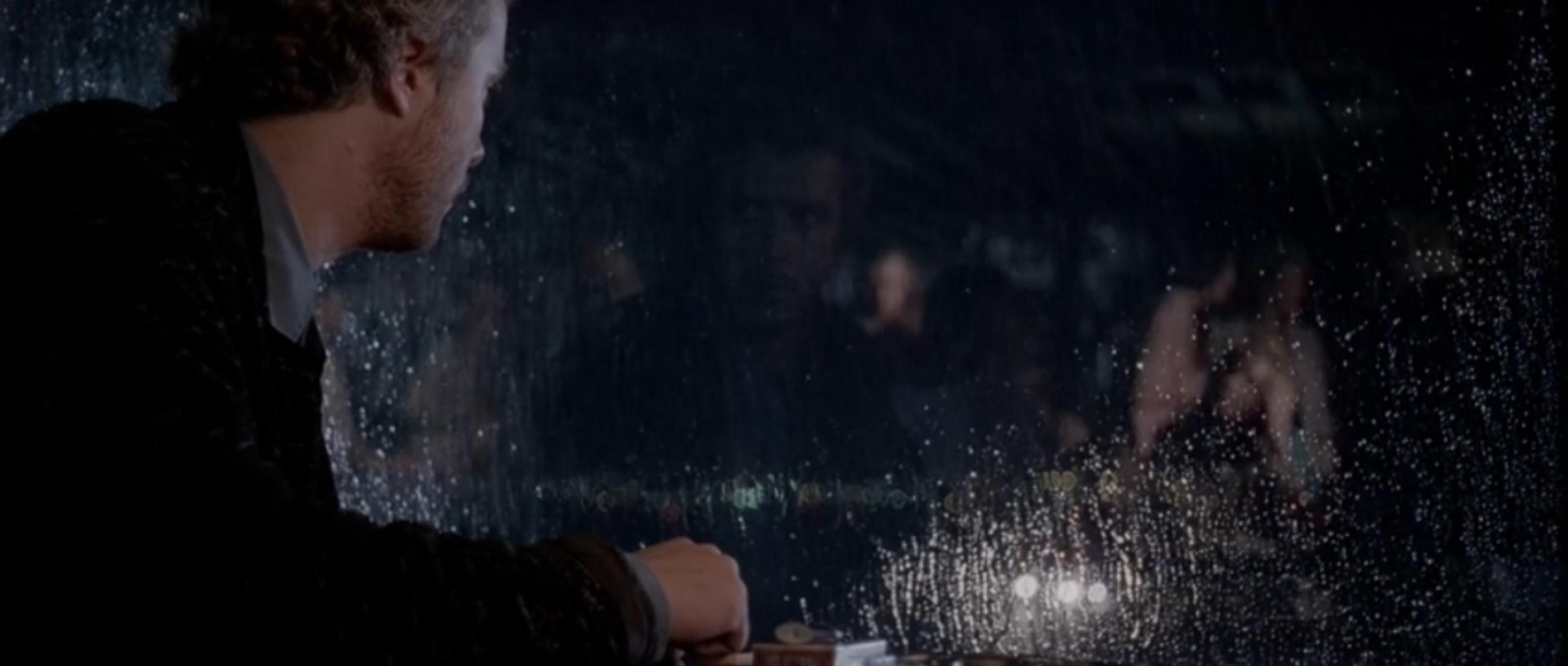
Manhunter sparks the third consecutive film of Michael Mann to feature water prominently in its opening moments, but unlike Thief and The Keep which utilize H20 as rain, Manhunter sets the Graham home on the Miami beach. Here the water takes on multiple meanings. Will, being a former investigator and thoroughly detailed individual, would know that putting your back to water limits where an attack can come from. The water also acts as a means of cleansing and healing as Will attempts to move on from the history with Lecktor. Having the water in the background of the sensually blue marital scene between Will and Molly lets us know that the everchanging tides are going to shift the sands of their familial existence (at least for the time being). The last example I’ll use for Manhunter revolves around Francis and Reba: the night after they have intercourse, Dolarhyde finds Reba outside on the dock (again, water in the background). For these two, their own sands of normalcy are shifting: Reba believes she may be moving towards a real relationship and Francis could be struggling with his changing into the Red Dragon.
Given circumstances of location make water a prevalent and prolific tool of Mann’s in The Last of the Mohicans. Water will not be more prominently used as a path of transportation until Miami Vice and considering the nature of our setting is used the most organically in a Mann film. The waterfall scene alone merits worthy conversation and can be attributed to other ComMANNdments: documentary feel, camera in interesting positions, and location as character. The waterfall itself acts as a shield of sorts, but also in a transitionary way. Rushing water and dark caves make it near impossible to spot our escapees and thus protects them from Magua and the hunting Huron tribe, but the waterfall quickly becomes a portal for our Mohicans to avoid capture. I also think it’s important to point out that in the opening moments of the film (and periodically throughout) that we see mist hanging in the air. Water can be found generally in its three basic forms: solid as ice, liquid as water, and as gas vapors. Mist is a transitional phase between liquid and gas and this period of change for the water is indicative of where our characters are in history: Native people are on the verge of being permanently displaced as colonial settlers break off from England to start a country of their own.
The water ComMANNdment is a bit tricky when it comes to Heat, but bear with me as I give you my examples from this movie. Our first example is an obvious one and something that has been repeated in many Mann films: one of our contemplative male leads looking at the sea. Perhaps it is because so much is unknown about the deep sea or perhaps it is because the waves crashing into the sand erases what was there and allows for something new to be created, but for whatever reason people need moments to look out at the water. Neil has a few of these moments, but prominently early in the movie after the bearer bonds holdup and letting Waingro escape he needs this time to recollect on recent events before moving onto the next job. The next showing of water is really only set to show us where we are located: the camera cranes down on a motel pool as Vincent pulls up to the crime scene with the murdered sex worker (Waingro’s evil on full display here). This water reference may seem like a stretch if not for the next few examples we have because what seeing the pool does is now alert us to something bad that we are about to see. My last three scenes all have water preceding a momentous event or decision. As the bank heist concludes, Cherrito (Tom Sizemore) is running through the courtyard of multiple high rises and trips as he runs through a fountain. His next decision is to grab a little girl and to use her as a shield and/or hostage. This ultimately proves futile as Vincent takes him out with a single shot, but the question of could Cherrito have gotten away if he hadn’t slipped is interesting. My penultimate examples involves Neil and Eady. Neil arrives at Eady’s place as she is watching the news – she is trying to figure out what is going on and who Neil truly is. At one point, Neil utters the phrase, “When it rains, you get wet.,” alluding to water. Eady hears this and immediately tries to take off and get free of Neil. This is also a futile attempt as Neil catches up with her and convinces her to stay. Finally, and most overtly, the last moment of water is the most painful to watch: Lauren’s suicide attempt. Water on the hotel room carpet alerts Vincent to the issue, and obviously Lauren is unconscious in the overflowing bathtub. Overall, water’s relationship to death in Heat is hard to be ignored once you have noticed the signs.
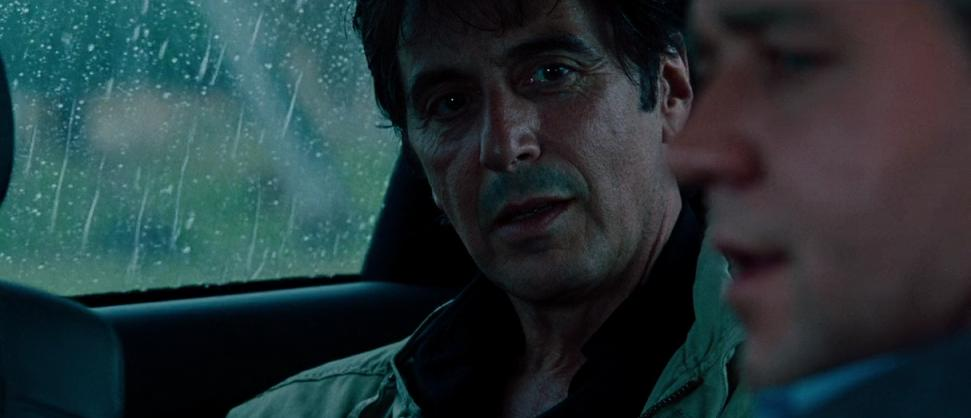
During The Insider, water shows up during key moments of Wigand’s decision-making. When Bergman and Wigand connect outside of Jeffrey’s house (after the man in the suit stalks Wigand at the driving range), it is pouring rain outside as the two men argue. Lowell even needs to use a newspaper (a representation of his profession and professionalism) to shield himself from the downpour. After Jeffrey has Lowell get into his car, we see the rain drops drip down the windshield as the two men speak near an abandoned building by the river. This moment feels like it is washing away any animosity these two may have and gives them a clean slate with which to work with. It reinforces the idea that Jeffrey has DECIDED to trust Lowell and move forward with their “60 Minutes” discussion. The other notable sighting of water in this film occurs right before Wigand says “Fuck it – let’s go to court.” Prior to this, the movie almost comes to a standstill as Lowell, police, attorneys, and even us as the audience waits for Jeffrey to ponder how he navigates forward with his deposition in Mississippi. The long, contemplative looks at the vast gulf waters could represent a myriad of thoughts all converging at once in his head that ultimately lead him to question his integrity. The last impactful moment of water arrives during Jeffrey’s hotel hallucination with his kids as Lowell calls from a vacation home. The cell service compels Lowell to walk into the water so that he can complete his conversation with Jeffrey – and this is also where another decision gets made, but not overtly. The implications of Jeffrey committing suicide are hard to ignore at this moment. The fact that Lowell goes into the water, a moment of humility and vulnerability, to make sure that he can talk Jeffrey off the metaphorical ledge shows a commitment that Jeffrey did not think he still had. The cleansing and healing nature of water is almost transferred through the phone from Lowell to Jeffrey and the decision to stay alive and keep on maintaining the integrity of the situation leads us to Jeffrey’s ultimate vindication.
Water’s cleansing power is on full display (and prominently so) at the conclusion of Ali. The film itself is bookmarked by these key fights that from Ali’s life: starting with Clay’s first championship against Joe Lewis and ending with the Rumble in the Jungle victory over George Foreman. The journey of the film shows us the highs and lows of Ali’s career, but we understand that Ali is a complicated man in need of new direction and focus. While the film cannot fully delve into every facet of Ali’s life, the story presented shows us that Ali is in need of a fresh start. At the conclusion of the Foreman/Ali fight, Ali climbs the turnbuckle and celebrates in front of the crowd that was supporting him while in Kinshasa. And then, as if a higher power was personally invested in the outcome of this fight, thunder booms and lightning illuminates the sky. A downpour of biblical proportions rains down and is symbolic of a (hopefully) brighter and cleaner future for Muhammad Ali. Any past sins, indiscretions, or moments of pride can be forgiven. Obviously, Ali is a real person and would face further complications, but the storytelling device of a man’s sins being washed clean is very apparent at the finish of Ali.
As far as I could tell, water only predominantly shows up once throughout the entirety of Collateral, but its presence leads us down a rabbit hole of interesting “what-ifs.” The pivotal moment occurs after Vincent completes his first hit and the body slams into Max’s cab. In a futile effort to remove evidence, Max uses a bottle of water to clean off the shattered hood of his car. Right away this reminds us of the cleansing nature of water, but unlike in Ali when a character is spiritually cleansed Max can only physically clean so much. This moment leads to an incredible image we see later when Fanning comes around looking for his CI: we get a top down POV shot of the ground beneath the apartment. In this shot we see glass that we cannot separate from the apartment window or the windshield, but we also see that the ground is noticeably wet in certain places and bone dry in others. This leads Fanning to the conclusion that something nefarious is going on. This is an interesting and visually compelling storytelling device because with just the broken glass Fanning could have more easily dismissed the event (granted it still would look weird to have all this broken glass and no body). The addition of water remnants being a missing puzzle piece in Fanning’s case is what starts the whole investigation of what happened to his CI and ultimately brings him to Max and Vincent, with only a terrible conclusion in Fanning’s future.
This far into writing I have yet to mention the term “director’s cut.” Maybe Michael Mann isn’t as notorious for futzing with finished products like a Ridley Scott or Francis Ford Coppola, but he nonetheless does have alternate versions of his films – Miami Vice being one of them. In the theatrical release, the film opens in a club as Sonny, Rico, and crew are in the middle of a sting operation. The director’s cut shows an extended speedboat sequence that both sets up the scene at the club and how well our two leads can navigate the water – and this leads into our 6th ComMANNdment. Water is all around as we are primarily set on islands or beaches. We cannot go to a new location with seeing how much water surrounds our characters. Notably, Colin Farrell and Gong Li have to navigate the sea for their courtship to begin (and it is also on the water that their relationship comes to an end). Water here signifies both its power of growth and destruction: water can create life and water can take it away. As an added bonus, the weather on the day the courtship begins is sunny with a promise of heat and connection – when they part, it is cloudy and we know that doom is the inevitable conclusion. Quite frankly, you cannot ignore the water in Miami Vice – it is everywhere and used literally and metaphorically.
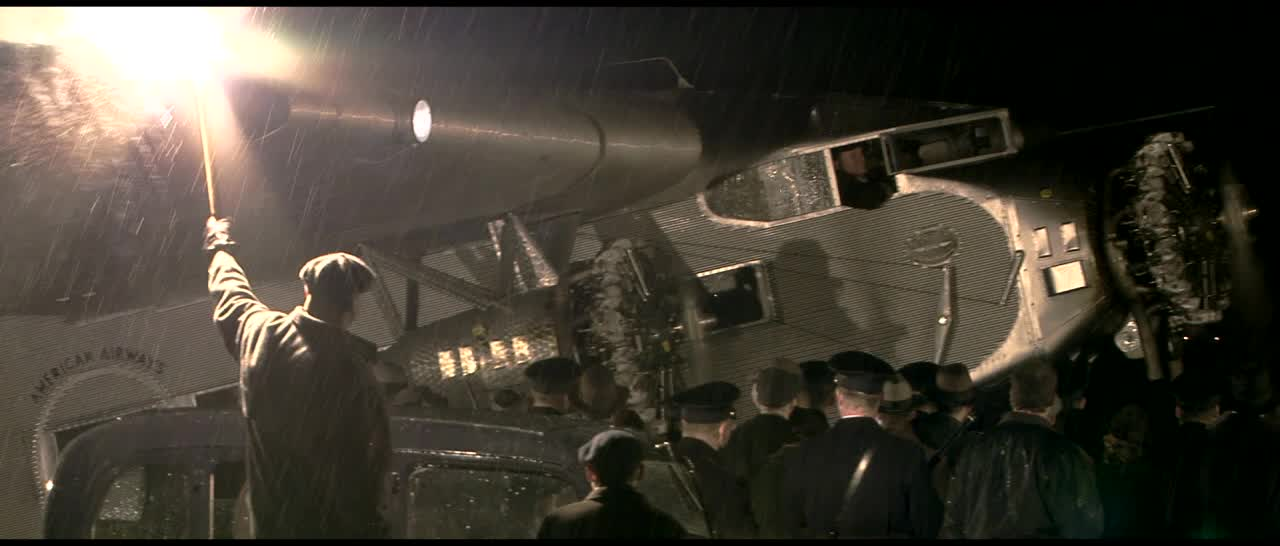
While not as monumentally important here as it was in Miami Vice, water does still make its way into Public Enemies during a few moments that lead to big, life altering choices. Before launching into these three scenes, I want to briefly acknowledge the Otis Taylor song “Ten Million Slaves” that plays throughout portions of the movie. While the song itself may not have any literal place in the world of Public Enemies, the bluegrass sound puts us firmly in the milieu of the Midwest and mentions water in its first (and repeated) lines “Rain and fire crossed the ocean.” Onto the scenes, the first of which has water used in a method of rejuvenation – the way water may spring a dying plant back to life. When Dillinger is arrested in Phoenix and sent back to Indiana, he arrives by plane and lands into a sea of reporters and flashbulbs. Rain is pouring down: at first, we could see this as water being used as a symbol for washing all of Dillinger’s hope and dreams away, but as he is driven to the prison, he sees adoring fans yelling for him. This energy leads into the next scene where he smiles and charms his way into the hearts of the reporters on hand. The second key scene with water involves Dillinger as he reunites with Billie. They seemingly have pulled off the road and have taken respite on a sandy beach near one of the Great Lakes. We learn that it is around 4 a.m. and our two lovebirds are making plans for their future. We can (maybe) hear the distant sound of waves, but we cannot see the water. Our lack of perception regarding water here is just like the lack of perception Dillinger and Billie are showing in this moment: we cannot see the water like they cannot see their future; both are dark and unknown. And of course, the last scene connected with water is when Anna is selling out Dillinger to Purvis: the automobile is parked by the waterfront. In this last moment of water’s significance in Public Enemies, it represents a path forward…just not for Dillinger and Billie.
Water’s power is put on full display in a plot pivotal moment in Blackhat. Simply put, a nuclear plant explodes when its cooling system is upended by Sadak. During the moment of crisis, we see the turbines speed up, breakdown, and water temperatures rise – leading to carnage. What was once in place to help keep the site safe was utilized in its downfall. In the aftermath, Hathaway and crew arrive on site and see the devastation that has ensued. During this visit, we get a moment of Jessup (Holt McCallany) witnessing the horror firsthand – it is this moment that he refers to later as to why he lets Hathaway hack into the NSA. Furthermore, Hathaway eventually puts it all together when he and Lien arrive in Malaysia and realize that water’s power would be used again: this time, flooding the riverbed to drive up tin futures. When you add all these pivotal moments together and include all the coastal cities & countries visited in the film, you get what may very well be the most powerful and significant use of water in a Mann film to date.
Rain’s significance comes back into play here as it pertains to Ferrari in two different scenes. The first I’ll mention is not monumental, but creates an interesting “butterfly effect” worth exploring. At the start of the Mille Miglia, rain is coming down and is clearly having an impact on the driver’s vision. It is noticeable that De Portago is driving slower than normal. With all of the water on the road and the aggressiveness of De Portago’s driving that ultimately runs Behra into the grass, could this have led to his tires being more worn down and thus more susceptible to tearing? We can only speculate. However, let’s turn to a key scene that happens earlier in the film – also during a rain storm. King Hussein of Saudi Arabia has arrived at the Ferrari plant for his custom car, but over the course of the next few minutes we learn some key pieces of information. Most importantly, we learn that the company is going broke (“You spend more than you make.”) It is suggested to Enzo that Ferrari take on a partner – an idea that he absolutely despises as he boldly declares “I must have total control.” As a result of this conversation, it becomes clear that the key objective is to win the Mille Miglia and boost interest in Ferrari so more consumer cars will be produced and sold. It is also in this scene that De Portago is officially hired by Enzo – a decision that, again, ultimately leads to De Portago untimely and accidental death.