



Director: Nicholas Roeg
Writers: Paul Mayersberg, Walter Tevis
Stars: David Bowie, Rip Torn, Candy Clark
Synopsis: An alien must pose as a human to save his dying planet, but a woman and the greed of other men create complications.
There are some films you watch. And then some films watch you back. Revisiting The Man Who Fell to Earth for its anniversary, I was struck not just by how strange it still feels, but by how eerily modern it remains.
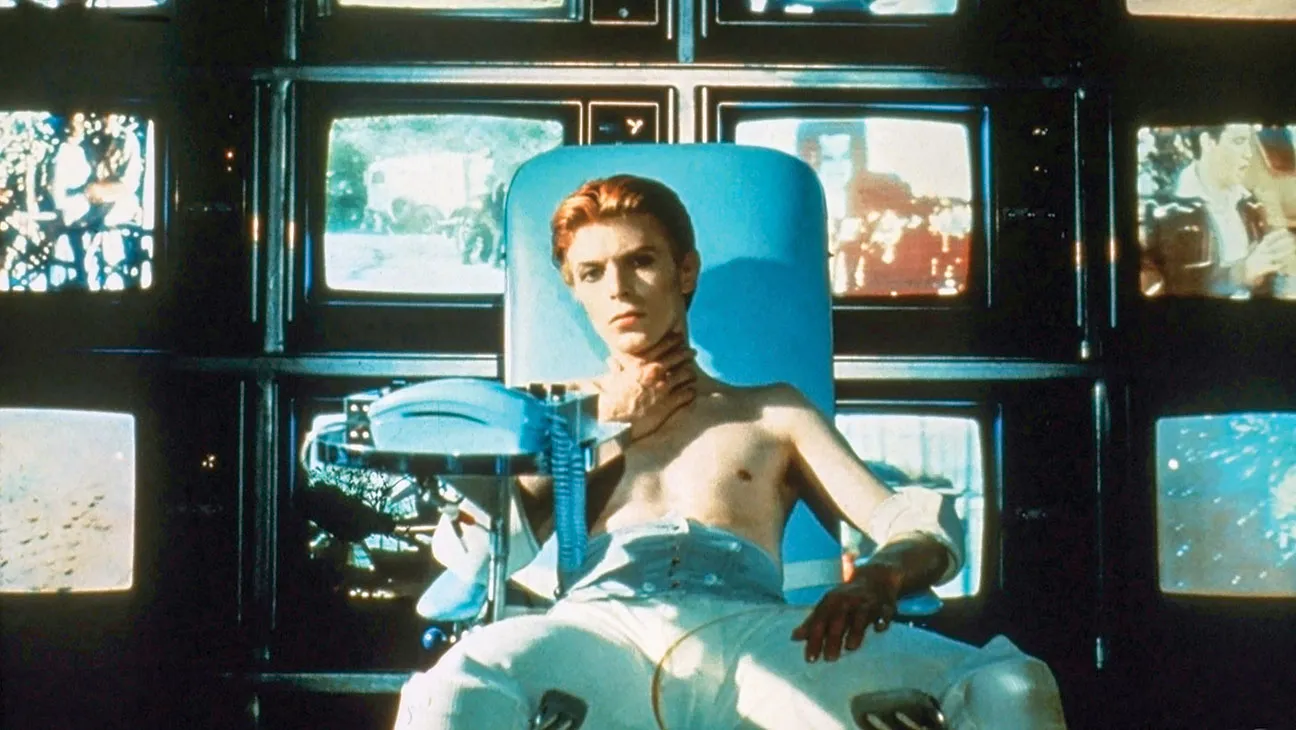
Directed by Nicolas Roeg and released in 1976, the film casts David Bowie as Thomas Jerome Newton, an alien who arrives on Earth in search of water for his dying planet. Disguised in human form, pale, refined, unsettlingly composed, Newton uses advanced technology from his home world to amass immense wealth through a series of patents and inventions. His plan is simple: build a spacecraft, return home, and save his family. Of course, nothing on Earth is ever that simple.
What unfolds isn’t a conventional science fiction narrative. There are no grand laser battles or intense alien invasions. Instead, Roeg crafts something far more disorienting: a fragmented meditation on capitalism, addiction, loneliness, and the corrosive pull of power. Watching it now, I found myself less focused on the “alien” premise and more on the profound sense of isolation.
It’s almost impossible to separate the performance from the persona. By 1976, Bowie had already created and shed Ziggy Stardust, flirted with soul and plastic funk, and cultivated an image that felt extraterrestrial even without prosthetics. Casting him as an alien was either the most obvious choice imaginable or the most inspired. Likely both.
Bowie himself would later speak about the period as one of excess and fragmentation. Knowing that adds a haunting layer to Newton’s isolation and disintegration. It’s hard not to see the performance as both a character study and an unintentional self-portrait.
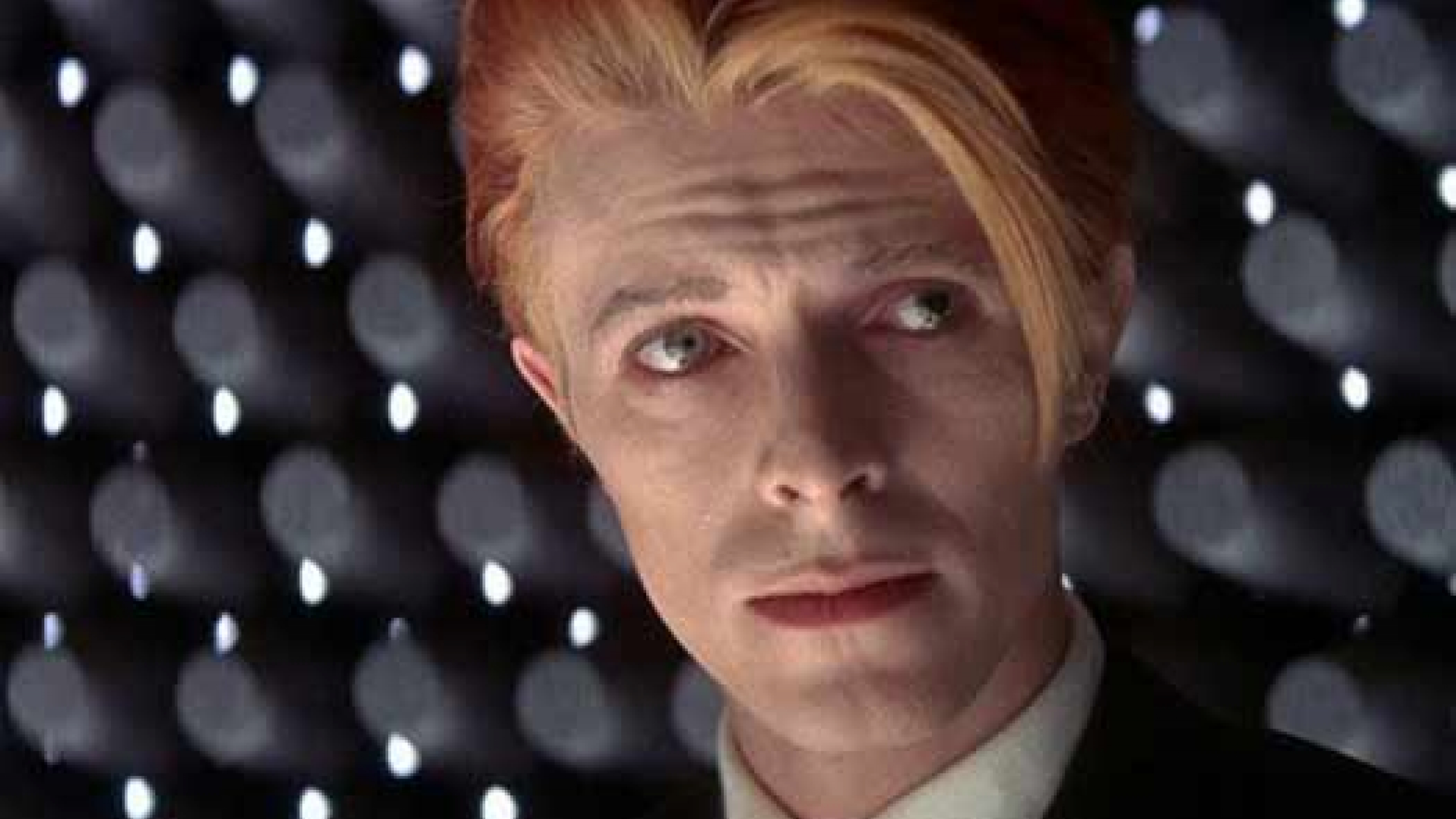
For an alien, Newton is quiet, observant, and often passive. His otherness doesn’t come from grand gestures but from stillness. Bowie’s angular frame and mismatched eyes (accentuated on screen) make him seem perpetually out of sync with the world around him. He looks like he’s listening to a frequency no one else can hear. And in this, his performance is mesmerizing – as a viewer, you’re trying to figure him out, and he does well in giving you everything and nothing at the same time.
The film’s structure mirrors Newton’s unraveling. Roeg abandons linear storytelling in favor of fractured editing and overlapping imagery. Television screens flicker constantly in the background, a barrage of information that feels strangely prophetic in our hyper-connected age. Watching it today, it feels less like 1970s surrealism and more like a preview of digital overload.
Candy Clark’s Mary-Lou, who forms a relationship with Newton, brings warmth and vulnerability to the film. Their connection is tender but doomed. His descent into alcohol dependency, vodka becoming his earthly substitute for survival, feels tragic rather than melodramatic. Addiction here isn’t spectacle; it’s erosion. Something still eerily relevant in 2026.
What fascinates me most about The Man Who Fell to Earth is its refusal to resolve cleanly. It drifts, much like Newton himself. By the end, I didn’t feel like I’d watched a story conclude. I felt like I’d witnessed a being slowly swallowed by systems he underestimated: corporate greed, government surveillance, human weakness. The alien doesn’t conquer Earth. Earth absorbs and neutralizes him.
Visually, the film remains stunning. It’s science fiction rooted in atmosphere rather than machinery. Even decades later, it doesn’t look dated; it looks deliberate. Rewatching The Man Who Fell to Earth, I didn’t just see a cult classic. I saw a film about displacement, about being brilliant and lost at the same time. It’s a sci-fi film that barely cares about science, a character study that feels cosmic in scale, and a Bowie performance that remains as magnetic and mysterious as ever. Some films age. This one simply hovers; strange, beautiful, and forever slightly out of reach.