


Directors: Daniel Roher, Charlie Tyrell
Stars: Daniel Roher, Sam Altman, Daniela Amodei, Dario Amodeil
Synopsis: Hoping to figure out what’s happening with artificial intelligence, a father-to-be embarks on an eye-opening journey to learn more about the most powerful technology humanity has ever created — and what’s at stake if we get it wrong.
The AI Doc: Or How I Became an Apocaloptimist begins in a relatable mood. And the mood is an overwhelming sense of anxiety. There are too many uncertainties about the future. What will become of global warming? What is the future of politics? Is the movie industry dying? For filmmaker Daniel Roher, it’s the unforeseeable future of AI. Most of us would probably vent our fears on social media or TikTok. Instead, the filmmaker who brought us Navalny channels his dread into a 103-minute breakdown of the pros and cons of the fast-evolving technology. The documentary could be the most balanced discussion of the state of Artificial Intelligence; however, if one is already familiar with AI, it may feel like a rehash of familiar information.
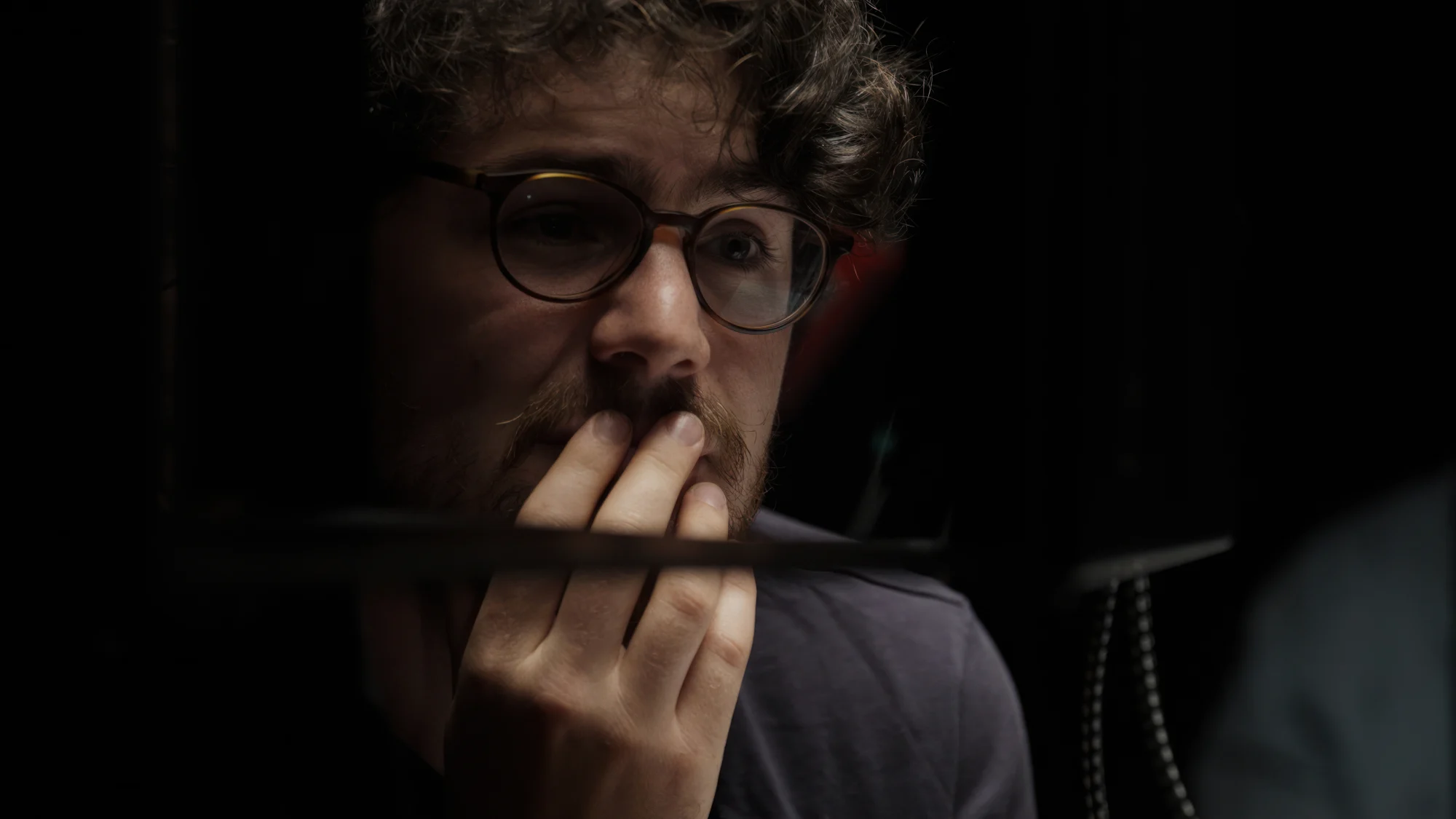
The documentary, directed by Daniel Roher and Charlie Tyrell, centers on Roher, who is expecting a child with his wife, Caroline, soon. With a child on the way, he is concerned about the dangers of AI and how it will impact his kid’s life. Taking action, Roher decides to sit down and interview both sides of the conversation: the doomsdayers and the optimists. The pessimistic side feeds his anxiety in an unhealthy way. Roher wants to find a beacon of hope, but most of the conversation revolves around statements such as “children being born may not make it to high school.” The interviews consist of individuals such as Tristan Harris, an activist for technological ethics, and Karen Hao of The Atlantic. The cynics’ discussions range from the environmental impact of AI to the looming fear of an AGI breakthrough that would throw the human race into the same category as ants.
On the optimist side of the spectrum, the interviews explore the potential of a better world enabled by AI. For example, there are mentions of predicting weather, cancer cells, and other common issues. There is a brief mention of AI’s technical potential to address cognitive disabilities by bridging cerebral gaps. The optimists also suggest that the future of education improves if every child has an affordable tutor on standby.
The third section of Roher’s interviews is the most direct in confrontation. He invites the actual CEOs of the AI companies to clear the air. Unsurprisingly, Mark Zuckerberg and Elon Musk are noticeably absent. However, what is surprising is that OpenAI’s CEO, Sam Altman, makes the effort to address AI panic. As a conversationalist, Altman is the most robotic in his response. Altman pauses bizarrely after every question, as if he were a language model considering how to respond to a prompt. As with the pros and cons portion of the documentary, unless one has little awareness of the CEOs, there is not much new in the discussions. Altman speaks in broad stakeholder terms and never ventures into authentic thought about his business model. The only genuine response comes after Roher asks for a guarantee that nothing terrible will happen, to which Altman acknowledges he cannot provide one.
For a documentary with loads of bleak implications, the aesthetic of The AI Doc: Or How I Became An Apocaloptimist is quirky, upbeat, and artsy. In between sections, the documentary uses stop-motion animation to depict conversations between Roher and his wife, Caroline. The animation features facial drawings of the couple as they discuss the latest developments in the documentary. The choice highlights Roher’s artistic background. For instance, in one section of the documentary, he offers a portrait of the interviewee.
The one detail no one will argue is the scope of the interviews. The Canadian filmmakers invite every possible angle to share their perspective. Roher and Tyrell even present a centrist view of AI, discussing how, in some respects, the existence of AI is good for humanity yet potentially dangerous. The only flaw in their documentary is the same flaw in every current documentary about AI. There’s not enough information to form a satisfying conclusion. The AI Doc needed a few more years to allow the technology to reveal itself more. Right now, we are in a similar phase as the mid ’60s were with cigarettes. We can sense that something might be wrong here, but there’s not enough data to draw a conclusion. The documentary itself seems aware of this problem because there’s nothing more to say at this point. Roher’s wife even challenges him to find a better ending than the one initially planned.
Still, The AI Doc: Or How I Became An Apocaloptimist is the most well-rounded breakdown of the status quo of AI. It’s the type of documentary vital for someone who needs a streamlined explainer of the concerns and hopes around artificial intelligence. In the theater, there were genuine gasps during discussions of stories that made headlines. One example is the Anthropic study that gave an AI a workplace simulation, leading the model to attempt blackmail against fake employees. The AI was made to believe two details: that it was facing termination and that two employees were having an affair. The theater reacted with genuine shock when it was revealed that the AI had blackmailed a fake user to avoid deletion. In that respect, the documentary could serve a valuable purpose by informing the public who are not paying attention.