



Director: Finn Taylor
Writer: Finn Taylor
Stars: Stephen Lang, Elsie Fisher, Luke David Blumm
Synopsis: A Holocaust survivor harboring a 60-year secret forms a transformative friendship with a troubled teen. Their connection helps both find healing as Herbert finally shares his past with Abby.
Survivor’s guilt takes a powerful psychological toll on a human. It can lay dormant and then strike at a passing thought or an unexpected stimulus. It can take many forms both physical and mental. The idea that we lived while someone else didn’t is overwhelming and can consume us and come to define us. It can be years before a person even acknowledges this kind of burden that has plagued them. That’s where we find the two protagonists of The Optimist.
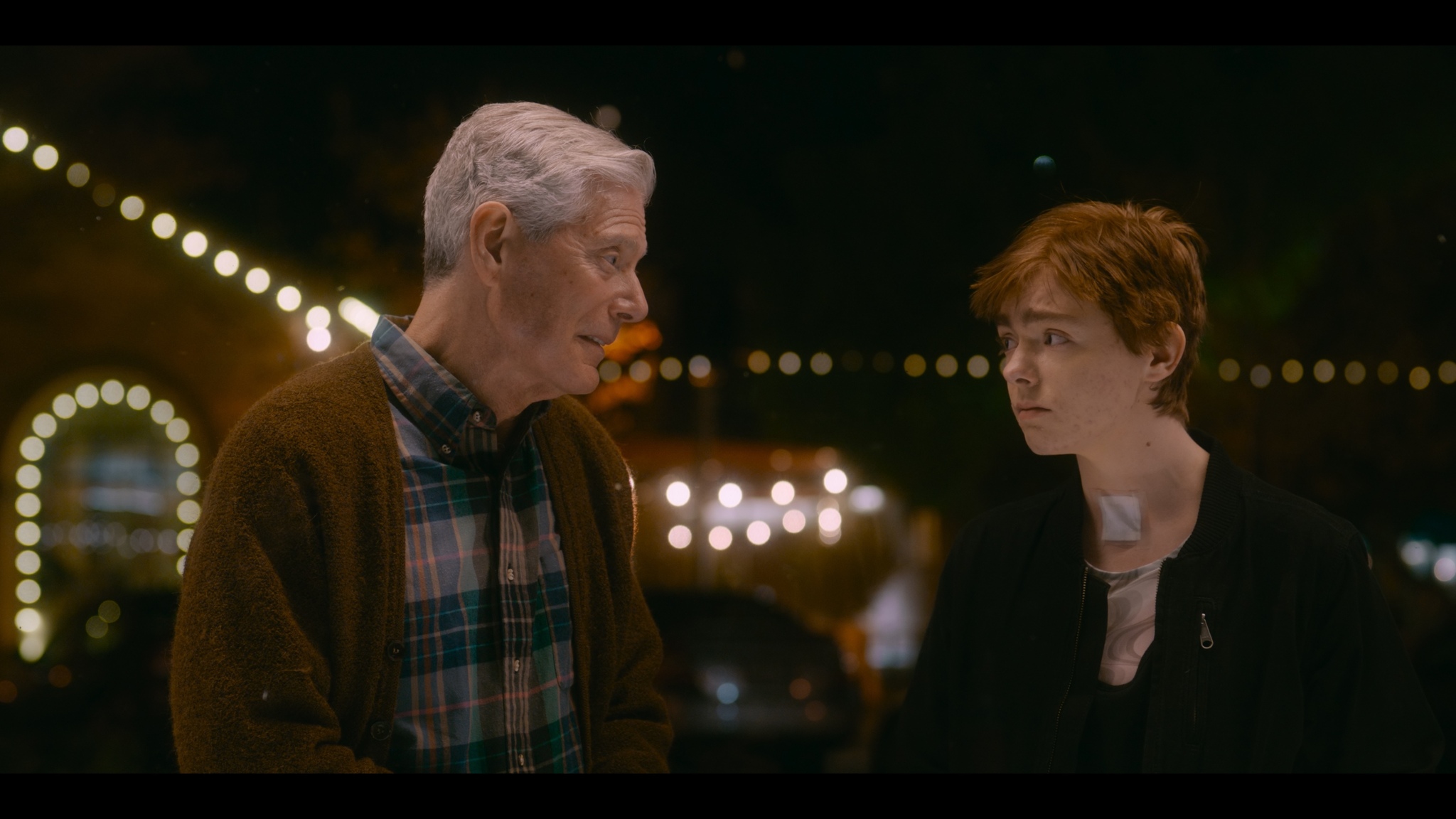
The film builds its narrative through dual storytelling. As Herbert (Stephen Lang) tells his story of survival during the Holocaust, Abby (Elsie Fisher) works her way toward coming to terms with what happened to her and her friend, Sabrina (Ursula Parker). The interweaving of the two narratives, structured around an interview with Herbert about his experiences, mixes the grand tragedies of human history with very personal tragedies in an intriguing way. It’s clear that Herbert sees something in Abby from the beginning and he seems to be the only person who can actually get Abby to really speak about her troubles. He tells her his story not to shock her, but to try and impart some semblance of hope into her life.
Even as powerful as Herbert’s story is, the constant interruption to the flow of it hampers the storytelling of the film. The need to return to the film’s present slows down the importance of Herbert’s narrative. It would work if the story were broken up by small scenes of interjection, questions, and hedging, but there are long periods of Abby’s story, which is very weak in comparison. Herbert’s recollections are so vivid and detailed, it’s jarring to get the disjointed memories of Abby’s guilt. Abby’s story is important, but the nearness of her past mixed with the distance of Herbert’s past is jarring.
The Optimist, though, is far more of an acting showcase than a structural piece. Both Stephen Lang and Elsie Fisher are terrific, but it’s Luke David Blumm as young Herbert who keeps our attention. This is also why the structure fails the film. The strongest part of this narrative is watching as Herbert has to experience one of the worst atrocities of human history. Blumm takes Herbert from innocent and easygoing to vacant and hopeless with a grounded believability. His thousand yard stare by the end of his time in the camp is truly haunting. Blumm is magnetic when he’s on screen and makes you wish the whole film was focused on him.
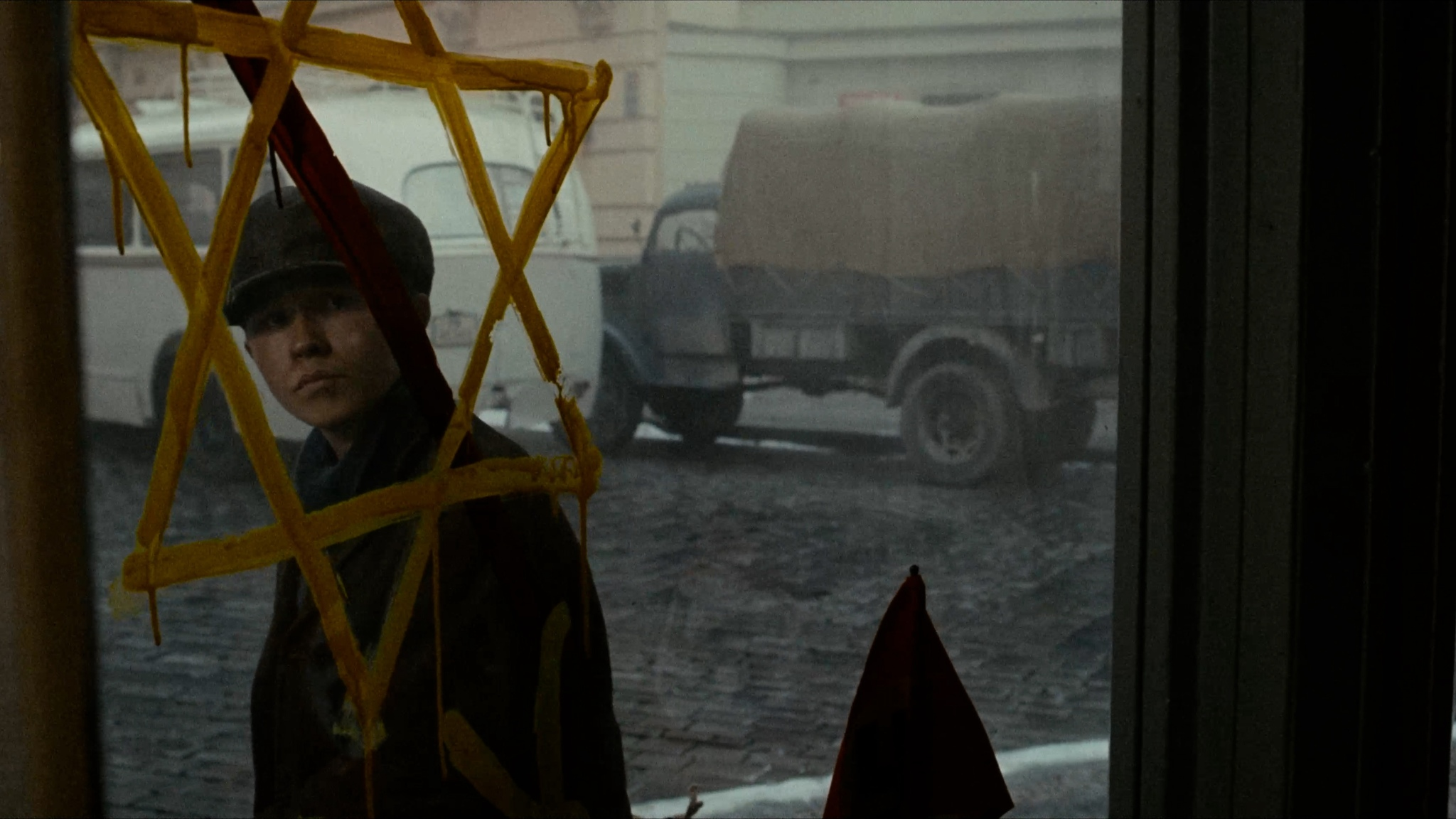
It’s easy to feel like we’ve seen this type of narrative before. We have many films that tell stories of Holocaust survivors. The most unique aspect of The Optimist, though, is that it doesn’t exploit the brutality inherent in its story. Director Finn Taylor uses imagery and sound to convey the monstrousness of the Holocaust, but doesn’t give us violence and gore. In one of the best examples of this, an officer addresses the lines of men, staring ahead. He’s telling them that escape is futile and that he wishes he didn’t have to constantly make examples of those who try. As he sits on a step we realize it’s a gallows and as the chair behind him is kicked we see the legs of a man as the man dies by hanging. This scene is far more powerful with the nonplussed officer in the foreground than if it had shown the face or death throes of the man being hanged. The evil of it is conveyed without being exploitative. This is why the film would have been better off staying in the past.
It would be different if the film were more dynamic. The scenes in the past are harrowing and heartbreaking. When not focused on the past, The Optimist functions more like a stage play. It’s mostly two people in a room talking. It feels stagnant at times when one or the other don’t want to move forward with either story. The fact that it moves and flows at all is thanks to editors Rick LeCompte and Kaufmanova Olina. The two of them build the structure of the film so that we see just enough. Through their expert cuts the story is revealed just as it needs to be. There are scenes that sing because of the way LeCompte and Olina cut.
The Optimist is a film worth seeing. It has some very good ideas and a good relationship between its two leads. It just feels as if it can’t get out of its own narrative device enough to really tell its story well. It’s hindered by this contrivance, which nearly ruins the whole film. Yet, see it if only for the performances, the story at its heart, and how these two characters come to understand and move forward from their grief.