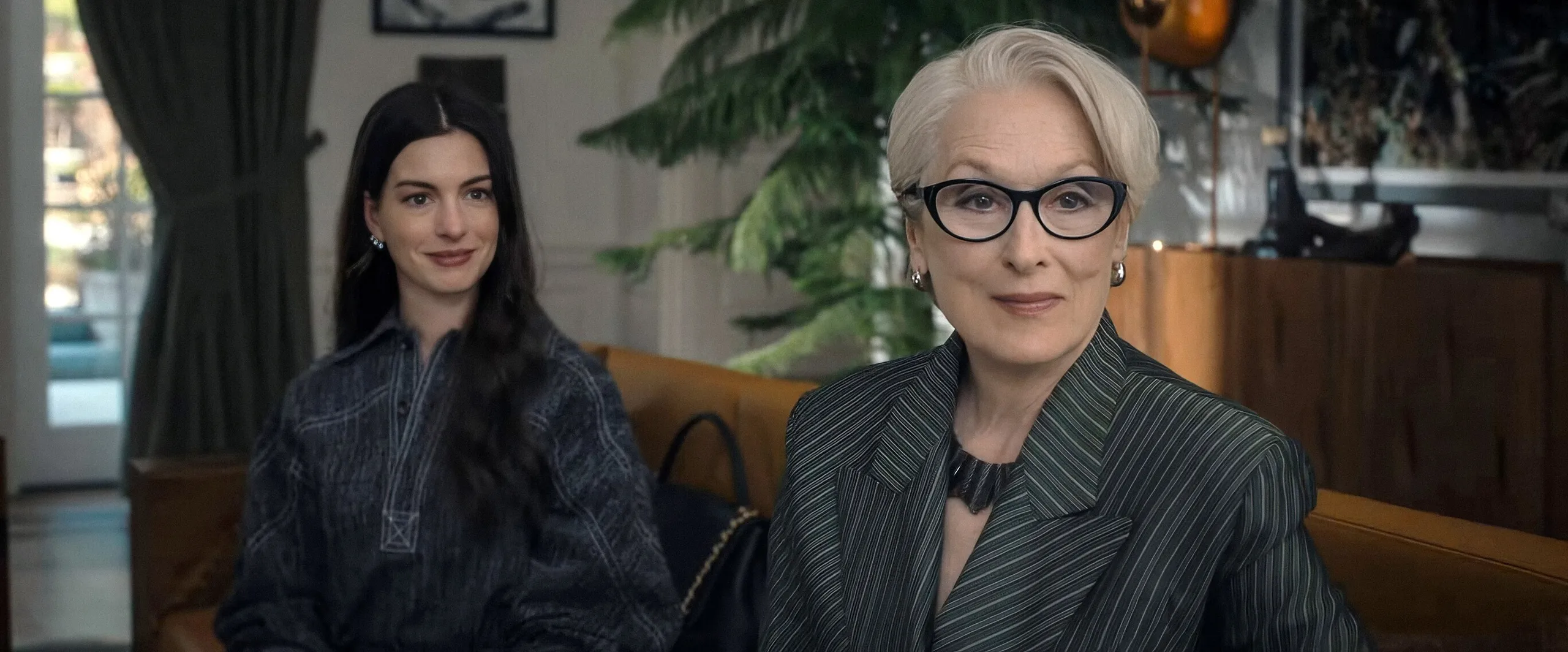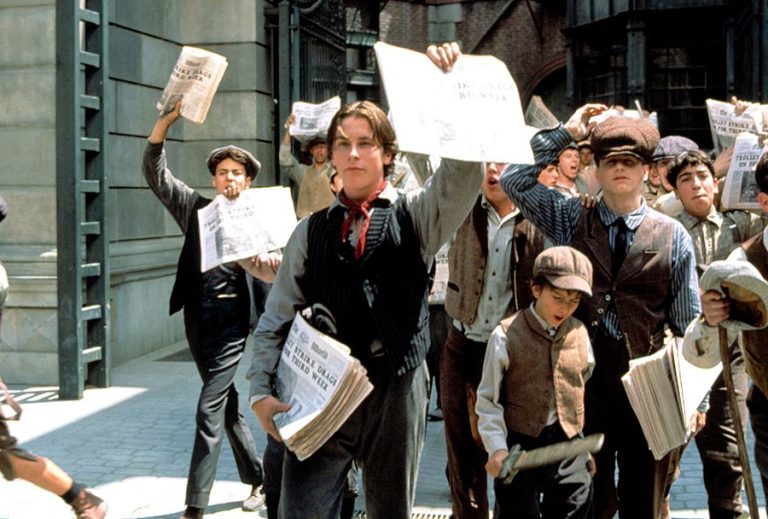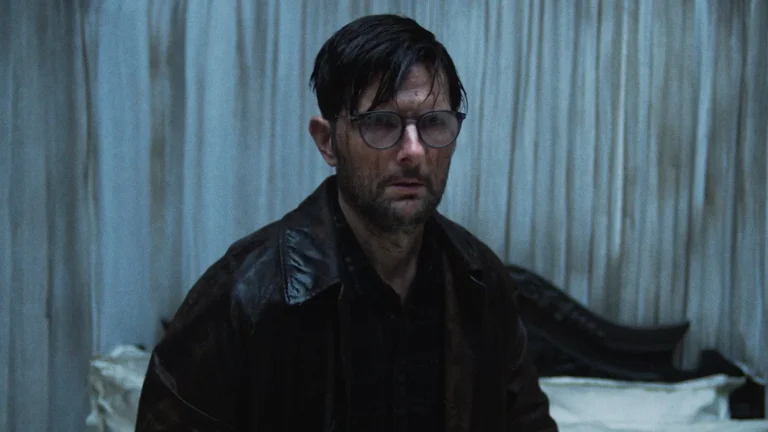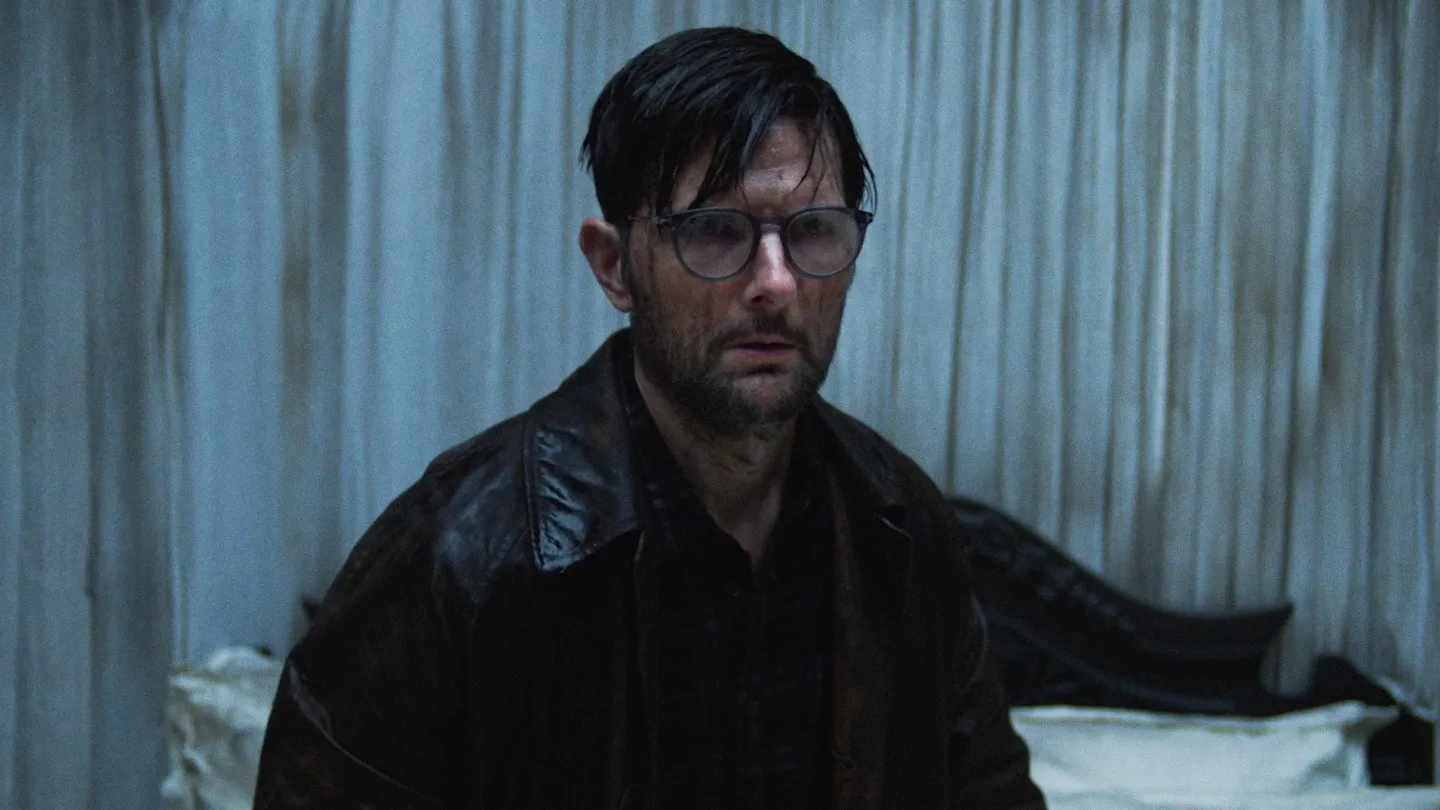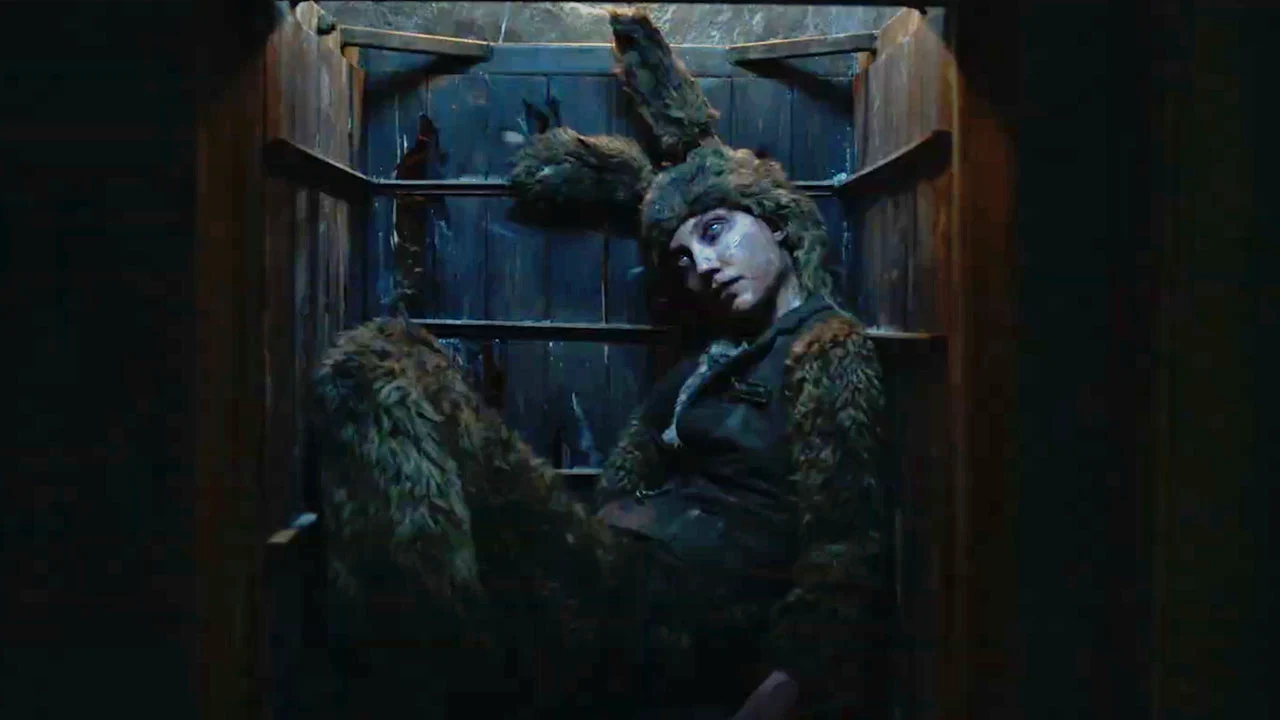


This week on Women InSession, we discuss the great Guillermo del Toro and his recent work, including Frankenstein, Crimson Peak and The Shape of Water! Del Toro has always been a favorite filmmaker of ours and we’ve talked about him several times on the show before, but with his latest out and likely going to win some Oscars this weekend, we thought it would be fun to revisit some of our favorites of his and why he’s an artist that resonates with us.
Panel: Kristin Battestella, Megan Kearns
On that note, check out this week’s show and let us know what you think in the comment section. Thanks for listening and for supporting the InSession Film Podcast!
Director:Otilia Portillo Padua Writer:Sheerly Anvi, Sara Dosa, Gabriela Damiรกn Miravete Stars: Julia Dolores Raimundo, Julieta Sarafina Amaya, Eliseete Ramirez Carbajal
Synopsis: Deep in Mexico’s forests, two Indigenous mycologists seek to reconcile the past and present while reimagining the future for themselves and the changing world they inhabit.
During a restless, chaotic time in human history, reviewing films and writing about art becomes a bit of a difficult task. Itโs unfathomable to ignore global suffering but itโs also as important to connect with various documentarians, and watch documentaries which chronicle the lives of regular, hardworking people. Documentary filmmaking will always be the conscience of the world, and Daughters of the Forest is no exception.
Daughters of the Forest is an immersive sci-fi documentary about the coexisting harmony between mushrooms and indigenous tribes in Mexico. Through two scientists who are armed with both their scientific knowledge, and the culture they carry on their backs from their indigenous origins, we get to watch as they navigate the world of ancient women in the family, mushroom gatherers trying to get by in a world where basic things like farming, agriculture, and vegetable gathering is becoming less of a necessity and more of a dying art.
Director Otilia Portillo Padua documents a world that is slowly grifted by the rise in fascist technology, wars, and climate emergencies. Defying the fear of extinction has become more of a responsibility for planetary repair. Codependent ecosystems and interspecies cooperation are terms that define the next stage of humanity, if people are serious about saving the planet from the hands of greedy, reckless billionaires.
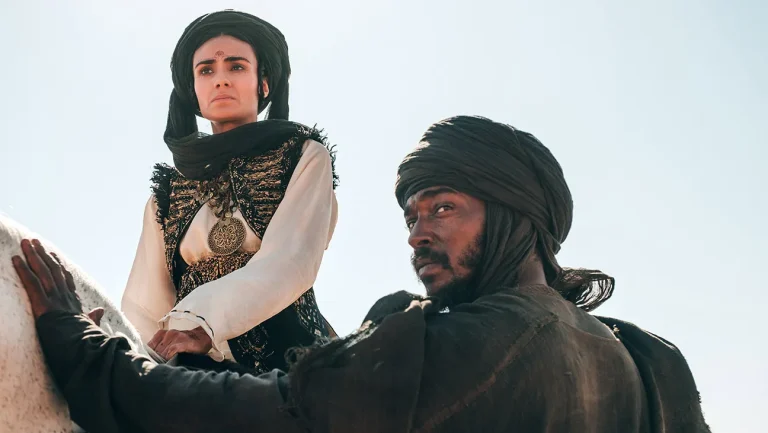
The documentary mixes between stunning visuals and realistic scenes of the scientists Lis and Juli as they navigate a world of deforestation and agriculture decay. Those two women spend hours in the laboratory or out there in the wild, identifying and sampling breeds of mushrooms, understanding fungal behavior, mixing that with the wisdom of their ancestors and trying to tie that into how human behavior can be enhanced. Instead of saving the world through pushing for more technology that eats off the life and hard work of farmers and gatherers, professions that sound silly nowadays in the era of digitizing everything.
Itโs bravery when someone decides to make an entire documentary about the life of mushrooms, and how fungi breathe, talk, and send messages. Padua mixes the lives of the scientists and their families, women who spend hours behind a microscope trying to refine the fine microcellular levels of a shaved mushroom stipe. She doesnโt just have those impressive, immersive beautiful shots of going inside the mycelium itself -the intricate root system of the mushroom- but she also integrates the culture of gatherers and secret keepers of the forest, the generations of mushroom collectors, the grandmas who know which one to eat, and which one to use for healing. She shows that culture and science go hand-in-hand, treating both the cottages of the guardians of the forest and the laboratories.
What it couldโve benefited from is a bit of a focus on the immersive scientific experience. For a while, it felt like Padua didnโt really know what she wanted to focus on. Is this a fully dedicated film to the wisdom of the elders, or a mycological adventure into the heart and soul of a fungus? I know that is purposeful on her part, but it still created a bit of a narrative ambiguity. Had this been absent, the documentary would be positioned differently. Still, these are not integral flaws, just a hushed whisper in the ears of a promising documentary filmmaker who the world definitely anticipates her next move.
In Daughters of the Forest, scientists are going out of their way to discover new ways of using up the planetโs resources without destroying it. It is a race against a time that is not on their side, as the bulldozers of tree loggers clear-cut acres and acres of trees, and as Lisโs mother says in the film โWithout a forest, what will become of us?โ The documentary poses questions and offers solutions that may salvage the planet when people still have time. But who is listening?
On this episode, JD and Megan break down Maggie Gyllenhaal’s latest film The Bride! The conversation around the film has been understandably polarized, but we are grateful for the ambitious swings the film takes. The setup to the film is kind of wild, some of it makes no sense at all, and yet we had a bunch of fun with it.
Review:The Bride!
Director: Maggie Gyllenhaal Writers: Maggie Gyllenhaal Stars: Jessie Buckley, Christian Bale, Peter Sarsgaard
ComMANNdment #5: Thy Mise-en-Scene Must Blur the Lines of Reality
Cinema veritรฉ is not exactly how one would describe a Michael Mann film. His use of color, high stylization, and visualization do not work with the inherent principles of the โfly-on-the-wallโ nature of veritรฉ. However, there are passages of Mannโs film that prove that the mise-en-scene feels less like coordinated design and more like shooting all on location. There are moments that feel less like actors acting and more like people doing.
Actors doing is a different coMANNdment (the first one, actually), but it is one thing to have actors do on screen and quite another to have it feel authentic to the point of creating this tension of โjust how real is thisโ emotionality. Prime examples are all over Mannโs work. To reiterate, the opening of Thief not only includes a believable safe cracking, but focuses on James Caan setting the drill down on the floor โ that is not โacting,โ Caan is doing when he is struggling to control the weight of the tool, it actually IS a heavy drill.ย
Period piece cinema is not the realm that Mann usually delves into, but when he did he made sure the details and design were unique, specific, and accurate. Even removing the period details of Nazism and European architecture from The Keep, the way that the actual, physical keep looked is something to marvel out. Outside and in, the pass was a truly unique space to see and navigate throughout the course of the film.
Depending on who you ask, Manhunter either succeeds or suffers in its presentation due to the correlation to Mannโs big ’80s TV project: Miami Vice. If you were to ask me, I would say the overt stylization of Dolarhydeโs character is a bit ostentatious and incongruent to the rest of the film. Everything related to Graham, Lecktor, and the hunting down of the โTooth Fairyโ is where this film truly succeeds, and its docu-style, hand-held, true crime nature supports this. While America (and letโs face it, the world) has always had a fascination with true crime stories, Mann had his finger on the pulse and predated much of what populates streaming services nowadays: murders told through crime scene photos, dramatic reenactments, and interviews with detectives. Graham assessing the crime scenes and talking through the process of figuring out why Dolarhyde is doing what he does fits so well into a documentary feel that it is jarring when we cut back to the neon glow of Dolarhydeโs world.
Given the time and setting of the French-Indian war, the details of The Last of the Mohicans add a level of realism that is typical for a Mann film, just placed in a genre that is new to him. The documentary feel starts immediately as the film begins: picturesque views of the lush forests that will surround our main characters. Our trio of Chingachgook, Uncas, and Nathaniel are seen traversing the creeks, paths, and hills as they chase down a deer and it feels like we are witnessing an act that people rarely see. This includes not only the chase and the kill, but the prayer afterwards that shows respect for both the slain animal and the forest itself. And while the battle scenes feel prototypical and the ending is gripping, it is these moments of our Mohicans simply navigating the land that feel more real than anything else in the film โ the moments that slip us into a time, people, and place that we rarely get to see.
I tried really hard to use a different example from Heat that isnโt the shootoutโฆbut COME ON!!! I ABSOLUTELY HAVE TO!!! But it isnโt just about the shootout โ it is all the pieces leading up to it. Watching the precision, pacing, and detail as McCauley and his team exit the bank and prepare the car for escape feels genuine. Listening to Hanna describe taking them in the car and his detectives stalking the robbers by foot is also captivating. But the way in which the architecture and location of this downtown sector is used feels so real. Los Angeles is a busy place and the financial sector does have people going to and from constantly, so people would be caught off guard and confused and horrified.
With Mannโs directorial style shifting to a more handheld and personally encroaching format, numerous moments within The Insider feel as if we are watching a documentary. Not only that, but some of these moments feel both uniquely private and mundane: the sort of moment that feels almost inappropriate to watch because of how intimate it is. For me, the first emotional example of this is when Jeffrey finds his wife, Liane, examining his car and asking about the boxes. It is at this moment that Jeffrey explains that he has been fired and that he is going to the store for soy sauce. Instead of asking if he is okay or what happened, Liane immediately starts asking about bills, medical insurance, and money. I am going to bring up Liane and this moment in a later ComMANNdment, but for now I want to focus on the filmmaking here: the cameras are handheld and many shots are from a distance, as if the camera just happened upon a couple having a conversation outside. It is these brief moments that make you feel as if you are watching this real couple going through their trials and tribulations. Two other moments (emotionally devastating) involve Jeffrey Wigand both tripping and falling down in his front lawn as the FBI takes his computer away and when he arrives home after giving his deposition in Mississippi. The way the camera both follows Wigand up close and personal, yet also remains passively distant creates a uniquely emotional presence.
The documentary feel of Ali is on full display throughout the majority of the film. And since I already mentioned the boxing sequences for ComMANNdment #2 and will be discussing Aliโs running/training montage through Zaire in ComMANNdment #10, I want to focus on some of the smaller moments that blur the line between scripted and reality. An incredible moment of feeling like we are live in the room with a group of people is the first time we see Malcolm X preaching on screen. The camera feels like it had to ask permission to shoot in this location and it moves about the room as if catching genuine reactions to what Malcolm is saying, including Ali standing at the back of the room. Also, during the opening montage the camera is mostly shooting over the back of Sam Cookeโs shoulder as if Mann was shooting a concert documentary. The camera floats in and around the crowd and gives me the total vibe of that club. And to round this section out, the interviews, press conferences, and anytime Ali is walking around town talking to people truly feel as if the local news station just happened to be around to catch these moments.
Collateral primarily takes place in two locations: on the macro level in Los Angeles (which will come up in ComMANNdment #10), and on the micro level in Maxโs cab. With our two main characters confined to such a tight space, moments shared feel uniquely personal and honest. The moments of Max overhearing an arguing couple or conversing with Jada Pinkett-Smith feel captured and presented to us without permission. The vibes of โTaxicab Confessionsโ come to mind and I mean that as a compliment. Even when no customer is in the car, scenes pass by that feel as if we are peeping into a world we werenโt meant to see. When Vincent goes up to his first mark of the night, Max is setting up his dinner with such intimate detail that it feels like we are eavesdropping on a private moment. The documentary feel to all the cab scenes bring a level of reality to the film that truly raises the verisimilitude for the audienceโฆitโs when we leave the cab that, for better or worse, the world of the film starts to feelโฆwellโฆlike a film.ย
Most of my references to โdocumentary styleโ shots or moments from Michael Mann films have revolved around a hand-held camera aesthetic. While plenty of documentaries are shot this way, there are also many docs that revolve around beautiful, aerial shots of places that are so gorgeous it is hard to believe they actually exist on Earth. Let me start grittier and more grounded and then Iโll get airborne. The first moment to discuss in Miami Vice occurs when our Sonny & Rico led team breaks into a warehouse and steals drugs from Montoyaโs operations that they will use later. The camera following our team into the warehouse (over the shoulder, handheld, right behind the actors) feels like a camera on COPS โ it feels like weโre on the raid with them. Mann is known for shots like this as crime tends to feature so prominently in a majority of his films. What we do not get much of is beautiful shots of raging waterfalls tucked in the serenity of a green canopied jungle. The moments of seeing Montoyaโs compound almost pulled me out of the movie โ I thought there was a glitch in the disc and that Planet Earth started playing (if David Attenborough had started narrating the inner workings of Montoyaโs plans, I think I would have imploded). The antithetical nature of this shot is so interesting: how can we be viewing something so beautiful and know that a man so evil is lurking below? Mann does not get metaphorical with visuals often, but this moment sure does stand out.
Not since The Last of the Mohicans has Michael Mann dove headfirst into the world of period piece filmmaking, but he gets a lot right in the shooting of Public Enemies. Over the course of the 17 years between these two films, he acquired a fascination with shooting handheld and close to the body footage that lends itself well in this film. The opening sequence of faking the capture of Dillinger as his fellow robbers breakout includes the period details of 1930s Indiana prisons, cars & clothing, and weapons & set decoration โ all while being shot in this patented Mann-style of handheld cinematography. Mann not only utilizes this style of shooting during moments of high action, but he uses it for scenes of intellectual debate as well โ giving a documentary feeling when Hoover is requesting more funds from the federal government. Most specifically, the attention to detail when Winstead and his crew arrive on the train is stupendous: the period clothing, the old steamer trunks, the shoe shine station, the dialogue: all of this adds up to a movie that truly reads 1930s Midwest America โ even though the camera shooting this footage makes it look extremely polished.
If it has not been made clear yet, allow me to state it directly: Mann loves his handheld camera. AND SO DO I! Particularly when he chooses to switch to it to reinforce our feeling of observing an event that was not meant for us. We sit with Dawai in a meeting with Chinese dignitaries and military officials that feels secretive. I also appreciate the moments when our characters engage in recognizable behavior โ Hathaway asking if someone has an Android phone so that he can download a thermal imaging app is very relatable and looks โreal.โ However, this would not be a true โMann using a handheld cameraโ section if we didnโt talk about action. We get it with all the alleyway running, but I think this technique truly shines when Hathaway is confronted by thugs at the restaurant. The camera image clearly shifts (a bit grainier) and we are right in the middle of this fight. When faces are punched or tables used as tactile weapons, the camera is right there to give us an in-depth view of the carnage.ย
As a youth, I was more or less forced to watch my fair share of NASCAR on Sundays (my stepdad was a big fan). Despite it not being for me, I have those camera movements from the telecasts etched into my memory. Racing as seen on TV has a certain style to it, and as technology has increased and improved cameras have been added to more unique positions around the track and on the cars. Mann taps into this 21st century filming style and lays it over a 1950s story: the result being an in-depth look at racing from an era that is now bygone. You have to admire Mann and his focus on the driving: angles of the tires, tracking shots, sound design from top to bottom. All of this racing detail added to the period detail of 1950s Italy gives the film an authenticity that Mann is known for.
Director:Amy Wang Writer:Amy Wang Stars: Shirley Chen, Mckenna Grace, Elaine Hendrix
Synopsis: An insecure Chinese-American teenager undergoes experimental surgery to appear white, hoping to secure the prom queen title and peer acceptance.
Amy Wangโs Slanted represents an interesting crossroads between genres and inspiration that’s rather intriguing. Many will roll their eyes at the absurdity of the filmโs premise, but the experience of actually watching Slanted represents a clash between a strong foundation and weak execution. The inevitable comparisons to Mean Girls and The Substance are somewhat apt, but Slanted is actually at its best within its core themes of immigration and what it actually means to be an American within a system that pressures you to question your identity. The messaging is rarely, if ever, subtle, but it clearly comes from a personal place for filmmaker Wang, and that is where the film is most thought-provoking. Unfortunately, it falters within most of the actual comedy and race commentary of its satire, basically acting as a less clever Get Out that never digs any deeper into the racial implications of its commentary besides telling the same jokes and making surface-level observations repeatedly. It all forms into a mixed bag that has its fair share of thought-provoking observations that are coated with unsubtle and blunt commentary, resulting in an appreciative but frustrating experience.
Slanted begins with the perspective of a younger Joan Huang, a Chinese-born girl who has just immigrated to a new town in America with her mother (Vivian Wu) and father (Fang Du). From the get-go at her school, we see her constantly bullied for the foods she eats, and she simply does not feel welcome in this environment, despite trying her best for her parents. From the very beginning, however, Joan saw becoming prom queen of her school as a sort of level that, if reached, would lead to everyone respecting her identity, and she’s been obsessed with it ever since. Now in the present day, Joan (Shirley Chen) is in high school, constantly seemingly embarrassed by her Chinese features and pressuring her parents to speak English instead of their native Cantonese.
Every day at school, Joan discusses her plans to run for prom queen with her best friend Brindha (Maitreyi Ramakrishnan) and sees getting an endorsement from high school elite Olivia Hammond (Amelie Zilber) as her ticket to the tiara, but she is still made fun of and sees that her not being the pretty white blonde archetype as the problem. After being contacted by the company Ethnos for using their skin change phone filter so much, Joan is offered to undergo an experimental trans-racial surgery to appear as the pretty white blonde she sees plastered all over her school hallways. She jumps at the chance and becomes Jo Hunt (Mckenna Grace) post the surgery, hoping to gain the admiration she’s always dreamed of.
In retrospect, it’s absurd that Slantedโs marketing has leaned more towards its minuscule body horror elements rather than the clear passion it derives from the center of Amy Wangโs own personal experiences, as it’s where the film excels the most. The film has a rather fresh perspective on the Asian immigrant experience, homing in on those who self-hate or feel the need to erase their own culture in order to fit into a new one. The film is about as subtle as a sledgehammer in this regard (and it’s more of an issue in other areas), but these aspects of the film work the best because they are where Slanted is at its most authentic. The obvious personal experience is very similar to Didi in the way the performances carry the emotions of each scene, and channel the vision of the direction so well. Shirley Chenโs performance is particularly captivating, and the internal and external struggles she conveys between her parents make even the shakier parts of the screenplay more meaningful.
It’s just a shame that Slanted ends up so weighed down by all the other elements of its satire that even its strongest elements can feel as if there was even more to delve into and there was a lot left at the table. The film leans more into its body horror and comedic elements in its back half as Grace replaces Chen, and it’s where all the commentary is either completely nonconfrontational or just completely predictable.
The body horror never reaches any full commitment levels, the teenage melodrama is about as plainly drawn out as youโd expect, and the actual comedy rarely evolves beyond โwhite people listen to Michael Bublรฉ a lotโ level jokes. Itโs this period that buries a decent portion of Slantedโs more noteworthy elements; there are so many genre aspects it tries to tackle as it goes on, and the writing never extends cleverly enough to punctuate anything purposeful about these, on paper, clever concepts.
Slanted presents a compelling perspective of the immigrant experience, bringing a personal touch to the meaning of finding your identity as an Asian American, which feels lost within a plethora of blunt racial themes that barely scratch beyond the surface. Amy Wangโs nuanced body horror comedy ends up as a valiant but futile attempt at a satire.
On this episode, JD and Brendan discuss Pixar’s latest film Hoppers! Pixar last decade or so has been all over the place in terms of quality and audience reception, but this seems to be one of Pixar’s better efforts of late. But there is one key element that we debate quite heavily in this conversation.
Review:Hoppers
Director: Daniel Chong Writers: Jesse Andrews Stars: Piper Curda, Bobby Moynihan, Jon Hamm
Director:Jan Komasa Writers:Bartek Bartosik, Naqqash Khalid Stars: Stephen Graham, Andrea Riseborough, Anson Boon
Synopsis:A 19-year-old criminal, Tommy, is kidnapped and forced into a rehabilitation process by a dysfunctional couple, Chris and Kathryn, who try to make him a “good boy.” Tommy must find a way to escape.
Jan Komasa has always been at the forefront of drawing cogent portraits of specific, complex individuals, whether in the religious-driven Corpus Christi or the cautionary tale of Anniversary, but he seems to have genuinely stumbled with his newest venture, Heel. Initially titled Good Boy, yet renamed to avoid confusion with the dog horror movie of the same title, Komasa, and screenwriters Bartek Bartosik and Naqqash Khalid donโt really know what they want to treat when focusing on their central character, who seems to be stuck in a fairly complicated predicament.ย
The film opens in media res by introducing audiences to the delinquency of Tommy (Anson Boon, who was excellent in Guy Ritchieโs MobLand last year), who excessively consumes drugs and alcohol and purposefully gets into physical altercations with as many people as he canโฆuntil heโs suddenly abducted. We donโt know what happened to him for some time, as Komasa switches to the perspective of housekeeper Rina (Monika Frajczyk), who is being interviewed for potential employment by Chris (Stephen Graham). She eventually gets the gig and travels to Chrisโ house, where she meets his reclusive wife, Kathryn (Andrea Riseborough), their son, Jonathan (Kit Rakusen), and Tommy, who is being chained like a dog in their basement.
Who is he? And what is he doing here? These questions will eventually be answered, but in a fairly nonchalant way, or at least treated as if none of this truly matters. Unlike Anniversary, which felt urgent, especially as a potent reflection of the politically unstable times America lives in, Heel possesses no sense of urgency or willingness to engage with the ideas haphazardly presented on screen. Komasa can still craft effective images and control his aesthetic extremely well in the edit, but they donโt have as much of a grip on us as they did in Corpus Christi, The Hater, and Anniversary.
To be clear, pairing with cinematographer Michaล Dymek โ whose work in Jerzy Skolimowskiโs EO and Magnus von Hornโs The Girl with the Needle is some of the decadeโs very best photography โ is a stroke of genius. However, his talents feel limited when the language isnโt as well-defined as Komasaโs previous works. There are still the odd image or two with lasting power, but theyโre sparse compared to the Polish filmmakerโs previous works, which feature many frames that create a tangible impact. These occur near the end of the picture, where the storyโs meaning is fully revealed. Despite an assured sense of style, many of these โrevealsโ fall pitifully flat, including its ridiculous ending, which renders most of the character development moot if Tommy regresses as a result of his time spent within a household he was forced to be in.
It is difficult to discuss a movie whose plot shouldnโt be revealed in any form of critical writing, because most of the narrative developments occur near its conclusion, but please believe me when I say that Heelโs benevolent intentions no longer exist during the filmโs baffling climax. Youโd be forgiven for thinking Komasa was asleep at the wheel compared to the previous masterworks heโs helmed, because the film lacks the character-driven (and aesthetic) pulse heโs mostly known for, but itโs not entirely his fault.
The screenplay has little to no interest in drawing compelling characters. Chris and Kathryn live in (very) morally grey areas and still seem to be riddled by the passing of one of their children, which might explain the reasoning behind Tommyโs kidnapping. However, none of these people are explored to their fullest extent, even during scenes of child abuse towards their remaining son. It should theoretically give a clue about how theyโre controlling their house โ and probably how their other son died โ but it barely scratches the surface on who they are as trauma-ridden human beings.
The same thing can be said for Tommy. Komasa will scratch an itch on the rise of โdareโ (and, by extension, influencer) culture that has created more and more terrible people for their antics to be posted all over the internet, but thereโs barely anything to hold onto in the characterโs evolution. Even when he manages to break free from the shackles of his dog collar, the resulting catharsis is limited. It has a grab-bag of interesting โ and thematically resonant โ ideas, but Komasa refuses to go beyond the confines of the screenplay heโs been given. Itโs frustrating, because we know of his talent as someone who has always put character first and wasnโt afraid to defy our preconceptions of what we believe a protagonist should accomplish in a film.
He attempts to do it here with Heel, but none of his characters are remotely interesting enough for us to latch onto them, despite solid work from Graham, Riseborough, and Boon. The latter, in particular, gives the movieโs best performance, because he has the most varied register to play in, whilst Graham and Riseborough are stuck in their one-note archetypes from beginning to end. I did enjoy Kathrynโs voice evolving from the first time we met her, closing in on herself, to the last scene, where she has found a new purpose to live again, but itโs about the only thing we can peer into regarding the character. She is, unfortunately, as empty as everyone else.
The good news is that Heel isnโt a downright terrible movie, just a particularly unmemorable one. Komasaโs formal impulses are still intact, but theyโre in service of a screenplay that has no idea what it wants to say about anything it lays in front of the audience. Unlike Anniversary, which had so much to say about the current rise in fascism that America is undertaking, Heel stops whenever it presents an idea and takes the easy way out of โleaving it open to interpretation.โ The thing is, you canโt leave it open to interpretation if you donโt give the audience something to interpret with. There is nothing โ and I genuinely mean nothing โ to interpret this movie from. Itโs complete vacuity from beginning to end. Itโs also Jan Komasaโs first (and hopefully last) miss. It had to happen eventually, but I didnโt expect it to be this unremarkableโฆ
On this episode of Chasing the Gold, Shadan is joined by Mark Johnson to discuss their final predictions to the 98th Academy Awards happening this weekend! We’ve been debating and dissecting awards season for months now, and it’s finally here. The Oscars are upon us and it’s time to make our final predictions!
Check out this week’s show and let us know what you think in the comment section. Thanks for listening and for supporting the InSession Film Podcast!
In advance of the 98th Academy Awards on Sunday, March 15th, InSession Filmโs Awards Editor Shadan Larki shares her picks for the winners in all 24 categories. For more Oscars insights, listen or watch the latest episode of Chasing the Gold, with special guest Mark Johnson.
The Oscars will begin at 7pm EST on ABC, hosted once again by Conan OโBrien. Here is how to watch (almost) all of the 2026 nominees before Sundayโs show.
Best Picture
One Battle After Another
Sinners
Hamnet
Marty Supreme
Sentimental Value
Frankenstein
The Secret Agent
Train Dreams
Bugonia
F1
Best Director
Paul Thomas Anderson โย One Battle After Another
Ryan Coogler โย Sinners
Chloรฉ Zhao โย Hamnet
Joachim Trier โย Sentimental Value
Josh Safdie โย Marty Supreme
Best Actor
Michael B. Jordan โย Sinners
Timothรฉe Chalamet โย Marty Supreme
Leonardo DiCaprio โย One Battle After Another
Wagner Moura โย The Secret Agent
Ethan Hawke โย Blue Moon
Best Actress
Jessie Buckley โย Hamnet
Rose Byrne โย If I Had Legs Iโd Kick You
Kate Hudson โย Song Sung Blue
Renate Reinsve โย Sentimental Value
Emma Stone โย Bugonia
Best Supporting Actor
Sean Penn โย One Battle After Another
Stellan Skarsgรฅrd โย Sentimental Value
Delroy Lindo โย Sinners
Jacob Elordi โย Frankenstein
Benicio del Toro โย One Battle After Another
Best Supporting Actress
Wunmi Mosaku โย Sinners
Amy Madigan โย Weapons
Teyana Taylor โย One Battle After Another
Inga Ibsdotter Lilleaas โย Sentimental Value
Elle Fanning โย Sentimental Value
Best Original Screenplay
Ryan Coogler โย Sinners
Joachim Trier & Eskil Vogt โย Sentimental Value
Jafar Panahi, Nader Saรฏvar, Shadmehr Rastin & Mehdi Mahmoudian โย It Was Just an Accident
Ronald Bronstein & Josh Safdie โย Marty Supreme
Robert Kaplow โย Blue Moon
Best Adapted Screenplay
Paul Thomas Anderson โย One Battle After Another
Maggie OโFarrell & Chloรฉ Zhao โย Hamnet
Clint Bentley & Greg Kwedar โย Train Dreams
Will Tracy โย Bugonia
Guillermo del Toro โย Frankenstein
Best Animated Feature
KPop Demon Hunters
Zootopia 2
Little Amรฉlie or the Character of Rain
Arco
Elio
Best International Feature
Sentimental Valueย โ Norway
The Secret Agentย โ Brazil
It Was Just an Accidentย โ France
Sirรขtย โ Spain
The Voice of Hind Rajabย โ Tunisia
Best Documentary Feature
The Perfect Neighbor
Mr. Nobody Against Putin
Come See Me in the Good Light
Cutting Through Rocks
The Alabama Solution
Best Casting
Sinnersย โ Francine Maisler
One Battle After Anotherย โ Cassandra Kulukundis
Hamnetย โ Nina Gold
The Secret Agentย โ Gabriel Domingues
Marty Supremeย โ Jennifer Venditti
Best Film Editing
One Battle After Anotherย โ Andy Jurgensen
Sinnersย โ Michael P. Shawver
F1: The Movieย โ Stephen Mirrione
Marty Supremeย โ Ronald Bronstein & Josh Safdie
Sentimental Valueย โ Olivier Bugge Couttรฉ
Best Cinematography
One Battle After Anotherย โ Michael Bauman
Sinnersย โ Autumn Durald Arkapaw
Train Dreamsย โ Adolfo Veloso
Frankensteinย โ Dan Laustsen
Marty Supremeย โ Darius Khondji
Best Visual Effects
Avatar: Fire and Ash
F1: The Movie
The Lost Bus
Sinners
Jurassic World: Rebirth
Best Original Score
Ludwig Gรถransson โย Sinners
Jonny Greenwood โย One Battle After Another
Max Richter โย Hamnet
Alexandre Desplat โย Frankenstein
Jerskin Fendrix โย Bugonia
Best Original Song
โGoldenโ โย KPop Demon Hunters
โI Lied to Youโ โย Sinners
โDear Meโ โย Diane Warren: Relentless
โTrain Dreamsโ โย Train Dreams
โSweet Dreams of Joyโ โย Viva Verdi!
Best Production Design
Frankensteinย โ Tamara Deverell, Shane Vieau
Sinnersย โ Hannah Beachler, Monique Champagne
Hamnetย โ Fiona Crombie, Alice Felton
Marty Supremeย โ Jack Fisk, Adam Willis
One Battle After Anotherย โ Florencia Martin, Anthony Carlino
Best Costume Design
Frankensteinย โ Kate Hawley
Sinnersย โ Ruth E. Carter
Hamnetย โ Malgosia Turzanska
Marty Supremeย โ Miyako Bellizzi
Avatar: Fire and Ashย โ Deborah L. Scott
Best Makeup & Hairstyling
Frankenstein
Sinners
The Ugly Stepsister
Kokuho
The Smashing Machine
Best Sound
F1: The Movie
Sinners
Sirรขt
One Battle After Another
Frankenstein
Best Live Action Short Film
A Friend of Dorothy
Two People Exchanging Saliva
The Singers
Jane Austenโs Period Drama
Butcherโs Stain
Best Animated Short Film
Butterfly
Retirement Plan
The Girl Who Cried Pearls
Forevergreen
The Three Sisters
Best Documentary Short Subject
All the Empty Rooms
Children No More: โWere and Are Goneโ
The Devil Is Busy
Armed Only with a Camera: The Life and Death of Brent Renaud
This week on the InSession Film Podcast, with the 98th Academy Awards taking place this weekend, we talked about the top 5 things we want to see at this year’s Oscars! Whether it be the awards themselves, the ceremony or anything in-between, we discuss our hopes and what could make the Oscars memorable. We also delve into our Pixar Draft results from last week, and dive into the box office numbers for both Hoppers and Maggie Gyllenhaal’s The Bride! As we do, there’s also some conversation around Pixar itself and the discourse around The Bride! and why Warner Bros.’ gamble was worth it.
– Hoppers Box Office / Pixar Talk (6:01) We begin the show this week, after revealing the results of our Pixar Draft from last week, by discussing the great start at the box office for Hoppers. We want original Pixar films to do well, so regardless of how we feel about the film itself, we were thrilled to see its incredible opening. We then shift to Pixar as a whole, talking about their recent output and why it might not be as bad as its reputation suggests.ย
– The Bride! Box Office & Discourse (32:43) Maggie Gyllenhaal’s The Bride! may have disappointed at the box office, but we are thrilled that Warner Bros. was willing to give her $90 million for an ambitious project like that. In an age inundated with sequels, remakes, reboots and kinds of safe mediocrity, especially from the major studios, to get that kind of a budget for a Frankensten-Bride-1930s Chicago-Bonnie and Clyde-ghost story is nothing short of a miracle. Maybe that’s a hot take, who’s to say, but we’re glad it exists.ย
– 2026 Oscars Wishlist (47:02) Instead of doing predictions, as you can hear on this week’s Chasing the Gold, we thought it would be fun to talk about the things we want to see at the Oscars this weekend. Whether it be about the awards themselves, the ceremony, the reaction to it all, and everything in-between, our Top 5 this week is all about what we hope to see take place at the 98th Academy Awards. This was a really fun and refreshing way to talk about the Oscars. That said, who do you hope to see this weekend?
If you want to help support us, there are several ways you can help us and we’d absolutely appreciate it. Every penny goes directly back into supporting the show and we are truly honored and grateful. Thanks for your support and for listening to the InSession Film Podcast!
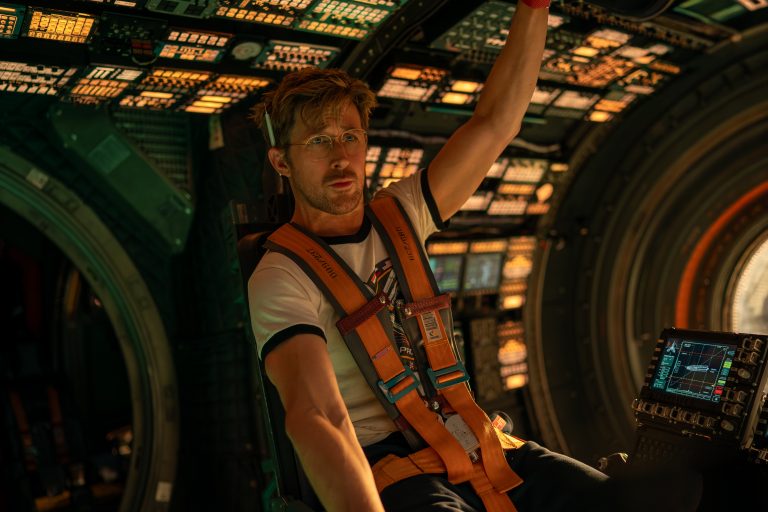
Directors: Phil Lord, Christopher Miller Writers: Drew Goddard, Andy Weir Stars: Ryan Gosling, Milana Vayntrub, Sandra Hรผller
Synopsis: Science teacher Ryland Grace wakes up alone on a spaceship light-years from Earth. As his memory returns, he uncovers a mission to stop a mysterious substance killing the sun, and save Earth. An unexpected friendship may be the key.
Very rarely can you point to a film about redemption that also serves as a redemption story for its filmmakers. Project Hail Mary fits that description. I wonโt go so far as to proclaim it a masterpiece, as some critics seem eager to do in their quote-pull fishing expeditions. Please, leave the narcissism at the door. If Ryan Gosling mugging for the camera in charming, hot-nerd fashion is enough to qualify as greatness, then this film certainly has that in abundance.
With Project Hail Mary, the writing and directing team of Phil Lord and Chris Miller will finally get the respect their names lost after being unceremoniously kicked off Solo: A Star Wars Story. After finding success with films likeCloudy with a Chance of Meatballs and The Lego Movie, they have finally made their space epic, one with plenty of heart and a comic touch that makes it a pure popcorn crowd-pleaser.
Not to mention, the script, along with the source material, keeps pivoting, making choices that are risky and brave in the world of cinema. While this critic kept waiting for the film to deliver a climactic, cathartic, showstopping third act, Lord and Miller respect the source materialโs ending enough to craft a near-perfect marriage of art and commerce that will leave you giddy about what Hollywood studios can still achieve.
The story of Project Hail Mary follows Dr. Ryland Grace (Academy Award nominee Ryan Gosling), a former scientist who was blackballed from the academic community for his original, outside-the-box thinking in molecular biology. Now working as an eighth-grade science teacher, Grace spends most of his days calming his studentsโ fears about the apocalyptic end of the world. The cause is something called โAstrophage,โ aka the โStar-Eater.โ
The parasitic alien organism is known for consuming the sunโs energy and, for lack of a better term, dimming it. You are probably thinking, whatโs the big deal? Less money on sunscreen. Not so fast. That means Earth would enter a rapidly accelerating Ice Age. The result would be mass crop failures, ecosystem collapse, and eventual human extinction, with every country treating resources as a free-for-all.
Thatโs when Eva Stratt (Anatomy of a FallโsSandra Hรผller), head of the Hail Mary Project, steps in. The program is tasked with finding a way to save the sun and, by extension, the world. Right now, the sun will die in thirty years. Somehow, she comes across a paper Ryland wrote that hypothesizes life does not necessarily require water to evolve or exist. It was an original thought that led to Grace being banished to teach sniveling adolescents biology lessons.
Gosling is wonderful in the role, portraying the good doctor as endearingly awkward and almost diffident. Some of the best scenes come with The Bearโs Lionel Boyce, who plays officer/enforcer Steve Hatch assigned to Grace during the project. Ryland solves the most puzzling part of why the alien parasite is dimming the big, bad Helious with simple school project techniques, creating a hypothesis with cardboard, duct tape, and some Skittles.
Yes, it has that obvious product placement, though it is not nearly as objectionable as the McCafรฉ scene in The Day the Earth Stood Still.
Surprisingly, Project Hail Mary draws the viewer into an immersive, cinematic world that is funny, heartfelt, and visually awe-inspiring. Adapted from the novel by Andy Weir (The Martian), the film is directed by Phil Lord and Christopher Miller, working from an exceptional screenplay by Drew Goddard (World War Z), that is pure popcorn entertainment. And that may be underselling the experience.
Yes, we should have high standards, but in the age of the streaming wars, it is rare to get a movie that sparks the imagination, fills the soul, and reminds you of the simple joy of watching a big, ambitious story unfold on the largest screen possible. This also doubles as a family movie, with teachable moments you can discuss with your kids about what truly matters in life. It is just as much about exploration as it is a stealthy, beautiful, evocative meditation on family, friendship, and sacrifice.
Yes, there are some plot holes that come with a film like this, with Ryland achieving MacGyver-like levels of miraculous engineering and compressed scientific discoveries. Of course, unlike The Martian, those gaps are largely smoothed over by the introduction of Rocky (voiced by puppeteer James Ortiz). I have left the character mostly out of this review, even though the trailer gives it away, because much of the filmโs joy comes from going in with as little knowledge as possible.
Frankly, whatever you think of the pictureโs destination, one that lands on a moment of pure, joyous, cerebral optimism, it is the journey that sets Phil Lord and Christopher Millerโs adaptation of Andy Weirโs creation apart. As a whole, the film is a suspenseful, emotional, and ultimately rewarding ride, the kind of experience that feels almost like cinematic therapy.
There is an emotional spectacle just as much a journey as the space travel, that goes well beyond the filmโs gorgeous, breathtaking visuals. See Project Hail Mary on any screen you want, preferably in a theater, because this is a rare film worth the price of admission, and take the ride of a lifetime.
You can watch Project Hail Mary exclusively in theaters starting March 20th!
This week on Women InSession, we discuss the Richard Attenborough musical film adaptation of A Chorus Line! It’s been a divisive movie throughout the years, and maybe it doesn’t all work as a movie, but there’s plenty to it as an adaptation that is quite compelling.
Panel: Kristin Battestella, Amy Thomasson
On that note, check out this week’s show and let us know what you think in the comment section. Thanks for listening and for supporting the InSession Film Podcast!
Synopsis: In 1930s Chicago, Frankenstein asks Dr. Euphronius to help create a companion. They give life to a murdered woman as the Bride, sparking romance, police interest, and radical social change.
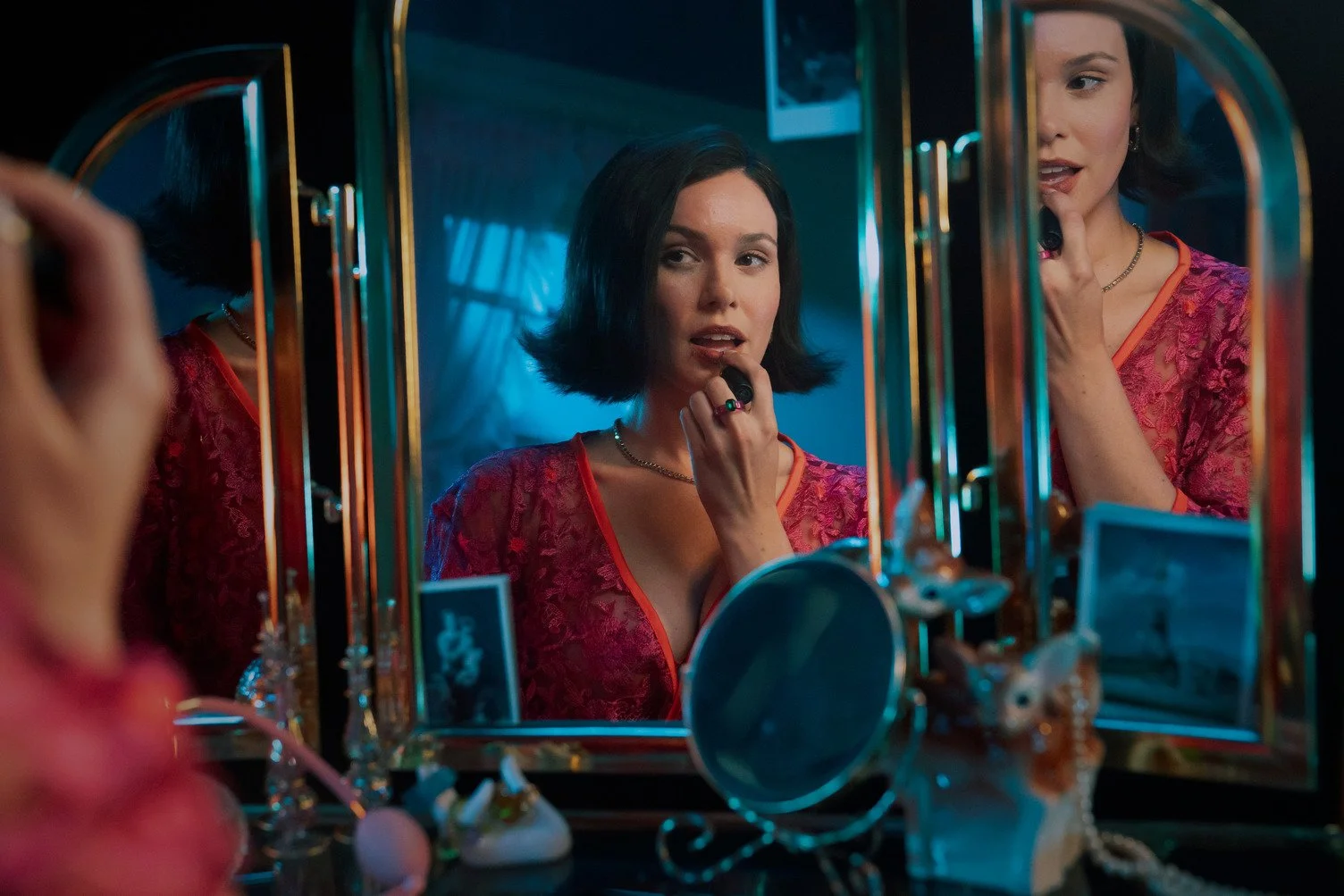
The Bride!, for all intents and purposes, throws nothing but punches and refuses to sugarcoat a single frame in Maggie Gyllenhaalโs remarkable, fresh take on Mary Shelleyโs creation. That hardly means the movie is easy to sit through. Gyllenhaalโs sophomore effort ( her first was the incredible Netflix film The Lost Daughter) is grueling, repellent, hideous, and depraved at times. Skulls are crushed. Limbs are ripped. Tongues are torn.
However, The Bride! is also feverishly funny and unhinged, the type of gothic controlled chaos whose violence, as Roger Ebert describes in his review of Quentin Tarantinoโs Pulp Fiction, is like amusement park violence. Gyllenhaal does a remarkable job of creating a world of ugly people with even uglier souls that is savage, seductive, and subversive. And no, we are not just talking about the main characters.
The Bride! reflects the classic source materials in a kinetic, highly stylized way. Monsters are not born, they are made. The grotesque creatures are curious, sensitive, and full of untapped compassion, longing for companionship, whose violence is sparked by a world that uses isolation, humiliation, and abandonment to shape them. This Frankensteinโs monster and his bride are products of their environment, living down to the expectations society has set for them.
This story takes place in 1930s Chicago, where Ida (a phenomenal Jessie Buckley) is enjoying a heavy night of drinking and shellfish in a swinging mob speakeasy. She throws a fit, yelling at the local mob boss, Lupino (Supermanโs Zlatko Buriฤ), who tells his henchmen to get rid of her. Clyde (Past LivesโJohn Magaro) and James (Airโs Matthew Maher) slap her around and eventually push her down the stairs because she wonโt shut that filthy mouth of hers.
Ida falls head over heels, literally, as her skull bounces off several steps until she meets the hard cement floor, snapping her neck. She is buried and forgotten. That is, until Frankensteinโs monster (Academy Award winner Christian Bale) arrives at Dr. Euphroniusโs (the iconic Annette Bening) home to ask her to feel compassion for him. Euphoria is well known, perhaps infamously, for reinvigorating the dead.
So they do what any normal people would do: they go grave robbing, coming across an exquisite-looking dead woman with wild blonde hair in a silky orange cocktail dress that will surely pique the monsterโs interest. The wild and reckless Ida is reborn, without a memory of who she was before. The Monster is taken back by The Brideโs chaotic vitality, and a tragic creation that turns out to have a streak of anarchic spirit that cannot be tamed.
The Bride! works because of Jessie Buckleyโs performance. Her portrayal is like a stick of dynamite; volatile, sensual, and feral, a far cry from past Frankenstein adaptations. Buckleyโs take on the classic character can be viewed through a feminist lens: Idaโs behavior before and after her death is a rebellion against the rules society has designed for her, refusing to stay within the walls that seek to box her in.
Of course, Bale makes you feel for a character who becomes a gluttonous consumer of love and friendship. Now drunk on companionship, he has a remarkable way of making you feel for the character, then be frightened or disgusted by him. For example, the switch from endearing shyness can, in a split second, turn into monstrous rage. While the story clearly has a horror undercurrent, Baleโs turn drives the search for a cure for loneliness and identity, which is viscerally felt.
Gyllenhaal also makes the film a family affair, with her brother Jake playing a Fred Astaireโlike Golden Age of Hollywood star who helps the Monster through hard times. Her husband, Peter Sarsgaard, plays Det. Jake Wiles, who, along with Penรฉlope Cruzโs Myrna Mallow, Jakeโs assistant, investigates Frank and the Bride. Unfortunately, that subplot feels forced rather than delicately layered into the story.
While entertaining, unfortunately, that investigation feels less like a natural extension of the story and more like a narrative obligation. Also, while the feminist rebellion angle is clearly felt throughout the film, Gyllenhaal does find herself doubling down by creating an antihero character out of Ida, with people following her in the media. The layer of subtext is hardly subtle and self-indulgent.
Though you cannot argue that the film always keeps you engaged and entertained, no matter how vile the movie can be, it becomes thought-provoking. Ultimately, The Bride is worth watching for the lens Maggie Gyllenhaal uses to tell the story and for Jessie Buckley’s electric performance. Maggie Gyllenhaal, beneath all the style and terrific performances, finds the humanity beneath the grotesque.ย
You can watch The Bride exclusively in theaters starting March 6th!
On this episode of Chasing the Gold, Shadan is joined by Gerald of The Awards Garage to discuss this year’s Actor Awards! We saw some big surprises and have three acting categories that are completely up in the air now. It also means Best Picture is a big race as well going into the Oscars. In that regard, the Actor Awards absolutely delivered on top of having great winners and speeches.
Check out this week’s show and let us know what you think in the comment section. Thanks for listening and for supporting the InSession Film Podcast!
Filmmaking is a collaborative art and surrounding yourself with people who are diligent and at the top of their game is important. Mann has shown this skillset over the course of his career and whether it be with incredible composers (Tangerine Dream), superb cinematographers (Dante Spinotti), or knowledgeable casting directors (Bonnie Timmerman). Beyond the well-oiled team that goes into the making of these features, Mann also knows how to show us the well-oiled team in his films.
Now I will say that it does make it easy to display a well-oiled team when you have a crew of people working towards the completion ofโฆohโฆletโs say a robbery of some kind. In Thief, the precision of Frankโs team is immediate from the jump: Barry watching for trips in alarms, keeping tabs on the police scanner, and (of course) Frank using his drilling skills to thievery perfection. Well-oiled teams can be bested like this one in Thief, but along the way it is a sight to behold.ย
I may be stretching the rules here a bit, but there is a well-oiled team in place for The Keep. As Woermann and the Russians arrive at the Carpathian Alps, a father and his sons are inside the keep and explain the rules that they live by: they watch the keep as his father did before him. These people do not know who owns the keep, but they know to protect it and that they cannot stay there after dark. They know how many crosses line the walls (it is 108 and they are made of nickel) and they do not want praise. Itโs hard to blame the villagers of this small, Romanian town for not standing up to weapons and an overabundance of soldiers, but credit is due to the family trying to keep Molasar (do they know about Molasar?) from escaping. In this case, it is the town that acts as the well-oiled machine.
To discuss the well-oiled team in Manhunter is to discuss my favorite part of the movie: the decoding of the note found in Lecktorโs cell. We start with Dr. Chilton reaching out to Graham and Crawford about this finding and as soon as they know what they have, they set events in motion. Choppers flying people in from all over the country, people scouring the note for hair and fibers, and a sense of urgency propels this all forward because they need to get the note back into Lecktorโs cell without him knowing. This is a moment of the best people in their fields all working together with the same end goal of figuring out everything they can about this note. The revelation of the correspondence happening in โThe National Tattlerโ is an extremely gripping moment, leading them to the decision to let the story run as is (which, of course, is the home address of Will Graham, where his wife and son are currently dwelling). A well-oiled team does not always reach the objective they sought after, but it is the journey that is truly engaging to watch and this ensemble works well with Mannโs cinematic style.
A well-oiled team is all about knowing who does what and when. A well-oiled team has a way of speaking that is clear to them and possibly no one else. A well-oiled team knows when to lead, fall back, take action, and regroup. Given these parameters the trio of Nathaniel, Uncas, and Chingachgook make one of the best teams in all of Mannโs films. They work well together, know their surroundings, and take the necessary time to strategize for future events. Part of what makes this trio stand out is that their allegiance in truly to each other, but they wish no harm to others. They have a moral code to the land and are opposed to those who do evil to it or others โ this gives them all an altruistic presence that makes them so easy to root for (and makes it harder when Uncas is killed by Magua).
Heat provides us with two well-oiled teams that both have noticeable flaws. Letโs start with Vincent Hanna and his Robbery/Homicide detectives: Mykelti Williamson as Sergeant Bobby Drucker, Wes Studi as Detective Sammy Casals, Ted Levine as Detective Mike Bosko and Jerry Trimble as Detective Danny Schwartz. Vincent is quick to hurl out orders, but clearly the rapport with his men is good: they hear him, understand the requests, and get the answers they need. These men know their roles and what they need to do and clearly support each other. It is only a brief moment in the film, but when Bosko gets shot, we feel it and we know that Hanna does, too. The flaw of our detectives is simple: they are bound by the law. Sure, they can be aggressive with C.I.s and maybe they bribe their way to certain information, but ultimately they must follow the rules of any police officer. Moving over to Neilโs team, we have Val Kilmer as Chris Shiherlis, Tom Sizemore as Michael Cheritto, and Danny Trejo as Gilbert Trejo. You can include Jon Voight as Nate and Tom Noonan as Kelso if you want, but it is really Kilmer, Sizemore, and Trejo that make up this crew. Not unlike our crew from Thief, this team knows exactly who is doing what job and they know who is in charge: they trust Neil implicitly. The fatal flaw here is that they pick wildcard guys to come in seemingly last minute. If you are Neil, why not call off the bank job when Trejo says he is being tailed? Is not that the heat around the corner? But who am I kidding, it is going with Waingro and somehow letting him escape that slowly unravels this crew. Both our cops and robbers are well-oiled and have good rhythms, but they are bound by the decisions they ultimately make.ย
This paragraph may get dark, but stick with me. Sometimes the well-oiled team is the organization you are up against. My past Mann examples have been about well-oiled teams that we are rooting for and that we hope prevail. Within the story structure of The Insider, we have two well-oiled teams working against our co-heroes of Jeffrey Wigand and Lowell Bergman. Wigand is up against the specific corporation of Brown and Williamson, which is part of an even bigger and more well-oiled machine known as Big Tabacco. Wigand, as only one man restricted by a confidentiality agreement cannot take on this machine on his own and teams up (sort of) with Bergman. Bergman himself finds himself part of a well-oiled machine in CBS News, but that well-oiled machine is only a cog in the wheel of another bigger, more well-oiled machine: CBS Corporate. And in a world where the biggest and most complete well-oiled machine rules all, CBS Corporate is scared of and could be owned by Brown and Williamson. Part of what The Insider is driving at is that money talks and with enough of it, you can create a machine nearly impossible to breakdownโฆunless you have two men with codes like Jeffrey Wigand and Lowell Bergman.ย
Here’s my opinion: if Ali had a better group of people around him, things would have worked out better and sooner for him. There are people introduced in the film that I believe fully support him and tried to help him as much as possible: Malcolm X (Mario Van Peebles), his trainer Angelo (Ron Silver), his lawyer Chauncey Eskridge (Joe Morton), and his 2nd wife, Belinda Boyd (Nona Gaye). I believe these people loved and/or respected Ali and had a lot of sensical pieces of wisdom to offer him. The problem is that the louder voices rang through to Ali: Bundini (Jamie Foxx) and Herbert Muhammad (Barry Shabaka Henley) stand out. Referring to ComMANNdment #3, Aliโs isolation at the top made him vulnerable to people out for selfish gains. Without a solid group of people supporting Ali and his path forward, careless and hasty decisions were made along the way. Now we know the history, and ultimately Muhammad Aliโs story is one of perseverance and success, but if he had more support and care around him the path forward could have been easier to navigate.ย
For someone who has spent a lot of time working with police officers and having them be primary and heroic portions of his films, Mannโs presentation of cops in Collateral leaves a lot to be desired. Letโs discuss Mark Ruffaloโs character, Det. Ray Fanning, in this section here as he may be the only competent cop in the entire film. When his CI (the man who โfellโ out of the window) does not show up to a meeting, Fanning wisely decides to visit his apartment. Upon his arrival, he very clearly sees that something off has happened: broken glass below on the ground below and no body. Fanning calls it in, believing a crime has taken place. In walks Peter Bergโs character (clearly outranking Fanning) and essentially says โNo body, no crime.โ Ruffalo continues working leads and putting the pieces together. After a fortuitous discussion with a medical examiner, Fanning figures out that the dead bodies from the evening all lead to this โFelixโ character (played by Javier Bardem) โ but Fanning is getting too close to the FBI. All of this culminates in the FBI and LAPD raiding the โFeverโ nightclub, where multiple people are shot, wounded, and/or killed โ INCLUDING FANNING AS HE IS TRYING TO SAVE MAX. No perimeter is setup and no patrons are safely escorted away โ PURE CHAOS ENSUES! Now, if the LAPD and FBI maybe trusted and listen to each other, might the protection of the witness occurred? I would like to think so, but given how police are portrayed in this filmโฆ
As reckless as our two leads in Miami Vice (specifically Sonny) can be, I must say that they are part of a well-oiled team that knows how to rally together and get the job done. What stands out most is not just that they accomplish their goals, but that they know how to work off each other and how to support each other. Take the scene where our crew goes to talk to Nicholas (played by Eddie Marsan): they know how to push him at times, praise him at times, and maneuver him towards their end goal of making the connection to Yero. Our crew is most connected when Trudy gets taken. They donโt get overly emotional beforehand, they plan it right, stay cool, and take out the people in the trailer in a calm and efficient manner. When they need to crank up the volume and start taking out targets during the boatyard shootout, they excel masterfully. Real praise needs to be given to Justin Theroux, Elizabeth Rodriguez, and Dominic Lombardozzi for rounding out our Miami-Dade crew. Film teams need competent players to be there to support our leads without distracting, but make us feel like they are vital to the overall success of the mission and these three do that exceedingly well.
What happens when one well-oiled team takes on another well-oiled team in circumstances that will ultimately lead to someoneโs death? Wellโฆsomeone diesโฆand theoretically you hope itโs โthe bad guy,โ but Michael Mann has frequently made the choice to have the main subjects in his films be antagonists. Public Enemies has a clear set up: the criminals against the newly formed FBI; the bad guys and the good guys. From the bad guyโs perspective, the FBI will have to watch every bank all the time if they want to catch Dillinger because that is how elusive he is. From the good guysโ perspective, a seemingly never-ending cache of weapons and money is behind them. Dillinger has confidence, but Purvis has the resources. In the end, what makes Dillinger so intriguing is watching him go from โteam to teamโ and avoid capture. During an impressive moment of spontaneity and skill, Dillinger along with Youngblood, a fellow inmate, start with nothing but a fake gun made of wood, break out from the jail and escape in the Sherrifโs car. Purvis, who was smart enough to hire lawmen from Texas and Oklahoma to help him out, is not the leader that Dillinger is. In fact, as far as the well-oiled machine of the FBI is concerned, why wasnโt this movie more focused on Winstead? He is a more captivating character and the one who has the more pivotal moments with both Dillinger and Billie. Setting that aside, the bigger well-oiled team here wins, but you have to give credit to Dillinger and his ingenuity to keep outsmarting the โgood guys.โ
Think about any major league sportโฆyou got one? Good. Now even if you donโt regularly follow sports, you could assume that a team of rookies and players that have not worked together may not gel right away. Familiarity and trust lead to team success. This team mentality is what holds back our โgood guysโ in Blackhat. For much of the film, there are barriers between our various members: Dawai works for the Chinese government and Carol for the FBI; Hathaway is a convicted felon while Carol and Jessup uphold the law. And despite Hathaway and Dawaiโs prior friendship, Hathaway begins a sexual relationship with LienโฆWHY WOULD ANY OF THESE PEOPLE TRUST EACH OTHER??? It is no wonder why they get bested throughout the film: they are not a team. When Elias and his crew work together, they dominate: the tunnel shootout/explosion and escape work in their favor (despite losing one of their guys). And in a rather ironic twist of fate, the only way the โgood guysโ get ahead is when the three characters linked to law enforcement die. After that, the well-oiled โteamโ goes out the window and it is a well-oiled duo that starts to emerge. Hathaway is not much of a team player โ he can handle a partner, but any more than that and he must battle over who is calling the shots. A more cohesive team could have led to fewer deaths, but alas our story did not go in that directionโฆ
Ferrari is based on real people and real events โ this fact makes my next assertion a bit callous, but I am who I am. Okay, here we go: maybe if Enzo Ferrari had a more united team with people other than Laura who were willing to stand up to him, then Castelotti and De Portago would not have died. I know I focused on these two car accidents in ComMANNdment #2, but it is important to track backwards and see how those accidents could have been prevented. Starting with Castelotti, it is easy to see that Ferrariโs pride got the best of him that day. Sitting in church and timing the car of Maserati, Ferrariโs team should have calmed him down and set up a more strategic game plan for taking the record back. Instead, Ferrariโs impulsiveness leads him to calling Castelotti while he is still in bed and telling him to come to track. The confluence of events (a sleepy Castelotti, an overdetermined Ferrari, a car with bad gear shifting) all lead to Castellottiโs ultimate demise. A similar debate comes up with De Portagoโs collision. As he comes in to pit before the last stretch of the race, it is implored to De Portago to take new tires as the current ones were well-worn. De Portago refuses this and wants to get back on the road. Ferrari, who has a racing background, knows that De Portago just wants to get back on the road, but Ferrari should have been thorough and more careful here. Given that Maseratiโs top racer, Behra, was already knocked out of the race Ferrari was almost sure to win. But as before, Ferrariโs pride gets the best of him and De Portagoโs worn-out tires lead to a terrible accident โ proof that you need people around you to say no or point out when something is off.
On this episode, JD and Brendan dive into Zak HIlditch’s new(ish) zombie film We Bury the Dead, starring an incredible Daisy Ridley! We’re a little late to the party here, but the premise here is quite fascinating and the film uses a buffet of zombie lore to establish something unique.
Review:We Bury the Dead
Director: Zak Hilditch Writers: Zak Hilditch Stars: Daisy Ridley, Brenton Thwaites, Mark Coles Smith
Director:Han Han Writers:Han Han, Zhou Yunhai, Meng Wenyu Stars: Teng Shen, Yin Zheng, Wei Xiang
Synopsis:Bearing the glory of being the “King of Bayanbulak,” Zhang Chi once again embarks on his racing journey, aiming not only to win the race but also to achieve something beyond the competition itself.
In the opening scene of Pegasus 3, a montage intricately set to Queenโs โDonโt Stop Me Now,โ the evolution in the directing skills of former rally car driver Han Han is loud and clear. Whereas the first movie in the popular trilogy of Chinese sports films was an aesthetic (and editing) nightmare, Han began to hone in on his capabilities as an artist in the second installment, with more fluid cuts and sharper camerawork, but it wasnโt perfect. In Pegasus 3, he takes criticisms to heart and crafts a final hour of bravura filmmaking so exhilarating it might as well give Joseph Kosinskiโs F1 a run for its money.
The first Pegasus was terrible. The second was much better, but the difference between Pegasus 2 and 3 is night and day. Instead of retreading the same narrative beats as the previous two films, which saw rally car driver Zhang Chi (Teng Shen) stage a comeback in the Bayanbulak race, Han makes everything grander in scale and scope by ditching the central race of the first two films and prepping Zhang and his partner Sun Yuqiang (Yin Zheng) to compete in the MuChen 100. Itโs essentially a longer (and more dangerous) version of the Bayanbulak, but itโs undoubtedly the best thing Han has ever directed.
Old rivalries become friendships, as Zhang discovers that the team that initially brought them on board has been purposefully sabotaging their chances of competing. It gives Zhang, with the aid of Manager Ye (Wei Xiang), the opportunity to plan an intricate finale to get back at the people who have always doubted them at every second. Nothing is truly reinvented from a narrative perspective, most of it is actually plucked from F1 meets Neill Blomkampโs Gran Turismo, but the aesthetic experience of Pegasus 3 is second-to-none and is well worth the time youโll spend in a cinema with a sold-out crowd that will erupt in applause by the time Han reaches his final setpiece and consistently dazzles your eyes and ears.
It does take a while to get there, and the forward-momentum can be slightly hampered by some lethargic pacing, but Han more than compensates with the trilogyโs funniest comedy and a genuinely heartfelt performance from Teng Shen, whose Zhang Chi is more vulnerable than heโs ever been and is still trying to make ends meet, despite retaining the title of โKing of Bayanbulak.โ In the more talky opening half, we ruminate more with the protagonist as he grapples with what the world of racing means for him and the friends heโs forged along the way, which makes the resulting propulsive energy of its final race more urgent and tangible.
The final race is where the movie truly comes to life โ a staggering hour-long scene where literally anything can happen, and every camera technique you can think of is employed. There isnโt a single moment where my jaw wasnโt on the floor, as we observe Zhang precisely execute his plan, where not even one step can falter. Of course, this being a movie, the inevitable pitfalls do happen, but how he surmounts them is when the movie is at its most dynamic. I donโt think Iโve ever seen a race quite like the one Han visualizes on screen before. The less you know about it, the better, because it takes turns (pun absolutely intended) you will not expect.ย
What I can say, however, is that Han draws a cogent message on the use of AI integration and contrasts it with the sheer human willpower of Zhangโs plan. As sophisticated as machines can get, nothing โ and I mean nothing โ will beat human creativity and feeling. When the inevitable machine vs. human final stretch comes into play, who do you think will come out on top? I could spell it out for you, but the pleasures of watching a film like Pegasus 3 lie in your being transported by Hanโs sheer mastery of the visual medium of cinema, who finally shows us the thrills of rally racing in a way no other filmmaker could. It took him several tries for the former racer to get to that point, but one can absolutely say that the third time is indeed the charm.
This week on the InSession Film Podcast, inspired by Hoppers jumping into theaters this weekend, we did our Pixar Movie Draft! Pixar’s top-end filmography is about as good as it gets, with some of the very best animated movies ever made. This was a competitive and very fun conversation.
– No Scream 7 / Paramount & Warner Bros. (2:52) We begin the show this week by talking about why we are not reviewing Scream 7 on the podcast. Paramount and Spyglass’ reaction to Melissa Barrera was handled very poorly and the direction they took afterward left a lot to be desired. Speaking of Paramount, we then shift to the likelihood of their agreement to buy Warner Bros. It’s not great, Bob. We are incredibly dubious that it will turn out well and had a lot to say on the matter.ย
– Oscars Race (44:20) After the Actor Awards last weekend, many of the major categories are now ambigious and up in the air. It’s quite refreshing compared to most years where it’s all locked up by this point in the season. However, despite that, there’s still been a lot of arrow slinging and absurd discourse over Sinners, One Battle After Another, Timothรฉe Chalamet and Hamnet. There is so much to be excited about, regardless of who wins, and we just can’t get over how silly the conversation is right now.ย
– Pixar Draft (1:13:14) We’ve talked a lot about Pixar over the years, but with Hoppers coming out in theaters this weekend, we wanted to back to the well once again. This time we wanted to do a movie draft with Pixar’s filmography. The great films at the top are perhaps obvious and that might mean they cancel each other out when it comes to the votes. This could be one of those drafts where the bottom rounds make up the difference as Pixar’s filmography is kind of all over the place with audience reactions. So the results here should be fascinating. That said, who do you think won our Pixar draft?
If you want to help support us, there are several ways you can help us and we’d absolutely appreciate it. Every penny goes directly back into supporting the show and we are truly honored and grateful. Thanks for your support and for listening to the InSession Film Podcast!
Synopsis:Midwinter Break is a stirring meditation on faith, commitment, and the enduring power of love, as a longtime couple takes a life-changing trip to Amsterdam.
Sometimes, saying nothing at all is more powerful than uttering a word. This was true in Joachim Trierโs (incredible) Sentimental Value, and is the main driving force behind Polly Findlayโs Midwinter Break. Adapting from the book of the same name written by Bernard MacLaverty, Findlay, in her feature directorial debut, thrives in the silence and unspoken words of couple Gerry (Ciarรกn Hinds) and Stella (Lesley Manville), as the two go on a trip to Amsterdam over the holidays and perhaps fracture their longstanding marriage forever.
Findlay is best known for her theater work, and she seems to apply the techniques developed in this art form to the medium of film. After all, Midwinter Break is essentially a two-hander between Hinds and Manville as they walk around the streets of Amsterdam and begin to reveal their vulnerabilities throughout their visit. Stella is a devout catholic who feels a close connection to a higher power and is travelling to Amsterdam for ulterior motives Gerry doesnโt know about, but heโs completely oblivious to anything going on since heโs always drinking. To say he has a drinking problem would be an understatement (we see him take his statins with a fairly full glass of whiskey, as an example), which bothers Stella, but she keeps these thoughts to herself.
There was once love in this couple, but itโs nowhere to be found by the time the film opens. Thereโs an appreciation, sure, and they donโt mind being together, but the passion at the heart of the marriage is long gone, and has been for at least a decade. We know this because the characters barely look at one another when theyโre speaking, and what theyโre not saying about themselves reveals more about Gerry and Stella than a litany of extended dialogue scenes, which wouldโve turned this filmic object into pure theatrics.
There might have been a version of Midwinter Break in which MacLavertyโs book was adapted into a play, and the actors would have had to represent their innermost feelings through exaggerated histrionics, which wouldnโt have worked. Findlay keeps everything subdued for the most part and only reveals the reason why both characters have been drifting apart for a long time when the plot truly requires it. When that happens, itโs also the moment where Manville has to monologue in front of someone she has recently met (played by Niamh Cusack) and deliver a powerful gut-punch that will not only linger with you, but repurpose what came before in a genuinely meaningful way.
Of course, this critic is trying to be (extremely) vague, not revealing what has caused the fractures in Gerry and Stellaโs marriage, but I can say that Manville likely gives the best performance of her career in this. Itโs a role that thrives on silence, until the unspoken feelings are too hard to bear and Stella must let it all out and reveal it all. When this occurs, it might be hard for you to hold back tears, because the emotions in Manvilleโs face, which have been built up throughout the filmโs brief runtime, all cascade down in a monologue filled with immense, raw power.
The final scene is also an exemplary demonstration of both Manville and Hindsโ acting talents, as Gerry and Stella reckon with their own beliefs and ask themselves if staying together is truly worth it. Iโll let you discover this incredible sequence on your own, but itโs clear that audiences are sleeping on this simple yet emotionally impactful film that does a lot more by thriving on minimalism and sitting with the two protagonists grappling with an unfulfilled life than by making them speak about these feelings. It might be a little too standard on the filmmaking side, but it also doesnโt need to be flashy.
That said, the final image will probably stay with you forever, as Gerry and Stella now realize whatโs most important about living in a world they donโt understand, and that has brought them massive amounts of pain. When this happens, you might gain a different understanding of your own life and perhaps see the world differently. In any event, donโt let this movie fly off your radar.
Director:Frank E. Flowers Writers: Joe Ballarini, Frank E. Flowers Stars: Priyanka Chopra Jonas, Karl Urban, Safia Oakley-Green
Synopsis: A Caribbean woman gets her secret past revealed when her island is invaded by vicious buccaneers.
The high seas of making a film with pirates arenโt easy to navigate at all. Filmmakers donโt want to make another Cutthroat Island, they want to make another Pirates of the Caribbean. The vacancy of this kind of movie has been reduced to zero with the new film, The Bluff. The Bluff stars Priyanka Chopra Jonas as Ercell Bodde, who isย a housewife whoโs awaiting the return of her husband Captain T.H. Bodden (Ismael Cruz Cordova) and his shipโs crew. The two share a son Isaac (Vedanten Naidoo) and T.H. ‘s sister Lizzie (Sofia Oakley-Green). Their home, Cayman Brac, is a little slice of paradise. Locals are able to raise their kids, work, and enjoy the weather every day without interference from others that arenโt welcome. Thatโs until Captain Connor (Karl Urban) and his men wash ashore searching for something thatโs rightfully his.
Chopra Jonas is our lead and she gives a decent performance as Ercell. She doesnโt play her character as a damsel in distress. Ercell gives it her all by fighting these unwanted visitors with guts and grit. Protecting her family is her main priority and if she has to cut men from their upper torso down to their toes, then so be it. Jonasโ background as an actress in Bollywood films has always been one of her strengths as a performer because sheโs an absolute pro in action sequences. The first thing I ever saw her in was the ABC series, Quantico. My eyes were fixated on her and the way that she commanded the audience with her beauty and her performance as an action performer.
As the movie goes on, we find out that Ercell has a secret life that she had before her husband came into the picture. She lived a life of swashbuckling and crime after being forced into it as a child by Captain Connor. Connor kidnaps her husband, T.H., after he finds his gold on their ship, they sail back to Cayman Brac, and thatโs where the real story begins. Ercell turned into a killer in order to survive on the high seas with Connor. During a battle with others Ercell stabbed him and took his treasure. That brings us back into the present. Chopra Jonas and Urban try to sell the confrontation between the both of them but the blandness of the script doesnโt allow for the two to give us great performances. I know Karl Urban is known for his role as Butcher on The Boys but his acting as a villain in this didnโt make me feel anything. He wasnโt intimidating, scary, or a villain with traits to be frightened by. One thing I did notice was how he was constantly rubbing some sort of drug inside of his mouth. It looked like seaweed but it gave him the energy he needed to fight everyone that wasnโt in his crew.ย
Pirate movies were made to be filmed on location. Thereโs no way that you can capture the magic of an actual island via green screen. It feels very manufactured and cheap when productions shoot beach and island scenes on a soundstage. Director Frank E. Flowers made a great decision to set principal photography in Australia because you feel the authenticity of the landscape. This was definitely a plus for me because they use the location to their advantage as much as they can. The action sequences are all heightened by the location. The cinematography from Greg Baldi was decent when there wasn’t any unnecessary cgi.ย
Towards the third act of the movie weโre left with predictable plot points that have been done before, supporting characters with no real development, and some effects that donโt look convincing. While Iโm happy to see Priyanka give a better performance than sheโs had since Quantico, I really hope that she can pull off a surprising performance in another genre. Karl Urban is just using elements of his performance as The Butcher in The Boys. At this point in his career, I hope that heโs still able to switch things up like Liam Neeson. The Bluff will give audiences a nostalgic feeling of older movies focusing on pirates. Unfortunately, the feeling fades away when they realize that decent action sequences and bad dialogue arenโt enough to push this boat to shore.