


Director: David Frankel
Writer: Aline Brosh McKenna, Lauren Weisberger
Stars: Meryl Streep, Anne Hathaway, Emily Blunt
Synopsis: Andy Sachs reunites with Miranda Priestly as they navigate their careers amid the decline of traditional magazine publishing
It’s 2006, and The Devil Wears Prada glides into theaters—polished, biting, and deceptively powerful. What could have been just another film about fashion becomes something far more lasting: a cultural landmark that reshaped how we saw the 2000s fashion industry, revealing its hierarchies, its quiet ruthlessness, and its impossible glamour, while making that world feel both untouchable and just within reach.
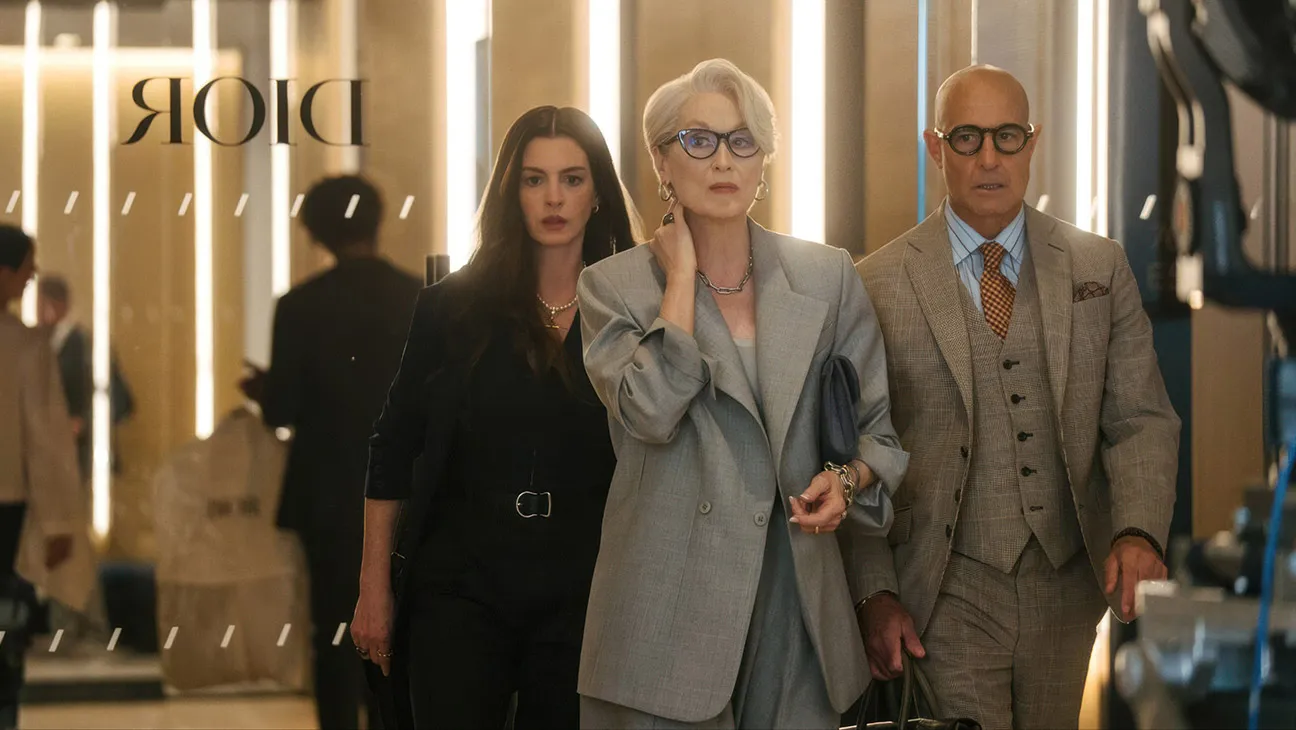
For me, though, its impact was never only cultural—it was deeply personal, even before I understood why. The film didn’t just spark a love for fashion; it stirred something quieter, something unnamed. It wasn’t a “trans story” in any obvious sense, but it didn’t need to be. The most defining realizations rarely arrive with clarity—they unfold slowly, reflecting parts of you you don’t yet have the words to claim.
That opening title sequence—women dressing with care, slipping into heels, brushing on mascara—felt like a revelation. Not just about beauty, but about becoming. Somewhere in those quiet rituals, I caught a glimpse of myself—not as I was, but as I felt. It planted something lasting: the idea that identity could be shaped, chosen, stepped into piece by piece, until it finally feels like truth.
So coming back to this world twenty years later feels emotional in a way I can’t separate from who I am now, because The Devil Wears Prada 2 isn’t just a sequel but a return to something that once felt sacred, something that helped me understand myself long before I had the words to say it out loud, and what makes it remarkable is that it earns that return by refusing to stay frozen in nostalgia and instead evolving into something more complicated, more fragile, and more human.
The Devil Wears Prada 2 does something sequels almost never manage, which is justifying its existence by evolving rather than repeating itself, since it doesn’t cling too tightly to what worked before nor abandon it, instead stepping into a harsher and more uncertain world where these characters exist with all their flaws intact, where the glamour and wit and bite are still there but layered over something more unstable, as the fantasy hasn’t disappeared but has been complicated by time.
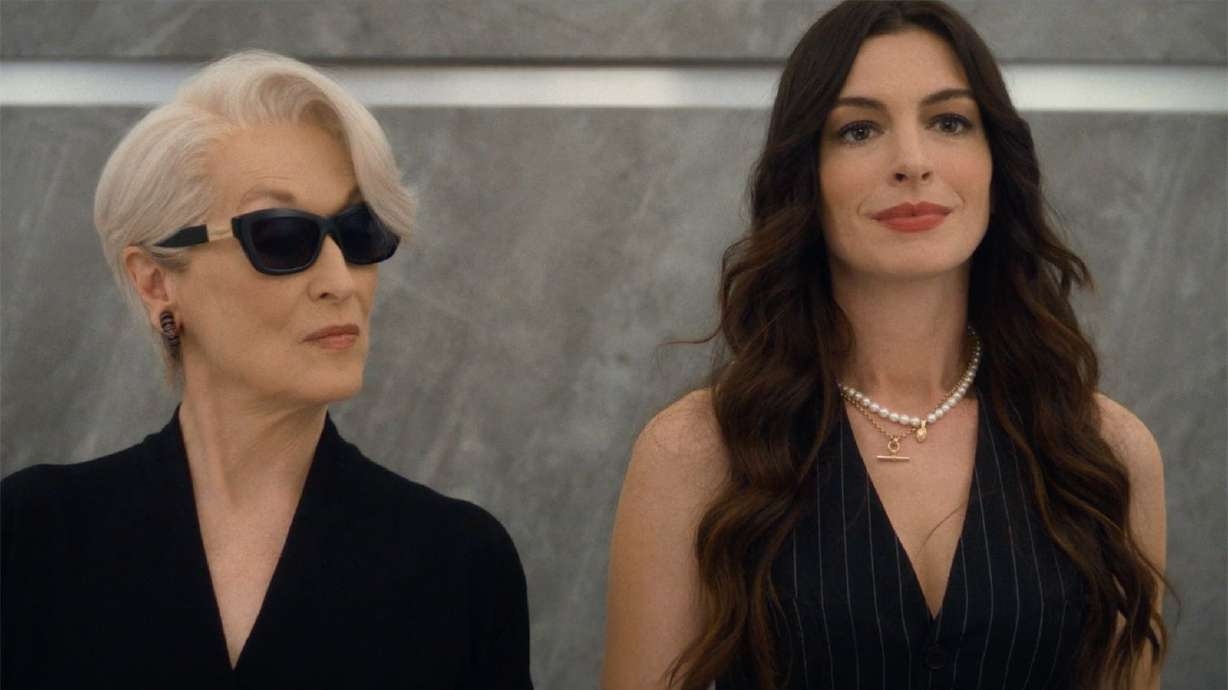
This time around, the world feels unsteady from the very beginning, because journalism is no longer just struggling but quietly eroding, and even someone as accomplished as Andy Sachs, once again played by Anne Hathaway, finds herself pulled into that instability, where her return to “Runway,” now entangled in scandal, feels less like destiny and more like necessity, a calculated step back into a place she once thought she had fully outgrown.
And yet “Runway” still belongs to Miranda Priestly, once again embodied with razor-sharp control by Meryl Streep, who remains a force of nature even as the landscape around her shifts in ways she can no longer fully command, because the power she once wielded without question now requires negotiation and restraint, and somehow that evolution makes her even more compelling, as she hasn’t lost authority but has been forced to redefine it.
Beside her stands Nigel, played with quiet depth by Stanley Tucci, still observant and composed but now carrying a subtle weight of disillusionment, as if time has moved differently for him and he is only now realizing how quickly the system he understood so well has shifted beneath him, leaving him to question what was gained and what was quietly left behind.
Then there is Emily, with Emily Blunt returning not softened but sharpened, because if she once fought to survive within the system she now helps shape it, and her rise into influence—entangled with the advertising world and the shifting machinery of media power—reconfigures everything in a way that feels both satisfying and slightly unsettling, since she doesn’t replace Miranda but instead challenges her, forcing a new kind of negotiation where influence is no longer inherited but constantly earned.
The film also expands Andy’s world outward in meaningful ways, including her friendship with Lily, played by Tracie Thoms, which remains one of her few grounding constants, alongside new characters who reflect the instability of a collapsing industry filled with laid-off colleagues, opportunists, and people trying to turn uncertainty into survival, while also introducing the quiet temptation of reshaping one’s own past into something consumable and marketable, where lived experience itself becomes currency.
And yet, through all of this, the film never loses its sense of spectacle, because the fashion remains exquisite and the cities of New York and Milan still feel like fantasy spaces carved from glass and steel, even if that beauty now feels less like escape and more like defense, as though everyone is dressing themselves in control because everything else feels unstable.
There is also a sharper awareness of the world outside the frame, where economic pressure and creative decline and the erosion of prestige institutions seep into the edges of the story without overwhelming it, and even “Runway” itself is no longer the untouchable empire it once was, because it still dictates taste but now also answers to it, reflecting a world where authority is no longer absolute.
One of the most intriguing modern threads comes through Emily’s connection to a tech-driven power structure shaped by figures like Bill Gates and Jeff Bezos, which becomes a subtle but effective way of showing how cultural influence has shifted away from legacy media into colder algorithmic systems where taste is no longer curated but calculated, reshaping what power even looks like.
And yet the film never loses its playfulness or its understanding of what fans came for, because callbacks are woven throughout as quiet echoes rather than loud nostalgia, while new additions feel intentional rather than decorative, with Lady Gaga appearing as herself and bringing electrifying theatricality alongside original music that feels perfectly at home in this heightened world, while Simone Ashley steps in as Miranda’s new assistant with a sharp, self-aware energy that signals a generational shift in power, and Lucy Liu adds elegance and ambiguity that deepens the film’s ongoing fascination with visibility and control.
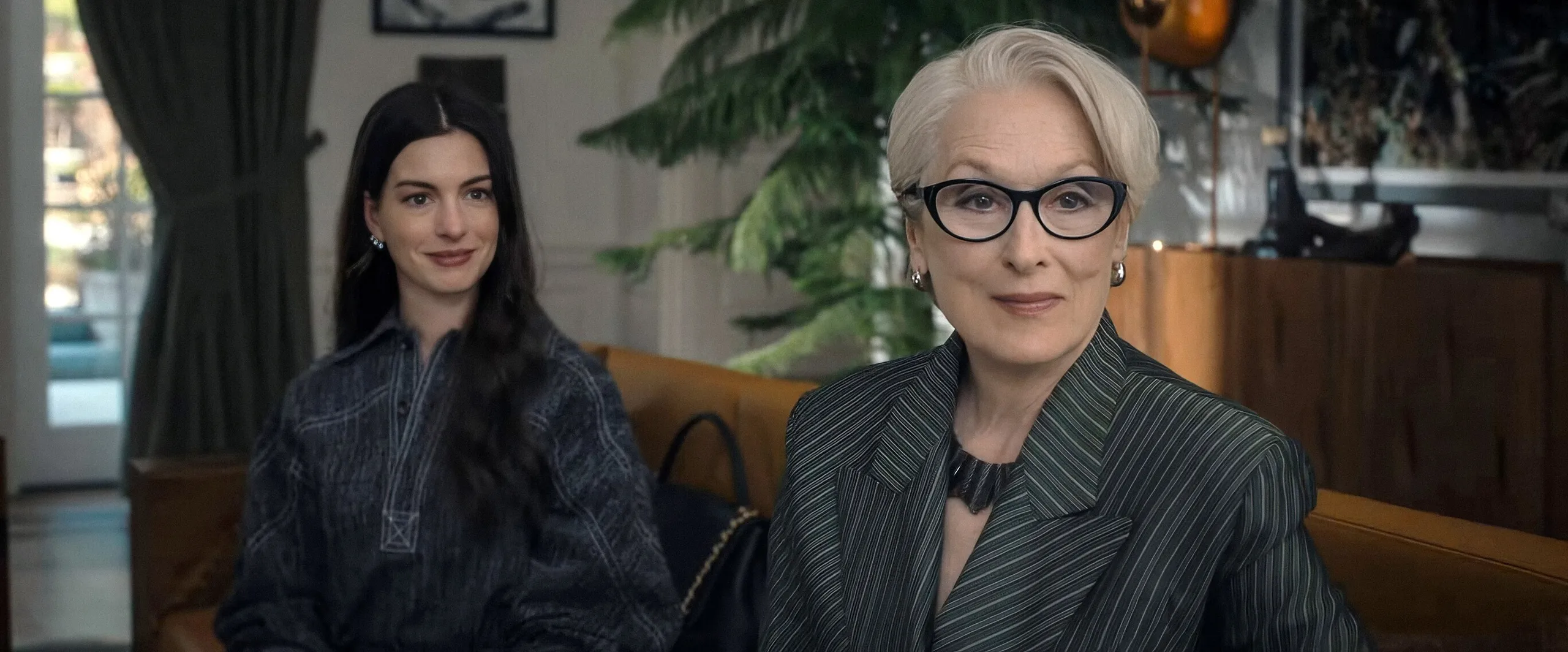
But what ultimately holds everything together is still the original quartet—Andy, Miranda, Emily, and Nigel—because the film understands that their chemistry is the backbone of everything, and rather than replacing or diluting it, it deepens it by allowing their relationships to fracture and reform in ways that feel honest, as none of them are who they once were, and that transformation is exactly the point.
Because at its core The Devil Wears Prada 2 isn’t really about fashion or journalism or even ambition, but about survival, about what remains of you when the systems that shaped your identity begin to dissolve, and about whether you can evolve without losing yourself entirely in the process, and by the end it refuses easy answers or neat closure while still suggesting something quieter and more human, which is that there is still meaning in persistence and still value in taste and voice and resistance even when the world no longer seems built to reward them.
It’s glamorous, yes, but it’s also more complicated now, more bruised, more lived-in, and more honest, and somehow that makes it feel even more powerful.