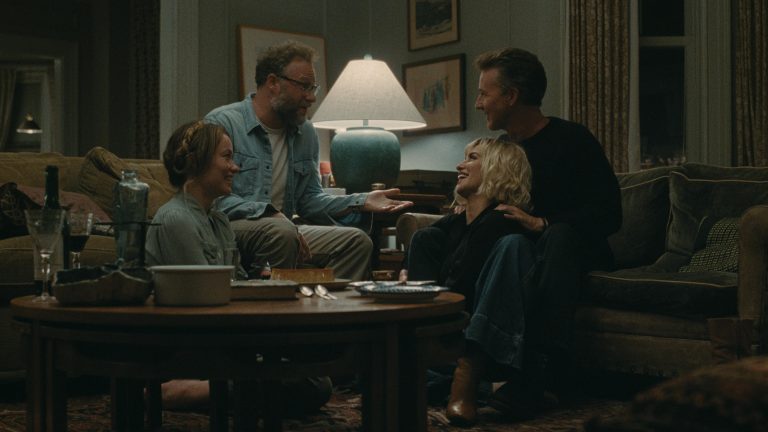
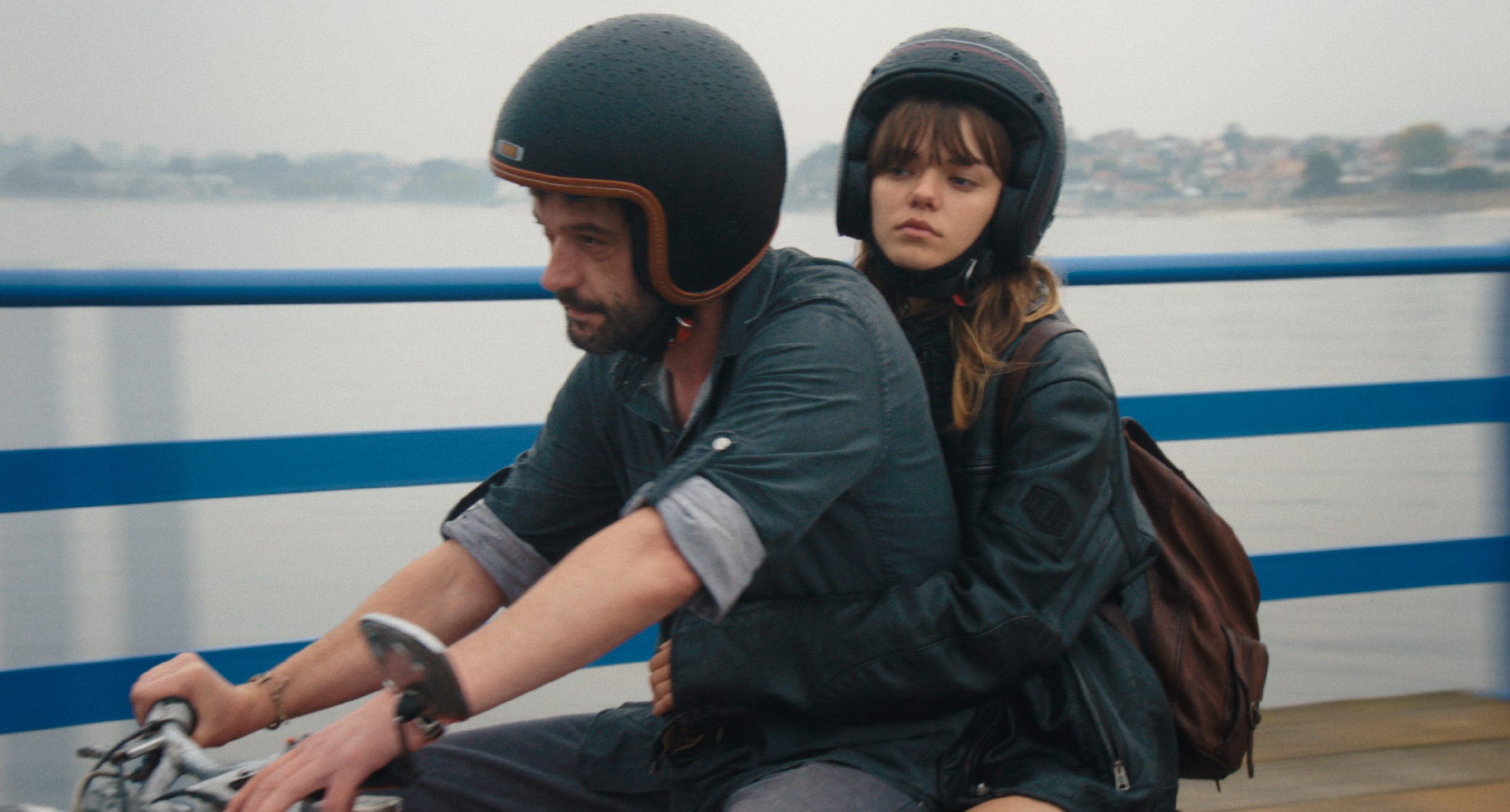
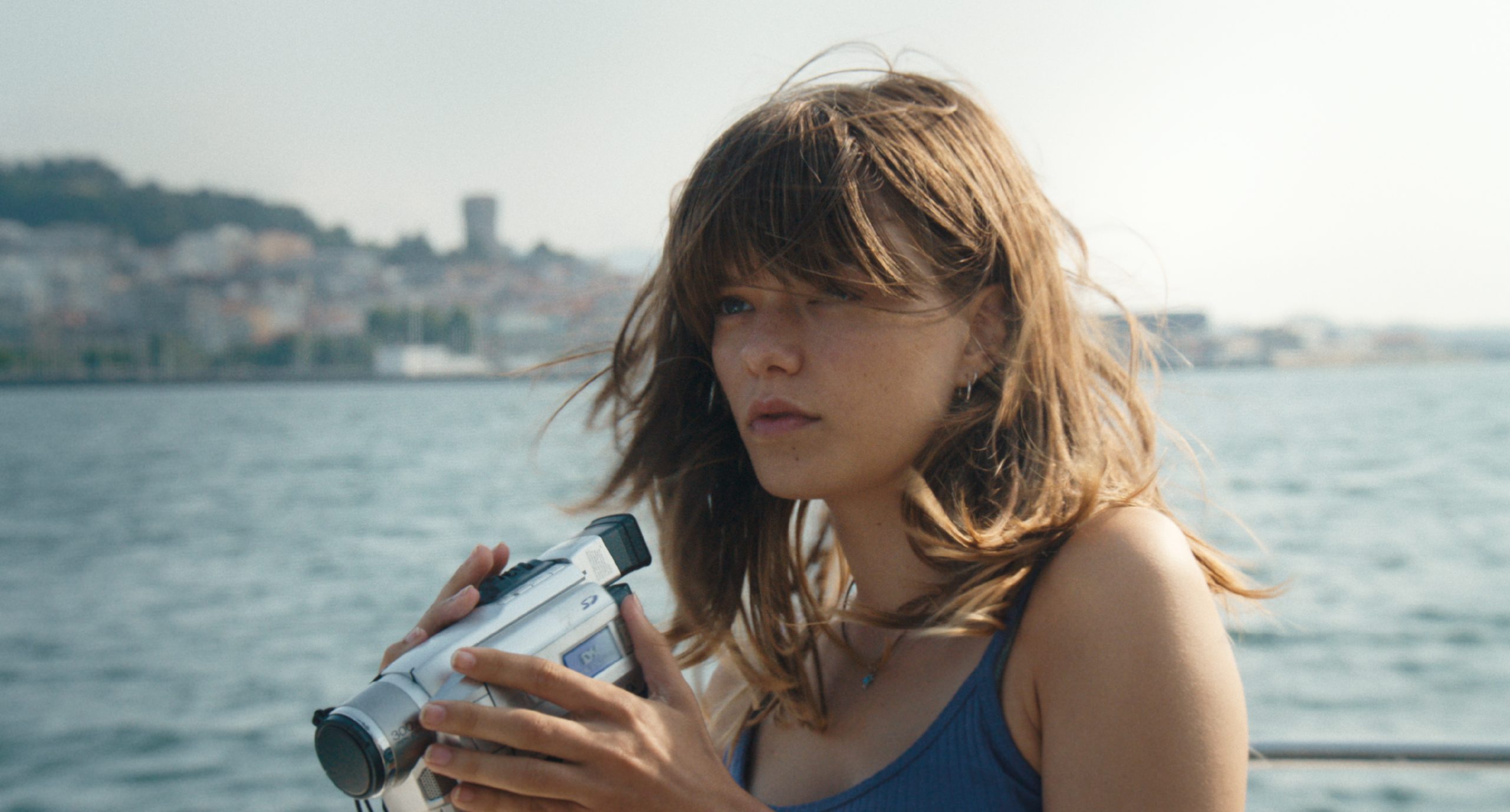
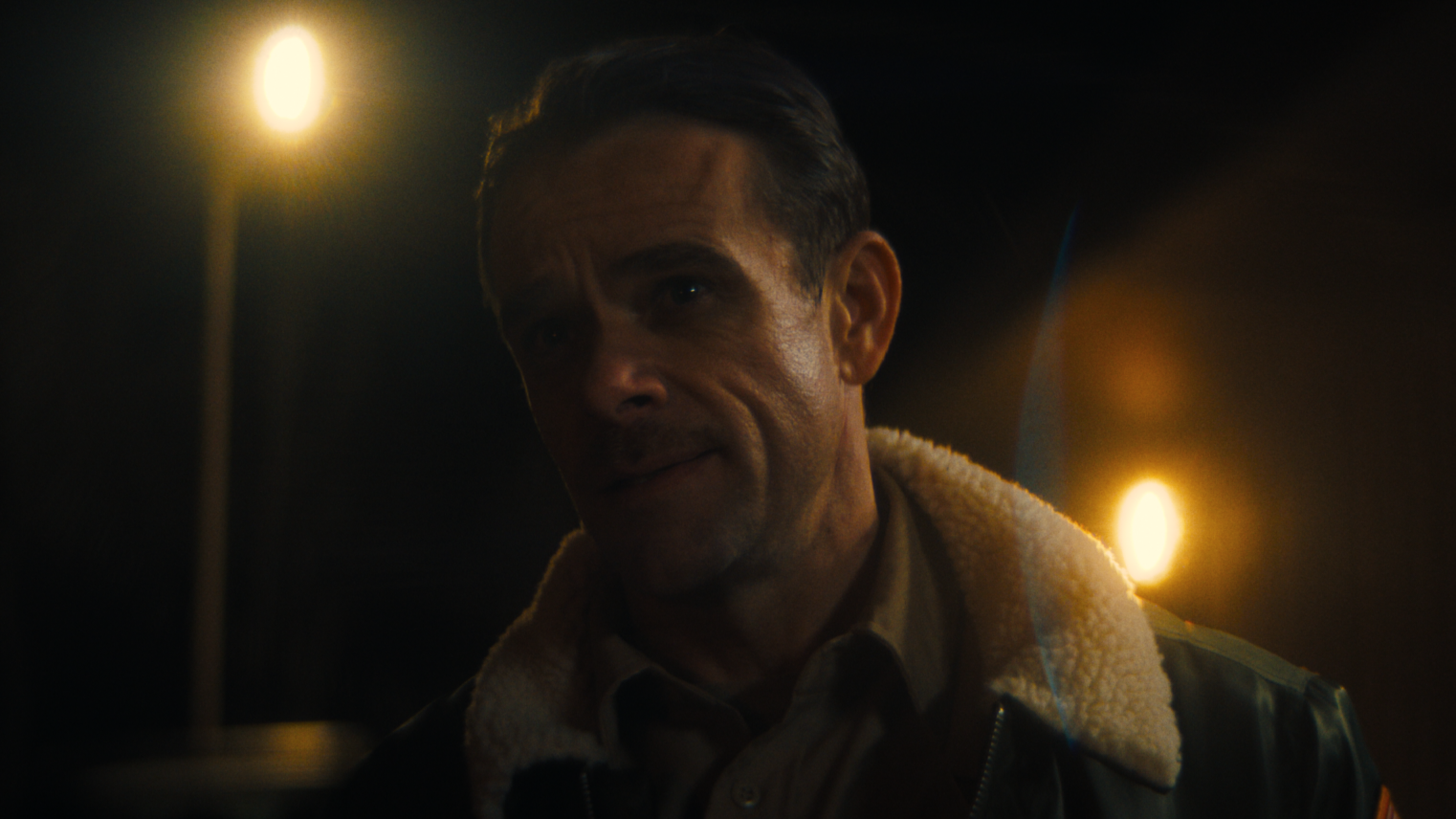
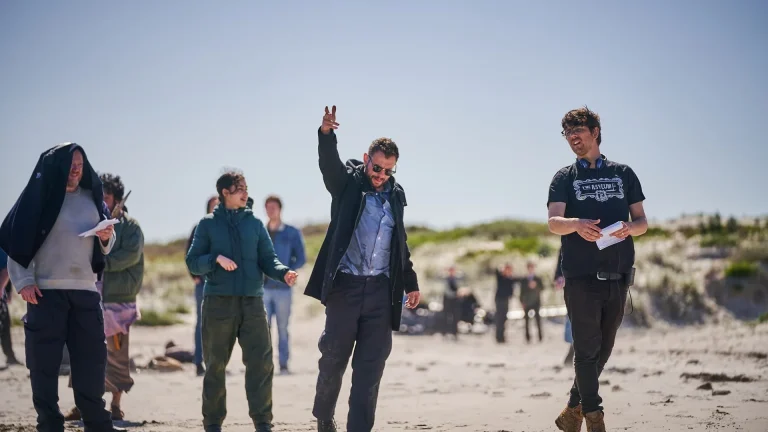
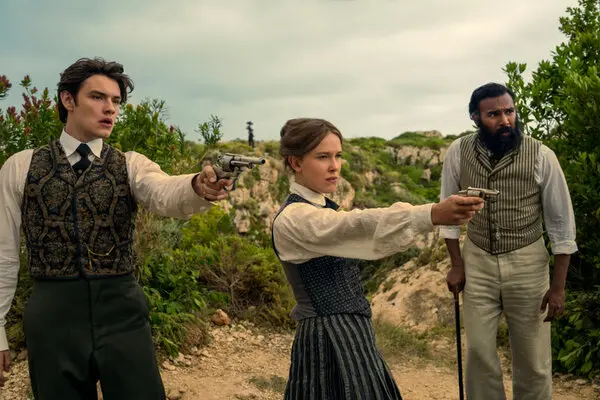
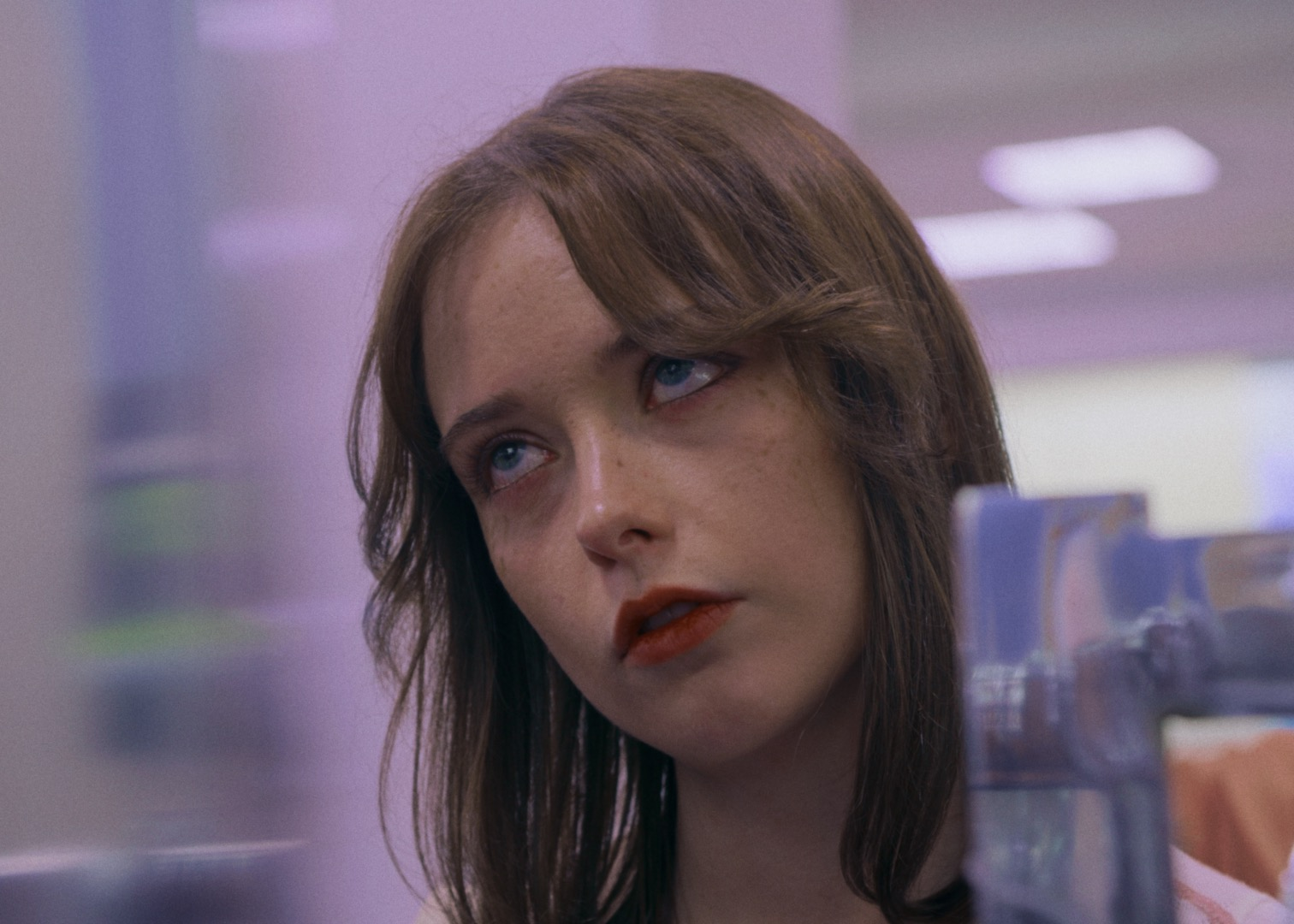
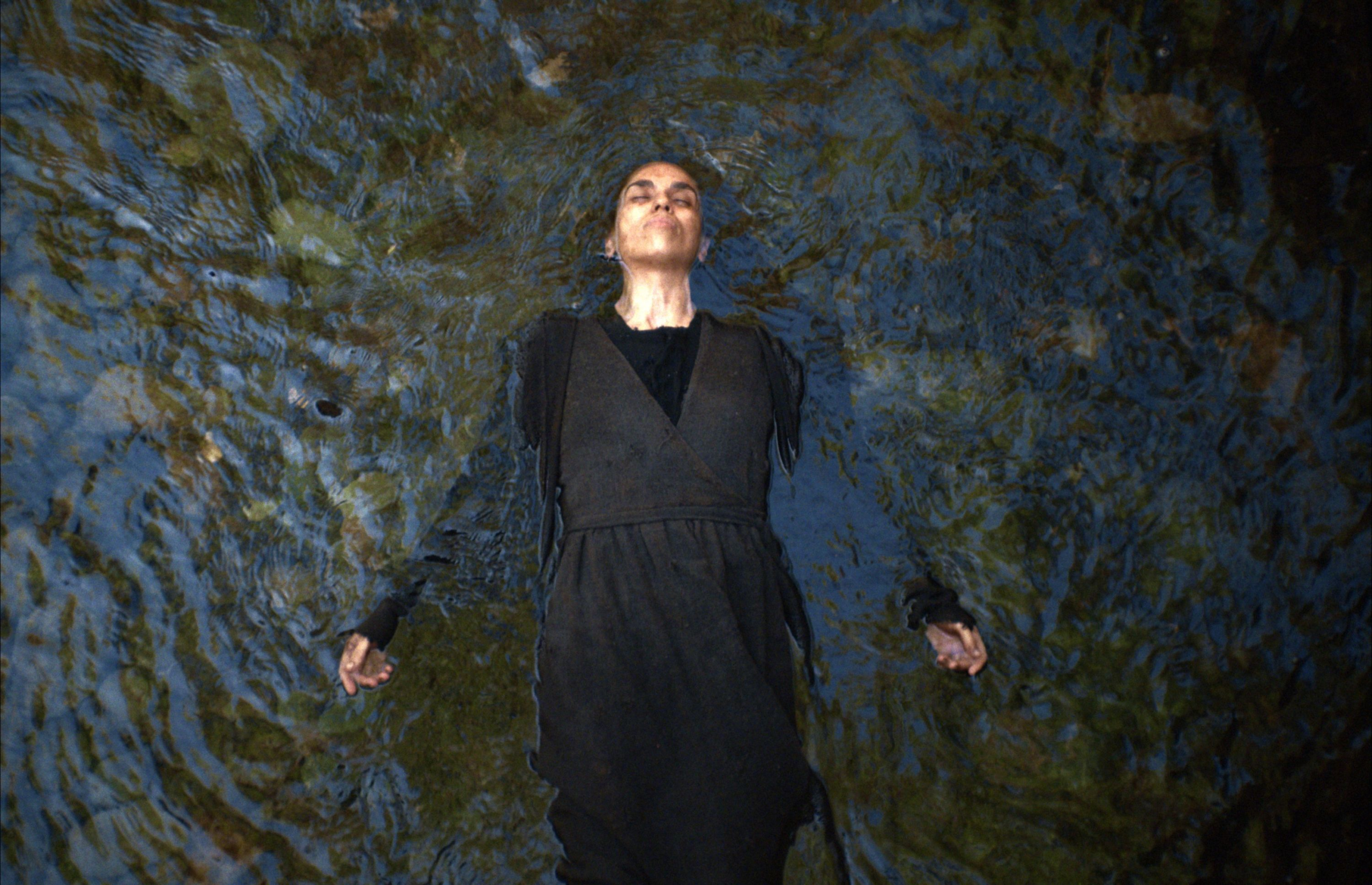
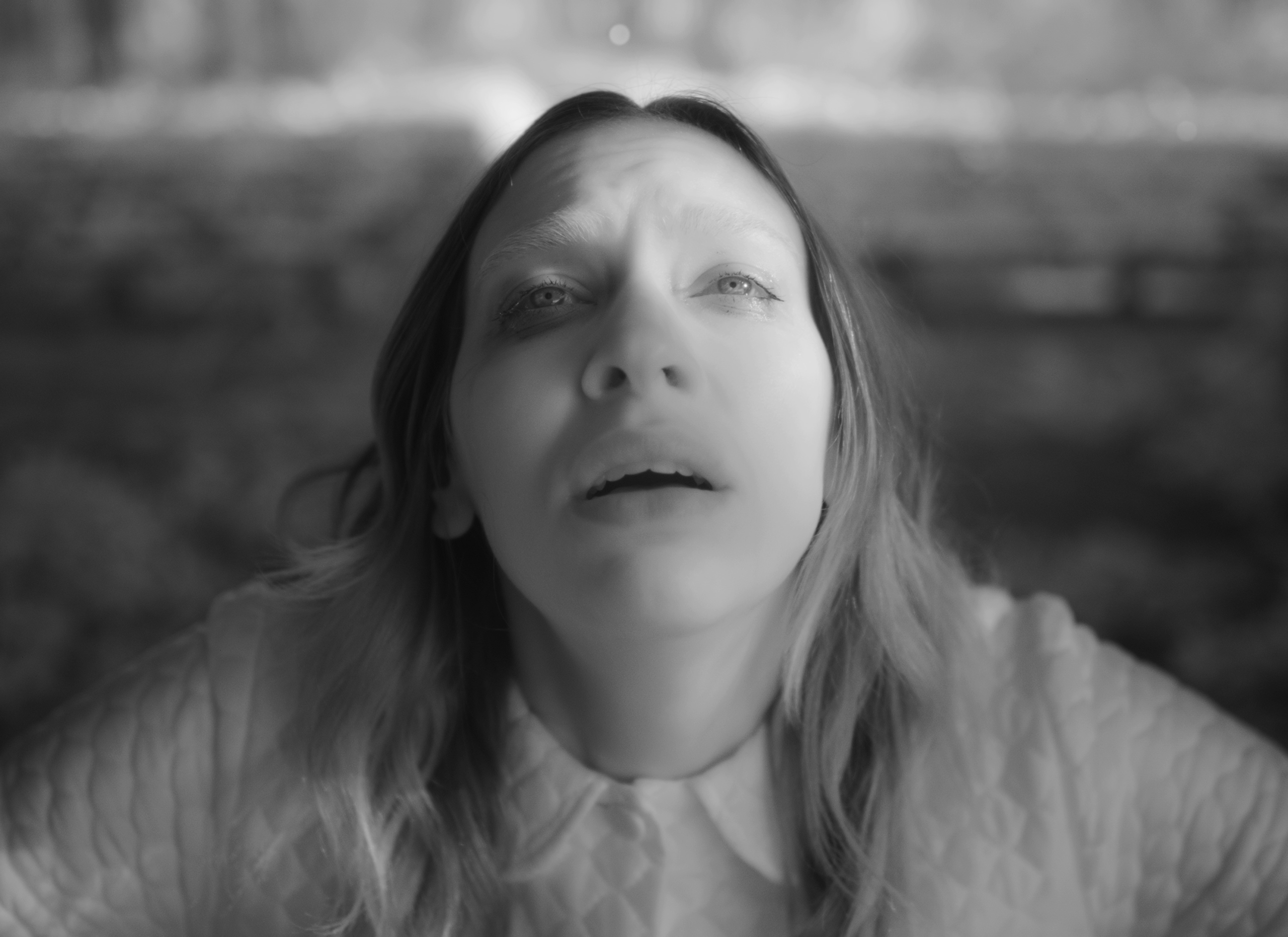
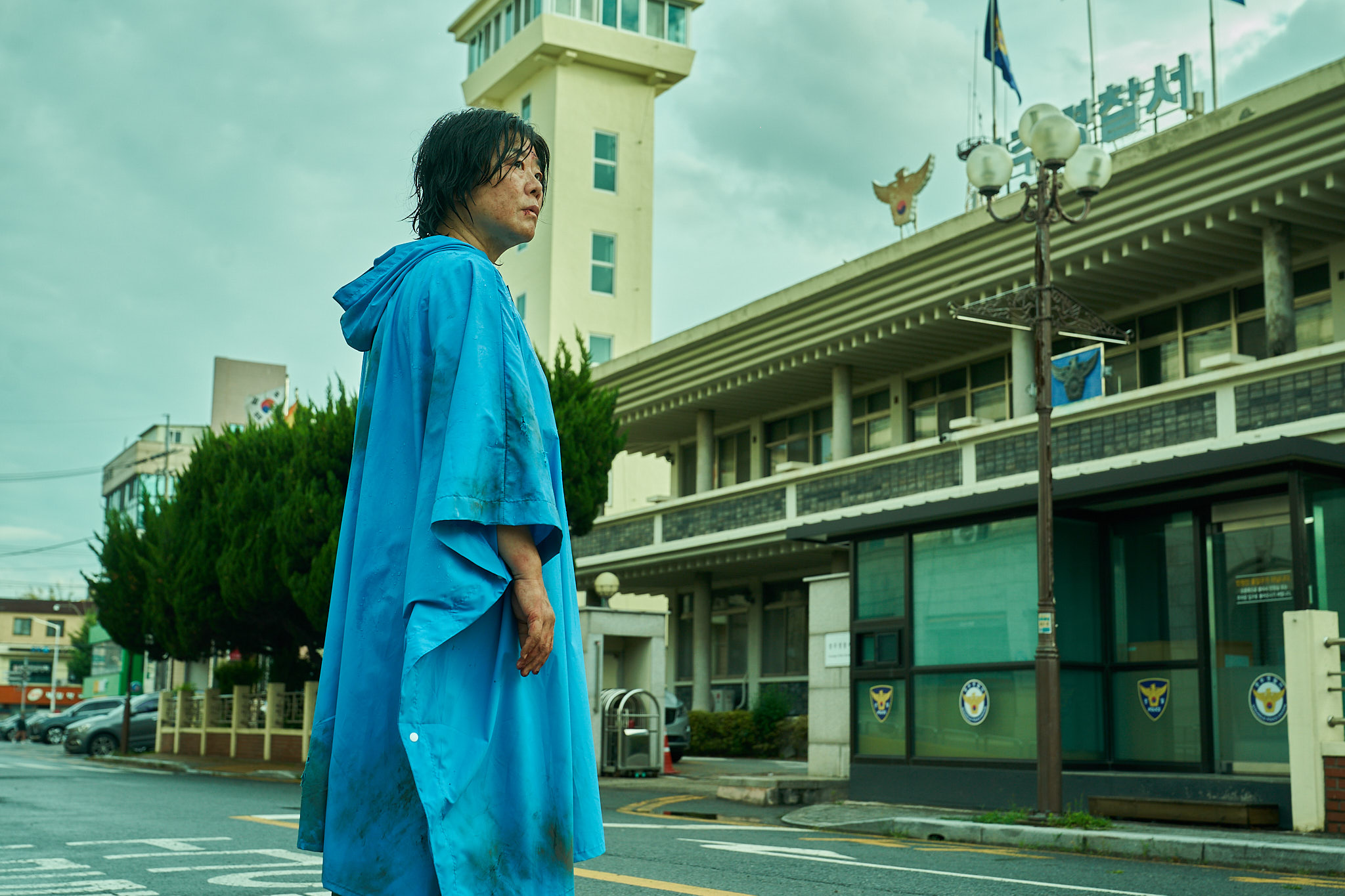
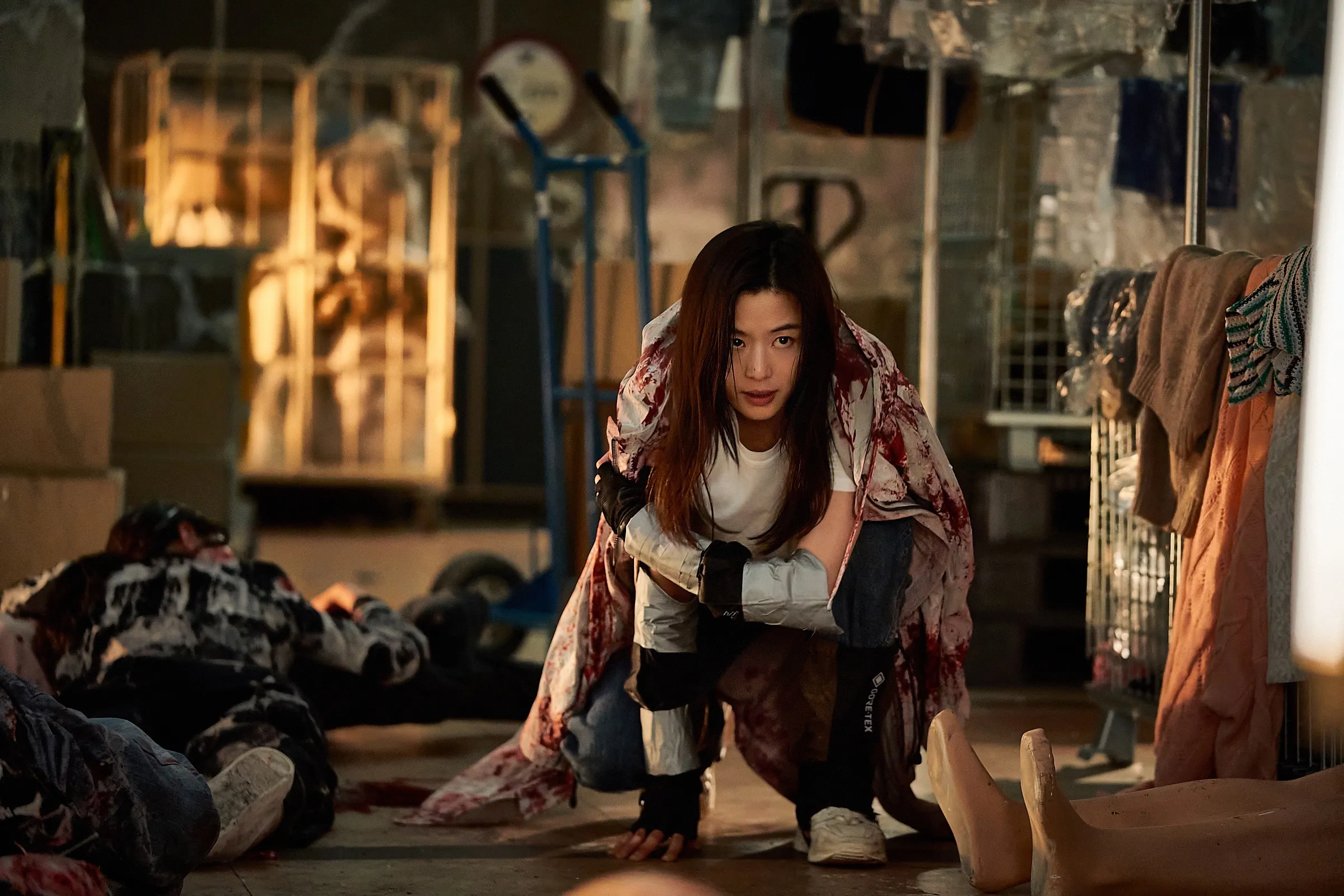
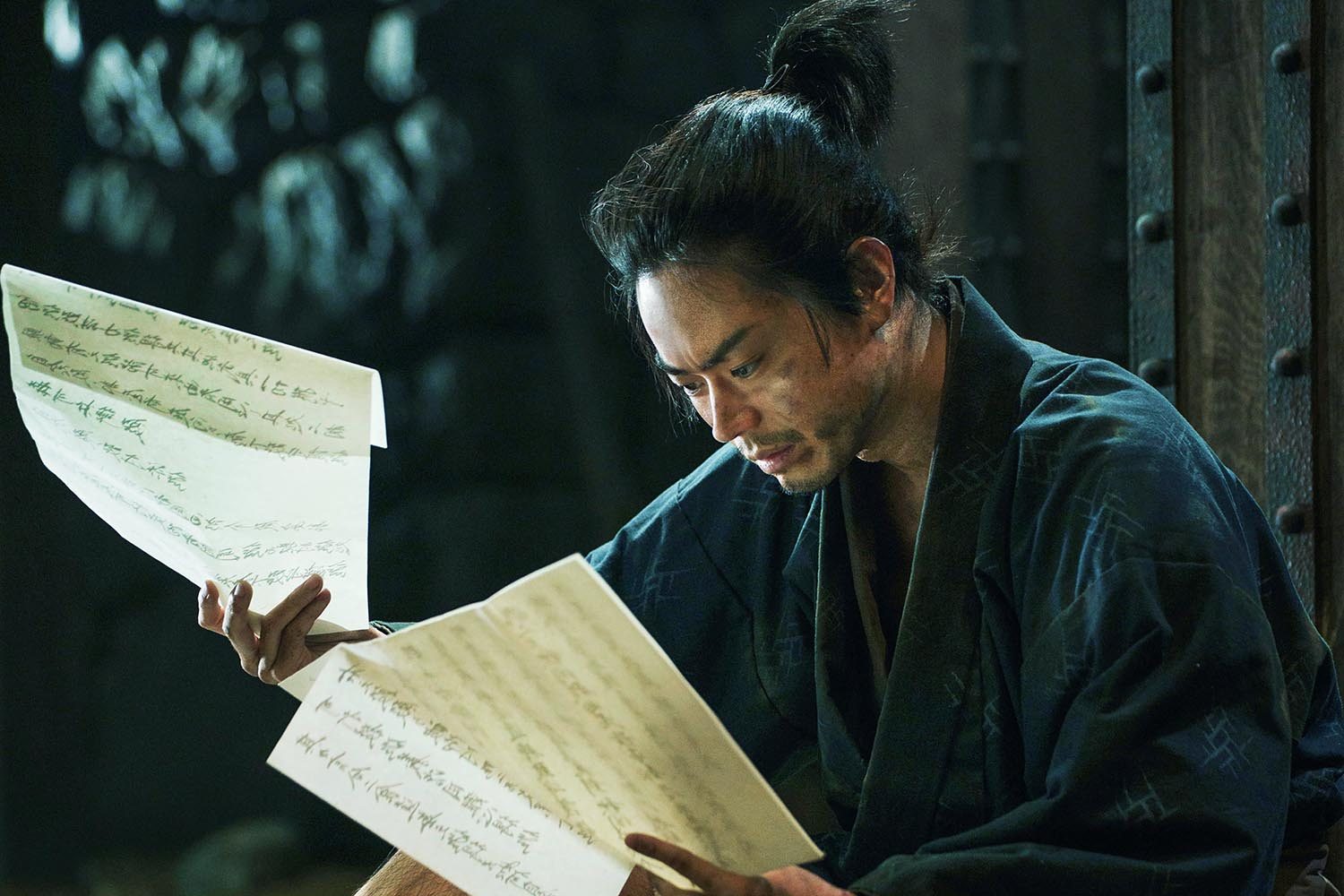
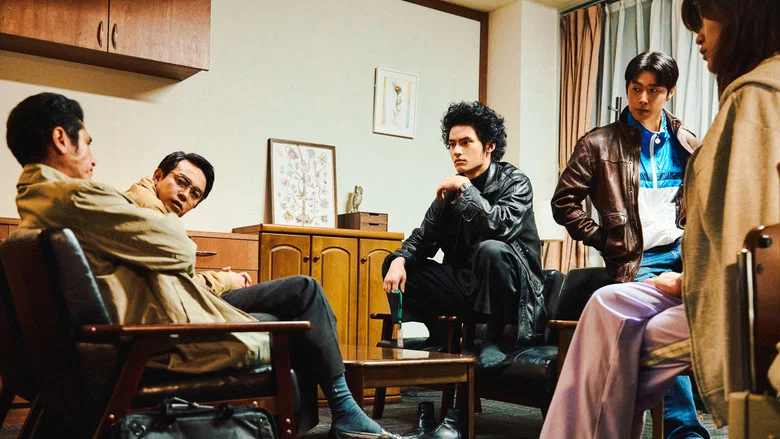
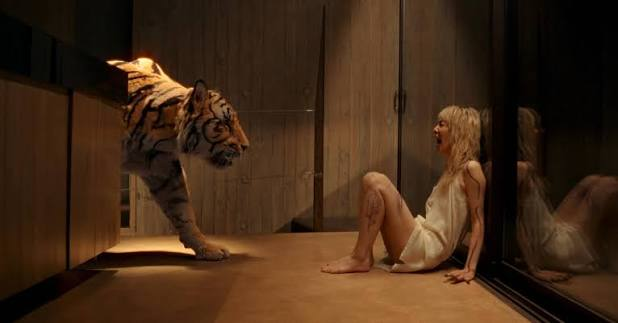
On this episode, JD and Megan discuss Olivia Wilde’s new film The Invite! The film didn’t have too much hype prior to the reviews dropping, but that soon changed and for good reason. The Invite is funny, poignant and made with an artistic eye. Lots to discuss here!
Review:The Invite
Director: Olivia Wilde Writers: Will McCormack, Rashida Jones Stars: Seth Rogen, Olivia Wilde, Penélope Cruz, Edward Norton
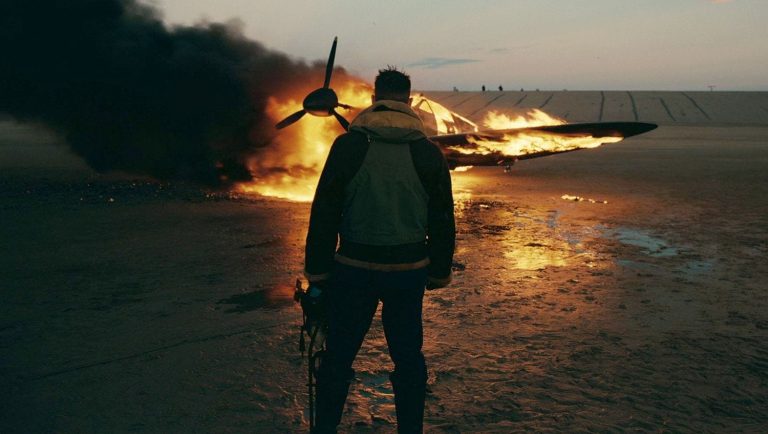
This week on Episode 696 of the InSession Film Podcast, inspired by The Odyssey coming to theaters, we discussed our Top 5 Christopher Nolan scenes! Nolan is a favorite filmmaker of ours (hot take, I know), so the idea of dissecting our favorite scenes was a daunting task. There are so many great sequences to parse through, whether you’re craving action and spectacle, or maybe more underratedly, the small and quiet moments full of beauty or horror. Either way, this was a really fun list to discuss. That said, here are our lists:
(Note: Please keep in mind that we each had different criteria for our selections)
JD
1) Gymnasium Scene – Oppenheimer
2) Docking Sequence – Interstellar
3) Ending Scene – Inception
4) Ferrier Lands the Plane – Dunkirk
5) Interrogation Scene – The Dark Knight
Megan
1) Soldiers on the Mole – Dunkirk
2) Interrogation Scene – The Dark Knight
3) Cooper Watching Video of Kids – Interstellar
4) City Folding Scene – Inception
5) Glowing Light Bulb Field – The Prestige
Honorable Mentions (Combined)
Joking in Police Car – The Dark Knight
Opening Robbery – The Dark Knight
Truck Flip – The Dark Knight
Train Ride Home – Dunkirk
Beach Bombing – Dunkirk
Boats Arrive – Dunkirk
Destroyer Hit By Torpedo – Dunkirk
Hallway Fight – Inception
Neil’s Farewell – Tenet
Final Reveal – The Prestige
Einstein and Oppenheimer’s Final Conversation – Oppenheimer
Test Explosion – Oppenheimer
And many other great scenes!
Hopefully you guys enjoyed our lists. If you agree or disagree with us, let us know in the comment section below. There are obviously many more great Christopher Nolan scenes that we didn’t have time to mention, so if your list looks very different than ours, we totally get it. That being said, what would be your Top 5? Leave a comment in the comment section or email us at [email protected].
For more lists done by the InSession Film crew and other guests, be sure see our Movie Lists page.
Synopsis: As her mother Sandy (Gretchen Mol) grapples with an uncertain diagnosis, autistic 22-year-old Margarita (a revelatory Lillian Carrier) must reluctantly grow up.
On-screen autism in film is a slippery slope. Films far too often get it wrong in one way or another. Lauren Meyering’s Horsegirls somehow manages to get everything right while delivering a heartfelt narrative on mothers and daughters.
Hollywood’s history of depicting characters on the autism spectrum leaves plenty to be desired. Whether it’s Rain Man, I Am Sam, or even The Accountant, autism can be portrayed as a superpower, overdone with tics, or used as a catch-all for a variety of disabilities, usually portrayed by neurotypical actors. Instead of utilizing any of those tropes, Horsegirls keeps the quirk to a minimum while remaining innately human.
Instead of focusing on the struggles and harsh realities of autism in today’s world, the film smartly assumes the world is a good place, despite bad things happening to the characters. Instead of inserting a stock villain character or an unnecessary roadblock for the characters to overcome, all the struggles come from organic or natural occurrences. Humans are never the problem. Every conflict feels real since it is out of the characters’ control.
Smartly, the filmmakers don’t focus just on the life of lead character Margarita (Lillian Carrier), but on her mother, Sandy (Gretchen Mol). While other films may show how hard caring for Margarita can be, that’s never shown to be the case. Margarita is portrayed as independent, resourceful, intelligent, and even deceptive. She is a bit infantilized, but never oversimplified. She is a complex character who can be a bit much, but Sandy is a mother who understands and settles into a rhythm. On the flip side, Sandy is often frustrated and angry at Margarita. Their relationship is one of love, respect, but also ebbs and flows of emotion. It’s never a purely black or white experience. Things shift.
On its surface, Horsegirls is nothing but quirky and precious. The plot literally focuses on a girl with autism who joins a hobby horse dance team while her mother struggles with cancer. That plot screams overly cute, delicate, and pretentious. Instead, the film zags where every other film would devolve into some other dumb messaging. The filmmakers don’t try to get across some agenda or message. It’s just a simple, sweet story about the relationship between a mother and daughter and how it needs to evolve with circumstances.
As much as the film showcases Margarita’s desire for independence, it also focuses on Sandy’s preparation and anxieties if she is no longer around to help Margarita. Sandy carries the universal worry of every parent to prepare your child for the world, but with the added anxiety of having an atypical child in an uncaring world. Luckily, the uncaring world is generally filled (at least in this film) with generally good people. But even then, people are not some version of Mr. Rogers. The film just has a sunnier view of humanity than most.
Whether it’s Margarita’s boss (Iqbal Theba) at a Halloween store, the coach of the dance team (Jerod Haynes), or a kindly dance competitor (Delaney Love Duncan), people are nice to Margarita because she radiates joy and goodness. It’s an infectious energy, conveyed perfectly by Carrier. Casting an autistic actress in the lead role automatically gives the film a level of authenticity other films wouldn’t have. With Carrier, the film finds a touching, sensitive portrayal of a character that might be frustrating at times, but is well understood. It’s a one-of-a-kind performance from a one-of-a-kind performer.
Mol adapts to her role of Sandy well, balancing the frustration with the empathy and overwhelming love. Mol has never been known for her motherly sensibilities on-screen, but she fits the role like a glove. As important as Carrier’s performance is to the film’s success, Mol is equally as important for the film’s main dynamic. For a performer with such a populist career, this might be her best performance.
The rest of the cast is hampered by the film’s delicate sensibilities, never getting those big standout scenes of lesser films, but they buy in completely to the filmmaker’s vision. Haynes’ performance could have gone badly in a lot of different directions, but he consistently underplays the part Same goes for Theba, who is extremely pleasant, but still feels like a real person. Actor Matthew Schwab gets some of the best laugh lines in the film as Magarita’s co-worker.
Horsegirls is one of the film surprises of the year. On-screen autism has rarely been portrayed with such poignance, humor and reality without devolving into quirk.
Director: Thomas Kail Writers: Jared Bush, Dana Ledoux Miller, Ron Clements Stars: Dwayne Johnson, Catherine Laga’aia, Rena Owen
Synopsis: Live-action adaptation of the 2016 Disney animated film ‘Moana.’
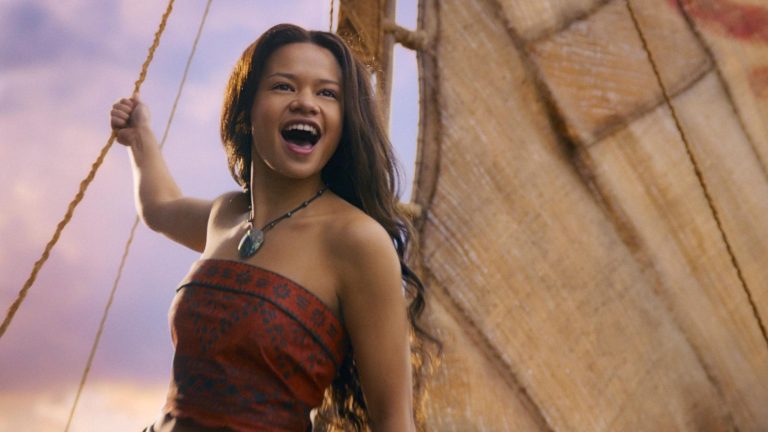
This was always bound to be a weird one. Moana sets a precedent among Disney’s glowingly maligned live action remakes, in that it’s by far and away the one recreated closest to the original release. The first Moana came out just 10 years ago; now, we’ve officially got a “real” remake of the story on the big screen. The Rock is back, and he’s got a wig now.
What makes the feeling even weirder is that, compared to Disney’s past catalogue of live action reimaginings, this is probably the closest in execution to the original product. That doesn’t necessarily mix with it being so soon (relatively) after the first Moana, either. It would be an understatement to say that this wasn’t well conceived.
Yet, 2016’s Moana is, in my opinion, one of the best Disney animated movies to ever release. That film is full of life and color; the cultural elements are sharply defined and, of course, the tunes are stellar. That one is classic after classic after classic, and all of the performances – even The Rock’s – rule. It was truly lightning in a bottle in the modern age, there’s nothing quite like it. From the get-go, I should note that the 2026 Moana’s biggest miss is that most of the magic is lost in translation.
Every performance is just a little bit worse, both in drama and song. Catherine Laga’aia isn’t badly cast as the titular character, but I’m not so sure that she was entirely suited to bring Moana to life on such a seismic scale. Her singing is more than technically sound, but it, too, feels bogged down by the change in medium here. Somehow, “You’re Welcome” survives the transition, if only for Maui’s rap portion at the end that always manages a little life, even on repeat viewings.
And in the latter sequence is where this movie picks up a little. Once Moana and Maui are teamed up, it becomes a little easier to forget about this iteration’s lesser qualities. You’re off the island and out in the open sea, and from there, Moana’s genuinely impressive special effects work gets the chance to shine. This is a flat movie, but it’s not a poor one; the CGI meshes well with a visual palette that, while predictable, isn’t quite as bad as something like Snow White.
It’s also hard to resist the stronger emotions, even in their watered down (pun intended) form here. The return of Moana’s grandmother at the beginning of the third act is still incredibly moving and, to this movie’s specific credit, it’s relatively well shot here too. On the other side of that coin, though, it’s just a great story, and that positive has nothing to do with this particular remake.
It’s a real testament to the animated medium that this is pretty much the exact same script as the first movie and only about half as good.Anything new added is of little consequence, and everything that works can be attributed to the 2016 entry. So why make this at all? You know the answer as well as I do: It really is all about the money, Spider-Man.
Still, I won’t pretend that I’m immune to the charms of revisiting this story on the big screen, in any form. The new Moana is inoffensive and careful enough to entertain younger audiences and fans of the original dying for anything new at all, even if it doesn’t dare tread new water in the wake of a modern classic. It’s a weary bit of fun that will probably end up buried by the better movie that came before it. Who could’ve expected that?
On this episode, JD and Megan discuss Christopher Nolan’s latest epic The Odyssey! With an ensemble cast, immersive sets and stunning IMAX cinematography, Nolan provides summer spectacle like no one else and he does not disappoint adapting Homer’s famous poem. Also, JD’s son Sam stops by to give his thoughts on The Odyssey as well!
Review:The Odyssey
Director: Christopher Nolan Writers: Christopher Nolan Stars: Matt Damon, Tom Holland, Anne Hathaway, Robert Pattinson
Director: Christopher Nolan Writers: Christopher Nolan, Homer Stars: Matt Damon, Tom Holland, Anne Hathaway
Synopsis: After the Trojan War, Odysseus faces a dangerous voyage back to Ithaca, meeting creatures like the Cyclops Polyphemus, Sirens, and Calypso along the way.
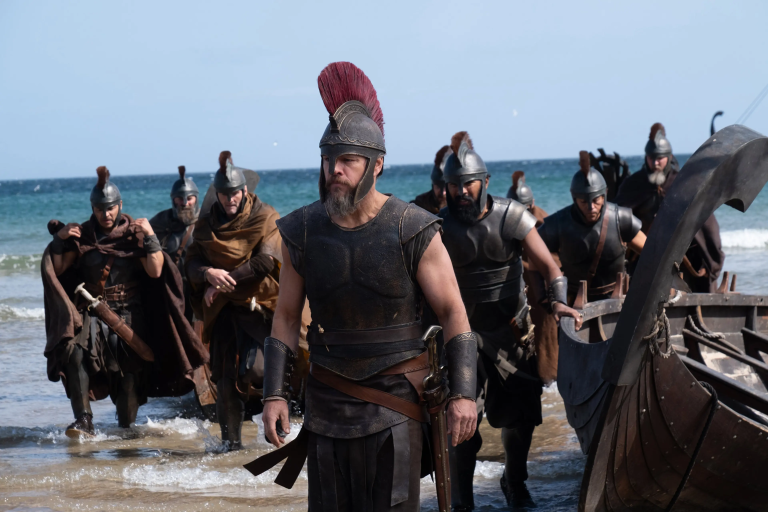
With The Odyssey, Christopher Nolan proves he is one of the few directors capable of turning a film into a true cinematic event, not only for you, obsessive, filthy cinephiles, but also for mainstream, popcorn-loving audiences. Nolan’s films are epic in scope, achieving the rare feat of massive scale while maintaining universal human stakes, making the monumental feel ever so personal.
What separates Nolan from most filmmakers is that these qualities always feel immediate and present, regardless of the setting. Whether you are feeling the isolation of the desert laboratories of Los Alamos, immersed in the battlefields of Troy and the mythic islands of the ancient Mediterranean, or navigating the rain-soaked streets and urban decay of Gotham City, Nolan makes it feel immediate. Nolan makes the most distant worlds feeling intimate enough to matter.
Nolan also makes The Odyssey feel urgent, tangible, and unmistakably human, even though it spans more than twenty years within its mythic world and across generations. Now, Hollywood’s grand-scale auteur transforms a classic work into a thunderous, sweeping adventure filled with breathtaking imagery, mythic spectacle, and haunting beauty, one of the most immersive cinematic experiences in recent memory.
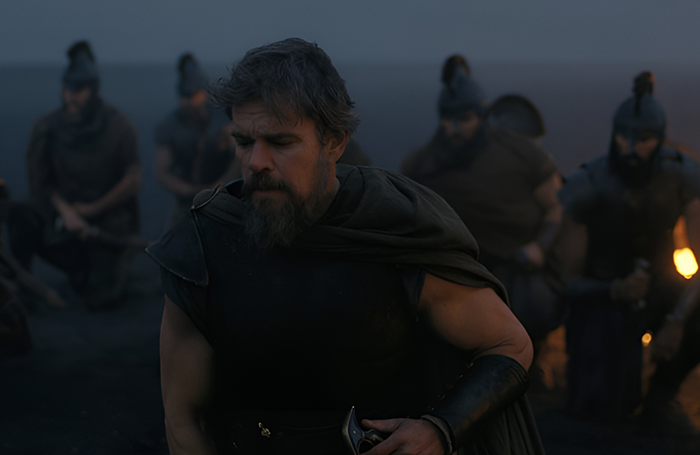
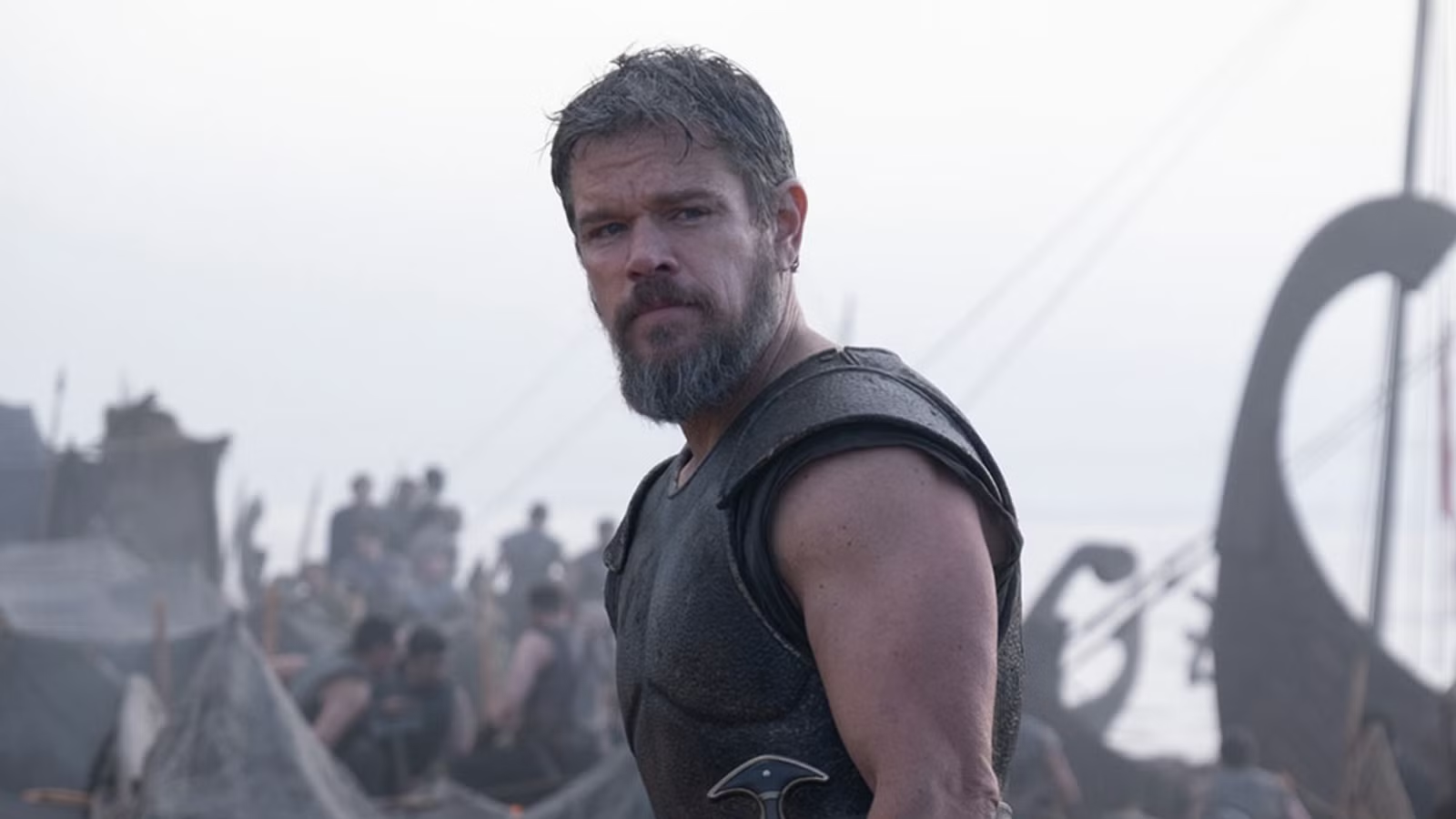
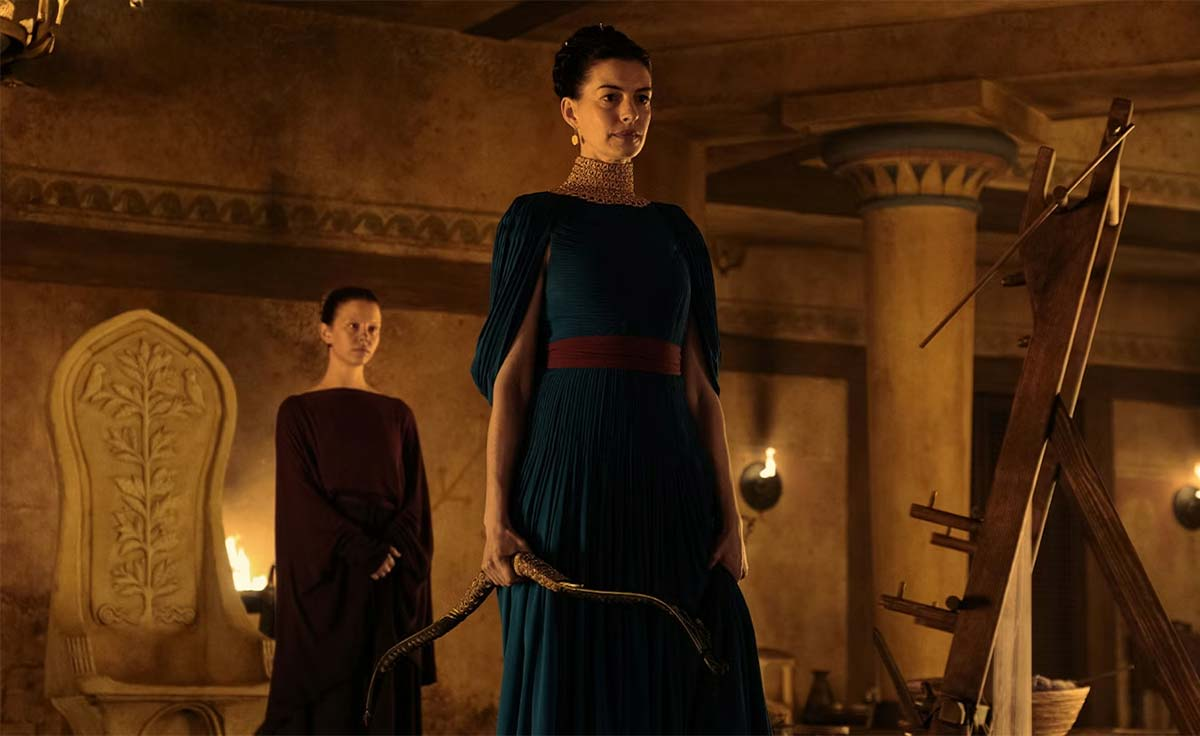
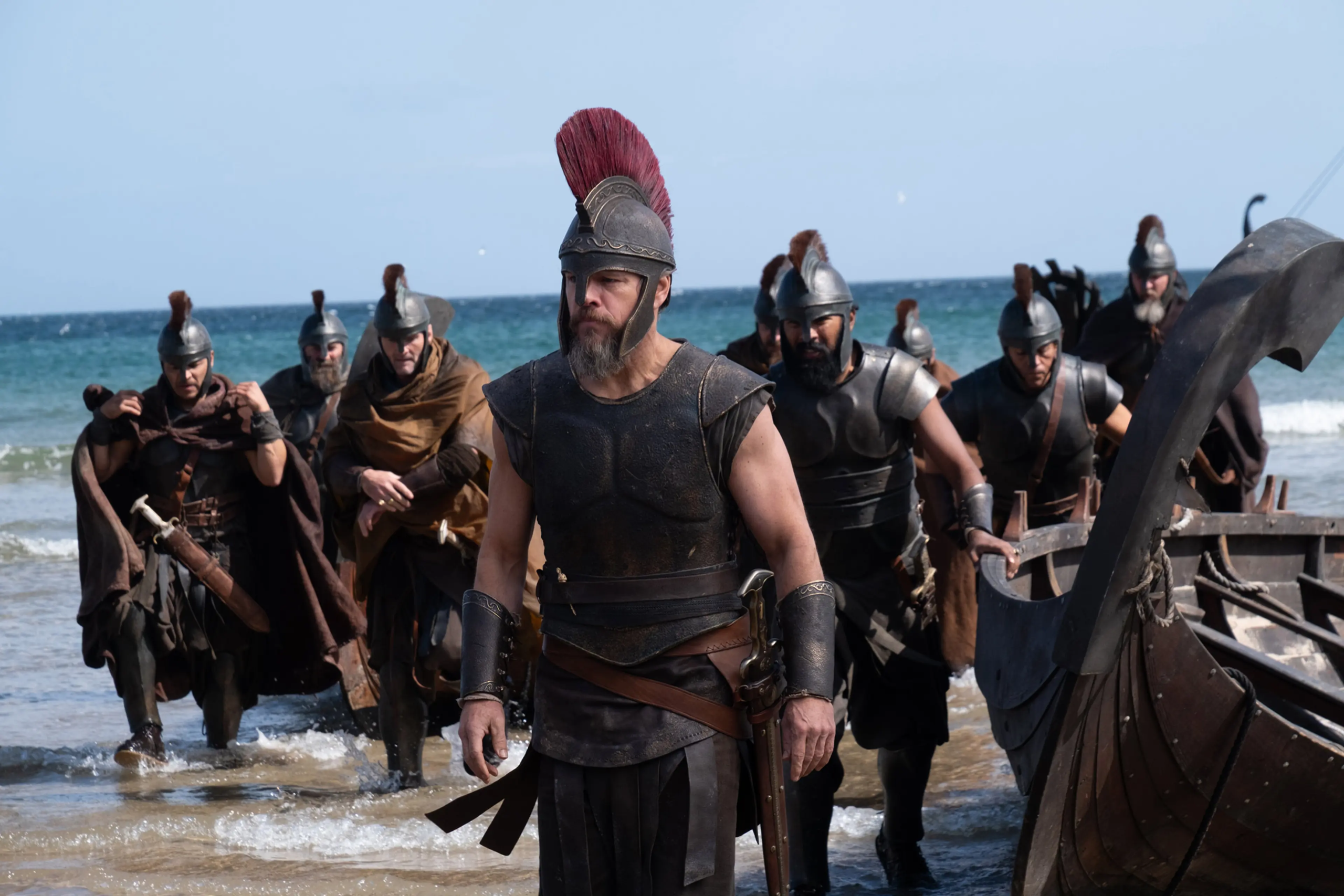
The film follows Odysseus (Matt Damon, in one of his best performances), a brilliant general and the king of Ithaca. A clever and inventive warrior, as formidable physically in battle as he is strategically. Married to Penelope (Oscar-winner Anne Hathaway), he must leave to join a Greek coalition led by Agamemnon (Benny Safdie), the King of Mycenae, in a fight against Troy to ensure his family’s future.
Odysseus leaves behind his queen and adolescent son, Telemachus (Spider-Man’s Tom Holland). Now grown and the prince of Ithaca, Telemachus risks losing his future claim to the throne to a rabble of suitors, none of whom is dignified enough to stand as Penelope’s equal. Among them is Antinous (Robert Pattinson, reveling in the absurdly entertaining), a twitchy, parasitic hustler fueled by poisonous ambition and a desire for power rather than love or leadership.
While on his quest to Troy, Odysseus relies on his second-in-command, Eurylochus (Himesh Patel), and his Cousin, Sinon (Women Talking’sElliot Page), to help set up the famous Trojan Horse. Back home, while away, his blind servant, Eumaeus (John Leguizamo, excellent here), remains loyal to the House of Odysseus. In contrast, a seasoned guard and a mentor (Remember the Titans’ Ryan Hurst) always remain by Telemachus’s side.
Christopher Nolan adapted the screenplay from Homer’s classic work. When he writes alone, his films are usually tightly controlled, audacious, and centered on a single perspective. This time, however, even without the assistance of his brother and frequent collaborator, Jonathan Nolan, the script finds the emotional center. Nolan grounds the spectacle in universal themes of love, loyalty, sacrifice, grief, and, in this case, shame.
That emotional foundation distinguishes the film from many ancient Greek spectacles, allowing audiences to feel the consequences of Odysseus’s journey rather than merely admire its mythic scale. Nolan divides the film into four narrative strands: Odysseus’s life before leaving for Troy, the Trojan War, his long journey home to Ithaca, and his family’s struggle to protect his throne. Not every section is equally effective, which can make the film feel uneven.
However, the shifting storylines also make the film feel more alive. By the thrilling third act, they converge in ways that reveal the shared themes and subtext running beneath Odysseus’s journey. There is no single, seismic twist of the kind often associated with Nolan, but the film’s quieter revelations are subtle, powerful, and unusually profound. He also retains the explicit moral conflict, rich ensemble, and sharp dialogue that distinguish his best collaborations.
The final product is unlike anything Nolan has made before, conquering another genre and becoming one of the greatest epic fantasy films ever made. Still, there are a few minor quibbles. The casting recalls The Thin Red Line, with recognizable faces appearing in even the smallest roles, many of them non-speaking. Spotting a famous face can be distracting, briefly pulling you out of the otherwise immersive experience.
I should also note that there was a very distracting sound glitch during my screening, which was presented in 70mm. The issue occurred approximately 15 times within the first 120 minutes, with the audio dropping out for about 3 seconds each time. I was told this was the exhibitor’s fault, but hopefully it will not affect other audiences.
While this glitch repeatedly pulled me out of the film, one cannot deny the extraordinary suspense, sweeping adventure, and meticulous craftsmanship of The Odyssey. The film inspires genuine shock and awe, from the jaw-dropping Cyclops scenes and Samantha Morton’s (She Said) remarkable cameo as Circe to the breathtaking song of the Sirens sequence—all destined to be remembered as classic cinematic moments for years to come.
The performances are strong, even though I found it amusing that everyone speaks with an American accent. Still, it is all Greek to me. One of the film’s best scenes belongs to Hathaway, as Penelope berates her son for assuming that she has merely been keeping the throne warm for him. Leguizamo has never been better, abandoning his familiar comic charm for something raw and heartfelt. Holland does what he can with an otherwise clichéd role, but the real scene-stealers are Zendaya and Page.
Page has two powerful scenes: weaponizing an understated, vulnerable presence, then finding rage towards the end of the second act that ignites the screen. Of course, much has been made of Nolan giving Zendaya the rare note of “perfect.” When you watch the film, you will know exactly which scene inspired such praise. It’s a powerful turn without a single word being spoken, and the moment proves essential to Damon’s character arc.
Odysseus’s repeated, often baffling decisions finally come into focus, revealing something insightful and deeply moving. The scene elevates this Greek adventure epic beyond familiar themes of honor, loyalty, and bravery, making it far more emotionally resonant. Zendaya’s scene partner in that moment is Damon, and it matters. You would not call this Damon’s best performance in The Odyssey, but it may be his most impressive, given the immense physical and emotional demands of carrying a film of this scale.
Nolan gives him an epic to shoulder, and the veteran star never buckles under the weight of such ambition. The result is a film that is a thunderous spectacle, with haunting beauty, genuine armrest-grabbing excitement, and a handful of powerhouse performances. Grab some popcorn, as I pull out the old trope of seeing The Odyssey on the biggest screen possible, because Nolan just doesn’t adapt classics, but creates one all his own.
You watch The Odyssey exclusively in theaters starting July 17th!
Director: Shiv Rawail Writers:Soumil Shukla, Shridhar Raghavan Stars: Alia Bhatt, Sharvari, Bobby Deol
Synopsis:Driven by revenge, a young girl destroys anyone in her path until her journey uncovers the hidden truths of her own life. She is bold, cold, and ready to cross any line, hurting anyone who stands in her way.
The YRF Spy Universe has come to its natural end with Alpha (not to be confused with Julia Ducournau’s body horror film of the same name, which is actually good, contrary to popular belief), the seventh installment in a related cinematic universe of spy films distributed by Yash Raj Films. While Aditya Chopra seems intent on continuing this pointless franchise, the films have experienced diminishing returns both critically and commercially, with this latest endeavor not making it to the top ten of the North American box office, while previous titles, particularly Siddarth Anand’s Pathaan, broke records around the world.
A limp and lifeless actioner from beginning to end, Alpha starts relatively simple by keeping the bare bones of the plot as a revenge story. Director Shiv Rawail spends a significant amount of time fleshing out R&AW chief Vikrant Kaul’s (Anil Kapoor) past and his relationship with Indian Army Colonel Fateh Singh Lakhawat (Bobby Deol). The two are part of a top-secret program of elite supersoldiers who are injected with a formula called “Alpha,” which enhances both their physical and mental capabilities, enabling them to perform tasks the average soldier cannot. This is basically Captain America: The Winter Soldier if you generate the screenplay off ChatGPT.
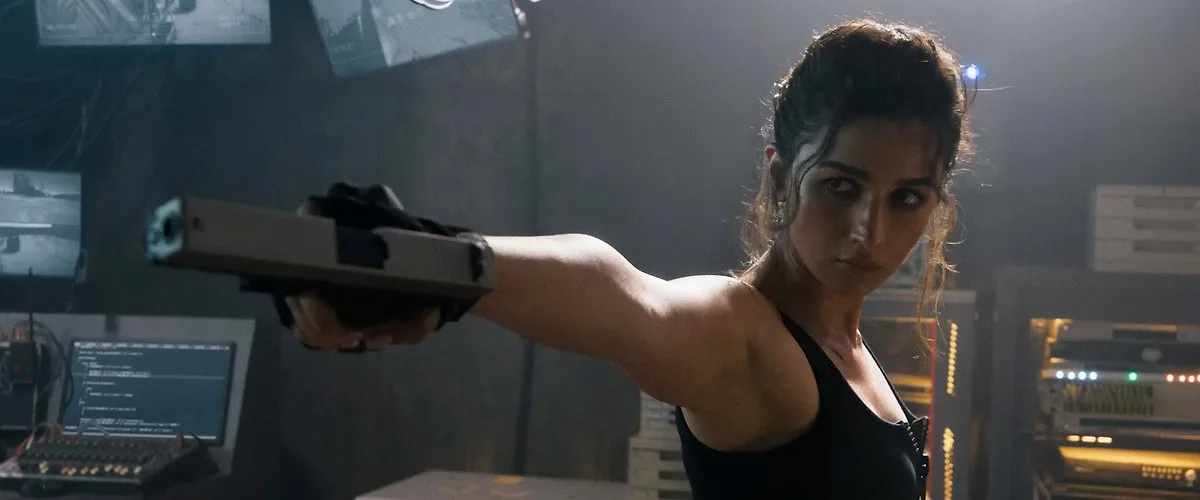
Kaul’s pregnant wife (Dia Mirza) is diagnosed with congenital heart disease and is recommended by their doctor to terminate the pregnancy to save her life. However, she wants to follow through with her pregnancy, even being fully cognizant of the fact that, even if her children are born safely, she likely won’t survive. Thinking he will heal her medical condition, Kaul injects the Alpha serum on her wife, which initially proves successful, but becomes fatal once they realize all the supersoldiers who tried the substance died of a brain hemorrhage. Vikrant’s child, Sita (Alia Bhatt), is born but is immediately declared state property so Fateh and Dr. John Verghese (Dibyendu Bhattacharya) can conduct experiments on her to determine whether the Alpha serum worked. Fateh tells Kaul that Sita died shortly after being born, which leaves him devastated. Many years pass, and Sita has become an elite assassin tasked with killing the people her “Baba” deems traitors, including her father, Vikrant Kaul.
The movie takes a long while to get its rudimentary plot going, but it never really picks up the pace once everything is set in motion. The screenplay by Soumil Shukla and Shridhar Raghavan sets up what is essentially a highly traditional, classic story that doesn’t really reinvent the espionage wheel, especially when it focuses on Sita. We see every single beat coming a mile away, notably when the film focuses on meeting her father for the first time and Durga (Sharvari), her estranged twin sister.
One wonders why the movie lasts an eternal 140 minutes, knowing exactly how this entire thing will end. There are fractures within the family once they meet for the first time. Sita doesn’t believe in Kaul and Durga, but will soon realize they’re telling the truth. What do you think will happen once the three unite to stop Fateh? Do I even need to lay it out? It’s as predictable as you think, and takes very little narrative and thematic risks as the runtime trudges through its gun-toting and flag-waving climax.
I’ll give Rawail this: he knows how to craft efficiently mounted action of real tactical power. The fight between Sita and Durga is a major highlight because it illustrates their respective quick wit and skills. They are not equals, and each has their specific style they try to overcome, but in vain. In fact, the action functions better when it’s comedic than when it’s deathly serious and attempts to create a sense of dread in the audience. The film’s climax doesn’t work because it takes itself far too seriously. At that point, the action is also painfully incomprehensible and doesn’t possess the same emotional weight as when Ayan Mukerji staged the final confrontation of War 2 with enough homoerotic tension to make us forgive its message at the center of the picture.
Speaking of War, the only moment of true entertainment comes when Hrithik Roshan appears as Kabir in a playful action sequence that shows exactly where the YRF Spy Universe thrives. When the characters unite or don’t think too much about how serious the story should get and just have fun, you get something that plays with the anticipation of seeing a fan favorite character return and deliver proper carnage, the likes of which you haven’t seen from him at all. It also speaks to Roshan’s personality as a star who knows exactly when to step into the spotlight and control the camera’s focus, while Bhatt and Sharvari, unfortunately, don’t have that same pull.
The movie can’t work if the chemistry between the two leads fails, and this is exactly what happens here. Of course, the two hold their own magnificently within Alpha’s various action sequences, but when Rawail stops the bloodletting and attempts to add texture to the characters, it barely registers as credible. Kapoor, on the other hand, while his character was once interesting, is reduced to a mouthpiece of government propaganda.
This is also where Alpha becomes more insidious than a simple but familiar espionage thriller. Had it stayed in the formulaic heights set up by its pre-intermission half, perhaps it would be remembered as nothing more than a paint-by-numbers spy movie that doesn’t do much to reinvent anything, but is watchable enough to be mildly entertaining. The franchise has run its course; maybe it’s time to end it, right?
According to Rawail, this isn’t enough, and it’s probably why the baffling twist related to Deol’s character opens the movie up in the broadly nationalistic strokes that have defined this politically misguided franchise. Without giving anything away, it turns what could’ve been a compelling antagonist into a mustache-twirling villain with ulterior motives that make less narrative sense as more is known about him. Rawail also goes to the John Kramer school of making middle-aged characters younger through their fit, and gives him one of the worst wigs ever conceived for a major blockbuster.
Through and through, Alpha is lazy, pedestrian filmmaking that might not have been so terrible if Rawail didn’t take the jingoistic route and didn’t end his movie with the most baffling line I’ve ever heard this side of Timur Bekmambetov’s Mercy’s “Human or AI: We all make mistakes.” Even I, someone with only a passing knowledge of India’s political situation, couldn’t believe that an actor of the same caliber as Anil Kapoor would say something in the lines of “For the best boss in the world: India.”
Amy Thomasson had the opportunity to sit down with Louise Bagnall, Director of Julián
Amy Thomasson: This is Amy Thomasson with InSession Film. I have the honor of interviewing film director Louise Bagnall for her new movie, Julián. It’s an honor to have you here today. What drew you to this story?
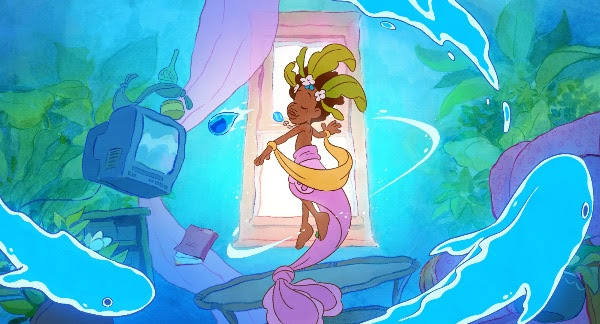
Louise Bagnall: The film really was born when I saw this beautiful picture book, “Julián Is a Mermaid,” for the first time. It’s full of these gorgeous illustrations, but at the heart of it is this really tender, beautiful relationship between Julián and his abuela. And Julián is going on this journey of self-expression, and there’s this tension that comes as a result where the reader is left to think about whether, ‘is Julián going to get in trouble for pulling the curtains down, or if Abuela is going to understand what he’s really doing?’
So this kind of tension doesn’t dictate to the reader this sort of understanding of how we can all bring our own understanding to that moment, which was something that I just found really powerful when I read the book. And of course, it has this joyful tone as well. So those kinds of things were the things that, like, when I read the book, I understood that there was a deeper resonance there, and that there was a bigger story that could be told with those characters and with the kind of moment at the heart of the book, and also one that could be incredibly fun and joyful and full of celebration.
Amy Thomasson: I definitely picked up on that. I thought the colors that were used were gorgeous, and I wanted to know this little boy. I wanted to go to the mermaid parade with him, and I think it’s going to hit people who have been told their entire lives, “You’re a little bit too much. You’re a little bit too much. Tone it down.” And that hit me on a personal level because I’ve been told that myself.
What was the biggest challenge in expanding a relatively short picture book into a full-length movie?
Louise Bagnall: I think, when we were doing that, we expanded on the focus of the world. We were able to look at Brooklyn, which is a fantastic place to set a film, and we were also able to deepen our understanding of these characters that we meet in the book and introduce the characters who would be around them, so their community.
So that was a really great way to take that step into expanding it. But what we had to be very careful of was not introducing any artificial conflict or not introducing something that didn’t align with the tone and the intention of the book, because that would’ve been really doing a disservice to that initial creation.
But also, it would’ve been doing a disservice to why I originally wanted to make the film. So we had to find a way to tell this story that was maybe a little bit more complex in terms of the storytelling in that it’s a little bit… I think It’s quite emotionally truthful for our characters, and that’s something that takes a bit of work and care to make sure that it comes out in the right way. That was beautiful.
Amy Thomasson: Have you spent time in Brooklyn? I grew up right outside of New York City, so that really resonated with me.
Louise Bagnall: I haven’t spent a lot of time in Brooklyn. We got to visit one time in 2019, after I’d originally read the book, and we got to visit the Mermaid Parade, which was amazing. But I never got to go back because then COVID came, so that was it. But what we did have was an incredible writer, Juliány Taveras, who was able to really speak and bring in that specificity and the authenticity, even on the script, with their own experiences growing up there. We also had different cultural consultants who could help us paint that picture in a really authentic way.
And then of course researching ourselves and things like that. But we did, we wanted everything to, in Brooklyn, to feel, to be like, we wanted it to be seen from Julián’s eyes. We want it to be beautiful and colorful and exciting and full of possibility, but we also don’t; we didn’t want it to be too polished, too pristine, because it just wouldn’t feel right.
Amy Thomasson: It wouldn’t be Brooklyn.
Louise Bagnall: Exactly. We still have the cracks in the pavement, and we still have a little bit of paint chipping off on the walls, but that’s also a wonderful place where he can discover community, yeah, so it was trying to bring that to life on screen and certainly taking inspiration from and having conversations with our writer, Juliány and others that would really help to inform and enrich that kind of understanding of Brooklyn on screen.
Amy Thomasson: I think one of the things that was so effective was the amount of world-building that you were able to do in a movie that’s not even quite 90 minutes long.
Louise Bagnall: Yeah.
Amy Thomasson: I loved that. I think really captured it, and I think a lot of people are going to be able to resonate with the abuela’s friends. Obviously, Julián is such a rich character. Abuela, his papa, they were so rich, but the friends, I thought “Yeah … I’ve seen those ladies at the pool before.”
Louise Bagnall: Exactly. I think there’s definitely something familiar about them. And I think that goes across a lot of different cultural places, the ladies who are getting together to have a little bit of a chat and hang out a little bit and talk about what’s going on around and what’s happening in the community and everything like that. It was really fun. I really loved being able to bring more of a spotlight onto the community characters. The three women, ‘Las Viejitas’ we call them, and then also the three girls on the block, we call them the ‘City Block Girls, CBG.’ We thought of them almost like two Greek choruses for our two main characters.
Amy Thomasson: It really lent a lot of authenticity and a lot of humanness. I think a lot of people are gonna be able to understand that, and it’s very intergenerational. I think one thing that this movie also captured, which is why I think everybody needs to see it, is Julián’s sense of wonder at this new world where he is. And not a lot of movies can really capture that. It captured youth in a very realistic way. He was obviously very intelligent, very imaginative, but he wasn’t super clever and witty and precocious like an adult trying to sound like a clever child. He’s had that sense of wonder when he sees the girl’s hair, and it’s not just “Oh, her hair looks nice.” That, “Oh my gosh, it’s so long,” and how he wants to have that long hair, and I thought, ‘That’s childhood.
Louise Bagnall: Yeah, exactly. I think he’s… we had to really make sure that we were portraying an honest expression of emotion in those scenes. And that comes partly from the script. It comes from the way we storyboarded it, but it also comes from the actor, Knyght (Darius Jack). He did a wonderful performance as Julián. And then, of course, our animators are able to take that beautiful voice performance and really bring it to life. And it is, it’s carrying through. It’s making sure that we’re all involved in the process, and everybody involved in the process is also reconnecting a little bit with their own inner child to remind ourselves how it is to be that age.
Amy Thomasson: Family relationships are central to the film. What interested you most about the dynamic between Julián and Abuela?
Louise Bagnall: I loved being able to watch their relationship grow and develop go over the bumps in the road as well because it felt like something, like I was getting to know these characters, as the film goes on, I feel like I’m getting to understand who Abuela is, and therefore Julián is also beginning to learn more about his own sense of self, his own identity, his own culture.
But I loved, like I loved being able to look at Abuela as a character and figure out, where what’s going on in her mind, what is, how does she feel about these things? And of course, it’s Julián in the main part of the film; he’s the real driver of the film.But it was great to be able to open up a book on her and see, and have her reflected on screen and have her give her time as well to tell, to see a little bit of her story and her journey as well.
I loved being able to see both of them and have their relationship grow— being able to get a chance to actually see some of Abuela and who she is in a deeper way was really wonderful.
Amy Thomasson: I always loved how she always came from a place of love.
Louise Bagnall: Which I think is one of those things you can still come from a place of love and you still, you can still make mistakes, but if you’re coming from that direction, it’s the first step, and it’s to protect more than judge.
Amy Thomasson: And as you get older and you have children, you start thinking about those things more. You start seeing that perspective a little bit more because film’s such a good job that I love, you love this little boy. And you do want to just protect him and hug him and buy him mermaid hair. and you love him, and you don’t want him to ever suffer or feel sad. And again, testament to you, the writers, the animators, that we love this little boy and we understand even when the abuela doesn’t understand, we still … She’s not a cartoon villain, she’s a human person who loves this little boy. And I think that’s really wonderful.
The film explores themes of identity and self-expression. Why did those themes feel important to explore right now?
Louise Bagnall: I think for myself, I’ve always been drawn to themes about self-exploration or identity. And I think it’s because it’s such a relatable— everybody has to go through these stages when they’re growing up, and it just always comes back as something that’s actually it’s … and I think the other thing is we often think about it as something that happens in childhood, and obviously with Julián that’s what we’re seeing.
But it actually continues for the rest of our lives in a lot of ways. We continue to grow and understand ourselves in different ways, or discover new things about ourselves. So I think for me it’s always been a subject anyway that I’ve been drawn to. And, I think it’s really wonderful to have a film that celebrates that for kids.
I would’ve loved it, this kind of film as a kid, I would’ve loved to have it. So I can see that at this time it’s probably wonderful. I think it’s great to have a film out there that’s something that’s joyful and hopeful. But I also think it’s something that maybe is hopefully going to be something that will, for a long time, be something that will be will be needed.
Maybe not needed, but will be enjoyed by a lot of people for a long time to come, I’m hoping.
Amy Thomasson: Were there any personal experiences or memories that helped shape your approach to directing the film?
Louise Bagnall: I think when we were crafting the story, we had a lot of conversations between me, my writer Juliány, and my co-director Guillaume Lorin.
The three of us would have these sorts of story sessions together where we discuss the latest draft, the notes, and things like that. And in those kind of sessions, a lot of, discussions is we, we’d be talking about things that we know from our own lives or things that would, we would be able to talk about so Juliány, was able to obviously bring in a huge amount of context and specificity, and Guillaume as well, coming from Guadeloupe, as an Afro-Caribbean director, he was able to really understand different parts of the puzzle essentially. And then for myself, I think I wanted to make sure that I was leaving space for them, for them to bring those ideas in and to be able to collaborate with them.
But, I definitely had some very, a couple of times that I was reminiscing about when I was a kid and I didn’t like what was going on around me, and I couldn’t quite find the words to say it, so I’d find other ways of acting out. The scene where Julián gets the food all over the bathroom, it wasn’t quite what I did, but there was touches of it that came from my own childhood, I think.
Amy Thomasson: There is a humanness to this animated film, which, as much as it’s for children, I think it definitely hits people of all ages. Animation gives filmmakers unique creative freedom. What aspects of Julián’s imagination could only be expressed through animation?
Louise Bagnall: I think one of the things that was wonderful about the kind of films we make, 2D animated films, was that we can have things like his imagination and the world around it be very harmonious together. We don’t have this big jarring jump between one and the other. We’re actually able to interlace the real mundane world and the magic kind of flowing underneath that’s bubbling up. I think that was a big part of how we were able to tell this story. And then for me, having a character like Luna was a lot of fun to bring to life, and again, something that could be very responsive to Julián and didn’t feel out of place in the world that we created. I loved having that kind of expression of on screen as well.
Amy Thomasson: You previously directed the Oscar-nominated animated short film, Late Afternoon. How was directing your first feature-length film different from directing a short?
Louise Bagnall: It’s a lot bigger. (Laughs). It’s a lot bigger. But I think there are some things that are similar, some structural things and processes that are similar.
But I think what you need to do is you need to be… I really wanted everybody on the team to feel like they were part of this project, and they were on board. So I worked hard at trying to make sure that even though the team was a lot bigger than on a short film, we were all on the same page and that we were all pulling towards the same goal. There’s definitely a lot of work there. I think the other thing is, when you’re making a short film, the risk is quite low. People aren’t too worried about it being this way or that way. But on a feature film, you’ve got a lot more people to think about, and there’s a lot more voices in the room.
It’s also trying to navigate that and trying to still tell the story that means, that- the story that you want to tell or the story that has the most heart in it or the story, you have to figure that out, and you have to clarify that so that everybody understands where you are with the story and they can, again, like I said, all pull towards that same goal.
So yeah, the numbers are bigger, but that does create extra complexity. And then the other thing that was obviously different as well was that with that kind of complexity, there was also the co-production. We had the film production itself split across four different countries, so that creates a lot of, you need to be very clear with communication. You need to be very efficient with how you handle information, and you need to be able to communicate with people who are not even in the same time zone as you, that was one of the bigger challenges.
Amy Thomasson: That is an incredible challenge, and the filmmakers used to not have to do that. Everyone used to be together. But it allows more creative freedom, yet also a lot of challenges, I imagine.
Louise Bagnall: Absolutely.
Amy Thomasson: Was there a particular scene in Julián that was especially difficult or rewarding to create?
Louise Bagnall: There was a scene that was quite complex where Julián has his we see this sort of flight of fancy when he first hears about the mermaid parade, and he has this these fish wash over him, and we go into this, basically his inner world, and he’s envisaging you can basically feel his emotional reaction to what he’s been told about the mermaid parade.
And it’s very much that was quite a complex scene because it’s one long scene, with everything has to flow into the next thing. And it still required a lot of different departments to all understand what their role was, and that was a lot of planning. So that one scene was definitely a bit of a head-scratcher, and it took us quite a bit of time to get right. We learned things from that we actually helped to inform us for things near the end of the film as well, where we’re underwater, and Julián has a chance to explore in a big open space. So again, things like dynamic cameras can be really powerful to use, but it’s quite complex in 2D animation sometimes to plan these things out. They were some of the bigger challenges.
Amy Thomasson: That was so effectively done. You felt that dream. The flow of the animation is that you could feel him physically get swept up into that fantasy. I thought that was very effective. What do you hope young viewers take away from the film after watching it?
Louise Bagnall: I really would love it if young people could, firstly, enjoy the film. I really hope that they enjoy it and find it to be fun. And I really want them to maybe be a little bit inspired or a little bit emboldened, empowered by the film, and to see a character who’s really trying to be true to himself and trying to express himself and is able to be resilient enough to get over some bumps in the road as well. I hope that it’s something fun, and I hope that it’s something that they can feel inspired by, too.
Amy Thomasson: I can confidently say that audiences of all ages are going to feel that way. I was very inspired myself. I wanted to put on costumes today. I was a theater major in college!
Louise Bagnall: Oh, brilliant!
Amy Thomasson: I related a lot to this main character— it’s beautiful. On a very personal note, it really hit me, and thank you for capturing that spirit of that young child, because I was completely able to relate to that.
Lastly, looking back on the entire journey of making Julián, what did this film teach you as a filmmaker?
Louise Bagnall: I think it helped me to learn how to listen better to the people around me, and I think it made me a little bit more, probably a little bit more resilient as well in terms of, being able to let my own ideas out there and somebody might say, pick them apart and be able to come back and not feel too wounded about that, so it’s part of the process. It’s a give-and-take within the film. Not being too precious about your own matter, your own ideas, or your own point of view on it, and being able to listen to others, and that really, I think, helped in terms of making sure that the film had a strong narrative and that it could stand and could speak about the things that it does.
Synopsis: As a series of perverse scam calls unsettles an idyllic retirement community, a starry-eyed nurse becomes entangled with her mysterious patient.
Night Nurse opens with one of the stranger sequences you’re likely to see in a film this year. You hear a young woman seemingly on the phone with her grandfather. At first, she’s describing being in an accident, needing his help. As the camera slowly moves around her body, the conversation turns much more seductive. It’s quickly revealed she’s in no trouble at all, and this is either some role-playing game or she’s trying to scam someone. It sets the stage for what should seemingly be a pretty steamy erotic thriller. If only the rest of the film could deliver on that potential.
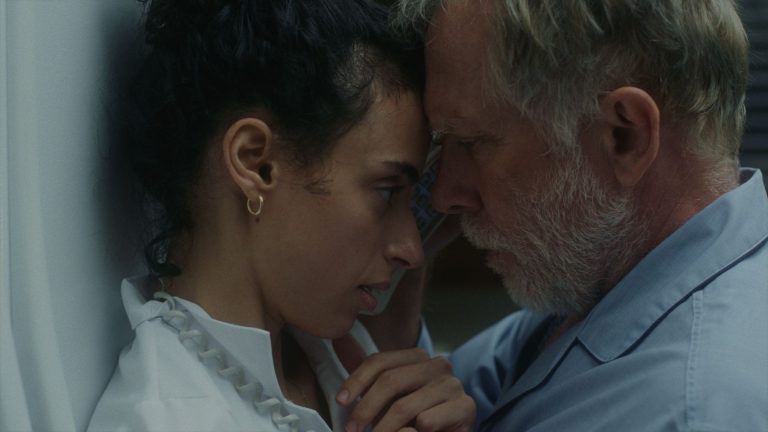
We are quickly introduced to Nurse Eleni (Cemre Paksoy) and Douglas (Bruce McKenzie) as they get paired up for Eleni to care for Douglas as his new nurse. Douglas lives in a retirement community, and they’ve had a lot of trouble finding a good fit for his care. He’s believed to have early-onset Alzheimer’s and is frequently unsure of where he is or who he’s with. Once Eleni and Douglas are alone together, he ropes her into a call like the one we see at the beginning of the film. They not only get a chunk of change out of this call, but their relationship turns from professional to sensual in a hurry.
Thus begins a string of events leading many nurses to fall under Douglas’s spell. He has an oddball sort of charm and piercing, magnetic blue eyes that draw these young women in, which is honestly confounding. He maintains a power over them that causes them to not be able to leave his side, but I left the movie not really understanding what they were gaining from this arrangement.
Writer-director Georgia Bernstein brought this film to Sundance as part of the NEXT section, certainly a category for boundary-pushing and otherwise odd films, and it’s clear how Night Nurse ended up here. Its psychosexual nature subverts your expectations of a sexier, showier erotic thriller. It’s frankly a lot less thrilling and erotic than I could have ever imagined. The film finds ways to make you very uncomfortable without feeling titillated at the same time, creating a one-of-a-kind feeling that sticks with you after the credits roll.
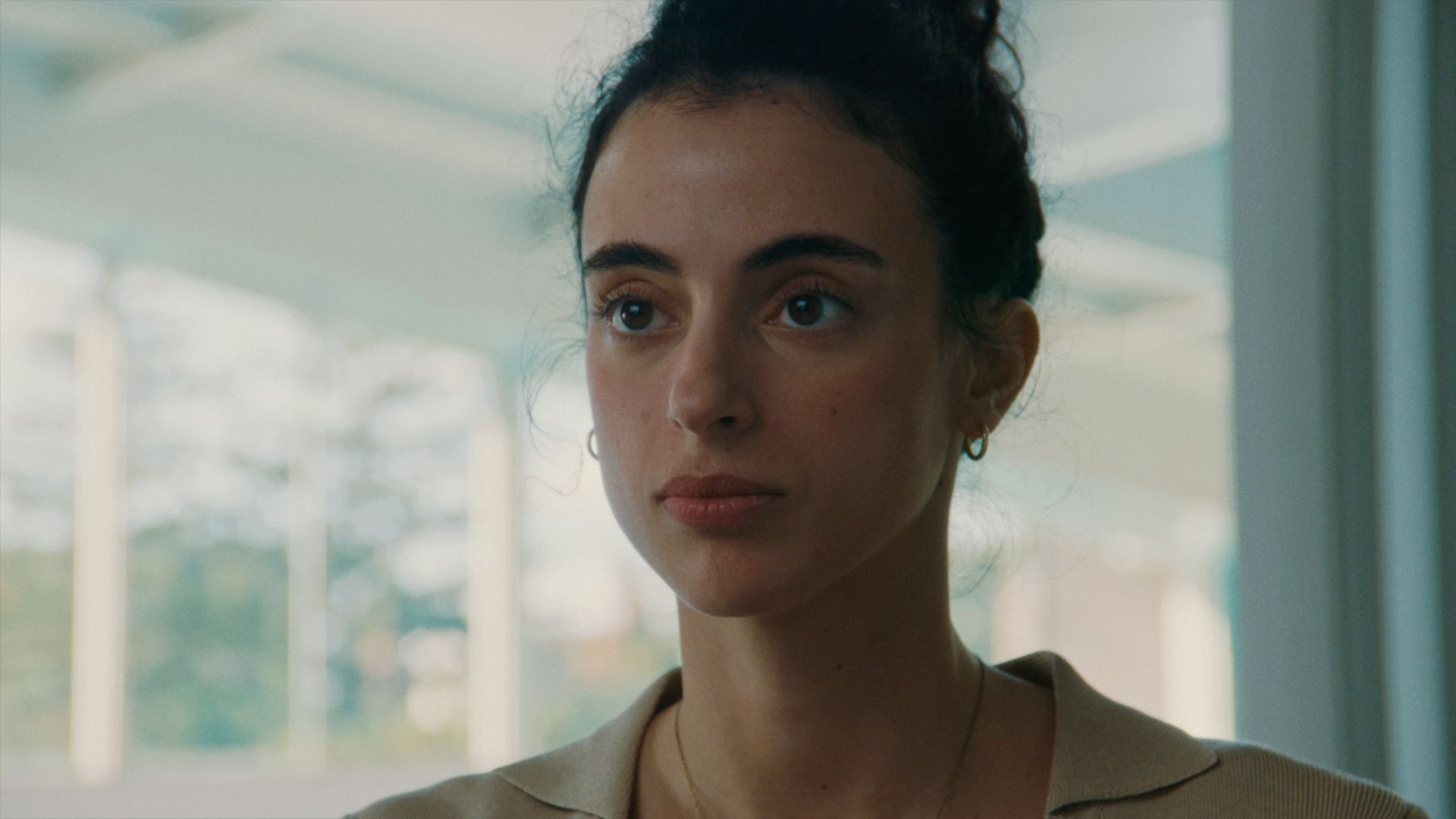
Paksoy is the only one who gets much to work with on the acting front, and she does a solid job in her role. Her performance displays the constant war within herself, caught between resisting Douglas’ invigorating schemes and fully giving in to them. While she initially succumbs, she’s the only one to falter in her devotion to Douglas as the other nurses become more captive to him, delivering a more nuanced performance as the story progresses.
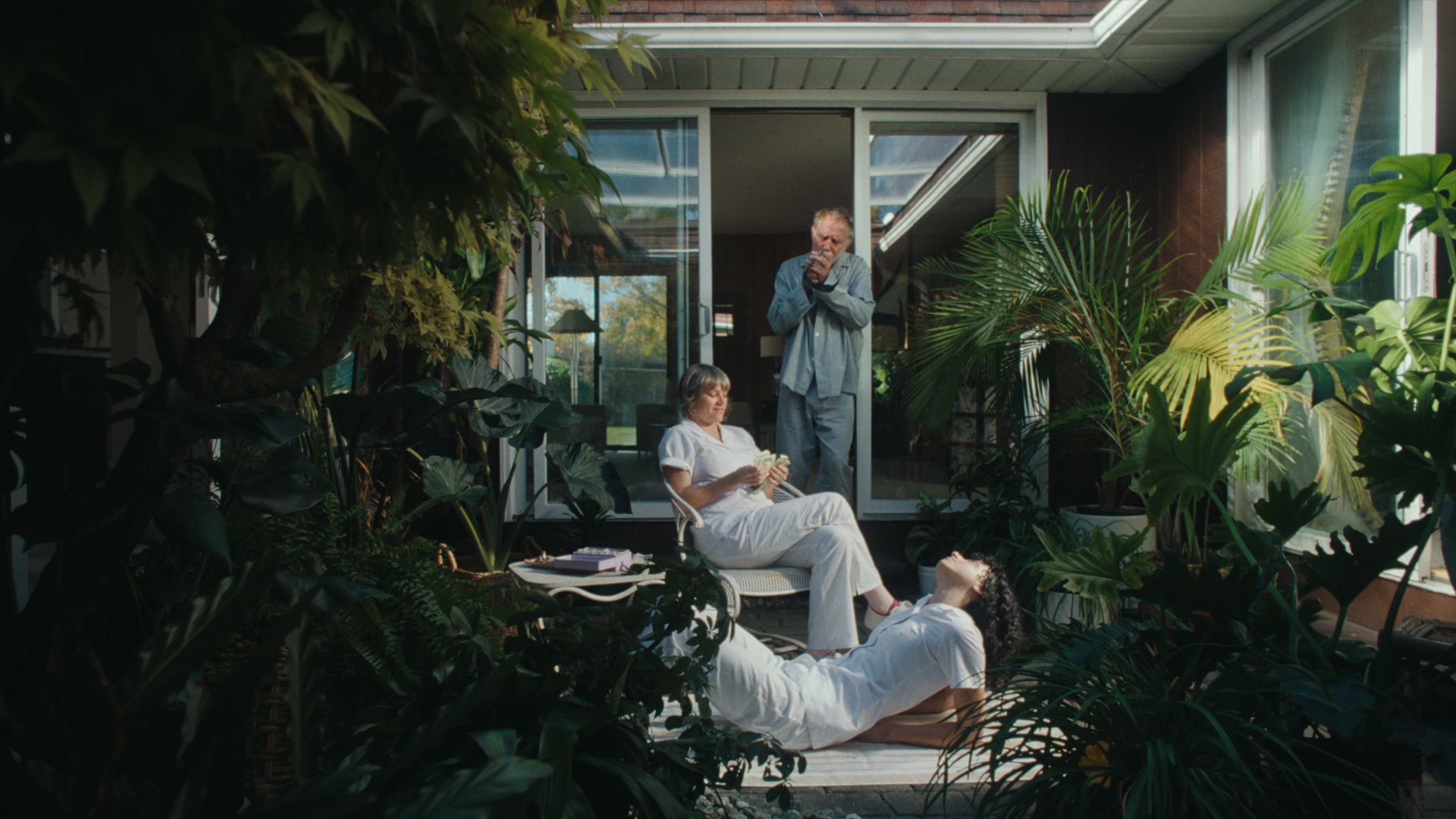
Technically speaking, the film is incredibly well made. Bernstein clearly has a vision and an ability to execute on that vision with how the movie feels, sounds, and looks. I was especially impressed by the color grading and overall cinematography. For a film with a fairly stationary setting, great care was put into making the few locations look as good as possible, with saturation that brings out deep greens and blues and highlights Douglas’ dimly lit home to perfection. An eerie piano-driven score enhances the discomfort that comes from watching these girls completely unable to snap out of their trance.
Despite the vibe that Bernstein and crew create, the film is missing a final push into eroticism and thrills to get across the finish line. Night Nurse feels like a slog for much of its 95-minute run time, meandering and wandering with no real end goal in sight. The eventual third-act action that somewhat gets things moving isn’t quite explosive enough to pay off the slow burn of the first 70 or so minutes.
Night Nurse is a well-made, good-looking film that suffers from a lack of narrative momentum in its last half and not quite enough eroticism or thrills to constitute it as falling under the erotic thriller genre. Paksoy offers up a strong performance that’s worthy of seeing, and the subtle technical achievements are nothing to scoff at either. Bernstein has certainly made a name for herself as someone with a strong eye for filmmaking, and I hope she gets another crack at making a feature very soon.
Amy Thomasson had a chance to sit down with Carla Simón, director of Romería.
Amy Thomasson: Okay, so it is a pleasure for me to welcome one of Europe’s most distinctive filmmakers, Carla Simón. Since her remarkable debut, Summer 1993, which drew on her own childhood experience, Simón has become known for creating deeply personal films that resonate far beyond her autobiography.
Her follow-up, Alcarràs, won the Golden Bear at the Berlin International Film Festival and established her as one of the most important voices in contemporary cinema. Her latest film, Romería, continues her exploration of memory, family, identity, and the ways in which history echoes through generations. It is a deeply emotional work that blends intimate storytelling with questions about inheritance, silence, and belonging.
Welcome, Ms. Simón. Thank you so much.
Romería feels both intensely personal and universally relatable. What was the first image or emotion that made you realize this story was one that you needed to tell?
Carla Simón: I think that it was more of an emotion that had to do with this frustration I felt at not being able to ask about the love story of my parents. Because they died when I was a kid, when I tried to access this memory, I realized that they were not here to ask. And then, when I tried to do it through other people’s stories, through my family, I realized that the pieces usually didn’t match because they died of AIDS, and their memory was very stained by the taboo and the stigma of AIDS and heroin.
So it was hard to put together a story somehow, no? So I think this was the main reason I wanted to make this film, and it somehow gave me the opportunity to fill the gaps in this story I didn’t know through cinema and find the images I was lacking in the story.
Amy Thomasson: And I feel you definitely succeeded in that.
Those memories clearly were so valuable, and one of the things that hit me was how frustrating it must have been. The scene that hit me first was when she found out that she was five years old when her father passed. I say… she, the character—you.
Carla Simón: This actually didn’t happen to me this way. This is fiction. There is a lot of fiction in the film. I knew when my father died, but it was a good way to express the things that we don’t know, and the things that we discover, or the things that are different in every family’s perspective of the story, somehow, no?
Amy Thomasson: Yes, and how, “Oh, I was five. Why didn’t I get to meet him?”
And that hit so hard, and I thought the character and the actress played that so well. Very subtle, very nuanced, and I really appreciated that in the performance. That was very moving.
Many of your films begin with autobiographical material, but they never feel like simple memoirs. It’s not just a straight telling of a narrative. It’s the emotions, the growth, and the journey these characters take. At what point does lived experience become cinema?
Carla Simón: I think that anything can become cinema, but if you just take it as it was, or as it is, sometimes it doesn’t work as a film, no?
So for me, it’s like I got more and more used to transforming reality to give it the shape of a film, somehow. And I lost the fear of not being faithful to reality. So I think that each film that I made has more and more fiction.
Also, in the case of Romería, I’m portraying the part of the family that I know the least, which is my biological dad’s family.
They live in Galicia. I live in Catalonia, so it’s the two opposite sides of Spain. So I’ve met them several times, but I had to invent these characters a little bit to get to know them, as you need to know a character when you are making a film. So there is a lot of fiction and a lot of things that I put in just to make them work as a film, to follow the character’s journey somehow. As I was saying, this thing about her not knowing what year her father died is an example, no?
And then, at some point, when you get some distance, it’s also easier to make the film because you are seeing it just as a story.
Amy Thomasson: Have any of your family seen the film?
Carla Simón: Sí. Everyone.
Amy Thomasson: What was their response to that? I was curious about that.
Carla Simón: It depends because my grandparents died a long time ago. And my uncles and aunts, they all had different approaches, but somehow there’s one that I’m very attached to. He read the script, he came to the shooting, and he is even in the film because he played the notary.
Amy Thomasson: Oh, wow.
Carla Simón: So it was very beautiful and cathartic to have him there for that scene. But then, for the rest, they understood very much my need to make this film. And I think that it was an opportunity somehow to rethink my parents’ story and also the way that they remember them, and the memory and the pain in the family.
So I think that revisiting this chapter was important for everyone, somehow.
Amy Thomasson: In a way, it reminds me—and I’ve just reread this play—the Eugene O’Neill play Long Day’s Journey Into Night.
Carla Simón: Sí.
Amy Thomasson: Which, for me—
Carla Simón: Yes…
Amy Thomasson: —is the same level, and that’s considered one of the greatest American plays.
Carla Simón: No, I love that play. I read it a long time ago. But yeah, it’s very interesting that you make this connection. Nobody did it before. I love it.
Amy Thomasson: It made me think of that. And I don’t know a better compliment I could give somebody—
Carla Simón: No, please.
Amy Thomasson: —than to say that your work reminds me of one of the greatest.
But it does, and it’s honest. But how brave you are to tell this story of your family and just say, “This is who they were.” And you also did it without judgment. And that is not easy to do.
And Eugene O’Neill had to wait until the end of his life, and his entire family was dead, before he even had the guts to do that. And you’re doing it.
I’m looking at the dates here, and I think one of the other reasons it hits me so much is that I remember that. I was a child when the AIDS epidemic hit. I remember. So, when you find out that the family kept him in and isolated him, how hard would it be to have to explain that to someone who didn’t live through that? And it gives you a different perspective.
So rather than just, “Oh, these are the good people in the story and these are the bad people in the story,” it’s these are very human people who did the best that they could at the time.
And that’s really what I thought was beautiful about it. It made no judgments on anyone, and that’s very brave. It’s very brave of you to do so. As I said, it reminds me of Eugene O’Neill.
Carla Simón: Yeah, no. Thank you so much, because I love that play.
Yeah, for me, it came in a very natural way in the sense that I feel that the generation of my parents, because this is not only my family story. It happened to many people in the ’80s in Spain. They were a generation that was born and raised during the Franco dictatorship with a lot of repression, and then suddenly we went into democracy. So it was a really happy period. Freedom arrived, and they were free young people embracing this really happy moment.
But also, there was a dark side because a lot of heroin came into the country. There is this theory that while young people were into drugs, they were not into politics, so the government didn’t do much to stop the introduction of heroin.
A lot of young people got hooked, and a lot of people got AIDS later. But they didn’t know the consequences of heroin or AIDS. So it was complicated for them to cope with this surprise then, no? For them and for their families.
So there was a lot of death and a lot of pain and a lot of secrets. So for me, because I’m the generation after, I just want to know the story of my parents, and I don’t want to judge them. I will embrace whatever they lived, no? In a way, I don’t want heroin to define their lives because I think that it’s not the only thing that they were. And I want to see them also with light because they were the generation that broke with all the old conservative and Catholic values of Spain and brought some more progressive ideas. So I think that we actually should even be thankful to them in that sense, no?
So the idea of rethinking this generation and trying to create new narratives about them, shining some light on them, for me, was important. But at the same time, it was important to also do it through empathy with the families who kept that secret, and why, no? And why they did. Just to not see things as black or white, no?
Amy Thomasson: And that was really so beautiful. And to look at, despite the tragic end of their lives, that you included that ending. I don’t want to totally spoil it for everyone, but tell me about filming that and coming up with the ending that you came up with.
That experience of seeing them when they were younger—
Carla Simón: You mean the—which ending? The whole part that Marina imagines, or—
Amy Thomasson: Yes, the imagination that she has, because I can’t imagine the emotional journey for you to write that.
Carla Simón: Yeah. It was beautiful because it was an opportunity to fill the gaps that I had. And for me, this came when I realized that I wanted to make a film about memory. It gave me the structure of the film. This is a quest of a character trying to understand her story through other people’s stories. And when she realizes that she cannot really trust everyone’s memories because they are very selective, very subjective, very stained by the taboo and the stigma, very transformed emotionally as well, she realizes that she cannot put the pieces together. She decides to use her imagination to fill these gaps. So it was very organic to make this journey, and for me to use cinema somehow to create the images that I was lacking. So it was a great opportunity.
And to write all this part, it came very naturally to me because it’s things that I think had been there in my mind always. So I made some decisions on what to include and what not to include, and how to do it. Also, it’s a part that—my films are always fed by life—but in this moment there are a lot of references to other films that I like, that I could imagine my parents’ love story like, no?
Amy Thomasson: And it was so romantic. It was so beautiful. And the only way that I can describe it is that it seems like a poetic dream.
Carla Simón: Sí. And for me, I was coming from making two films that are very committed to reality, so it felt like a new challenge to try to do something more poetic, more dreamy, and try to use cinema with this magical capacity of even resuscitating dead people, no?
Amy Thomasson: Yes, who seems very much alive. And I love that. And I love that there aren’t flashbacks and things like that, which seem to be very traditional techniques, especially in American cinema when you’re telling a story. There are flashbacks and all of that.
I loved the use of the journal and the quotes. It’s just so beautiful.
I want to talk about the pacing for a minute. The pacing is wonderfully patient in an era of increasingly fast storytelling. How do you see slowness as a creative choice, or almost as a form of resistance?
Carla Simón: For me, it comes naturally in the kind of cinema I make, where I like people, basically, and when you try to capture pieces or slices of life, no? You try to respect the rhythm of real life, no? And for me, it’s quite organic. I think that the film, anyway, always keeps going forward, no?
Carla Simón: Because she’s on a trip somehow. But at the same time, she’s a character that observes a lot, no? And to observe, you need to get patient and watch someone observing, and what she observes, no? So this pacing was the one that the film needed somehow.
Amy Thomasson: Wonderful.
Your film also has a remarkable naturalism, which we were just kind of talking about, and it’s very carefully composed. I could tell that everything was so deliberate, including something that stood out to me because I loved it—that red dress that she was wearing. I loved that red dress, and when she’s trying it on, and all of those little moments also made me…
It was universal. And I’m an American girl, born and raised. I’ve never been to Spain, but I could understand how she was feeling.
So how do you balance the naturalism, almost like a documentary, with the spontaneity of cinematic precision?
Carla Simón: Yeah, that’s my fight all the time.
Because I love trying to pretend that everything happens in front of the camera by chance, but then I want the things that happen in front of the camera to be what I wrote in the script. So I always have this kind of fight with myself. But what we try to do is that, with the actors, we spend a lot of time together before we shoot, and we improvise moments that could have happened before the story that we are going to portray.
And all this allows us to create a kind of common memory between all the actors, and a lot of emotions that they learn to feel through them. They understand their place in the family, their story, or their background, no? Because when you film families, they always come with a background, because you have been there since you were born. So all this history, for me, it’s important to work through with the actors to make sure that we arrive at the shooting with all this emotional memory in their bodies, no?
So this allows me to do that. When we are shooting, we follow the script, but sometimes I give them some room for improvisation. And when they say something, it always belongs to the world that we created together. And this is, for me, the way that they surprise me. There are always things that I didn’t know would happen, but they happen in front of the camera because of this previous work.
It’s something that is so difficult to tell what’s going to happen, but when I give this room for improvisation, interesting things come up, no? And this is the way to make sure that we don’t execute the script. I’m not interested in that. I think this is boring. But at the same time, we follow what is written because that’s why I spend so much time making the script make sense, no?
Amy Thomasson: It’s lovely.
And one of the most… I don’t even know if this is on topic or not. One of the most human moments, I felt, is when she goes back to her grandmother’s pool and puts the leaves in. That just seemed—it was so natural, and it added some genuine humor to it.
That part definitely made me laugh, but I also felt like, of course, this is her way of rebelling, almost.
Carla Simón: Sí.
Amy Thomasson: And I really loved that. That was very…
Carla Simón: I always say that my grandparents even had a swimming pool, so I never did that. Maybe I wish I had done it.
Amy Thomasson: But it was such a natural little moment of rebellion. And I appreciated her for doing that. For maintaining her calm the whole time except for that one moment, and then she’s just like, “Okay, I’m done. Let’s go out and have some fun.” She was very relatable in that moment, and for someone from a different country, different era, different age, to see myself in that really is a testament to your writing and your filmmaking.
And that is why—and I’m going to brag on you—this film was nominated for the Palme d’Or at Cannes this year. So that is very impressive, and I’m very honored to have this moment to talk with you.
One last question. When audiences leave the cinema after seeing Romería, what conversation do you hope they’ll continue having with themselves? What would you like them to take away?
Carla Simón: Yeah. I would say that I would like them to think about the importance of digging into family history and family memory because I think that this can help us to understand where we come from and to know ourselves better, basically.
Amy Thomasson: Thank you again. This has been such a treat, such a pleasure, and best wishes with this film. I think it’s going to resonate with everybody.
Carla Simón: Thank you so much.
Amy Thomasson: Thank you so much.
And again, just as a side note—this won’t even get printed—but it made me think of Eugene O’Neill, and I’ve just reread that play this summer, and that’s why it hit.
Carla Simón: Yeah.
Amy Thomasson: Except not as soul-destroying. It was uplifting, and that was really beautiful. And such a brave female artist you are.
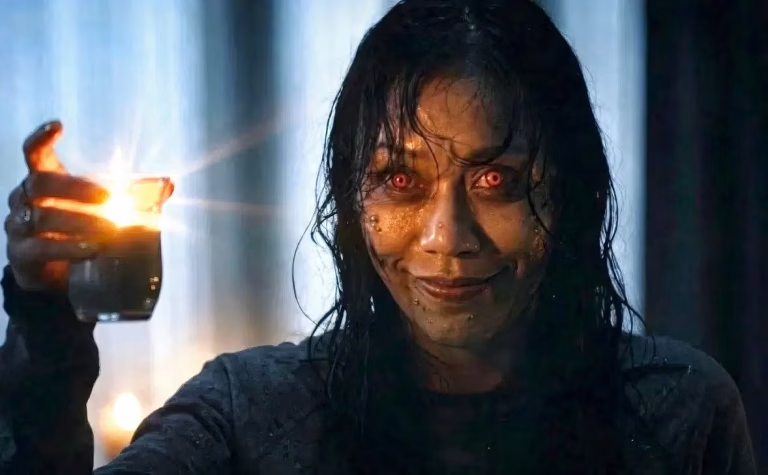
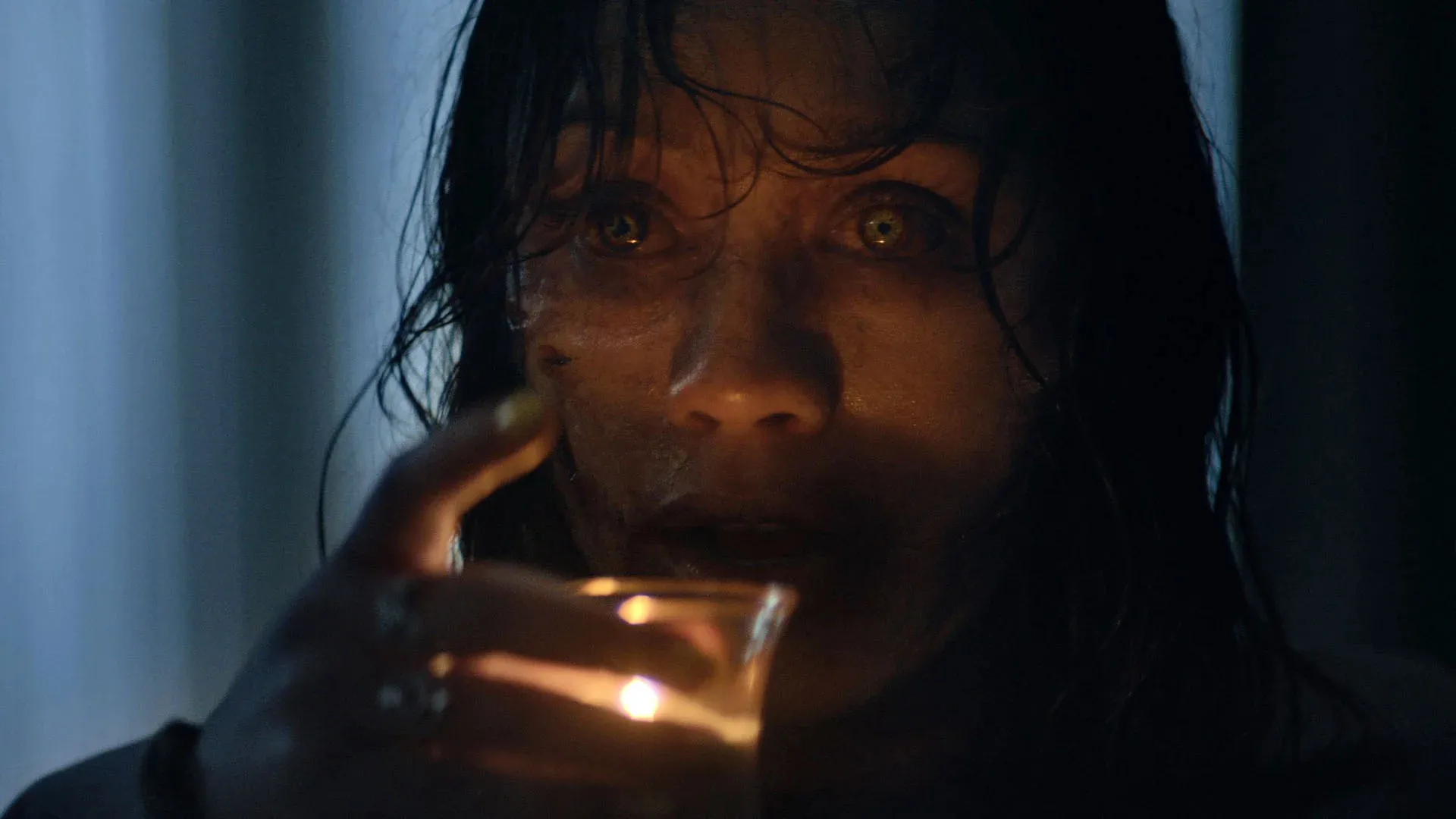
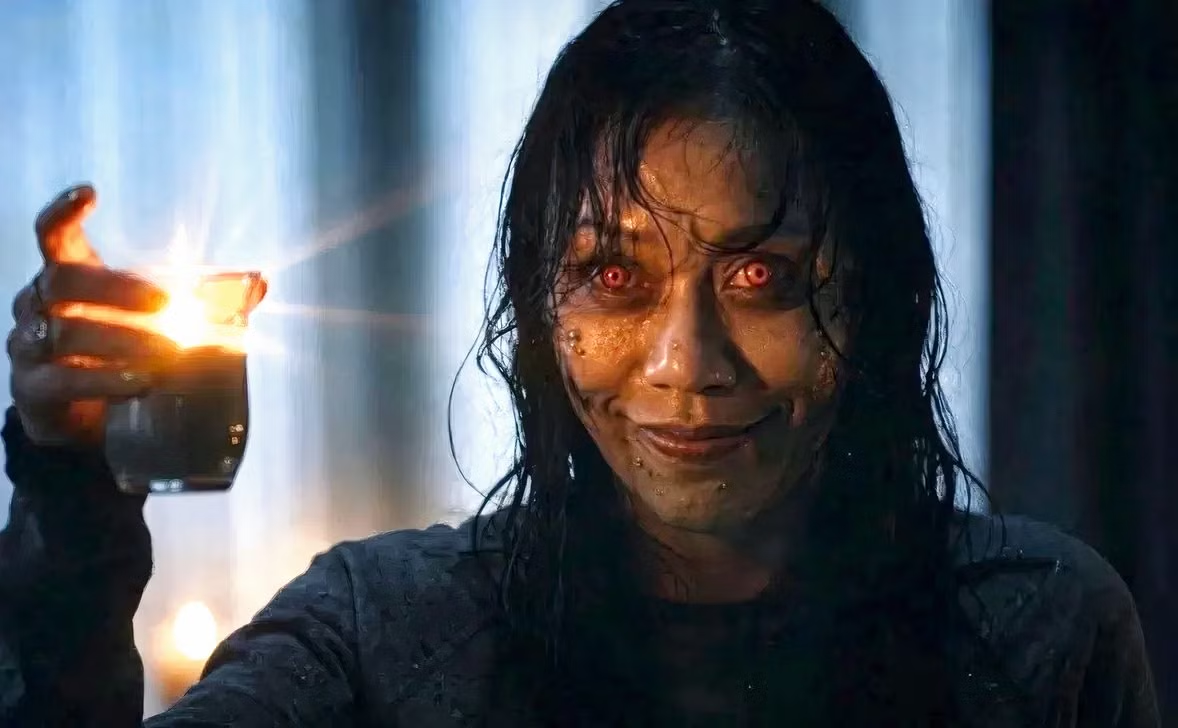
Synopsis: After the loss of her husband, a woman seeks solace with her in-laws. As one by one they transform into deadites, she comes to discover that the vows she took in life – survive even in death.
Some of my earliest memories of watching horror films came from the Evil Dead franchise. I had no business watching those movies, but I’m a child of the early ’90s. I was unsupervised a lot of the time, and I would watch whatever caught my attention on cable. The gore, action, and comedy from the first three Evil Dead films are near perfect, and they’re pillars of the horror genre. The newest installment in the franchise wastes no time getting the audience’s heart pumping with a malicious opening sequence that could make even the biggest Saw fan wince.
Evil Dead Burn offers another story of a family cursed by unforeseen evil that emerges from the Necronomicon. Joseph Price (grandson of Benjamin Price from The Evil Dead) does some research of his own, attracting a familiar deadite still lurking around the places where they once wreaked havoc. After this, we meet our protagonist, Alice (Souhelia Yacoub). She’s celebrating her brother‑in‑law Joseph’s birthday with her husband William (George Pullar) and Joseph’s girlfriend ,Thya (Luciane Buchanan). Tensions run high after Alice and William get into a huge argument. Drunk and disgusted, William speeds off in his car despite Joseph’s pleas for him to stop. William gets into a head‑on collision with our familiar deadite, they recite words from the Necronomicon, and William becomes possessed.
From here, the story is told from Alice’s POV, giving us a look into her relationship with Will’s family. They reunite to celebrate Will’s life with a cremation ceremony and time together at their old lake house. The possession spreads throughout the family, and one by one, they’re overtaken.
Director Sébastien Vanicek gives the audience a new French Extremity‑style approach with this sequel. Vanicek’s first feature film, Infested, was a gooey, oozy, terrifying look at an apartment complex overrun by huge spiders. The spiders could’ve been considered at the top of the call sheet in that movie. Likewise, in Evil Dead Burn, you can consider the deadites the stars of the show. They’re the most hardcore and grimy I’ve seen since Evil Dead (2013). Vanicek’s direction of action sequences and tension‑filled moments is impressive. I really appreciate that none of the Evil Dead movies are particularly the same; each one has its own bite and bark that separates it from the others. We get 90% gore, action, and tension with a 10% sprinkle of comedy.
The Price family is extremely dysfunctional and trauma‑filled — but what family doesn’t have its problems, right? Themes of trauma‑ridden households, physical and mental abuse, and staying in a relationship for too long are all present. Honestly, that’s the most realistic thing about a movie featuring demons with body contortions and dogs.
The score by Double Danger sounds similar to their last collaboration with Vanicek on Infested, but cranked up to 13. There aren’t many soft spots in the score that make you think, “This is the part of the film that’s toned down.” The tension is high, the scares come in abundance, and the gore is delightful. Phillip Lozano’s cinematography is a welcome addition to this sequel. It’s gloomy, dark, and icky. This movie features a lot of greys and blacks in its color palette compared to Rise, which leaned heavily on blues and reds. The camera techniques impressed me as well — the overhead shots of action, the one‑shot scenes of characters narrowly escaping deadites, and more made me feel like I was watching Malignant or Children of Men.
This outing in the Evil Dead series easily lands in my top three of the six movies. There were a few instances of bad CGI and visual effects, but sometimes that’s to be expected. Prosthetics and makeup‑wise, this is right up there with the other films. I wasn’t turned off by the meanness of this film; all of the movies in this franchise have been mean in some way — it’s just that the original three had more comedy to lean on than their successors. The next installment in this franchise arrives in 2028, and I can’t wait to see what they have in store for us horror fans.
This week on the InSession Film Podcast, inspired by The Odyssey, we discuss our Top 5 Christopher Nolan scenes! A *lot* of great moments to choose from, and we had a great time with this list. We also dig into the box office for Moana and the irony of last week’s super viral revisionist discourse around Transformers and the Pirate movies.
– Moana Box Office (3:19) We open the show this week by diving into the box office haul for the new live-action Moana. It’s a bit of a paradox. We never root for movies to fail as champion of cinema and the theaters, however we had to make an exception for Disney’s latest. They cannot be rewarded for such lazy and inept filmmaking. If Disney wants to regurgitate their animated films, fine, but at least put in some effort.
– Pirates / Transformers (24:51) In what was one of the more fascinating weeks we’ve ever seen on social media, leading up to the release of Moana, it was Michael Bay’s Transformers and the Gore Verbinski Pirate movies that went super viral. Never thought we’d see the day where Transformers would have a revisionist moment, but here we are. The major studios have become such a beacon for cheap-looking blockbusters that the discourse keeps looking to movies from 20 years ago as the peak of summer movies.
– Top 5 Christopher Nolan Scenes (1:01:46) Christopher Nolan is a favorite filmmaker of ours (hot take, I know), so the idea of dissecting our favorite scenes was a daunting task. There are so many great sequences to parse through, whether you’re craving action and spectacle, or maybe more underratedly, the small and quiet moments full of beauty or horror. With that said, what did you think of of our lists?
If you want to help support us, there are several ways you can help us and we’d absolutely appreciate it. Every penny goes directly back into supporting the show and we are truly honored and grateful. Thanks for your support and for listening to the InSession Film Podcast!
On this episode of Chasing the Gold, Shadan is joined by Megan Kearns to discuss their favorite films and performances of the year so far! We also dig into any Oscar potential they may have as we prep for the back-half of 2026.
Check out this week’s show and let us know what you think in the comment section. Thanks for listening and for supporting the InSession Film Podcast!
Director: Vincent Grashaw Writers: Zach Montague Stars: Lou Diamond Phillips, Nick Stahl, Dana Namerode
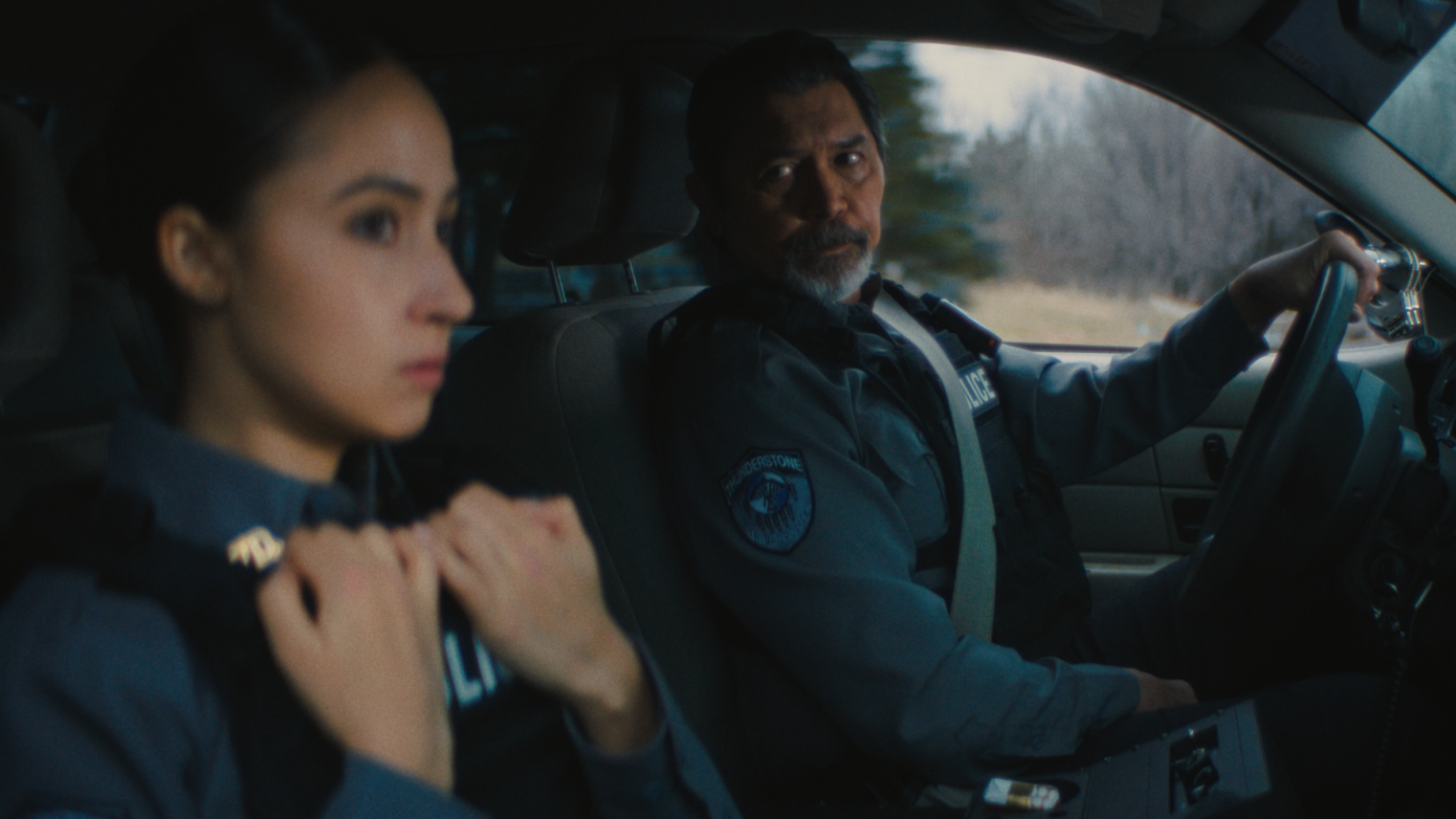
Synopsis: A weathered tribal cop and his new trainee must find a ruthless fugitive, whose return to their rural Indigenous reservation has exposed its darkest secrets and could ignite a violent gang war.
When you look deeper at Gangland, originally titled Keep Quiet, a more appropriate title in my opinion, the script goes beyond your typical crime thriller. Beneath all the weathered Indigenous grit and moral ambiguity, the film becomes much more complex once you take a step back and cross the line that defines tribal land.
Directed by Vincent Grashaw and written by first-time screenwriter Zach Montague, the story looks at the genre through a lens of sovereignty, jurisdiction, poverty, trauma, and underfunded law enforcement trying to fill the gaps where crime begins to exploit authority. With Gangland, the community’s leaders see borders meant to preserve sovereignty and police themselves.
That’s where Lou Diamond Phillips comes in, giving his best performance since La Bamba as a conflicted police officer trying to uphold his community’s values and independence, even as he sometimes feels as much like an outsider as a member of it. The result is a tragic thriller about community policing, identity, and the weight of history that is quite profound.
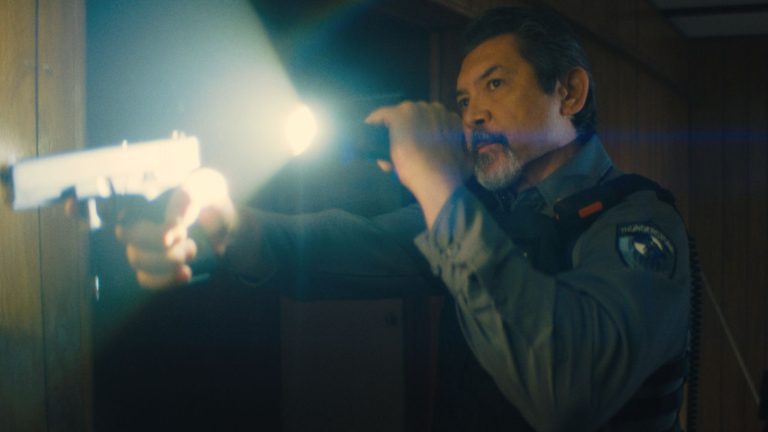
The story follows Officer Teddy Sharpe (Phillips), who polices the Thunderstone Reservation. Weathered and empathetic, but guided by his own moral code, Teddy patrols the streets with a heavy hand and a big heart. That approach unsettles his new trainee, Sandra (The A-Frame’s Dana Namerode), a former outside law enforcement officer who is now afraid to let anything slide.
This causes Sandra to buddy up with Darius (What You Wish For’s Nick Stahl), who works for the local sheriff’s department just outside the border. Soon, she sees why Teddy is so careful around them: he is wary of an outsider who sees Thunderstone as his right to oversee, which is more about power than outreach, even if they are both looking for a murderer on the loose.
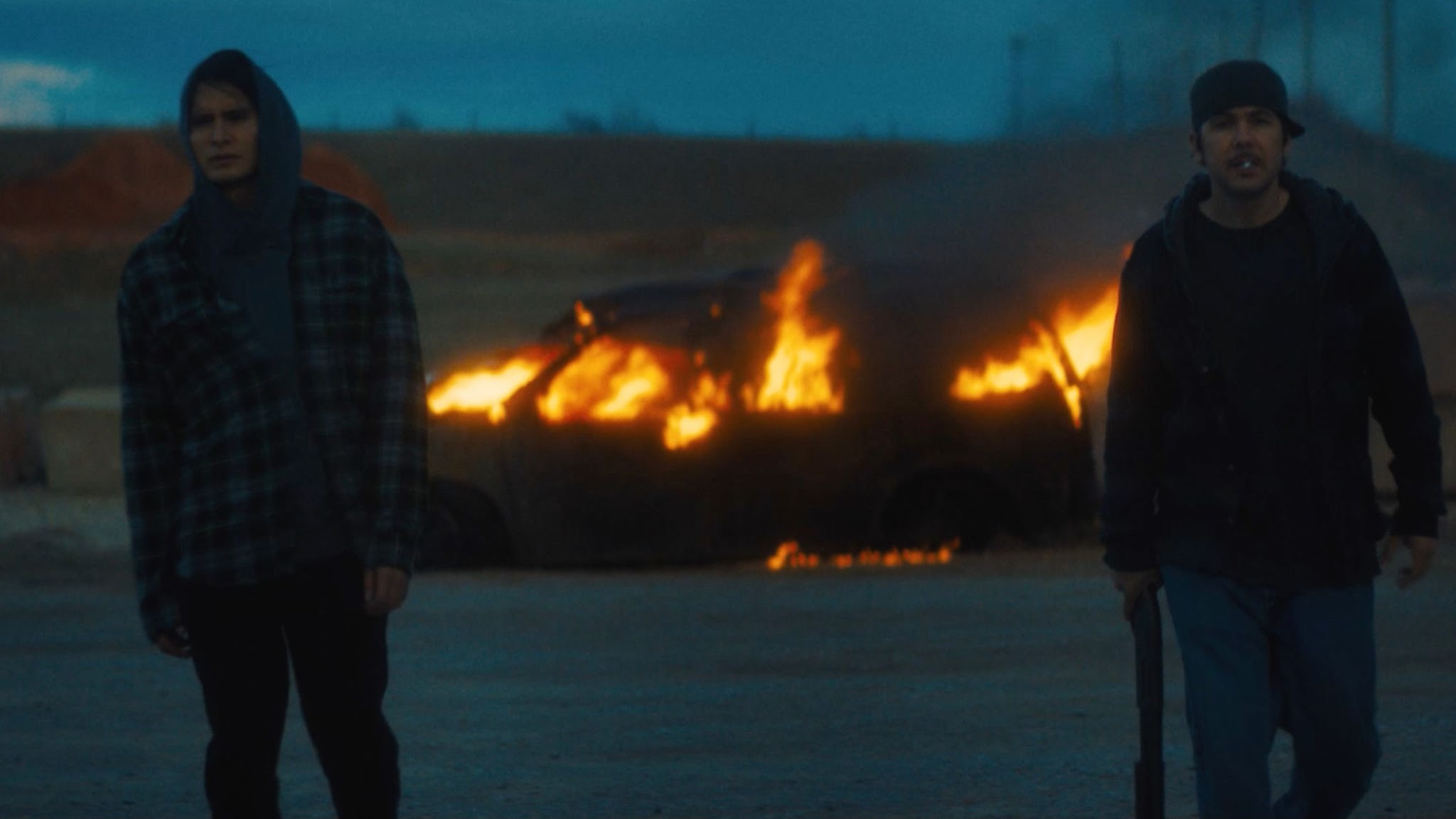
That is Richie (Killers of the Flower Moon’s Elisha Pratt, who is magnetically terrifying here), who killed a Thunderstone member and a police officer after a drug deal went wrong, right after being released from prison. Richie is not welcomed home, and then takes his nephew, Albert (Reservation Dogs’ Lane Factor), under his wing, an innocent who immediately gets more than he can stomach.
Gangland works because it has a disguised structure. Richie represents wounds that have curdled into violence, where anger, poverty, and incarceration are caused by unresolved trauma. Teddy has gone the other way, feeling the guilt of being a compromised guardian, seen as tainted by outside government agencies, yet bearing the burden of holding the community together.
Albert represents the future, with each side trying to “save” him. The film views the problem from multiple perspectives: law enforcement, a fugitive, a young tribal member, and an outsider. That allows Gangland to operate on several subjective levels, in which justice, loyalty, survival, and identity look different depending on who is telling the story.
The film works best in the grey areas, where the story is not just about right or wrong. The story, anchored by the performances of Phillips and Pratt, pushes and pulls between law and loyalty, protection and control, and survival and identity. Albert becomes the face of the fight for the future, while Sandra serves as the observer, with both characters dragged into a world they hardly understand.
Both Phillips and Pratt are excellent here, but Phillips, so good in films like Courage Under Fire and finding a scene-stealing niche on television in recent years, does what the best actors do: he listens. In one reaction shot, Brandon Waddell’s camera focuses solely on Phillips as another character delivers a speech about the past and the present.
Phillips does not need a single line of dialogue to carry the moment; his presence does the work, absorbing the weight of everything Teddy has tried to bury over the years, only to let it go finally. This is not a showy scene, but it is a great moment in a genre film that goes well beyond its trappings to something meaningful and resonant.
Gangland acts as a slow burn, where, as the film progresses, the lines blur, culminating in a stunning conclusion that suggests the cleansing of old wounds, community, and secrets that goes beyond a thrilling, action-packed, and suspenseful climax. Without giving away spoilers, the scene represents heaven and hell, one coming back home to acceptance, and the other left to his own devices, consumed by the violence he refused to escape from.
You can watch Gangland in limited theatrical release and on digital on-demand platforms starting July 10.
Director: Anthony Frith Stars: Eric Roberts, Michael Paré, Michelle Bauer
Synopsis:A struggling director documents his journey making a “mockbuster” in six days, descending into the chaotic world of low-budget filmmaking.
“A bad movie is better than no movie” – my favorite quote from this film. I haven’t had this much fun with a film in a long time. It’s a must-watch for B-movie fans.
Most people only ever see the finished product. They watch a film, praise it or critique it, and move on without thinking about the hundreds of tiny miracles, or disasters, that had to happen behind the scenes to get it made. That’s especially true of low-budget cinema. Audiences often laugh at so-called “bad movies,” but rarely stop to consider just how difficult it is to make any feature, regardless of budget. Mockbusteris a quirky, fun documentary about making a film rather than surviving one. Anthony Frith’s wonderfully self-aware behind-the-scenes adventure offers an affectionate, hilarious and surprisingly insightful look inside one of cinema’s most infamous production companies: The Asylum.
For anyone unfamiliar with The Asylum, they’re the studio that built an empire producing films designed to sit suspiciously close to Hollywood blockbusters. Think cheap sets, crappy CGI genre flicks. They’re responsible for the Sharknado phenomenon, alongside countless wonderfully shameless titles that have become cult favourites precisely because of their unapologetic absurdity. Their films are often dismissed as cheap knock-offs, but Mockbuster asks a far more interesting question: what does it actually take to make one?
The answer, it turns out, is organized chaos. After years of directing corporate videos and watching his filmmaking ambitions slowly drift away, Frith simply asked The Asylum to let him direct The Land That Time Forgot, a dinosaur adventure shot in suburban Adelaide over just six frantic days. At the same time, he decides to document the experience, creating a film that’s every bit as entertaining as the production itself. What follows is part documentary, part comedy, and part endurance test. As Firth wants to create something that has his stamp on it.
The beauty of Mockbuster lies in embracing the ridiculousness of the situation. Watching the crew scramble to solve problems with almost no money and even less time becomes addictive. Whether it’s rewriting scenes moments before filming, improvising around practical limitations or attempting to create cinematic spectacle with what appears to be pocket change, there’s an infectious creativity on display. It’s impossible not to admire the sheer determination involved. It’s filmmaking with the safety rails completely removed. And it works. It’s popular and makes money.
We’re given candid interviews with the studio owners and workers, who clearly love what they do – and have no shame in what they create. The Asylum isn’t portrayed as cynical filmmakers chasing quick profits, but as being populated by people who genuinely love making movies, even if those movies occasionally involve giant sharks, improbable disasters or prehistoric monsters rendered on microscopic budgets. We learn how they write and make the films, getting to see their studios and insane process.
There’s plenty of heartwarming footage of Anthony from his childhood, his career and his future. We hear from his friends, family and some heroes. He’s honest about his work-life balance, becoming a father, and putting some aspirations aside as he navigates his responsibilities with his passions. It’s lovely to see how he walks into The Asylum and instantly becomes part of the furniture – after they make him watch an abundance of their movies.
Some of the funniest moments are when nobody involved seems particularly interested in pretending everything is under control. The documentary embraces imperfections, awkward and exhausted expressions and frantic last-minute decisions. There’s frustrations, arguments, (creative differences) and there’s something scary about the Aussie’s when they’re angry. But, these scenes feels refreshingly authentic in an age where behind-the-scenes documentaries often resemble carefully managed marketing campaigns.
Perhaps the documentary’s biggest achievement will be how it will completely change your perception of low-budget filmmaking. It’s easy to mock B-movies from the comfort of a sofa. It’s much harder to dismiss them after seeing the relentless work required to bring them into existence. Frith demonstrates that while budgets may be tiny, the passion behind them certainly isn’t.
If there’s a criticism, it’s that the documentary occasionally assumes viewers already understand the strange world of mockbusters. Those completely unfamiliar with The Asylum’s business model may find themselves wishing for a little more context before the production chaos begins. Likewise, some sections linger slightly longer than necessary on logistical challenges that will primarily fascinate aspiring filmmakers.
What stayed with me most wasn’t the comedy or even the filmmaking process. It was Frith himself. His excitement, self-doubt, optimism and determination – they really become the emotional engine driving the documentary. Anyone who has ever chased a creative dream, whether in film or elsewhere, will recognise that mixture of terror and exhilaration that comes from finally getting your opportunity and wondering if you’re about to completely blow it. In many ways, Mockbuster isn’t really about making a B-movie at all. It’s about refusing to let perfection become the enemy of actually creating something.
Funny, surprisingly moving and packed with genuine affection for independent filmmaking, Mockbuster is a delightful reminder that every film, no matter how gloriously ridiculous, begins with someone brave enough to say, “Let’s give this a shot.” And after spending ninety minutes in Anthony Frith’s company, you’ll never look at a mockbuster quite the same way again.
Director: Sam Hayes Writers: Sam Hayes Stars: Odessa A’zion, Ariel Winter, Tyler Alvarez
Synopsis: In the midst of her whole life falling apart, Kennedy attempts to somehow reconnect with her dead father, searching for permission to live her own life within a wild pool-hopping escape through the elaborate estates of her college town.
Coming-of-age films are often built around the idea that one extraordinary night can change everything. Whether it’s American Graffiti, Booksmart, or Superbad, there’s something irresistible about watching young people stumble through chaos, make terrible decisions, and somehow come out the other side a little wiser. Pools, directed by Sam Hayes, takes that familiar blueprint but swaps drunken house parties for an after-hours pool-hopping adventure. The result is a dreamy indie drama taking on growing up with grief.
The story follows Kennedy (Odessa A’zion), a rebellious college student who is facing expulsion while quietly carrying the weight of unresolved grief. Rather than confronting her future head-on, she joins a ragtag group of friends for an impulsive night spent sneaking into the luxurious swimming pools scattered across the wealthy neighborhoods surrounding their college town. What initially appears to be an excuse for youthful rebellion turns out to be an exercise in healing.
Odessa A’zion continues to establish herself as one of the more interesting young performers working today. She has an effortless ability to make emotionally guarded characters feel accessible, never asking the audience to pity Kennedy, only to understand her. She plays the role with an appealing mixture of sarcasm, vulnerability and quiet frustration, allowing moments of silence to carry just as much weight as the dialogue. The supporting cast brings an easy chemistry that feels refreshingly authentic. These genuinely resemble a group of friends rather than actors assembled to fulfil familiar coming-of-age archetypes. Ariel Winter and Suzanne Cryer are great in their roles, adding a layer of depth to the film and to Kennedy – as the characters who know her and what she’s been through with her dad’s sudden passing.
Visually, Pools is stunning. The glowing blue water, moonlit gardens, and sprawling luxury homes create an almost dreamlike atmosphere that constantly contrasts with the characters’ emotional uncertainty. Every new pool feels like entering another chapter of the evening, another opportunity for confession, escape or simply a few moments of peace. The water becomes more than just a backdrop; it feels symbolic throughout, representing escape, reflection, freedom and, at times, emotional paralysis.
The cinematography does much of the emotional heavy lifting. There’s something undeniably cinematic about watching these characters float (and party) beneath the stars while trying to keep their complicated lives from pulling them under. They don’t all get away with crashing a stranger’s pool. Some of the best parts of the film are when the characters are caught and have to fight off the owners and escape into the next garden.
The film is filled with random, quirky quick zoom-ins and crash/whip zoom shots, which really work for the indie vibe. The soundtrack is also very effective in shaping the emotions in the scenes and driving the story along. That said, Pools won’t work for everyone. Its leisurely pace demands patience, and viewers looking for a conventional comedy or high-stakes drama may find themselves waiting for something bigger to happen. The film is working with mood over momentum, but it could have done with adding a little more conflict and angst to keep viewers truly invested.
There were moments when I wished the screenplay dug a little deeper into some of its supporting characters. Several intriguing personalities drift in and out of the narrative without leaving much of an impression, and because the chemistry is strong between the actors, I wanted more of a deep-rooted richness from them. They’ve come together as strangers, which is a spontaneous idea, but they missed a chance for real depth and growth.
Towards the end, we finally get the outburst we’ve been waiting for, where the honesty about what Kennedy is feeling comes out. The ending doesn’t offer any resolutions, but lets audiences know that however you grieve is okay. It’s a slow and somber ending, but you’ll feel slightly more whole after watching.
Pools is a deep and reflective take on the coming-of-age genre. It’s thoughtful, beautifully shot, emotionally honest, and anchored by another impressive performance from Odessa A’zion. Like the best late-night conversations, it will leave you reflecting on your own memories of youth, friendship and the strange comfort of feeling completely lost. Sometimes, one unforgettable night really can change everything.
Director: Philip Barantini Writers: Jack Thorne, Nancy Springer Stars: Millie Bobby Brown, Henry Cavill, Helena Bonham Carter
Synopsis: Detective Enola Holmes heads to Malta, where her aspirations merge in her most complex and dangerous case yet.
When Netflix dropped the first Enola Holmes back in 2020, it was one of the better surprises of that year. A very funny and charming Holmes mystery where the iconic Sherlock is playfully in the background as we follow his sister for the first time. The sequel two years later was equally diverting, even with slightly diminishing returns. So now, here we are some years later with Enola Holmes 3, which quietly dropped on Netflix without any fanfare.
Jack Thorne once again pens the script, but this time Philip Barantini sits in the director’s chair as the film adopts a subtle change in tone. While it carries many of the same traits as its predecessors in terms of editing, energy and breaking the fourth wall, Enola Holmes 3 is more mature and wants to tackle heavier themes. On paper, the film had the potential to be the best of the three. However, as tends to be the case, it has a Netflix problem.
Enola Holmes 3 begins with a wedding. Enola (Millie Bobby Brown) is set to marry Tewkesbury (Louis Partridge), but given her desire for independence and after making a name for herself away from her brother’s shadow, she starts to have second thoughts. Meanwhile, Sherlock (Henry Cavill) is kidnapped and thus we have the foundation of our mystery for Enola to solve. As she discovers new clues, while running into familiar faces in the process, Enola uncovers a scheme that goes far beyond her brother’s disappearance.
There is a welcomed griminess and prickly underbelly to Enola Holmes 3. At times, it feels as if Barantini wants to push the franchise further with Enola and her relationship with Tewkesbury. To denote her evolving humanity as a young woman whose in love, but also deeply tethered to her identity as an investigator. And, more broadly, tackle themes of colonialism and doing egregious things in the name of The Crown. The problem is that either Thorne, Barantini, or Netflix doesn’t trust the audience to keep up.
Every time the film builds up momentum, there is some sort of flashback to Enola Holmes or Enola Holmes2 as a wink or reminder as to what happened in those movies. The film simply doesn’t trust you to have seen or remember them at all. The constant pandering and hand-holding here is reminiscent of Netflix’s “repeat the dialogue several times over because audiences are probably doing laundry” reputation. Not only is it tedious and unnecessary, but it takes precious time away from characterization and theme building. This leaves us with half-baked arcs and thinly veiled ideas that don’t carry much of an impact.
Additionally, Thorne’s screenplay tries to Avengers the film by contriving an ending that brings together Enola, Tewkesbury, Dr. Watson, and Eudoria Holmes. There’s a version of Enola Holmes 3 where that does work if the film sharply focused on Enola’s conflicting desires and how that becomes more complicated once she discovers a truth around Malta’s history with the British government. A truth that heavily impacts Tewkesbury, both internally as his status in the system.
In the end, Enola Holmes 3 is a bit of a misfire. The film still has the same endearing qualities as the first two, and at time’s it does push the series to new territory, but the “Netflix-ing” going on here makes for a frustrating experience. Millie Bobby Brown gives a fine performance. Henry Cavill is always wonderful as Sherlock, although his role here is even more muted. Helena Bonham Carter gives the film a fun spark. Louis Partridge is the unsung hero.
This week on Episode 695 of the InSession Film Podcast, we discussed our Top 5 movies of the year so far! Almost hard to believe, but it’s time of the year already. We’re halfway through and we’ve seen some pretty good films to this point. It’s been a little slow-going at times, but 2026 has given us some great gems in the first half of the year. As always, we’re excited to dive into our favorites to this point and discuss why these films will linger on as we near the fall season. That said, here are our lists:
NOTE: In this segment we only discussed our Top 5 movies of the year so far, however, as you’ll see below, we have listed our full Top 10 as it stands right now.
JD
1) Blue Heron
2) Nirvanna the Band the Show the Movie
3) Disclosure Day
4) Mother Mary
5) 28 Years Later: The Bone Temple
—
6) Tuner
7) Silent Friend
8) The Death of Robin Hood
9) Send Help
10) Faces of Death
Megan
1) Alpha
2) Blue Heron
3) Mārama
4) Project Hail Mary
5) Hokum
—
6) 28 Years Later: The Bone Temple
7) Is God Is
8) Obsession
9) Mother Mary
10) Backrooms
Honorable Mentions (Combined) Josephine, If I Go Will They Miss Me, Dracula, Crime 101, Miroirs No. 3, I Love Boosters, Good Luck, Have Fun, Don’t Die
Hopefully you guys enjoyed our lists, and if you agree or disagree with us, let us know in the comment section below. There are obviously many more movies that we didn’t have time to mention. That is to say, your list could look very different than ours given the great films and memorable sequences we saw over the last year. That being said, what would be your Top 5? Leave a comment in the comment section or email us at [email protected].
For more lists done by the InSession Film crew and other guests, be sure see our Movie Lists page.
On this episode, JD and Megan discuss the latest film from Netflix in Enola Holmes 3! It’s weird how the film came and went without any fanfare and barely any discourse. The tepid response to this film is interesting given how well received the first two were, but perhaps that’s why Netflix kept it so quiet.
Review:Enola Holmes 3
Director: Philip Barantini Writers: Jack Thorne Stars: Millie Bobby Brown, Louis Partridge, Henry Cavill
Fantasia International Film Festival is right around the corner, and Insession Film has two writers covering the fest, Megan Loucks and Maxance Vincent. Together, they bring you a stunning preview of some of the more exciting films to be featured at Fantasia!
Megan:
Fantasia International Film Festival enters its 30th year, and the lineup this year is packed. From the film opening the festival, Nicolas Winding Refn’s Her Private Hell to Atsushi Nishigori’s animated anthology GROTESQQQUE, there’s a delicious slate of films to dive headfirst into. With this being my first time covering this festival remotely, I put together a small sampling of films that caught my eye. As someone who loves horror, fantasy, and the occasional sci-fi film, Fantasia highlights talented voices around the globe, and here’s hoping it continues for another 30 years.
All synopses for the films below are taken from Fantasia’s program listings.
Sour Minnows Dir. Harrison Atkins
Synopsis: “After unknowingly peeking through the veil, Ricky (David Brown, THE RAINBOW BRIDGE, JURY DUTY) and his roommate Tepper (Chase Williamson, THE GUEST, JOHN DIES AT THE END) witness six men sensually licking the pavement on an empty L.A. street. As time stretches and bends in the aftermath of this encounter, Ricky’s relations, including his situationship with fellow cinephile Aura (Suzanna Son, RED ROCKET, FEAR STREET: PROM QUEEN), begin to take on surprising new dimensions. Memories morph into lies, reality becomes malleable, and Ricky finds himself at the mercy of “The Yellow Thing,” an entity that wears people like costumes.”
This entry from the USA piqued my interest from the description in the synopsis “six men sensually licking the pavement.” This marks director Harrison Atkin’s sophomore feature, and touches on how a post-pandemic world treats its inhabitants. With AI creeping, or rather barging, into every aspect of our lives, a film that reflects the growing concern with the implications of artificial intelligence, is right up my alley.
Motherwitch Dir. Minos Papas
Synopsis: “Eleni (Margarita Zachariou), a painter, is isolated from her wider community, consumed by unbearable grief after losing all three of her children in a senseless accident. In desperation, she enters into a Faustian pact with feminine chthonic forces to bring them back. To do so, she must gain the trust of a lonely and abused local boy, Michalakis (Sifis Katsoulakis), a fellow painter seeking refuge from his violent father. Yet once the ritual is enacted, the real nightmare begins, as Eleni’s psychic wound spills outward into the surrounding community through the manifestations she has unwittingly invited in.”
Any film that has been compared to 2019’s Hereditary and 1989’s Pet Sematary instantly goes on my watchlist. Films about grief, specifically centered on motherhood, are important to experience, especially during times when senseless violence rises around the world. Papa’s newest film has been shown at a handful of other festivals, with stellar word-of-mouth.
Godhead Dir. Mark H. Rapaport
Synopsis: “With his sophomore effort, GODHEAD, Rapaport plunges us back into his wickedly strange imagination in an equally baffling and engrossing film that examines the intertwining blood structures where fanaticism and obligation meet. The film follows eccentric twins who proclaim themselves prophets, blurring reality and delusion as they draw a priest into their supposedly divine mission. Shot by William Babcock (HIPPO, PLEDGE) in crisp black and white, the filmmaking embraces canted and exaggerated angles that draw on and subvert structures of power. A darkly comic work examining the limits of dogmatic belief, the film’s formal identity reflects themes of fanaticism within a world of increasingly fragmented and unreal truths. The film feels claustrophobic and uncertain, pulling us into the mindspace of religious indoctrination.”
Sarah Coffey and Kimball Farley both starred in Queens of the Dead, which makes Godhead that much more intriguing to me since they play the film’s main characters. Also, the use of prophets, religion, and the fantastical side of indoctrinations made this a no-brainer to add to this list. If the poster is any indication of the quality of this black-and-white feature, surely Godhead will be a religious experience.
The Journey to Gyeong-Ju Dir. Kim Mi-jo
Synopsis: “A mourning mother named Ok-sil (Lee Jung-eun) and her three daughters wear matching T-shirts and go on a road trip to get revenge against the person responsible for the death of her youngest child, after they find out he’s been released from jail. During the first trial, he has received an initial sentence of 15 years in prison, but it has been shortened to eight afterwards. The horror of seeing the dead body of her daughter at the hospital has left Ok-sil traumatized ever since. Their journey takes an unexpected turn that challenges them to face their deep feelings of frustration, sorrow, and grief. What starts out as a mission of vengeance becomes an unpredictable and personal voyage of love, loss, and redemption.”
Kim Mi-jo had me at a road trip revenge thriller, and it doubled down on me when it revolved around the story of a mourning mother and her daughters. As mentioned before, films that show the unique perspectives mothers bring with the impacts of senseless violence make for interesting films. It also helps that this has been compared to Little Miss Sunshine, a personal favorite, if it were about seeking redemption.
Colony Dir. Yeon Sang-ho
Synopsis: ““I am the only vaccine that can stop this outbreak.” Professor Se-jeong (Gianna Jun) attends a biotech conference to hopefully start looking for a new career in the field. What is supposed to be a simple day of finding a new job turns into blood-soaked terror as she and other survivors are trapped in the building with nowhere to run as a dangerous virus mutates people into infected beings undergoing horrifying transformations. It’s a fight for survival against these mindless, cannibalistic freaks, while struggling to figure out how to end this deadly threat…”
Yeon Sang-ho’s newest film goes back to the zombie genre and from the blood soaked image used for the film’s promo, it looks like to be another Sang-ho horror delight. Some say that the zombie genre has more than run its course, and I wouldn’t completely disagree, but I also wouldn’t turn down a revolutionary filmmaker working in the genre that he found immense success in.
Maxance:
The programming of the 30th edition of the Fantasia International Film Festival reflects the eclectic and unconventional spirit that this grandiose celebration of all things genre cinema has always given us. Among one of the most intriguing titles, at first glance, is Alan Resnick and Robby Rackleff’s Dance Freak, where a viral outbreak turns humans into pulsating creatures who only want to dance. Starring comedy legends Stavros Halkias, Sarah Sherman, and Conner O’Malley (also known as the greatest actor of all time), this underground selection looks to check all the boxes of a legendary time in the Concordia walls viewing something we’re likely never to see on the big screen again…unless it develops the cult followings films like Hundreds of Beavers and Rats! received in the wake of their respective Fantasia premieres.
The festival also likes to reward its regular filmmakers, chief among them Kiyoshi Kurosawa, one of the most versatile and prolific Japanese directors, with over 70 films to his credit. His latest work, The Samurai and the Prisoner, was one of the buzziest titles to come out of a rather middling edition of the Cannes Film Festival. Janus quickly picked it up, and it is now being shown in the Horizon 2026 section at this year’s Fantasia before its July 31 release. The film marks Kurosawa’s first foray into the jidaigeki, set within a mystery story in which a lord uncovers a grand conspiracy unfolding before his eyes.
Kurosawa has been mostly known for the J-horror masterpieces Cure and Pulse, but his filmography is far more diverse than that, and he once again shows the breadth of his work by delivering a film that seems steeped in the grand tradition of some of the greatest Japanese formalists, such as Akira Kurosawa, Masaki Kobayashi, Kenji Mizoguchi, and Kaneto Shindo. To say I’m not brimming with anticipation to see Kiyoshi’s latest motion picture on the big screen would be the understatement of the year!
Fantasia is also synonymous with some truly incredible action films that will surely overstimulate our senses. Anyone who hasn’t seen Yuen Woo-ping’s jaw-dropping Blades of the Guardians (which was released in North American cinemas in February) should definitely put it on their radar, but my eyes are absolutely focused on two potential bangers: Giddens Ko’s Kung Fu and Eiji Uchida’s TOKYO BURST: Crime City. It wouldn’t be Fantasia if I didn’t see at least one contemporary Hong Kong actioner, and Kung Fu looks to be the exact tonic we need before the mania of the retro programming (more on that later), while also helping us see where the action landscape is in Hong Kong today, especially after Soi Cheang revolutionized the form with Twilight of the Warriors: Walled In.
Uchida’s TOKYO BURST: Crime City, which will compete for the coveted Cheval Noir award, will undoubtedly satiate our thirst for pulse-pounding, death-defying martial arts, as it is a direct spinoff of the popular (and bone-crunching) The Roundup franchise, which has made Ma Deong-seok (also known as Don Lee) an even bigger star in Korea than he already was. The Roundup universe is expanding – and fast – as the franchise moves to Japan and tracks a brand-new group of colorful characters. It will be one of two Uchida movies to play at this year’s edition of Fantasia, with the second being The Specials, which will follow a group of Yakuza assassins who will go undercover as a pop dance group to kill a rival gang. This seems to follow a similar beat to Yu Nakamoto’s Break Free, which will also play at Fantasia and tracks the story of a Yakuza enforcer becoming a breakdancing sensation. The common threads are there, and it’s beautiful to see how closely connected most of the lineup is at this festival.
Finally, I’d be remiss not to talk about at least one splashy premiere, and it’s not Her Private Hell or Teenage Sex and Death at Camp Miasma. While those are indeed big titles, they have already played at other (and more significant) festivals than Fantasia, despite top talent walking in the same auditorium as Hudson Williams and Connor Storrie did when Heated Rivalry changed their lives late last year (sorry, I had to link it somehow to this show).
I instead want to highlight Agnieszka Smoczyńska’s Hot Spot, which will have its World Premiere (!!!) in the Cheval Noir section this year. The Polish genre auteur is no stranger to Fantasia, having also played her best-ever work, The Lure, at this festival. And while her last film, The Silent Twins, was a major disappointment, the premise of this latest endeavor is more than tantalizing. A dystopian thriller that tackles the ever-worrying subject of sentient A.I. ruling the world, starring Noomi Rapace? Say no more – sign me up!
If any of you reading this curtain raiser are still in Montreal after Fantasia is over, the Cinémathèque Québécoise is planning a retrospective series that celebrates the 30th anniversary of the festival, where Smoczyńska’s The Lure will be screened. More information can be found here.
Every year, programmer King-Wei Chu organizes a few restoration screenings of Hong Kong classics – a staple of any in-person visit to Fantasia. Last year saw the J.A. de Sève auditorium erupt in total euphoria with Pao Hsueh-Li’s mind-melting The Battle Wizard, and the 30th edition will screen two underseen Shaw Brothers classics, in two different formats.
The first is the world premiere of a 2K restoration of Chang Cheh and Kuei Chih-Hung’s The Delinquent, by Arrow Video. While the boutique distributor has yet to announce its plans for a Shawscope Vol. 5, one probably thinks we’ll find this eclectic combo of two distinct visions in Hong Kong cinema on a future Blu-ray box set. To see any restored Shaw Brothers movie on the big screen is an event of its own, but seeing it at Fantasia with a packed crowd is even better. Anyone who attends the festival shouldn’t miss the opportunity to see that crowd in action in front of these incredible films.
The second is a 35mm screening of Johnny Wang Lung-Wei’s Hong Kong Godfather, a rare opportunity to see an unavailable, out-of-print Shaw Brothers movie that predates the Heroic Bloodshed movement during a commercially dwindling era for the studio. Studios like Golden Harvest and Cinema City were beginning to make their mark in Hong Kong cinema, while some important Shaw films fell by the wayside due to the aforementioned companies’ growing success. Hong Kong Godfather may be one of such examples, which promises a “totally bonkers bloodbath ending, shot in the same mall used in Jackie Chan’s Police Story climax,” per the film’s description on Fantasia’s website.
Speaking of Cinema City, Fantasia will also be premiering a 4K restoration of Sun Chung’s City War, courtesy of Shout! Factory, which recently acquired the Golden Princess library and has been sporadically releasing 4K remasters of long-unseen Hong Kong classics on physical media and the big screen. Starring Chow Yun-fat and Ti Lung, in their third collaboration after John Woo’s A Better Tomorrow and its sequel, the movie is rarely seen outside Hong Kong but is remembered as one of Chung’s final films before his retirement. The Montreal crowd will finally get a chance to lay their eyes on yet another unknown Hong Kong classic sooner than later!
Finally, on the Taiwan side, Thrilling Bloody Sword is looking to slash the Hall auditorium once a newly restored 4K print premieres on July 26. I could potentially describe a movie I haven’t seen in this article, but I’d rather use King-Wei’s words to give you a taste of what to expect instead: “Thrilling Bloody Sword is like if wuxia He-Man meets The Battle Wizard.” What more needs to be said? I’m already seated in the theater as we speak!
More restorations will include repertory screenings of Paul Morrissey’s Forty Deuce, Takashi Miike’s Gozu, Takeshi Koike’s Redline, and Bruce McDonald’s Pontypool, the latter of which will be screened as the Kingston-born filmmaker will receive the 2026 Canadian Trailblazer Award. On the Québec side, a restoration screening of Jacques Godbout’s The Mob is planned, while other retro viewings are centered on figures who will receive the Denis Héroux award for their contributions to the development, creation, or distribution of Quebec genre and independent cinema.
These figures are director/actor/playwright Robert Lepage (The Confessional, Possible Worlds, both presented in 35mm), actress Louise Portal (Sophie Deraspe’s Les loups, Rodrigue Jean’s Full Blast, the latter of which will be screened in 4K), and VFX artists Blood Brothers (Cul-de-$ac). All will deliver a masterclass on their work during the festival, adding to other discussions, such as a masterclass with filmmaker Nicolas Winding Refn, a conversation with Grace Glowicki hosted by Matt Johnson, and a panel with Jane Schoenbrun, Hannah Einbinder, and Alice Maio Mackay, moderated by Camp director Avalon Fast.
This is just a taste of what Fantasia has to offer this year! There will be something for literally everyone. Stay connected to Insession Film for upcoming reviews from Maxance and Megan!