


Director: Christopher Nolan
Writers: Christopher Nolan, Homer
Stars: Matt Damon, Tom Holland, Anne Hathaway
Synopsis: After the Trojan War, Odysseus faces a dangerous voyage back to Ithaca, meeting creatures like the Cyclops Polyphemus, Sirens, and Calypso along the way.
With The Odyssey, Christopher Nolan proves he is one of the few directors capable of turning a film into a true cinematic event, not only for you, obsessive, filthy cinephiles, but also for mainstream, popcorn-loving audiences. Nolan’s films are epic in scope, achieving the rare feat of massive scale while maintaining universal human stakes, making the monumental feel ever so personal.
What separates Nolan from most filmmakers is that these qualities always feel immediate and present, regardless of the setting. Whether you are feeling the isolation of the desert laboratories of Los Alamos, immersed in the battlefields of Troy and the mythic islands of the ancient Mediterranean, or navigating the rain-soaked streets and urban decay of Gotham City, Nolan makes it feel immediate. Nolan makes the most distant worlds feeling intimate enough to matter.
Nolan also makes The Odyssey feel urgent, tangible, and unmistakably human, even though it spans more than twenty years within its mythic world and across generations. Now, Hollywood’s grand-scale auteur transforms a classic work into a thunderous, sweeping adventure filled with breathtaking imagery, mythic spectacle, and haunting beauty, one of the most immersive cinematic experiences in recent memory.
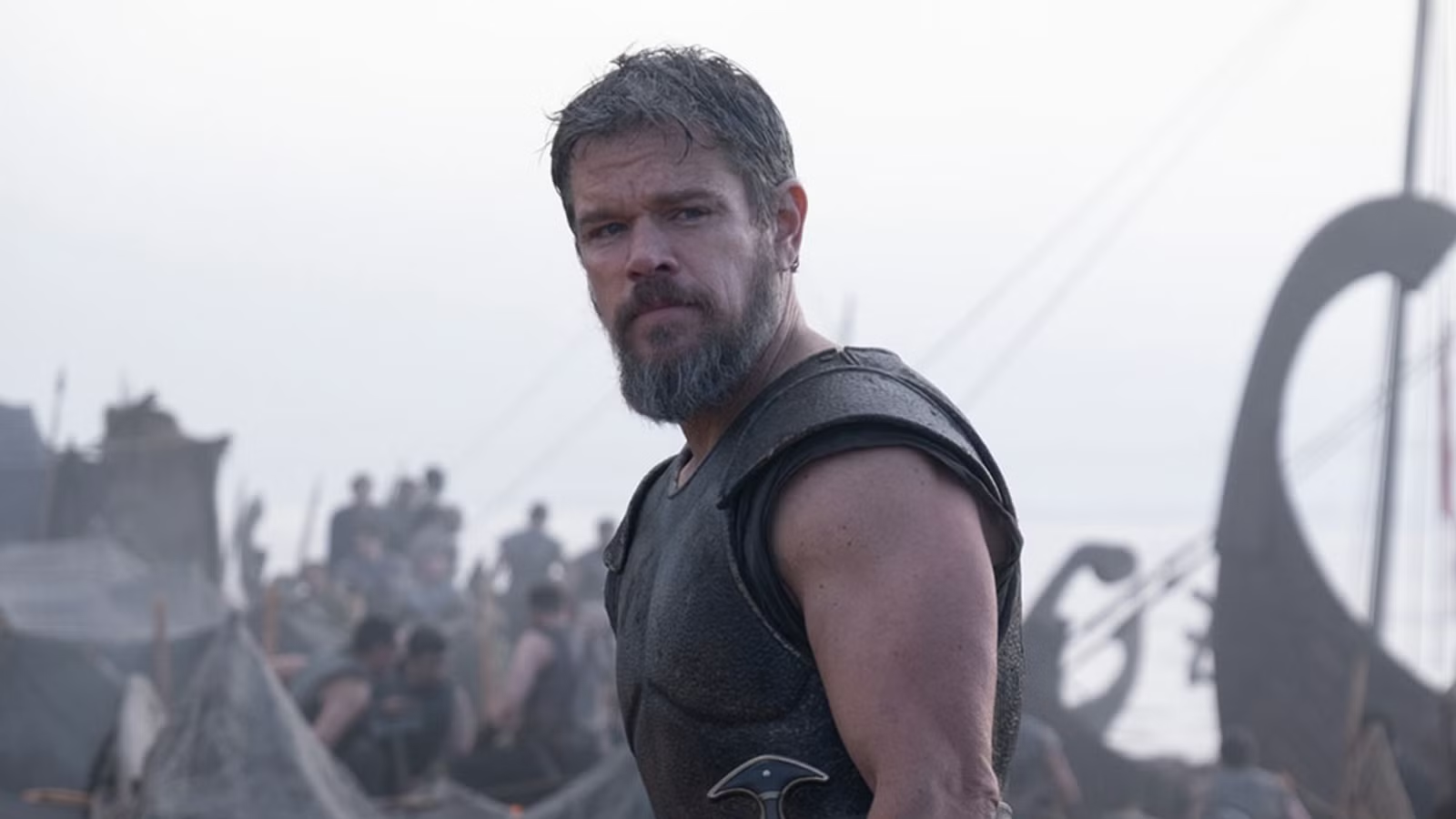
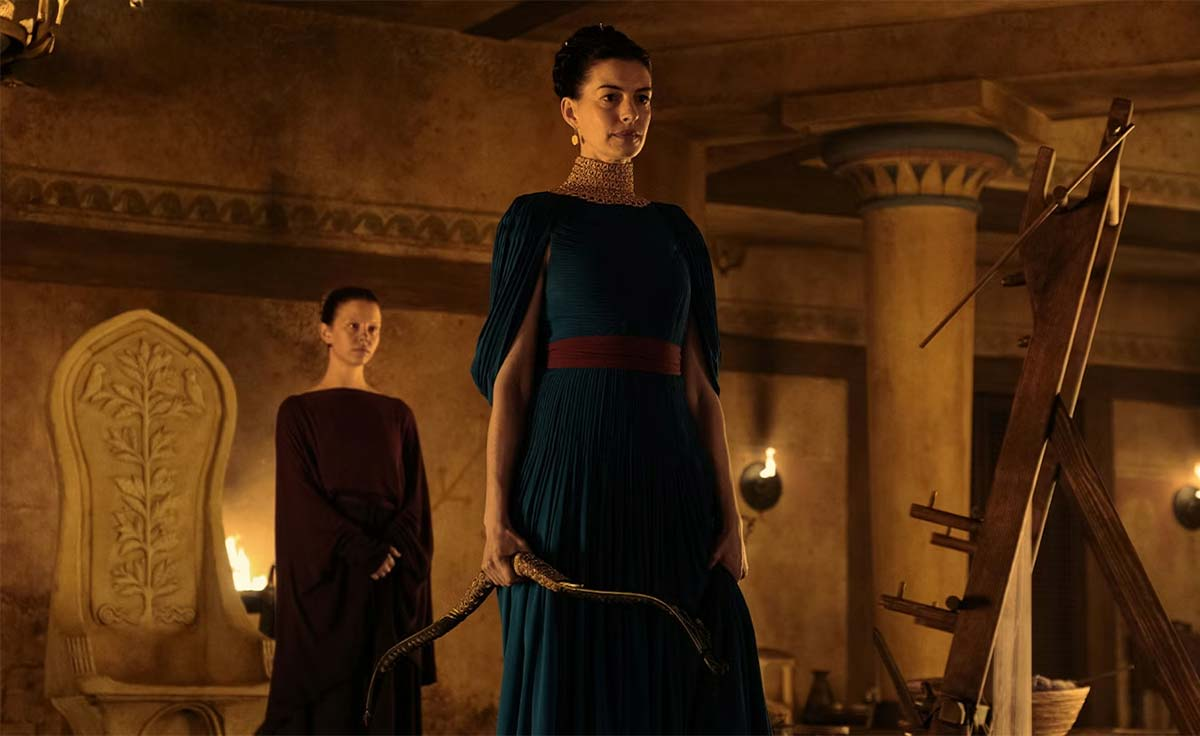
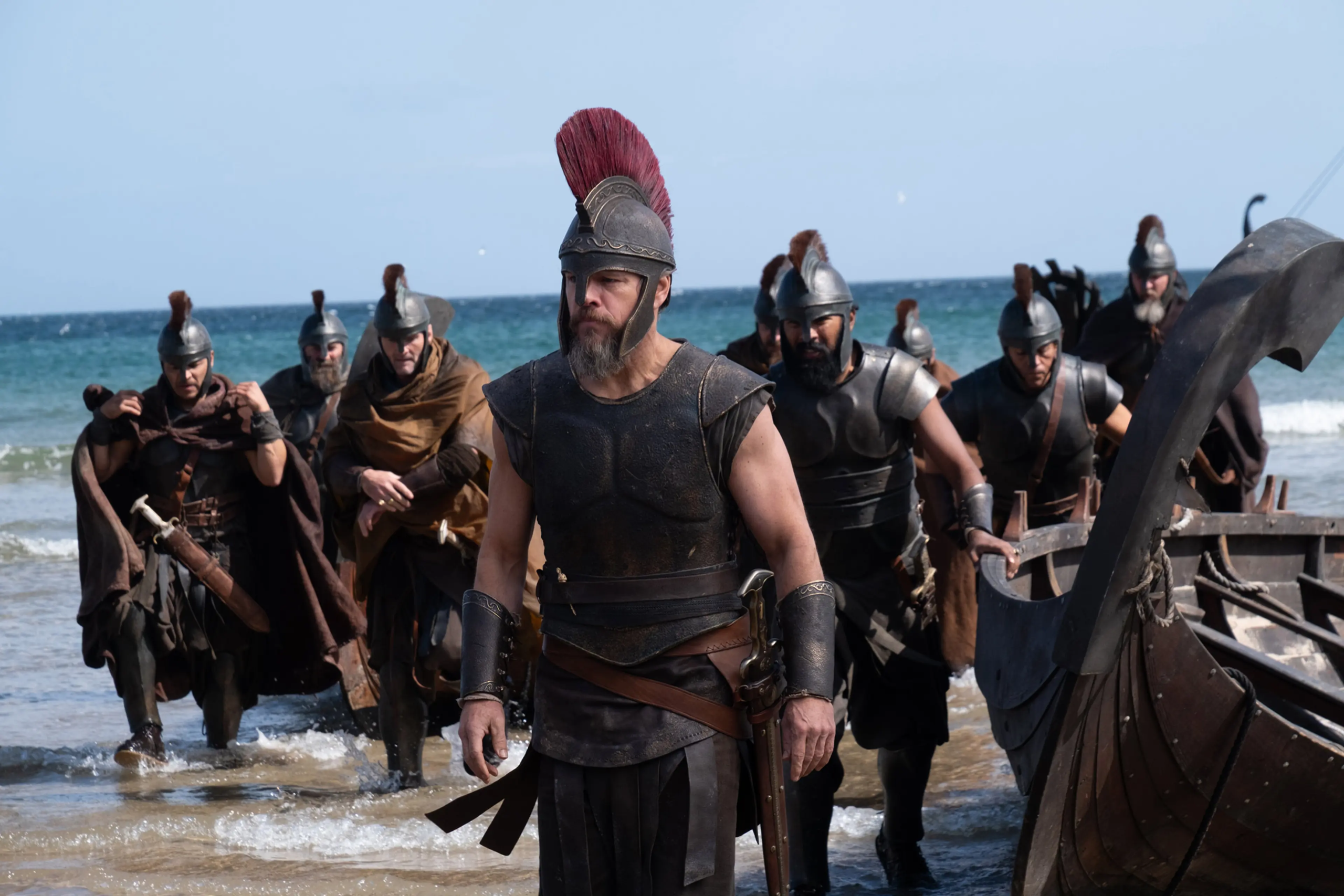
The film follows Odysseus (Matt Damon, in one of his best performances), a brilliant general and the king of Ithaca. A clever and inventive warrior, as formidable physically in battle as he is strategically. Married to Penelope (Oscar-winner Anne Hathaway), he must leave to join a Greek coalition led by Agamemnon (Benny Safdie), the King of Mycenae, in a fight against Troy to ensure his family’s future.
Odysseus leaves behind his queen and adolescent son, Telemachus (Spider-Man’s Tom Holland). Now grown and the prince of Ithaca, Telemachus risks losing his future claim to the throne to a rabble of suitors, none of whom is dignified enough to stand as Penelope’s equal. Among them is Antinous (Robert Pattinson, reveling in the absurdly entertaining), a twitchy, parasitic hustler fueled by poisonous ambition and a desire for power rather than love or leadership.
While on his quest to Troy, Odysseus relies on his second-in-command, Eurylochus (Himesh Patel), and his Cousin, Sinon (Women Talking’s Elliot Page), to help set up the famous Trojan Horse. Back home, while away, his blind servant, Eumaeus (John Leguizamo, excellent here), remains loyal to the House of Odysseus. In contrast, a seasoned guard and a mentor (Remember the Titans’ Ryan Hurst) always remain by Telemachus’s side.
Christopher Nolan adapted the screenplay from Homer’s classic work. When he writes alone, his films are usually tightly controlled, audacious, and centered on a single perspective. This time, however, even without the assistance of his brother and frequent collaborator, Jonathan Nolan, the script finds the emotional center. Nolan grounds the spectacle in universal themes of love, loyalty, sacrifice, grief, and, in this case, shame.
That emotional foundation distinguishes the film from many ancient Greek spectacles, allowing audiences to feel the consequences of Odysseus’s journey rather than merely admire its mythic scale. Nolan divides the film into four narrative strands: Odysseus’s life before leaving for Troy, the Trojan War, his long journey home to Ithaca, and his family’s struggle to protect his throne. Not every section is equally effective, which can make the film feel uneven.
However, the shifting storylines also make the film feel more alive. By the thrilling third act, they converge in ways that reveal the shared themes and subtext running beneath Odysseus’s journey. There is no single, seismic twist of the kind often associated with Nolan, but the film’s quieter revelations are subtle, powerful, and unusually profound. He also retains the explicit moral conflict, rich ensemble, and sharp dialogue that distinguish his best collaborations.
The final product is unlike anything Nolan has made before, conquering another genre and becoming one of the greatest epic fantasy films ever made. Still, there are a few minor quibbles. The casting recalls The Thin Red Line, with recognizable faces appearing in even the smallest roles, many of them non-speaking. Spotting a famous face can be distracting, briefly pulling you out of the otherwise immersive experience.
I should also note that there was a very distracting sound glitch during my screening, which was presented in 70mm. The issue occurred approximately 15 times within the first 120 minutes, with the audio dropping out for about 3 seconds each time. I was told this was the exhibitor’s fault, but hopefully it will not affect other audiences.
While this glitch repeatedly pulled me out of the film, one cannot deny the extraordinary suspense, sweeping adventure, and meticulous craftsmanship of The Odyssey. The film inspires genuine shock and awe, from the jaw-dropping Cyclops scenes and Samantha Morton’s (She Said) remarkable cameo as Circe to the breathtaking song of the Sirens sequence—all destined to be remembered as classic cinematic moments for years to come.
The performances are strong, even though I found it amusing that everyone speaks with an American accent. Still, it is all Greek to me. One of the film’s best scenes belongs to Hathaway, as Penelope berates her son for assuming that she has merely been keeping the throne warm for him. Leguizamo has never been better, abandoning his familiar comic charm for something raw and heartfelt. Holland does what he can with an otherwise clichéd role, but the real scene-stealers are Zendaya and Page.
Page has two powerful scenes: weaponizing an understated, vulnerable presence, then finding rage towards the end of the second act that ignites the screen. Of course, much has been made of Nolan giving Zendaya the rare note of “perfect.” When you watch the film, you will know exactly which scene inspired such praise. It’s a powerful turn without a single word being spoken, and the moment proves essential to Damon’s character arc.
Odysseus’s repeated, often baffling decisions finally come into focus, revealing something insightful and deeply moving. The scene elevates this Greek adventure epic beyond familiar themes of honor, loyalty, and bravery, making it far more emotionally resonant. Zendaya’s scene partner in that moment is Damon, and it matters. You would not call this Damon’s best performance in The Odyssey, but it may be his most impressive, given the immense physical and emotional demands of carrying a film of this scale.
Nolan gives him an epic to shoulder, and the veteran star never buckles under the weight of such ambition. The result is a film that is a thunderous spectacle, with haunting beauty, genuine armrest-grabbing excitement, and a handful of powerhouse performances. Grab some popcorn, as I pull out the old trope of seeing The Odyssey on the biggest screen possible, because Nolan just doesn’t adapt classics, but creates one all his own.
You watch The Odyssey exclusively in theaters starting July 17th!