Amy Thomasson had a chance to sit down with Carla Simón, director of Romería.
Amy Thomasson: Okay, so it is a pleasure for me to welcome one of Europe’s most distinctive filmmakers, Carla Simón. Since her remarkable debut, Summer 1993, which drew on her own childhood experience, Simón has become known for creating deeply personal films that resonate far beyond her autobiography.
Her follow-up, Alcarràs, won the Golden Bear at the Berlin International Film Festival and established her as one of the most important voices in contemporary cinema. Her latest film, Romería, continues her exploration of memory, family, identity, and the ways in which history echoes through generations. It is a deeply emotional work that blends intimate storytelling with questions about inheritance, silence, and belonging.
Welcome, Ms. Simón. Thank you so much.
Romería feels both intensely personal and universally relatable. What was the first image or emotion that made you realize this story was one that you needed to tell?
Carla Simón: I think that it was more of an emotion that had to do with this frustration I felt at not being able to ask about the love story of my parents. Because they died when I was a kid, when I tried to access this memory, I realized that they were not here to ask. And then, when I tried to do it through other people’s stories, through my family, I realized that the pieces usually didn’t match because they died of AIDS, and their memory was very stained by the taboo and the stigma of AIDS and heroin.
So it was hard to put together a story somehow, no? So I think this was the main reason I wanted to make this film, and it somehow gave me the opportunity to fill the gaps in this story I didn’t know through cinema and find the images I was lacking in the story.
Amy Thomasson: And I feel you definitely succeeded in that.
Those memories clearly were so valuable, and one of the things that hit me was how frustrating it must have been. The scene that hit me first was when she found out that she was five years old when her father passed. I say… she, the character—you.
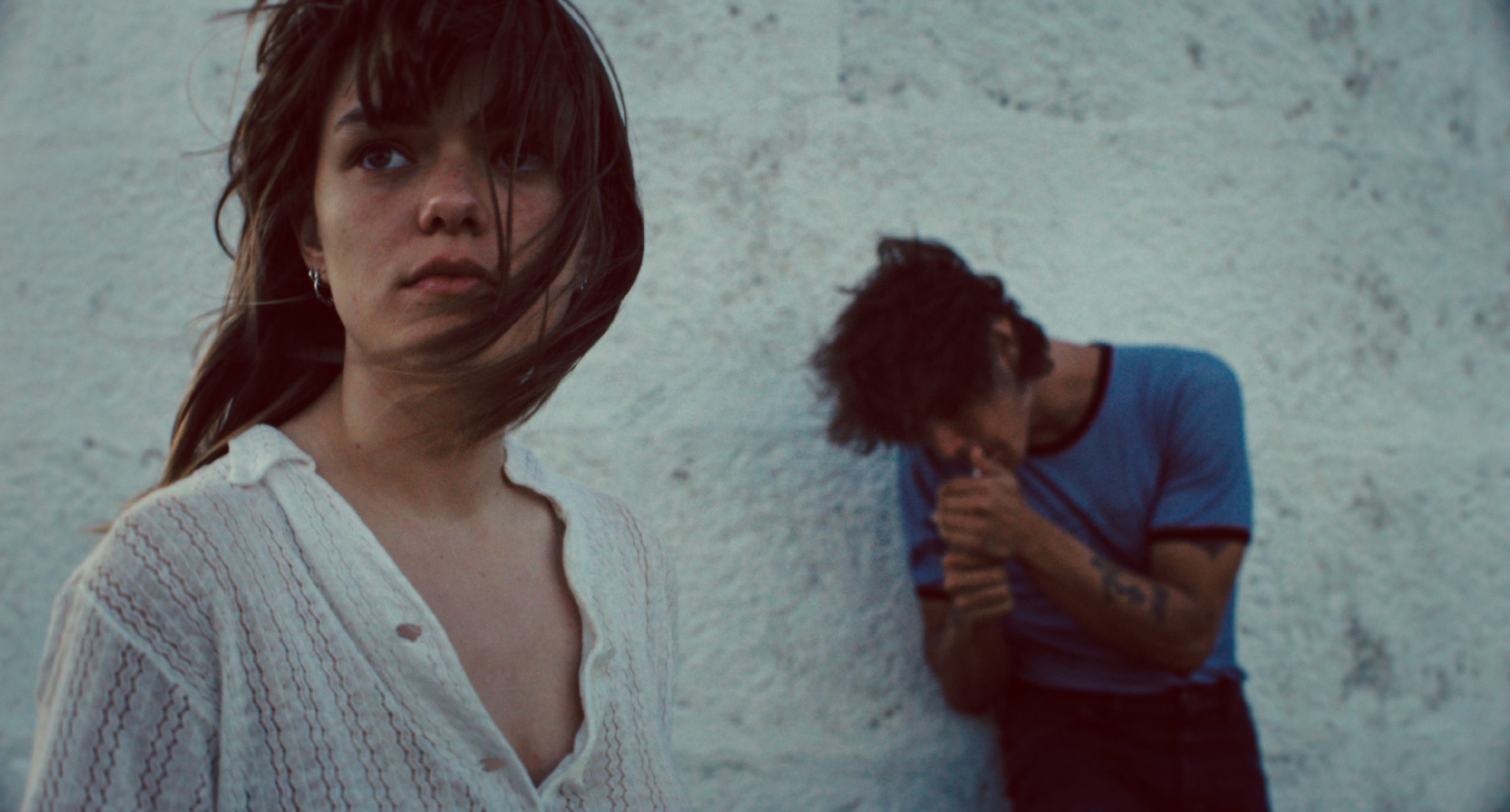
Carla Simón: This actually didn’t happen to me this way. This is fiction. There is a lot of fiction in the film. I knew when my father died, but it was a good way to express the things that we don’t know, and the things that we discover, or the things that are different in every family’s perspective of the story, somehow, no?
Amy Thomasson: Yes, and how, “Oh, I was five. Why didn’t I get to meet him?”
And that hit so hard, and I thought the character and the actress played that so well. Very subtle, very nuanced, and I really appreciated that in the performance. That was very moving.
Many of your films begin with autobiographical material, but they never feel like simple memoirs. It’s not just a straight telling of a narrative. It’s the emotions, the growth, and the journey these characters take. At what point does lived experience become cinema?
Carla Simón: I think that anything can become cinema, but if you just take it as it was, or as it is, sometimes it doesn’t work as a film, no?
So for me, it’s like I got more and more used to transforming reality to give it the shape of a film, somehow. And I lost the fear of not being faithful to reality. So I think that each film that I made has more and more fiction.
Also, in the case of Romería, I’m portraying the part of the family that I know the least, which is my biological dad’s family.
They live in Galicia. I live in Catalonia, so it’s the two opposite sides of Spain. So I’ve met them several times, but I had to invent these characters a little bit to get to know them, as you need to know a character when you are making a film. So there is a lot of fiction and a lot of things that I put in just to make them work as a film, to follow the character’s journey somehow. As I was saying, this thing about her not knowing what year her father died is an example, no?
And then, at some point, when you get some distance, it’s also easier to make the film because you are seeing it just as a story.
Amy Thomasson: Have any of your family seen the film?
Carla Simón: Sí. Everyone.
Amy Thomasson: What was their response to that? I was curious about that.
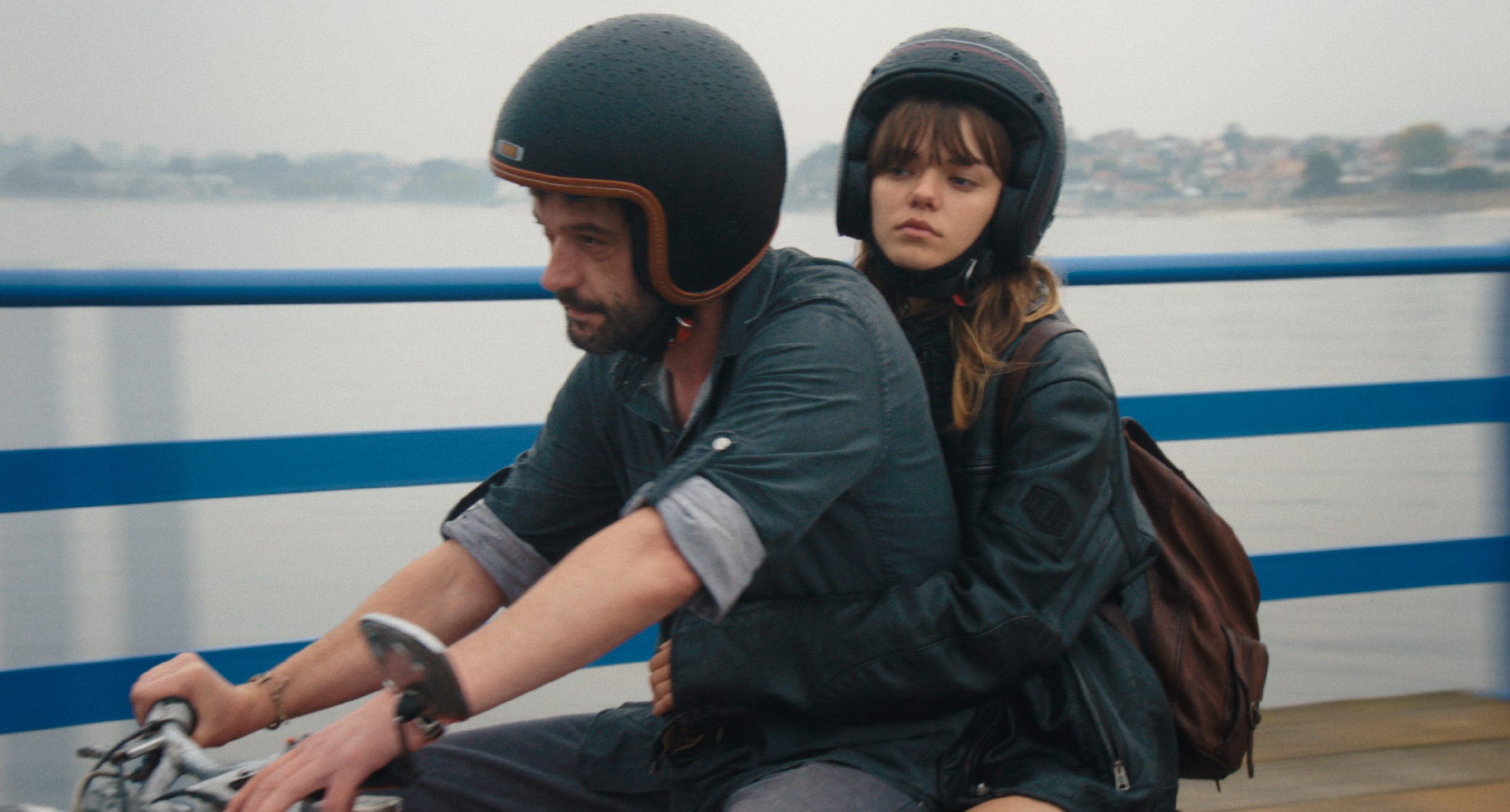
Carla Simón: It depends because my grandparents died a long time ago. And my uncles and aunts, they all had different approaches, but somehow there’s one that I’m very attached to. He read the script, he came to the shooting, and he is even in the film because he played the notary.
Amy Thomasson: Oh, wow.
Carla Simón: So it was very beautiful and cathartic to have him there for that scene. But then, for the rest, they understood very much my need to make this film. And I think that it was an opportunity somehow to rethink my parents’ story and also the way that they remember them, and the memory and the pain in the family.
So I think that revisiting this chapter was important for everyone, somehow.
Amy Thomasson: In a way, it reminds me—and I’ve just reread this play—the Eugene O’Neill play Long Day’s Journey Into Night.
Carla Simón: Sí.
Amy Thomasson: Which, for me—
Carla Simón: Yes…
Amy Thomasson: —is the same level, and that’s considered one of the greatest American plays.
Carla Simón: No, I love that play. I read it a long time ago. But yeah, it’s very interesting that you make this connection. Nobody did it before. I love it.
Amy Thomasson: It made me think of that. And I don’t know a better compliment I could give somebody—
Carla Simón: No, please.
Amy Thomasson: —than to say that your work reminds me of one of the greatest.
But it does, and it’s honest. But how brave you are to tell this story of your family and just say, “This is who they were.” And you also did it without judgment. And that is not easy to do.
And Eugene O’Neill had to wait until the end of his life, and his entire family was dead, before he even had the guts to do that. And you’re doing it.
I’m looking at the dates here, and I think one of the other reasons it hits me so much is that I remember that. I was a child when the AIDS epidemic hit. I remember. So, when you find out that the family kept him in and isolated him, how hard would it be to have to explain that to someone who didn’t live through that? And it gives you a different perspective.
So rather than just, “Oh, these are the good people in the story and these are the bad people in the story,” it’s these are very human people who did the best that they could at the time.
And that’s really what I thought was beautiful about it. It made no judgments on anyone, and that’s very brave. It’s very brave of you to do so. As I said, it reminds me of Eugene O’Neill.
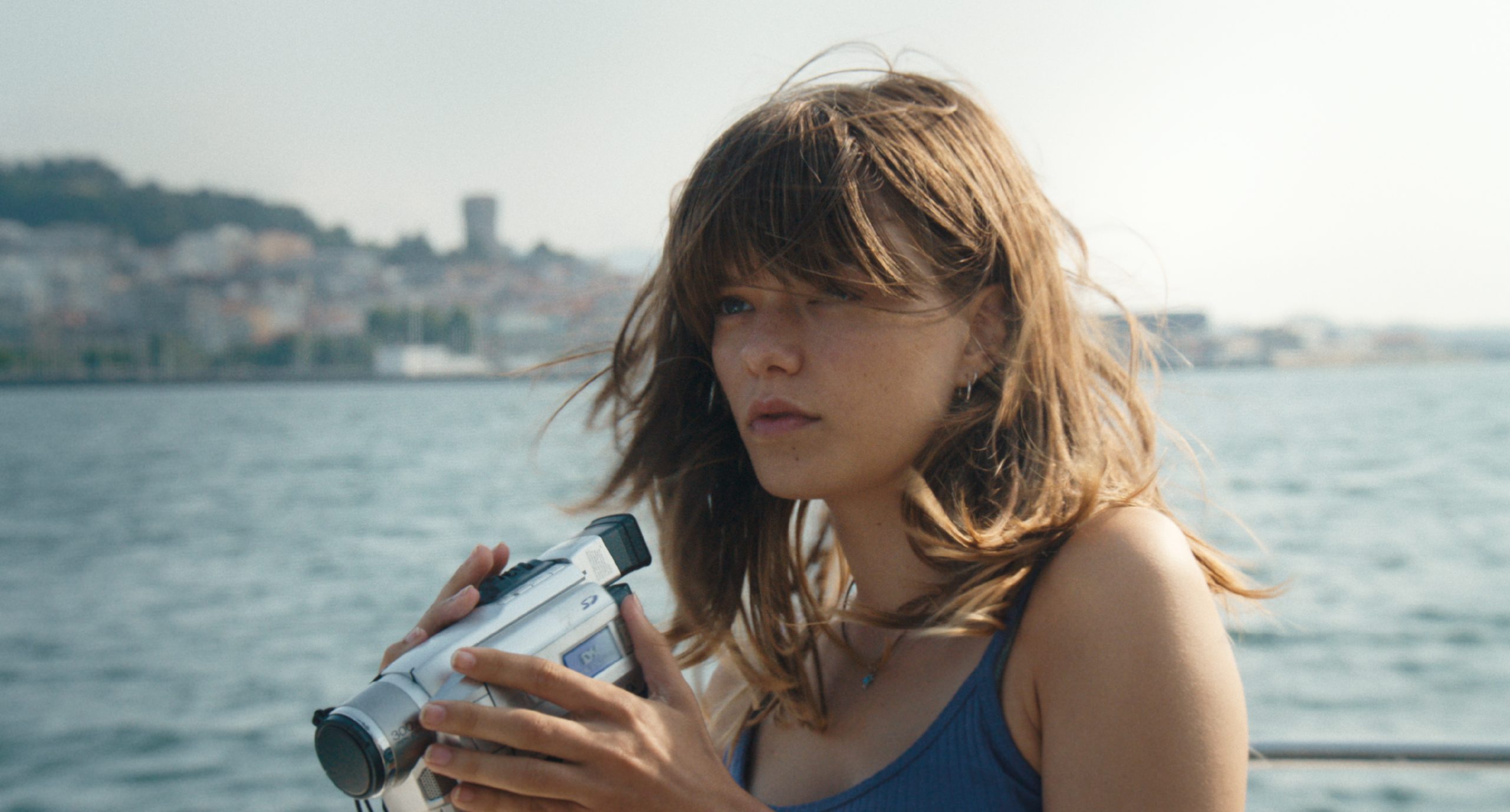
Carla Simón: Yeah, no. Thank you so much, because I love that play.
Yeah, for me, it came in a very natural way in the sense that I feel that the generation of my parents, because this is not only my family story. It happened to many people in the ’80s in Spain. They were a generation that was born and raised during the Franco dictatorship with a lot of repression, and then suddenly we went into democracy. So it was a really happy period. Freedom arrived, and they were free young people embracing this really happy moment.
But also, there was a dark side because a lot of heroin came into the country. There is this theory that while young people were into drugs, they were not into politics, so the government didn’t do much to stop the introduction of heroin.
A lot of young people got hooked, and a lot of people got AIDS later. But they didn’t know the consequences of heroin or AIDS. So it was complicated for them to cope with this surprise then, no? For them and for their families.
So there was a lot of death and a lot of pain and a lot of secrets. So for me, because I’m the generation after, I just want to know the story of my parents, and I don’t want to judge them. I will embrace whatever they lived, no? In a way, I don’t want heroin to define their lives because I think that it’s not the only thing that they were. And I want to see them also with light because they were the generation that broke with all the old conservative and Catholic values of Spain and brought some more progressive ideas. So I think that we actually should even be thankful to them in that sense, no?
So the idea of rethinking this generation and trying to create new narratives about them, shining some light on them, for me, was important. But at the same time, it was important to also do it through empathy with the families who kept that secret, and why, no? And why they did. Just to not see things as black or white, no?
Amy Thomasson: And that was really so beautiful. And to look at, despite the tragic end of their lives, that you included that ending. I don’t want to totally spoil it for everyone, but tell me about filming that and coming up with the ending that you came up with.
That experience of seeing them when they were younger—
Carla Simón: You mean the—which ending? The whole part that Marina imagines, or—
Amy Thomasson: Yes, the imagination that she has, because I can’t imagine the emotional journey for you to write that.
Carla Simón: Yeah. It was beautiful because it was an opportunity to fill the gaps that I had. And for me, this came when I realized that I wanted to make a film about memory. It gave me the structure of the film. This is a quest of a character trying to understand her story through other people’s stories. And when she realizes that she cannot really trust everyone’s memories because they are very selective, very subjective, very stained by the taboo and the stigma, very transformed emotionally as well, she realizes that she cannot put the pieces together. She decides to use her imagination to fill these gaps. So it was very organic to make this journey, and for me to use cinema somehow to create the images that I was lacking. So it was a great opportunity.
And to write all this part, it came very naturally to me because it’s things that I think had been there in my mind always. So I made some decisions on what to include and what not to include, and how to do it. Also, it’s a part that—my films are always fed by life—but in this moment there are a lot of references to other films that I like, that I could imagine my parents’ love story like, no?
Amy Thomasson: And it was so romantic. It was so beautiful. And the only way that I can describe it is that it seems like a poetic dream.
Carla Simón: Sí. And for me, I was coming from making two films that are very committed to reality, so it felt like a new challenge to try to do something more poetic, more dreamy, and try to use cinema with this magical capacity of even resuscitating dead people, no?
Amy Thomasson: Yes, who seems very much alive. And I love that. And I love that there aren’t flashbacks and things like that, which seem to be very traditional techniques, especially in American cinema when you’re telling a story. There are flashbacks and all of that.
I loved the use of the journal and the quotes. It’s just so beautiful.
I want to talk about the pacing for a minute. The pacing is wonderfully patient in an era of increasingly fast storytelling. How do you see slowness as a creative choice, or almost as a form of resistance?
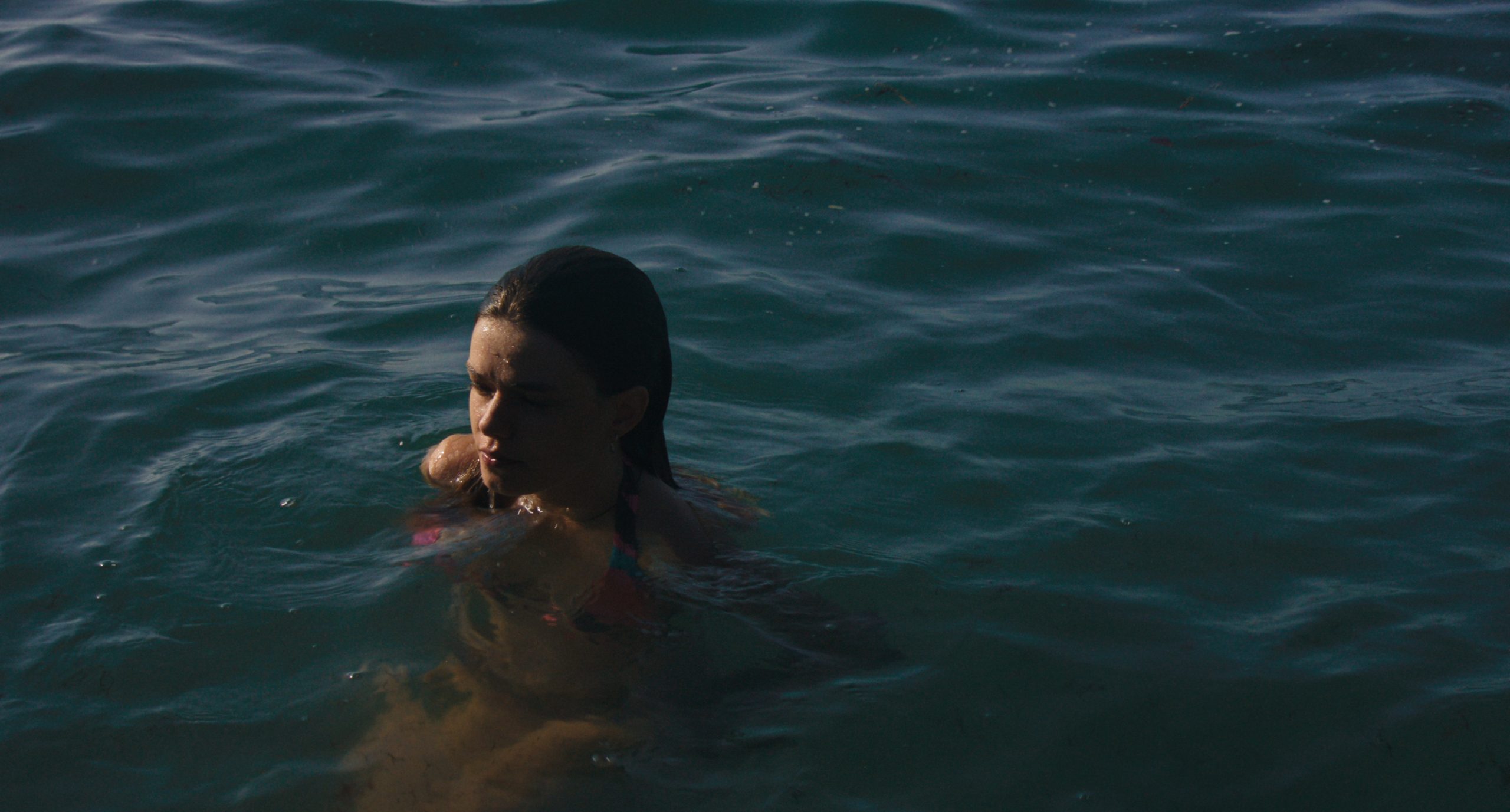
Carla Simón: For me, it comes naturally in the kind of cinema I make, where I like people, basically, and when you try to capture pieces or slices of life, no? You try to respect the rhythm of real life, no? And for me, it’s quite organic. I think that the film, anyway, always keeps going forward, no?
Carla Simón: Because she’s on a trip somehow. But at the same time, she’s a character that observes a lot, no? And to observe, you need to get patient and watch someone observing, and what she observes, no? So this pacing was the one that the film needed somehow.
Amy Thomasson: Wonderful.
Your film also has a remarkable naturalism, which we were just kind of talking about, and it’s very carefully composed. I could tell that everything was so deliberate, including something that stood out to me because I loved it—that red dress that she was wearing. I loved that red dress, and when she’s trying it on, and all of those little moments also made me…
It was universal. And I’m an American girl, born and raised. I’ve never been to Spain, but I could understand how she was feeling.
So how do you balance the naturalism, almost like a documentary, with the spontaneity of cinematic precision?
Carla Simón: Yeah, that’s my fight all the time.
Because I love trying to pretend that everything happens in front of the camera by chance, but then I want the things that happen in front of the camera to be what I wrote in the script. So I always have this kind of fight with myself. But what we try to do is that, with the actors, we spend a lot of time together before we shoot, and we improvise moments that could have happened before the story that we are going to portray.
And all this allows us to create a kind of common memory between all the actors, and a lot of emotions that they learn to feel through them. They understand their place in the family, their story, or their background, no? Because when you film families, they always come with a background, because you have been there since you were born. So all this history, for me, it’s important to work through with the actors to make sure that we arrive at the shooting with all this emotional memory in their bodies, no?
So this allows me to do that. When we are shooting, we follow the script, but sometimes I give them some room for improvisation. And when they say something, it always belongs to the world that we created together. And this is, for me, the way that they surprise me. There are always things that I didn’t know would happen, but they happen in front of the camera because of this previous work.
It’s something that is so difficult to tell what’s going to happen, but when I give this room for improvisation, interesting things come up, no? And this is the way to make sure that we don’t execute the script. I’m not interested in that. I think this is boring. But at the same time, we follow what is written because that’s why I spend so much time making the script make sense, no?
Amy Thomasson: It’s lovely.
And one of the most… I don’t even know if this is on topic or not. One of the most human moments, I felt, is when she goes back to her grandmother’s pool and puts the leaves in. That just seemed—it was so natural, and it added some genuine humor to it.
That part definitely made me laugh, but I also felt like, of course, this is her way of rebelling, almost.
Carla Simón: Sí.
Amy Thomasson: And I really loved that. That was very…
Carla Simón: I always say that my grandparents even had a swimming pool, so I never did that. Maybe I wish I had done it.
Amy Thomasson: But it was such a natural little moment of rebellion. And I appreciated her for doing that. For maintaining her calm the whole time except for that one moment, and then she’s just like, “Okay, I’m done. Let’s go out and have some fun.” She was very relatable in that moment, and for someone from a different country, different era, different age, to see myself in that really is a testament to your writing and your filmmaking.
And that is why—and I’m going to brag on you—this film was nominated for the Palme d’Or at Cannes this year. So that is very impressive, and I’m very honored to have this moment to talk with you.
One last question. When audiences leave the cinema after seeing Romería, what conversation do you hope they’ll continue having with themselves? What would you like them to take away?
Carla Simón: Yeah. I would say that I would like them to think about the importance of digging into family history and family memory because I think that this can help us to understand where we come from and to know ourselves better, basically.
Amy Thomasson: Thank you again. This has been such a treat, such a pleasure, and best wishes with this film. I think it’s going to resonate with everybody.
Carla Simón: Thank you so much.
Amy Thomasson: Thank you so much.
And again, just as a side note—this won’t even get printed—but it made me think of Eugene O’Neill, and I’ve just reread that play this summer, and that’s why it hit.
Carla Simón: Yeah.
Amy Thomasson: Except not as soul-destroying. It was uplifting, and that was really beautiful. And such a brave female artist you are.