


Home Blog Page 38

Movie Review (TIFF 2025): ‘The Christophers’ Continues Soderbergh’s 2025 Streak


Director: Steven Soderbergh
Writer: Ed Solomon
Stars:ย Ian McKellen, Michaela Cole, James Corden

Synopsis: The children of a once famous artist (Ian McKellen) hire a forger (Michaela Coel) to complete some unfinished, long ago abandoned canvases so they’ll have an inheritance when he dies.


Letโ€™s just get this right out at the very top of the review. Steven Soderbergh, perhaps both the most prolific and hardest working man in Hollywood, is three for three in 2025. Despite knowing how efficient of a filmmaker he is, itโ€™s still such a baffling shock to see it realized in real time. Even more impressive is the range displayed across all three of his latest films. Each one captures such different tones in their own varied manners, but there nevertheless seems to be a through-line across all three of Soderberghโ€™s latest. Each film this year has ultimately returned to the necessity of the connections we keep in our lives. Connections, whether they be to a person, a place, or a thing, are as integral to maintaining a happy and healthy life as anything else. They are foundational building blocks of the human experience. In the case of The Christophers, all three of these examples are touched upon in ways both quite meaningful and effectively. Even when Soderbergh isnโ€™t fully experimenting, instead crafting a perfectly structured drama, he serves up cinematic excellence. He makes it look so damn easy when we fully know itโ€™s anything but.

Image Credit: Courtesy of TIFF

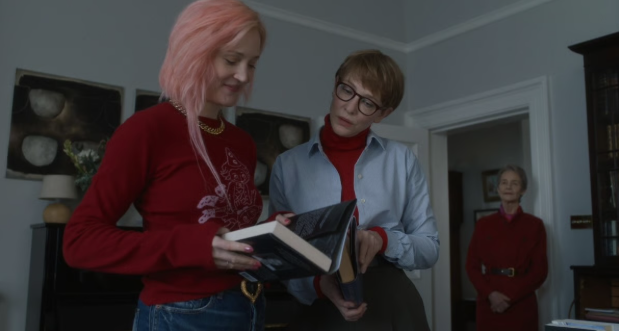
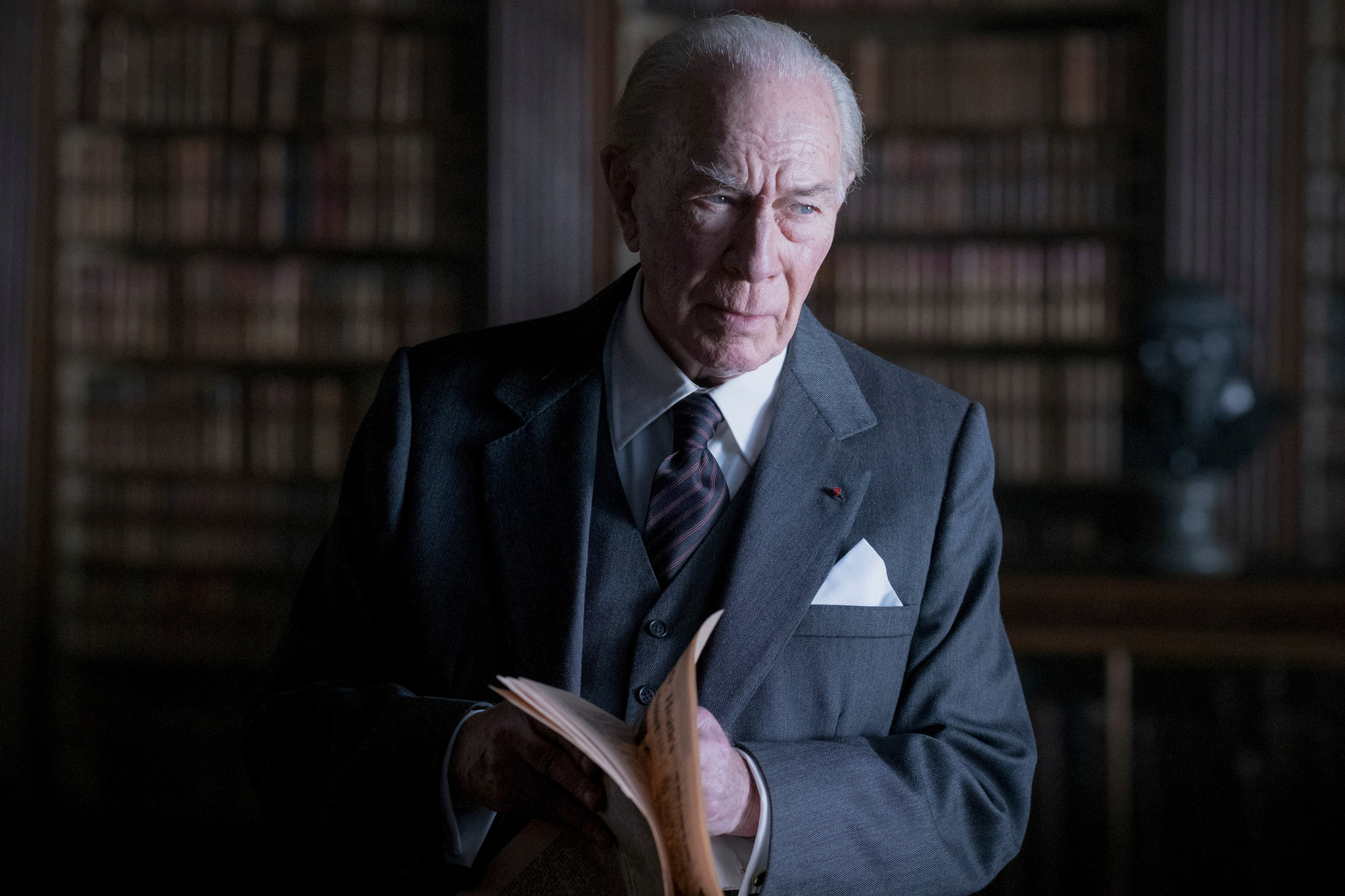
Soderberghโ€™s knack for capturing some element of the human experience has varied greatly across his long career. But his penchant for working with excellent screenwriters has always remained steady. This is no different in the case of his latest, written by Ed Solomon. The script for this film is razor sharp with a distinct purpose. Itโ€™s all in service of protecting the very tender core at its center. Of course, this script could be sharp solely to have Sir Ian McKellen chew up scenery in a way that feels like itโ€™s what movies were created for in the first place. But much like Julian Sklarโ€™s (McKellen) venomous takedowns of everyone and everything around him, the present wit is just a shell to hide the pain that has tormented this artist for years upon years. Sklar was once beloved around the world, but by the time Soderbergh turns his camera towards him, he has become a bit of a recluse. Furthermore, he has abandoned the art world completely, spending his time in one of two connected London flats recording Cameo videos and Googling his own name. Itโ€™s a sad sight to see, but the more we hear his outlook on modern society, we begin to wonder if his hiding away is perhaps for the best. At least, thatโ€™s what Lori (Michaela Coel) seems to initially think.

Lori ending up in Julianโ€™s home in the first place is the initial hook of The Christophers. Soderbergh, ever the fan of a good old fashioned grift, canโ€™t help but have his films feel like theyโ€™re one scene away from becoming a full-blown heist film. His sleek visuals, coupled with often propulsive scores and an all-around coolness to them, only bolster this sentiment. But in this instance, the film actually does begin with a crime being planned. Julianโ€™s children, played by Jessica Gunning and James Corden, come to Lori with a plan. With her skills as a restoration artist/expert forger, they propose she gains the trust of Julian in order to be granted access to his unfinished series of paintings from which this film claims its name. Upon her completing the paintings with the original equipment, they can wait out his death and reap the financial benefits that come with boosted interest in art after the artist has passed. If this all sounds quite morbid, itโ€™s because it is. But the film never feels like such a weight is resting atop it. Instead, this almost has a jaunty quality to it. Itโ€™s often very funny, ranging from dry, clever wit to outrageously delivered line readings that feel perfectly calculated to elicit belly laughs. McKellen really is doing absolutely wonderful work here, but despite his consistent ability to have the audience chuckling, he can just as easily tug at our heartstrings.

One look at the inside of either of Julianโ€™s flats tells us all we need to know about him. Itโ€™s quite the testament to the production design of this film. These are flats that do feel abundantly lived-in. Every inch of every surface is littered with a variety of items, whether they be junk or art or personal mementos. Who knows the last time he left this space. Is it purely out of comfort? Or is it perhaps out of fear? McKellen is practically in every scene of The Christophers, and he is talking for nearly all of his screentime. In his ramblings are kernels of truth that slip through which indicate what has brought him to this point in his life. Perhaps before the world started looking past him and his work, he decided it would be easier to just spew venom and fire at everything until he was left alone completely. At least heโ€™d be able to turn around and say it was handled on his own terms. But Lori, despite her frustrations at his behavior, isnโ€™t willing to let him throw the remainder of his life and career away that easily. Never entirely sure of where her motivations lie, Coel is an enigma that is desperately asking to be solved. Whereas McKellen is playing this character as open-faced as can be, or at least, so we think, Coel plays everything incredibly close to the chest. The film makes great use of this comical dynamic until it decides the drama fueling it is far more interesting. And when Solomon and Soderbergh decide to flip that switch, The Christophers goes from being a very good film to an effectively moving one.

The Christophers, at its core, is a film about people. All this time Julian has remained in a quasi self-imposed exile of sorts, he has remained fundamentally alone. He loathes his children, and speaks of frequent altercations with local businesses. Heโ€™s an artist who is pained from the work that once brought everything about him to life. He sees his lifeโ€™s work becoming a tax write-off for tech bros. He has lost his purpose as an artist, and it seems like the reason for this was due to losing his connections with the people around him. As Julian picks Lori apart further and further, and sheโ€™s more than happy to reciprocate when it comes to judging his later works, they form a bond thatโ€™s so charming and full of potential. In each other, their passion for creating art and expressing themselves through it might be reinvigorated. Perhaps the relationship might lead to more pain down the road. But those worries and that potential is what fuels the human experience to feel deeply and create something truly beautiful. The kindness on display is this film is deeply moving, and once the hard shell hiding it is stripped away, we can see the fundamental beauty at its core. Itโ€™s what allows this film to soar beyond most traditional dramas. Soderbergh makes it look easy, but he and Solomon are aware life is anything but. The Christophers just takes that difficulty and channels it into something pure.


The Christophers is celebrating its world premiere in the Special Presentations category of the 2025 Toronto International Film Festival.

Grade: B+

Interview: ‘Naked Ambition’ Directors Dennis Scholl and Kareem Tabsch

0

In this interview, I talk with the directors of the documentary Naked Ambition Dennis Scholl and Kareem Tabsch!

Naked Ambition is the first documentary to deeply explore Bunny Yeager’s world, who made an intriguing shift from pinup model to photographer, becoming obsessed with herself, inventing the selfie, launching Bettie Page’s career, and shaping modern pop culture images. Scholl and Tabsch discuss Bunny’s legacy, the portrayal of sexuality on screen, advice for young documentarians, and the evolution of women’s images in pop culture from the ’50s to today.

Movie Review: ‘Night Always Comes’ is Carried By Kirby


Director: Benjamin Caron
Writers: Willy Vlautin, Sarah Conradt
Stars:ย Vanessa Kirby, Jennifer Jason-Leigh, Zach Gottsagen

Synopsis: Risking everything to secure a future for herself and her brother, Lynette sets out on a dangerous odyssey, confronting her own dark past over the course of one propulsive night.


Just a few weeks after Vanessa Kirbyโ€™s biggest film to date, Fantastic Four: First Steps, was released, another Kirby-led project quietly dropped on Netflix. Benjamin Caronโ€™s sophomore feature, Night Always Comes, adapted from the novel of the same name, follows Lynette (Kirby) as a woman desperately trying to keep her home where she and her mother (Leigh) and her brother, Kenny (Gottsagen), who has Down Syndrome, have lived since her childhood. After her mother decides to use their down payment for the house on a new car, Lynette has one night to come up with the money by any means necessary.ย 

Falling into one of my favorite genres, the โ€œall-in-one nightโ€ movie, Night Always Comes doesnโ€™t necessarily tread new terrain. Set in Portland, we get to see the cityโ€™s seedy underbelly. Lynette tries to leave that life behind, but she needs one last favor from a few folks from her past to pull off buying the house. Kirbyโ€™s performance is what makes the film worth seeing. Her on-screen command is nothing short of brilliant, and she elevates the script far past its merit. Early on, she channels the same tone from Pieces of a Woman and quickly shifts into a manic desperation that is intoxicating. The material around her fails her, but she makes it a ride worth taking.ย 

Lynetteโ€™s wild night has her run across some interesting characters. Scott (Randall Park) is her current call girl client, a wealthy man reluctant to help her in any way. Gloria (Julia Fox) is an old call girl friend whoโ€™s hit it big with a senator. Ultimately, we get to spend a bulk of the evening with Cody (Stephan James), who has some sordid connections that assist in her quest for $25k. Fox is a fun character and really shines in her scene, but James is the only one who matches Kirbyโ€™s energy and stands toe-to-toe with her on screen.ย 
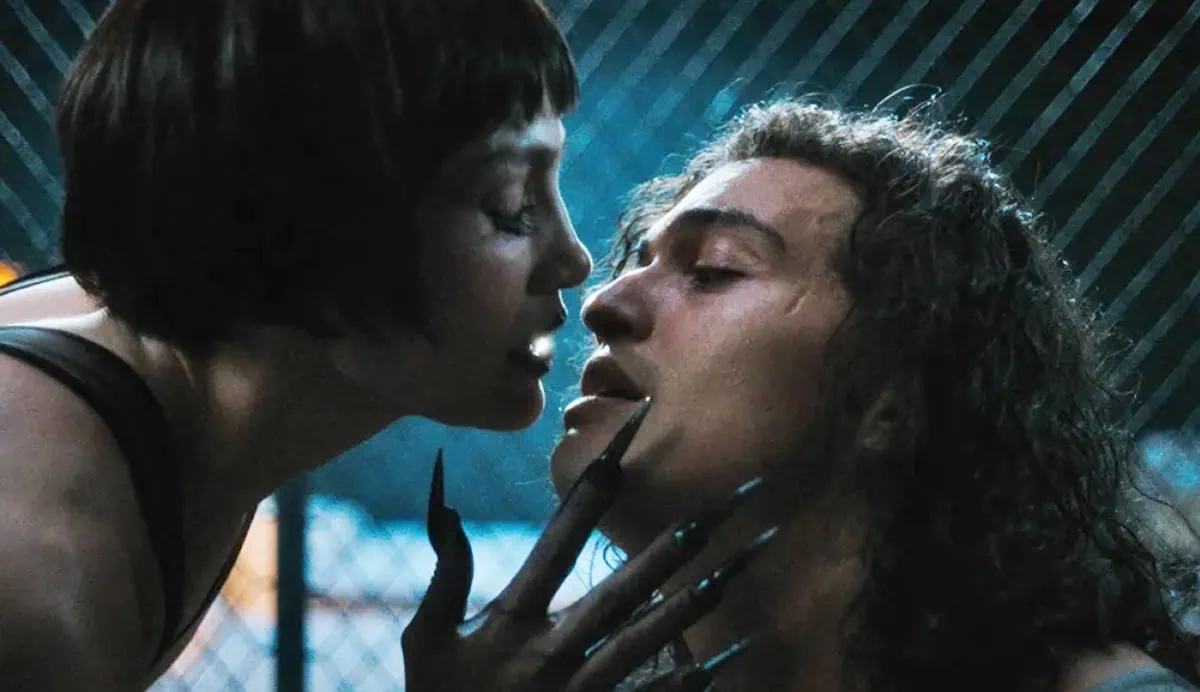
Night Always Comes has significantly more depth than your average straight-to-streaming release, using this one night as a character study into Lynette and how she got to where she is. Itโ€™s clear her mom hasnโ€™t been much help over the years, leading Lynette to have to take the lead on making money for her family. Sheโ€™s also been made responsible for Kenny, having to take him to classes with her and leaving him at a local diner while she works.
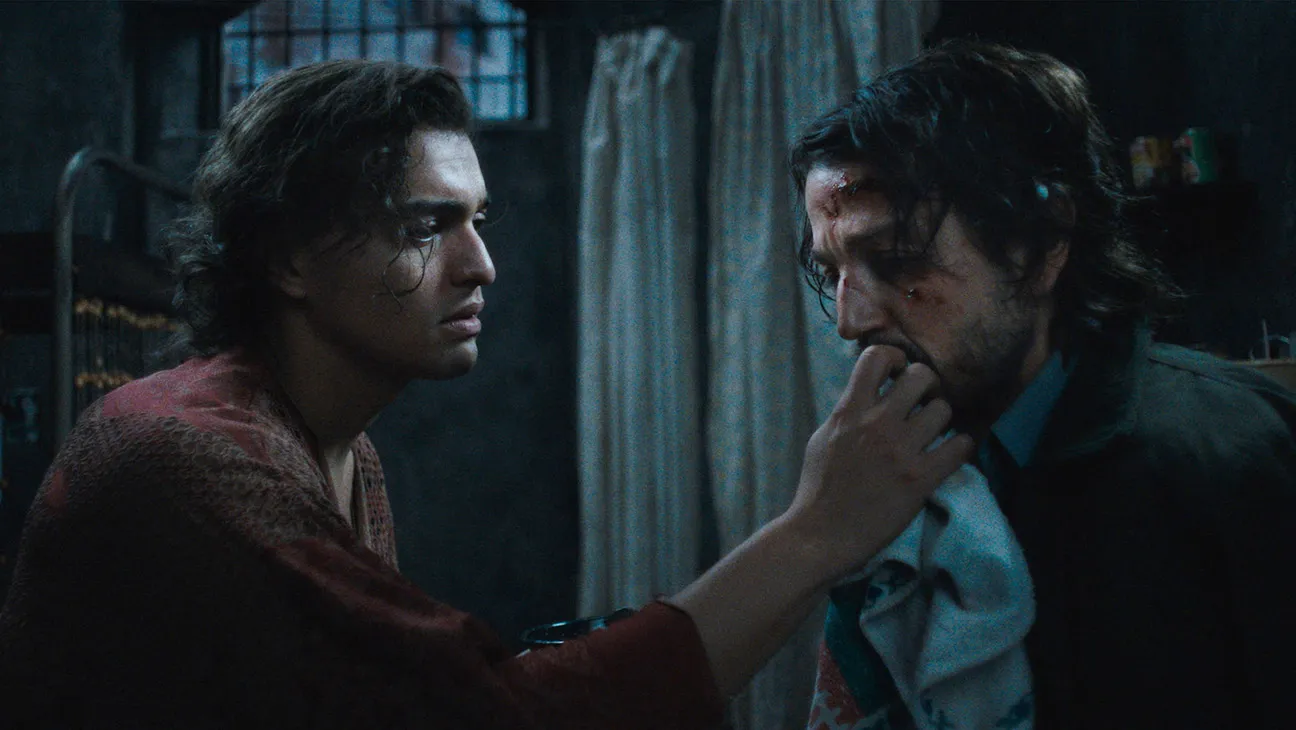
Night Always Comes' Ending Explained: The Meaning Behind Vanessa Kirby's  Netflix Movie | DeciderWe might not all have experienced such dire situations like this, but weโ€™ve all been set up to fail in one way or another. They say that pressure makes diamonds, but sometimes the immense pressure to not fail turns us into the darkest versions of ourselves. Lynette has self-destructed at nearly every turn in her adult life. Sheโ€™s finally gotten to a place where she can make progress for herself and for her family, but she has to go back to her old ways to make it happen. Hopelessness causes one to regress, the fight or flight mentality forcing one to make decisions they know they probably shouldnโ€™t.ย 

Kirby communicates these internal feelings through her facial expressions, only becoming more animated as the night wears on. She adds a level of empathy that this character wouldnโ€™t normally receive. Her performance even overcomes the incredibly heavy-handed introductory montage with radio and television clips running back to back discussing the ease in which people become homeless or choose to return to homelessness. All it takes is one minor emergency for someone to end up on the streets. Itโ€™s a harsh reality, but itโ€™s delivered too on the nose at the start of the film.ย 


Overall, Night Always Comes is a fine thriller that Vanessa Kirby boosts with an exceptional performance. Between this and her standout turn in The Fantastic Four: First Steps, sheโ€™s established herself as one of the strongest actresses of our time and displayed impressive range. Benjamin Caronโ€™s direction proves to be serviceable, but nothing to write home about. This truly is a vehicle for Kirby to show off a different side and is worth watching for that alone.

Grade: C+

Movie Review (TIFF 2025): ‘Bad Apples’ is a Hollow, But Entertaining Bunch


Director: Jonatan Etzler
Writers: Rasmus Lindgren, Jess O’Kane
Stars:ย Saoirse Ronan, Jacob Anderson, Robert Emms

Synopsis: A struggling primary school teacher begins to make some questionable decisions after one of her students is injured.


If it werenโ€™t painfully obvious enough already, teachers are wildly underpaid. Itโ€™s around this unfortunate dilemma that Jonatan Etzlerโ€™s Bad Apples revolves. But upon settling into the rhythms of this film, audiences might be shocked at just how demented the film turns out to be. With Saoirse Ronan at its center, some might expect a drama. And the film initially presents itself that way. But as it turns out, appearances can be quite deceiving in this film. The main exception to this is visible in Danny (Eddie Waller), the central child around which this film revolves. Itโ€™s not a stretch to imagine the consistent trouble he brings to a classroom purely by seeing how he glares at his fellow classmates or teacher, Maria (Ronan). This is confirmed by his upheaval of a school trip to an apple processing factory. Dannyโ€™s idea of a prank, or his curiosity with a tinge of maliciousness, wreaked havoc on their day away from the classroom. And upon returning to school, Maria is the one who gets chewed out for his actions. We expect the world from teachers. And we seem to have no issue with providing little in return through some form of showing gratitude. Upon begging the headmaster for additional resources, Maria is swiftly denied due to a lack of funding. It’s immensely frustrating, and if having Ronan at the center of the film wasnโ€™t enough performance power to generate sympathy, then perhaps this authentic necessity being denied will be.

Image Credit: Courtesy of TIFF

Dannyโ€™s behavior certainly works in favor of the filmโ€™s ultimate chosen tone. Thereโ€™s such a rage he exhibits both inside and out of the classroom. One can imagine how much of a true fright it would be while knowing you have no ability or governance to do anything about it. These worries and frustrations Maria shares are further justified by an event early on in the film. After a failed classroom experiment, Maria hopes to rely on the classroom sweetheart for assistance. Maria enlists the adorable Pauline (a very sweet, very sly Nia Brown) to try and calm Danny down. At the very least, perhaps sheโ€™ll be able to forewarn Maria of any approaching disasters; this plan goes quite poorly for both parties. It has a shocking effect on the film, and places Maria into a bit of a spiral. Maria can only exist amidst the chaos for so long before disassociating, so imagine how Dannyโ€™s fellow students must feel? Itโ€™s this torment that leads to the inciting incident of Bad Apples.

After an attempt at dealing with Danny goes a bit too far, he winds up locked inside Mariaโ€™s basement. With such a shocking move that happens rather quickly, Etzler effortlessly shifts this film into quite the dark comedy. But as Maria prepares for things to spiral wildly out of control, it’s not difficult to notice the smirks and grins of her class as they realize Danny will not be in class for whatever reason. Itโ€™s this moral dilemma that Bad Apples hopes to explore further. A bad apple does indeed spoil the bunch. But is it fair to anybody to throw that bad apple away and ignore it entirely? Does a problem simply vanishing actually solve anything? Or does this solution just serve as temporary gratification? Unfortunately, as funny as the results of the scenario often appear, it doesnโ€™t amount to much overall thematically. Bad Apples introduces several ideas that never feel meaningfully explored as either satire or drama.ย 

As such, the film winds up resting in a lane that is often entertaining, but a bit hollow. For example, little is done to actually rile up the audience with a sense of how fundamentally the system has failed all parties involved. Dannyโ€™s anger stems from a very real place, and itโ€™s largely glossed over before reverting to being a punctuation on the filmโ€™s punchline. This is a funny dark comedy, but when it comes to satirizing with a bite, it feels like there should be a larger take on the root issues. Thereโ€™s nothing wrong with the humor throughout this film, where thereโ€™s admittedly a ton that progressively gets more deranged and silly. But Bad Apples does set up several thematic hooks without completely latching onto any. Still, just when it seems the film can no longer sustain itself under the weight of its own ideas or humor, Etzler takes an even sharper turn into the pitch-black comedy.

While never acting as an effective drama, this is a spry comedy that finds new ways to shock. Perhaps its wildest development is whether or not the demented idea at its center actually has a place within society. If the twisted solution Mariaโ€™s holding onto in the name of self-preservation actually works, how much should it be judged? Itโ€™s this question that both the audience, and several characters within the film, will ultimately reckon with. The needs of the collective are weighed against the needs of an individual, and the reactions depicted are as funny as they are damning. Thereโ€™s a fascinating layer of cruelty on display within this film. Mariaโ€™s behavior is absolutely unhinged, but the active justification of it makes for a compelling watch at times. That Ronan can balance the possibility of her self-serving nature with her hopes of genuinely building a connection with her schoolkids is a testament to her skills as an actress. She can practically make any scenario here, no matter how delusional, understandable in some way. One might end up walking away from Bad Apples feeling a bit perplexed and underfed, but thereโ€™s some strong enough shocks and clever ideas amidst its runtime that make it well worth experiencing alongside a crowd looking to be surprised.


Bad Apples is celebrating its world premiere in the Special Presentations category of the 2025 Toronto International Film Festival.

Grade: C+

Movie Review (TIFF 2025): ‘Nino’ Embraces Both Fear and Comfort


Director: Pauline Loquรจs
Writers: Pauline Loquรจs, Maud Ameline
Stars: Thรฉodore Pellerin, William Lebghil, Salomรฉ Dewaels

Synopsis: Nino, a young man, explores Paris’ streets to reconnect with the world and himself, following his doctors’ advice.


Pauline Loquรจsโ€™ Nino is a film that will undoubtedly leave hypochondriac viewers with much to think about. The film opens on a Friday morning, with Nino (Thรฉodore Pellerin), more than a bit confused, chatting with the administrative office of a hospital. There seems to be a bit of a mix-up surrounding his reason for visiting. Nino returned simply expecting a doctorโ€™s notice as to why he may be unable to show up for work; unfortunately his results revealed more than anticipated. This leads to a frankly uncomfortable sit-down between patient and doctor. And itโ€™s in this discomfort that Nino grips its audience with a simple premise that can be easily engaged with by any viewer. For anybody who canโ€™t find comfort amongst the sterile setting of a hospital, itโ€™s easy to empathize with Nino. As his diagnosis is revealed to him, itโ€™s as if his world is being turned upside down without a care in the world. The choices Loquรจs makes in this introductory sequence arenโ€™t necessarily cruel. However, they are blunt and unforgiving, which goes a long way in capturing the feelings that are being crystallized across Ninoโ€™s runtime.

Image Credit: Courtesy of TIFF

As Nino receives potentially life-shattering news, one canโ€™t help but notice the setting. The non-descript office is only punctuated by the copious amounts of construction surrounding it. As Ninoโ€™s doctor breezes through inquiries, next steps, and more, thereโ€™s an overwhelming sensation permeating across Pellerinโ€™s face. But one of the great strengths of this film is in his performance rarely playing the emotion loudly. In fact, nearly the entirety of the film is wrapped up in his solemn face which refuses to allow anything to slip away. Itโ€™s an internalized performance that sees a young man, celebrating (or at least now existing amidst) his 29th birthday, while reckoning with the new reality he may be forced to live in. Itโ€™s quite the shock that is delivered plainly. As his doctor continues, thereโ€™s a mundanity and a silliness to the questions being asked. They undoubtedly serve a medical purpose, but itโ€™s easy to understand why Nino is less concerned or even aware of the minute changes within himself, and is far more focused on his chances of survival and recovery. He is told to return in three days for immediate treatment. Itโ€™s within this emotional spiral of a weekend that the film is contained.

To be expected to temporarily go on as if nothingโ€™s the matter represents a majority of this film. Yet itโ€™s something many individuals are expected to do. In Ninoโ€™s own words, upon finally telling somebody about his diagnosis, he admits his belief that everybody is always just pretending everything is fine anyway. In his mind, thereโ€™s no reason to make his dilemma an issue for anybody else. Itโ€™s a sad way to see anybody feel so strongly about living their life, but itโ€™s an honest one. And as such, Loquรจs and director of photography Lucie Baudinaud capture their central character through such a captivating lens. So much of the film, especially the first half where Nino has not revealed his diagnosis, is captured with a borderline voyeuristic eye. It almost feels like the filmmakers, and in turn the audience, are spying on Nino in his most fragile state. As the camera tracks him through floors and around corners, thereโ€™s a human intimacy that almost feels tangible. How does somebody act when they donโ€™t think theyโ€™re being watched? In such times, do we look forward or backwards? How can we contain all the emotion we hold within ourselves?

Image Credit: Courtesy of TIFF

For Nino, he seems crippled by the inability to choose what comes next. He is tasked with a single job for the sake of his future self, but canโ€™t bring himself to look forward. He finds himself spending his birthday at his motherโ€™s house after being locked out of his apartment. Itโ€™s here that he goes through old photographs, mementos, clothes that no longer fit, and more memories. As Pellerinโ€™s stone-faced expression gives little away, weโ€™re left to interpret our own fears and worries and nostalgic ideas onto Nino. Itโ€™s an effective storytelling method that works due to being in the capable hands of a great performer and an empathetic storyteller. Just look at how easily both Pellerin and Loquรจs convey a sense of loneliness in Nino. He is surrounded by family and friends that clearly have such love for him. And even still, he is understandably terrified of revealing his diagnosis. Perhaps if he never addresses it directly with sincerity, the issue might go away. Itโ€™s a thought process that many, myself included, undoubtedly share. But Nino ultimately reckons with the possibility of whether or not such a way of living is conducive to a happy and healthy life. Itโ€™s also very much focused on the little moments in life we think about amidst times of distress.

Image Credit: Courtesy of TIFF

In a particularly vulnerable moment, Nino reveals a small silver-lining to his current situation. Itโ€™s perhaps one of two moments that we see a tinge of hope or ease on Pellerinโ€™s face. Itโ€™s an endearing sequence that caps off one thatโ€™s admittedly a bit odd. Thereโ€™s an extended sequence preceding this admission involving Ninoโ€™s dilemma, where an old schoolmate he hasnโ€™t seen in some time lends a hand. Itโ€™s an undeniably tender and purely human act of kindness. But the film doesnโ€™t seem to completely earn such an interaction. The film more than recovers though with a simple injection of tension followed by its being wrapped up with an even more kind gesture. In spending three days, or roughly 100 minutes, with Nino, we have learned both everything and nothing about him. So much of this filmโ€™s impact rests within Pellerinโ€™s wondrous performance, but itโ€™s in the human embrace of natural fear and comfort amongst loved ones that Nino finds its most genuine ideas.


Nino is celebrating its International premiere in the Platform category of the 2025 Toronto International Film Festival.

Grade: B-

Movie Review (TIFF 2025): ‘Whitetail’ Will Linger As One of the Best Films of the Year


Director: Nanouk Leopold
Writer: Nanouk Leopold
Stars:ย Natasha O’Keeffe, Andrew Bennett, Aaron McCusker

Synopsis: Jen has carried the guilt of a tragic accident since her teens – now, the past catches up, forcing her to find a way forward.


Film has a unique ability to transport us to places in the world that we’ve never seen before, allowing us, for a short time, to live in environments and witness cultures completely new to us. Whitetail does just that; it’s a transportive film at its best. Writer and director Nanouk Leopold makes that felt with each one of our senses, making a tense thriller set in the deep forests of Ireland deeply effective. Leopold crafts a story that examines a life in turmoil when youthful mistakes stick long into adulthood. It’s incredibly acted and shows the lush beauty of nature and how it holds dark secrets.

Image Credit: Courtesy of TIFF

What starts off as a teen romp through the woods, with a flashback to a younger version of Jenny (Abby Fritz) and her crush Oscar (Seรกn Treacy) as they smoke a joint and mess around, quickly turns deadly. As Jenny and Oscar are attempting to shoot one of the whitetail deer near their napping spot, Jenny doesn’t have it in her to shoot. Oscar finds another target for Jenny to aim her sights on. Unbeknownst to either of them what the target truly could be, due to an obscured view from the dense forest, Jenny shoots off a round that makes a connection. Walking over downed trees and overgrown roots, the pair make their way toward their kill, only to see that their prized kill was not what they were anticipating.

The pair have their own way of dealing with what just occurred; Jenny falls to her knees, and as she looks back at Oscar, he is already walking away. Whitetail introduces the audience to what starts out as any coming-of-age film would, with two lovers exploring not only the fantastical nature around them but each other as well. Leopold draws you in with Jenny and Oscar, who seemingly have to meet in private due to Jenny’s mother not being a fan of Oscar, making them feel like an Irish version of Romeo and Juliet with a twistโ€”tragedy and all. When it’s revealed what, or rather who, Jenny and Oscar shoot, Fritz becomes inconsolable, and her screams stick throughout the entirety of the film.

Image Credit: Courtesy of TIFF

As Jenny grows into an adult, she’s now a ranger going by Jen (Natasha O’Keeffe), making great efforts to preserve the forest that she has loved since her youth. Living with her aging and often sickly father, Daniel (Andrew Bennett), it’s been a few years since her mother passed. Both have different feelings about it. Jenny finds herself deep in her work, often examining trail cameras and attempting to ward off poachers. From her perspective, she has complete control over her life, but failed relationships and stagnant personal growth plague her. Her father even remarks that Jen is stuck in tar, barely making progress and going through life without a partner. Even her ex, Bobby (Rory Nolan), who still pops into her life from time to time, can see that she is struggling. So when her first loveโ€”who is the only person to recount that tragic day in the forestโ€”returns, her life spirals even further.

It’s a tense examination of a woman who has had her life completely altered by a mistake that haunts her well into adulthood. No matter how far she pushes it down, she can’t escape it. O’Keeffe, playing the older version of the character, portrays a woman who is barely hanging on, with a secret that is begging to be released. Choosing to keep it inside has isolated her from having any close friends or a partner, and the only surviving member of her family is not doing well. She’s a complex characterโ€”on one hand, you feel for her. Who hasn’t made a mistake when they were young? On the other hand, her missteps are much more severe than most, but O’Keeffe’s performance makes it hard to root against her, especially when her ex comes back to town. Her scenes shared with Bennett showcase the filmโ€™s best moments, raw with emotion and honesty.

Oscar comes back into the film later, in the second act, but his absence is felt the entire duration of the film. Leopold has Jen go through life entirely on edge about the truth coming out, and to the audience, it seems like she’s the only person whose life was changed. But Oscar is an interesting case; he left their small Irish town, even to the dismay of his mother. Returning in the wake of her death, all those emotions come back to him. He’s the only person who knows what happened during their afternoon date, but Leopold often frames Oscar as not being as impacted by the outcome of that day. Jen, who hasn’t been the same since that day, suffers from nightmares when Oscar returns, but Oscar comes across as if it’s something he moved on from long ago.

Leopold walks a tight line with her script, especially when Jen and Oscar reunite in the forest; she often leaves open-ended scenarios for the audience to fill in. For me, it totally worksโ€”not everything needs to be explicitly said or seen to be effective. Sometimes a character running wildly through the woods is all that is needed. We see Jen devolve further and further, bringing headless deer she finds poached in her woods to the cops or sleeping with a random bartender at a local bar.

The film doesn’t have wordy dialogue; Leopold instead turns to somber, reflective moments to drive the pain felt by each character. Letting the atmosphere of nature and its stillness fill each frame makes it even more glaringly obvious how sad and lonely Jen truly is. What worked the most for me was the unanswered questions I’m still rolling around in my head, leaving an uneasy feelingโ€”especially with the final act of the film.

Image Credit: Courtesy of TIFF

Enough cannot be said about the ambiance of Whitetail, from the dissonant score by composer Stephen Rennicks to its use of focus pulls; this film establishes a sense of unease quickly. There are numerous shots of the forest from a distance, and as the camera zooms into the area, it’s made apparent how dense and large Ireland’s greenery is, and how many secrets could be left there. The film is gloomy, with colors that pop against its cool-toned grading. The cable-knit sweaters Jenny wears at the beginning of the film add a layer of texture to her natural surroundings.

Captured by cinematographer Frank van den Eeden, each moment of the film is masterfully shot, using the environment around him to his advantage: faces are found framed by branches, the scent of death lingers under Jen’s nose, and bushes help to disguise eavesdroppers. It’s his work that makes this film a multi-sensory feast. There’s more than enough in the film’s visuals to make you want to book a trip to Irelandโ€”just don’t wander too far into the woods.

Long after the final scene ends, Whitetail lingers. The unease established by O’Keeffe’s raw performance and Leopold’s observant script isn’t easily shaken. Its reflective and pensive atmosphere guides this film from a youthful frolic in the wilderness to one of the best films of the year.

Grade: A+

Movie Review (TIFF 2025): ‘Motor City’ Roars With Style


Director: Potsy Ponciroli
Writer: Chad St. John
Stars:ย Alan Ritchson, Shailene Woodley, Ben Foster

Synopsis: In 1970s Detroit, John Miller falls for a local gangster’s girl. In retaliation, the gangster enacts a frame job to send the innocent man to prison. Life ruined, Miller plots a revenge campaign against the man who took his girl away.


Sometimes itโ€™s easy to wonder whether or not we may have already found the perfect blueprint for cinematic entertainment. It feels like all we need for a great filmgoing experience is the gritty beauty of the โ€˜70s, a bevy of top-tier needle drops, and a vengeance-fueled rampage. Somebody on a quest for revenge is just always going to scratch a certain part of our brain. Thatโ€™s likely because itโ€™s one of the most raw forms of human emotion we can showcase in such an extreme manner. Itโ€™s also an evergreen avenue to approach storytelling through. Its most familiar beats are comforting to us, and the sub-genre is able to feel fresh by the varied levels of insanity a storyteller can conjure when sending their character often through hell and back. Potsy Ponciroliโ€™s Motor City seems to understand this, and he uses copious amounts of insanity and style to grip his audience. It may not always be the most riveting film, but itโ€™s a rollicking good time at the movies. After all, how could anybody shy away from a film that likens a massively-built Alan Ritchson to that of a lion through the magic of editing?

mage Credit: Courtesy of TIFF

Motor City is practically oozing with style. And Ponciroli wastes no time setting his audience up for the stylistic selling point of the film. The cold open begins with an abrasive shock. A battered and bloody John (Ritchson) bursts onto a roof holding a one-legged carcass and sawed-off shotgun. Mayhem ensues on the rain-slicked streets of โ€˜70s Detroit, before the punch-in title card appears and the story properly begins. John, a Vietnam vet who just got off probation, is preparing to propose to Sophia (Shailene Woodley). For all the brute force Ritchson exudes on screen, his boyish smile in her presence is so charming. You canโ€™t wait to see how he proposes, especially considering the likelihood of his not saying a single word during it. Iโ€™m referring to Ponciroli and screenwriter Chad St. Johnโ€™s decision to provide themselves with quite the challenge; practically all of Motor City is free of dialogue.

The mileage this film gets out of its lack of dialogue honestly varies. Itโ€™s an exciting prospect when sitting down for the film. And itโ€™s compelling to see all the ways the film skirts around this hurdle. Shades being drawn come to represent sinister intrigue, or uncontainable excitement captured through large windows provides simple understanding for the audience. The context clues are sometimes quite obvious, and other times a bit more subtle. But ultimately, it feels like the refusal to rely on dialogue hampers the film more often than not. Thereโ€™s not a ton of thematic depth to the instances where dialogue is used, except on rare occasions. It also doesnโ€™t really allow for much characterization of any of the supporting cast. Fellow Vietnam veterans/cohorts Youngblood (Lionel Boyce) and Singh (Amar Chadha-Patel) are charming enough, but feel a bit hollow. Kent (Ben McKenzie), a detective who seems to feel a gut instinct about the events of the film, is barely present. And the over-the-top villainous Reynolds (a slimy, tormenting Ben Foster) is a blast to watch, but it doesnโ€™t feel in service of anything other than purely driving the plot. These broad brushstrokes are all entertaining at the end of the day, but one might walk away craving a bit more from an experience that feels it could be much richer.

Where the lack of dialogue does allow the film to excel is in the sound design. Itโ€™s an aspect of Motor City which really shines. The sounds in this film are booming. Even better for hardcore action fans, most of the sounds come by way of brutal street violence. Faces are dragged across pavement, shotguns and explosives blast through warehouses with ease, and prison cells become echo chambers of silence interrupted by startling violence. It absolutely rules, and makes way for what should unquestionably be hailed as one of the best action sequences of the year. John finds himself tackled into an enclosed space by leading heavy Savick (a menacing, and always great, Pablo Schreiber). What follows is such a visceral battle that to reveal any of its leanings or circumstances would feel like a crime. Just know that itโ€™s brutal, itโ€™s bloody, and itโ€™s deeply inventive. Itโ€™s an excellent punctuation to the climactic finale Motor City has in store (which is still plenty violent and action-packed).

Itโ€™s in the coda of Motor City that the film leaves a bit of a genuine shock. Although relegated to a single scene, the tonal shift present is intentionally jarring. Itโ€™s quite the stylistic pivot for the film, bordering on poetic and beautiful in a way only a bloody action film could pull off. Yet I canโ€™t help but admire the soft-natured tone it carries. Still remaining a harsh tale of revenge, itโ€™s all wrapped up in the sweet love John holds for his dear Sophia. Itโ€™s proof that Motor City could perhaps be even more than the purely genre-leaning film itโ€™s so comfortable operating within. Still, if youโ€™re showing up for a tale of vengeance with competently-filmed action sequences and a ton of style, Motor City will likely excite, and serve as a reminder that we need films of a similar vein.


Motor City is celebrating its North American premiere in the Centrepiece category of the 2025 Toronto International Film Festival.

Grade: C+

Movie Review (TIFF 2025): ‘Lovely Day’ Reminds Us To Embrace Life


Director: Philippe Falardeau
Writers: Philippe Falardeau, Alain Farah
Stars:ย Rose-Marie Perreault, Hassan Mahbouba, Paul Ahmarani

Synopsis: Alain weds Virginie at Saint-Joseph Oratory’s crypt. Despite family attending, including his divorced Lebanese-Egyptian immigrant parents, his joy fades as insomnia, anxiety, and illness return.


Perhaps whatโ€™s most impressive about Philippe Falardeauโ€™s Lovely Day is how effortlessly it attunes the audience to its chosen structure. We know that itโ€™s a wedding film, but when we first meet Alain (Neil Elias), he is ordering fries in a full suit at a roadside shop. Itโ€™s a bit of a strange opening considering we only know the context of a wedding taking place, but it only gets more confusing from there. With a great visual gag (the first of many within this film), Alain gets into the car with best friend/best man ร‰douard (Hassan Mahbouba) as they panic about their timing. Thereโ€™s less than an hour before the wedding, and they still have quite a ways to go. Itโ€™s made all the more stressful upon realizing ร‰douard was still writing his wedding speech while Alain was ordering. They cannot stop running into traffic along the way, and dipping sauce is constantly on the verge of spilling on Alainโ€™s suit. Nobody said the day-of-preparations for a wedding was easy work, but itโ€™s almost as if ร‰douard and Alain have gone completely out of their way to end up in this predicament. For those curious about how and why everything is going so poorly on Alainโ€™s big day, Falardeauโ€™s film is here to humor you. But it has larger intentions than to simply make you laugh at the bustling nature of a large-scale event such as a wedding. With this film, he and co-screenwriter/author of the original autobiographical novel, Alain Farah, examine just how metaphysically baffling an event like this could be in the first place.ย 

Any social function could be perceived as a bit strange if we ever were to disassociate and observe it from afar. Countless individuals, all living their own isolated lives, come together in a certain place and find a common ground. Sometimes thereโ€™s a reason, such a planned event, and other times, it can be completely on a whim. But thereโ€™s a particular goal in the case of a wedding; in fact, thereโ€™s quite a few. Beyond serving as a distinct marker to bring in the next chapter of two peoples lives, it is a convergence point in the story of our life. Itโ€™s a life event where our past meets with our future, and the two either become tangled or bounce off one another completely. In the case of Lovely Day, it appears to become tangled to the point of breaking reality entirely. This is captured through the very clever editing that holds so much of this film together.ย 

The fluidity of Elric Robichonโ€™s editing feels quite accomplished while watching Lovely Day. Making use of a non-linear structure that bounces across Alainโ€™s life with little acknowledgement of timeline is difficult in and of itself. But to do so in a way that feels cohesive with the very ideas of the film? Itโ€™s commendable, especially when the timeline begins stretching itself out even further into the past. Itโ€™s perfectly understandable to become stressed out on one’s wedding day. It would honestly feel a bit strange for anybody to remain completely lackadaisical on a day where so much could go wrong. But the longer we observe Alainโ€™s present-day behavior leading up to the wedding, we canโ€™t help but wonder just what it is that has him so incredibly on edge. Sure, thereโ€™s a ton of garbage in front of his apartment building and his air conditioner may be making a bit of a rattle. Or maybe he actually does feel one of the many medical symptoms heโ€™s constantly self-diagnosing himself with. But his panic quickly begins to border on compulsion. When we finally meet Alainโ€™s bride-to-be, the lovely Virginie (Rose-Marie Perreault), the stress of what might happen becomes too much to bear. Sheโ€™s so instantly charming alongside Alain that audiences will all but demand to understand whatโ€™s going on in his mind. And itโ€™s this moment where Falardeau provides us with some answers.

One thing is clear about Alain and Virginieโ€™s wedding day. At no fault of their own, they seem to have lost a fair amount of control. This is a subject surrounding weddings that is often poked fun at, but rarely ever seen on such full display as is the case with Lovely Day. With so many people from all different parts of our lives coming together, thereโ€™s bound to be clashes of some kind. As such, concessions are made for an overall greater peace of mind. It allows for the big day to be about the two people at its center. Yet Falardeau and Farah refuse to allow Alain and Virginie off the hook that easily. They pack the guest list with such a rich assortment of characters, all of whom are equally charming and infuriating in their own distinct ways. ร‰douard canโ€™t seem to ever stop getting in his own way. Alainโ€™s divorced parents, Yolande (Hiam Abou Chedid) and Elias (Georges Khabbaz), have called a 24-hour-truce for the sake of their son and daughter-in-law, but who knows how long thatโ€™s likely to last. By the time Virginie addresses her genuine frustrations at the way things are playing out, itโ€™s already too late for any official change. But that wonโ€™t stop her from making sure the day remains hers and Alainโ€™s. The film would likely benefit from a bit more depth to Virginie, but her presence in key scenes is very much felt. Too often do we see family events become an entire show to appease specific whims of guests that will be in attendance. Itโ€™s done in the name of keeping peace, but Lovely Day acknowledges how unfair that can be in often chuckle-worthy ways. And after seeing all Alain has gone through to get to this point in his life, a few chuckles are almost certainly needed.

By the midway point of the film, Falardeau has turned his gaze far back into the past. Itโ€™s here that we see why Alain feels such a deep lack of control in his present-day life. Growing up with crippling stomach pains that his father desperately wanted kept secret, and parents who furiously shout at one another while ending dinner before food is ever served, Alain grew up without a voice. His insides were literally tearing him apart, and his reliance on a smattering of pills and at-home treatments to provide some comfortability likely provided little peace of mind beyond easing physical discomfort. For he was still a shy kid who felt peer pressure from smooth-talking friends. He still felt the all-too-relatable nerves in attempting to tell a girl how he really felt about her. At the beginning of Lovely Day, Alainโ€™s nerves are somewhat adorable. Over the course of Falardeauโ€™s film, they only appear more tragic. An impressive element of Lovely Day is how Falardeau depicts such an anxiety-riddled individual. Earlier, a wedding was referred to as a convergence point. We see a few versions of Alain throughout his life, but as his panic begins to grow throughout the night of his wedding, the lines between eras begin to blur until they all converge atop one another. He sees a young ร‰douard attending his wedding, or views himself as an adult throughout pivotal moments of childhood. For a film that is neither full-blown comedy or drama, but a deconstruction of an event that features both, it has quite the sobering effect by its finale. In the end, a wedding serves two purposes: they are a way for us to look ahead at whatโ€™s to come, and theyโ€™re a way for us to look back at everybody that got us to that point in time. And as the past sends us off into the future, Lovely Day is a reminder to never shy away from either end of the timeline, and instead embrace it all.


Lovely Day is celebrating its world premiere in the Special Presentations category of the 2025 Toronto International Film Festival.

Grade: B-

Movie Review (TIFF 2025): ‘Wake Up Dead Man: A Knives Out Mystery’ Refreshes and Honors the Genre


Director: Rian Johnson
Writers: Rian Johnson
Stars: Daniel Craig, Josh O’Connor, Glenn Close

Synopsis: Benoit Blanc returns for his most dangerous case yet. Sequel to ‘Glass Onion (2022)’.


At the world premiere of the latest Knives Out mystery, writer/director Rian Johnson emphasized the fact that whodunits have always varied wildly in both tone and style. In additional regard to his latest mystery, he made note that he wanted to return to the very roots of the genre in the first place. And so, Wake Up Dead Man takes the form of a gothic mystery, from the imagery down to the substance and thematic depth of the film itself. But impressively, Johnson still finds a way to imbue his signature style of razor-sharp comedy into the darkest Knives Out film of the trilogy. Itโ€™s all part of a balancing act that has yet to lose its luster on the big screen. This has all the staples of his two previous films, yet here, thereโ€™s something potent flowing off the screen. Whereas Glass Onion had quite the mocking tone regarding its target of the ultra-wealthy, Johnsonโ€™s latest script comes across as genuinely angry. Itโ€™s in this anger that the initial crime stems from; itโ€™s also where many of the punchlines and tensions arise. But itโ€™s in the raw aftermath of the crime which allows Johnson to pivot to a place thatโ€™s honestly quite touching. Itโ€™s an emotionally deceptive turn that works wonders, but he gets there over time and with such poetic nuance. For films that are very much in-your-face regarding where they pull their structures from, that Johnson can still surprise us with his plotting purely in terms of its layout is a testament to his bold voice and wonderful originality. While this review will not outright spoil any of the intricacies or reveals of Benoit Blancโ€™s (Daniel Craig obviously!) latest case, it will touch upon some of the themes and ideas Wake Up Dead Man is wrestling with.

Image Credit: Courtesy of TIFF

One of the most impressive feats Wake Up Dead Man pulls off is its ability to hold Benoit Blanc back for as long as possible. Heโ€™s essentially not present for the entire first act of the film. Of course, people show up to these films for the stacked ensemble cast Johnson is able to wrangle together. But refusing to bring forward the man at the center of this entire trilogy for so long is an exciting swing. It shows a well-earned confidence in the story at hand. And with Johnson, itโ€™s the story that keeps his audiences coming back for more. While discussing the film, Johnson brought up the possibility that the audience needing to solve the mystery first may be a myth. Ultimately, what should have an audience wanting to solve a mystery isnโ€™t just the accomplishment that comes with solving it all. It should be rooted in a desire to see justice brought forward amongst a set of characters we have come to admire, or loathe, or feel moved by in some way. In the case of Wake Up Dead Man, Johnsonโ€™s latest cast of superstars once again run the gamut as far as emotional relationships with the audience go. Some are built purely for adoration, like Reverend Jud Duplenticy (Josh O’Connor). Now, a few of the characters brought to the fold this time around do feel a bit hollow. Some are more akin to caricatures and pure pawns in the mystery rather than complex individuals. But there is still a stand-out Josh Brolin, an all-in Glenn Close performance that captures your attention anytime sheโ€™s on screen, and a very silly Andrew Scott role, albeit one thatโ€™s quite underutilized. Nevertheless, the screen presence of the cast does still work in the filmโ€™s favor. And how we end up feeling about this ensemble by the time the credits roll is all a part of Johnsonโ€™s seemingly magic screenplay.

Upon Blancโ€™s request to be brought up to speed on the first act of the film, he insists the reverend keeps the story moving, keeps the story interesting, and perhaps most importantly, spares no detail. Itโ€™s in this aside that feels like Johnson is laying out his most integral rules to follow when writing a script. One of the main throughlines across this trilogy is how rapidly-paced they all are. They never feel rushed, or drawn out, but instead perfectly structured every time. At some point in the film, it almost begins to have the feel of being made up on the fly. (Thatโ€™s written with complimentary intent.) In all of Blancโ€™s theatrics, and throughout Johnsonโ€™s many twists and turns, we are able to feel the innate brilliance of the screenplay. Thereโ€™s an electric current running through the very bones of this film. When itโ€™s firing on all cylinders, you genuinely never know what will happen next, which allows Wake Up Dead Man to sing. Johnson understands the whodunit so well that even in its most contrived elements (a cornerstone of the genre) comes an ability to fully believe the events with our hearts and our minds.

Image Credit: Courtesy of TIFF

For a genre that is nearly 100 years old, Johnsonโ€™s ability to rely so heavily on its veryย  foundations while also refreshing it is exciting to watch play out. It shouldnโ€™t matter whether or not you know the result of a whodunit. The best examples within the genre are the ones that still excite despite knowing the outcome. This directly ties back to Johnsonโ€™s credo on story needing to be the top priority. Itโ€™s in the characters themselves that everything else in the film stems from. A set of compelling character choices is what initiates the shocking plot. The interiority of these characters is what drives the powerful interrogations and observations surrounding the themes most integral to this film. And the way Johnson mocks and skewers the state of modern conservatism is all in how he has written these characters to act. Benoit Blanc feels like Johnsonโ€™s vessel to directly play with the structures of storytelling and theatrics he loves most. But itโ€™s in his ever-growing ensembles that his ideas about the rest of the world are allowed to flourish and be reckoned with in real time. In the case of this film, itโ€™s his reckoning with the necessity of organized religion and emotional manipulation that rings the most personally.

Image Credit: Courtesy of TIFF

Having grown up in a religious household but no longer practicing, Johnson admitted to his complicated feelings surrounding religion. Within the two priests of Wake Up Dead Man do his thoughts on the topic clash against one another. Johnson writes Monsignor Jefferson Wicks (Brolin) as a majorly radical figure. He uses his status over the small flock of churchgoers to isolate them from not just their community, but modern times overall. Despite Brolin effectively portraying this character through the most maximalist of performances, itโ€™s not a stretch to say much subtler methods are used by church leaders across the globe to achieve the same goal. Wake Up Dead Man has no qualms with calling out the exploitative nature of such an organization, whether it be financially, ethically, or spiritually. On the other hand, Johnson writes O’Connorโ€™s reverend with such tenderness. Thereโ€™s something deeply pure about O’Connorโ€™s performance; thereโ€™s a softness present in both his gaze and his voice. In one particularly striking sequence midway through the film, Johnson practically pauses the plot to showcase one of the many benefits faith can have amongst people. Itโ€™s one of many touching sequences peppered throughout the film. In them, Johnson uses all his skills as both a writer and director to illustrate the flipside of Brolinโ€™s harsh command of the film. In the counterbalance these two opposing forces provide arrives the varied shades of truth Wake Up Dead Man lives within. One of the most repeated motifs in the film is how it plays with light and darkness. Visually, the lighting will sometimes radically shift throughout the duration of a scene, shifting from radiant light to ominous darkness in a matter of seconds. That both can co-exist within the same hallowed space shows Johnsonโ€™s clever ability to depict several contradictions simultaneously, yet all the while still have them fit neatly and organically into the great puzzle of his latest mystery.


Wake Up Dead Man: A Knives Out Mystery is celebrating its World premiere in the Special Presentations category of the 2025 Toronto International Film Festival.

Grade: B

Movie Review (TIFF 2025): โ€˜Wastemanโ€™ Fearlessly Positions Prison Brutality As A Means Of Survival


Director: Cal McMau
Writers: Hunter Andrews, Eoin Doran
Stars: David Jonsson, Tom Blyth, Alex Hassell

Synopsis: Parolee Taylorโ€™s hopes for a fresh start are jeopardized by cellmate Deeโ€™s arrival. As Dee takes Taylor under his wing, a vicious attack tests their bond, forcing Taylor to choose between protecting Dee and his own chances at freedom.


Charles Williamsโ€™ Inside, an intensely thoughtful Australian prison drama one of the first half of the yearโ€™s strongest films, was quietly released in theaters at the tail end of June, most critics and audiences aptly observed its thorough examination of interiority, especially the double-edged sword that idea maintains inside a correctional facility. Thereโ€™s the interiority of the institution itself, and the complexities of its inmates, those that complicate their relationships with one another and their connection โ€“ or lack thereof โ€“ to the outside world. Featuring standout turns from Guy Pearce, Cosmo Jarvis, and the filmโ€™s astonishing breakout teenaged lead, Vincent Miller, one never questions whether or not Williams researched, scrupulously cast, and hand-assembled the filmโ€™s world his debut unfolds within, and not least because he both shot on location in the Malmsbury Youth Justice and Western Plains Correctional Centres, but because he involved former inmates in its production. โ€œI want you guys involved,โ€ he told them. โ€œI want you to feel that the years you wasted in this fucking place, like you got something out of it, you got to contribute something.โ€

Image Credit: Courtesy of TIFF

Inside feels so imbued with the expertise of those who have lived stories similar to the one its cast and crew are telling โ€“ a quality that the Oscar-nominated Sing Sing similarly possessed โ€“ that itโ€™s astonishing to contemplate the idea of any prison-set film not taking an identical approach in its process, regardless of the length of its directorโ€™s CV. And at first blush, Cal McMauโ€™s debut feature, Wasteman, feels too savage to comprehend. Itโ€™s not that Inside, or Sing Sing, or any number of films sharing its semi-niche genre) lack death (though the former is significantly more violent than the latter), but that they donโ€™t feature violence as an incorporeal character. To that extent, McMauโ€™s film makes the savagery depicted in its compatriots look like episodes of โ€œSesame Street,โ€ though not in a manner that makes its substance fall away as its characters repeatedly beat one another to a pulp and dice their adversaries like onions with homemade shivs.ย 

That depth is initially only present in Taylor, a character that a lesser filmmaker โ€“ and far lesser actor than David Jonsson, whose chameleonic ability to portray raw emotion is more evolved than most performers many decades his senior in age and experience โ€“ would render as a sniveling vessel colloquially referred to as the cell block โ€œbitch,โ€ and deservingly so. Not only is he the least physically imposing of all this British brigโ€™s blokes, but the film takes its title from the total brokenness he retains like a cartoon storm cloud hovering above his head. Common British slang delivered with the same vitriol as the โ€œYOU SEE YOU, YEAHsโ€ these imprisoned tossers throw around like a tennis ball, a โ€œwastemanโ€ is considered a useless vessel, a waste of space that can be treated like a rag doll without retaliation. When we first encounter Taylor, Jonssonโ€™s sagged shoulders and furrowed brow precisely suggest a man who has been beaten to smithereens by life and those around him that he hardly believes his existence is worthwhile. An addiction to pills that his blockโ€™s top boys (Alex Hassell and Corin Silva, stellar as bruising brutes) supply in exchange for haircuts doesnโ€™t help matters, to the point where the news that Taylor is up for early parole thanks to his good (read: invisible) behavior is a terrifying concept. His space in prison may make him primed for the scrap heap inside, but could what awaits on the outs be worse?

Enter Dee, a towering, smug, abrasive convict embodied in a career-best performance from Tom Blyth, Taylorโ€™s new cellmate and worst nightmare. From the moment he enters their quarters, the room for two becomes Deeโ€™s room, as he hangs nude photos on the wall, swaps out his new roomieโ€™s television for a flatscreen equipped with a Nintendo Switch, and stacks his tracksuits and high-tops along the ground, a collection only outdone by his well-displayed stash of sports drinks, supplements, and protein bars. Apart from being Hasan Pikerโ€™s wet dream, Dee is also quickly established as the new man of the House, dominating the attentions that used to be reserved for Hassell and Silva’s efficient internal drug ring and hosting many of his fellow inmates for ragers clouded by joints, soaked with alcohol, and snowy with ground-up pills and coke. Itโ€™s only a matter of time before Taylor becomes entranced with Deeโ€™s allure and corrupt dealings, a relationship that threatens his sanity in addition to his life and future.

Admittedly, these stylistic trappings initially seem absurd, like intentionally extravagant elements added to an incarcerated gang narrative to make its world feel overly recognizable to those uninitiated with the inside, but McMau and Wastemanโ€™s production team not only worked closely with a charity that supports men newly freed from being behind bars, but viewed not exoticizing matters as โ€œtheir North Star.โ€ As Blyth put it to Variety, โ€œItโ€™s going to be exciting, itโ€™s going to be violent. The director added, โ€œWeโ€™d constantly be like: is this legit? Does it feel legit? And theyโ€™d be like, it is scarily legit, it feels a little bit too real,โ€ added McMau. To further its truth, Wasteman cinematographer Lorenzo Levrini (who shot the 2023 gem Amanda) and McMau took inspiration from secret cell phone footage that has been uploaded from inside, videos that often feature incessant partying โ€” the filmโ€™s soundtrack and score are stellar, featuring original music by Matthew Barnes and a perfect Young Fathers needle-drop, to name one among the many โ€” along with violence, threats, and drug use run rampant. The guard force is understaffed and overworked, quite literally affording the inmates the opportunity to run the asylum.

The more McMau and Wasteman writers Hunter Andrews and Eoin Doran reveal the intricacies of their filmโ€™s world, the more convincing and harrowing its brutality. Similarly, more opportunities are afforded for its co-leads to suffuse Taylor and Dee with a seasoned combination of boiling fury and a lack of acceptance for their own selfhoods, which have both been stripped bare by the justice system and depressed within their spirits due to their prior misdeeds. Jonsson is rapidly becoming one of Hollywoodโ€™s most reliable performers โ€” to say nothing of his thespian genius alone, a gift to every project he graces with his endless abilities โ€” and his work here toggles between tortured and vengeful, the latter quality enjoying an extended aging process before its calculated explosion. That Blyth takes the crown as the filmโ€™s best player will be unfairly chalked up to him having a much showier part, but when you consider the preliminary timidness of his Plainclothes character and the fermenting hatred he eventually possessed in his layered breakout performance as a young Cornelius Snow in The Hunger Games: The Ballad of Songbirds & Snakes, itโ€™s easy (if still alarming) to see the pure villainy he serves up in Wasteman. Timothรฉe Chalamet and Paul Mescal are strong actors, but room should be made in mainstream conversation for two talents as burgeoning as Jonsson and Blythโ€™s.ย 

Then again, thereโ€™s something altogether more exhilarating to see two of todayโ€™s most gifted up-and-comers in a film far more curious, grueling, and assured than a great many projects their fellows attach their names to. (Jonsson also serves as an executive producer here.) That it might be dubbed a picture on the โ€œsmallโ€ side โ€” a tired label that tends to unfairly limit a filmโ€™s impact before it even takes off โ€” matters not when the talent involved is so gifted, its filmmaking team foremost among that group. McMau, a seasoned commercial, music video, and short film director, proves his abilities as a stylist expand far beyond tinier screens long before the credits roll, forming his own distinct and visceral visual language that serves as a beautiful accompaniment to Andrews and Doranโ€™s pedal-to-the-metal script. That relentless pursuit of the thrill doesnโ€™t always pan out, especially in ambitious first features, but Wasteman feels like the exception to most rules, as if breaking them on principal runs in its blood. More films should be willing to take such harrowing risks, but few will result in achievements as bold and brilliant as this. Perhaps theyโ€™d be best not to try.

Wasteman premiered at the 2025 Toronto International Film Festival. It is currently seeking U.S. distribution.

Grade: A-

Movie Review (TIFF 2025): ‘BLKNWS: Terms & Conditions’ Blends Radical Cinema With The Necessity of Archiving


Director: Kahlil Joseph
Writers: Saidiya Hartman, Irvin Hunt, Madebo Fatunde, and Kristen Calhoun
Stars:ย Penny Johnson Jerald, Shaunette Renรฉe Wilson, Bria Samonรฉ Henderson

Synopsis: Adapted from the artist Kahlil Joseph’s video exhibition that carried the same name.


To fully settle into Kahlil Josephโ€™s BLKNWS: Terms & Conditions is to completely give oneself over to the artist at its helm. Itโ€™s an exciting request for a directorial debut to make, though it should obviously be the standard any audience gives a piece of art they set out to experience. But sometimes the most simple ideas are the ones we so easily overlook. Failing to give our complete attention to art in the face of infinite modern distraction is certainly one of those simple ideas. Another is presented in the opening moments of BLKNWS from Joseph himself. Through the use of unassuming subtitles, Joseph provides context for the opening image of his debut film.ย 

Image credit: Rich Spirit

Itโ€™s a first edition Africana Encyclopedia, gifted to Josephโ€™s late brother by their late father. โ€œI never thought to look through the book until recently,โ€ says Joseph. Itโ€™s such a simple observation. But thereโ€™s such a vast power behind it that it feels like an immense statement to begin this cinematic experience with. As Joseph opens the book, he reveals the note his father left to his brother on the first page. Beyond that, we are treated to a brief history lesson of W.E.B. Du Bois (who originally envisioned the book in 1901). Joseph stops for a moment to reassure his audienceโ€™s likely initial rapid-fire thought: this isnโ€™t a documentary. Thereโ€™s so much in these opening moments that reveal the intent of BLKNWS in a way that transfixes its audience. Perhaps the key to a better understanding of everything is merely hidden away in something thatโ€™s been in front of us our entire lives. We just never thought to look at it a bit deeper. Or perhaps itโ€™s just a source of further context, information, and emotional depth to immerse ourselves within. That ultimately feels like what Joseph, and his team of co-writers and artists, have set out to achieve with BLKNWS.

Itโ€™s here that BLKNWS sheds any assumptions or expectations a viewer might have and sets off in a deeply impressive manner. Set to a mesmerizing techno beat, various Black poets, writers, musicians, cultural figures, political and world leaders, historical events, and so much more flash across the screen. Each features a page citation, and we instantly come to realize where this is all being pulled from. In this experiential and unquestionably experimental film lies such a wide breadth of ideas and styles. And to channel it all through anything less than the ever-growing vastness of Black history would be detrimental to the overall ideas it wants to present to the audience. With BLKNWS, it would appear Joseph is reckoning with how one could possibly hope to explore a diaspora so layered with history and culture. By the look of the presentation, it would appear Joseph found any single experiment to be a folly. As a result, he has crafted a film that is unquantifiable; and itโ€™s made all the better for it. Included in theย  footage is Agnรจs Varda has her detailing what is bad for cinema as a way of delivering this notion. She refers to a root cause being the categories cinema is broken down into. At the end of the day, โ€œthis is a filmโ€ remains her thesis. Itโ€™s clear Joseph took that sentiment to heart.

Image credit: Rich Spirit

While this is Josephโ€™s directorial feature debut, he is more than a well-established filmmaker. Aside from his storied short films and museum installations (which includes the predecessor of this film from which it pulls its name), he is an acclaimed music video director who has worked with some of the biggest musical acts on the planet. This portion of his career is such a clear driving force into the style and pacing evident in BLKNWS. Think of the process of crafting a music video. Thereโ€™s already a set story written by the artist when it comes to the music itself. And in the ears and minds of every listener, lyrics and production will come together to form their own unique meaning. A music video steps in and essentially adds another layer of meaning to that relationship between artist and audience. Thereโ€™s a built-in rhythm that a music video director must either work with or clash against when forming a story around the structure of a song.

Joseph utilizes the skill of recognizing when to work in tandem and when to break down any notion of comfortability in BLKNWS to great benefit. Thereโ€™s no correct blueprint to storytelling, but if there were one, it would appear Joseph is attempting to destroy it completely with BLKNWS. And itโ€™s so bold and admirable that you canโ€™t help but find yourself completely captivated. The pulse of this film is as entrancing as the music thatโ€™s often reverberating throughout its most abstract sequences. Amidst the most rapid shifts of style and overall look, from beautiful film stock to fully digital environments, the through-line of BLKNWS anchors the viewer with a simple and relaxing sentiment: we are in more than capable hands despite how radical every choice being made feels.

Despite Joseph and team guiding us through each segment, thereโ€™s a gnawing sense of a greater search occurring. BLKNWS is, by design, a dense and rich experience. Each segment introduces further elements cited from the Africana Encyclopedia, as well as contemporary memes, clips from several eras of cinema, historical footage, news clips, and so much more. To say this film is missing something seems like it could be perceived as an insult, but Iโ€™d argue itโ€™s one of the many points Joseph is hoping to make. At one point in the film, the concept of exploring an archive is being discussed. Itโ€™s telling that one of the biggest takeaways from such a venture was the incompleteness so present amongst such history. Itโ€™s a frightening thought to grapple with: the possibility that institutions designed to seek out, discover, and safely house entire generations worth of history, not having the ability or resources to do so.

Image credit: Rich Spirit

They play a vital role in society, but that doesnโ€™t mean they arenโ€™t also susceptible to human cruelty. Joseph notes how his edition of the Africana Encyclopedia does not have any mention of Funmilayo Ransome-Kuti at the Nigerian Delegation for Independence from England, the only woman delegate. He posits how this would make her the Founding Mother of Modern Nigeria. It is just one example of how women, and countless marginalized groups throughout history, are glossed over. Joseph doubles down on this sentiment by tying his own familial history into the spine of this section, as well as the film as a whole. Itโ€™s a potent inclusion which will hopefully stir up larger conversations about shared histories and a responsibility to do better.

In an era where such resources are now actively being attacked by the government and much of the population, the responsibility has only grown. Itโ€™s a job that must now fall onto the individual. Itโ€™s here that BLKNWS extends itself beyond just being a bold and exciting new way to engage with cinema. It becomes a genuine and essential resource for the continuous exploration of Black culture. It is up to the individual to fill in the gaps in any way most easily accessible. Whether it be through writing, through filmmaking, through artwork, or even short-form content, Joseph acknowledges that even sources of truth can be incomplete.

Perhaps thereโ€™s no way of ever fully completing it all. But that doesnโ€™t mean the attempt to fill in the gaps is a foolish endeavor. On the contrary, the convergence of it all is what forms the larger story. Thereโ€™s not a form of artistic expression and individual experience that BLKNWS doesnโ€™t seem to approach in some way. From dreams being had by real-life figures in speculative fiction (the only sort of concrete narrative actually present in the film) to memories of family and cinema and lessons in history, BLKNWS stakes its claim as perhaps the next logical step in archiving. A living, breathing, constantly evolving piece of art which forces you to engage with it on its own terms, and to leave any pre-conceived notions at the door as we look ahead and try to figure out the best way to document everything that has happened, everything that is happening, and everything that might happen next.

BLKNWS: Terms & Conditions is celebrating its Canadian premiere in the Wavelengths category of the 2025 Toronto International Film Festival.

Grade: B+

Movie Review (TIFF 2025): โ€˜Little Lorraineโ€™ Is The Kind Of Crime Flick They Write Songs About


Director: Andy Hines
Writers: Andy Hines, Adam Baldwin
Stars: Stephen Amell, Sean Astin, Rhys Darby, Stephen McHattie, J Balvin

Synopsis: Little Lorraine, a North Atlantic seaside town with a population of 60, becomes embroiled in an international cocaine smuggling operation under the noses of multiple governments, distributed in coffins through a network of funeral homes.


The Nova Scotian island of Cape Breton (population: 140,000) is plenty small as it is; Little Lorraine, a seaside town on the isle, was once even tinier, boasting roughly 60 residents to its name, most of them working full-time as coal men, drinkers, or both. Yet its underground mining tunnels were historic, holding the title of the largest sub-ocean network in the world. That is, until May 1986, when the system caught fire and exploded, killing 10 men and leaving the rest jobless. In the aftermath of the tragedy, few of the survivors were left with a choice: They could either relocate to Westray, a Scottish isle with similar mining prospects despite its โ€œdeath trapโ€ nickname, or work for one of the menโ€™s uncles, who offered a lucrative gig on a lobster boat. Too good to be true? More than likely, but money talks, even in a sub-100-person community. When it talks, however, itโ€™s important to pay attention to what itโ€™s saying, even โ€“ if not especially โ€“ when it’s operating as both an angel and a devil, dancing between shoulders.ย 

Image Credit: Courtesy of TIFF

Thatโ€™s the story, at least, one that the Canadian indie rocker Adam Baldwin tells in his song, โ€œLighthouse in Little Lorraine.โ€ His tale focuses on a man named Jimmy, his Uncle Huey, and the transformative ripples their work on said lobster rig would send through the community. โ€œHe says there’s a boat coming up from America with caskets filled with cocaine,โ€ Baldwin ditties. โ€œThere’s a goldmine out on the ocean and a lighthouse in Little Lorraine.โ€ At around six minutes and not a second short nor long, the singer-songwriter weaves a narrative so engrossing that the song itself feels like a film as it twists and turns its way into your ears. So itโ€™s only natural that the tuneโ€™s video companion, directed by award-winning and Grammy-nominated filmmaker Andy Hines (who has directed videos for Logic, Big Sean, Alicia Keys, Lizzo, Coldplay, and many others) plays like a short film audiences would kill to see stretched out into a feature presentation.ย 

If you canโ€™t see where this is going by now, you might have a bit of trouble following Little Lorraine, Hinesโ€™ debut feature, though thatโ€™s a serious you problem, as Hines and Baldwin โ€“ the filmโ€™s co-writers, fittingly โ€“ have no problem turning what was already a gripping lyrical thriller into one fit for the big screen. Sure to please multiplex frequenters and true crime junkies alike, the film is no less faithful to its source material(s) than it is stylish and compelling by its own merits, a page-turner of a movie that is often too convenient to fool but far too entertaining to ultimately give two lobster claws. If you canโ€™t find some shred of delight in watching a bunch of handsome Canadians in deck boots grapple with the consequence of their drug-smuggling circumstances as Interpol tracks their every move and their spouses grow increasingly restless, you probably lack a pulse.ย 

That, or youโ€™ve seen this story told once or 814 times before and have grown tired with every passing iteration, a reasonable criticism that Little Lorraine falls victim to on occasion, though Hinesโ€™ flashy (and attentive) directorial flair more than makes up for what youโ€™ll see coming in terms of the story he and Baldwin telling. The film centers on Jimmy (Stephen Amell, shedding his green arrows for bait hooks) and his two mining pals, Tommy (Joshua Close) and Jake (Steve Lund), who Uncle Huey (Stephen McHattie) hires to man his crustacean caper, and shovels them more money after each passing shift. Itโ€™s only after theyโ€™ve been suckered in by the cash and prizes of this life altering deal that its raw (bar) truth is revealed, and their collective too-little-too-late reality begins to set in, causing anxiety aplenty and legal concerns galore. The Colombian music superstar J. Balvin co-stars as Lozano, the Interpol agent that investigates the crew, and makes a deserving bid for a Bad Bunny-type acting career in the slightly-more dramatic space.)

World premiering at the 2025 Toronto International Film Festival โ€“ a homecoming of sorts for the filmmaking team and the real crimes by which the movie is inspired โ€“ itโ€™s less the fault of Little Lorraine than the genre in which it exists that most self-described film connoisseurs will feel as though theyโ€™ve already clocked its plotting as a whole just by taking in its brief summary. That Hines and Baldwin manage to twist their gritty, properly convulsing Hollywood arrival in less predictable ways than other familiar rides tend to bother in showier attempts is the principal triumph here.ย 

โ€œGood writers borrow, great writers stealโ€ is simply too dismissive a phrase to apply to something as antic and exhilarating as this miners-turned-unwitting smugglers story โ€“ especially considering Auden Thortonโ€™s prominence in the typically-unforgiving wife role as Jimmyโ€™s partner, Emma. And, as the villageโ€™s โ€œProud in Spirit, Strong of Heartโ€ motto goes, Little Lorraine is nothing if not a fervent, confident work that foretells a future in the industry for its chief authors. An even better distinction might be what Jimmy tells his pals before they find their heads too far below sea level to ever properly resurface: Fuck it. Why not have a little stupid fun once and a while?

Little Lorraine premiered at the 2025 Toronto International Film Festival. It is currently seeking U.S. distribution.ย 

Grade: B

Women InSession: Othello Adaptations

This week on Women InSession, we discuss the best (and worst) film adaptations of Shakespeare’s Othello and why it translates well cinematically! At least most of the time, anyway. Some of these films do not hold up well, and were even questionable at the time, but there are a few great adaptations of Othello and we wanted to highlight those.

Panel: Kristin Battestella, Amy Thomasson, Jaylan Salah

On that note, check out this week’s show and let us know what you think in the comment section. Thanks for listening and for supporting the InSession Film Podcast!

Subscribe to our Podcasts RSS
Subscribe to our Podcasts on iTunes
Listen on Spotify
Listen on Stitcher
Women InSession – Critic Spotlight – Othello Adaptations

Movie Review (TIFF 2025): ‘Mile End Kicks’ Is An Ode To the Art That Changes Us


Director: Chandler Levack
Writer: Chandler Levack
Stars:ย Barbie Ferriera, Jay Baruchel, Devon Bostick

Synopsis: A 23-year-old music critic gets romantically involved with members of an indie band she decides to publicize, set against Montreal’s indie music scene in 2011.


Thereโ€™s an inherent beauty to how personally Chandler Levackโ€™s Mile End Kicks begins. Grace Pine (a delightfully human Barbie Ferreira) is in a dingy basement as Canadian indie rock band โ€œIslandsโ€ is on stage. The audience is packed shoulder-to-shoulder, only rivaled by how tightly crowded the band themselves appear on stage. But none of this matters to Grace. As she passionately scribbles her thoughts down onto a tiny notepad, itโ€™s as if all her dreams are being formulated and completed simultaneously. To see such fun critic representation on screen is a treat.ย 

Thereโ€™s beauty to be discovered in dark rooms such as these, where great art seems to frequently inhabit and grow wild. Losing yourself in art is a beautiful thing, and when that passion is discovered, giving it your all provides you with such a fulfilling relationship. And that is something both felt and innately understood in Levackโ€™s semi-autobiographical film. She, too, was a young music critic in the early 2010s. And although much of Mile End Kicks is steeped in clear specificities mined from personal experience and nostalgic memories of a time long gone, thereโ€™s a universal appeal to how Levack writes Grace and how Ferreira portrays her. Levack shows how easy it is to lose oneself amidst a sea of possibility. It can be deeply exciting as we acknowledge the bevvy of roads in front of us, but thereโ€™s also paths that should clearly be avoided. But for Grace, who is 23 and finds herself in the cultural music hub of Mile End, Montreal, those warning signs arenโ€™t necessarily at the forefront of her mind. And who can blame her?

Grace finds herself heading off to Mile End with the intention of writing a commissioned book about the legendary Alanis Morissette record, โ€œJagged Little Pill.โ€ As she packs up her things from her parents home, thereโ€™s a nervous anticipation. But at the end of the day, she canโ€™t wait to get aboard that bus and find herself starting a brand-new chapter of her life on her own terms. After a long bus trip and cab ride provide ample time for the creation of a summertime to-do list, Grace finally arrives at her Craigslist-secured apartment. Ferreira perfectly captures the wide-eyed excitement at her glamorous new life, before Levack comically captures the reality: lugging a heavy suitcase up a tightly-designed staircase in a brand-new place is often incredibly annoying. But thatโ€™s not enough, nor is the absurdly loud sex her roommateโ€™s having, to deter Grace from losing her smile. Sheโ€™s here with a singular focus: to nail her โ€œJagged Little Pillโ€ pitch to begin the next dreamy chapter of her life. Yet, despite such drive, Ferreira delivers this scene with such a simple and efficient duality.

On one hand, Ferreira perfectly exudes the confidence of somebody who feels the divine calling to create something beautiful and meaningful. But on the other hand, Ferreira also plays her exactly as Grace is: a nerve-wracked 23-year-old woman hoping to feel validated by somebody on the other end of an interview in an industry often dominated by older men. As she delivers her pitch, the glimpses caught of the push-and-pull of emotions in Grace make it so evident how lucky we are that Ferreira escaped the trenches of Euphoria. And so, Mile End Kicks finds itself off to the races. But only a short time later, the film finds its lead character grappling with stagnancy. Itโ€™s in this classic writerโ€™s dilemma that Levack crafts the central conflict of her film. Extending beyond something only relatable to writers, Levack turns the attention of her central character to the most common distractions known to humans: developing a crush.

Through her roommate, Grace is introduced to the Mile End-local band โ€œBone Patrol.โ€ Two of its members are integral to this story: lead guitarist Archie (a ridiculously charming Devon Bostick) and frontman Chevy (an intentionally insufferable, self-righteous, irritating, ridiculous Stanley Simons). It really cannot be fully expressed how different these two young men are in the film, but both performers play up their personas to such wonderful heights. For all the endearing qualities and quirky mannerisms Bostick delivers as Archie, Simons will do something as Chevy that will make you want to tear your hair out and scream at the screen.ย 

So, of course, Levack has it so that Grace cannot seem to focus on anything other than the latter boy. In that deeply frustrating choice of who to direct her attention to comes the central idea of Mile End Kicks. Thereโ€™s no denying Grace has a passion for music and writing about it. So to see how easily she lets herself get whisked away from her summer goals by her emotions is disheartening. But itโ€™s an honest reminder that we all were once merely growing up and trying to figure out our place amongst the confusion of everything around us. Grace, like any one of us, makes mistakes. Of course this will frustrate an audience, but thatโ€™s Levackโ€™s point! We are meant to empathize with Grace and ultimately hope she finds herself back on track. We actively want to see her write whatever her heart and mind truly desires to express. Thereโ€™s a beautifully cathartic moment in the third act of this film that rests on Ferreiraโ€™s ability to deliver a layered, raw performance. In it, Levackโ€™s film soars beyond certain shortcomings such as feeling a bit repetitive. After all, many young adults do in fact make the same mistake more than once.

In the end, this is as much a love letter to โ€œJagged Little Pillโ€ and Montreal as it is an ode to art that impacts us on a fundamental level. At the very foundation of every relationship between art and artist, there is a connection that is unique to the individual. Itโ€™s that truth which makes a film like this all the more special. That Levack can mine her own specific experiences in an insular industry and setting to create such a universal piece of art is wonderful. When introducing the film at its world premiere, Levack was cited as mentioning how healing it can be to mine oneโ€™s life when creating art. That catharsis is felt in the very bones of Miles End Kicks, and it translates quite well to an audience. Who knows how identical this story is to Levackโ€™s own, but at the very least, her film shows us all that itโ€™s okay to look back on oneโ€™s past mistakes with a wince on our faces. Ultimately, forgiving ourselves for whatever occurred, confronting manipulative and shady/cruel behavior with direct action, and smiling from the lessons weโ€™ve learned is sometimes all we can do. Plus, having beautiful art in our lives almost certainly helps.

Mile End Kicks is celebrating its world premiere in the Special Presentations category of the 2025 Toronto International Film Festival.

Grade: B-

Movie Review: โ€˜The Conjuring: Last Ritesโ€™ Is an Incredibly Dull Ending to the Franchise


Director: Michael Chaves
Writers: Ian B. Goldberg, Richard Naing, and David Leslie Johnson-McGoldrick
Stars: Patrick Wilson, Vera Farmiga, Mia Tomlinson

Synopsis: Paranormal investigators Ed and Lorraine Warren take on one last terrifying case involving mysterious entities they must confront.


Back in 2013, the start of the The Conjuring franchise marked the beginning of something fresh for the horror genre. A film that was able to meld the familiar based on true events with freshly crafted direction from a modern voice in the genre; James Wan was a perfect match, spawning a lucrative series of films. However, as with most long-running franchises, the quality began to thin with seemingly every passing entry, especially within the mainline films themselves. 2021โ€™s The Conjuring: The Devil Made Me Do It brought in director Michael Chaves to start helming the films, and that threequel ended up as a massive step down from its predecessors.ย 

Unfortunately, The Conjuring: Last Rites continues in its footsteps. Not only does Last Rites continue to lack the ingenuity of the earlier films, but it also fails to understand why the earlier films were remotely eerie in the first place. Patrick Wilson and Vera Farmiga still bring an appreciated warmth to their supposed final time as these characters, but it’s not nearly enough to combat the plethora of limp-feeling story beats and overlong runtime. It all comes together as a finale that reminds us of the stagnant and monotonous state these films have been in for the past couple of years, rather than one that would adopt the creativity that once made them great.

After a flashback of sorts showcasing their first-ever case, weโ€™re reintroduced to Ed and Lorraine Warren (Wilson and Farmiga). Itโ€™s now 1986, and the two married investigators are past their heyday, to say the least. Theyโ€™ve started to become more focused on their own family life, especially when it comes to their now grown-up daughter Judy (Mia Tomlinson) and her boyfriend Tony (Ben Hardy). However, a case that the Warrens just canโ€™t ignore pops up in the Smurl family haunting. They learn that this spirit not only wants their daughter, but is connected to the case they thought left them behind long ago. Itโ€™s funny how with each passing film within these four entries, the family drama tends to be the strongest aspect that these films have left. Wilson and Farmiga just bring such an enduring element to this family; these movies would be in an even worse place without them. Their connection with their daughter specifically ends up as the core to this film, and while itโ€™s heartwarming to see their relationship be this strong after these four films, it isnโ€™t able to save the issues that plague this culmination.

Unlike the previous entries, the case of the Smurl family and when the Warrens eventually come to their aid is such an afterthought here. Everything revolving around the family and the haunting in their house rarely covers new ground for the franchise. Weโ€™re often just left waiting for the inevitable pairing between the two families that just happens way too late into the filmโ€™s second act. The pacing here is also shockingly bad. The film drags its feet for a long while within this narrative, and with the addition of multiple plot threads the film wants to follow, Ed and Lorraine often take the backseat in their own finale. Sometimes, the film is warranted in letting moments sit with the Warren family, specifically, but the runtime should have easily been shaved down here.ย 

Then there’s the scares themselves, which are now a former shell of what the franchise was once able to accomplish. Director Chaves is a capable helmer in some respects, but aside from the occasionally solid setup (like the mirror scene shown heavily in the trailers), any juice these jump scares had is simply missing throughout this film. One thing that James Wan did so well in the first two entries, was the timing of the scare.ย 

The Conjuring: Last Rites' Trailer: Annabelle Doll Returns

Yes, the demons like Valak the nun and the crooked man are scary looking in their own right, but Wan understood how to meld the timing of the scare with the clever setup as well which made for some of the most memorable scenes in the franchise. While Chaves often has a good setup for a scare, it loses any steam it might have had through incredibly predictable loud music stings or look-the-other-way jump scares that are the most predictable type that has not only plagued recent entries in the franchise but some of the weaker released films in the genre. Even Last Rites‘ third act, which attempts to go bigger and bolder than the franchise has ever gone before, is just empty. The Wan films had their bombastic endings, but theyโ€™ve never felt as hampered with rough CGI or dodgy effects like they do here. Honestly, if anything, the filmโ€™s third act felt no different than the most CG closing battles in superhero films, which is a feeling that I just donโ€™t want to have while watching one of these films.ย 


So while it has some heart and the two great lead performances that have always been at its center, The Conjuring: Last Rites is an underwhelming capper to the franchise that suffers from an overlong runtime and scares that pale in comparison to the franchiseโ€™s best. Even if the film is nowhere near one of the worst films of the year, this finale only cemented the Conjuring franchise as the horror slop that it was once the antidote for.

Grade: C-

Movie Review (TIFF 2025): โ€˜Charlie Harperโ€™ Takes The Easy Way Out Of Heartache


Directors: Tom Dean, Mike Eldridge
Writer: Tom Dean
Stars:ย Emilia Jones, Nick Robinson

Synopsis: The journey of a young woman, Harper, and a young man, Charlie, as they meet, leave their respective homes, and attempt to build a life together in a new city. As the driven and ambitious Harper works to build a career as a chef, and the brilliant-yet-stuck Charlie struggles to get himself on track, their relationship faces growing challenges.


Jay Kelly. Peter Hujarโ€™s Day. The Testament of Ann Lee. Frigginโ€™ Frankenstein. The 2025 film festival slate is experiencing a windfall of films named after their main characters, a trend as old as cinema itself, but itโ€™s an interesting concept. For crying out loud, Bruce Springsteen didnโ€™t even make the cut on this precursory list, and only partially because the studio behind his Jeremy Allen White-starring biopic decided to plop his last name in front of an already perfectly good title, Deliver Me From Nowhere. One can hypothesize that 20th Century Studios made that call to draw crowds who would literally only ever make their way to theaters for a biopic about The Boss if it explicitly mentioned his name on the poster, but what about Nia DaCostaโ€™s Hedda? David Michรดdโ€™s Christy? Marc by Sofia, a documentary about Marc Jacobs directed by Sofia Coppola? Can this be chalked up to laziness? Studio brass anxiety? An awareness of mass stupidity, or, put nicely, the inability for many audiences to know what a movie is about unless it includes even just a small portion of logline within its title?

Image Credit: Courtesy of TIFF

Admittedly, Iโ€™m no better, as I assumed Tom Dean and Mac Eldridgeโ€™s Charlie Harper โ€“ world premiering at this yearโ€™s Toronto International Film Festival โ€“ was about a guy, well, named โ€œCharlie Harper.โ€ That was half-right, to give myself a bit of credit: The filmmaking duoโ€™s debut feature is, indeed, about a guy named Charlie (Nick Robinson), but itโ€™s also about a girl, Harper (Emilia Jones). Perhaps a shred of kudos is due to Dean and Eldridge for throwing those who went in blind off the scent, especially considering how much of the filmโ€™s plot centers around the female character initially perceived as a manโ€™s last name. But the longtime short film-stalwarts would deserve even more credit if the film behind this probably-overanalyzed title trickery, a years-spanning romance that tracks its titular characters through trials and tribulations aplenty over the course of their half-decade long relationship, wasnโ€™t such a frustratingly benign love story, one that believes an orchestra-dominated score and non-linear structure are capable of replacing emotional resonance that delves below the surface.

As if spending five years in a toxic relationship isnโ€™t bad enough, Dean and Eldridge regrettably donโ€™t depict one with much of anything to say about the root causes of such toxicity, nor do they bother taking any risks worth an audienceโ€™s salt with a contrived script that is primarily reliant on the sort of one-liners you might find in a Tik Tokerโ€™s digital poetry journal. When we first meet Harper โ€“ who Jones, the CODA breakout, at least attempts to imbue with convincing heartache despite the flat material sheโ€™s forced to work with โ€“ a teardrop the size of a pecan sits on her eyelid, begging be set free in order to splash onto the tabletop as she asks an offscreen man, โ€œAre you a nostalgic person?โ€ When he replies that he thinks so, and asks if she is, she drops what Colleen Hoover would likely categorize as a banger: โ€œYeah. I just wonder what purpose it serves.โ€ย 

Cut to a moment tailor-made for sentimentality, one of Harper and Charlieโ€™s numerous meet-cutes over the course of the film. They first crossed paths when Charlie was a teacherโ€™s assistant in one of Harperโ€™s high-school classes; he, too, was a student, a brilliant one, just a grade or two ahead of his future paramour. The soon-to-be couple passed mixtapes back and forth back then, and later mix it up at a high school party, a year or so after Charlie has graduated. When a spark is kindled, the two fall into a passionate relationship, one that experiences ups and downs aplenty โ€“ the first major hurdle is Harperโ€™s choice to move from Florida to New Orleans to become a chef, and Charlieโ€™s assumption that this means the conclusion of their romantic affair โ€“ yet always lands in the same place, with them together. And while Dean and Eldridge attempt to utilize their aforementioned disconnected framework in a way that complicates both partnerโ€™s memories, placing them in contrast to one another on occasion to sniff out was is truth and what is optimistic recollection, Charlie Harperโ€™s events all seem to have been designed for them to play in such a fashion. Itโ€™s all very convenient for plotting, but not for thoughtfully detailing the complexities of a relationship theyโ€™re desperate to have feel real.

The same goes for the characters themselves, both of which feel like composite figures devised to possess every theoretically good or bad quality that any basic romantic lead should. Harper is the motivated one out of the two, the rebel who forewent college in order to pursue a culinary career. She is willing to work grueling hours under a head chef that makes Gordon Ramsey look like Elmo, and, at the same time, wants whatโ€™s best for her partner. Even still, sheโ€™s depicted as selfish, a too-driven woman who canโ€™t accept nor heal her broken boyfriend, all while struggling to keep her own head above water. Jones manages to eke some substance out of the black hole that is her part, but putting a budding performer in such a position โ€“ not just her character re: saving the down-on-his-dumps guy, but the performer herself, charged with carrying a film that appears much heavier than it is in reality โ€“ feels like sabotage.ย 

This wouldnโ€™t be nearly as unforgivable if Robinson picked up some of the slack, but his chops in this instance feel as though theyโ€™ve played to the level of his role. Iโ€™ve always been uneasy seeing Robinson in projects, not because I donโ€™t appreciate his work, but because I believe thereโ€™s so much more for him to mine from the parts heโ€™s taken over the years. Yet I wonder if Iโ€™ve been pushing for him like a dedicated fan backs a first-round bust, long after the career has been exhausted. With his face, Robinson always tends to portray both โ€œawestruckโ€ and โ€œshatteredโ€ quite well, but thereโ€™s more to rendering sensitivity and passion on screen than being a good mime. Itโ€™s especially gutting to know that Toby Wallace (an astonishing actor, known for Babyteeth and The Bikeriders) was originally attached to the part, but if I think about that too long, I get closer to tears than Charlie Harper ever manages to inspire.

As for Charlie, the character: He skipped college, too, but heโ€™s content working at a t-shirt print shop and existing amongst his many books โ€“ heโ€™s well-read, natch โ€“ drinking the days away to hide his declining self-worth. Making Charlie an alcoholic is one thing, a โ€œcomplicated male figureโ€ device beaten to a pulp so frequently that it wishes it was a dead horse, but to make him the thoughtful, tortured soul without real dreams worth realizing is another entirely, the sort of easy storytelling choice the film makes like its life depends on it.


In many ways, thatโ€™s exactly the case, but only because Dean and Eldridge decided that it couldnโ€™t be anything more. Itโ€™s as if, at least cinematically, the twosome believes that relationships can only be two things: Obnoxiously romantic or furiously vitriolic, the latter quality being the one Charlie Harper leans on the most to invite reaction. To make matters worse, the picture is at its best in its final 30 minutes, a stretch that plays like an entirely different movie than the one endured for the previous hour and change. Itโ€™s there that its leads depict and dictate real thoughtfulness, genuine emotion, and experience breakthroughs that one can believe in, not feel forced to buy into for the sake of whatโ€™s in front of them. But then Brenda Leeโ€™s โ€œBreak It To Me Gently,โ€ the most prominent song in Charlie and Harperโ€™s relationship, plays for the umpteenth time, and weโ€™re reminded of a painful truth: The easy way to let someone down is often the most unbearable.

ย 

Charlie Harper premiered at the 2025 Toronto International Film Festival. It is currently seeking U.S. distribution

Grade: D

Chasing the Gold: Summer Catch-Up (Part 2)

On this episode of Chasing the Gold, Shadan and Erica talk about more summer movies they’ve caught up with over the last few months and if any of them have any Oscar prospects this year! We discuss Weapons, Materialists, Honey Don’t!, Opus, The Assessment and Bob Trevino Likes It, and a slate of films that may not have many awards prospects, but they’re still compelling nonetheless.

Check out this week’s show and let us know what you think in the comment section. Thanks for listening and for supporting the InSession Film Podcast!

Subscribe to our Podcasts RSS
Subscribe to our Podcasts on iTunes
Listen on Spotify
Listen on Stitcher
Chasing the Gold – Summer Catch-Up (Part 2)

Movie Review: ‘Borderline’ Has All the Elements For Success, But None Of the Aptitude


Director: Jimmy Warden
Writer: Jimmy Warden
Stars:ย Samara Weaving, Ray Nicholson, Eric Dane

Synopsis: A bodyguard protects a pop superstar and her athlete boyfriend from a determined stalker in 1990s Los Angeles.


On paper, a dark comedy centered around an obsessive fan wanting to marry a massively-famous pop star piques the interest. Assembling a cast of Samara Weaving, Ray Nicholson, Jimmie Fails, Alba Baptista, and Eric Dane is certainly a step in the right direction. Unfortunately with Borderline, writer/director Jimmy Warden is completely incapable of pulling any of it off.

Nicholson stars as Paul Duerson, an obsessive fan of pop star and actress Sofia Minor (Weaving). Believing he is in a relationship with Sofia, Paul confronts her longtime bodyguard, Bell (Dane), where he ends up stabbing Bell and enters Sofia’s empty house. Six months later, Paul is in prison, and Bell is back on the job. Sofia is now dating basketball player DeVante Rhodes (Fails). The news reports that Paul has escaped from prison.

Helped by his prison accomplice, Penny (Baptista) and his friend, J.J (Patrick Cox), Paul schemes to complete his proposal to Sofia and have his dream wedding. The group kidnap Bell and his daughter, and head to Sofia’s to bring together his plan. The addition of DeVante and Paul’s increasing psychosis complicates matters even further.

Structurally, the film does nothing more than spin its wheels. The qualities of Paul’s disturbance and obsession waver from scene-to-scene without any explanation. His friends go along with his insanity for no apparent reason. His obsession with Sofia has no foundation. I understand not holding an audience’s hand, but having them wander aimlessly in the dark isn’t any better. Scenes happen, they finish, sometimes they have unnecessary flashbacks, sometimes they just stall for time. There is no reasoning for one thing to be happening right after the previous scene’s insanity.

This is certainly a film aiming for dark humor, but the tonal balance is completely misguided. It reminded me of Life Is Beautiful‘s completely misplaced sincerity and humor in a place where humor does not need to exist. Similarly, Borderline will accompany a brutal murder (played for laughs) into a scene with Paul and Sofia where one is obviously disturbed and the other is petrified. This is played for laughs and slapstick instead of the horror film it is. There is a balance to be found in these films, but not one this script or this filmmaker has any semblance of ability to craft. It’s hard to take a film seriously when a Baptista/Weaving duet of “It’s All Coming Back to Me,” falls completely flat and comes out of absolutely nowhere, only to end with a terrible fight sequence.

It’s damned-near impossible to not picture his father when discussing Nicholson, but it doesn’t mean it’s a positive. His characterization is (no pun intended) unstable. He is mostly jovial and pleasant, until the exact moment he isn’t. His fluctuation has no rhyme or reason, nor is there any particular reasoning behind anyone following him. Nicholson mostly channels the crazy-eyed energy of his father without giving any humanity or humor behind it. He isn’t doing anything the film isn’t asking of him, but it can’t transcend the material.

Weaving, frankly, isn’t around very much and has nothing to do when she is around. Sofia has no characterization outside of being famous, and is barely cared about by anyone other than Paul. She barely emotes outside a few small scenes. Dane has much more of a character arc, but he is written too thinly for any of that to resonate. Fails acts like he came from another movie, consistently confused by what is transpiring around him. Baptista might be the only one on the film’s intended wavelength, but is going far too broad for the rest of the film to match her energy.

Dark comedies about serious subjects are always a tough sell, and Borderline does a poor job of attempting to sell any aspect of this narrative. Despite having a group of gifted actors, they are consistently failed by the filmmaking ideals.

Grade: C-

Podcast VIP: Reacting to Festival Season

On this episode, we offer up our reactions to a few films that have recently premiered during this year’s festival season, including Hamnet, Frankenstein, Jay Kelly and Springsteen: Deliver Me From Nowhere,ย and discuss how it impacts our excitement for the fall season!

Listen on Patreon
Listen with Apple Podcast Subscription
Watch with YouTube Membership

Movie Review: ‘The Threesome’ is Situationally Complex, But Not in Structure


Director: Chad Hartigan
Writer: Ethan Ogilby
Stars:ย Zoey Deutch, Jonah Hauer-King, Ruby Cruz

Synopsis: A young man’s perennial crush leads him into an unexpected threesome, he thinks it’s his ultimate fantasy come true. When the fantasy ends, all three are left with sobering real-world consequences, to take responsibility for their actions.


Chad Hartigan’s The Threesome is able to perform a magic trick of structure. Despite the narrative being fairly straightforward, the situations the characters find themselves in end up increasingly complex. It’s not hard to follow, or even thematically over-complicated. It’s all just a mess for the characters, but not the audience.

It’s almost as if Hartigan and writer Ethan Ogilby designed a palatable cringe comedy. When an awkward situation happens, they let it drag out, but soften the blow with situational comedy and charming jokes. Another awkward situation is added to further complicate things, and the blow is lightly applied. It could have all gone too heavy towards a Tim Robinson-esque set of preposterous circumstances where the audience wants to leave, but instead, it’s all well-balanced and light-hearted.

Jonah Hauer-King stars as Connor, a lovesick 30-year-old pining over Olivia (Zoey Deutch). While they once had a drunken hookup, Connor has always wanted a relationship. While flirting with a woman named Jenny (Ruby Cruz), the three go out on the town and end up in bed together. While Jenny departs, Olivia and Connor begin dating. It turns out Olivia became pregnant from the threesome. Undeterred, Olivia and Connor decide to have the baby and commit deeper into their relationship.

Jenny reemerges with the news that she, too, is pregnant. Jenny’s desire to maintain her pregnancy causes Olivia to change gears on her own choice and to also break up with Connor. With the shifting decisions and dynamics, the three must navigate whatever reality they decide to deal with from moment to moment as things become ever-increasingly complicated.

While it all maintains a lightness to the narrative, this is not a finger-wagging notion on the consequences of sexual freedom. In fact, the titular act is never seen as anything but a fun time had by the three characters, without any regret for the act ever being shown. The filmmakers display a complete lack of judgement for any of the character’s actions, even if they behave poorly. Reasoning for keeping, or wanting to terminate a pregnancy, are never judged by the film, even if another character directly expresses their own misgivings.

There’s a level of maturity in the filmmaking, despite the innate immaturity of these characters. All the main characters are in the late-20s or mid-30s, but handle these very adult situations as best they can without assuming they have any idea what they are doing. They involve parents and friends, and adapt to each situation with emotion and understanding. Despite having a lack of pronounced depth with Connor, Olivia, or Jenny, they all feel like real people instead of archetypes. The fleshing out of these characters, as well as the performances, give the film real life.

Deutch might be the “main” character (and the most famous of the three actors), but she doesn’t attempt to pull focus when the story asks her to take a backseat. She adds layers of self-awareness, confusion, and sexiness to the character that is written a bit thin. Cruz also doesn’t have much on paper to chew on, but she is a mesmerizing screen presence. Not exactly a shy butterfly, but by no means an outgoing person, Cruz imbues Jenny with innocence and self-respect that her situation would usually rob her of.

Hauer-King gets to mostly be exasperated, trying to make sense of his increasingly difficult circumstances. His quieter moments near the film’s climax give him some narrative bone to chew on, while his general likeability is key to the film’s success. He also has ample chemistry with both actresses. Josh Segarra adds to the mix as an on-again-off-again flame of Olivia’s, who is a marked difference from the characters Segarra usually portrays. Jaboukie Young-White stokes the fires of chaos as Connor’s gay best friend.

If you’re looking for a film about modern romance with a spin on the cringe-comedy formula, The Threesome is for you. Even if that isn’t your cup of tea, the three charming performances from the titular trio is worth the price of admission.

Grade: B