



Director: Mamoru Hosoda
Writer: Mamoru Hosoda
Stars: Mana Ashida, Masaki Osada, Masachika Ichimura
Synopsis: A murdered princess awakens in a realm between life and death. Racing against time in a world of chaos, she must defeat her father’s killer and reach a mythical sanctuary before her soul vanishes forever.
Mamoru Hosoda may not be the most acclaimed Japanese animation filmmaker, but he is definitely one of the most creative. Hosoda most often uses sci-fi concepts to create stories about coming of age, loneliness, and human connection. These are truly awe-inspiring creations; Hosoda is more detailed in his imagery than in any other element of his filmmaking. From The Girl Who Leapt Through Time (my favorite of his) to Belle, Hosoda ensures that his films are filled with tons of heart and relatability, even through stories filled with wonder, guiding the viewer through the uncertainties and doubts people have in life via a pleasing-to-the-eye canvas full of vibrant splashes of color and mystical worlds.
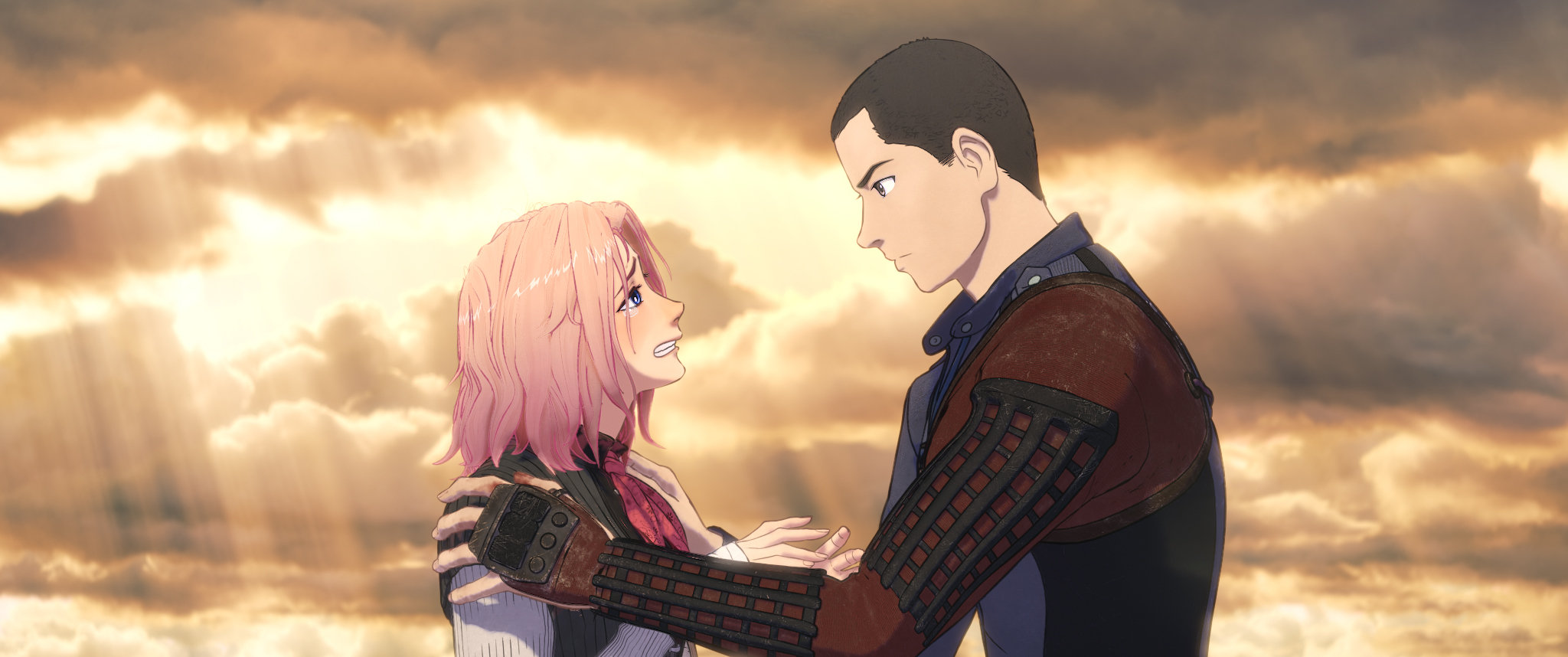
Sometimes he is too simple in his writing and it frustrates the viewer, a criticism that many critics and theater-goers have pointed out, particularly in his last couple of films. The intention is for the film to appeal to a younger audience. In that sense, it has worked for him, as many kids around the world have connected with his work. However, it comes to a point where Hosoda risks diluting the emotional depth that defines his storytelling. Unfortunately, his latest work, Scarlet (screening at the 2025 New York Film Festival in the Spotlight section), has these same issues, yet even more pronounced than before. In Scarlet, the Japanese filmmaker adapts the famous text of ‘Hamlet.’ This tale of revenge has been covered many times before, mainly through the exact boring retelling and theatricality—sticking to the source material without reinventing or changing any part of it.
That’s how this film begins, with a monotonous approach. Hosoda doesn’t want to stick to that for long; he moves past it after a while and hits you with an alternate ending to ‘Hamlet,’ where his creativity can flow efficiently without the reins of its source material being too tight on his film. But he plays it way too safe in his alternate expedition, so Scarlet never scratches the surface of his ideas and imagery. Hosoda gender-switches the protagonist from a young prince to a princess named Scarlet. This princess has passed at her uncle Claudius’ hand, and heads to an afterlife riddled with war and despondency. This afterlife is called the “Otherworld”; every person in history who dies in the real world must traverse this limbo.
The decision on what to do while in the Otherworld is the people’s to make. Some settle down and survive the war-torn landscapes; others try to venture forth to find “Eternity,” a paradise. Scarlet is now stuck here, after failing to avenge her father’s death, with Claudius claiming the throne for himself and governing the kingdom through tyranny. But even in death, Scarlet wants to take revenge against her uncle. Scarlet spent years of her life training for the day her sword got a taste of his blood, and she isn’t going to give up in the afterlife if she has the chance to do so. This is an endless journey that Scarlet is committed to; in a vast hellscape, she seeks a way to restore hope that has been lost.
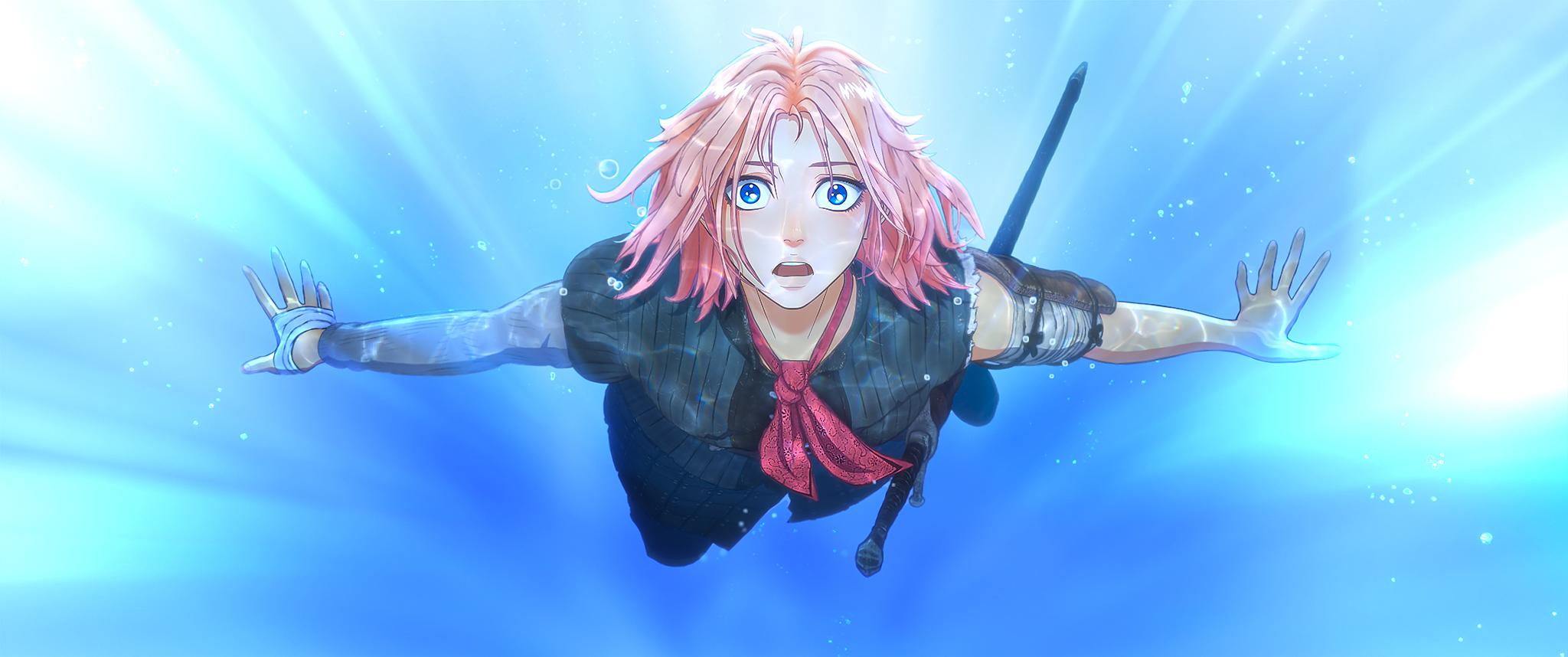
In this fantasy world, we get to see Hosoda’s strengths in worldbuilding and animating some of the most beautiful creations possible, concocting dreamlike and vivid characters and landscapes for us to traverse. Even though you have imagery that resembles previous adaptations of ‘Hamlet’, he still takes liberties to create new things from material many deem tiresome. Wondrous images pile up to form a visually stunning mosaic that encapsulates Hosoda’s creative mind. He is very detail-oriented with his designs. From the garments the character wears to their specific hairstyles, you can easily see that Hosoda dedicated much of his time to carefully animating and bringing this world to life. But outside of the animation being top-tier, as expected from Hosoda, the rest of Scarlet just doesn’t feel as vivid and lacks the nuance of his creativity.
The existential angle of ‘Hamlet’ is cut to add sentimentality through a more universal theme, which tethers between genuine and syrupy naivety. Hosoda isn’t one to dwell on dark themes too much, always with a sugary coating. Considering the material and the love he has for it, as stated in interviews and Q&As, you’d think that he might switch it up just this once. He doesn’t. And even through the reinvention in the imagery, he can’t seem to get out of his comfort zone. The source material is dense because each character is expanded upon, and their grievances are explored carefully. Meanwhile, Scarlet rushes through character work, except for its lead, to make space for visual splendor. During this thematic rush, Hosoda repeats his message across many points in the film via over-expository and lengthy discussions.
The anti-war message is appreciated, and he has spoken very candidly about why he made his adaptation now, as war is plaguing every corner of the world. However, there is no trust in the audience to piece together what Scarlet is talking about. That is something that bothers me with modern cinema. Many directors feel the need to over-explain simple ideas to the viewer multiple times in the film. There is no need to say “war is bad” repeatedly when the message is easy to decipher through the visuals alone. This over-explanation weakens the emotional potency of the story; it’s as if Hosoda fears the message will be lost unless it’s spelled out. Through distrust and simplicity lies Scarlet, which has many things on its side, yet falters from its lack of commitment.