


Director: Jim Jarmusch
Writer: Jim Jarmusch
Stars: Tom Waits, Adam Driver, Mayim Bialik, Charlotte Rampling, Cate Blanchett
Synopsis: Three stories concerning the relationships between adult children, their somewhat distant parent (or parents), and each other: a reclusive father visited by his grown children in the US, sisters visiting their novelist mother in Dublin, and adult twins called back to their Paris apartment to address a family tragedy.
There are a few constants that trickle down from one section to the next in Jim Jarmusch’s slight delight of a triptych, Father Mother Sister Brother – this year’s Centerpiece selection at the New York Film Festival – but the one that sticks out is the repeatedly-uttered phrase, “And Bob’s your uncle.” We all, more or less, know what it means: It’s a clever-ish way of saying, “And there you have it!” or denoting that something is simply put. But as Jarmusch’s 14th feature – his first since 2019’s The Dead Don’t Die – unfolded, I found myself wondering about its origins. Some half-assed internet research returned a few possible answers. The phrase was first attributed to the former British Prime Minister Robert Cecil, who made his nephew the Chief Secretary for Ireland in 1887. (“What makes him so qualified to serve in that role?” “Well, Bob’s his uncle.”) Another theory connects it to 18th-Century slang, when the term “all is bob,” or “all is well,” was common. Wherever it came from, and why ever Jarmusch felt it apt to make it something that is uttered in each of his film’s three segments, matters less than how perfectly it fits with the film itself, though we might do well to alter the definition a touch. “It’s simple” might be more fitting; “It is what it is” could work, too.
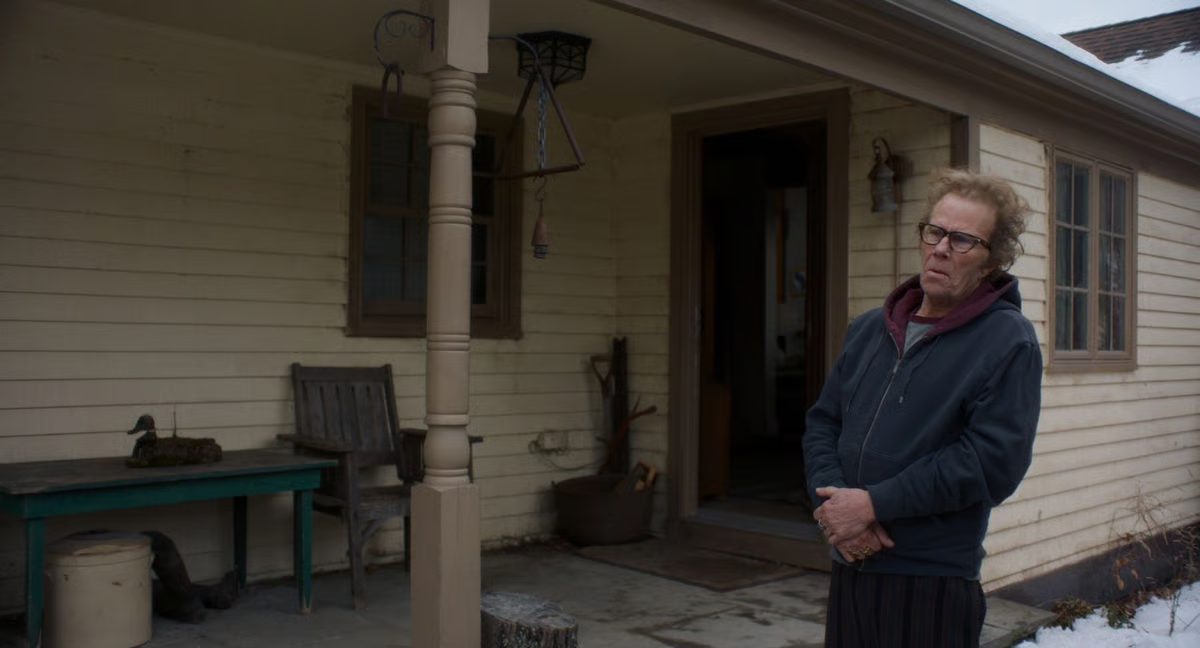
Any of these interpretations of a saying few use anymore and less know the true meaning of would apply finely to Jarmusch’s new film, a tale of three families in various curious stages of their lives – both as a unit and as individuals – who are all, more or less, hoping that what they’re seeing, hearing, and experiencing is as plain as meets the eye. The “Father” portion, which features Tom Waits in the titular role and Adam Driver and Mayim Bialik as his children, sees a semi-estranged dad having his kids over for an afternoon visit at his rundown-ish house in what simply has to be Upstate New York; Bialik’s Emily is the more distant of the two children, while Driver’s Jeff gets in touch more often (though still infrequently), regularly sends his dad money for “repairs,” and brings a box of food. Life, as Waits’ character relays, has been difficult since the mother of his children died, and his remote existence has had a strange impact on the relationship he maintains with his children.
But something is off: Not only does he intentionally rough up the appearance of his home by cluttering tables and sinks and tossing books about, aiming to depict his domain as disorderly when it’s actually quite well-kept, but he’s wearing a stunning Rolex on his left wrist – another recurring sight gag in the picture, not least because it’s this festival’s presenting sponsor – one that he says is a knock-off while Emily is certain that it’s the real thing. Bialik, a curious casting choice, is a bit too down the middle here for her character to be interesting, but Waits and Driver more than make up for it with Waits’ gravelly indifference throwing off the siblings with every mumble and Driver’s willful ignorance to Pop’s true colors making for an easy laugh following every quizzical glance and/or stammer.
Next comes “Mother,” in which Charlotte Rampling portrays a tidy, upper-class Dublinite who decorates her residence like a castle as opposed to a soon-to-be casket. She sets up one hell of a spread for tea time with her daughters, Timothea (Cate Blanchett) and Lilith (Vicky Krieps), the former of whom dons glasses and knee-high socks while the latter sports pink hair and pretends to be more successful than she is. (Though Blanchett is chameleonic, this appears to be a fair characterization for Krieps’ character, a free spirit embodied by a performer who spent the entirety of the film’s post-press screening press conference darting around the stage to take flash photos of her director and castmates from a number of angles.) Rampling’s “Mother” is a novelist who likes to keep her work private, and seems to be fond of the fact that this high tea is a once-a-year event; her time is very much her time, daughters be damned. That all three seem to be completely full of it to varying degrees is both a delightful misdirection from Jarmusch, and also a uniquely honest depiction of many families, those who remain connected but at a distance they deem necessary; as Harper Lee wrote, “You sho’ can’t choose your family, an’ they’re still kin to you no matter whether you acknowledge ‘em or not, and it makes you look right silly when you don’t.”
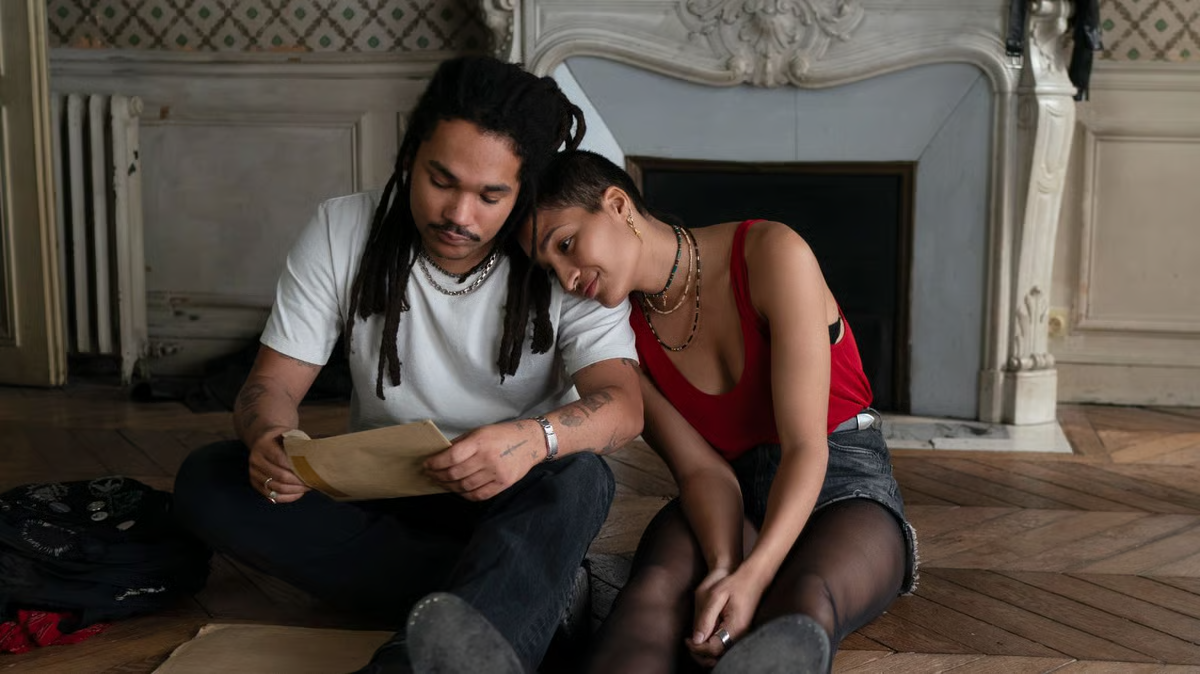
The third and final chapter, “Sister Brother,” is easily the most moving of the three, but there’s an intention to the way Jarmusch concludes his film with the grieving twins Skye and Billy (Indya Moore and Luka Sabbat, both sublime) who return to their recently-passed parents’ apartment in Paris for one last visit before the residence is put back on the market. The duo of Moore and Sabbat spend most of their screentime reminiscing about childhood and discussing their present adulthoods, a lovely juxtaposition that ties the film together in how it reconnects with the past while still placing an emphasis on what has yet to happen to either of them. While so much of what occurs in Jarmusch’s first two sections (especially “Mother”) is sure to leave the audience with the uncertain feeling of what lies down the line for the characters involved, it’s fascinating to see how he views the two youngest participants in the film – applicable to the actors and their roles – as not just the freest of his many creations here, but as the most sure of themselves and their respective directions. Perhaps that’s his view of their generation, that of youth and free-flowing lifestyles where it’s not unusual for people to discuss what kind of drug they tried last; or maybe it’s as simple as Skye and Billy now being parentless at a still young age, thus no longer beholden to anyone but themselves and each other.
In all likelihood, both are the case, especially when you consider another one of Father Mother Sister Brother’s recurring bits, this being the most romantic of them all: In all three parts, the cinematography team of Frederick Elmes and Yorick Le Saux (both among Jarmusch’s go-to DPs) capture a group of skateboarders gliding through the frame in slow motion, as the film’s delicate score – which Jarmusch co-composed with Anika, the musician and poet – glides atop the scenes, serving not quite as cloud coverage but as a comforting breeze. These sequences are pointed depictions of freedom, as if Jarmusch is redirecting the gazes of the players he needs to see them most and saying, “Don’t you see how easy it can be?”
In another film, these brief snapshots of life away from the edge might seem cloying, like a desperate attempt to elicit the “oos” and “ahs” reserved for the dumbest of slo-mo shots in projects that know not how to deploy them. But Jarmusch is a filmmaker who has made his name on his innate understanding of people – the more peculiar, the better – and their responses to things that could either be seen as obstacles or gifts. It’s no coincidence that Driver and Bialik’s “Father” siblings turn their nose up at these skaters being in the middle of the road, while for Moore and Sabbat’s Skye and Billy, they’re just people participating in an impassioned activity. It’s telling, though, that Jarmusch’s style when filming them doesn’t change, no matter who is watching. His approach remains at a quiet hum, fitting given that this is the film he’s called his “quiet” work. That’s to be taken with a grain of salt, however: This is the man who made Paterson not quite 10 years ago. And, as was true of that gem and is of this one now, not everything needs to be shouted from the rooftops in order for it to be felt at a singular depth.
Father Mother Sister Brother celebrated its North American Premiere as the Centerpiece selection at the 63rd New York Film Festival. Mubi will release the film in theaters on December 24.