


Director: David C. Roberts, Billy Shebar
Writer: Billy Shebar, David C. Roberts, Trish Dalton
Stars: David Byrne, Ping Chong, Philip Glass
Synopsis: The boundary-breaking composer and performer Meredith Monk overcame a hostile critical establishment to become one of the great innovators of her generation. Now, Monk faces mortality: can such singular work be performed without her?
New York City, in the 1970s, was a dirty, grimy, dangerous, and bankrupt place. In certain places, it meant large lofts and offices for wannabe artists, musicians, and dancers to move in with cheap rent. Out came another generation of talent with original and thought-provoking content that would change how we see and hear things today. A lot of them don’t have the nationwide recognition they deserve, but they influenced many of those nationwide names we do know. Monk In Pieces brings us the story of one of those unsung artists, Meredith Monk.
The story begins with Monk’s childhood and how her career was influenced from the very start of her life. Diagnosed with a rare eye disorder in which the two eyes are not coordinated, her mother signed Monk up for Dalcroze Eurhythmics. It integrates music and movement, allowing the person to walk and move their body in unison. To Monk, this allowed her to develop a creativity where music is visual and dance perfectly fits in her style, reflecting how she sees and hears things. It allowed her to open her mind to do things out of the box and push the boundaries of how we look and hear things.
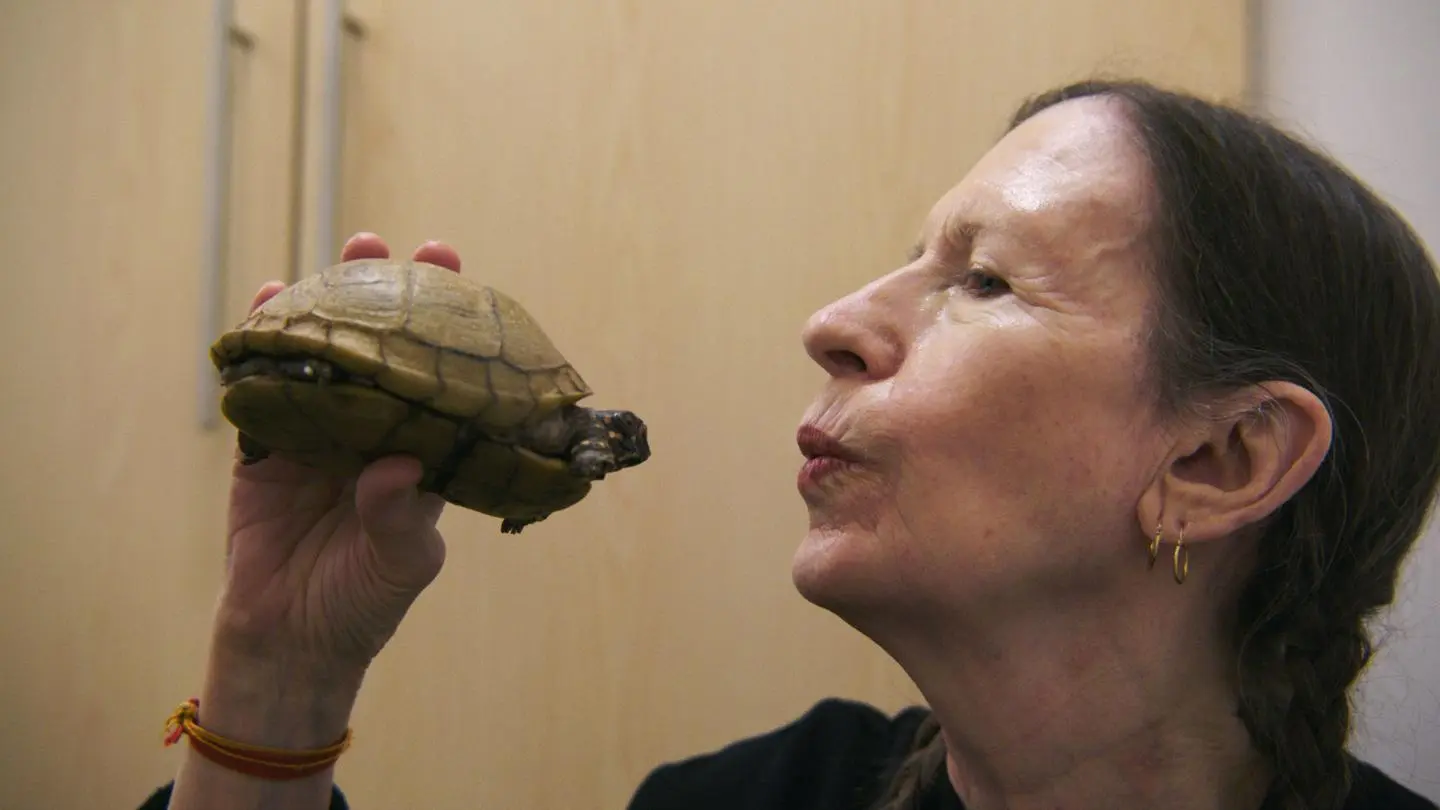
Moving into Greenwich Village, Monk and her theater troupe began their interdisciplinary work in song and dance on stage and screen. We see through raw footage everything they work on, including two films that were basically extended music videos, continuing to pull out tricks from Monk’s past, and how much was never really covered by traditional media. It’s a stepping stone for each of her works with the side visits of her family and personal life, like how she’s in the same loft and her pet turtle from fifty years ago is alive, to interviewing her ex for insight of Monk’s off-stage life.
As Monk made her name in the 1970s and ‘80s, the documentary reveals how much the mainstream critics reviled her work while inspiring her contemporaries. Infamously, one review of The New York Times described Monk’s choreography as “a disgrace to the name of dancing.” Yikes. Tell that to David Byrne, who is interviewed and has always been a fan; just thinking about it, Byrne’s ideas as a solo artist and with The Talking Heads could not have been the way they are if it weren’t for Monk. Byrne credits her for a major scene from his film True Stories. In an archive interview, pianist Philip Glass even praises Monk when he says, “She, among all of us, was – and still is – the uniquely gifted one.”
Directors Billy Shebar and David C. Roberts have created a mosaic about a woman looked over and unheard of by the new generation (like me) that finally reaches its eclipse. The film ends with her in her 80s giving up her opera direction of Atlas, one of her more acclaimed works, for someone else to control as she realizes the end for her is near. Monk In Pieces is not a documentary that breaks down the context of her work and goes too deep into Meredith’s psyche, which is a shame because while someone may learn about her and the work she’s put into, the documentary only goes so far as it wants to in getting into the heart of Monk’s genius.
Follow me on X: @brian_cine (Cine-A-Man)