



Director: Valerie Veatch
Synopsis: Artificial intelligence’s unsung beginnings are found in power rather than computers, illuminating the dreams that underlie the hype that brought us to this point and our future.
Fears of artificial intelligence and its rise across the tech sphere are far from new to film fans. Yet the general public has shown genuine interest in these technologies, with little understanding of how they work. The Sundance documentary Ghost in the Machine tries to demystify the process and explain the framework for how we’ve reached this moment. A movement like the one for “general artificial intelligence” does not just spring out of nowhere. However, director Valerie Veatch chooses a subject that has become so central to our public discourse that even her film falls behind the ever-evolving topic.
Veatch dives headfirst into the discussion of artificial intelligence with perhaps the most important question of all: “How do we understand what it means to be intelligent?” Tracing its roots back to eugenics, many of the researchers who popularized the general idea of IQ did so in a way that would favor white societies over people of color. Once this initial idea took hold, it led to ideological states and hegemonies that reinforced this version of intelligence as the only true form. When the only way to define if people were “smart” is to force others into a heuristic defined by researchers with a mission to uphold societal structures, any subsequent discussion of the topic is framed by racists and bigots.
Using a multi-chapter structure, Ghost in the Machine delves into Silicon Valley’s use of rhetoric and futurism against the rest of the world. She dispels myths about how the area became the center of America’s technological boom, but also highlights why it’s become a breeding ground for some of our most dangerous AI optimists. Figures like Sam Altman and Elon Musk have successfully pushed the government to embrace techno-fascist tendencies. After all, if they cannot hold all the power, why should anyone else? Veatch uses these two men throughout the film, highlighting a dangerous piece of rhetoric that existed a hundred years ago, only to highlight their use of the same language today. It’s an effective juxtaposition that leads to very clear conclusions.
Throughout Ghost in the Machine, Veatch throws a lot of historical research and data at the audience. As she does, dozens of researchers serve as talking heads, giving the documentary a strong academic background. However, the issue this quickly creates is a lack of dynamic filmmaking and an overabundance of exposition. Ghost in the Machine unquestionably has the goods in its research and findings. Yet a lack of dynamic talking heads and relevant, but ultimately distracting, tangents only further complicates matters.
The other issue facing Ghost in the Machine stems from the rapidly evolving world around the topic. There have already been significant documentaries on AI, and its use has become a daily talking point in the news and podcasts. That leaves Veatch in an unenviable position: how do you stay ahead of the public knowledge about a force they interact with every day? The truth is, it’s an impossible task. The end of the film features memes from the US government that are over a year old, and while it’s possible that Veatch could imagine a world where the president uses the technology in absurd ways, the movie cannot capture that zeitgeist in a bottle.
By the time that Ghost in the Machine starts presenting the environmental impact of AI on communities of color, it treads ground well covered by even narrative films (e.g., Eddington). If the goal of Ghost in the Machine is to provide an overarching “Intro to AI” text, it succeeds on that level. However, the topic is changing so quickly, and its adoption has been so rapid, that it becomes impossible to keep up with where we are in the AI discourse.
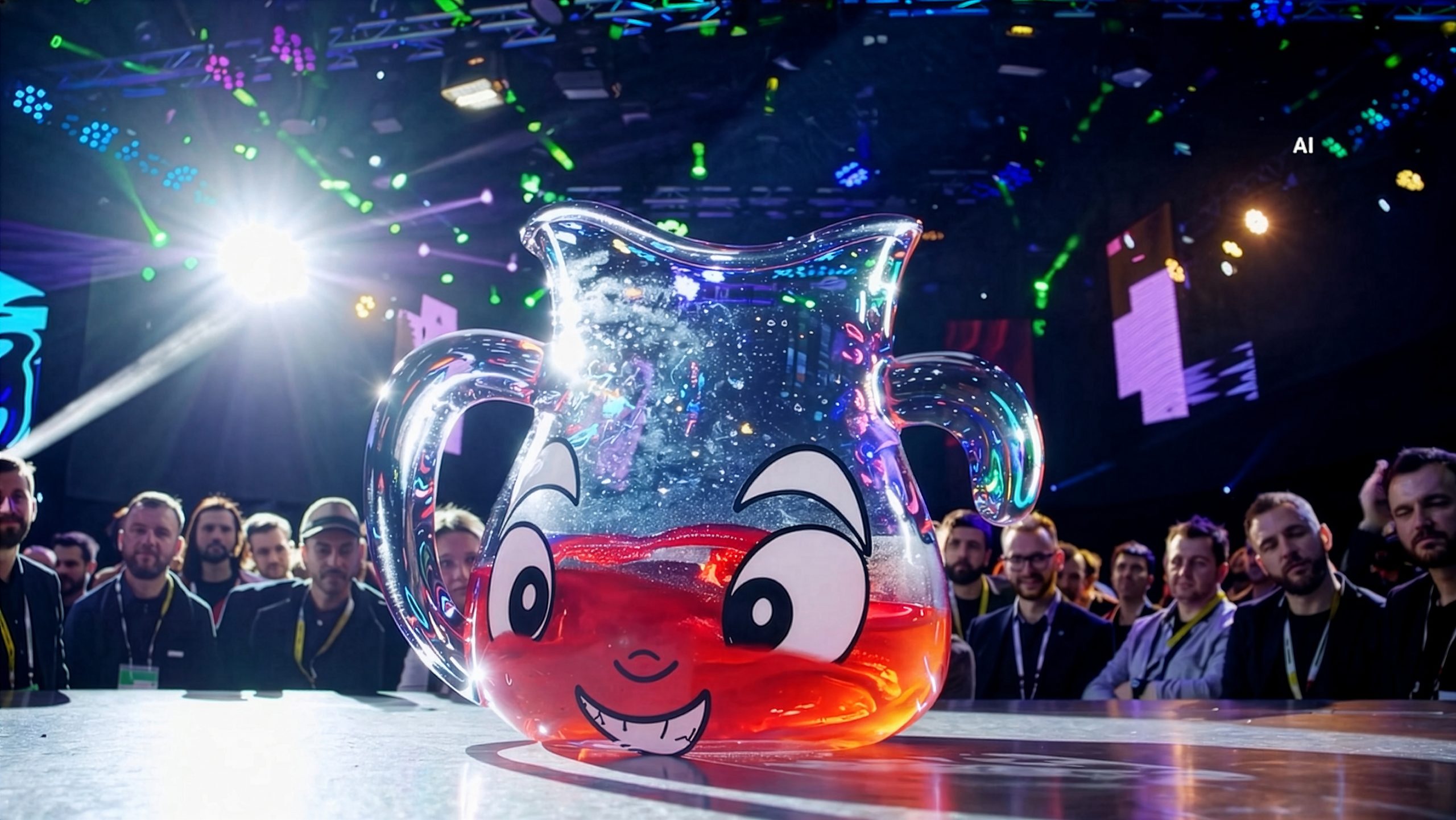
One way Ghost in the Machine effectively uses the technology is by telling us which footage is AI-generated and which is fake. The tracker stays in the corner of the frame for the entire film, and there’s an approach that primarily uses videos to critique them. We’ve all seen terrible videos of people with too many hands, eyes, and physics. However, juxtaposing real footage with computer-generated footage helps the audience remember that the technology is closer than we want to admit. Political movements and propagandists will use this against the people, and the results will be devastating. That does not even touch on the ways it will degrade the art of cinema.
Ghost in the Machine is a thorough, often anger-inducing look at the world of tech oligarchs seeking power over the world. However, without much of a cinematic approach, this weighs on the film. There is too much information in the documentary for audiences to breathe, yet two hours is too long to sit through for the topics discussed. A more focused exploration of AI and the systemic ideas it reinforces would help.