


Director: Phillipa Lowthorpe
Writer: Emma Donoghue, Phillipa Lowthorpe, Helen MacDonald
Stars: Claire Foy, Brendan Gleeson, Denise Gough
Synopsis: After losing her beloved father, Helen finds herself saved by an unlikely friendship with a stubborn hawk named Mabel.
“The hawk was everything I wanted to be: solitary, self-possessed, free from grief, and numb to the hurts of human life.” – Helen Macdonald H is for Hawk (2014).
Director Philippa Lowthorpe and writer Emma Donoghue (author of Room and The Wonder, both made into films) take Helen Macdonald’s extraordinary multi-award-winning 2014 cross-genre memoir and render it mostly silent as the protagonist, Helen (Claire Foy), spends much of the film refusing to speak or interact with almost everyone in her* life. Cinema is, of course, a different narrative medium and visual information is provided as a key interpretive and communicative mode. On the visual side, H is for Hawk is beautifully shot as it encompasses the Cambridge environs and the natural spaces Helen rewilds herself in with her goshawk Mabel. However, if ever a film would have benefitted from some internal narration, H is for Hawk is it.
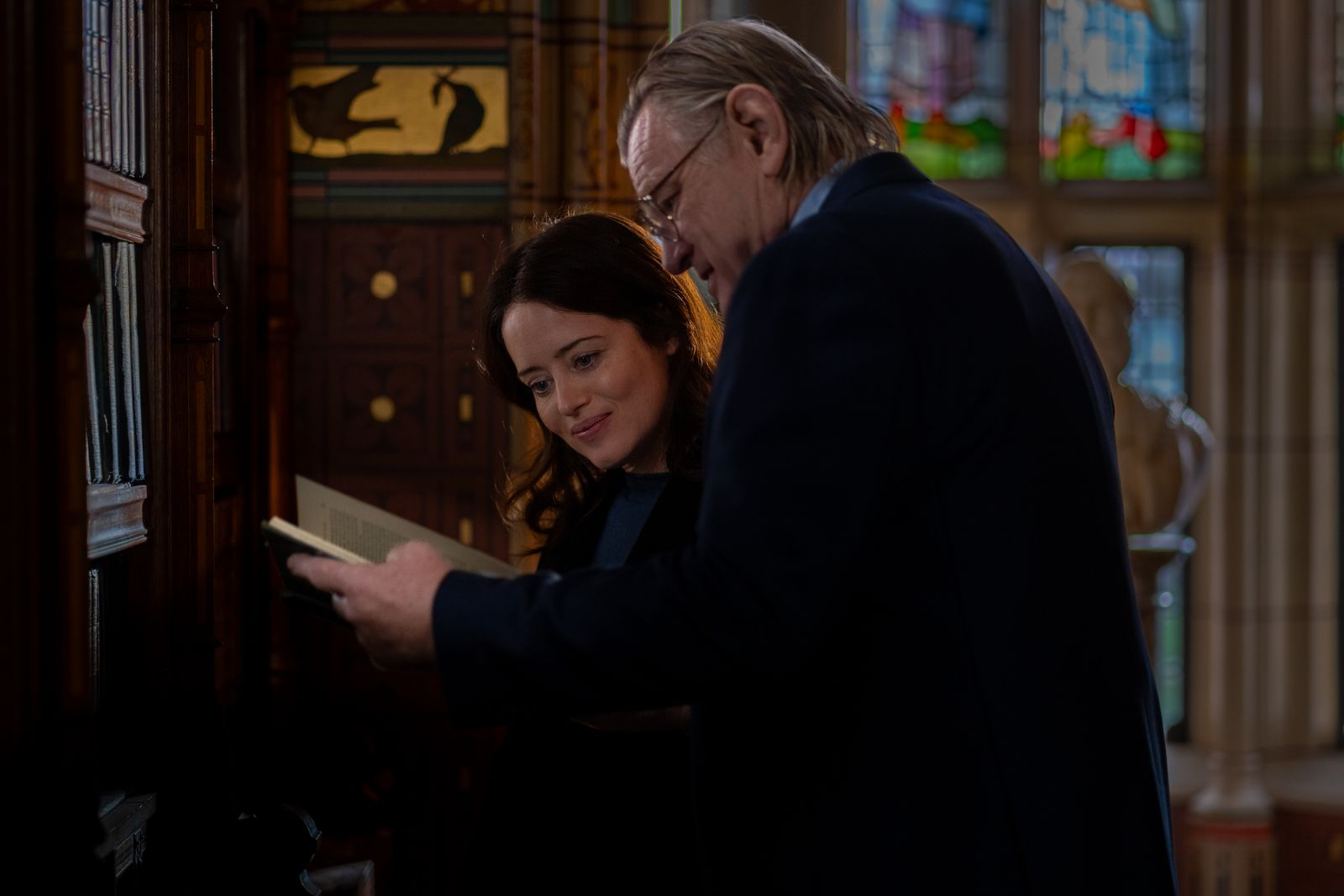
Set in 2007 and covering a year of Helen’s life with occasional flashbacks, H is for Hawk is a journey of profound grief. Helen is a research fellow at Cambridge and teaching the history and philosophy of science to a group of students she feels aren’t interested. The person she cares most about is her father, Alisdair (Brendan Gleeson) who is a renowned photojournalist with eclectic interests – one of which is ornithology which he passed on to Helen. A gentle, patient, good humored and curious man who refused to retire. A man who always dressed in a suit. A man who dies suddenly of a heart attack leaving Helen feeling completely unmoored.
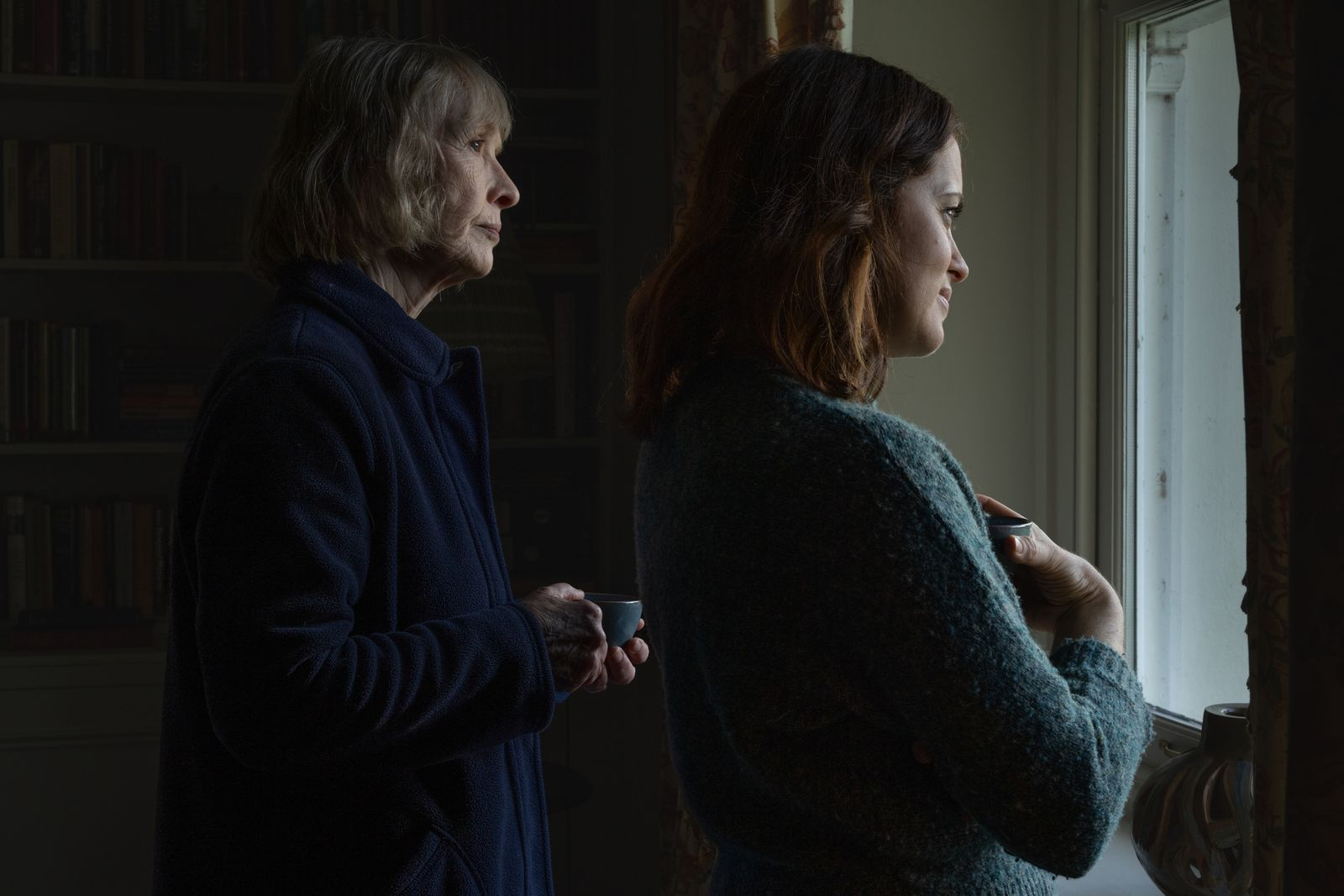
Helen’s first reaction is dissociated shock. Her mother (Lindsay Duncan), brother (Josh Dylan), and her best on-campus friend, Christina (Denise Gough doing a remarkably good Australian accent) are there, but more often than not Helen reacts to them like they’re spectres. The only thing real is her grief and the dreams that haunt her. One dream in particular, that of a goshawk.
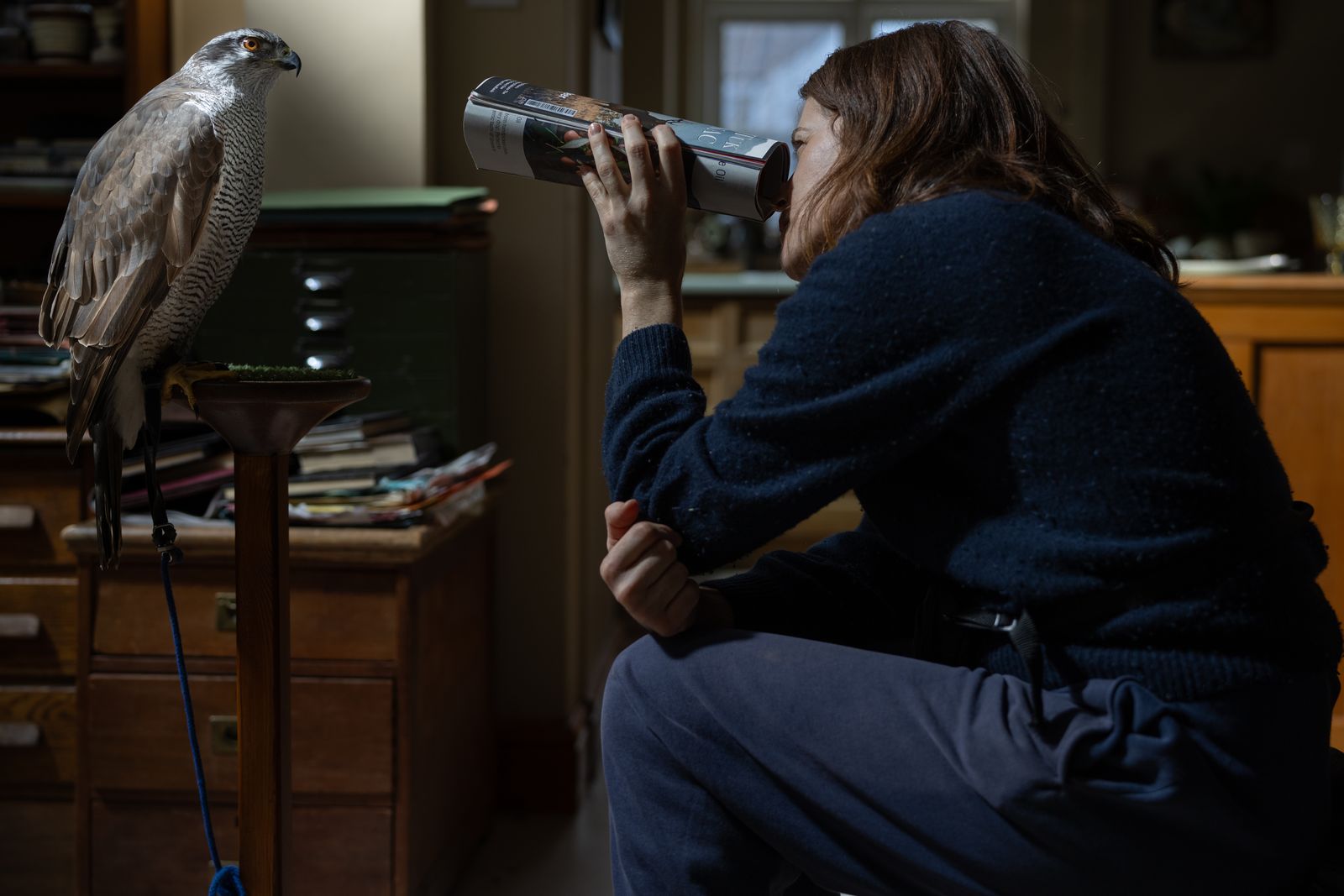
Experienced with falconry although not with the raptor goshawk, perhaps one of the least “friendly” birds of prey, Helen goes to her friend, Stuart (Sam Spruell), for advice and from there buys a goshawk from a trader in Scotland. The basic and animalistic connection Helen thinks she feels for the goshawk that she wants is communicated with a series of gazes. Helen looks at the hawk, the hawk looks back. “This is my hawk,” she insists and with Christina driving takes her back to Cambridge where she will begin training the young and deadly bird.
Helen’s need for the goshawk is infinite because she desires something that gives her little choice. An animal who demands patience, obeisance, and obedience from her more than she can demand from it. Mabel (meaning loveable) fills in a blank space for Helen as something utterly wild that she can project a kinship on to while letting everything else in her life fall away. Gone is the notion of applying for another fellowship. Gone is the urgency of facing that her Cambridge fellowship will be ending and she will be homeless. Gone is her commitment to research and teaching. Helen lives on the hawk’s timetable and every success she has “taming” Mabel is a substitute for the human life she is supposed to be leading. Instead, there is only “the perfectly evolved psychopath” who must hunt to be what she is.
Charlotte Bruus Christensen captures the beauty and fierceness of the goshawk especially when hunting. Swooping through the woods and grasses for her prey with Helen hoping she has earned enough trust that she will return. Sometimes it’s deliberately difficult to define Helen’s point of view when dealing with other people, such as a walk through Cambridge town with Mabel on her arm, from Mabel’s point of view. Humans begin to make noise, unclear noise, that Helen wants to turn away from – as if she needs a falconry hood over her own head to protect her from confusing babble.
Although Claire Foy and especially Brendan Gleeson give excellent performances, H is for Hawk holds itself at a distance from the audience by relying mostly on Foy’s frustrated silences and gradual withdrawal from “humanity” and its illogical insistence that one moves on and keeps living after a loss that has to be dealt with in a tradition of clean and dignified politeness. Lowthorpe does pay tribute to Alisdair throughout the film in the form of recent flashbacks and some from when Helen was a child so it becomes clearer why Helen would find her father a “mythic” presence. Yet, the pure literary majesty of Helen Macdonald’s memoir doesn’t translate on to the screen with Helen speaking so little to the people around her. When Christina says to her, “I think you’re over-identifying with Mabel,” Helen curtly replies, “I know that’s what you think.” It isn’t until the end of the film when Helen is speaking at Alasdair’s memorial service that she’s given a space to truly verbally express herself and why she has lost someone irreplaceable to her. It seems a touch confounding that Emma Donoghue would allow the impeccable poetics of the real Helen Macdonald’s memoir to be spread so thin. Take, for example the following taken from the book:
“The archaeology of grief is not ordered. It is more like earth under a spade, turning up things you had forgotten. Surprising things come to light: not simply memories, but states of mind, emotions, older ways of seeing the world… There is a time in life when you expect the world to be always full of new things. And then comes a day when you realise that is not how it will be at all. You see that life will become a thing made of holes. Absences. Losses. Things that were there and are no longer. And you realise, too, that you have to grow around and between the gaps.”
Foy’s Helen goes into deep depression, which is communicated in a strikingly mundane way beyond her hunting with Mabel. The kind of transcendent and wise prose Macdonald shared with the world can’t be communicated in the language of visuals or performance. H is for Hawk is a good film, but it feels like it has too many “holes and absences” to be a great one.