

Home Blog Page 44

Movie Review (TIFF 2025): โ€˜Little Lorraineโ€™ Is The Kind Of Crime Flick They Write Songs About


Director: Andy Hines
Writers: Andy Hines, Adam Baldwin
Stars: Stephen Amell, Sean Astin, Rhys Darby, Stephen McHattie, J Balvin

Synopsis: Little Lorraine, a North Atlantic seaside town with a population of 60, becomes embroiled in an international cocaine smuggling operation under the noses of multiple governments, distributed in coffins through a network of funeral homes.


The Nova Scotian island of Cape Breton (population: 140,000) is plenty small as it is; Little Lorraine, a seaside town on the isle, was once even tinier, boasting roughly 60 residents to its name, most of them working full-time as coal men, drinkers, or both. Yet its underground mining tunnels were historic, holding the title of the largest sub-ocean network in the world. That is, until May 1986, when the system caught fire and exploded, killing 10 men and leaving the rest jobless. In the aftermath of the tragedy, few of the survivors were left with a choice: They could either relocate to Westray, a Scottish isle with similar mining prospects despite its โ€œdeath trapโ€ nickname, or work for one of the menโ€™s uncles, who offered a lucrative gig on a lobster boat. Too good to be true? More than likely, but money talks, even in a sub-100-person community. When it talks, however, itโ€™s important to pay attention to what itโ€™s saying, even โ€“ if not especially โ€“ when it’s operating as both an angel and a devil, dancing between shoulders.ย 

Image Credit: Courtesy of TIFF

Thatโ€™s the story, at least, one that the Canadian indie rocker Adam Baldwin tells in his song, โ€œLighthouse in Little Lorraine.โ€ His tale focuses on a man named Jimmy, his Uncle Huey, and the transformative ripples their work on said lobster rig would send through the community. โ€œHe says there’s a boat coming up from America with caskets filled with cocaine,โ€ Baldwin ditties. โ€œThere’s a goldmine out on the ocean and a lighthouse in Little Lorraine.โ€ At around six minutes and not a second short nor long, the singer-songwriter weaves a narrative so engrossing that the song itself feels like a film as it twists and turns its way into your ears. So itโ€™s only natural that the tuneโ€™s video companion, directed by award-winning and Grammy-nominated filmmaker Andy Hines (who has directed videos for Logic, Big Sean, Alicia Keys, Lizzo, Coldplay, and many others) plays like a short film audiences would kill to see stretched out into a feature presentation.ย 

If you canโ€™t see where this is going by now, you might have a bit of trouble following Little Lorraine, Hinesโ€™ debut feature, though thatโ€™s a serious you problem, as Hines and Baldwin โ€“ the filmโ€™s co-writers, fittingly โ€“ have no problem turning what was already a gripping lyrical thriller into one fit for the big screen. Sure to please multiplex frequenters and true crime junkies alike, the film is no less faithful to its source material(s) than it is stylish and compelling by its own merits, a page-turner of a movie that is often too convenient to fool but far too entertaining to ultimately give two lobster claws. If you canโ€™t find some shred of delight in watching a bunch of handsome Canadians in deck boots grapple with the consequence of their drug-smuggling circumstances as Interpol tracks their every move and their spouses grow increasingly restless, you probably lack a pulse.ย 

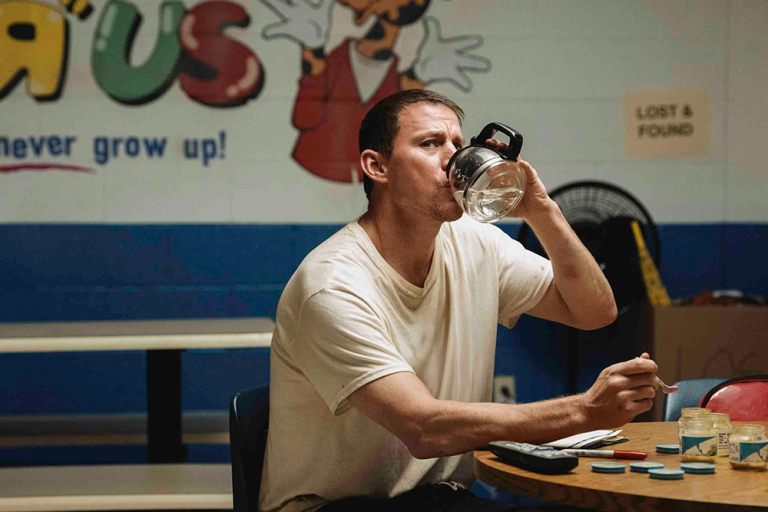
That, or youโ€™ve seen this story told once or 814 times before and have grown tired with every passing iteration, a reasonable criticism that Little Lorraine falls victim to on occasion, though Hinesโ€™ flashy (and attentive) directorial flair more than makes up for what youโ€™ll see coming in terms of the story he and Baldwin telling. The film centers on Jimmy (Stephen Amell, shedding his green arrows for bait hooks) and his two mining pals, Tommy (Joshua Close) and Jake (Steve Lund), who Uncle Huey (Stephen McHattie) hires to man his crustacean caper, and shovels them more money after each passing shift. Itโ€™s only after theyโ€™ve been suckered in by the cash and prizes of this life altering deal that its raw (bar) truth is revealed, and their collective too-little-too-late reality begins to set in, causing anxiety aplenty and legal concerns galore. The Colombian music superstar J. Balvin co-stars as Lozano, the Interpol agent that investigates the crew, and makes a deserving bid for a Bad Bunny-type acting career in the slightly-more dramatic space.)

World premiering at the 2025 Toronto International Film Festival โ€“ a homecoming of sorts for the filmmaking team and the real crimes by which the movie is inspired โ€“ itโ€™s less the fault of Little Lorraine than the genre in which it exists that most self-described film connoisseurs will feel as though theyโ€™ve already clocked its plotting as a whole just by taking in its brief summary. That Hines and Baldwin manage to twist their gritty, properly convulsing Hollywood arrival in less predictable ways than other familiar rides tend to bother in showier attempts is the principal triumph here.ย 

โ€œGood writers borrow, great writers stealโ€ is simply too dismissive a phrase to apply to something as antic and exhilarating as this miners-turned-unwitting smugglers story โ€“ especially considering Auden Thortonโ€™s prominence in the typically-unforgiving wife role as Jimmyโ€™s partner, Emma. And, as the villageโ€™s โ€œProud in Spirit, Strong of Heartโ€ motto goes, Little Lorraine is nothing if not a fervent, confident work that foretells a future in the industry for its chief authors. An even better distinction might be what Jimmy tells his pals before they find their heads too far below sea level to ever properly resurface: Fuck it. Why not have a little stupid fun once and a while?

Little Lorraine premiered at the 2025 Toronto International Film Festival. It is currently seeking U.S. distribution.ย 

Grade: B

Women InSession: Othello Adaptations

This week on Women InSession, we discuss the best (and worst) film adaptations of Shakespeare’s Othello and why it translates well cinematically! At least most of the time, anyway. Some of these films do not hold up well, and were even questionable at the time, but there are a few great adaptations of Othello and we wanted to highlight those.

Panel: Kristin Battestella, Amy Thomasson, Jaylan Salah

On that note, check out this week’s show and let us know what you think in the comment section. Thanks for listening and for supporting the InSession Film Podcast!

Subscribe to our Podcasts RSS
Subscribe to our Podcasts on iTunes
Listen on Spotify
Listen on Stitcher
Women InSession – Critic Spotlight – Othello Adaptations

Movie Review (TIFF 2025): ‘Mile End Kicks’ Is An Ode To the Art That Changes Us


Director: Chandler Levack
Writer: Chandler Levack
Stars:ย Barbie Ferriera, Jay Baruchel, Devon Bostick

Synopsis: A 23-year-old music critic gets romantically involved with members of an indie band she decides to publicize, set against Montreal’s indie music scene in 2011.


Thereโ€™s an inherent beauty to how personally Chandler Levackโ€™s Mile End Kicks begins. Grace Pine (a delightfully human Barbie Ferreira) is in a dingy basement as Canadian indie rock band โ€œIslandsโ€ is on stage. The audience is packed shoulder-to-shoulder, only rivaled by how tightly crowded the band themselves appear on stage. But none of this matters to Grace. As she passionately scribbles her thoughts down onto a tiny notepad, itโ€™s as if all her dreams are being formulated and completed simultaneously. To see such fun critic representation on screen is a treat.ย 

Thereโ€™s beauty to be discovered in dark rooms such as these, where great art seems to frequently inhabit and grow wild. Losing yourself in art is a beautiful thing, and when that passion is discovered, giving it your all provides you with such a fulfilling relationship. And that is something both felt and innately understood in Levackโ€™s semi-autobiographical film. She, too, was a young music critic in the early 2010s. And although much of Mile End Kicks is steeped in clear specificities mined from personal experience and nostalgic memories of a time long gone, thereโ€™s a universal appeal to how Levack writes Grace and how Ferreira portrays her. Levack shows how easy it is to lose oneself amidst a sea of possibility. It can be deeply exciting as we acknowledge the bevvy of roads in front of us, but thereโ€™s also paths that should clearly be avoided. But for Grace, who is 23 and finds herself in the cultural music hub of Mile End, Montreal, those warning signs arenโ€™t necessarily at the forefront of her mind. And who can blame her?

Grace finds herself heading off to Mile End with the intention of writing a commissioned book about the legendary Alanis Morissette record, โ€œJagged Little Pill.โ€ As she packs up her things from her parents home, thereโ€™s a nervous anticipation. But at the end of the day, she canโ€™t wait to get aboard that bus and find herself starting a brand-new chapter of her life on her own terms. After a long bus trip and cab ride provide ample time for the creation of a summertime to-do list, Grace finally arrives at her Craigslist-secured apartment. Ferreira perfectly captures the wide-eyed excitement at her glamorous new life, before Levack comically captures the reality: lugging a heavy suitcase up a tightly-designed staircase in a brand-new place is often incredibly annoying. But thatโ€™s not enough, nor is the absurdly loud sex her roommateโ€™s having, to deter Grace from losing her smile. Sheโ€™s here with a singular focus: to nail her โ€œJagged Little Pillโ€ pitch to begin the next dreamy chapter of her life. Yet, despite such drive, Ferreira delivers this scene with such a simple and efficient duality.

On one hand, Ferreira perfectly exudes the confidence of somebody who feels the divine calling to create something beautiful and meaningful. But on the other hand, Ferreira also plays her exactly as Grace is: a nerve-wracked 23-year-old woman hoping to feel validated by somebody on the other end of an interview in an industry often dominated by older men. As she delivers her pitch, the glimpses caught of the push-and-pull of emotions in Grace make it so evident how lucky we are that Ferreira escaped the trenches of Euphoria. And so, Mile End Kicks finds itself off to the races. But only a short time later, the film finds its lead character grappling with stagnancy. Itโ€™s in this classic writerโ€™s dilemma that Levack crafts the central conflict of her film. Extending beyond something only relatable to writers, Levack turns the attention of her central character to the most common distractions known to humans: developing a crush.

Through her roommate, Grace is introduced to the Mile End-local band โ€œBone Patrol.โ€ Two of its members are integral to this story: lead guitarist Archie (a ridiculously charming Devon Bostick) and frontman Chevy (an intentionally insufferable, self-righteous, irritating, ridiculous Stanley Simons). It really cannot be fully expressed how different these two young men are in the film, but both performers play up their personas to such wonderful heights. For all the endearing qualities and quirky mannerisms Bostick delivers as Archie, Simons will do something as Chevy that will make you want to tear your hair out and scream at the screen.ย 

So, of course, Levack has it so that Grace cannot seem to focus on anything other than the latter boy. In that deeply frustrating choice of who to direct her attention to comes the central idea of Mile End Kicks. Thereโ€™s no denying Grace has a passion for music and writing about it. So to see how easily she lets herself get whisked away from her summer goals by her emotions is disheartening. But itโ€™s an honest reminder that we all were once merely growing up and trying to figure out our place amongst the confusion of everything around us. Grace, like any one of us, makes mistakes. Of course this will frustrate an audience, but thatโ€™s Levackโ€™s point! We are meant to empathize with Grace and ultimately hope she finds herself back on track. We actively want to see her write whatever her heart and mind truly desires to express. Thereโ€™s a beautifully cathartic moment in the third act of this film that rests on Ferreiraโ€™s ability to deliver a layered, raw performance. In it, Levackโ€™s film soars beyond certain shortcomings such as feeling a bit repetitive. After all, many young adults do in fact make the same mistake more than once.

In the end, this is as much a love letter to โ€œJagged Little Pillโ€ and Montreal as it is an ode to art that impacts us on a fundamental level. At the very foundation of every relationship between art and artist, there is a connection that is unique to the individual. Itโ€™s that truth which makes a film like this all the more special. That Levack can mine her own specific experiences in an insular industry and setting to create such a universal piece of art is wonderful. When introducing the film at its world premiere, Levack was cited as mentioning how healing it can be to mine oneโ€™s life when creating art. That catharsis is felt in the very bones of Miles End Kicks, and it translates quite well to an audience. Who knows how identical this story is to Levackโ€™s own, but at the very least, her film shows us all that itโ€™s okay to look back on oneโ€™s past mistakes with a wince on our faces. Ultimately, forgiving ourselves for whatever occurred, confronting manipulative and shady/cruel behavior with direct action, and smiling from the lessons weโ€™ve learned is sometimes all we can do. Plus, having beautiful art in our lives almost certainly helps.

Mile End Kicks is celebrating its world premiere in the Special Presentations category of the 2025 Toronto International Film Festival.

Grade: B-

Movie Review: โ€˜The Conjuring: Last Ritesโ€™ Is an Incredibly Dull Ending to the Franchise


Director: Michael Chaves
Writers: Ian B. Goldberg, Richard Naing, and David Leslie Johnson-McGoldrick
Stars: Patrick Wilson, Vera Farmiga, Mia Tomlinson

Synopsis: Paranormal investigators Ed and Lorraine Warren take on one last terrifying case involving mysterious entities they must confront.


Back in 2013, the start of the The Conjuring franchise marked the beginning of something fresh for the horror genre. A film that was able to meld the familiar based on true events with freshly crafted direction from a modern voice in the genre; James Wan was a perfect match, spawning a lucrative series of films. However, as with most long-running franchises, the quality began to thin with seemingly every passing entry, especially within the mainline films themselves. 2021โ€™s The Conjuring: The Devil Made Me Do It brought in director Michael Chaves to start helming the films, and that threequel ended up as a massive step down from its predecessors.ย 

Unfortunately, The Conjuring: Last Rites continues in its footsteps. Not only does Last Rites continue to lack the ingenuity of the earlier films, but it also fails to understand why the earlier films were remotely eerie in the first place. Patrick Wilson and Vera Farmiga still bring an appreciated warmth to their supposed final time as these characters, but it’s not nearly enough to combat the plethora of limp-feeling story beats and overlong runtime. It all comes together as a finale that reminds us of the stagnant and monotonous state these films have been in for the past couple of years, rather than one that would adopt the creativity that once made them great.

After a flashback of sorts showcasing their first-ever case, weโ€™re reintroduced to Ed and Lorraine Warren (Wilson and Farmiga). Itโ€™s now 1986, and the two married investigators are past their heyday, to say the least. Theyโ€™ve started to become more focused on their own family life, especially when it comes to their now grown-up daughter Judy (Mia Tomlinson) and her boyfriend Tony (Ben Hardy). However, a case that the Warrens just canโ€™t ignore pops up in the Smurl family haunting. They learn that this spirit not only wants their daughter, but is connected to the case they thought left them behind long ago. Itโ€™s funny how with each passing film within these four entries, the family drama tends to be the strongest aspect that these films have left. Wilson and Farmiga just bring such an enduring element to this family; these movies would be in an even worse place without them. Their connection with their daughter specifically ends up as the core to this film, and while itโ€™s heartwarming to see their relationship be this strong after these four films, it isnโ€™t able to save the issues that plague this culmination.

Unlike the previous entries, the case of the Smurl family and when the Warrens eventually come to their aid is such an afterthought here. Everything revolving around the family and the haunting in their house rarely covers new ground for the franchise. Weโ€™re often just left waiting for the inevitable pairing between the two families that just happens way too late into the filmโ€™s second act. The pacing here is also shockingly bad. The film drags its feet for a long while within this narrative, and with the addition of multiple plot threads the film wants to follow, Ed and Lorraine often take the backseat in their own finale. Sometimes, the film is warranted in letting moments sit with the Warren family, specifically, but the runtime should have easily been shaved down here.ย 

Then there’s the scares themselves, which are now a former shell of what the franchise was once able to accomplish. Director Chaves is a capable helmer in some respects, but aside from the occasionally solid setup (like the mirror scene shown heavily in the trailers), any juice these jump scares had is simply missing throughout this film. One thing that James Wan did so well in the first two entries, was the timing of the scare.ย 

The Conjuring: Last Rites' Trailer: Annabelle Doll Returns

Yes, the demons like Valak the nun and the crooked man are scary looking in their own right, but Wan understood how to meld the timing of the scare with the clever setup as well which made for some of the most memorable scenes in the franchise. While Chaves often has a good setup for a scare, it loses any steam it might have had through incredibly predictable loud music stings or look-the-other-way jump scares that are the most predictable type that has not only plagued recent entries in the franchise but some of the weaker released films in the genre. Even Last Rites‘ third act, which attempts to go bigger and bolder than the franchise has ever gone before, is just empty. The Wan films had their bombastic endings, but theyโ€™ve never felt as hampered with rough CGI or dodgy effects like they do here. Honestly, if anything, the filmโ€™s third act felt no different than the most CG closing battles in superhero films, which is a feeling that I just donโ€™t want to have while watching one of these films.ย 


So while it has some heart and the two great lead performances that have always been at its center, The Conjuring: Last Rites is an underwhelming capper to the franchise that suffers from an overlong runtime and scares that pale in comparison to the franchiseโ€™s best. Even if the film is nowhere near one of the worst films of the year, this finale only cemented the Conjuring franchise as the horror slop that it was once the antidote for.

Grade: C-

Movie Review (TIFF 2025): โ€˜Charlie Harperโ€™ Takes The Easy Way Out Of Heartache


Directors: Tom Dean, Mike Eldridge
Writer: Tom Dean
Stars:ย Emilia Jones, Nick Robinson

Synopsis: The journey of a young woman, Harper, and a young man, Charlie, as they meet, leave their respective homes, and attempt to build a life together in a new city. As the driven and ambitious Harper works to build a career as a chef, and the brilliant-yet-stuck Charlie struggles to get himself on track, their relationship faces growing challenges.


Jay Kelly. Peter Hujarโ€™s Day. The Testament of Ann Lee. Frigginโ€™ Frankenstein. The 2025 film festival slate is experiencing a windfall of films named after their main characters, a trend as old as cinema itself, but itโ€™s an interesting concept. For crying out loud, Bruce Springsteen didnโ€™t even make the cut on this precursory list, and only partially because the studio behind his Jeremy Allen White-starring biopic decided to plop his last name in front of an already perfectly good title, Deliver Me From Nowhere. One can hypothesize that 20th Century Studios made that call to draw crowds who would literally only ever make their way to theaters for a biopic about The Boss if it explicitly mentioned his name on the poster, but what about Nia DaCostaโ€™s Hedda? David Michรดdโ€™s Christy? Marc by Sofia, a documentary about Marc Jacobs directed by Sofia Coppola? Can this be chalked up to laziness? Studio brass anxiety? An awareness of mass stupidity, or, put nicely, the inability for many audiences to know what a movie is about unless it includes even just a small portion of logline within its title?

Image Credit: Courtesy of TIFF

Admittedly, Iโ€™m no better, as I assumed Tom Dean and Mac Eldridgeโ€™s Charlie Harper โ€“ world premiering at this yearโ€™s Toronto International Film Festival โ€“ was about a guy, well, named โ€œCharlie Harper.โ€ That was half-right, to give myself a bit of credit: The filmmaking duoโ€™s debut feature is, indeed, about a guy named Charlie (Nick Robinson), but itโ€™s also about a girl, Harper (Emilia Jones). Perhaps a shred of kudos is due to Dean and Eldridge for throwing those who went in blind off the scent, especially considering how much of the filmโ€™s plot centers around the female character initially perceived as a manโ€™s last name. But the longtime short film-stalwarts would deserve even more credit if the film behind this probably-overanalyzed title trickery, a years-spanning romance that tracks its titular characters through trials and tribulations aplenty over the course of their half-decade long relationship, wasnโ€™t such a frustratingly benign love story, one that believes an orchestra-dominated score and non-linear structure are capable of replacing emotional resonance that delves below the surface.

As if spending five years in a toxic relationship isnโ€™t bad enough, Dean and Eldridge regrettably donโ€™t depict one with much of anything to say about the root causes of such toxicity, nor do they bother taking any risks worth an audienceโ€™s salt with a contrived script that is primarily reliant on the sort of one-liners you might find in a Tik Tokerโ€™s digital poetry journal. When we first meet Harper โ€“ who Jones, the CODA breakout, at least attempts to imbue with convincing heartache despite the flat material sheโ€™s forced to work with โ€“ a teardrop the size of a pecan sits on her eyelid, begging be set free in order to splash onto the tabletop as she asks an offscreen man, โ€œAre you a nostalgic person?โ€ When he replies that he thinks so, and asks if she is, she drops what Colleen Hoover would likely categorize as a banger: โ€œYeah. I just wonder what purpose it serves.โ€ย 

Cut to a moment tailor-made for sentimentality, one of Harper and Charlieโ€™s numerous meet-cutes over the course of the film. They first crossed paths when Charlie was a teacherโ€™s assistant in one of Harperโ€™s high-school classes; he, too, was a student, a brilliant one, just a grade or two ahead of his future paramour. The soon-to-be couple passed mixtapes back and forth back then, and later mix it up at a high school party, a year or so after Charlie has graduated. When a spark is kindled, the two fall into a passionate relationship, one that experiences ups and downs aplenty โ€“ the first major hurdle is Harperโ€™s choice to move from Florida to New Orleans to become a chef, and Charlieโ€™s assumption that this means the conclusion of their romantic affair โ€“ yet always lands in the same place, with them together. And while Dean and Eldridge attempt to utilize their aforementioned disconnected framework in a way that complicates both partnerโ€™s memories, placing them in contrast to one another on occasion to sniff out was is truth and what is optimistic recollection, Charlie Harperโ€™s events all seem to have been designed for them to play in such a fashion. Itโ€™s all very convenient for plotting, but not for thoughtfully detailing the complexities of a relationship theyโ€™re desperate to have feel real.

The same goes for the characters themselves, both of which feel like composite figures devised to possess every theoretically good or bad quality that any basic romantic lead should. Harper is the motivated one out of the two, the rebel who forewent college in order to pursue a culinary career. She is willing to work grueling hours under a head chef that makes Gordon Ramsey look like Elmo, and, at the same time, wants whatโ€™s best for her partner. Even still, sheโ€™s depicted as selfish, a too-driven woman who canโ€™t accept nor heal her broken boyfriend, all while struggling to keep her own head above water. Jones manages to eke some substance out of the black hole that is her part, but putting a budding performer in such a position โ€“ not just her character re: saving the down-on-his-dumps guy, but the performer herself, charged with carrying a film that appears much heavier than it is in reality โ€“ feels like sabotage.ย 

This wouldnโ€™t be nearly as unforgivable if Robinson picked up some of the slack, but his chops in this instance feel as though theyโ€™ve played to the level of his role. Iโ€™ve always been uneasy seeing Robinson in projects, not because I donโ€™t appreciate his work, but because I believe thereโ€™s so much more for him to mine from the parts heโ€™s taken over the years. Yet I wonder if Iโ€™ve been pushing for him like a dedicated fan backs a first-round bust, long after the career has been exhausted. With his face, Robinson always tends to portray both โ€œawestruckโ€ and โ€œshatteredโ€ quite well, but thereโ€™s more to rendering sensitivity and passion on screen than being a good mime. Itโ€™s especially gutting to know that Toby Wallace (an astonishing actor, known for Babyteeth and The Bikeriders) was originally attached to the part, but if I think about that too long, I get closer to tears than Charlie Harper ever manages to inspire.

As for Charlie, the character: He skipped college, too, but heโ€™s content working at a t-shirt print shop and existing amongst his many books โ€“ heโ€™s well-read, natch โ€“ drinking the days away to hide his declining self-worth. Making Charlie an alcoholic is one thing, a โ€œcomplicated male figureโ€ device beaten to a pulp so frequently that it wishes it was a dead horse, but to make him the thoughtful, tortured soul without real dreams worth realizing is another entirely, the sort of easy storytelling choice the film makes like its life depends on it.


In many ways, thatโ€™s exactly the case, but only because Dean and Eldridge decided that it couldnโ€™t be anything more. Itโ€™s as if, at least cinematically, the twosome believes that relationships can only be two things: Obnoxiously romantic or furiously vitriolic, the latter quality being the one Charlie Harper leans on the most to invite reaction. To make matters worse, the picture is at its best in its final 30 minutes, a stretch that plays like an entirely different movie than the one endured for the previous hour and change. Itโ€™s there that its leads depict and dictate real thoughtfulness, genuine emotion, and experience breakthroughs that one can believe in, not feel forced to buy into for the sake of whatโ€™s in front of them. But then Brenda Leeโ€™s โ€œBreak It To Me Gently,โ€ the most prominent song in Charlie and Harperโ€™s relationship, plays for the umpteenth time, and weโ€™re reminded of a painful truth: The easy way to let someone down is often the most unbearable.

ย 

Charlie Harper premiered at the 2025 Toronto International Film Festival. It is currently seeking U.S. distribution

Grade: D

Chasing the Gold: Summer Catch-Up (Part 2)

On this episode of Chasing the Gold, Shadan and Erica talk about more summer movies they’ve caught up with over the last few months and if any of them have any Oscar prospects this year! We discuss Weapons, Materialists, Honey Don’t!, Opus, The Assessment and Bob Trevino Likes It, and a slate of films that may not have many awards prospects, but they’re still compelling nonetheless.

Check out this week’s show and let us know what you think in the comment section. Thanks for listening and for supporting the InSession Film Podcast!

Subscribe to our Podcasts RSS
Subscribe to our Podcasts on iTunes
Listen on Spotify
Listen on Stitcher
Chasing the Gold – Summer Catch-Up (Part 2)

Movie Review: ‘Borderline’ Has All the Elements For Success, But None Of the Aptitude


Director: Jimmy Warden
Writer: Jimmy Warden
Stars:ย Samara Weaving, Ray Nicholson, Eric Dane

Synopsis: A bodyguard protects a pop superstar and her athlete boyfriend from a determined stalker in 1990s Los Angeles.


On paper, a dark comedy centered around an obsessive fan wanting to marry a massively-famous pop star piques the interest. Assembling a cast of Samara Weaving, Ray Nicholson, Jimmie Fails, Alba Baptista, and Eric Dane is certainly a step in the right direction. Unfortunately with Borderline, writer/director Jimmy Warden is completely incapable of pulling any of it off.

Nicholson stars as Paul Duerson, an obsessive fan of pop star and actress Sofia Minor (Weaving). Believing he is in a relationship with Sofia, Paul confronts her longtime bodyguard, Bell (Dane), where he ends up stabbing Bell and enters Sofia’s empty house. Six months later, Paul is in prison, and Bell is back on the job. Sofia is now dating basketball player DeVante Rhodes (Fails). The news reports that Paul has escaped from prison.

Helped by his prison accomplice, Penny (Baptista) and his friend, J.J (Patrick Cox), Paul schemes to complete his proposal to Sofia and have his dream wedding. The group kidnap Bell and his daughter, and head to Sofia’s to bring together his plan. The addition of DeVante and Paul’s increasing psychosis complicates matters even further.

Structurally, the film does nothing more than spin its wheels. The qualities of Paul’s disturbance and obsession waver from scene-to-scene without any explanation. His friends go along with his insanity for no apparent reason. His obsession with Sofia has no foundation. I understand not holding an audience’s hand, but having them wander aimlessly in the dark isn’t any better. Scenes happen, they finish, sometimes they have unnecessary flashbacks, sometimes they just stall for time. There is no reasoning for one thing to be happening right after the previous scene’s insanity.

This is certainly a film aiming for dark humor, but the tonal balance is completely misguided. It reminded me of Life Is Beautiful‘s completely misplaced sincerity and humor in a place where humor does not need to exist. Similarly, Borderline will accompany a brutal murder (played for laughs) into a scene with Paul and Sofia where one is obviously disturbed and the other is petrified. This is played for laughs and slapstick instead of the horror film it is. There is a balance to be found in these films, but not one this script or this filmmaker has any semblance of ability to craft. It’s hard to take a film seriously when a Baptista/Weaving duet of “It’s All Coming Back to Me,” falls completely flat and comes out of absolutely nowhere, only to end with a terrible fight sequence.

It’s damned-near impossible to not picture his father when discussing Nicholson, but it doesn’t mean it’s a positive. His characterization is (no pun intended) unstable. He is mostly jovial and pleasant, until the exact moment he isn’t. His fluctuation has no rhyme or reason, nor is there any particular reasoning behind anyone following him. Nicholson mostly channels the crazy-eyed energy of his father without giving any humanity or humor behind it. He isn’t doing anything the film isn’t asking of him, but it can’t transcend the material.

Weaving, frankly, isn’t around very much and has nothing to do when she is around. Sofia has no characterization outside of being famous, and is barely cared about by anyone other than Paul. She barely emotes outside a few small scenes. Dane has much more of a character arc, but he is written too thinly for any of that to resonate. Fails acts like he came from another movie, consistently confused by what is transpiring around him. Baptista might be the only one on the film’s intended wavelength, but is going far too broad for the rest of the film to match her energy.

Dark comedies about serious subjects are always a tough sell, and Borderline does a poor job of attempting to sell any aspect of this narrative. Despite having a group of gifted actors, they are consistently failed by the filmmaking ideals.

Grade: C-

Podcast VIP: Reacting to Festival Season

On this episode, we offer up our reactions to a few films that have recently premiered during this year’s festival season, including Hamnet, Frankenstein, Jay Kelly and Springsteen: Deliver Me From Nowhere,ย and discuss how it impacts our excitement for the fall season!

Listen on Patreon
Listen with Apple Podcast Subscription
Watch with YouTube Membership

Movie Review: ‘The Threesome’ is Situationally Complex, But Not in Structure


Director: Chad Hartigan
Writer: Ethan Ogilby
Stars:ย Zoey Deutch, Jonah Hauer-King, Ruby Cruz

Synopsis: A young man’s perennial crush leads him into an unexpected threesome, he thinks it’s his ultimate fantasy come true. When the fantasy ends, all three are left with sobering real-world consequences, to take responsibility for their actions.


Chad Hartigan’s The Threesome is able to perform a magic trick of structure. Despite the narrative being fairly straightforward, the situations the characters find themselves in end up increasingly complex. It’s not hard to follow, or even thematically over-complicated. It’s all just a mess for the characters, but not the audience.

It’s almost as if Hartigan and writer Ethan Ogilby designed a palatable cringe comedy. When an awkward situation happens, they let it drag out, but soften the blow with situational comedy and charming jokes. Another awkward situation is added to further complicate things, and the blow is lightly applied. It could have all gone too heavy towards a Tim Robinson-esque set of preposterous circumstances where the audience wants to leave, but instead, it’s all well-balanced and light-hearted.

Jonah Hauer-King stars as Connor, a lovesick 30-year-old pining over Olivia (Zoey Deutch). While they once had a drunken hookup, Connor has always wanted a relationship. While flirting with a woman named Jenny (Ruby Cruz), the three go out on the town and end up in bed together. While Jenny departs, Olivia and Connor begin dating. It turns out Olivia became pregnant from the threesome. Undeterred, Olivia and Connor decide to have the baby and commit deeper into their relationship.

Jenny reemerges with the news that she, too, is pregnant. Jenny’s desire to maintain her pregnancy causes Olivia to change gears on her own choice and to also break up with Connor. With the shifting decisions and dynamics, the three must navigate whatever reality they decide to deal with from moment to moment as things become ever-increasingly complicated.

While it all maintains a lightness to the narrative, this is not a finger-wagging notion on the consequences of sexual freedom. In fact, the titular act is never seen as anything but a fun time had by the three characters, without any regret for the act ever being shown. The filmmakers display a complete lack of judgement for any of the character’s actions, even if they behave poorly. Reasoning for keeping, or wanting to terminate a pregnancy, are never judged by the film, even if another character directly expresses their own misgivings.

There’s a level of maturity in the filmmaking, despite the innate immaturity of these characters. All the main characters are in the late-20s or mid-30s, but handle these very adult situations as best they can without assuming they have any idea what they are doing. They involve parents and friends, and adapt to each situation with emotion and understanding. Despite having a lack of pronounced depth with Connor, Olivia, or Jenny, they all feel like real people instead of archetypes. The fleshing out of these characters, as well as the performances, give the film real life.

Deutch might be the “main” character (and the most famous of the three actors), but she doesn’t attempt to pull focus when the story asks her to take a backseat. She adds layers of self-awareness, confusion, and sexiness to the character that is written a bit thin. Cruz also doesn’t have much on paper to chew on, but she is a mesmerizing screen presence. Not exactly a shy butterfly, but by no means an outgoing person, Cruz imbues Jenny with innocence and self-respect that her situation would usually rob her of.

Hauer-King gets to mostly be exasperated, trying to make sense of his increasingly difficult circumstances. His quieter moments near the film’s climax give him some narrative bone to chew on, while his general likeability is key to the film’s success. He also has ample chemistry with both actresses. Josh Segarra adds to the mix as an on-again-off-again flame of Olivia’s, who is a marked difference from the characters Segarra usually portrays. Jaboukie Young-White stokes the fires of chaos as Connor’s gay best friend.

If you’re looking for a film about modern romance with a spin on the cringe-comedy formula, The Threesome is for you. Even if that isn’t your cup of tea, the three charming performances from the titular trio is worth the price of admission.

Grade: B

Podcast Review: Caught Stealing

On this episode, JD and Brendan discuss Darren Aronofsky’s new and exciting new film Caught Stealing, starring the great Austin Butler! Say what you will about Aronofsky, but this is quite the tonal departure for him as a filmmaker. His thumbprint is still on this film, especially once it shifts halfway through and becomes more emotionally charged. However, there’s a comedic sensibility that reminded us of…other filmmakers that we discuss heavily in this conversation.

Review: Caught Stealing (4:00)
Director: Darren Aronofsky
Writer: Charlie Huston
Stars: Austin Butler, Regina King, Zoรซ Kravitz, Matt Smith

Subscribe to our Podcasts RSS
Subscribe to our Podcasts on iTunes
Listen on Spotify
Listen on Stitcher
InSession Film Podcast – Caught Stealing

Episode 652: The Legacy of 1999 in Film

This weekโ€™s episode is brought to you by The Naked Gun. Follow us on social media for your chance to win a FREE digital code!

This week on the InSession Film Podcast, with our 1999 retrospective next week on the show, we bring on Julia Sirmons of 1999: The Podcast to talk about the legacy of 1999 and why it stands out as an all-time year for cinema! We talk about overlooked movies from the year, the awards season and Julia gives us her top 10 movies of 1999.

– 1999 in Film (8:45)
For the first half of our discussion with Julia, we bounce around talking about our favorite overlooked movies and performances, the awards season and Oscar winners and the overall legacy of 1999 in film. It’s often hailed as one of the very best years for cinema, and we wanted to get Julia’s thoughts on why that is the case and what separates it from many other years.ย 


RELATED: Listen to Episode 610 of the InSession Film Podcast where we discussed our Top 10 Movies of 2024!


– Julia’s Top 10 Movies of 1999 (1:25:36)
For the back of the episode, we wanted to get Julia’s Top 10 movies of 1999. While some of the films she picked were expected given their cultural impact, she had others that were quite the curveball, and it was really fun to hear her talk about those movies and why they resonate with her. She had a great list and we very much enjoyed talking about it with her. As a reminder, JD and Brendan will discuss their Top 10 lists on next week’s episode.ย 

Subscribe to our Podcasts RSS
Subscribe to our Podcasts on iTunes
Listen on Spotify
Listen on Stitcher
InSession Film Podcast – Episode 652

Next week on the show:

1999 Retrospective

Help Support The InSession Film Podcast

If you want to help support us, there are several ways you can help us and we’d absolutely appreciate it. Every penny goes directly back into supporting the show and we are truly honored and grateful. Thanks for your support and for listening to the InSession Film Podcast!

VISIT OUR DONATE PAGE HERE

Movie Review: โ€˜The Thursday Murder Clubโ€™ is a Dull and Pedestrian Murder-Mystery


Director: Chris Columbus
Writers: Katy Brand, Suzanne Heathcote
Stars: Pierce Brosnan, Helen Mirren, Ben Kingsley

Synopsis: Four irrepressible retirees spend their time solving cold case murders for fun, but their casual sleuthing takes a thrilling turn when they find themselves with a real whodunit on their hands.


As Netflix is getting ready to premiere Rian Johnsonโ€™s Wake Up Dead Man: A Knives Out Mystery at several fall festivals, just in time for Awards season, the streamer seems to have found a niche in viewers who enjoy watching crime comedies focused on a group of characters solving a murder. Thatโ€™s why it feels natural that they would eventually end up adapting Richard Osmanโ€™s best-selling franchise, The Thursday Murder Club, a fun murder-mystery novel focusing on retirees who have a Thursday club focused on unsolved cases, set about solving the real-life murder of one of the owners of the retirement home they live in.

The group is comprised of individuals who each had particular skills that proved useful in solving cases before they retired. Former spy Elizabeth Best (Helen Mirren) leads the group, with union leader Ron Ritchie (Pierce Brosnan), psychiatrist Ibrahim Atif (Ben Kingsley), and recently retired nurse Joyce Meadowcroft (Celia Imrie) rounding out the club. The four enjoy their company inside Cooperโ€™s Chase, which is more than a mere retirement home for them. It is an active community of retirees who are always there for each other, no matter what, even if co-owner Ian Ventham (David Tennant) wants to destroy the home and turn it into a luxury apartment complex.

However, his business partner, Tony Curran (Geoff Bell), vehemently opposes Venthamโ€™s plan and prepares to fight against him. That is, until he is bludgeoned to death shortly after an altercation with Ventham. Of course, he becomes the primary suspect. However as the Thursday Murder Club uncovers more clues leading to Curranโ€™s murder, they realize that something far more sinister is lurking behind the shadows waiting to be revealed that will turn this seemingly simple case into something no one could ever expect.

The Thursday Murder Club: Netflix's movie is far worse than Richard Osman's  books.

On paper, the idea sounds fun, and Columbus is undoubtedly a capable enough filmmaker who will bring this star-studded ensemble film to life. After all, his ensemble pictures, including Adventures in Babysitting, Home Alone, and the two Harry Potter films he directed, are among the highest-rated of his career. Yet, the filmmaker seems to be on autopilot, creating a visually and thematically dull murder-mystery that offers only sporadic surprises, while the rest of the picture is fairly pedestrian. If it werenโ€™t for its cast seemingly having a good time, I wouldโ€™ve checked out of Cooperโ€™s Chase long ago.

Mirren, Brosnan (who were both excellent in Guy Ritchieโ€™s MobLand, and so was Geoff Bell, by the way), Kingsley, and Imrie hold the glue together, alongside Naomi Ackie, whose resume this year continues to impress with a hugely entertaining turn as police officer Donna De Freitas, who helps the club find information on Curranโ€™s murder that they donโ€™t have in their possession. Itโ€™s because of them that we ultimately crawl to a particularly telegraphed ending, even if the screenplay by Katy Brand and Suzanne Heathcote never gives us a compelling reason to care about anyone on screen.

Worse yet, Don Burgessโ€™ cinematography is as flat as most direct-to-streaming offerings, which is a true shame, considering the bevy of visually inventive movies heโ€™s helped bring to life. Real cinemaheads will notice his collaborations with James Wan first, before discussing his longstanding partnership with Robert Zemeckis, especially given how horrid Here looked, while Wanโ€™s filmography is visually unimpeachable. Sadly, the photography in The Thursday Murder Club is far too clean (especially its black-and-white cold open, which recalls the worst instincts of post-digital Zemeckis) to titillate imagination, even during sequences of high-spirited tension.

The Thursday Murder Club Ending Explained - Netflix Tudum

While these moments are sparse, thereโ€™s definitely a succession of thrills in its back half, where a mysterious third owner of Cooperโ€™s Chase is revealed to Elizabeth. The cameo from a veteran actor is certainly welcomed and creates a disquieting sense of tension. However, it arrives way too late when the feeling of surprise has been completely evaporated and the movie reaches to a clumsy denouement without much attachment to anything occurring on screen. When one stops to think for a bit and parse what Columbus stages, none of it makes much sense, and is terribly underdeveloped, as many characters shift motivations or disappear entirely from the picture until a big reveal brings them back to the fold.

Although this section is rather unremarkable, nothing prepares for how distastefully staged its final scene is, giving a rather sour note to end another forgettable piece of โ€œcontentโ€ on. If it werenโ€™t for its lively cast of characters giving life to this otherwise dour caper, The Thursday Murder Club could potentially be passed off as a Hallmark Original rather than the serious adaptation of a bestselling novel it wants to be. Now, only Rian Johnson can save Netflix from the dreary, anti-art slump the streamer has been producing for some time, despite having pedigreed talent attached to its projects. Will he be able to do it? Hereโ€™s hopingโ€ฆ

Grade: D+

Movie Review: โ€˜Heidi: Rescue of the Lynxโ€™ is a Cone of Ice Cream in the Summer Heat


Director: Toby Schwarz, Aizea Roca Berridi
Writer: Peter Dollinger, Tess Meyer, Marcus Sauermann
Stars: Lilly Graffam, Tom Zahner, Leonardo Lucero

Synopsis: Free spirited Heidi faces forces beyond her years to protect her Grandfather and the alpine wilderness she loves from a ruthless businessman and the hungry jaws of his new saw mill.


Adapting a classic work of art for modern times is not an easy task. Especially dealing with childrenโ€™s literature, trying to eliminate problematic parts or ideas that donโ€™t fit into todayโ€™s grander themes and empowering girlhood tropes. As beautiful as the original tale of Heidi is, this rendition is an excellent modernization and upgrade of the timeless classic tale.ย 

Proper introductions first; Heidi: Rescue of the Lynx is loosely based on Swiss author Johanna Spyriโ€™s ageless classic. It has many of the themes in the original book, but takes a dramatic shift in its representation. Heidi is not illiterate, a key important message to send to young girls nowadays if we want them to cling to her image as their animated movie hero. Her grandfather is not a misogynistic villain, but a grumpy recluse who takes good care of her and stands up for his village, Dรถrfli, refusing the intrusion of an industrialist stranger willing to destroy the nature of the alpine meadows.ย 

Heidi is no longer a people-pleasing Pollyanna. In this version of the story, she has intelligent conversations with her grandpa, she plans to travel and see her best friend, Klara. But Heidiโ€™s real adventure starts when she rescues a little lynx kitten from a trap, nursing him, and warning the entire village from the greedy Mr. Schnaittinger who intends to graft the resources of this idyllic alpine village and ruin it with the industrialization plans, killing its natural life and imbalancing its ecosystem in the process.ย 

Heidi and her grandpa embody the heroโ€™s journey in all its complexity and honor. Events intensify when Heidi decides to return Pepper to his natural habitat, and her grandpa defies the shady Schnaittinger. The plot thickens and the characters embark on separate mini journeys where their paths cross but donโ€™t collide. Heidi retains her individuality, independent of any of the male figures in her life, even her grandpa, who has a growth arc and a redemption tale of his own to follow. But Heidi stands up for herself, her grandpa, and the entire community, showcasing her active role in changing the course of actions in this small town, taking her grandpaโ€™s firm stance against industrialization and saving the wildlife to a whole other level.

Teaching kids to save wildlife is as important a message as it is for adults. Recently, Kelsey Taylorโ€™s To Kill A Wolf tackled a similar theme, with the main protagonist freeing wolves from traps. Itโ€™s an environmentalist, ethical animated film. It raises awareness in the minds of children and tweens while also paving the way for fruitful discussions afterward with parents.

Not only is the animated feature important and informative, but it is also gorgeous to look at. The 3D design of the characters looks great, and are very Pixar-inspired with detailed structuring. The lynx, especially, looks immaculate with its perfect feline features. The visual effects team has some great names such as David Bobichon, Annick Buhr, Frank Dรผrschinger, and Sean Heuston. Together, they work harmoniously to create the perfect image, from texturing, modeling, and lighting to the animations themselves. Kudos to animators Cristina Vargas Villa and Estefany Villarreal for bringing those magical characters to life with such vivid detail, especially Pepper, the lynx kitten, beautifully drawn and adorably expressive. The voice actors also do a great job; every element complements the others, resulting in a refreshing storyโ€”a great escape from the redundancy of chronically online worlds and summer heat.ย 

Heidi: Rescue of the Lynx proves that many childhood fairytales and bedtime stories contain rich material for a modern adaptation. Even problematic tales can be improved and adapted to fit changing times, and Toby Schwarz and Aizea Roca Berridi succeed in creating a modern twist on a beloved childrenโ€™s story that can entertain both kids and adults.

Grade: A

Podcast Review: Honey Don’t!

On this episode, Brendan is joined by ISF Awards Editor Shadan Larki to discuss Ethan Coen’s new film Honey Don’t! His recent output with wife Tricia Cooke has been divisive, very much including Honey Don’t! in that conversation, but these films are still fascinating. There’s a Coen energy to them that is alluring, even if they are uneven and messy.

Review: Honey Don’t! (4:00)
Director: Ethan Coen
Writer: Ethan Coen, Tricia Cooke
Stars: Margaret Qualley, Aubrey Plaza, Chris Evans, Charlie Day

Subscribe to our Podcasts RSS
Subscribe to our Podcasts on iTunes
Listen on Spotify
Listen on Stitcher
InSession Film Podcast – Honey Don’t!

Podcast Review: KPop Demon Hunters

On this episode, JD is joined by his son Sam and the great Megan Kearns to discuss Maggie Kang and Chris Appelhans’ massive Netflix hit in KPop Demon Hunters! This film is exactly why we include Best Surprise Movie at the InSession Film Awards each year because goodness KPop Demon Hunters came out of nowhere. It drops on Netflix and becomes a huge sensation, to the point where it hits theaters two months after its initial release and wins the box office weekend. Not to mention having three songs in the Billboard Top 10 at the same time, something that has never happened before to a movie soundtrack. Absolutely wild story. So, of course, we had to talk about it.

Review: KPop Demon Hunters (4:00)
Director: Maggie Kang, Chris Appelhans
Writer: Danya Jimenez, Hannah McMechan, Maggie Kang, Chris Appelhans
Stars: Arden Cho, Ahn Hyo-seop, May Hong, Ji-young Yoo

Subscribe to our Podcasts RSS
Subscribe to our Podcasts on iTunes
Listen on Spotify
Listen on Stitcher
InSession Film Podcast – KPop Demon Hunters

Chasing The Gold: Best Adapted Screenplay: Can Rian Johnson Do It Again?

Wake Up Dead Man, the third โ€œKnives Out Mysteryโ€ in the Benoit Blanc saga, will be premiering at the Toronto International Film Festival, and while the previous two films of this now trilogy (and potential franchise) werenโ€™t able to light up the Oscars boards, there was one constant between them: Rian Johnsonโ€™s screenplay. Johnson was nominated for Best Original Screenplay for his work in Knives Out, which was his first Oscar nomination, and he followed that up with his second nomination, this time in the Best Adapted Screenplay category for Glass Onion. You would think that there is a spot already set aside for Johnson in this yearโ€™s Best Adapted Screenplay category, but how likely is it that a writer picks up a nomination for each film in a trilogy/franchise?

Itโ€™s a niche question that really doesnโ€™t have an answer at this point. Itโ€™s something that has never happened; even the most successful trilogies at the Oscars have missed a screenplay nomination for one of them – The Godfather Part III failed to earn a screenplay nomination among its seven overall, and The Lord of the Rings: The Two Towers earned six nominations, not one of them being in the screenplay category. In fact, there has never been a franchise to earn more than two screenplay nominations at the Oscars. For Rian Johnson to keep his streak alive, he would need to make history as a screenwriter, but let’s take a look at what he might be up against this season.

In my opinion, the favorite right now is Chloe Zhao and Maggie Oโ€™Farrellโ€™s script for Hamnet, adapted from Oโ€™Farrellโ€™s novel of the same name. The recent trailer suggests that this film will not only excel in this category, but also in many others, including picture, director, actress, supporting actor, and various design categories. Zhao was nominated for Best Adapted Screenplay for her work on the Best Picture-winning Nomadland, for which she also won for Best Director; however, Hamnet appears to be more emotional and on a much larger scale than her previous Oscar contender. Not to mention, including Shakespeare in any form or fashion appeals to writers. Shakespeareโ€™s Romeo and Juliet remains the most widely taught work in high schools, and adaptations or full retellings of his works have been a staple of cinema since King John was adapted into a film in 1899. Since then, loose adaptations such as West Side Story (both the 1961 and 2021 versions) and more faithful adaptations like Hamlet (1948 and 1996) have performed well at the Oscars, with the 1961 West Side Story and the 1948 Hamlet both winning Best Picture. Unlike other Shakespeare adaptations, Hamnet wonโ€™t be one of his many popular works, but instead will tell the untold love story about The Bard and his wife, and the emotional toil the loss of their son took on them, which inspired arguably Shakespeareโ€™s masterpiece, the ever-famous Hamlet. While this may sound similar to 1998โ€™s romantic comedy Shakespeare in Love, which chronicled a love affair that inspired Romeo and Juliet, Hamnet seems to be far more dramatic and emotional than the previous Best Picture winner. The new angle and familiarity with the main subjects’ works could make this a film that appeals to a wide range of writers, both young and old.

Following Hamnet, there are many notable names and previous winners, as well as numerous unanswered questions. Paul Thomas Anderson looks to pick up his sixth screenplay nomination for One Battle After Another, which is loosely based on the 1990 novel, Vineland, by Thomas Pynchon. Anderson has been nominated for a total of eleven Oscars, including an Adapted Screenplay nomination for Inherent Vice (another adaptation of Thomas Pynchon’s work), but has yet to win. The question then arises as to whether people want to give Anderson his flowers for such a historic career so far. Currently, I anticipate that One Battle After Another will be a player in many categories, but there is a question of how far this film will truly go. Will it continue the trend of PTA films performing well at the Oscars, or will this be a case where the screenplay nomination is for Anderson? Itโ€™s a real possibility, but an unlikely one, as I assume this film will be a major player this season for many awards, including here.

Yorgos Lanthimos is also back in the mix this season with Bugonia, his English remake of Save the Green Planet!. He isnโ€™t working on the script (which isnโ€™t surprising, given that he hasnโ€™t worked on many of his scripts over the past few years), and instead, it will be Will Tracy, who worked on both Succession and wrote The Menu a few years ago. Initial thoughts suggest that this film will put Lanthimos back in the conversation for the first time since Poor Things, and it already appears to be a contender in categories such as Actor (Jesse Plemons), Actress (Emma Stone), Director, and numerous others. It really comes down to whether Bugonia will be more in line with awards-wise with Poor Things rather than Kinds of Kindness.

One of the most significant question marks is Guillermo del Toroโ€™s adaptation of Mary Shellyโ€™s Frankenstein. Del Toro has received two screenplay nominations in the past, for Panโ€™s Labyrinth and The Shape of Water, which he won, and was close to picking up a nomination for Pinocchio, for which he received a USC Scripter nomination. Netflix is positioning this film as a significant one for the service, as del Toro has been adamant about giving it a real theatrical run, which could be beneficial for the movie. As always with del Toro films, the design will be immaculate and will likely earn the film enough nominations to propel it into the Best Picture Ten, but will a screenplay nomination come with it? Frankenstein is considered not only one of the greatest stories written, but also one of the earliest science fiction novels. With Pinocchio, del Toro took liberties in adapting the beloved story. Still, Frankenstein seems to be a more traditional take, similar to Hamnet, that could appeal to writers across all spectrums. 

Not only does Netflix have both Wake Up Dead Man and Frankenstein vying for this award, but Clint Blentley and recent Oscar nominee Greg Kwedar also collaborated on Train Dreams, based on the 2011 novel by Dennis Johnson. The film currently has a 97% rating on Rotten Tomatoes and performed well at Sundance, with an awards-friendly release date in late November. This film isnโ€™t being projected in many places. Still, it is being heavily considered for the Adapted Screenplay category. It could provide genuine competition to Wake Up Dead Man if the Academy wants to move on from nominating these films. There is also Ballad of a Small Player from Edward Berger, released by Netflix, which I donโ€™t think will be as strong a contender, but is definitely still a possibility for this nomination.

A Complete Unknown picked up a ton of nominations last year, including a surprising Screenplay and Director nomination for James Mangold. This year, Bob Dylan is traded for The Boss as Springsteen: Deliver Me From Nowhere is this yearโ€™s major biopic. While biopics arenโ€™t always immediately relegated to Adapted Screenplay, the Jeremy Allen White-led film is based on a book titled Deliver Me From Nowhere and is written by the writer-director of Crazy Heart. Itโ€™s hard to tell how Springsteen: Deliver Me From Nowhere will ultimately perform, as recent history has shown an awards successful biopic is usually followed by a less successful one (think Bohemian Rhapsody to Rocketman). If the film is as successful as previous biopics, such as A Complete Unknown, then the script could accompany it, potentially pushing Rian Johnson out.

There is also the case of Wicked: For Good, which was a surprise hit at the Oscars last season and will now enter this season with high expectations. As we saw from the first movie, this will be a strong contender in the design categories, and with the incorporation of new songs, there is a possibility that Wicked: For Good surpasses the staggering ten nominations that Wicked received. One nomination Wicked didnโ€™t get was in Adapted Screenplay, and that could be more of a chance this year with For Good expanding on the universe, incorporating new stories and, as mentioned, songs into the mix, as well. Ultimately, the big question will come down to whether this film is released too soon after the original Wicked. Last year, Dune: Part Two received five total nominations, which is one fewer than the number of awards Dune: Part One won at the Oscars in 2022, when it took home six. With those films, there was only a three-year difference between them, so we will soon find out if the quick turnaround is beneficial or detrimental to their awards success.

I would talk about No Other Choice from Park Chan-wook more on this list, but with the recent expulsion from the WGA (you can read more on it here), even if Park wasnโ€™t scabbing as much as people assumed, and if he only joined the WGA to work on The Sympathizer explicitly, the idea of an expulsion might be enough to turn some people away from his upcoming film. There is still a chance that Park could break into this field, but he has never received love from the Academy before, and only time will tell if he can change the narrative surrounding him. Instead, I will mention The Life of Chuck from writer-director Mike Flanagan. Known more for his horror projects, Flanagan took on The Life of Chuck, based on short stories from Stephen King, and made a film that surprisingly won the Peopleโ€™s Choice Award at the 2024 Toronto International Film Festival. The Peopleโ€™s Choice Award is usually a strong indicator of a Best Picture nomination, but Neon decided to hold off on releasing the film until this past summer, where it did just okay. Still, Flanagan is a well-known name among the community, and it seems as though if this film were to get love in any category, Adapted Screenplay could be where itโ€™s thrown a bone.

Every year, people argue that the Academy needs to change, but as we have seen over the past few years, the Academy has undergone significant changes. The new Academy breaks from tradition and nominates and awards more than just your typical Oscar-bait drama. So, while Rian Johnson picking up a third screenplay nomination for a single franchise would be something never before done at the Oscars, itโ€™s not out of the realm of possibilities for the two-time nominee.

Predicted Nominees:

1. Hamnet

2. One Battle After Another

3. Bugonia

4. Wake Up Dead Man

5. Frankenstein

Next Up:

6. Springsteen: Deliver Me From Nowhere

7. Train Dreams

8. Wicked: For Good

9. Ballad of a Small Player10. The Life of Chuck

Movie Review: ‘Caught Stealing’ is a Madcap Adventure Fueled By Regret


Director: Darren Aronofsky
Writer: Charlie Huston
Stars: Austin Butler, Regina King, Zoรซ Kravitz

Synopsis: Burned-out ex-baseball player Hank Thompson unexpectedly finds himself embroiled in a dangerous struggle for survival amidst the criminal underbelly of 1990s New York City, forced to navigate a treacherous underworld he never imagined.


Much has been made, and will continue to be made, about the auteur theory. In this day and age of (way) too much information, we can even troll through trailers looking for signs of a directorโ€™s personal stamp on even the slightest bit of footage. Prior to release, this was the case for Darren Aronofskyโ€™s Caught Stealing. And this has not stopped, even in early reviews of said film. Many comparisons, some earned, some not, have been made in the few days it has been available. Despite this, Aronofskyโ€™s core is quite evident here and it is to the filmโ€™s great advantage. His emotion-driven focus in the quiet moments elevates the film from simply fun to thought provoking.

Caught Stealing introduces us to Hank Thompson (Austin Butler), a NYC transplant from the California Bay Area who works as a bartender and has a possible relationship on the horizon with paramedic, Yvonne (Zoรซ Kravitz). Set in 1998, the film manages to set the tone of that time nearly perfectly. The lack of technology, the griminess of the city, even the costume design from Amy Wescott manages this with aplomb. Despite being our hero, Hank is certainly not perfect. He drinks too much, his friends are mostly degenerates, and he struggles with commitment.ย 

As shown in flashback, Hank also has a bit of past, and was on the cusp on being drafted into professional baseball. Much of his personal potential was lost when he was involved in an automobile accident that also killed his best friend, Dale (D’Pharaoh Woon-A-Tai). However, this did not kill his love for baseball, or his beloved San Francisco Giants, as evidenced by his daily calls to his mother that usually end with โ€œI love you too, Mom. Go Giants.โ€ He even tries to impart knowledge to Yvonne, much to her playful chagrin. Luckily, this does not affect their chemistry one bit, as evidenced by each and every scene that Butler and Kravitz share. If anything, the audience will crave more from the two of them, hoping for a real happy ending.

Hank, living in a run-down apartment, is also friends with his neighbor, Russ (Matt Smith), a British punk, who also may have some less-than-legal employment. Hankโ€™s agreement to watch Russโ€™s cat, Bud, while he is visiting his sick father ends up putting Hank in very real danger when Russian mobsters, Aleksei (Yuri Kolokolnikov) and Pavel (Nikita Kukushkin) come looking for Russ and take out their anger on our hero. This sets off a series of events, including a hospital stay, visits from police Detective Roman (Regina King), avoidance of Hasidic brothers (Liev Schreiber and Vincent Dโ€™Onofrio), an impromptu trip to Shea Stadium, and the list goes on. Happily, Bud the cat is along for the vast majority of the film and is a welcome addition to Hankโ€™s life, no matter how much he might deny it. Given that Hank spends the runtime surrounded by dangerous enemies, Bud gives him someone to care for, even if heโ€™s a biter.

Caught Stealingโ€ Makes New York a Comedic Criminal Nightmare | The New  Yorker

Now, this all seems like a lot, and it very much is. The responsibility of all of this adventure rests squarely on the shoulders of one Austin Butler. And oddly, this is where the Aronofsky of it all comes in. At his best, he leans on movie star performances and puts his characters through the ringer. He is more likely to do this effectively with his leading women (especially Jennifer Lawrence and Natalie Portman in mother! and Black Swan, respectively), but nevertheless, despite the madcap adventures inherent in this script from Charlie Huston, there is a deep undercurrent of sadness in this story. More than anything, Caught Stealing focuses on the poisons of running from your problems, regret, and living in the past. It also has a constant focus on the mother-child relationship, though nowhere near as unhealthy as in his previous work.ย 

This may not be the best performance in an Aronofsky movie (that is a tall order), but it creates a particular challenge for Butler. Because of the literal run through New York City, there is little time for Hank to deal with the pain and trauma that he has experienced in his past and is currently experiencing in the present moment. And yet, in those few instances where he has a moment to breathe and process emotionally, Butler knocks it out of the park. It has become popular to detail that when a movie star โ€œcarries a movieโ€ it is a pure negative about the film. But Butlerโ€™s casting is someoneโ€™s choice, and that should be lauded.

There are certainly moments that strain credulity, especially connected to what the human body can go through after surgery, but because of the nature of the film, it can be brushed aside. More importantly, Butler is so watchable because we want to believe in him, we want to believe that he can survive and finally do better. As he pushes his body (which is on full display more than once) to the limit, it is next to impossible not to pump your fist at each increasingly narrow escape. Also, this is not even standard movie star stuff in which he is untouchable. Butler manages to thread the needle between lovable loser and matinee idol in a way that few have been able to in this most recent generation.ย 

Caught Stealing's Rotten Tomatoes Score Proves Austin Butler Is a Star
One can view Caught Stealing as an extremely fun action-driven movie, and there is no world in which that is incorrect. Yet, when looking a bit deeper, it is so much more than that. It is easy for us to not own up to our mistakes and take our piece of the responsibility. As Hank journeys to a sense of understanding about himself, we feel Butler trying to distance himself from these errors through sex, drinking, and even violence. And who among us has not tried to create that same gap between our worst moments and our daily lives. But Caught Stealing shows us that no matter how fast we run, no matter how far we get from home, our past and present live inside of us, waiting for us to finally learn our lesson.

Grade: A-

Movie Review: โ€˜The Rosesโ€™ Blooms, But Not Brightly


Director: Jay Roach
Writer: Tony McNamara
Stars: Benedict Cumberbatch, Olivia Colman, Andy Samberg

Synopsis: Life seems easy for picture-perfect couple Ivy and Theo: successful careers, a loving marriage, great kids. But beneath the faรงade of their supposed ideal life, a storm is brewing โ€“ as Theoโ€™s career nosedives while Ivyโ€™s own ambitions take off, a tinderbox of fierce competition and hidden resentment ignites.


In case there any rich, successful husbands out there wondering whether or not it might be worthwhile for them to spend their savings on a seemingly-rundown shack in order for their wife to open the restaurant sheโ€™s always dreamed of running, just know that the investment might be equivalent to you biting off more than you can chew. That is, at least, what Jay Roachโ€™s The Roses argues, in a way. A thorny yet playful reimagining of William Adlerโ€™s 1981 novel โ€œThe War of the Rosesโ€ โ€“ as well as the Danny Devito-directed film from 1989 starring Michael Douglas and Kathleen Turner โ€“ this vehicle, starring Benedict Cumberbatch and Olivia Colman, throws the aforementioned romantic gesture into the mix relatively early on (in the movie, not its central relationship). Having already enjoyed a delightful meet-cute, 10 years of married bliss, and two children to show for it, Theo (Cumberbatch) decides that the earnings he had tucked away from years of dissatisfying architecture gigs would be better served to help fulfill Ivyโ€™s lifelong goal. So he wanted to spend that money on a dream home for their family; he can always make more money, right? And, as the saying goes: Happy wife, happy life.

Thereโ€™s just one problem: Theo always assumed that Ivyโ€™s restaurant โ€“ not exactly located in a desirable area for Northern Californian diners โ€“ would fail to take off. It was a nice idea, but it was mainly supposed to serve as an extension of the cooking and baking that has become, more or less, a hobby since the beginning of their relationship. Ivy had spent years parenting and chef-ing it up from home, but when a freak storm led to dozens of patrons pulling off of the highway and into the parking lot of the aptly-named seafood joint, โ€œWeโ€™ve Got Crabs!,โ€ she becomes a massive, if belated success. At the same time, Theo suffers a huge professional blow, one that sets off the derailment of his own career. Thus, he is tasked with parenting duties, and given plenty of time to resent his now-thriving spouse. Ah, dramatic irony. A dish best served cold, and perhaps with a strong drink to wash it down.

The funniest thing about The Roses, however โ€“ apart from the fact that screenwriter Tony McNamara has been afforded the opportunity to wield the same profane sense of humor that made his two scripts for Yorgos Lanthimos such a delight โ€“ is how often the eventually-dominant marital disharmony presaged by these previously-detailed events is coated in a too-slick armor by witty British banter. Perhaps it should be said: Itโ€™s a funny movie, but this particular โ€œfunnyโ€ thing isnโ€™t a laughing matter. Itโ€™s more of an oddity in this case, given how the filmโ€™s marketing (and the works on which it is based) promised for, well, war. And there is war aplenty: As Theo and Ivy crawl closer to coupleโ€™s therapy, as promised in the filmโ€™s quippy prologue, cruelty and chaos have no bounds in their partnership, to the point where Theo is shaving off a wart into Ivyโ€™s cooking, and the latter dumps live lobsters into his once-serene bath. Itโ€™s just not quite as constant in its prickliness as audiences may have imagined it would be. If not for its R-rating, one might have been right to assume that this adult comedy is perfectly appropriate for youngsters.ย 

Olivia Colman and Benedict Cumberbatch in THE ROSES. Photo by Jaap Buitendijk, Courtesy of Searchlight Pictures. ยฉ 2025 Searchlight Pictures All Rights Reserved.

Then again, there are themes abound here, those prone to sailing so far over a childโ€™s head (en route to hitting Theo squarely in the cornea, naturally) that an excess of sexual repartee might be the least of the relevant worries. In modernizing the story, Roach and McNamara lend a great deal of their focus to matrimonial politics, allowing for the emergence of probing conversations about household roles between man and wife, especially when they are reversed from โ€œtraditionalโ€ (read: outdated and ridiculous) standards. Adlerโ€™s novel and DeVitoโ€™s black comedy adaptation were both products of the 1980s, and therefore treated the idea of a successful businessman not having a fundamental right to his home and assets as a notion worthy of a scoff. It was a plot device rather than a narrative pillar.ย 

In The Roses, Ivyโ€™s success certainly goes to her head and leads to Theo harboring a serious resentment, but his handling of the situation is severe and selfish at heart. Once he accepts the role of homemaker, he twists his responsibilities in a way that makes him the primary parental influence to their kids, Hattie (Hala Finley) and Roy (Wells Rappaport). He trains them like Olympians, taking away access to their motherโ€™s famous desserts in favor of homemade protein blasts โ€“ I must confess I donโ€™t know what that means โ€“ which causes Ivy to feel like sheโ€™s at a constant distance from the children she raised. The already-cavernous rift between our titular lovebirds only grows as the children age; friends of the couple, including Andy Sambergโ€™s Barry and Kate McKinnonโ€™s Amy, notice it early on. Other equally-forgettable supporting characters, played by Ncuti Gatwa, Sunita Mani, Jamie Demetriou, and Zoรซ Chao all catch on in kind. Occasionally, itโ€™s as fun to watch them react to the chaotic tendencies of their pals as it is to watch the hijinks unfold. Just occasionally, though.

Olivia Colman and Benedict Cumberbatch in THE ROSES. Photo by Jaap Buitendijk, Courtesy of Searchlight Pictures. ยฉ 2025 Searchlight Pictures All Rights Reserved.

Such mayhem would become rather grating if it werenโ€™t for Cumberbatch and Colmanโ€™s willingness to play along, and both actors go to any and all lengths to challenge for the summerโ€™s loudest theatrical guffaws. And after a while, the physical comedy, albeit committed and as serious as Oliverโ€™s heart attack in The War of the Roses, plays itself off. (If I never see crustaceans and/or oranges used as weaponry again, it will be too soon.) Yet both of the filmโ€™s stars make even more hay from a handful of intelligent conversations about relationships โ€“ with the occasional barb related to oneโ€™s penis size sprinkled in, for taste โ€“ than they do in the filmโ€™s hand-to-hand combat. The cruelest lines in the film are often those that are delivered straight, like when Theo shares that he didnโ€™t want to tell Ivy a piece of good news because he โ€œdidnโ€™t want [her] to ruin it.โ€ If nothing else, contemplative realizations like this one should have had more of a space at The Roseโ€™s table, even if the table was damn-near destroyed at a dinner party gone wrong.ย 


Itโ€™s a tough balancing act to pull off, and try as he might, Roach may be too composed and anonymous in his filmmaking style to ever fully grasp hold of his foremost narrative assets. Thatโ€™s not to say he doesnโ€™t churn out suitable cinema on a semi-regular basis โ€“ he last directed Bombshell in 2019, and made Trumbo, The Campaign, Dinner for Schmucks, and a smattering of Fockers films before that โ€“ but that you never quite feel that any true artistry is on display. Thereโ€™s a roboticism to his proceedings, even when things are meant to be energetic. You never want to feel like youโ€™re witnessing an artist grapple with their decisions in real time while watching a film of theirs, but you certainly donโ€™t want to feel like the one call they ever made was, โ€œYeah, that looks fine.โ€ The Roses certainly does, though thereโ€™s a world in which it exceeds those hyperlimited expectations. Perhaps the same world where Theo and Ivy are able to accept one another for their humanity rather than their superficial value. Hey, Siri, play โ€œHappy Togetherโ€ by The Turtles, would you?

Grade: C

Criterion Releases: September 2025

September marks the start of Autumn (or football season for a lot of us) and the time that major film festivals come with big-time Oscar players. September is also a great month for Criterion with new entries and re-editions, namely from one of the best directors in the world working today. Kurosawa, Lizzie Borden, a double-dose of Jacques Audiard (not Emilia Perez, donโ€™t worry), and Rob Reiner, keeping active today with his role on The Bear, are all part of Criterionโ€™s monthly release, and it is stacked with what is in store now. 

High And Low (1963)

Before seeing Spike Leeโ€™s version of Ed McBainโ€™s novel Kingโ€™s Ransom, do watch the original adaptation by Akira Kurosawa, a beautifully tight-knit thriller about a businessman who has to make a serious choice between his familyโ€™s future and the kidnapped son of his chauffeur. One of his contemporary dramas is mixed in with his historical pieces, and is still a high-wire thriller of class and moral authority. With his main lead, Toshiro Mifune, Kurosawa again put up a mirror of society about the financial gap between people in the context of a serious crime.

Born In Flames (1983)

Amid a conservative turn socially, writer-director Lizzie Borden came out with a radical punk, female-driven utopia that comes with a revolutionary message. In a single film, Borden comes after viewers with her themes of racism, sexism, and heterosexual power against a class of gay women. It would be decades before a retrospective gave Born in Flames credit for pursuing a feminist theory in movies way ahead of everyone else, and it is a landmark in independent cinema. In a side note, one person who had a small acting role in the film is Oscar-winning director Kathryn Bigelow. 

This Is Spinal Tap (1984)

An original Criterion film makes its triumphant return with the same hilarious style that many copied afterward. Rob Reiner made his directorial debut and starred as a documentarian who follows a British rock band coming to America – and going through screw-up after screw-up. An amplifier that goes to 11, the two-foot Stonehenge stage prop, and getting lost on the stage are among the hijinks the band goes through on their tour. More than forty years later, with the upcoming release of Spinal Tap II: The End Continues, itโ€™s a great time to come back to โ€œone of Englandโ€™s loudest bands.โ€

Read My Lips (2001)

In one of his earliest films, Jacques Audiard tells the story about a deaf woman (Emmanuelle Devos) who joins an ex-con (Vincent Cassel) and becomes entangled in a criminal scheme where her lip-reading is essential. The uneasiness of working with each other slowly dissipates as they start a relationship of trust. Itโ€™s a psychological thriller that explores the range of emotions of a woman from solitude to a unique companionship with its risks, and Audiard draws it out with intensity between the sounds of silence and timely movement. 

The Beat That My Heart Skipped (2005)

Director Jacques Audiard made his breakthrough with this riveting drama about a man torn between his criminal father and a passion for music. Born to a family of crime, Thomas (Romain Duris) knows he can break that cycle if he chooses to follow his dead motherโ€™s musical dreams and talents, and aligns himself with a pianist from Vietnam who does not speak French, only through the notes of a piano. Like Read My Lips, the core of breaking through a language barrier is through other means, and Audiard strikes a deep chord in the balance of crime and true passions.

Isle of Dogs/The French Dispatch (2018/2021)

Wes Anderson has a new movie out this year, and his previous ones are all coming in for Criterion this month. Isle of Dogs is a return to stop-motion with a story of a dystopian Japan that has put all their dogs with a rare virus onto an island to isolate them from the humans. When a boy, the mayorโ€™s nephew, decides to go find his pet dog, he leads a revolt to release them from captivity and against a human-canine war. For the lengthy titled The French Dispatch of the Liberty, Kansas Evening Sun, Anderson tells of episodes from a newspaper of artists, kidnappings, and revolutions in the paperโ€™s history that stand out in their history. Massive ensembles, eccentric stories, big sets, and some beautifully cut dialogue from Anderson remain as strong with his more recent films as with his past work. 

The Wes Anderson Archive: Ten Films, Twenty-Five Years

Including those two recent titles, Andersonโ€™s full-length pictures from his debut, Bottle Rocket, up to his Oscar-winning Grand Budapest Hotel, are all in one big book of masterpieces from the auteur from Austin, Texas. Theyโ€™ve already been given the individual release treatment, but now to get them all on 4K will be the perfect gift for those Wes lovers. Twenty-five hours of special features and plenty of illustrations of his behind-the-scenes work, especially those stop-animated works, all come in this special deluxe package. 

Chasing the Gold: Summer Catch-Up (Part 1)

On this episode of Chasing the Gold, Shadan and Erica talk about all the movies they’ve caught up with over the last few months while out on hiatus and if any of them have any Oscar prospects this year! We talk everything from Sinners to F1 to The Fantastic Four to KPop Demon Hunters and more.

Check out this week’s show and let us know what you think in the comment section. Thanks for listening and for supporting the InSession Film Podcast!

Subscribe to our Podcasts RSS
Subscribe to our Podcasts on iTunes
Listen on Spotify
Listen on Stitcher
Chasing the Gold – Summer Catch-Up (Part 1)