Home Blog Page 100

Movie Review: ‘A Family Affair’ is Easily Forgotten


Director: Richard LaGravanese
Writer: Carrie Solomon
Stars: Nicole Kidman, Zac Efron, Joey King

Synopsis: An unexpected romance triggers comic consequences for a young woman, her mother, and her boss, grappling with the complications of love, sex, and identity.


Genre can be tricky. If you get caught up in the trappings of it, like letโ€™s say a romantic comedy, it can be very easy to end up in cliched territory. Of course, some expected moments are fine, as they will please fans of the style. But if you tip over the edge and go too far, you end up with a Hallmark movie. Now, those have their charms, but if Iโ€™m not watching that particular brand of film, it is a tough sell. A Family Affair doesnโ€™t quite go that far into the land of tropes, but it isnโ€™t that far off either.

The film follows Zara Ford (Joey King), who is the assistant of major Hollywood star, Chris Cole (Zac Efron). In between being a gopher for him, she is attempting to move her career forward as a would-be producer. At home, she is still living with her mother, famed and celebrated author Brooke Harwood (Nicole Kidman). After finally losing her cool at her comic mistreatment (jobs range from bringing him coffee to making surprise gifts for his dogs) from Chris, she quits. Eventually, Chris realizes that he needs her and comes to her home to beg her to come back. There he meets Brooke, sparks fly, and relative hilarity ensues.

The first, and most glaring issue, that this film has is the romance. Believe it or not, this is necessary in a romantic comedy, and this one just doesnโ€™t have the goods. Separately, Efron and Kidman are, at a minimum, serviceable, and both have excellent moments. The shame is that none of those moments are together. The film seems to leave us to make the assumption that they have chemistry, but there is none to be found.ย Chemistry is more than putting two beautiful people in sexual situations, and that seems to be the extent of the work done here.ย 

But hereโ€™s the good news. The rest of the relationships and performances really work, even well enough to make this mostly an enjoyable affair. Joey King gives a legitimately great performance in what could easily be a thankless role. Her back-and-forth with Efron consistently works, both when she is enraged at his infantile behavior and when she is wondering if, just maybe, he is a good match for her mother, who has seemingly been romantically alone since the death of her husband over a decade ago. Speaking of Efron, regardless of the quality of the film, he is clearly always game for making fun of his celebrity self. Despite the fact that he is still heavily bulked from The Iron Claw, he gets to have fun here, whether it is performing badly on film (on purpose) or belting out Cher after a break-up. He’s a fine enough dramatic actor, but this is where Efron really shines.

And King is not just fun to watch with Efron.ย Her relationship with Kidman, as well as with her grandmother, Leila Ford (Kathy Bates), actually pulls on the heartstrings more than expected.ย  This is not easy to do in a formulaic romantic-comedy, but it helps to have Bates, who immediately lends a sense of genuine care, sprinkled with a bit of sarcasm and overt sexuality, which pushes Kidmanโ€™s character towards a romantic relationship with the younger man.

It will surprise approximately no one that, visually A Family Affair is deeply unmemorable, flat, and washed out. Directed by Richard LaGravanese, this is, if anything, somehow a step down to the visual stylings of The Last Five Years, which was nearly a decade ago now. This is a Netflix original and all that this entails. It is disposable, filled with tropes, and an uninspired screenplay from first-timer Carrie Solomon. And yet, it fulfills its basic premise and promise. It is a pleasant enough way to pass a few hours, filled with good looking celebrities and enough laughs to pull you through the more predictable moments.ย  And yes, it tries to have some real tear jerker moments, but most viewers will see the strings.ย ย 

Overall, there is no world in which A Family Affair is a necessary watch. However, it is basically an easy film to sit through for just about anyone. There is a place for entertainment just like this. It is inoffensive, simple, tropey, and charming in spots. You could absolutely do worse, even if you deserve much better.ย 

Grade: C-

Movie Review: โ€˜Horizon: An American Saga โ€“ Chapter 1โ€™ Sets Up a New Vision of the American West


Director: Kevin Costner
Writers: Jon Baird, Kevin Costner
Stars: Kevin Costner, Sienna Miller, Jena Malone

Synopsis: Chronicles a multi-faceted, 15-year span of pre and post-Civil War expansion and settlement of the American west.


Has Kevin Costner lost his mind? The Academy Award-winning actor/filmmaker is embarking on a journey that has cost him a lot, personally and professionally, spending over $38 million (maybe more) out of his own pocket to partly finance his four-part Western epic Horizon: An American Saga. Moreover, Costner also left one of his most acclaimed roles as John Dutton in the Paramount+ series Yellowstone to focus on completing his saga and has recently confirmed that he will not be returning for Season 5B, telling audiences in a heartfelt video, โ€œIโ€™ll see you at the movies.โ€

Such a vanity project never gets made in the theatrical landscape we live in today. If Costner didn’t pay some of the budget from his own money, thereโ€™s no chance a Hollywood studio would say yes to a four-part original Western, with each installment lasting over three hours. We now require filmmakers passionate enough to cook to spend their personal finances so they can make what they want with little to no interference, exactly how Francis Ford Coppola sold his winery to finance his Megalopolis, which will be released later this year. This type of big swing needs to be celebrated and seen by the masses, but in this economy, Horizon is poised to flop and arrive with little to no fanfare, even if it wouldโ€™ve received glowing reviews at Cannes. 

With the 181-minute-long Chapter 1, Costner sets out to showcase his unadulterated vision of the American West by crafting a sprawling epic that will span decades and alternate between different characters who will (likely) eventually intersect. Stuff like this is what the big screen craves, especially when Hollywood has completely forgotten the majestic art of the Western, producing very few of them in any given year (which are usually released directly on VOD, such as Paul G. Volkโ€™s unwatchable The Night They Came Home). Many have been unfairly stating that such a project feels like episodic television, but itโ€™s way more in line with Henry Hathaway, John Ford, and George Marshallโ€™s decades-spanning, five-chapter How the West Was Won than any televisual approach to Western storytelling popularized by Taylor Sheridan with Yellowstone and its endless spinoffs. 

Because of this, I canโ€™t be mad at Horizon: An American Saga โ€“ Chapter 1, even if Costnerโ€™s saga is off to a pretty dismal start, only because of its crazy ambitions. A saga like this has never been attempted in the history of movies, and Costner seems to want to go down in the history books with this. And, as he said, โ€œYou canโ€™t make your film for the opening weekend. You have to make it for its life.โ€

Itโ€™s unfortunate that Chapter 1 isnโ€™t at all fulfilling as an introductory part to a planned franchise and a self-contained movie. It forgets essential storytelling elements that all โ€œParts Oneโ€ must aspire to, especially if itโ€™ll be over three hours long. For instance, who are the characters Costner wants us to spend time with? Hey, with a three-hour runtime, thereโ€™s more than enough time to draw (and introduce) compelling arcs that will ultimately develop as the films continue. From my understanding, there will be three stories Costner and editor Miklos Wright alternate between. One is focused on Frances Kittredge (Sienna Miller) joining an Army Generalโ€™s (Sam Worthington) group after being rescued by his men following an Apache raid, while young boy Russell (Etienne Kalicki) flees the village after the attack and joins a group of bounty hunters who are going after the Apache. 

The second story involves Hayes Ellison (Kevin Costner), a rustler who is visiting a nearby town and gets embroiled in a conflict involving prostitute Marigold (Abbey Lee) and a child, Sam after it was taken by Lucy (Jena Malone) many years ago. Years later, Samโ€™s grandmother (Dale Dickey) sends her children, Caleb (Jamie Campbell Bower), and Junior (Jon Beavers), to retrieve Sam and kill Lucy, who adopted the name Ellen after marrying Walter Childs (Michael Angarano). However, Hayes inadvertently gets caught in the situation after talking to Jamie and finding out his plans, causing him to flee with Marigold and Sam, so they can have a fresh start. 

The third โ€“ and final โ€“ story involves a group of travelers on the Santa Fe Trail led by Matthew Van Weyden (Luke Wilson), who is nearing Horizon, a land discovered and developed by a group of settlers. So far, this is the least fleshed-out part of the bunch, only serving as an introduction to Wilsonโ€™s character, alongside Will Patton and Isabelle Fuhrman as Owen and Diamond Kittredge, respectively. A rivalry is also established between British couple Juliette Chesney (Ella Hunt) and Hugh Proctor (Tom Payne) and two of Matthewโ€™s men, who are peeping on them, particularly Juliette while she is bathing. 

All of these stories show some form of promise, but none of them actively take the time to sit with the characters. Instead, Costner jarringly cuts away from a specific story just as itโ€™s about to get interesting and returns to another one without much narrative flow, which always hampers the development of protagonists, which should be primary in part ones. Any first chapter always needs to clearly state what (or who) the main threat(s) are, while also giving us enough to attach ourselves to the people treated on screen, whether they are good or bad. 

Many protagonists in Horizon seem to live in a morally grey area, but we never get to explore this aspect of Hayes, Frances, or even Marigold. Most of the โ€œbig namesโ€ appear for a brief scene and are never seen again, coming and going like a revolving door of stars who want to appear in such an extensive project but have nothing to do in the first chapter and add little value to whatโ€™s on screen. Of course, this is the first part of four, so audiences should expect lots of exposition and worldbuilding, with many unresolved plot threads to boot (such as in Denis Villeneuveโ€™s Dune, as a recent example). However, how Costner structures his initial chapter makes very little sense. By alternating randomly with the three stories, the pace is lethargic and bloated, the exposition delivered by the characters feels unimportant, and the world Costner tries to build feels weightless because none of the characters have any compelling attributes or a reason to be on screen. Things happen, but weโ€™re never invested in whatโ€™s happening. 

While I wasnโ€™t crazy on the first Dune, it at least understood the basis of a โ€œPart One,โ€ spending time sitting with Paul Atreides (Timothรฉe Chalamet) and exploring Arrakis before Baron Vladimir Harkonnen (Stellan Skarsgard) executed his plan. It also gave a few clues to where the sequel would go, ultimately paying off in more ways than one with Part Two. But Costner never allows us to either explore the world heโ€™s constructing or spend meaningful time with his protagonists, despite the three-hour runtime! With such a massive length, he has the time to do it all, and save the โ€œgood stuffโ€ for subsequent installments, which looks to be the case after viewing an ending montage acting as the trailer for Chapter 2. 

Unfortunately, it feels as if weโ€™re watching one long trailer instead of a movie that sets the table effectively and asks us to come back to more, not by teasing whatโ€™s to come but by giving us enough leverage through the character arcs and worldbuilding naturally. Hell, thereโ€™s another 181-minute-long โ€˜Part Oneโ€™ in theaters right now with Nag Ashwinโ€™s Kalki 2898 AD that does exactly what Iโ€™m talking about. The first hour-and-a-half is dedicated solely to worldbuilding and character development, along with introducing the audiences to its primary antagonist, while the last hour-and-a-half goes all out on the action and further develops the protagonists within those massive set pieces. The exposition never feels like exposition, and the characters have a fully-fledged arc that will be further fleshed out in subsequent films, ending on a cliffhanger with the villain acquiring new powers. Perfect. 

Horizon: An American Saga – Chapter 1 couldโ€™ve followed that same template and been a far more satisfying picture, solidifying the foundation of Costnerโ€™s grand vision for the audience to want more as the credits rolled. But I desperately wanted to leave the cinema not even thirty minutes after it began, with action scenes captured like a single-camera television series, with no sense of grandeur and scope, alongside a bludgeoning score from John Debney that makes its more dramatic moments feel more caricatured instead of raw, human, and steeped in the tradition of the classic American Western popularized by John Ford. 

It also doesnโ€™t help that we barely know who any of these people Costner showcases on screen are. What are their names and their relation to the main conflict at hand? Why should we care about each of their individual stories? Costner doesnโ€™t seem to care, with the only interesting character moment being when Giovanni Ribisiโ€™s Pickering Bailey gets teased as the main antagonist of the second installment, looking at the pamphlet his company is printing for Horizon in contemplation for the land that is to be the main attraction of the White settlers who will eventually intersect in future films. This is the only time I felt my time wasnโ€™t wasted, and it genuinely made me excited to see what Costner has in store for us in August. However, heโ€™ll have lots of screenwriting and character ineptitudes to overcome if he is to go down in the history books as the auteur who risked it all to give us the Western saga of a generation. It doesnโ€™t look like itโ€™ll be the case (for now), but it also doesnโ€™t matter. Iโ€™ll be there for parts two and four, no matter what. Itโ€™s the least I can do for the man after doing everything he possibly can to get these films made and released. 

Iโ€™ll see you at the movies, Kevin.

Grade: D

Movie Review: โ€˜Chronicles of a Wandering Saintโ€™ is Not Our Father’s Faith-Based Film


Director: Tomรกs Gรณmez Bustillo
Writer: Tomรกs Gรณmez Bustillo
Stars: Mรณnica Villa, Horacio Marassi, Iair Said

Synopsis: In a tiny rural village in Argentina, a pious yet insatiably competitive woman discovers that staging a miracle could be her ticket to sainthood. But before doing so, a jarring turn of events illuminates the hidden magic of her world, forcing her to reevaluate everything she once took for granted.


For whatever reason, Rita Lopez (Mรณnica Villa) is an outcast in her religious community. Itโ€™s hardly for lack of trying; she spends her days on her knees, either to pray or to scrub the floors of the chapel. Her competitive tendencies make it difficult for her to accept that she has been permanently excluded from the churchโ€™s choir, and that she will never win her pompous priestโ€™s full attention. Her devotion to this aimless cause has drained every ounce of passion from her 40-year marriage to Norberto (Horacio Marassi), a kind man who just wants his wife to watch him fiddle around with a guitar and to indulge his attempts to relive their glory days, all the way down to wearing a pair of yellow ponchos they wore on their honeymoon during dinner. It doesnโ€™t seem to be too much to ask. 

But to Rita, anything that wonโ€™t aid her unrelenting desire for sainthood is of no use attending to. Sheโ€™s pushing 70, and despite her displeasure with the lack of appreciation in her daily life, feels that the only recognition even remotely worthwhile would be from a heavenly presence. The timing couldnโ€™t be better, then, when our Rita decloaks what she believes to a long-lost statue of Saint Rita, an artifact believed to have been lost for eternity. Desperate to determine the truth, she ferociously (and anxiously) Googles specifics not only about the statueโ€™s characteristics โ€“ to her disappointment, โ€œSanta Rita would never have crown of thornsโ€ โ€“ but how one would know if something is a miracle โ€“ to which the search engine replies, โ€œIf youโ€™re asking, then itโ€™s definitely not a miracle.โ€

So goes the early comedic tone of Tomรกs Gรณmez Bustilloโ€™s Chronicles of a Wandering Saint, a clever debut that dares audiences to ponder what it means to be saintlike, perhaps even to consider whether or not theyโ€™re carving out their own shortcuts en route to the holy gates, something Rita makes a habit of in the filmโ€™s first act, despite not seeming to be aware of the consequences of her own actions. As you can deduce from her impractically hopeful internet searches, the statue she uncovers in Wandering Saintโ€™s beginning moments is not, in fact, the long-coveted statue of Saint Rita, but sheโ€™s willing to fake it โ€˜til she makes it into Godโ€™s good graces. With Norbertoโ€™s help โ€“ this poor sap will do anything just to spend some quality time with his better half โ€“ she smuggles it out of the churchโ€™s back room with the intent of ceremoniously unveiling her discovery to her congregation, thus impressing Father Eduardo (Pablo Moseinco) and winning her communityโ€™s respect at long last. 

That all doesnโ€™t go according to plan is something any viewer could clock from another multiplex entirely, but itโ€™s  Bustilloโ€™s execution that sets his film apart, at least in comparison to the array of lesser films that tend to needlessly cram so-called  โ€œtwistsโ€ into their narratives without rhyme or reason as if to say, โ€œHey, look! We tried reinventing the wheel!โ€ (Succeed, they did not.) Had Bustillo lingered too long on how the characters on Chronicles of a Wandering Saintโ€™s periphery react to this shocker, his movie might have suffered a similar fate, falling into a wasteland of genre-benders that spend too much time justifying their biggest surprises only to fall to bits in the process. Thankfully, he lets things unravel methodically. Itโ€™s a welcome approach that, despite veering into over-judicious territory one too many times in its slight 84-minute frame, allows the film to find its tonal footing naturally. 

This is not to say that Bustillo โ€“ who was awarded the Adam Yauch Hรถrnblowรฉr Award at last yearโ€™s SXSW Festival, given to โ€œa filmmaker whose work strives to be wholly its own, without regard for norms or desire to conformโ€ โ€“ doesnโ€™t pulls his fair share of unexpected punches, but they neither distract nor take away from what Chronicles of a Wandering Saint is after. Instead, these jabs drive the film forward while also being sure to land just enough to leave a mark. Nothing is as surprising as when, with 48 minutes remaining, the end credits roll, a stylistic choice that had me both checking my watch and scratching my head one moment, and chuckling the next as the movie abruptly cuts to its next scene.

Needless to say, this is hardly your fatherโ€™s โ€œfaith-basedโ€ dramedy. To call it a religion-pilled film at all would be to misdirect, as itโ€™s far more interested in consequence, and how much influence oneโ€™s community can have on their identity. But what happens when that community is ripped away from them, or them from it? What about the more intimate relationships that are left behind, specifically those that had been left in the dust long ago due to the primary-positing of other unrelated priorities? 

Bustilloโ€™s script mines curiosity from these ideas, some of lifeโ€™s harshest realities, but the director is especially gifted at framing indelible images to accompany moments that might otherwise be considered mundane. Working with cinematographer Pablo Lozano, Bustillo manages to capture beauty and absurdity in one fell swoop; perhaps the filmโ€™s most memorable shot sees Rita praying as a pool of light pours through a church window and surrounds her. Onlookers scoff, assuming that sheโ€™s deliberately set up shop in that spot in hopes of appearing as though sheโ€™s being touched by God. But for Rita โ€“ who Villa plays, remarkably so, as a scatter-brained woman who canโ€™t seem to keep her eyes on the proverbial road long enough to know what is set to hit her in a matter of seconds โ€“ itโ€™s another miracle she canโ€™t help but let pass her by in an effort to find the next one, the one that will cross the tโ€™s and dot the iโ€™s on her eventual ascent into heaven.

Itโ€™s a shame that Bustillo refuses to let these moments run a bit longer, to let his audience bask in their individual ironies for just a beat more. But thereโ€™s plenty of irony in staging them just long enough for the moment weโ€™re yanked away from them to hit home, as though weโ€™re all cartoon characters being pulled off a stage by a cane. To say something similar befalls Rita in Chronicles of a Wandering Saint is selling things short, but to reveal the truth would be ill-suited, considering how focused the film is on how present things (or people) of an unexpected nature can be in our everyday lives. If only we were all able to pause life for a time in order to take stock of what we miss when we are so hell-bent on achieving one thing and one thing only. Ferris Bueller would approve.

Grade: B

Movie Review: โ€˜Kalki 2898 ADโ€™ Sets a New Standard in Mythmaking


Director: Nag Ashwin
Writer: Nag Ashwin
Stars: Prabhas, Deepika Padukone, Amitabh Bachchan

Synopsis: A modern-day avatar of Vishnu, a Hindu god, who is believed to have descended to earth to protect the world from evil forces.


Describing Nag Ashwinโ€™s Kalki 2898 AD to a layperson may prove impossible. But thereโ€™s a few things one must know before entering the movie. First, itโ€™s the most expensive Indian production of all time, with a reported budget of over โ‚น600 crore (about $75 million USD). It would be futile to compare this filmโ€™s scale to one of its American contemporaries, such as Dune, Star Wars, Mad Max, Blade Runner, and even Zack Snyderโ€™s Rebel Moon, because weโ€™d be looking at apples and oranges in how Indiaโ€™s film industry operates versus Hollywood. I always roll my eyes when critics on Film Twitter play โ€˜gotcha!โ€™ by comparing the budget of an international film to an American one without understanding basic currency rates and how each industry does not function like Hollywood. But I never understand why Americans must always compare a foreign country with theirs. 

The good thing is that Ashwin clearly loves these grand-scale sci-fi epics and continuously tips the hat to them throughout his 181-minute runtime. You can point out where his influences come from in a specific scene versus another one plucked out of another film. But it never feels like plagiarism, more like an innate appreciation for the artists who have pioneered science fiction and have inspired a generation of filmmakers to create their own imaginative, lived-in worlds. 

The second element one must understand before diving into this movie is that itโ€™s the second installment of a planned cinematic universe of films and television series, following up on the events of the two-episode animated show Bujji & Bhairava, which premiered on Prime Video last May. While some may think you donโ€™t need to watch the series to understand the events of Kalki 2898 AD, crucial information regarding robot Bujji (Keerthy Suresh) and bounty hunter Bhairava (Prabhas) is only accessible in the series. 

None of these characters are properly introduced in the film, with their chemistry already established in the show. Yes, Ashwin has decided to make his short animated show an integral part of building his cinematic universe, which is a ballsy move (it wasnโ€™t worked with Marvel, who now have to rebrand their animation and television department to make it less โ€˜interconnectedโ€™) though plans for the franchiseโ€™s future seems to hinge on the success of the film. 

The other โ€“ and most important โ€“ thing anyone must understand before seeing the film is that Kalki 2898 AD is a part one. Of course, and like Denis Villeneuveโ€™s Dune and the upcoming Wicked, this is not revealed in any of its trailers or marketing (other than the knowledge that itโ€™s part of a cinematic universe). Meaning that a good chunk of its three-hour runtime is dedicated solely to its worldbuilding and the introduction of the central conflict, which involves Bhairava hunting down SUM-80/Sumathi (Deepika Padukone) after escaping an idyllic, pyramidal utopian city known as โ€œThe Complex,โ€ ruled by totalitarian God king Supreme Yaskin (Kamal Haasan, bone-chilling in only two scenes). 

The reasons why Sumathi is being hunted are best left discovered on your own, but another crucial thing to know is how Ashwin deftly blends grandiose science-fiction ideas, such as the classic utopia/dystopia narrative, which is how he develops the movieโ€™s world before the intermission, with traditional mythmaking as he reinterprets the โ€œMahabharata.โ€ An opening flashback with a de-aged Amitabh Bachchan gives us a glimpse of how Ashwin will approach the story, making it an essential part of Bhairavaโ€™s development within the โ€˜2898โ€™ futuristic setting. 

Perhaps these moments needed more meat around the bone, but how Ashwin operates is enticing enough to make us want more and see the story through its end (a striking hand-drawn animated sequence that chronicles the rise of totalitarianism through the times until its fictitious 2898 is also another superb example of how the filmmaker uses real-life texts and history to root his universe in). Itโ€™s also interesting in how, with so many exposition dumps in piecing not only the world of the movie together, but the characters who inhabit it, none of the dialogue actively feel as if the characters are constantly spoon feeding information to the audience. The perfect example of this occurs when Supreme Yaskin is introduced, ร  la Baron Harkonnen. The scenes are only there to tease whatโ€™s to come and show us who the main threat of the franchise will be while also slightly teasing his overarching plan, โ€˜Project K.โ€™ Although we donโ€™t know what it is, itโ€™s safe to say it isnโ€™t good news. 

Yet, none of them feel as if weโ€™re watching a villain explain to the audience what they must understand before going into the sequel. The presence of Kamal Haasan is enough to pique our curiosity, but itโ€™s his magisterial turn with only ten minutes of screentime that makes it so riveting to watch him chew up the exposition he has to deliver on screen. Itโ€™s great to see that his virtuosic talents wonโ€™t be wasted in subsequent installments, teasing a performance of the ages from an actor who has been at the forefront of some of the best Tamil cinema has to offer through his collaborations with S. Shankar in Indian and Lokesh Kanagaraj in Vikram. 

But the picture’s real (rebel) star is Prabhas, giving his best turn since S.S. Rajamouliโ€™s Bahubali: The Conclusion. Itโ€™s been a very long time since Iโ€™ve seen him give a damn, phoning it in with the ridiculously dreadful Adipurush and Prashanth Neelโ€™s headache-inducing eardrum perforating-fest Salaar: Part One – Ceasefire. Prabhasโ€™ stardom was primarily achieved after starring in Rajamouliโ€™s Chatrapathi, to which he achieved mass stardom after leading the Bahubali films. But his post-Rajamouli career has been met with many misses (though Iโ€™ll be the only one to defend the sheer rambunctiousness of Sujeethโ€™s Saaho) and box office duds. 

Through the figure of Bhairava, Prabhas reclaims his stardom with an impeccably charming, camera-loving, and ass-kicking turn. The emotional impact has been subdued, but thatโ€™s only due to how Ashwin will keep most of his legitimate development (after a shocking cliffhanger reveal) for the sequel. But that doesnโ€™t mean the character isnโ€™t compelling. Far from it, his introduction scene is a particular highlight, with Santhosh Narayananโ€™s booming BGM (no, really, I think I became deaf after this film) adding the right rhythm to how Prabhas walks close to the camera and decides to prove to everyone who dares threaten him that he canโ€™t lose. 

The first fight scene shows how spectacular the action scenes will be, but Ashwin dials it down before the interval to allow the audience to sit in the world heโ€™s created for the film. After the interval, itโ€™s a non-stop, wall-to-wall festival of action, with a desert chase scene that completely blows that twelve-minute set piece in George Millerโ€™s Furiosa: A Mad Max Saga out of the water and a finale so intricate in its visual spectacle it must be seen to be believed. The visual effects feel so meticulously crafted they may very well be the best Iโ€™ve seen in any Indian film, which is saying a lot. Indian films are always more reliant on tickling the imagination and being a visual/aural medium, even if their means arenโ€™t as expansive as, say, Hollywood (which I try not to compare it to). But itโ€™s precisely because they donโ€™t have the same means that theyโ€™re making their dramas feel larger in scale and scope than other parts of the world. 

With cinematographer Djordje Stojiljkovic, Ashwin crafts painterly and lush visuals to envelop us in the desertified city of Kalsi, contrasting it with the idyllic tableaux of The Complex, harkening back to the work of Roger Deakins (whom Stojiljkovic met) in Blade Runner 2049 and Grieg Fraser in Dune. Its use of center framing in its climactic action scene is, of course, plucked out of George Millerโ€™s work, but, again, never in an egregious copy/paste fashion. They continuously wear their influences on their sleeves to elevate the action and put the visual effects on display. 

This elegant mix of large-scale science fiction with Indian mythology might have fallen flat at the hands of a less-experienced filmmaker with no vision for what heโ€™s creating, but Ashwin seems to know exactly where he wants to take his franchise and how each scene serves as a builder for whatโ€™s to come excitingly and always puts his characters at the forefront of the conflict before tackling anything else (Padukoneโ€™s almost silent portrayal of Sumathi will move you to tears). How he interweaves Bhairavaโ€™s present-day story through thrilling, mythologically charged flashbacks is such a coup-de-grรขce that our five-person audience erupted in total applause, knowing what will come next. 


There have been many adaptations and interpretations of the Mahabharata, but Ashwinโ€™s vision could be the most cinematically enthralling yet (until Rajamouli eventually adapts it). However, since the story of Kalki is incomplete, time will tell exactly how his subsequent installments within the cinematic universe will be fleshed out. Still, the movieโ€™s intricate visuals, jaw-dropping action, and elaborate mythmaking will forever change the landscape of Telugu cinema and perhaps Indian cinema as a whole, not only as a pan-Indian mass spectacle but as a worldwide science fiction phenomenon. Watching Kalki 2898 AD, it felt as if I was discovering something new and never-before-realized on screen. Thatโ€™s enough to keep me watching anything the franchise churns out until whatever Ashwin has in mind for its grand finale, which will likely break the internet as a specific cameo from one of the worldโ€™s greatest talents in this movie will.

Grade: A

Women InSession: Brad Pitt in the 21st Century

This week on Women InSession, after discussing Brad Pitt in the 90s a few months ago and some debate among the ISF team, we decided to have a discussion about Pitt in the 21st Century and why it differs drastically from his 90s output!

Panel: Kristin Battestella, Jaylan Salah, Amy Thomasson, Zita Short

On that note, check out this week’s show and let us know what you think in the comment section. Thanks for listening and for supporting the InSession Film Podcast!

Subscribe to our Podcasts RSS
Subscribe to our Podcasts on iTunes
Listen on Spotify
Listen on Stitcher
Women InSession – Episode 91

Criterion Releases: July 2024

Itโ€™s the hot days of summer and Criterion is using this month to release seven features with only one of them being a re-release. From Japan to Brazil, this month is really jam packed with new titles, including two from a German auteur released just last year. A Tom Cruise breakout role, a revisionist Western with an unlikely actor, a โ€˜90s Chinese masterpiece, and a critical film from Latin America during a dangerous period are all part of this month. Plus, the re-edition of a great noir film from Franceโ€™s own master of the genre.ย 

Black God, White Devil (1964)

From Brazil, one of the most famous films of the Cinema Novo movement tells the story of a ranch hand who kills his swindling boss and flees with his wife on the lam. They join a cult which promotes violence against wealthy farm owners while a bounty hunter comes to kill the leader of the group, only for the ranch handโ€™s wife to interfere with the plans. Black God, White Devil is full of anti-authoritarian messages – in the same year a military coup took place in Brazil to overthrow the democratically elected government – and talks about the radical lies people easily follow to total end.

Le Samourai (1967)

The monthโ€™s only re-edition is Jean-Pierre Melvilleโ€™s phenomenal noir of a hitman named Jef (Alain Delon) with sharp skills who finds himself in the crossfire between a cop looking to catch him and a man who wants Jef killed. It has a cool vibe in Melvilleโ€™s style and relies on looks more than words to get across the drama in his methodically planned out story. The grey, the lines, the silence, and the quick reactions fill in all to give his most unique tale of killers and the double-crossing that comes with it.ย 

Pat Garrett & Billy The Kid (1973)

Director Sam Peckinpah famously got into a battle with MGM over the final cut of the film which prevented critics from getting his version for 15 years for a proper evaluation. Between budget constraints, Peckinpahโ€™s struggle with alcoholism, and time length, it became the stuff of legend in which the director was the winner in the long-term over the studio. James Coburn plays the sheriff Garrett who chases down the infamous outlaw (Kris Kristofferson) under the order of the governor (Jason Robards). Bob Dylan also has a supporting role and wrote the score in short notice, including the theme song, โ€œKnockinโ€™ On Heavenโ€™s Door.โ€

Risky Business (1983)

This early Tom Cruise, tighty-whitey-wearing comedy follows a high-school student bound for Princeton who has a weekend to never forget. He joins a call girl (Rebecca De Mornay) who takes him on a lustful weekend free from parental constraints and challenges his suburban conservative upbringing. Writer/director Paul Brickman gives an exploration into the growing yippie culture of the โ€˜80s and the rise of young professionals bound to take over a materialistic world.ย 

Farewell, My Concubine (1993)

Co-winner of the Palme dโ€™Or (with Jane Campionโ€™s The Piano), Chen Kaige creates a stunning epic around two Beijing opera stars (Leslie Cheung and Zhang Fengyi) over 50 years. From childhood training to adulthood, Concubine tracks down the seeds of jealousy, betrayal, and political upheaval between the two friends and a woman who comes in between them to bring in deep passions. This film played a massive role in the rise of Chinese cinema and the Fifth Generation with other directors including Zhang Yimou and Li Shaohong.

Anselm (2023)

See the review from Insession here

The first of two Wim Wendersโ€™ films is a documentary on artist Anselm Kiefer, shot in 3D to capture Kieferโ€™s entire body of work which explores everything from the land to the sky to human history. In traditional Wenders fashion, it is not straightforward, but told from Kieferโ€™s point-of-view and how he works, allowing us to get into his own head. It blurs the line between a movie and a piece of art, grabbing the deep-seeded spiritualism of Kiefer and his range.

Perfect Days (2023)

See the review from Insession here

Wendersโ€™ other film was his Oscar-nominated drama set in Japanโ€™s public toilet system and a cleaner (Koji Yakusho) who goes about his day. His encounters with co-workers and the rest of Tokyo bring a humanism echoing of Yasujiro Ozu, a director who influenced Wenders. It is very much different from other feature narratives he has done, but once again, Wenders delivers another piece of his interests that has no boundaries regardless of language different than his own. 

Follow me on Twitter: @brian_cine (Cine-A-Man)

Movie Review: ‘Dandelion’ Peers Into The Soul of Art


Director: Nicole Reigel
Writer: Nicole Reigel
Stars: KiKi Layne, Thomas Doherty, Melanie Nicholls-King

Synopsis: It follows a singer-songwriter in a downward spiral as she takes a last effort gig at a motorcycle rally in South Dakota where she meets Casey, a guitarist who walked away from his dream long ago.


A guitar with hands carefully stringing and checking frets. A tattoo on a neck โ€“ a dandelion. A woman sings to an uninterested crowd in a bar. Her name is Dandelion (KiKi Layne), and she is there three times a week. She might as well not be for all that anyone cares except her friend Brandy the bartender. But a check is a check, and a gig is still a gig. Dandelion is invisible in her hometown of Cincinnati. She is almost invisible in her home; a cluttered space where she lives with her mother Jean (Melanie Nicholls-King) who has emphysema. 

Dandelion is losing her will to keep fighting the continual blocks to her career. Who is going to look at a young Black woman for whom music is everything? Sheโ€™s a singer songwriter โ€“ but she is not a performer. To โ€˜performโ€™ now means something more than simply getting the music into the world via oneโ€™s own hands and voice โ€“ it means being โ€˜performativeโ€™ โ€“ well at least that is what Dandelion is seeing. The people who are making it are white girls who slip into bikinis, or White men. Someone is the next Elliott Smith. Someone might be Tom Waits (where is the picture of Rickie Lee Jones?). Dandelion wants to be part of the American songbook but precisely how many Black women have made it? Tracy Chapman ironically only got her first number one hit when it was covered by a white man. Mama Thornton died in a pauperโ€™s grave whereas her song โ€˜Hound Dogโ€™ is almost exclusively attributed to Elvis. Etta Baker is deemed โ€˜inspirationalโ€™ but often forgotten. Without Sister Rosetta Tharpe would The Cotton Club have rocked?

Dandelion reaches crisis point when she has to sell her prized Gibson Les Paul and realizes that all the sacrifices she is making for her mother and her music are taking her nowhere. She is furniture. After a bitter argument with her mother where Jean spits, โ€œThereโ€™s nothing cute about a forty-year-old Cincinnati troubadour,โ€ Dandelion gets in her car and drives to South Dakota to a biker convention where a music competition is taking place. Itโ€™s a little bit crazy and a little bit last ditch.

The rally isnโ€™t glamorous, and it isnโ€™t Dandelionโ€™s scene, but what is? Also in South Dakota is Casey (Tom Doherty), who was once in a band but walked away when he realized music wasnโ€™t going to take him anywhere. There is some quiet bad blood between his former bandmates who he hasnโ€™t seen for two years. His friend Grace has recorded an album, Casey says she should send it to him. She already has. 

Casey and Brother Elsey (the group formed by Brady, Jack, and Beau Stablein) play and then Dandelion takes the opportunity to get on stage. She brushes against Casey which accidentally causes her string to break. The crowd heckles her. A drunk steals her guitar case. Casey finds her and returns it. There is a spark of attraction between them. Not immediately quite enough for her to consider going back to where he is staying and โ€˜play some tunes,โ€™ but enough for a smile and when Dandelionโ€™s car battery doesnโ€™t start, and she canโ€™t just go home, she finds him.

Walking into the campfire jam is the closest Dandelion has had to the company of an artistic group for a long time. The easy collective creation between them is soothing. Mountain Mama, Emery, Brady, Beau, Grace and others are all blow-ins from elsewhere โ€“ everyone is passing through South Dakota. Music for some of them is not a way of making a living, it is a way of living. Not so much for Casey โ€“ but Casey has stopped breathing his passion. The way he looks at Dandelion is as if she is a beacon for his music โ€“ perhaps she will bring his passion back. Or perhaps the opposite will happen, and he will bring her music forward. 

In the still and beautiful South Dakota woods, Casey and Dandelion share their secrets. How he let go of music in exchange for security. How she missed the chance to tour when her mother got sick, and how she is stalled with nothing much left. For Casey, everything just slipped away. He didnโ€™t write. He got married (but theyโ€™re not together now, he says). Heโ€™s just the guy who used to be in a band. 

โ€œChasing dreams is hard,โ€ Dandelion says. Casey replies โ€œItโ€™s hard to quit, too.โ€ They begin to write a song together โ€“ it is a romance in process. Casey is enlivened and asks Dandelion to play on Saturday with him. Soon it isnโ€™t Dandelionโ€™s song anymore but theirs and he is subtly deciding when she will sing it. Dandelion doesnโ€™t notice because sheโ€™s spellbound by the handsome Scot who looks at her with such close attention. โ€œI see you,โ€ he tells her.

The love affair begins in earnest, and she thanks him for playing music with her. โ€œItโ€™s called playing music, so it should feel like play.โ€ He thanks her for allowing him to dream again. Cinematographer Lauren Guiteras has them disappear in the landscape as if it is a part of them and they a part of it. The golden hour haze. The moments of magic. Every time, there are small cracks appearing in the whirlwind affair Casey whisks her away back to the woods. But that canโ€™t last forever. Soon the songs are not a romance, but an argument. An argument still built in passion โ€“ Caseyโ€™s blue eyes welling up with intensity. It isnโ€™t play any longer.

The one song that Dandelion keeps as her own is โ€˜Ghosts of Cincinnatiโ€™ (now โ€˜Over the Rhineโ€™) โ€“ a song Casey has no share in. What could he know of an area that was gentrified to push the Black community out? Despite him wanting to know everything about her, there are certain things he can never touch. When she records the song for the first time she walks alone in the stone hills. Something belongs to her.

Nicole Rigel takes Dandelion through many emotional states. Fear, elation, frustration, intimacy, despondency, all with absolute authenticity. Few arts can make one as vulnerable as singing words that are meant. Casey too, is finding a rawness he thought he lost โ€“ a lyric he sings asks that he is held on the edge of her periphery. But it is borrowed light, and he almost destroys the source.

How many men have claimed the โ€˜museโ€™ and then forgotten that a human is not an all-giving goddess to inspire them? How many women have fought back to reclaim their voices, artistic and otherwise? When a woman demands to be heard she is โ€œcrazyโ€ โ€“ when a man does so he is โ€œcommanding.โ€ 

KiKi Layne’s performance reaches into the quick of herself. Dandelion must write no matter the cost, even if that cost is obscurity. Luck plays a hand in success and Dandelion has been unlucky (although entirely human in caring for her mother), but even with talent and persistence is it enough? Can she really be a musician her way? Can any woman artist truly create on her own terms? For each of these questions Layne’s performance is honest โ€“ there is no guarantee everything will be wrapped in a pretty bow, but what is guaranteed is that Layne has forged Dandelion through fire.

That the songs (with the exception of โ€˜Passing Throughโ€™ which is a Brother Esley song, and KiKi Layneโ€™s co-writing of โ€˜Over the Rhineโ€™) were written by Cincinnati legends Aaron and Bryce Dessner of The National in no way diminishes the quality of the filmโ€™s music (which is spellbinding) but does deliberately present a question. 

Nicole Riegelโ€™s Holler showed the unequal access to the American Dream, for a young woman in a poor area of Ohio turning to a dangerous job is her only chance of getting to college. It was reminiscent of the excellent Winterโ€™s Bone by Debra Granik and put Riegelโ€™s name on a list of directors to watch. The thematic resonance remains between Holler and Dandelion. For some people, the playing field is never level. 

Dandelion is precious and rare; a piece of cinema about the creative flame where the drama has more weight the longer the audience considers it. Riegel appears to have made Theresa/Dandelion an avatar of so many creatives who are stifled by what they are expected to achieve and how. Dandelion is an exquisite journey through the soul of an artist.

Grade: B+

Movie Review: ‘The Vourdalak’ is an Enchanting Journey to the Edge of Camp


Director: Adrien Beau
Writer: Adrien Beau
Stars: Kacey Mottet Klein, Ariane Lebed, Grรฉgoire Colin

Synopsis: Lost in a hostile forest, the Marquis d’Urfรฉ, a noble emissary of the King of France, finds refuge in the home of a strange family.


โ€œThe forest seethes with danger.โ€

In 1839 Russian author Aleksey Tolstoyโ€™s โ€œThe Family of the Vourdalakโ€ pipped Bram Stokerโ€™s 1897 Dracula to the vampire post by quite a few years. In fact, many people did, including a certain doctor for Lord Byron – John William Polidori โ€“ with โ€œThe Vampyreโ€ published officially in 1819. Alexandre Dumas wrote three vampire fictions including โ€œThe Pale Ladyโ€ in 1849 set in the Carpathians. Sheridan Le Fanuโ€™s โ€œCarmillaโ€ was in 1872. Tales of revenants and bloodsuckers, both fine and ill-mannered, have captured the imagination for many a year.

Adrien Beauโ€™s debut film is a wonderful throwback to a magical period; 1960s and 1970s Hammer Horror. The edge of camp comedy of Le Vourdalak contributes greatly to its charm. Watching the film is stepping into a dream of folklore past but with the winking irony that perhaps was never intended by Tolstoy. Beauโ€™s retelling of the story imagines just how a foppish courtier would behave if he was presented with something that existed beyond his Enlightenment comfort. 

Marquis Jacques Antoine Saturnin dโ€™Urfe (Kacey Mottet Klein), an envoy from France, seeks the house of Old Gorcha as refuge after the loss of his horse and luggage. He is certainly not ready for a ludicrously powdered and wigged creature in the blood-soaked forests of Serbia during the unending war with the Turks. Nor the seductive beauty of the family who inhabit a crumbling manse, Sdenka (Ariane Labad) and Piotr (Vassili Schneider). For Jacques Antoine, Sdenkaโ€™s beauty is a treasure โ€“ exotic and wondrous. In time, the gallant will try to seduce her for surely one such as she will be dazzled by his sophistication.

Jegor (Grรฉgoire Colin) is the eldest son of old Gorcha. A man with little imagination as he is too busy with war and protecting his wife Anja (Claire Duburcq), son Vlad (Gabriel Pavie), and his two feckless siblings. Gorcha is absent, having left to hunt down a notorious Turkish raider. He warned his family that if he were not to return within a set period of time, they were not to allow him entry to the home for he would have become an accursed and foul creature โ€“ a Vourdalak.

Jegor is a skeptic who does not believe in the mythology of the devouring Vourdalak. His family, including his wife, are more susceptible to folkloric evils. Anja is already on the edge of incipient hysteria having to deal with the shame of Sdenkaโ€™s seduction by her now murdered lover, and Piotrโ€™s perceived effeminacy by both Jegor and Gorcha. While preparing a hearty meal which the Marquis can later barely swallow (oh, but his manners would never insult a hostess), Anja fills him in on their numerous familial woes. 

There are no horses ready for the Marquis to use immediately so he must lodge with the family for at least a day and night. During that time, he tries to take advantage of Sdenka (far too wily for he) and when he fails with the direct approach of trying to rip her clothes off, he instead turns his hand to impressing her with tales of the French court and the wider world. Fearing after the murder of Jovan her lover she will never go beyond her familyโ€™s property, Sdenka allows the Marquis to tell her more while maintaining an elusive and melancholic distance. It is not her fate to leave, she tells him. โ€œI do not believe in fate,โ€ he replies โ€œNaturally, you do not have one,โ€ is her answer.

Old Gorcha indeed arrives back at the home, and it has been too long. The trick Beau plays on the audience is to present Gorcha as clearly an undead monster (a fantastically constructed giant puppet which Beau himself voices) but who acts in death much as he did in life. A blustering bully who makes his adoring son Jegor feel inadequate. A man who rejects his youngest son for his uselessness, and who cuts down any he feels believe themselves his better, including the Marquis. Yet, on a quick turn he can be a boon companion. 

Shot on super 16mm film Adrien Beau delights in the beauty, horror, and absurdity of his tale. Sdenka and Piotr are aware that their father is now a Vourdalak and make plans to end him with Hawthorn flowers, garlic, and stakes made from a tree in the forest. The Marquis presents his small but nimble rapier. Of course, all are doomed but the manner which Beau brings you to each demise shivers with wickedness. 

The wonderful tactility of Beauโ€™s film comes from what feels like a study of the wonders of Konstantin Yershov and Georgi Kropachyovโ€™s 1967 Viy mixed with a reverence for Jean Rollin, Roy Ward Baker, Robert Youngโ€™s dreamy Vampire Circus, and Roger Vadimโ€™s erotic gothics. Although deliberately cleaner than Rollin, Vadim, and Hammer โ€“ there is something specific about the way Sdenkaโ€™s modest shift seams up at Labadโ€™s nipples. Adrien Beau is beguiling with the power of suggestion and settling into the cinematic unconscious. When he is being funny, he isnโ€™t being flippant. When he is being playful, he expects you already know the game. And thus, when he moves into dread, he knows what unsettles.

The Vourdalak is a precise enchantment crafted by a director and a team of actors who pull you into their strange web and delight in teasing with genre treats. A cinematic reverie beyond time and a vampire classic.

Grade: A

List: Westerns For Western Haters

โ€œMY NAME IS JOHN FORD, I MAKE WESTERNSโ€

I, until a few years ago, did not really like Westerns. I rejected them, refusing to give them the time of day as I boxed them in as โ€œmovies for boysโ€ that catered to the male sensibility, much like how The Womanโ€™s Picture (aka female-led melodramas) cater to a certain feminine taste. Thankfully, I let go of this preconceived notion to open myself up to one of the most fascinating, reflective genres of cinema. With the impending release of Kevin Costnerโ€™s Horizon, now seems like the perfect time to gaze at the genre with a little bit of freedom.

The Western is just about the oldest movie genre we have, taking advantage of the โ€œWild West Showsโ€ so popular at the turn of the century to entertain audiences with simple stories of action and adventure. Of course, like any genre, it evolved over time to the eraโ€™s tastes and sensibilities. While dipping in the 1930s, the genre had a resurgence in the following decades, surely as a result of newfound American patriotism inspired by the Second World War, and later technological innovations, such as widescreen and technicolor. In the 21st century, Westerns are often highly self-reflective, putting a critical lens on how we build our mythologies of greatness and heroism. Within the fables of cowboys and gunmen (which have their own merits) lie a plethora of tales of morality, justice, and humanity. If youโ€™re hesitant about the genre, I have a handful of titles to recommend that might change your mind. No longer is the genre a boysโ€™ club, it now serves as a playground of possibility for filmmakers and storytellers of all backgrounds and sensibilities.

After the cultural juggernaut of Yellowstone, and Kevin Costnerโ€™s Horizon set to premiere at Cannes, now seems like the perfect time to gaze at the genre with a little bit of freedom, and the benefit of learned hindsight.

Red Riverย 

This essential Howard Hawks film is a classic, no doubt. Personally, Red River is the Western that made me like Westerns. Itโ€™s a knockout of a film, essentially Mutiny on the Bounty with cattle instead of a boat. John Wayne, the Big Kahuna of the genre, teams up with newcomer pretty boy Montgomery Clift to offer a considerate account of post-war masculinity. A playground of large scale scenery and intimate moments, Red River is the ideal place for anyone looking to dip their toe into the wonderful world of Westerns.

Yojimbo

Akira Kurosawa, through his tales of samurai and ronin, perhaps had a greater impact on the American Western than any other filmmaker. Yojimbo follows Kurosawaโ€™s frequent collaborator (and regulation hottie) Toshiro Mifune as a bodyguard for hire, who uses his unmatched skills to liberate a small defenseless Japanese village from gangster warfare. The film would eventually be remade by Sergio Leone as A Fistful of Dollars, establishing Clint Eastwood as a leading man of the genre. In Yojimbo, Kurosawa and Mifune masterfully balance action, drama, and comedy to create a film that transcends era, country, and genre.

The Man Who Shot Liberty Valance

Admittedly, a good amount of Westerns, especially those of the earliest years of Hollywood, hold a particularly nostalgic, proud view of the old west, wrapped up in injustice and a romanticized view of Manifest Destiny. That is to say, not many Western films concern themselves with stories of the marginalized. The Man Who Shot Liberty Valance, directed by John Ford, is an exception to that rule. Starring Jimmy Stewart in one of his most Jimmy Stewart-iest roles, the film concerns a lawyer who attempts to better a community through education in law and justice, all the while protecting it from a feared gunman named Liberty Valance. In one notable scene, while teaching school children and adults alike about the laws of the land, a local farmhand named Pompey, played by African-American actor Woody Strode, canโ€™t quite remember the words to the Declaration of Independence, stumbling over: โ€œall men are created equal.ย  โ€œThatโ€™s alright Pompeyโ€ says Stewart, โ€œa lot of people forget that partโ€. In this film, the gunfights take a backseat to the struggle of building a community based on humanity and justice, resulting in a remarkably modern, rewatchable piece of cinema.

First Cow

Kelly Reichardt approaches the western through a lens of tenderness and empathy, illustrating a tale of two men who find solace in one anotherโ€™s company in the Pacific northwest. Reichardt offers a new perspective on the west, leaving behind vast barren landscapes in favor of towering trees and vibrant greenery through a decidedly optimistic, uncynical framework. By doing so, Reichardt, who is no stranger to the genre, recontextualizes the western away from the confines of male toxicity and isolation to one of kindness and community.

The Ox-Bow Incident

William A. Wellman, arguably one of the most underrated directors of the early studio system, masterfully directs this haunting and devastating tale of injustice and loss of innocence. The Ox-Bow Incident is the ultimate โ€œanti-Westernโ€, throwing everything the genre had previously taught audiences about frontier justice and unchecked masculinity into question. This world is lawless, subject to mob-mentality with little thought or consideration. The film is a key predecessor to the 1957 Kubrick masterpiece Paths of Glory, and foreshadows the devastation caused by McCarthyism and Cold War paranoia in the following years.ย 

The Vast of Night

Who knows why cowboys and aliens look so good together? Perhaps it’s the vastness of the western landscape that resembles the surface of a faraway planet, or that so many UFO sightings happen to occur in the skies of the American southwest (thanks Area 51). That marriage comes together perfectly in Andrew Pattersonโ€™s The Vast of Night, an underseen Twilight Zone-esque thriller that came out during the liminal period of 2020. In this 1950โ€™s-set film, a young disc jockey and teenage switchboard operator in rural New Mexico are brought together by mysterious sightings in the sky and unexplained radio interference. The film moves with great patience, relishing in long takes and impossible camera tricks to create something both eerie and magical.ย 

City Girl

City Girl perhaps doesn’t go โ€œwest” enough to be considered a true-blue โ€œWesternโ€, but embodies many of the themes so frequently represented in the genre, illustrating a divide between city and countryside, the metropolitan and the pastoral during a period of immense economic hardship and uncertainty. While the film is fairly light in its story, its true star is its stunning cinematography and editing that takes cues from the Soviet Montage and German Expressionism, and would go on to inspire the likes of Terrence Malick, whose depictions of American landscapes are some of the most beautiful ever captured on film.

Badlands

Perhaps the ultimate portrayal of the hopelessness of the American Dream, Terrence Malick depicts a story of violence and destruction through beauty and patience. Badlands is based on the true story of a spree killer and his underage โ€œgirlfriendโ€, told through the eyes of the young girl who looks at her ex-con, junkman of a boyfriend as her ultimate escape and chance at freedom. Through the chillingly naive narration by the genius Sissy Spacek and an all-time performance by Martin Sheen, Malick uses the beautiful landscapes of middle America to illustrate this tale of youthful ennui and deadly romance on the run.

Hud

Paul Newman. Patricia Neal. Need I say more? Hud is a prodigal-son story about a rancher trying to wrangle his alcoholic, womanizing son from further corruption and destruction. The film is a masterclass of drama and acting, blending the old school style of Melvyn Douglas with the hip, new wave style of Neal and Newman. Itโ€™s hard to imagine Newman in such a selfish, despicable role, yet he pulls off the role with perfect precision alongside his stellar supporting cast. Another star of the film is legendary cinematographer James Wong Howe in one of his greatest feats of black and white filmmaking, creating intimacy and unexpected beauty within scenes of conflict and heartbreak.ย 

Whether itโ€™s man vs. environment, man vs. society, or man vs. self, the Western film offers the perfect setting for both introspection and adventure, and further consideration of the myths we tell about America and ourselves. Of course, not every western film bothers with matters of empathy, but no genre is perfect. It is my hope that by watching one of these films, you will be able to find a complicated, at times beautiful, story hidden underneath a rough exterior.

Episode 591: Hamlet / Donald Sutherland

This weekโ€™s episode is brought to you by IF. Follow us on social media for your chance to win a FREE digital code!

This week on the InSession Film Podcast, we continue our Best Picture Movie Series with Laurence Olivier’s Hamlet! We also talk about Inside Out 2‘s box office domination, HBO Originals making a comeback and we remember the late-great Donald Sutherland.

Check out this weekโ€™s show and let us know what you think in the comment section. Thanks for listening and for supporting the InSession Film Podcast!

– Inside Out 2 / Box Office (2:25)
After some opening banter, we begin the show this week by talking about the incredible momentum that Inside Out 2 carried at the box office last weekend. This let to a variety of rabbit holes that include sports movies, the future of Pixar and more stories about JD with his kids. It was a very long segment that kind of went all over the place, but it was really fun.

– Donald Sutherland / HBO Originals (34:48)
We, of course, had to spend a few minutes talking about the late-great Donald Sutherland and his legendary career. He was a great screen presence that will be deeply missed. Before we get to the beak, we also talk about a new report that Warner Brothers will be marketing some of the new content as HBO Originals, indicating that their move away from HBO was as misguided as we thought it to be.


RELATED: Listen to Episode 516 of the InSession Film Podcast where we discussed our Top 10 Movies of 2023!


– Best Picture Movie Series: Hamlet (50:59)
We continue our Best Picture Movie Series in the 1940s with Laurence Olivier’s 1948 Oscar-winning film Hamlet! It might not be the quintessential William Shakespeare adaptation, but it was the first iteration of Hamlet specifically and it’s still only one of two movies where the director also won Best Actor. So, it’s still definitely note-worthy, and say what you will about how it adapts the material, it’s visually dazzling.

– Music
Snow Lands on Top – James Newton Howard
In Place – Robert Ziegle

Subscribe to our Podcasts RSS
Subscribe to our Podcasts on iTunes
Listen on Spotify
Listen on Stitcher
InSession Film Podcast – Episode 588

Next week on the show:

Best Picture Movie Series: All the King’s Men

Help Support The InSession Film Podcast

If you want to help support us, there are several ways you can help us and we’d absolutely appreciate it. Every penny goes directly back into supporting the show and we are truly honored and grateful. Thanks for your support and for listening to the InSession Film Podcast!

VISIT OUR DONATE PAGE HERE

Movie Review: ‘Daddio’ Goes Above and Beyond For Connection


Director: Christy Hall
Writer: Christy Hall
Stars: Dakota Johnson, Sean Penn, Marcos A. Gonzalez

Synopsis: A woman taking a cab ride from JFK engages in a conversation with the taxi driver about the important relationships in their lives.


A film like Daddio shouldnโ€™t work, but it does. After all, how can you enjoy (or even support) a film seen through a feminist lens that has a weathered Sean Penn saying the word โ€œpantiesโ€ a half dozen times without some kickback from the media and the audience? Thatโ€™s a bit of a high-wire act. Imagine being brave enough to fill a script with revelations with a limited cast of characters that run the risk of being unrelatable to its audience. 

Yet, the script from the up-and-coming filmmaker Christy Hall is clever in the way it draws the audience in and fosters forgiveness for its characters. Even a chance meeting between two strangers in a New York City cab, usually ending with little to no communication and a two-star review, is transformed into something compelling.

Hallโ€™s script is a bottleneck story that follows only two characters. The film starts with a young woman, simply known as โ€œGirlieโ€ (Dakota Johnson), looking for a cab ride back to her New York City apartment after flying into John F. Kennedy International Airport. She has had a long flight from her small Oklahoma hometown in Girlie, described as the โ€œarmpitโ€ of the stateโ€™s panhandle.

Girlie is young, beautiful, independent, and confident. Her steely blue eyes stand out among her bleach-blonde hair when the highway lights catch them through the car window just right. Girlieโ€™s driver, Clark (Sean Penn), is a different story. He has a bad haircut and a vintage Tom Selleck mustache, a face like a catcherโ€™s mitt, a rough texture, and deep wrinkles showing signs of age.

Clark has been a cabbie for a lifetime. As a young man, he met his wife while driving her from a club. He manipulates Girlie into talking, weaving a story about how many donโ€™t tip well since most cabs have gone cashless. However, an unexpected connection starts between themโ€”nothing sexual, just two people who develop an alliance over shared struggles and grief.

Writer and director Christy Hallโ€™s Daddio is engaging and entertaining, thanks to the magnetic performances of Johnson and Penn. Their expressive eyes convey stories from both perspectives, speaking volumes in a single look. Through non-verbal communication, they offer enough emotional depth that most actors can only dream of.

Hall’s script focuses on the presence and internal conflict within the characters when the conversation reaches a standstill. This technique works because both characters start at opposite ends of the spectrum. Johnson is young, modern, and likable, while Penn is gruff, set in his ways, and lacks sensibility and boundaries. 

In any other script, Penn’s behavior would drag the film down. In another movie, it wouldn’t be believable how open she would be to talking about her life with a man like that, where one may be guarded. However, when we read the text messages from Girlie’s boyfriend, they make Penn’s Clark look like a gentleman by comparison, drawing the audience in.

This is a terrific first-time feature by Hall, who writes a script with addictive, snappy dialogue thatโ€™s empathetic as you can see the boundaries slowly wash away. While the ending lacks an emotional punch, it somehow finds a mutual grey area where both characters share uncertainties or ambiguities of their lives that become profoundly human and how the briefest connections can leave a lasting mark. 

That alone makes Daddio worth watching because of the spiritual intimacy lost since the pandemic but now is making a comeback because we no longer can hide behind our phones to prevent us from looking over complexities of what it means to be human. 

That’s what Christy Hall’s film is about. We need to go above and beyond by truly trying to seek and understand someone instead of tearing down because you never know what someone is truly going through at the moment.

Grade: B+

Movie Review: ‘A Quiet Place: Day One’ is a Killer Monster Picture


Director: Michael Sarnoski
Writers: Michael Sarnoski, John Krasinski, Bryan Woods
Stars: Joseph Quinn, Lupita Nyong’o, Alex Wolff

Synopsis: A woman named Sam finds herself trapped in New York City during the early stages of an invasion by alien creatures with ultrasonic hearing


There is something fundamentally wrong with the script of A Quiet Place: Day One from the moment the first waves of acute audiophile aliens touch down in New York City. However, that doesn’t mean the prequel to A Quiet Place doesn’t offer an exciting, suspenseful, and armrest-grabbing experience. In fact, it’s a killer monster picture.

A Quiet Place: Day One may not offer the same original thrills, but the prequel gets the job done, predominantly because of another gripping performance from its star, Lupita Nyong’o.

The film begins with residents of a hospice group home sitting in a circle, each reading their own poetry. Reuben (Alex Wolff), the behavioral nurse, encourages a young resident named Samira (Nyong’o) to read hers aloud for the group. However, her recitation offends those around her. She is acting out because sheโ€™s dying from a terminal disease.

Reuben convinces Samira to join him in the city for a show. She agrees only that they can get pizza from the urban center, home to America’s finest pizza (none of that small-town cardboard crust). Samira gathers her cat, Frodo (played by Hollywood felines Nico and Schnitzel), to watch a man perform with a few marionettes on stage.

That’s when chaos erupts. Army trucks race through crowded borough streets, and tension mounts as a few F-35A Lightning II jets streak through the sky. Camouflaged soldiers fill the streets. Most significantly, the New York City skyline explodes as unidentified flying objects plummet from the heavens, bringing Death Angels into our backyard.

John Krasinski steps away from the camera and hands over the reins to director Michael Sarnoski (Pig), who has the impossible task of maintaining the same quality as the original two science fiction horror modern classics. For one, the novelty has worn off. We know what the creatures look and act like. 

Also, the canon of the film being quiet is naturally not part of the story until later, taking away that ominous tone and feel. Additionally, I would like to talk about the fundamental flaw of Sarnoskiโ€™s A Quiet Place: Day Oneโ€™s script. After the initial invasion, everyone flees, scared, screaming, and running for their lives. 

From the very moment around the start of the second act, every character knows to be quiet. Sarnoski had a chance to build some dramatic irony immediately, which would have led to greater audience engagement with the story. Instead, the audience is aware, but the characters should not be at this point. This takes away a lot of suspense and originality from the experience. 

That being said, A Quiet Place: Day One is worth watching as an extension of the first two films. Accepting the film on those terms is good fun, with some genuine moments of spine-tingling suspense. Djimon Hounsou, who reprises his role as Henri, and Wolff have the best two scenes in the film. 

The addition of Stranger Thingsโ€™s Joseph Quinn, from Stranger Things, reverses the damsel-in-distress trope, as Nyong’o’s character looks after the damoiseau. While Quinn’s performance is acceptable, his character arc sputters and remains one-note. Nyong’o’s portrayal, however, deserves praise. The Academy Award-winning actress puts a cap on the histrionic acting here, giving the role a three-dimensional quality that can be haunting at times.

I’m not sure A Quiet Place: Day One would be as effective without Nyong’o’s fully realized turn. She plays Samira with subdued urgency, suffering quietly with great fear. Alongside high-octane action invasion sequences, expertly plotted setups, a scene-stealing Frodo, and a few well-timed jump scares, Sarnoski’s film may be a flawed gem. 

Nonetheless, it offers escapist entertainment tailor-made for the big-screen experience, which will get your palms sweaty and your heart pumping.

Grade: B

Movie Review: ‘This Closeness’ is Close Enough For Discomfort


Director: Kit Zauhar
Writer: Kit Zauhar
Stars: Kit Zauhar, Zane Pais, Ian Edlund, Jessie Pinnick

Synopsis: Tensions rise when a couple stays at the home of a reclusive host, with the three entering an intimate battle to gain and reclaim territory.


Despite its basic premise โ€“ girl falls for boy and hurts those closest to her in the process โ€“ Kit Zauharโ€™s first feature, Actual People, is a tough sit. Not because itโ€™s by any means a bad film, but because itโ€™s a shockingly recognizable story. It follows Riley (played by Zauhar), a recent NYU graduate who desperately pines for the attention and affections of a boy from Philadelphia, her hometown, and proceeds to take advantage of all in her orbit in order to win him over. Of course, she learns a great deal about herself as she attempts to find her place in the world, but itโ€™s not the sort of film that concludes with a metaphor-laden monologue about independence nor identity. Instead, itโ€™s a film that places a mirror in front of its viewer and asks, โ€œDo you think youโ€™re a good person?โ€

Zauhar might believe that such people exist, but sheโ€™s certainly not interested in featuring them in her films. โ€œI just donโ€™t think nice people are interesting on camera,โ€ she told Filmmaker Magazine in 2022. โ€œI think art is meant to reflect the worst parts of yourself back to you. Unlikable characters can make you a better, and I think more empathetic, person in real life. The function of a lot of really great art is to make you confront brutality and cruelty, so that you can walk out into the world and be a little bit more conscious of horrible things that are happening, maybe even inside of you.โ€ 

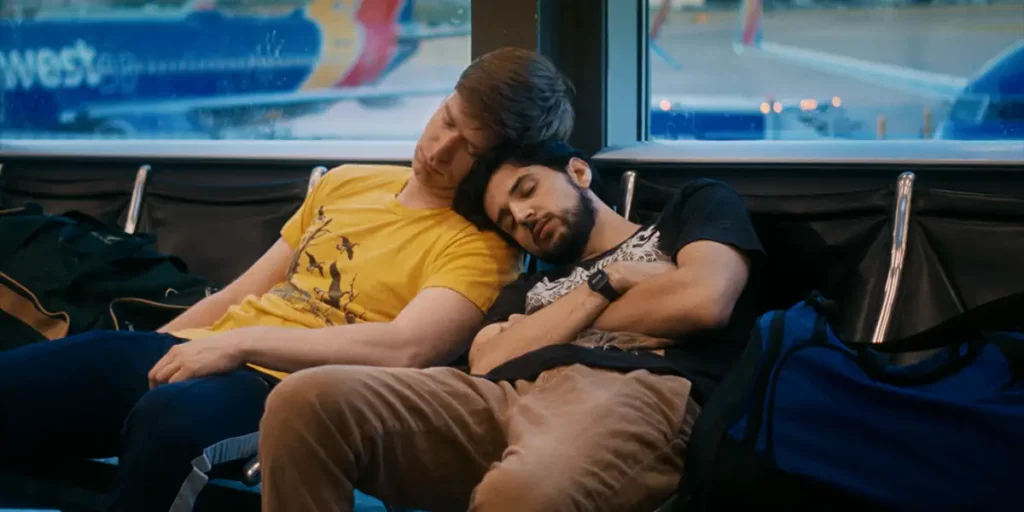
Itโ€™s an interesting idea, one that Zauhar has made good on twice now, both in her 2021 debut and in her sophomore effort, This Closeness. A work of psychoanalysis disguised as a one-location dramedy, itโ€™s the sort of work that makes you feel more like a fly on the wall than a distant viewer; yet even as a fly, you are aware enough to feel the discomfort that comes with being somewhere you werenโ€™t invited to. Thatโ€™s not exactly the case for Tessa (Zauhar), an ASMR YouTuber, and her boyfriend, Ben (Zane Pais), who take a weekend trip to Pennsylvania for Benโ€™s high school reunion, only to find that their Airbnb host is still in the apartment when they arrive. (And he doesnโ€™t intend to leave.) Adam (Ian Edlund) isnโ€™t exactly a Grade-A welcome wagon, at first only exiting his room long enough to force awkward conversations upon his guests, or to reiterate the fact that it was his former roommate who posted the listing, not him. โ€œYou know when being socially awkward becomes a physical feature? Thatโ€™s what happened to this guy,โ€ Ben jokes. 

That descriptor may be true, but Adam also fits the socially awkward bill characteristically, making each ensuing interaction between This Closenessโ€™ de facto trio more cringeworthy than the last. Early on in their stay, Tessa wishes to put some beer in the fridge, prompting Adam to show her that he has split each shelf directly down the middle with a piece of painterโ€™s tape and two index cards โ€“ โ€œGuestโ€ on the left, โ€œHostโ€ on the right โ€“ dictating who can put what food where. His side is packed solid, while Tessaโ€™s freshly-opened six pack is the sole occupant on her shelf. โ€œNow it kinda just looks like Iโ€™m an alcoholic,โ€ she says with a chuckle. โ€œMy parents are alcoholics,โ€ Adam responds, deadpan. โ€œTheir fridge doesnโ€™t look like that.โ€

Over the course of the filmโ€™s brisk, yet unsettling, 88 minutes, Adam grows to be less reclusive, and Tessa responds in kind, while Ben starts to show signs of toxicity from the moment he first leaves the apartment for a pre-reunion dinner, returning later with a flirty high school pal named Lizzie (Jessie Pinnick). Their interaction is the sort youโ€™ve seen before, if not been a part of: A bond between two old friends that has an undeniable air of sexual tension, a considerable amount of teasing banter, and far too much touching for two people who claim to have never slept together. The morning after their late-night catch-up session, Tessa expresses her discomfort, to which Ben responds by telling her sheโ€™s wrong, with his primary grievance being that sheโ€™s not being nice to him โ€“ real words said by a real person in this film. The grand finale of this argument sees Ben slamming Tessaโ€™s iced coffee on the ground; later, he โ€œapologizesโ€, but qualifies his laments with, โ€œPlease be nice to me again.โ€

As much as This Closeness is a portrait of power in a shared environment, itโ€™s also an incredibly sharp dissection of a toxic relationship, one in which the male assumes perpetual dominance over the female, who succumbs to his whiny requests no matter how irredeemable his actions are. Itโ€™s in these settings that Zauharโ€™s script is at its strongest, especially in a scene where Tessa calls her therapist in tears to discuss her relationship and describes her love for Ben as something that โ€œfeels really lonely.โ€ 

She continues: โ€œAs much as I complain about him, or I know things arenโ€™t working, or they could be and I just donโ€™t know how to get us there โ€“ maybe thatโ€™s the same thing โ€“ I feel so much for him, and see so much in him that no one else does. I mean, you canโ€™t explain what compels you to someone else, you just feel it in your whole body. And thatโ€™s why I think itโ€™s so lonely, because you can love someone so much and not be able to share that with anyone.โ€ In laymanโ€™s terms, Tessa is someone who is trying to justify the existence of a dying relationship, if itโ€™s not already dead. When she notes that she wants to belong to Ben, her therapist asks, โ€œWhy?โ€, to which Tessa responds, โ€œBecause it means I won.โ€

Of course, โ€œwinningโ€ is not a reason to stay with someone, an internal conflict that This Closeness puts to the test as it rolls toward its pitch-perfect final shot. The more in touch with these emotions Tessa gets, the more argumentative Ben grows, and the more approachable Adam becomes. Itโ€™s worth questioning, though: Are we seeing these men through Tessaโ€™s point of view, even with her in the frame? Is Ben truly this over-critical, unnecessarily-cruel menace? Is the more congenial Adam an ideal version of him in Tessaโ€™s eyes, this stranger representing a reprieve from the torturous partnership sheโ€™s locked herself in for years despite her silent urge to escape? 

Then again, perhaps these characters are exactly as they seem, fitting the same mold as all of Zauharโ€™s inventions. After all, she doesnโ€™t think โ€œnice people are interesting on cameraโ€; had the four characters in This Closeness been โ€œbetterโ€ people, they wouldnโ€™t have conjured such questions nor made for any sort of stimulating conversation. They would have been avatars operating in a setting with a conscious awareness of others, having inauthentic conversations about their peers, and enduring no conflict. Instead of beginning to form her own thematically-rich unofficial trilogy, a la Paul Schraderโ€™s โ€œMan in a Roomโ€ films (First Reformed, The Card Counter, and Master Gardener), Zauhar would have a series of stories that fall under the โ€œPeople in a Room Doing Nothing Much at Allโ€ umbrella.

In a way, that distinction is fitting for the stories she wishes to tell, but sheโ€™s sure to litter her films with complications, ones that make these rooms battlegrounds and these people terrified soldiers. Itโ€™s an aesthetic that might grow tiring at 120 minutes, but at 88, it sings as a slice-of-life drama that will feel almost too familiar to every viewer, in some way or another. In all likelihood, theyโ€™ll walk away panicked, thinking, โ€œIโ€™m not like themโ€ฆ Right?โ€. I imagine thatโ€™s precisely the response Zauhar wants. As long as you keep returning to the mirror, looking a little bit deeper with every gaze until the truth finally comes out.

Grade: B

Interview: ‘Atlas’ Composer Andrew Lockington

Composer Andrew Lockington freely admits he is a luddite. He carries around a folio
and writes notation the old-fashioned way. So, when he was asked to score another
film for Brad Peyton with whom he had worked with on the music for Rampage and
San Andreas, his expectation was it would be โ€œepic.โ€


Epic is one thing that is Lockingtonโ€™s score certainly is. Atlas, starring Jennifer Lopez,
Simu Liu, Mark Strong, and Sterling K. Brown is the story of a woman who carries a
deep distrust of artificial intelligence after synthetic lifeforms rebelled and became
terrorists. Yet, to survive, Atlas (Lopez) must learn to trust an artificial intelligence, Smith (Gregory James Cohan). Andrew Lockington speaks with InSession Film about finding the humanity in Atlas and
Smith.

Nadine Whitney: Let’s start from the beginning. You’ve worked with Brad [Peyton] before. Is this your third piece together?

Andrew Lockington: It’s our third big film. It’s our eighth project together.

NW: Okay, so you and Brad must have a very specific communication style now; when he gives you something, he just says, ‘Okay, Andrew, make it epic.’ Is this something he does? [Laughs].

AL: Yes, it is. We have a shorthand after working together for so long. There’s a lot of trust, which is amazing because it allows me to go and try some things musically that maybe with a new director you might not. I have that kind of flexibility, but with the trust, I can try really off-the-wall ideas, which is fantastic. It also means if they don’t work, I’m not going to get fired. So, we have the chance to try things and experiment a little, which is how you end up going outside your box and doing something you haven’t done before.

NW: Well, I was listening to your score and all your scores last night. So, you’ve been in my dreams as such, but I was specifically listening to the score of Atlas because it is germane, of course, to our interview. And I was interested because when I was watching the film. One of the things that happens in the film is that Atlas herself is interested in classical music. She’s listening to Baroque music. But your score is very much not Baroque, with the exception of the main themes, which use human voices. Otherwise, the score is very heavily orchestrated.

The music doesn’t have a sense of that period that the character herself was interested in. When you were looking at the script, were you thinking, ‘Could I put what Atlas herself likes in it?’ Or were you just thinking, ‘I just need this to be propulsive and strong and not quite action-oriented because it’s not that obvious, but just very, very intense.

AL: Yeah. When Brad and I first started talking about the music for Atlas many years ago, really before the script was finalized, well before production. It was obvious that there was a lot of technology already in the film, and the classical music references were written into the script and were really important as her escape, but I was trying to find a way for the music to be as uniquely human as possible. And especially in this day and age, when AI is getting closer and closer, and it’s getting harder and harder to tell the difference. What would be some musical element that would feel profoundly human and something that couldn’t be replicated?

So that was really the focus of the score and trying to come up with something that was uniquely human and just a sound that was as far away from the technology as possible. And I did think about the classical idea. I think, maybe subconsciously, the fact that Smith [Gregory James Cohan] ‘s theme is solo, very minimalist piano, maybe influenced that. I hadn’t thought of that before, but quite possibly, that is a connection. But yeah, so much of the score, for me, is the most important part of the score, which is the humanity and the emotional connection between Smith and Atlas.

NW: I think that that’s captured beautifully in the score because I think that a lot of science fiction films really push heavily on synthesized aspects. This score doesn’t have massive amounts of synthesizers at all. I don’t believe I heard one because you have [conductor] Matt Dunkley doing the orchestration, and it is all orchestra. It’s strings, and it’s very human. So, I think that you have made a really interesting decision in your composition to keep it almost universal without pushing it so far into this kind of dystopian future thing where we can’t understand humanity.

AL: That’s a good observation, actually. And it’s interesting because there are actually electronics nestled in with the orchestra. They’re hidden, almost like they’re making the orchestra more powerful, but they’re trying not to be noticed. They’re trying to be more organic. Initially, I thought about what Smith would sound like.

Smith spends so much time trying to be aligned with Atlas and be more human than robot. He’s trying to convince her, in my mind, that he isn’t a robot. So, for his musical theme to be something out of a 1960s Batman computer sound or Max Headroom or something like that didn’t really make sense because I think the technology and the computer elements are already so well represented visually.

It was a conscious choice, and I think about Siri. Or Alexa and all these AI assistants that we already have. They don’t sound computer-generated; they sound more and more human all the time. So, it felt like it was more important, in order for them to actually have an honest relationship and for the musical themes to feel very human, even though one of them represents an AI.

NW: I’ve actually never used Siri or Alexa, so I have no idea what they sound like.

AL: You’re the first person I’ve metโ€ฆI don’t either. I’m so suspicious of it listening to me all the time. I’ve turned it off, and I just don’t want it in my life.

NW: No, I’m quite happy to type instructions if necessary. [Laughs].

AL: You and I are so alike that way. That’s so funny! In that sense, I can understand why Atlas is so suspicious, and I’m the same way. I like keeping tasks as human as possible.

NW: Oh, so do I. I still write notes on paper. And I imagine that when you’re writing scores, you use paper sometimes.

AL: It’s so funny you say that because it’s so two things. First, I have a paper calendar, spiral notebooks, and tons of other things. I love my black wing pencils and pencil sharpeners. I’m always using actual tactile writing in instruments, and I have a book of manuscript paper that I’ve had for years where I write all of my themes, and I hum them in my head, and then I write them down on the staff. So, I am clinging to the human elements of what we do as much as I can, as long as I can.

Gosh, I sure hope there’s a good to it to balance all our fears of AI. When this film began, when we started talking about it, five or six years ago, and there was no talk of AI in this way, this was pure science fiction. It’s incredible how, in the last few years, it’s become a topic that is much closer to reality than it was then.

NW: Well, people like myself, and I imagine yourself, to an extent, as anybody whose job is in the arts. We are fundamentally being told we can be replaced, and that is something that we have to bristle against. To say, ‘Well, actually, no, my specific style of writing is never going to be able to be replicated because the human element is essential.’

AL: It’s funny, even knowing that it comes from a human source as it’s natural. Isn’t that all the difference? It’s amazing.

If I find a beautiful rock on the beach or a piece of sea glass, that’s fascinating to me because of the history that’s behind it and all the circumstances that led to that being so beautiful. If a replicator like in Star Wars just creates a piece of sea glass, just because it doesn’t have that history, it doesn’t have the same value to me. So, I wonder if society will struggle with that. If people care about the history behind writing or art or music, they will separate and go a different path than the people who don’t care, the people who are just happy with something that looks old and real but doesn’t have that history.

NW: I don’t know. I think the character of Atlas herself is fascinating because what happens in the film is that Atlas causes Harlan (Simu Liu) to become sentient out of a very basic human emotion, which is jealousy. And she blames herself so intensely for what happened. Her distrust of AI doesn’t really come specifically from distrusting her brother, but from distrusting what humans themselves can do with AI.

AL: Absolutely. And it actually makes me think a little bit; I remember hearing last year that AI was progressing so much faster than anyone had imagined. It was exponentially faster, and it was very much related to when chat GPT became this very trendy thing that so many people were inputting essays and ideas and asking questions. In fact, in our curiosity, we were creating this thing that we so feared. And in fact, it was accelerated because of the amount of input it was getting from people using it.

I think Atlas does that in the film; she actually creates her nemesis, like you said, out of jealousy and out of trying to be loved by her mother. So, it’s interesting how we can sometimes be our own worst enemy. And when you think about it, we’re fearing something in AI that we’ve created. So, in that sense, it is similar. I mean, Atlas is a very fun film, but in fact, the underlying themes are very relevant.

NW: I think they’re extremely relevant. It’s just fascinating because I think everyone is suspicious, but at some point, we are all being scraped. So, what do we do now? How do we live with this thing that we created? How do you feel as a composer when you’re putting these ideas down? Do you ever feel that ‘I’m Andrew Lockington, and someday somebody is just going to copy me, and it might not be human?’

AL: I think that’s probably inevitable, but the parts of music that fascinate me really affect me emotionally. I can’t put my finger on what they are. I can’t sit down and say, ‘I’m going to create something really moving today.’ I can sit down and approximate something, but there is a magic, a secret sauce that comes from the ether. You find the diamond every once in a while, or the gemstone, and it just happens. I often think of writing with two sides of my brain and then my heart. And I can write something that’s very kinetic and action-like. And I can write something that is emotional. And, sometimes, something just kind of comes out. Often, it’s an emotional life event, or something will happen that bypasses my consciousness and my brain entirely, and it just sort of shows up and comes out. I’m suddenly transcribing something that I don’t really know where it came from.

I guess, to me, that’s the part that’s furthest away from being replicated because I can’t replicate it. I can’t know when that’ll happen. You must find that, Nadine, sometimes in your writing, you have magical moments where you write something spectacular. It’s much greater than the sum of its parts.

I think that’s the part that hopefully will always be valuable, that people will want to know that something came from a human, that there’s a story behind it, that there’s aches and pains or joy or life experience that went into the art. That’s my dream anyway. I’m hoping that’s the case.

NW: Yes, there is something essentially human. My understanding of something, your understanding of something, comes from basic emotions and connection. We still, I think, use our history and our influences. Who are some of your heroes and heroines in music?

AL: I try to listen to a ton of music from all over the world. On Atlas, there was some influence from Ligeti. One of the producers of the film took me to the Hollywood Bowl in L.A to see a live performance of 2001: A Space Odyssey. That score uses a couple of Ligeti pieces and woodwinds texturally instead of melodically.

And that had a big influence on the score for Atlas, actually. It made me think, ‘Oh, that’s a great idea, especially with all the sound effects. There’s a lot of sound effects. The woodwind idea, that range became a texture I could play with that would be out of the frequency range of Smith’s walking, or the sound of the planet, or explosions, things like that.

Early on in my life, I was very influenced by film music. The Spielberg, the Cameron films, Ridley Scott. Those were all interesting to me, and musically, they had a certain style. But it’s fascinating that as much as I know that, that style lives in me, and my music pays homage to it in films like Atlas. The audience has evolved so much since then. I think we’re much more sophisticated as an audience. I’m always very conscious of not wanting to narrate emotions but instead, create an environment and a musical palette where the audience can feel their own emotions. And different films have that ability to different degrees, but that’s something I’m very conscious of.

NW: I think the perfect balance with any score for a film is to know it’s there but not to know it’s there.

AL: No, I so agree. That’s a great point.

NW: I often will come across a score, and I would just think, ‘Oh, would you shut up?’ I want to experience these emotions myself. Please don’t tell me what to think. There are some scores that say, ‘Here is the time when you feel sad.’ And I don’t think that your score did that. It wasn’t a character on its own. It was there to support the characters. And that is a delicate balance that some composers just don’t get right at all.

AL: Well, I’m so happy you said that because that is always a very conscious thing [for me]. We’re a few weeks into the release, so here’s a spoiler alert for anyone who hasn’t seen it. But, in the end, when there’s the Smith and Atlas goodbye, that was a scene that was really important to me. The music isn’t about death.

It isn’t about mourning at that point. I really thought of the scene as my grandparents before they passed; what are all the things I wish I’d said to them to say what they meant to me? How would I have addressed them? What would I have said? I wouldn’t have said, ‘I’m so sad you’re passing.’ I would have said, ‘This is how you’ve changed me. This is how you’ve affected me.’ And I would have tried to speak to them in a way that paid respect to them.

Atlas, when she is saying goodbye to Smith, instead of it being, ‘I’m so sad.’ It’s, ‘I respect you now. I want you to know that I’m opening up to you because you’ve earned that respect, and I care about you.’ And that, to me, was so much more important than, ‘You’re dying.’ I think if the audience feels sadness with that, I wanted it to be because the music reflected what they were going to lose, but they came to the conclusion of that loss on their own.

It’s always a very conscious thing. Another moment where that same theme plays is when Atlas watches the archived video of her mother giving a lecture about the possibilities of AI; it is obviously long before the revolution and the war. But I use that same theme there. And as I said to Brad, it’s a great opportunity to use it because, in that moment, it’s the mother and all of her optimism about what AI can be. And at that moment, Atlas is watching it with disdain for her mother’s feelings.

So, to me, that was sort of an opportunity. We haven’t earned that theme, even remotely, but if I put that theme in the lecture, then we can hear it, and Atlas can respond to it in a very polarized way to the evolution she makes at the end of the film, where it actually does represent how she feels. But it was very important, and I was so determined. It’s stating that if we’re using this music here, the minute she pauses it, it has to stop because the audience can never think that this music is reflecting how Atlas feels about it at that point. We just haven’t earned that even remotely.

NW: Well, I’m getting the wind up here. I wanted to say thank you for the score. It was one of the most transcendent bits in the film. I think you did an excellent job. So you are a genius. You won’t be replicated. Don’t worry!

AL: Thank you. You’ve brought up some really good points, especially about classical music. It’s interesting to look at it based on your observation, and I’m realizing that [influence] subconsciously wormed its way into my approach. So, thank you for bringing that up. And, hopefully, it was just the fact that happened, and I wasn’t aware of it. Maybe that puts us one step further away from being taken over by AI!

Atlas is streaming on Netflix.

Podcast Review: The Bikeriders

On this episode, JD and Brendan discuss Jeff Nichols’ latest film The Bikeriders, starring Jodie Comer and Austin Butler! We’ve been looking forward to this film for a long time now. We are huge Nichols fans and he did not disappoint with his latest.

Review: The Bikeriders (4:00)
Director: Jeff Nichols
Writers: Jeff Nichols
Stars: Jodie Comer, Austin Butler, Tom Hardy, Michael Shannon

Subscribe to our Podcasts RSS
Subscribe to our Podcasts on iTunes
Listen on Spotify
Listen on Stitcher
InSession Film Podcast – The Bikeriders

Interview with Director Fernando Andrรฉs and Actor/Producer Jacob Roberts of ‘Rent Free’

Prior to the world premiere of Fernando Andrรฉs latest film, Rent Free, I got a chance to sit down with him and co-lead/producer Jacob Roberts to discuss the film. Andrรฉs is one of the more exciting contemporary filmmakers to pop up on the scene recently. And the reason? Because heโ€™s one of few who so perfectly captures the contemporary worries and anxieties of life. Through humor and honesty, Rent Free gets to the heart of modern society for young adults in ways that will make many viewers feel incredibly seen. Thatโ€™s incredibly powerful, so to get to speak with the two regarding these topics and more was a true pleasure. Enjoy the conversation, check out my full review of the film right here, and most importantly, enjoy Rent Free! 


Alex Papaioannou: So obviously, we spoke about your last feature, Three Headed Beast, when it premiered. What I admired so much about that film is that it’s very quiet and very slow moving. And your new film, Rent Free, is a pretty significant shift in style and tone. Can you talk about what encouraged you to make that shift? And how did you handle work on set differently, if at all?

Fernando Andrรฉs: Well, I think that none of it is ever calculated. You know, I’m drawn to so many different kinds of movies, and I always trust that there will be some connective tissue. So, it just depends on the film. For this one, it was the comfort and reliability of a buddy comedy; A thing that I feel was very popular in the aughts. So I was thinking, what if there was a way to use that comfort and that simplicity of a buddy comedy, and use it to tackle some pretty complicated issues that I’m thinking about all the time: queer male friendship, or the incredible anxiety and insecurity of trying to make it work in cities that are becoming increasingly unlivable. And, yeah, that was just how I thought of it. Just thinking about films as concepts and ideas, and then following it as it goes. The first one was the first one, and this one is this one. But then, of course, there’s the reality of making it. All the cliches are true. Comedies are hard! They are really hard to make. They require incredible focus on tone and pacing. And when you have such a large cast, everyone has to be kind of on the same page. And if people are acting in different movies, you have to make sure that those different movie performances still gel together. Because I think it’s a little too much to expect everyone to be in the same movie. But I think that, in the end, we ended up with a pretty cohesive and complementary tapestry of actors, styles of acting, and comedy. So I think that was a big task. Just realizing that this is a comedy. Three Headed Beast was a lot about physicality and body language, and that stuff is still present in Rent Free. So we have to make sure that there’s a lot of intentional blocking and intentional visual language on top of all the dialogue.

AP: Speaking of going from project to project! Jacob, you worked with Fernando on his recent short film.

Jacob Roberts: Yeah!

AP: So can you talk about your relationship together, as well as if you pulled anything from that experience into working on a feature film with him?

JR: Well, Fernando and I met about two years ago… Even though it feels like it’s been longer. We met at a festival in Los Angeles where I had my short film, Half, playing, and he had Three Headed Beast there. We saw each other’s work. We hit it off. We were going to all these parties at the festival together. It was kind of like an instant friendship. We kept in shockingly close touch given the fact that I live in LA and he lives in Austin. And then I was coming to Austin for Austin Film Festival with Half, and Fernando texted me a week before the festival. I was going to come and crash on his couch. And he texted me, “Oh, I wish we were the kind of people who would make something while you were here in Austin.” And then I was like, “Well, why don’t we be those types of people?” So then we were throwing around ideas for a short. And I came up with this idea about a roommate who eavesdrops on his roommates therapy sessions, and becomes obsessed with one of the patients. So I wrote a first draft. Fernando rewrote it. And then that week we shot it. We wrote it and shot it in the span of 10 days. I mean, do you want to talk about that?

FA: Yeah! If you include the conception and the editing, I think you could condense it all to being a two or three week process. So I think we were like, “Okay. If we can dream up and finish a short in two weeks, we could do that for a feature.” So that definitely helped us. And it also unfortunately got me to make another film like Three Headed Beast… I mean fortunately! [Laughs.] I only say unfortunately because of how hard it is when gathering a small team of collaborators and making an ambitious film. I think once you finish a film like that, you’re like, “Never again.” And I think with this one, it was proof that we could do it again. And we could do it bigger, and in a much different style.

JR: And I think with Knowing Me, Knowing You, the collaboration of co-writing, co-directing, and co-producing led very naturally into my decision. When Fernando said “Hey, I’m writing this role for you, and do you also want to produce the film?”, it was so easy for me to say yes. It was also scary, of course, because I did know what I was coming onto. I knew that I was coming onto something that was going to be a lot of work. It was going to be very fast paced. It was going to be both very thought-out and very spontaneous. So it was scary. But I had the confidence from having worked with him on that short. And feeling so proud of what we made together so quickly with that film, I was ready to jump in.

AP: And how long was this shoot?

FA: 30 days.

JR: 27 shooting days in Austin and three shooting days in New York City.

FA: And I mean, everyone says it, but, yeah, it’s never enough. It could have been double that, and it wouldn’t have been enough.

JR: It was enough! [Laughs.]

FA: That’s the producer talking!

AP: [We all laugh.]

FA: It was 30 very full days. They say the thing about feature films is that they’re like summer camp. And this definitely felt like an extended filmmaking summer boot camp.

AP: Jacob, you mentioned you’re from LA. And Fernando, I know you’re Austin-based. I’m from New York City. These are the three seemingly most expensive and creative cities in the country. And a lot of this film talks about a major shift in Austin culture. Specifically, it addresses how a lot of creatives are either leaving, or are being forced out of Austin. So I’m curious. For both LA and Austin, can you talk about your feelings on what’s happening in these cities that, like you said, are now becoming unlivable due to price or a shift in culture?

FA: Of course. I feel a lot of things about that. And I think a lot of things about that. That’s a very complicated issue, and there are many people that are better at talking about it than me. What I will say is that you hit the nail on the head with there being a shift. I think the view of the culture in Austin is lagging a little bit with the days of what they used to call the velvet couch. Like it used to be, you could just get there, and there’s all the cheap beer, the cheap food, the cheap rent. And creatives could just go and relax, and it leads to movies like Slacker. You know, a masterpiece, but a movie about a bunch of creative, artsy people just roaming around… And of course, that’s just a very Gen X sentiment too, so it’s not just an Austin thing. But the shift now is that it’s becoming the same as a city like New York or LA, where there’s just an influx of tech money and people are moving in from those very cities. And they’re just kind of terraforming Austin into something that more closely resembles those cities. And it’s sad. So is Austin just another city now? It loses its culture. When it becomes that untenable and that anxiety-inducing, there’s a hope that something might be better in New York or LA and to just look for a fresh start. Those cities also have more of a defined identity. So I think that’s what Austin’s struggling with right now. It’s an identity crisis. There are just large swaths of Austin that are feeling like LA-lite. You know, I have a friend who put it nicely by saying that Austin has started to feel like an Austin-themed city.

AP: Jacob, with you being from LA, and your character wanting so desperately to be in his New York era; What would you say is the allure to New York?

JR: Well, I grew up in Washington, D.C. And New York was always, you know, a three and a half, maybe four hour drive away. Five hours if you hit the wrong traffic. I grew up seeing New York as this fundamentally more exciting, promising, glamorous, cultural sort of destination. I always envisioned myself living in New York City. I think that people’s reasons for that desire are different. I think some of the mythology of the city just comes from its density. The density of culture that comes with the density of people. And I think another part of it is present in this film. There’s this fantasy that the main characters have, where they think, “We’re going to be able to accomplish this New York on-the-cheap version of the city.” And that’s what the whole opening montage is. And I think that Ben [Jacob’s character] has this idea that he’s going to be able to live that same day over and over again in New York. And he sort of learns that’s not true towards the beginning of the film. But Ben is not a person who learns his lessons very well. So I think through to the end of the film, he still has that same fantasy. It’s this idea of New York being the haven for a kind of creative, restless soul, which is kind of shown as a lie by the realities of living there. Artists are being pushed out because it’s a very tough place to live without the safety net of wealth.

AP: If only every day here could be like that all-day free experience. [We all laugh.] So obviously, rent plays a large part in this film. And we all know what rent means in the very literal sense, but for both of you, how would you describe it symbolically in the film?

JR: Obviously, in the film, it comes to take on sort of an outsized significance. And there’s a reason that the rent is displayed on-screen in each setting. It allows the audience to orient themselves in this reality that is so controlled and so dictated by two questions: What does it cost? And can you pay that cost?  And that question of money influences these characters: their interactions, their dynamics, their personalities. I think that’s one of the big significances that rent has in the film for me.

FA: Exactly. We present the context for each chapter of the film. They’re chapter headings, and they’re the inescapable confines of the settings the characters are in. As the viewer keeps watching, they’ll slowly realize that it softly dictates how the characters within those apartments or houses act towards the main characters. From how they treat each other, to how they discuss money and everything else. I think it just kind of defines everything. It’s an overarching thing, even if it’s never directly addressed. I want to make sure that the audience knows the film is presenting it to you, for you to make your own conclusions.

JR: And I think money plays a role in their friendship. Class and class privilege too. I think you start to see that come out more as the film goes along. And I would also say, from a symbolic stance, they’ve been trying to go through this relationship rent free with each other. And a lot of rent is due by the end of the film. [We all laugh.]

AP: Without giving away anything about the end of the film, there’s one sequence where somebody says, “You can’t live in one place forever.” And I thought that was really fascinating, especially having lived in one place my whole life. So do you think that’s true?

FA: It’s funny, because that line is in this drunken riffing. They’re just joking around with each other. And Ben is making a joke about how he just wants to live in one house like they did before the Depression.

JR: And he’s total bullshit, he doesn’t know anything about the Depression. [We all laugh.]

FA: But yeah, the whole movie is that. There’s Ben with his flighty and fanciful way of looking at the world, and his being met with reality. And as for that quote. I live in Austin, and I want to live there for the rest of my life. I know that my work will take me wherever it’ll take me, but I know that Austin will always be home. 

JR: It’s very hot!

FA: Yes, it’s very hot and humid. But hey, the whole world is going that way. [We laugh.]

FA: But it just depends on the person. What ties you to your home, you know? If you’re like me, and you have family, and you have a partner and your own friends that keep you tied to a place, that’s one thing. But then there’s people that are seeking their own family, or they’re seeking their own meaning in life, and that can take them wherever. I think it’s just what defines home for you.

Retro Comedies Worth Revisiting

Some of these 80s and 90s romps were sleeper hits and others were reviled. However, the successful good humor or forgotten bad pastiche herein are both worthy of a new millennium viewing.

Can’t Buy Me Love 

Wine stains on a borrowed without asking dress and $1000 lawn mowing money saved for a telescope help nerd Patrick Dempsey (Grey’s Anatomy) buy being the boyfriend of cheerleader Amanda Peterson (Explorers) in this charming 1987 teen comedy. Arizona sunny moods and eighties colorfulness belie classism amid the fart jokes and cafeteria standoffs. The rich kids are popular but those who have to work toward college are not, despite the cliques all having started off as friends when they were kids. Somber moments in a vintage aircraft graveyard lead to astronomy flirtations as our mismatched couple ends up having fun together. Secretly sensitive Cindy hides writing poetry, actually liking geek to chic Ronald for who he was before he ghosted his real friends for a mischief night gone wrong and changed into someone he doesn’t really want to be. Rich mothers and dads with station wagons represent the generation out of touch yet all the teens act so mature with their cruel lies and pressure to be cool. Although there are a few surprising moments for PG-13, this does proceed as expected with stereotypical teen party exposรฉs, school dances, hammy speeches, and the obligatory slow clap. Fortunately, there’s a certain only in the eighties idealism here with tender personality that does what it has to do and doesn’t overstay the humor and lessons learned. Who decides who is a geek anyway?

My Blue Heaven

Steve Martin’s (Only Murders in the Building) Vinnie Antonelli aka โ€œToddโ€ can’t adjust to the sunny suburbs while in the witness protection program โ€“ leading to grocery store mishaps, mowing the lawn in expensive Italian suits, erroneous stakeouts, little league fundraising scams, and hijacking twenty-five copies of the same book โ€œin case I want to read it more than once.โ€ Yes, this 1990 fish out of water caper written by Nora Ephron (When Harry Met Sally) is based on the same material as Goodfellas, and the mob send ups are intentionally absurd thanks to the โ€œProvolone trial,โ€ over the top Italian stereotypes, and the lack of available arugula. There are so many mobsters in witness protection that the gang goes into business again, causing headaches for FBI handler Rick Moranis (Honey I Shrunk the Kids) and local district attorney Joan Cusack (Addams Family Values) before they both loosen up and let their hair down thanks to Vinnie’s backhanded wisdom. Memorable quips and perfectly timed music cues accent brief moments from Carol Kane (Scrooged), but โ€œdon’t worry, I didn’t marry her under my real name.โ€ Though popular then and obviously now overshadowed by Goodfellas; the numerous sight gags, witty twists, merengue montages, and charming vignettes make this an easily digestible, pleasant, family friendly re-watch โ€“ save for the dog named โ€œFongool.โ€

Oscar

On his father’s death bed gangster Sylvester โ€œSnapsโ€ Stallone (Rocky) vows to go straight in this 1991 farce from director John Landis (Trading Places). Unfortunately, an embezzling accountant, fanatical wife, sassy maids, proposal triangles, a case of gems mistaken for a case of lingerie, and linguist Tim Curry (Clue) admiring rebellious daughter Marisa Tomei’s (My Cousin Vinny) diphthongs conspire against Snaps in fitting screwball fashion. Barber of Seville cues accent the source play folly, feisty Italian stereotypes, Old Hollywood send ups, and Prohibition colloquialisms alongside roadsters, fedoras, pinstripe suits, candlestick phones, and a grand townhouse setting. This is slow to get rolling, however, with unnecessary scamming bankers, idiot police, and rival mobster bookends. Stallone is somewhat flat; the straight man who still has to be funny in playing against type while the rest of the ensemble excels at the over the top, snappy dialogue and period hyperbole. Bumbling tailors in the library are mistaken for assassins who think their work is an art form, the consigliere’s now the butler, and henchman are in the kitchen baking muffins โ€“ but they’re still packing hidden pieces and brass knuckles. Chazz Palminteri (A Bronx Tale) makes every scene better as more familiar faces lean into the double talk, Lisa, Theresa, elocution, Italian slang, and cigar chewing. Self-aware, fourth wall winks pepper the witty performances, and despite its reviled, Razzie reputation; this is worth seeing for fans of the hysterical ensemble.

Ruthless People

Tycoon Danny DeVito (Twins) is happy not to follow Judge Reinhold (Fast Times at Ridgemont High) and Helen Slater’s (Supergirl) ransom demands when they kidnap his wealthy wife Bette Midler (Hocus Pocus) in this 1986 satire from directors David Zucker, Jim Abrahams, and Jerry Zucker (Airplane!). An opening monologue sets the ruthless mood as DeVito gleefully loathes his desperate to be thin wife and her poodle, and the superb ensemble is both clever and having a good time with the zany miscommunications, chloroform, and criminal cumbersome. Bright colors, angular Miami Vice fashions, and kitschy furniture make for a tacky time capsule โ€“ accenting the worthless expense to look good and modest home versus excessive mansion. Why be a decent person when you can be an ass and get rich? The $500,000 ransom keeps getting reduced as our feeling guilty kidnappers renegotiate with our not-so-loving husband, who feigns grief amid split screen conversations, payphone mishaps, and slapstick escape attempts. Bemusing visuals capture the absurd as backseat romps are mistaken for murderous screaming and inept police are caught in the blackmail misunderstandings. Brilliant phone gags elevate renewed demands for two million dollars while choice cursing sets off the witty interplay. Midler is deliciously over the top in the exercise montages, threatening the electric chair and prison weddings for her kidnappers. Size matters jokes and kicked in the crotch cowardice make for ineffectual men. A VCR costs $350, and nobody’s willing to jump to rescue until they see the money floating in the water. Although successful then, this shrewd dark comedy should not be forgotten now thanks to perfectly timed character farce, killer twists, and a feel good eighties finish.

Movie Review: ‘I Used To Be Funny’ is Tonally Uneven, Despite Sennott’s Great Performance


Director: Ally Pankiw
Writer: Ally Pankiw
Stars: Rachel Sennott, Olga Petsa, Jason Jones

Synopsis: Sam is a young stand-up comedian and au pair struggling with PTSD, who is weighing whether or not to join the search for Brooke, a missing girl she used to nanny.


If I could offer one recommendation pertaining to Ally Pankiwโ€™s I Used to Be Funny โ€“ that is, without that recommendation being the movie itself โ€“ it would be to go in completely blind. Judging a book by its cover can lead to interesting returns in most cases, but doing so with a film of this nature makes for an even more curious exercise. I mean, itโ€™s a dramedy starring Rachel Sennott as a stand-up comedian with the word โ€œFunnyโ€ in the title. Youโ€™d be forgiven if your first instinct is to assume youโ€™re in for a bundle of laughs.ย 

The reality of Pankiwโ€™s debut feature is considerably darker: Indeed, Sennott portrays a stand-up comedian, and the now-trademark glibness that her characters tend to live by does peek through in one-liners aplenty, but I Used to Be Funny offers her an opportunity to utilize the dramatic chops her well-documented Tisch education afforded her back in the early days of her career. Sennott plays Sam, a comedian who supplements her income by working as an au pair for a wealthy family with a troubled daughter, Brooke (Olga Petsa). As the film unfolds on two separate, tonally-dissimilar timelines, we see Sam forming a unique bond with Brooke in one, while in the other, their bond has fractured due to something Sam did. (At least, according to Brooke.) 

This relationship-altering event, which involved Brookeโ€™s father (Jason Jones) and is only vaguely referenced until we see it unfold in the filmโ€™s final act, has left Sam riddled with PTSD, and has sent Brooke running into the arms of older troublemakers in an effort to avoid her problems. Sam, in the interim, has quit comedy, broken up with her boyfriend (Ennis Esmer), and asked to crash with her comedian pals, Paige and Phillip (Sabrina Jalees and Caleb Hearon, respectively). These living conditions provide a natural comedic undertone to the proceedings, but Sennottโ€™s zingers fly few and far between in comparison to what weโ€™ve come to expect from the Bottoms star. Needless to say, Bottoms this is not; itโ€™s not even Shiva Baby, the indie that launched Sennott to relevance and carried with it a droll, cringey humor, the likes of which I Used to Be Funny doesnโ€™t waste time attempting to replicate.

Of course, thatโ€™s because it has different things on its mind. Itโ€™s a film that is far more concerned with comedyโ€™s role in grief, how connections can be formed and broken through trauma, and the lengths we will go to to hide from the world that seems to kick us while weโ€™re down. But the more I Used to Be Funny jostles back and forth from one timeline to the next, it becomes scattered, both narratively and tonally. Itโ€™s a worn out stylistic approach already, non-linear storytelling, but when a film becomes so reliant on its perks, things go one of two ways. Either the train falls off the tracks entirely, leaving narrative threads strewn about the wilderness waiting for someone to pick them up and piece them back together, or the storyโ€™s principle twist โ€“ if we must call this filmโ€™s primary trauma a โ€œtwistโ€ โ€“ is depended upon so heavily that we spend over an hour teasing this inevitable-yet-elusive reveal, and said reveal thus lands with an unremarkable thud.ย 

Now, it doesnโ€™t help that I Used to Be Funny telegraphs its most emotional moments through a slew of Phoebe Bridgers needle drops, a cheap (albeit catchy) strategy that causes the filmโ€™s opportunities for natural melodrama to go up in smoke. (Not to mention the fact that โ€œI Know the Endโ€ โ€“ a song with the lyrics โ€œyeah, I guess the end is hereโ€ โ€“ plays as the credits roll. As if things couldnโ€™t get more on the nose.) Ultimately, this is just a showcase for Sennott, a chance for a well-known comedic actress to dabble in drama. If only the dramatic moments sheโ€™s given werenโ€™t so ham-handed, and the comedic ones so brisk.

Then again, at least Pankiw is upfront about why: This might be a movie about a comedian, but itโ€™s about one who used to be funny. And while it wasnโ€™t that long ago when Sam had camera crews in house to film her own special, horrible things can happen fast, thus zapping even the wittiest comic of the ability to laugh at her own pain. Whatโ€™s a shame is that Samโ€™s trauma feels dismissed in the moment, not intentionally, but due to the filmโ€™s lack of overall focus. As it lobs misdirection at you from every which way, pulling you from one timeline to another, it stunts its own momentum, causing us to have more questions than answers by the time it reaches its abrupt, saccharine conclusion. 

Was the film we just watched about a young female comedian attempting to rediscover her voice after it was yanked from her grasp due to the emotional ramifications of a traumatic event? Was it about rebuilding relationships with loved ones while repairing an even more significant relationship, the one with ourselves? Or was it about the complicated dynamic between a cool au pair and the teenage nightmare she looked after before she went missing? Well, yes, to all of the above. All three work as premises, but become too much for one debut to cover. And thereโ€™s only so much an audience can do when the movie theyโ€™re watching has no idea what story it wants to tell the most.

Grade: C-

Women InSession: Physical Media vs Streaming

This week on Women InSession, we have a thorough conversation on physical media vs streaming, the pros and cons of both and how the business is shifting!

Panel: Kristin Battstella, Jaylan Salah

On that note, check out this week’s show and let us know what you think in the comment section. Thanks for listening and for supporting the InSession Film Podcast!

Subscribe to our Podcasts RSS
Subscribe to our Podcasts on iTunes
Listen on Spotify
Listen on Stitcher
Women InSession – Episode 90

Ada, ‘The Piano,’ and Constantly Drowning in a Sea of Art

โ€œAt night! I think of my piano in its ocean grave, and sometimes of myself floating above it. Down there, everything is so still and silent that it lulls me to sleep. It is a  weird lullaby and so it is; it is mine.โ€ 

Ada, The Piano (1993)

I always thought of my life as someone constantly drowning.

My empathetic nature, neurodivergence, constant obsessions, and infatuation with everything artistic have led me to live a thrill-seeking, hectic life that feels ridiculous to describe to anyone, even the closest of the closest people in my life.

I told a close friend of Native American roots that I was born on a stormy night, on January 22nd, 1988, and she told me that this explained why I was so obsessed with the ocean. The sea calls out to me now and then, willing me to succumb to its entirety so that the noise inside of me would be reduced to a hush.

Iโ€™m a sea girl but Iโ€™m not that talented of a swimmer. I have lived in the same coastal city since I was born. Iโ€™ve briefly traveled to work and live in the capital city of my country, fell in love with someone on the same intellectual level, decided to get married there, then chickened at the last moment, returned to my hometown, feeling the sea calling out to me, whispering in my ears all the words I donโ€™t want to hear. 

I have been writing since I was 9. But my writing matured and branched out, usurping every other aspect of my life like Aerys II the Mad King when I was in my teens. I fell in love with a classmate, hard and rapidly, rolling them around like cigarette paper while dating two guys. My poetic self wanted to constantly plunge me into this chaotic mess of feelings, this love triangle felt more like a necessity for my artistic expression. I fed on it like some people munched on burgers or consumed alcohol. The feeling was my drug. I craved feelings to write. I sought dangerous, crooked routes and paths to untrodden lands, barely made it out of some alive, bringing with me piles and piles of refined, raw, and scraped at the edges feelings. They would all be stored inside of me, ready to burst at any hint of danger or even something that triggers the trauma of falling again in love where my feelings usually cradle the whole relationship like a fetus in an abandoned, dark womb.

And every time I fell deep and hard in love, I immediately thought of the sea.

The sea in my town is wild and unruly. The Mediterranean Sea has never been known for its mild, calm shores and predictable nature. As a child, I remember my father teaching me how to swim and envying his outstanding swimming skills. One of my cousins could work her way through waves as high as mountains, the sea breeze and the gravitational pull of the tides never breaking her stride or slowing down her arms hitting the crests. But not me. My conservative father denied me access to professional swimming classes at a very early age. And I remained the sea girl of the shore, barely making it a few meters in. It wasnโ€™t until I became an adult that I realized, I still donโ€™t know how to swim well. I am not a skilled swimmer.

But if thatโ€™s the case, then why is the sea still a mystery to me? Why does it feel like my life has always been in a constant state of drowning? Is it because of my lack of proper swimming skills? Or is it because I chose a different swimming mode, the arts?

I donโ€™t remember my first introduction to Ada (Holly Hunter), Jane Campionโ€™s stunning female protagonist in her Palme dโ€™Or winning, The Piano. As soon as I heard Michael Nyman’s โ€œThe Heart Asks Pleasure First,โ€ I realized I would like to see the film where it is featured. I did, and it didnโ€™t disappoint, because I felt this invisible connection shared with Ada. We were both living in a constant state of drowning.

When we first meet Ada, she is stranded on the shore with her belongings, her daughter, and her piano. A situation likely to make anyone lose their mind; but not Ada who finds a gap in the crate and slowly removes the lid to play on her piano. The magical sequence ends when a rush of seawater disrupts the momentary peace and wets her shoes. Adaโ€™s daughter screams and she is forcefully pulled back into real life. That scene is key to the experience of Adaโ€™s life. A passerby between two worlds caught between the pull and push of the tidal waves. The pull of the arts, like baby sirens calling out to her from deep, dark sea caves, where she can give in completely, become a mermaid, and submit to the divine existence of a world devoid of tiring daily interactions with humans, and the pull of the real world where she has a husband, a daughter, duties to attend to, and people with whom to interact.

Watching Ada in the film, I never felt less alone. Like her, I have always been consumed by the arts, letting them engulf me, swallow me, and immerse me so hard that thereโ€™s nothing left of me. I watch a film or read a poem and get so lost inside it that itโ€™s hard to get out. Ada was a woman ravaged by the musical beast growing inside her, stronger as days went by, and it had to find the wildness in another human being, to contain that monstrosity of artistic expression held within her ribs. Her grip on the real world was carefully maintained through her daughter, her sole tool of communication in what other people understood best; words.

Ada had no words. Me, on the other hand, my life was filled with words, to the extent that sometimes, I wanted silence, a space devoid of any sound or verbal communication. And the sea, what better than a large body of water to drown all other sounds? I am a film critic, a podcaster, a writer, a translator, and a poet. Iโ€™ve been using the written word to express myself better than anything. 

Ada has been using her piano to send messages to the world in a parallel life. When she was happy with her daughter and the untamed sailor who took her to play on her piano, the only person in this foreign land who seemed untethered by her eccentricities, she played โ€œThe Heart Asks Pleasure First,โ€ when she mourns the loss of her piano, and wants it back from Baines, the man whose infatuation by her eerie, sexual presence increased day by day, โ€œA Bed of Fernsโ€ sounds in the distance and no one sees her play it. But the music sounds as if it is coming from deep inside her. When she is seducing Baines (Harvey Keitel), or rather he is seducing her, when the love is foaming inside of her like a sea, not calm and dead, windless and boring, but also not raging with storms and hidden fears, she plays โ€œThe Scent of Love.โ€ When Baines rejects her and she is trapped in her home, she plays โ€œLittle Impulse,โ€ then returns to Baines, throwing her wild storms into his arms, hoping she will find peace one day. When she learns of Baines leaving New Zealand she plays โ€œThe Mood that Passes Through You,โ€ a haunting melody that expresses her mourning the end of her love story. When her husband cuts her finger and locks her in his house โ€œI Clipped Your Wingโ€ can be heard. Ada is bleeding on the keys, not with her freshly chopped-off finger but with her soul. I feel her with every molecule in my body, my fingers hurt me so bad I start crying, tears make the nerves in my face tingle. I imagine being her, trapped in a loveless marriage with a man unable to comprehend how I might love him, through my way of making him an object like my piano, and whenever he starts to work his way through an understandable idea of the act of making love, I visibly tense and die out. My body becomes a shell of a woman, with no feelings, no movement. I black out the incident and float out of my body to hover over myself, completely shutting off the experience. But with the man I discover and bring into my dark world, the only man who doesnโ€™t chicken out, I am punished for it.

The way Ada looks at her piano, even when itโ€™s right in front of her with yearning and an ache that never soothes, reminds me of my relationship with words, like the ones Iโ€™m writing right now. Itโ€™s either a hyperfocus where the whole world suddenly disappears and itโ€™s me and the words written ahead, nothing else to be seen, felt, and heard or itโ€™s a distraction, and my flow of thought keeps getting interrupted, and an article or a poem that can be written in an hour take days to finish. Sometimes I have to remind myself that the outside world exists and matters. Ada has always seemed consumed with her music, self-absorbed and narcissistic, a true artist. Thatโ€™s what we do, we tend to ignore the outside world, loved ones, lovers, friends, obligations, birthday parties, formal dinners, and things that might take us somewhere else, a bigger place, a higher status. Ada got me, even when I failed and disappointed my loved ones over and over, just like she failed her daughter with neglect and forgetfulness amidst a passionate love affair with a man who matched her inner freak.

That day Ada played for Baines on the beach, as the ocean waves formed a background to her content, hypnotized face as โ€œThe Heart Asks Pleasure Firstโ€ poured through her fingers on the keys, I knew something was wrong. The same thing happened with my freak, who was drawn into my world with my series of poems, words unlike any other, twisted and turned like serpents on a cloud, but also vicious and monstrous like a serial killer hiding in the forest, ready to slice any pathetic fool who trespasses their land. On that particular day when the freak in me found a match in a scarier freak, as the ocean bore witness to Ada and Baines, I went to walk by the sea. I asked if it was willing to swallow me. In that particular moment of love, I wanted it all to end. The mountain of emotions was too much to be contained within my soul and body. It had to stop. I wanted it to end.

Ada wanted it to end as well, and whatโ€™s better than the ocean that suddenly took her piano and sank it deep, deep down on her trip out of New Zealand with her new lover Baines and her daughter? Ada let herself swallowed by the ocean, deep down inside its mouth open agape, ready to engorge her whole, like a fly in a storm so frantic it broke all vines, leaves, branches, and roots around her. A clearing in the middle of the forest, all gone to snatch Ada from the misery of her life above earth, yet she chooses it. 

As soon as my love with my freak ended, as brutally and wildly as it started, it began to dawn on me how I missed the sea. I watched it on a clear day when it looked as calm as a pond. It didnโ€™t match the frustration in my head, the wildfires ignited inside me. My freakiness finally matched, my artistic obsessions finally finding a home, a name, making sense after a lifetime of misunderstandings, only for everything to crumble, my world to fall apart, the words getting madder and madder in my head, playing a heated boxing match against each other, the passion against the pain, the torment against the sadistic satisfaction, the rage against the heartache. The sea felt dead to me, beneath my persistence to finally do it and let it trap me within, imprisoning me within the body of water unable to let go.

Like Ada and all freaks consummated with art, like itโ€™s a Catholic marriage, that binding sometimes leads to scary places. Some partners donโ€™t understand the obsession, the lovers, the friends, the obsessives, for some, it is the families as well. So, like Ada, people tried to clip my wings, but fortunately for me it was temporary, my battle scars less visible than hers. But like her, I escaped. This normal life has not been meant for us, even if that meant throwing ourselves into the heart of a raging sea.

Unlike Ada, though, my will to live in the arms of my freak subsided, and so did his. But like all โ€œcis menโ€ freaks, they want to own the soul of the woman, trap her within their gated cages that dictate whether freakiness consolidates or counts for a worthy cause of survival. Not in my tale. The woman I was born as knew that the ocean was her destiny. And the sea, now thatโ€™s a tricky one, it never stays calm and could shift moods in a minute. Thatโ€™s why salty people like us, sons and daughters of coastal cities know that a docile sea doesnโ€™t mean anything, for it will wait until a swimmer has forgotten about it, letting down their guard, only to change stance and turn clear skies into greys, catapulting the oblivious weary snuggled in its false embrace.

I had to do something as Ada did, she drowned her piano. I was in this overwhelming, loving relationship with a fellow artistic freak. Both of us are narcissistic, consumed with respective artistic endeavors, both of us razors raised and arms arched, ready for a fight or a sexual night. None of our cliques wanted us in each otherโ€™s lives. So I lured him into the sea of metaphors and salty whispers, and as I fooled him into thinking the coiled rope of the piano was around my foot, it was actually around his, his foot stuck in the loop, he is dragged into the deep dark sea along with my piano, in that case, all the poetry Iโ€™ve written for and inspired by him. I get rid of them both, I watch them fall through the depths of the cold water.

Like Ada, for instance, I wish I could have gone down with them. Those poems and prose pieces would grow fins and gills and fight back, bringing back my prince of the underwater world. But this never happens. The Ariel in me has died and will not give up her voice for Prince Eric. I watch as two years of my life fall to the depths of the sea. I walk away not feeling triumphant but empty, like a vessel desperate for fluid to fill it to the brim.

In my heart, I buried my art down at the bottom of the sea, but in my mind, words are forming again, ready for another round of constant struggle with the will to live…in the arms of a raging ocean.