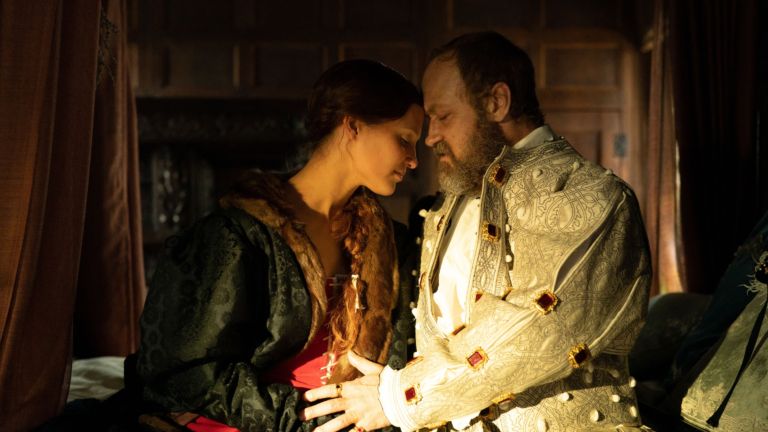
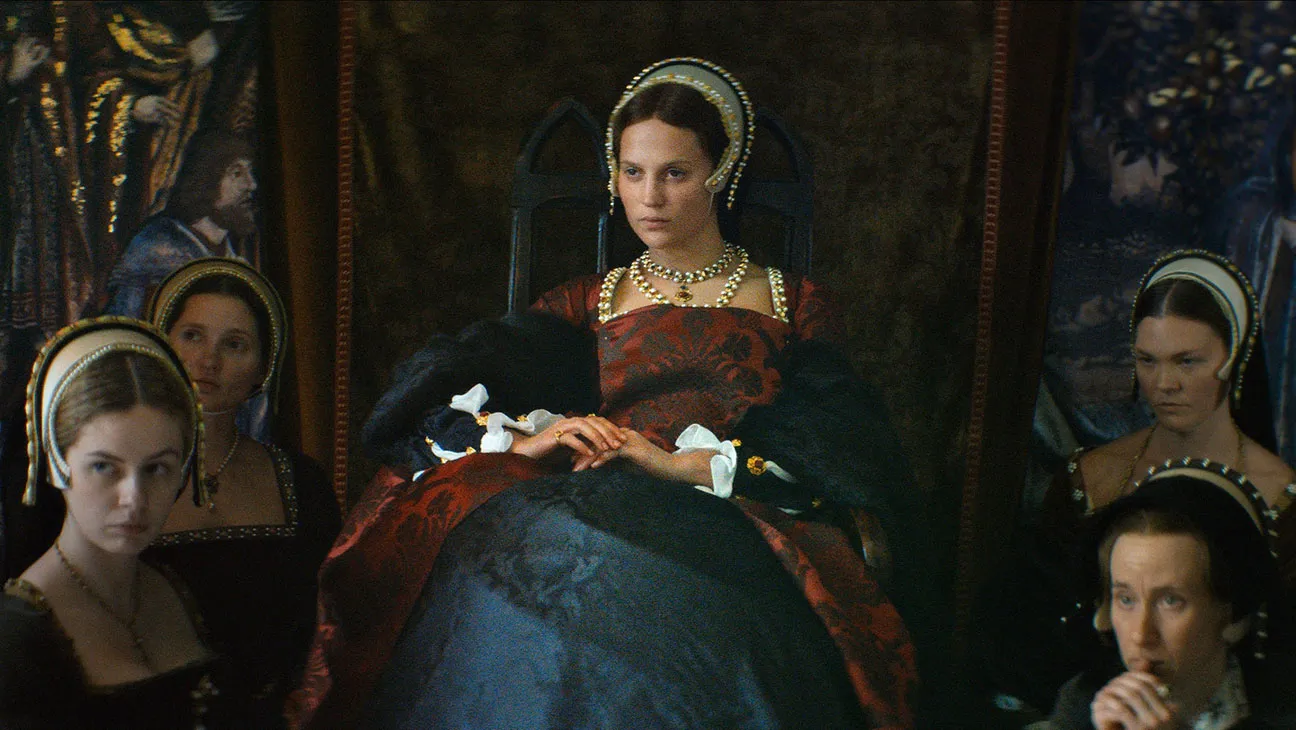
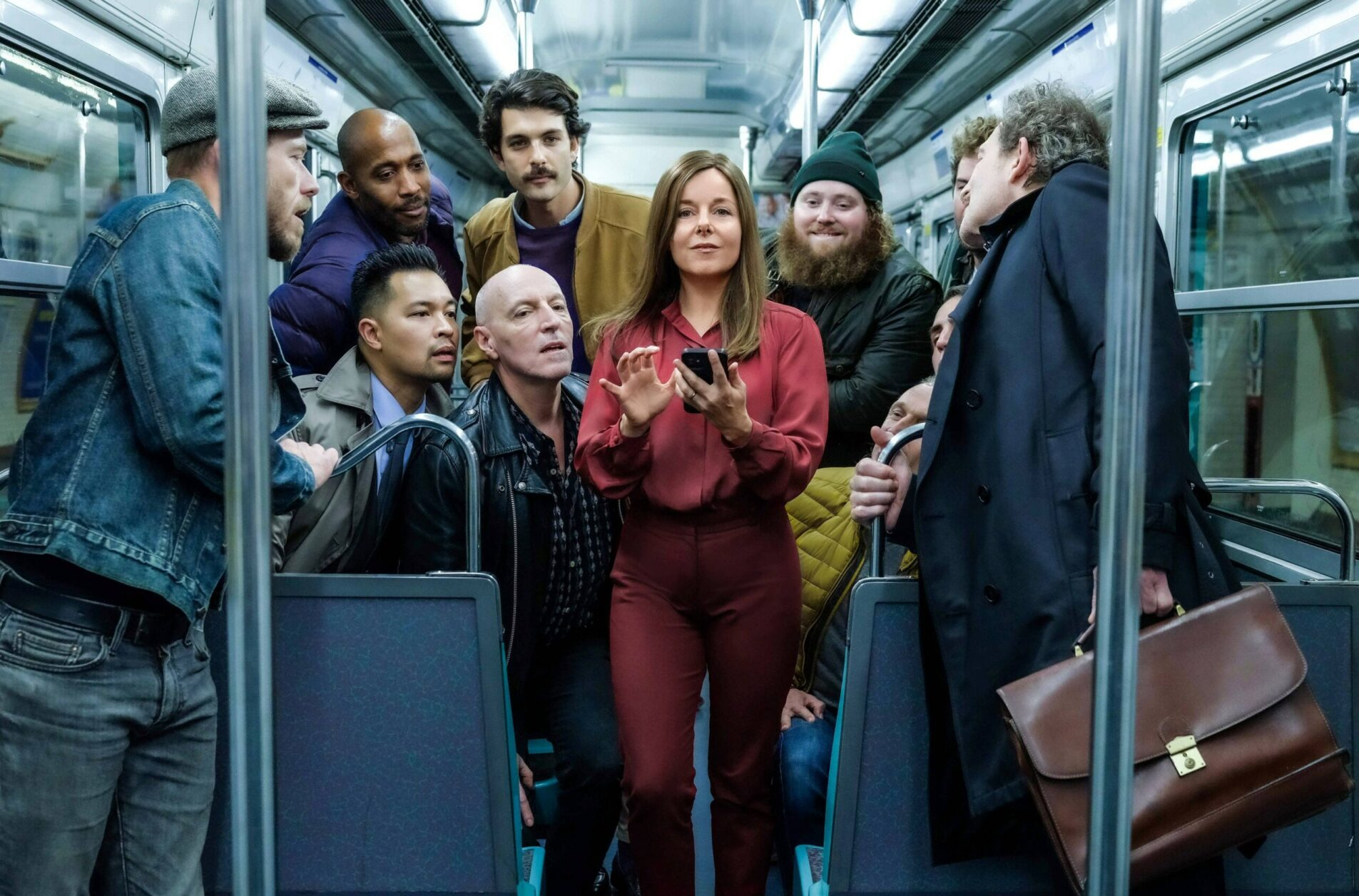
Synopsis: Katherine Parr, the sixth wife of King Henry VIII, is named regent while the tyrant battles abroad. When the king returns, increasingly ill and paranoid, Katherine finds herself fighting for her own survival.
It is almost funny, not to mention odd, how heavily a prestige television show about continental domination, dragons, and incest has influenced every medieval-adjacent drama since Game of Thrones premiered on HBO in 2011. Never before the reigns of House Targaryen, Stark, and the like had I heard the term “sanctity of the realm” tossed around so frivolously when describing a kingdom’s safety, yet now it’s as common as the “prestige drama” distinction. Those words don’t actually mean anything, but are said in hopes of hammering home the severity of a given situation involving knights on horseback and royal relations in disrepair. If not for the sanctity of the realm, then what? (Gee, I don’t know, world peace?)
So it’s no surprise that Karim Aïnouz’s Firebrand begins with title cards that read, “History tells us many things, largely about men and war. For the rest of humanity, we must draw our own – often wild – conclusions.” For it is indeed a story about men and war, one that draws increasingly wild conclusions about what actually went down beyond the drawbridge. All the while, though, it attempts to posit itself as a tale of female empowerment, the story of Katherine Parr, King Henry VIII’s only surviving wife. (There were six. A handy little trick to help you remember has been branded into the pop culture zeitgeist since the Broadway musical “Six” was first staged: “Divorced, beheaded, died; Divorced, beheaded, survived.”)
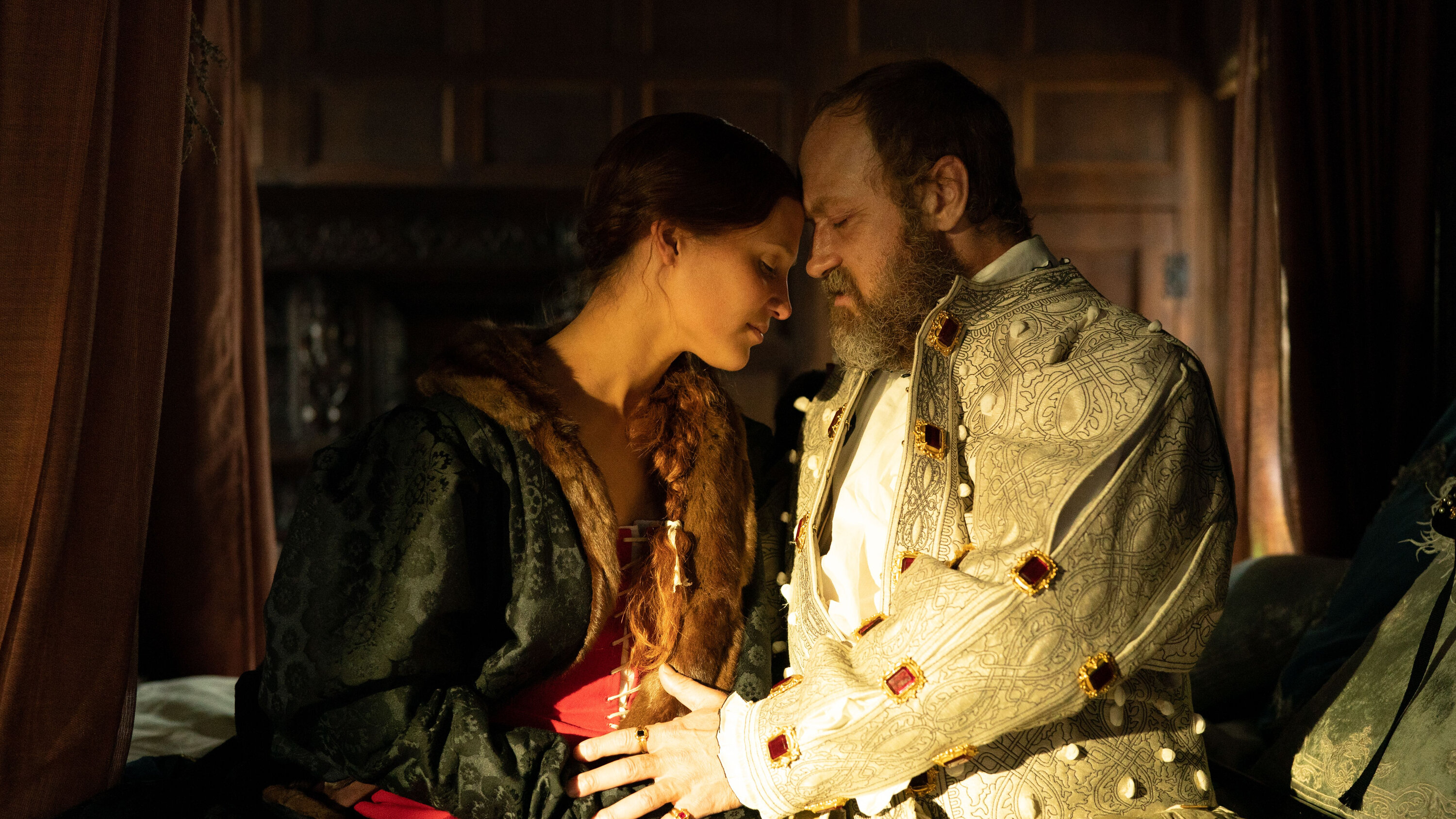
When she and Henry (a wacky Jude Law) wed, Katherine (Alicia Vikander) represented a new dawn to their loyal subjects, a possible reprieve from the menacing ways of the King. Adapted by Jessica and Henrietta Ashworth from Elizabeth Fremantle’s novel, “Queen’s Gambit,” Firebrand sees Katherine “flirting” with radicals from its beginning moments, something her ardent supporters warily appreciate, but a behavior that Henry’s disciples deem threatening to the monarch’s rule. Though Katherine sees her choices, like publishing a book under her own name and communicating with friends and outsiders alike, as non-issues, given that Henry has never laid a hand on her. A friend tells Katherine that this is because he is confident in her weakness; the only reason he keeps her safe – rather than having her burnt or beheaded like the others who disobey him – is because he doesn’t fear her influence. Or, at the very least, he knows he can trump it with the swift wave of a hand.
This subtle conflict drives Firebrand, for better and for worse, as while it lends itself to a few standout moments when Henry’s rage takes over, leading him to literally instilling the fear of God into his followers and, most notably, his wife, it’s too narrowly conveyed to ever get off the ground. It’s a shortcoming that can’t possibly fall on the shoulders of Law, whose turn as Henry is equal parts sinister and silly, aided not so subtly by a fatsuit and a garish, revolting leg wound that spends Firebrand’s entire overlong runtime infested with maggots and oozing with pus.
Then again, films of this nature grow tired quickly, as they rely more heavily with every passing scene on the bemoaning diatribes of their Kings, many of which find themselves in paralyzing pain and, as a side effect, mental hysteria. Firebrand’s fate is similar. Law leaves no crumbs, but it’s admittedly difficult to sink your teeth into a game of cat and mouse when the cat in question roars like a lion and the mouse is intermittently sidelined from her own contest. Vikander, like Law, shant be faulted, for when given the space to do so, her Katherine inhabits a Jerry-esque energy to combat Law’s Tom, endlessly squirrelly and finding hole after hole to crawl into for safety. If only she was able to operate outside of the holes as much as she is behind the walls they lead to.
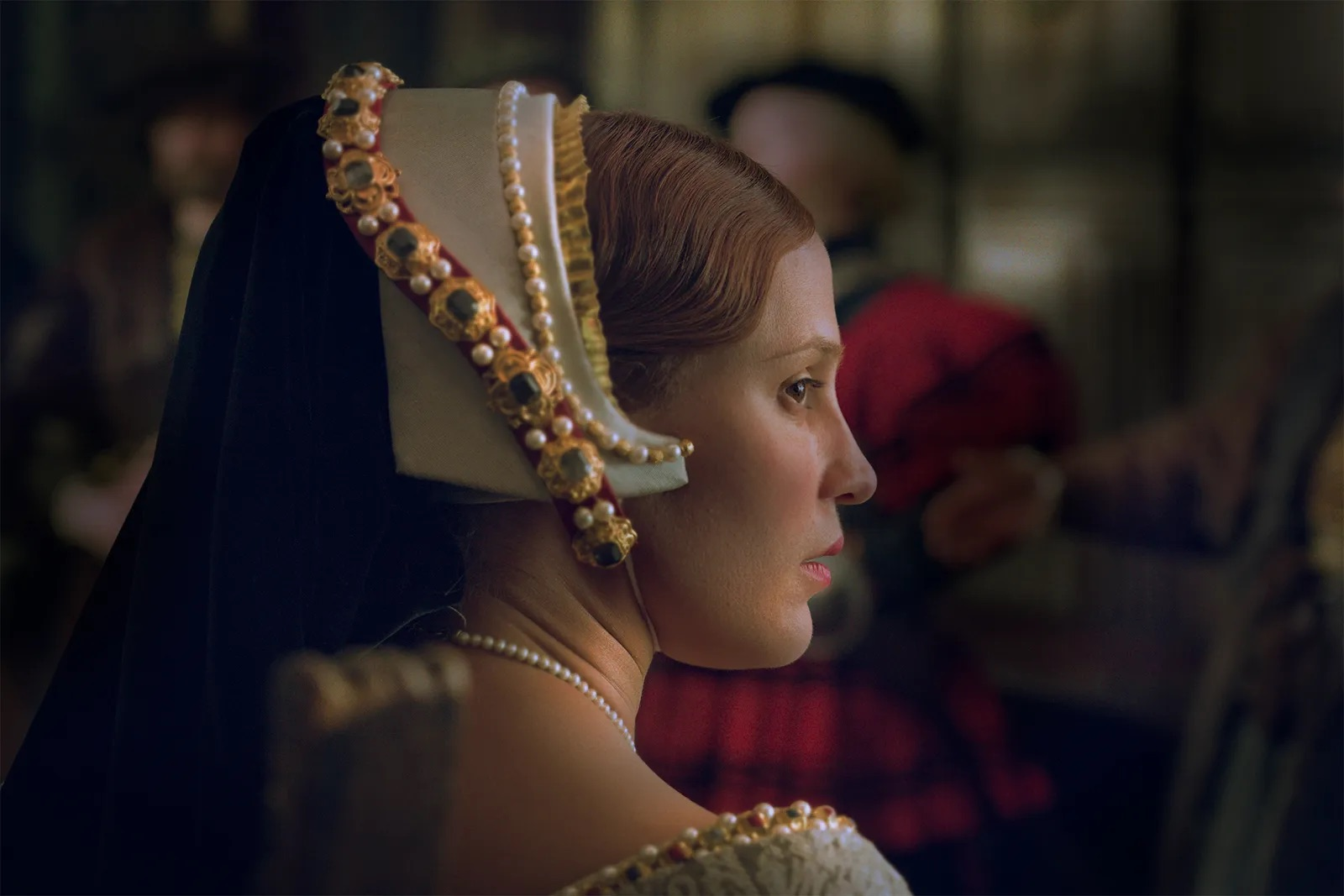
Otherwise, Vikander’s Katherine operates with the same sort of vivacity I imagine her A.I. vessel from Ex Machina would, had we continued to follow her post-Oscar Isaac trek into civilization. She’s not dull, but she appears to be finding her footing in a film that expects her to have it from the jump, even if she seems to have abruptly stood up only to find that both of her legs are asleep every time we see her communicating with others. There’s a ferocity to Katherine that Vikander evokes only in fits and starts, but that’s more a bug of the film, not the performer.
In fact, Firebrand seems to be hell-bent on keeping the pace of a manually-operated car, requiring the perfect balance of shifting and hitting the clutch if it’s ever going to move forward. At least early on, the narrative potholes it faces on an already irregularly-moving journey aren’t at all serviced by Hélène Louvart’s cinematography, which flattens and dulls the colors and sets, all of which could (and should) otherwise be vibrant and impressively crafted for accuracy per the time. In time, things settle and become more stimulating – to be expected from the woman behind the lens for The Lost Daughter, La Chimera, Never Rarely Sometimes Always, and more – but little else about Aïnouz’s stylistic approach seems to have a point. Heike Parplies, the editor behind Toni Erdmann and Aïnouz’s previous feature, Invisible Life, elects to place meaningless cuts throughout Firebrand; one moment, we’re following Katherine as she walks in a panic from one point to another, until the film suddenly cuts to the same stroll, only four steps later. There’s little purpose here, an odd choice for a film that feels like it exists solely to prove its director has a knack for artistic flair, never mind if said flair lacks substance entirely.
The movie’s central conflict – Katherine gave a necklace away to her radical friend, Anne (Erin Doherty), and the King must find out how it came into her possession – feels dulled by an incessant idleness to the project, or at least the narrative that surrounds it. You never truly feel that it’s going anywhere, and it’s especially not going anywhere fast, resulting in a two-hour slog chock-full of great performers who have very little to do. (That Eddie Marsan’s name has yet to be mentioned isn’t an oversight, but simply due to the fact that he under-utilized in a sly role as one of the King’s advisors.) Perhaps there’s no better way to say it: Firebrand lacks fire. It’s a film so desperate to cram everyone and everything into its half-baked world that the result is about as close to nothing as a movie can be. You might say that the sanctity of the realm is looking rather dire.
Director: Kevin Hegge Writer: Kevin Hegge Stars: Judy Blame, Duggie Fields, Princess Julia
Synopsis: Rising from the nihilistic ashes of the punk movement in the late 1970s, a fresh crowd of flamboyant fashionistas, who would later be christened the New Romantics, began to materialize on the streets of London, England.
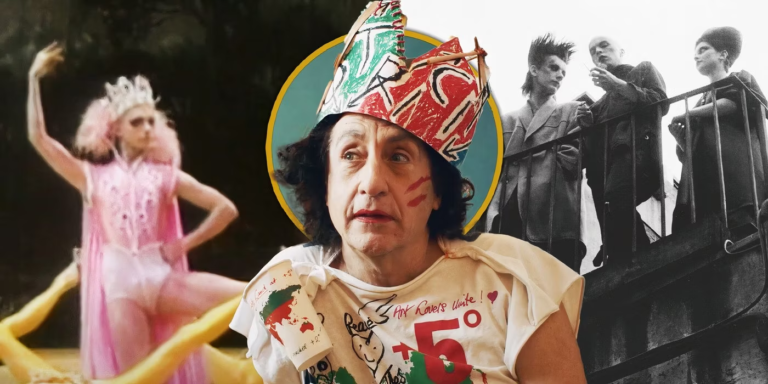
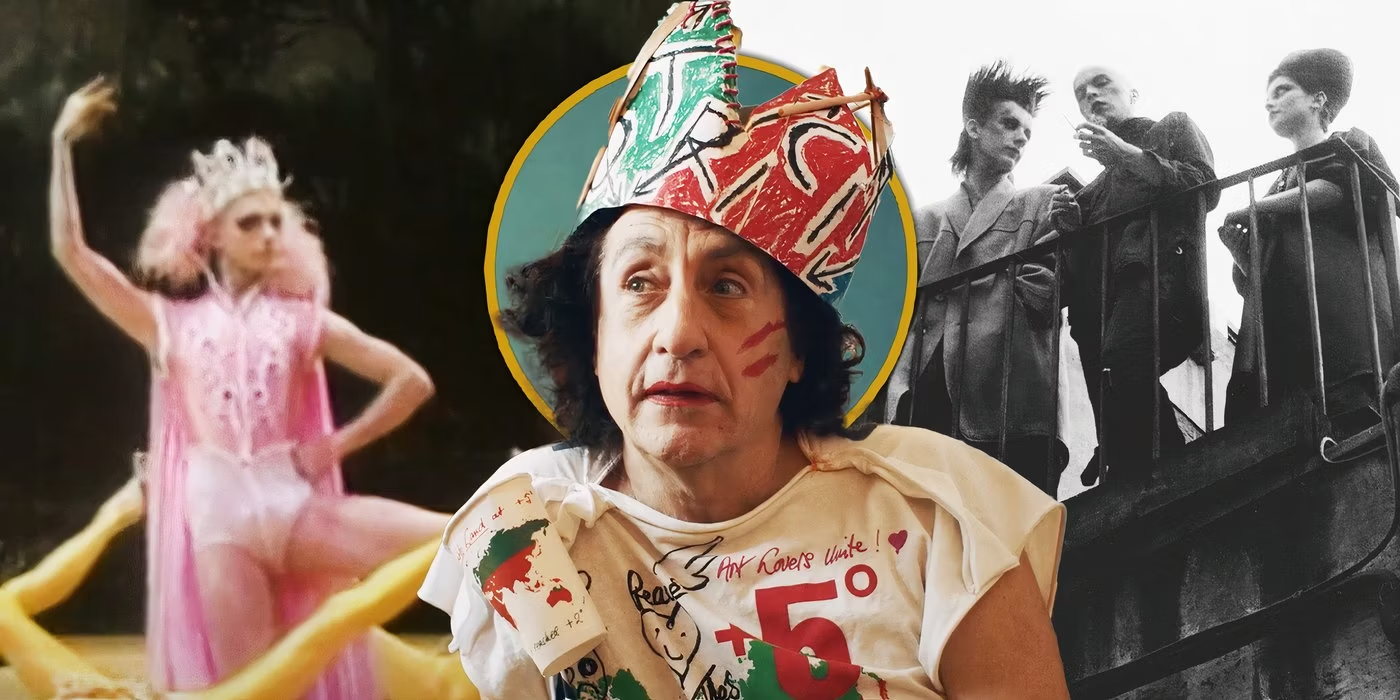
The Bromley Contingent. The Blitz Kids. St Martins College. Derek Jarman’s Sebastiane and Jubilee. David Bowie’s Ashes to Ashes film clip. Squatting in a not quite gentrified London. SEX/SOCIETY. The artists on the fringe of the fringe. The best of times and the worst of times. They were kids running from austerity and making art out of themselves. They had no product – they were the product. “Wasn’t it fabulous at The Blitz? Oh please!” responds the then elder Philip Sallon. It was punk, it was post-punk, it was the New Romantics. The DIY decadents who flocked to London from their working-class homes and were artists with their bodies as the canvas.
Canadian filmmaker Kevin Hegge documents a period which started as far back as the mid 1970s with the Alternative Miss World and in many ways still exists despite many of the main players being wiped out by drugs or the tidal wave which was AIDS. Hegge primarily focuses on four voices who are the guides to the moments which defined a New Britain while the old one had quietly slipped away after the Swinging ‘60s. A world where Vivienne Westwood and Malcolm McLaren acted as punk impresarios delving into the world of bondage and provocation. 1977 at The Roxy, The Clash played. The Roxy had formerly been a gay club. Punk was queer – just no one was ready to admit it until it burned its nihilistic flame and from the shadows emerged a new light. That light was radically queer and led by John Maybury (filmmaker and artist), Judy Blame (DIY fashionista and stylist), Scarlett Cannon (a model and club kid), and Princess Julia (an iconic DJ and promoter). There were many more people: A young George O’Dowd who was the coat check attendant at nightclubs so he could steal money. The same George O’Dowd who is forever now Boy George. Steve Strange who ran The Blitz and refused to let Mick Jagger in.
John Maybury calls it a golden era of experimentation. The government was paying bursaries for people to go to art colleges. If you were happy to forgo regular meals and basic hygiene you could share a group of rundown Edwardian terraces with like-minded (or not – love and hate co-existed) creatives and be the art. Some people were already on the road to success – Siouxsie Sioux, Adam Ant, Amanda Donohoe, Mark Moore. Others connected in the community of misfits and mudlarked their fashion. New York and Berlin were epicenters of culture, but London was about to emerge once again like the ever-rising phoenix and redefine fashion, art, and music once more. Exclusive and inclusive – icons and iconoclasts in 24/7 performance mode.
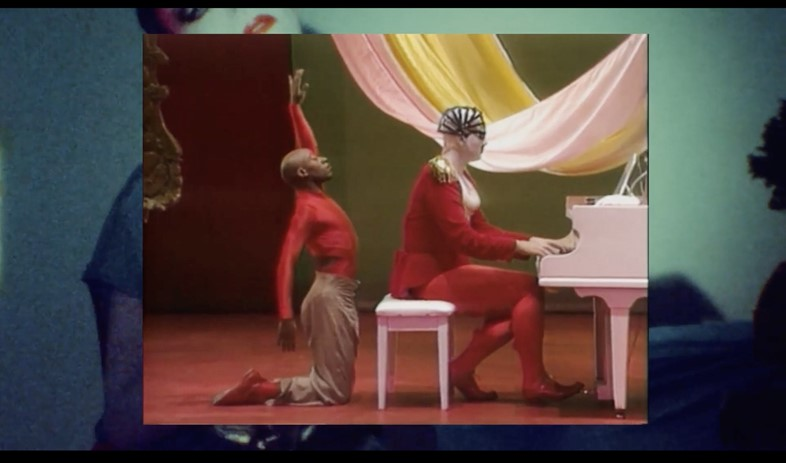
Hegge’s documentary begins with a whirl inspired by John Maybury’s 1994 video art project Remembrance of Things Past which stars Tilda Swinton (a constant presence in Jarman films and a Maybury collaborator) and Princess Julia. Styled by Judy Blame and with a below the line crew of stylists and costumers who were part of the Blitz Kids generation (sadly, many now gone). There is chaos at the gates of HELL (the club), taboo breaking at TABOO. Leigh Bowery, the post gender creator who fled suburban Melbourne for London and used his day job at a fast-food chain to pay for his entry into a world of transgression. There are the neo-naturalists – the Binnie sisters writhing in body paint nestled against the classical dancers Les Child and Michael Clark (OBE).
Even the straight women and men admitted they were dressing up in a radical drag. The queer body was becoming male/female/undefined. Nipples, mounds of Venuses, cock-sure young cocks who whirled about in a Genet and Fassbinder world next to Greek and Roman deities or pirates, the Royalty of the past (Queen Elizabeth I) or Ray Petri’s buffalo dandies. Quentin Crisp stopped into cafes for ‘grey coffee’ – David Bowie recruited for his ‘Scary Monsters’ film clips. Everyone was alive with possibility, but the shadow of austerity and AIDS merged with the party stopping and starting. Heroin took some. Extremity took others. Accidents and coincidences like a perpetual cut-with-the-kitchen-knife collage brought people together and tore them apart.
“We didn’t have a product, we were the product,” Judy Blame announces. How could they monetize their existence? Some moved into fine art, some into becoming stylists, and some into music. The beautiful Marilyn, who was always with Boy George, released a hit single and then faded away for over twenty years into a crack addiction.
Many artistic and fashion movements are interrupted by war or inspired by it. For the Tramps, the war was poverty, AIDS, and fleeting fame. But what luminosity! Without the post-punk generation there would be no i-D magazine. No issues of The Face. Life would have been perpetually elsewhere in a Warhol or Studio 54 blur. Interview Magazine or Rolling Stone would still be the bastion of gonzo journalism with NME and Melody Maker fighting for British supremacy. There would be no Smash Hits magazine.
Living fearlessly came with a cost for many – John Maybury seems left in a small void of survivor’s guilt (his partner Trojan died of a heroin overdose, his mentor Derek Jarman died of AIDS, Leigh Bowery died of AIDS… so many, too many). Yet the moments in the neon lit sun or the dingy squats that became art collectives had energetic joy which came together in the BodyMap fashion shows which produced their ready to wear street couture (something we see as standard now) that included bodies young, old, of colour, and of varying sexuality.
Judy Blame says that death and poverty hold no sway. The melancholy aspect of the documentary is that Blame passed away before it was released. Princess Julia others can barely speak of the losses they witnessed. Some cracked under mental health pressures. Hegge allows that there are people who do not wish to speak at all of their time, and those who simply cannot.
“London is a shithole,” says Blame. Debt and gentrification mean that London is now a place where the creatives are in Princess Julia’s words “No longer fucking each other but fucking each other over.” It’s a little misty eyed for her and her nostalgia for a seemingly golden period. Austerity is back and life is elsewhere again. But without the ‘Lesbians, Queers, Punks, and Prostitutes’ who daily caught the Tube on their way to be ‘seen’ there is so much of culture which just wouldn’t exist. No Alexander McQueen fashion house. No BOY London. No Neneh Cherry. Kylie Minogue would still be singing about being lucky and doing the locomotion. Tramps! reminds the audience that there are those who will never Fade to Grey.
This week on Chasing the Gold, Shadan is joined by our very own Zach Youngs to discuss the Best Picture category, which he will be covering this year at insessionfilm.com!
On that note, check out this week’s show and let us know what you think in the comment section. Thanks for listening and for supporting the InSession Film Podcast!
Editing is what makes movies really come to life. A static shot or a tracking shot can evoke a lot of emotion or wizardry when it comes to staging a scene, but there’s nothing more satisfying than when a character looks off-screen, and there’s a cut to exactly what or who they’re looking at. It could be the killer, finally coming after the last woman standing. It could be the character’s lover arriving home from a long separation. It could be something outlandish that the character just mentioned was impossible, but lo and behold, there’s a zebra walking down Main Street. It’s a moment of magic that holds the audience in a state of heightened emotion until that cut is made. Editing molds the disparate ideas of screenplay and filmed scenes into coherence. It can be hard to tell what is great editing as the art is meant to be seamless. You’re not supposed to know or think about how the film was stitched together. Yet, the art of the cut can shine through because of the artistry of the craftsperson behind it.
One of the best edited films of the year is The Fall Guy, edited by Elísabet Ronaldsdóttir. This film is the fifth collaboration between Rolandsdóttir and stuntman-turned-director David Leitch. The previous four are John Wick, Atomic Blonde,Deadpool 2, and Bullet Train. These films have reshaped action cinema for the past decade. It’s obvious that Leitch has found a terrific collaborator for his particular brand of action cinema. The Fall Guy is the pinnacle of this partnership, not only for the fabulously stitched-together stunts but because it acts as another example of Ronaldsdóttir’s proficiency as an editor.
There is a lot of action in The Fall Guy, but a strong and utterly charming romance is taking shape within it, too. It seems like the love story could distract from the action, but it really heightens the drama of what’s taking place. This plot piece requires a more delicate touch, and Ronaldsdóttir captures something magical between our two leads (Ryan Gosling and Emily Blunt) in a couple of particularly exceptional scenes.
At one point in the film, Colt (Gosling) is caught unawares when Taylor Swift’s song “All Too Well” comes on the radio. The film shifts to a montage of the budding relationship between Colt and his ex, Jody (Blunt). The scene is a typical montage, but what sets it apart is the fact that it shifts The Fall Guy so beautifully and seamlessly from action comedy into romance. The scenes chosen are silly and sweet and suddenly heartbreaking because we hear the song’s lyrics, and we know that Colt is sitting in deep pain. It’s a masterful feat of tonal shift. That feat is only topped by the split-screen scene that follows it.
Split screen is often gimmicky and not always utilized for the best purposes, but in The Fall Guy, it works. Elísabet Rolandsdóttir found a way to make the scene feel like all we need is the two frames in front of us. The scene works because of the chemistry between the two leads and also because of how intricately matched their individual sequences are. Colt and Jody have a matched set of movements, not only camera angles. It requires a lot of skill to get the timing and position of the actors just right for these two simultaneous sequences. Rolandsdóttir’s editing makes the scene look effortless, much like the film as a whole.
She is also responsible for making the incredible stunts look stunning and easy to follow, which she does with aplomb. The film has many action set pieces, and each one looks fabulous. It would be ludicrous to ignore such a masterful display of the craft. The Fall Guy has charmed critics and audiences. It needs recognition for the incredible talent behind it. And Editing might just be the perfect category for it.
Director: Annie Baker Writer: Annie Baker Stars: Zoe Ziegler, Luke Philip Bosco, June Walker Grossman
Synopsis: In rural Western Massachusetts, 11-year-old Lacy spends the summer of 1991 at home, enthralled by her own imagination and the attention of her mother, Janet. As the months pass, three visitors enter their orbit, all captivated by Janet.
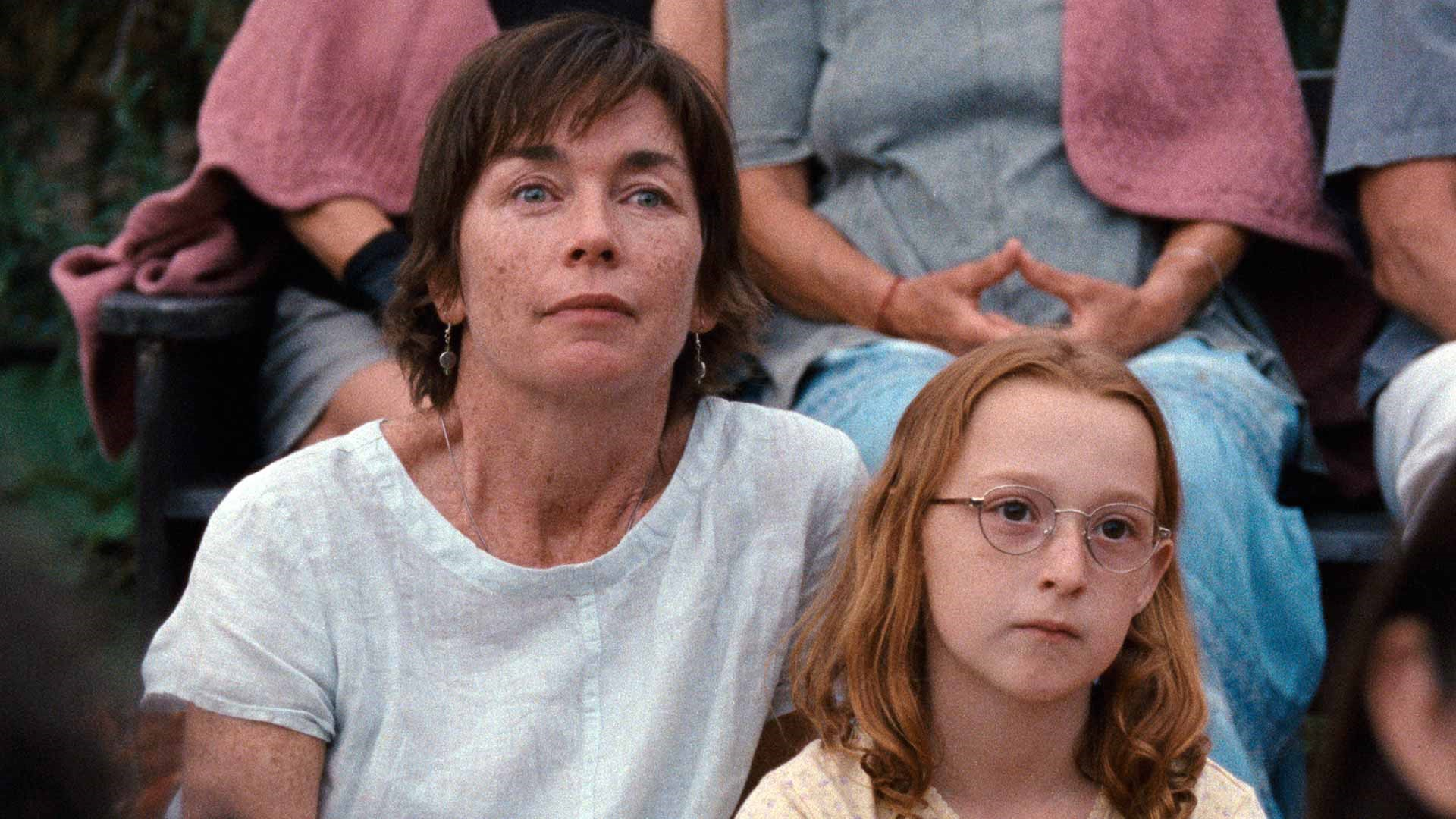
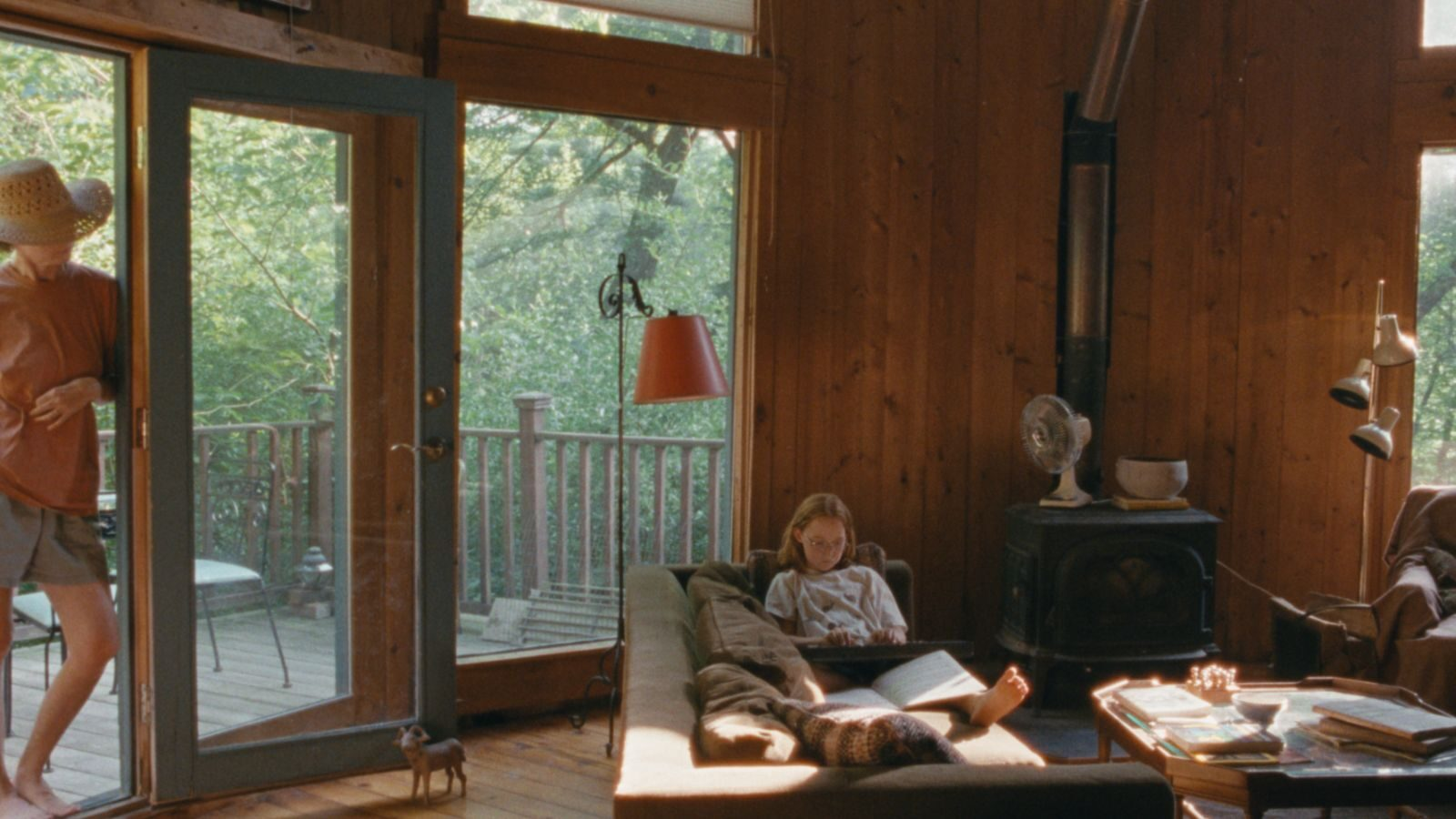
With her debut feature film, Janet Planet, playwright Annie Baker writes and directs one of the most delightful films you’re likely to see all year. There are many factors that contribute to the warmth that basically pours off the screen, but the most apparent is immediately clear. It’s Zoe Ziegler’s performance as Lacy, the young girl around which this film is structured. We meet 11-year-old Lacy as she wakes up in the middle of the night. She sneaks outside to a public telephone and makes a very comical call, but to Lacy, it appears to be a grave one. She wants to go home immediately, and in the morning, her mother, Janet (Julianne Nicholson), comes to pick Lacy up from camp. Lacy walks towards her mother calmly and casually, drops everything she’s holding, and is provided with that critical embrace so many of us might remember from childhood. At such a young age, the feeling that the very expansive world around us emanates can become quite crushing. While we may not be even remotely aware of the struggles that come with adulthood, as children, we very much have our own sets of worries. Internal dilemmas feel that much larger when they’re the sole focus of our lives. And without time, it’s difficult to process such overwhelming feelings.
At an age where summers were devoted to practicing piano or playing with toys, or just casually adventuring around the house, moments of solitude could become quite overbearing. In the case of Lacy, being away from her home and her mother appears to have been the breaking point. I too have called home from a sleepaway camp and begged to be picked up, and what should be exciting and refreshing becomes something far worse. It’s a clear-cut indication, at least in my mind as a child, that the universe was telling me I wasn’t supposed to be there. I was supposed to be back home, watching television or making up games to play in the backyard. We are all looking for some semblance of familiarity at that age to calm us, rather than venture out into the unknown journey of growing up and growing apart. And Janet Planet is interested in what it means to slowly lose that sense of familiarity. Whether or not it’s for better or for worse, is left to us to be decided.
Now, the film may be called Janet Planet, but much like a solar system, Janet’s orbit revolves around the most important star there is: Lacy. Nothing is ever outright revealed through the film, but one can’t imagine single mother Janet is having the easiest time raising the young girl. It would appear that, more often than not, Janet puts Lacy before herself. And these decisions come to a head and provide the film with a very specific conflict. Made up of extended vignettes, Baker both introduces and removes a trio of individuals brought into Lacy’s life in a very classical playwright fashion. Upon first use, it’s a moment worthy of a chuckle. Yet over time, it takes shape into something fundamental about the film.
Lacy is an inquisitive girl in the very funny way children often are. She’s deeply curious, and hides no questions, even in the face of being told to leave a room or to be quiet. It’s not that she’s unaware of what’s occurring, as she does appear to be very intelligent, but more so that she just can’t help herself. One gets the sense that she’s asking countless questions in the hopes of hearing a perfect answer. And that answer will hopefully unlock the entire mystery of this new person who has found themselves in the orbit of Janet and Lacy’s seemingly idyllic life. While on the surface, it may appear the two are living a comfortable, remote life in the Western Massachusetts woods, the quiet moments of reflection in this film reveal the complicated set of emotions at work. And it’s in these tender moments between mother and daughter that the film comes to life. But it also reveals what I feel the film struggles with a bit.
The main issue that appears to plague Baker’s script structure is seemingly its indecision to focus primarily on Lacy or Janet. There’s obviously no issue with the film being interested in both characters as two halves of a larger piece. But personally, it feels a bit as if both characters get the short end of the stick by the time we emerge on the other side. The questions and emotions Janet Planet brings forth over its soothing runtime are certainly felt, but one may find themselves asking for a bit more to chew on as the credits roll. Luckily, Baker’s screenplay is a dense one, and provides plenty to be affected by. To me, Janet Planet is at its best when it focuses on Lacy and her outlook on life. That’s not to say Janet takes up a large chunk of this film. And by no means is that necessarily an issue on its own, as Nicholson delivers a really strong and subdued performance. Ziegler’s performance as Lacy is just one that is so deeply charming, you can’t help but want more. And so much of the film early on feels framed from her point-of-view; so any shift that occurs from there then feels a bit out-of-place. Baker’s camera wanders or focuses in on select moments as if it were the eyes of a child. When Lacy is in the car with Janet and then-boyfriend Wayne (Will Patton), we notice the backs of their ears and beard stubble via off-center, yet acutely focused, close-up shots. At its best, Janet Planet sees Baker innately capturing fragments of time with an undeniable charm. They are all moments that feel rich with memory and a hope to understand the past. And one sequence in particular captures how moments in time can be mined for resonance, even years later.
During one segment of the film, Lacy and Janet find themselves with a house guest. Regina, an old friend of Janet, is staying with them. They have not seen each other in a few years, but that seems irrelevant to Janet. At some point or another, these two had a connection. And Janet seems like the type to never harbor ill will. As the two are speaking candidly late one night, Regina finds herself detailing a story about her and her father. And it’s a moment that, while resembling the very core idea of the legendary Mad Men meme, is a genuinely effective observation on the moments in life that make us who we are. More importantly, it highlights how those moments in time are just that to some: moments. A completely forgotten conversation that cannot possibly be comprehended in retrospect.
Yet it has irrevocably changed the path of an individual. It’s quietly devastating, as some of us, including Janet, may never know those moments which affected us deeply but have also been forgotten. Further, have we forgotten a moment that has done the same to somebody else? Janet Planet, at its very core, feels as if we all have, and will likely continue to do so throughout life. We can hold onto as much as we like in this life but, sooner or later, we either drop it, or simply pass the weight onto the next person.
More than anything, it feels as if Baker’s script is grappling with some rather lofty ideas of the varying bonds and relationships formed in life. When channeled through the lens of a coming-of-age story, it makes for a viewing both charming and intriguing. As stated, the sentiments are felt consistently throughout Janet Planet, even if the overall focus feels spread a bit too thin. One can’t help but think of a particularly striking image from the film when reflecting on its overall ideas. Unexpectedly, artwork in Janet’s home begins being removed off of a wall. One New Yorker cover in particular is unceremoniously removed from the tape holding it up, leaving a chunk of the cover left behind. Lacy sees this piece of tape and small fragment of what once filled space, and it’s a beautiful testament to what Baker is conveying with this debut film. Though her career thus far has spanned countless award-winning plays, Baker’s natural visual storytelling is perhaps most exciting to witness. That scrap held up by tape may resemble a memory, only partially viewable. Our memory will fill in the blanks as best as possible, but for the most part, it is merely lost to time. Whether that’s for better or for worse is up to the viewer, and Lacy, and Janet, to decide in the end.
Directors: James Erskine, Rachel Ramsay Writers: James Erskine, Victoria Gregory, Rachel Ramsay Stars: Elvira Aracen, Brandi Chastain, Birte Kjerns
Synopsis: Told by the pioneering women who participated, this is the extraordinary story of the 1971 Women’s Soccer World Cup, a tournament witnessed by record crowds that has been written out of sporting history – until now.
There are certain moments in the history of sports that are unjustly forgotten or ignored for various reasons. Past ignorance, particularly towards women, has stymied progress which could have grown sports much earlier than when it began growing with the inclusion of women. However, time becomes friendly to these moments and are unearthed for the good, as with Copa ‘71 from directors Rachel Ramsey and James Erskine. It is one event that many soccer fans would not have been aware of very much until seeing this inspiring documentary.
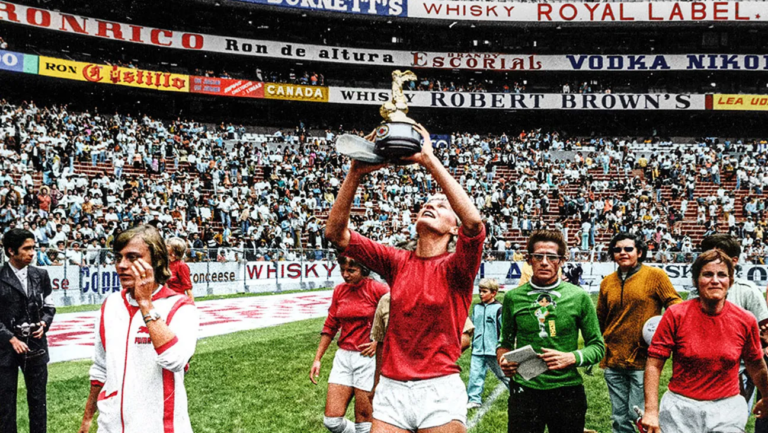
The opening of Copa ‘71 starts with Brandi Chastain, when former player (and hero) from the USA Women’s World Cup squad of 1999, is given a tablet with archive footage of an event buried in history. She says the first Women’s World Cup was in 1991 (officially, yes), but Chastain has no clue until she watches what is playing in front of her about the women playing soccer in front of a crowd of 100,000 people in Mexico City. It is something she has never heard of because it remains an unofficial, unrecognized event in FIFA’s history books. It was the Women’s World Cup of 1971, which featured six teams, but due to the sexist politics of the time regarding women’s soccer, it was disregarded and mocked.
Members of the six squads – Italy, France, Denmark, England, Mexico, and Argentina – are interviewed for what is their first time telling their story in over 50 years. Driving back in time, the living testimony of these players, mixed with surviving artifacts of what looked like a successful exhibition, puts into perspective the backwards notions that nations felt about women in a “male” sport. As noted in the film, several countries banned professional women’s soccer until 1970, and some countries even made it illegal. A major reason was women’s health: playing such physical sports would damage a woman’s reproductive system. A lot of the rules back then were countries controlling women’s bodies.
Within this frustration is an overall entertaining film about a sisterhood in a time of change for women in general. Seeing the smiles on the participants’ faces during the competition and how even today they think fondly of the period, working together and playing efficiently in front of surprisingly massive crowds. While it doesn’t take a deeper dive as it could have with the system sexism of the time, it still feels like a crowd pleaser with some amazing memorabilia put out along with the filmed games. All of it just undermines the early perception of women’s sports, yet the idea was still undermined by the powers that be with total vindictiveness.
Today, of course, it is a quickly growing sport to see professional women’s soccer and the World Cup that has become more popular since its formal start in 1991, but the reality is that it could’ve been already bigger. The infuriating thing audiences learn from this documentary was that the old traditions blocked progress for years, halting these surviving players from laying the groundwork for generations that missed out on a career. Decades delayed, Ramsey and Erskine finally gave the rightful glory to these women whose existence was denied for so long.
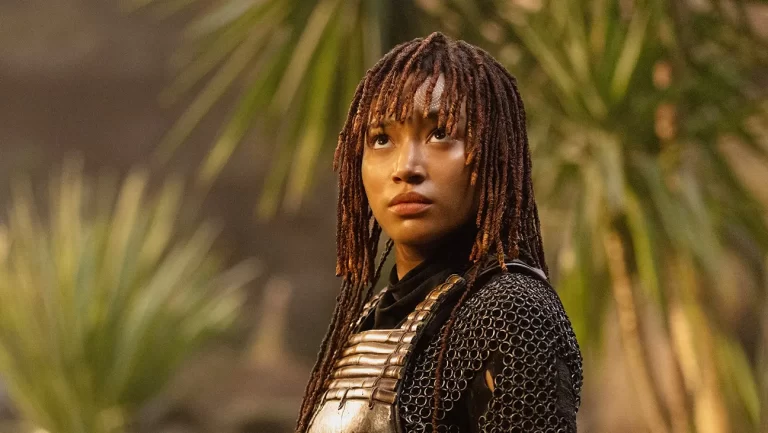
On this episode, JD and Brendan the new Star Wars show on Disney+ The Acolyte and the crazy discourse that has followed in recent weeks! Say what you will about the show, but it’s made some bold choices that are very compelling. The execution is maybe wonky at times, but there is nuance to be discussed that you won’t find much in the conversation around the franchise.
Jessica Chastain is that kind of actress. Her name is a reference to cinema, and its mere mention is linked to talent and adaptability. Chastain proves that she is capable of handling big roles and commanding the audience’s attention on-screen. Below are some of her desirable films, showcasing her versatility as an actress and talent in the film industry.
1. Zero Dark Thirty (2012)
In the tensioned war movie Zero Dark Thirty by Kathryn Bigelow, Chastain plays the role of CIA analyst Maya, whose pursuit results in the capture of Osama bin Laden. Her performance met the approval of many, and she was nominated for an Academy Award for Best Actress. Chastain’s portrayal of Maya is an apt performance that contains and channelled a lot of intensity to depict the dedication and the price the people involved in a ten-year search must pay.
2. The Help (2011)
In her movie “The Help”, Chastain pulls off the character Celia Foote, who is cheerful and kind-hearted, which gave Chastain the Oscar Award nomination for best supporting actress. Based in the 1960s southern United States, this movie narrates the lives of black male domestic workers confined to white households. Chastain once again plays the role of a character who does not quite belong in the small town of Jackson, Mississippi and having her in the movie brings a unique personality into the story.
3. Interstellar (2014)
In the film ‘Interstellar’ directed by Christopher Nolan, Chastain is featured as Murph, daughter of Cooper, played by Matthew McConaughey. It reveals the issues of love, sacrifice, and the continuation of human existence, necessary for people to preserve. Chastain delivers a powerful and passionate performance as an adult Murph, a skilled mathematician trying to crack the code for humanity’s survival as the film explores its narrative layers.
4. Molly’s Game (2017)
“Molly’s Game” is a riveting biographical drama based on the true story of Molly Bloom, a former Olympic-class skier who ran one of the world’s most exclusive high-stakes poker games. Chastain’s portrayal of Molly is fierce and vulnerable, earning her critical acclaim. The movie is about some underground poker empire and the gambling world. This production was a riveting piece of work which captivated the audience who understood that whether it may be traditional table games or the most recent online casino games, this type of activity has always been a usual pastime for many, especially those in high society and the like. Directed by Aaron Sorkin, the film highlights Molly’s journey from a promising athlete to the target of an FBI investigation, showcasing Chastain’s ability to bring complexity and depth to her characters.
5. A Most Violent Year is a crime drama thriller released in 2014.
“A Most Violent Year”, a crime drama film shot in 1981 in New York, features Catherine Chastain opposite Oscar Isaac. She portrays the character of Anna Morales, a woman trying to provide for and uphold her husband Isaac’s healing oil business enterprise amidst fraud and, most importantly, extra-judicial killings. Chastain is a force to reckon with being unyielding and clever as Anna, and her performance provides the perfect balance in conjunction with Isaac to make the movie compelling and dramatic.
The following filmography demonstrates how Jessica Chastain has showcased her versatility and talents as an actress. Even if one has seen a thousand movies, she keeps the audience engaged with her intense performances in action-packed thrillers and powerful dramatic roles. These movies prove why she has earned her rightful place in the list of the most revered and adored actresses of today’s cinema.
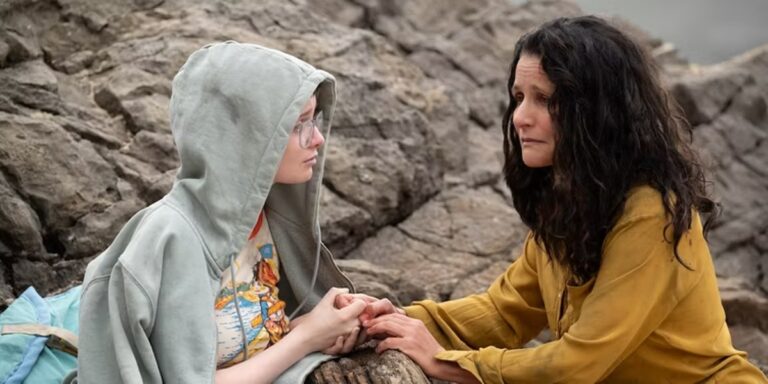
On this episode, JD and Brendan discuss the debut film from Daina O. Pusić in Tuesday, starring Julia Louis-Dreyfus! We’ve seen movies depict death in a visual way before, however I’m not sure we’ve ever seen anything like we see in Tuesday. It’s weird. It’s funny. It’s going to be polarizing. But that’s what makes the conversation all the more compelling.
Review: Tuesday(4:00) Director: Daina O. Pusić Writers: Daina O. Pusić Stars: Julia Louis-Dreyfus, Lola Petticrew, Leah Harvey, Arinzé Kene
Jaylan Salah, after reviewing Nathan-ismbriefly interviewed the director, Elan Golod.
Jaylan Salah: What compelled you to take on this story?
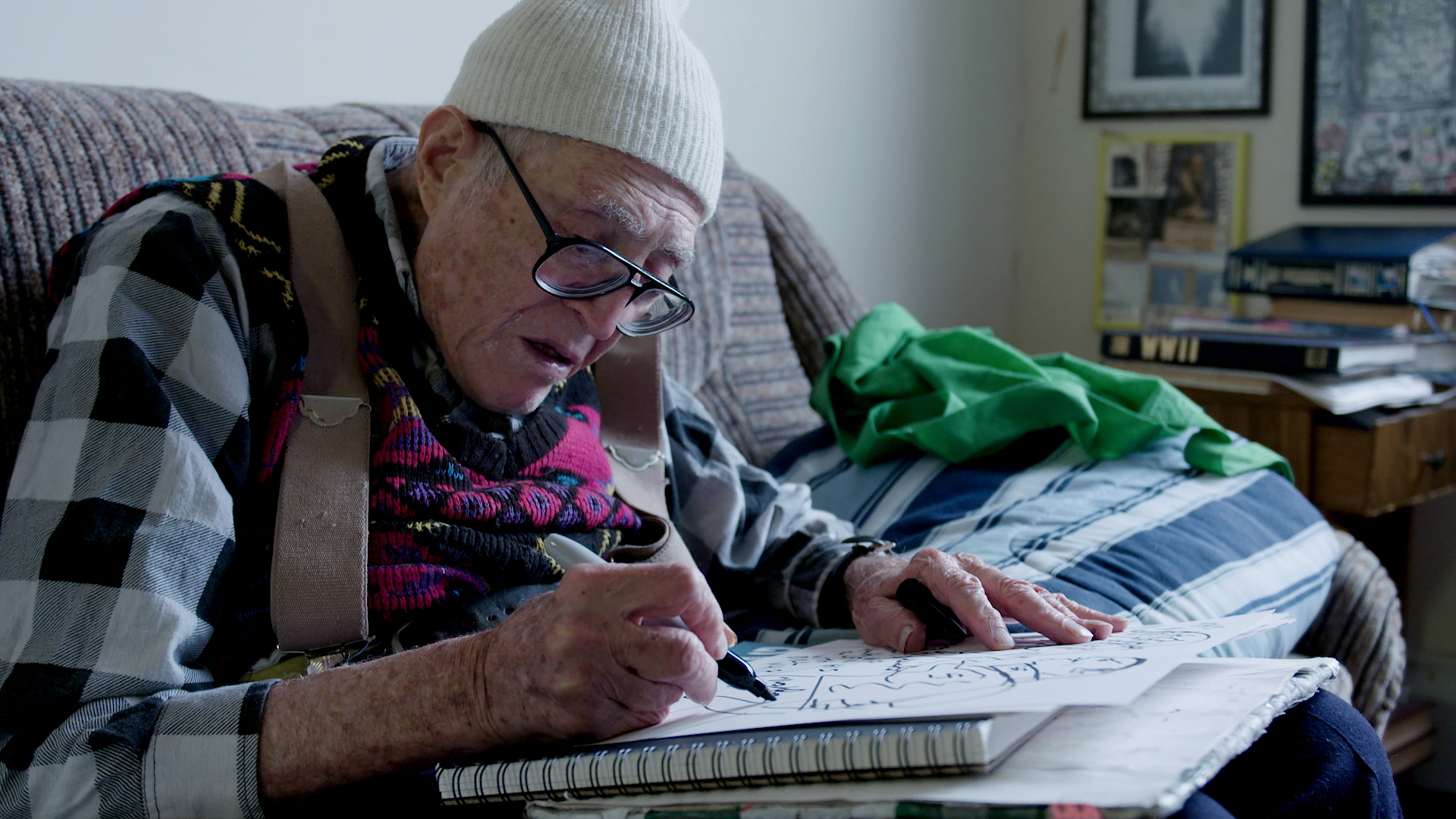
Elan Golod: When I first stumbled upon an article about a retrospective exhibition of Nathan Hilu’s artwork, I was immediately captivated by the circumstances of his experiences serving as a G.I. guard at the Nuremberg Trials. I was also intrigued by the visual richness that Nathan’s vibrant artwork could bring to a cinematic portrayal of this remarkable narrative. When you initially are confronted with Nathan’s artwork, there’s this intriguing clash – a sort of cognitive dissonance – between the weighty themes he addresses and the lively, almost childlike, style of his art. That felt inherently cinematic to me.
JS: What do you think is the role of documentarians as archive keepers of history?
EG: I think documentarians play a crucial role in providing context and perspective to historical events, helping society understand the complexities of the past and its impact on the present. Documentary films can help amplify voices that may otherwise be marginalized or forgotten. By sharing stories like Nathan Hilu’s, I hope filmmakers like myself can facilitate dialogue and reflection, encouraging audiences to engage critically with the past and its implications for the future.
JS: How did you find approaching Nathan Hilu for this project? How were your interactions with him?
EG: Initially, when I cold-called Nathan to discuss my interest in his story, he seemed hesitant to open up. About 15 years prior, another team had approached him with plans to create a book about his experiences, but unfortunately, that project never materialized, leaving Nathan somewhat jaded. Despite his initial reservations, Nathan eventually agreed to let me visit him. Over several visits, I worked on building a rapport, gradually fostering a sense of trust and comfort between us. It was during this process that Nathan began to feel more relaxed and, eventually, agreed to participate in the filming of the documentary.
As our relationship developed, Nathan became increasingly comfortable in front of the camera. Over time, his initial reservations transformed into genuine enthusiasm for the filmmaking process. Despite his enthusiasm for the process, our filming sessions were far from typical interviews and felt more like a “show-and-tell” experience – Nathan would eagerly share the stories behind his latest drawings. It was tricky to get a word in edgewise with Nathan, but here and there I was able to guide the conversation towards the themes I wanted to explore.
JS: How difficult was it to visit such a dark time in the history of humanity such as the Holocaust?
EG: When starting this journey with Nathan Hilu, I didn’t set out to make a run of the mill Holocaust film. I was however fascinated by the opportunity Nathan offered to explore this weighty subject
from a fresh perspective that certain audiences might find more accessible. Wherever possible, I think it’s crucial to find ways to expand the conversation about the Holocaust in order to prevent the world from turning a blind eye to the lessons of the past.
Through Nathan’s story and others like it, we have an opportunity to prevent indifference and ensure that the profound significance of the Holocaust remains ingrained in our collective consciousness.
JS: Some of the montages cut between Hilu’s paintings and archival videos and photos were brilliantly assembled. How did you come up with the style for the documentary?
EG: The stylistic approach was born out of extensive experimentation in the editing process. At its core, our aim was to create a dynamic juxtaposition between Nathan’s subjective storytelling and the ostensibly more concrete, “objective” evidence provided by archival videos and photographs.
Through this intertwining we found we were able to inject layers of meaning and depth into the narrative. The drawings served as a visual representation of Nathan’s interpretation of events, while the archival footage and photographs grounded the story in the tangible reality of historical record. This juxtaposition allowed us to blur the lines between subjective interpretation and objective evidence, inviting viewers to consider multiple perspectives and engage with the narrative on a more nuanced level.
JS: As a storyteller, what is the most important theme that you want audiences to take from your film?
EG: I think the most actionable takeaway I would like audiences to take from the film is the imperative to take the time and listen to our elders. In today’s fast-paced world we risk overlooking the invaluable insights and experiences our older generations possess. By taking the time to truly listen and absorb the lessons they offer, we not only honor their lived experiences but also enrich our own lives. Their stories carry the weight of history and offer invaluable perspectives that can guide us in navigating the complexities of the present and shaping a better future. I think fostering intergenerational dialogue and cherishing the knowledge passed down from our elders can help us build a more empathetic and understanding society.
JS: Which were the most difficult scenes to shoot?
EG: By far the most tense and challenging scene to film was a pivotal confrontation where I had to challenge Nathan on certain aspects of his story.
This scene demanded a lot of sensitivity from both myself and my team. We recognized the importance of approaching the confrontation with a mindset of inquiry rather than judgment. Our goal was not to put Nathan’s recollections on trial but rather to delve beneath the surface, seeking a more profound understanding of the story he was sharing.
Throughout the filming process, we remained acutely aware of the emotional stakes involved. We understood the potential impact of our questions on Nathan’s psyche and the integrity of his narrative. Ultimately, it was our commitment to empathy and understanding that enabled us to navigate this challenging scene successfully. The result was a scene that not only added depth to the documentary but also underscored the complexities of storytelling and memory.
JS: What do you think is the artist’s duty toward the world? How do you think the work of an artist is comparable to a philanthropist or a missionary?
EG: I think artists have the power to contribute to cultural dialogue and provoke thought, inspiring change and progress. Like philanthropists, artists share a common goal of improving society, albeit through different means. While philanthropists may provide material support and resources to address social issues directly, artists address these issues by raising awareness, challenging norms, and inspiring action through their creative expression.
JS: Do you prefer the medium of documentary filmmaking to feature films in terms of telling an inspirational story based on/semi-based on an impactful real-life story? What do you think is the main difference between both media?
EG: When it comes to telling an inspirational story based on an impactful real-life event, I believe both documentary filmmaking and scripted films have their own strengths and limitations. I tend to prefer the more raw and unfiltered depiction of real-life events, providing audiences with a sense of immediacy and authenticity. As an editor, I also relish the process of discovery in the edit room. I recognize that scripted films have the ability to distill complex narratives into a cohesive and emotionally resonant story, using cinematic techniques such as visual storytelling and character arc development to engage viewers on a deeper level. Ultimately, the choice between the two mediums depends on the specific story being told and the filmmaker’s creative vision.
JS: What are you working on after the widespread acclaim for Nathan-ism?
EG: I am currently working on a short documentary about an artist within my own family while also doing research for a larger film project. These projects are both continuing my exploration of the intricacies of artistic legacy.
Director: Alice Englert Writer: Alice Englert Stars: Jennifer Connelly, Alice Englert, Ana Scotney
Synopsis: A former child actress seeking enlightenment at a retreat led by a spiritual leader navigates the close but turbulent relationship with her daughter.
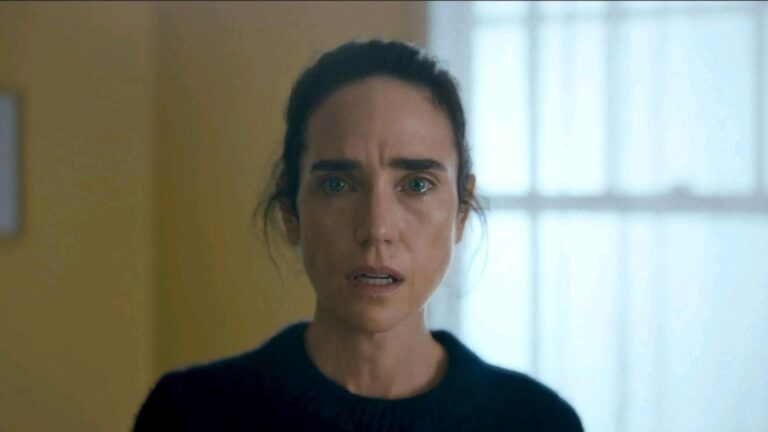
It may be impossible to quantify how terrible the new Jennifer Connelly movie Bad Behaviour actually is. And yet, Alice Englert’s film had plenty of room to be much worse than its final product. This film clearly has such a rancid take on mental health that even Dr. Jamie Zuckerman, the advocate who coined the concept of toxic positivity, may rethink her life’s work because of this misguided script.
I’m sure Bad Behaviour was meant to be award bait for Jennifer Connelly, perhaps even for an Oscar. Instead, the final product lacks logical thought, whether artistic or realistic. Its only concern seems to be propping up the performers with roles that do not gel, are inconsistent in tone, and work directly against each other in an unpleasant way, without any informative insight into themes that lack ambition and are shallow efforts at best.
Alice Englert and Jennifer Connelly in Bad Behaviour | Image via Ahi Films
The story follows Lucy (Connelly), a single mother and former child actress, who goes on a wellness retreat to find personal and perhaps spiritual growth. Life is hard for Lucy, who is going through a professional rut. She also has a somewhat strained and distant relationship with her teenage daughter, Dylan (played by writer and director Alice Englert), who is an actress and stunt performer in her own right.
When she arrives, it becomes clear that the goal of the exercise is not mental wellness. The exercises are being taped by the behind-the-scenes organizers (Ana Scotney, Alistair Sewell), who frequently try to coyly discourage participants from refusing two-party recording consent. The spiritual leader is Elon (Ben Whishaw), a figure who begins to resemble a snake oil salesman with his own rage issues.
Ben Whishaw in Bad Behaviour | Image via Ahi Films
Alice Englert’s script is filled with characters’ nonsensical behaviors, sugar coated with hateful, unpleasant actions. Whishaw’s Elon seems to be operating on Dr. Arthur Janov’s “Primal Therapy,” which has patients express their repressed emotions through primal screams or plain rage. However, the characters are flimsy, resembling those you might find in a situational or sophomoric comedy, and blatantly go against types that feel disingenuous.
You have the vain social media darling (Dasha Nekrasova), a narcissistic type, the angry muscle head (Robbie Magasiva), who is tender when it matters, and, of course, the Connelly character, a loving mother who attacks a fellow retreatmate after her slow simmer begins to boil over uncontrollably. Except, we never come to understand where any of these actions originate from and why they are manifesting. It’s as if the actions are just there to shock the audience instead of enlighten them.
Jennifer Connelly in Bad Behaviour | Image via Ahi Films
Bad Behaviour is a New Zealand production, so you see some brief but beautiful natural landscapes. Still, it doesn’t touch on any social or political issues known for its rich cinema history. Some eye-opening artistic choices, like an out-of-place animated sequence, are genuinely head-scratching. Also, the film is too indulgent when examining artists’ motivations but is rarely relatable to general audiences. You have to walk a fine line, and the film fails in this regard.
Overall, Bad Behaviour has very little to say that comes close to being meaningful. It could have been an insightful look at mental health, not just for the participants but for a character like Elon, who could be susceptible to burnout. It could even show how mental health professionals suffer from issues of their own. Instead, Alice Englert’s script has Lucy and Dylan’s stories play out where they eventually intersect, which leads to a stunning lack of purpose for the film and the audience.
Excuse me while I head off for a primal scream of my own for my precious time being wasted.
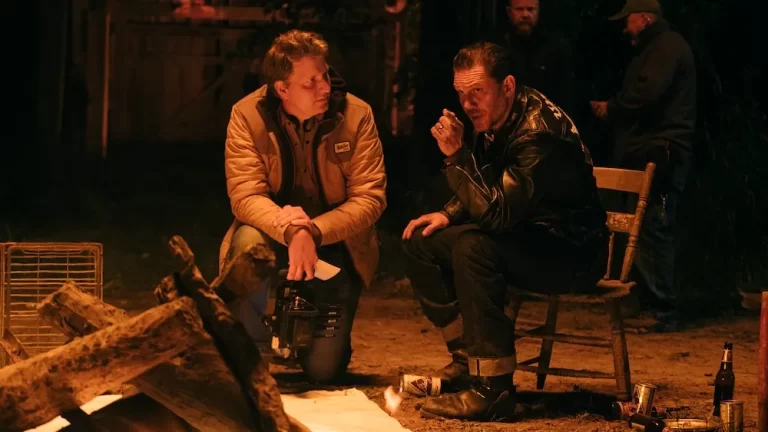
Director Jeff Nichols has become a big part of InSession Film Podcast lore as he’s become one of our very favorite filmmakers working today. Long time listeners will know that Midnight Special was my favorite film of 2016 and in his Top 10 for movies of the 2010s. Take Shelter, Mud and Loving are all great as well, with Shotgun Stories being one hell of a debut. It was an absolute honor to sit down with Jeff to discuss his new movie The Bikeriders, opening in theaters very soon.
Synopsis: On a journey that spans the formative years of their lives, two sisters navigate their loving but volatile father during their yearly summer visits to his home in Las Cruces, New Mexico.
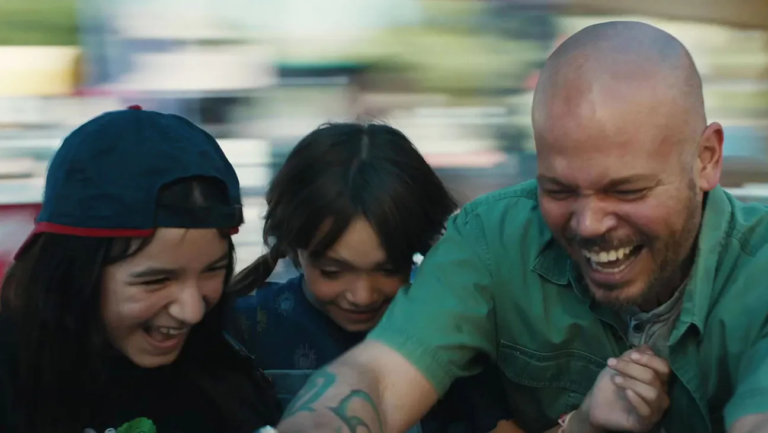
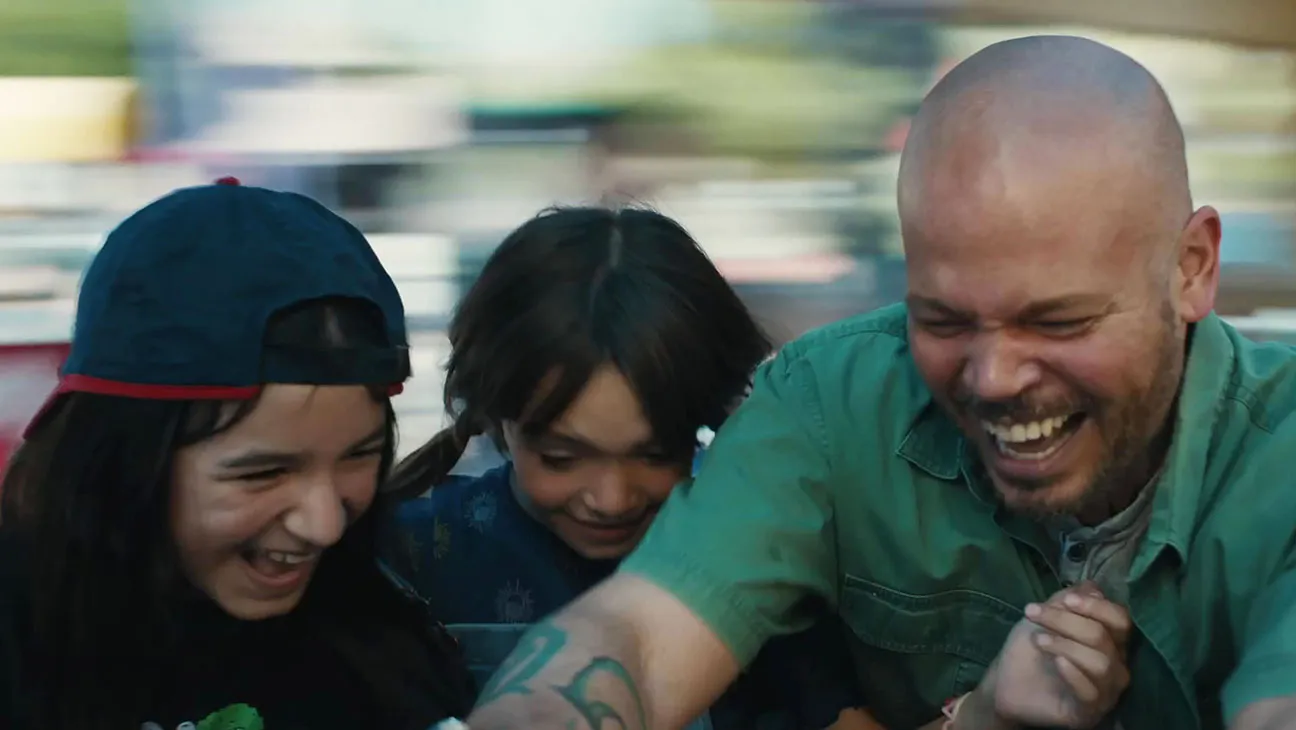
In the Summers is a personal debut feature inspired by the director Alessandro Lacorazza own relationship with their father and sister. Vicente (René Pérez Joglar a.k.a. Residente) is a fractured and damaged man creating complex legacies he passes on to his children- legacies which were probably passed on to him. His masculinity, as defined by class, place, ethnic background, opportunity, and the feeling that something unfair happened to him at some point is of particular interest.
The film begins and ends in the same airport in Las Cruces, New Mexico and is given chapters resonant of Dutch still life and memento mori painting to show how time passes. The first chapter features Vicente nervously waiting to pick up his daughters Violeta and Eva. He’s been cleaning the house left to him by his mother. He’s jangling with excitement to show them the swimming pool and make this summer, his first after losing custody rights with his Californian ex-wife, the best he can for the girls. Bubbly young Eva (Luciana Quiñonez) clearly adores him. The slightly older Violeta (Dreya Castillo) is more aware of what has really happened between her parents for Vicente to lose visitation rights and is less forgiving. However, his enthusiasm manages to win them over — albeit in small and unsustainable doses.
Vicente is battling addiction, primarily alcoholism, although harder drugs turn up. He loves his kids, but he can’t be a reliable dad. In fact, he’s often a terrible dad. His focus on proving that he is smarter than he feels people give him credit for merges in with his general resentment and discontent and spills over to his kids at different points in their formative years. Vicente is so profoundly stuck in his own spirals he cannot see the intensity of his instability. The greatest tragedy is that he is clever, he does love his children, but in almost every interaction he has with them there is always a passenger – his alcoholism. A night spent stargazing with Violeta and Eva would be perfect without the six pack of beer next to him. A birthday party is a trial by fire for Violeta and Eva.
At first, he’s trying to win over Violeta, someone who is smart but “not pretty.” He seems to miss the part where Violeta is clearly dealing with gender and sexuality issues, something his long-term friend Carmen (Emma Ramos) picks up on immediately. Carmen is the other parent for Eva and Violeta in Las Cruces. When Vicente is too far gone, she is the one the siblings turn to. Carmen’s weary eyes tell a story of life-long care for Vicente but with no illusions he is more than he is. Something a child learns over time – for Eva perhaps more slowly than Violeta.
Eva reminds Vicente of her mother. He sidelines her for being “stupid” and not caring about mathematics and science like he and Violeta do. Yet Eva’s adoration for Vicente is ritually self-punishing as she gets older. As she enters her teen years (played with heartbreaking authenticity by Allison Salinas) she has no idea who she needs to be to make Vicente proud of her.
The siblings must find a way to keep their own bond alive while dealing with a man who could embrace them or hurt them – possibly both in the space of a conversation. The beauty of Lacorazza’s script is that although Violeta and Eva’s relationship with Vicente is shifting, their sibling solidarity rarely does. From the child Eva helping Violeta to cut off her hair with paper scissors, to the teen Violeta putting herself in the line of fire to protect Eva.
By the second summer the clean house and the once fresh swimming pool are dirty and filled with muck. V (Kimaya Thais Limon) is more confident in their identity. V experiences their first crush on Vicente’s student Camila (played at two ages by Gabrielle Surodjawan and Sharlene Cruz). Ava begins to fade into the background except when Vicente makes remarks about her appearance.
An accident that was always going to happen, does. Vicente has now done real physical damage as well as psychological damage to his kids.
By the third summer, V doesn’t turn up. Only Ava, and she is watching Vicente with a new partner, Yenny, and a new daughter. If things seemed to be terrible the previous filmed summer, they are worse now. Yenny (Leslie Grace) is obviously an addict. The house is in squalor and Vicente is not working. The baby Natalia is often left to cry, and Ava quietly moves into the position of caregiver to Natalia, Yenny, and Vicente. Otherwise, she drifts alone through the streets of La Cruces which are showing the wear of neglect.
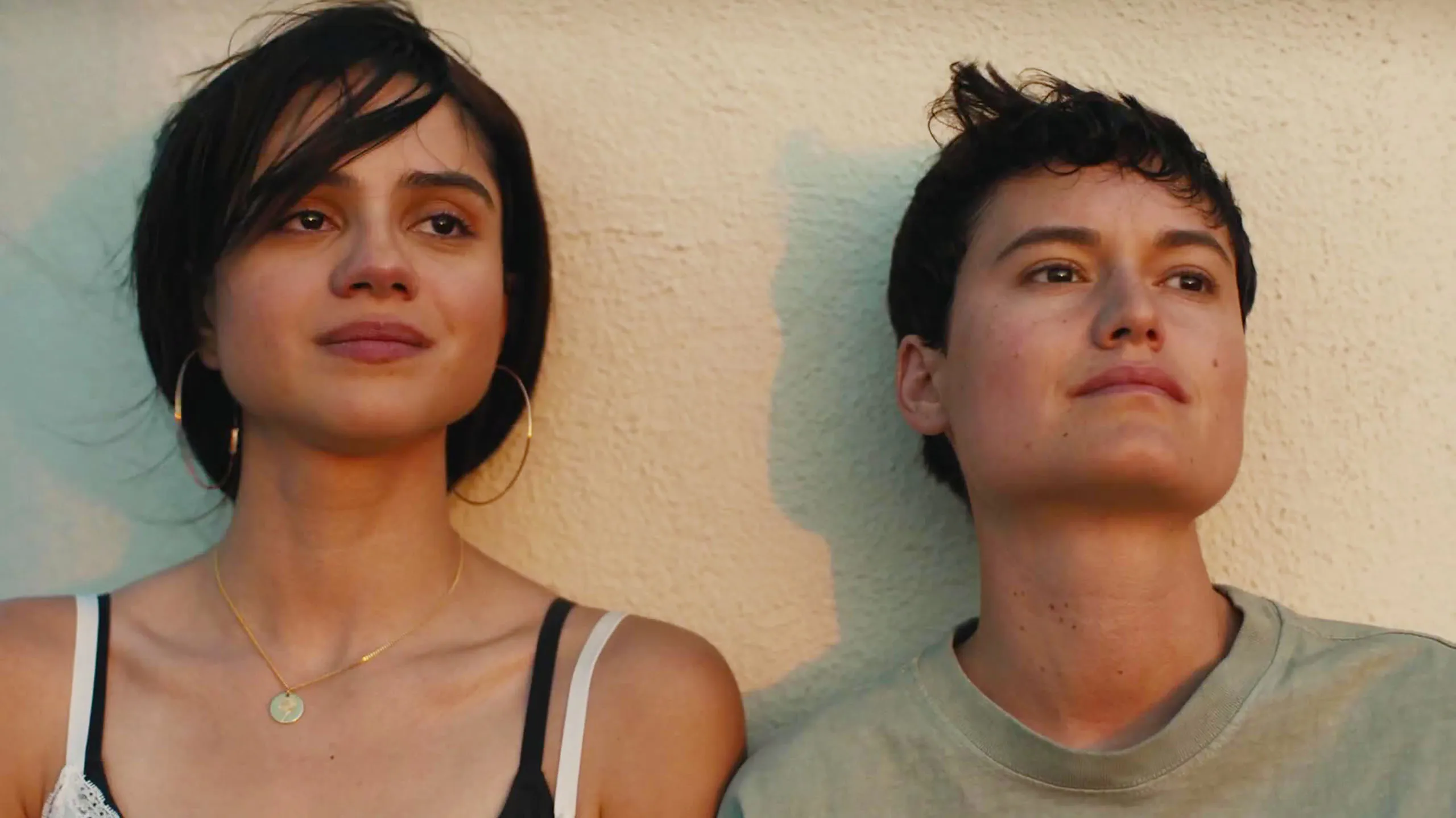
The final summer brings together the now adult V (Lío Mehiel) and Eva (Sasha Calle). Vicente is finally sober and the sole parent to Natalia (Indigo Montez). But Ava is struggling with her own version of addiction and self-destruction. V realizes that, they too, have not avoided Vicente’s influence. Some of it has been positive, a lot of it negative. They all love each other but it is too late to undo what has been done.
René Pérez Joglar Is excellent as the mercurial Vicente. Someone whose promises just don’t mean anything. Not the promise he showed in his youth, or the promise that next time it will be better. Perhaps he really has a chance to get things right with Natalia – perhaps this time he will go back to school, and he will stay sober. Lacorazza doesn’t answer the question, what they do answer is that V, Eva, and Vicente have reached a point of melancholic acceptance. No matter how much you love someone you can’t ignore their flaws, especially when they can become fatal on the spin of a dime.
Alessandra Lacorazza is never patronizing their characters. They are observing them with compassion and clarity. Just as they are not damning New Mexico — but showing both its cosmic and otherworldly beauty as well as the poverty and shuttered businesses. Alessandra Lacorazza also looks at Latine tradition with each chapter essentially opening with an altar of memories which show how time is passing. How every member of the family has value and how all the small mementos as well as the searing events mean something.
The memories of a bar where they play pool, how to break an egg to make an omelette, or the position of the stars, intermingle with seeing a parent passed out soaked in their own piss, or a violent shove. A dance which is not joyous but aggressive, and one that is just heartbreaking.
Rich with detail, In the Summers explores Latine and queer identity but doesn’t dwell on either being anything but who the people are; it is no huge burden or shame for the siblings. If there is any shame it is what Vicente carries as he falls into machismo lashing out as he has potentially had no healthy male connections in his life.
In the Summers is as tender as it is a powder keg. The siblings learn they can’t please someone who doesn’t know what they really want even if that was to please them. Beautifully acted and expertly shot by Alejandro Mejia, Alessandra Lacorazza’s emotionally raw feature aches with authenticity. In the Summers is a legacy of love in all its vicissitudes.
Director: Caroline Vignal Writers: Caroline Vignal, Noémie de Lapparent Stars: Laure Calamy, Vincent Elbaz, Suzanne De Baecque
Synopsis: Iris, a woman who has everything: a wonderful husband, two perfect daughters, a successful business – but no sex life. When was the last time she made love? Perhaps the time has come to find a lover.
Four years ago, Gallic filmmaker Caroline Vignal made a big splash on the festival circuit with the delicate, warm-hearted relationship comedy Antoinette in the Cevennes. The film was an unexpected hit with French audiences, drawing in over 700,000 spectators and even picked up a César award. The Rohmer-inspired character piece offered viewers a rambling, picaresque snapshot of the disordered life of a vibrant schoolteacher engaged in a doomed affair with a married man. It was a light, airy affair that nonetheless captured the psychological nuances of its protagonist with remarkable precision. As a filmmaker, Vignal was uniquely receptive to the concerns and desires that drive people to enter into dysfunctional relationships that can’t be sustained in the long-term.
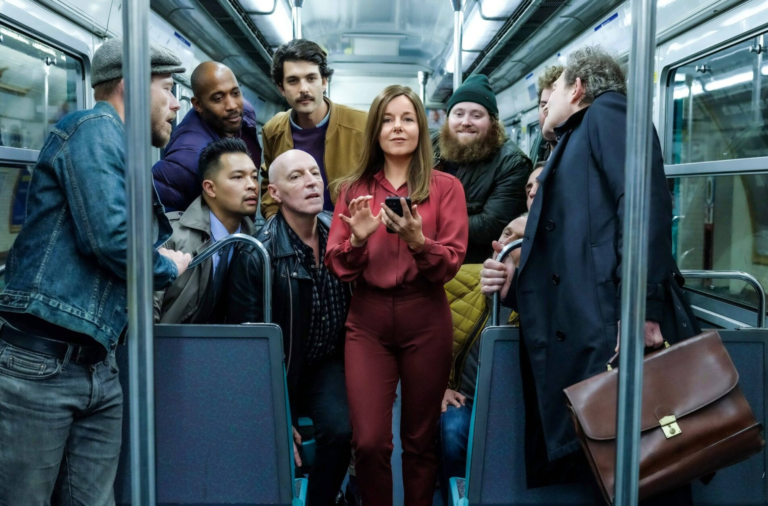
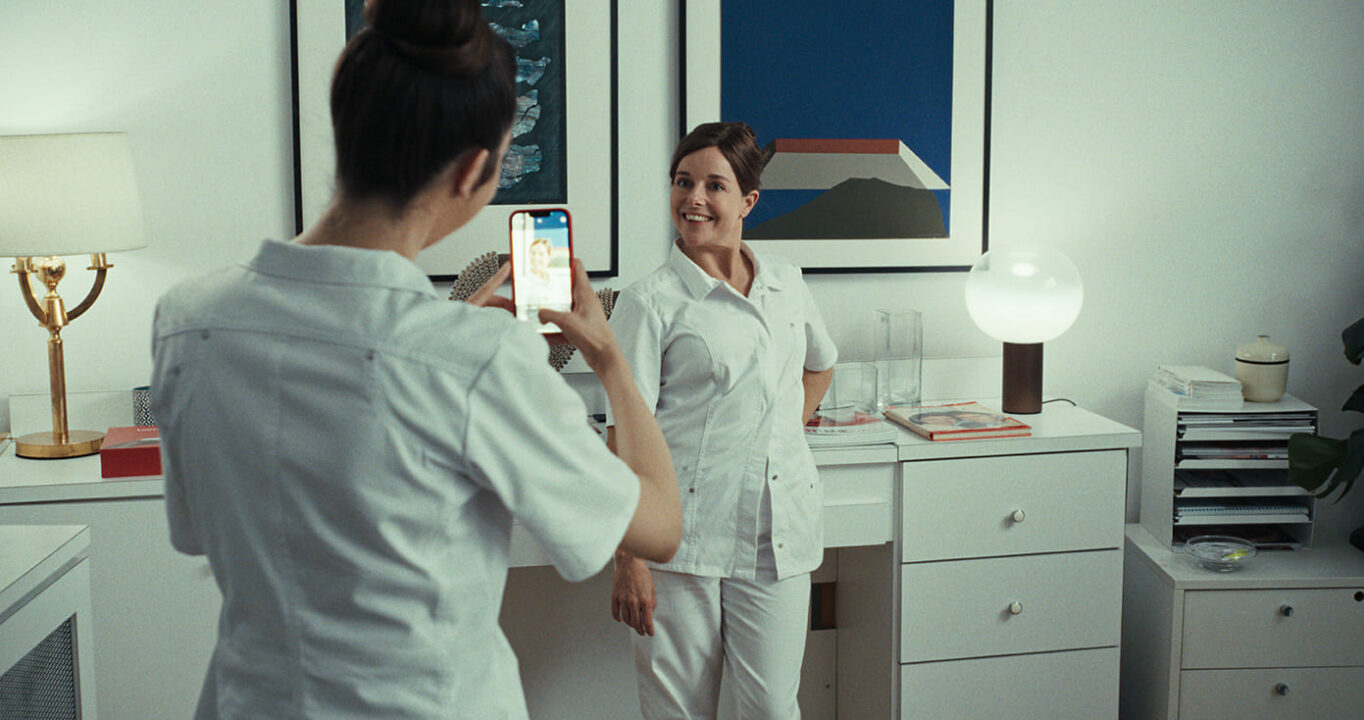
With her third feature, Iris et les Hommes (2023), she returns to the subject of marital infidelity but shifts her gaze from Antoinette, flighty, exuberant mistress, to Iris (Laure Calamy), a middle-aged dentist who is disappointed by the lack of passion in her marriage. This shift in focus is accompanied by the adoption of a darker tone and an attempt to tackle heavier subjects. We first witness Iris sinking into a mild depression as a result of her inability to achieve physical or emotional intimacy with her husband, Stéphane (Vincent Elbaz). He is sweet-natured and shows signs of being an attentive father, but Iris worries that the spark in their relationship is dead. While attending a parent-teacher meeting, she is introduced to a dating app by a fellow parent and soon finds herself communicating with a wide array of potential suitors. The app opens Iris up to a whole new world of possibilities and she begins to lean on it heavily as she battles a mid-life crisis of sorts.
One naturally wants to applaud a romantic comedy that throws so many different ideas up on screen. Much as I adore this genre, it is fair to acknowledge that it is often brought down by an over-reliance on formula and an unwillingness to make audiences uncomfortable. For every Ernst Lubitsch or Gregory La Cava, there are dozens of studio hacks with no interest in fully exploring some of the more challenging dimensions of stories about people falling in and out of love. Vignal doesn’t possess Lubitsch’s gift for biting class commentary or La Cava’s deft touch with ensemble casts but she is a talented behaviorist. Here, she takes a clear-eyed view of the inevitable acknowledgment that human beings and their motivations can be ultimately unknowable. You have to accept a certain lack of transparency within any relationship and live with the knowledge that any form of objective truth will forever elude you. She brings this mildly provocative thesis statement to the table and maintains a pleasingly ambiguous stance on the actions of the protagonist but one is still left with the feeling that the film as a whole doesn’t coalesce into anything substantial.
This feeling of mild dissatisfaction could be chalked up to the fact that the film never delivers any big laughs. The big comic set-pieces, including a song-and-dance number set to a French-language cover of The Weather Girls’s “It’s Raining Men,” are too overworked to be truly lively and spontaneous. Antoinette in the Cevennes has a ramshackle, thrown-together quality that heightens the comic effect of the gentle, word-play heavy jokes that are skilfully threaded throughout the narrative. Iris et les Hommes has a harder time handling tonal transitions; often lurching violently between being a heavy family drama and light sex farce. Unfortunately, when the jokes are delivered in such a labored manner, it doesn’t do much to ease the transition between the two separate strands of the plot.
If this doesn’t manage to build upon the achievements of Vignal’s sophomore outing in ways that are productive, it still provides evidence that she’s one of the more exciting filmmakers working in the romantic comedy genre today. There is something to be said for the fact that she’s legitimately fascinated by the ties that bind married couples together, even in the face of work-related burnout and the anxiety that tends to accompany parenthood. Her rich, evocative portraits of complicated women who make questionable choices fill an important niche within the realm of contemporary cinema.
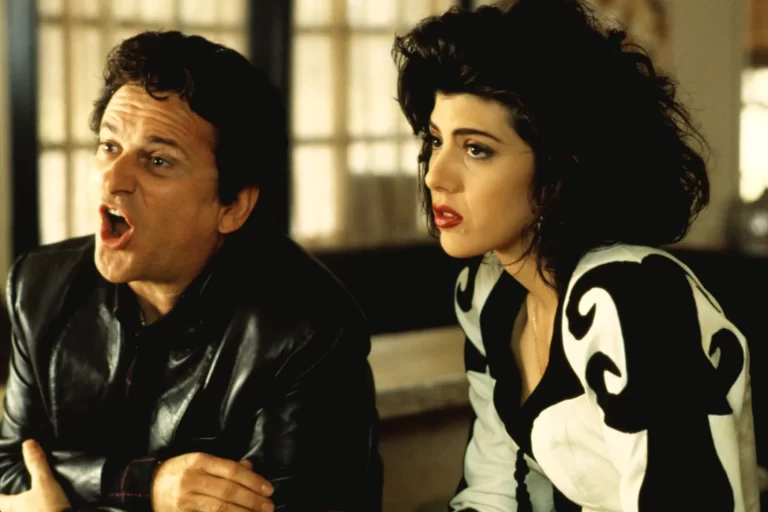
This week on Women InSession, we look back at a couple of early 90s comedies in My Cousin Vinny and My Blue Heaven! While one of these have gone under the radar, they both are extraordinary comedies that play up its tropes in some really funny ways that still hit all these years later.
Panel: Kristin Battestella, Amy Thomasson, Jaylan Salah
On that note, check out this week’s show and let us know what you think in the comment section. Thanks for listening and for supporting the InSession Film Podcast!
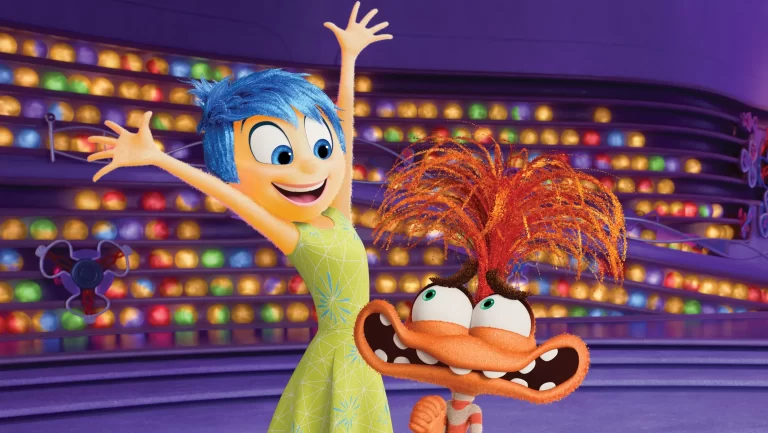
On this episode, JD and Brendan discuss Pixar’s latest film Inside Out 2, starring Amy Poehler, Phyllis Smith and Maya Hawke! Long time listeners will know that Inside Out from 2015 was JD’s favorite film of that year, so this was a highly anticipated conversation for us on the podcast. As you’ll quickly find out, there was much to discuss, especially with Riley’s hockey being a pivotal part of this one.
Review: Inside Out(4:00) Director: Kelsey Mann Writers: Meg LeFauve, Dave Holstein Stars: Amy Poehler, Phyllis Smith, Maya Hawke
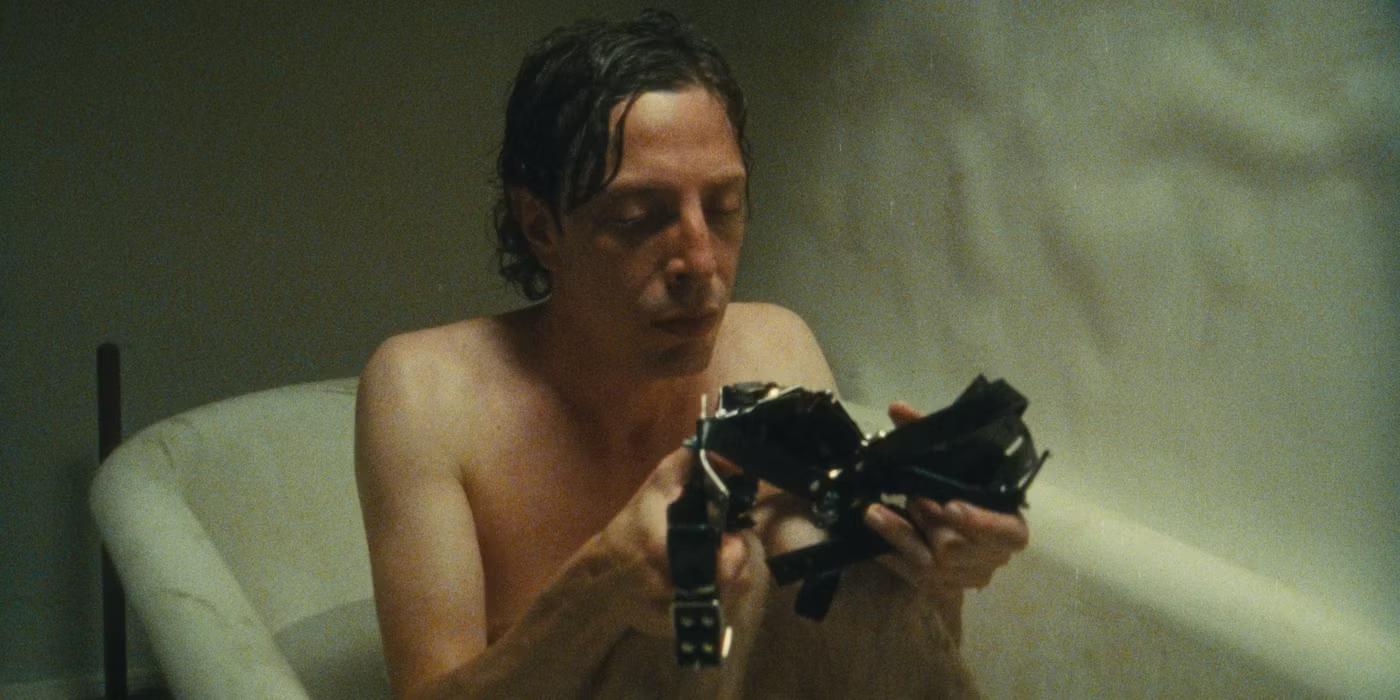
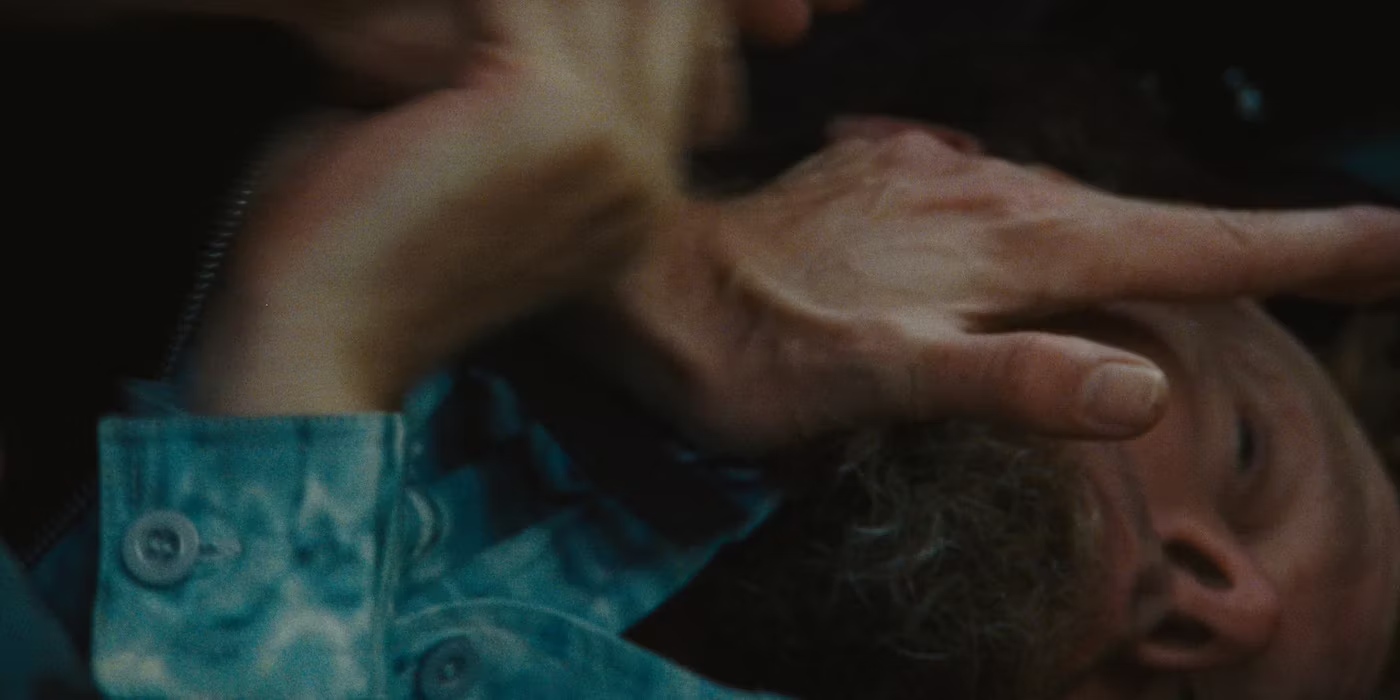
Prior to the world premiere of Vulcanizadora, I was able to sit down with multi-hyphenate filmmaker Joel Potrykus, and lead actor and longtime collaborator, Joshua Burge to discuss the film. During our conversation, we discuss everything from what the two feel about hiking to eternal damnation. This is a film that leaves its audience with a lot to chew on, and breaking it down with both Potrykus and Burge was an absolute delight. And yes, we do get into the imagery that will likely mystify many people as they stumble onto this film. It’s a gnarly film, but made way for a really fun conversation that delved into a variety of different topics. As a slight warning, it’s of my belief (and Potrykus backs me up below!) that Vulcanizadora should be seen while knowing as little as possible about the film itself. While we largely avoid spoilers in the below transcription of our interview, there’s some general allusions to what occurs throughout the film. Enjoy the conversation, check out my full review of the film right here,and most importantly, enjoy Vulcanizadora!
Alex Papaioannou: So, yeah, I loved the film.
Joel Potrykus: Aw, thanks man.
AP: I went in knowing absolutely nothing!
JP: I wish everybody would just go in knowing totally nothing!
AP: So let’s just get right into it! Are the two of you frequent hikers?
JP: [Smiles.] Josh, you start with that one.
Joshua Burge: I walk as a mode of transportation, so therefore hiking is not an appealing leisure activity. [Laughs.]
JP: I actually dig all that. I love going out in the woods and hiking and camping and all that business. But, yeah, I don’t think ‘ole Burge is into that kinda thing.
JB: Yeah, not my thing.
AP: It does really play like that in the film as well!
JP: I guess it does! [Joel and Joshua laugh.] You’re like, miserable. Not wanting to be there and I’m like, “Come on!”
JB: Yeah, you’ve got all that gear!
AP: Is all that yours?
JP: That backpack actually is mine. I bought it at a garage sale, but I never used it. My wife was like, “Why are you buying that? We have a kid now [Smiles.] You’re not gonna be taking him on weekend camping trips.” So that was in my garage forever. But I did buy the pants that zip away into shorts. But yeah, like the little pan and all that. That’s all my stuff.
AP: You finally got to bust it out. Worth the expense!
JP: There was a reason to buy it, I guess.
AP: Are those pants in the regular rotation?
JP: Those are not in the regular rotation… yet! [We all laugh.] They’re pretty practical and comfortable though, so it was great to shoot a movie in those out in the wilderness. Glad I didn’t have to wear a Tommy Hilfiger sweater and jeans. [Referring to Josh’s character in the film.]
JB: [Laughs.] Yeah, yeah.
AP: Getting back to the idea of going in knowing nothing. The dynamic at first plays very comically. Joshua, you’re performing the straight-man archetype and Joel, you’re just going off and doing your own thing. Then it makes the bleak shift about halfway through. So how do you balance that tone?
JP: Well, as you said, [my character] Derek’s the one doing all the blabbering and then there’s Marty. And I think seeing that on screen is what sells the tone. If there’s two guys having a good time on a camping trip, then all of a sudden there’s no sense of danger. But if there’s one guy who’s really excited, and there’s one guy who doesn’t want to be there, you know something’s up. There’s a reason that guy doesn’t want to be there.
JB: And I was just making sure that [my character] Marty would stay as silent as possible. Then that just adds to the dynamic. It makes it much more extreme to acknowledge that one guy is trying to make the best of it and have fun, and the other guy is just really solidifying that he’s not having it.
JP: So right away, without saying a word, I think audiences could figure out something bad is going to happen. Because there’s a big shift in dynamic and in the personalities between those two characters. And it was also important to kind of give a little feeling of unease at the end of every scene. So for Derek, he’s been all goofy, and then to wipe his smile away at the last second, I think helps.
JB: Just going non-responsive and not participating.
AP: So you two have been collaborating for a while now. You’ve known each other for a long time, and you’re playing such heavy roles, especially in that first half. What’s the approach in terms of going from goofing off with a friend before action is called, to then needing to immediately shift?
JB: Well, with these two characters, we had already been there before… [Turns to Joel.] I could say that now, yeah?
JP: [Looking down.] Not yet… [he smiles.] I mean I don’t know. [They both laugh.]
JB: It was just that revisitation of how difficult it is to act with Joel, because he’s hilarious, and it is hard not to break. [Laughs.] But you just have to keep going over it and over it in your head. That whatever you think of as your total nightmare, an uncomfortable state-of-being, and existing in misery and anger and loss. Frustration. Whatever those horrible thoughts are that put you there, to actually be able to use them to complete that portrayal.
JP: And it was like that, because we would be goofing around right before the roll. Sometimes I would doubt whether we were in the right headspace. But Josh is such a good actor. He doesn’t need to go into a corner for 30 minutes to go brood and get into character. It’s like, action, and the smile is gone. He’s dark now. So that is how it was. It wasn’t like, cut, and Josh would be angry and sulking, trying to stay in character. [They both laugh.] We were having fun. As soon as we rolled cameras, it was easy for me because I was still kind of the same guy. But for Josh, yeah, he had the heavy lifting in those situations.
AP: Obviously, another big element of the film is the device!
JP: Yeah.
AP: I mean, do you have a name for it that you’ve been referring to it as?
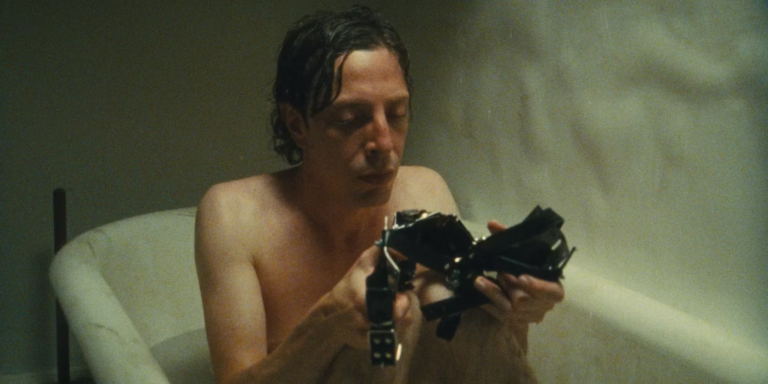
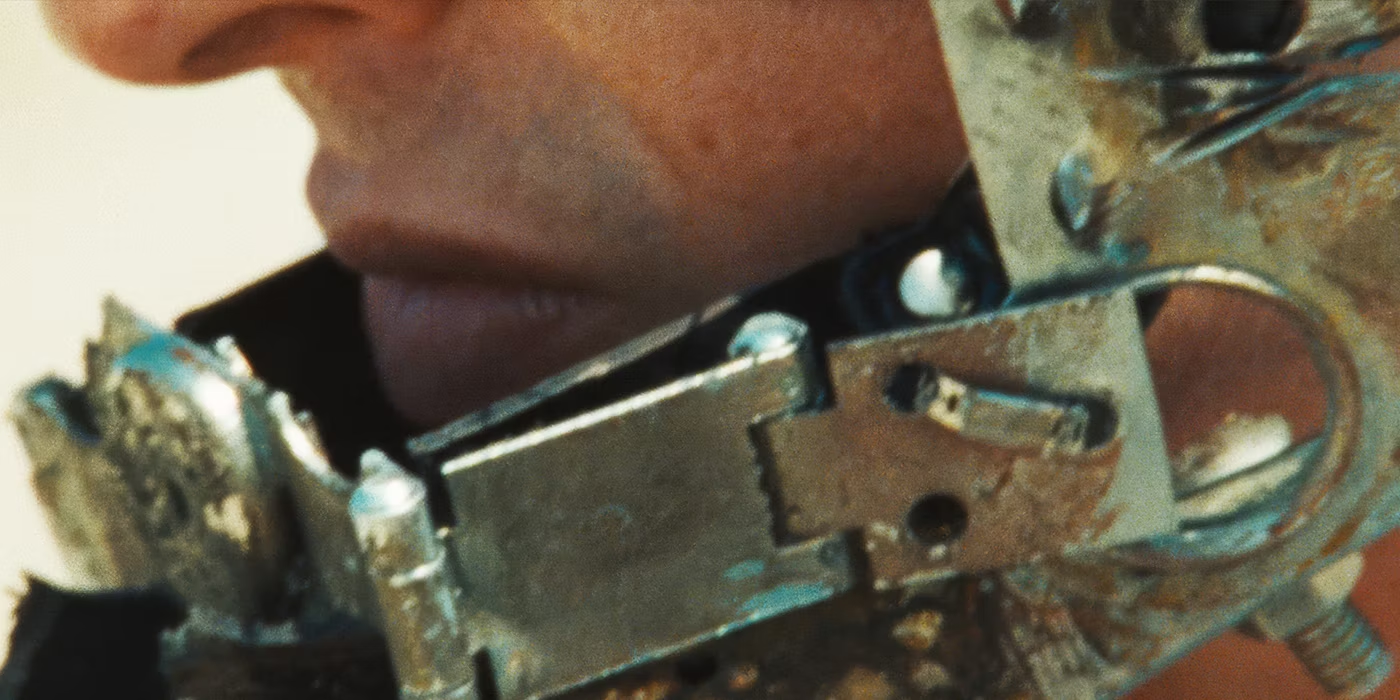
JP: No! Just the masks. And we talked a lot about what that would look like and how it would function. My original ideas were way more simple. It was my brother Charles who said, “Give me a week or two, and let me come up with a cool concept for this and design it and create it.” He typically creates all the… “appliances” in these movies. So we just talked a lot about it. There was no name for them, but it was just “the masks.” He just came to set with them ready to go and locked them on our heads. And it was game on. It was great.
AP: Was it always a mask in your head?
JP: Yeah.
JB: We arrived at the metal mask, I think, pretty quickly.
JP: Ball gag was talked about. Once we figured out how it was gonna happen, we knew we had to come up with a cool mask/headpiece to really freak audiences out.
AP: It’s… gnarly. Putting it on is one thing, and then seeing what happens right after… And that leads to my next question. Thinking it is one thing, seeing it in person is another. When you have it on your head for the first time, what is going through your mind?
JP: I think putting it on is almost scarier than when it happens. There’s way more mystery when it’s just being put on somebody. That, to me, is my favorite moment in the movie.
JB: I mean, it is an intense thing. Chuck did an amazing job building those masks without having our dimensions or any measurements to model it off of. So putting it on it fit great. But it also had a medieval aspect to it, where you’re going into the Iron Maiden or something. Some sort of contraption that you’re not supposed to get out of, you know? And that’s a very encapsulating kind of fear. A striking feeling to have.
AP: Like it’s comfortable enough to put on, but a bit too tight to take off.
JB: Yeah, there’s that real weight to it. And those real jagged edges that you can sense, even if you don’t feel them. It’s very real and present.
AP: And it’s definitely felt. I mean, there’s morsels throughout the film, so you start to realize what’s happening. But once those masks come out, you don’t even want to look. And I think it’s expertly handled.
JP: And what was more difficult is we did all the takes in that whole scene with the things in our mouths. Like, it was hard to breathe. You’re drooling…
JB: Drooling, and you can’t swallow.
JP: And I’m trying to direct and I can barely talk. That was another kind of discomforting part of it.
AP: I mean, how long did that take to set up and shoot once you have it in your mouths?
JP: We wanted to go as quickly as possible, but there were complications. We were shooting on a beach, and we kind of had permission to be there. But there were also other residents around, and they didn’t know what we were up to. So there was some interference from people, like asking what we were up to or being in the shot. And we’ve got this thing on our head, and these things in our mouths, and I can’t go talk to them. So it was probably the most hectic scene to shoot. The sun was going down, there were a lot of moving parts. And it was obviously uncomfortable for us. So that was a tricky, tricky scene. We tried to get it as efficiently as possible.
AP: And of course, shooting on 16 millimeter adds to that. Was that always the plan to shoot on film?
JP: That was the hope! And then once money came through, it was like, “This is it! Like it’s happening.” We’ve always wanted to shoot a feature on 16mm. It just seemed a little intimidating, but our DP Adam J. Minnick has done it many times before. So he convinced me that we could do it for this much money and in these conditions.
AP: So this is the first feature you’ve made since becoming a father! And your son is in the film. Can you talk about what that was like? And how was that first day of having him on set?
JP: So I feel that all the films that Josh and I have made until now have an almost indirect undercurrent of fatherhood. Grown men trying to figure out how to be men, and never having a father to show them. But it’s always just sprinkled in. And this is the one that most directly tackles the idea of fatherhood, and why these two guys are the way they are now. We get to see an old father, and we get to see a kid, and then a father in between both of them. So yeah, becoming a dad definitely shaped the story. I was ready to really fully explore why these characters are the way they are, and why I’m like the way they are. And… [Smiles.] I don’t know if there’s anything for Josh about why he is the way… [Laughs.] I don’t know! Josh and I typically don’t talk a lot about “what I’m bringing to the character” business.
JB: Yeah, we don’t really do that. But at the same time, there’s an understanding that we’re both coming from wherever we’re coming from. And again, the time passage is such a big deal for me on this film. The obstacles that people go through over a certain period of time. In this case, 10 years. And I just honed in on that, I think, more than anything. Like where your relationships are with other people, and the growth or failure of them. Those sorts of aspects were what I thought about most when taking on this dude.
AP: You share a scene with Joel’s son, Solo. What was that like on the day?
JB: Yeah! So… [chuckles] first of all, Joel wrote to me. And he said, “You know, we might have you just hang out and talk to Solo, and we’ll just shoot and see what happens. We might get something or we might not.” And I said, “Well, that sounds great, man. I’ll be prepared.” [They both laugh.] So we’re there. It’s halfway through the shoot, and we’re getting ready. And I was like “Want to try to run the lines?” [Animatedly replies] And Solo had every line down pat! Perfect! [Joel laughs.] Just right on it. And I have to say it, I did not! I did not. I was ill prepared. [We all laugh.] So I said, “Okay, Mr. Potrykus. I’ll learn my lines.” And I was not talking to Joel!
JP: [Laughing.] Yeah.
JB: So it was amazing. The little dude did an amazing job. And it was a thrill to be on screen with him and have that moment. It was a blast.
AP:
Solo will be in his dressing room while you learn the lines. [Laughs.]
JP: You know, my wife and I rehearsed him for months and months. We went over the lines, and were like, “You gotta look him in the eye, and you can’t look over there at the camera. You gotta look the person right in the eye and say it.” And once he knew the lines, then he felt comfortable locking eyes. And even about a week up into the shoot, I didn’t know. I was like, “Ehhh.” But then every time we did it, he just nailed it. And I just had such confidence in him. I didn’t even look at the monitor that day. I just sat next to him… It’s pretty emotional. I didn’t even have to direct him! He just knew it. I just wanted to see him do it in reality, because I knew that was the only time I’d ever see that. Forever after, I’d see him on the screen. To be able to be in that moment and be present. I mean, you have that every time you act. You get to experience the moment without the camera. And I very rarely get to do that. I’m usually looking at a monitor.
JB: Yeah! [Smiles.] That’s true.
JP: To be there and to see it happen was really cool. And I got all emotional. It was awesome.
JB: It was just a privilege for me, to be a part of it all. Just to see the little guy, and he was actually playful, you know? I mean, he was playing with a toy, and that’s what was going on in the scene. He was there! What you’re supposed to achieve as an actor is to be there, be involved, be real, and be what you are. And that’s what Solo was like naturally.
JP: He wasn’t in his head too much, like probably most actors get. [Chuckling.] You know, he doesn’t know what he’s gonna look like on screen. Sometimes, maybe actors can get self-conscious about that.
AP: Obviously, he’s not going to see the whole film, but have you talked to him about being on a big screen?
JP: He’s pretty indifferent about it all! [We all laugh.] He just doesn’t get the magnitude, and he kind of doesn’t care. When we were editing his scene, I tried to show him and he was just like, “Eh, okay. Cool.” He doesn’t seem like he wants to watch the movie, or even care that he’s not going to be allowed to watch it for a while. So he’s just kind of drifting through it.
AP: Fame doesn’t change him.
JP: He’s not jaded, his ego is still in check. [We laugh.]
AP: So, without divulging too much about where the film goes: A lot of it is about wanting to be held accountable for certain actions, I suppose, and in turn, there’s constant failure. And then in those final moments, we see what happens. Do you feel that there’s justice in those moments?
JB: I personally don’t see it as justice. I see it as a sense of relief. But I’m not… Josh, it’s your character. Yeah, it’s more of a burden being lifted. I don’t see it as justice either. Not to be religious about it, but there’s the Old Testament with the wrath of God and a burden is lifted.
JP: I think Josh’s character feels something he hasn’t felt in the whole movie at that moment. That’s the most important part of it.
AP: It feels like the only time you really see him smile. Or even emote, I’d say.
JP: That was definitely intentional. It’s something we talked a lot about.
AP: I know there’s the conversation about Hell. Did you pull that quote from something that you saw online?
JP: [Laughs.] I just made that up because that’s my version. That would be my Hell. To not be screaming in pain, but to be nervous… forever.
AP: In my notes I just wrote, “Isn’t that just real life?”
JP: [Smiling.] Yeah! But instead of just through your adulthood, it’s through eternity. Man… holy shit! [We all start laughing.] I think that may be the most hardcore thing in the whole movie! Just that fear of being nervous forever.
AP: Yeah! It feels like Derek is just constantly talking into the void. And Marty is just there, embracing it. And it feels like his reply is the time where you’re just like, “Ok, what’s going on in your head?”
JP: Yeah! I love that you don’t really know. Is Marty taking it to heart? Or is he just shaking him off? I think there’s something freaky in that. That he’s still locked in after all that.
JB: And I also think about the way that Marty then addresses it. “Well, there is no Hell.” That’s his rebuttal. It’s either to move the show along and get it going, or he just doesn’t want to participate and placate any of Derek’s notions about whatever is going on with Hell.
JP: I thought we had an opportunity to go a lot deeper into it. But I felt like “being nervous forever” is just the thing that I wanted to get across.
JB: That’s his concept of damnation.
JP: And if we could get there in a realistic, almost silly way at first. And to then end on that note. The whole movie’s structure is: Goofy into goofy into goofy, and then get ugly or dark right at the very end of a scene or an exchange of dialogue.
AP:And it totally recontextualizes the first half with Derek. I mean, he’s clearly a goofy guy, but this then brings the thought up of, “Oh, he’s just trying to kill time.”
JP: Yeah!
JB: He’s trying to prolong the inevitable.
JP: There’s something about him knowing that this is why they’re there. Him never acknowledging it, and still having this goofy persona, to me, yeah, recontextualizes everything. Like how is that guy trying to have fun, knowing what’s gonna happen?
AP: It’s so frightening and so masterful. I can’t wait to hear the reactions at the premiere.
JP: Me too!
JB: Yeah!
AP: How are you feeling going into it?
JP: I’m super stoked. This is exactly what we set out to make.
JB: I’m so excited. Seeing everybody’s reaction, and to see it on the big and large screen, too. I haven’t seen it that way. So I’m stoked.
AP: Out of curiosity. How long was the shoot?
JB: Eight days.
JP: Was it eight?
JB: Eight total shoot days. 14 working days, two to travel and whatever. Eight day shoot.
AP: That’s amazing.
JP: Yeah, it was super, super efficient.
AP: That’s all I have! Again, thank you both for taking the time. Congratulations on the premiere, and I can’t wait to see the reactions that come out.
JP: I’m going on Letterboxd tomorrow morning! [We all laugh.]
When it comes to box office success and general audience appreciation, legacy sequels are pretty straightforward. Lots of nostalgia for a beloved property, some crowd-pleasing cameos, plucky new heroes to accept a passed torch – if you follow the formula and get a halfway competent team on board, they’re as much of a safe bet as anything in Hollywood can be. Star Wars: The Force Awakens was exalted on release. Ghostbusters Afterlife didn’t offend anyone. The first Hobbit (legacy prequel but still bent over backwards to get as many nostalgic references in as possible) received good reviews. Scream (2022) had a lucrative blast skewering the very idea of legacy sequels. Jurassic World was a box-office behemoth.
But things get a little trickier when the time comes to follow your nostalgic investor-pleasing return to the well. Consider the pattern: The Last Jedi went for knotty ideas and thematic subversion that thrilled many but invited backlash so severe that Lucasfilm followed it with a two-and-a-half-hour-long apology, which appeased nobody. The Hobbit sequels tried for something more colorful and elastic that was ultimately met with a shrug by exhausted audiences. Scream VI was inventive in its kills but had nothing new to say, which is a cardinal sin for a Scream movie. Terminator tried to reboot its reboot with another reboot, arrogantly assuming that audiences burned several times before would listen when the producers insisted that this time they’d got it right (they hadn’t). Halloween had absolutely nowhere new to go in Ends or Kills, unless you count focusing on a teenage delinquent as your main antagonist rather than Michael Myers.
And then there’s Jurassic World.
Like so many of these rebooted franchises, all three Jurassic World films cleaned up at the box office despite the critical consensus being that they’re kind of terrible. And that’s not unfair. They are kind of terrible. At their best, they’re goofy crowd pleasers with enough dinosaur action to keep you engaged, but even that reading assumes you’re not at least a little bit disheartened by the descent from one of Spielberg’s greatest blockbuster classics to flaming locusts.
Granted, few long-running franchises are ever able to match the power of their first instalment, and Jurassic Park, like Jaws before it, is no exception. The difference is that Jaws never lent itself to a sequel, while the original Jurassic Park is rife with implications about where it could go next. This is partly what made its two initial follow ups so underwhelming; both were content to mostly keep the dinosaurs on the island, the humans on the run and the status quo exactly where it was at the end of the first film.
By contrast, the World films tried to fulfill the promise of the original and entirely screwed it up. But what really rubs salt in the wound are the moments throughout where you catch fleeting glimpses of just what these movies could have been.
It’s always a bit eye rolling when a movie made by a mega-corporation takes tame pot-shots at the capitalist system that gave it birth (cough, Barbie, cough), but Jurassic World largely gets away with it because the seeds of the park’s destructive commodification are very much planted by Ian Malcolm’s warnings in the first Park. Seeing the new version plastered with big brands while executives wholesale inventing a dinosaur to please investors feels like, well, basically what would happen in real life. In one of the best scenes in the film, the scientifically outdated appearances of the dinosaurs are addressed not only with the fact that they have been altered by spliced DNA, but the insinuation that they were deliberately manufactured to resemble what people in the ‘90s thought dinosaurs should look like. Given the lengths the film goes to remind you of the hallowed original, it’s a surprisingly sharp edge that very nearly pushes Jurassic World into thought-provoking, satirical territory. The suggestion here is that it’s more important these ‘dinosaurs’ give people what they think they want than be in any way representative of their extinct forebears. It’s not especially hard to track where that metaphor is aimed.
But even ignoring any meta implications, this plot point has prescience. Consider the very real efforts to ‘resurrect’ the Woolly Mammoth or the Thylacine, a marsupial predator hunted to extinction by settlers in early 20th century Australia. While cloning has long been the presumed method of bringing them back, more recently a complex process has been raised for discussion that effectively amounts to taking a living relative of the extinct animal and reverse engineering its DNA to come up with a close approximation. If it looks like a mammoth, is it a mammoth? Will it matter to the inevitable crowds flocking to see the ‘de-extinct’ animal?
Jurassic World almost engages with this question, but it can’t resist putting the focus more on crowd pleasing nostalgia or scenes where the T-rex and raptors team up against the lab designed monster in a righteous takedown that ignores the fact that they’re all lab designed monsters. It’s a lot of fun if you like seeing dinosaurs fight (which in fairness most sane people do) but it comes off as a hollow cover version of the original film, lacking in soul, tension, wonder, thoughtfulness or dynamic characters.
Fallen Kingdom gave the first indication that these new films had any intention of moving beyond the ‘humans chased by dinosaurs on an island’ template that characterized all previous films in the franchise. While the first half of the film is precisely that, the second pivots to something weirder and more interesting. The idea of billionaires bidding at auction on exciting new dinosaurs rings very true, even if these films’ insistence on positioning raptors as a desirable asset for a military that has drones does not.
Then there’s the introduction of Maisie Lockwood (Isabella Sermon), revealed to be a clone of the deceased daughter of Jurassic Park’s hitherto unmentioned co-founder. Some criticized this plot point as too silly, ignoring that it was the inevitable result of the technology introduced in the first film. Of course the very rich would bring back their loved ones if they could. But the film does next to nothing with the reveal, showing little interest in engaging with the ethical ramifications of it. Benjamin Lockwood (James Cromwell), the cloner in question, is presented as a benevolent old man who misses his daughter – a depressing case of modern blockbuster reluctance to engage with moral ambiguity lest somebody be made a little uncomfortable.
To that point, even Maisie’s final choice to release the dinosaurs into the wild never really gets held to account, in either this film or the sequel that is ostensibly about the consequences of that very decision. Furthermore there’s one beat where protagonists Owen (Chris Pratt) and Claire (Bryce Dallas Howard) are called out over their culpability in creating this new world, which again could have made for some desperately needed character development or thematic weight, but is quickly skipped over in favorof more cool imagery and John Williams evoking music.
Fallen Kingdom often feels like three different films mashed together, but it’s comfortably the most fascinating of the World films, and the one least concerned with nostalgic pandering. However, one aspect is consistent with the films on either side of it; a tendency to gesture towards compelling ideas before running as far as possible from them. There’s a certain smugness to the way these scripts seem to expect points for even mentioning thorny concepts, while missing the fact that thorny concepts only make for drama if they’re, you know, dramatized.
If Fallen Kingdom is the most interesting, then Dominion is the most frustrating. Following the previous film’s genuinely thrilling cliffhanger, Dominion was set up to finally realize the promise of Crichton’s premise. What does a world where dinosaurs and humans coexist look like?
Unfortunately, we still don’t know, because everyone was too busy focusing on the locusts.
You can sort of see why Dominion made this choice. Director Colin Trevorrow worked overtime in interviews to stress that it wouldn’t be credible for dinosaurs to have taken over the world when only a handful of them escaped in Kingdom. While this is true, credibility didn’t seem to be a problem when Owen was crawling unaffected away from lava that was inches from his face. These films can never decide if they want to be silly blockbusters or serious science fiction continuations of Crichton and Spielberg’s work.
Dominion briefly comes to life in the Malta chase sequence, but that’s because it’s the only scene in the film that almost delivers what was promised; dinosaurs wreaking havoc in the human world. The audacity of having most of the action then take place in another remote dinosaur reserve while trying to claim it’s different because it’s in the mountains rather than an island demonstrates Starkiller Base levels of audience contempt.
And in case bungling an irresistible set up wasn’t enough, Dominion also reunites the three protagonists of the first film then proceeds to do nothing worthwhile with them. Ellie Sattler (Laura Dern) is now a one-note crusader while Alan Grant (Sam Neill) waffles along behind her, looking more like a confused old man than Neill has ever looked in his whole career. The film insists on romantically getting them back together because it assumes that’s what audiences want, but even Jurassic Park III understood that there was power and humanity in a melancholic separation due to different desires. Say what you will about that film, but at least Alan and Ellie felt like the same people they were in the original, with the same foibles that always would have doomed them as a couple. Meanwhile Dominion leaves Jeff Goldblum to spout embarrassing pseudo-philosophical dialogue that evokes his way of speaking in the earlier films provided you remove all wit and meaning.
But one of the worst offenses is how the film retcons Maisie Lockwood so that she is no longer the product of a billionaire’s hubris, but the lovingly designed offspring of a genius mother. It’s a choice that so obviously exists to avoid having to engage with Maisie’s angst over who she is if she’s not ‘real’ or the bigger questions that invites. It serves as the final nail in the coffin of this franchise; these movies can’t even commit to their own halfway interesting ideas.
The Jurassic World Trilogy was damned by reverence. The films started out scared to chart their own path and when they were finally forced to, they vacillated between ridiculous action, vaguely mumbled sci-fi dilemmas, and a need to remind the audience at every turn how good Spielberg’s film was, which amounted to little more than self-sabotage. Unable to embrace either insanity or intelligence, the films aren’t much of anything. Which stings because the potential for something far better is right there, tauntingly out of reach.
An original film can be anything from a new way to tell an old story to something entirely out there and unique. The out-of-there films should be far more represented by the Best Original Screenplay category. We should be celebrating more cinematic swings that take the audience to somewhere that has only ever existed in one person’s mind. This year, there may not be a script any more out there, or deserving, than that of I Saw the TV Glow written by Jane Schoenbrun.
I Saw the TV Glow taps into a particular kind of nostalgia that draws the audience in. It speaks to those of us who remember the importance of being in a certain place at a certain time, glued to the couch. It’s a film for those of us who share an obsessive need to dissect a piece of culture that feels tailor-made for us. It’s about an unfulfilled need, whether it’s the premature end of a beloved TV show or something else entirely.
I Saw the TV Glow has this pervasive conversation about nostalgia throughout, but even more than that, it is wrapped in a layer of truth about the transgender experience. It isn’t a story about someone experiencing the triumph of discovering themselves but the agony of their denial. I Saw the TV Glow‘s themes of toxic nostalgia and fear seep into every layer of its character’s journey to self-discovery and willful ignorance of one’s self.
Jane Schoenbrun’s script is a work of art. She crafts a simultaneously detailed, delicate, beautiful, violent, terrifying, and wondrous world. It resonates with the time it portrays, with the era’s elements subtly woven in. The script aims not to transport us to a bygone era but to help us understand our present. It delves into the layers of Owen’s (Justice Smith) fear, inviting us to reflect on our own.
I Saw the TV Glow is not only remarkable for its world but also for the depth of its characters. Owen is our point of view, our narrator, and ourselves. Owen is a proxy to help us decide if we would have followed Maddy (Brigette Lundy-Paine) and if we would have said yes to a more fully realized life. At the same time, Owen is our fear. We agree with Owen that Maddy is asking too much and that what is out there is not as safe as what is already here. Yet, Maddy is what we want, what Owen wants. She embodies courage, determination, and the understanding of self.
I Saw the TV Glow’s script is a force to be reckoned with, just as is the final product. It stands out as a wholly original piece, offering a unique and refreshing perspective. Jane Schoenbrun’s talent shines through in her ability to express herself in unconventional, eerie, and deeply moving ways. This is the kind of script and film for which the Best Original Screenplay category was designed. It’s a vision that could only exist in its current form—a true cinematic masterpiece.
From now until nomination day, I’d like to keep a running list of films that could break into the Best Original Screenplay category. With only five slots, it will be difficult to narrow down. Yet, narrow it down, I must. I’ll keep it to five and rotate some films out and maybe back in as the mood or the prevailing winds shift. Below, in alphabetical order by title, are the top five, as I see it.
Babes – Ilana Glazer, Josh Rabinowitz
Challengers – Justin Kuritzkes
Civil War – Alex Garland
I Saw the TV Glow – Jane Schoenbrun
Love Lies Bleeding – Rose Glass, Weronika Tofilska
Director: Jeff Nichols Writer: Jeff Nichols Stars: Jodie Comer, Austin Butler, Tom Hardy
Synopsis: After a chance encounter, headstrong Kathy is drawn to Benny, member of Midwestern motorcycle club the Vandals. As the club transforms into a dangerous underworld of violence, Benny must choose between Kathy and his loyalty to the club.
The more perceived control you have, the larger your reach, the more it falls through your grasp. The expansion of power and control is a surefire way to tempt fate and lose who you are. When we look back at how our plans, relationships, or connections begin, that is when they could be held, even if for just one beautiful moment. Will events happen no matter what we do? Maybe, but it is hard not to think about the moments that our paths diverge into unnecessary complexity. The characters in Jeff Nichols’ The Bikeriders travels many of those divergent paths and they find it impossible not to regret and look backwards, a deep incongruence with the consistent imagery of the motorcycles burning up the road, moving forward as quickly as possible, towards expectant freedom.
Although it is a story of power and ostensibly focused on The Vandals Motorcycle Club, that is a complete misdirect. That path, while interesting, is clearly secondary to the relationships of its three main characters. The impetus of the story is set in motion when Kathy (Jodie Comer) chooses to meets her friend at a biker bar to give her some money. There she meets a ragtag cast of characters, most importantly her future husband, Benny (Austin Butler) and the President of the club, Johnny (Tom Hardy). It is no coincidence that she meets them both back-to-back, as this trio will be on a collision course throughout.
The only struggles the film has are in its beginnings, as it struggles slightly to find its footing and pace. There is a bit too much narration from Kathy, especially given that we see just about everything that she details almost immediately afterwards. The script, also from Nichols, could do with slightly more trust in the audience. But these are minor complaints. Overall, the film is excellent, not just due to the actors, but also to the big screen worthy sound and visuals. Of particular note, the sound design truly harnesses the power of the motorcycles and hammers home the intimidation factor of the club.
Importantly, the three of the lead performances are stunning, and all in different ways. Hardy continues to be at the top of his game, especially in the space between lines of dialogue. His use of silence, facial expressions, and head movement to change the perspective of powerful moments puts him in a league of his own. Comer is the steadying force in this film, a challenge she more than meets, along with keeping a difficult accent with copious amounts of speech. And Austin Butler. I wasn’t convinced of his movie stardom quite yet, but count me in now. It is not just his introduction, which is a masterclass in gazing at a leading man from cinematographer Adam Stone. The forced lack of emotion in Butler is deeply important to the narrative structure and the character arcs of The Bikeriders, and he never wavers.
Yes, on the surface, it still is the story of the rise of a motorcycle club, but where the film shines is in the longing of both Kathy and Johnny for the love of Benny. They both have it, but only partially. Benny is distant and unknowable. Kathy has him as a husband, but he is a spouse that is never fully present. At the slightest provocation, he will threaten to leave, clearly unable to communicate beyond emotional explosions. Johnny, if anything, has a more intimate relationship with him, but this merely increases Benny’s fear of closeness. Their intimacy is often filmed in shadow, with faces half obscured, almost seeing these two men as one whole. Hardy and Butler are perfectly incomplete, and, in another time, might be able to truly connect. But in the hypermasculine world of both the time period and the context of a motorcycle club, we all know it is impossible, despite our deepest romantic hopes. Their relationship is equal parts genuine and deeply frustrating. The film contains both a deep sorrow and a desire for hope that is a difficult balance, but is purely human. All of these characters are, in one way or another, misfits. The Bikeriders manages to portray even disturbing men as real people, with hopes and dreams. Michael Shannon, in a small but memorable part, has a speech about his past that passes a hush over the constant noise of the carousing men that is awe inspiring to watch.
The Bikeriders is about many things and can be interpreted in several ways. Jeff Nichols clearly has a deep understanding of impossible relationships and the good enough endings, even if they lack true intimacy and passion. “Things are good” becomes a near indictment of settling for what Benny can give. If you’re looking for enlightenment about the history of motorcycle clubs, this will deeply disappoint. But if you search for painfully close relationships that make us look back, both wistfully and with deep regret, The Bikeriders, thanks to three impeccable performances, will fulfill exactly what you are looking for, all while breaking our hearts.