


Director: Kahlil Joseph
Writers: Saidiya Hartman, Irvin Hunt, Madebo Fatunde, and Kristen Calhoun
Stars: Penny Johnson Jerald, Shaunette Renée Wilson, Bria Samoné Henderson
Synopsis: Adapted from the artist Kahlil Joseph’s video exhibition that carried the same name.
To fully settle into Kahlil Joseph’s BLKNWS: Terms & Conditions is to completely give oneself over to the artist at its helm. It’s an exciting request for a directorial debut to make, though it should obviously be the standard any audience gives a piece of art they set out to experience. But sometimes the most simple ideas are the ones we so easily overlook. Failing to give our complete attention to art in the face of infinite modern distraction is certainly one of those simple ideas. Another is presented in the opening moments of BLKNWS from Joseph himself. Through the use of unassuming subtitles, Joseph provides context for the opening image of his debut film.

It’s a first edition Africana Encyclopedia, gifted to Joseph’s late brother by their late father. “I never thought to look through the book until recently,” says Joseph. It’s such a simple observation. But there’s such a vast power behind it that it feels like an immense statement to begin this cinematic experience with. As Joseph opens the book, he reveals the note his father left to his brother on the first page. Beyond that, we are treated to a brief history lesson of W.E.B. Du Bois (who originally envisioned the book in 1901). Joseph stops for a moment to reassure his audience’s likely initial rapid-fire thought: this isn’t a documentary. There’s so much in these opening moments that reveal the intent of BLKNWS in a way that transfixes its audience. Perhaps the key to a better understanding of everything is merely hidden away in something that’s been in front of us our entire lives. We just never thought to look at it a bit deeper. Or perhaps it’s just a source of further context, information, and emotional depth to immerse ourselves within. That ultimately feels like what Joseph, and his team of co-writers and artists, have set out to achieve with BLKNWS.
It’s here that BLKNWS sheds any assumptions or expectations a viewer might have and sets off in a deeply impressive manner. Set to a mesmerizing techno beat, various Black poets, writers, musicians, cultural figures, political and world leaders, historical events, and so much more flash across the screen. Each features a page citation, and we instantly come to realize where this is all being pulled from. In this experiential and unquestionably experimental film lies such a wide breadth of ideas and styles. And to channel it all through anything less than the ever-growing vastness of Black history would be detrimental to the overall ideas it wants to present to the audience. With BLKNWS, it would appear Joseph is reckoning with how one could possibly hope to explore a diaspora so layered with history and culture. By the look of the presentation, it would appear Joseph found any single experiment to be a folly. As a result, he has crafted a film that is unquantifiable; and it’s made all the better for it. Included in the footage is Agnès Varda has her detailing what is bad for cinema as a way of delivering this notion. She refers to a root cause being the categories cinema is broken down into. At the end of the day, “this is a film” remains her thesis. It’s clear Joseph took that sentiment to heart.
While this is Joseph’s directorial feature debut, he is more than a well-established filmmaker. Aside from his storied short films and museum installations (which includes the predecessor of this film from which it pulls its name), he is an acclaimed music video director who has worked with some of the biggest musical acts on the planet. This portion of his career is such a clear driving force into the style and pacing evident in BLKNWS. Think of the process of crafting a music video. There’s already a set story written by the artist when it comes to the music itself. And in the ears and minds of every listener, lyrics and production will come together to form their own unique meaning. A music video steps in and essentially adds another layer of meaning to that relationship between artist and audience. There’s a built-in rhythm that a music video director must either work with or clash against when forming a story around the structure of a song.
Joseph utilizes the skill of recognizing when to work in tandem and when to break down any notion of comfortability in BLKNWS to great benefit. There’s no correct blueprint to storytelling, but if there were one, it would appear Joseph is attempting to destroy it completely with BLKNWS. And it’s so bold and admirable that you can’t help but find yourself completely captivated. The pulse of this film is as entrancing as the music that’s often reverberating throughout its most abstract sequences. Amidst the most rapid shifts of style and overall look, from beautiful film stock to fully digital environments, the through-line of BLKNWS anchors the viewer with a simple and relaxing sentiment: we are in more than capable hands despite how radical every choice being made feels.
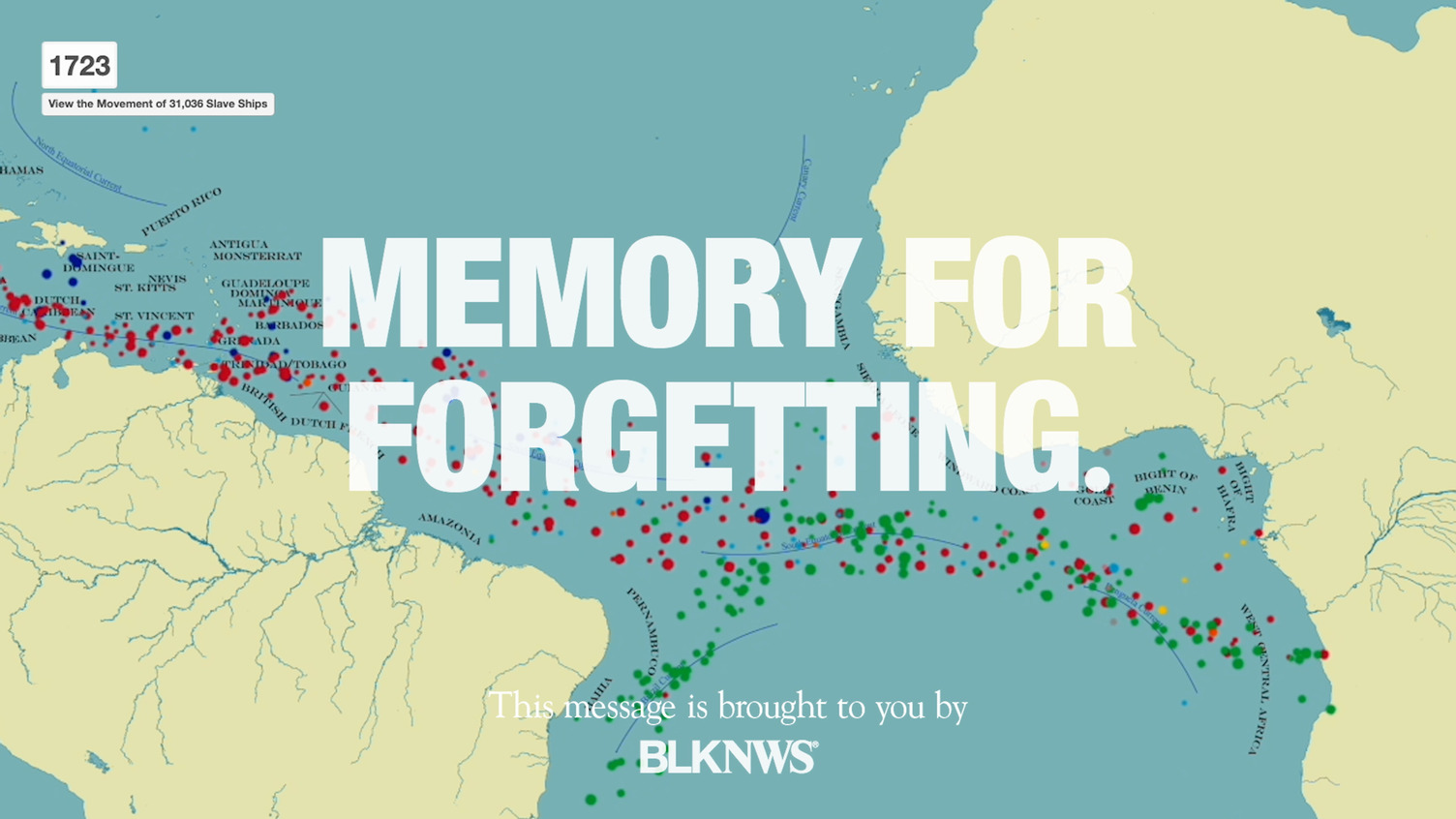
Despite Joseph and team guiding us through each segment, there’s a gnawing sense of a greater search occurring. BLKNWS is, by design, a dense and rich experience. Each segment introduces further elements cited from the Africana Encyclopedia, as well as contemporary memes, clips from several eras of cinema, historical footage, news clips, and so much more. To say this film is missing something seems like it could be perceived as an insult, but I’d argue it’s one of the many points Joseph is hoping to make. At one point in the film, the concept of exploring an archive is being discussed. It’s telling that one of the biggest takeaways from such a venture was the incompleteness so present amongst such history. It’s a frightening thought to grapple with: the possibility that institutions designed to seek out, discover, and safely house entire generations worth of history, not having the ability or resources to do so.
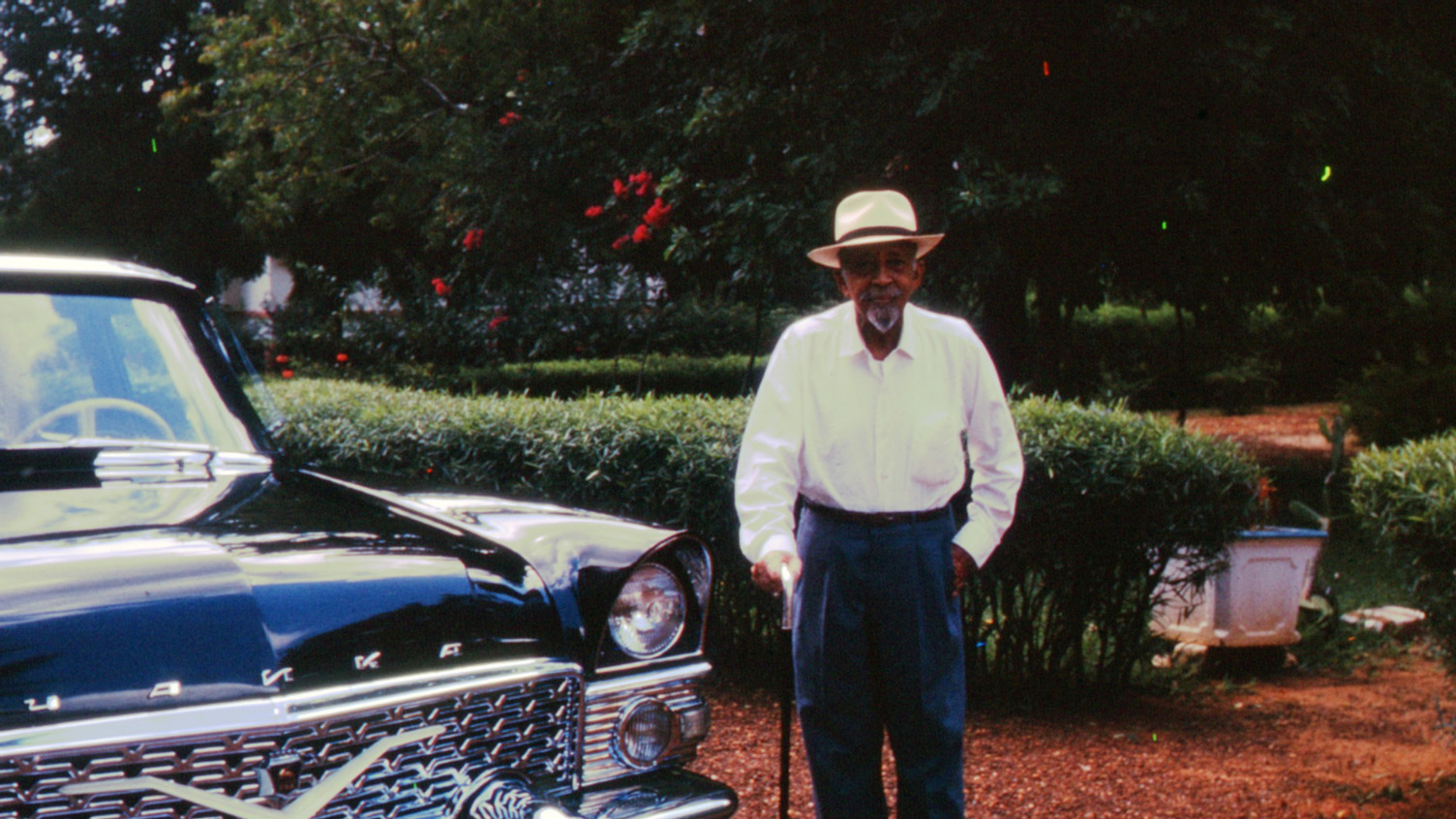
They play a vital role in society, but that doesn’t mean they aren’t also susceptible to human cruelty. Joseph notes how his edition of the Africana Encyclopedia does not have any mention of Funmilayo Ransome-Kuti at the Nigerian Delegation for Independence from England, the only woman delegate. He posits how this would make her the Founding Mother of Modern Nigeria. It is just one example of how women, and countless marginalized groups throughout history, are glossed over. Joseph doubles down on this sentiment by tying his own familial history into the spine of this section, as well as the film as a whole. It’s a potent inclusion which will hopefully stir up larger conversations about shared histories and a responsibility to do better.
In an era where such resources are now actively being attacked by the government and much of the population, the responsibility has only grown. It’s a job that must now fall onto the individual. It’s here that BLKNWS extends itself beyond just being a bold and exciting new way to engage with cinema. It becomes a genuine and essential resource for the continuous exploration of Black culture. It is up to the individual to fill in the gaps in any way most easily accessible. Whether it be through writing, through filmmaking, through artwork, or even short-form content, Joseph acknowledges that even sources of truth can be incomplete.
Perhaps there’s no way of ever fully completing it all. But that doesn’t mean the attempt to fill in the gaps is a foolish endeavor. On the contrary, the convergence of it all is what forms the larger story. There’s not a form of artistic expression and individual experience that BLKNWS doesn’t seem to approach in some way. From dreams being had by real-life figures in speculative fiction (the only sort of concrete narrative actually present in the film) to memories of family and cinema and lessons in history, BLKNWS stakes its claim as perhaps the next logical step in archiving. A living, breathing, constantly evolving piece of art which forces you to engage with it on its own terms, and to leave any pre-conceived notions at the door as we look ahead and try to figure out the best way to document everything that has happened, everything that is happening, and everything that might happen next.
BLKNWS: Terms & Conditions is celebrating its Canadian premiere in the Wavelengths category of the 2025 Toronto International Film Festival.