

Director: Jay Roach
Writer: Tony McNamara
Stars: Benedict Cumberbatch, Olivia Colman, Andy Samberg
Synopsis: Life seems easy for picture-perfect couple Ivy and Theo: successful careers, a loving marriage, great kids. But beneath the façade of their supposed ideal life, a storm is brewing – as Theo’s career nosedives while Ivy’s own ambitions take off, a tinderbox of fierce competition and hidden resentment ignites.
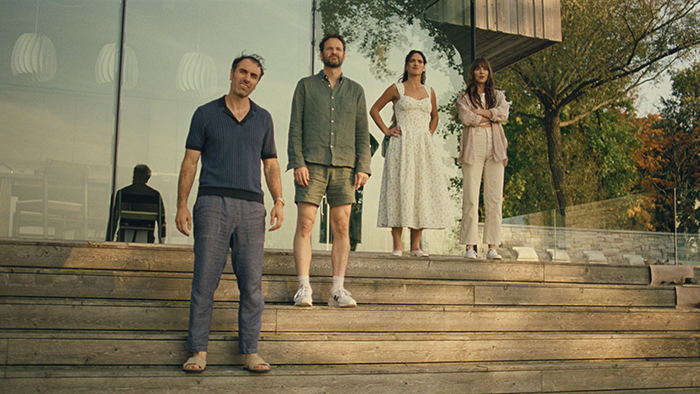
In case there any rich, successful husbands out there wondering whether or not it might be worthwhile for them to spend their savings on a seemingly-rundown shack in order for their wife to open the restaurant she’s always dreamed of running, just know that the investment might be equivalent to you biting off more than you can chew. That is, at least, what Jay Roach’s The Roses argues, in a way. A thorny yet playful reimagining of William Adler’s 1981 novel “The War of the Roses” – as well as the Danny Devito-directed film from 1989 starring Michael Douglas and Kathleen Turner – this vehicle, starring Benedict Cumberbatch and Olivia Colman, throws the aforementioned romantic gesture into the mix relatively early on (in the movie, not its central relationship). Having already enjoyed a delightful meet-cute, 10 years of married bliss, and two children to show for it, Theo (Cumberbatch) decides that the earnings he had tucked away from years of dissatisfying architecture gigs would be better served to help fulfill Ivy’s lifelong goal. So he wanted to spend that money on a dream home for their family; he can always make more money, right? And, as the saying goes: Happy wife, happy life.
There’s just one problem: Theo always assumed that Ivy’s restaurant – not exactly located in a desirable area for Northern Californian diners – would fail to take off. It was a nice idea, but it was mainly supposed to serve as an extension of the cooking and baking that has become, more or less, a hobby since the beginning of their relationship. Ivy had spent years parenting and chef-ing it up from home, but when a freak storm led to dozens of patrons pulling off of the highway and into the parking lot of the aptly-named seafood joint, “We’ve Got Crabs!,” she becomes a massive, if belated success. At the same time, Theo suffers a huge professional blow, one that sets off the derailment of his own career. Thus, he is tasked with parenting duties, and given plenty of time to resent his now-thriving spouse. Ah, dramatic irony. A dish best served cold, and perhaps with a strong drink to wash it down.
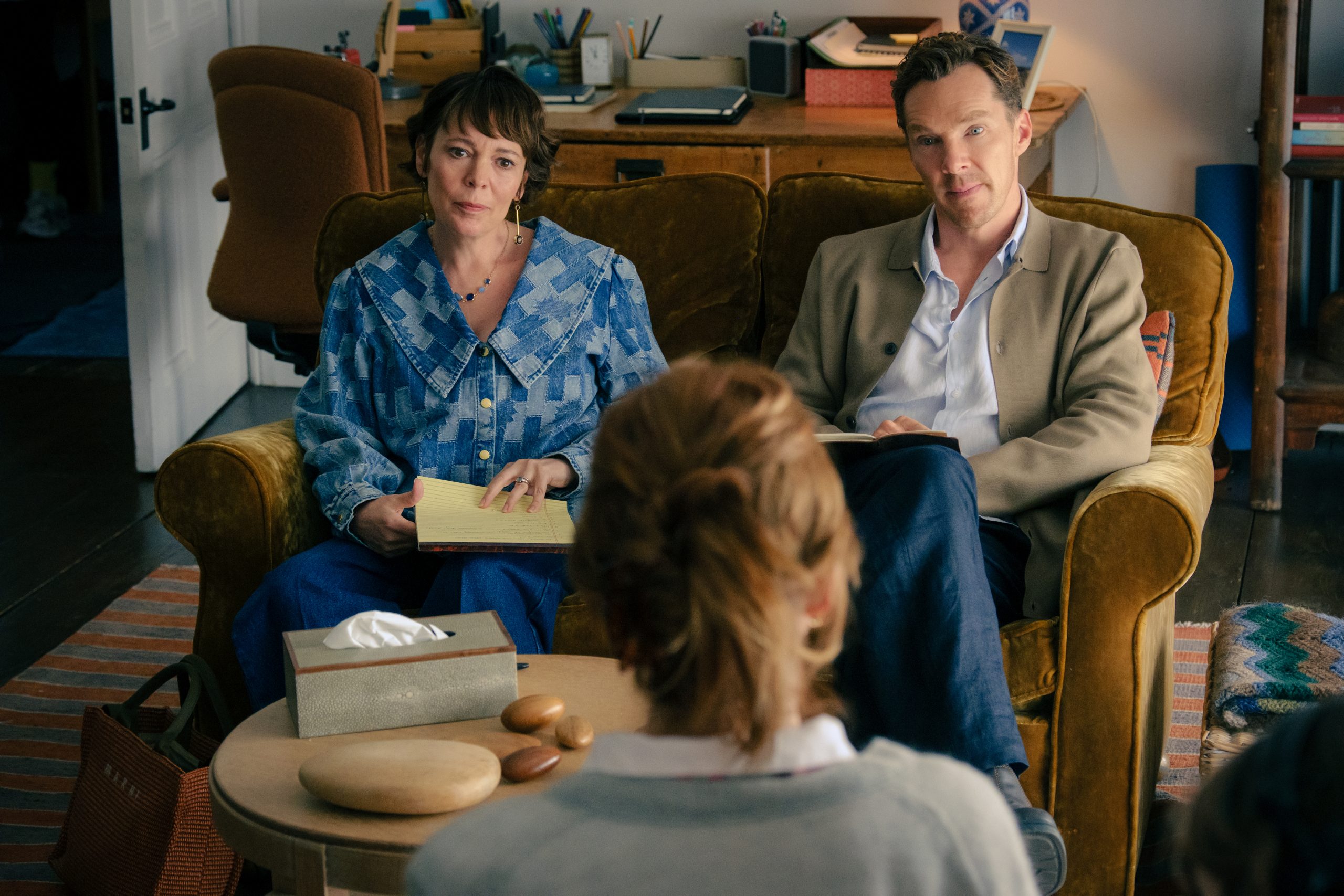
The funniest thing about The Roses, however – apart from the fact that screenwriter Tony McNamara has been afforded the opportunity to wield the same profane sense of humor that made his two scripts for Yorgos Lanthimos such a delight – is how often the eventually-dominant marital disharmony presaged by these previously-detailed events is coated in a too-slick armor by witty British banter. Perhaps it should be said: It’s a funny movie, but this particular “funny” thing isn’t a laughing matter. It’s more of an oddity in this case, given how the film’s marketing (and the works on which it is based) promised for, well, war. And there is war aplenty: As Theo and Ivy crawl closer to couple’s therapy, as promised in the film’s quippy prologue, cruelty and chaos have no bounds in their partnership, to the point where Theo is shaving off a wart into Ivy’s cooking, and the latter dumps live lobsters into his once-serene bath. It’s just not quite as constant in its prickliness as audiences may have imagined it would be. If not for its R-rating, one might have been right to assume that this adult comedy is perfectly appropriate for youngsters.
Then again, there are themes abound here, those prone to sailing so far over a child’s head (en route to hitting Theo squarely in the cornea, naturally) that an excess of sexual repartee might be the least of the relevant worries. In modernizing the story, Roach and McNamara lend a great deal of their focus to matrimonial politics, allowing for the emergence of probing conversations about household roles between man and wife, especially when they are reversed from “traditional” (read: outdated and ridiculous) standards. Adler’s novel and DeVito’s black comedy adaptation were both products of the 1980s, and therefore treated the idea of a successful businessman not having a fundamental right to his home and assets as a notion worthy of a scoff. It was a plot device rather than a narrative pillar.
In The Roses, Ivy’s success certainly goes to her head and leads to Theo harboring a serious resentment, but his handling of the situation is severe and selfish at heart. Once he accepts the role of homemaker, he twists his responsibilities in a way that makes him the primary parental influence to their kids, Hattie (Hala Finley) and Roy (Wells Rappaport). He trains them like Olympians, taking away access to their mother’s famous desserts in favor of homemade protein blasts – I must confess I don’t know what that means – which causes Ivy to feel like she’s at a constant distance from the children she raised. The already-cavernous rift between our titular lovebirds only grows as the children age; friends of the couple, including Andy Samberg’s Barry and Kate McKinnon’s Amy, notice it early on. Other equally-forgettable supporting characters, played by Ncuti Gatwa, Sunita Mani, Jamie Demetriou, and Zoë Chao all catch on in kind. Occasionally, it’s as fun to watch them react to the chaotic tendencies of their pals as it is to watch the hijinks unfold. Just occasionally, though.
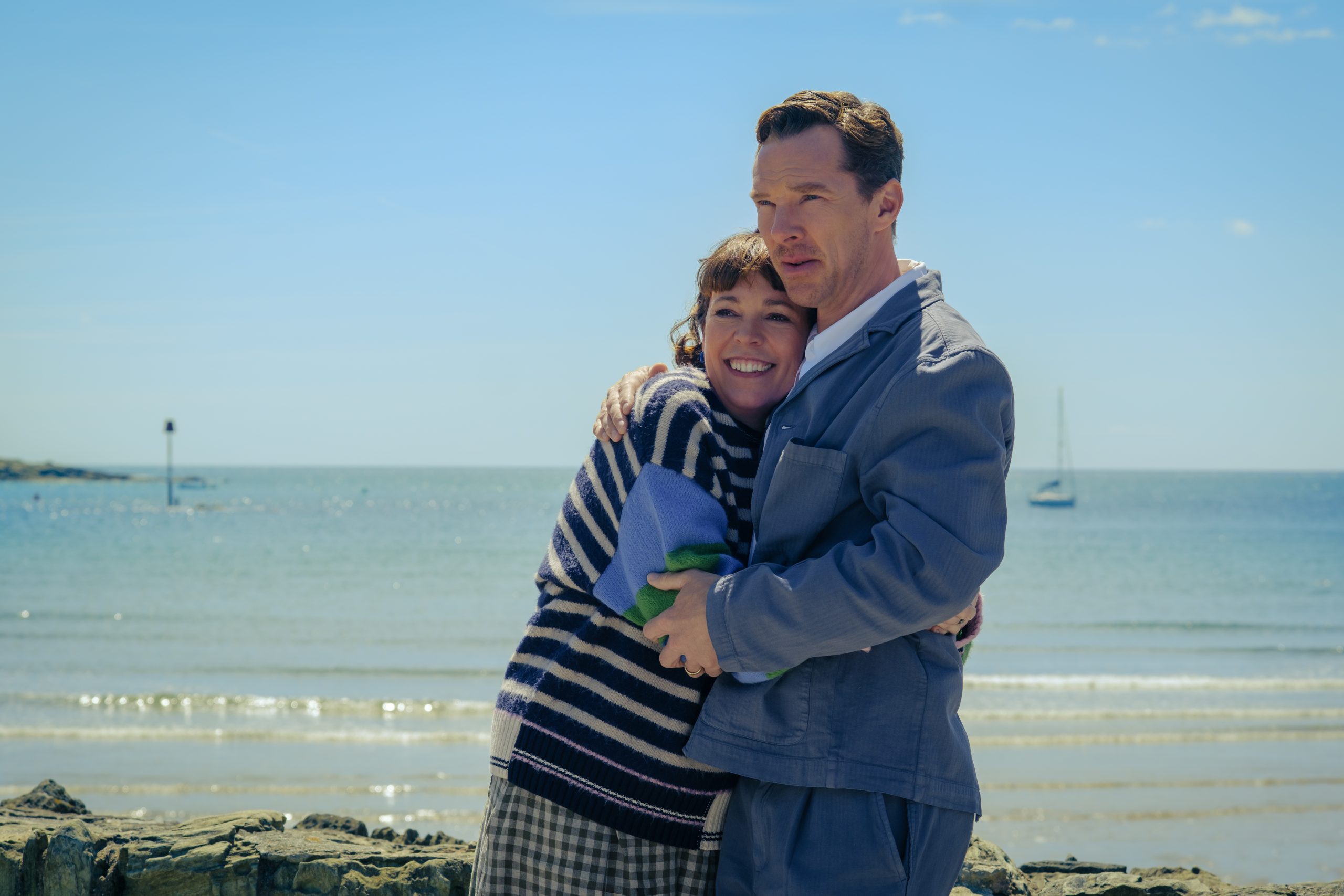
Such mayhem would become rather grating if it weren’t for Cumberbatch and Colman’s willingness to play along, and both actors go to any and all lengths to challenge for the summer’s loudest theatrical guffaws. And after a while, the physical comedy, albeit committed and as serious as Oliver’s heart attack in The War of the Roses, plays itself off. (If I never see crustaceans and/or oranges used as weaponry again, it will be too soon.) Yet both of the film’s stars make even more hay from a handful of intelligent conversations about relationships – with the occasional barb related to one’s penis size sprinkled in, for taste – than they do in the film’s hand-to-hand combat. The cruelest lines in the film are often those that are delivered straight, like when Theo shares that he didn’t want to tell Ivy a piece of good news because he “didn’t want [her] to ruin it.” If nothing else, contemplative realizations like this one should have had more of a space at The Rose’s table, even if the table was damn-near destroyed at a dinner party gone wrong.
It’s a tough balancing act to pull off, and try as he might, Roach may be too composed and anonymous in his filmmaking style to ever fully grasp hold of his foremost narrative assets. That’s not to say he doesn’t churn out suitable cinema on a semi-regular basis – he last directed Bombshell in 2019, and made Trumbo, The Campaign, Dinner for Schmucks, and a smattering of Fockers films before that – but that you never quite feel that any true artistry is on display. There’s a roboticism to his proceedings, even when things are meant to be energetic. You never want to feel like you’re witnessing an artist grapple with their decisions in real time while watching a film of theirs, but you certainly don’t want to feel like the one call they ever made was, “Yeah, that looks fine.” The Roses certainly does, though there’s a world in which it exceeds those hyperlimited expectations. Perhaps the same world where Theo and Ivy are able to accept one another for their humanity rather than their superficial value. Hey, Siri, play “Happy Together” by The Turtles, would you?