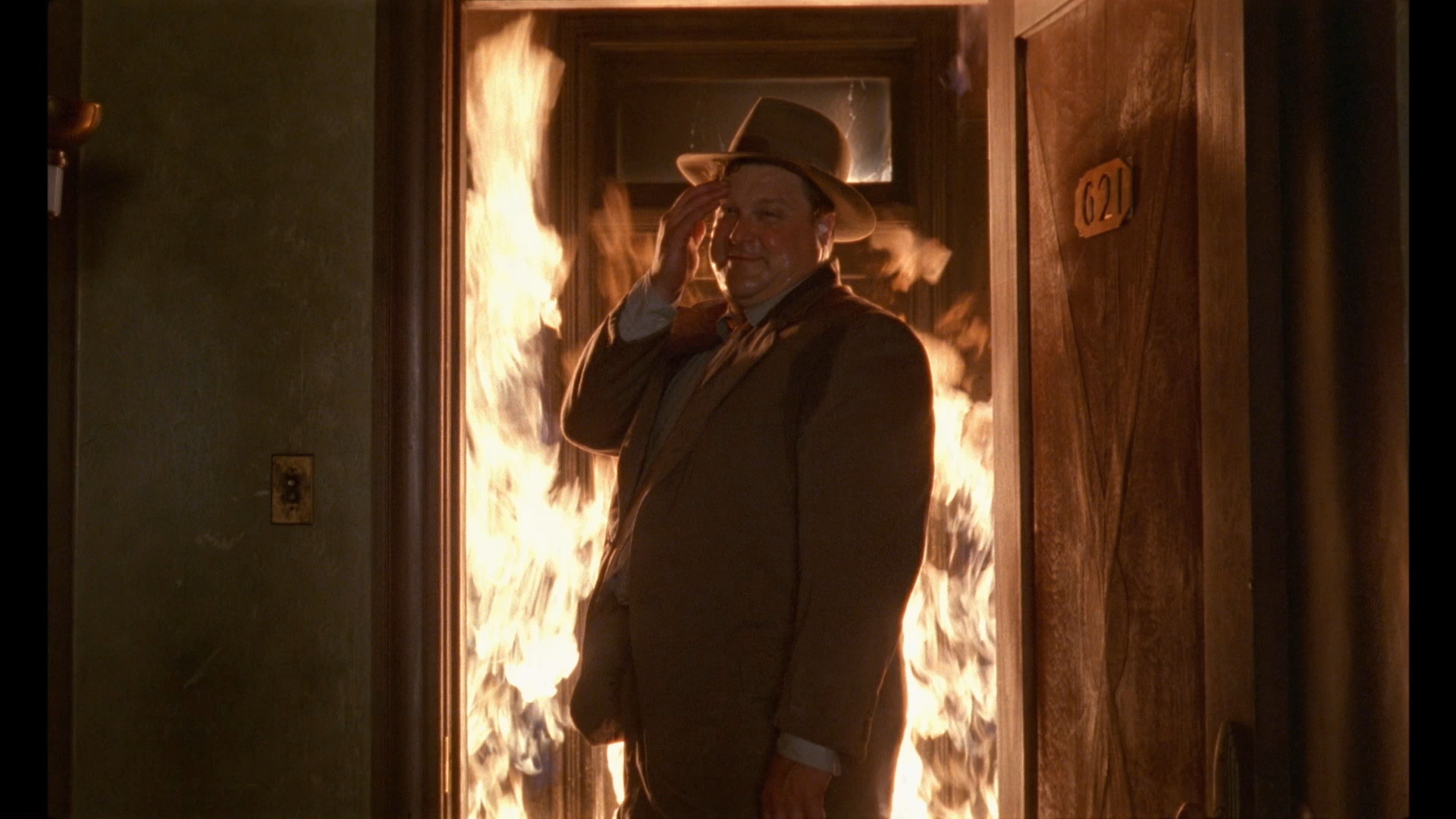
Synopsis: As a private eye investigates a murder in a future world of sentient A.I., his identity and marriage suffer a hypnotic meltdown.
There isn’t a term I hate more in film criticism than “big swings” or “swings for the fences,” because what the hell are you actually talking about? What constitutes a “swing” in a movie? Because it deviates from a preconceived “three-act” structure or decides to have a few unwieldy images and ideas? As far as I’m concerned, art isn’t monolithic and a movie can take different forms. It doesn’t need to adhere to anything in particular, or any notion of film theory, to address (or, more aptly, captivate) its audience. Many might feel the urge to describe Agnieszka Smoczyńska’s latest movie, Hot Spot, as a “big swing,” but what exactly is the Polish filmmaker swinging at? As far as I’m concerned, there are no swings (let alone big ones) to be found in this tedious but oddly intoxicating nothingburger.
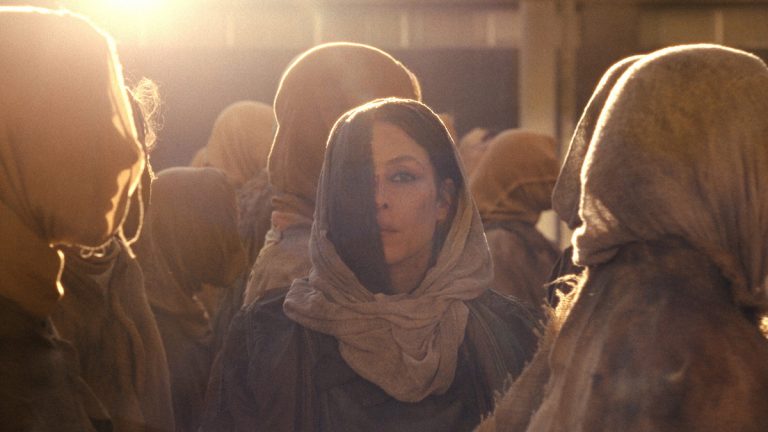
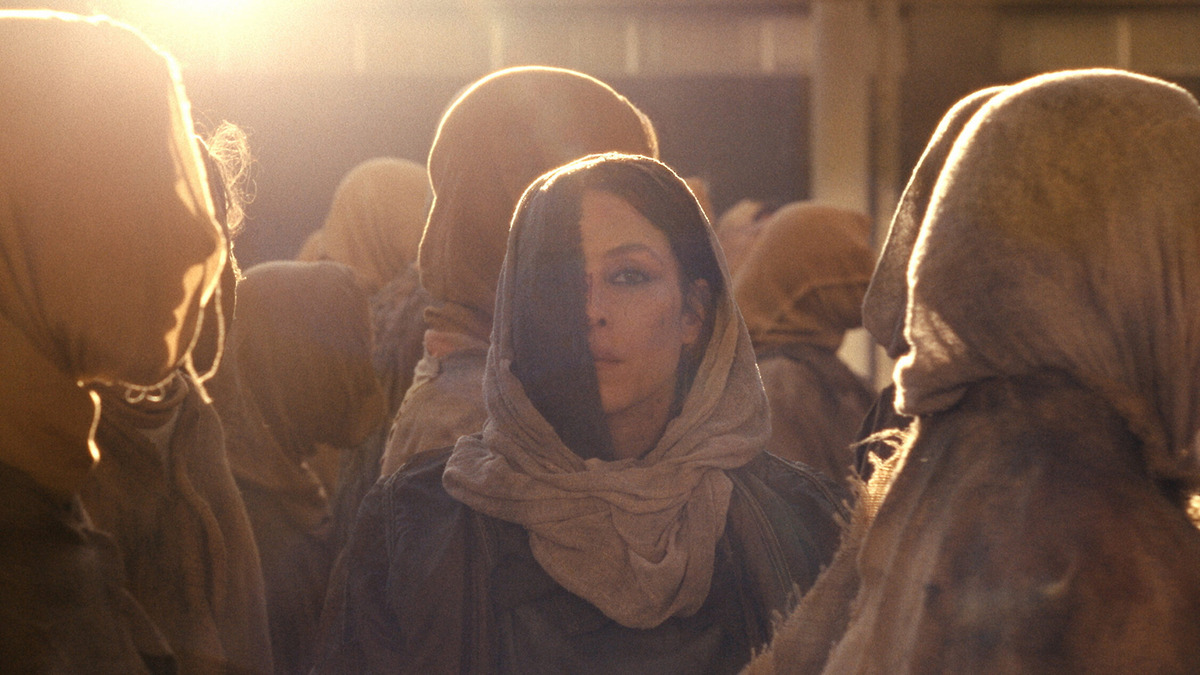
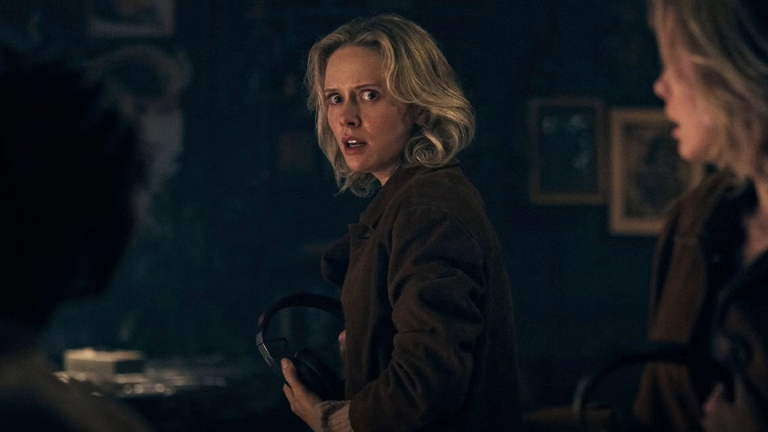
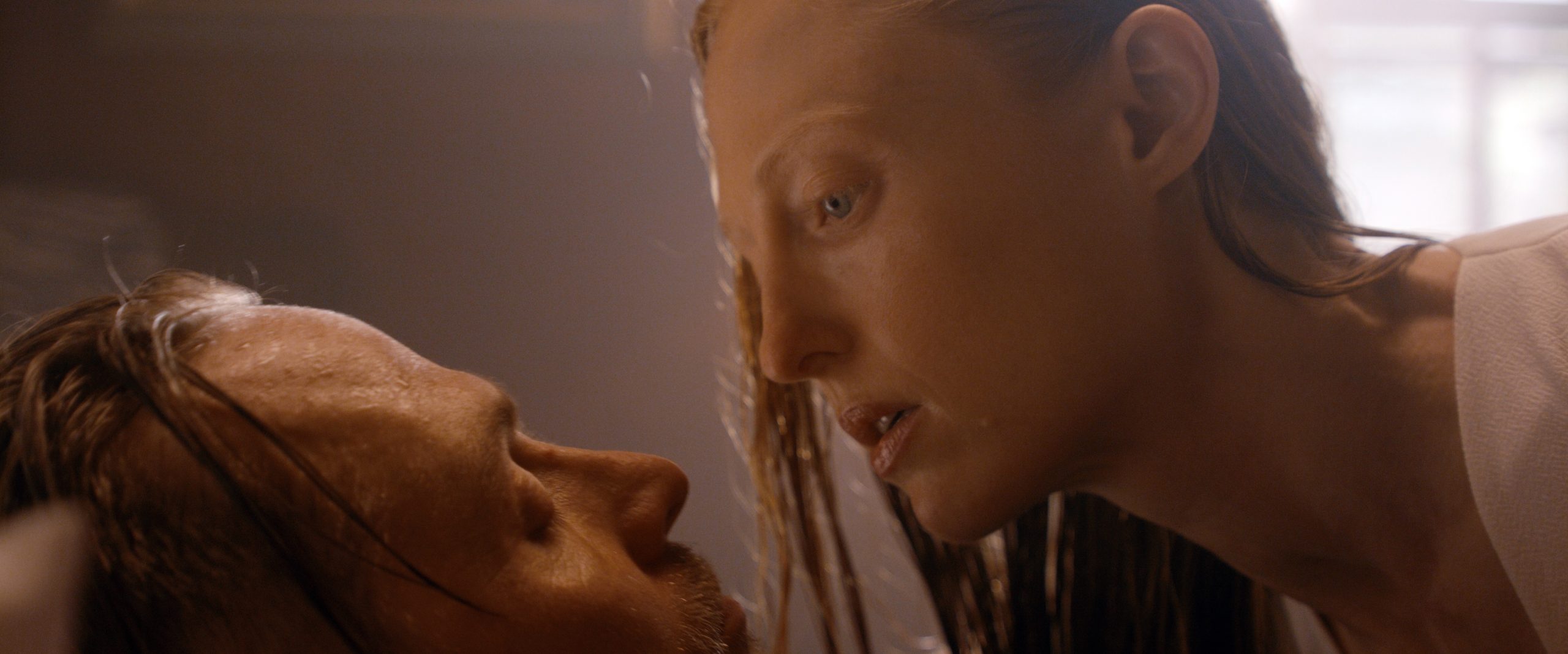
After a world premiere at the Fantasia International Film Festival that left many audience members perplexed and allegedly led to walkouts, Hot Spot (which was itself developed as one of the biggest titles born out of the festival’s Frontières Market) finally arrives in cinemas with little to no fanfare. One can see why – the movie presents a dystopian future where an A.I. entity dubbed “The Head” rules society, and the auteur behind one of the best genre films of the past decade, The Lure, does nothing with what seems like an already tired premise. Instead, she follows detective Jan 623 (or Djonny, played by Andrzej Konopka) as he investigates a murder alongside his partner, Maria (Filippa Kaye).
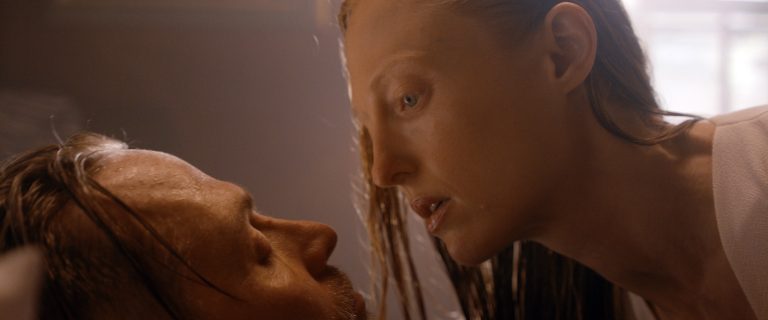
They investigate, find the suspect, and resolve the crime with little to no urgency. Or do they? Because during their examination of the crime scene, they meet Rana (Noomi Rapace), a refugee also known as a “Cyber Witch,” who can jump into people’s minds and make them see things? Is that it? Because Djonny can also do this? I’m sorry, this is where the movie lost me, irrespective of an aesthetic that’s always at the precipice of drawing us into a desolate world where Artificial Intelligence has depleted all resources and destroyed the environment.
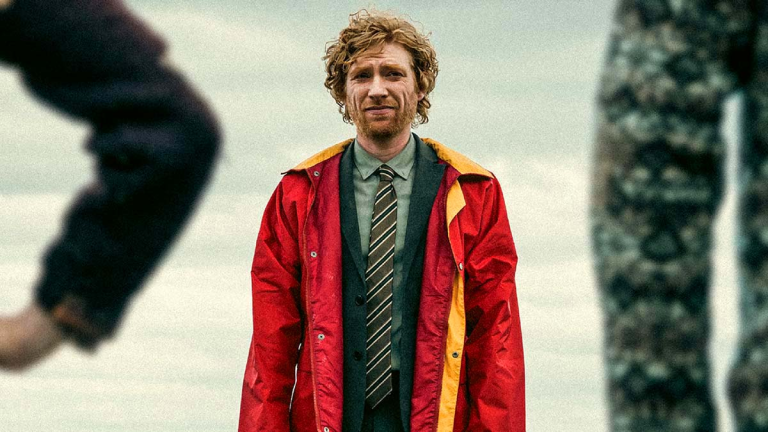
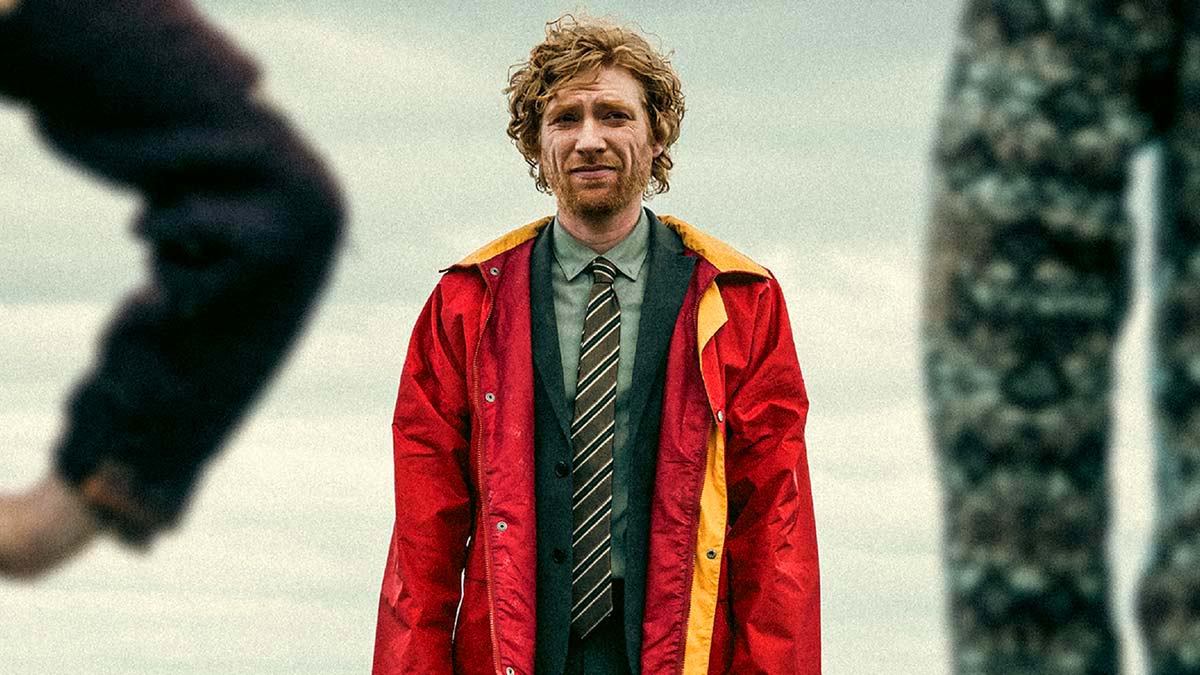
The case doesn’t seem to be the primary importance of Hot Spot, but rather Jan’s dissociation as his mind begins to unravel after a first contact with the Cyber Witch. After that, well, he becomes a tiger. I don’t really know how we get from Point A to Point Z7, but he becomes a tiger. I also don’t know whether it was intentional that the protagonist looks exactly like Tiger King’s Joe Exotic, right down to the animal-inspired wear, but it definitely seems like Smoczyńska thought about this long in advance.
I say this because after each public execution is aired by the A.I, it finishes the live stream with “Thank you for your attention to this matter.” Which political figure repeatedly says this sentence in our era? It can’t be a coincidence, now, can’t it? So why in the hell does Jan look like Joe Exotic? And why does he transform himself into a tiger? What has awakened in him that forces this metamorphosis?
Who knows, because Smoczyńska refuses to lay out any of the questions that she introduces and never gets back to. We’re a far cry away from The Lure, a genuinely alluring genre-bender that I saw almost a decade ago and still think about to this day. Hot Spot wants to be a maximalist affair where we’ll ponder the significance of its images long after the credits have rolled, but as soon as I’m done filing the review you’re reading right now, I will never think about it ever again.
The thing is, though, I also had a genuinely interesting viewing experience. I can’t say I appreciated what was on screen, but I definitely had a more thoughtful time viewing Smoczyńska formally experiment in ways she hasn’t done before than her previous effort, The Silent Twins. This is a movie that refuses to kowtow to basic notions of film structure and even image-making. It’ll frequently introduce new ideas in the middle of another one, hoping you’ll run with it. I didn’t, but one specific concert scene certainly made me think the movie would amount to something more. The way she links recurring close-ups of an eye “awakening” to the film’s larger canvas took my breath away.
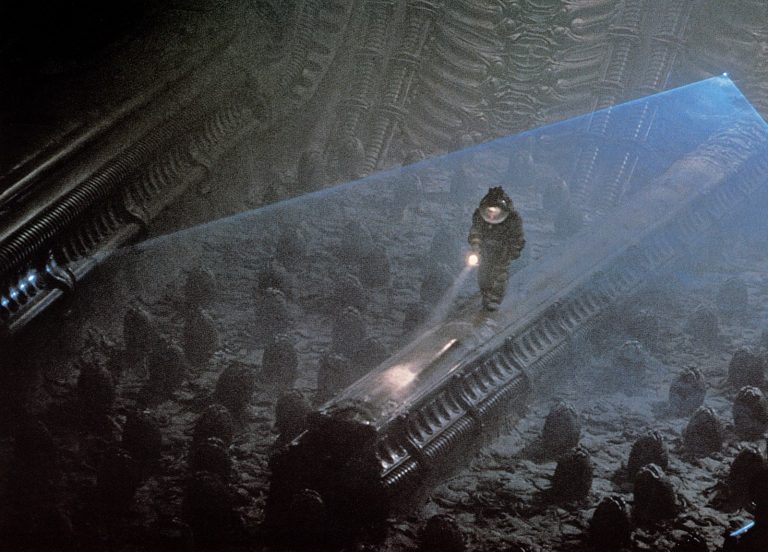
But the way in which she clumsily blends Blade Runner, Dune, Akira, Total Recall, Mad Max (and Tiger King, for some reason) makes the thing look like an algorithm was fed these science-fiction movies and wrote a film based on concepts they’ve seen in all of them stitched together, without understanding what any of these films actually meant. It’s a real shame, because Smoczyńska is a talent I want to champion. I was so happy when the Fantasia premiere for the movie was sold out, less so when I heard the chatter from people who attended it, as yet another soul-crushing venture from a director who has peaked at their feature debut and never made anything worthwhile ever again.
The one net positive is that it’s a much better mind trip than Nicolas Winding Refn’s Her Private Hell, which also premiered at Fantasia, because it isn’t much concerned with saying something. It just wants to make the audience feel an emotion. I certainly felt many emotions watching Hot Spot. Bewilderment. (Unintentional) laughter. Complete and utter boredom, and, finally, relief that I would finally be able to leave the theater and that my time wouldn’t be wasted like this ever again. Whoever says this wildly ambitious, but horrendously developed, sci-fi joint is a “big swing” should understand that no film is ever the same, and that this vague term should be retired once and for all…
Director: Sam Green Stars: Ann Blackwell, Violet Brown, Genia Carter
Synopsis: A ten-year worldwide exploration tracks successive holders of the oldest living person title. A study of longevity transforms into reflection on time’s flow, fate’s unpredictability, and the joy of human existence.
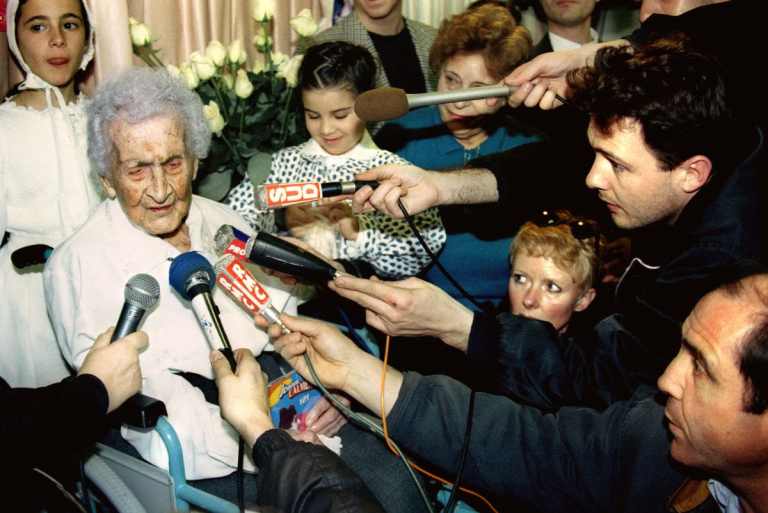
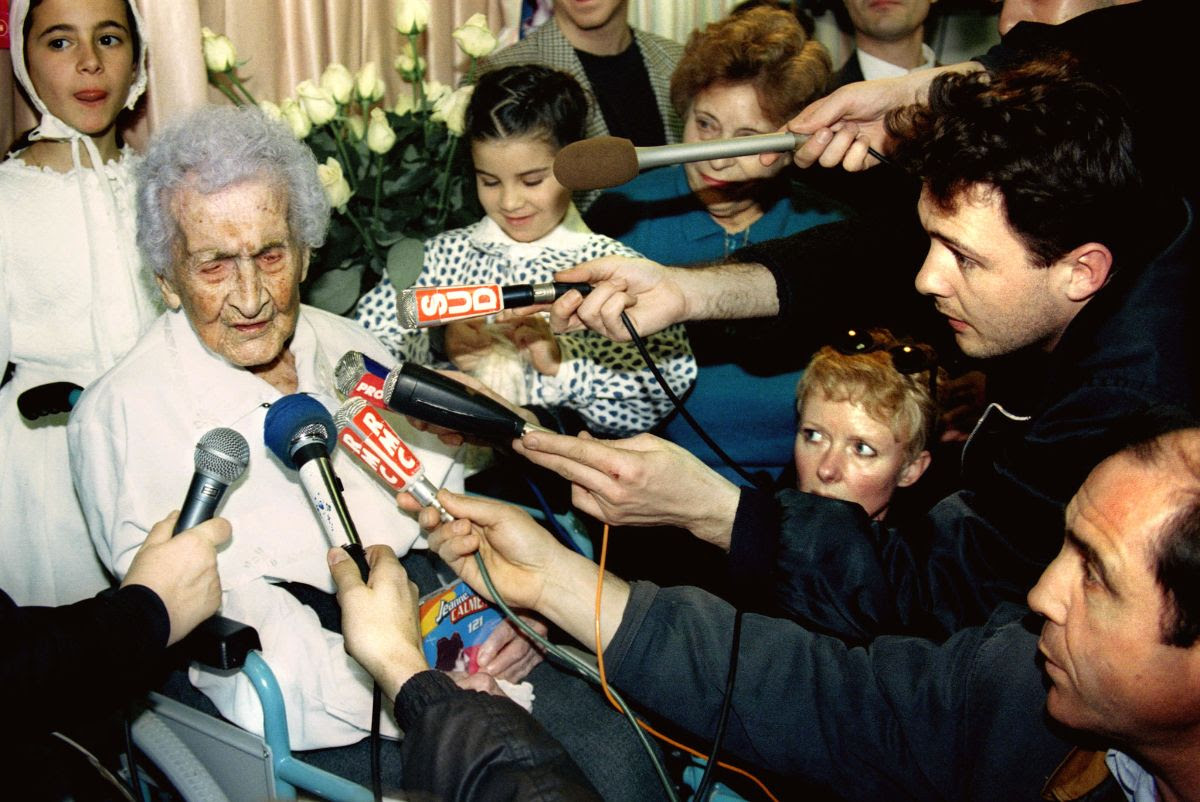
We have become increasingly obsessed with living longer. From billionaires spending fortunes trying to slow the aging process to documentaries investigating the science behind so-called superagers, the desire to extend our time on Earth has become a fascinating cultural obsession. Netflix’s Don’t Die: The Man Who Wants to Live Forever followed entrepreneur Bryan Johnson’s extreme attempts to defy aging, while Michael Mosley: Secrets of the Superagers explored the habits and science behind people who appear to age remarkably well. Sam Green’s The Oldest Person in the World approaches the same fascination from a completely different direction. Rather than asking how we might live longer, it asks what it actually means to have lived a very long life.
There is something wonderfully simple about the concept. Someone becomes the oldest person in the world, holds the title for a while (the smallest amount of time being four days), and eventually someone else takes their place. The record sounds permanent until you remember that it isn’t. Green’s decade-long documentary follows the ever-changing record holders of the title of oldest living person. It is an immediately intriguing premise, but what starts as a fascination with extraordinary age gradually becomes something much more personal and unexpectedly moving. Green travels across the world to meet each new record holder, while his own life continues to change in the background.
Everyone interviewed has stories, memories, personalities, and very different experiences. Some of the most enjoyable moments come from simply watching Green spend time with them, sharing something unspoken. It also prevents the film from becoming another documentary promising the secret to a longer life. No miracle diet or revolutionary exercise routine is waiting at the end of this journey. Instead, Green finds something considerably more complicated. Longevity appears to be shaped by circumstance, genetics, luck, relationships and countless factors that no individual can entirely control. But, seen as though we all are interested in how people can live to 117, some people say their “secret” to a long life is eating three raw eggs a day, staying away from men, being inspired, and then no secrets, just that God decides when it’s your time to go.
For a documentary centered on the world’s oldest living people, death is inevitably present throughout The Oldest Person in the World. Every new record holder is also a reminder that the record will eventually pass to somebody else. Green doesn’t shy away from that uncomfortable reality. There is a lovely balance between recognizing the inevitability of death and celebrating the privilege of being alive. I would be lying/not doing a service to this documentary film if I don’t say that it made me think about my own mortality and how comfortable I am with ever making this age. This documentary will make you think about age, death and how one will die. So if that’s uncomfortable for you, maybe watch something else instead.
Visually, the documentary has a gentle, observational quality that suits its subject. There is no need for manufactured drama. The passage of time provides all the drama Green needs. The changing faces of the film’s subjects become a visual representation of the fleeting nature of existence. Green includes home videos of his son growing up, time with his brother, and stills from his life changing and growing as he makes this film. He discusses why he’s making it, and how he’s felt across the process. It does feel like a personal journey he’s taking – especially when he faces death in his family and battles cancer.
Perhaps the most ambitious aspect of the project is that Green doesn’t intend for it to end here. He and his team plan to continue filming the oldest person in the world for the rest of their lives, creating a new film every decade. The idea of turning it into an evolving “living film” is both fascinating and poignant. Nobody knows who will hold the title in ten years, or what the filmmakers’ own lives will look like by then.
The Oldest Person in the World encourages a much simpler appreciation of time. There is humor, sadness, curiosity and plenty of humanity here, but above all there is a sense that every life, regardless of its length, is worth paying attention to. After watching it, the question isn’t really how long we might live. It is what we do with the years we have. And that makes The Oldest Person in the World a surprisingly life-affirming film about the one thing none of us can stop: time.
Where does one begin with Tyler Davidson? I mean truly, where can one begin? Yes I can absolutely talk on and on about someone who I love and am very lucky enough to call a personal friend, someone who I met about 12 years ago when introduced through mutuals. I can talk on and on about how kind and generous he is, from just being hospitable while having dinner and a movie night hosted in his home or connecting me with his friend, Academy Award Nominee, Justin Henry (an interview I was granted for this wonderful website). He even allowed me pitch ideas for scripts and audition for his latest movie. Eventually, I was even able to be on set ironically the day my character I auditioned for was filming his death scene ( the timing was great).
Luckily I get to talk not only about Tyler here because he was generous yet again to sit down with me for about 45 minutes and talk his latest film, Buddy- but I will also be reviewing the movie as I was able to see it in April of this year at the Cleveland Film Festival right after Sundance and I have been sitting on this review for months, so let’s get the review out first and then I’ll be able to share my sit down below with Tyler Davidson, producer of films likeTake Shelter, Emily the Criminal, The Land, The Signal, Swedish Auto and now the horror film- Buddy.
Note: This review is spoiler-free
Buddy is coming out in a year when horror movies are truly having a MOMENT and honestly it’s a welcome addition to the slate of original and fun horror.
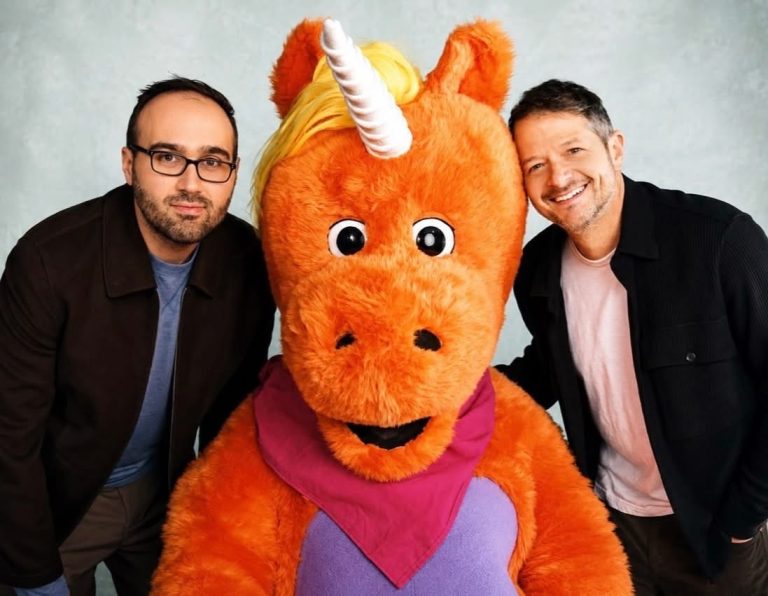
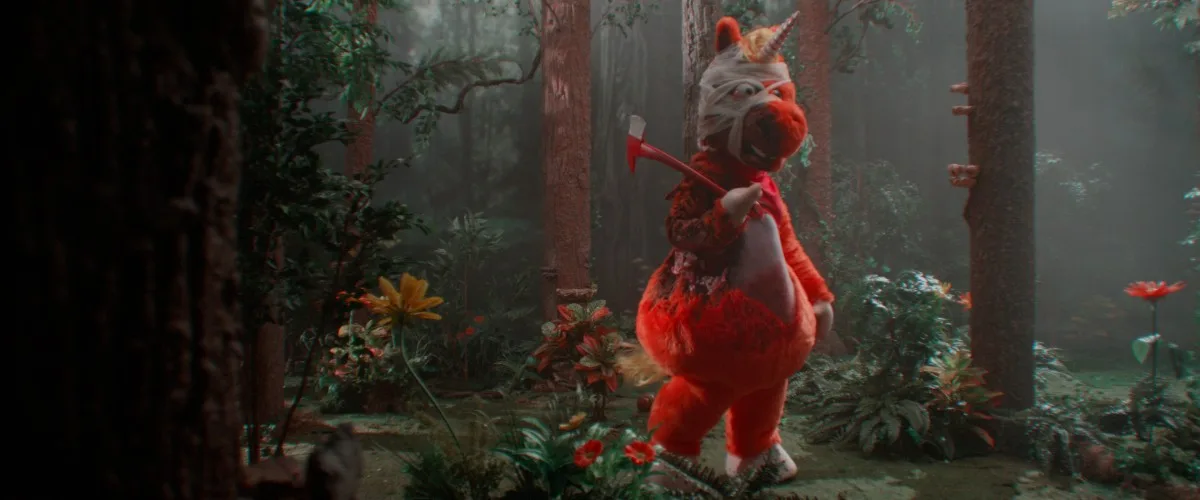
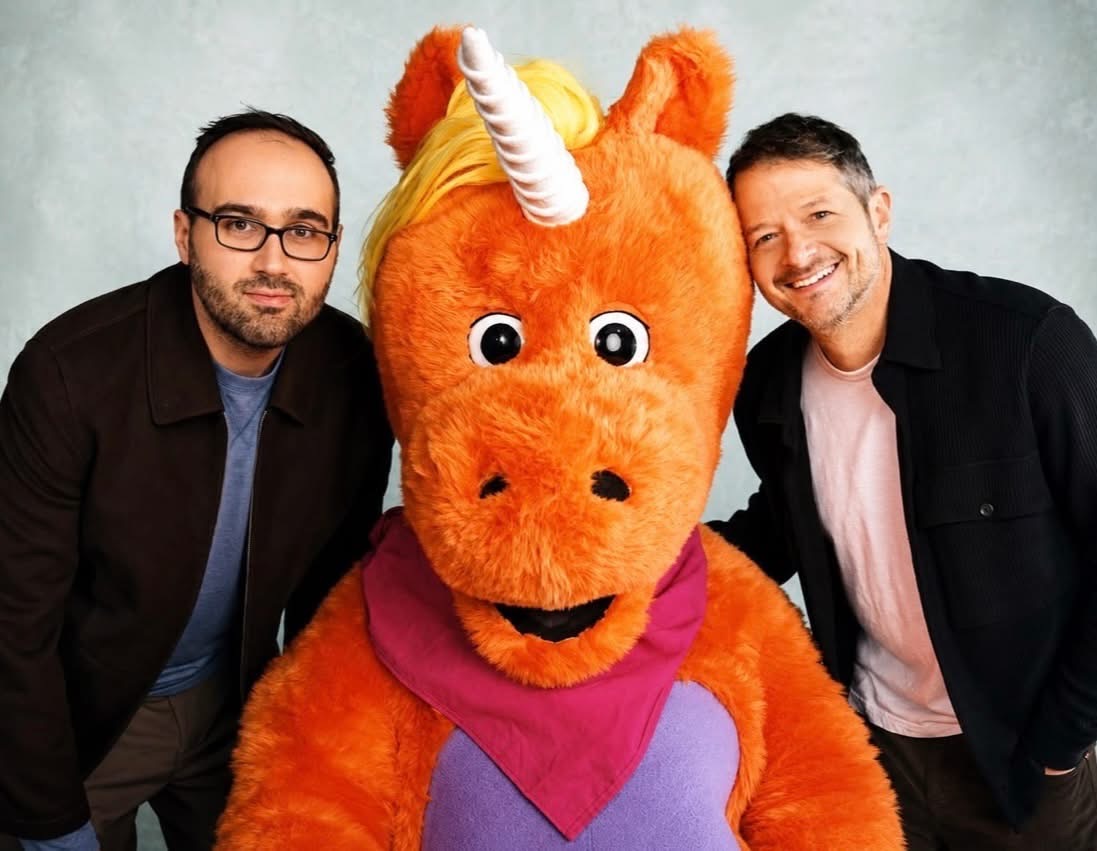
The film is about a children’s TV show that harbors a dark secret, a unicorn that is “friends with everyone,” a unicorn that lives within a kids show and yet when the kids start to disappear one-by-one, our favorite unicorn, Buddy, insists that everything is a-ok to our main protagonist Freddy. Is this reality? Is this a fantasy?
Now when I tell you that trying to sum up this movie in a “quick” explanation is hard, I truly mean it. It’s difficult, not because it’s not truly unexplainable, but because I think the best way to talk about this movie includes giving full spoilers and obviously as stated above I said it’s gonna be spoiler free, so I’m going to review this movie as my experience with it rather than a “regular” review.
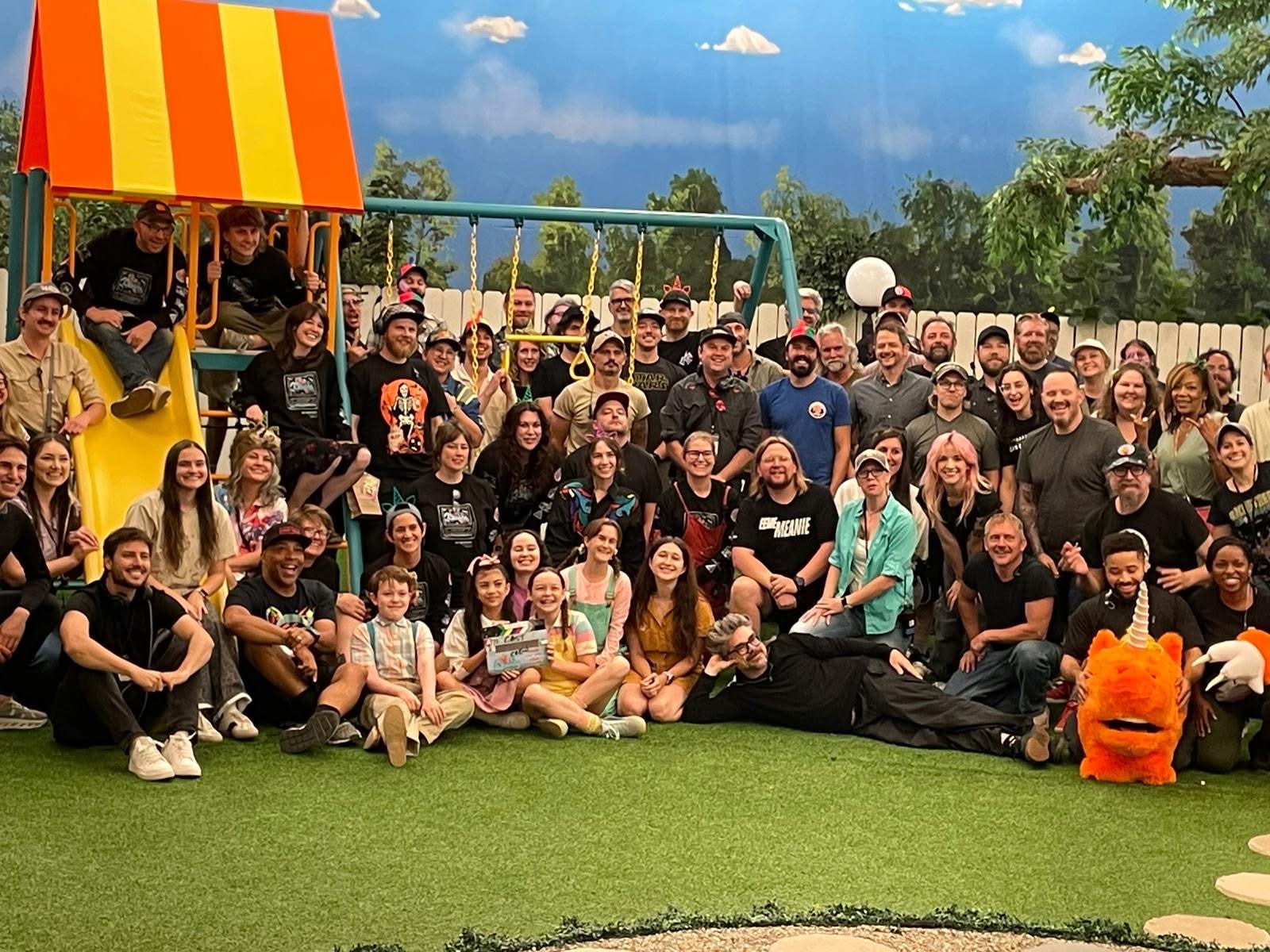
So, I had the privilege of not only knowing about this project for a while before production was even getting started but also to audition for a role in the film as “Mailman Miles.” On top of that, I was able to be on set for filming and yes again, the producer is a friend of mine so I am grateful for the experiences with this film that I have had. This includes watching it with a packed house at the Cleveland International Film Festival in April of this year- where not only was a giant chunk of the cast and crew there but so was Tyler along with director, Casper Kelly. Going into the screening all I kept thinking to myself is “how was this going to translate on screen?” What I mean by that as someone who has been on many movie sets of various budgets, not only do I know first hand how fake everything is in the movies but when I say to you I was on set for this during filming of being in the Buddy TV show this set was FAKE and I’m like- wow, so intriguing cause, what?
So there I am at the screening and the movie starts and I am instantly hit with everything I saw in real life and I think to myself- “goddamn, wow”. Not only was my curiosity of how this was going to translate absolutely obliterated but everything just worked so well in only a way that Casper Kelly could make it work. The comedy hit and hit so well with watching with a giant group of people, but the horror aspect was so camp and almost everything about this movie just was near perfect.
Almost? Near perfect? Lucy, ‘splain!
Okay, so one thing I am is honest and I’m never afraid to back down on anything as long as there is constructive criticism, that includes work of my friends as I expect the same thing back from them and this film is no different. Earlier in June of this year, Tyler had hosted myself and a friend for dinner at his house where we got to talking about Buddy because we hadn’t had the chance to speak after the screening and outside of a few texts there wasn’t any real time to talk about the film. So I mentioned to him all I said above- how the casting was great was also included and how much fun this movie really is- but ( and I said this to him) “for being a horror movie I find it to be tame on not only blood but scares.” That’s why I said it’s near perfect, for me as a huge deeply rooted horror fan I need a horror movie to have more horror elements, but I also understand how and why this movie doesn’t have that. It’s a fantasy horror, it’s camp and either way I am here for it through and through.
Buddy is an absolute wild ride of WTF and I love it so much.
So eventually I was able to talk to Tyler and we sat down for an interview a week back to discuss everything about the film and what exactly he does- it went like this.
Joey Gentile: Tyler, thank you so much for taking the time to sit down with me and talk all things Buddy.
Tyler Davidson: Thank you so much for having me.
JG: Wild to have you across from me for the first time in this type of work zone.
TD: No, truly. But I am looking forward to it.
JG: Same, so let’s dive right in. One of the first things I always do when I interview talent is a fun ice breaker- but this is the first time I’m interviewing a producer and not an actor so you actually get an icebreaker in the form of not one, but two questions.
TD: Oh, boy!
JG: Tyler, if an investor came to you and said- “Here’s a $100 million dollar budget for you to revisit a single film you’ve made and make a sequel, which world do you want to spend the time in again and revisit for said sequel?” Second part of your ice breaker- because this is a horror film and Buddy is a slasher movie to an extent under the giant umbrella of horror- “as a producer, you now have access to any existing IP, so in horror you are offered the chance to make a sequel or remake to any horror movie that’s come before, Friday the 13th, A Nightmare on Elm Street, Halloween, Texas Chainsaw Massacre etc. Which film are you making?”
TD: (Laughs) Oh wow, So first of all I technically do think that Buddy is a slasher which is wild because I’m not really a slasher kind of guy- because to me what is scary about Buddy is the psychological horror of it all. I love that it can deliver some of the gore for that audience in that way- so regarding the second question- I have to come back to you on that. But very easily the answer to the first question would be doing a sequel to Buddy. There is so much more I want to explore so honestly, that one was easy to answer- but yes, lemme think on the other question.
JG: Welcome to my ice breakers. – so Tyler, for those who may not know- tell me what a producer does. What is your job when you yourself are making a film?
TD: So I think of producing as a job of putting all of the elements together and then managing the process once all of those elements are in place. What we do and what producers do typically vary from project to project. What we do, (and when I say we I am speaking on behalf of my production company Low Spark Films) we are unique to some extent in that we are both creative producers who are very hands-on in the actual steps into making the movie. From the development of the script to the casting, to the hiring of the key personnel to just being on set everyday, but we are also a part of the financing. Typically producers focus on one or the other but we have always done both.
JG: So the absolute blast I had with this film also had me wondering since April when I had seen the film- something I have been absolutely wracking my brain on is how in the hell was this movie pitched to you? Because I truly cannot figure out how to explain this movie to people without spoiling anything or how I would’ve pitched it. So how was this brought to you and what were your initial thoughts?
TD: It was pitched to us by one of the principals at Boulderlight Pictures. My producing partner Drew Sykes and I had met with Rafi (Raphael) Margules in Los Angeles in October of 2024 and we had had a few beers before we got to the “Buddy of it all”. At the end of the conversation Rafi said “ hey we have a script that is completely unhinged. It is from the creator of Too Many Cooks and he said this movie is essentially about a Barney the dinosaur type that goes off the rails.” Frankly that type of less is more framing is what we’ve gone with throughout the whole process, from submitting to festivals to even gearing up for its general release. It’s a movie that is hard to capture in a logline, so if audiences are going in without knowing about the multiple layers of the film it’s a better watch. So Drew and I read the script and we thought it was just such a unique and unhinged idea so we went with it.
JG: Unhinged is a great way to describe this movie for sure. As someone like myself who specifically comes from theatre and comedy, I was genuinely shocked and pleased with how funny this movie was and how theatre-like camp it comes off as it does. But also someone like myself who is in love with all things horror, was it always intended through Casper Kelly to be as truly funny as it was? Or was it like throwing spaghetti at the wall and just seeing what sticks when it came to balancing the horror and the comedy so well? Because I don’t think as a viewer there is really a way to comprehend what you’re watching until the movie is fully over and you have time to soak it in.
TD: A lot of what you see in the final film is what you saw on the pages of the script. So sitting with Casper and having the many conversations we had with him, we really started to get a really solid sense of what this was going to be. The full feeling of the film doesn’t hit until you get through the entire thing, you are absolutely right there- this movie exists at least partly in this world of this children’s television show from the 90s and if the audience watching it is feeling partly unsettled through the experience of the watch, but with that the goal has been landing that feeling of unsettlement with our audience no matter how over the top it needs to be.
JG: Alright Tyler, I got a personal one for you on this- 2026 has been ridiculously successful for horror and the box office pedestal is set. From Obsession to Backrooms and especially with the ages of these directors, does that make you nervous or excited with how horror has been set up this year and if this can reach the same platform for people?
TD: We see the trajectory for 2026 with horror as a positive for us and the film. For us you know this movie was conceived and shot before Obsession and Backrooms came out, so the fact that we are fitting into that continuum as the next in line is just a testament that this type of filmmaking is playing into the zeitgeist right now. We are ready for that, we want audiences coming riding that wave, audiences right now are looking for bold and original film making that aren’t necessarily CGI or AI and that feels tangible and that can deliver an experience.
JG: Funny you mention CGI and AI because I was going to bring both of those up, so perfect segue there. One thing I mentioned to you last summer with being on set with you was how this was going to translate on camera because I was genuinely so curious because everything I saw while on set was practical effects and as someone who loves horror more than anything I miss when we got really good practical effects and holy hell does it work here. So as a producer what is your take on films going from practical effects to the last 25 years or so with CGI developing and now there’s all this AI talk going on and using either one of those techniques over using practical effects?
TD: Well we always want to go practical first. In any situation where practical is an option we want to use that because not only is it a better viewing experience but it can look better too. I have no issue using CGI when it’s needed and an effect absolutely cannot look correct without the use of it. I don’t subscribe at this point to the use of AI (and we used none in Buddy). First of all, there are people with jobs who can truly do it better and second, audiences are wanting something real in the face of this onslaught of AI where we are being force fed in every point of our lives.
JG: This is not your first horror film, you’ve produced others like The Beach House, Compliance and The Signal– so what is it about this genre that keeps you coming back? Because it seems to be outside of drama the most returned to genre for you thus far.
TD: You mentioned it earlier that horror is such a large umbrella and I think the horror I love most being psychological horror from the 60s, 70s and 80s like Rosemary’s Baby & Jacob’s Ladder where you really get to have the experience of these characters. So it’s funny when Boulderlight Pictures has been delivering these new favorites like Barbarian they’re talking to Casper Kelly about delivering that type of experience and I’m over here like “hey remember, when Mia Farrow is being gaslit by such and such character” these are the blended conversations we would have for something like Buddy. When it all comes together I just love making audiences feel uncomfortable, subverting expectations from things that can be seen as comfortable and making them feel the opposite.
JG: Ready for the most cliche question in this whole interview? What do you hope audiences take away from this film?
TD: I just really hope audiences have fun with this, like this is a movie that is meant to be seen with an audience in a theatre, that was our goal from day one. It’s a fun theater watch because it’s a movie that is so unexpected in so many ways.
JG: Bring back the icebreaker- Have you figured out which IP you want to make a sequel or remake with yet?
TD: So just to be honest I loved so many of the franchises I never really connected with any of them like I had with A Nightmare on Elm Street.
JG: Well you know..-
(Tyler and Joey smile at each other and laugh at inside information)
TD: Oh, I know.
JG: Wonderfully full circle and ironic.
TD: Truly.
JG: Tyler, this has been a genuine blast to talk shop with you on the record for the first time. I know we talk a lot off the record when we are together but I am honored and thankful you were down for this interview for InSession.
TD: I had a really good time, thank you so much for having me.
Buddy hits theaters August 28th, 2026 nationwide. Go have fun with this movie, it’s an absolute blast.
Director: Jacob Chase Writers: Jacob Chase, David Leslie Johnson-McGoldrick, Leigh Whannell Stars: Amelia Eve, Island Austin, Lin Shaye
Synopsis: Gemma, a young mother raising her daughter in the house she grew up in, discovers she can travel into The Further, where she possesses an ability to bring what lives there back to the real world.
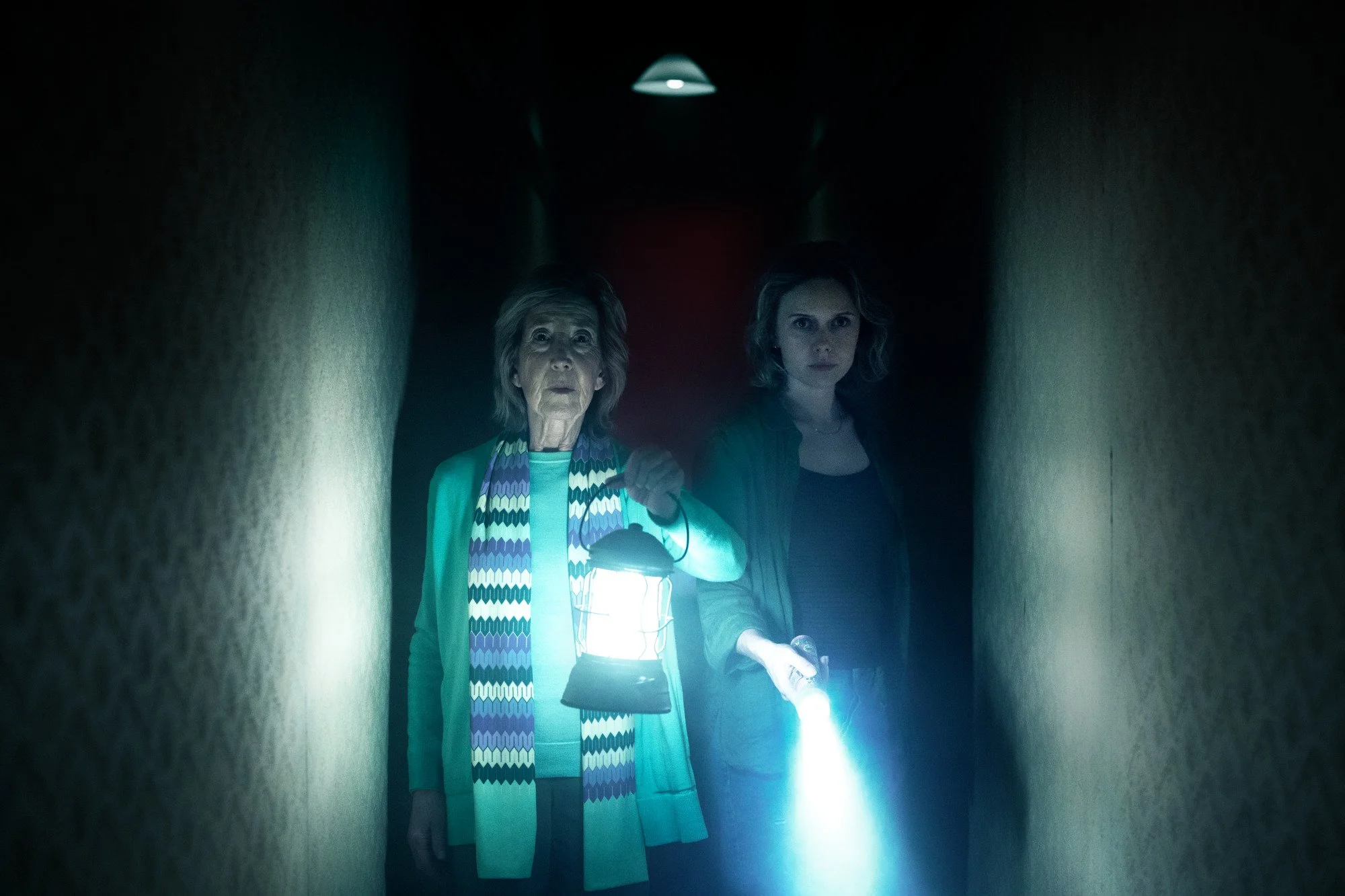
We’re in the final days of summer. Most of the big blockbusters have already been released, and now a mix of indie films and studio projects are competing for the attention of audiences. The new installment in the Insidious series will certainly draw in fans familiar with the franchise and hungry for some scares in the comfort of a cold theater. Insidious: Out of the Further steps away from the Lambert family and introduces a new cast of fresh faces who venture into the Further.
Gemma (Amelia Eve) is a dental hygienist in a small town and a single mother to her daughter Maya (Island Austin). Twenty years earlier, she witnessed her mother seemingly commit suicide in their home after battling what she believed was depression and a manic episode. Gemma has tried her best to leave the past behind and raise her daughter to have a normal life, but her past refuses to stay buried. There’s unfinished business between her, her mother, and the place franchise fans know all too well: The Further. Gemma slips between the real world and The Further in a race to protect the people she loves — with help from a familiar face guiding her along the way.
In 2026, we’re now six films deep into the Insidious franchise. Every story has been connected through Elise Rainer, played by the wonderful Lin Shaye. I’ve always enjoyed her role as the paranormal investigator willing to help anyone, but she deserves a stronger script. In this installment, she’s given limited screen time, and her appearance feels like an Avenger popping up in a non–team‑up Marvel movie — just long enough to say “Hey!,” have a quick fight scene, and disappear into the darkness.
We’re introduced to new characters like Brandon Perea’s Nick, Gemma’s boyfriend who wants to pull her out of the constant state of franticness caused by living in her childhood home. His character would’ve worked better as a paranormal investigator rather than someone tied to the police force. Then there’s Maisie Richardson‑Sellers as Clare, a tattoo artist who can astral project and is clearly meant to serve as a spiritual guide for Gemma, stepping in for Elise within the Further. Blumhouse still struggles to write characters of color with little backlash from fans of color, and Clare is no exception. She’s not given a proper backstory — how she can astral project, how she knows Elise, or even why she’s a tattoo artist. These new characters feel like tropes checked off a list of “people typically found in a horror movie.”
One aspect of the film I genuinely enjoyed was the practical effects and makeup on the spirits from The Further. The prosthetics remain slimy, colorless, and creepy as ever. The makeup department’s work is never a disappointment and is one of the elements that keeps me coming back. The cinematography by David Garbett is reminiscent of the earlier films. I appreciated the increased POV shots, the wide establishing shots of the Further, and noticeable improvements from The Red Door. Garbett, who worked on Ash vs Evil Dead, Evil Dead Rise, and Lee Cronin’s The Mummy, is a mainstay in the horror genre. If he continues to refine his craft, I think award wins could be in his future.
Joseph Bishara’s score, however, is lacking the tension and unsettling energy that made his work in earlier entries so memorable. It feels like he copied and pasted cues from past Insidious films. Nothing stood out or made me sit up and think, “Oh, Bishara is cooking now!”
Blumhouse makes their movies on cheap budgets, and they always turn a profit — that’s their model. But is it wrong to want them to put more effort into their scripts and storytelling? I wasn’t pleased with much in this movie aside from a few decent scares in the first half, strong practical effects and makeup, and solid cinematography. I’m happy for Lin Shaye, though, because she’ll be back for the next film. Let’s hope she brings a better story with her.
Director: Gillo Pontecorvo Writers: Franco Solinas, Gillo Pontecorvo Stars: Brahim Hadjadj, Jean Martin, Yacef Saadi
Synopsis: In the 1950s, fear and violence escalate as the people of Algiers fight for independence from the French government.
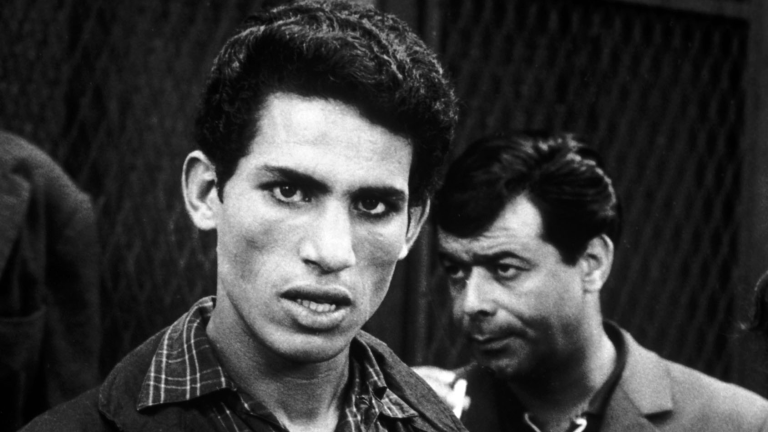
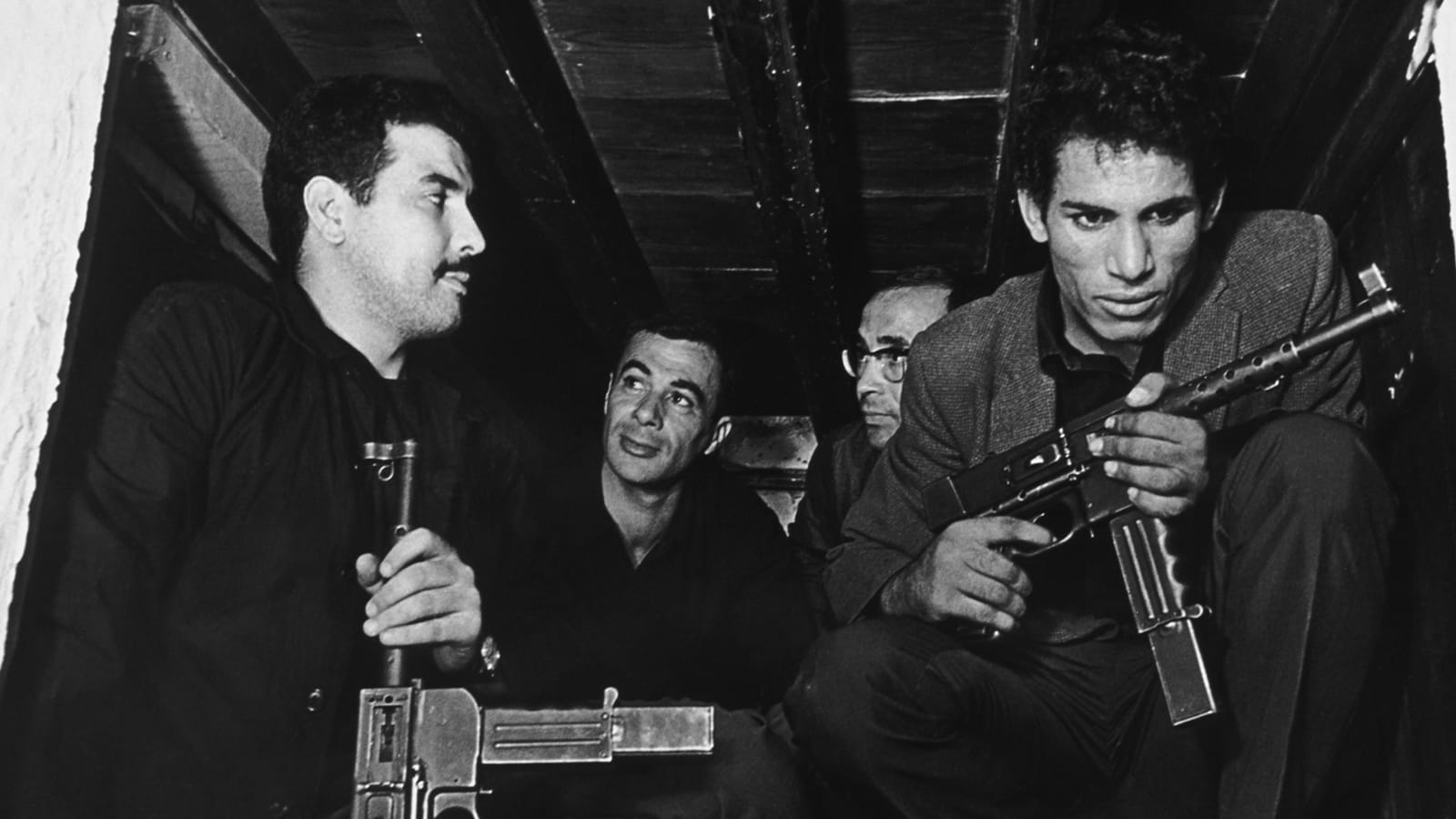
Following untold and unseen physical and psychological torture, a man attempts to throw himself out a window rather than give up the headquarters of a militant leader. He is quickly restrained and led off to double-cross his compatriots. And so begins Gillo Pontecorvo’s The Battle of Algiers, a stirringly powerful reenactment of the clash between guerrilla fighters and French paratroopers between 1954-57.
Instead of resorting to a classic good vs. bad story, the film lives in the morally gray, necessary for warfare. War and independence are not easy or black-and-white subjects. The National Liberation Front (FLN) might have freedoms on the mind, but their tactics regularly involve murder, extortion, wanton violence, and terrorism. The opposing French Army regularly use torture, intimidation, blackmail, and murder to neutralize the efforts of the FLN.
It’s never just surface-level. The film shows the need for a foundational change to occur in order to institute real change. The FLN stamps out drugs, alcohol, prostitution, and institutional corruption with exacting severity. They can’t just defeat the French forces, they have to change the country’s entire mindset in order to adopt their new way of life. That adoption proves brutal, leading a group of street children to beat a wino into submission on the streets, while corrupt businessmen are executed.
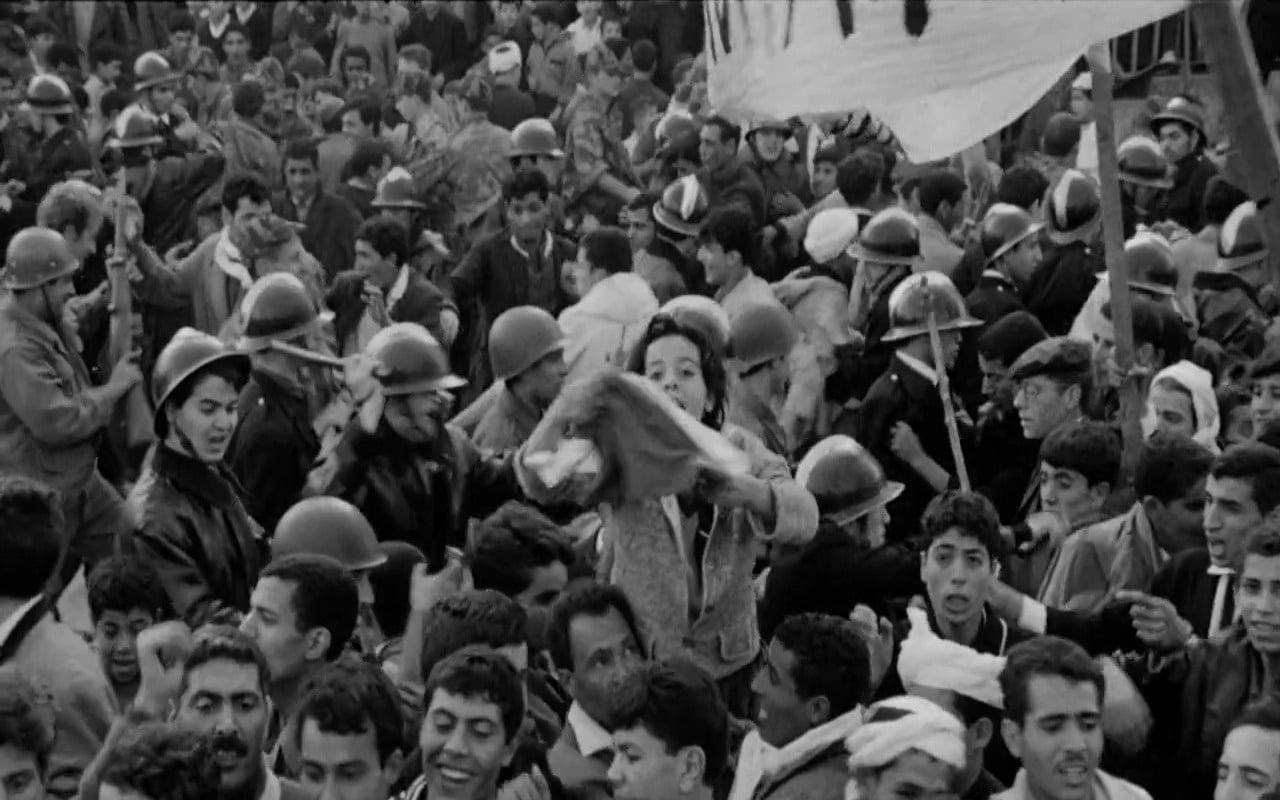
The French police detonate a large bomb which kills multiple civilians. In retaliation, the FLN directs three women to carry out a three-part bombing. The immediate reaction brings worldwide attention to Algiers, but also a cavalcade of paratroopers. In the film’s most evocative image, the French line the streets to welcome Colonel Philippe Mathieu (an exceptional Jean Martin, the film’s only professional actor) to quell the resistance.
Pontecorvo provocatively forces the viewer to take a side. The intricacies and complexity of each organization’s tactics, leaders, and goals are well-stated, but no one is the obvious heroes. After all, both sides are shown to have bombed civilians and killed at will. But, what is the point of it all? Algerians obviously want self-governance, while the French want to keep Algerians in line and continue their colonialist ways.
The competing powers know the realities of the situations. Colonel Mathieu is as much of a politician as a military strategist, bending the media to his whims. He uses his sterling reputation as a cloak of goodness, and bemoans calls of brutality and torture as a means to a necessary end. FLM leader Ben M’Hidi is more pragmatic. The film’s famous quote from M’Hidi: “It’s hard to start a revolution. Even harder to continue it. And hardest of all to win it. But, it’s only afterwards, when we have won, that the true difficulties begin.”
There are no easy answers, just as there are no easy questions. Mathieu states plainly to the media: “Should we remain in Algeria? If you answer “yes,” then you must accept all the necessary consequences.” The filmmakers don’t clearly side with one or the other, but you have an idea where their loyalties lie. That being said, this is not a film of clean, feel-good decisions. If you stand by the French, you are on the side of colonialism and torture. If you side with the Algerians, you stand with terrorism and guerilla brutality. Films usually want you to feel good about your choices and have clear motivations. This film refuses to be that obvious.
The real star is the atmosphere and the city of Algiers. Each corridor is a living, breathing entity. Each inhabitant filled with character and desire. You care about the ideals of men who reign wanton violence down the streets. You feel the struggle and you want to see a resolution. Pontecorvo is not about to walk you up to the triumphant parade signaling victory. Even in triumph, most of the characters are violently killed. Algiers is a vastly different place in the three-year timeframe of the film, but the work is by no means done, no matter what the end epilogue has to say. Scored by Pontecorvo and the legendary Ennio Morricone, the propulsive score compliments the tonal swings of the film with aplomb.
Filmed much more like a documentary than a narrative feature, the group of non-professional actors continually impress. In particular, Brahim Jadjadj as the anger-filled revolutionary Ali La Pointe impresses with righteous justice and an exacting nature. Saadi Yacef, a real-life former FLN member, is the cooler head of the revolution as El-Hadi Jaffar. Martin’s much more contained, measured performance counters the wildness of the rest of the cast well.
The Battle of Algiers isn’t afraid to make a mess of war. Nothing comes easily, and no easy answers are given. War isn’t that black-or-white, and this film refuses to conform to convention.
Director: Louis Paxton Writer: Louis Paxton Stars: Gayle Rankin, Domhnall Gleeson, John Hannah
Synopsis: On a remote Scottish isle, siblings Isla and Sandy hunt birds and talk to mythical beings while fighting off outsiders. Their lives change when Daniel, an awkward official, arrives to relocate them.
Louis Paxton’s directorial debut, The Incomer, is one of the most delightful and hilarious first feature films I’ve had the pleasure of watching in the last few years. The film leans heavily into Scottish folklore, centering on a brother and sister living on one of the many isolated islands off the coast of the Scottish Highlands. With only each other and the island’s animals for company, they honor their father’s dying wish to defend the land from any incomers from “the mainland” by any means necessary.
After spending decades undiscovered on the island, Isla (Gayle Rankin) and her brother Sandy (Grant O’Rourke) are understandably borderline insane, regularly scuffling with one another. Survival has become increasingly difficult, with the pair now living off seagull meat caught during the day between their military-style drills, all in preparation for an invasion from potential “incomers.”
In keeping with the themes on display throughout the film, the siblings’ drills often feel like something you might expect from Braveheart, not a lighthearted comedy. Strangely, though, it feels rather apt, especially when you take into account the mysterious and bonkers Finn-men. They are part human, part seal and they spend their existence lurking in the surrounding waters of the isle, constantly attempting to lure the siblings into the murky depths of the sea and have them sacrifice themselves to the waves. Just like the movie itself, they are suitably weird but for all the right reasons.
Unfortunately for Isla and Sandy, the peaceful paradise is about to be invaded by the pesky Scottish council who have caught wind of their existence. The council sends Daniel (Domhnall Gleeson), a nerdy, nonconfrontational guy to serve them with an eviction notice. That is far easier said than done. The tense, friction-filled interactions once Daniel reaches the island result in some hilariously nerve-wracking moments. His life flashes before his eyes more than once as he’s painted as the terrifying mainlander the siblings have spent years preparing for.
On the surface, The Incomer presents itself as quirky and goofy, but it’s the tender, and ultimately vulnerable, story of Isla and Sandy that truly begins to shine through. We learn about their father’s death and the way their mother “abandoned” them to return to the mainland, leaving the siblings to essentially raise themselves from childhood into adulthood. It’s a surprisingly poignant thread that, for the most part, lands beautifully and provides some much-needed depth to the characters’ stories.
Suitably, Louis Paxton leans into the mystery of what it would be like to be so out of touch with modern-day society. For the most part, that’s explored sensitively through deeper conversations, predominantly between Daniel and Isla as their relationship blossoms. Their connection never feels forced, despite how easily it could have fallen into that trap.
In tune with the rather crazy but entertaining tone of the film, Daniel’s tales of this mysterious mainland the siblings have missed out on provide some of its most charming moments. His retelling of “The Lord of the Rings” especially feels, in a strange way, relatable, as Isla and Sandy are completely captivated, much like audiences are when they first meet the Fellowship. It teleported me back to hearing my dad talk about the magical franchise, when I could sit down and listen for hours.
That said, there are definitely moments that threaten to derail the momentum, particularly after the unhinged council leader Roz (Michelle Gomez) lands on the island. While undoubtedly still very enjoyable, it feels rather telegraphed how the third act begins to unfold, perhaps ensuring a potentially big emotional punch doesn’t quite land as hard as it possibly could have. To Paxton’s credit, though, he’s able to hook audiences back in during the final moments, ensuring you’ll still have a beaming smile on your face as the credits begin to roll.
As well as being a barrel of laughs, The Incomer is impressively well acted. As expected, Domhnall Gleeson delivers a stellar performance, once again showcasing his impeccable comedic timing. His on-screen chemistry with Gayle Rankin is infectious, with their back-and-forth banter proving a real highlight. The same can be said for Grant O’Rourke, who plays Sandy with such convincing childlike innocence that he may well be the funniest character in the entire film. With the undoubted talent on display, that’s no easy feat.
So despite a slight decline towards the end, The Incomer remains a compelling and hugely enjoyable experience, packed with some of the best comedy you’re likely to see this year. It’s a deeply heartwarming story about genuine human connections, with a sprinkle of magic thrown in for good measure, and one that I’m sure most people will have a great time with. Even if the film ultimately heads in a direction you might expect, the journey there is more than worth taking.
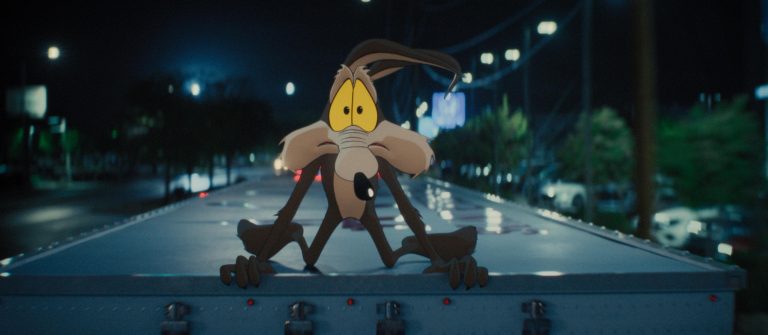
On this episode, JD and Megan discuss one of the best surprises of the year in Coyote vs. ACME! This film has certainly been through the ringer. Shelved by Warner Bros. after full completion, it got sold to Ketchup Entertainment and is finally getting the release it deserves.
Review:Coyote vs. ACME
Director: Dave Green Writers: Samy Burch Stars: Will Forte, Lana Condor, John Cena
Director: Macon Blair Writer: Macon Blair Stars: O’Shea Jackson Jr., Dave Franco, Kiernan Shipka
Synopsis: When two unqualified bozos are hired to transfer a rich teen to rehab, their straightforward gig quickly spirals into dangerous mayhem.
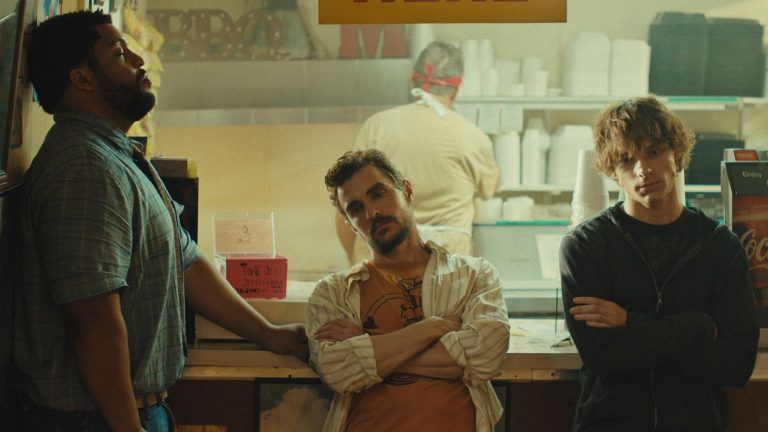
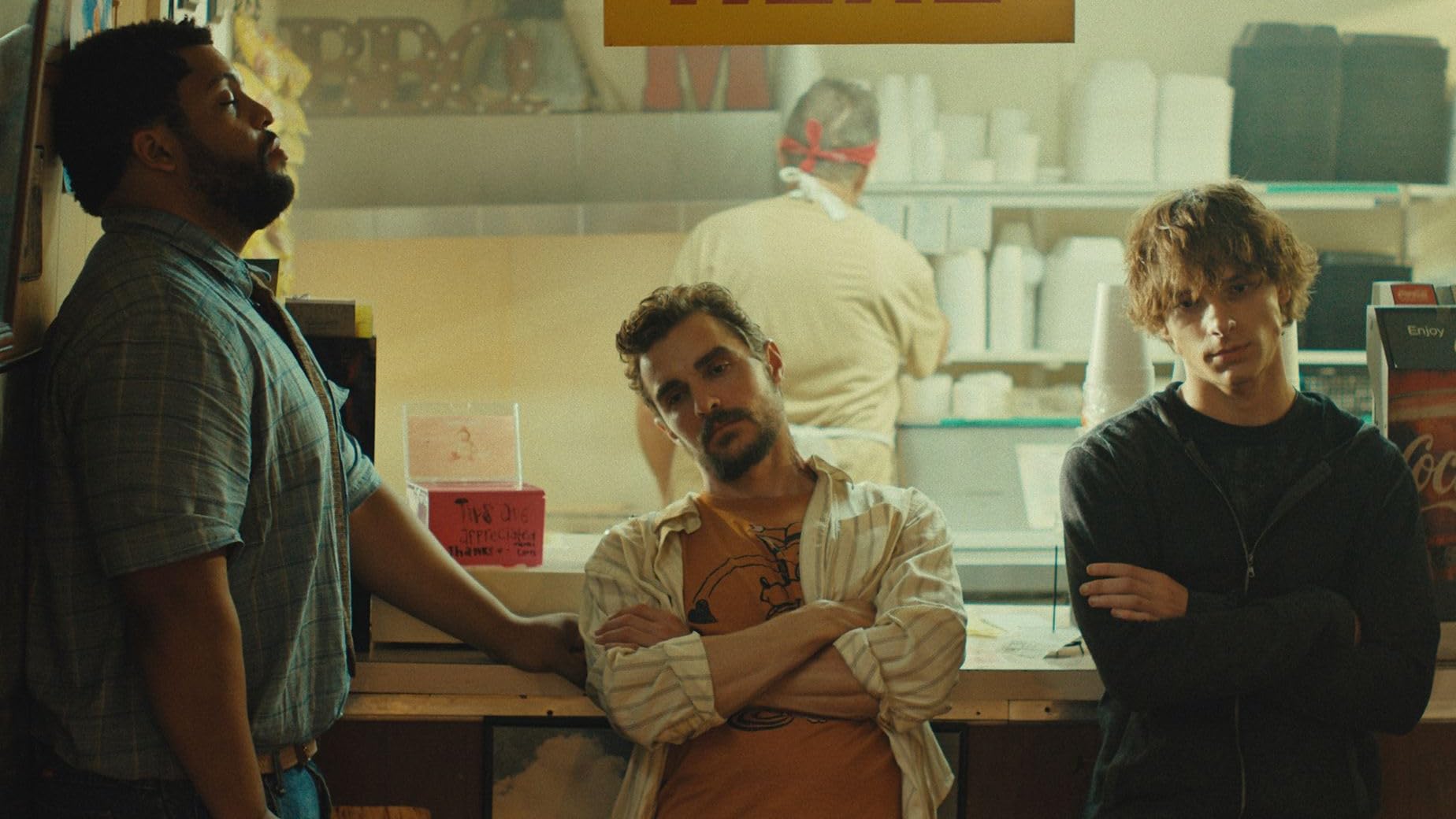
Idiots (previously entitled The Shitheads at its Sundance premiere) is a fascinating film to dissect in terms of the specific type of comedy it’s aiming for and the multiple tonal inflections it ends up giving off throughout. From both the marketing and vibe of the film’s opening minutes, most would likely think of it as a good old-fashioned vulgar and delightful crude comedy that only increases in hilarity as its mountains of hijinks escalate, and while that’s mainly true, writer/director Macon Blair intertwines the escapades with a surprising amount of attempted genre blending. The film, as it plods on, takes a shift into multiple genres, including a touch of action, genuine drama between its two screw-up lead characters, and even a percolating commentary on the ever-growing privilege of the rich youth that those of lower classes couldn’t even dream of touching. The result is a film that grows a bit more uneven in its plotting the longer it goes on, and it occasionally struggles a bit to find a true identity as our leads get into more dangerous situations, often becoming too mean-spirited and tonally confused. Still, Idiots is able to stay just sturdy enough to provide a fair amount of hearty laughs as a thrilling road trip comedy, even if everything it attempts doesn’t fully land.
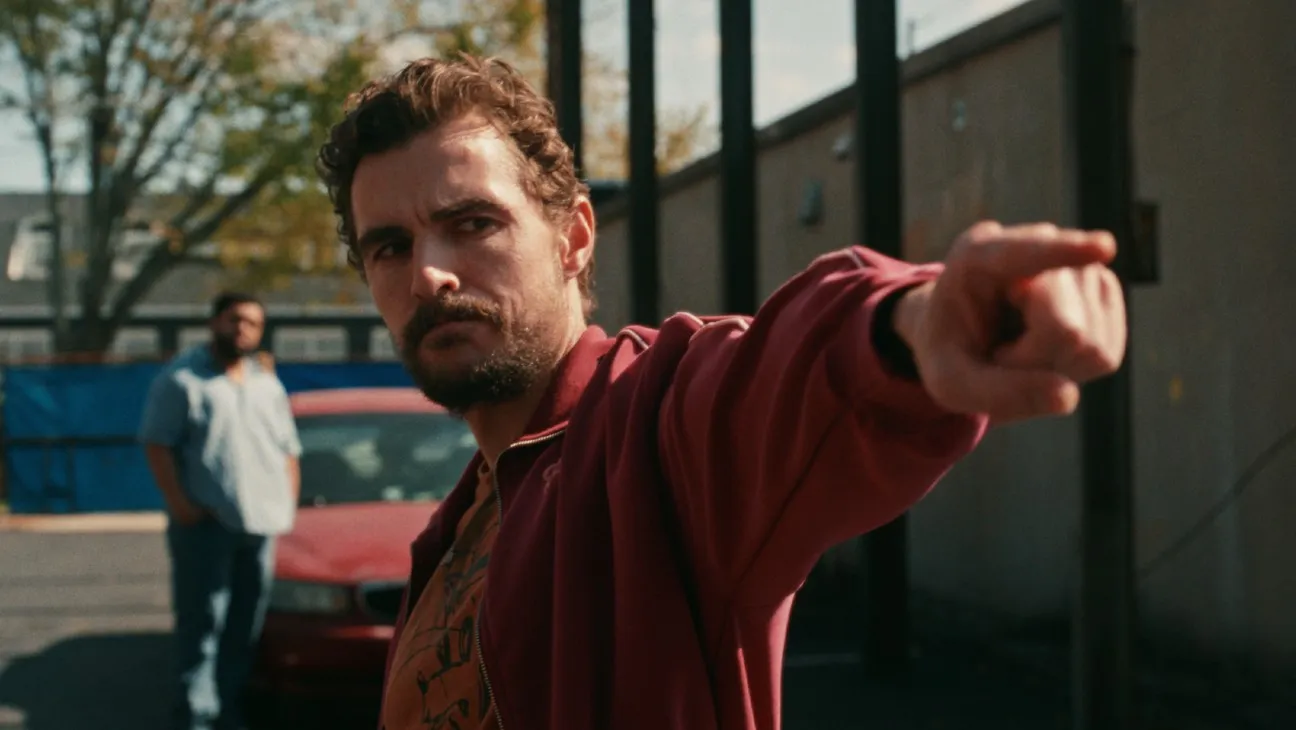
The setup is simple enough, as our leads are two screw-up slackers, Davis (O’Shea Jackson Jr.) and Mark (Dave Franco). Both of them, mostly due to incompetence, have been fired from their jobs as Davis opens the film being let go from his church after accidentally showing the group’s youth a showing of Antichrist (yes, THAT Antichrist), and Mark is fired from his desk job on a count of doing too many drugs while working. The two hope to turn their recent mishaps around as they sign on to work for a transportation service that brings kids to a court-ordered rehab facility. The kid they’re in charge of is Sheridan (Mason Thames), a bratty and pampered rich kid with a large follower base on social media, and throughout the film, he only further showcases his troubled tendencies. With one destination to get to and a legally binding contract that they both signed keeping them focused, Davis and Mark try to make the gig as straightforward as possible, but when a chain of increasingly insane events begins when they stop at a motel, their night veers out of control and what was a simple job spirals into pure chaos and a matter of life and death.
Idiots is at its strongest, both structurally and comically, throughout the majority of its first half, as the character dynamics between our main duo are formed fairly well from the start. Mark and Davis are essentially polar opposites in their outlook on their current life choices, and it makes for a captivating butting of heads that slowly transforms into a buddy duo of sorts that’s more than appreciated, with Sheridan acting as the chaos agent in the dynamic. Franco is particularly good here as a consistently inebriated weasel, and it’s a testament to Blair’s writing that he makes such tried-and-true character archetypes still worthy of rooting for. The film peaks during a stretch in the motel when Sheridan escapes, and Kiernan Shipka’s erotic dancer character Irina is introduced. The small spurt of her, Mark, and Davis trying to get Sheridan back is where the film best balances its absurd silliness and underlying discomfort (especially in one great bodily dysfunction bit).
Unfortunately, the longer Idiots goes on, the more what were previously smaller issues start to pile up. The movie admittedly starts with an underlying mix of tones that it later develops as the bad situations for our protagonist escalate, but the problem is that the film struggles to have a clear idea of the exact type of movie it wants to be. This is particularly evident when Peter Dinklage’s character of Koko and his band of armed criminals are introduced, and a film that was already veering towards a few different tonal directions takes a complete 180 into mean-spirited territory. The bits begin to overstay their welcome (especially one rap sequence with Nicholas Braun’s character going full “Werewolf”), and that, on top of a shift the film takes with Sheridan’s character, never feels quite earned considering its previous rich privilege commentary. It’s where the entire film completely capsizes, but Jackson Jr. and Franco’s chemistry are still just able to keep things afloat within what starts to become an uneven mess.
For the most part, what you see is what you get with Idiots, an increasingly insane road trip to hilarity that’s clever enough, bits bolstered by its committed cast; it’s just increasingly hampered from being anything stronger by a screenplay that can’t quite narrow down what exactly it wants to accomplish by its end. Still, if progressively wacky hijinks, mayhem, and fairly funny situational comedy are what you want, Idiots will suffice, even with more than a small number of caveats holding it back.
On this episode, JD and Megan discuss the latest film from Matt Johnson in Tony! Anthony Bourdain is a revered figure and the film has all of the right biopic ingredients, but does it all add up to make a good movie? Despite some great performances, we do have some big questions around the film’s execution.
Review:Tony
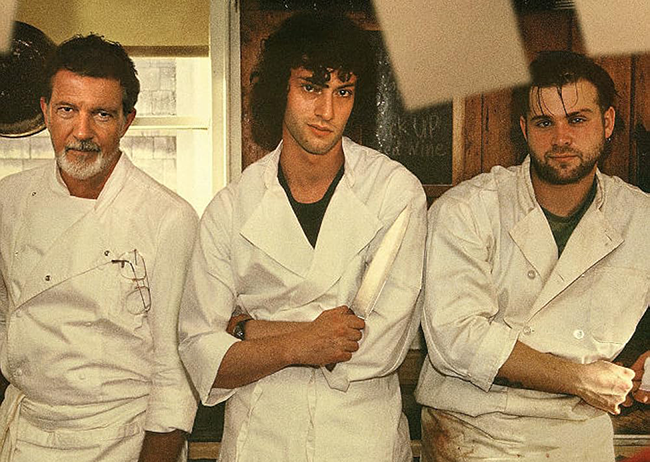
Director: Matt Johnson Writers: Matt Johnson, Matthew Miller, Todd Bartels, Lou Howe Stars: Dominic Sessa, Emilia Jones, Leo Woodall, Antonio Banderas
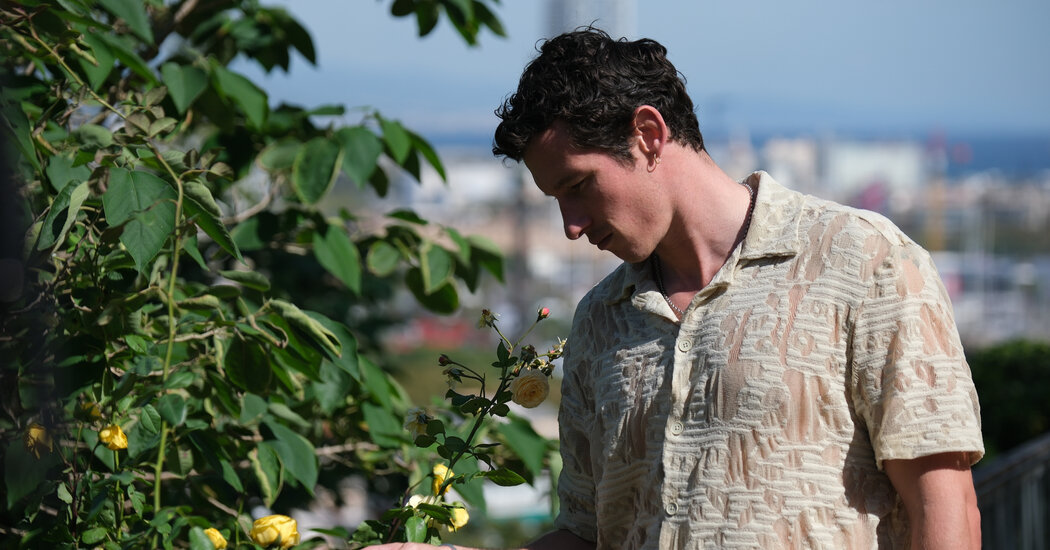
Director: Karim Ainouz Writer:Efthimis Filippou Stars: Callum Turner, Riley Keough, Elle Fanning, Jamie Bell, Tracy Letts, Pamela Anderson
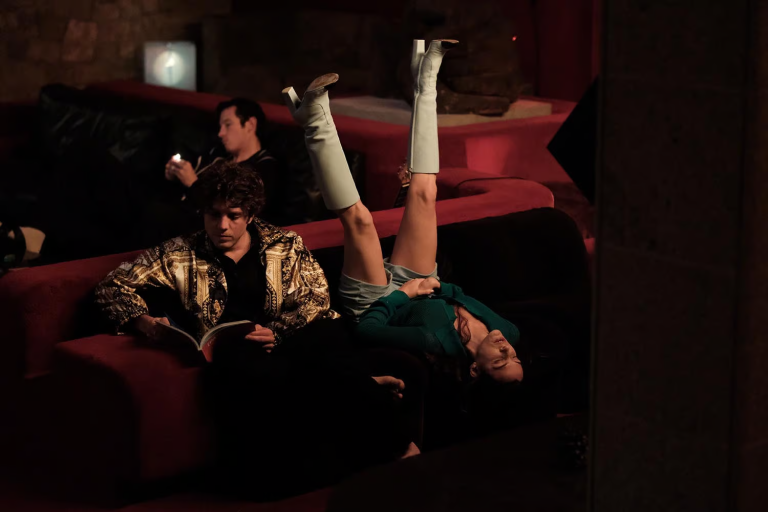
Synopsis: In a Spanish villa, American siblings Jack, Ed, Anna and Robert wallow in isolation and their inherited fortune. When Jack wants to move in with his girlfriend and Ed uncovers the truth about their mother’s death, the fabric of the family begins to unravel.
Have you ever had the pleasure of eating the rich? Few have actually enjoyed the experience of turning a now-colloquial desire for economic equilibrium into a legitimate feast, but by golly, the concept hasn’t turned filmmakers off from trying their hand at dramatizing the affair. Occasionally, they do so by adapting a 1946 Alec Guinness vehicle into a serviceable but forgettable flop, dumped by its distributor in the recesses of February. Or, perhaps it manifests in a revenge thriller pulled from truth, one put to screen mere months before that film’s distributor crumbles under the weight of its own ambitions. But those films – two of the most recent examples in a long line of films within these “genre” confines with eyes larger than their stomachs – weren’t nearly ambitious enough.
At least, that’s what it seems the Brazilian director Karim Ainouz and his screenwriter Efthimis Filippou (a frequent collaborator of Yorgos Lanthimos’, most notably on The Lobster) felt when they elected to pull inspiration from Marco Bellocchio’s 1965 satire Fists in the Pocket in order to make Rosebush Pruning, a tale of retribution that claims to be a spin on its inspiration(s) but is nothing more than a retread. “Bringing vengeance?” one asks, to which Ainouz and his collaborators reply, “Bringing nothing at all.”
Ah, that’s unfair. The siblings in this yarn of familial flatulence are played by Callum Turner, Riley Keough, Jamie Bell, and Lukas Gage, a respectable group of actors that appear to be having fun, if little else. But to frolic in such extravagance shouldn’t require such exertion, a fault more of Ainouz’s sleepy direction than Filippou’s screenplay, though said script is also riddled with throwaway lines that patronize the audience and provide its performers with inert exposition in one fell swoop. “People are roses. Families are rosebushes. Rosebushes need pruning,” Turner’s Ed rattles off within the first few minutes of the film, simultaneously managing to tell us exactly what’s bound to happen over the next 95 minutes and delivering an empty promise only a better film could have hoped to keep.
“How do you like my new watch?” Father (Tracy Letts) asks at dinner, followed quickly by a demand for Jack (Jamie Bell) to check what time it is by, indeed, looking at his new watch. Father is blind, so the watch is there for show. It’s a fitting, if on the nose metaphor, for the lives of these billionaire characters and the rest of their trappings – from the family’s expansive Spanish villa, where they moved due to their mother’s love for the architect and their realization that Balenciaga wasn’t born in New York – to the garish tone in which they speak to one another, performative and amiss alike.
At this same early meal, Robert (Lukas Gage) openly pines for Jack, his eldest sibling, urging the rest of his sight-bearing kin to ogle at how sexy Big Bro has been looking lately; Jack teases the arrival of his new girlfriend Martha (Elle Fanning); Anna (Riley Keough) broods and smirks all but silently, not offering so much as a “tsk tsk” when her father asks if Martha is as hot as his daughter, the same daughter who also wants to sleep with Jack; Ed, meanwhile, contemplates his next move. It’s worth pondering the moves he’s made already, those we haven’t seen, but are meant to feel some type of way about.
A film can only tell without showing so much before it becomes grating, and it’s not five minutes into Ainouz’s second English-language effort – following 2023’s handsome but flawed Firebrand – that you can feel the seams coming undone. Or maybe you’re doing that dirty work yourself, desperate to feel something given how little the film thinks of you, its viewer, forcefeeding you empty spoonfuls of muted diatribes from angry siblings whose mission statements might as well be tattooed to their foreheads. They want to one-up one another, but Rosebush Pruning doesn’t care to give its actors any room to find their respective footings in that regard, a shame considering how individually talented most of the ensemble is, or how promising they’ve shown themselves to be in their previous work. Turner is meant to be a mysterious lead here, but it’s clear that Ainouz missed Mark Jenkin’s Rose of Nevada, a labyrinth of a film in which Turner is as difficult to read as the picture itself. (And all the more tremendous for it.)
Bell, Fanning, Keough, and Letts have all had their fair share of stellar supporting turns in the past, so it’s devastating to watch Ainouz become so restless as to direct attention elsewhere the moment their scenes start becoming interesting. They are recognizable faces in a faceless film, relegated to bit players when they could have been front and center if not for their steward’s penchant for the “Look! Over there!” fakeout. If nothing else, it’s nice that they appear in Rosebush Pruning as their presences serve as reminders of their careers, those that will go on successfully with this work appearing as but a blip on their curriculum vitaes. Watch literally anything else they’ve done instead.
Rosebush Pruning is now available to stream on Mubiand VOD.
Director: Rafael Manuel Writer: Rafael Manuel Stars: Jorrybell Agoto, Joanna Maria Banua, Angeli Bayeni
Synopsis: Teen Isabel’s attraction to Dr. Palanca at her country club job turns dark as she uncovers violence beneath the club’s facade and discovers their disturbing connection from the past.
There is a magical moment that every film critic or cinephile knows. When the credits roll, and the film opens up to the viewer, baring glimpses of its soul, revealing whatever the filmmaker decides to uncover from the beginning. It never gets old, and reminds us all of why we love cinema. When there’s a new mysterious film at hand, that plays this mind game on us to the bone, that’s when we sharpen our teeth and take a deep…bite into the material at hand.
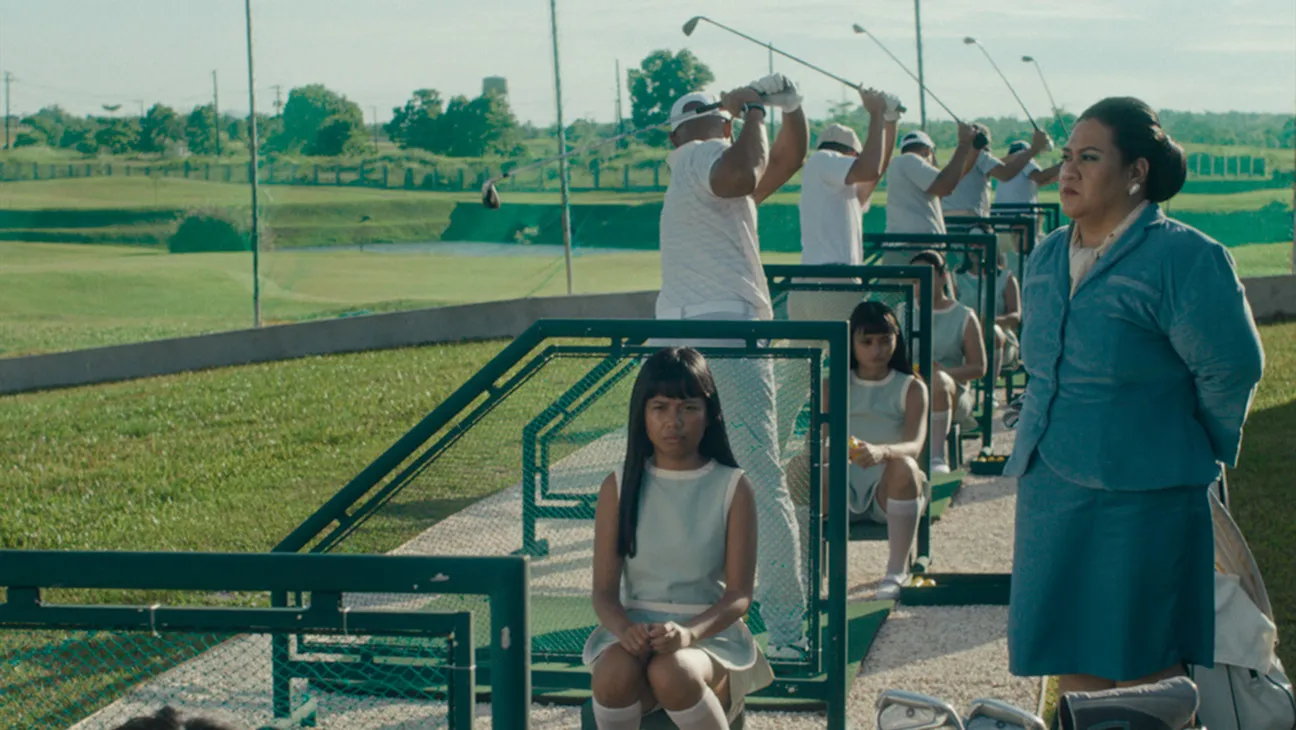
Rafael Manuel’s Filipiñana is that kind of film. It uses golf as a metaphor for power disparity, the shameful uneven distribution of riches and money, and the morbid isolation of the elite from the working class, while picking a select few from them to diligently do what they -in the elite’s minds- are born for: serve those upstairs.
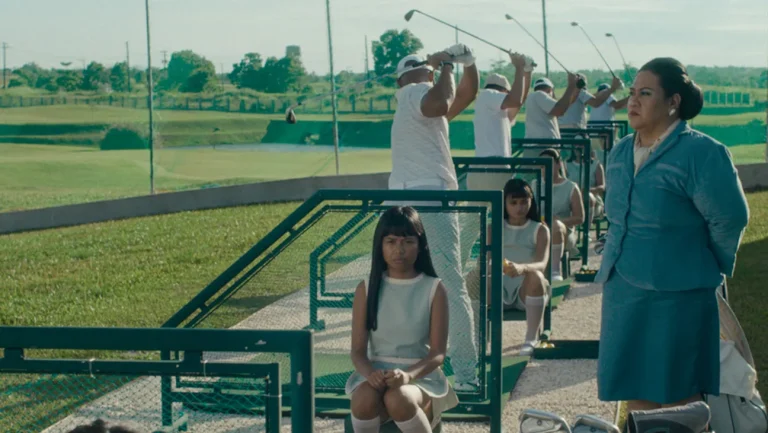
The feature is about 17-year-old Isabel (Jorybell Agoto) a tee-girl in a prestigious, private golf club. Her job is lining up golf balls for haughty golfers to drive into the manicured horizon. But Isabel’s curious nature and inquisitive personality leads her to places she shouldn’t be, discovering harrowing truths about the nature of the club, her country, and her own repressed memory.
Manuel perfectly captures the contrast between vast, luxurious spaces and tired, sweaty faces working in the underbelly through his use of the 4:3 aspect ratio; a very contradictory image to what the public perceives of a spacious golf course. His composition and sharp focus on skin tones and textures highlight the difference between the upper class, those who are served, and the servers, whom nobody asks if they are well-hydrated or not. He perfectly captures the presence of the “heat” as another protagonist, besides the ones already in the heart of the story, and it is evident through every sweat stain and sweaty forehead.
Manuel also alternates between long shots and close-ups, reserving each shot type for a particular purpose. Long shots are to enhance the beauty of the liminal spaces in which the servers exist on the periphery, even though technically they are the ones running it, and close-ups are for the voyeuristic faces, like Isabel’s as she silently watches the events unfolding around her, while lacking the power to shake things up.
Manuel’s use of sound is en pointe, heightening the sensations in a film that demands feeling before following a structured narrative. The director tries to put us in an eerily voyeuristic place of lurking and peeking at things we aren’t supposed to access or approach. The rustling leaves, the fine arcs of water from the sprinklers on the courses, golf clubs hitting the ball, people stepping on grass, or feet stomping in shallow ponds, pristine tablecloths being placed, or the synchronized, collective movements of the resort staff dancing as they greet the wealthy guests. The awkward angles make the conversations hard to follow and highly uncomfortable, almost as if the viewer is spying on something they shouldn’t see.
This feature provides not-so-subtle political statements in an apolitical world. It’s about the violence that shaped the luscious, glossy manicured landscapes, how the bored rich and powerful tread over grounds that have seen suffering and mass graves. The land is careless, and so are the ones who get to claim it, greedily sucking the marrow out of the real Filipino people. After tales of nature grifting and forest decay, knowing the history of some of those posh golf clubs, make this film harder to swallow, and more impactful.
Filipiñana provides a grim, stripped-bare portrait of another side of Manuel’s home country, the Philippines. It opens at Film Forum in New York on August 28th and at Laemmle Theatres in Los Angeles on September 4th before expanding to select theaters nationwide.
Director: Ben Masters Writer:Ben Masters Stars: Ethan Hawke
Synopsis: Water, wildlife, and land conservation in Texas. Wildlife stories from each of Texas’ major river basins, as well as diving into our state’s successes and failures when it comes to managing water for both people as well as ecosystems.
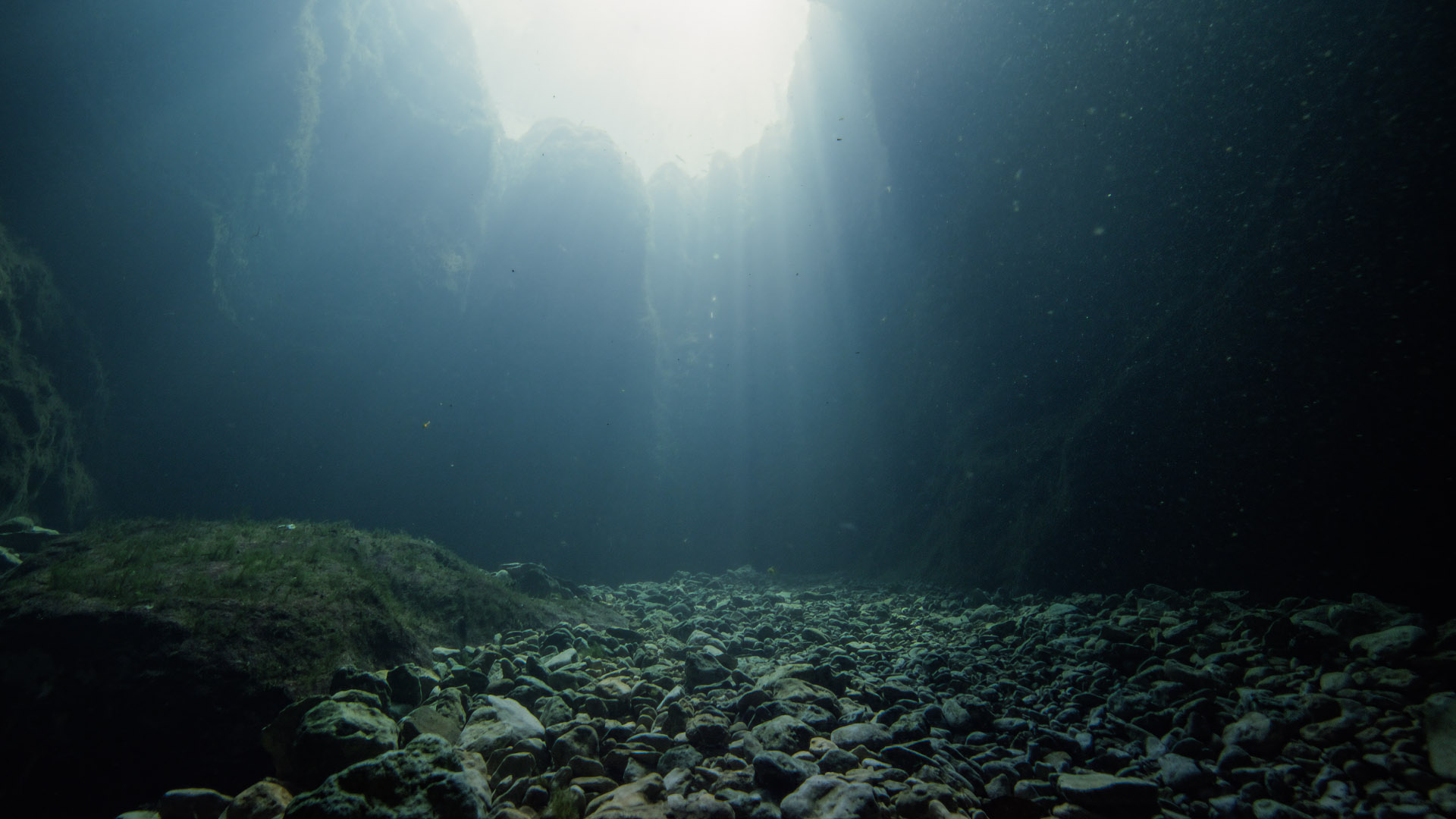
Texas is known for being big. From vast deserts and open plains to bigger-than-life characters. Not surprising when 33 million people are living there. But Deep in the Heart 2: Texas Rivers takes audiences beneath the Lone Star State’s familiar landscape and into the waterways that sustain its wildlife, revealing a world of otters, turtles, mountain lions, cranes and plenty of creatures that are considerably less interested in posing for the camera.
Following the success of Deep in the Heart, director Ben Masters returns with another wildlife documentary centered on the natural beauty and biodiversity of his home state. This time, the focus is firmly on Texas’ rivers, springs, creeks and bays, travelling from the Rio Grande to the Sabine and Neches and into the ecosystems surrounding them. At 85 minutes, it is an accessible introduction to an enormous and often overlooked part of the state’s natural environment.
Narrated by Texan actor Ethan Hawke, the documentary has an appealing sense of place from the outset. Hawke’s voice brings warmth and a serious sense of intrigue to the piece. In choosing Hawke to narrate, this documentary isn’t simply a collection of beautiful wildlife footage; it’s a love letter to Texas. They really have pride in their state, and you can’t help but feel that whilst watching.
And there is certainly plenty to admire. The cinematography is the film’s greatest strength. Three years of filming have produced some remarkable encounters, from mountain lions navigating the Pecos to river otters raising their young along the Sabine. Alligator Snapping Turtles provide one of the more unusual highlights, looking less like wildlife documentary stars and more like prehistoric creatures that somehow missed their exit several million years ago. Some graphics support the narration, such as showing the number of rivers in Texas – these visuals help with the more detailed, scientific explanations.
The film also finds room for some less obvious characters. Turkeys, Whooping Cranes, and Fatmuckets, a species of freshwater mussel (with the best name, ever), all receive their moment in the spotlight. I really enjoyed that there’s an appreciation for the smaller, stranger, and less celebrated creatures on this planet. There’s something so humble and comforting about looking at ducklings and hearing the sound of gentle rainfall.
Masters’ affection for the subject is easy to understand. He’s known for talking about growing up on the Canadian River, falling in love on the Brazos, getting married on the Guadalupe, and finding adventure on the Rio Grande. Those personal connections give the film an emotional foundation that complements its conservation message.
Deep in the Heart 2 is so committed to celebrating Texas that it sometimes feels reluctant to linger on the more uncomfortable realities facing its waterways. There is an important conservation story here, but the film is more successful at making us admire these environments than at fully exploring the threats that put them under pressure and how we could help.
This means the documentary prioritizes wonder over alarm. That isn’t necessarily a weakness, particularly when the imagery is this impressive, but a little more balance between celebration and environmental urgency could have given the film greater weight. The rivers are beautiful, but understanding what threatens them would make their preservation feel even more important.
Still, there is something wonderfully straightforward about Deep in the Heart 2: Texas Rivers. It wants you to look closer. Beneath the familiar image of Texas is a complicated network of waterways supporting an extraordinary range of life, much of which can be easy to overlook when you’re busy thinking about cattle, cowboy boots and everything else the state has become known for.
With spectacular cinematography, an engaging narration and a genuine affection for its subject, Deep in the Heart 2: Texas Rivers offers an entertaining reminder that some of nature’s most fascinating stories are happening just beneath the surface. Texas may be known for doing everything big, but this film makes a convincing case for paying attention to the smaller things swimming, crawling, and wading through it.
This week on the InSession Film Podcast, inspired by the release of The Dog Stars this weekend, we did a Ridley Scott movie draft! JD also gives us his thoughts on The End of Oak Street and The Rivals of Amziah King.
– The End of Oak Street (9:13) While Megan and Max were not very high on David Robert Mitchell’s latest, JD ended up having a very different take on the film. He didn’t see the ending as a cop out, but rather a provocative and mean-spirited twist that makes you look at its characters a little differently.
– The Rivals of Amziah King (40:38) Next, JD gave his thoughts on Andrew Patterson’s new film The Rivals of Amziah King. While he disagreed on Oak Street, he had nothing but praise for Amziah King. It’s a film that shouldn’t work given how many genres it’s navigating, yet somehow it all comes together in a seamless way. All complimented by two of the best performances of the year with Matthew McConaughey and Angela LookingGlass.
– Ridley Scott Draft (1:03:07) Ridley Scott is a fascinating filmmaker. He begins his career with two of the best sci-fi movies ever made. Somehow made one of the most underrated Best Picture winners given the discourse around it. The late-stage of his career is riddled with polarizing movies. There is so much to love about Scott, and he’s made some incredible films, so where do you go when drafting his best work? Some of it is obvious, however after those first few, it could go in a number of direction. With that said, what did you think of our draft?
If you want to help support us, there are several ways you can help us and we’d absolutely appreciate it. Every penny goes directly back into supporting the show and we are truly honored and grateful. Thanks for your support and for listening to the InSession Film Podcast!
Directors: Jon Lucas, Scott Moore Writers:Jon Lucas, Scott Moore Stars: Leslie Mann, Anna Faris, Michelle Buteau
Synopsis: Three friends go on a spa weekend that descends into chaos when their trainwreck friend joins, leading to hilarious consequences.
Rarely has a movie felt less real than Jon Lucas and Scott Moore’s Spa Weekend. The screenwriting duo behind Todd Phillips’ The Hangover (and its sequels) and the directors of Bad Moms give us one of the biggest “this movie doesn’t exist” products of all time, one that attempts to be a big-screen comedy event but fails at virtually every turn. It’s a real shame, because the quartet of women leading the fray are all individually talented and have been funny in movies beyond this one, but they are all wasted inside a premise that gets tiresome relatively fast and does its ensemble zero favors.
Anyone who has been calling January “the dumping ground of movies” must now relegate that title to August, because nothing in Spa Weekend feels engineered for the big screen. This is the type of movie you’d buy at a Walmart bargain bin, or, in more apt 2026 terms, generate on ChatGPT. Every line, every situation, every character, every image, feels artificial. It has more in common with a commercial than it does a film you’d willingly pay money to see on the big screen. Worst of all, though, it is terribly unfunny. Lucas and Moore mistake endless shouting for comedic situations, and fill their entire movie with one loud shouting match after the next, as the titular Spa Weekend quickly turns into a total nightmare.
I’ll give them this, at least the premise is simple. Three women, Jane (Leslie Mann), Coco (Michelle Buteau), and Sophie (Anna Faris), go to a spa resort in the hopes of relaxing from the day-to-day operations of their increasingly busy lives. Jane is a lawyer whose responsibilities as a single mom prevent her from doing anything outside of work and parenting. Coco is still reeling from a painful divorce, and Sophie can’t seem to stand up to her misogynistic boss who has been manipulating her at every turn.
They hope that, by going to a spa, their worries will be washed away momentarily…until the friend they didn’t invite, Mel (Isla Fisher), shows up unannounced. To put it politely, Mel is a bit of a loudmouth. She says (read: shouts) what she thinks, and, well, apparently, hilarity ensues, but I waited, desperately waited for a scene where I would laugh. It never happened. This is a movie that thinks it’s funny by engaging in lazy, crude “extreme slapstick,” but none of it actually garnered a chuckle out of me.
The whole thing is painfully telegraphed. You can clearly tell where it’s going from the moment it starts, especially once Mel is introduced. Of course, everyone hates her guts. Of course, she basically ruins the whole vibe of the relaxing spa weekend and kinda sets fire to the resort, which vehemently angers its general manager, but what do you think will happen in the end? I don’t even need to spell it out for you – it’s written in the stars! It’s exactly what you think will happen, especially when Jane finds love in a hot yoga teacher, Coco attempts to make amends with her ex-husband, and Sophie finally stands up to her sexist boss. These archetypal stories are quickly resolved to a heartwarming conclusion, so foreseeable it’s almost laughable that all the “right notes” are hit, without a shred of emotional depth or humanity to make such an ending feel earned.
Instead, great comedic actors are relegated to a comedy of errors, haphazardly shot, lit, and edited, with the year’s worst musical score on display, clearly highlighting its lack of budget. Whenever a character mentions a song the production didn’t have the rights to, Philip White’s music will lightly reference it. I’ll admit, it’s a smart and economical choice, but the music itself sounds like royalty-free tunes you’d hear in a 2009 YouTube video edited on One True Media. The performances aren’t any better. Only Michelle Buteau gets one genuinely impassioned sequence near the end, but the rest of the cast deserve much better than to play one-note archetypes at this stage of their careers.
If Spa Weekend wanted to continue bringing the comedy back to the big screen, they’ve spectacularly failed. With Will Gluck’s horrendous One Night Only, there seems to be a recession indicator for actually funny movies. We might, however, reach the bottom of the barrel with this one. It’s actually so unfunny that it might be regressing our desires to have real comedies back on the big screen again. If this is what passes as comedy these days, maybe they all deserve to be relegated to Netflix….
Directors: Emily Bennett, Justin Brooks Writers: Emily Bennett, Justin Brooks Stars: Emily Bennett, Brendan Sexton III, David Call
Synopsis: In her remote country home, a religious zealot takes a young filmmaker captive, claiming her sadistic rituals will change him into a god.
There is something inherently unsettling about a film that takes something as comforting as light and makes it feel dangerous. Blood Shine, the latest feature from directing duo Emily Bennett and Justin Brooks, builds its folk horror around that contradiction, creating a strange, sweaty, and increasingly disturbing descent into religious obsession. It’s a film that will leave you somewhere between fascination and discomfort.
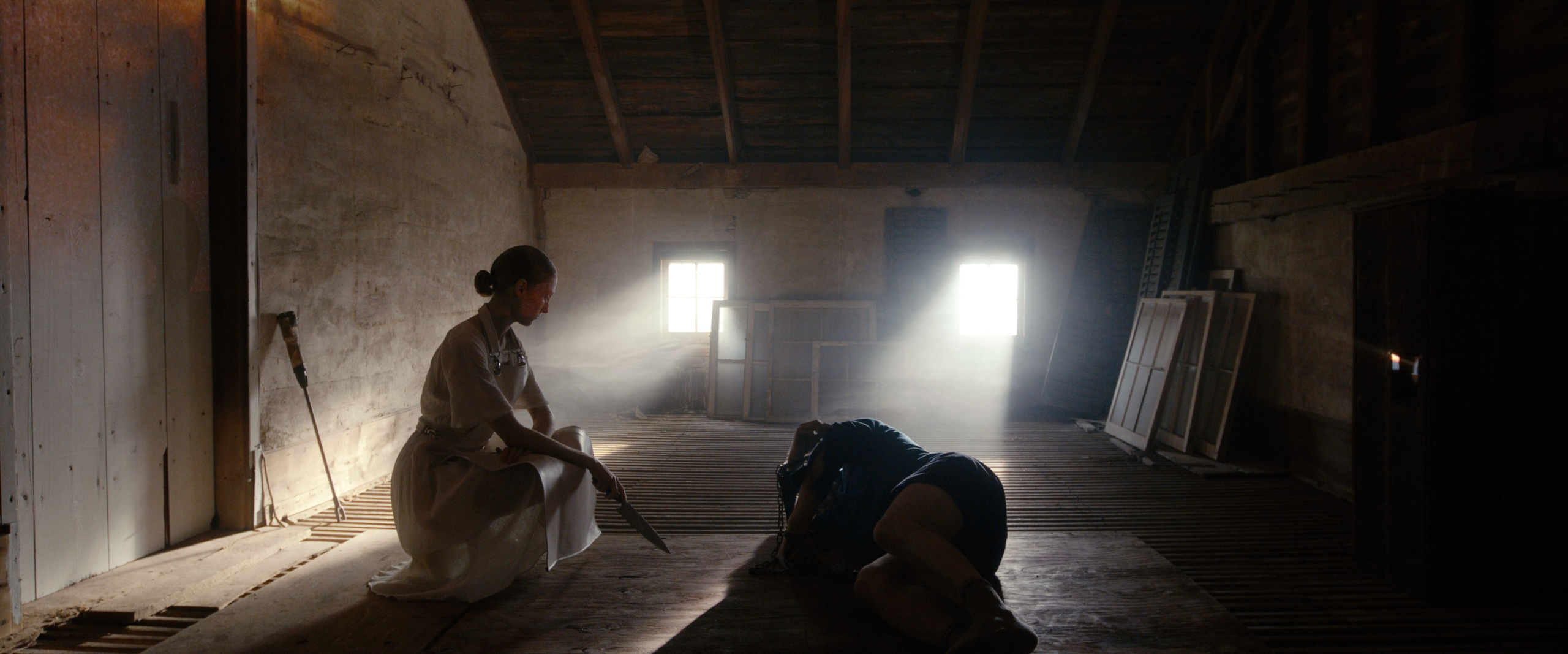
Set in the isolated landscape of upstate New York, the film follows Brighton West (David Call), a troubled horror filmmaker who retreats into the countryside to finish his latest screenplay. His plans for solitude don’t last long when he encounters Clara (Emily Bennett), a deeply religious woman whose devotion to light has developed into a series of extreme rituals. This unpredictable encounter gradually becomes something far more sinister, as Clara draws Brighton into a world where faith, violence and physical transformation become difficult to separate.
Visually, Blood Shine is one of those films where the environment is as important as the characters. The cinematography embraces the starkness of its setting, contrasting expansive natural beauty with moments of physical ugliness. There is a tactile quality to the filmmaking: sweat, blood, skin, sunlight, and dirt all feel deliberate. It makes the film’s more visceral moments difficult to ignore. Darkness is usually the obvious enemy of the genre, but here the light becomes something to fear. Another film that builds on this premise is The Others, but Blood Shine is far more bloody and brutal.
Clara’s belief system is built around purity, worship, and the rejection of darkness, but her pursuit of spiritual enlightenment becomes increasingly grotesque. There is a deliberate contradiction between the beauty of her beliefs and the brutality of her actions. Emily Bennett gives a committed performance, balancing conviction with an unsettling unpredictability. Clara could easily have become a one-note fanatic, but Bennett gives her enough vulnerability and sincerity to make the character more complicated. She genuinely believes in what she is doing, which makes the increasingly disturbing nature of her rituals considerably more uncomfortable.
David Call’s Brighton is a different kind of troubled character. A horror filmmaker arriving in the woods to escape distractions and finish his work, he initially seems like an observer who has wandered into someone else’s nightmare. Instead, he becomes increasingly absorbed by it. His profession also adds a pleasing layer of irony: a man who makes horror films finds himself confronted with something that is considerably harder to turn into fiction.
The supporting cast adds further weight, particularly Larry Fessenden, whose presence is always welcome in this corner of cinema. Brendan Sexton III and Toby Poser also contribute to the film’s increasingly strange atmosphere.
Blood Shine can occasionally become too opaque for its own good. Its refusal to provide answers is often part of its appeal, but there are moments when the symbolism feels more interesting than the actual narrative. The film has plenty to say about faith, obsession and the human desire to find meaning, yet some of those ideas are communicated through repetition rather than development.
The pacing may also test patience. At 91 minutes, it is hardly an epic, but the measured build-up can make the middle section feel longer than it needs to be. The journey here isn’t always as compelling as the destination.
Nevertheless, there is confidence in Bennett and Brooks’ filmmaking. Blood Shine doesn’t feel like a horror film assembled from familiar ingredients; it has its own particular and sinister flavor, even when it occasionally gets carried away with its more abstract ideas. The combination of psychological thriller, folk horror and religious imagery creates an unsettling atmosphere that lingers.
Blood Shine is strange, unsettling and occasionally excessive, but beneath its blood-soaked imagery is a thoughtful exploration of faith and fanaticism. This film invites us into Clara’s world and asks us to stay there long enough to realize that the light she’s worshipping may not be salvation at all. Sometimes, enlightenment comes with a warning label.
September, we are in the twilight of the year 2026. The next two months, October and November, will have a Criterion sale of some kind within – so if you choose to seek any of these titles out, maybe wait? We are also hitting the heat of new and great cinema – future Criterion releases on the way in 2027? Criterion is dropping seven (7!) new releases, pretty solid line up! Criterion is bringing back an out-of-print box set on Blu-Ray, as well as three new 4K+Blu-Ray releases, a new 4K+Blu-Ray combo boxset, and one new Criterion Premieres release.
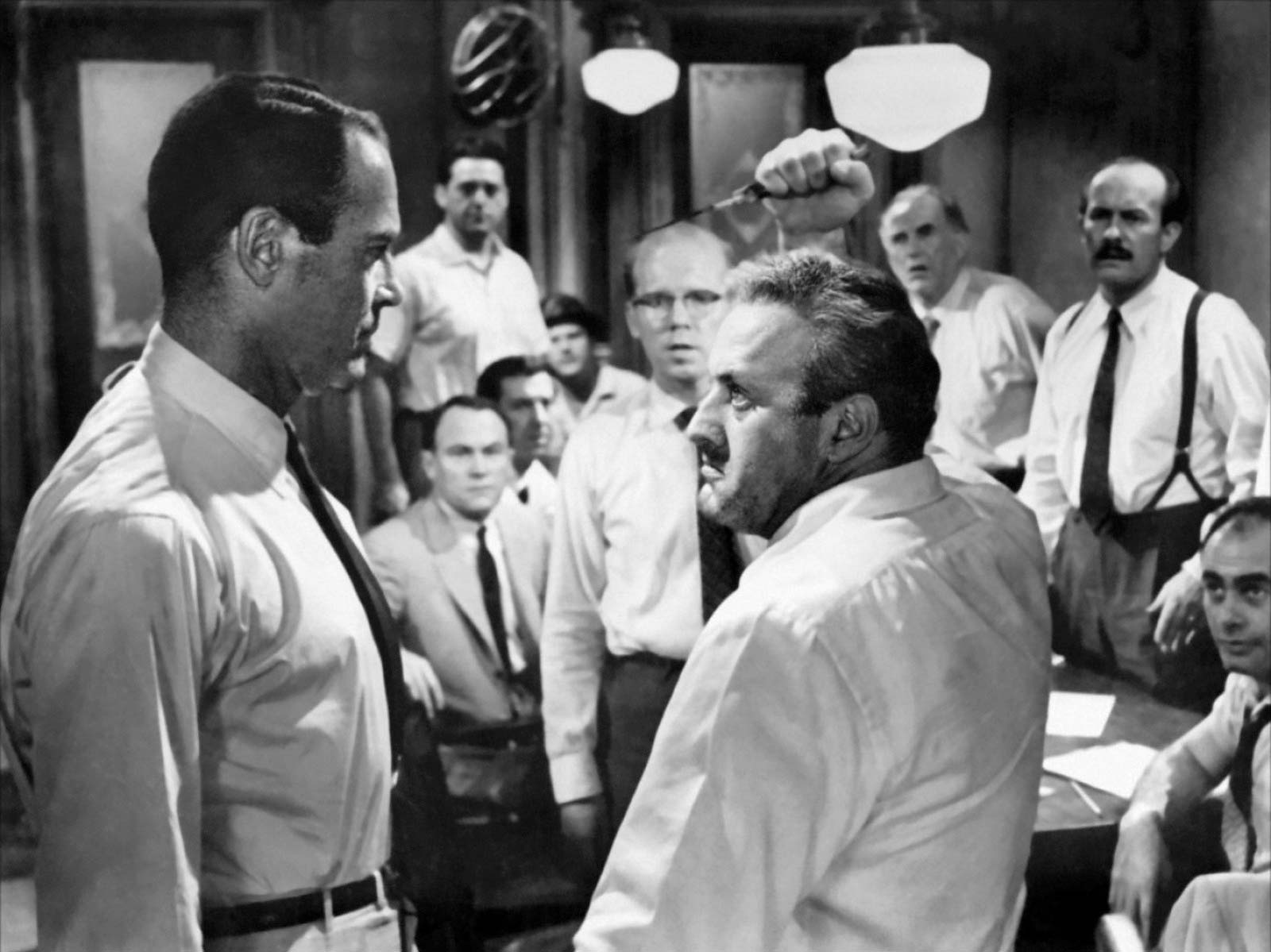
12 Angry Men (1957)
12 Angry Men is one of the most incredible pieces of cinema – ever. It’s sort of unbelievable that something like this exists. 12 Angry Men is about a group of white jurors who deliberate the verdict on a Puerto Rican teen charged with murdering his father. It’s the original pressure cooker film and one of the most intense legal dramas ever made. To say this film is a masterpiece is the equivalent of saying the sky is blue or the sun is hot. 12 Angry Men is a 4K+Blu-Ray combo pack featuring a new 4K digital restoration.
Two Prosecutors (2025)
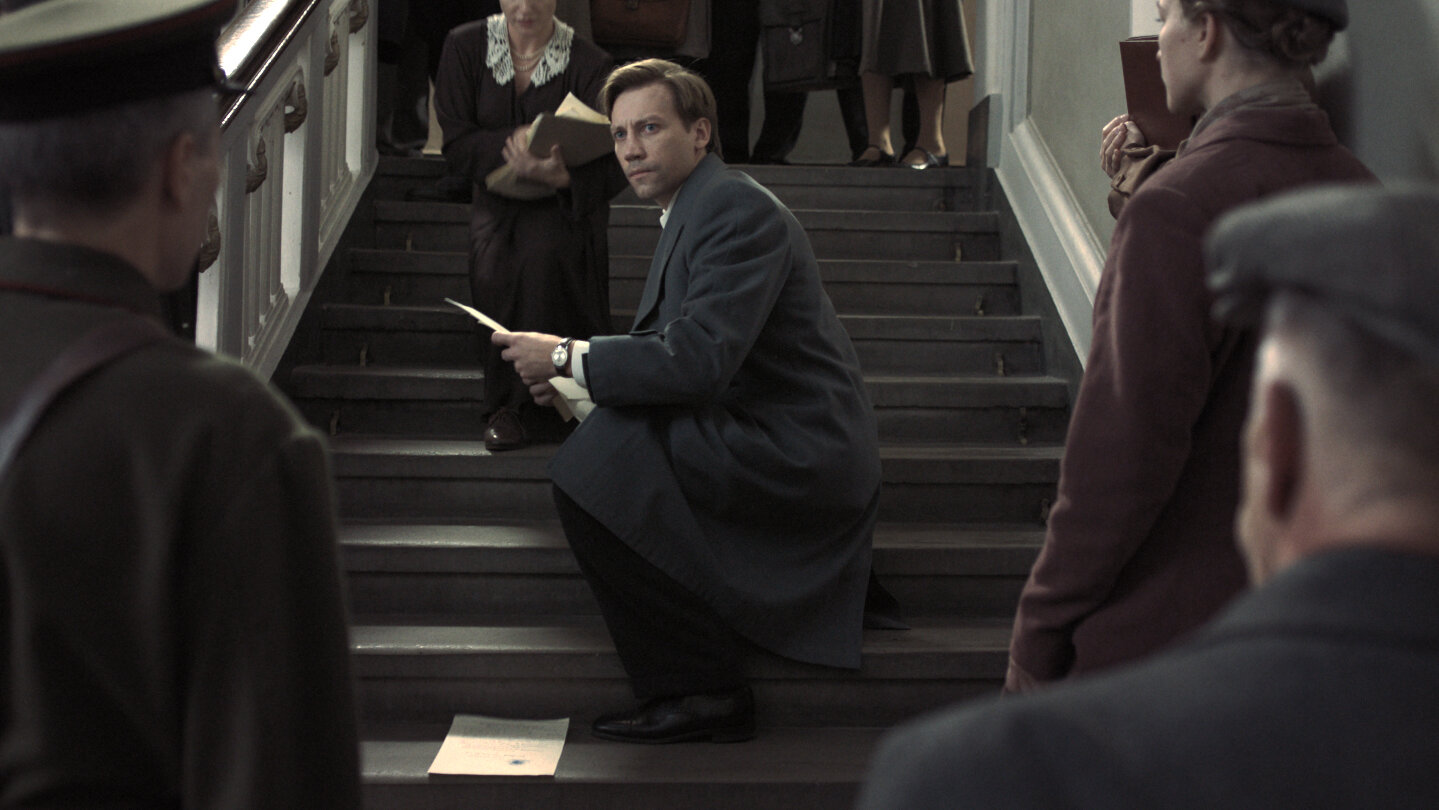
In a new release from Criterion’s ‘Criterion Premieres’ line of films, Two Prosecutors is a freshly released film from Icelandic filmmaker, Sergei Loznitsa. Two Prosecutors is a film about a Soviet prosecutor finding a letter from a prisoner that exposes corruption in the NKVD during Stalin’s Great Purge. This is the first Criterion Premieres release from Loznitsa and the film premiered at the 78th Cannes Film Festival in 2025. Criterion Premieres is a line of films that releases new Janus Film releases with minimal special features and Two Prosecutors will release on Blu-Ray and DVD.
Shoah (1985)
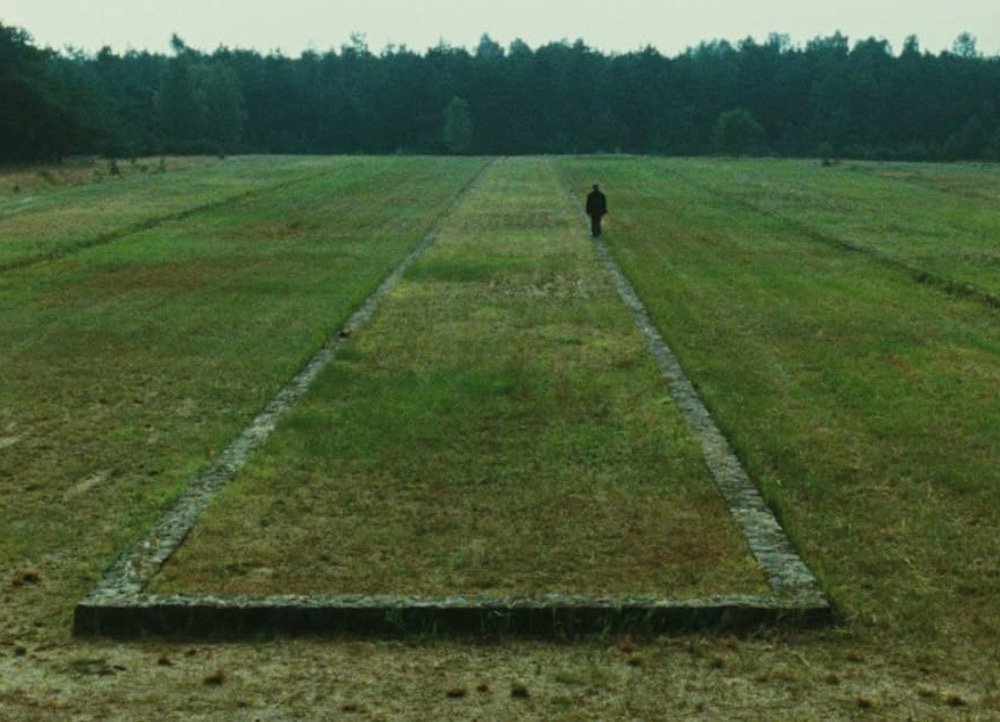
Shoah is a nine hour documentary that took over a decade to produce and follows survivors of the Holocaust as well as former Nazis detailing how the events of the Holocaust still follows them and how prevalent the past is in their lives. While I am unfamiliar with this film, I do know that people that have seen it are changed for having seen this. This is a previous Criterion Blu+Ray release that only recently went out of print, but the difference between this new release and the previous release is that a film recounting the production of Shoah, All I Had Was Nothingness, is now included in this release. This has been on my list for quite some time to finally sit down and watch, and this is the push I need to finally sit down and watch this. Shoah is a Blu-Ray box set featuring a 2K digital restoration.
Nouvelle Vague (2025)
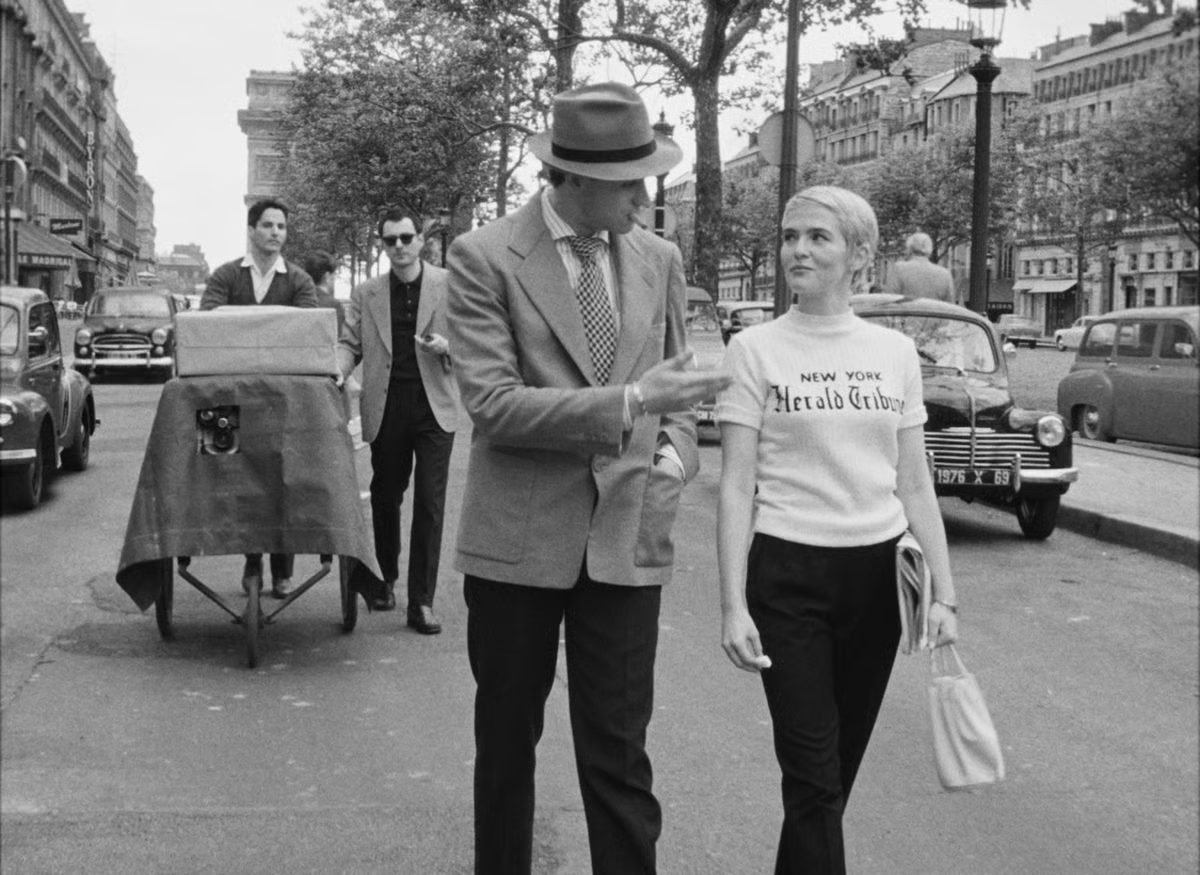
Richard Linklater is no stranger to the Criterion Collection, and Nouvelle Vague follows a muse of the Criterion Collection, Jean-Luc Godard, making a film that embodies what the Criterion Collection strives for, Breathless. Nouvelle Vague is a perfect storm/a Criterion ouroboros of sorts, and seemed like a no brainer to be added. I have a soft spot for Linklater, and his intuitions as a filmmaker speaks to me as a filmgoer – even at times where his films may not hit for me (I’m looking at you, Slacker). To plug, he is a fellow Texan and I will always go to bat for him. Next up, could we get Everybody Wants Some!!? Nouvelle Vague is a 4K+Blu-Ray combo pack featuring a new 4K digital restoration supervised and approved by director Richard Linklater.
The Secret Agent(2025)
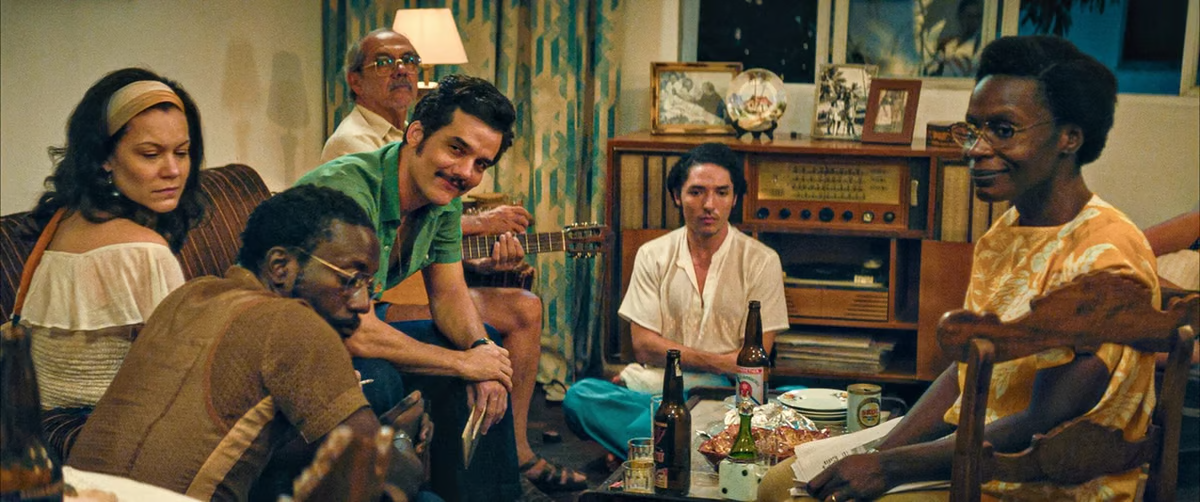
I have not gotten around to seeing The Secret Agent, which is a huge hole for me at the moment. One of my very good friends has been pushing me to check this out and his reasoning is that it’ll hit for me as a fellow Metal Gear Solid fan. Every person I know that has seen The Secret Agent has praised it endlessly and I feel incredibly behind for having not seen it. If you are reading this article, I wouldn’t say it’s a stretch to say that you are aware of this film at the absolute least. I will report back on my findings in a future article when I get around to this (as well as when I purchase this in the October flash sale 😉 ). The Secret Agent is a 4K+Blu-Ray combo pack featuring a new 4K digital restoration supervised and approved by director Kleber Mendonça Filho.
Three Films by Leos Carax
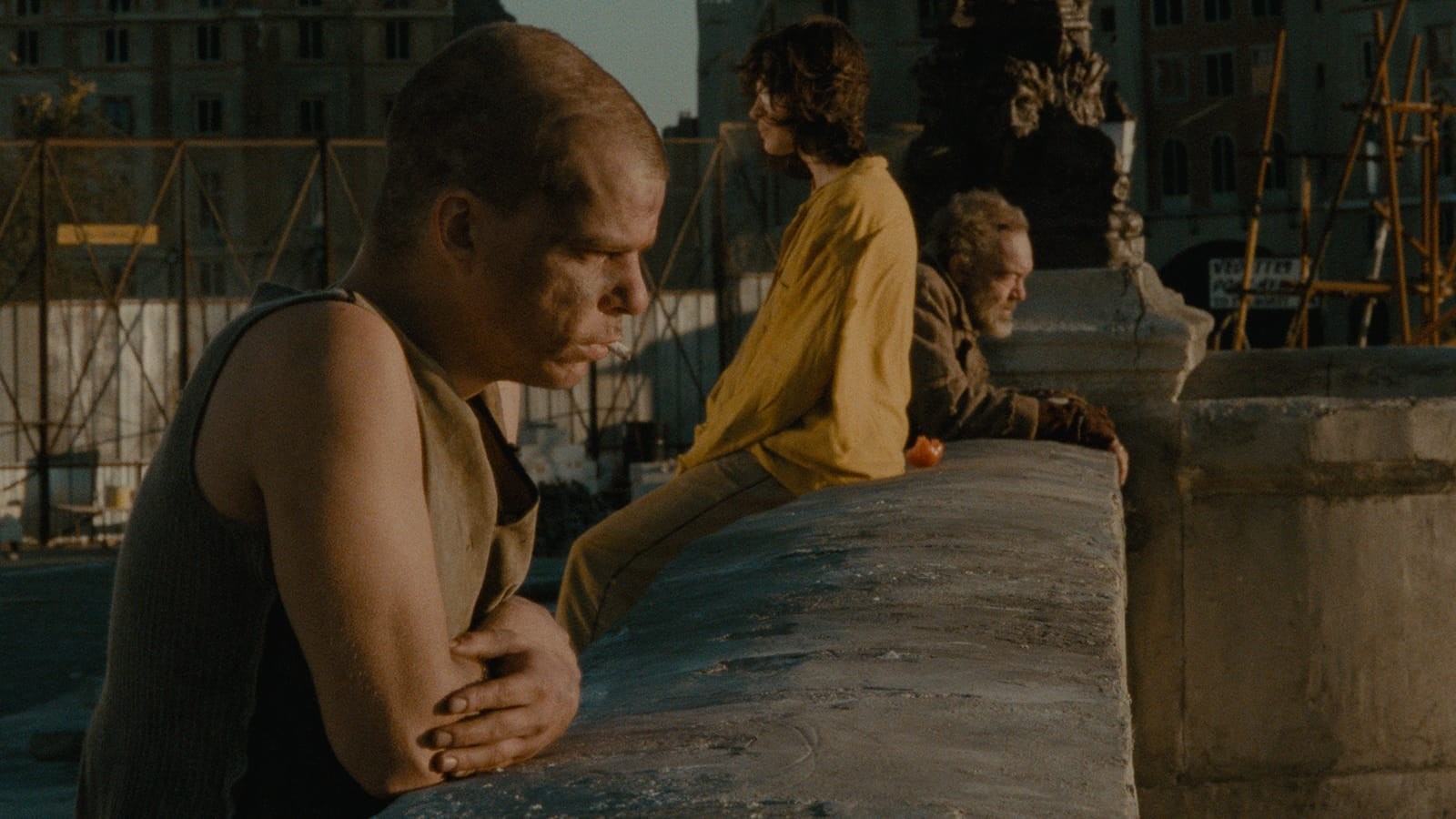
Leos Carax is a filmmaker for me where his style is a cut above most modern filmmakers. While it’s not for some people, it is certainly for me. Holy Motors, Annette – I got down with those! This set was a total surprise, and similarly to the recently released Mike Mills box set, is a very welcomed surprise. This set features the first three films that Carax made, and are all incredible in their own right. Additionally, the packaging on this is some of the most artistically alluring work that Criterion has done in years. If you are uninitiated in the cult of Carax, this wouldn’t be a bad jumping off point. Three Films by Leos Carax is a 4K+Blu-Ray combo box set featuring new 4K digital masters of Boy Meets Girl, Mauvais sang, and The Lovers on the Bridge.
Days and Nights in the Forest(1970)
My only knowledge of the films of Satyajit Ray is that The Simpsons character Apu is named after the Apu trilogy (which is also in the Criterion Collection). Additionally, my only knowledge of Indian cinema is through S.S. Rajamouli with his masterpiece RRR, as well as his appearance in the masterpiece Death Stranding 2: On the Beach. I have been due to explore deeper into Indian cinema and the films of Ray. When I first discovered John Cassavetes, I was overwhelmed with the excellent Criterion box set of six of his films so I dabbled with a film not in that set – Husbands, then nosedived from there. I will be doing a similar tactic by buying this and diving into Ray’s other films. Days and Nights in the Forest is a roadtrip buddy comedy about the deconstruction of masculinity and ego – all elements that I’ve loved in other films (see Two Lane Blacktop). All to say, this is my personal diving point and if this also sounds like your jam then you should give it a whirl too. Days and Nights in the Forest is a 4K+Blu-Ray combo pack featuring a new digital 4K restoration.
Director: Sophia Silver Writer: Sophia Silver, Sianni Rosenstock Stars: Emajean Bullock, Anastasia Victoria Lee, Adam David Thompson
Synopsis: Over/Under is a coming-of-age story that shows the pain of slipping out of sync from your childhood best friends.
I’m such a sucker for coming-of-age stories, especially ones that explore girlhood with all its awkwardness, tenderness, curiosity, and contradictions. There’s something about watching young girls slowly realize that childhood doesn’t last forever that gets me every time, and Over/Under completely understands that feeling. It’s a warm, beautiful, quietly heartbreaking little film that feels like looking back on a summer you didn’t realize would be the last one before everything changed.
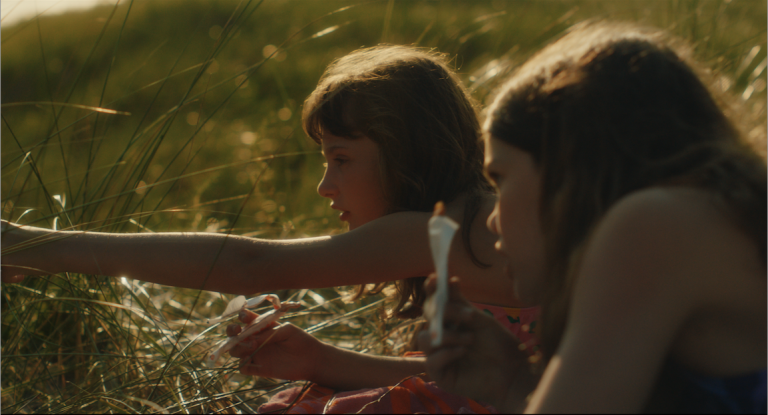
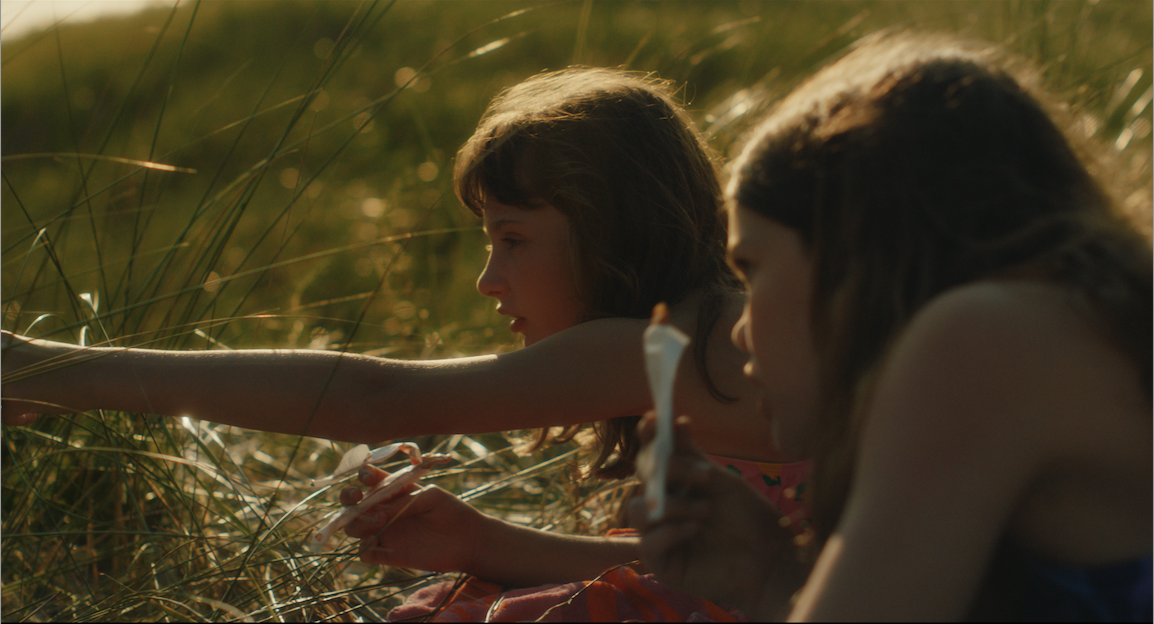
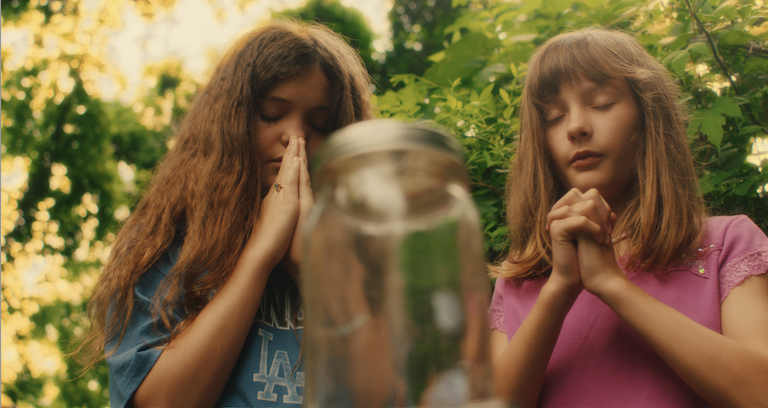
Sophia Silver’s film follows Violet and Stella, two best friends who spend their summers together, running around, playing in the water, making wishes, and finding little ways to make the world feel magical. Their friendship is the center of the film, and I loved how natural it feels. They aren’t constantly explaining how much they mean to each other; they simply exist together. They joke, explore, get annoyed with each other, make up, and share the kind of tiny secrets that feel enormously important when you’re a kid.
There’s such a lovely sense of freedom in these early scenes. The summer setting gives Over/Under this dreamy, sun-soaked atmosphere, but there’s always a little sadness underneath it because we know these girls are growing up. Every day feels endless when you’re young, yet somehow the years disappear before you realize they’re gone.
As Violet and Stella get older, that innocence begins to shift. They become more aware of their bodies, their appearances, popularity, boys, and the expectations that seem to suddenly come with being a girl. What I appreciated most is that Silver doesn’t turn these experiences into big dramatic milestones. Instead, they’re presented as small, sometimes funny and sometimes uncomfortable moments that gradually add up.
A different haircut can suddenly make you feel like a completely different person. Wearing makeup can feel like stepping into an entirely new version of yourself. Suddenly noticing things about your body that you never thought about before can be exciting, confusing, embarrassing, or all three at once. Over/Under understands that girlhood is often made up of these tiny moments that seem insignificant to everyone else but can feel monumental when you’re living through them.
The film also gives both girls lives outside of their friendship, and that adds a lot of emotional depth. Violet struggles with bullying and feeling like she doesn’t fit into the version of femininity everyone around her seems to expect. Stella is dealing with serious problems within her own family, forcing her to confront parts of adulthood far earlier than she should have to. Their friendship becomes a kind of refuge, but even that begins to change as they grow older.
I especially loved that Over/Under never feels like it’s judging these girls for wanting to grow up. There’s no easy message about how childhood is pure and adolescence is somehow corrupting it. Instead, the film recognizes that growing up can be exciting and frightening at the same time. You can desperately want to be older while simultaneously wishing you could stay exactly where you are.
Emajean Bullock and Anastasia Veronica Lee are fantastic, bringing an incredible naturalism to their performances. Their friendship feels lived-in rather than scripted, and so many of their interactions have the messy spontaneity of real childhood friendships. That authenticity is what keeps the film from becoming overly sentimental.
And honestly, I adored the atmosphere. There’s something gorgeous about the way this movie captures summer—the sunlight, the water, the warmth, the feeling that the season could last forever. It has that slightly hazy quality of a childhood memory, where you remember the feeling of a place more vividly than the actual details. It made me nostalgic for a childhood I wasn’t even necessarily experiencing alongside these characters.
Over/Under isn’t trying to reinvent the coming-of-age genre, and it doesn’t need to. Its strength comes from how intimate and observant it is. It understands that growing up rarely happens in one huge, defining moment. It happens quietly, through hundreds of little changes that you barely notice until you look back and realize just how far you’ve come.
Tender, funny, gorgeous, and a little bittersweet, Over/Under is exactly the kind of small indie coming-of-age film I’m always hoping to discover. It captures that strange space between being a kid and becoming someone new, and I found myself completely charmed by it.
Director: Joe Swanberg Writer: Joe Swanberg Stars: Dakota Fanning, Jake Johnson, Cory Michael Smith
Synopsis: A woman’s relationship with her older, divorced boyfriend hits a rough patch just as her ex reappears in her life, leading to complicated emotions and messy entanglements in the Alaskan wilderness.
There’s something inherently frustrating about watching two people who clearly love each other struggle to figure out whether or not they should actually be together. Joe Swanberg’s The Sun Never Sets leans directly into that frustration, turning a seemingly straightforward breakup into a much messier examination of what it means to want a future with someone while still wondering if that future is actually the one you want.
Wendy (Dakota Fanning) has spent two years with Jack (Jake Johnson), a man who seems perfectly comfortable with the life he has built. He has children, a stable routine, and a pretty clear idea of what his future looks like. Wendy, meanwhile, is at an age where the question of what comes next feels increasingly unavoidable. She wants marriage, children, and a sense that her life is moving somewhere. Jack doesn’t necessarily want those things again. Neither of them is necessarily wrong, which is what makes their situation so painful.
When Jack suggests they spend six months apart, his reasoning is almost absurdly sincere. He wants Wendy to figure out whether she really wants him or whether she is simply afraid of letting go of the relationship they’ve built. It’s the kind of decision that sounds noble in theory and absolutely infuriating in practice. Of course Wendy spirals. Of course everything becomes more complicated. And when Chuck (Cory Michael Smith), the ex who once represented a different possibility for her life, comes back into the picture, that six-month experiment becomes even harder to navigate.
What I appreciated most about The Sun Never Sets is that Swanberg doesn’t really treat Chuck as the answer to Wendy’s problems. It would have been easy for the movie to become a conventional love triangle where one guy represents the safe choice and the other represents excitement and possibility. Instead, Chuck becomes another part of Wendy’s uncertainty. Even when someone else enters her life who seems to offer something different, she still has to confront the same question: what does she actually want?
That question is much more interesting than the romantic mechanics surrounding it.
The movie can absolutely test your patience. There are stretches where Wendy and Jack seem to have the same conversation in slightly different forms over and over again. Their constant drifting toward and away from each other eventually had me wanting to shake both of them and tell them to just make a decision. But at the same time, I think that repetition reflects something painfully recognizable about relationships. Sometimes people know a relationship isn’t working and still can’t bring themselves to walk away. Sometimes they break up and immediately realize they don’t actually want to be apart. Sometimes love doesn’t disappear simply because a relationship has become complicated.
Swanberg’s filmmaking fits this material perfectly. There’s a looseness to the movie that makes the characters feel less like perfectly constructed fictional people and more like people you might actually know. Conversations wander, emotions aren’t always neatly resolved, and the performances have a natural rhythm that makes the quieter moments feel particularly intimate. The film isn’t interested in turning every interaction into some grand cinematic declaration. Much of its charm comes from simply watching these people exist together.
Dakota Fanning is the heart of it all. She gives Wendy a warmth that makes it easy to understand why people are drawn to her, but she never makes her perfectly likable. Wendy can be impulsive, uncertain, selfish, affectionate, and frustrating all within the same scene. Fanning understands that contradiction and plays it beautifully. There’s a real sense of someone trying to hold onto the person she has been while figuring out who she wants to become.
Jake Johnson is also terrific, especially because Jack could have easily become an unbearable character. His decision to push Wendy away feels incredibly misguided, but Johnson gives him enough vulnerability that you can understand why he thinks he’s doing the right thing. There’s a sadness underneath his awkwardness. He knows Wendy wants things he may no longer be able to give her, and rather than confront that directly, he tries to remove himself from the equation.
The Alaskan setting adds another layer to the movie. The expansive snowy landscapes are beautiful without overwhelming the intimate nature of the story. Eon Mora’s 35mm cinematography gives everything a warm, slightly nostalgic texture, making the film feel like a memory even while its characters are stuck trying to decide what their future should look like.
Ultimately, The Sun Never Sets isn’t really about choosing between Jack and Chuck. It’s about Wendy learning that another person can’t necessarily give her the certainty she’s looking for. You can love someone and still want something different. You can have a relationship that works in many ways and still wonder whether it is enough. And sometimes the only way to figure that out is to step away from the life you’ve built and see what remains when you’re standing on your own.
I didn’t love every part of the journey, and the movie occasionally circles its ideas for a little too long, but there’s an honesty to its messiness that stayed with me. Swanberg has made a small, intimate film about a very big question: what happens when the person you love isn’t necessarily the person who can give you the life you want?
It’s imperfect, sometimes frustrating, but quietly affecting—and Dakota Fanning gives it a wonderful center.
Director: Ben Gregor Writer:Simon Farnaby Stars: Andrew Garfield, Claire Foy, Nonso Anozie
Synopsis: A modern family relocates to the countryside where the children discover a magical tree with eccentric residents. They’re transported to fantastical lands, rekindling their family bond through adventures.
Art often reflects the anxieties of our time in places we don’t expect. Many of us are concerned by disconnectedness, apathy, and technology stunting intelligence. Often it’s easier to understand that there is a worry when children are involved. It’s easier to see through the eyes and experiences of children that technology has absorbed and overtaken many aspects of life. Technology has fundamentally changed what we think of as childhood and how children interact with the world. Films like The Magic Faraway Tree can remind us of the magic of childhood amidst the noise of the modern world.
While The Magic Faraway Tree can impart wonderful lessons for children and adults, it is skewed heavily toward a younger audience. This is why it’s strange that the film has what feels like missing pieces. It certainly follows most of a formula, but it’s like they took out something and didn’t replace it. This feeling of something missing can make the story feel flat. Beth (Delilah Bennett-Cardy) and Silky (Nicola Coughlan) seem to be moving toward something like mutual respect, but as soon as their relationship begins, it seems to be over. Writer Simon Farnaby is no stranger to children’s literary adaptations having handled the scripts for all the Paddington films and Wonka, but The Magic Faraway Tree doesn’t feel as grand or even as grounded as those films. Most of it could be because the otherworldly antagonist is just not strong enough and the real world antagonist feels as if she doesn’t have a bite.
Having a big bad that propels the protagonists toward good is a staple of any film like this. The supposed antagonist of the fantasy portions of the film is meant to be Dame Snap (Rebecca Ferguson). Yet, her screentime is minimal and her participation in the overall plot is tepid. She’s less of a villain than a speed bump. It’s like she was forgotten about and then added to a later draft without any sort of actual plan to use her. She’s completely unnecessary. On the flip side in the reality portion of the story, Grandma (Jennifer Saunders) is necessary and intimidating, but her threats feel uninspired and toothless. We never see her menacing hand wringing or machinations. She’s just there to bluster, then she’s gone.
Instead of focusing too much on fantasy problems, the film would feel more interesting with more emphasis on the problems of the real world. Seeing these scenes of the family struggling to do something and build something together makes you wish the film had no fantasy elements at all, or that they were less involved and grandiose. There’s a dramatic and exciting story happening on this optimistic long shot of an idea.
The movie truly shines when Andrew Garfield is on screen. As Tim, Garfield takes the hapless, weird dad to new heights of adorkable. Tim’s a man with big dreams and a desperate need to keep his family from falling apart. He’s a man who makes things happen, sort of. Really he’s the idea man to his incredible engineer wife, Polly (Claire Foy), who takes his manic energy and turns it into reality. Garfield is so good at playing characters who understand the real world and its problems, but will do anything and everything to change that real world and make it better for those he loves. He plays Tim with an elfin sparkle that utterly charms us even as we cringe that Tim’s plan is incredibly risky and hard to like.
Though, if the story were just a simple family drama and that wonderful reality of the Magic Faraway Tree didn’t exist, we wouldn’t have a hand crafted feast for our eyes. The production design by Alexandra Walker is truly fantastic. She’s created multiple worlds with unique and intricate details. Her team has built a fabulous fantasy that you will make you wish you could visit. This goes double for costume designer Ann Maskrey who created some awe inspiring looks. Teamed with the tremendous hair and makeup crew, the characters all look so amazing and make each personality stand out so well, even with the mundane clothes of the Thompson family there is individuality and fun.
The Magic Faraway Tree has some very good ideas. It’s an adaptation of a children’s book series from the mid-twentieth century, so it’s obvious that the filmmakers took liberties with modernizing the story and this makes it for the better. The anxieties of now are similar, but starkly different than those in the time of the original novels. In order for it to reach into our hearts and our capacity to change, it needed to be modern. The story doesn’t always sing, but there are bright spots amongst the holes and it makes the journey worth it in the end.
The group of films by Joel and Ethan Coen, the Coen brothers, between 1987’s Raising Arizona and 1996’s Fargo are eclectic period pieces that only these two could come up with. The first is Miller’s Crossing, which masquerades as a straight forward gangster film, but is far more intricate. The third is The Hudsucker Proxy, which is a classic hapless Coen protagonist who finds himself in over his head as he invents a wildly popular toy, “you know… for kids.” The middle feature of these three is Barton Fink.
To describe what Barton Fink is really about is like trying to braid cooked spaghetti noodles. You get a few strands going, but there’s going to be another that slips your grasp and you have to start over. On paper, the film is very simple. A writer, Barton Fink (John Turturro) is simultaneously experiencing writer’s block and imposter syndrome as he attempts to write a screenplay.
Barton, like many screen depictions of a writer, has lofty ambitions. His are about the upheaval of theater to take the stories away from the perspective of wealth and privilege and bring it down to the common man. It’s his constant refrain that his work is meant to be viewed, enjoyed, and judged only by the people who live it every day. Yet, every common man he meets he talks down to as if he is their demi-god, meant to be the only vessel who can bring meaning to their lives. This is in stark contrast to the flighty wealthy people in New York and the motor-mouthed powerful people in L.A. who don’t listen or care what he’s about.
In his most intimate encounter, Barton is taken in by the idea of Charlie Meadows (John Goodman). Charlie, who is known by another name late in the film, is an avatar of the common man Barton purports to be the champion of. He sells insurance and “boy, [he] can tell you some stories.” He becomes Barton’s sounding board, confidant, accomplice, and eventually his inspiration. Barton’s instinct is to overpower Charlie who he sees as a sort of hayseed. Though Charlie, while biding his time, is able to get Barton to give into a little temptation. He gives Barton an offer without Barton realizing it. Charlie is emotionally overpowering him and breaking him down. Charlie is suddenly a friend Barton didn’t know he needed. Yet, it may also be that Charlie is the devil or some other supernatural force.
Is that lofty to equate Charlie with supreme evil? Not necessarily in the context of who we see Charlie become. Late in the film Charlie “ventilates” Barton’s captors and flames erupt from the walls of the Hotel Earle. Charlie screams that he’ll “show you the life of the mind” and venerates the man who is the equivalent of pure evil in human form. With these actions and the ones Charlie admits to in a speech to Barton as the flames grow, we can’t help but contemplate every action, motion and deed of Charlie and question the reality and sanity of Barton.
This is the brilliance of John Goodman’s performance. Goodman is a staple of many recurring actors the Coen brothers employ. He’s always a stand out, but more than anything, Barton Fink is a showcase of his immense talent, both physical and emotional. From his first scene, you can see the eventual truth of Charlie on Goodman’s face. There’s a split second as Charlie makes his decision on how he wants to play Barton. The look Charlie gives to Barton when he’s trying to get him to learn the basics of wrestling is all at once manic, enticing, and a threat. Goodman imbues his performance with little moments that show Charlie is much, much more than what he appears.
Barton Fink is one of the Coen brothers most enigmatic films. It has their signature wit, weirdness, and unpredictability wrapped into every frame of it. The film rewards the careful viewer and its many themes and metaphors are up for interpretation. Barton Fink isn’t a film for the casual fan, but for those that want to experience a nagging feeling like an unseen mosquito buzzing around a room that you aren’t even sure is there. Then, just as you forget about the mosquito, you see it and it changes your entire perception of reality.