


Director: Gillo Pontecorvo
Writers: Franco Solinas, Gillo Pontecorvo
Stars: Brahim Hadjadj, Jean Martin, Yacef Saadi
Synopsis: In the 1950s, fear and violence escalate as the people of Algiers fight for independence from the French government.
Following untold and unseen physical and psychological torture, a man attempts to throw himself out a window rather than give up the headquarters of a militant leader. He is quickly restrained and led off to double-cross his compatriots. And so begins Gillo Pontecorvo’s The Battle of Algiers, a stirringly powerful reenactment of the clash between guerrilla fighters and French paratroopers between 1954-57.
Instead of resorting to a classic good vs. bad story, the film lives in the morally gray, necessary for warfare. War and independence are not easy or black-and-white subjects. The National Liberation Front (FLN) might have freedoms on the mind, but their tactics regularly involve murder, extortion, wanton violence, and terrorism. The opposing French Army regularly use torture, intimidation, blackmail, and murder to neutralize the efforts of the FLN.
It’s never just surface-level. The film shows the need for a foundational change to occur in order to institute real change. The FLN stamps out drugs, alcohol, prostitution, and institutional corruption with exacting severity. They can’t just defeat the French forces, they have to change the country’s entire mindset in order to adopt their new way of life. That adoption proves brutal, leading a group of street children to beat a wino into submission on the streets, while corrupt businessmen are executed.
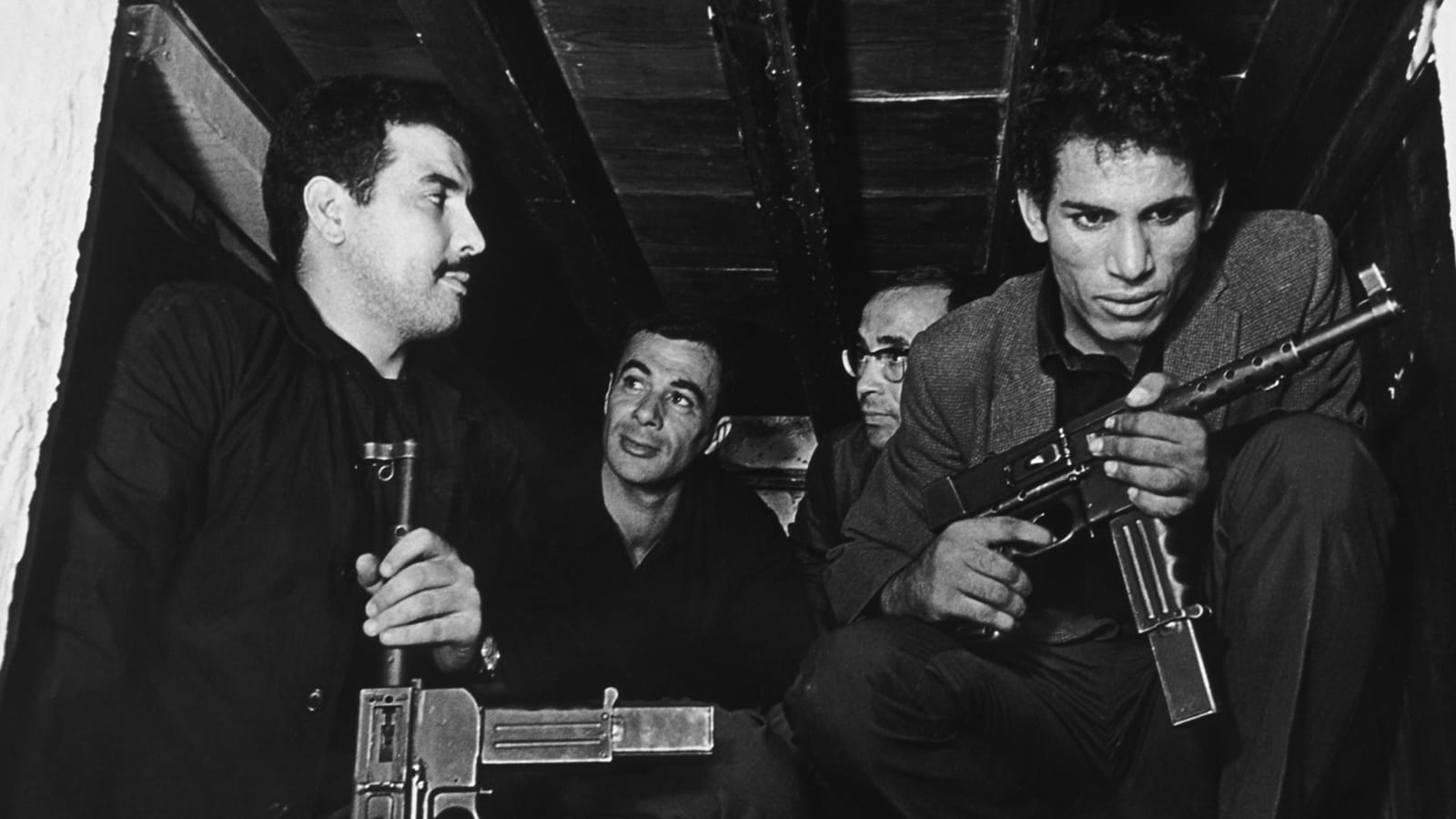
The French police detonate a large bomb which kills multiple civilians. In retaliation, the FLN directs three women to carry out a three-part bombing. The immediate reaction brings worldwide attention to Algiers, but also a cavalcade of paratroopers. In the film’s most evocative image, the French line the streets to welcome Colonel Philippe Mathieu (an exceptional Jean Martin, the film’s only professional actor) to quell the resistance.
Pontecorvo provocatively forces the viewer to take a side. The intricacies and complexity of each organization’s tactics, leaders, and goals are well-stated, but no one is the obvious heroes. After all, both sides are shown to have bombed civilians and killed at will. But, what is the point of it all? Algerians obviously want self-governance, while the French want to keep Algerians in line and continue their colonialist ways.
The competing powers know the realities of the situations. Colonel Mathieu is as much of a politician as a military strategist, bending the media to his whims. He uses his sterling reputation as a cloak of goodness, and bemoans calls of brutality and torture as a means to a necessary end. FLM leader Ben M’Hidi is more pragmatic. The film’s famous quote from M’Hidi: “It’s hard to start a revolution. Even harder to continue it. And hardest of all to win it. But, it’s only afterwards, when we have won, that the true difficulties begin.”
There are no easy answers, just as there are no easy questions. Mathieu states plainly to the media: “Should we remain in Algeria? If you answer “yes,” then you must accept all the necessary consequences.” The filmmakers don’t clearly side with one or the other, but you have an idea where their loyalties lie. That being said, this is not a film of clean, feel-good decisions. If you stand by the French, you are on the side of colonialism and torture. If you side with the Algerians, you stand with terrorism and guerilla brutality. Films usually want you to feel good about your choices and have clear motivations. This film refuses to be that obvious.
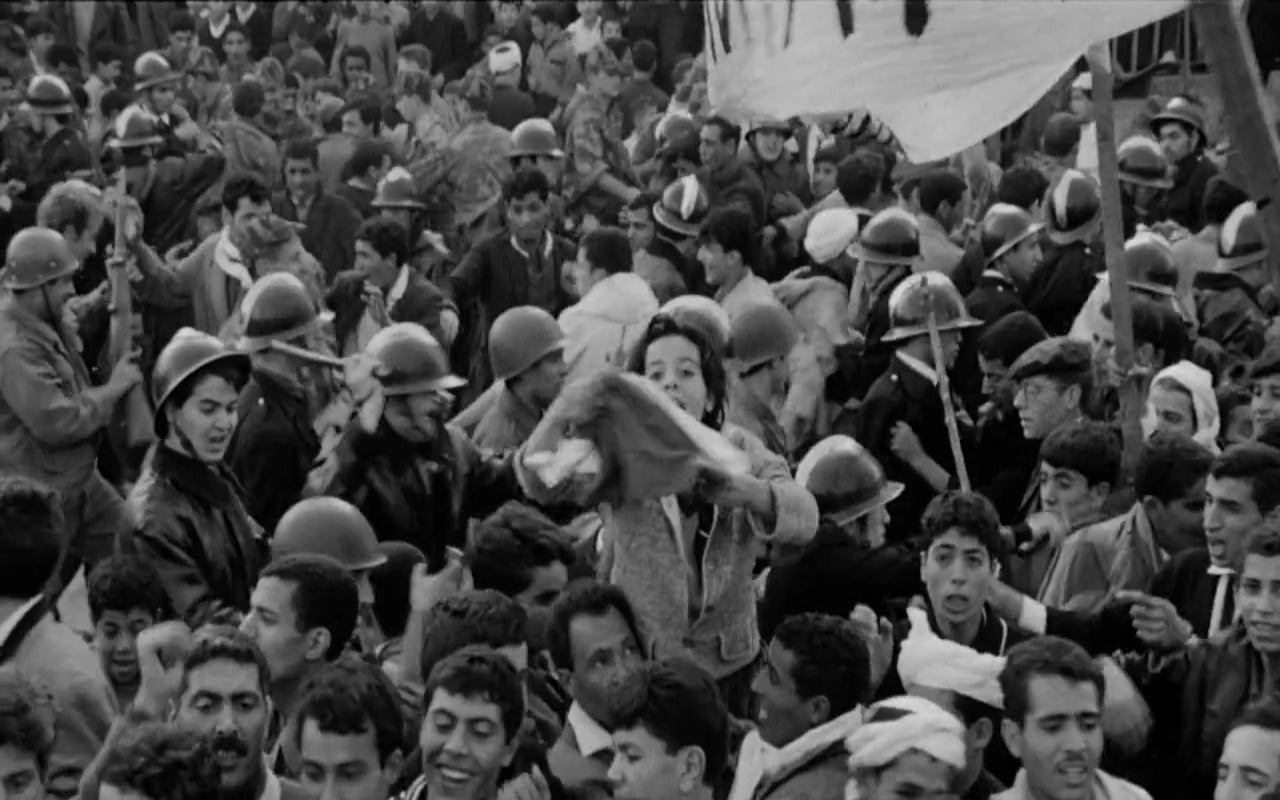
The real star is the atmosphere and the city of Algiers. Each corridor is a living, breathing entity. Each inhabitant filled with character and desire. You care about the ideals of men who reign wanton violence down the streets. You feel the struggle and you want to see a resolution. Pontecorvo is not about to walk you up to the triumphant parade signaling victory. Even in triumph, most of the characters are violently killed. Algiers is a vastly different place in the three-year timeframe of the film, but the work is by no means done, no matter what the end epilogue has to say. Scored by Pontecorvo and the legendary Ennio Morricone, the propulsive score compliments the tonal swings of the film with aplomb.
Filmed much more like a documentary than a narrative feature, the group of non-professional actors continually impress. In particular, Brahim Jadjadj as the anger-filled revolutionary Ali La Pointe impresses with righteous justice and an exacting nature. Saadi Yacef, a real-life former FLN member, is the cooler head of the revolution as El-Hadi Jaffar. Martin’s much more contained, measured performance counters the wildness of the rest of the cast well.
The Battle of Algiers isn’t afraid to make a mess of war. Nothing comes easily, and no easy answers are given. War isn’t that black-or-white, and this film refuses to conform to convention.