



Director: Kantemir Balagov
Writers: Kantemir Balagov, Marina Stepnova
Stars: Barry Keoghan, Talha Akdogan, Riley Keough
Synopsis: A Circassian-American teen in New Jersey balances working at his family’s struggling ethnic diner with his wrestling aspirations, until his father’s risky decision forces him to face harsh realities and grow up quickly.
You can’t shape men who perform strength to conceal fragility. They use strength as a form of suppression; it is something they learn from their environments, which reward them for callousness and punish uncertainty. Through assimilation and vicious cycles of rigor in their lineage, they begin to inhabit these roles, inheriting a masculine persona so brittle that any challenge towards it, their response is to attack–showing the fractures of trauma and time. In Kantemir Balagov’s long-awaited third film, Butterfly Jam (screening in the Quinzaine des cinéastes at the 2026 Cannes Film Festival), the immense pressure placed on men to discard emotional vulnerability and see it as weakness is explored via a father-son dynamic in a Circassian-American community. Their cultural dislocation intersects with the pursuit of manhood, creating a toxicity that may disrupt their daily lives if left unaddressed.
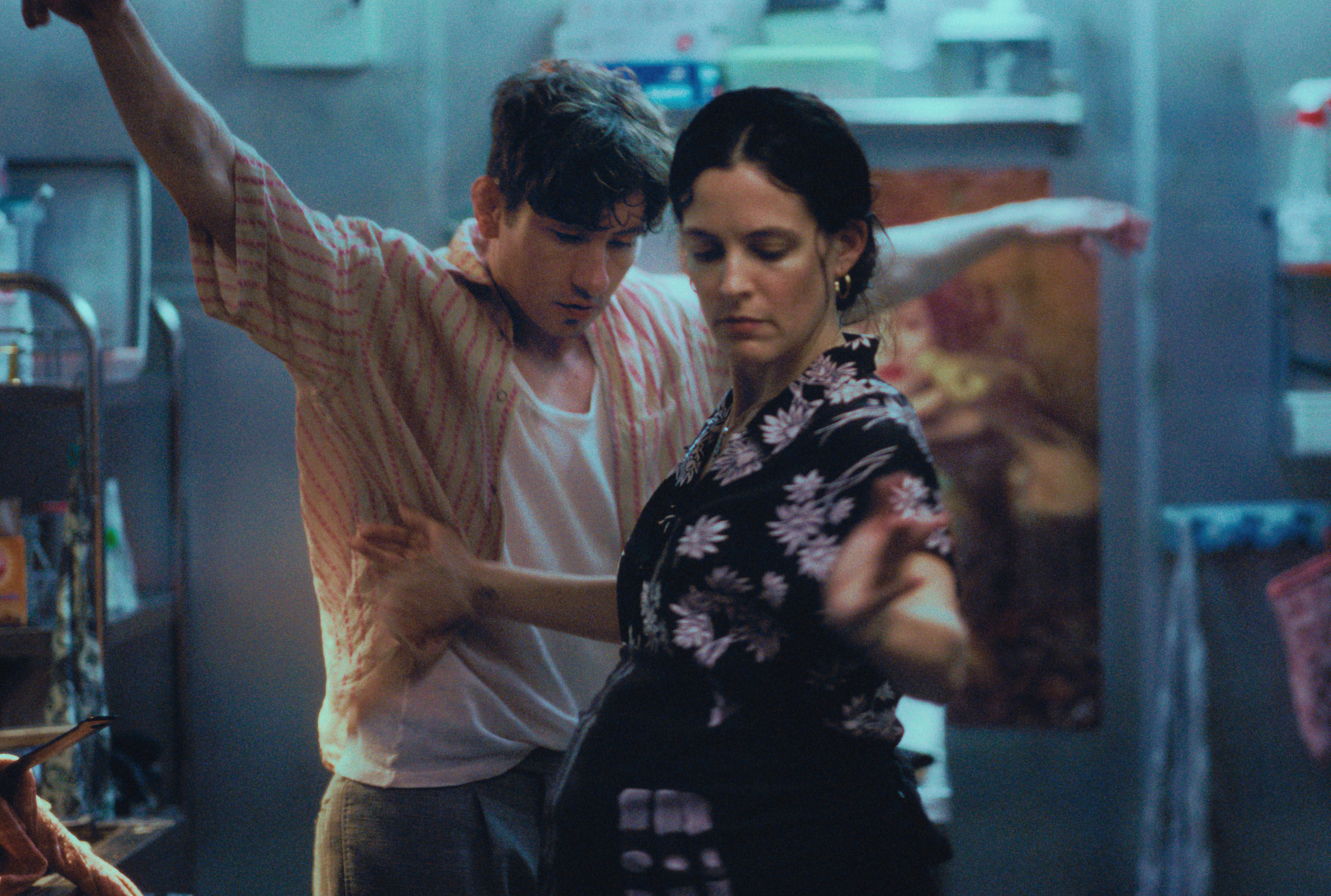
The topic of fragile masculinity has long been present in cinema history, dating back to The Treasure of Sierra Madre (1948) and Rebel Without a Cause (1955). Filmmakers have always been fascinated with deconstructing the role of an alpha male and peeling its layers until a new person blooms from within. And Balagov wants to do the same with those from his home country, searching within a little-known community in southern Russia. This helps steer the story into a specific territory with a new perspective that has never been tackled before. Unfortunately, his anticipated return lacks the Russian filmmaker’s penchant for naturalism and delivers an offbeat, muddled story that loses direction and emotion as each dramatic thread unravels.
Butterfly Jam is about a young family chasing the American dream, the promise society embodies in people’s minds about prosperity, which is a facade due to systemic barriers. And these barriers are demonstrated by Balagov through the struggles of this Circassian family who moved to New Jersey. The patriarch is Azik (Barry Keoghan), who runs a failing Circassian diner alongside his pregnant sister, Valya (Riley Keough), and schemes with his close friend, Merat (Harry Melling), most of which ultimately do not benefit them. Like most struggling to make ends meet, the two go ahead and try to create “projects” for a chance to receive some cash at the end. Yet they remain stuck in the same positions, with memories of home but little success in their new abode.
Azik has a teenage son, Temir (Talha Akdogan, the film’s standout), who hopes his professional wrestling training will pay off with a fruitful career. He is the gateway to end the family’s troubles, with Azik pushing Temir to go beyond his limit. A week of good news hits the household upon Temir winning his first match and a businessman being enamored by one of the diner’s dishes, although, as we might assume, that string of good luck won’t be for long. Through griminess and eccentricity, Balagov explores the constricting forces and codes of male pride, ones that demand dominance while punishing vulnerability. The male characters in Butterfly Jam are trapped by the forced constraints of inherited masculinity, in which tenderness signals weakness.
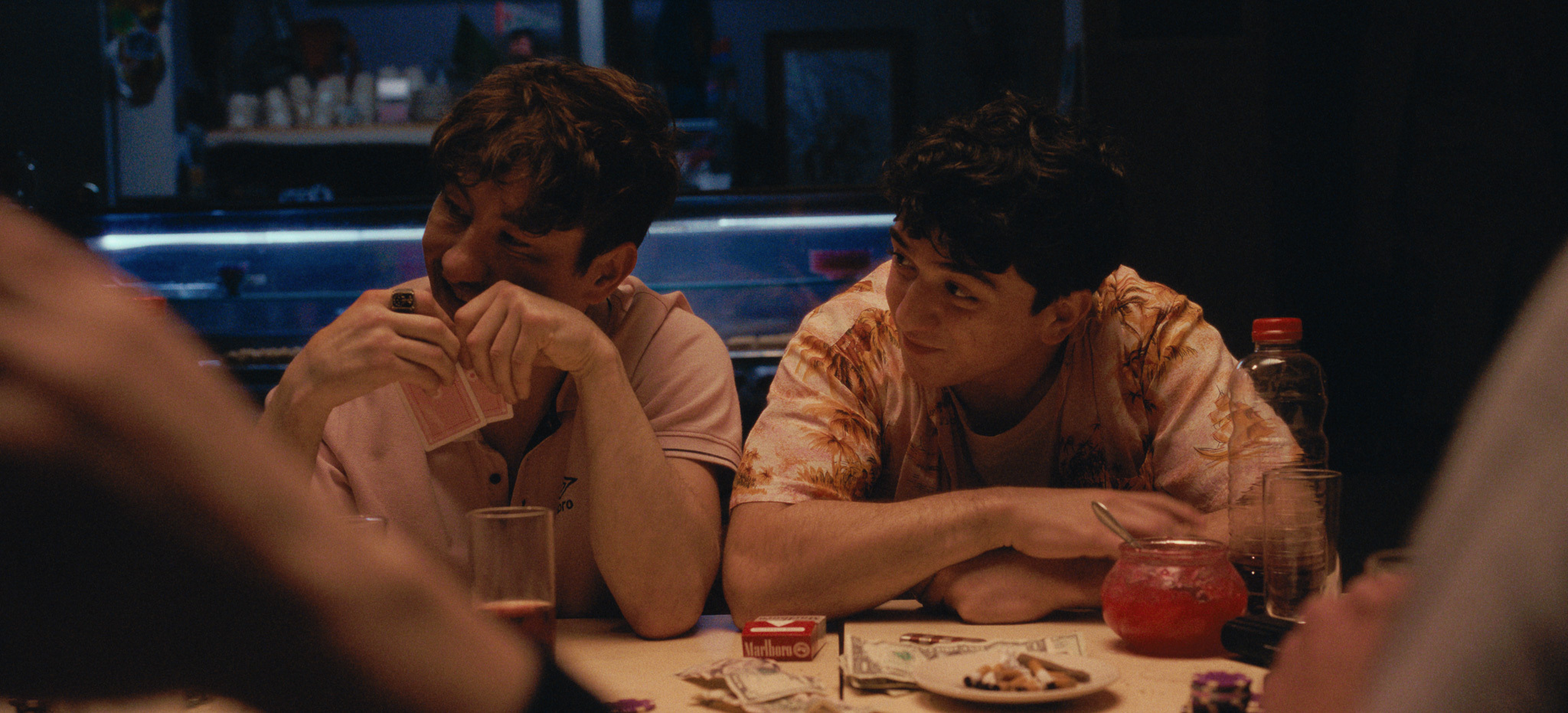
Balagov looks at these characters with some sort of recollection, reminding him of his own experiences in his native country. He treats them with an intimacy that feels both personal and observational, as if he were revisiting fragments of a past that still lingers. That exploration is reminiscent of Andrea Arnold’s approach, with some plot developments and character traits in Butterfly Jam feeling quite similar to those of her latest work, Bird. Not only does Keoghan play a young father with a teenage kid in both films, but there are also the clear animal metaphors. Arnold uses these metaphors extensively in her features to showcase her characters’ imprisonment, whether societal or psychological.
These analogies blend seamlessly into the setting with a sense of brevity, creating a subtle yet evocative portrait of confinement that mirrors the characters’ emotional paralysis. Balagov uses such to express Temir’s desire to escape the mentality his father and his best friend impose upon him about masculinity, one that he doesn’t want to adopt or confront. However, much like the aforementioned Bird, these metaphors come off as rather too in your face and without the subtlety that each director, Arnold and Balagov, could have done and have done previously. For Balagov, these are new terrain; his films don’t tend to use fantastical elements or veer from reality. His work previously was more restrained and grounded.
I am fascinated by the idea of him going out of his comfort zone for Butterfly Jam to find new ways to dissect his experiences. But the problem in this film goes beyond those metaphors not clicking properly. The film’s primordial issue lies in the characters’ dilemmas, where their unevenness and dubiousness severely hinder their arcs, to the point of breaking the story almost entirely. Their development catches your interest, with the thematic backbone of inherited trauma of forced toxic masculinity being present and well-elaborated. When the time comes to wrap up their arcs to make way for the climax, Balagov rushes to the finish line, instead of tying it with a gentle bow.
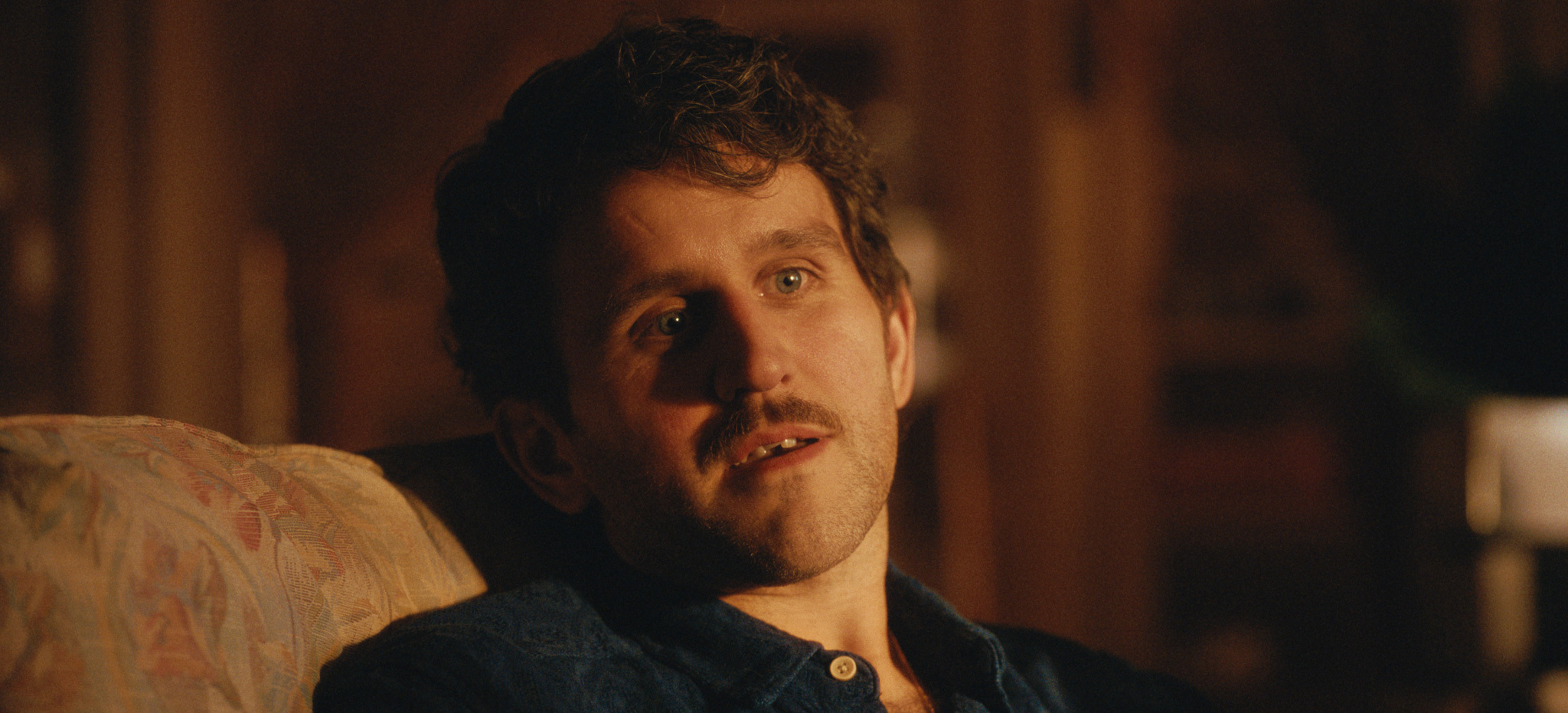
When violence comes into play later on, rather than being an emotional moment, it feels unjustified, even though the film alludes to tragedy at the beginning. The characters haven’t been explored thoroughly enough for that scene to have an impact. Chaos emerges from the script into the frame, and no one can seem to grab hold of the film, not even the talented cast. It seems odd that it ended up like this. Balagov’s filmography tends to be calm and slow-paced, with a careful, observational look at its characters, as seen in his previous two features, Beanpole and Closeness. Here, the sensitivity he is known for feels interrupted by a script that mistakes escalation for emotional depth. This is why his latest is a rather unfortunate disappointment.