



Director: Lisandro Alonso
Writer: Lisandro Alonso
Stars: Catalina Saavedra, Misael Saavedra, Adrián Fondari
Synopsis: Misael lives as an independent logger in the woods, enjoying his solitary freedom. When he must care for his older sister, his peaceful existence is upended and the foundations of his carefully constructed life begin to fall apart.
In 2001, Argentine filmmaker Lisandro Alonso made a still underseen yet vastly influential–in the docu-film hybrid indie-cinema landscape–film titled La Libertad (Freedom). In said film, we follow Misael Saavedra, a woodcutter in the Argentine pampas, as he goes through his daily routine–refining the wood he cuts down, talking with traders, and prepping meals with the wildlife he hunts. It takes a minimalist approach, placing the camera on a non-actor and letting us see the world through his eyes. The documentary-esque lens Alonso adopts offers the viewer a closer, more personal view of Misael and those around him. Through Misael’s chronicles, Alonso explores what it means to be free, asking the audience whether his isolated lifestyle, free of societal pressures yet confined to a demanding environment, is truly a state of freedom or merely a form of subsistence.
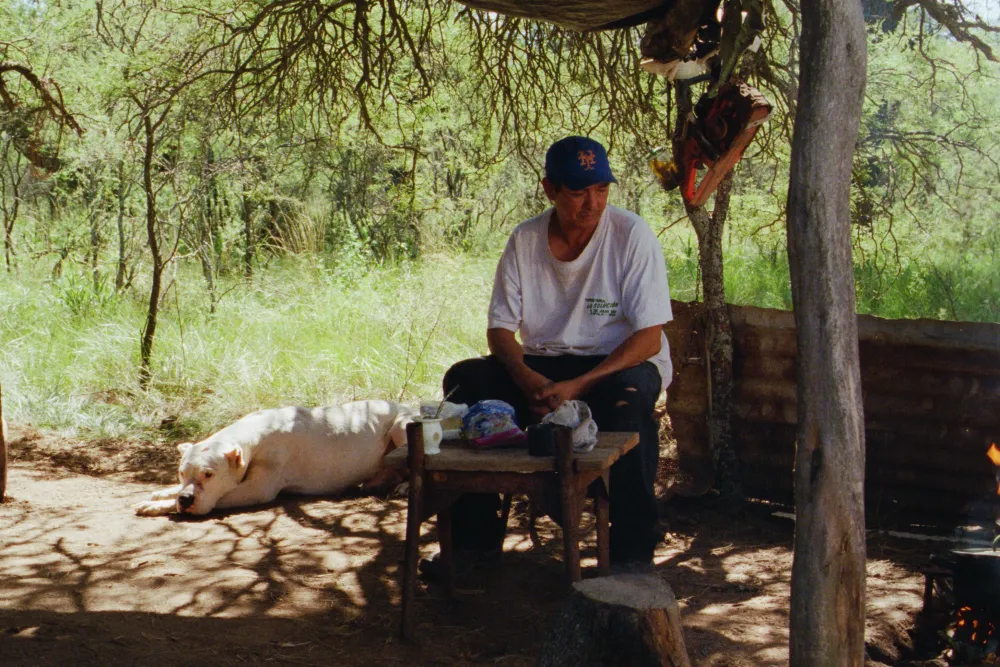
The Argentine’s introspection, full of unbroken takes that immerse the viewer and limited dialogue that focuses on the subject’s expressions and mannerisms, offers a glimpse into a lifestyle few people adopt. It showcases it in all its humanity, with respect and intrigue. Twenty-five years later, Alonso has decided to revisit Misael and the material that made him a household name in independent cinema with La Libertad Doble (Doble Freedom, screening in the Quinzaine des cinéastes at the 2026 Cannes Film Festival). The first question that popped into my mind before watching this film was: What is Lisandro Alonso looking for in this material on his decades-later revisit? I was curious about the root cause of his going on an already-traveled journey once more.
Many filmmakers have made projects deemed spiritual sequels to films that made their mark or served as stepping stones to a new era or style. And these projects tend to tackle themes and conceptualizations from before but in a modern frame, with new tangibilities–learn through experience–and reflections of a very distant past. In Libertad Doble, the Argentine looks back on his work with a mixture of melancholy and clarity. A familiar obsession is seen through older eyes. The anger and urgency that once defined his earlier films remain present, but are now filtered through memory and the exhaustion of time. Alonso interrogates the spirit of his previous work, in which his ideals and convictions are called into question within an old frame.
We are back on the Argentine pampas, with Misael still, decades later, living a cyclical, lonely life in his tin shack. He is content with this life in that pastoral landscape, having grown accustomed to the trials and tribulations that accompany it. Whether he’s working on some wood or cooking a recently-hunted armadillo, we see Misael never feeling enclaved to his way of life. Alonso makes sure that his portrait is not tainted by engraving it to poverty porn or something of the sort. The trajectory of Libertad Doble parallels that of its 2001 counterpart until a family emergency arises. The local physician’s office is offloading all of its patients because of budget cuts, which leaves his mentally ill sister, Micaela (Catalina Saavedra), without someone to take care of her except Misael.
Now, Misael must assume guardianship, causing shifts in his idyllic home. This is where Libertad Doble separates itself from Alonso’s prior work, by having Misael’s idyll challenged by family and an extra mouth to feed. He’s finally with some company, but he’s never been attached to anyone during his time on these grounds. While all of this may sound quite tedious and unexciting, the film is the opposite: transfixing and powerful, driven by Alonso’s observational imagery, which makes each scene feel poetic. Alonso recounts a new tale of Misael; he reflects on the passage of time and whether the meaning of freedom has changed over these twenty-five years. However, with the addition of Micaela into the mix, there’s a new perspective of freedom to explore.
Are their respective visions of a life rid of constraints compatible, or will their freedom be halved to contain one another? It makes the title a slight contradiction; there’s no double amount of freedom, but a dispersed kind of freedom induced by a continuing economic and social burden that is not only striking Argentina currently, but the entire world. How Misael will cope with this new change is a question that haunts the film and his next twenty-five years. What will we find if we get to see him again in two decades? If what Alonso projects is a precedent relative to the two features of Libertad, then it is a worrying prospect. The landscapes have changed; Misael succumbs to the crumbling political tides of modern Argentina.
What once resembled freedom for him now carries the weight of survival and resignation. Times may have grown wrongly in these past few years, with an unprecedented decline in the midst, but Alonso also offers guidance towards hope. Even amid exhaustion and uncertainty, La Libertad Doble recognizes the persistence of human connection and the possibility of adapting without surrendering oneself. The freedom Misael and Alonso seek may no longer exist, but the film suggests that fragments survive through companionship and memory.