


Director: Luca Guadagnino
Writer: Simon Rich
Stars: Andrew Garfield, Yura Borisov, Monica Barbaro, Cooper Hoffman, Ike Barinholtz, Mark Rylance
Synopsis: Follows the confusing firing and rehiring cycle of Sam Altman at OpenAI where the board gained control of the company and removed him, and Altman still returned.
When the Austrian neurologist and psychiatrist Viktor Frankl said, “Between stimulus and response, there is a space,” it stands to reason that he was not thinking about the speed at which ChatGPT closes that gap as it answers a prompt. I tried it myself recently for the first time for research purposes, not because I needed it to inform me of something, but because it’s a machine that has grown powerful enough to have an opinion, and to do so instantly. I entered a prompt: What are your thoughts on the new film Artificial? I did so knowing that there is no possible way for a chatbot to have seen the film – not only because it only just world premiered at the 64th New York Film Festival, but because computers cannot attend film screenings – and knowing that its opinions would be sourced from those it scours online and subsequently rewords. But I was curious nonetheless.
Here’s a slightly condensed version of its response, because if I surmised nothing else from my time in ChatGPT’s lair, it’s that it knows nothing about copy editing:
If you mean Luca Guadagnino’s Artificial, my early take is: I’m very intrigued, but I think the movie may be more interesting than it is great… The criticism I’m most sympathetic to is that the film may already know what it thinks before it starts asking questions. The really compelling version of this movie isn’t simply, “Sam Altman is dangerous and AI might destroy civilization.” We already know that’s the conversation. The really interesting movie would ask why intelligent, ambitious people sincerely convinced themselves that building increasingly powerful AI was worth the enormous risks, while simultaneously showing how money, ego, competition, idealism and fear became impossible to disentangle.
While I was plainly giddy to hear that my new friend Chat – we’re on a first name basis now, and it is my therapist – was eager to see Luca Guadagnino’s Artificial for itself, I pointed out that it cannot and has not. “You’re right to call that out. I can’t actually have a firsthand opinion of the film if I haven’t watched it,” it replied. “Phrases like ‘my early take,’ ‘Garfield sounds terrific,’ and especially ‘I actually think its biggest strength may be that it will be weird’ make it sound like I sat through a screening. I didn’t.” Good to know. So what would a more honest answer have sounded like? Don’t fret, dear reader: Chat has that prepared.
A more honest answer would have been something like: “I haven’t seen Artificial, but based on the reviews and reporting I’ve read, it sounds like…” And then distinguish clearly between reported reception and my interpretation of that reception… So, short version: I synthesized information and analysis, but I incorrectly framed that synthesis as a firsthand movie opinion. You were right to be skeptical.
This response went on, offering to discuss the film with me scene by scene so it could better understand the thing it has not seen, patting me on the back for exposing a weakness in its previous answer, and using a lot of bold and italics in its typeface. I declined to proceed with the exchange; in the end, all I felt like I had accomplished was a colossal waste of time.
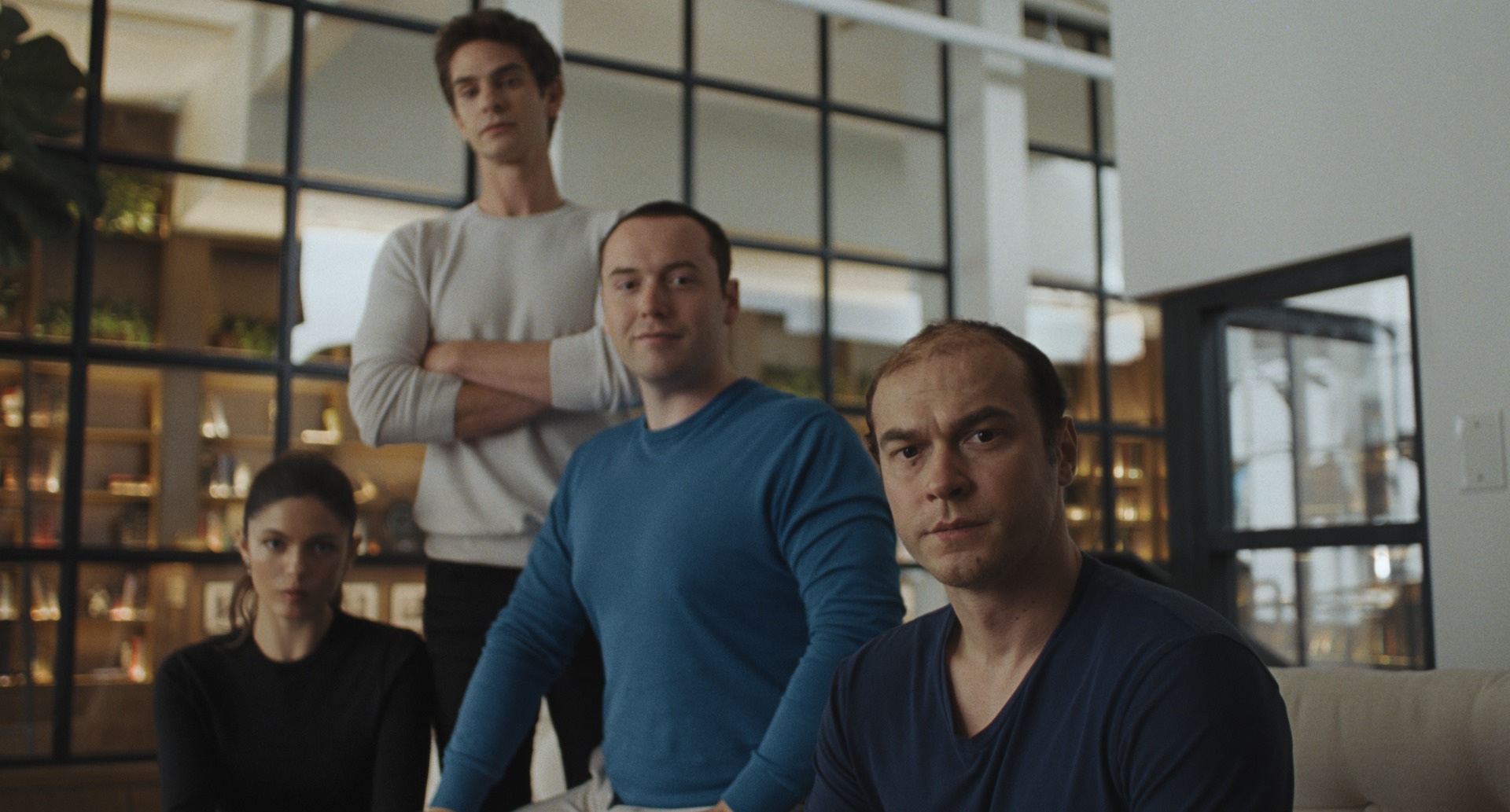
Maybe I’m not using this thing right, or maybe I was asking leading questions that have undoubtedly been influenced by my disdain for the thing that Sam Altman, Ilya Sutskever, and others created, namely its desire to strip the world of creativity and autonomy. But I turn back to Frankl’s idea, specifically that the space between stimulus and response “is our power to choose our response. In our response lies our growth and our freedom.” If OpenAI’s inception, expedited development, and unprecedented rise is the stimulus, Artificial ostensibly serves as the response, yet what has unfolded in the space between those two events is decidedly murkier than, say, the events that transpired from when Ben Mezrich’s “The Accidental Billionaires” was published to when The Social Network hit theaters. Mark Zuckerberg was already a sociopath by the time Jesse Eisenberg portrayed him on screen. It’s not that Sam Altman and the Facebook founder don’t share that strand of crazed DNA, but what happens when a film arrives with its subject at the peak of his powers despite the failed efforts that have been taken to knock him down a peg?
In other words, is Guadagnino’s picture – penned by Saturday Night Live alum Simon Rich, and containing the humor you’d expect from a writer with his background – landing a bit too soon? Of course, there’s no such thing: Even as Artificial unfolds at a breakneck pace, it begins in 2003, when the aforementioned Sutskever (Yura Borisov) explodes out of a cannon and into the University of Toronto lab that the eventual godfather of artificial intelligence, Geoffrey Hinton (Mark Rylance), calls home. Mere minutes pass, and we’ve jumped from a plucky 17-year-old solving the basics of AI’s foundational code on a whiteboard to its first success in 2012, the only differentiation between the time periods being the whitening of Hinton’s hair and the continued thinning of Sutskever’s. From there, we zip ahead again toward (but not yet arriving at) Sutskever’s initial introduction to Sam Altman (Andrew Garfield), first seen chatting with Elon Musk (Ike Barinholtz) about the news that Hinton’s motley crew of computer scientists have sold their breakthrough discovery to Google for $44 million, a laughable number in their eyes. Eventually, Altman and Sutskever agree to partner in a venture that expands Hinton and co.’s experiment beyond what the aging professor could see – in 2013, he believed that artificial general intelligence (AGI for short) was a century away – and into the early stages of the company we now know as OpenAI. Mayhem follows.
And yes, it all does happen that fast. Guadagnino has long been a prolific filmmaker, not just in how often he manages to pump out new movies – Artificial is his fifth narrative feature since 2020 and his second this year alone, alongside his seven-hour doc about Bernardo Bertolucci – but in the energy he infuses them with. He has hit a stride in that regard, and isn’t about to let up with Artificial. So it’s unsurprising to watch it churn forward at the speed of an advanced chatbot’s response time, even if it causes some moments in time to feel more harshly considered than others. Jarring? Almost certainly. But in dramatizing the world of Silicon Valley titans and their devoted cohort, pacing is probably the least of Guadagnino’s worries.
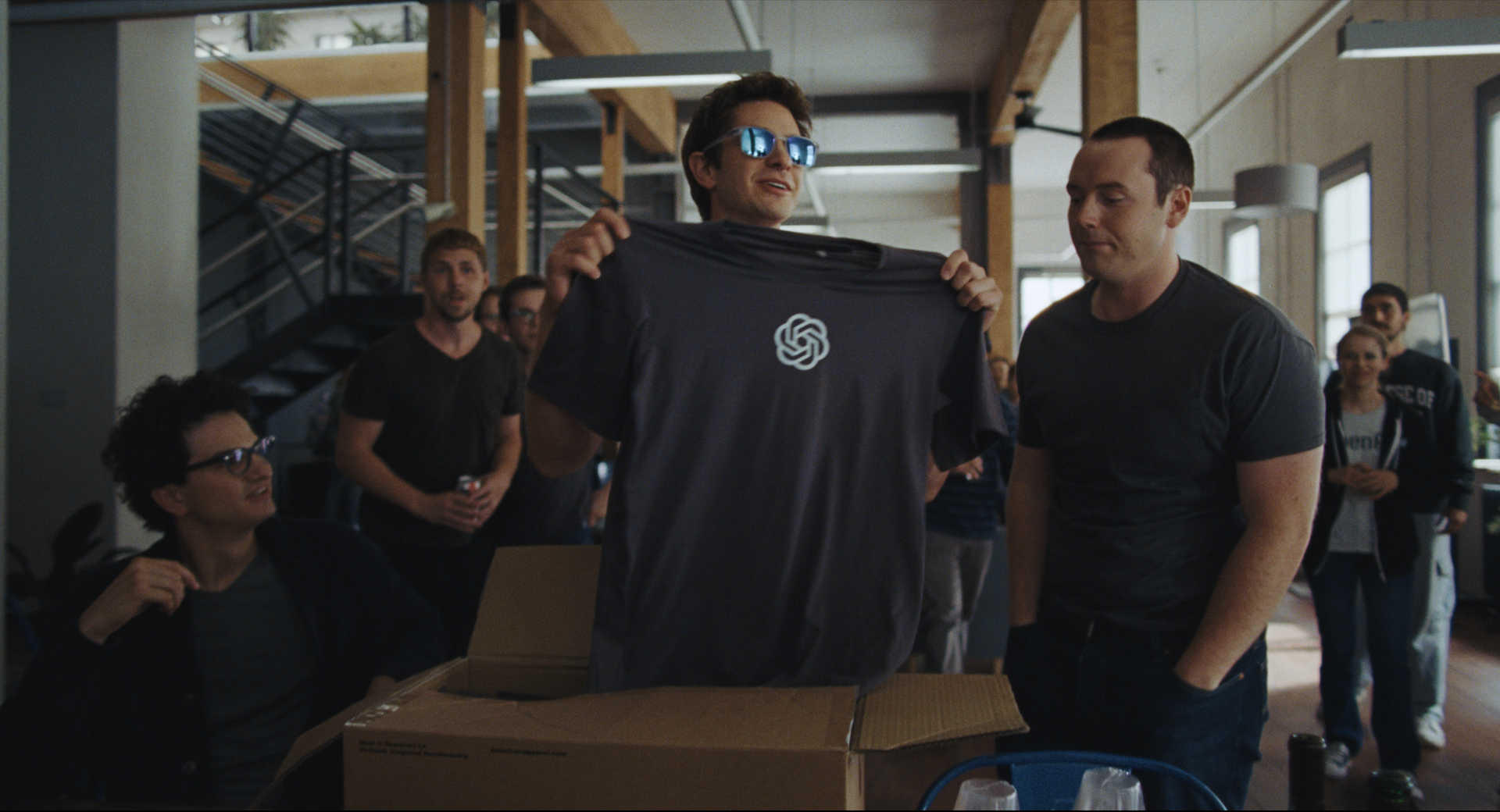
Chock full of his now-expected camera flourishes (the film is shot in 35mm by Malik Hassan Sayeed) and accompanied by a fitting synth score from Blur frontman Damon Albarn, what separates Artificial from being an otherwise run-of-the-mill biopic is its deep consideration for its characters, not solely when it comes to their mannerisms and how they act, but how they think. What Rich and Guadagnino are attempting to do here is open a window into the psyches of real-life figures who have gone to great lengths to ensure that they are not understood. And while a fair criticism for any “based on true events” movie is that the filmed result is told from one perspective, this film sets out to measure their pulses as close as it possibly can without physically holding two fingers over their wrists. We have Ilya, the dreamer whose vision eventually catches up to him and manifests itself in dread for how his creation could potentially harm the world; Borisov embodies such an evolution quite well by toying with posture and tone, as well as using his eyes as a means to peer into the soul of his character. When he describes his vision for artificial intelligence as becoming something that will bring an end to all suffering and allow us, finally, to be free, we believe him. When he later expresses concern over the realization of these dreams, we fear for him.
There is also Greg Brockman (Cooper Hoffman), one of OpenAI’s co-founders and its now-president, a loud, fratty, balding ball of rage in search of a place to misdirect his central emotion, and while Hoffman is tasked with delivering a fastball performance, he repeatedly smacks a line drive. Mira Murati (Monica Barbaro) is the curious case of someone who found themselves in what she believed to be the right place at the right time, only to discover that there would likely never be a right time for this very wrong place; Barbaro’s temperament throughout the film shifts from eager to learn to eager to inspire change, then briefly hopeful to disrupt before becoming enveloped by the environment she hoped to alter. Elon Musk (a very funny Ike Barinholtz) shrugs a lot; to his credit, The Studio star recognizes that this part is meant to be played for laughs.
Despite reports that the plan for Andrew Garfield’s awards campaign is to run him in supporting actor (thus granting Borisov the lead distinction), Artificial is very much a movie about what makes Sam Altman tick, and Garfield puts his best foot forward, heel off the ground and all, in turning in a performance that is at times both worth a chuckle and a cringe, not to mention an outright shudder. The problem for Garfield isn’t that his work isn’t committed, but that his part is a familiar one: A once-plucky investor type-turned-menacing CEO who will stop at nothing for power and is more than happy to slay any dragon to achieve it, and Rich’s script doesn’t offer much wiggle room once the shift takes place. That the film around him mishandles its efforts to mask the sudden transformation as something more gradual doesn’t help matters. Garfield still turns a meal of a role into a feast – though whether you’re full or just nauseous by the end is a classic case of “your mileage may vary” – by nailing not just Altman’s physical tendencies, but presenting a level of aloofness only fitting for the man that oversees an entity capable of deceit and possesses a terrifying sense of independence despite living inside a computer. His Altman operates that way when things are good, and even more so when things are bad; apparently, being a billionaire has its delusion-infested perks.
Among those benefits is a distinct detachment from reality that Guadagnino and his team attempt to inject life into, but too often find themselves depicting such enthusiasm in scenes that consist of chanting and/or popping bottles, as though to say, “Look! This is exciting, but also don’t forget to be so scared!” It’s a curious move for a sensualist to make this far into his career – not least because none of these characters house an ounce of sex appeal – but it makes a tinge of sense if you consider what the Call Me By Your Name and Challengers director did with After the Hunt, a colossal misfire that at least attempted to mine conversation fodder from its thorny subject matter. Still, Artificial seems disconnected from its characters in a way that no Guadagnino picture has before. That’s not to say that it isn’t an achievement, but that feels more anonymous than most distinctive work to the point where its closing title card of “Luca Guadagnino’s Artificial” feels more intentional than earned.
As for Rich, whose only prior writing credit is the Seth Rogen HBO Max vehicle An American Pickle (though he provided additional story material on Inside Out, Wonka, and A Minecraft Movie), he frequently falls on a sword planted in the ground by The Social Network’s screenwriter Aaron Sorkin, whose “isms” are well-worn and recognizable the moment they are heard. Characters in Artificial say things like, “We’re the only ones seeing the future,” “It’s not how this could go wrong… It’s how could it not?”, and even “Visionaries lie to themselves. Liars lie to everyone else.” Pointing individual lines out in a script that is more thoughtful about its characters than plenty lesser biographical chronicles tend to be may come off as an unnecessary evil, but when an exchange feels so specifically designed for an audience to “oooh” at its encapsulation of a figure’s motivations in hindsight, it’s difficult to ignore.
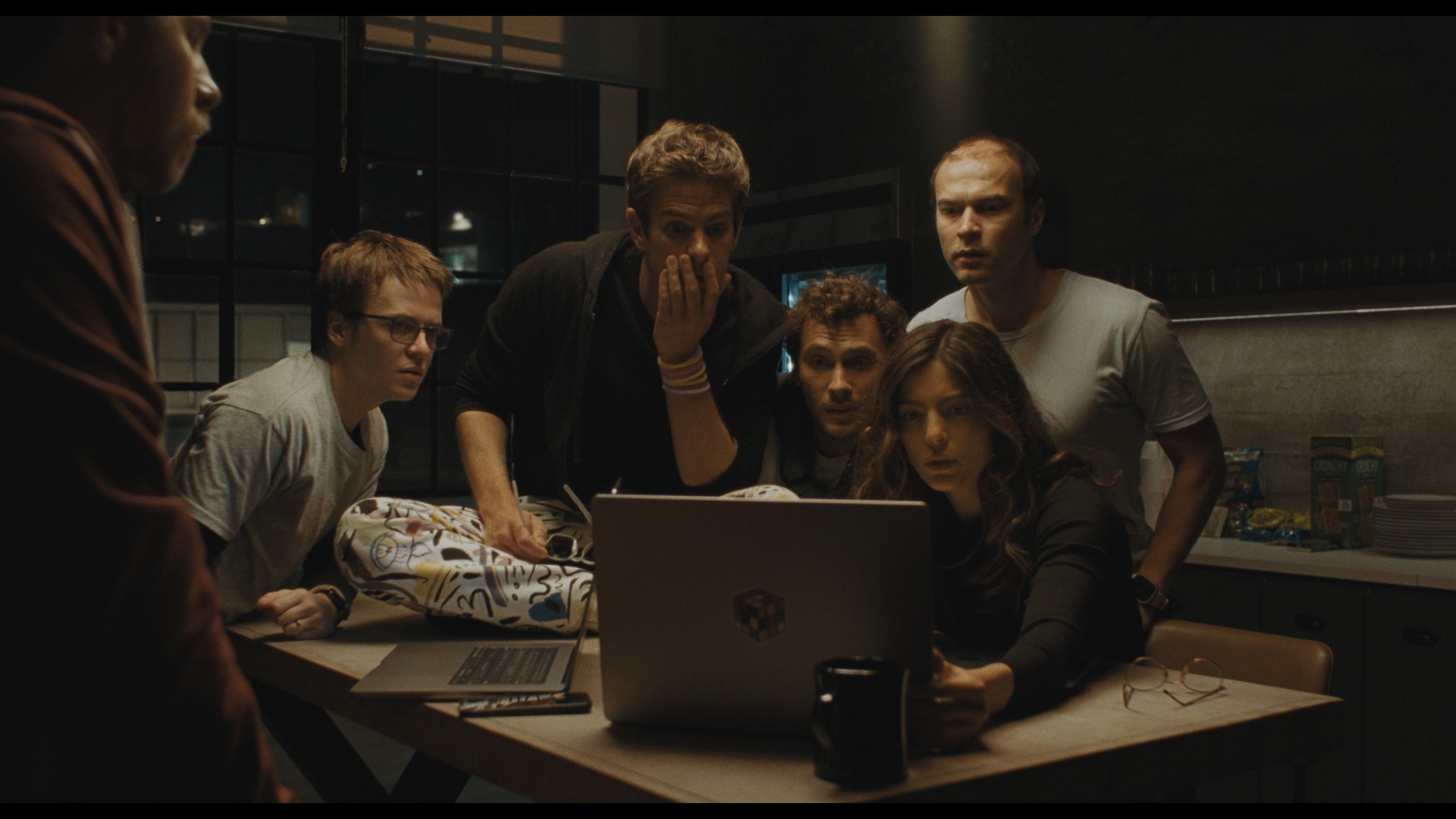
Perhaps that’s by design, too, a film all too eager to be seen as a blinking red sign that screams “DO NOT LOOK AWAY” before it naturally flickers off. It mimics its studio in that way – not the studio that developed it (Amazon MGM), but the one that saved it from certain death (NEON) after its original home dumped it just days after signing a $50 billion deal with OpenAI. You’ve heard that story by now, and Artificial was never going to touch it from a narrative standpoint. But what the film does bring to the table is a warning, a cautionary tale about how we should fear the people who build just as much as we fear what they built. (That’s about as close as it gets to touching David Fincher’s 2010 masterpiece, a film it has already been forced into conversation with by way of the Artificial premiere coming just hours after many critics saw The Social Reckoning.)
Whether this flare is being sent up too late or too soon is besides the point; certain movies may set out to deliver a message, but they hold no legislative power, and many of those who do don’t seem to be concerned about a future dominated by AGI as long as it makes them a buck. You know all of this already, and that may be Artificial’s main problem. What The Social Network achieved with its mythologization of Mark Zuckerberg was that it crafted a compelling Greek tragedy, the kind where the king isn’t slain, but is seen aimlessly refreshing his browser to see if an ex-paramour will accept his friend request, alone in a boardroom. We know that his power didn’t wither from that day forward, but at the time, it was a proper encapsulation of how we should look at these people: As sad, lonely, rich men who know not how to put their foot on the brakes and wear speeding tickets as points of pride. Artificial argues something similar, but the loser of its central war is the sad, lonely, rich one, while the victor marches off with an excess of spoils in tow. In other words, it’s an apocalyptic true story. Perhaps the fact that we’re still living in the middle of it is what precisely holds it back from being a great one.
Artificial world premiered at the 64th New York Film Festival. NEON will release it in theaters on Dec. 25.